The warmly cool, clear, ringing, perfumed, overflowing, redundant days, were as crystal goblets of Persian sherbet, heaped up – flaked up, with rose-water snow. — Herman Melville
Allora’s heading off on passage across the Torres Strait and the Arafura Sea from Australia’s northernmost islands to Tual, Indonesia. It’s just us two for this 4-5 day passage and conditions look good; it should be a brisk, downwind sail and we hope/plan to steer well clear of all the reputed fishing fleets! If you’re interested to track us on this passage, our Predict Wind Tracker link is under ‘Where In The World Is Allora.’ Should you need to reach us, head over to the ‘Contact Us’ page. And to AU and her fine people/landscape/creatures, you’ve been a whole lot of wonderful! It’s going to be a tough sail away …
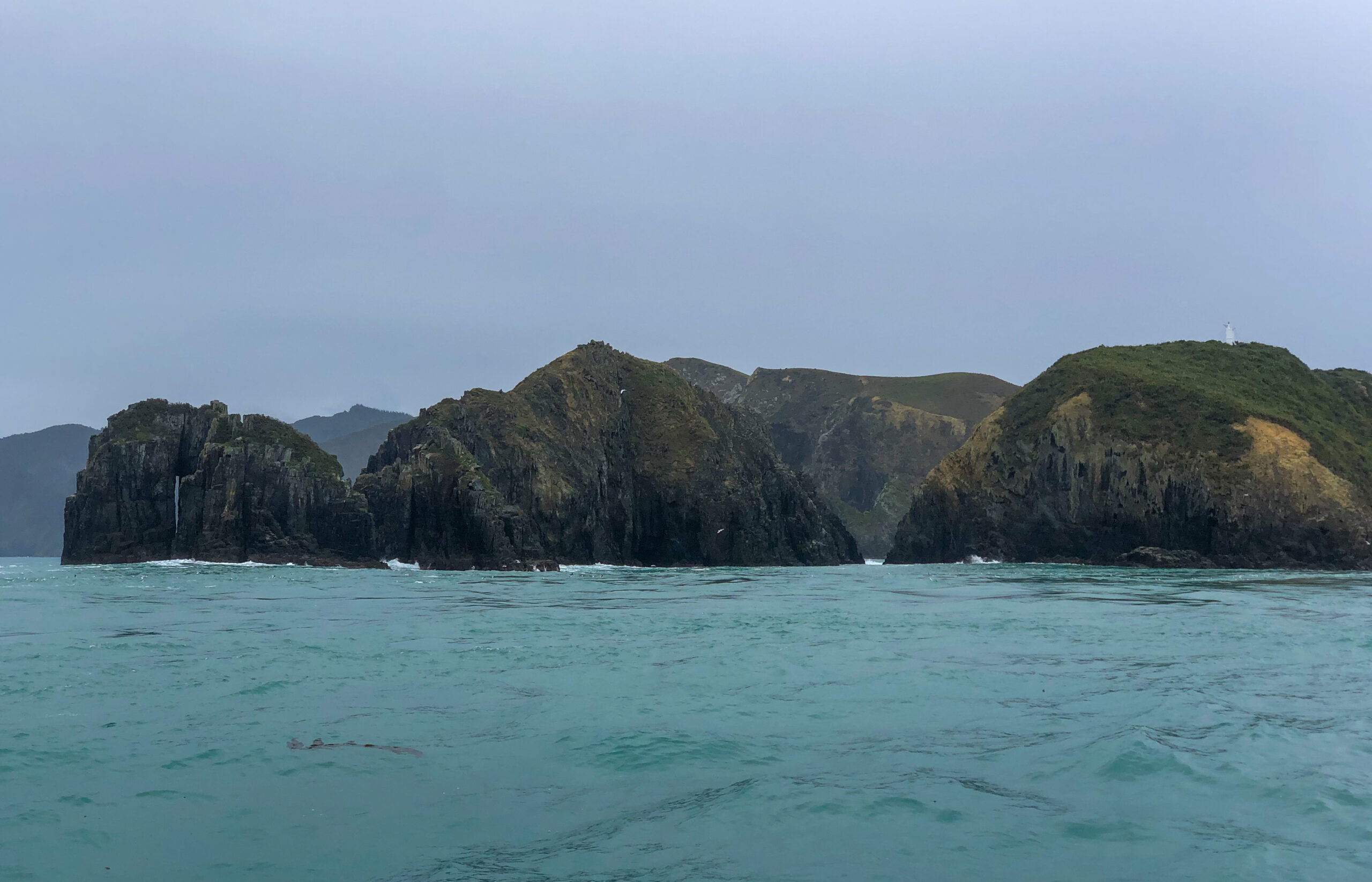
Leaving Tory Channel, entering Cook Strait. Tough leave, South Island … we’ve felt HELD by you! Arohanui Haley and Liam!
Picton to Opua via Napier and the East Cape (duh, duh, duh)
Diana’s last log entry on the first leg of this passage: “worst passage ever.” Maybe, I’m not sure, but I confess to getting seasick, for only the third time ever. Even so, I think the hardest part was leaving the South Island in dead calm with the threat of drizzle. After two and half years, it felt like leaving home, not least because we were leaving Haley and Liam, and knew it would be a while before we could get back.
Fueling up, (which for some reason is always a little stressful for me), was extra stressful knowing it was the last thing to do before saying goodbye. After multiple hugs and lots of tears, there was nothing to do but cast off the lines and pull away.
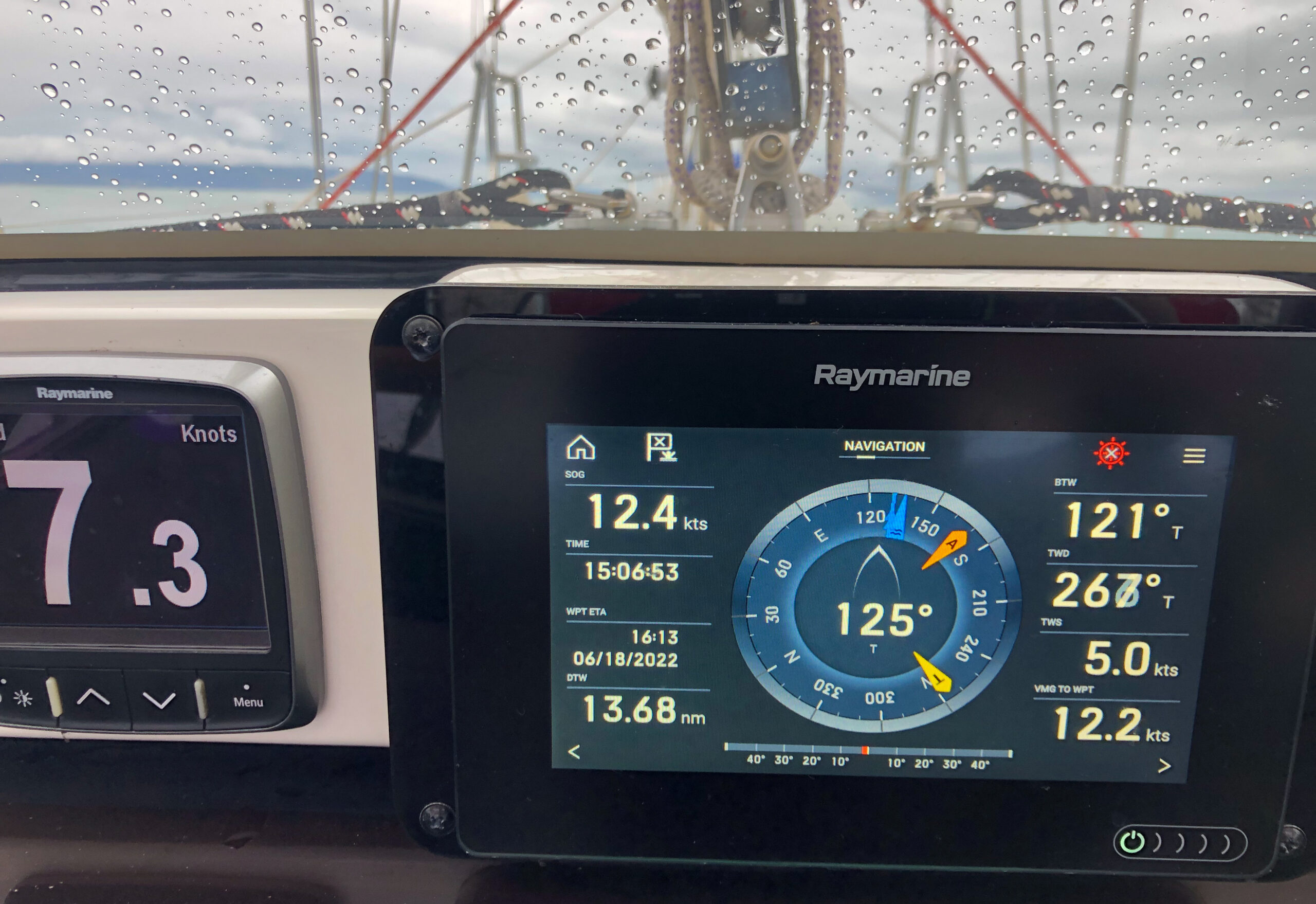
We were on a bit of schedule, running out of time to get to Opua before Maddi arrived from the States. Also, it was crucial to time our exit from the Tory Channel for a reasonably favorable current, the basic recommendation was leave on high tide out of Picton. We led that by an hour or two to try to avoid encountering head winds in Cook Strait. It was pretty mild to start and Diana made some super yummy wraps for lunch (she is the undisputed Empress of wraps in my book). As seems to so often be the case sailing around New Zealand, there was no chance of entirely missing the wind shift, and about halfway across we were sailing close-hauled. At least the seas, at that point weren’t too bad, not stacking up against current or anything. I went down to take a nap, and missed Diana logging 13 knots surfing on seas that were getting pretty steep. In fact, we wandered into the edge of an area of rip tides and overfalls, ‘Korori Rip,’ that was pretty dramatic. As it got dark the wind was on our beam and so were the steep seas. Diana was feeling pretty awful, and then I got sick too. This might have been where Diana logged “worst watch ever,” – she was really feeling bad and then the rudder on the hydrovane (our wind vane steering system) came off and started pounding on the stern. It took Diana a couple minutes to figure out what was going on, what the loud noise was. I donned a PFD, clipped the harness in and took a knife out onto the swimstep, hoping that I could cut the safety line off without losing it. It was pretty wet, but I didn’t want to take time to put on boots, so I opted for bare feet. Anyway, it actually wasn’t that bad, Diana has set up holder for a good sharp dive knife and a pair of pliers under the lid of the lazarette where they are super handy (she’s pretty good at coming up with that kinda stuff). I took the next watch and Diana tried to sleep off her seasickness. Once we cleared Cape Palliser things improved dramatically.
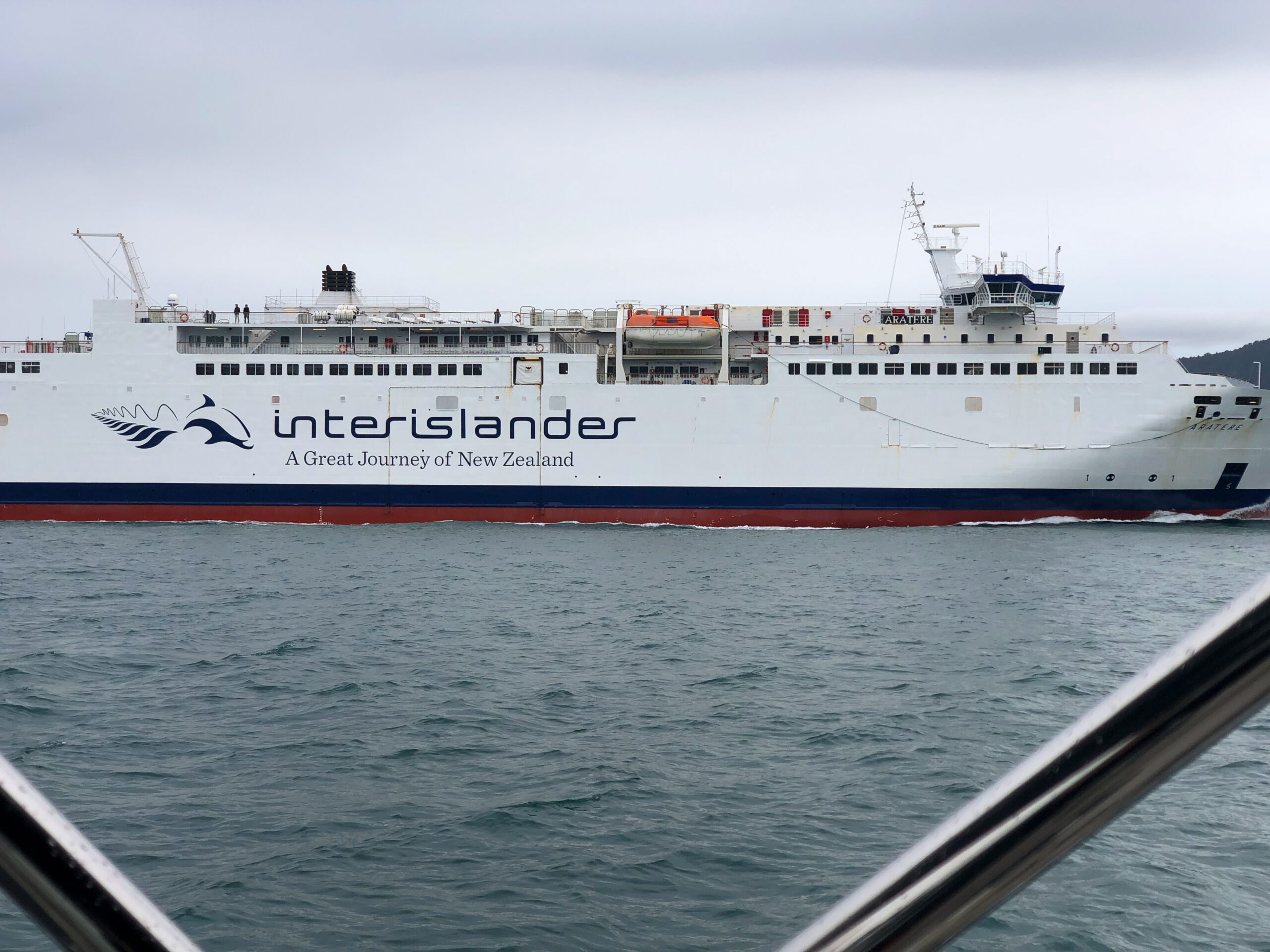
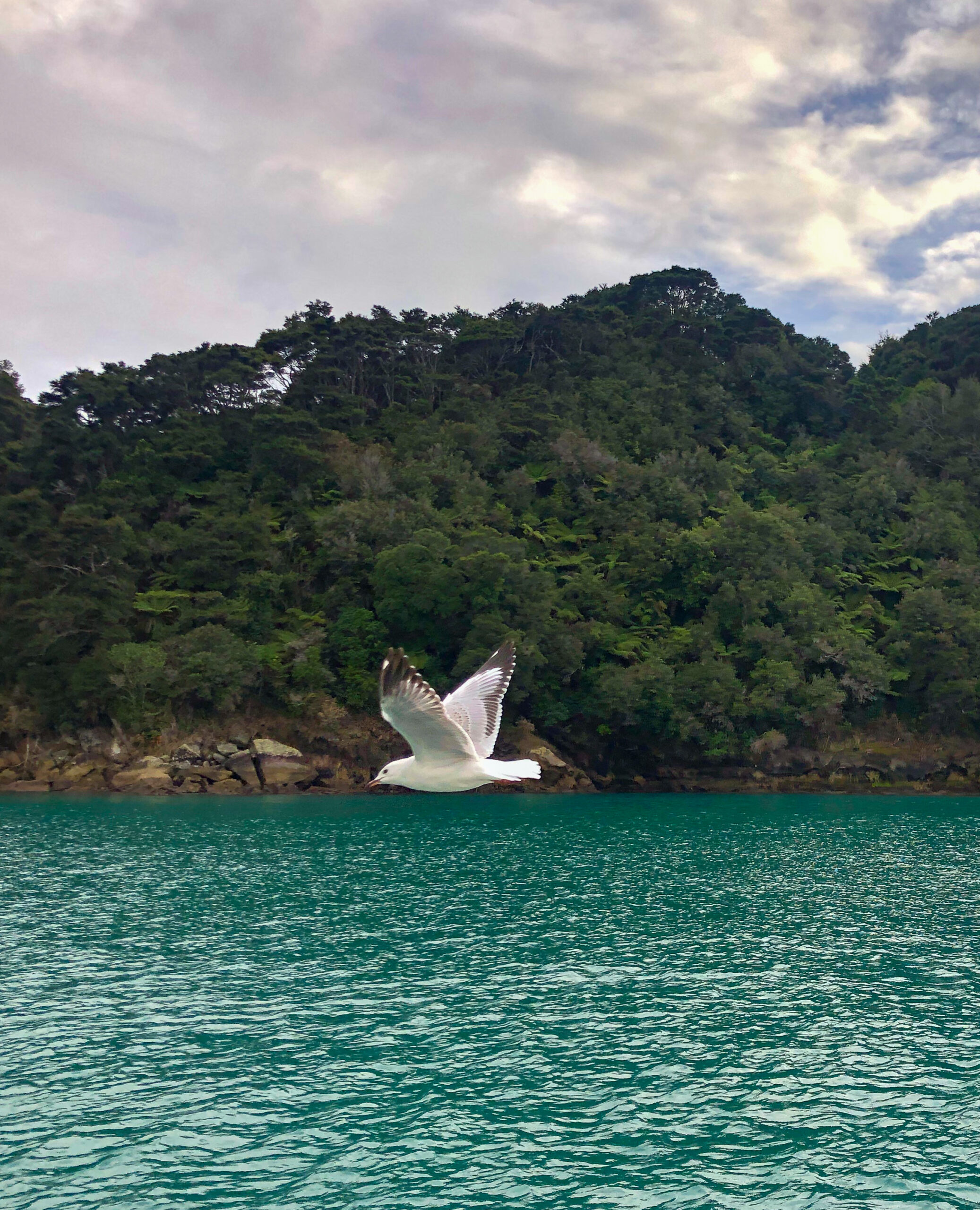
Another way through the Tory Channel and across the Cook Strait … bet they have a smoother ride? (Our food may be tastier?)Exciting though it was, it was also time to stop taking pictures and turn away!
No doubt timing arrivals, departures, capes and channel entrances can be the trickiest part of sailing. You’re always trading one ideal for another. The next challenge of this passage was the East Cape, which is massive and takes a couple days to fully round. The forecast was for 4 meter seas and forty knot gusts… not super inviting. We liked better the sound of a snug marina slip at Napier to wait for the weather to ease up a bit, but that meant arriving at midnight, which is something we are loathe to do if we’re not really familiar with the layout. It’s never nice to feel like your options are bad or worse. As it turned out, the wind in the harbor was still and the passage in, though shallow, was well marked and very well lit. We glided to the visitor’s berth next to the travel-lift, easy peasy. The quiet and calm felt glorious.
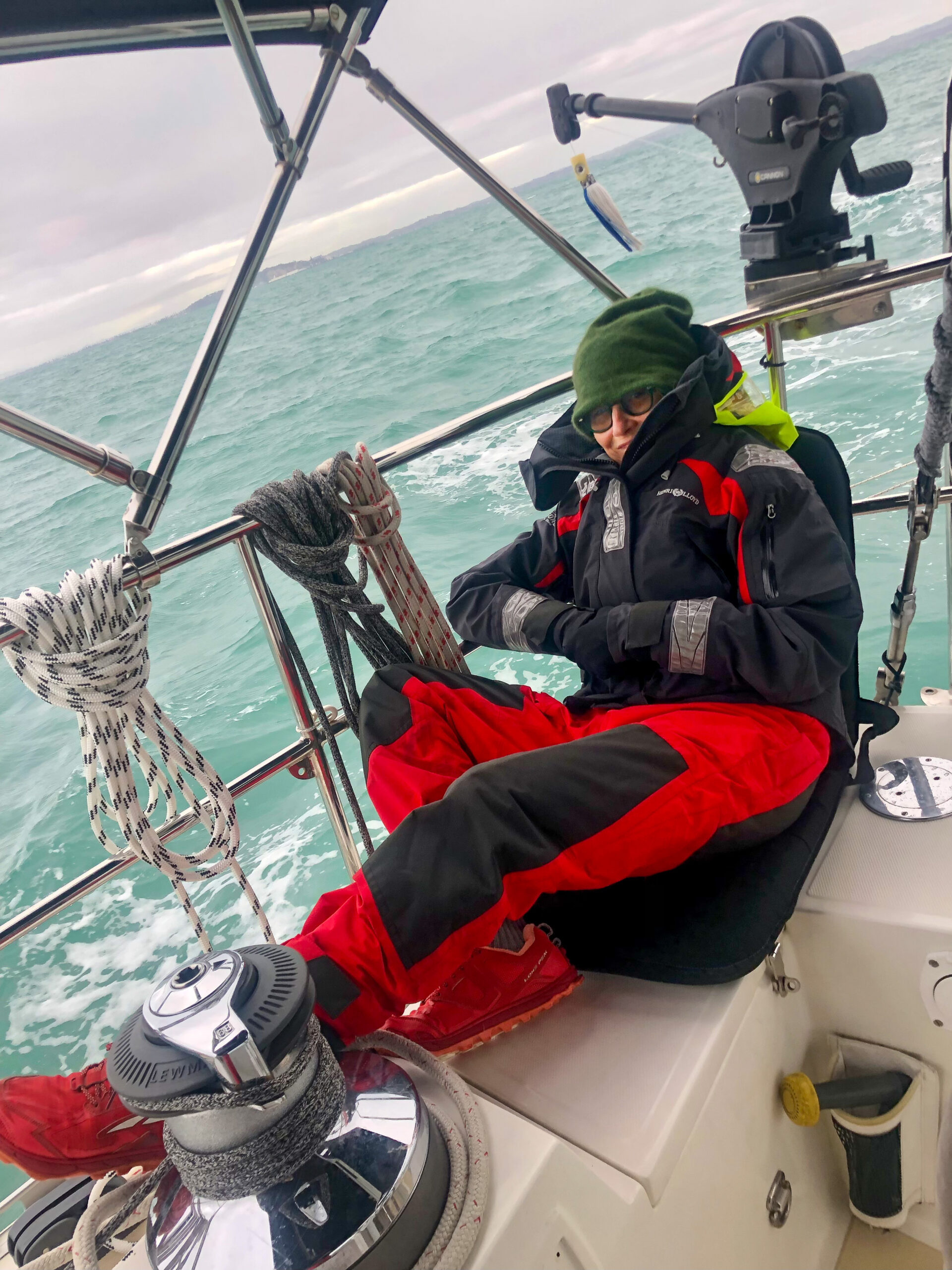
We really like the Art Deco town (stayed awhile on our way south in early 2021) and I wished we had more time to stay; I made a provisioning run to include my favorite health food store, Chantal, a freezer stock up of ready made yummy meals from Mylk and had a dinner date night with Marcus at Three Doors Up in Ahuriri, near the Yacht Club. There’s a phenomenal Astanga studio here, with Peter Sanson teaching, but our tight schedule wasn’t creating the space for a deep breath, let alone 2 hours of it!We’re back out and it’s CHILLY! A hint of a smile goin’ tho …
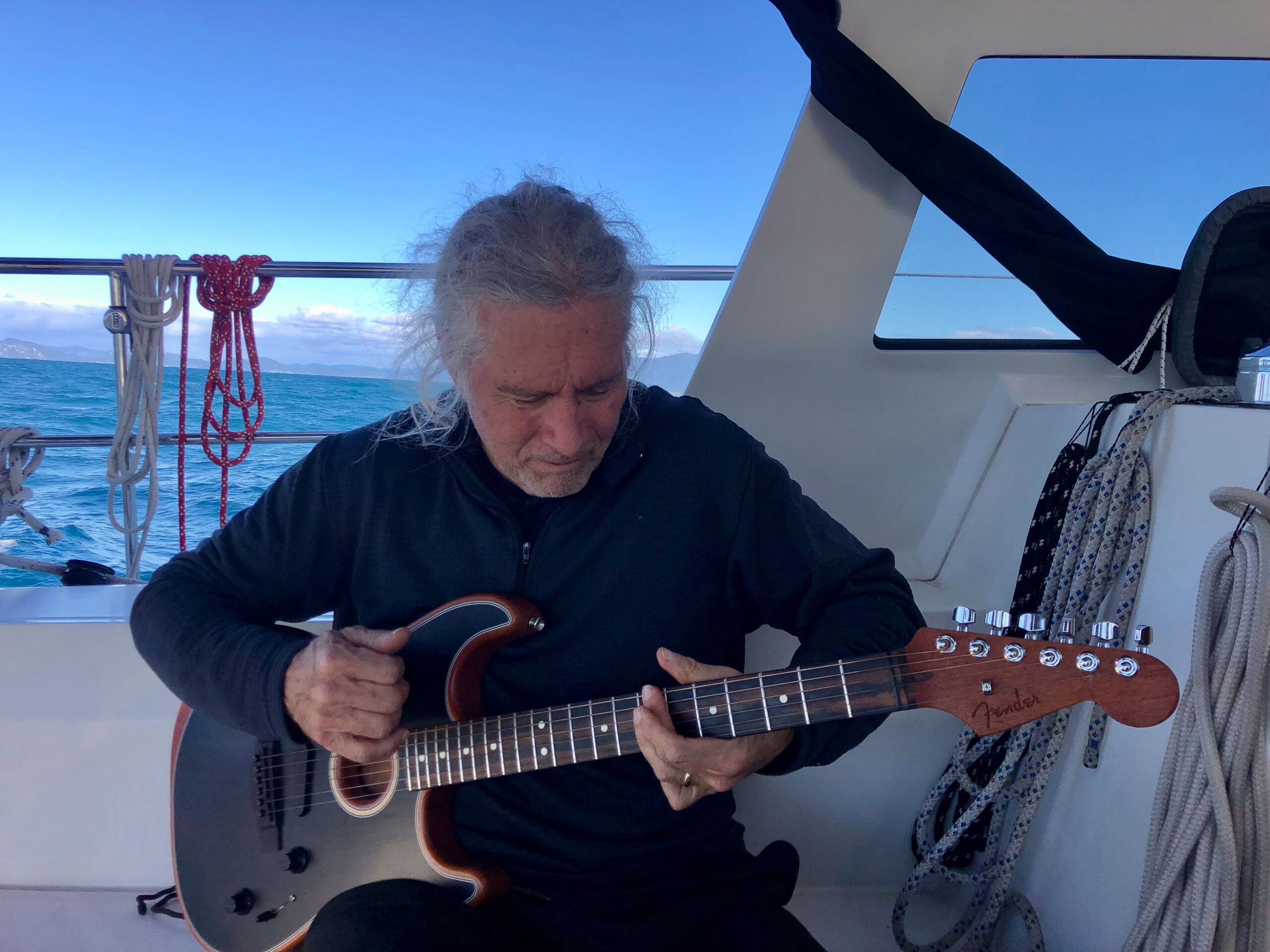
Waiting for the gale at the East Cape to ease came with a trade off — the near certainty that we would have to pass through a frontal system to reach Cape Brett. Yeah, I know, a lot of fretting about capes, but there’s a reason so many of them are given awful names by sailors (Cape Fear, Cape Runaway, Punto Malo, Cape Foulwind), they really do run the show. In the meantime, that lay two days in the future. We rounded the East Cape in the early morning, jibed and then enjoyed a glorious daytime sail headed northwest, pretty as you please, even got the guitars out for a little music.
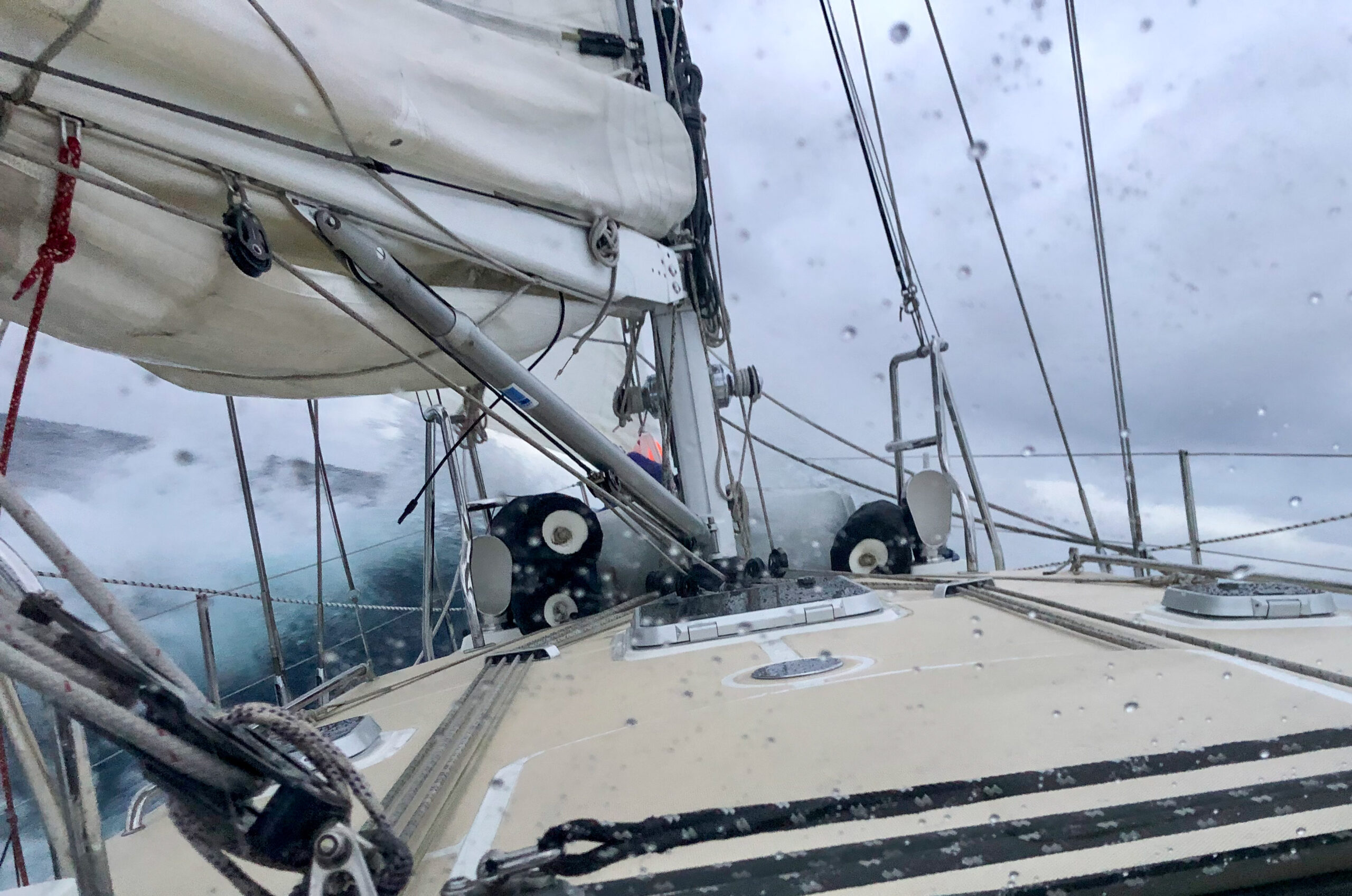
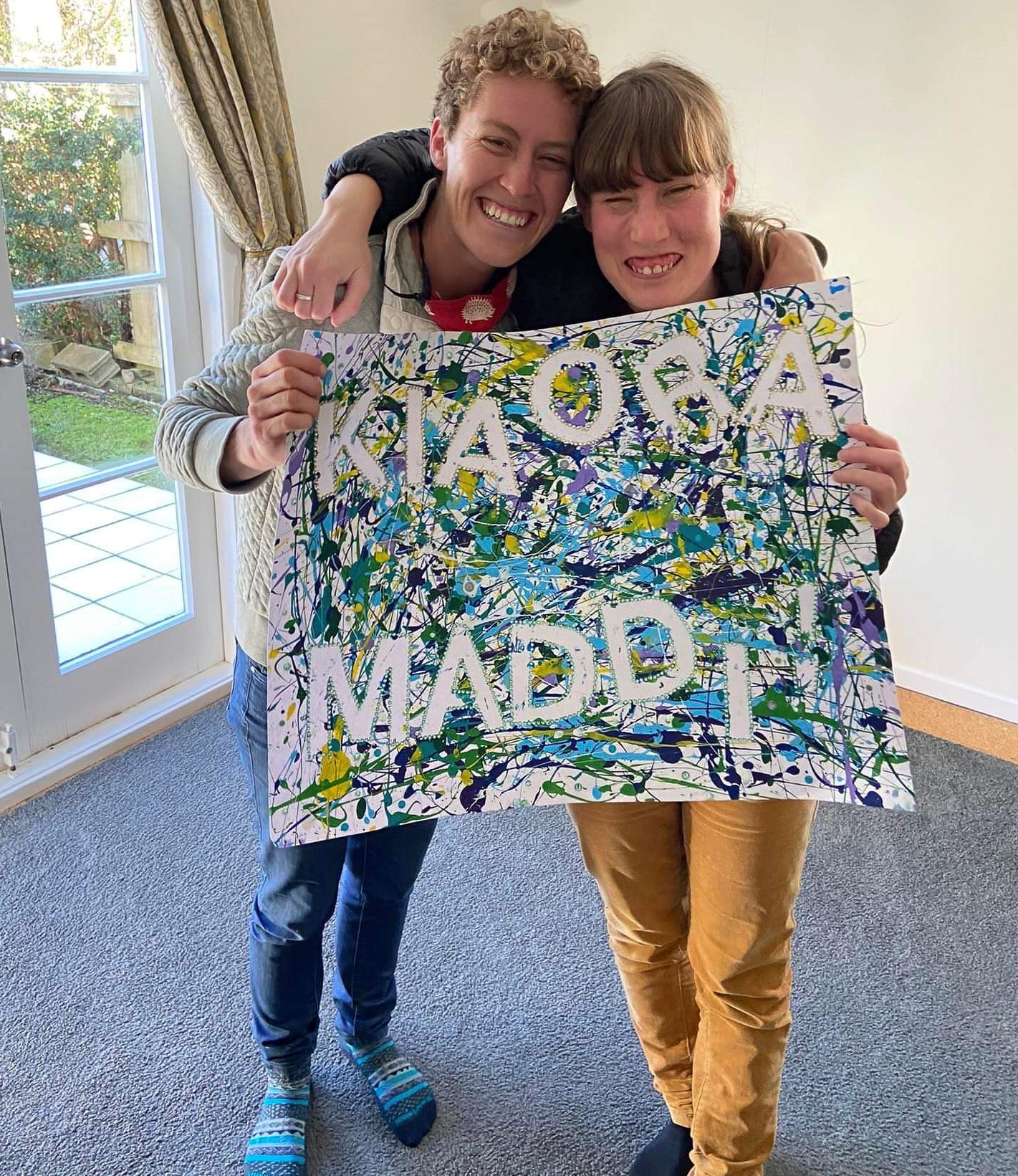
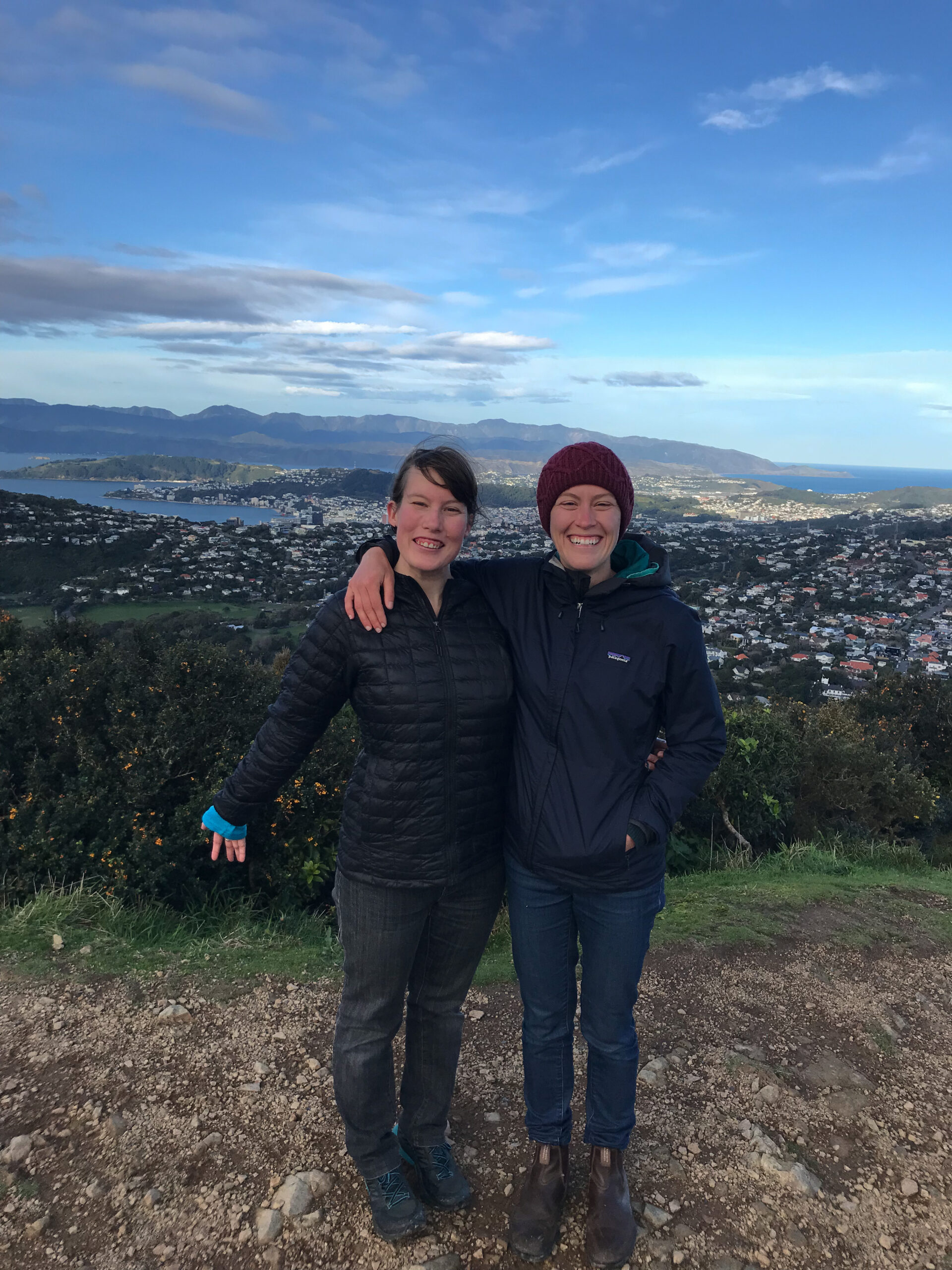
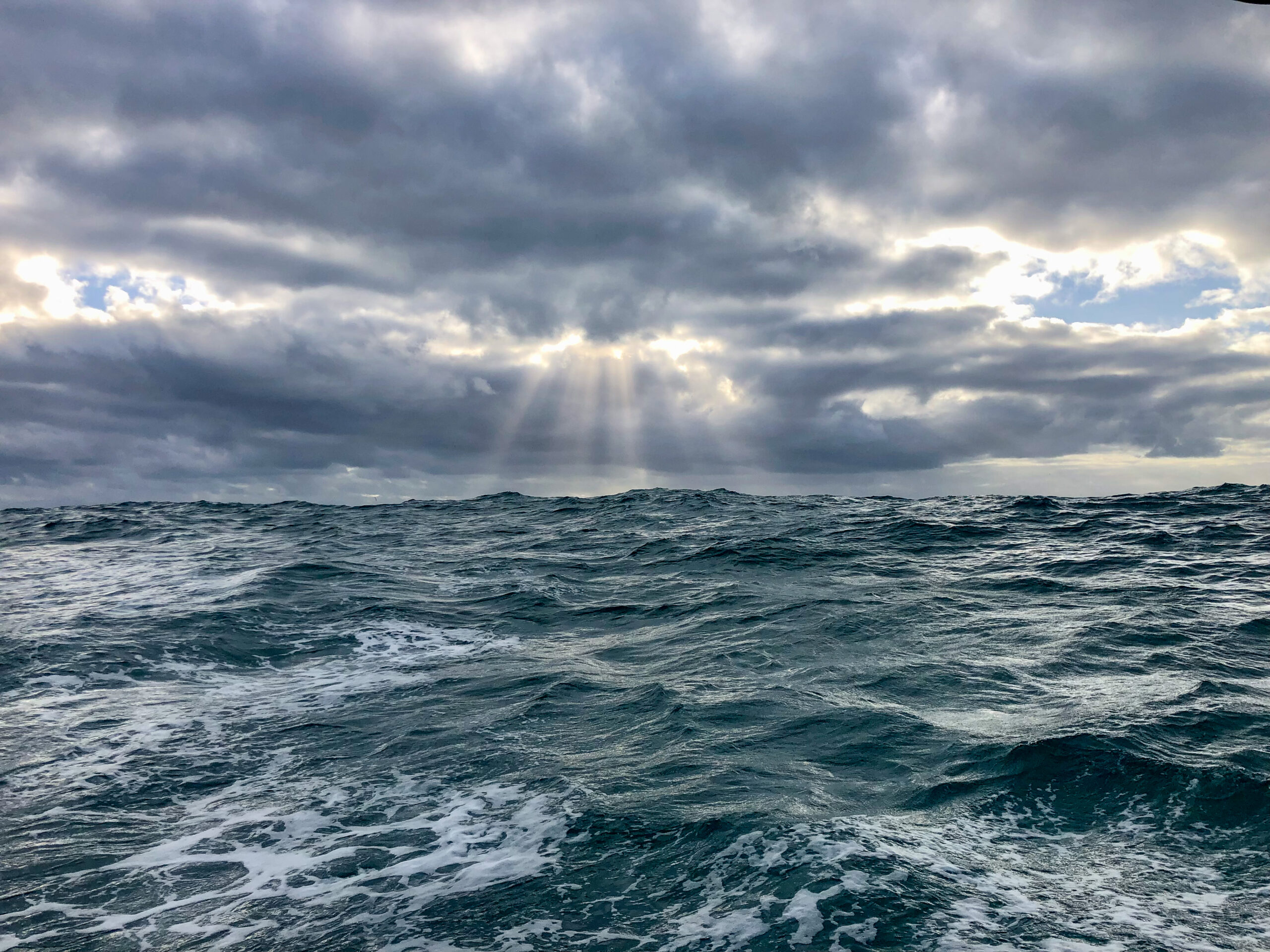
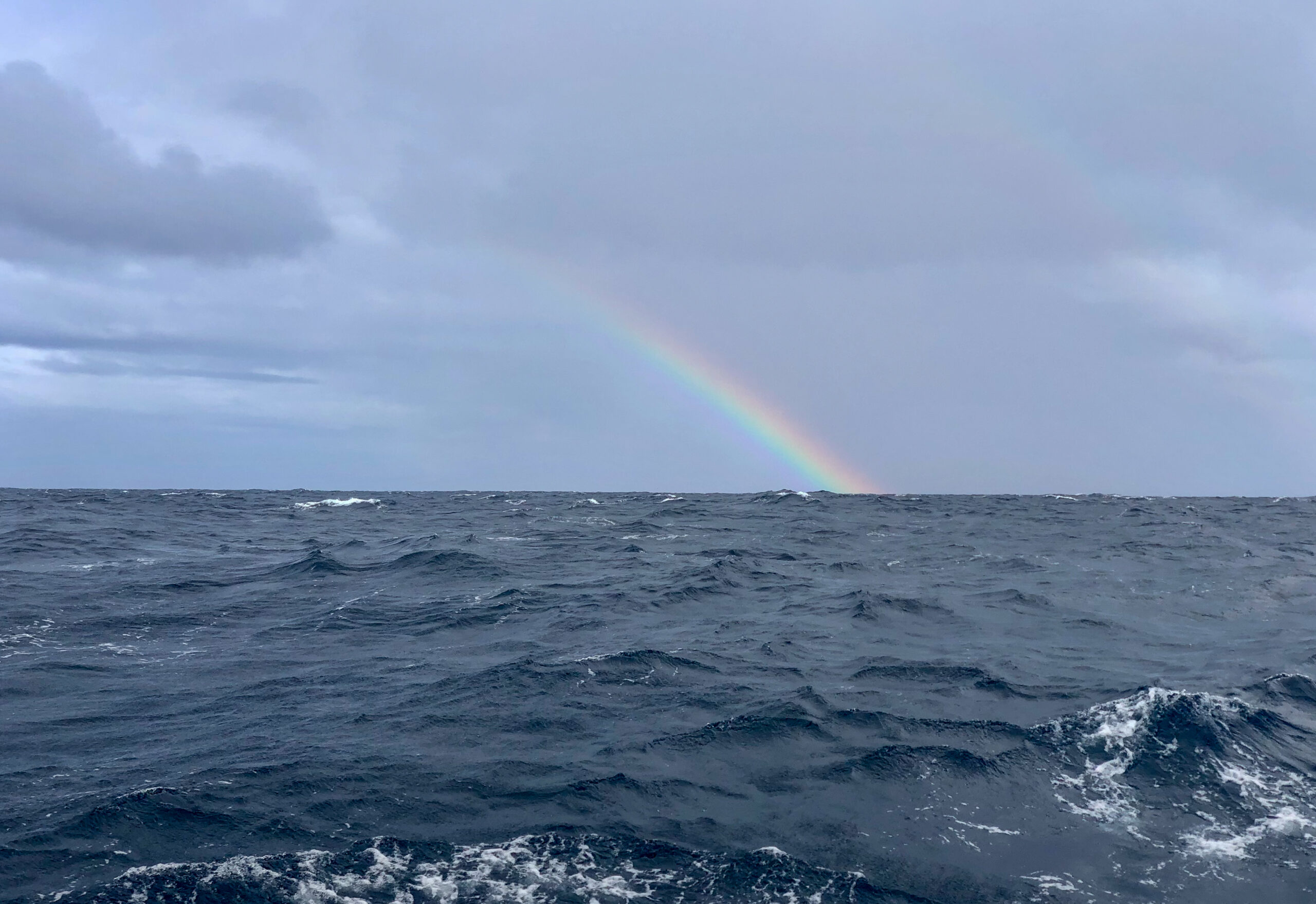
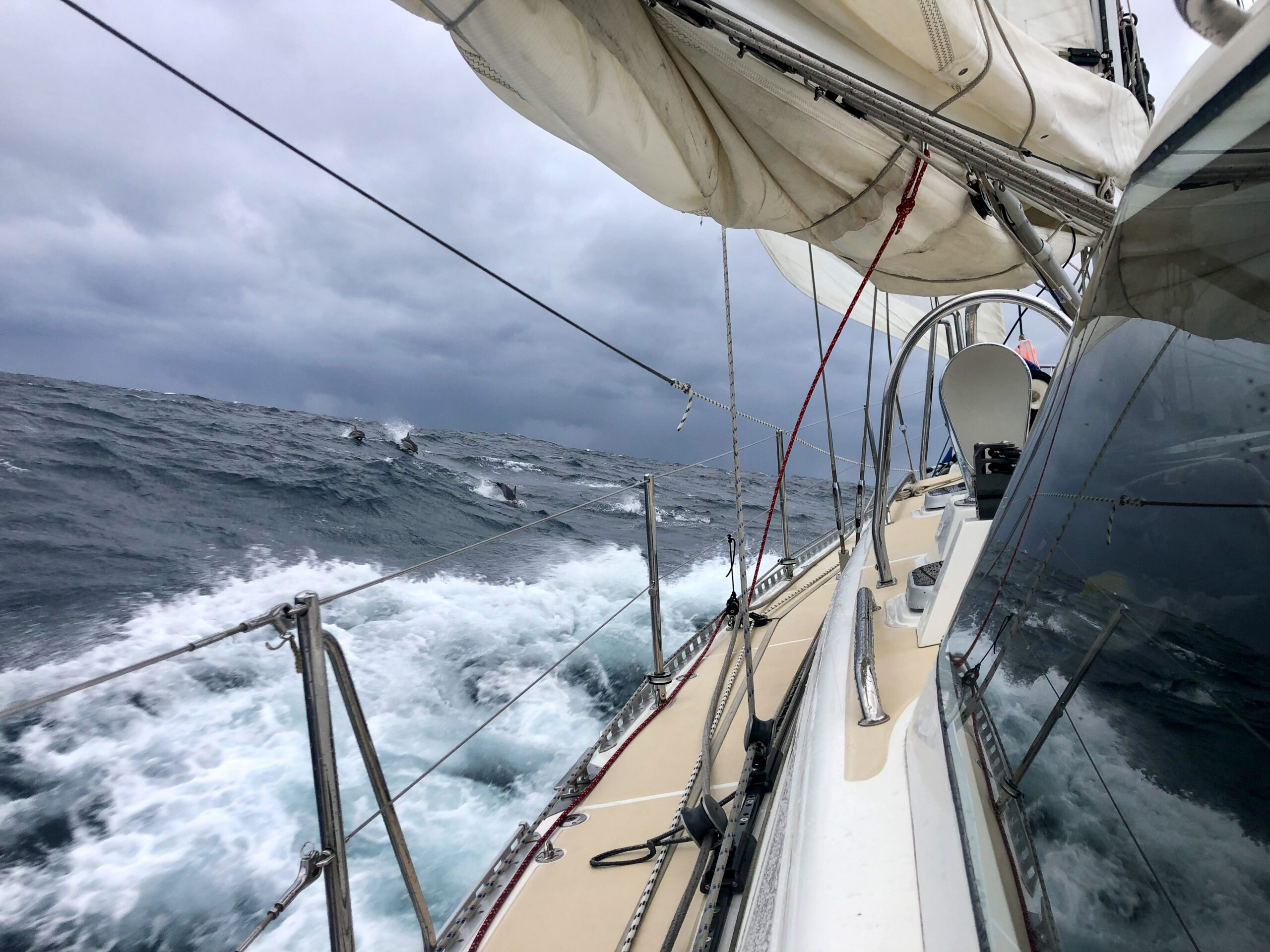
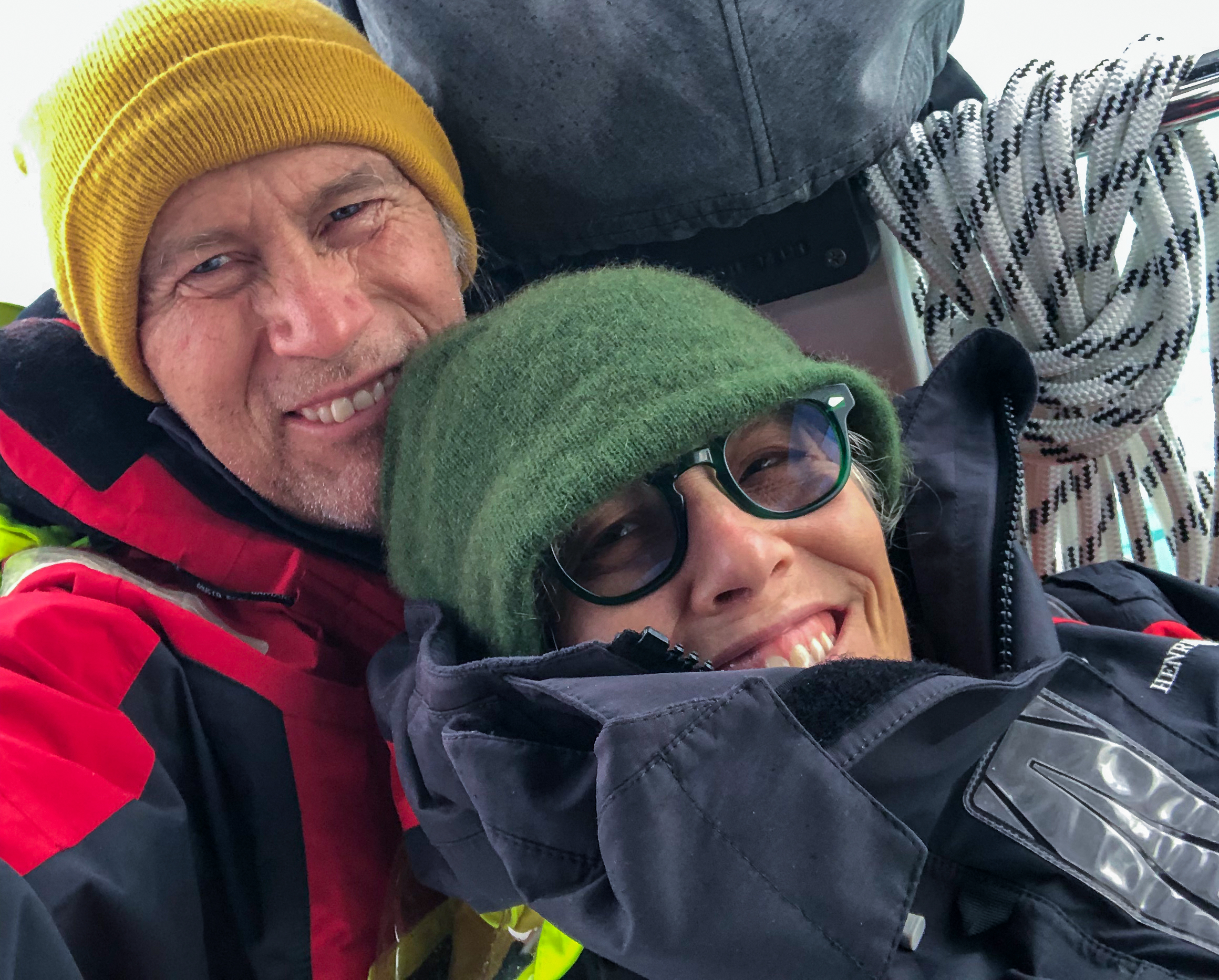
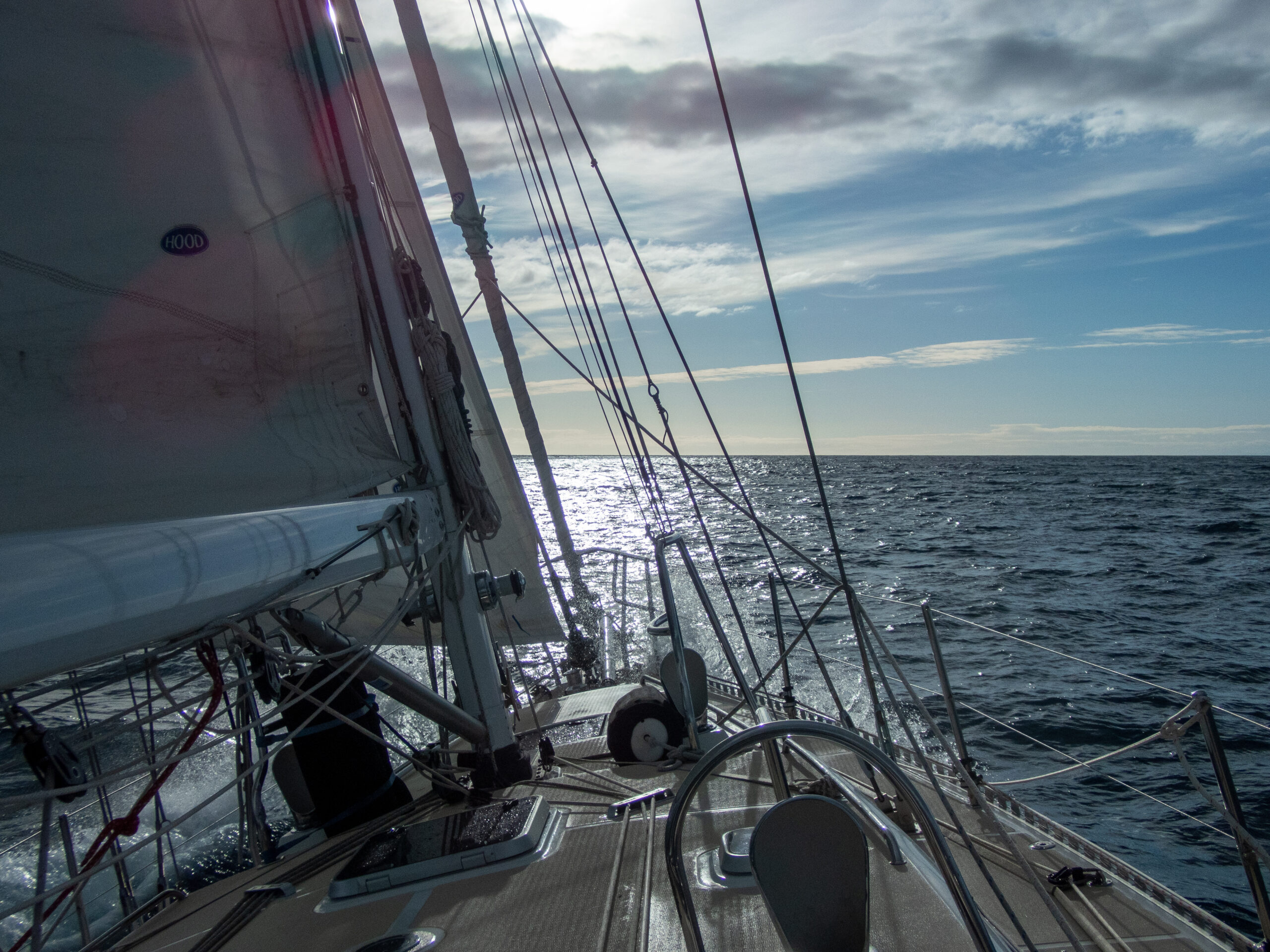
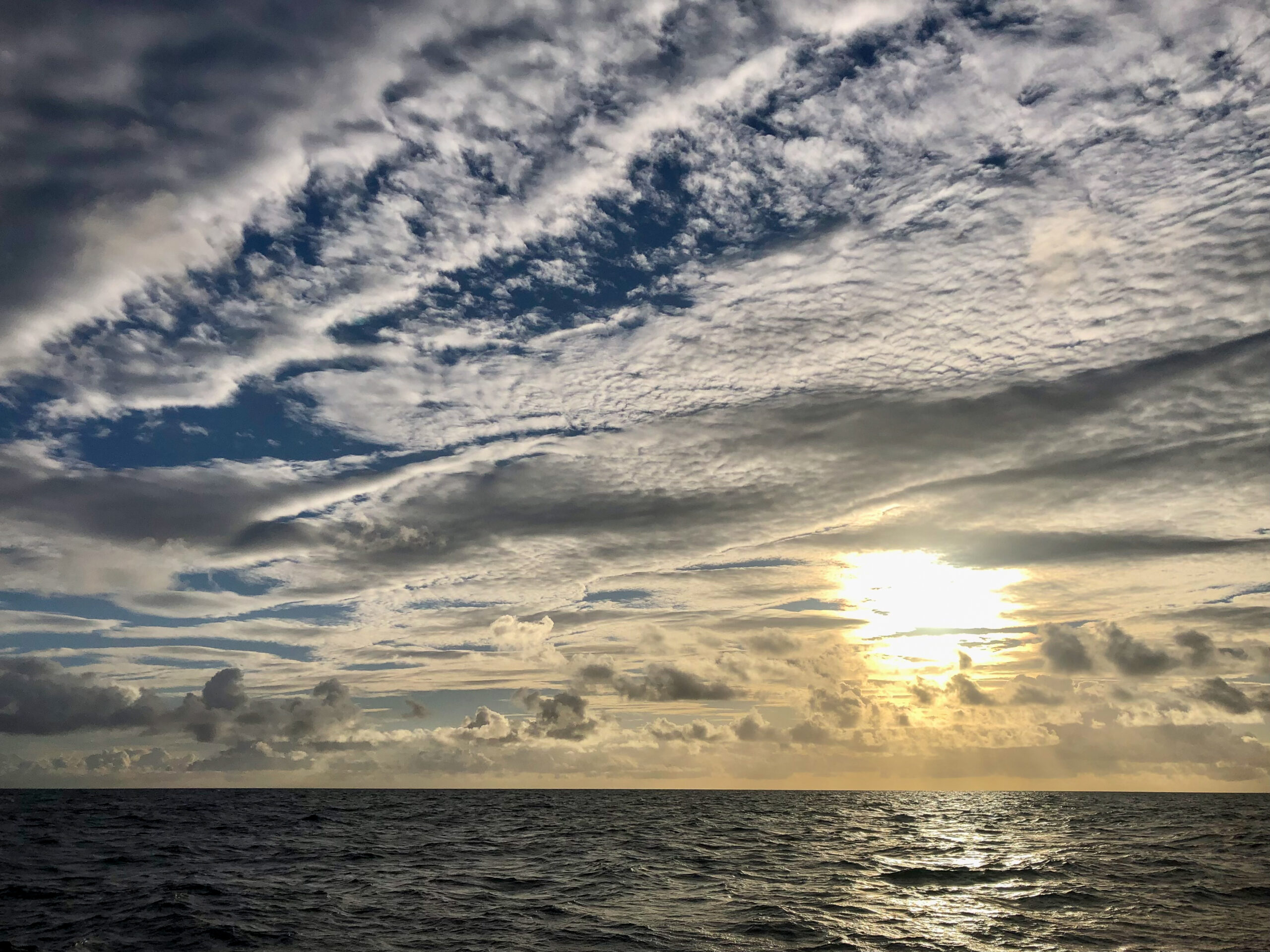
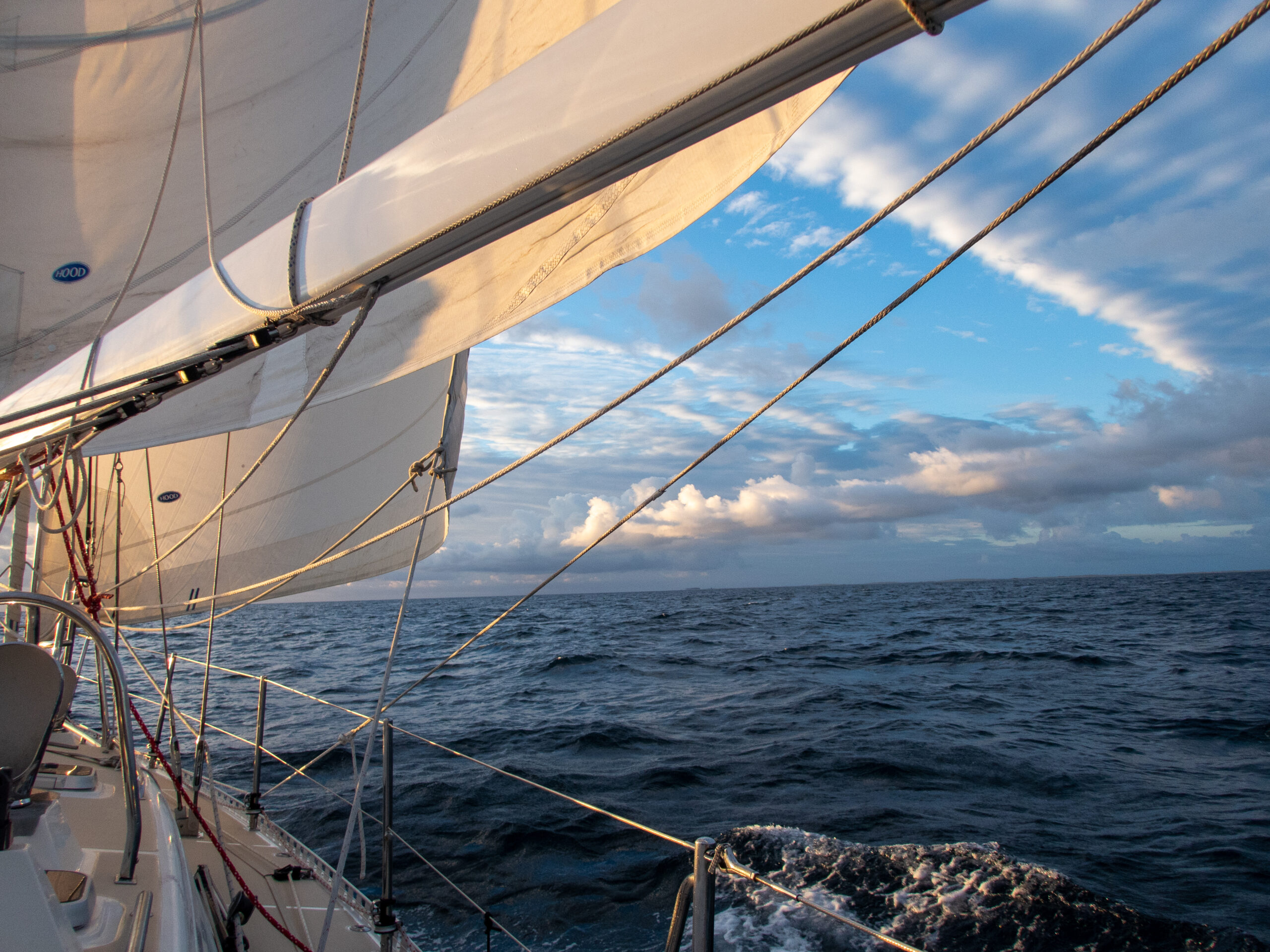
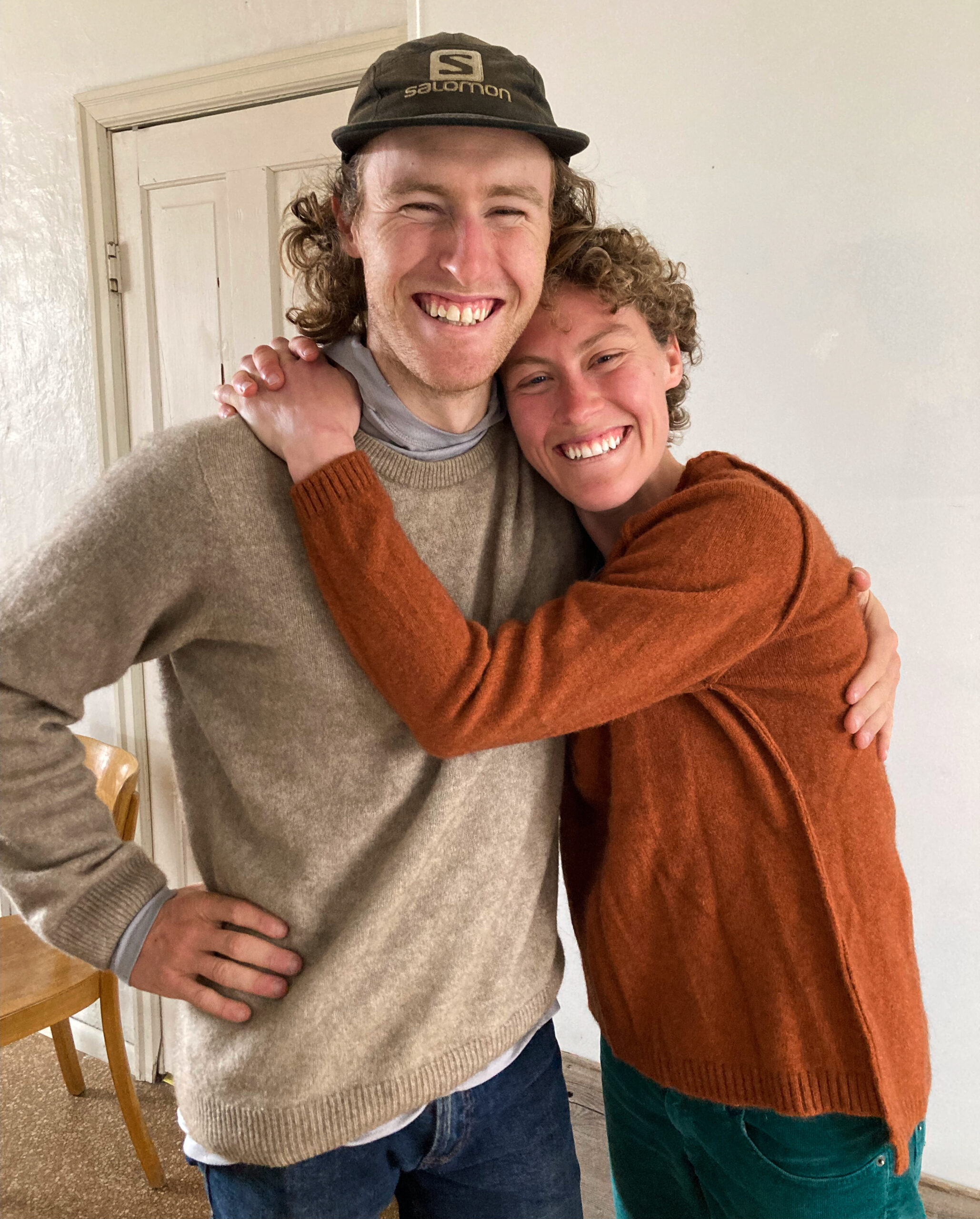
Might have to start calling him, ‘Hendrix.’Allora meeting the waves. The hint of orange that you can see ahead of our mast is our Stormsail, rigged on the bow to deploy just in case of really high winds. It’s essentially just a reefed down version of our jib/normal headsail. You’d have to go up there to run the sheets and then to hoist it up using a topping lift at the mast, so gladly, I can say, we haven’t had to use it. Later, on our Fiji passage, we sort of wished we had. The sea has so many moods …Haley (right) and Liam made this awesome sign to welcome Maddi (left) to Aotearoa/NZ! These two hadn’t seen each other in 3 years! They met in Wellington for a few days of solid catch up! Plan: Maddi then flew up to Opua to meet us and crew to Fiji (next post!). We received this sib pic while on our northward passage and it cut right through the chilly temps to warm us through and through!One more sister shot, because it’s so happy making!All shades of blue. Oddly enough, there’s a deep sense of grounding while floating on the ocean??!You can look out and think you see nothing but ocean and sky, and then a blatant reminder that there’s always more!For instance, these cheery friends!!!Huddling contentedly, staying warm-ish.Another night of quiet and watches. NOT!
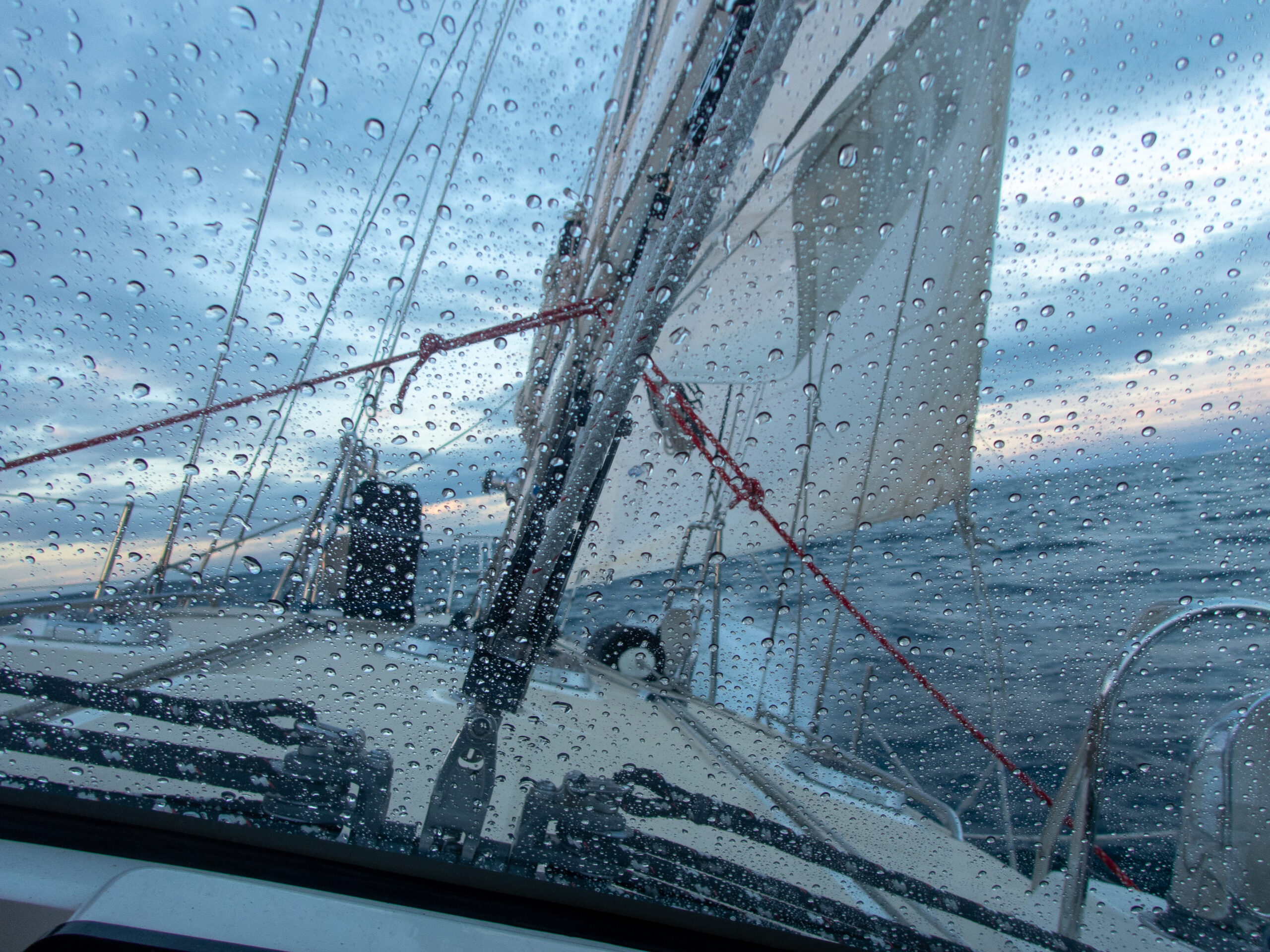
The squalls started with darkness (naturally). Note to self: frontal passages are not to be taken lightly! Also I’m going to try to remember that the forecasts don’t really represent true wind speeds in these conditions. These are more like what you get with squalls in the tropics (sudden doubling of wind speeds) but over a much more sustained area and time period. Soon we were double reefed on main and jib, taking big seas over the whole boat.
Once again, Diana took the hardest watch (you might accuse me of scheming here, but I swear this is just a matter of chance). Her words from the log: waves over bow, raucous, deluge, still dumping. Mine: rain, clearing, wind finally calming. At least I tried to make up for it giving her a longer watch off, putting in four hours to clear Cape Brett. All the while looking forward to the forecast easing and a swing of the wind for a quiet sail into the Bay of Islands. No such luck. Wind died, and then the engine died, 8X according to Diana’s notes. At 5AM I was back on, and eventually the mystery of the engine was solved. I was so focused on the last engine issue back in Fiordland (which was entirely electrical) that it took me a while to realize that the current problem was oil pressure. I’d checked the oil, but with a heeling boat, the reading was off. I added oil and the engine was happy again. More engineering-inclined-sailors than I have expressed skepticism about black boxes (computers) on marine diesel engines, but for the less mechanically minded (yours truly) they can actually be a life saver. Better the engine shut itself down than damage something, though it’d be kinda nice if the $1000 panel offered something a little more elucidating than “CHK ENG.”
Dawn came quietly, and it worried me a little to see fog along the coast, but it dissipated as we arrived, and pulled into a quiet slip in the Bay of Islands Marina. ~MS
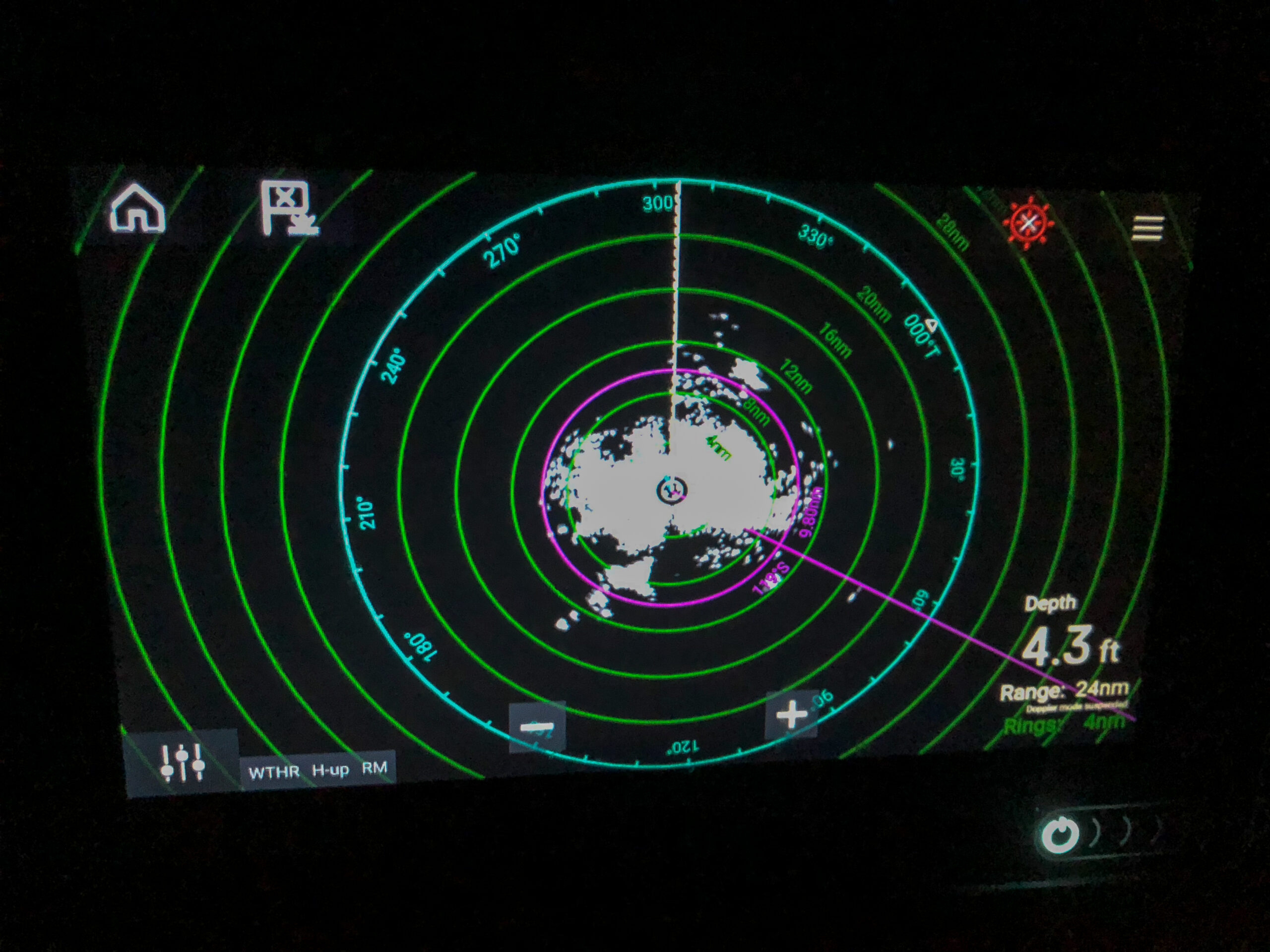
Our radar shows Allora smack dab in the middle of a front – and yet so close to our destination of Opua! Logbook entries say, ‘Wild ride, just took a couple intense waves over the whole boat!’ We also had a series of engine issues in the morning while rounding Cape Brett before arriving in Opua. Plenty of excitement, but NONE matching that of seeing Maddi the very next day!!!!
It was a bit spooky sailing out of Milford at midnight without a moon. We had our inbound tracks on the chartplotter to follow, but it’s pretty amazing how disorienting darkness can be, even for feeling whether to turn to port or starboard to follow a line. Also with the steep granite walls, we didn’t feel 100% confident in our GPS. Diana went to the bow, and I stepped away from the helm to try to orient myself every few minutes, as we moved cautiously down the fiord. Though the GPS did seem to have a decent idea about where we were, it was also reassuring to have radar confirming the distance to the rock walls on either side. But what helped me relax most at the helm, was when Diana shouted that the dolphins had come to escort us out. I leaned over the rail and could just see and hear them splashing off our port headed for the bow. It was hard not to feel like they’d showed up intentionally to reassure us.
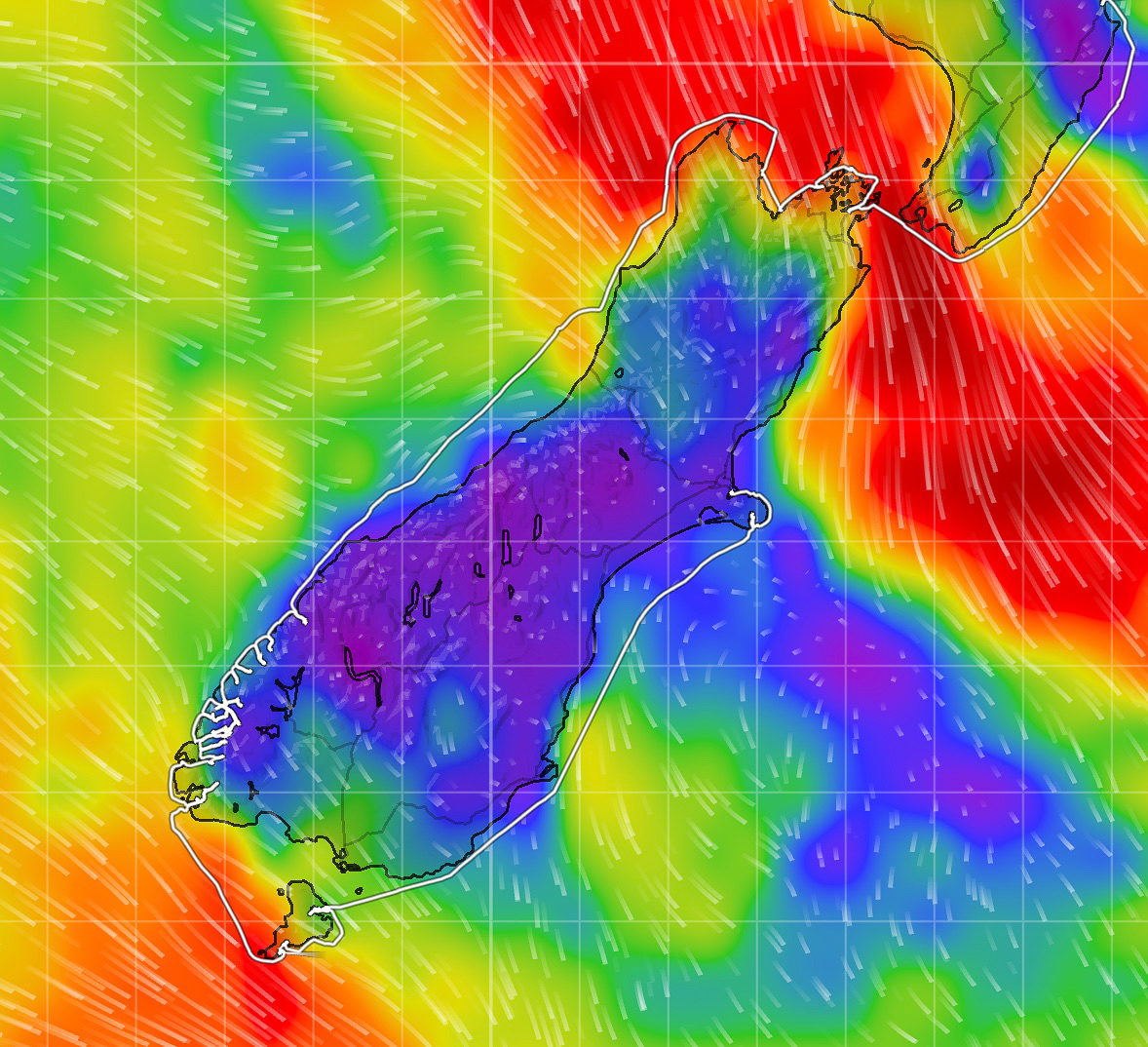
South Island of NZ and our sailing track. We spent 3 months in that lower SW corner and then dashed up the whole island on the west side in 3 days!
One of the many challenges of the passage from Milford up around Cape Farewell into the Cook Strait, is that there is only one place you might possibly stop, but that requires negotiating a river bar entrance at Westport (just north of Cape Foulwind!), which is safe only in decent weather. Otherwise, it’s a solid three day run (if you keep your speed up), which just barely fits into the cycle of weather shifting from South to North. The weather window that presented itself to us seemed pretty typical, catching the end of a southerly, motoring and motor-sailing through variable winds in a race to meet the Cape with relatively light winds rather than the usual NW or SE gale.Leaving sooner, we’d have had more wind to sail with, but we’d risk arriving too early for the switch of winds at Cape Farewell.
Diana took the first watch just after 2 AM after we cleared the hazards on the north side of the entrance to Milford and could head more directly north. “Really cold, icy hands,” she wrote in the margins of the logbook. “Overcast skies heading further out to clear Arawua Point/Big Bay Bluff.” Just after sunrise on my watch, I got a glimpse of the mountains south of Mt Aspiring, which reminded me of Wyatt’s 100 mile run the length Aspiring National Park. I wondered if he could have seen the Tasman Sea from any of those lofty ridge lines he traversed?
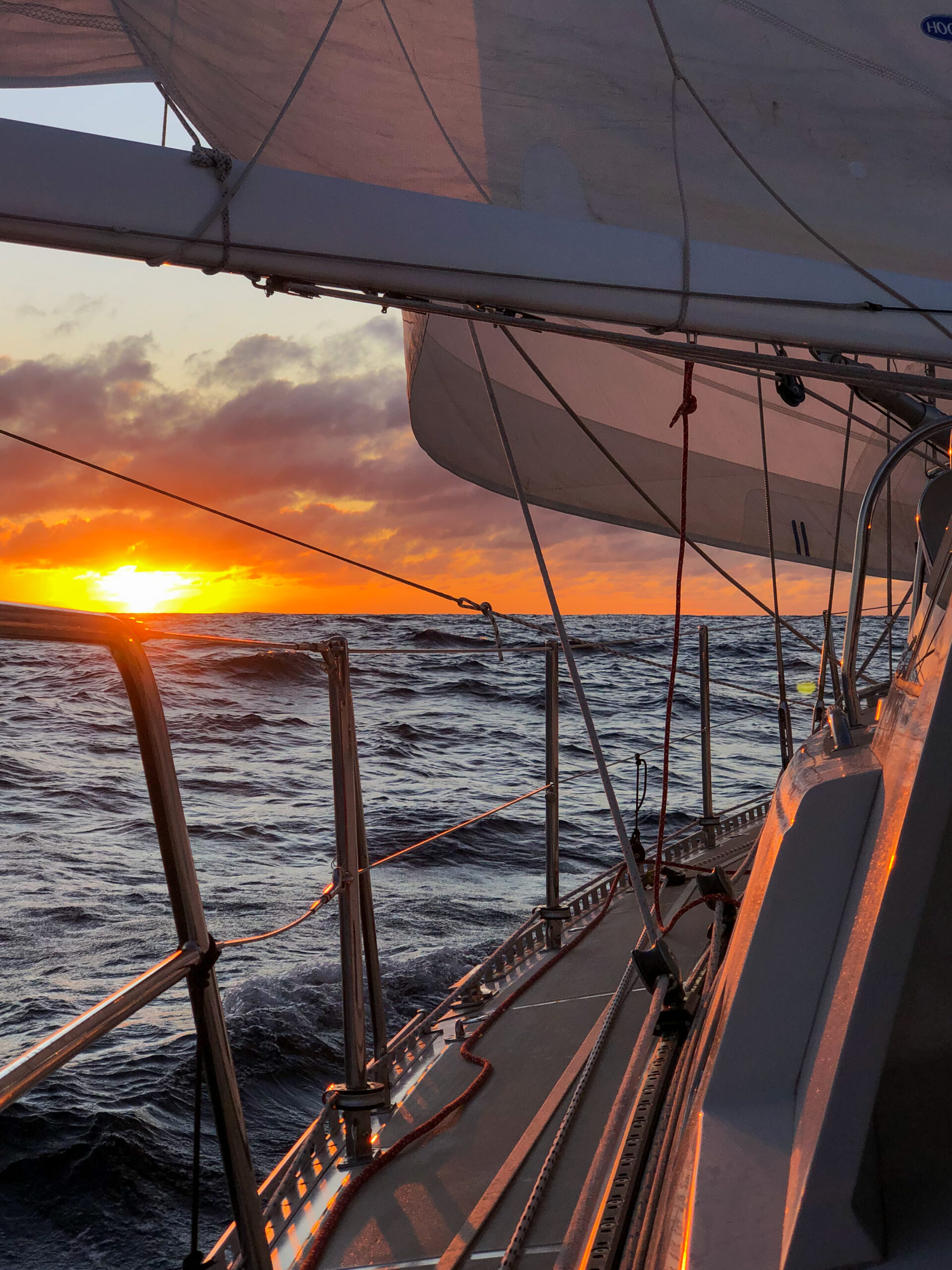
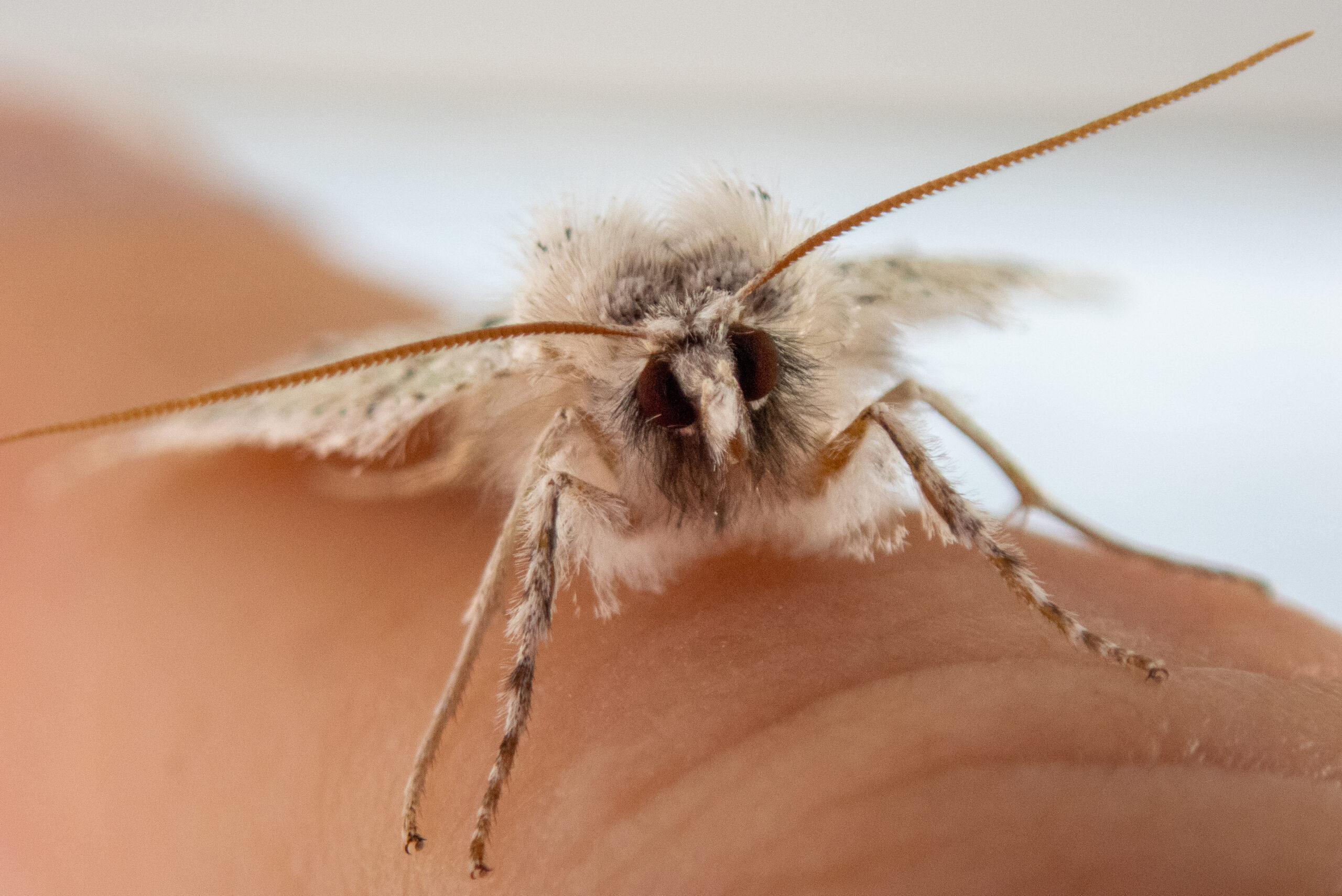
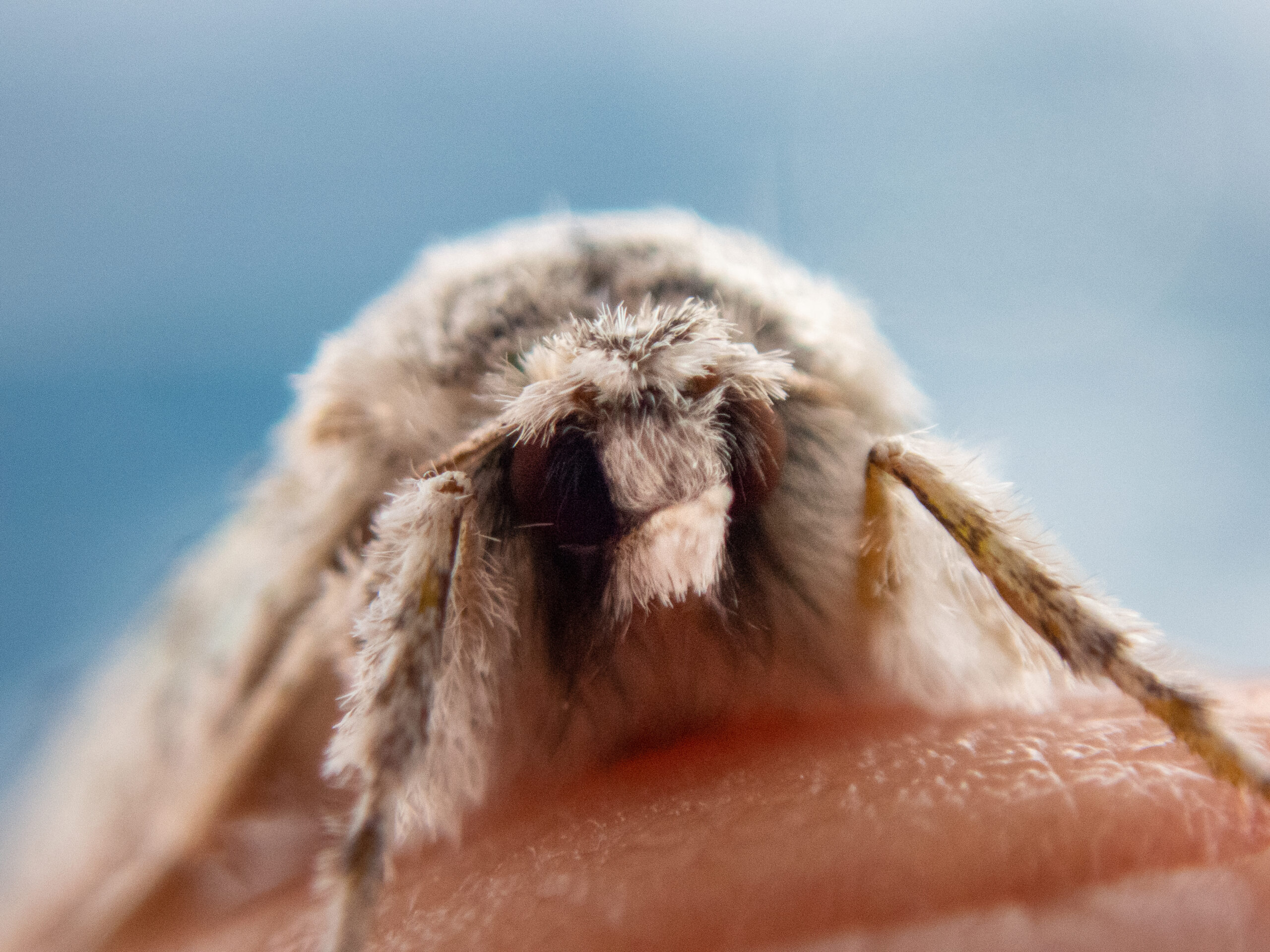
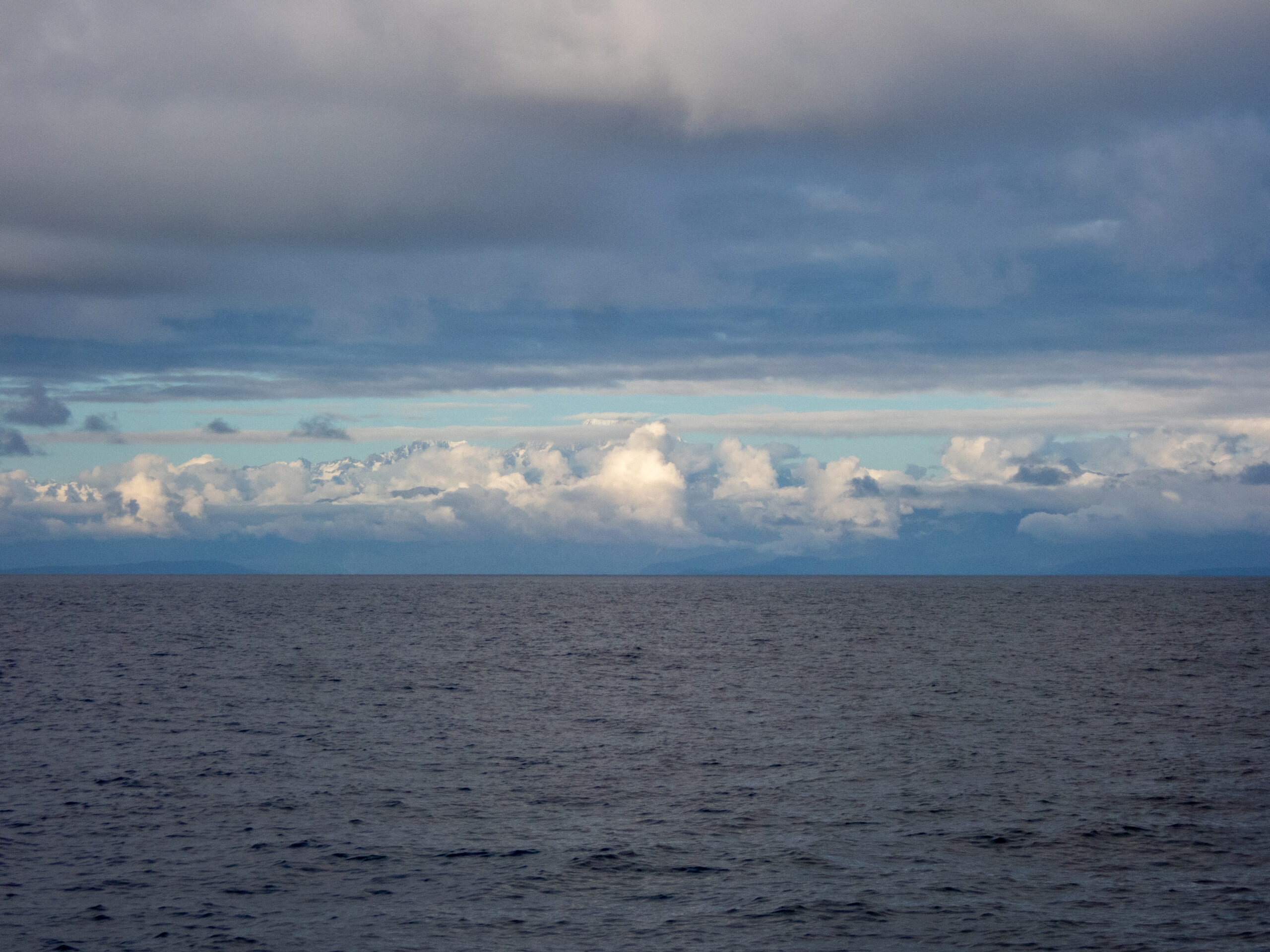
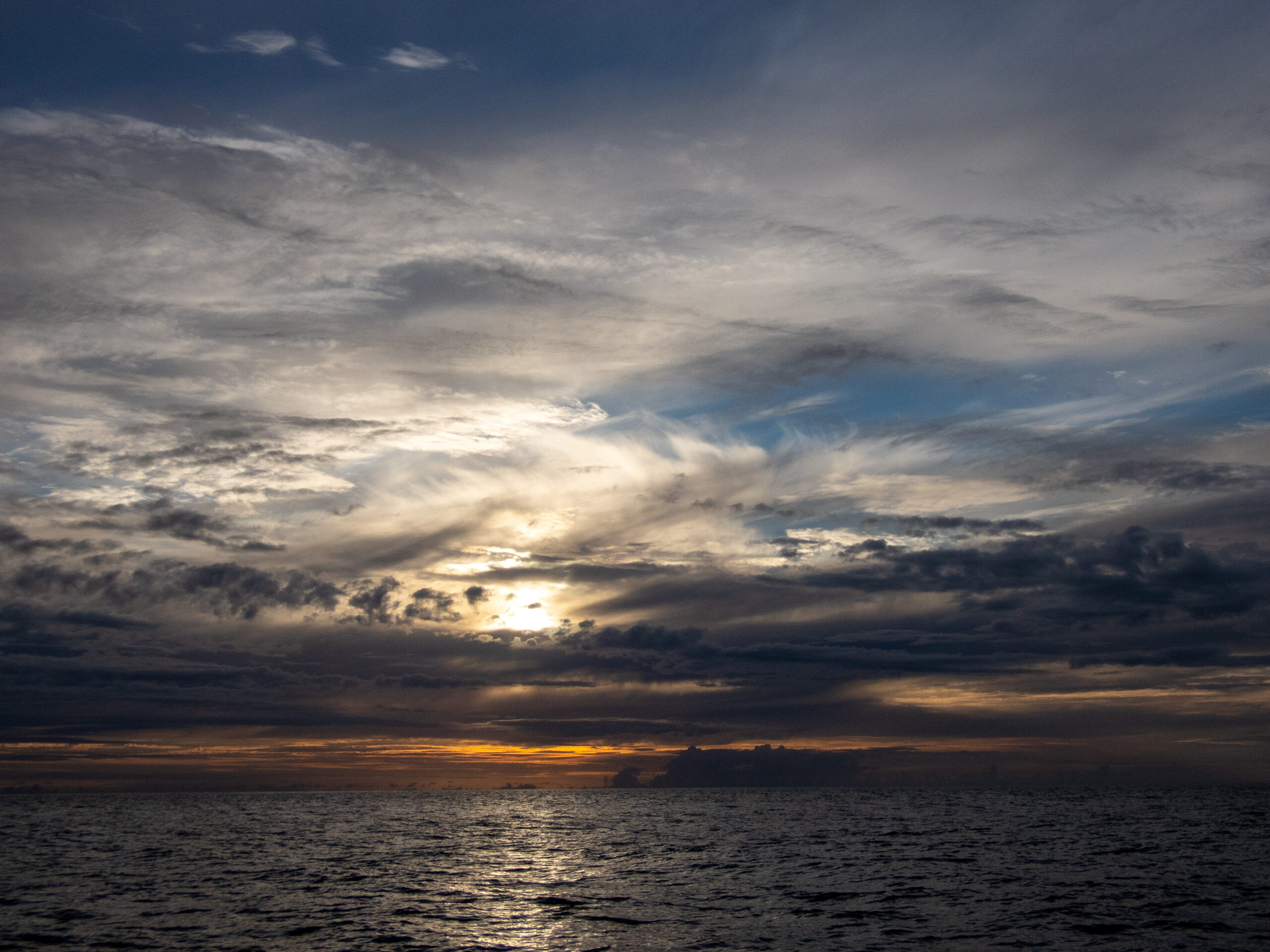
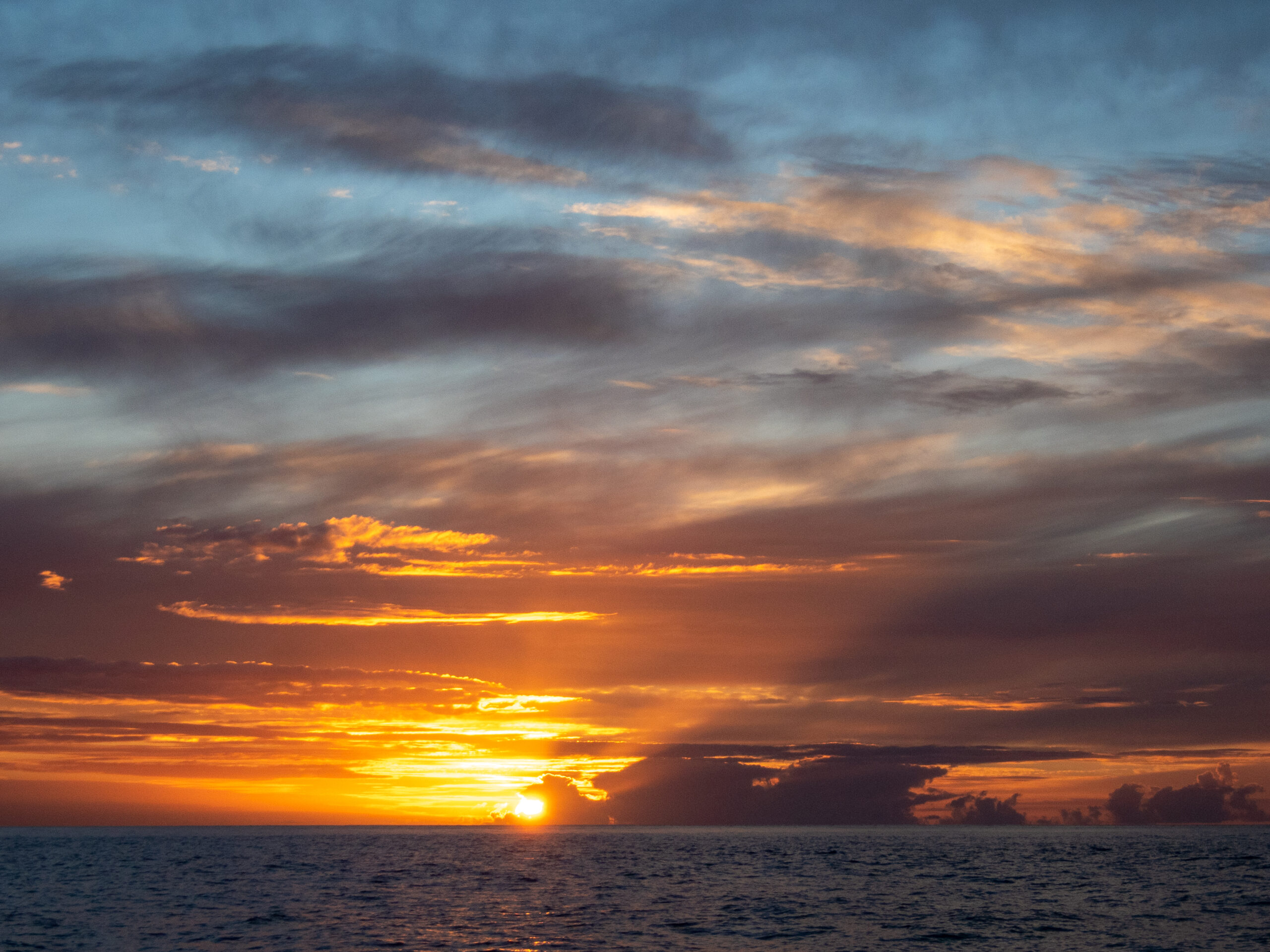
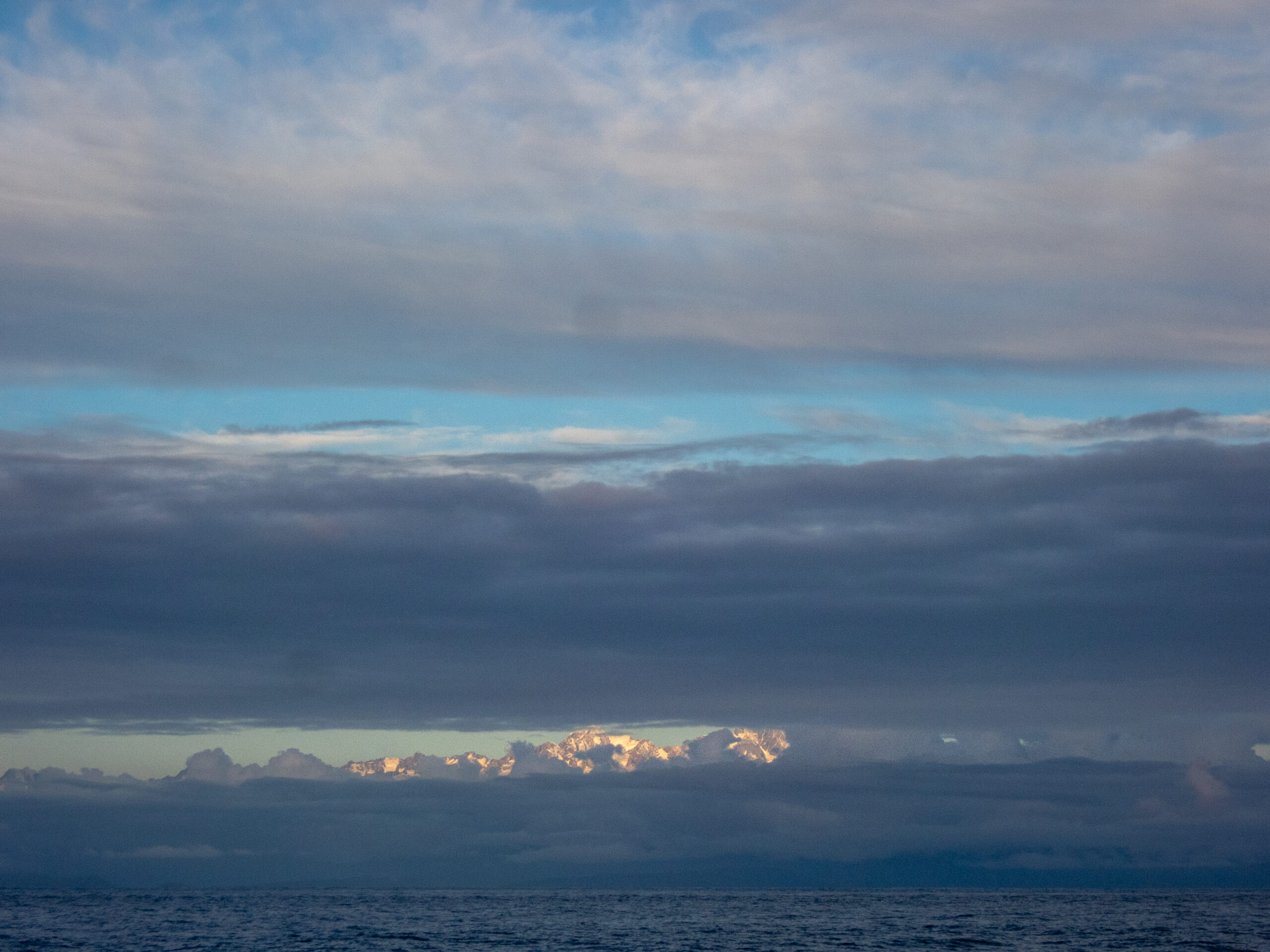
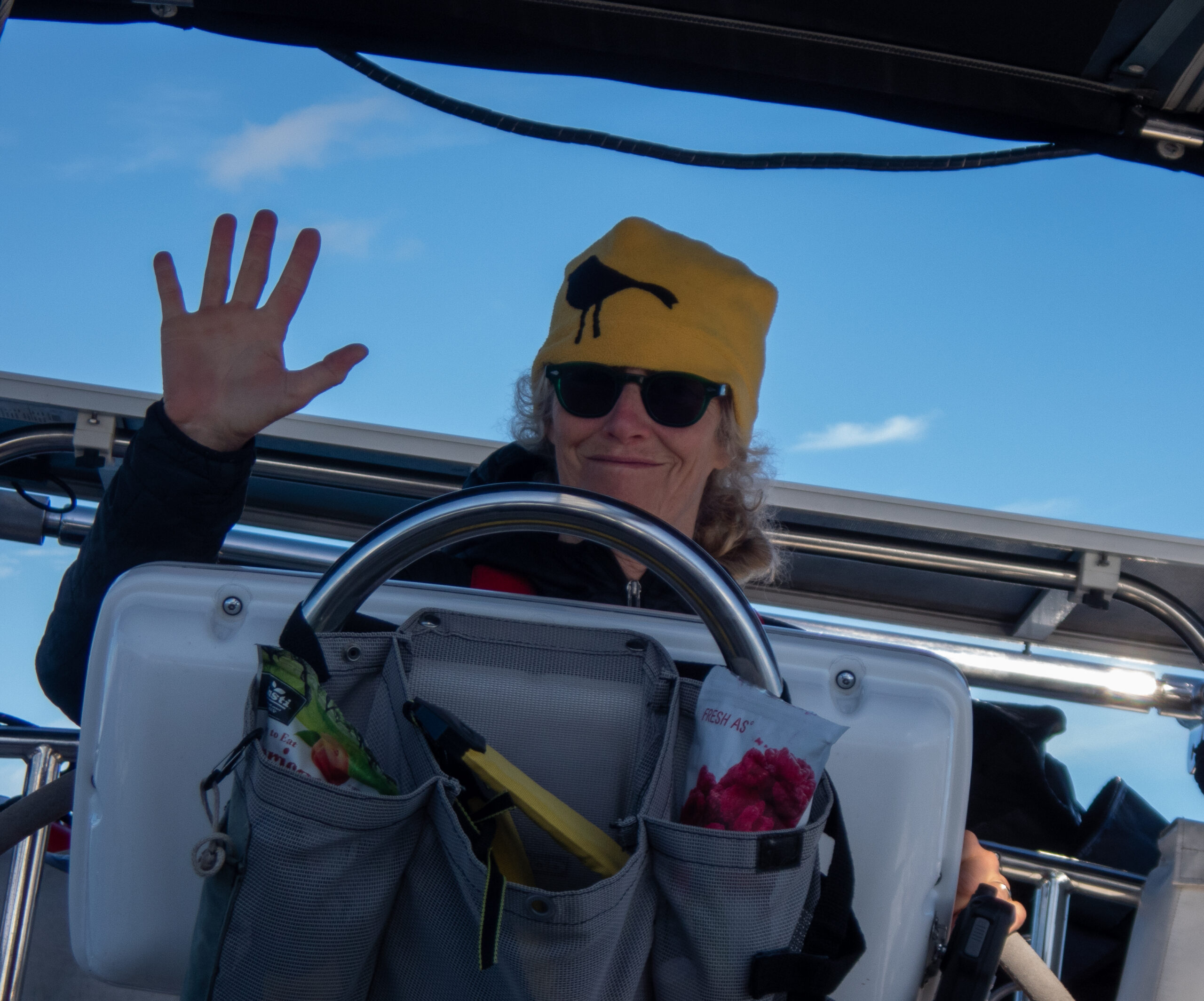
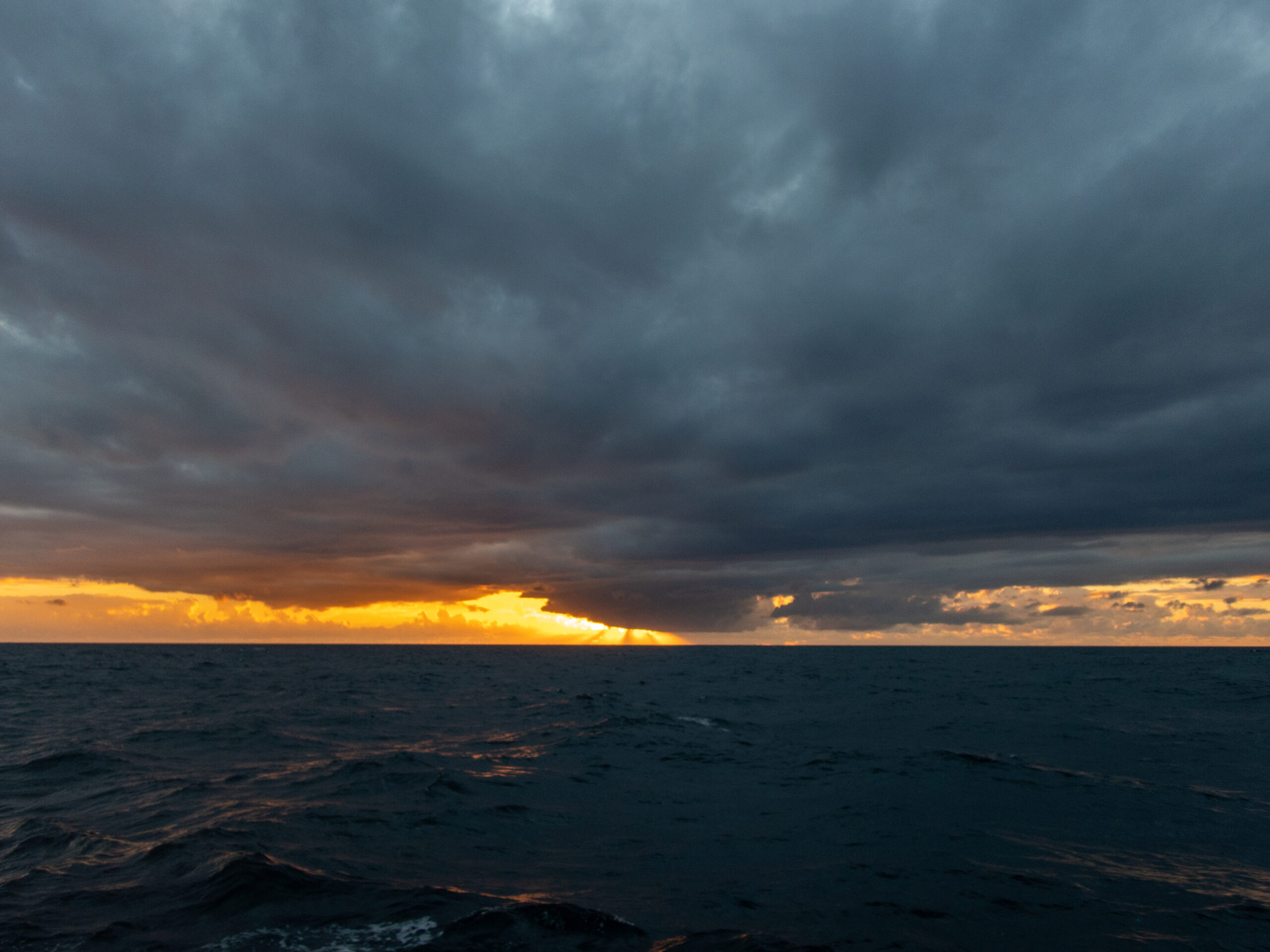
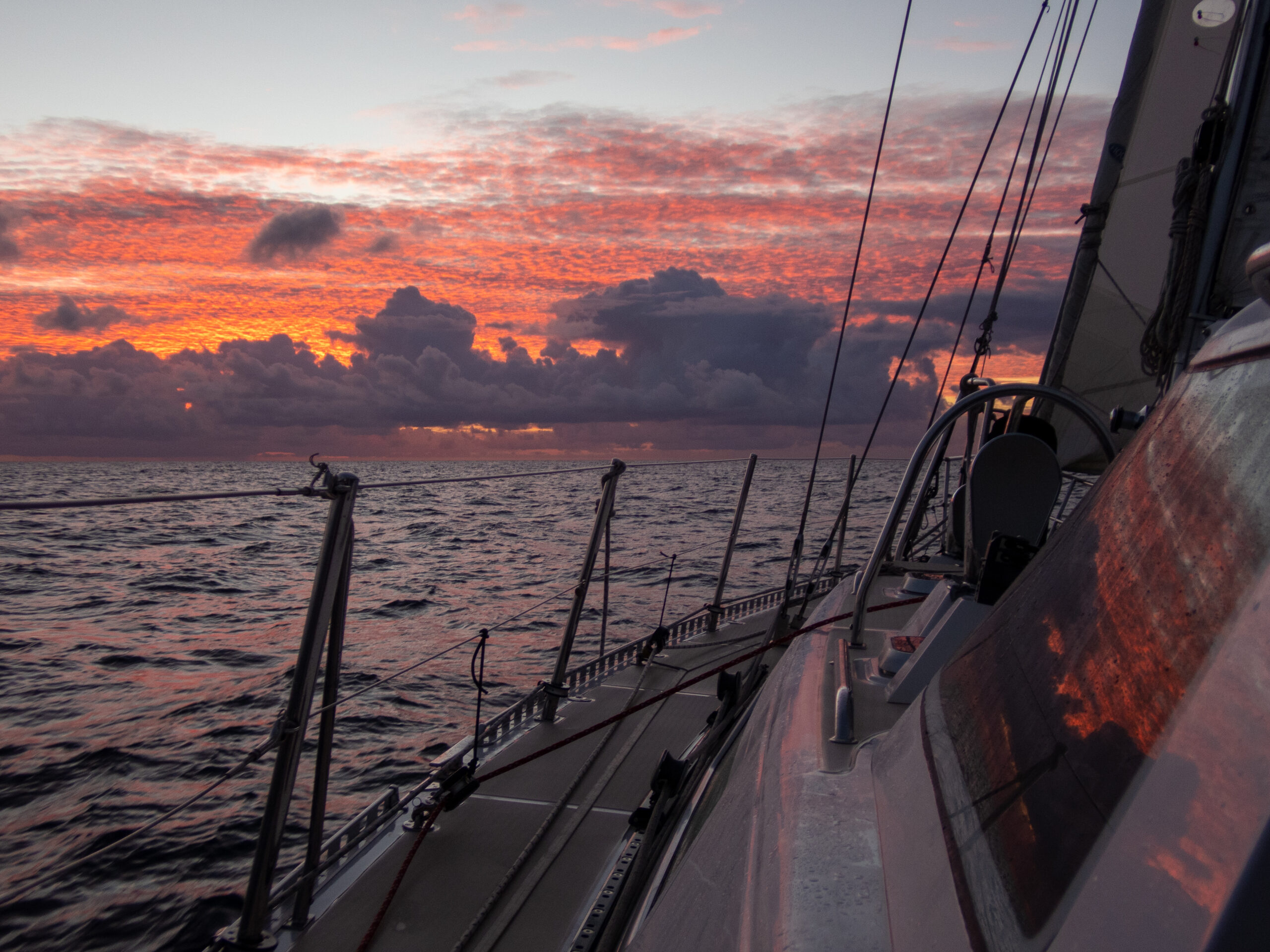
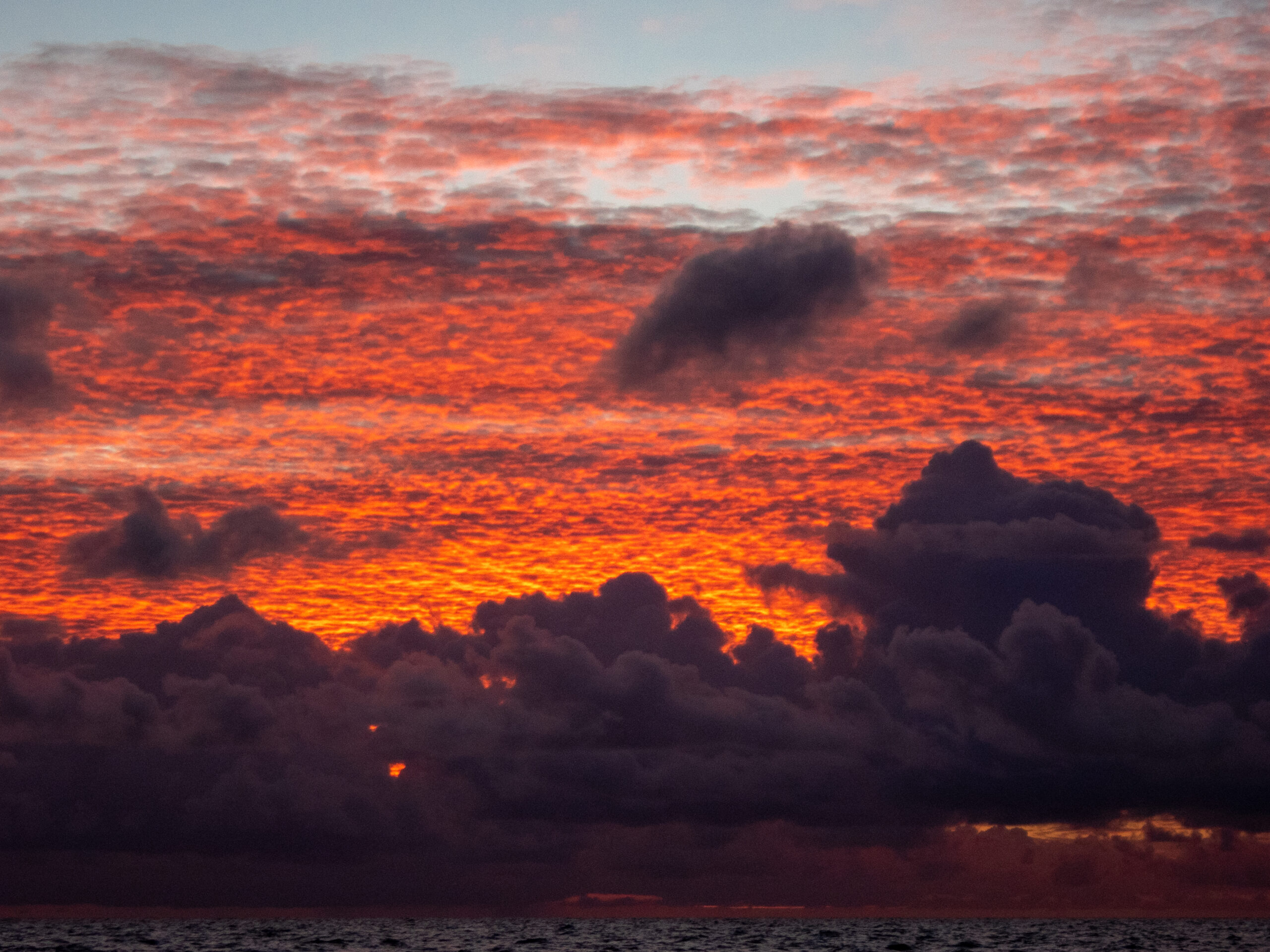
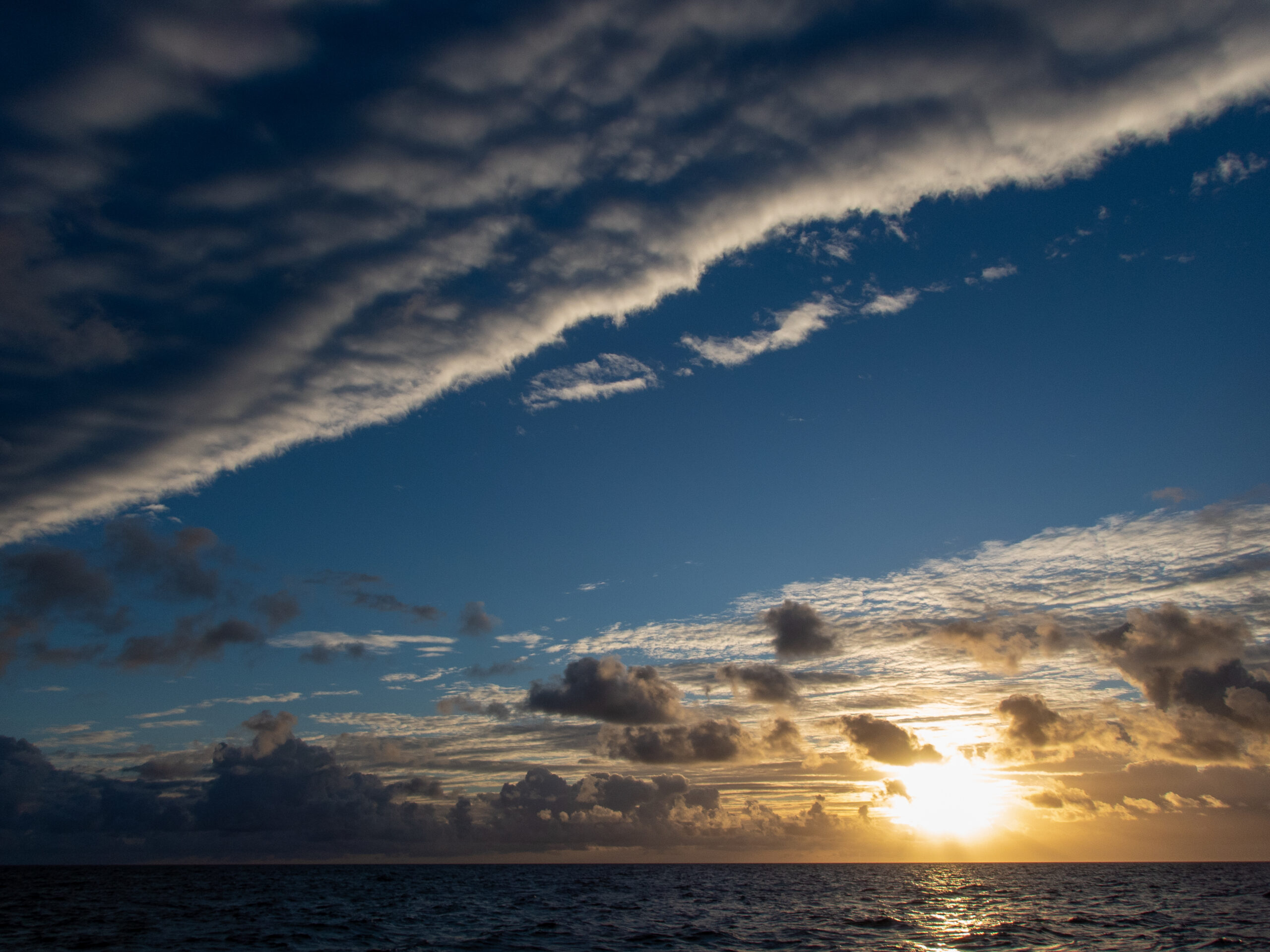
NZ’s wild west.Hard to sail away from that remarkable corner of the universe. Allora always seems up to the task, even if we’re a bit reluctant.I’m afraid we have a stowaway!He looks about as eager as I did for this passage.His ‘foulies’ are cooler than ours!There are mountains in them thar clouds!Sunrises and sunsets don’t go unnoticed out here.
Also in the logbook, I see a lot of scribbles in these notes about fuel rates, and estimates of actual fuel burned for miles ‘made good.’ Allora carries 190 gallons full which is more than enough for the distance as long as the weather is reasonably cooperative, but it makes a difference if you’re burning 1.5 gallons/hour or pushing the engine and burning 2.5 gallons/hour. The extra gallon doesn’t double your speed. People better at the maths would probably be able to calculate exactly what fuel rate is most efficient. I settled upon 1.6 or 1.7 as an nice compromise of efficiency, speed (to make our date at Cape Farewell) and comfort.
We had rain. We had current steadily set against us. We had dolphins streak by in the night leaving comet trails in the bioluminescence. We fussed about the wind, almost-but-not-quite-enough to sail, ever creeping up on the nose. We almost lost a batten in the mainsail. Then later, Otto, our autopilot made a sudden decision to turn hard to starboard out of nowhere. The switch for the high pressure pump on the watermaker heated up and set off the smoke alarm (naturally at night-while I was off watch). We saw no other boats besides the occasional fishing boat working closer to shore. We caught a glimpse of Aoraki (Mt Cook) at sunset, and at Cape Foulwind a couple of seal lions waved as we passed by.
And my lil’ camera could not capture how stunning this scene was!
On the last night, as seems to be a theme lately, Diana drew the toughest watch of the passage. There was just no way to completely avoid a patch of heavy winds slated to meet us as we approached the Cape, straight on the nose. We tried to time it for the least possible, but Poseidon wasn’t going to let us off feeling too clever. For her whole watch, Allora slammed into 20 knots on the bow clawing her way up the last bit of coast to Cape Farewell. Finally, after calling Farewell Maritime radio to try to find out whether it was generally considered advisable to cut the corner at Kahurangi shoals (which they weren’t really able to commit to), we decided it probably wasn’t, so we slogged on. Diana went off watch and very soon after, we were able to fall off the wind. Just five degrees made a big difference. Pretty soon we were motor-sailing and by Diana’s last sunrise watch she was able to shut the engine off and sail along Farewell Spit, an amazing 25km sandbank off the northwestern corner of the South Island at the opening of Cook Strait. The winds were light but sweet. Finally! ~MS
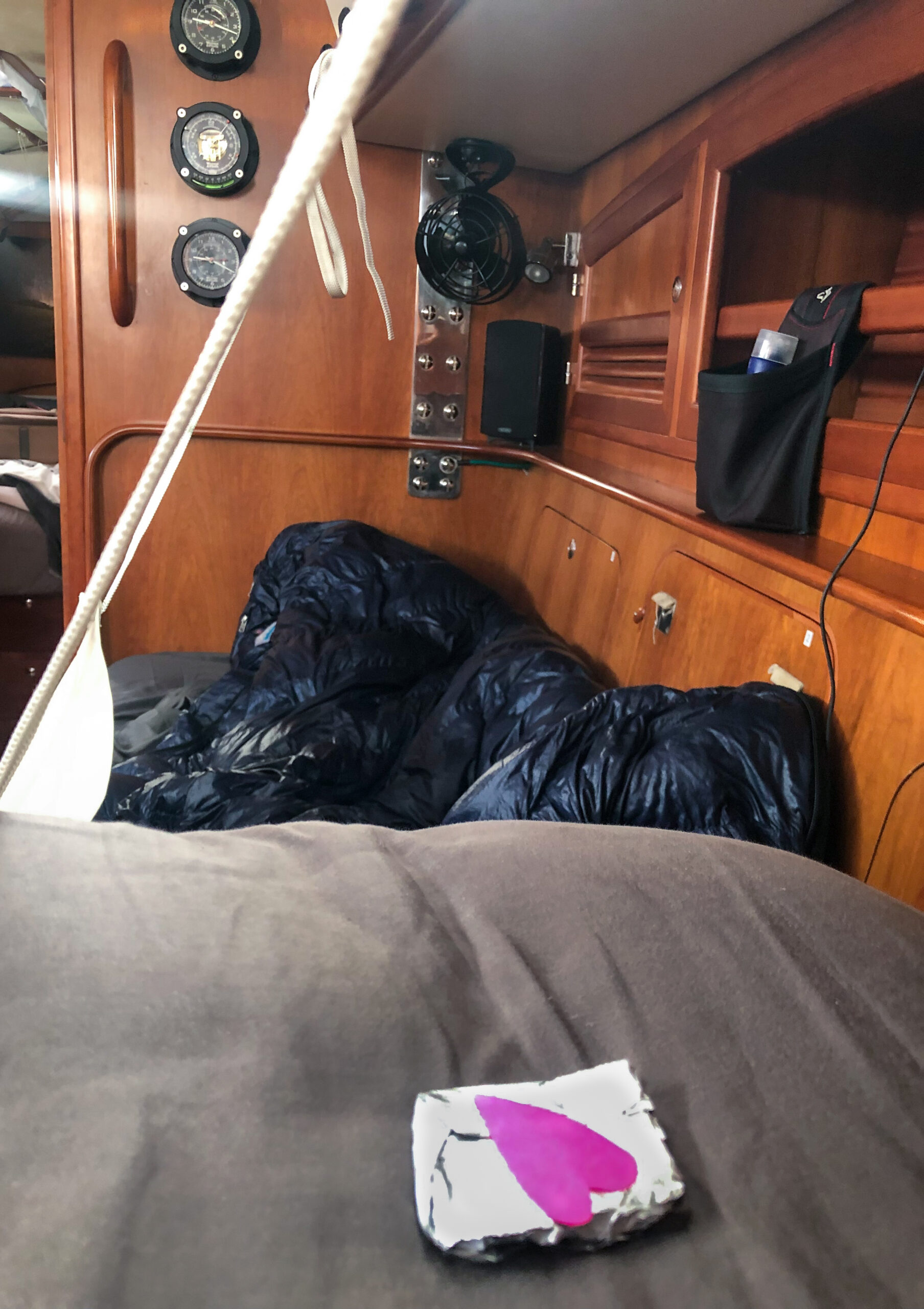
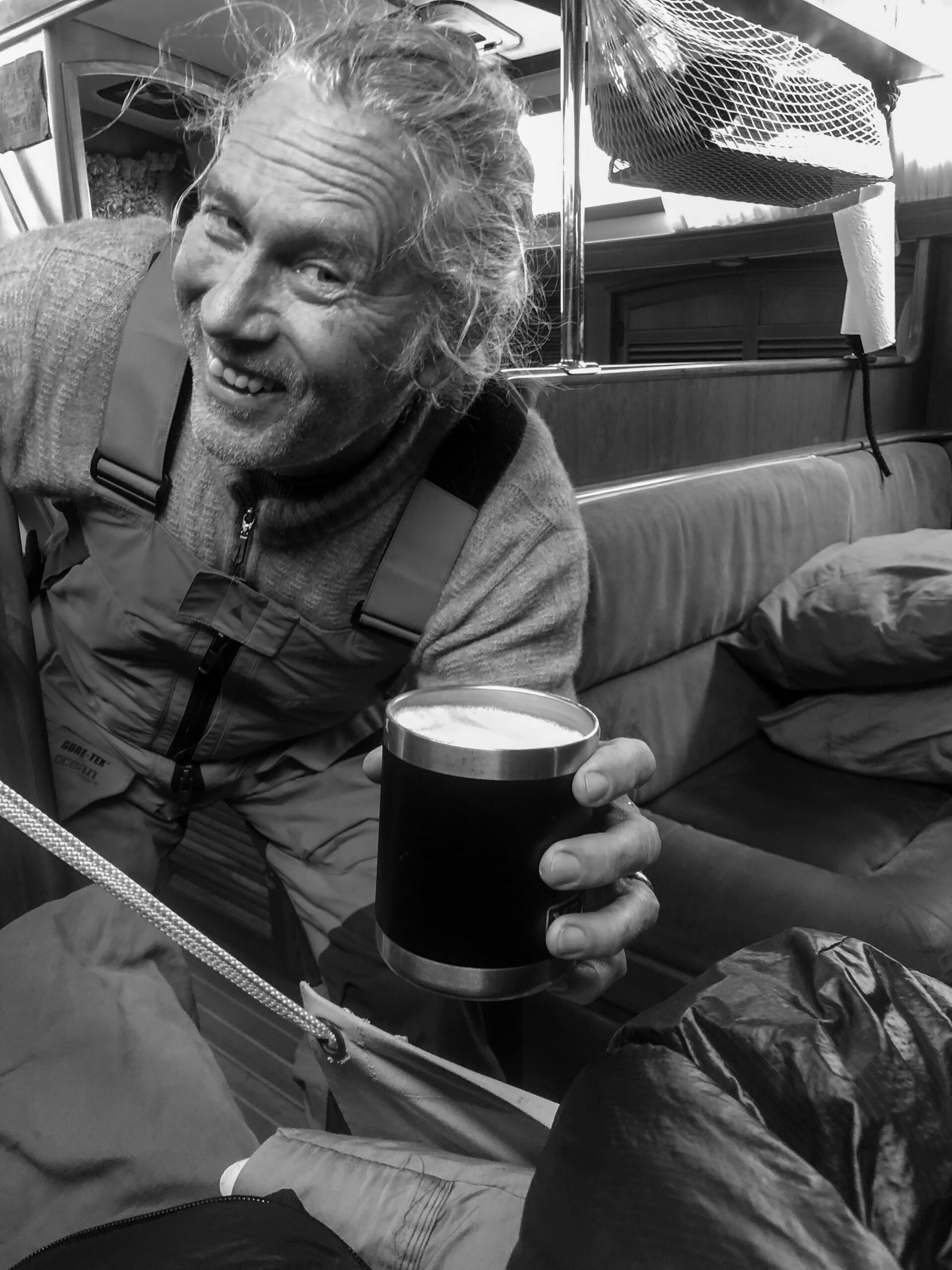
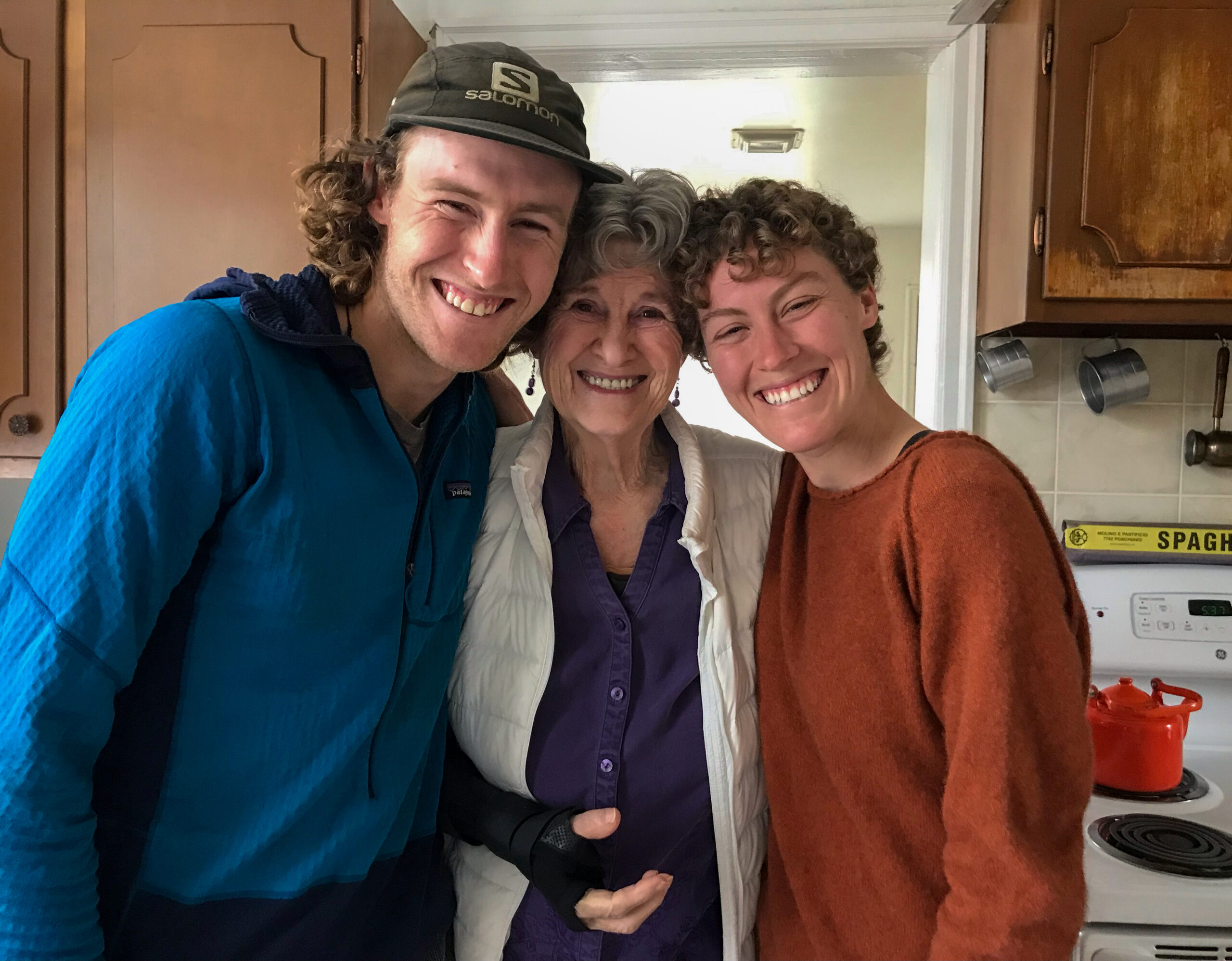
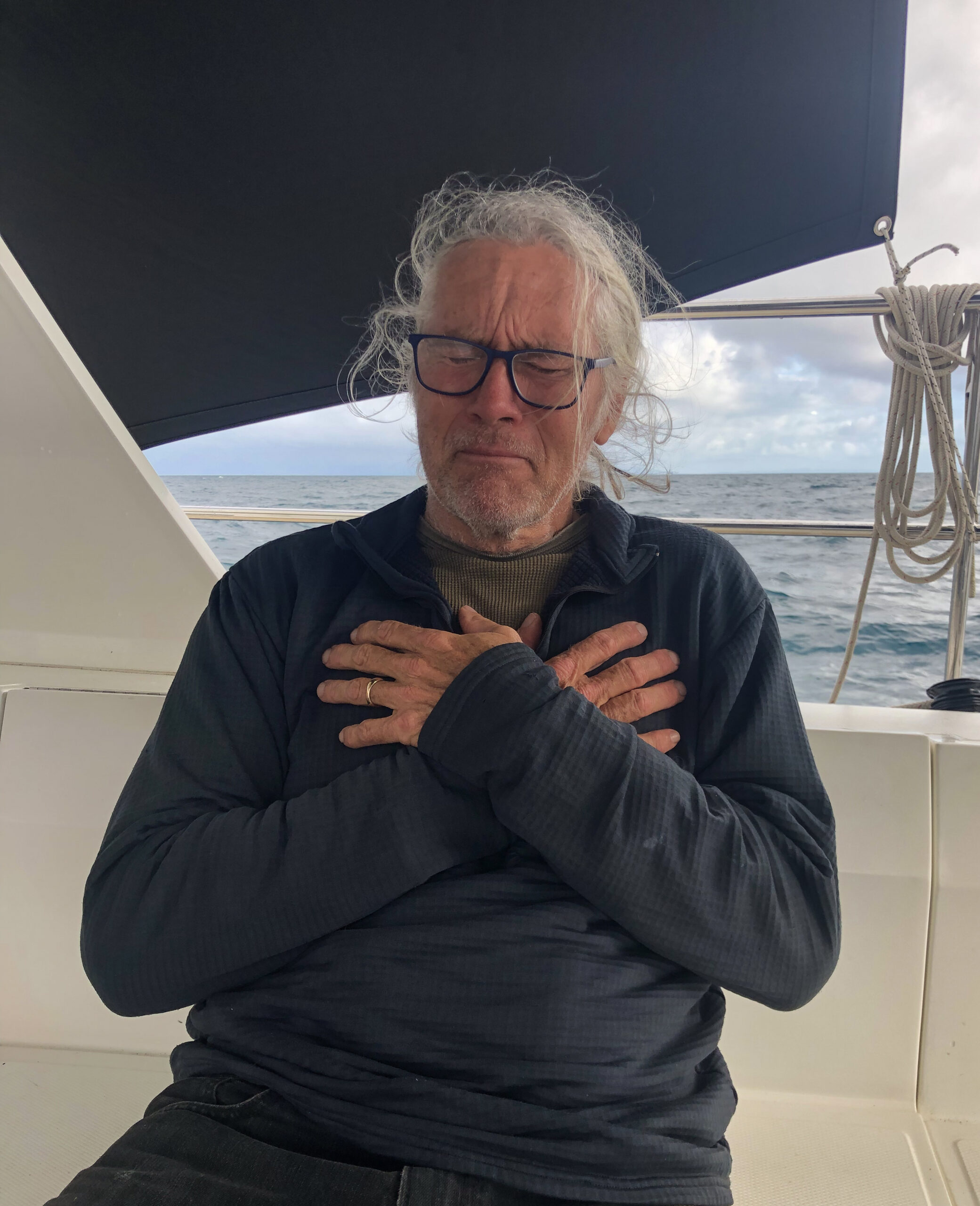
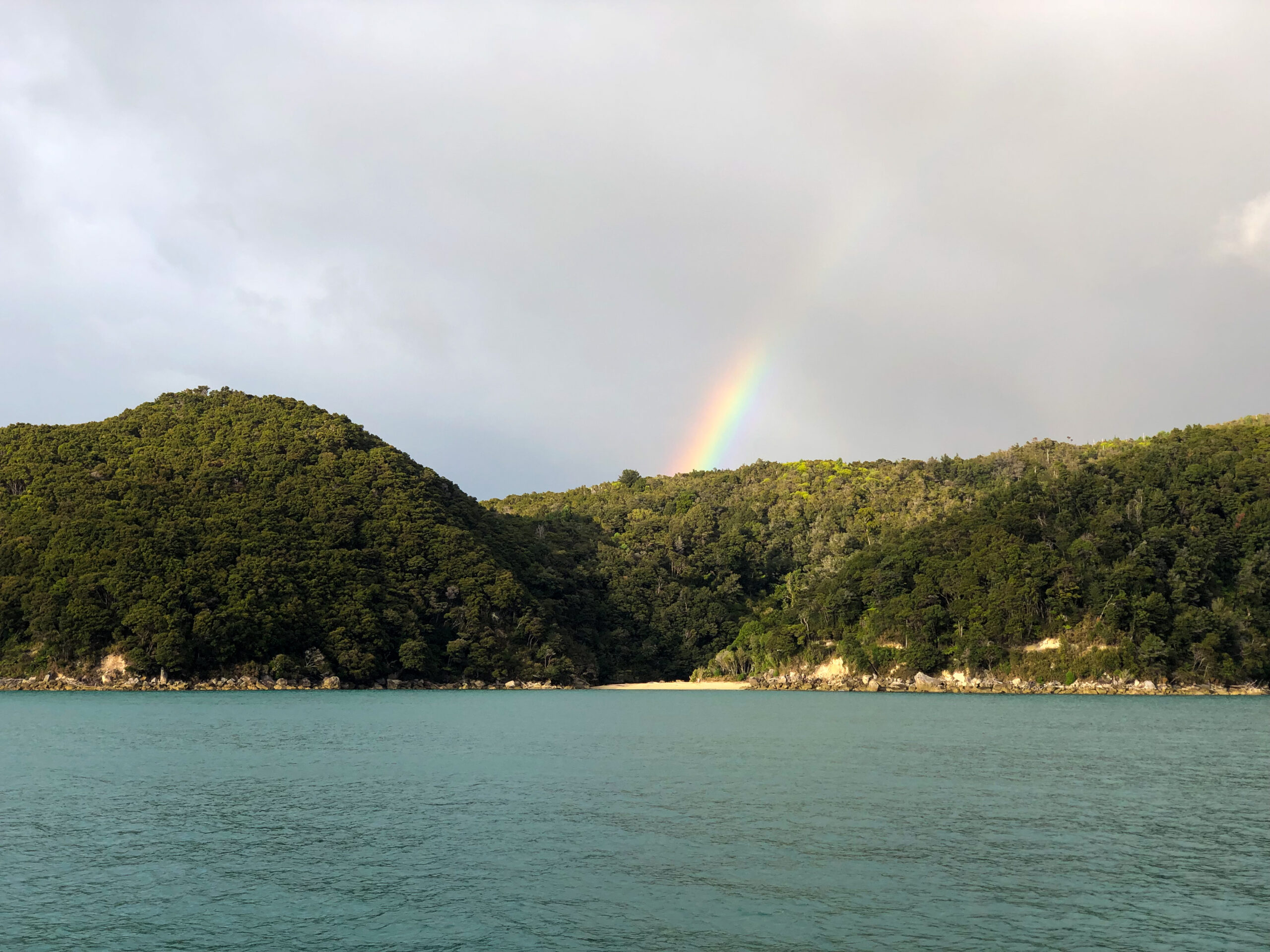
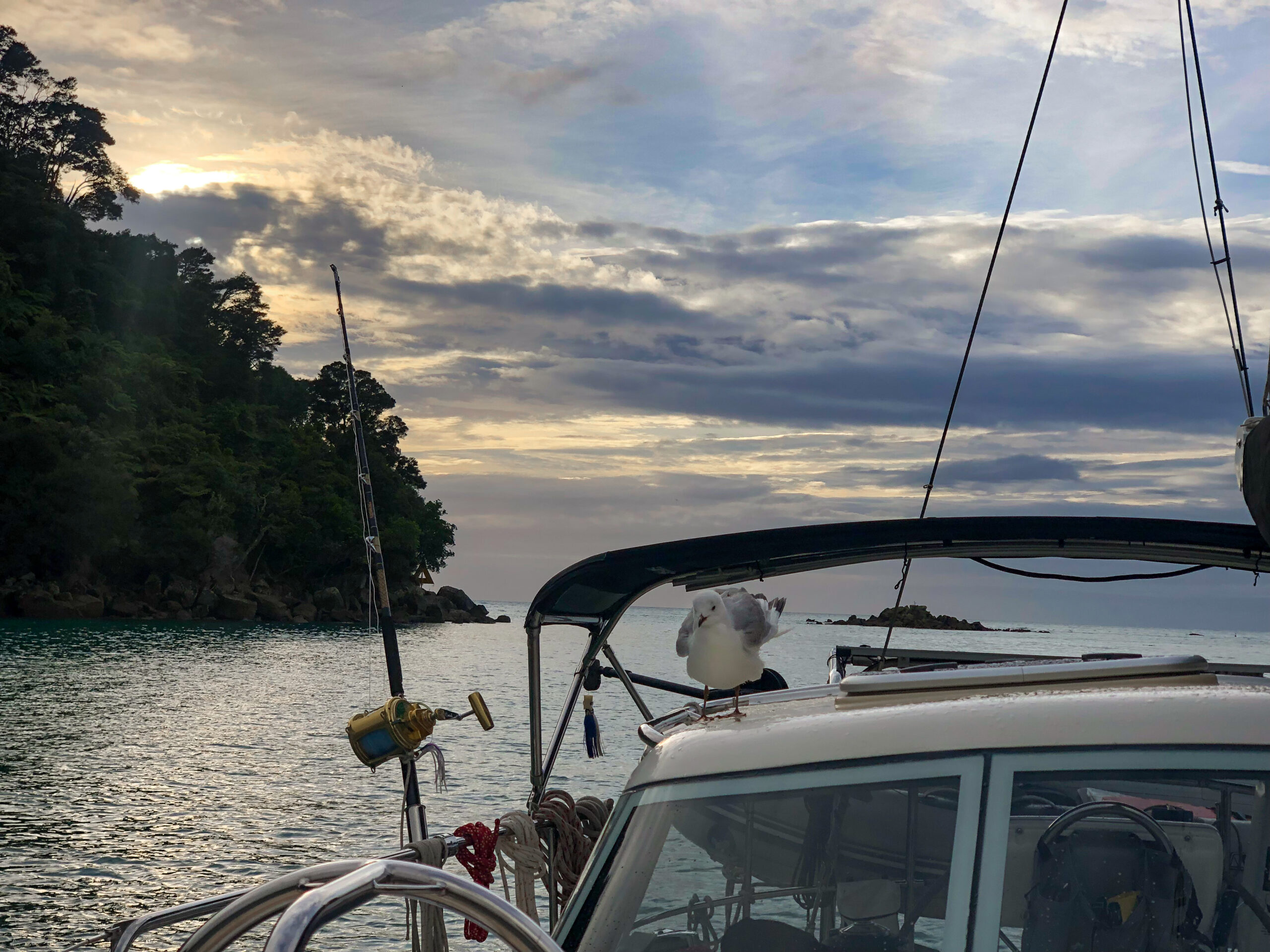
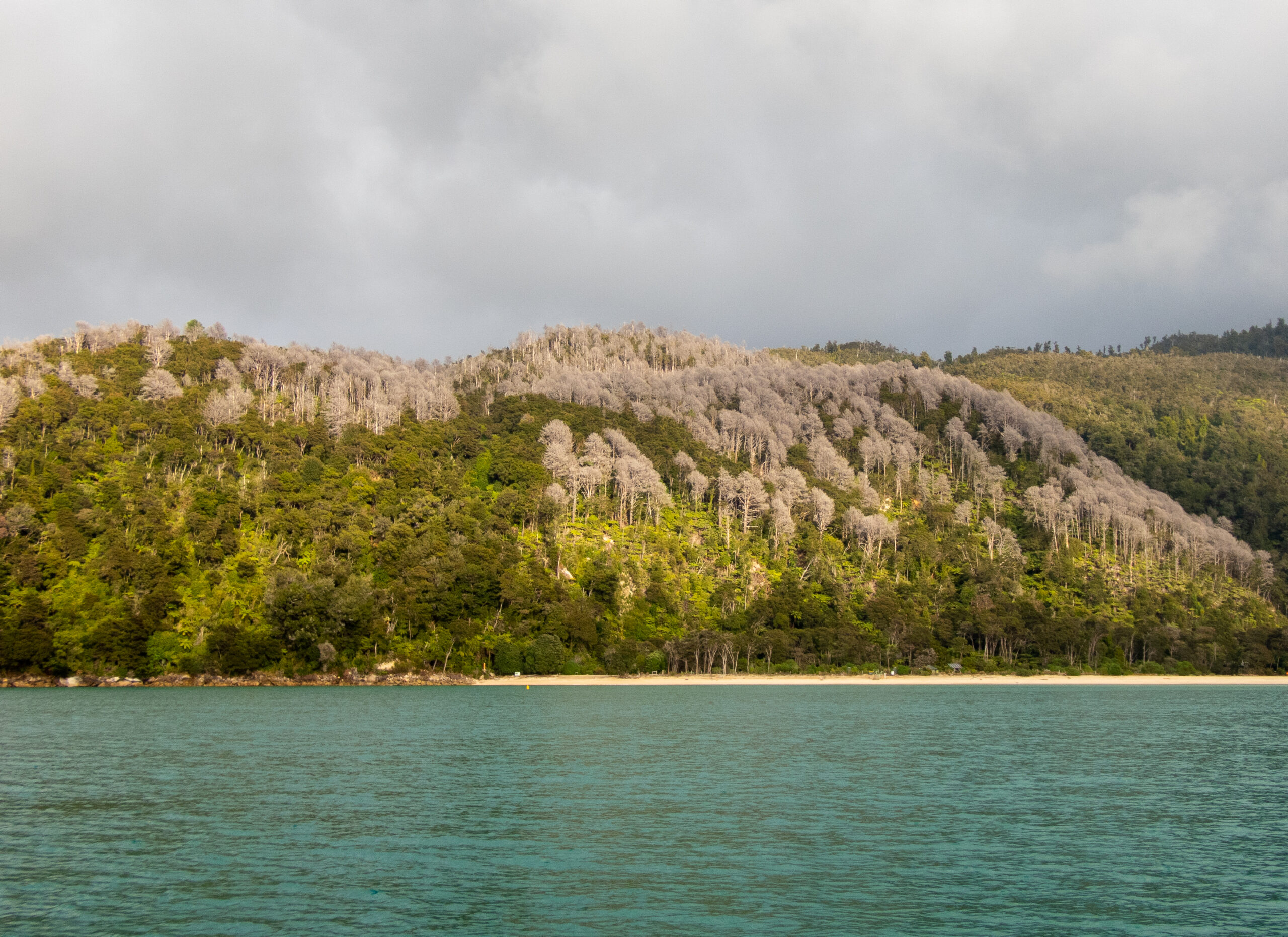
We had to ‘hot bunk’ which (sounds better than it is), means sharing the same berth in shifts because the boat is heeling too much in one direction to utilize the other side. I left Marcus a chocolate on his pillow to further sweeten his off watch experience!Gotta love modern times – ship captains of yore didn’t used to provide their first mates with latte’s as a wake up! Feeling grateful …First light on the last day of our passage.Oh hello dawn, we see you!The same sunrise unfurling.Allora and her crew get some sweet, smooth motion before finally rounding Farewell Spit and finding an anchorage.Allora seems to keep a steady pace, but her crew at this point can feel like horses heading back to the barn, anxious to just GET THERE! It’s definitely a lesson in savoring what IS!Before we even tucked into Abel Tasman, my phone started ‘bleeping’ frantically, the first Wifi messages in nearly 3 months came flooding in. I have to say, both sides of the phone equation are awesome – putting it away, disconnected from the world and then THIS! Siblings reunited for the first time in 3 years! Love in pixels!And Grandma Elizabeth sandwiches are always delicious!Marcus’ reaction when I shared these pics.Bark Bay, our first anchorage in Abel Tasman. We contemplated getting Namo off our foredeck and exploring that little sweet beach, but instead, we just sat on deck and savored the stillness.This gull landed as we were just feet away on deck.Grey skeletal remains of wilding pines (invasive conifers in NZ).