Arohanui South Island! Passagemaking Northward.

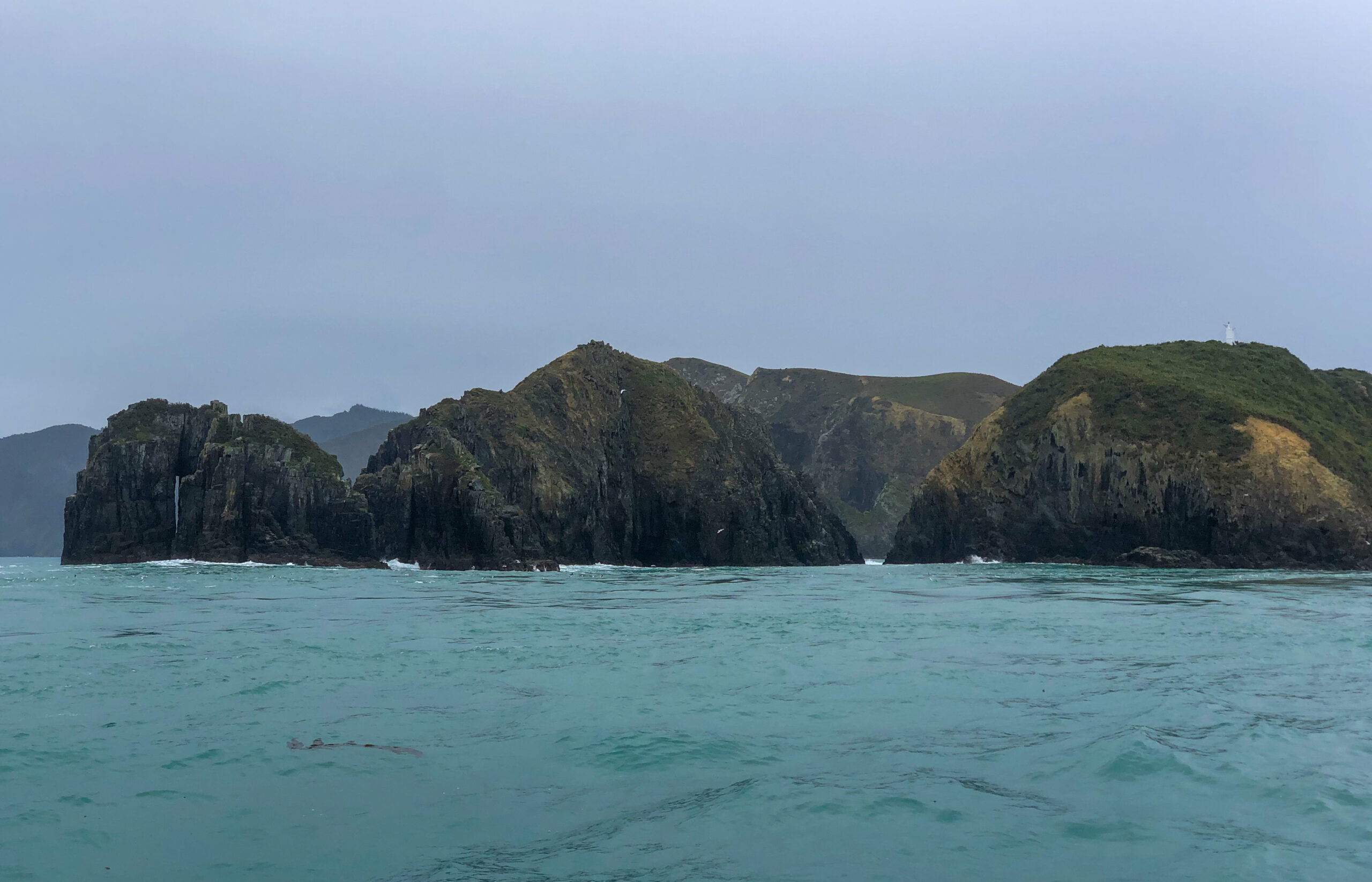
Leaving Tory Channel, entering Cook Strait. Tough leave, South Island … we’ve felt HELD by you! Arohanui Haley and Liam!

Picton to Opua via Napier and the East Cape (duh, duh, duh)

Diana’s last log entry on the first leg of this passage: “worst passage ever.” Maybe, I’m not sure, but I confess to getting seasick, for only the third time ever. Even so, I think the hardest part was leaving the South Island in dead calm with the threat of drizzle. After two and half years, it felt like leaving home, not least because we were leaving Haley and Liam, and knew it would be a while before we could get back.

Fueling up, (which for some reason is always a little stressful for me), was extra stressful knowing it was the last thing to do before saying goodbye. After multiple hugs and lots of tears, there was nothing to do but cast off the lines and pull away. 

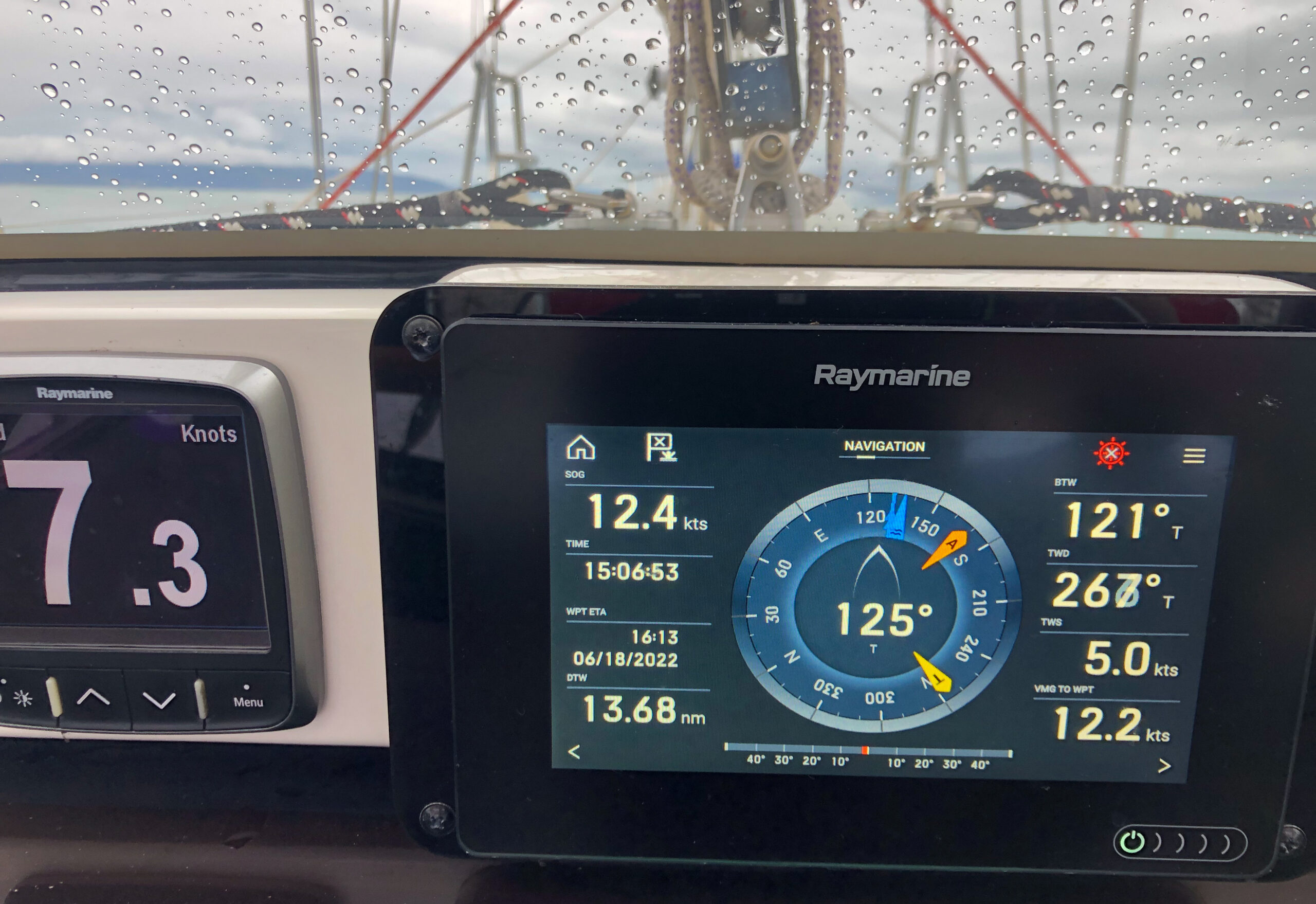
We were on a bit of schedule, running out of time to get to Opua before Maddi arrived from the States. Also, it was crucial to time our exit from the Tory Channel for a reasonably favorable current, the basic recommendation was leave on high tide out of Picton. We led that by an hour or two to try to avoid encountering head winds in Cook Strait. It was pretty mild to start and Diana made some super yummy wraps for lunch (she is the undisputed Empress of wraps in my book). As seems to so often be the case sailing around New Zealand, there was no chance of entirely missing the wind shift, and about halfway across we were sailing close-hauled. At least the seas, at that point weren’t too bad, not stacking up against current or anything. I went down to take a nap, and missed Diana logging 13 knots surfing on seas that were getting pretty steep. In fact, we wandered into the edge of an area of rip tides and overfalls, ‘Korori Rip,’ that was pretty dramatic. As it got dark the wind was on our beam and so were the steep seas. Diana was feeling pretty awful, and then I got sick too. This might have been where Diana logged “worst watch ever,” – she was really feeling bad and then the rudder on the hydrovane (our wind vane steering system) came off and started pounding on the stern. It took Diana a couple minutes to figure out what was going on, what the loud noise was. I donned a PFD, clipped the harness in and took a knife out onto the swimstep, hoping that I could cut the safety line off without losing it. It was pretty wet, but I didn’t want to take time to put on boots, so I opted for bare feet. Anyway, it actually wasn’t that bad, Diana has set up holder for a good sharp dive knife and a pair of pliers under the lid of the lazarette where they are super handy (she’s pretty good at coming up with that kinda stuff). I took the next watch and Diana tried to sleep off her seasickness. Once we cleared Cape Palliser things improved dramatically.
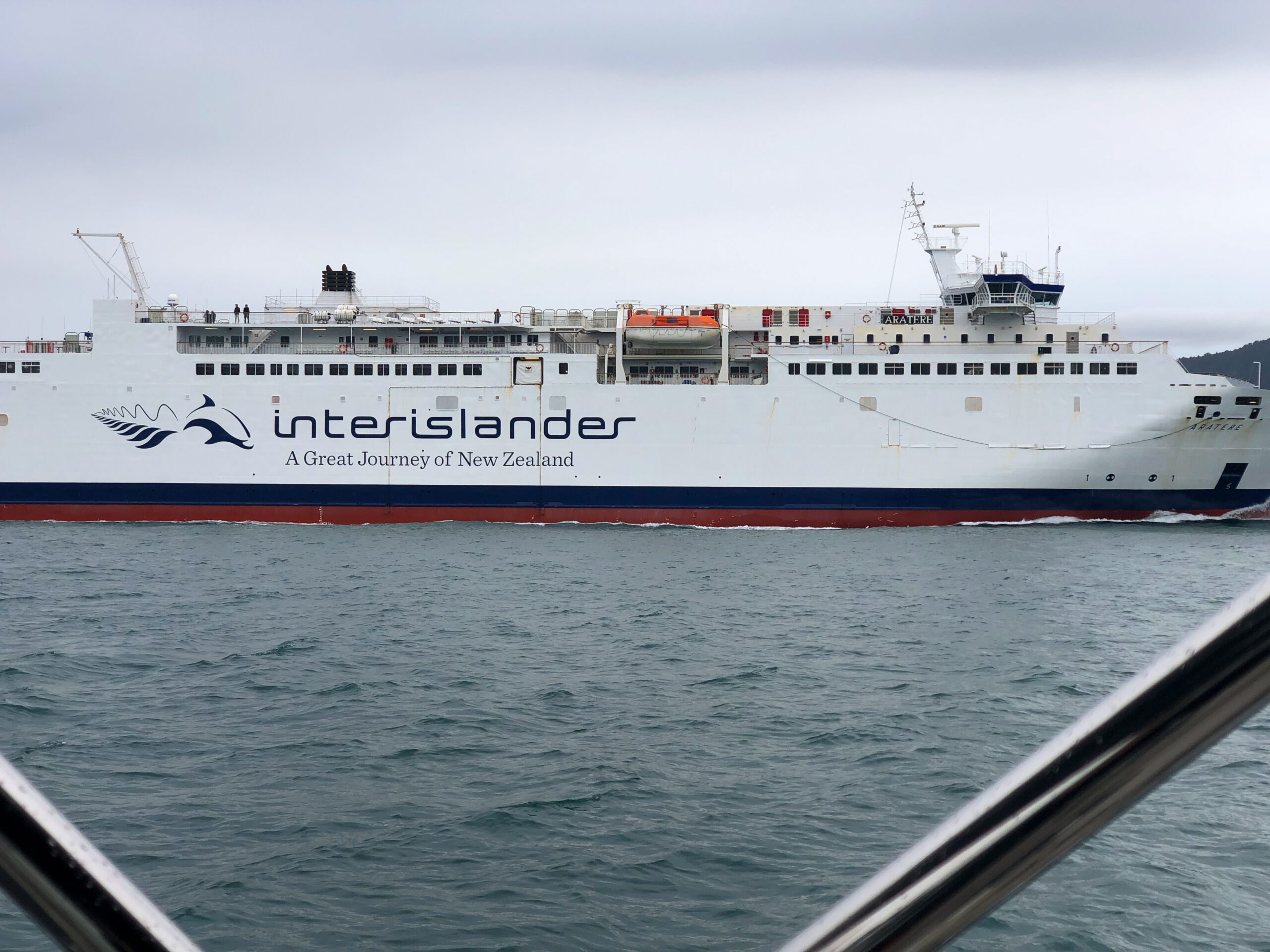
Another way through the Tory Channel and across the Cook Strait … bet they have a smoother ride? (Our food may be tastier?)
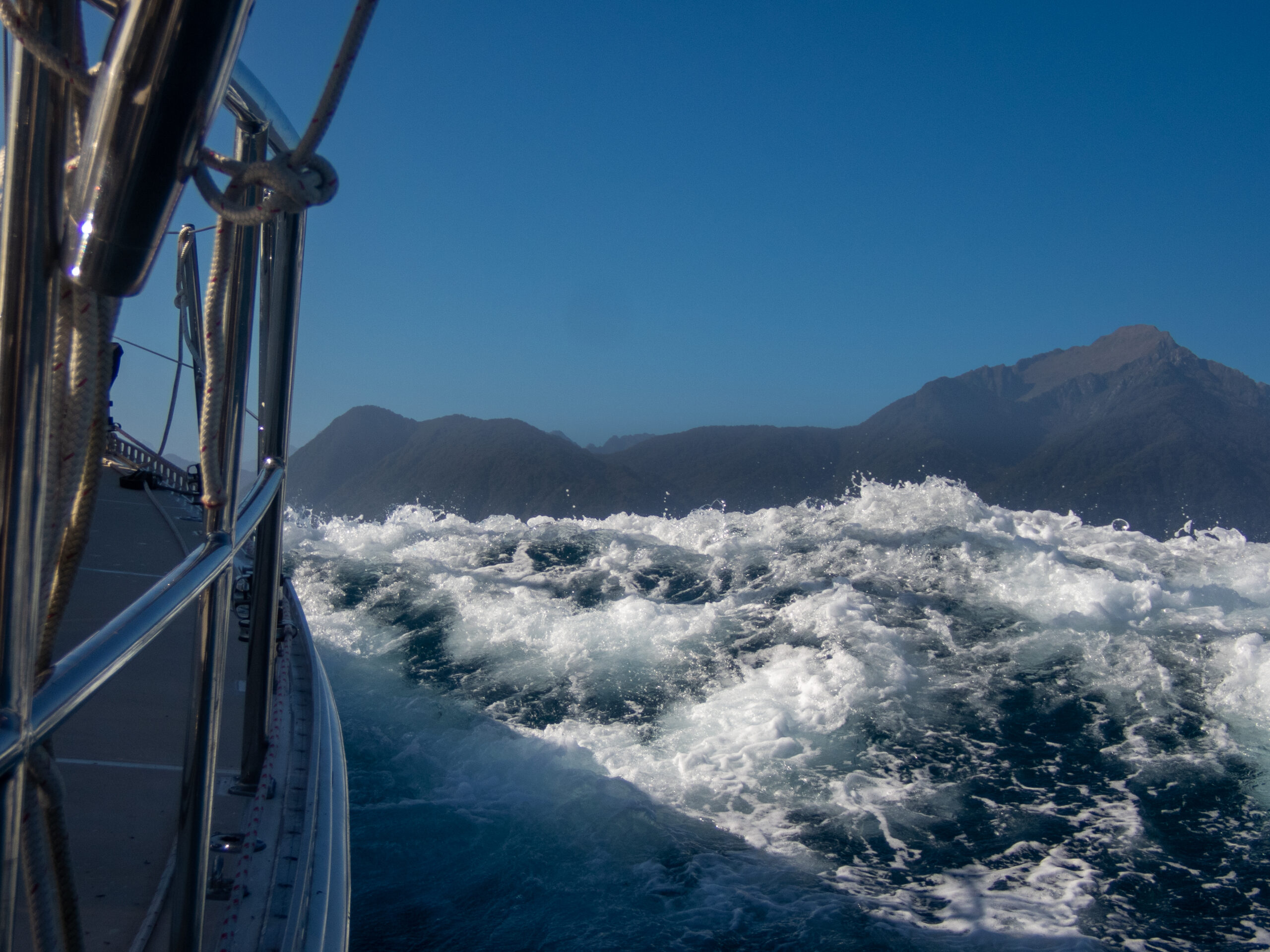
Exciting though it was, it was also time to stop taking pictures and turn away!

No doubt timing arrivals, departures, capes and channel entrances can be the trickiest part of sailing. You’re always trading one ideal for another. The next challenge of this passage was the East Cape, which is massive and takes a couple days to fully round. The forecast was for 4 meter seas and forty knot gusts… not super inviting. We liked better the sound of a snug marina slip at Napier to wait for the weather to ease up a bit, but that meant arriving at midnight, which is something we are loathe to do if we’re not really familiar with the layout. It’s never nice to feel like your options are bad or worse. As it turned out, the wind in the harbor was still and the passage in, though shallow, was well marked and very well lit. We glided to the visitor’s berth next to the travel-lift, easy peasy. The quiet and calm felt glorious.
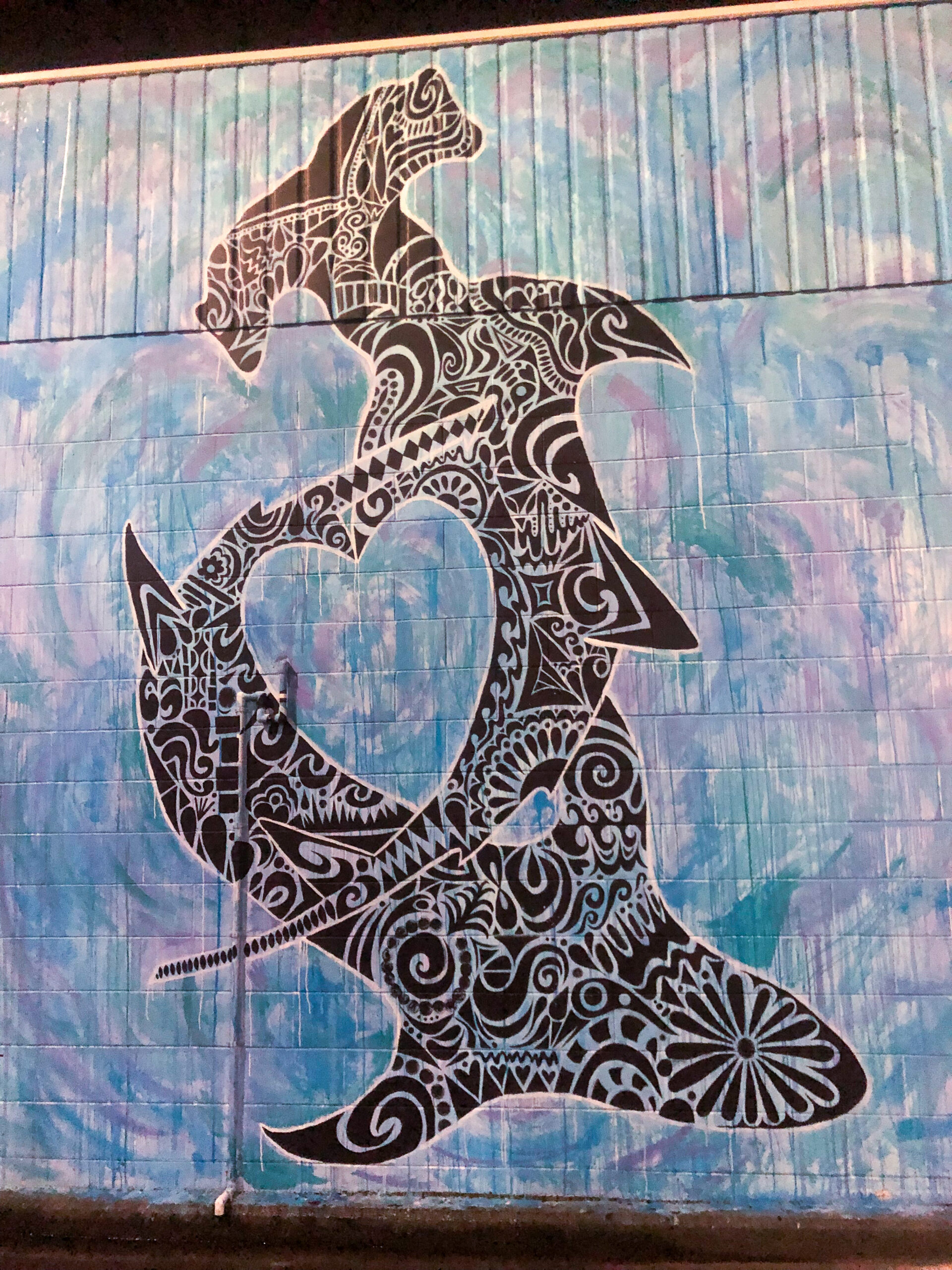
We really like the Art Deco town (stayed awhile on our way south in early 2021) and I wished we had more time to stay; I made a provisioning run to include my favorite health food store, Chantal, a freezer stock up of ready made yummy meals from Mylk and had a dinner date night with Marcus at Three Doors Up in Ahuriri, near the Yacht Club. There’s a phenomenal Astanga studio here, with Peter Sanson teaching, but our tight schedule wasn’t creating the space for a deep breath, let alone 2 hours of it!
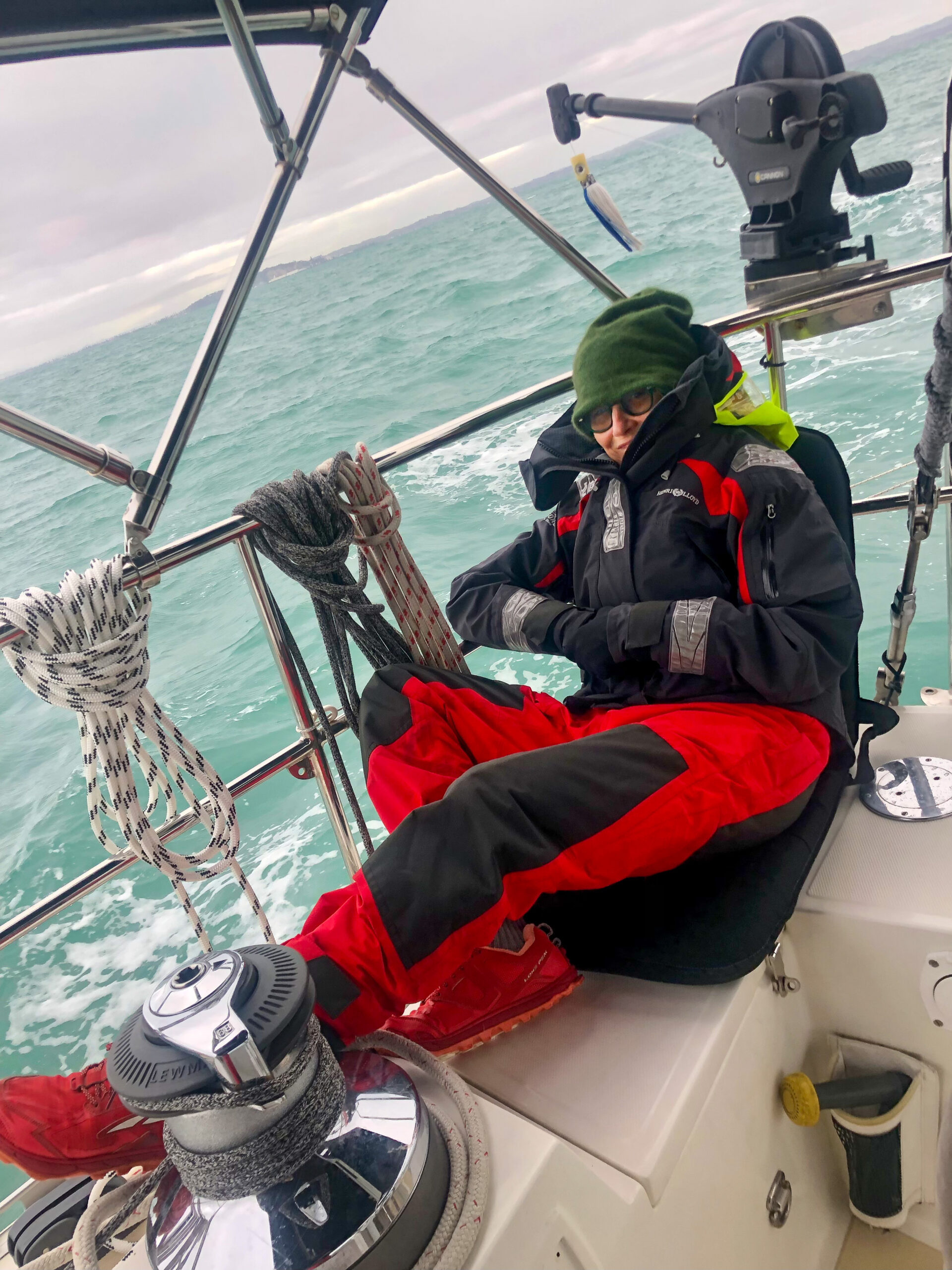
We’re back out and it’s CHILLY! A hint of a smile goin’ tho …

Waiting for the gale at the East Cape to ease came with a trade off — the near certainty that we would have to pass through a frontal system to reach Cape Brett. Yeah, I know, a lot of fretting about capes, but there’s a reason so many of them are given awful names by sailors (Cape Fear, Cape Runaway, Punto Malo, Cape Foulwind), they really do run the show. In the meantime, that lay two days in the future. We rounded the East Cape in the early morning, jibed and then enjoyed a glorious daytime sail headed northwest, pretty as you please, even got the guitars out for a little music.
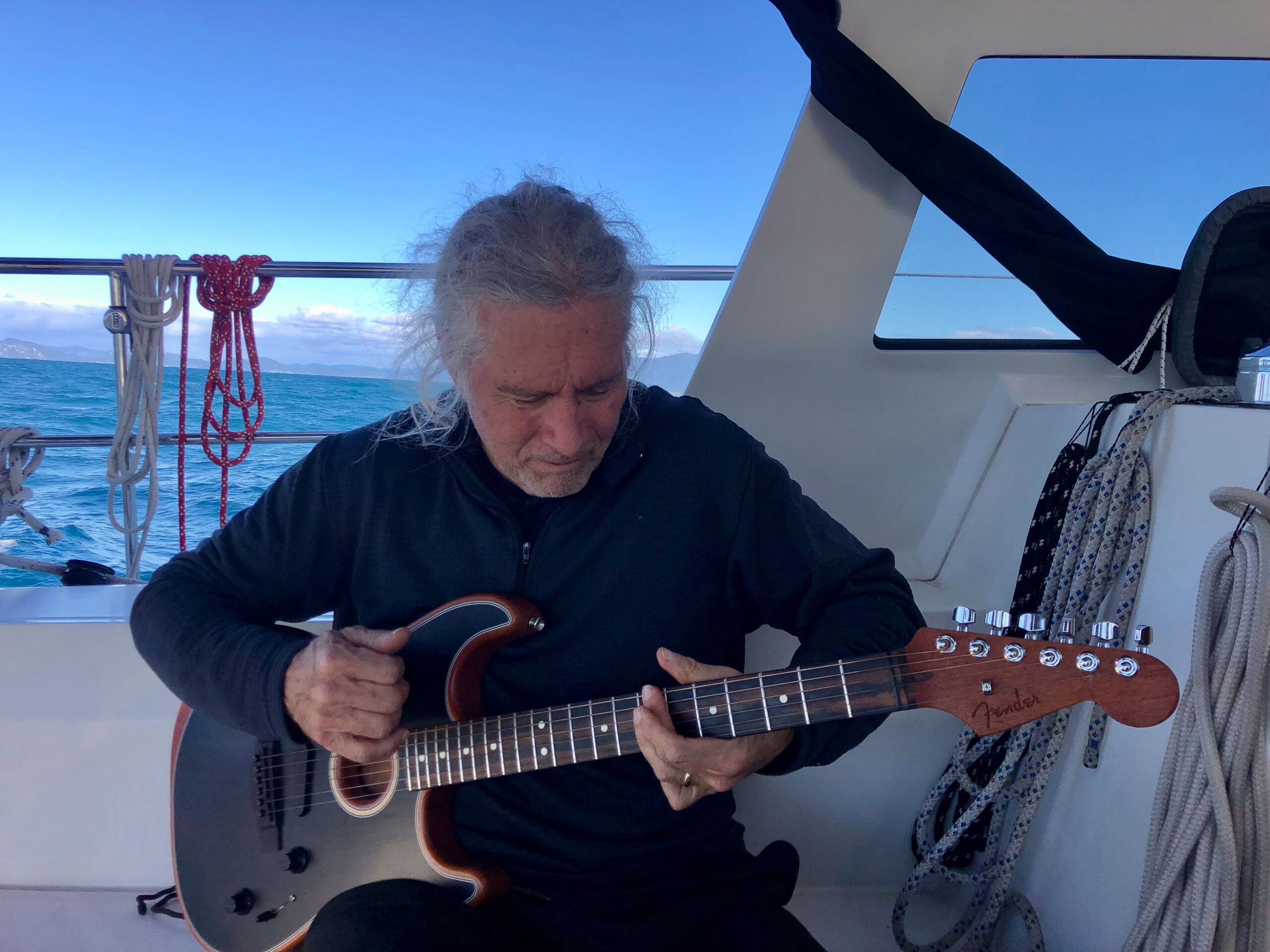
Might have to start calling him, ‘Hendrix.’
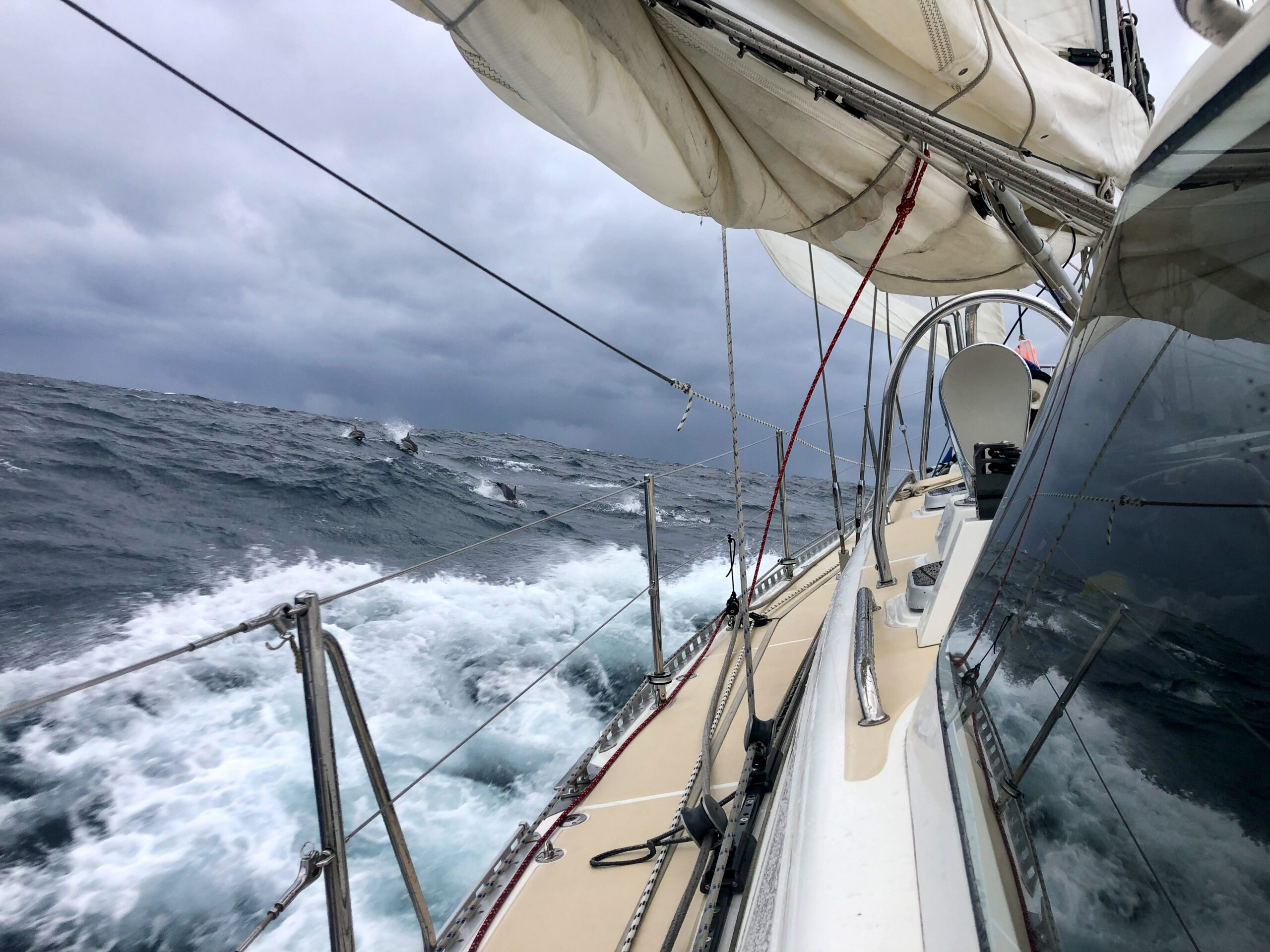
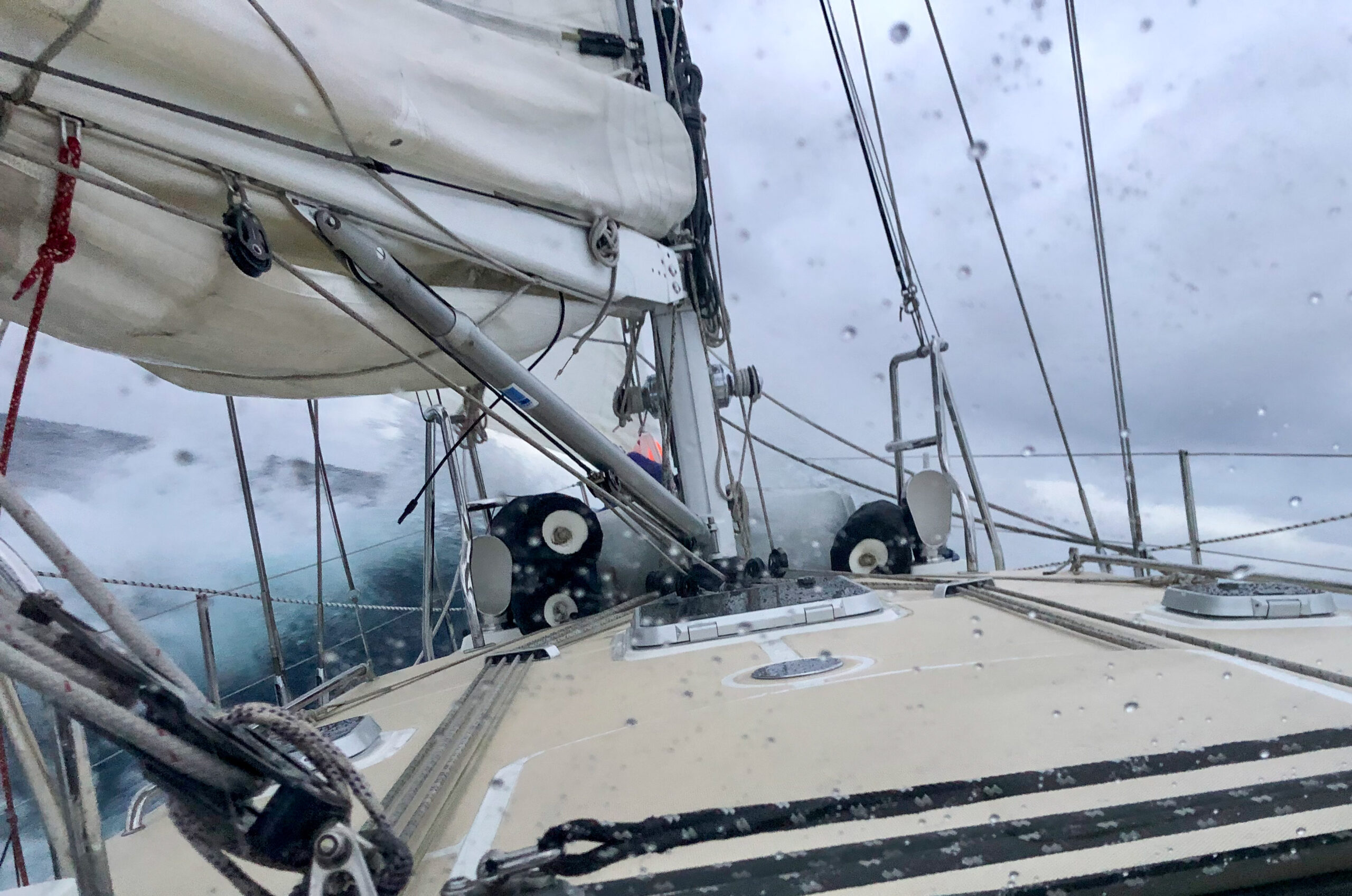
Allora meeting the waves. The hint of orange that you can see ahead of our mast is our Stormsail, rigged on the bow to deploy just in case of really high winds. It’s essentially just a reefed down version of our jib/normal headsail. You’d have to go up there to run the sheets and then to hoist it up using a topping lift at the mast, so gladly, I can say, we haven’t had to use it. Later, on our Fiji passage, we sort of wished we had. The sea has so many moods …
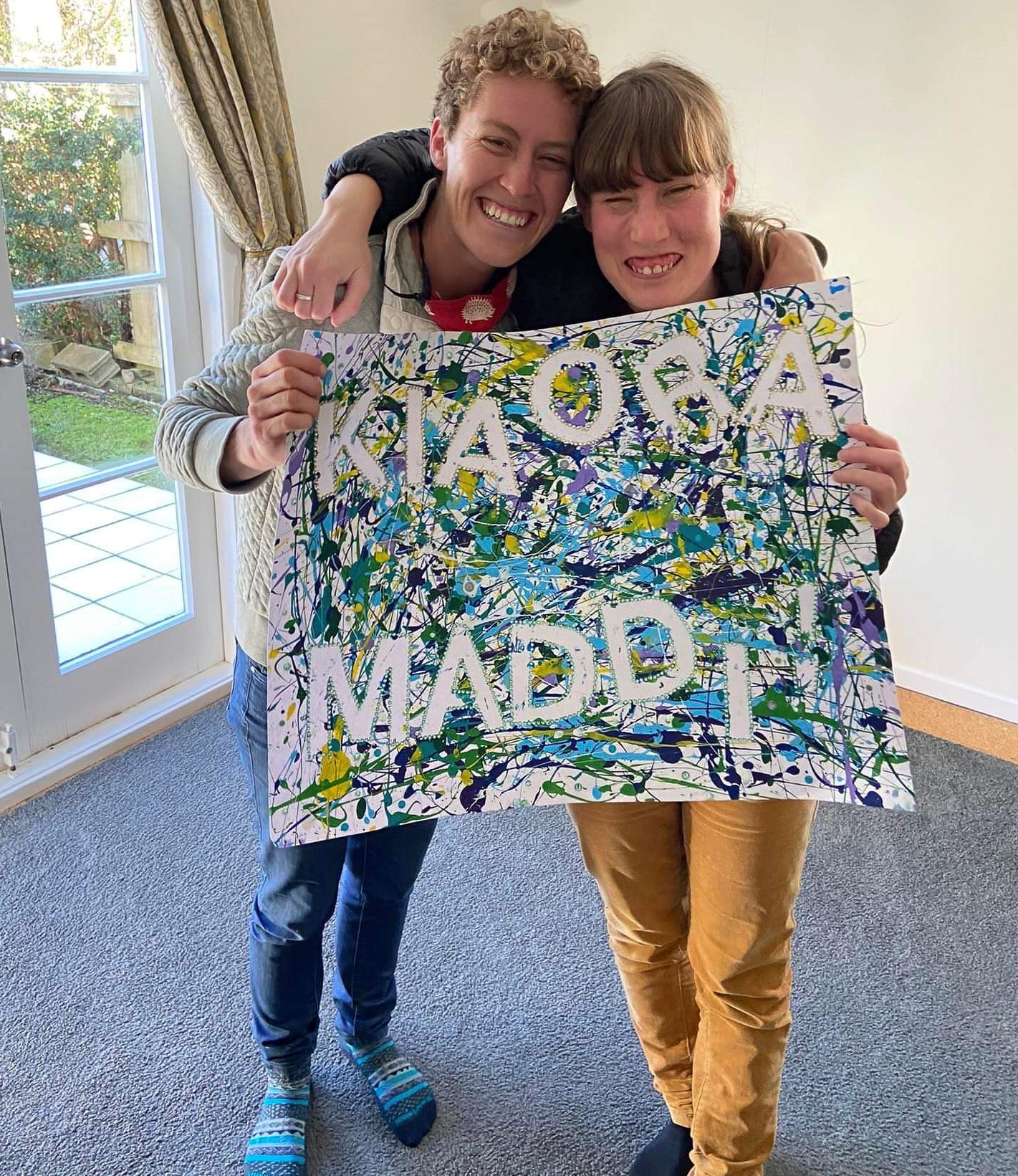
Haley (right) and Liam made this awesome sign to welcome Maddi (left) to Aotearoa/NZ! These two hadn’t seen each other in 3 years! They met in Wellington for a few days of solid catch up! Plan: Maddi then flew up to Opua to meet us and crew to Fiji (next post!). We received this sib pic while on our northward passage and it cut right through the chilly temps to warm us through and through!
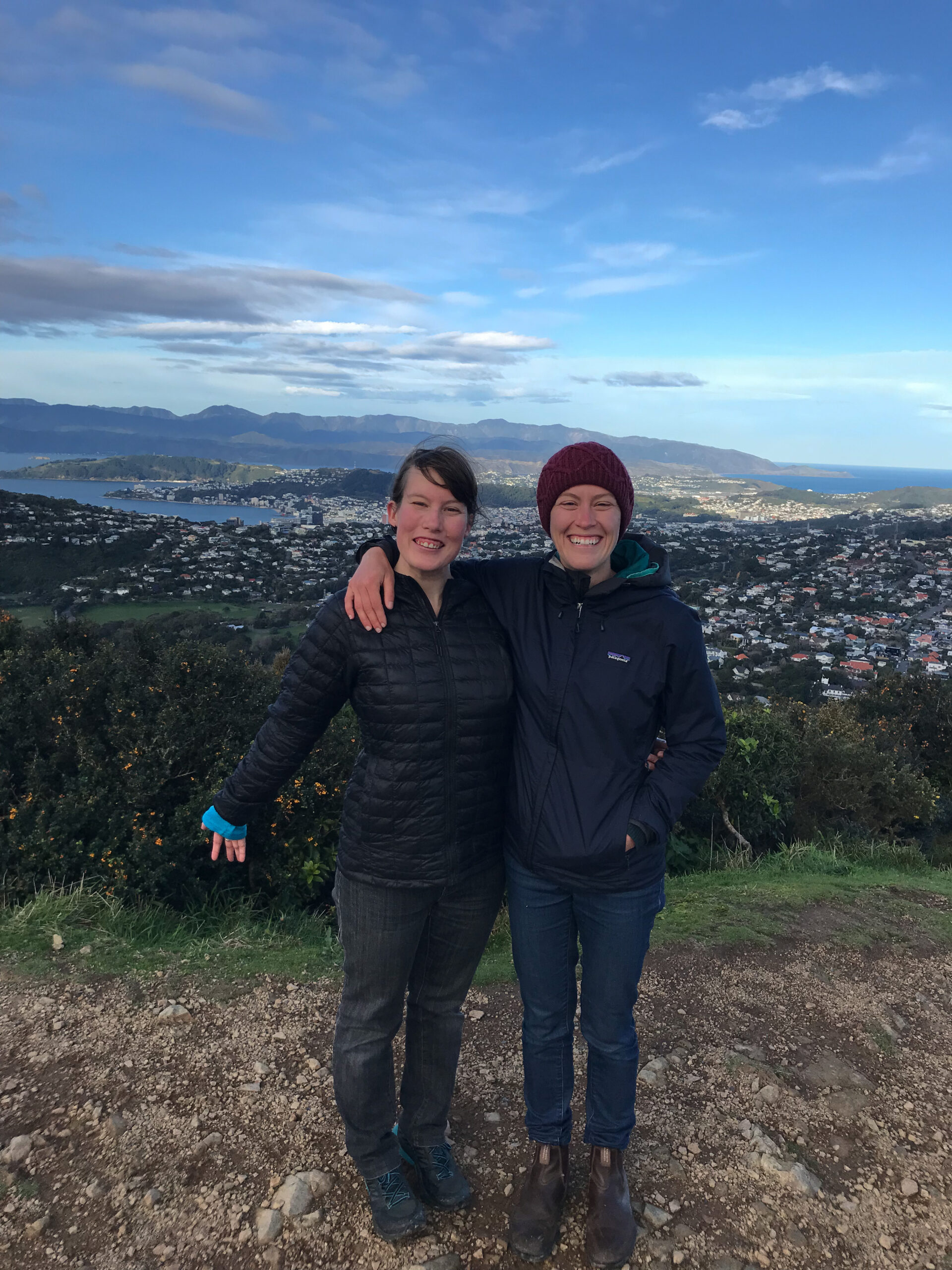
One more sister shot, because it’s so happy making!
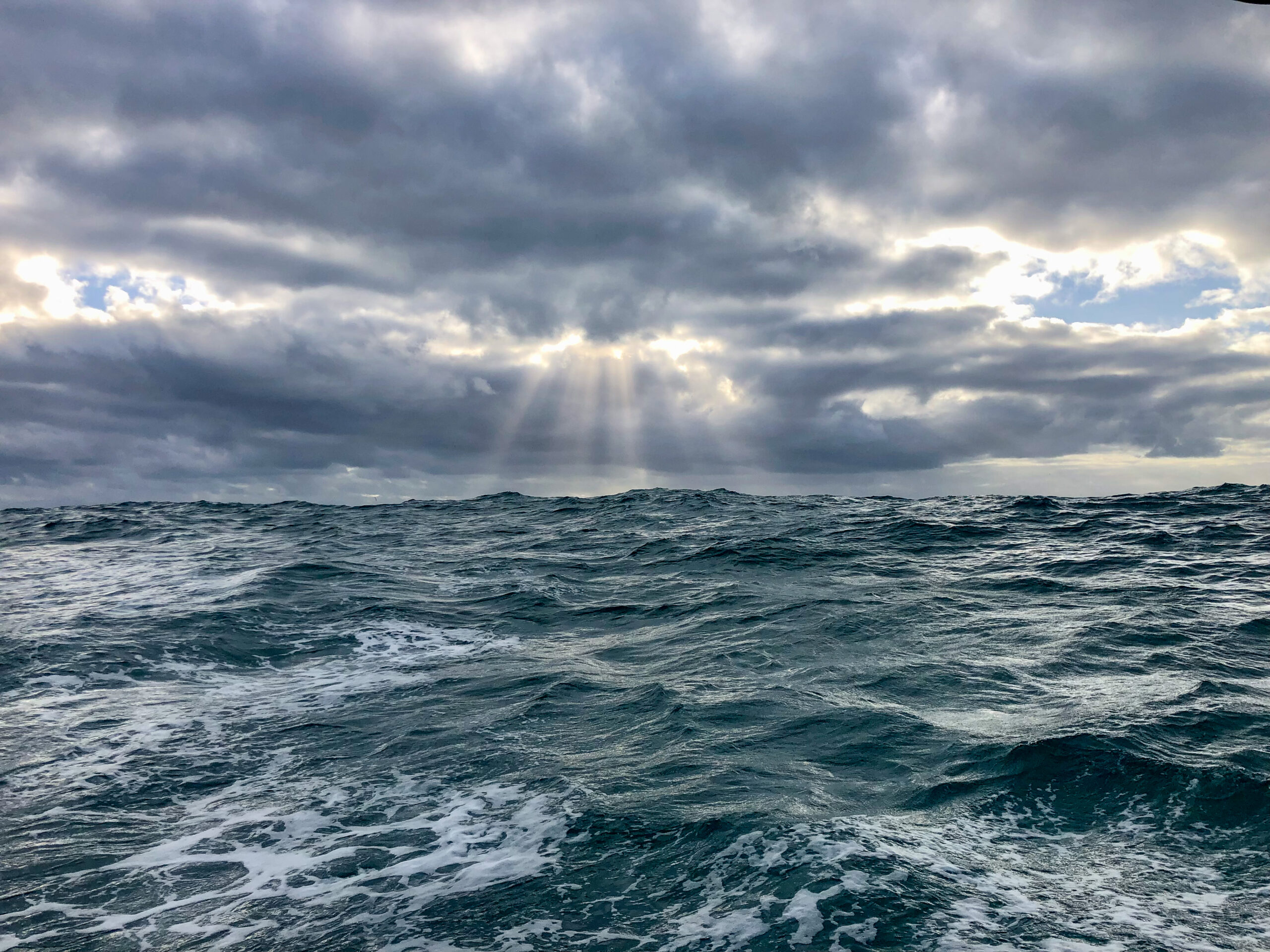
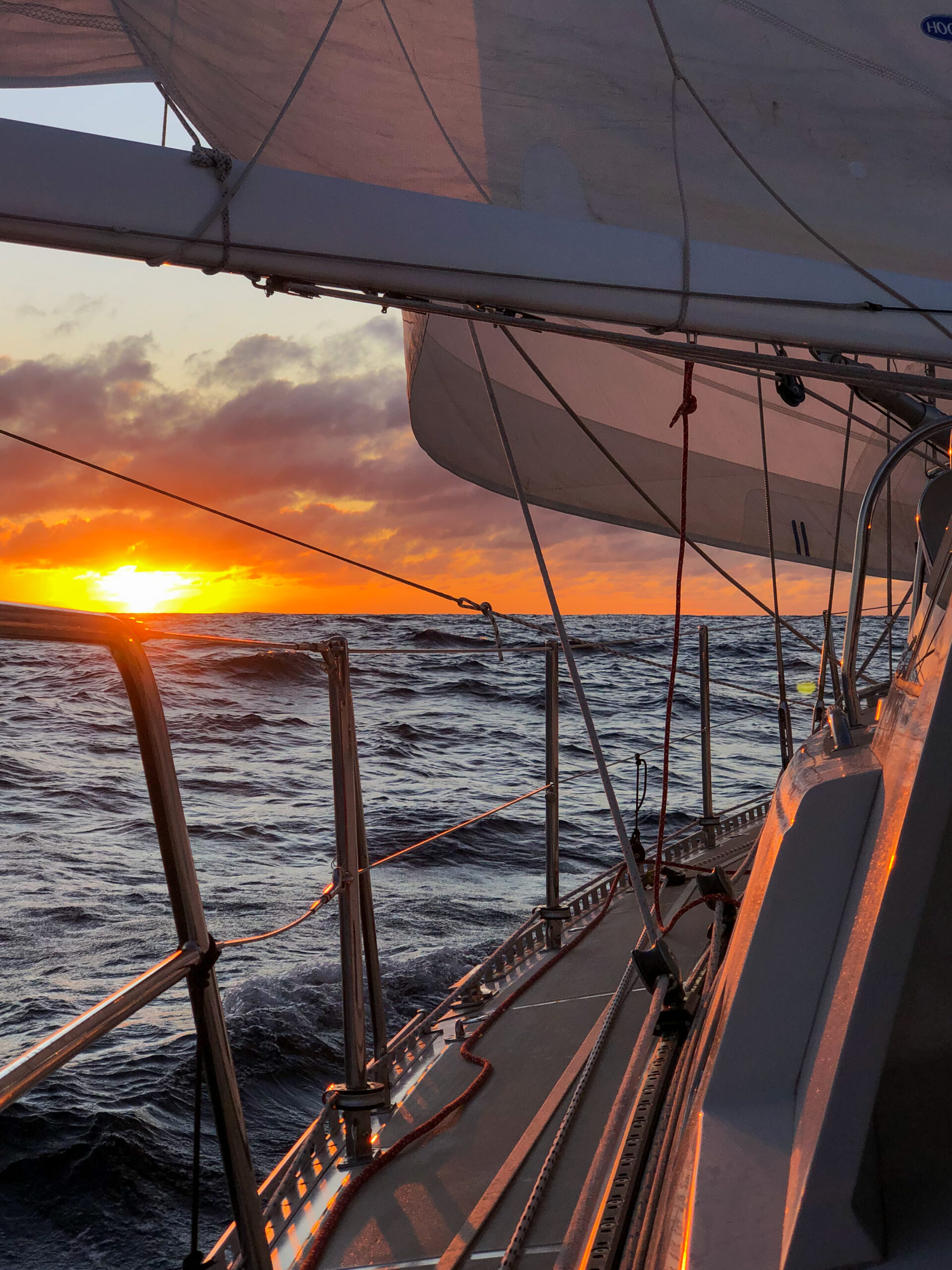
All shades of blue. Oddly enough, there’s a deep sense of grounding while floating on the ocean??!
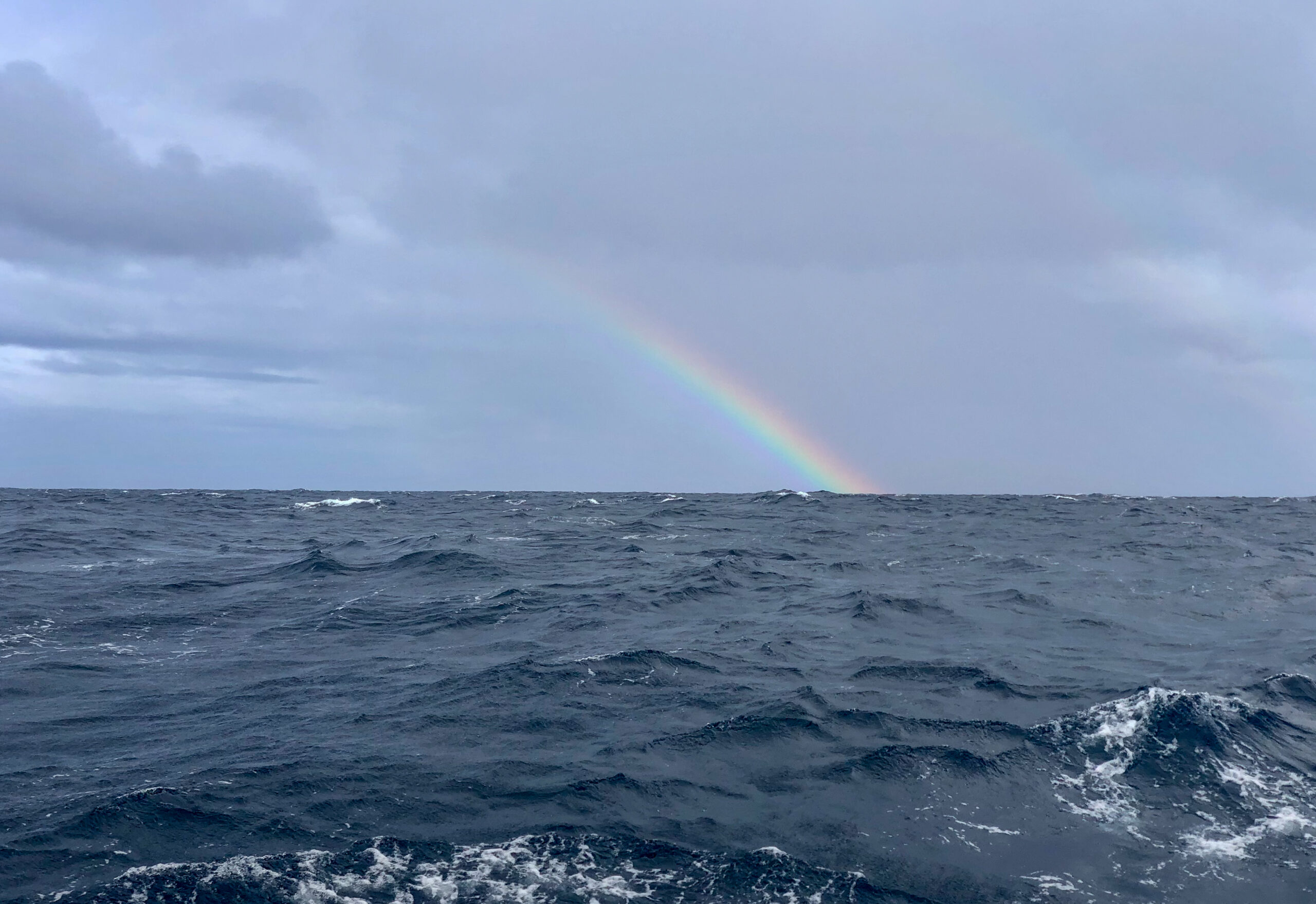
You can look out and think you see nothing but ocean and sky, and then a blatant reminder that there’s always more!
For instance, these cheery friends!!!
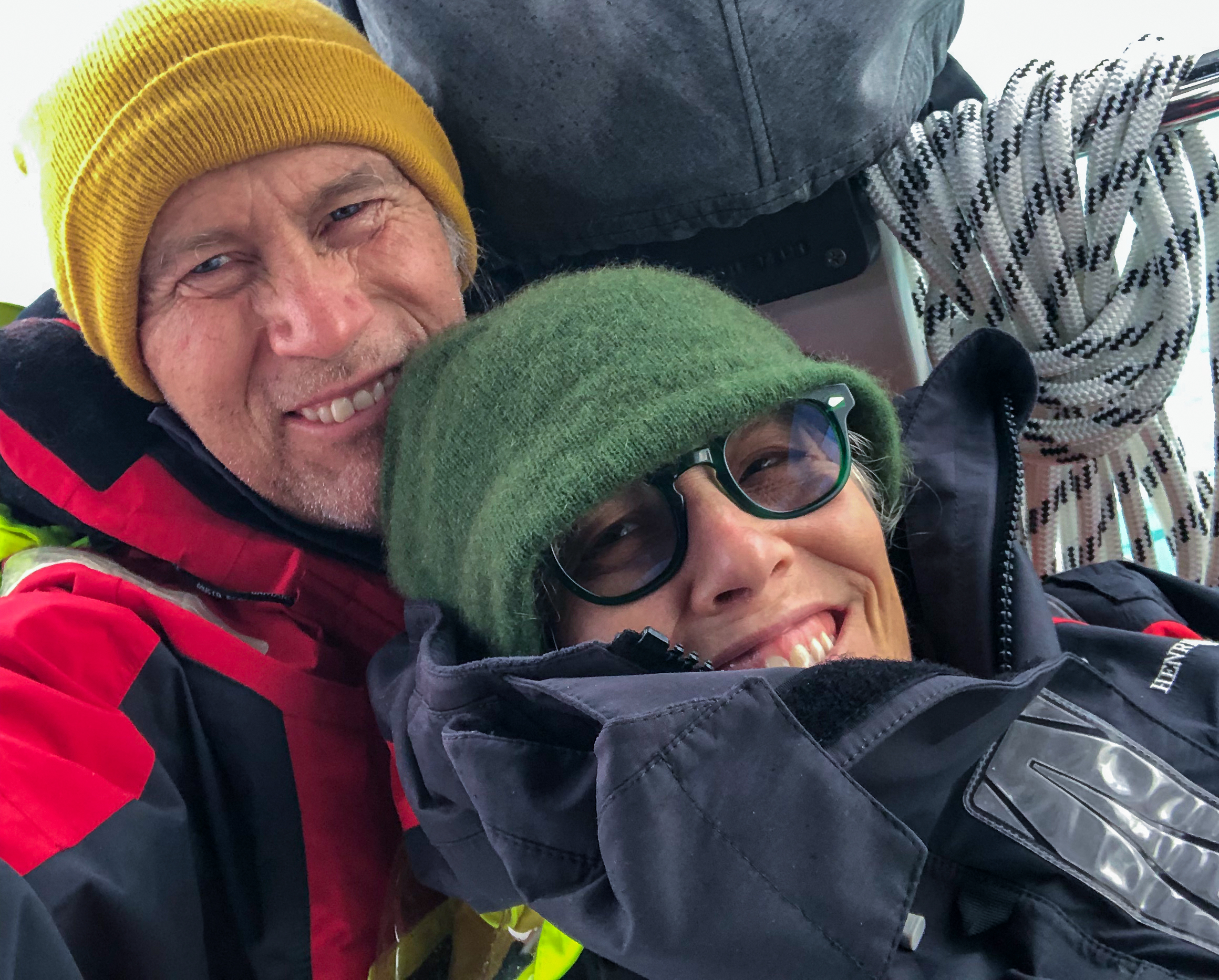
Huddling contentedly, staying warm-ish.
Another night of quiet and watches. NOT!

The squalls started with darkness (naturally). Note to self: frontal passages are not to be taken lightly! Also I’m going to try to remember that the forecasts don’t really represent true wind speeds in these conditions. These are more like what you get with squalls in the tropics (sudden doubling of wind speeds) but over a much more sustained area and time period. Soon we were double reefed on main and jib, taking big seas over the whole boat.

Once again, Diana took the hardest watch (you might accuse me of scheming here, but I swear this is just a matter of chance). Her words from the log: waves over bow, raucous, deluge, still dumping. Mine: rain, clearing, wind finally calming. At least I tried to make up for it giving her a longer watch off, putting in four hours to clear Cape Brett. All the while looking forward to the forecast easing and a swing of the wind for a quiet sail into the Bay of Islands. No such luck. Wind died, and then the engine died, 8X according to Diana’s notes. At 5AM I was back on, and eventually the mystery of the engine was solved. I was so focused on the last engine issue back in Fiordland (which was entirely electrical) that it took me a while to realize that the current problem was oil pressure. I’d checked the oil, but with a heeling boat, the reading was off. I added oil and the engine was happy again. More engineering-inclined-sailors than I have expressed skepticism about black boxes (computers) on marine diesel engines, but for the less mechanically minded (yours truly) they can actually be a life saver. Better the engine shut itself down than damage something, though it’d be kinda nice if the $1000 panel offered something a little more elucidating than “CHK ENG.”

Dawn came quietly, and it worried me a little to see fog along the coast, but it dissipated as we arrived, and pulled into a quiet slip in the Bay of Islands Marina. ~MS
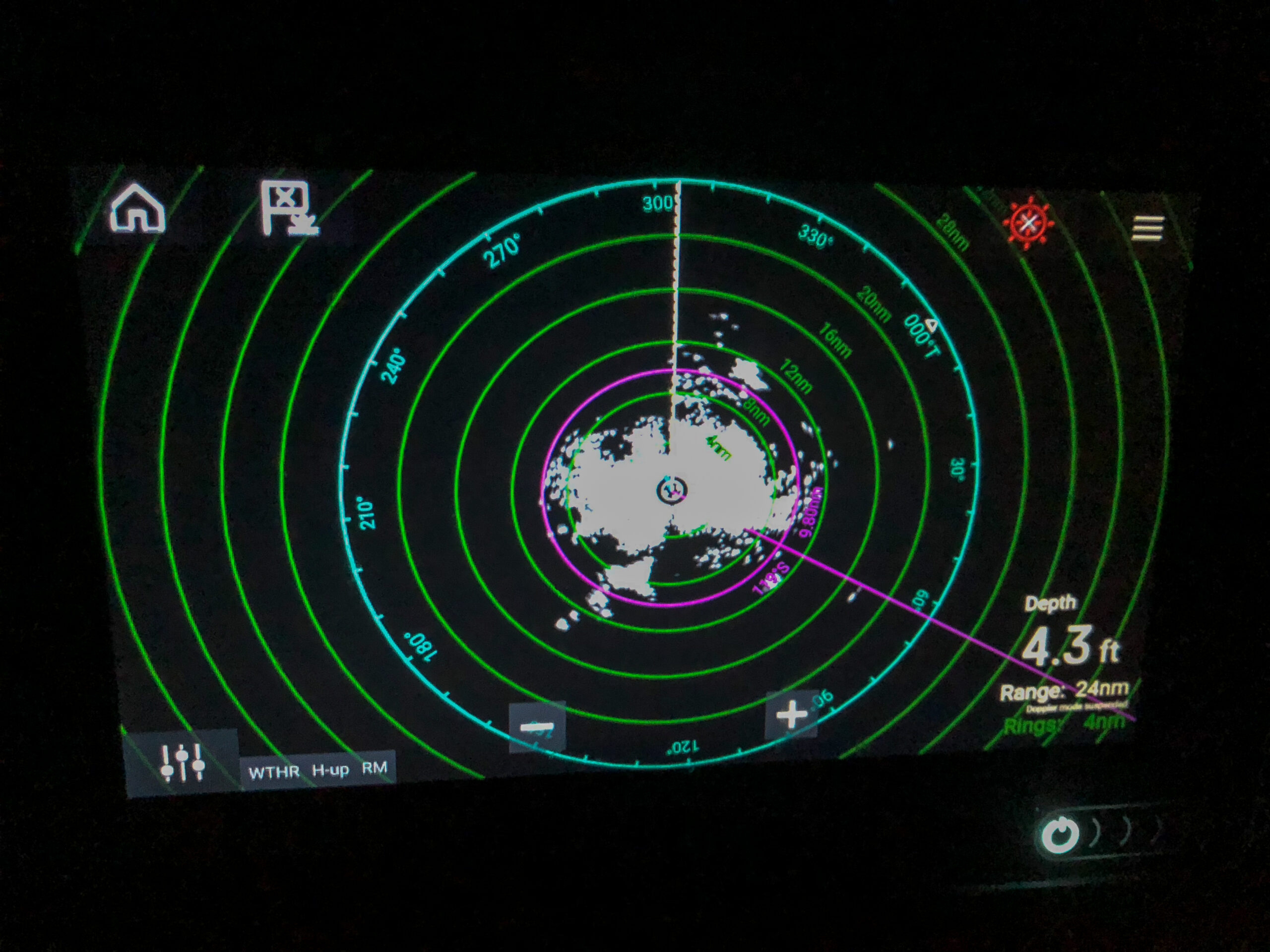
Our radar shows Allora smack dab in the middle of a front – and yet so close to our destination of Opua! Logbook entries say, ‘Wild ride, just took a couple intense waves over the whole boat!’ We also had a series of engine issues in the morning while rounding Cape Brett before arriving in Opua. Plenty of excitement, but NONE matching that of seeing Maddi the very next day!!!!


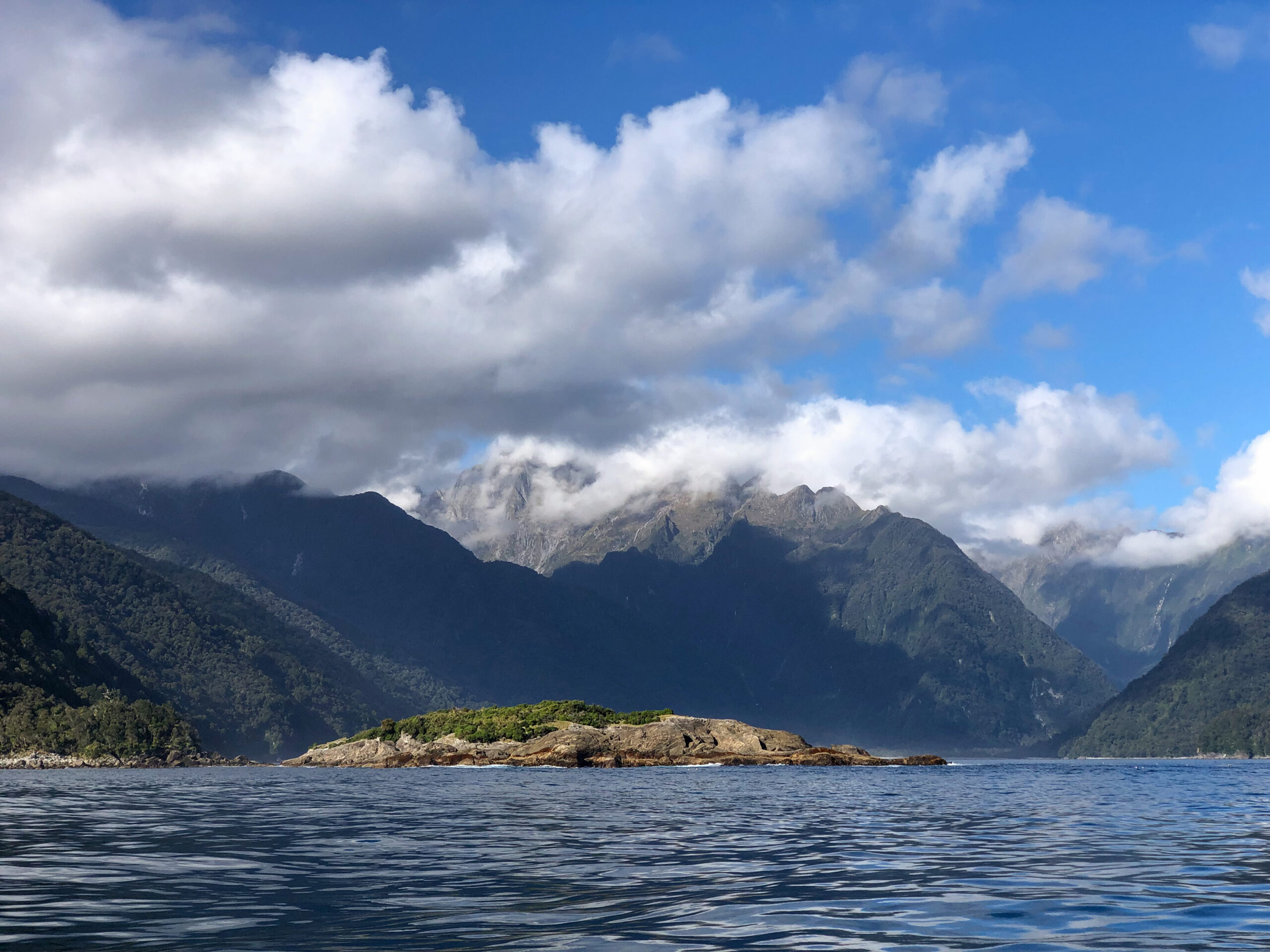
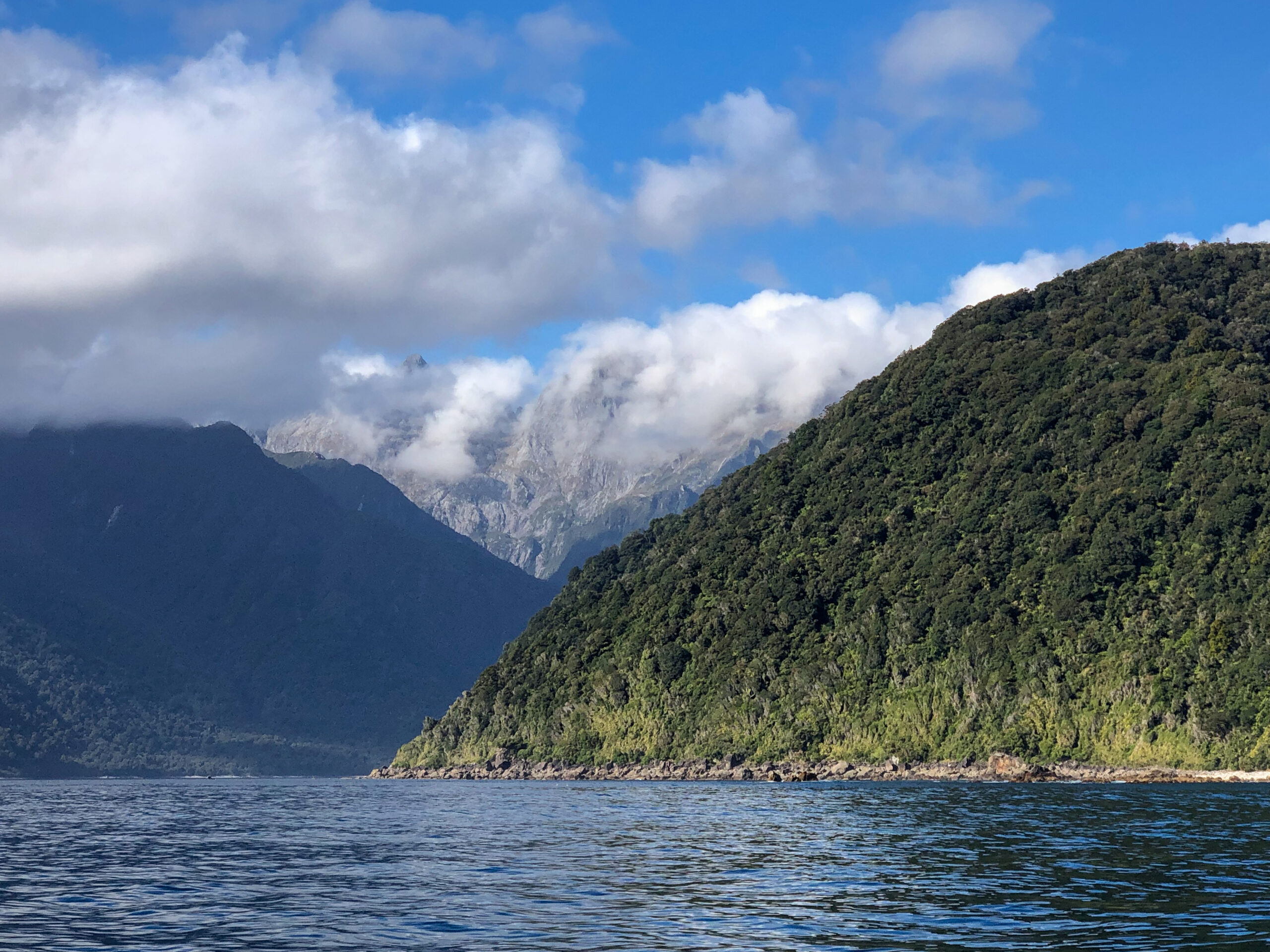
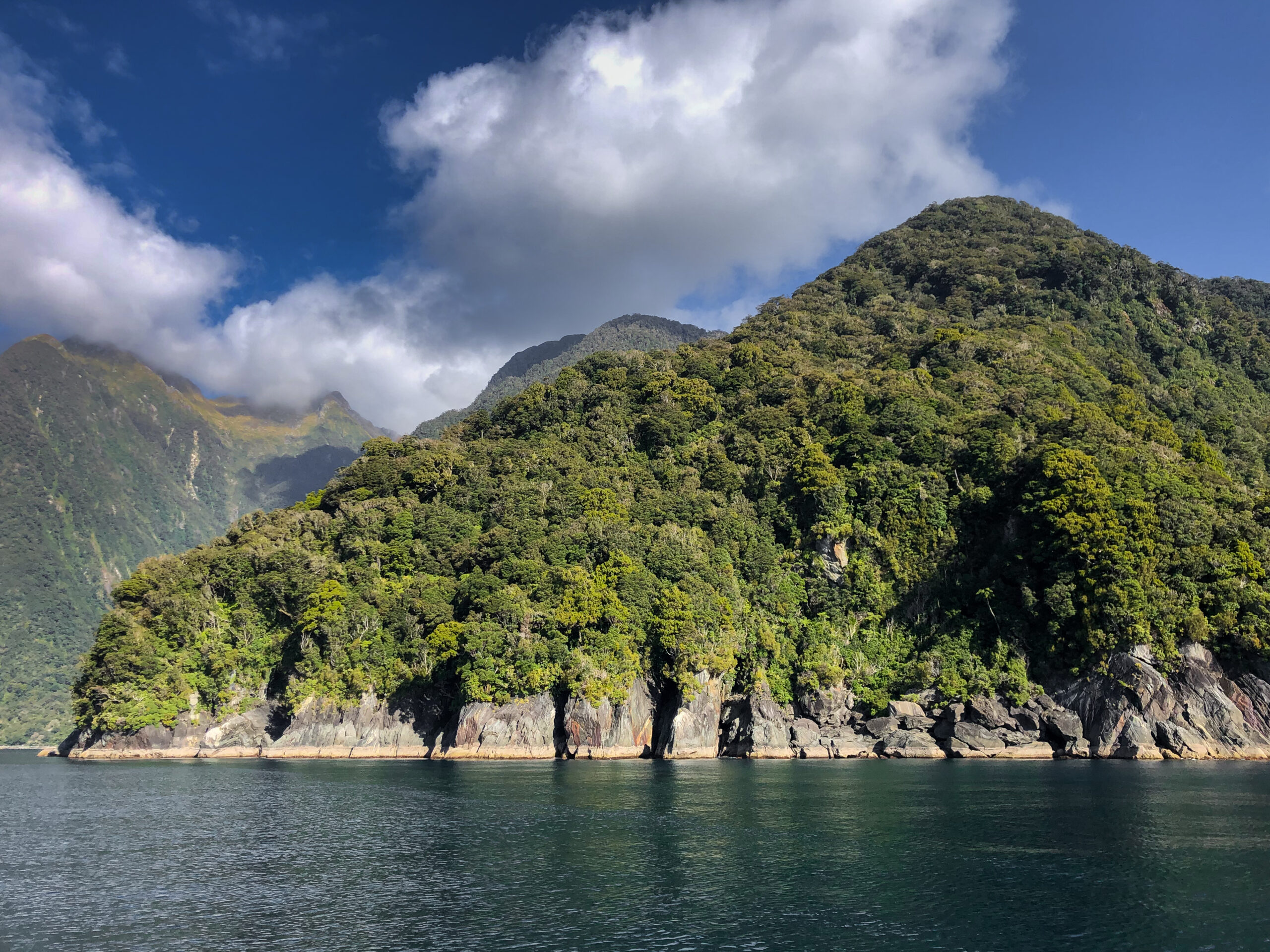
Magical Milford Sound/Piopiotahi! – Fiordland

The seaward side of Sutherland Sound is blocked by a sand/gravel bar, so deep draft vessels can’t venture far ‘inside,’ and there are no recognized anchorages for yachts.
Couldn’t resist slipping in to Poison Bay/Papa Pounamu, just to take it in.
These would have been the calm conditions described in our book as being necessary to spend the night in Poison Bay, but we didn’t have the time, sadly.
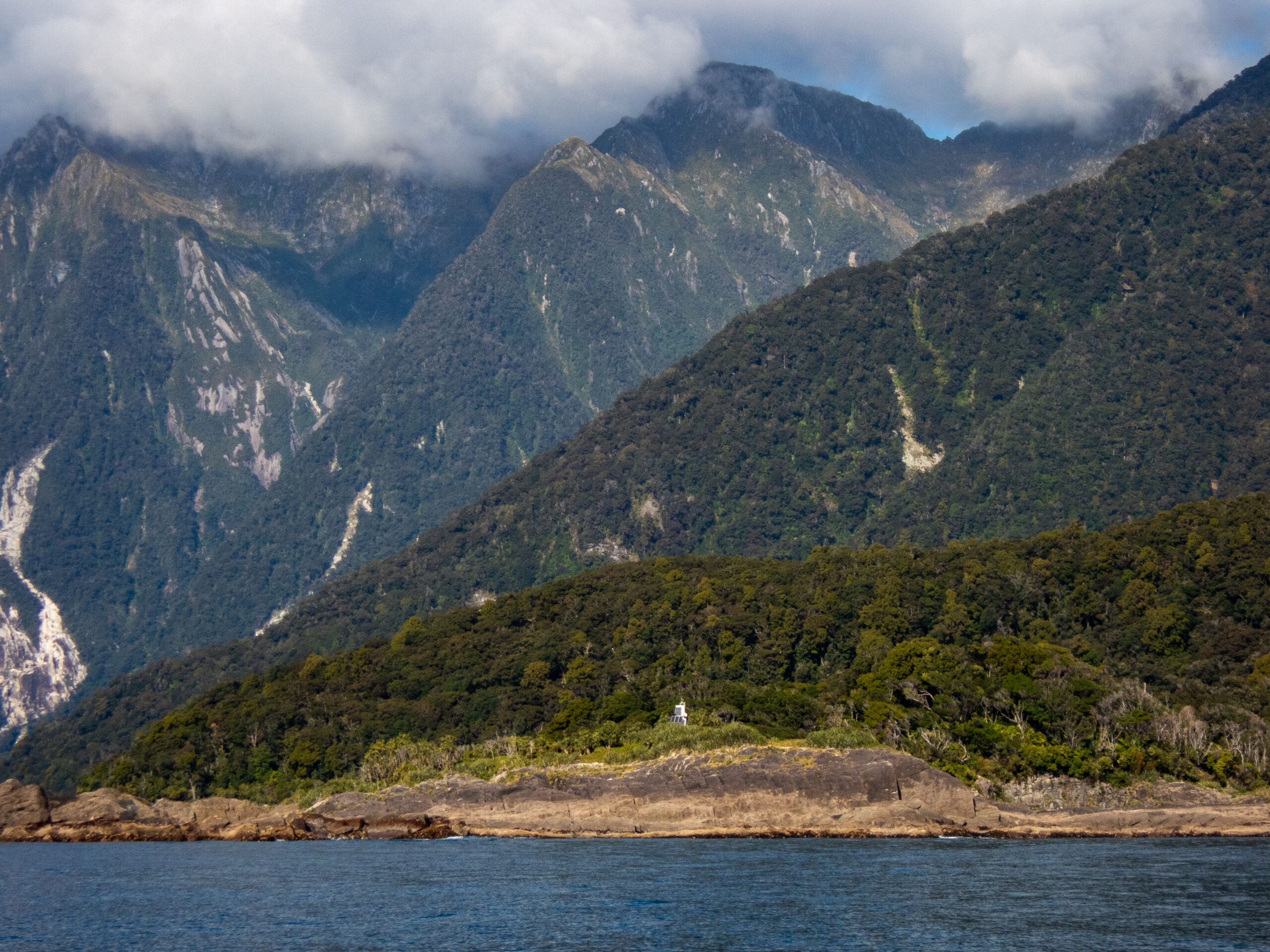
The very dwarfed looking Stirling lighthouse at the entrance of Milford Sound where it meets the Tasman Sea.

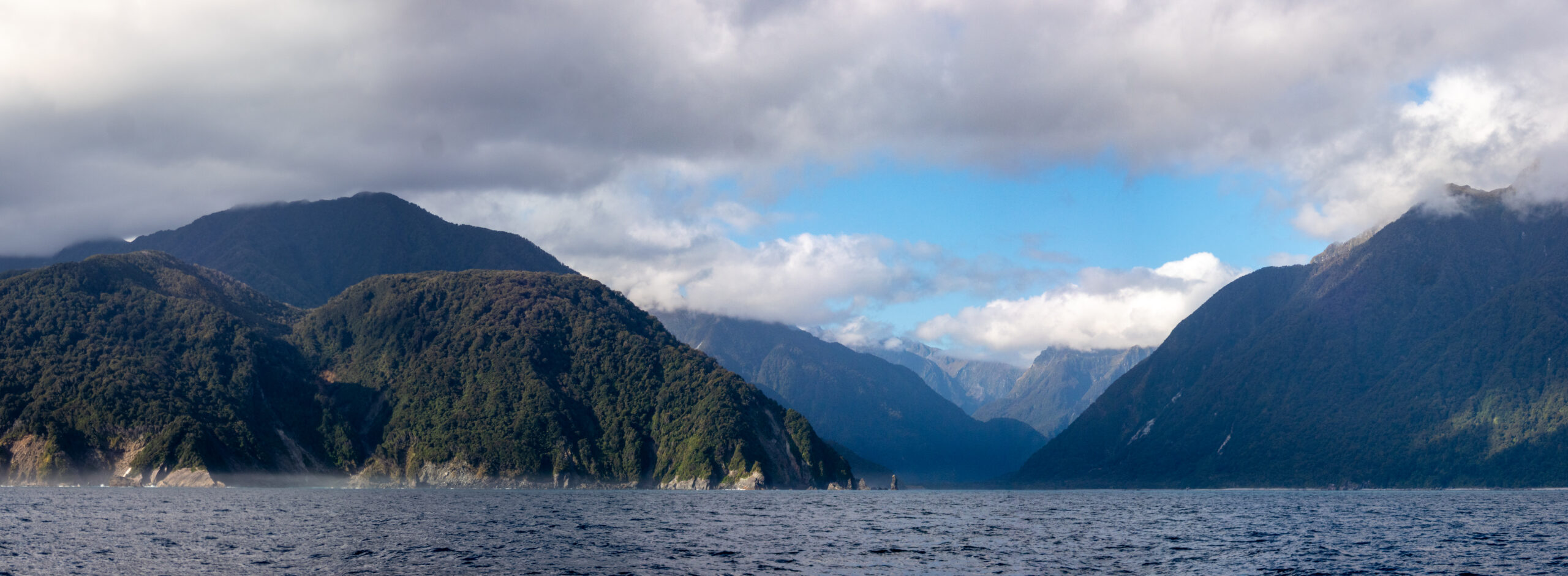
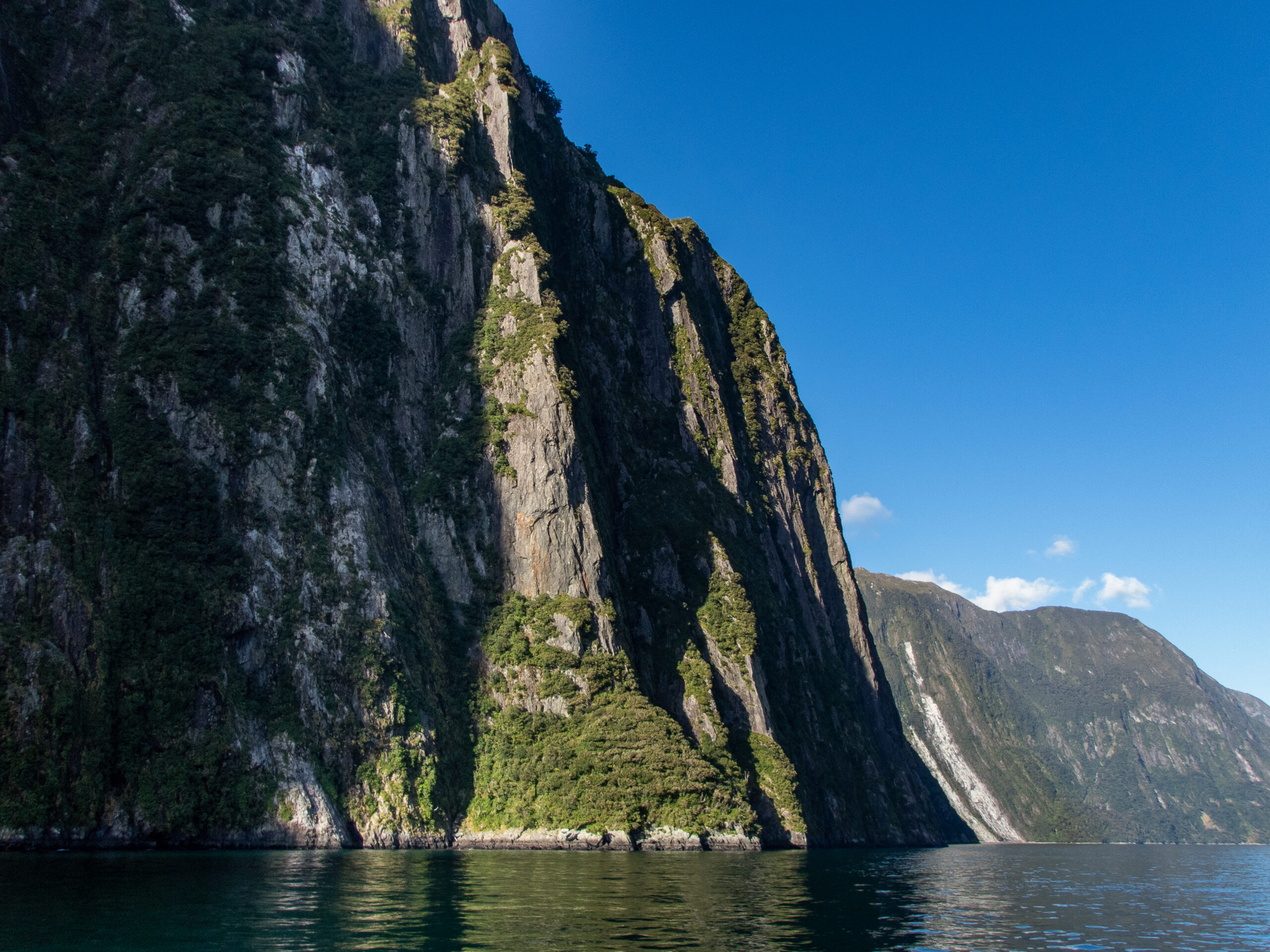
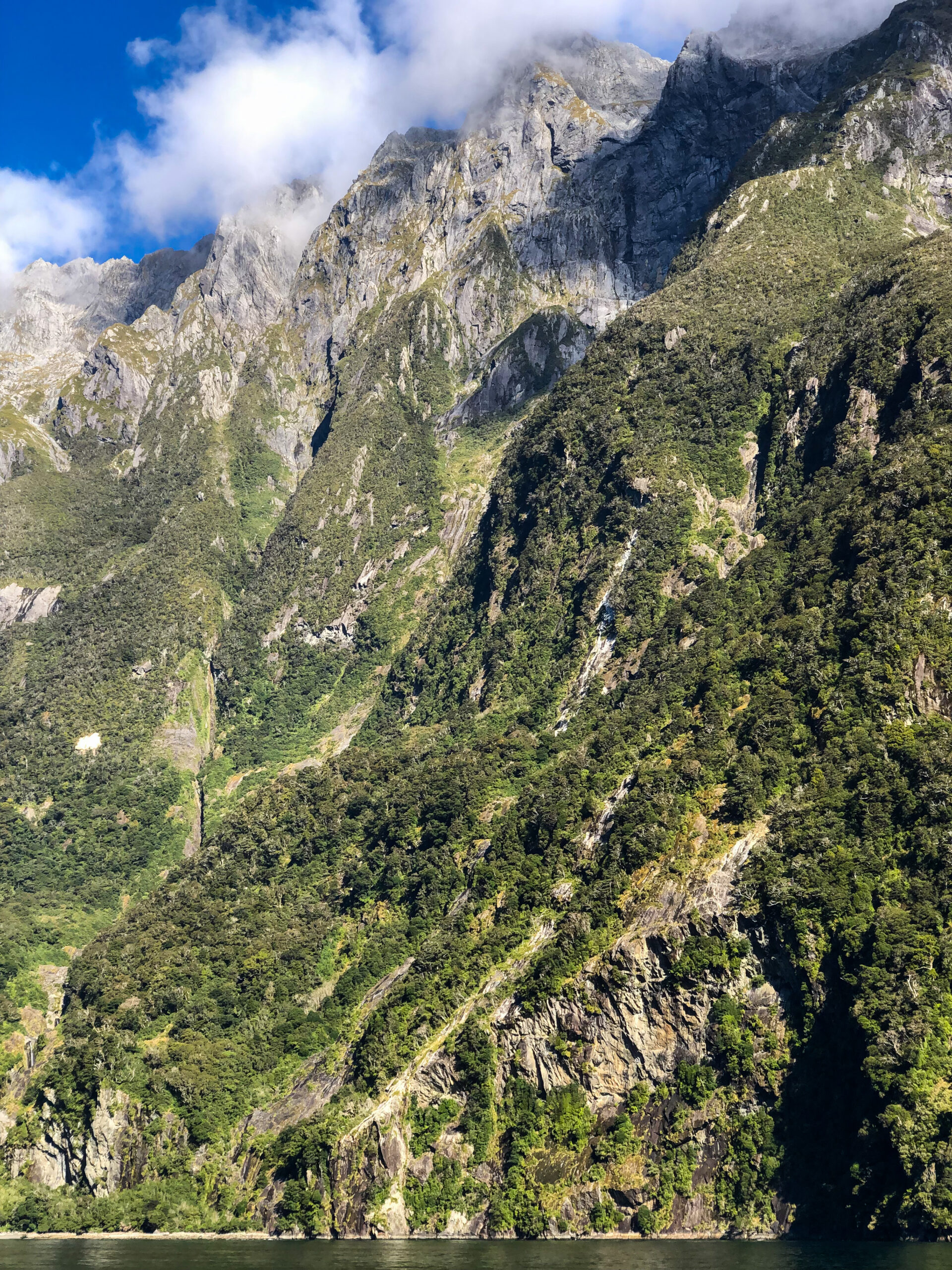
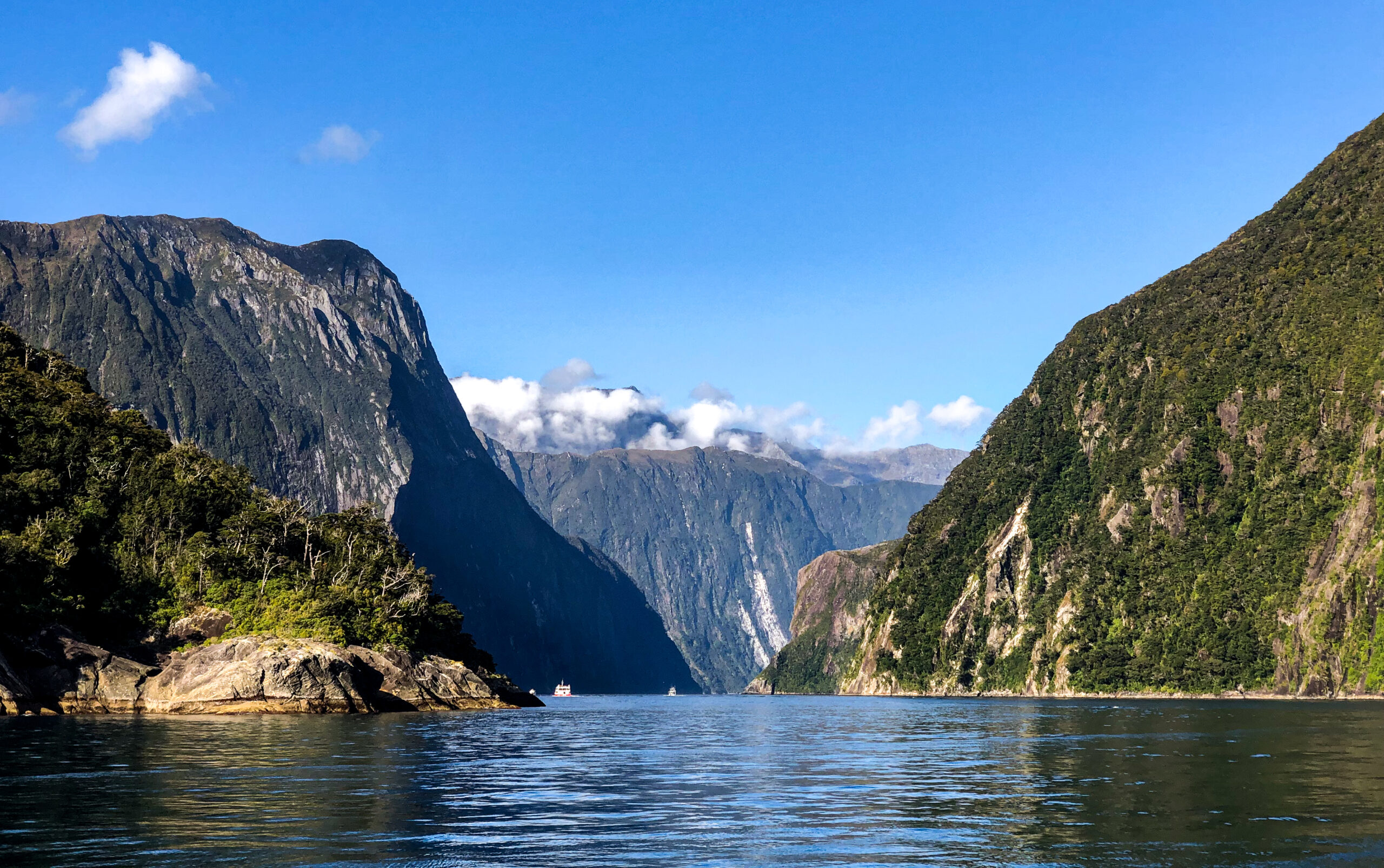
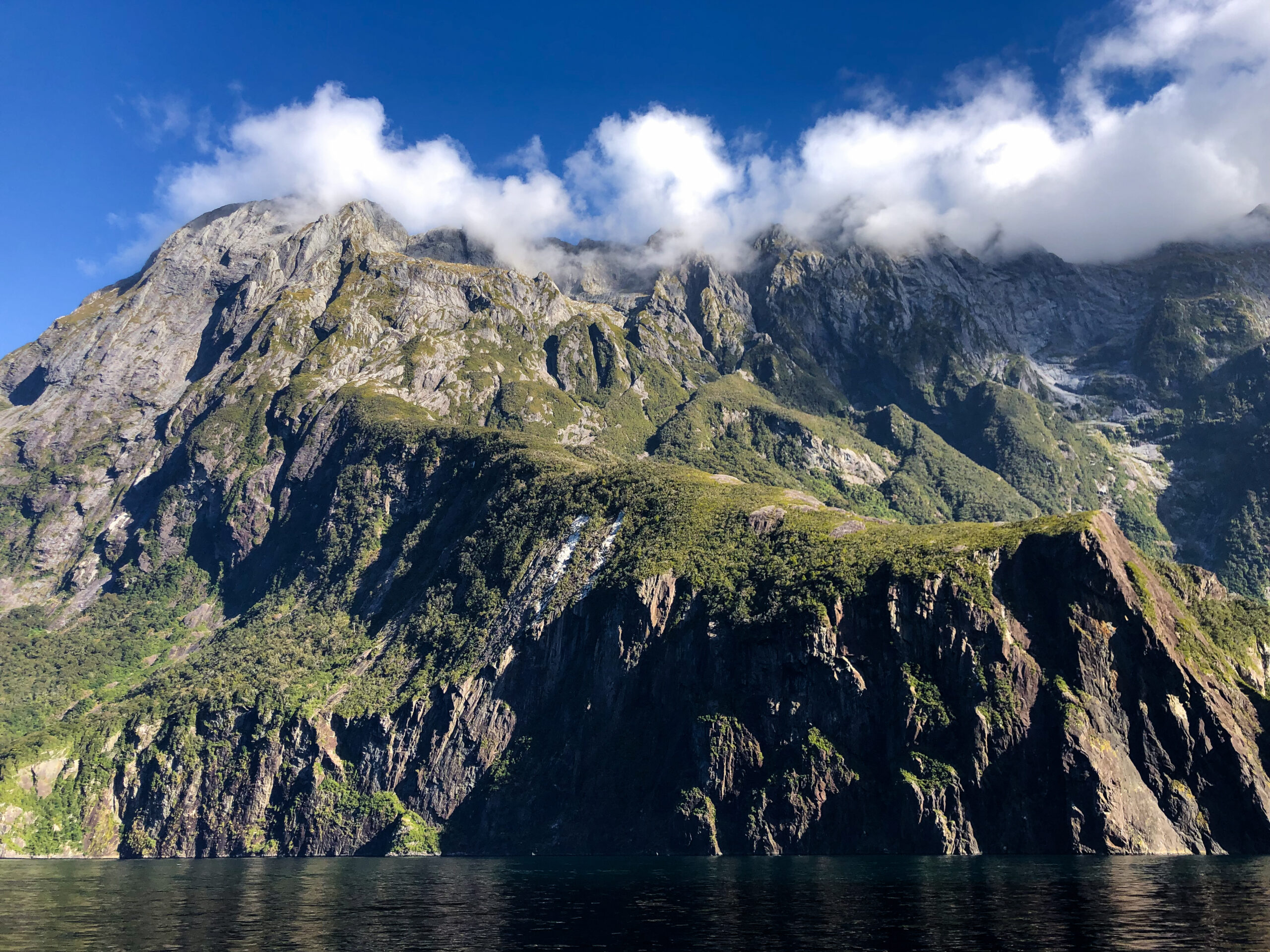
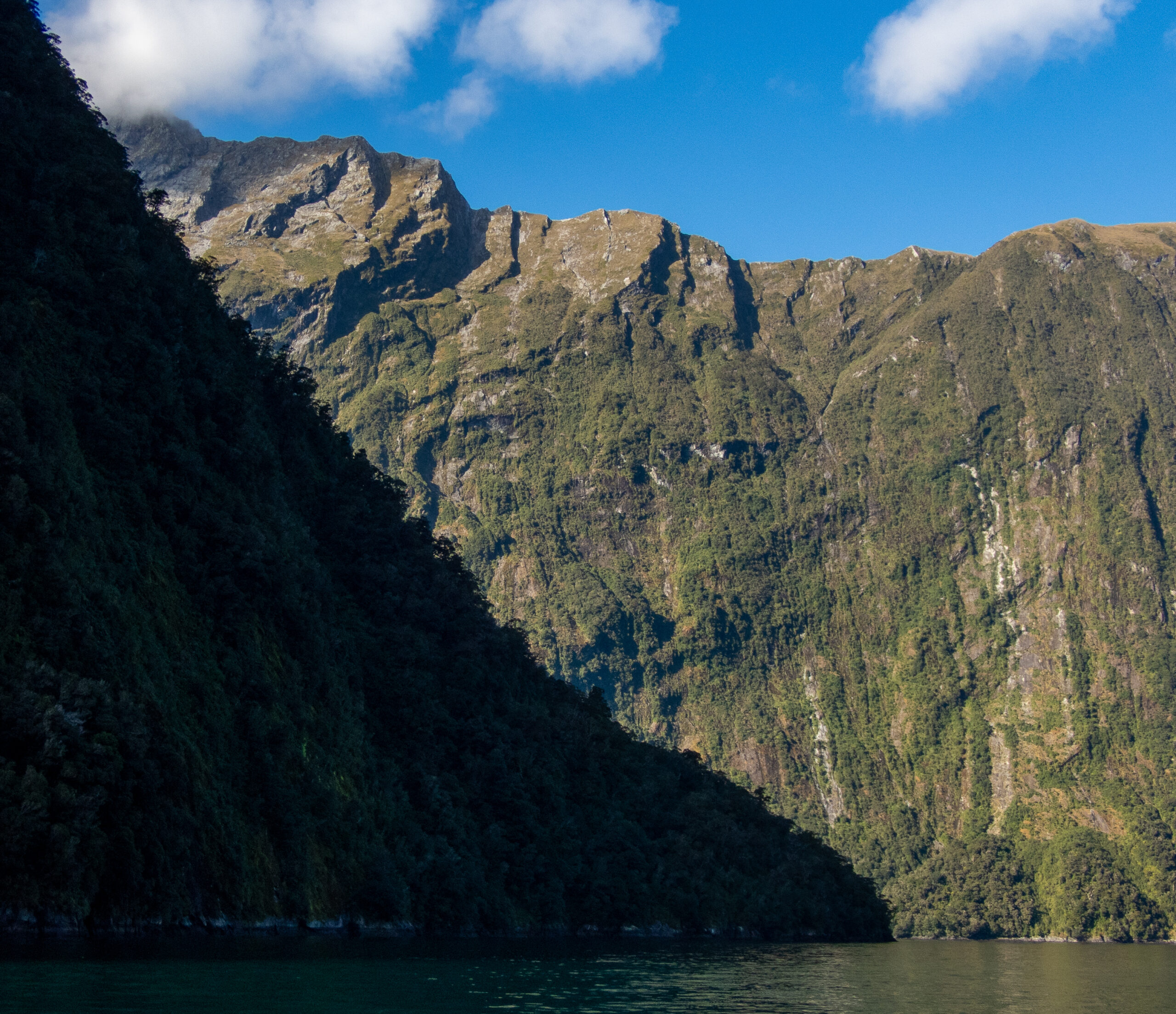
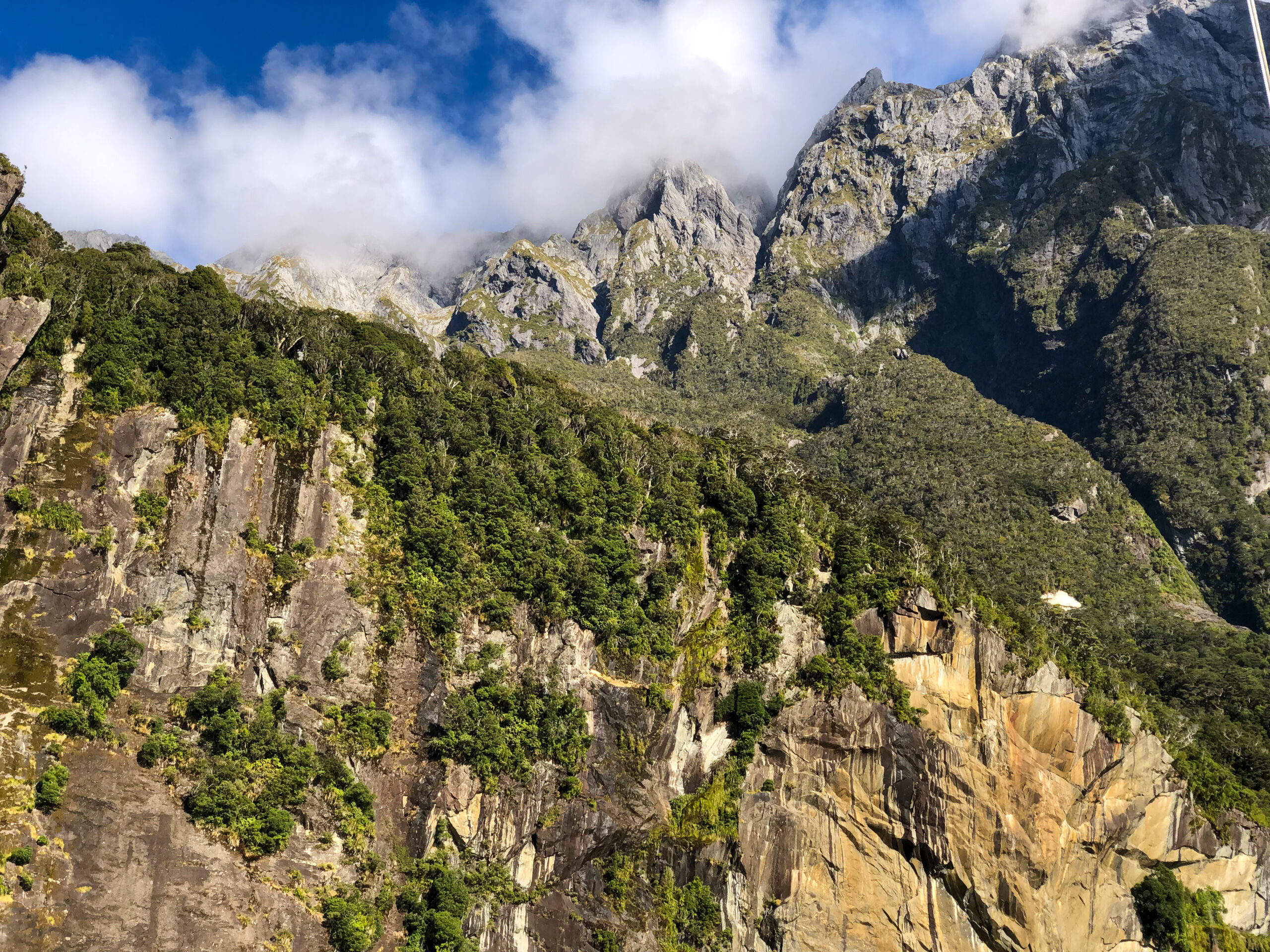
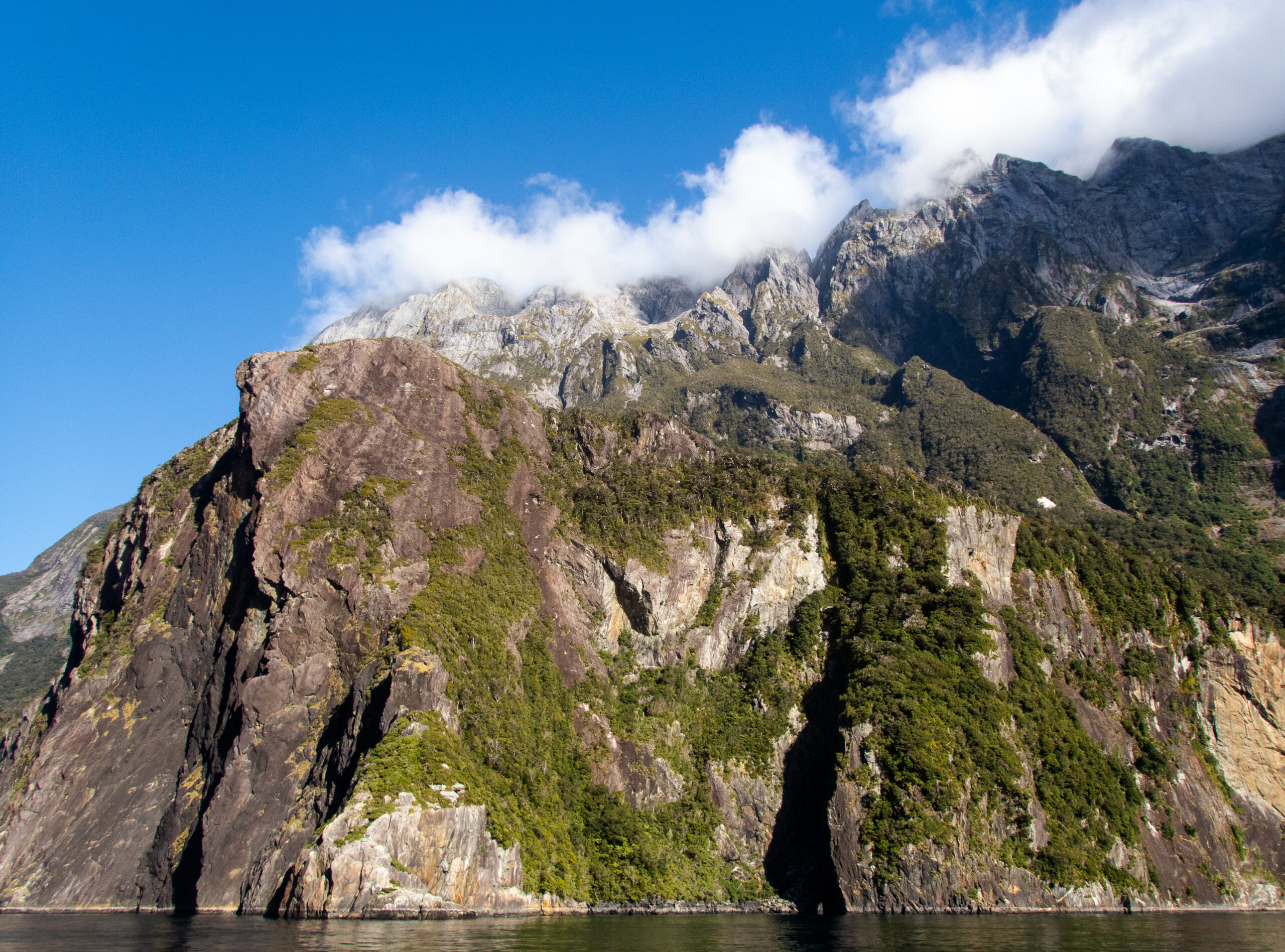
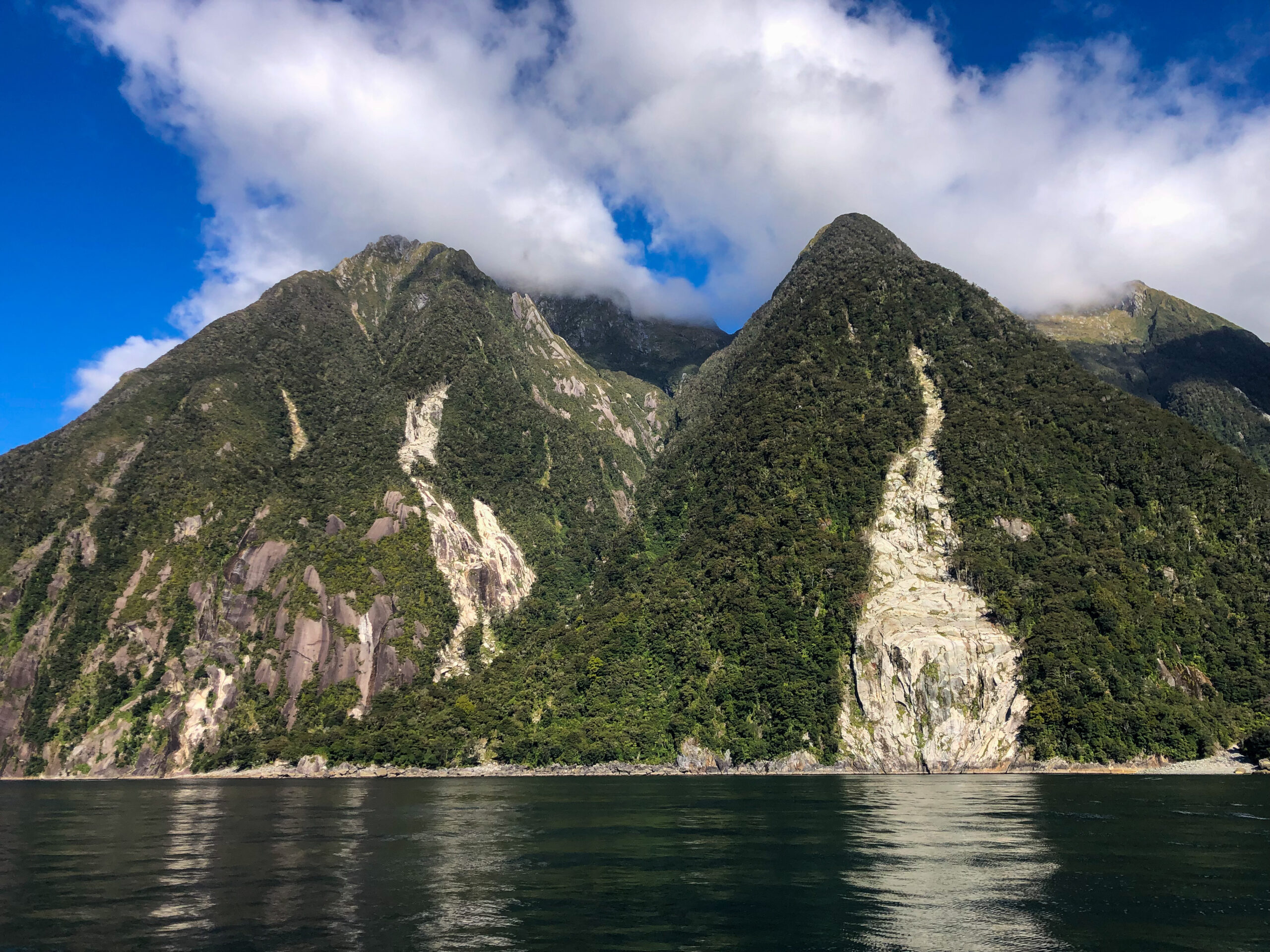
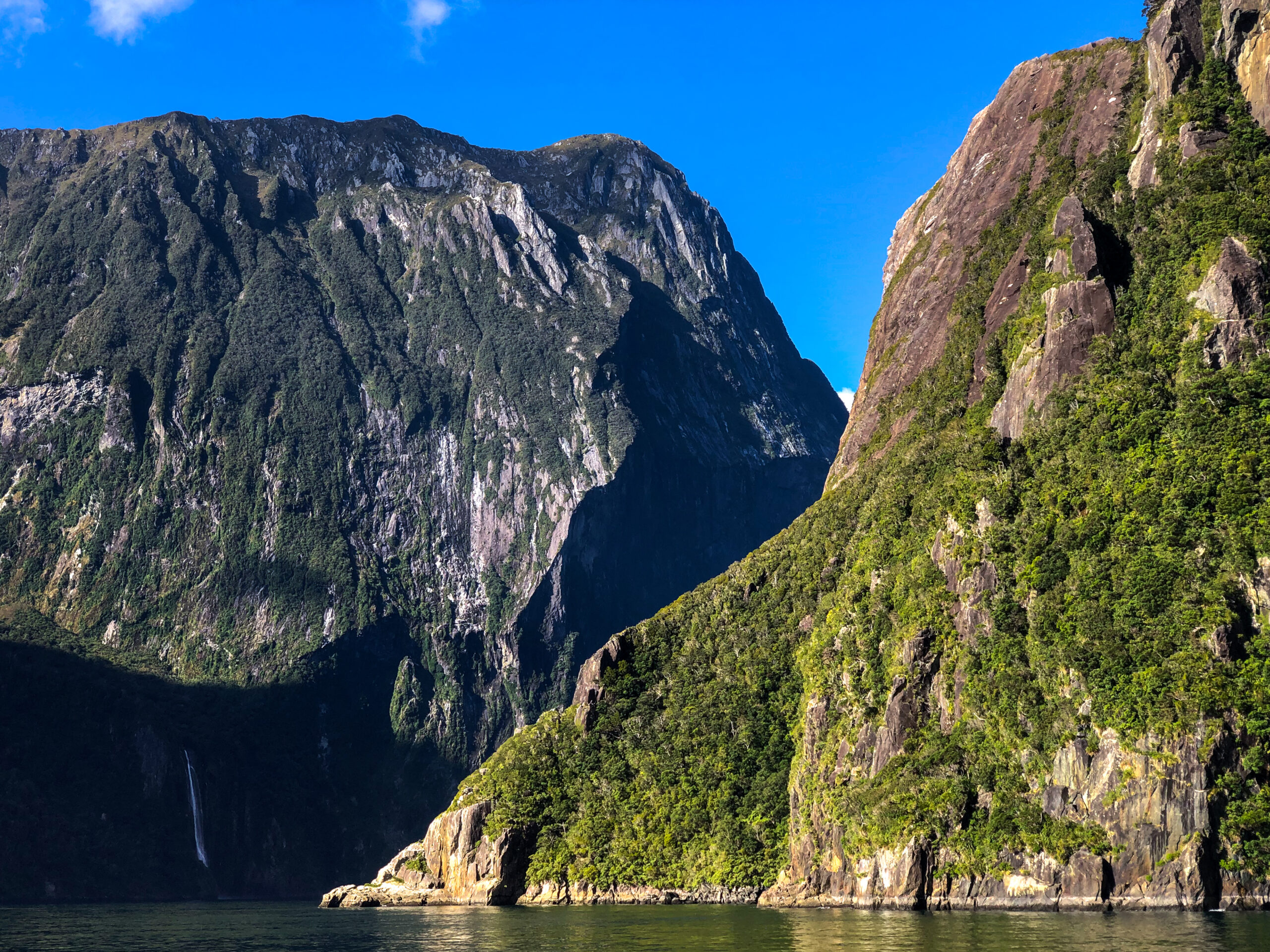
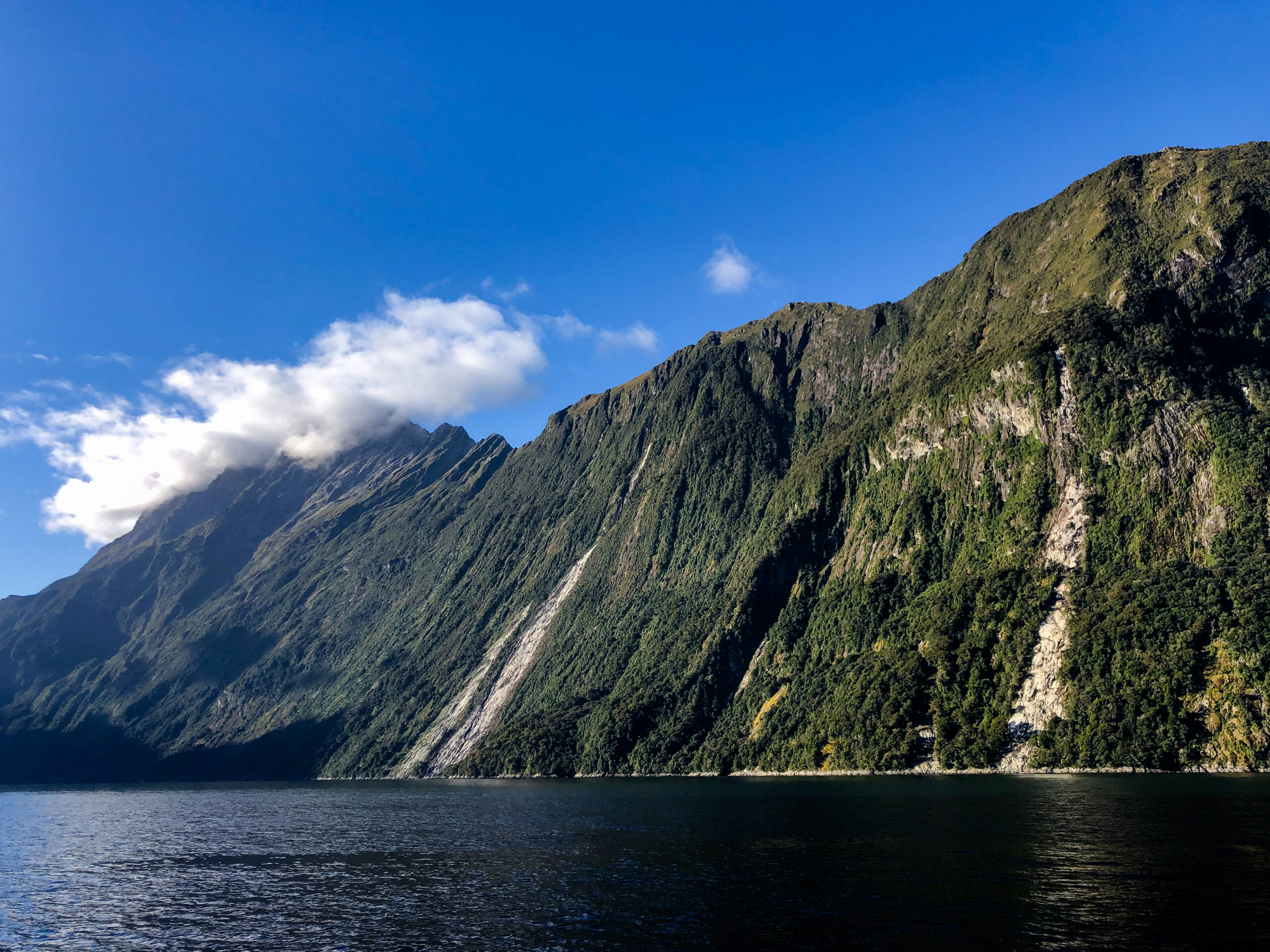
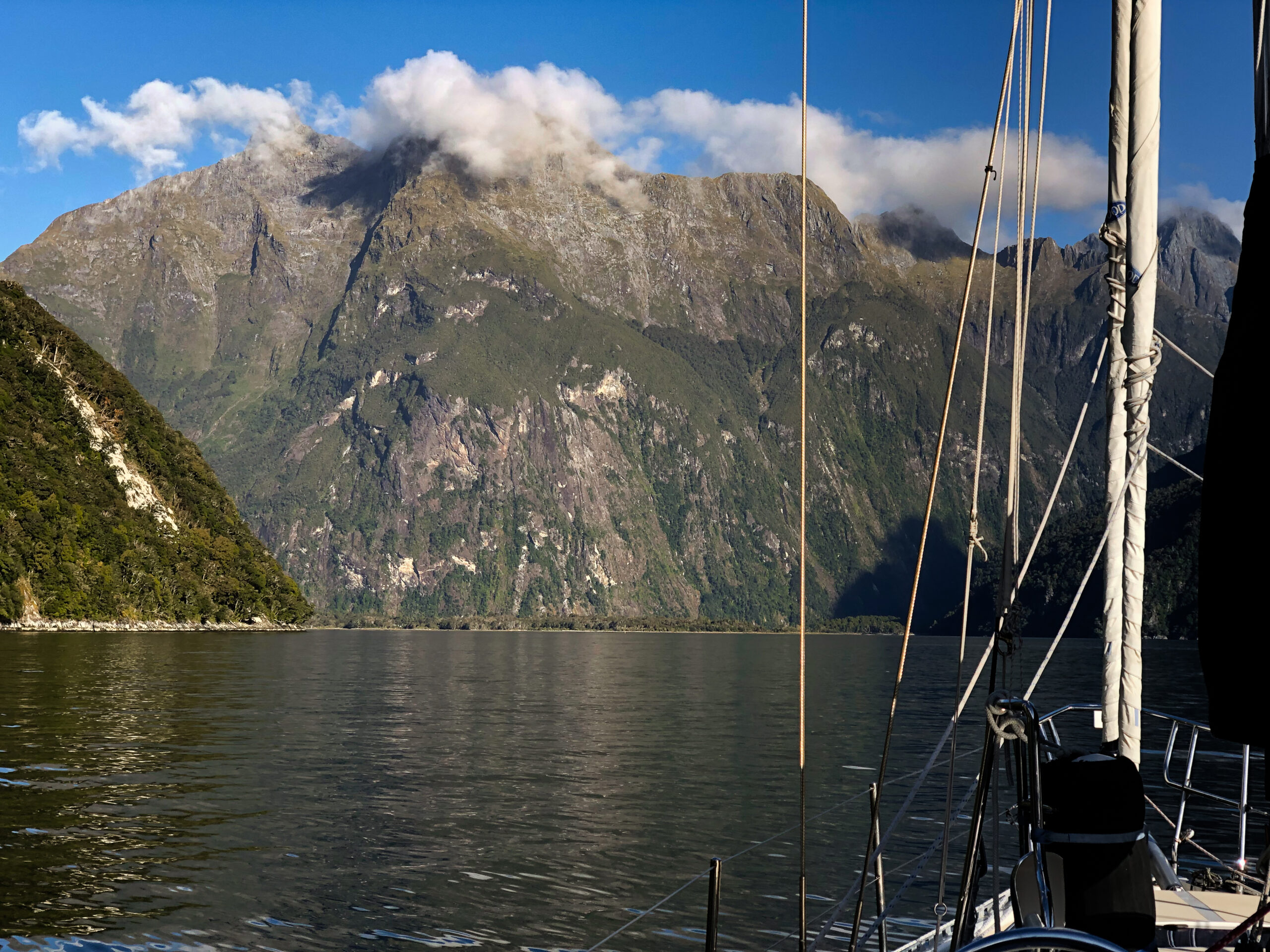
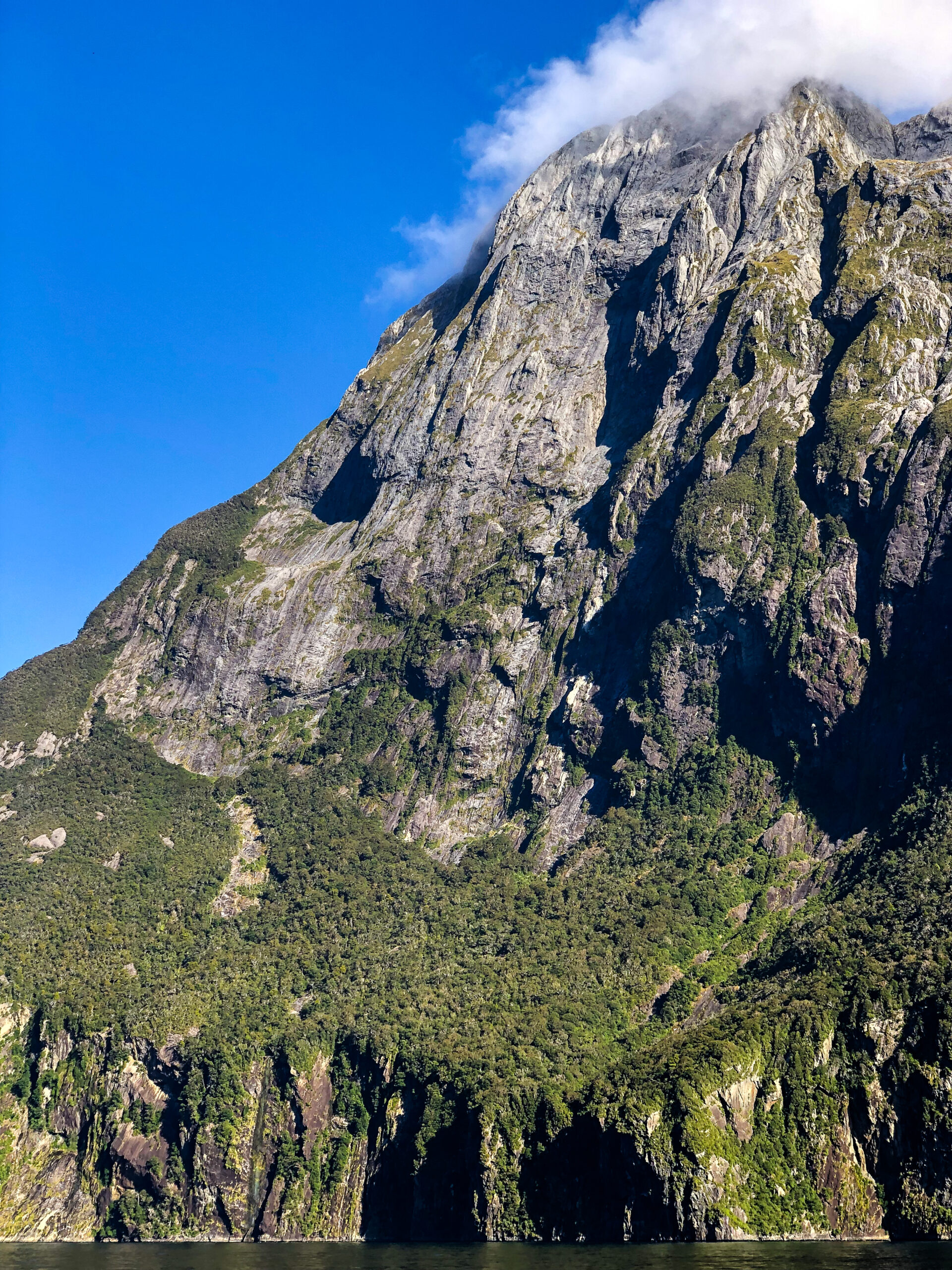
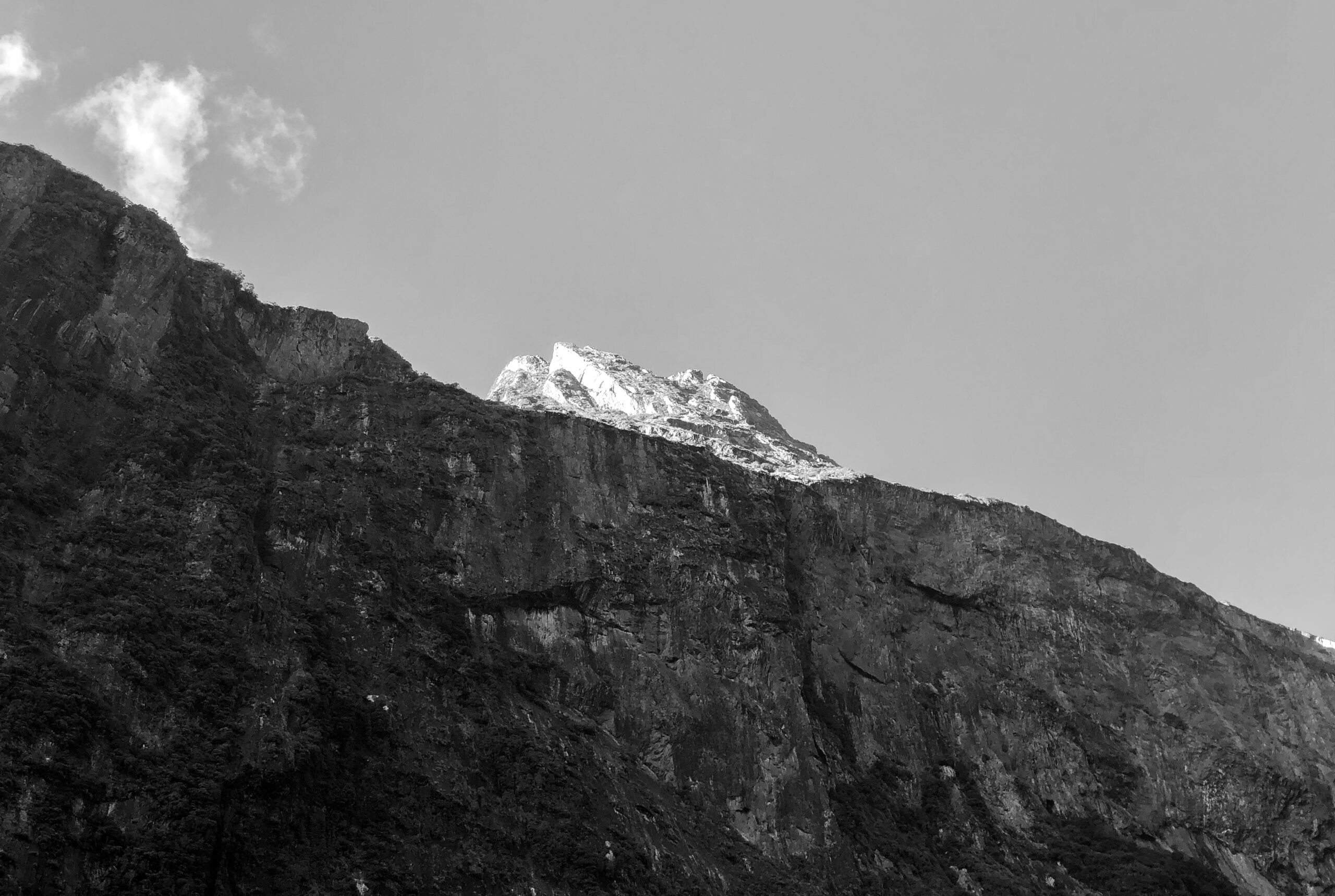
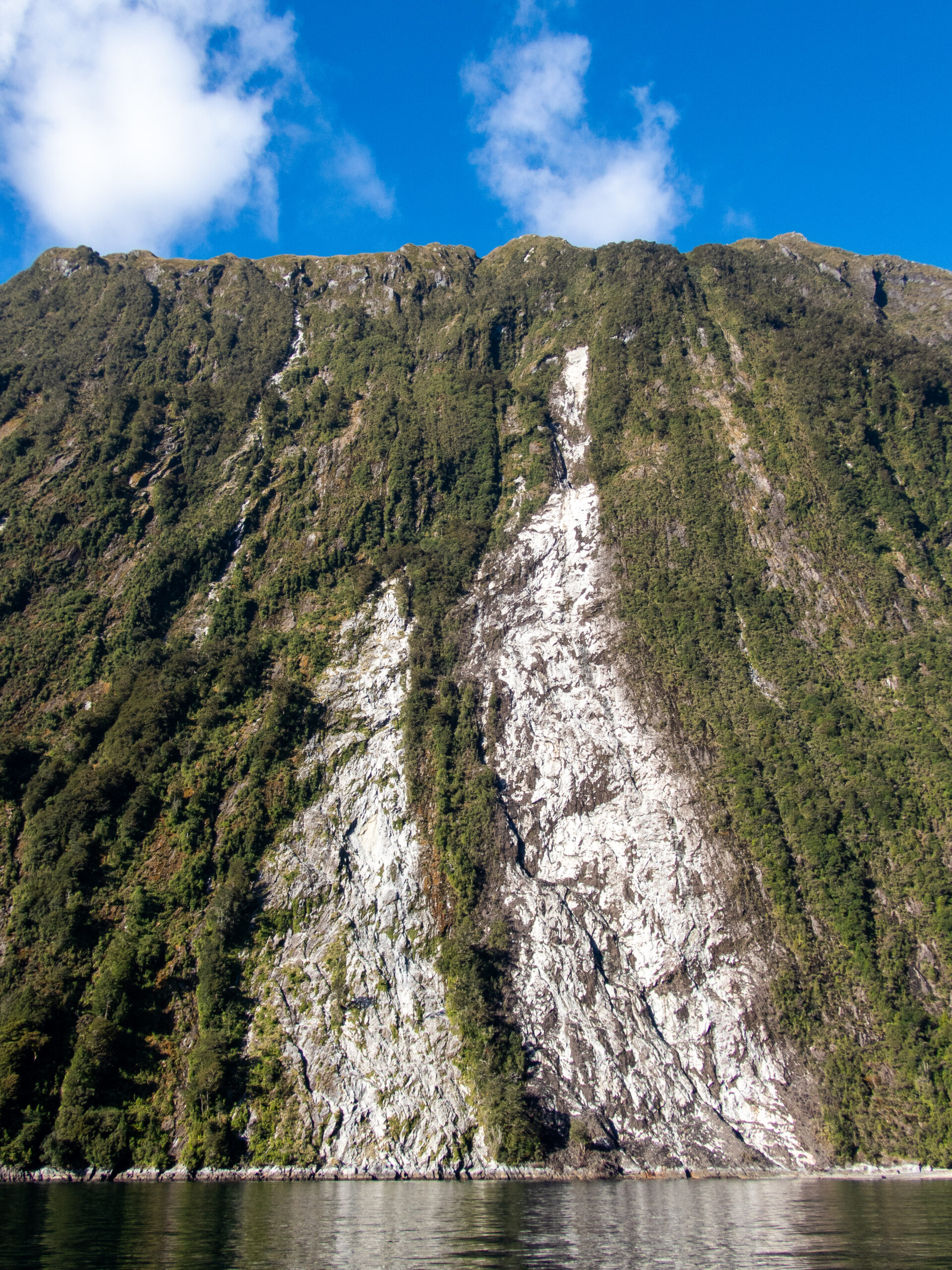
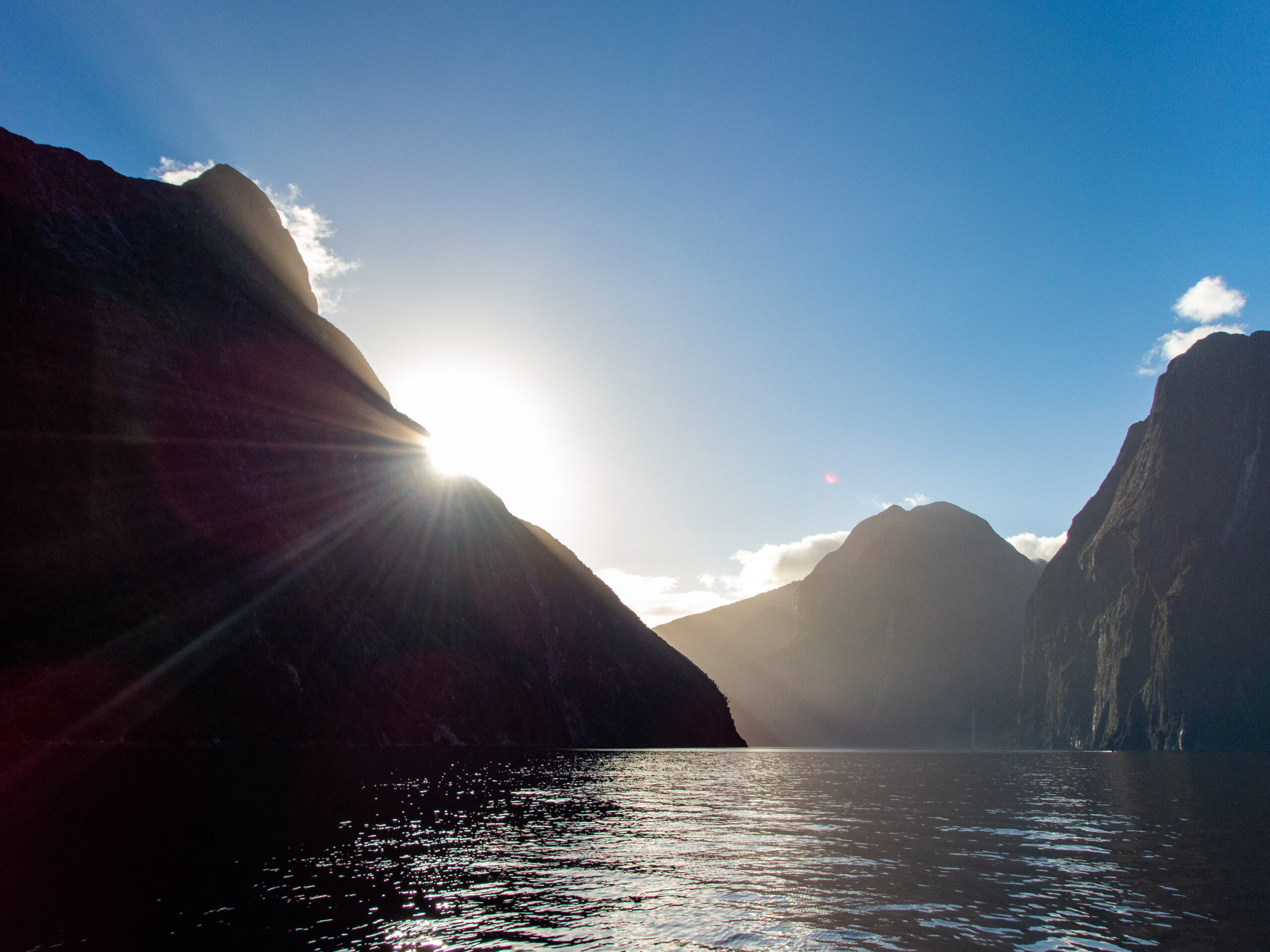
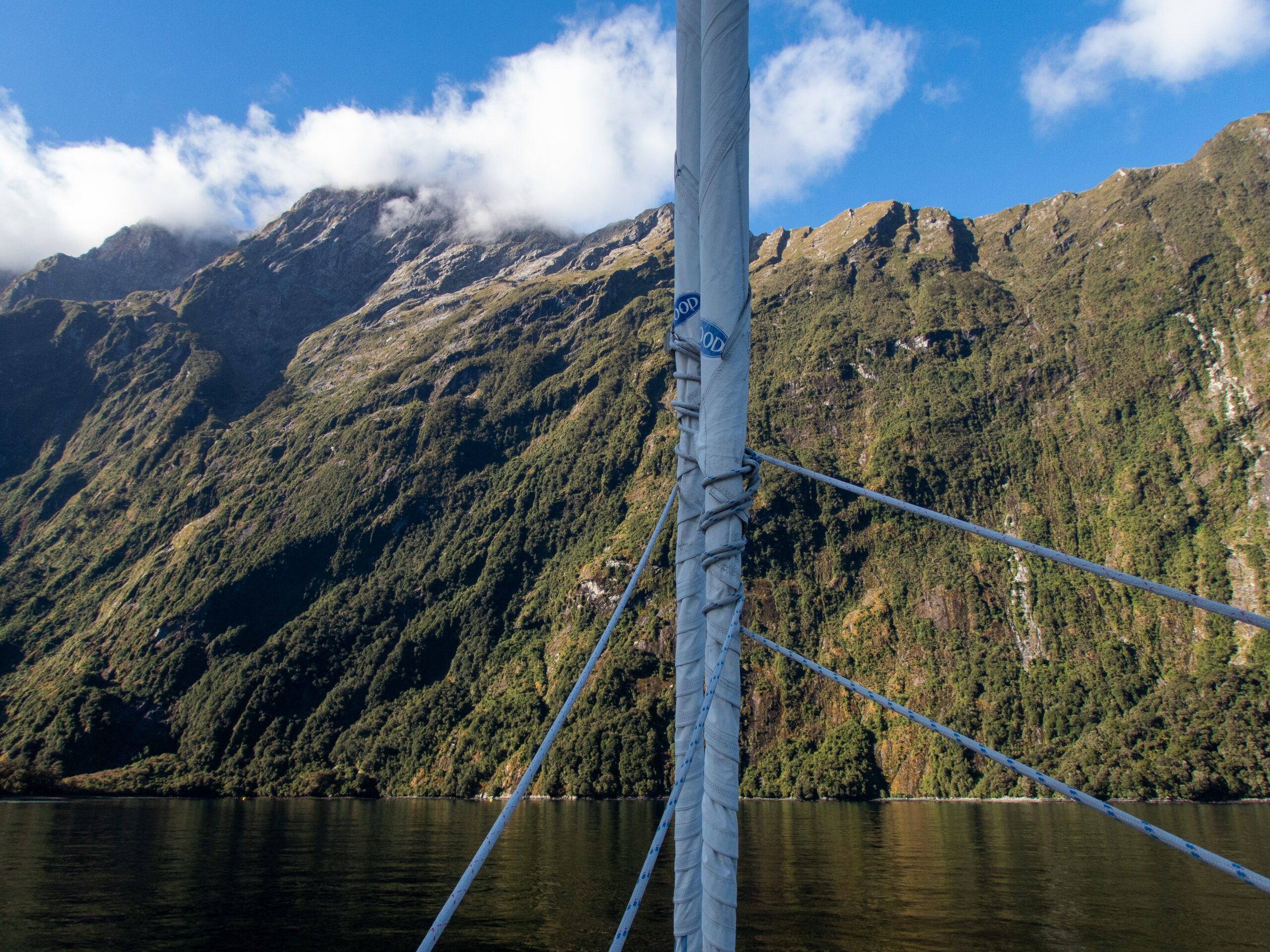
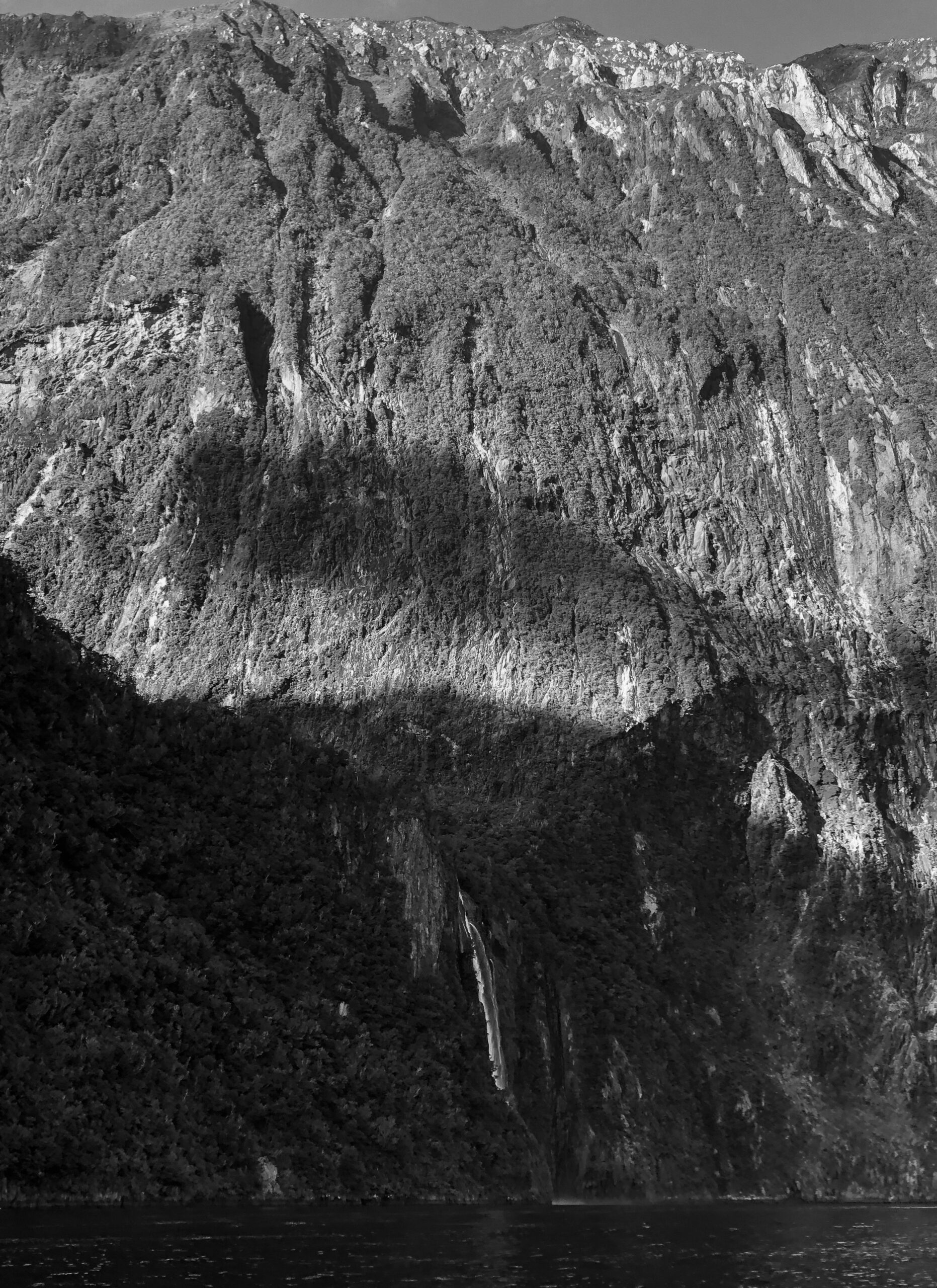
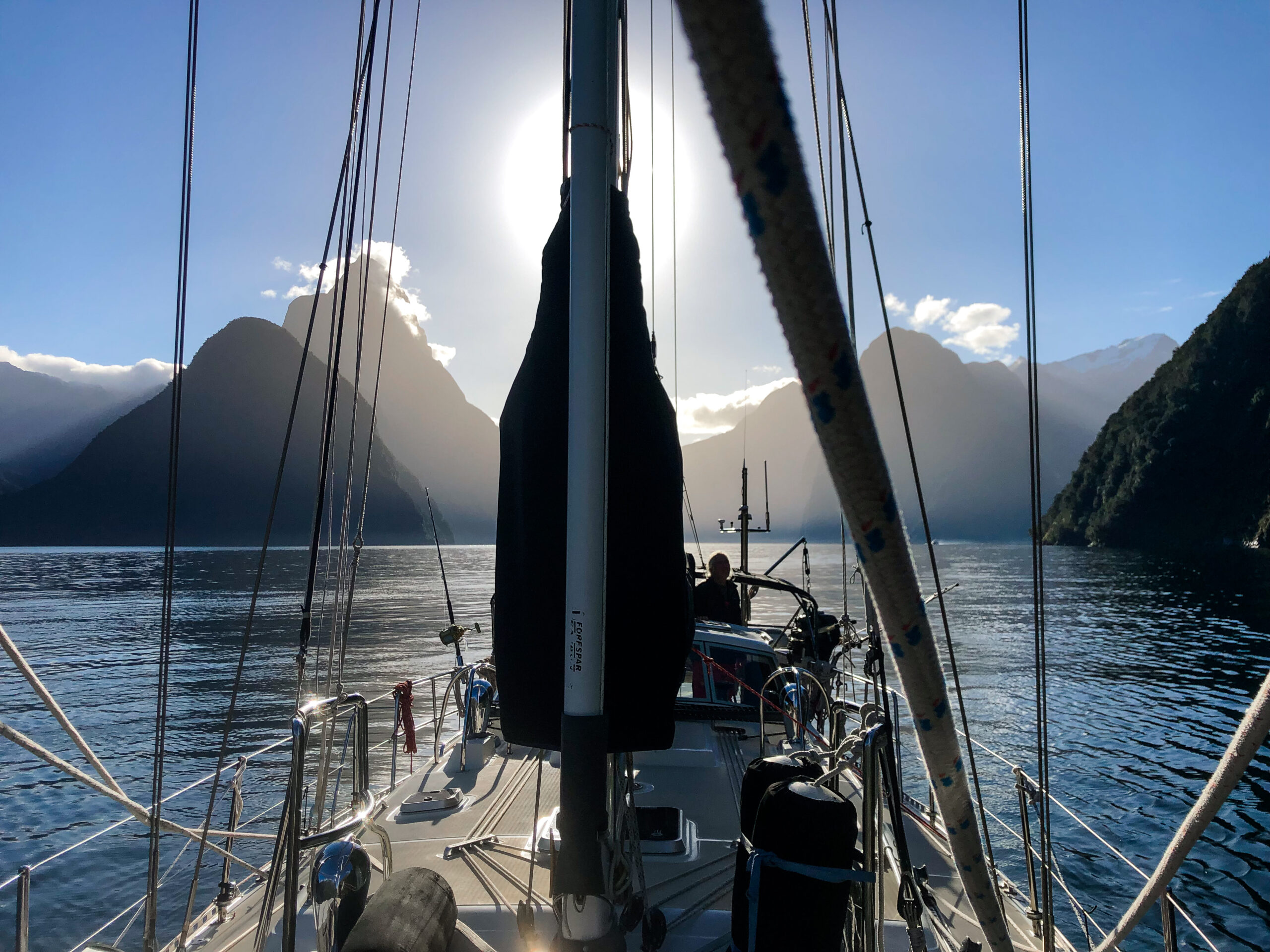
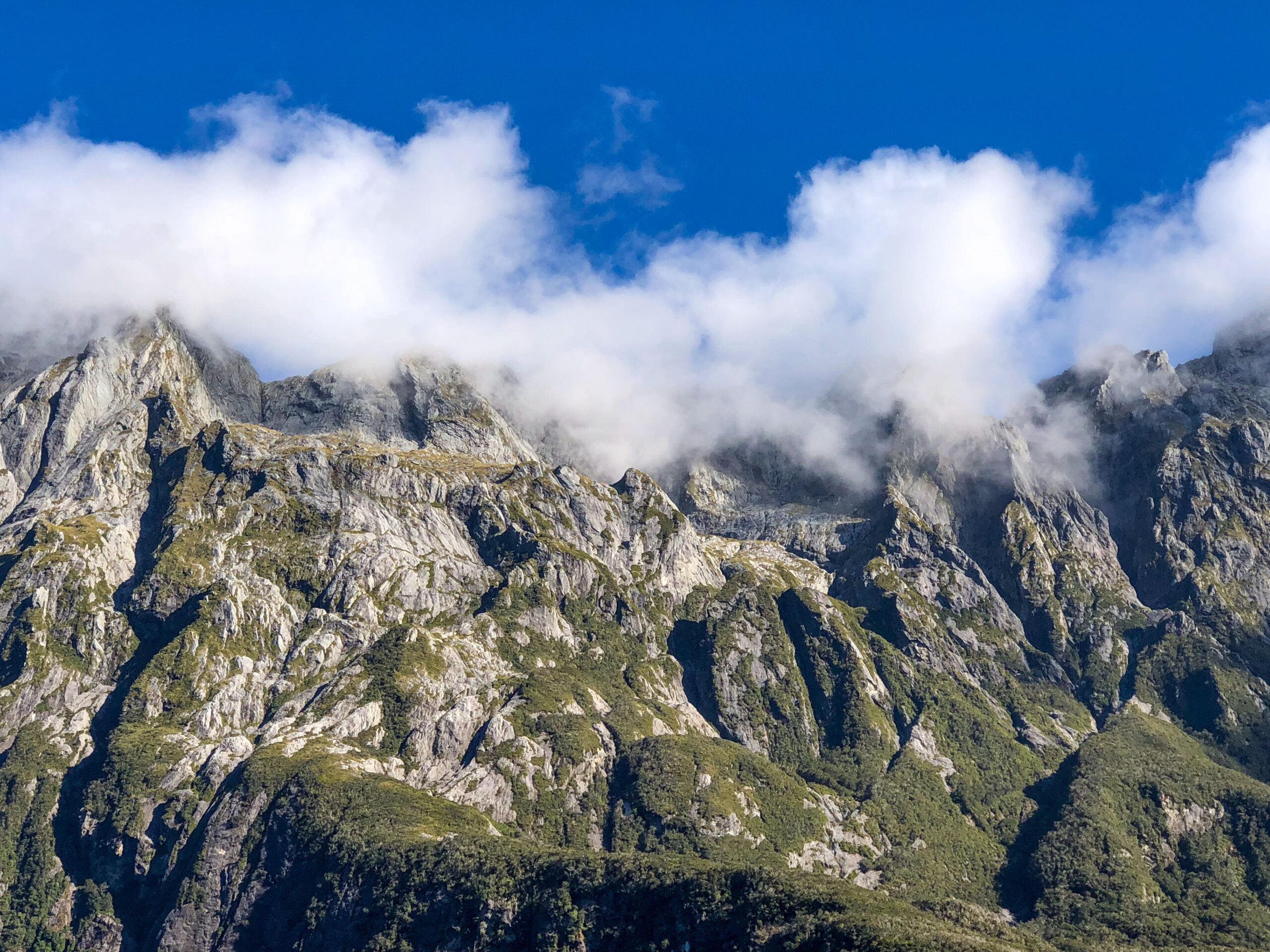
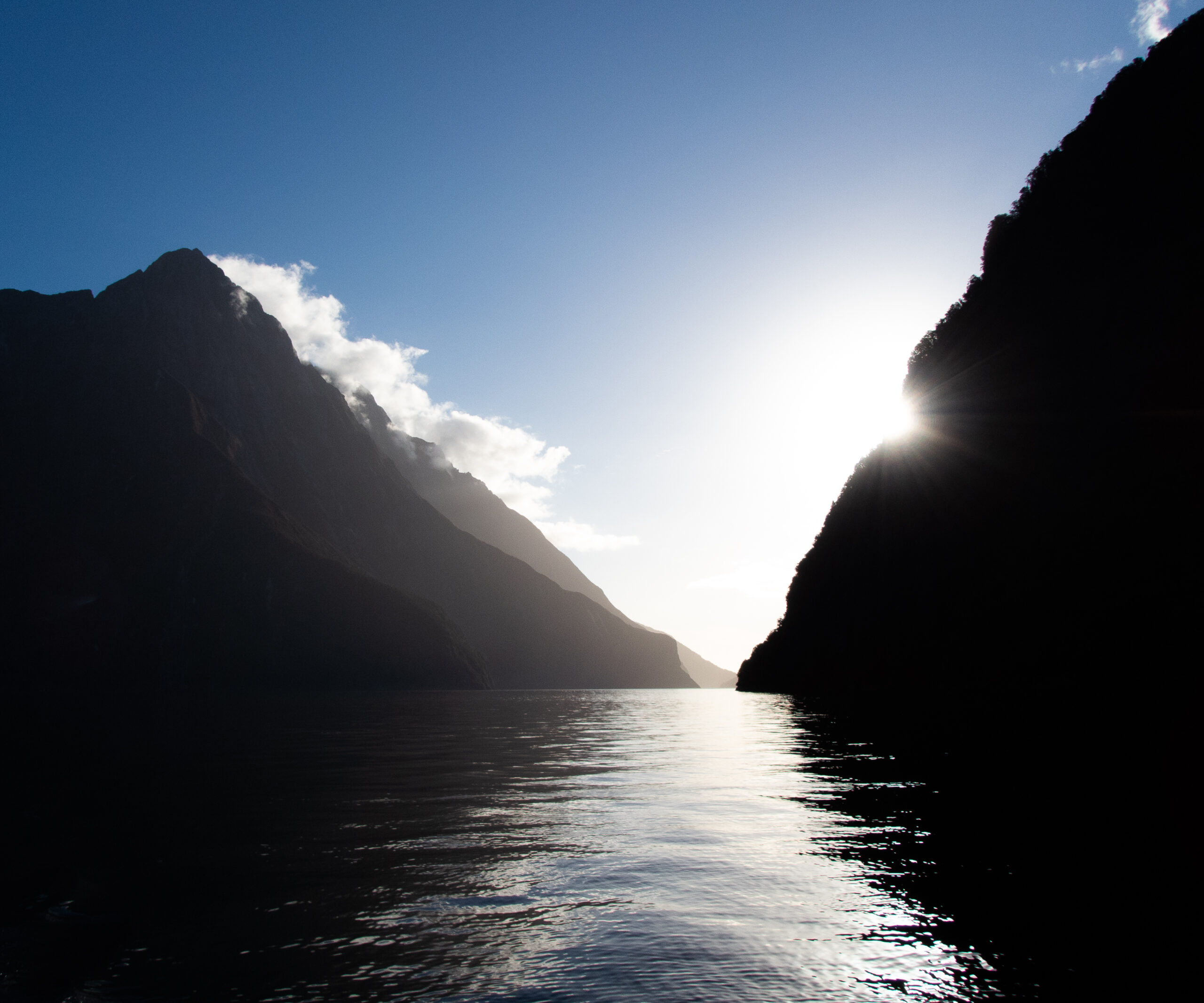
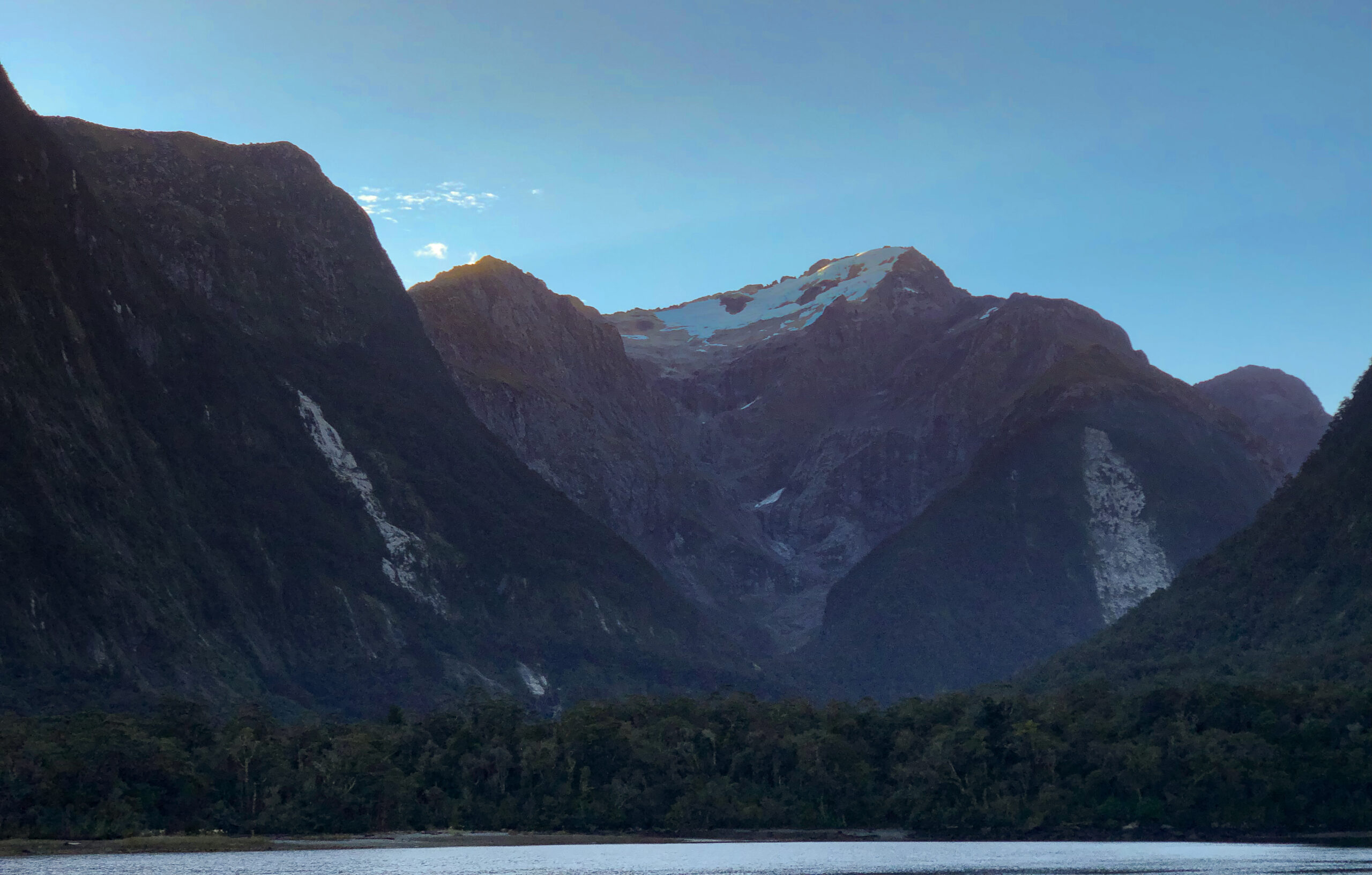
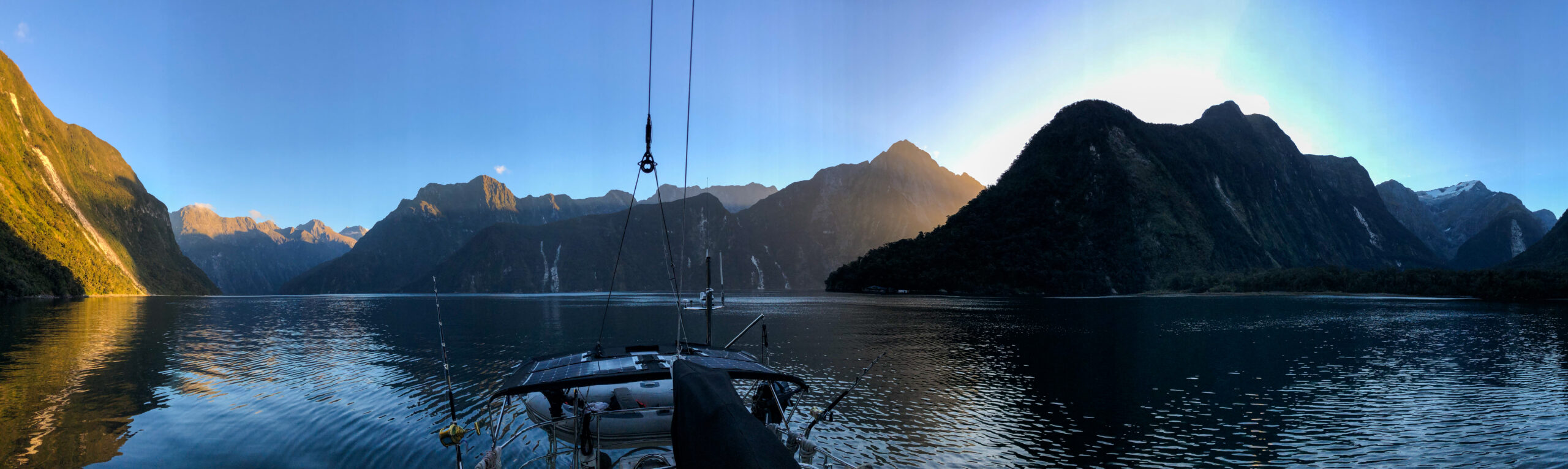
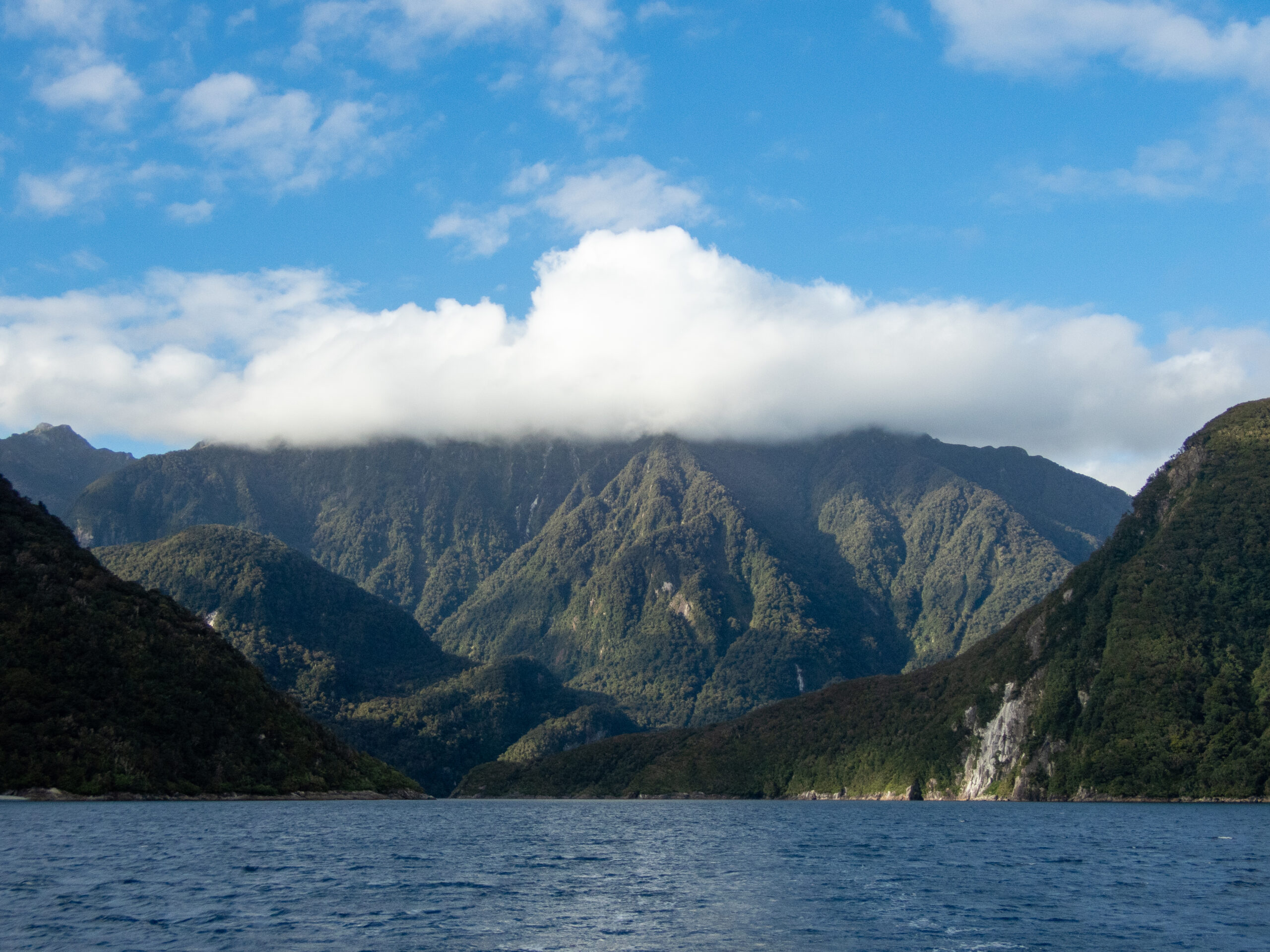
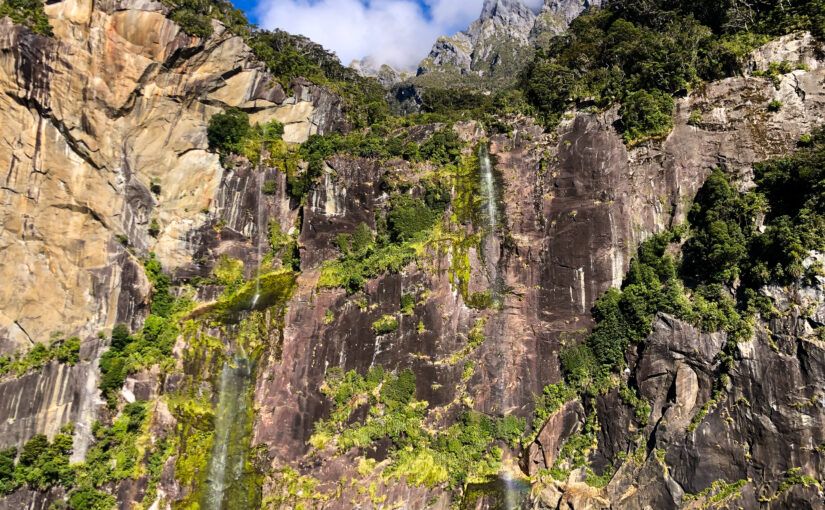
Piopiotahi (Milford Sound) resonates with awe and leaves us speechless, like the Grand Canyon or Machu Picchu, or the Magellanic Clouds on a vividly starry night at sea. The sheer mass and scale, the soaring beauty, each breathtaking turn. Words just pour out, but fail to capture what it feels like to sail into this magnificent fiord. The day we spent in this unique-in-the world place, was blue and lit with sun, the water impenetrably deep, granite walls towered over us, beyond imagination and comprehension, the waterfalls gushed bountifully without end. Apparently Captain Cook missed Milford on his first pass, and actually that’s not entirely surprising. Approaching from the sea the fiord begins rather humbly and then builds and builds in its symphonic crescendo of magnificence. A bit much? Not really. Every time I stepped away from the helm and out from under the dodger I caught my breath as I looked up and up. ~MS
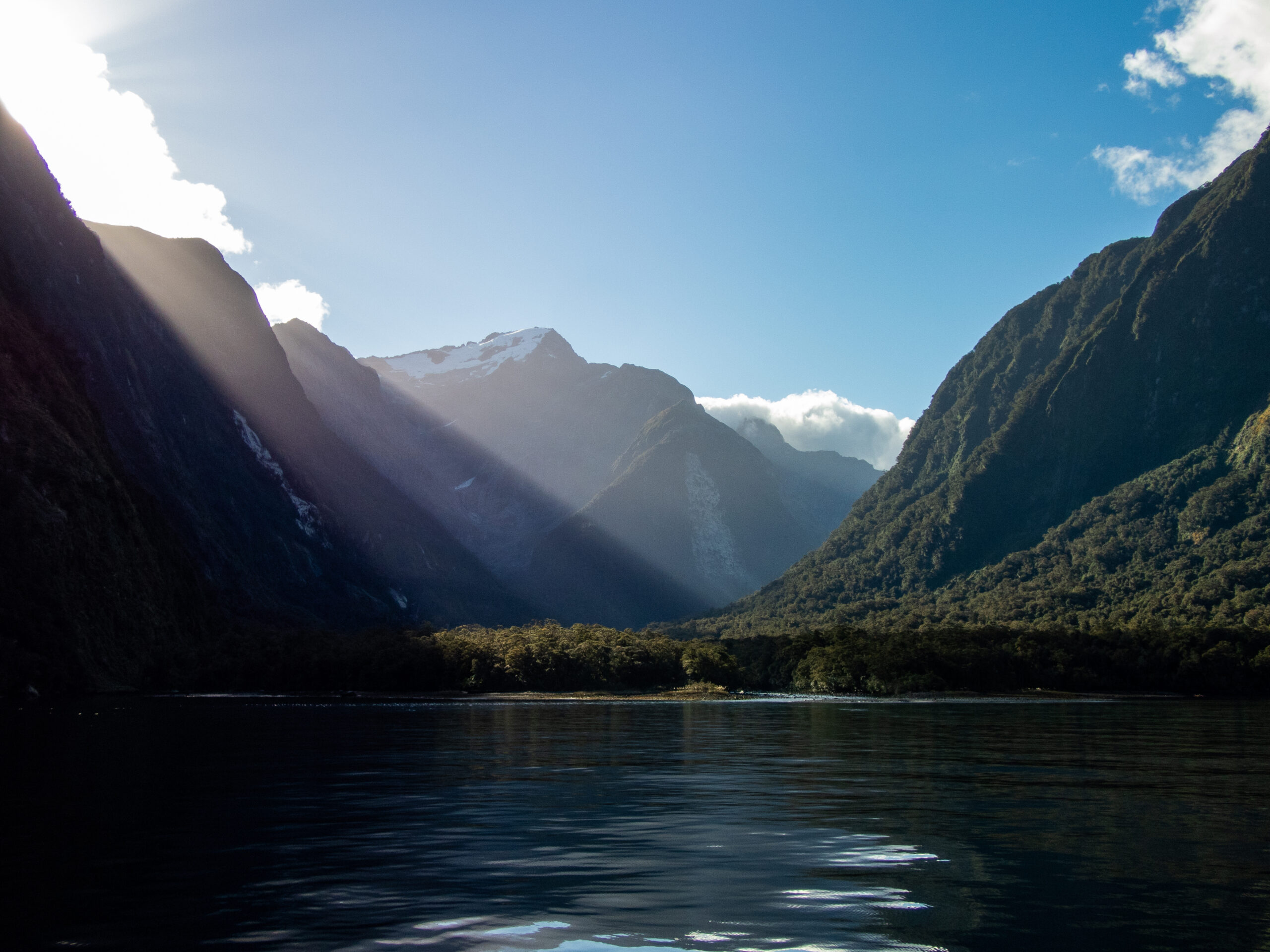
The tour boats run in a clockwise loop around Milford, and there were probably FAR fewer than in non-Covid affected years, (saw maybe 12 all day), but we were able to stay quite clear of them just by scooting to the middle or going the other way – basically we had the luxury of no rules! But who’s looking at boats with these sheer rock faces in our midst?

Excited visitors to this breathtaking sound are at risk for ‘Milford Neck Syndrome.’ By the end of the day, my neck wouldn’t support my head anymore – had been looking up too much!!

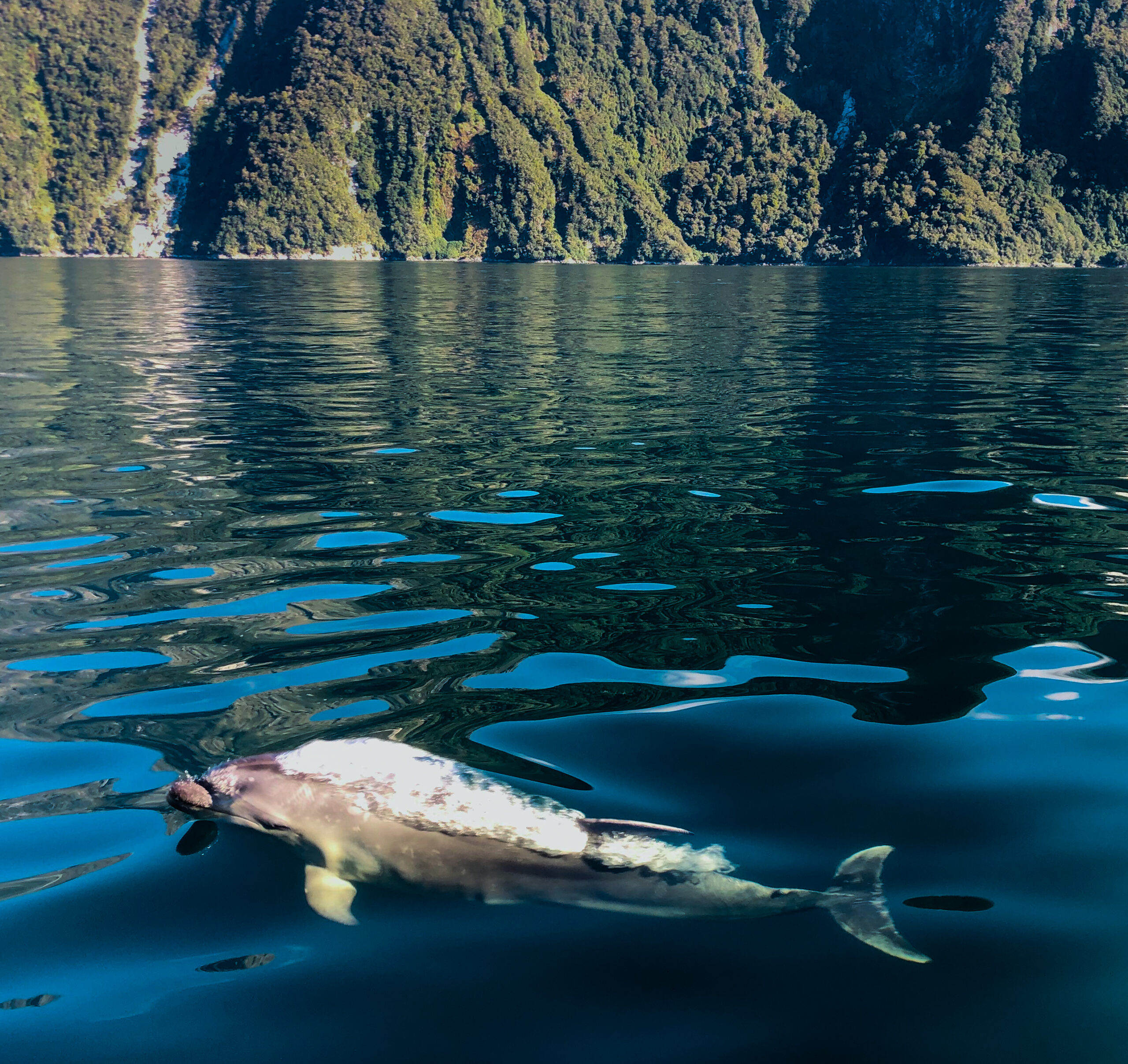
There’s a resident pod of Bottlenose Dolphins in Milford – they dashed over eagerly to welcome Allora!

Heading up toward Deepwater Basin, the tourist concession. Milford is the only fiord that can be reached directly by vehicle and because of that, it normally receives up to 500,000 visitors per year! When we went via car (with Wyatt) in April 2021, ours was the ONLY car in the massive parking lot. Now, a year later, tourism is inching its way back.
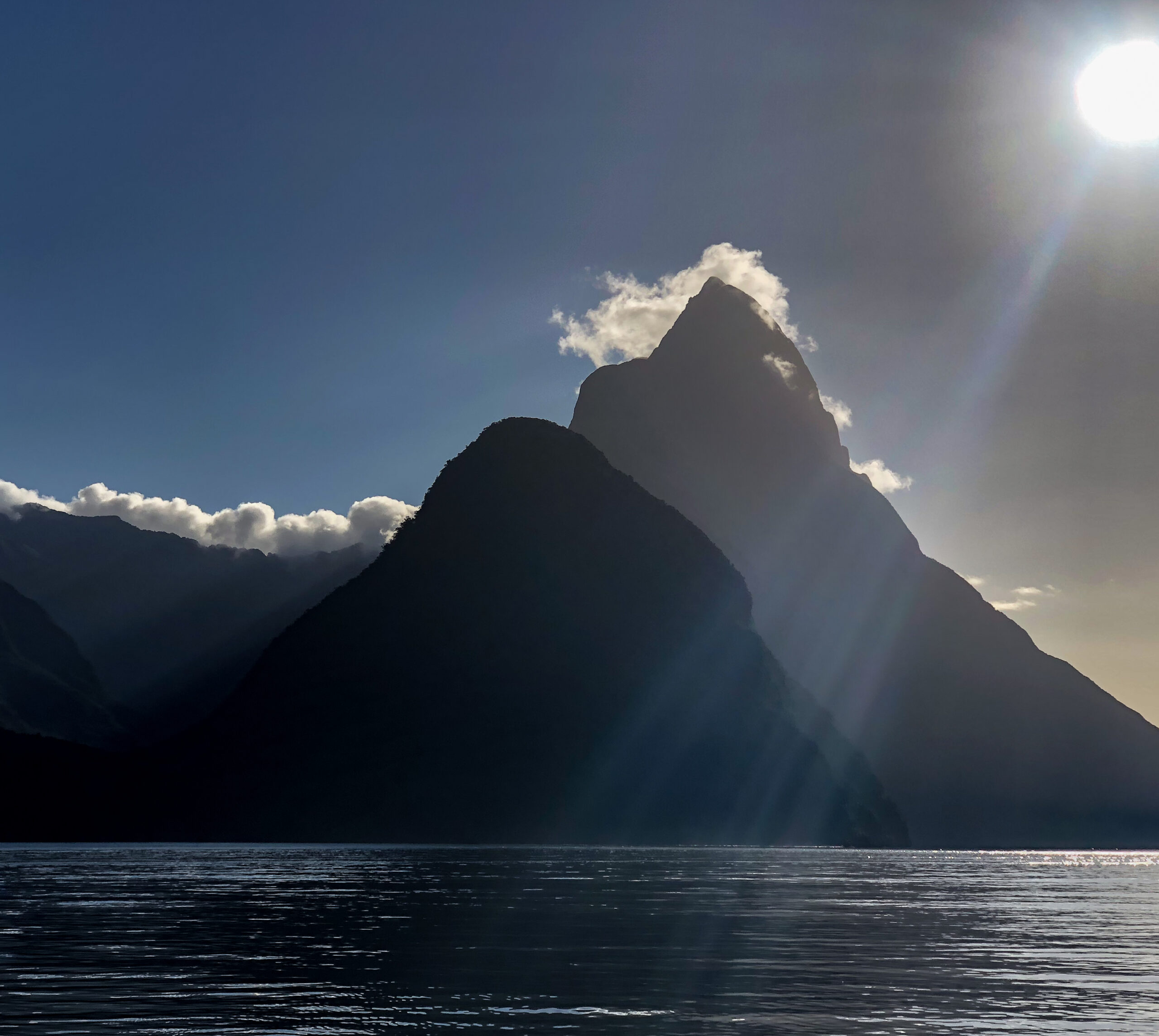
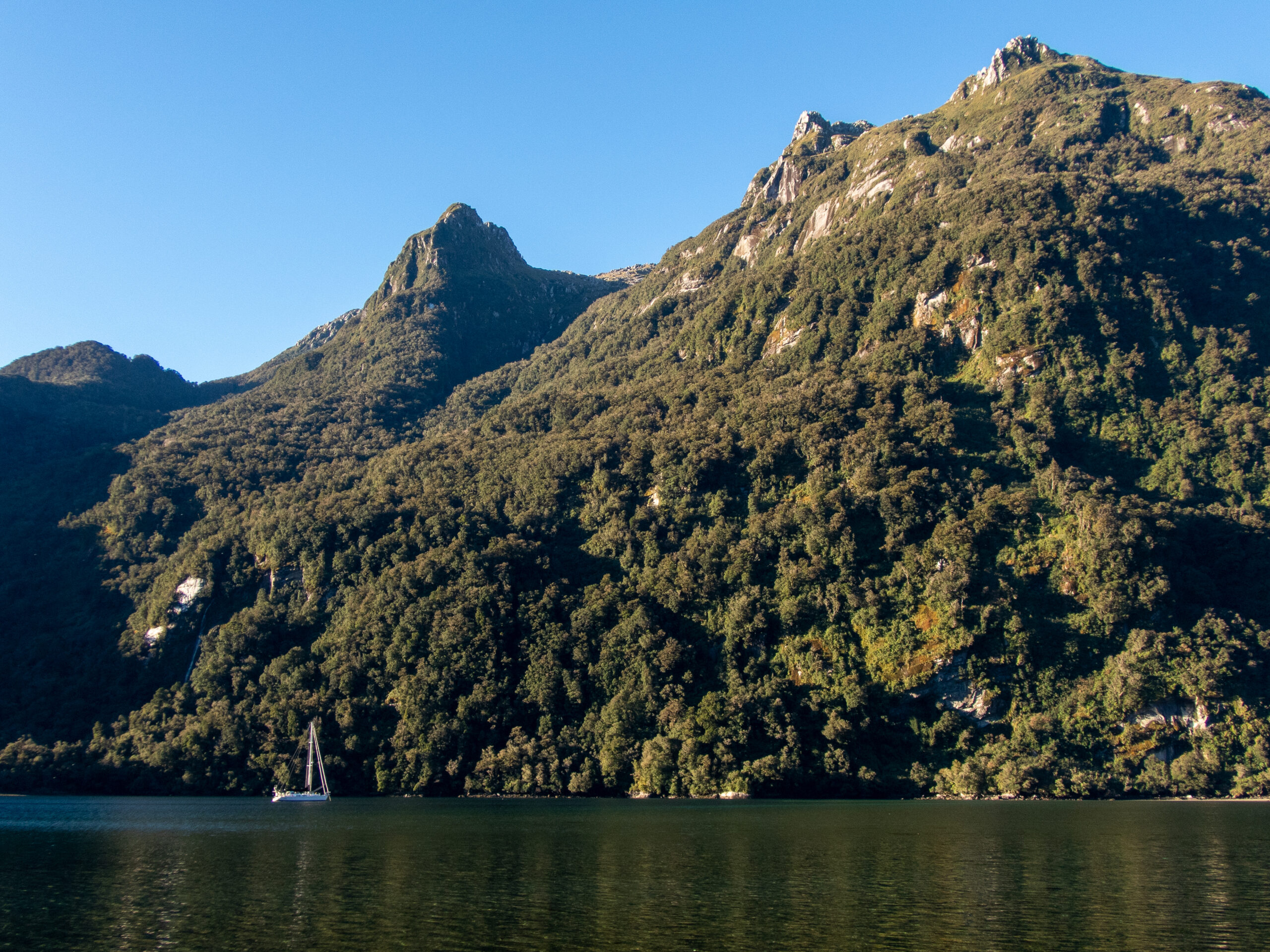
Iconic Mitre Peak, 1683m
Some people book their big Milford trip a year in advance and then get one of the 182 rainy days/year. Feeling such gratitude to the weather gods!
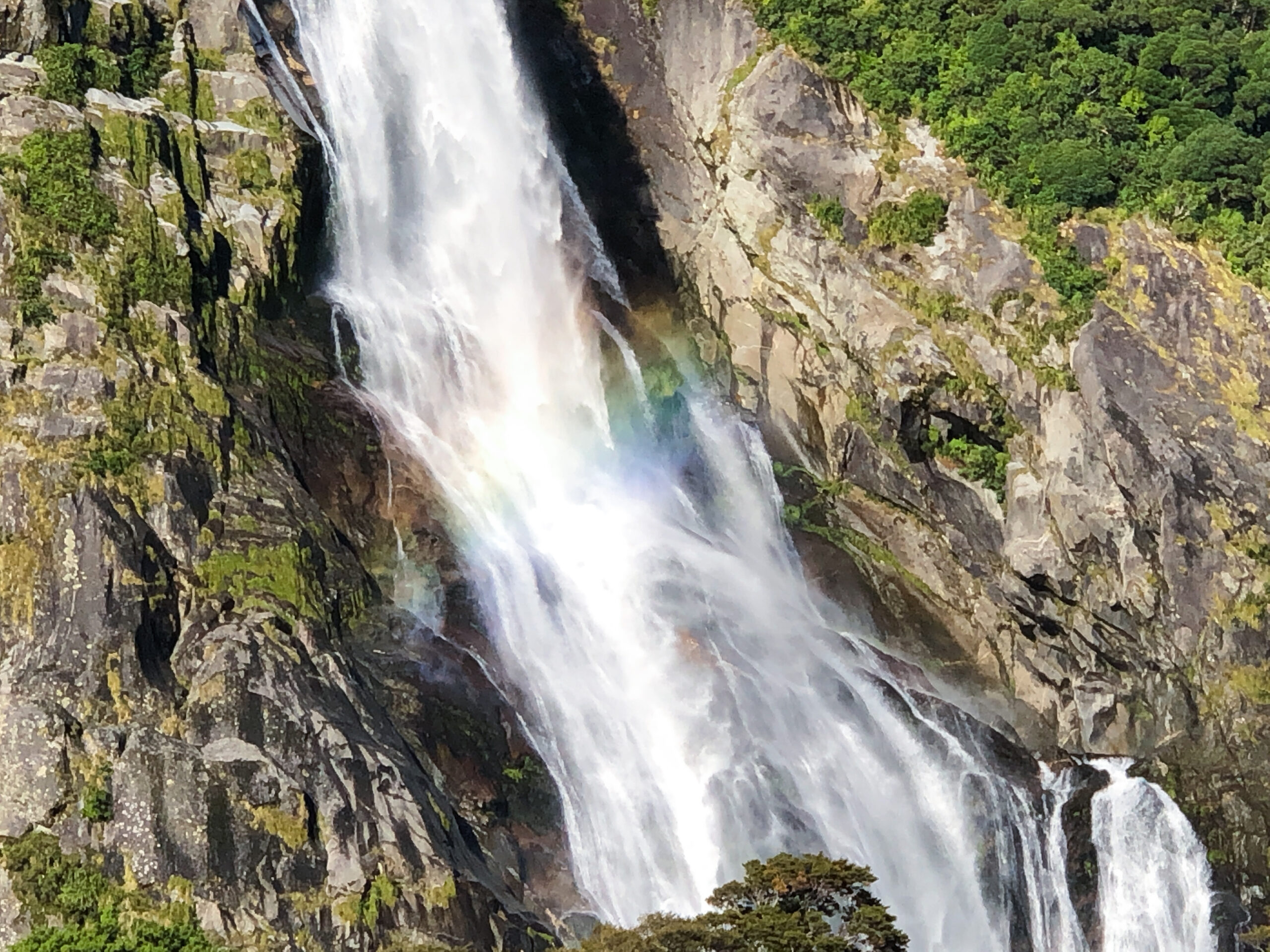
Bowen Falls adorned by a rainbow, as if it needed more?!

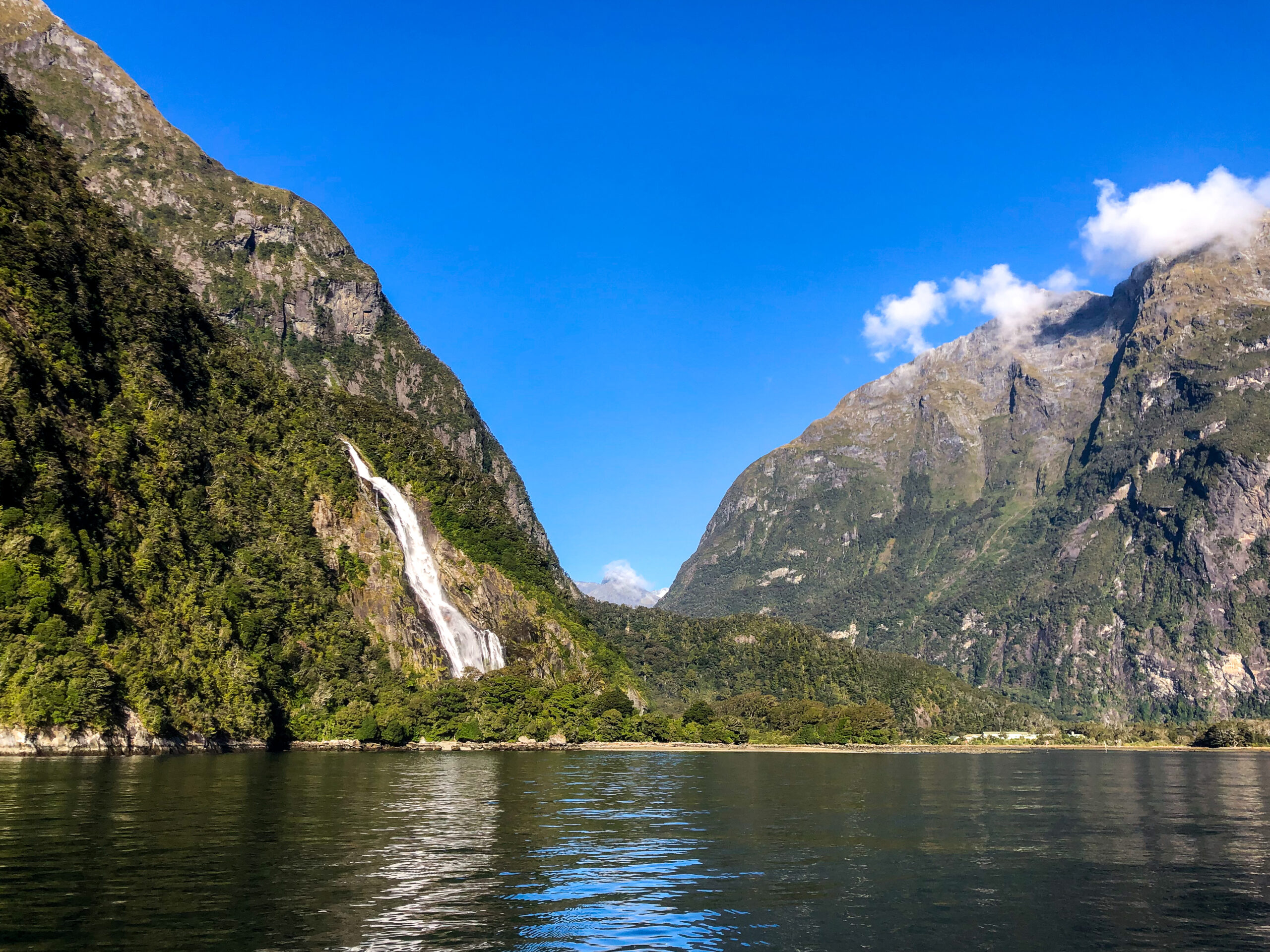
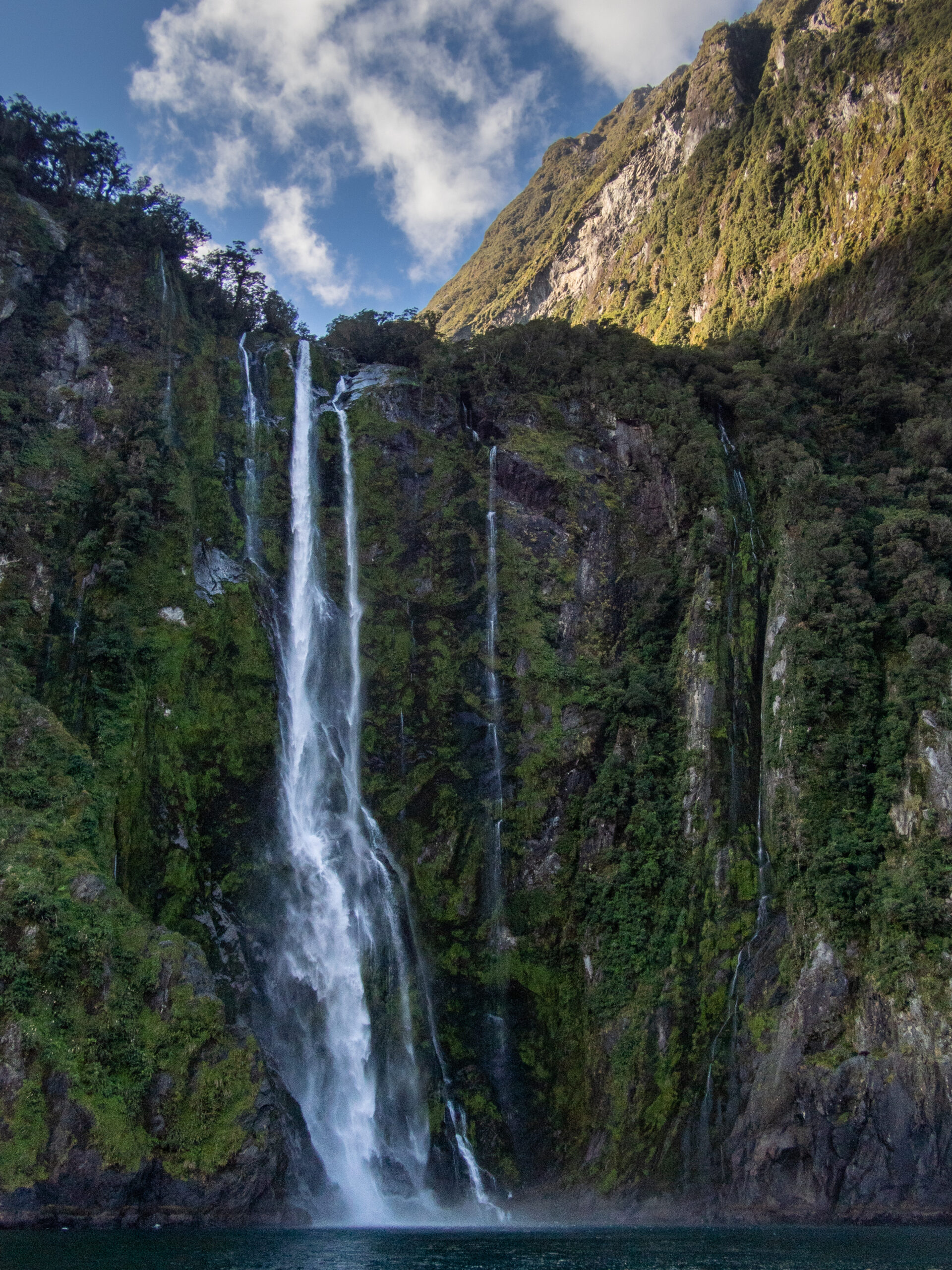
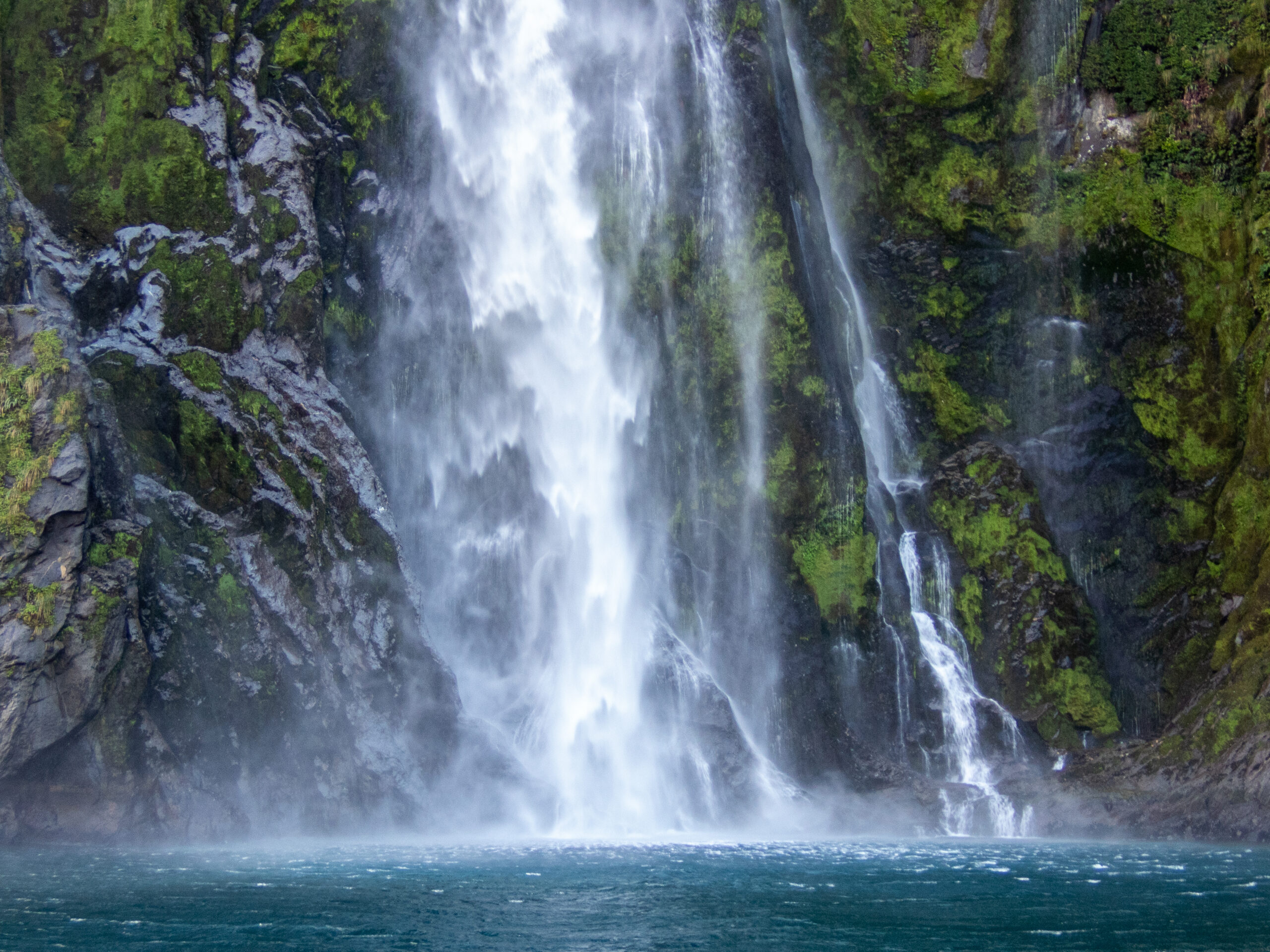
We had to keep Allora off shore just enough to avoid a full shower from the downpour of Stirling Falls. She drops 150 meters (a 35 story building worth!)

We were both giddy all day and so so glad we made this quick but rich visit!

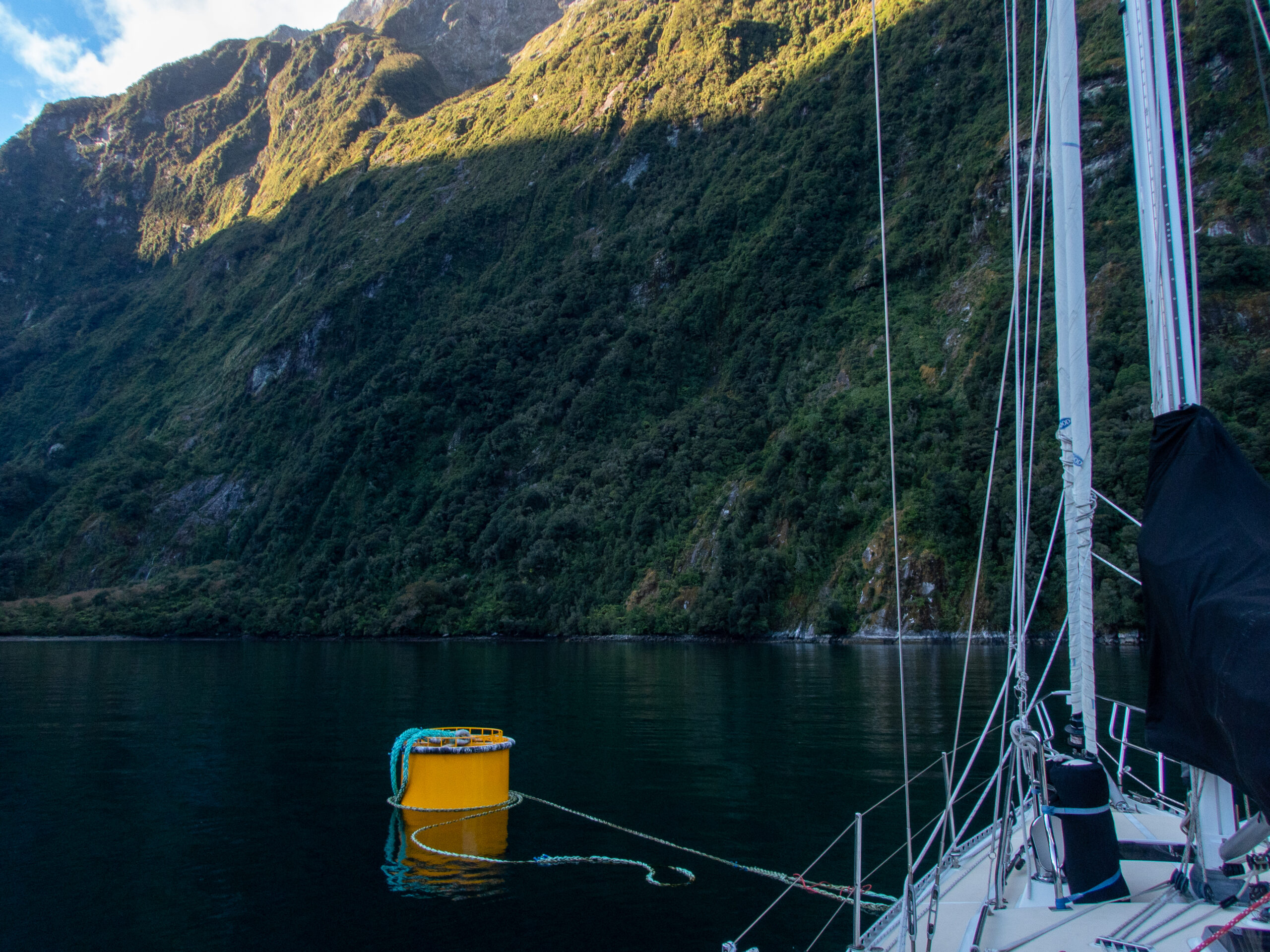
Real Journeys offered up their mooring in Harrison Cove since they wouldn’t be using it. This saved us figuring out how to find a suitable anchoring spot in otherwise super deep water.
So EASY! No kayaking multiple lines to shore anymore!
Low light on Donne Glacier, but there’s a GLACIER in our anchorage?!!!
Sweetness!
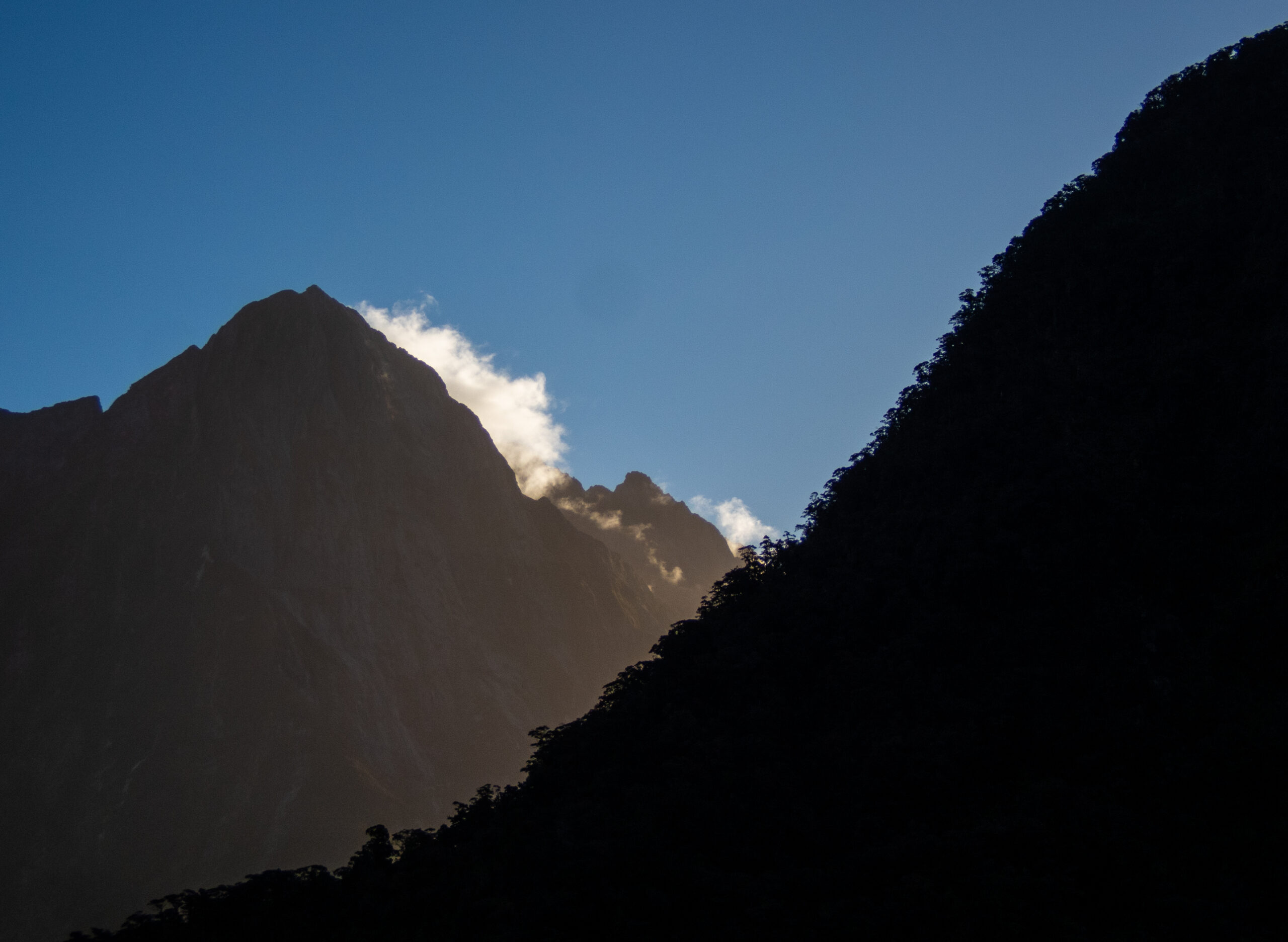
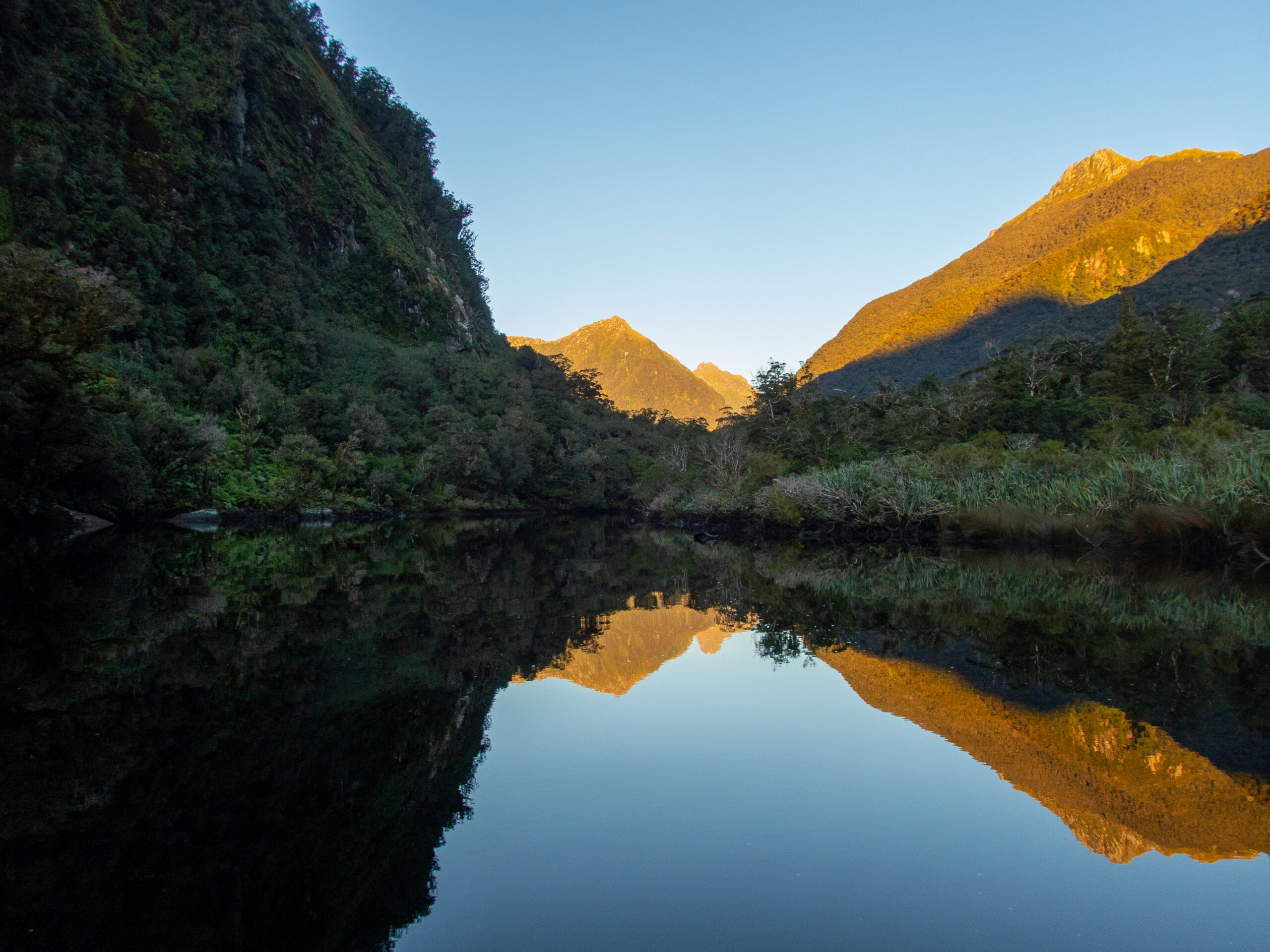
Last light on the peaks.
Wyatt left NZ for the States on this day. Something about that fact coupled with our sort of ceremonially special last hours in Fiordland left us feeling a bit stunned. We fell asleep super early and woke back up at midnight to start our passage up the West Coast. At 12:15 am, we left Harrison Cove in such pitch blackness that we were grateful for the silhouetted ‘steep as’ granite walls and the resident dolphins which escorted us out with an utterly magical and hushed Fiordland goodbye. Haere rā!


A quick blink in Bligh Sound/Hawea, – Fiordland

Our logbook for the run from George to Bligh says, ‘expecting 4 meter seas, so ‘battening down the hatches on Allora.’ This pic doesn’t begin to show the waves, but we are getting pretty used to these quick hops being worthy of our full attention!

This northern fiord zigzags around 18 kilometers inland to the head at Wild Natives River (surely on a list to be renamed?)
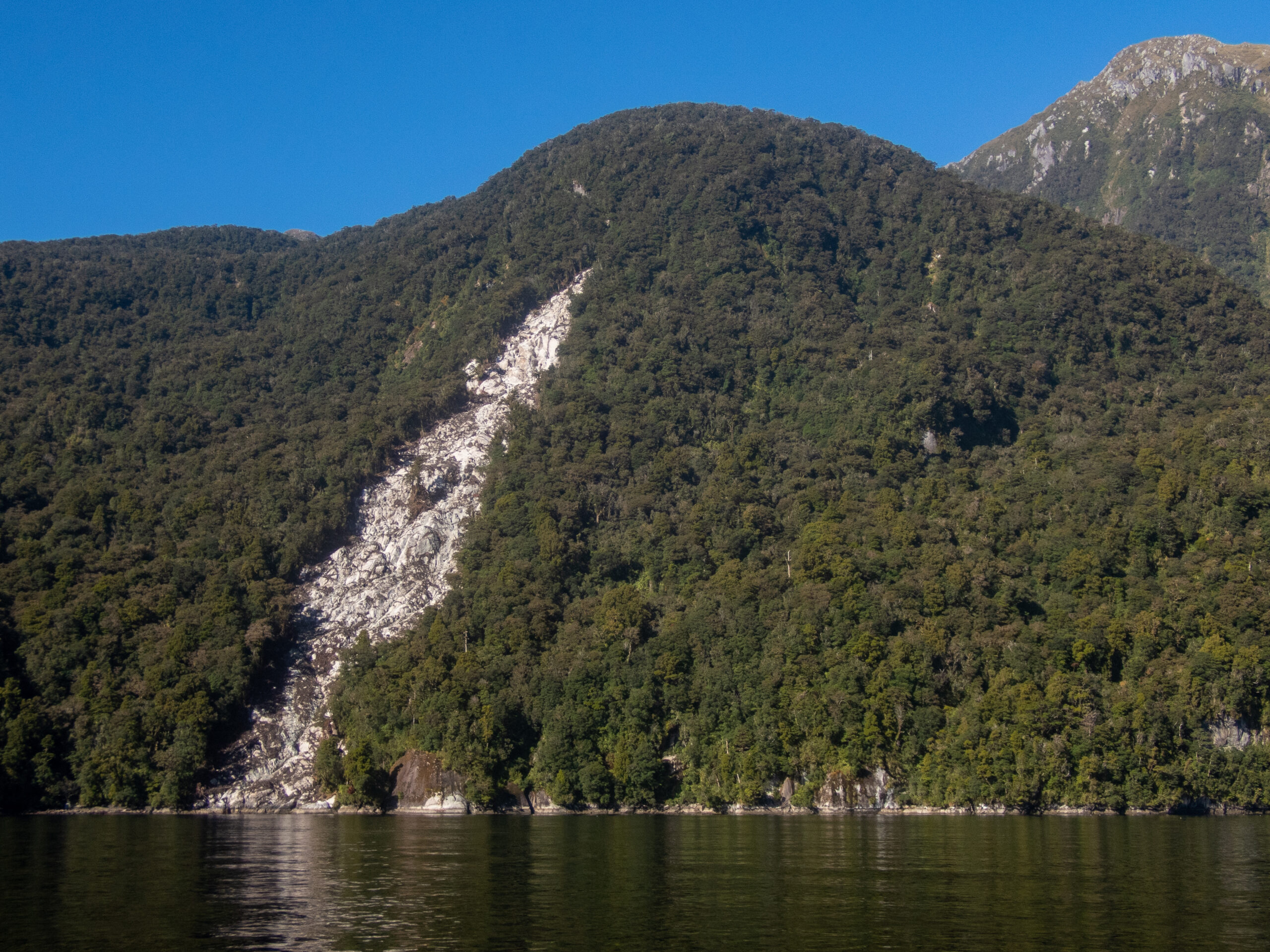
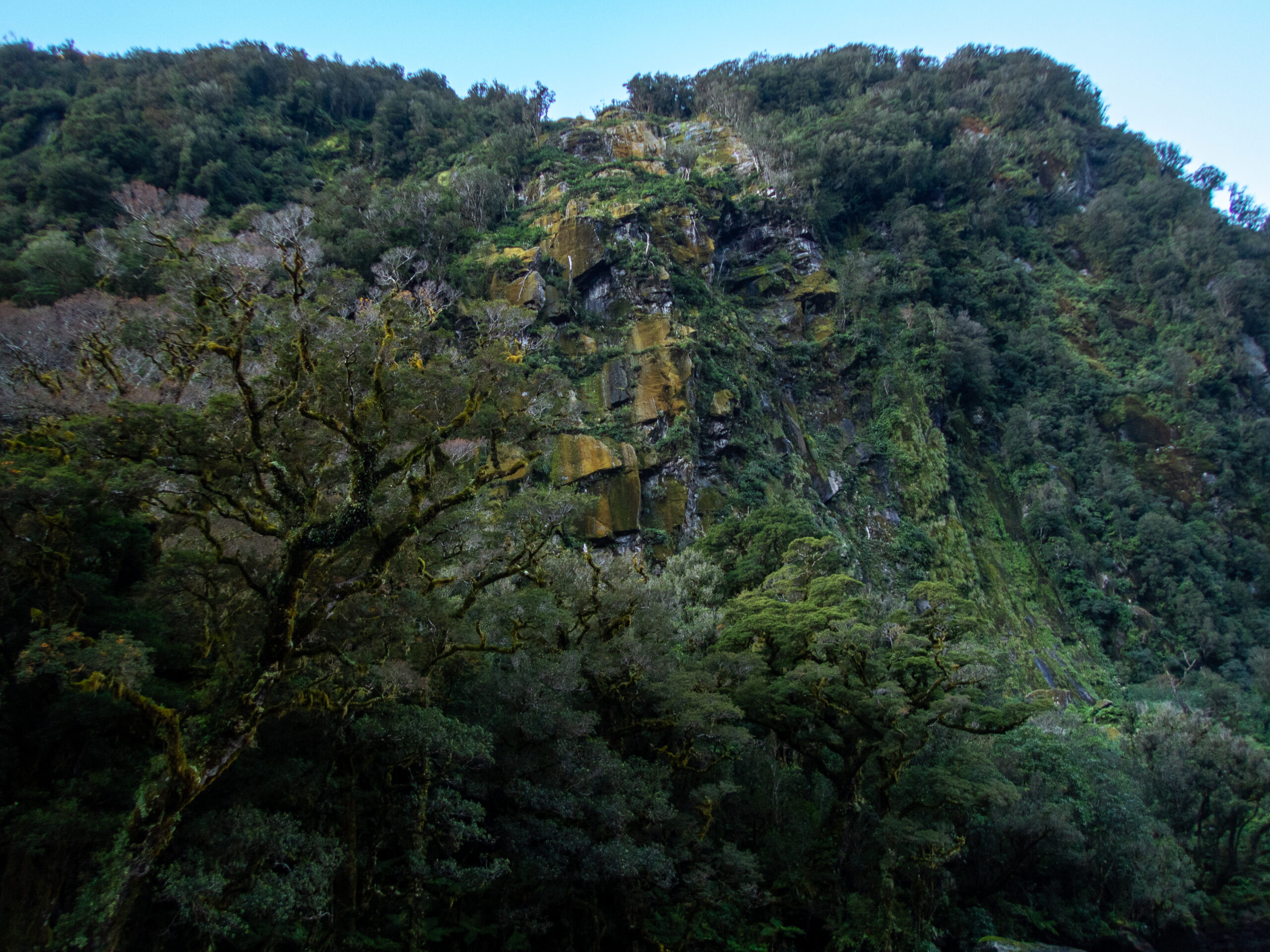
Sizable slip. Some of these are so dramatic you can just imagine the sound and drama of the actual moment when it let go.

The very steep demarkation between mud bank and deep water.
We finally found a spot to anchor in the middle in 80′ of water, so we had all our 330′ of rode out and were ‘free swinging’ without any lines to shore.

On our one full day in Bligh, Marcus took Namo up the Wild Natives River and hiked up with just enough time (with the tide) to fish one nice pool, landing two fish.
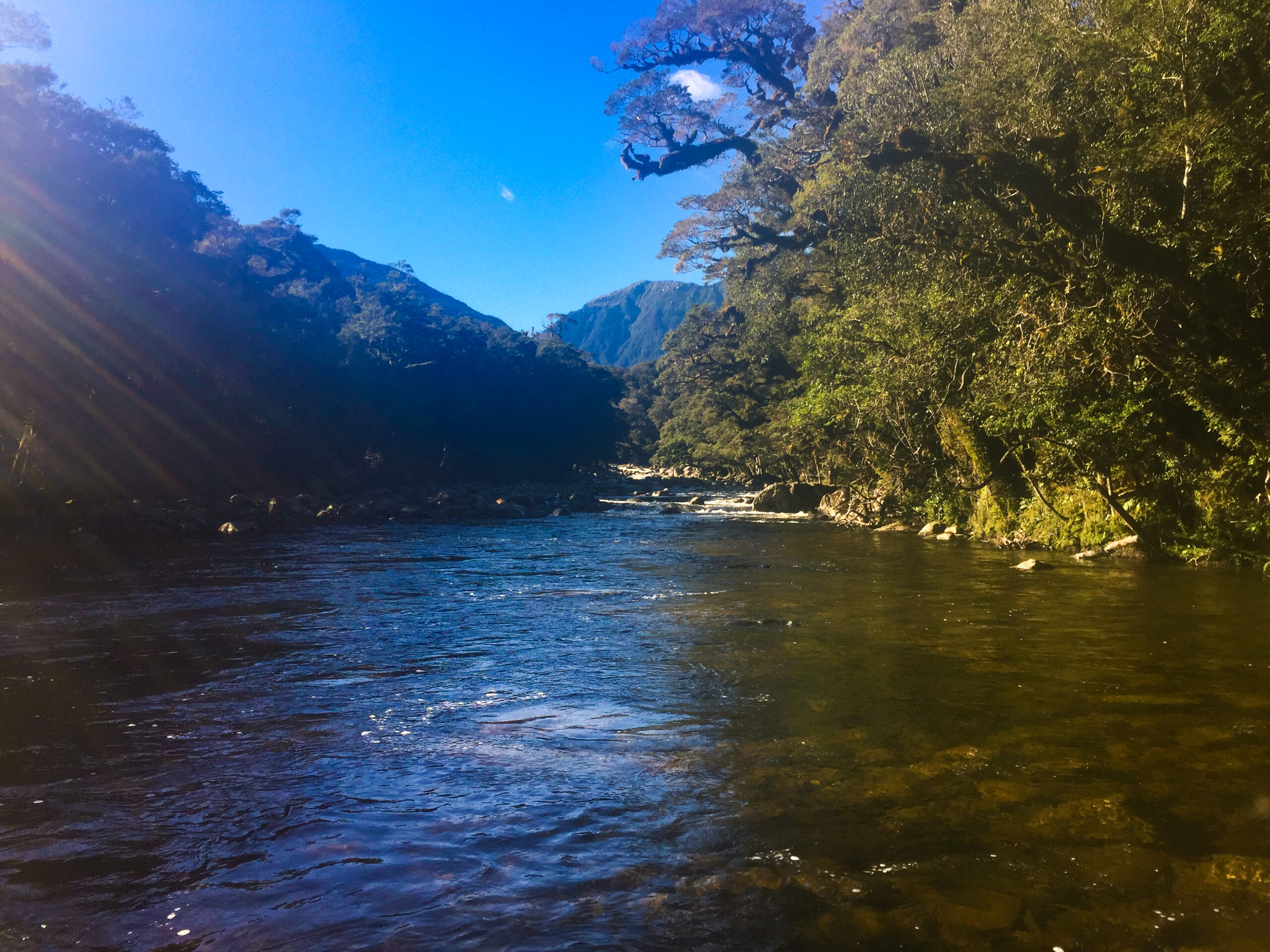
‘Marcus’ Pool,’ Wild Natives River.
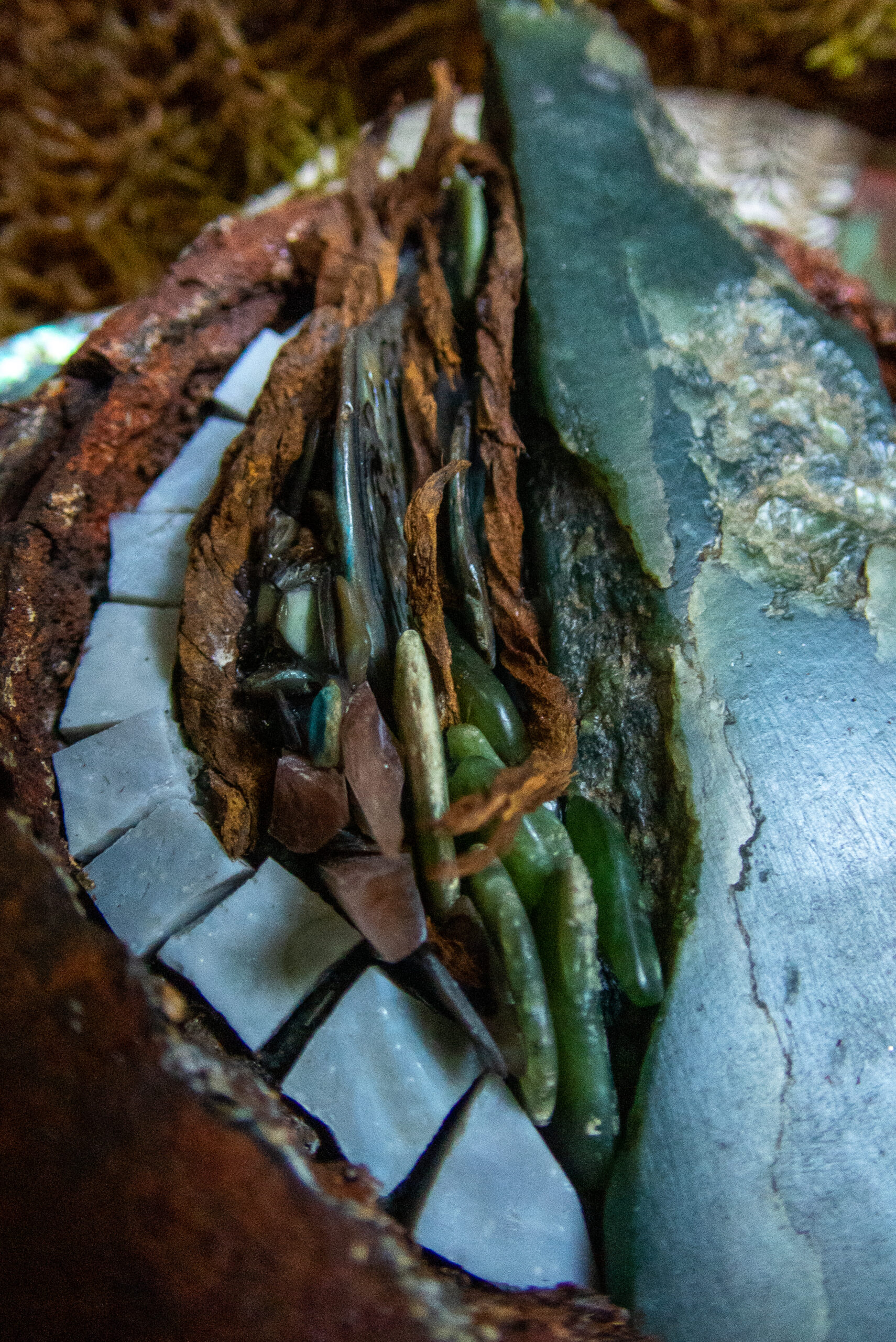
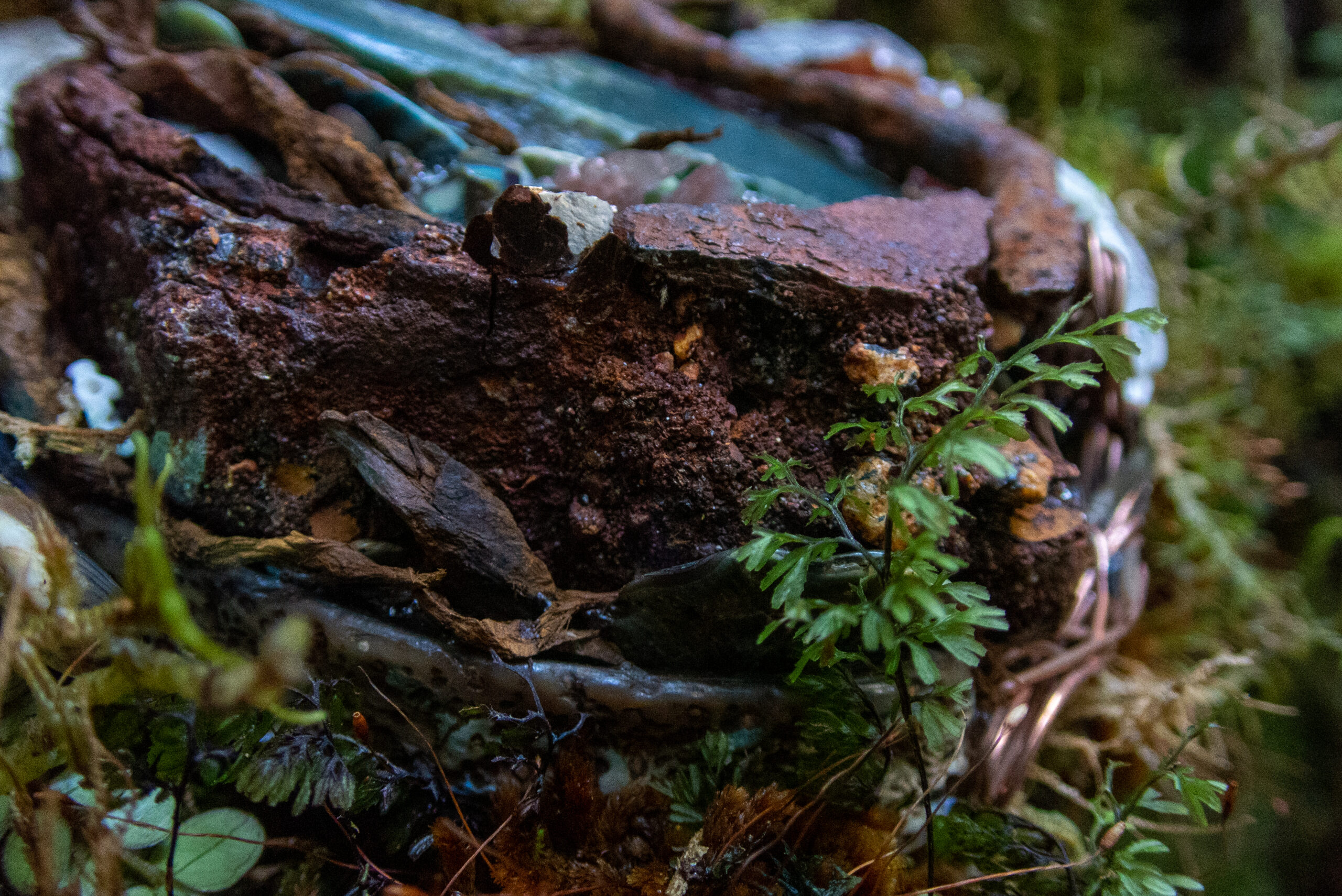
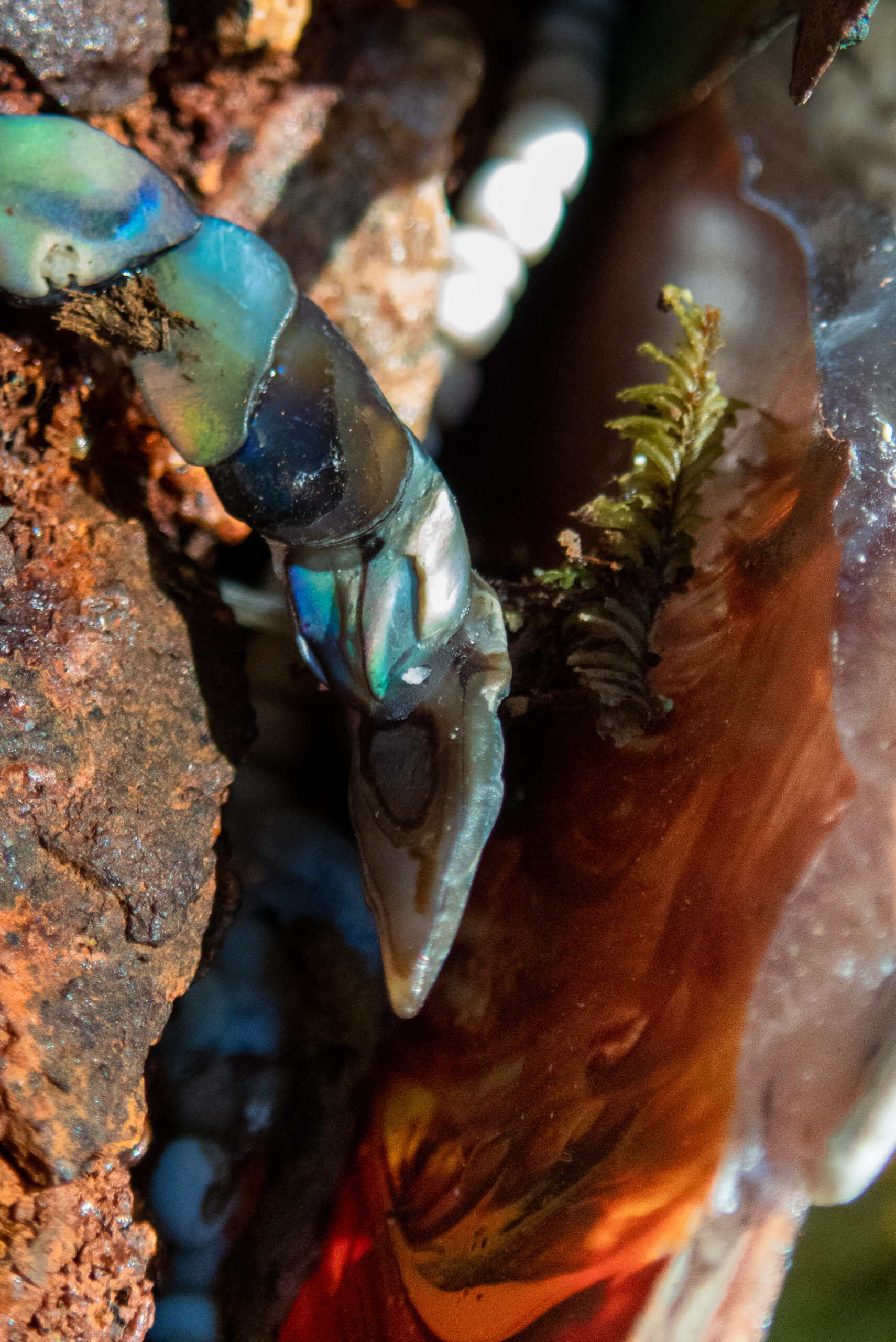
I stayed back on Allora and did one of my ‘flash’ mosaics. Here and there along our 7 year journey, I’ve tucked these offerings, almost ‘dialogues with nature,’ into various locations. Here, I share some close ups, mainly because that’s all I got up to in Bligh, but I will save the full images for another post!

As much as we choose to be present for what IS, we are starting to really look at forward at the weather for our tough West Coast passage from Milford to Abel Tasman.
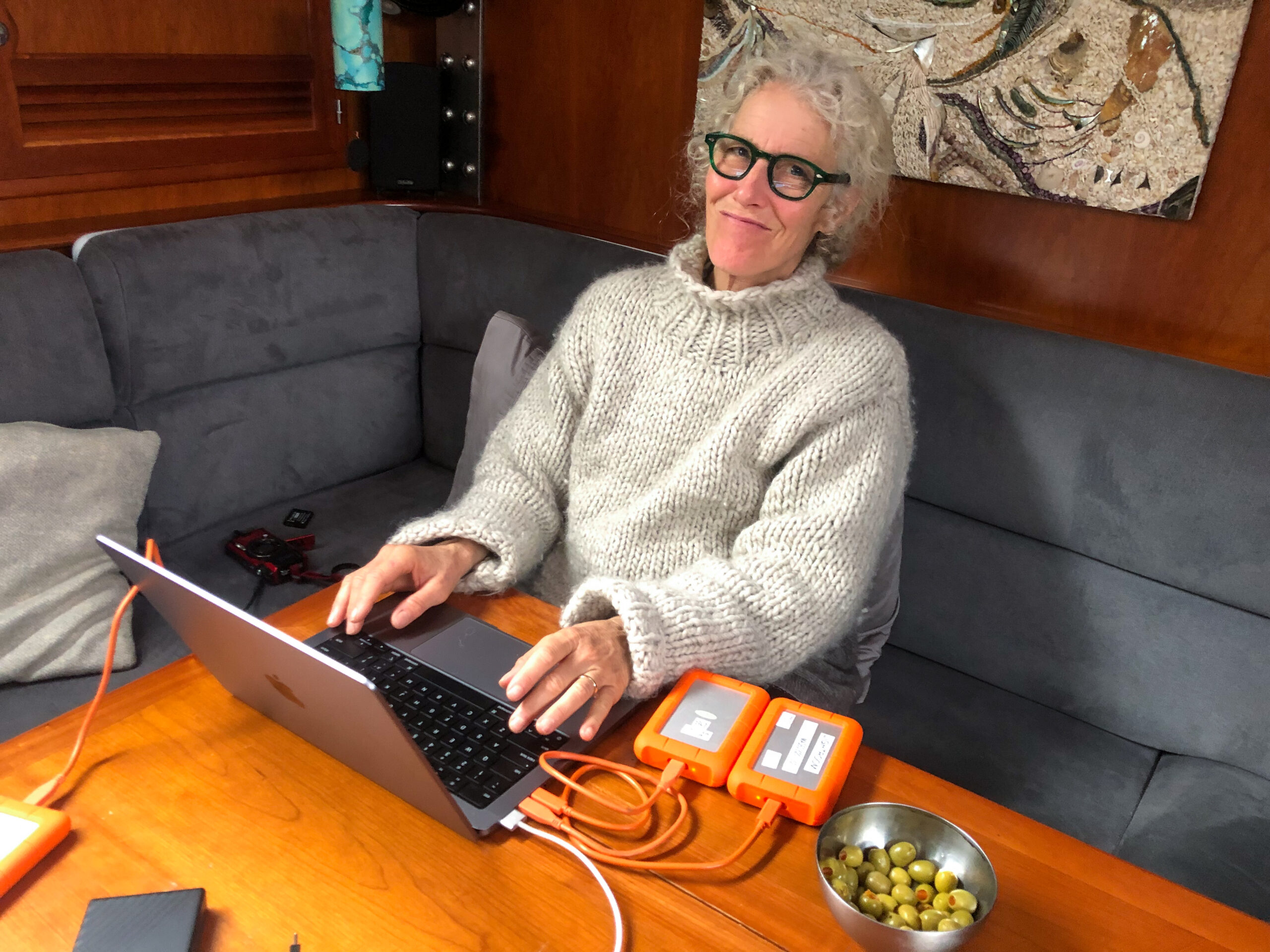
I’m thankful for Lightroom so I can prep some of these blogs before finally getting back into Wifi zone.


Bye Bligh!
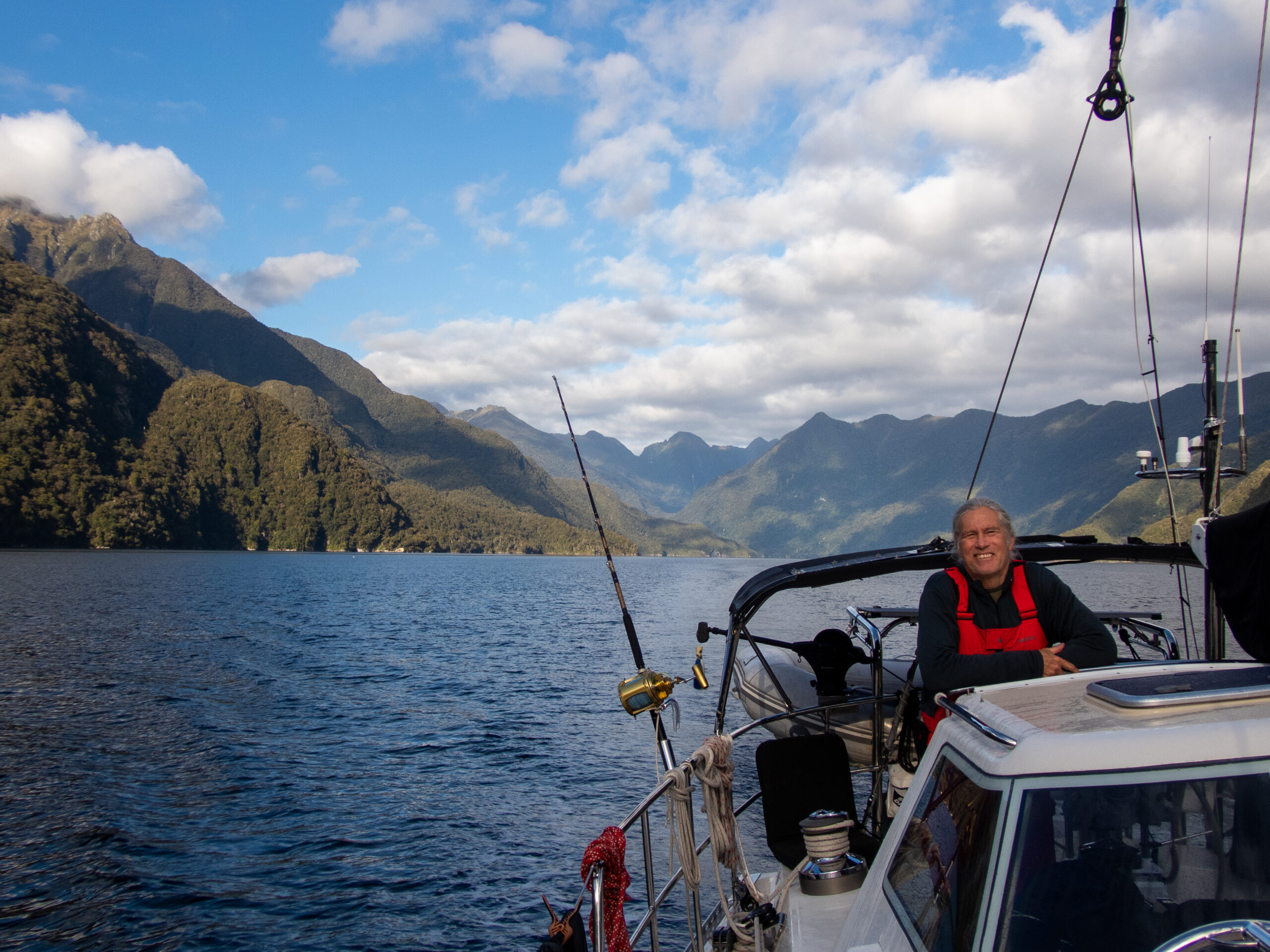
I feel like I can SEE the richness of this journey in Marcus’ expression!