The warmly cool, clear, ringing, perfumed, overflowing, redundant days, were as crystal goblets of Persian sherbet, heaped up – flaked up, with rose-water snow. — Herman Melville
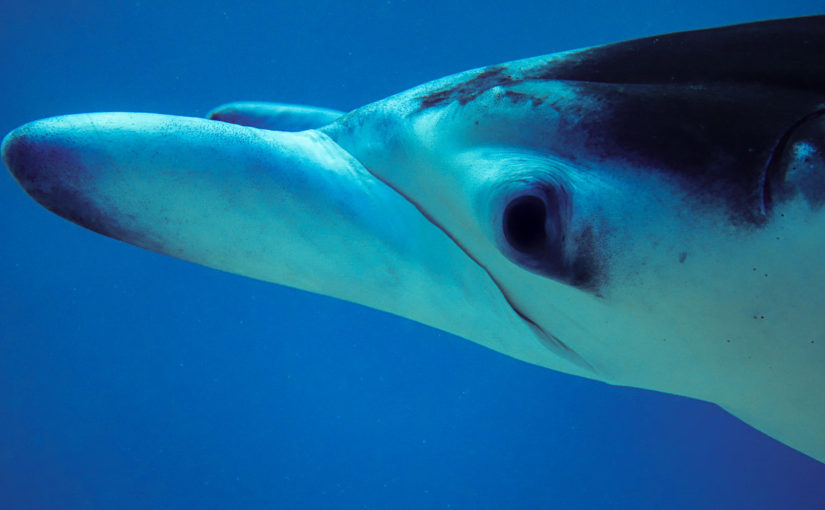
Pictures are going to do most of the talking here. Just think about the size of these amazing creatures, ten, twelve feet wing span (Manta Alfredi get up to 18’ across).Watching them move, like huge underwater birds, is mesmerizing. One bunch of six or seven literally bowled us over. You can find them in this spot pretty reliably because it’s a cleaning station. Diana was hooked. Another boat came to join us, Jacaranda, who we knew from their blog and got to know on the Single-Sideband radio net that covers this part of the South Pacfic (called the Polynesian Magellan Net, at 8173 USB, 0800 and 0600 local time). Linda is as crazy about looking for new fish as Diana, and she and Chuck had some amazing experiences hanging out with Manta researches on the remote island of Socorro in Mexico. I spent the morning writing, but Diana and her dive buddies got out with the Mantas early each morning. During one of their best sessions they watched a pair doing a courtship dance and then mating which is a rare thing to observe in the wild.
Diana dove with the Mantas twice a day for the week we hung out and took, you might imagine, thousands of pictures. Some of those she sent to an organization called the Manta Trust, (https://www.mantatrust.org) which uses the unique patterns of spots on a Manta’s belly to identify individuals. They encourage people to send in their photos, and then experts in each region identify and catalogue them. Diana sent them pictures of seven distinct individuals. Six of them had been identified before, and they shared some of the information they had from previous sightings, where when, doing what. One of them was brand new to the researchers. They told Diana that they have identified 70 mantas just in Tikehau, so now that’s 71. The next fun part, was that all seven had numbers for identification but needed names. So Diana gave them Polynesian names. Haley’s boyfriend suggested that ‘Liam the Manta’ would make a fine name, though inspiring a Manta name as that would be, it did not make the final cut.
Meet the Mantas:
Ma taa raara – (A shining, or bright eye)
Vavevave – (Speedily!)
Atae – (Surprise)
Marema re – (Sparkling as the saltwater at night)
Tamure – (Dance Together)
Atavai – (Elegant)
Manino – (Calm, Smooth)
We had hopes of finding the Mantas at this known cleaning station. We’d seen them briefly last year, but were drawn for more!
Polynesian beauty with an Emperorfish. I brought the dinghy over to say hi and see what they were up to and she shared two fish with us for dinner.
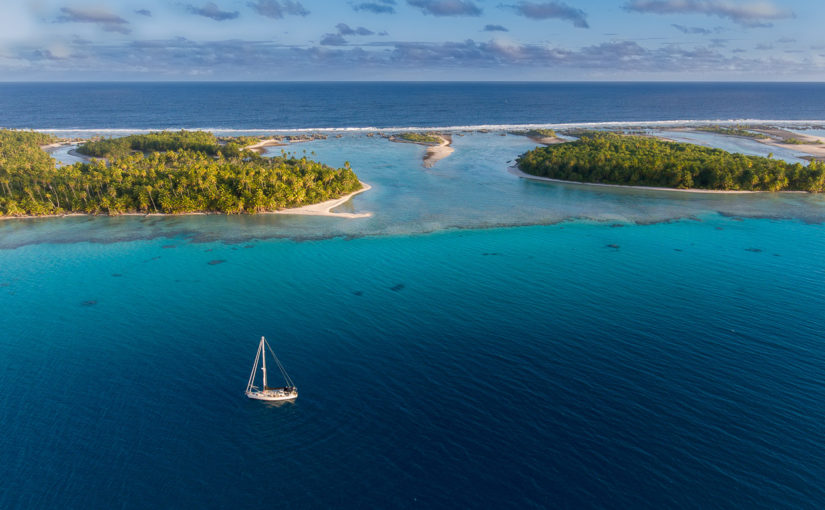
Our first instinct, on our initial pass through the Tuamotus last year, was to avoid Rangiroa. It seemed too popular – with actual hotels for tourists, including those ‘elegant’ thatched roof bungalows out over the water that plague Bora Bora. But on our second pass this year, we ended up spending a month in this largest of the Tuamotus atolls.
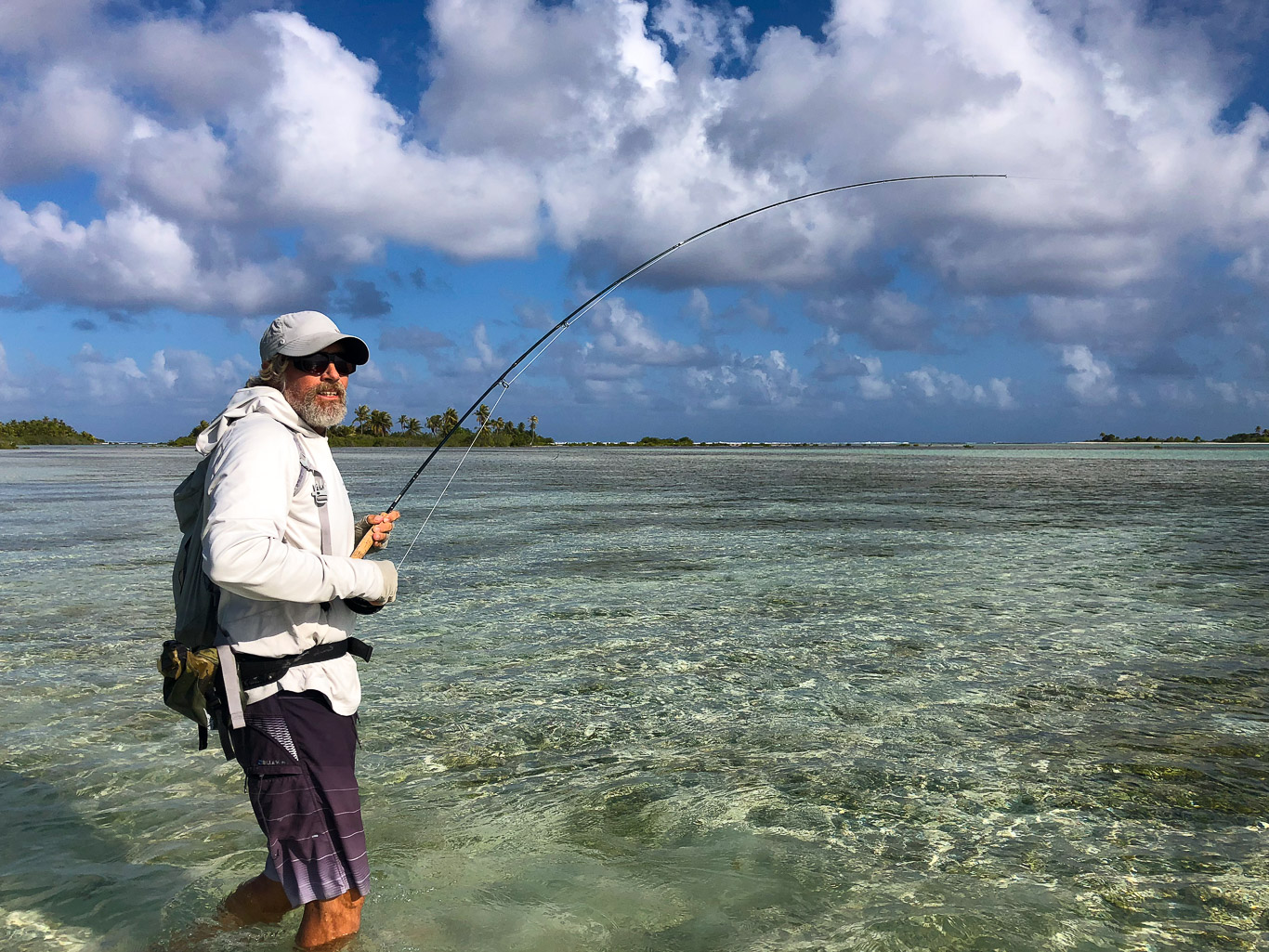
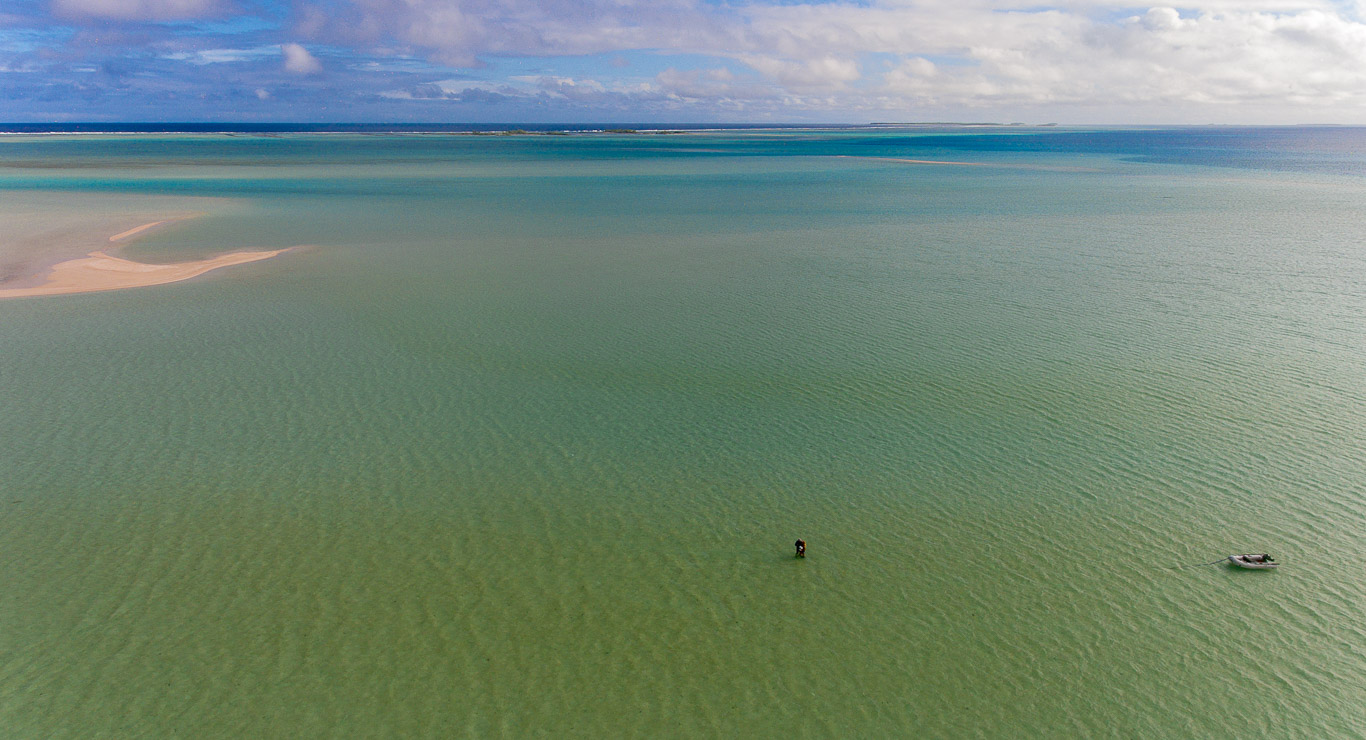
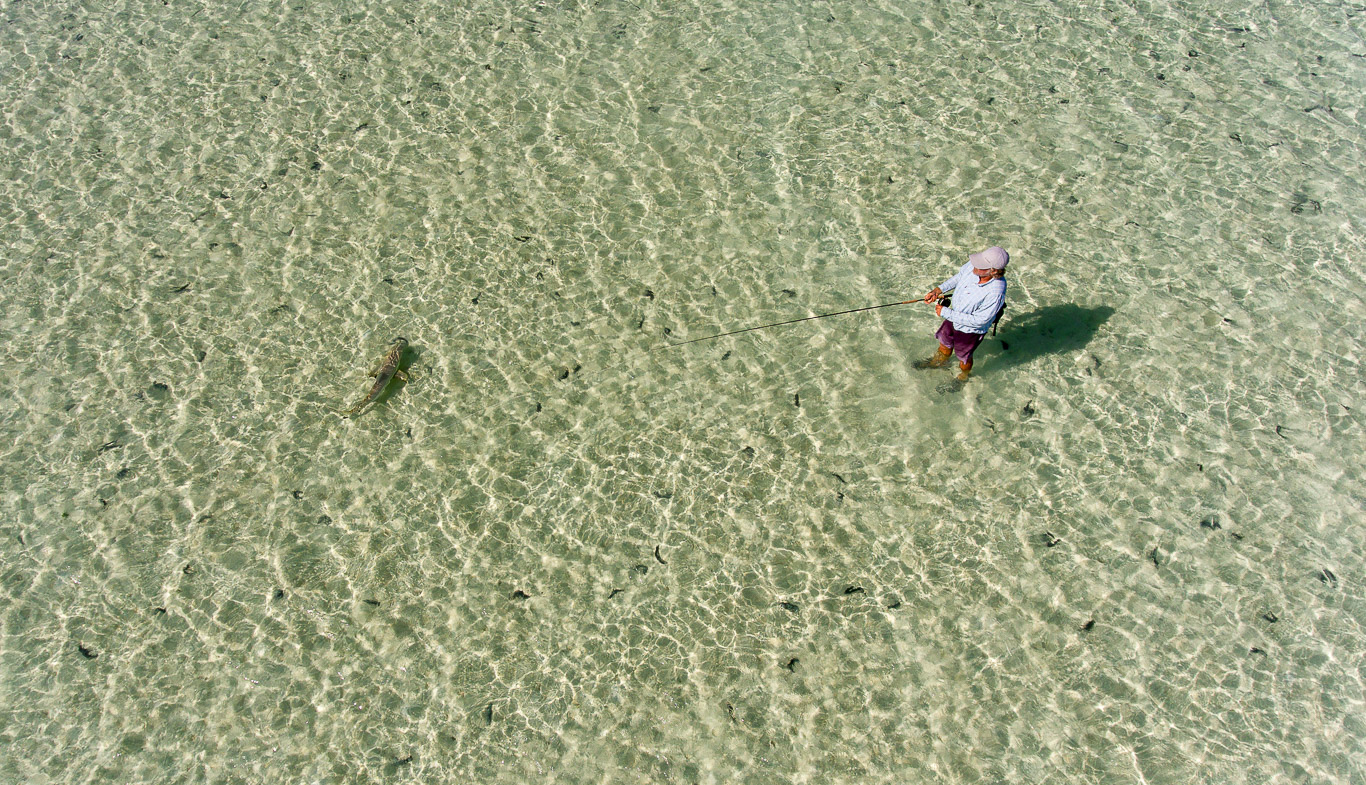
I’ll keep my part of the motivation for staying so long to one sentence: Rangiroa has the best bonefishing in the Tuamotus. Okay, moving on. Okay, well maybe not moving on. I broke both my nine and eight weight rods on these fish. I used up my entire stock of number 4 hooks. I fished everyday, and there were bonefish wherever we went, even at the touristy Blue Lagoon. We’re not talking armies of tourists, lets say a couple dozen for a whole day in three or four small boats. One group even waved me over and fed me lunch. The tour operator was an avid fisherman and pure Polynesian friendly. He told about a spot where he’d seen a giant bonefish, so big that at first he’d mistaken it for a shark.
Unfortunately, I never got over there. The wind shifted and we had to pull up anchor – which is a short sentence for describing a pretty harrowing situation where our anchor windlass failed, and we had to untangle the anchor from some nasty bottom, manually, and then with a little luck and jimmying of the windlass control, we raised the Rocna, just as the waves and wind built in earnest. Fortunately, we figured out the wiring problem at the next anchorage and it was an easy repair. ~MS
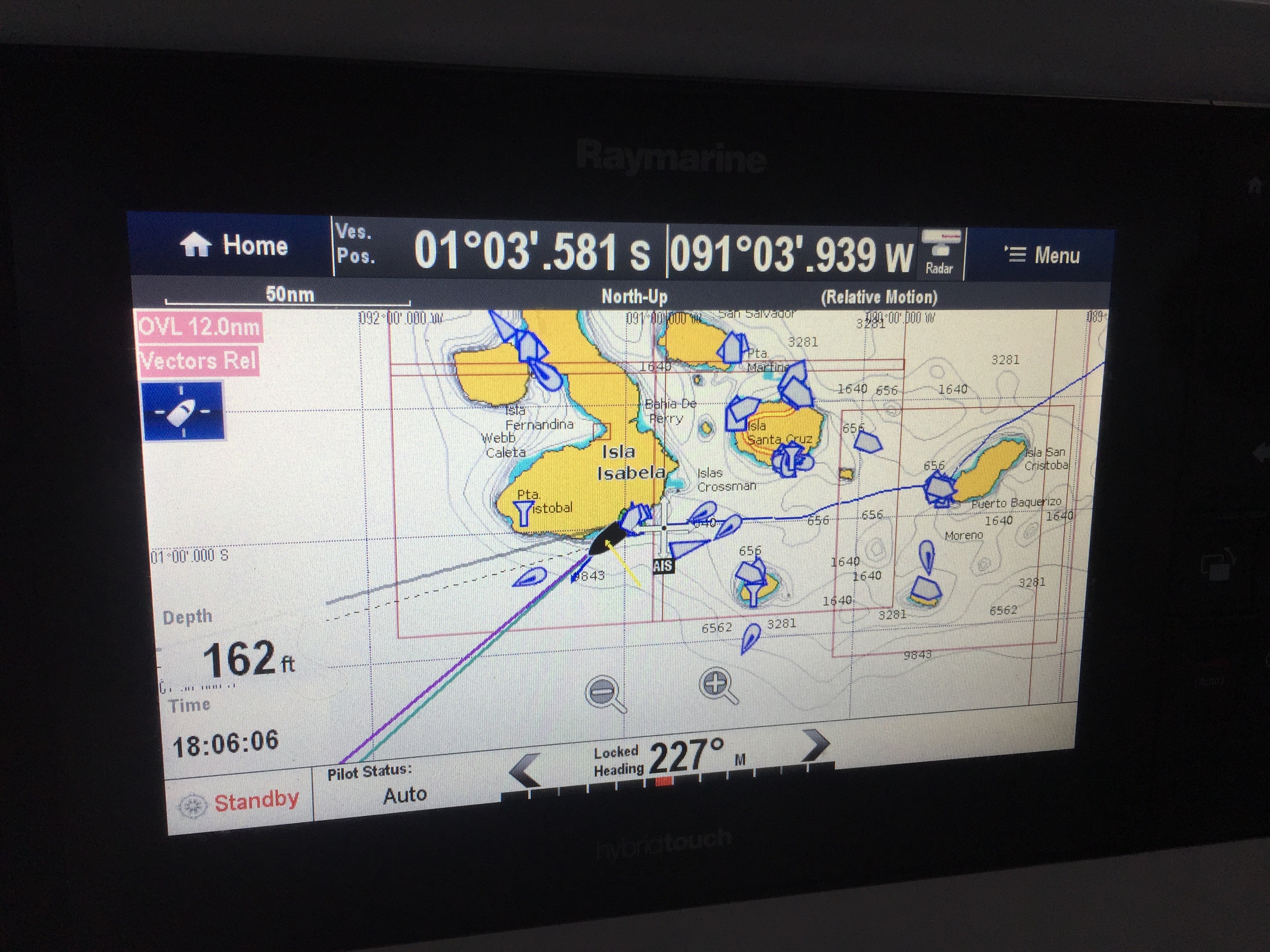
Galapagos to the Marquesas Islands, French Polynesia 4/25 – 5/13/17
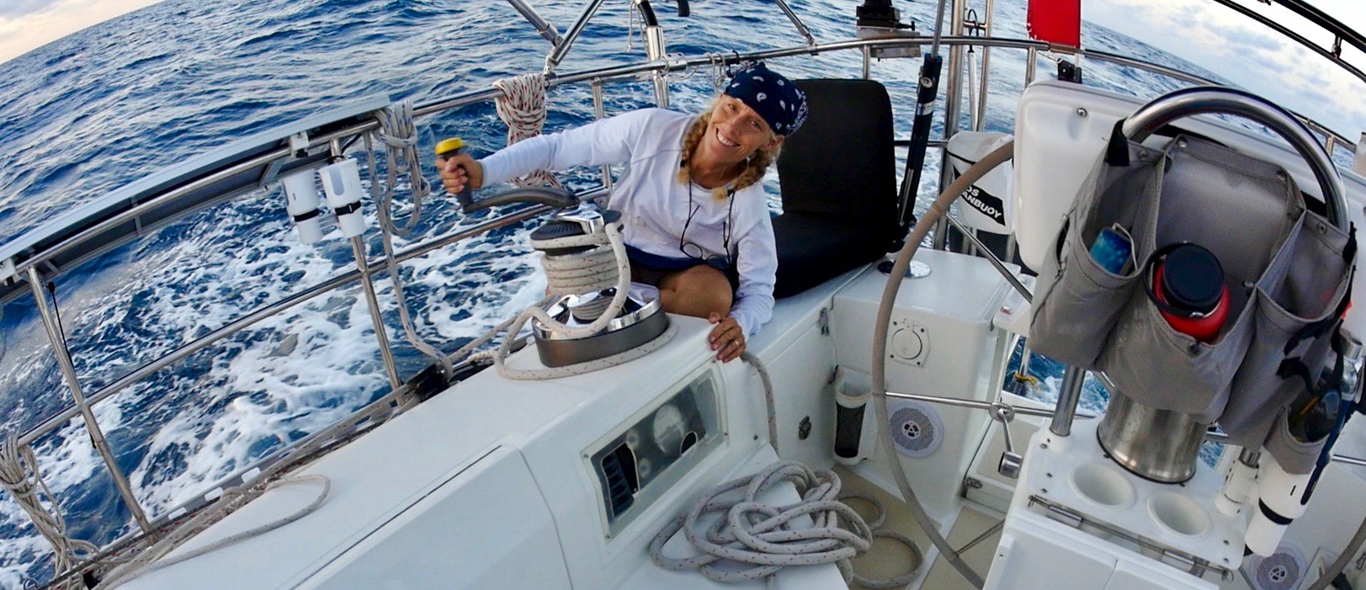
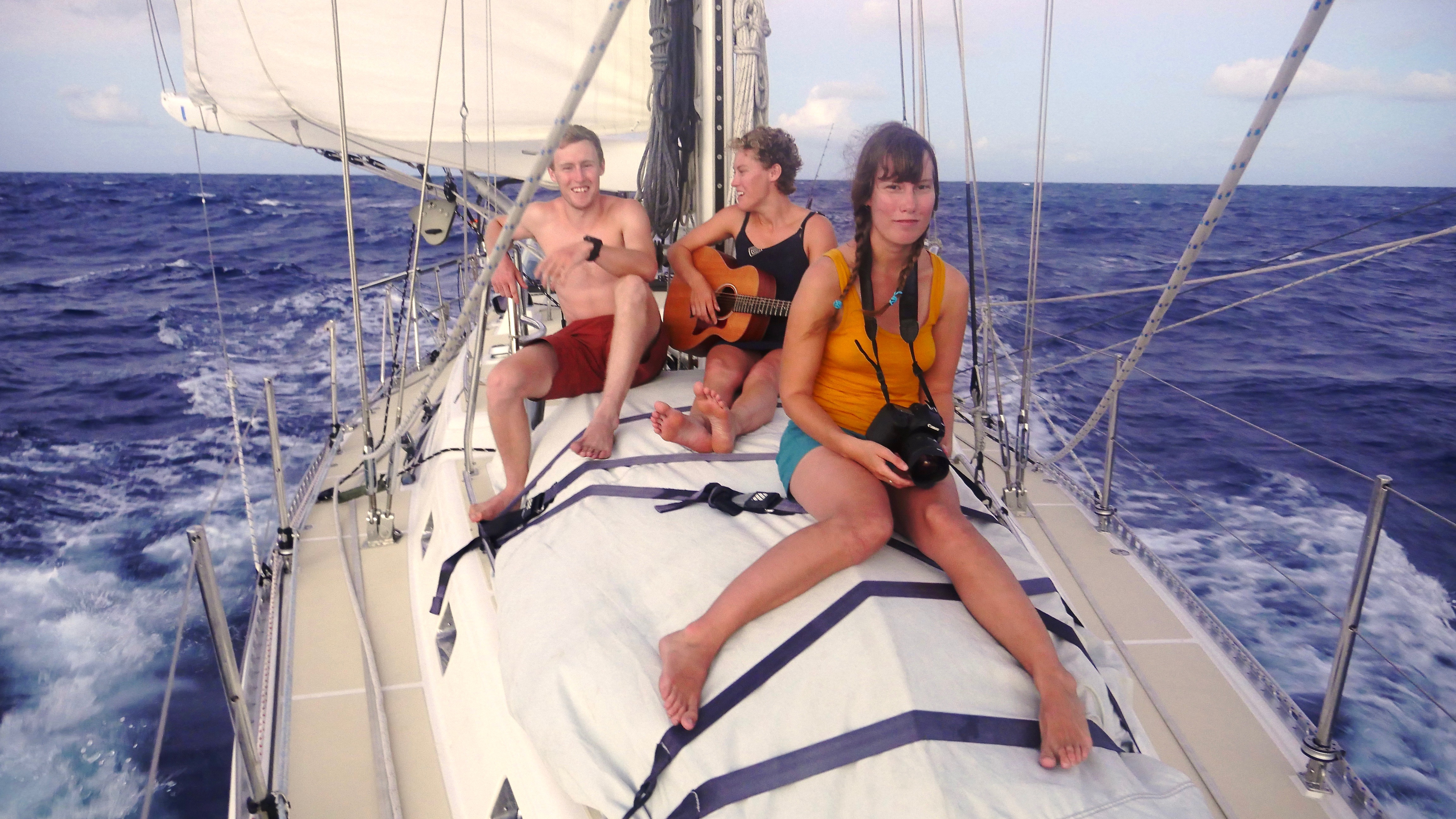
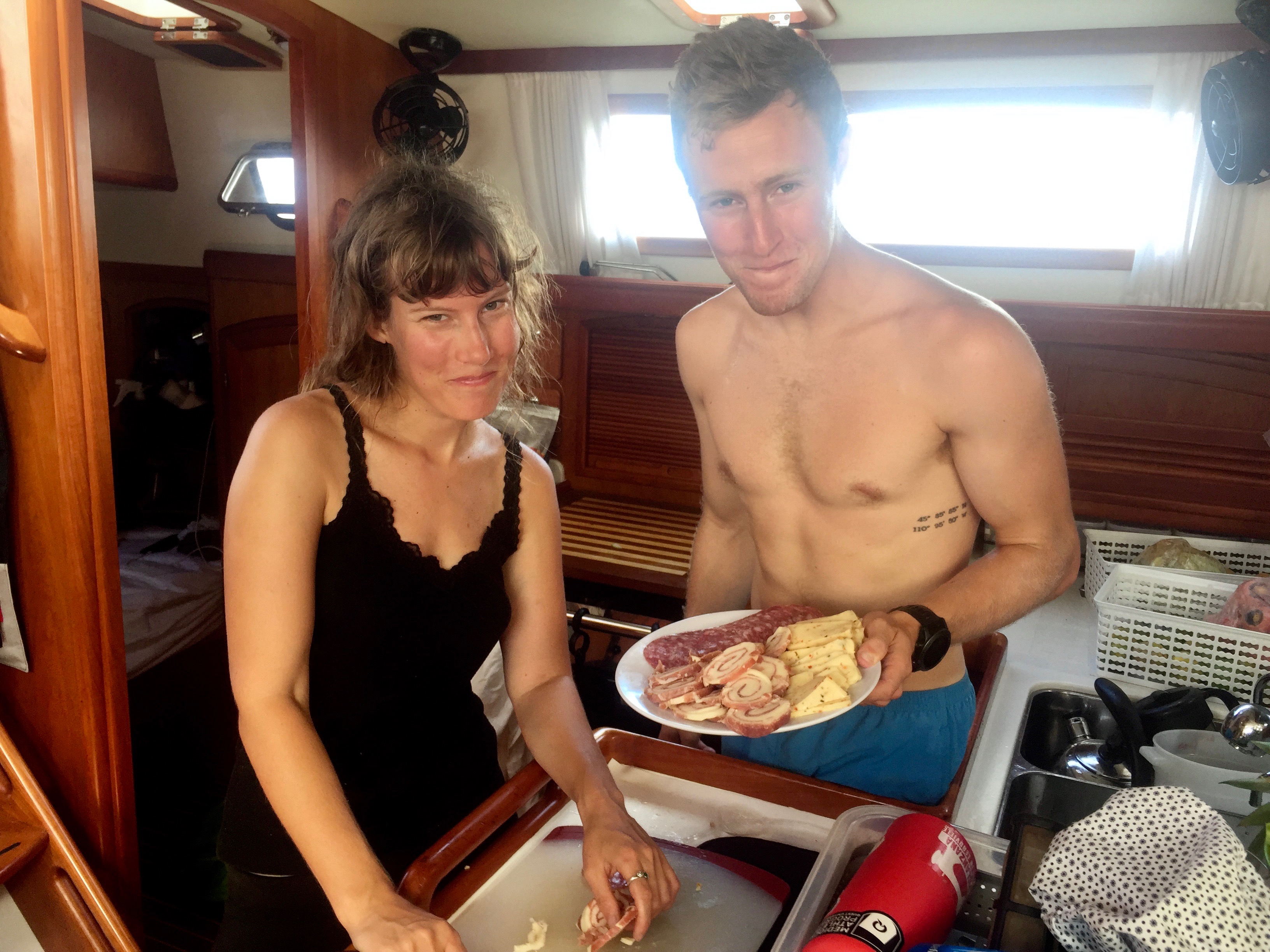
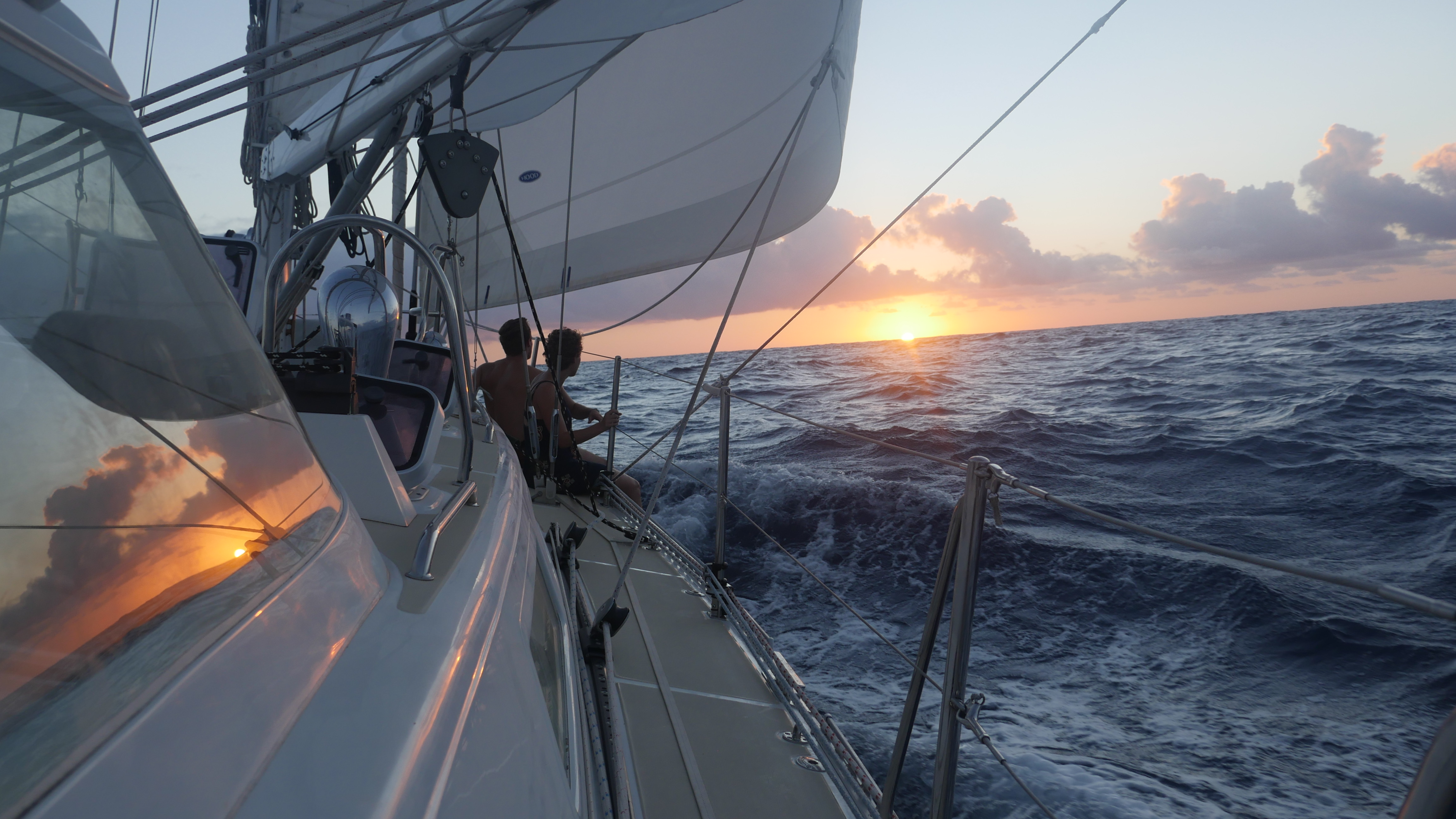
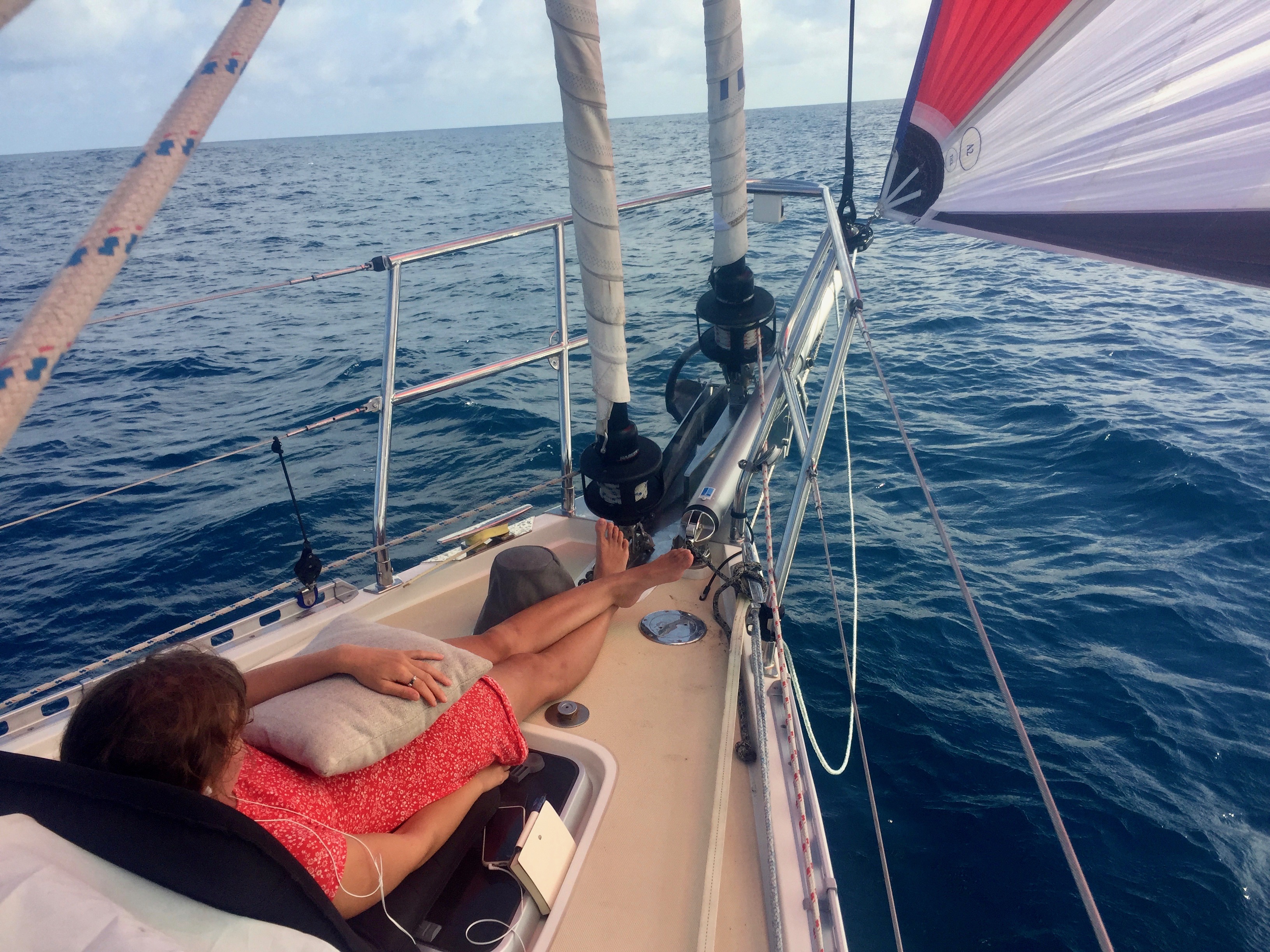
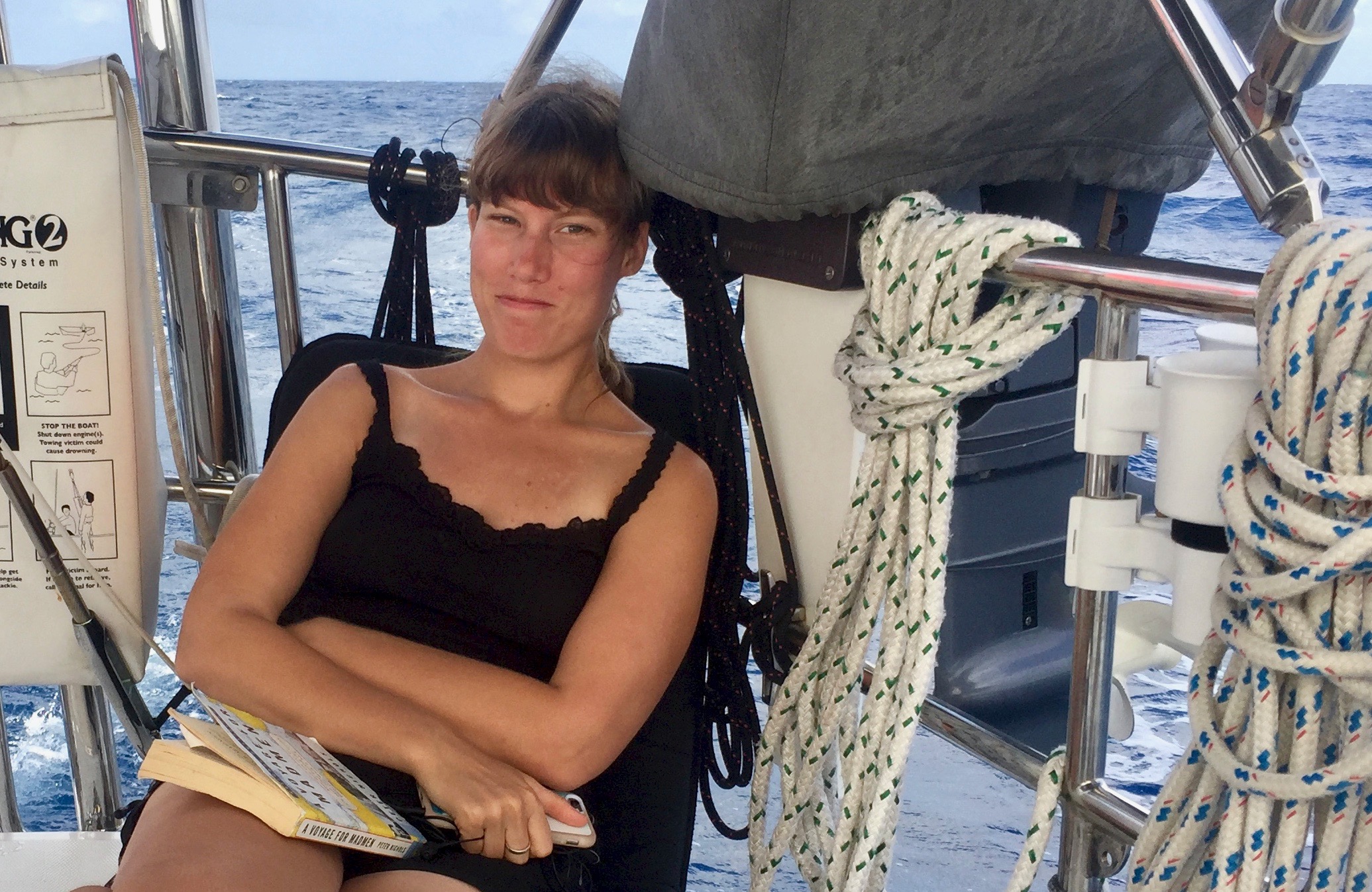
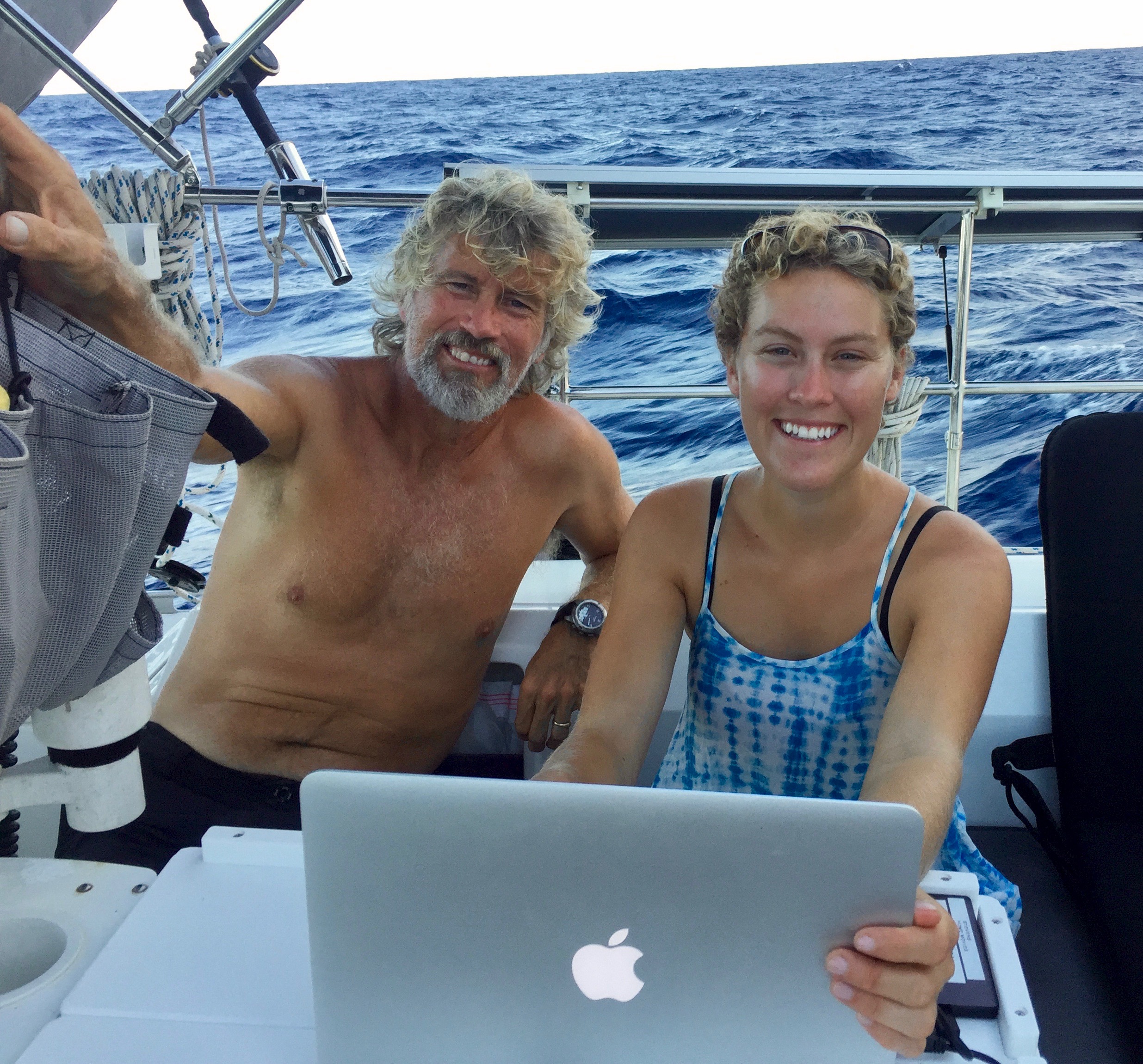
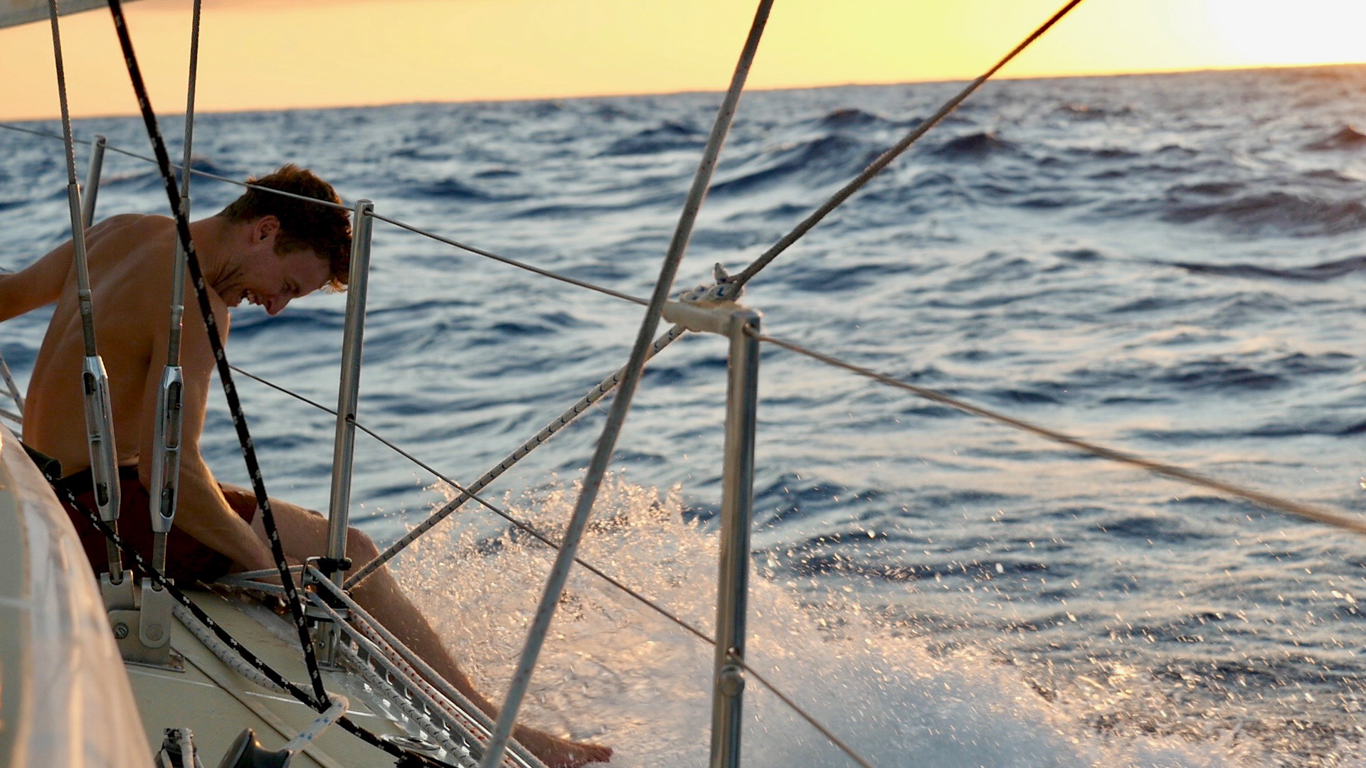
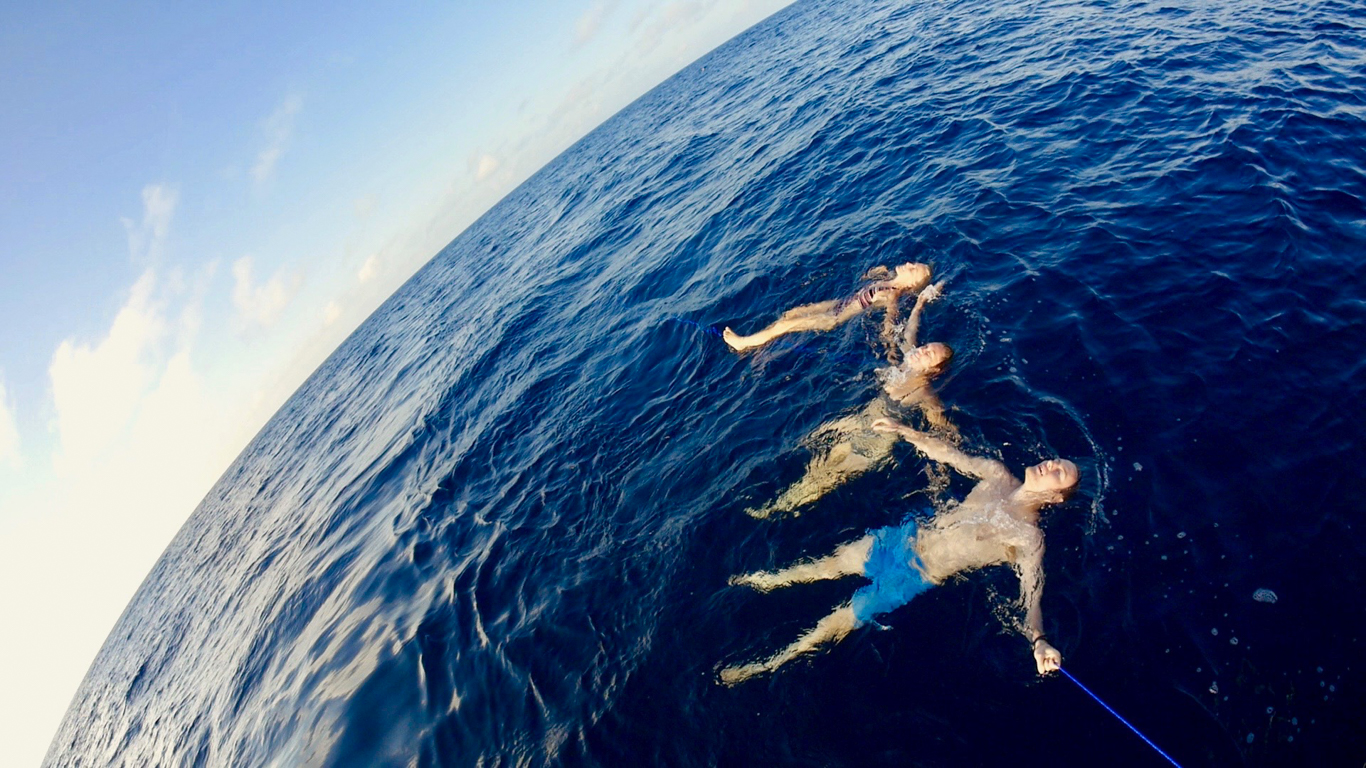
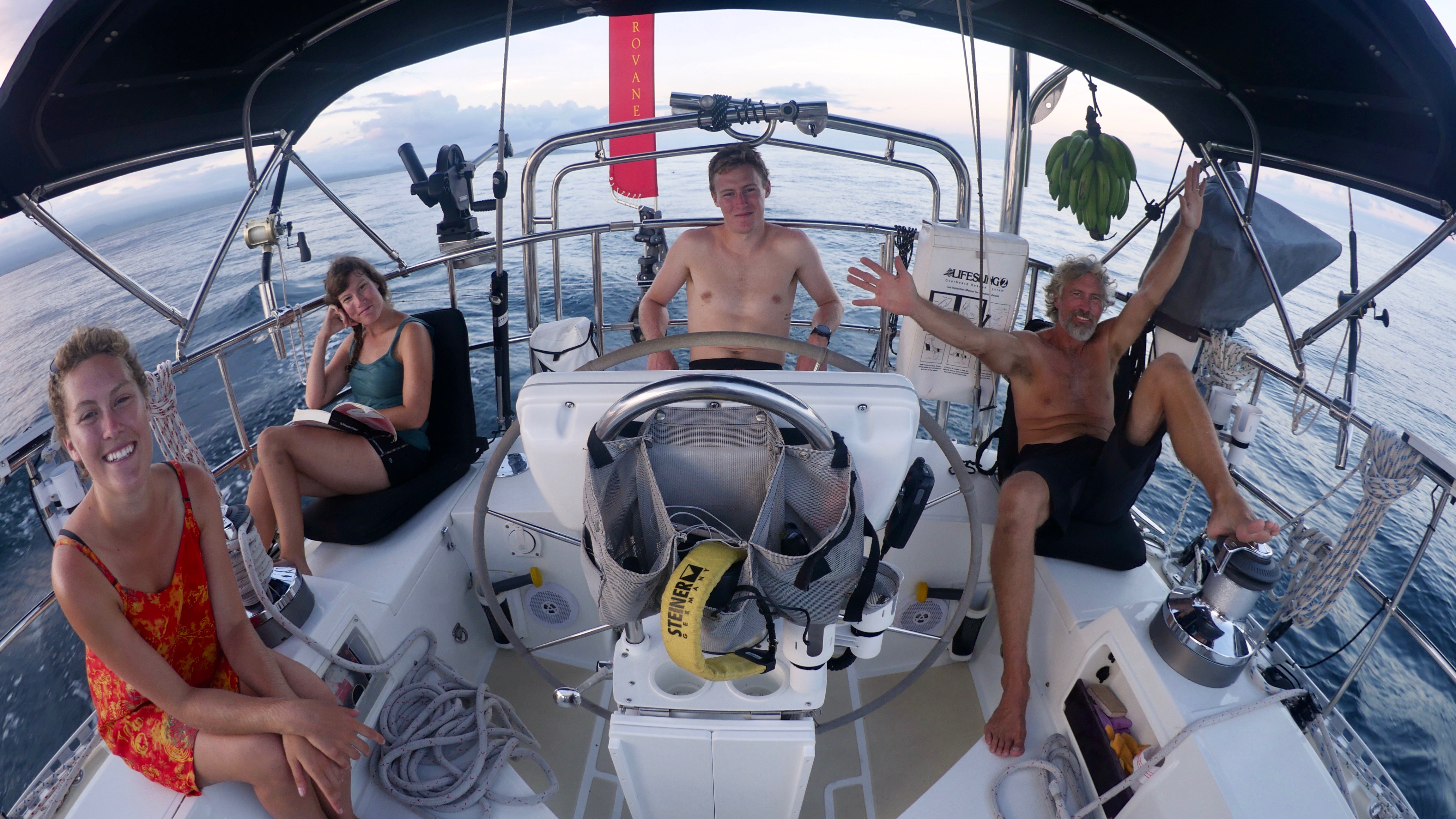
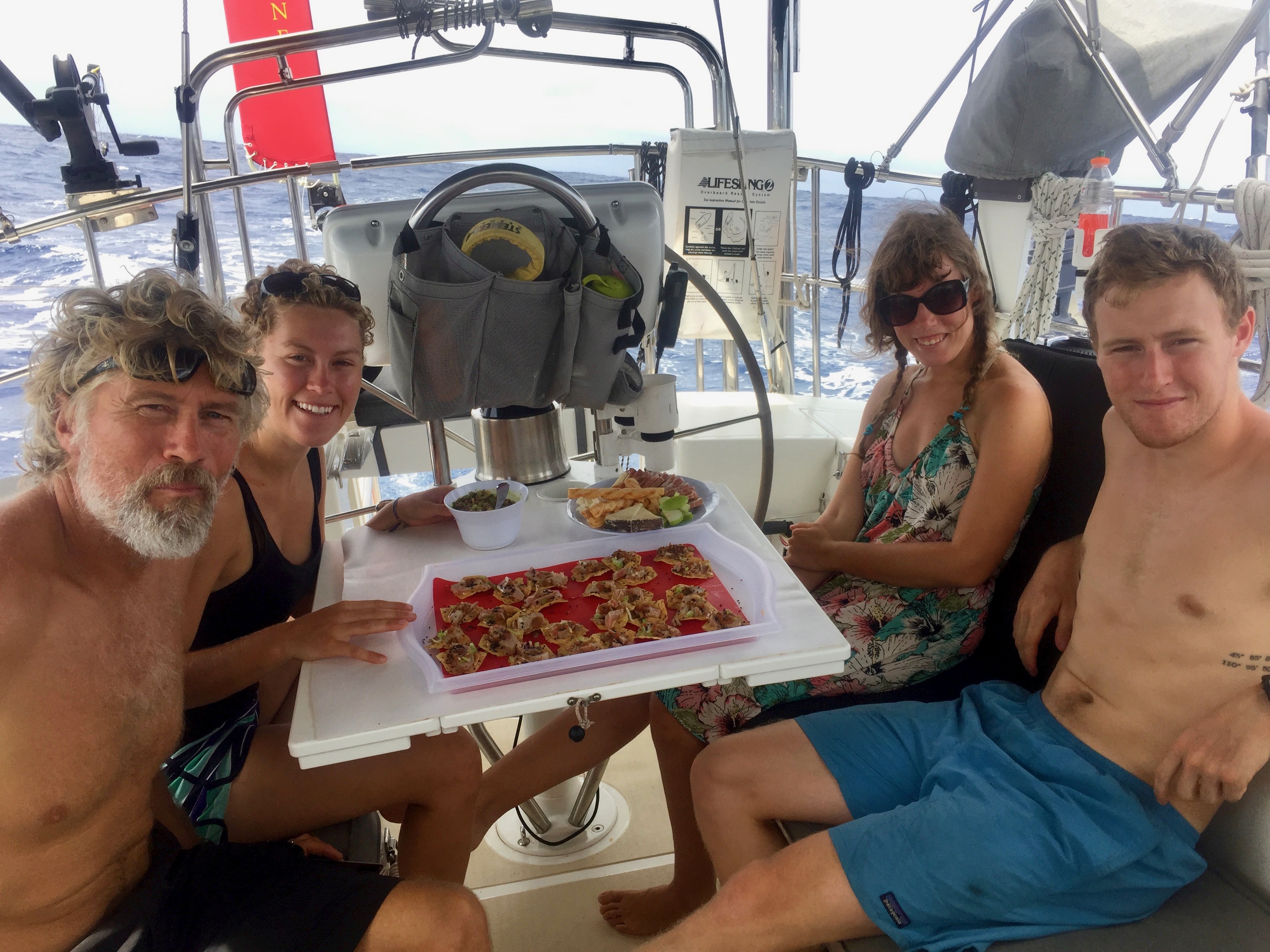
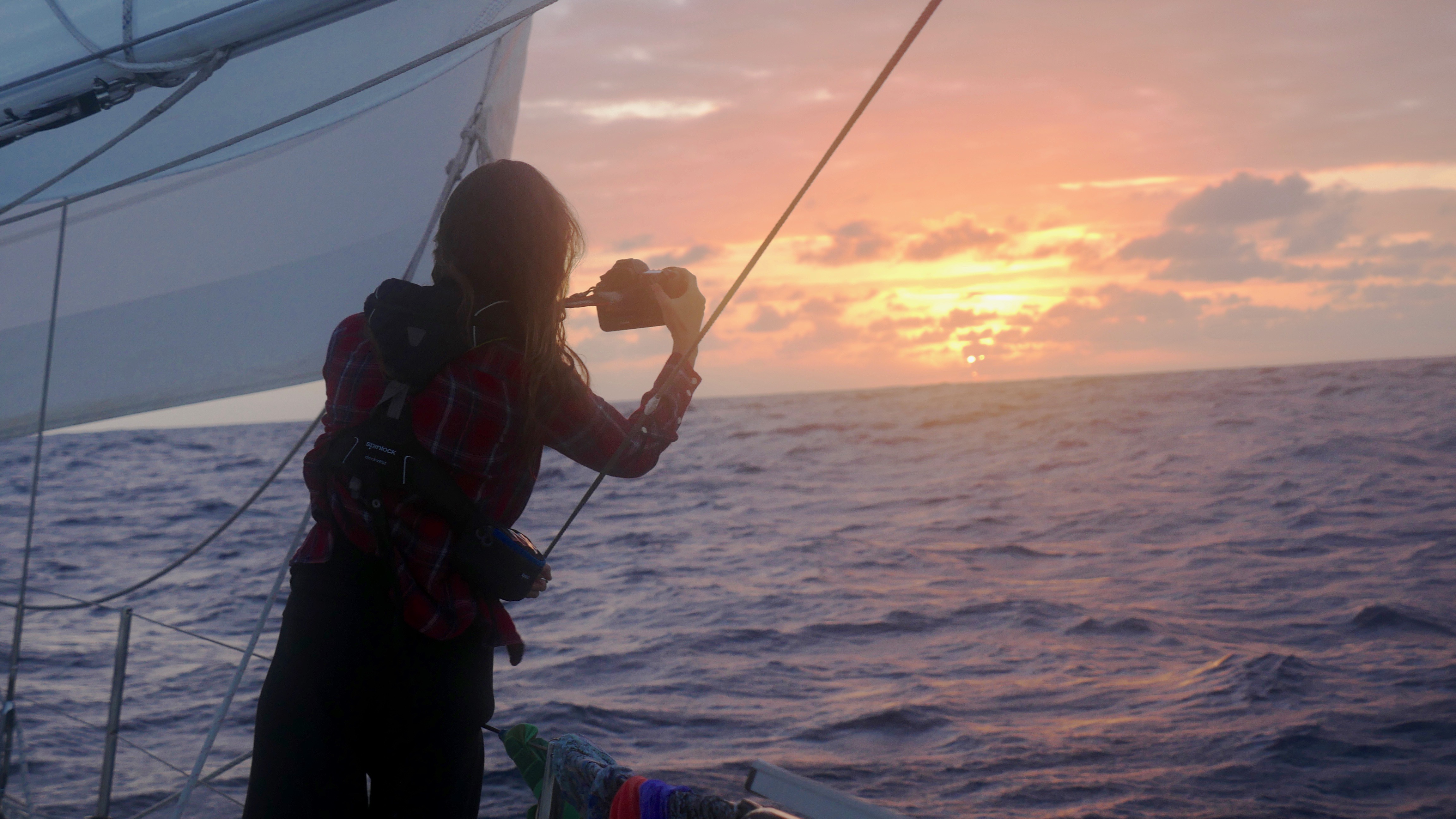
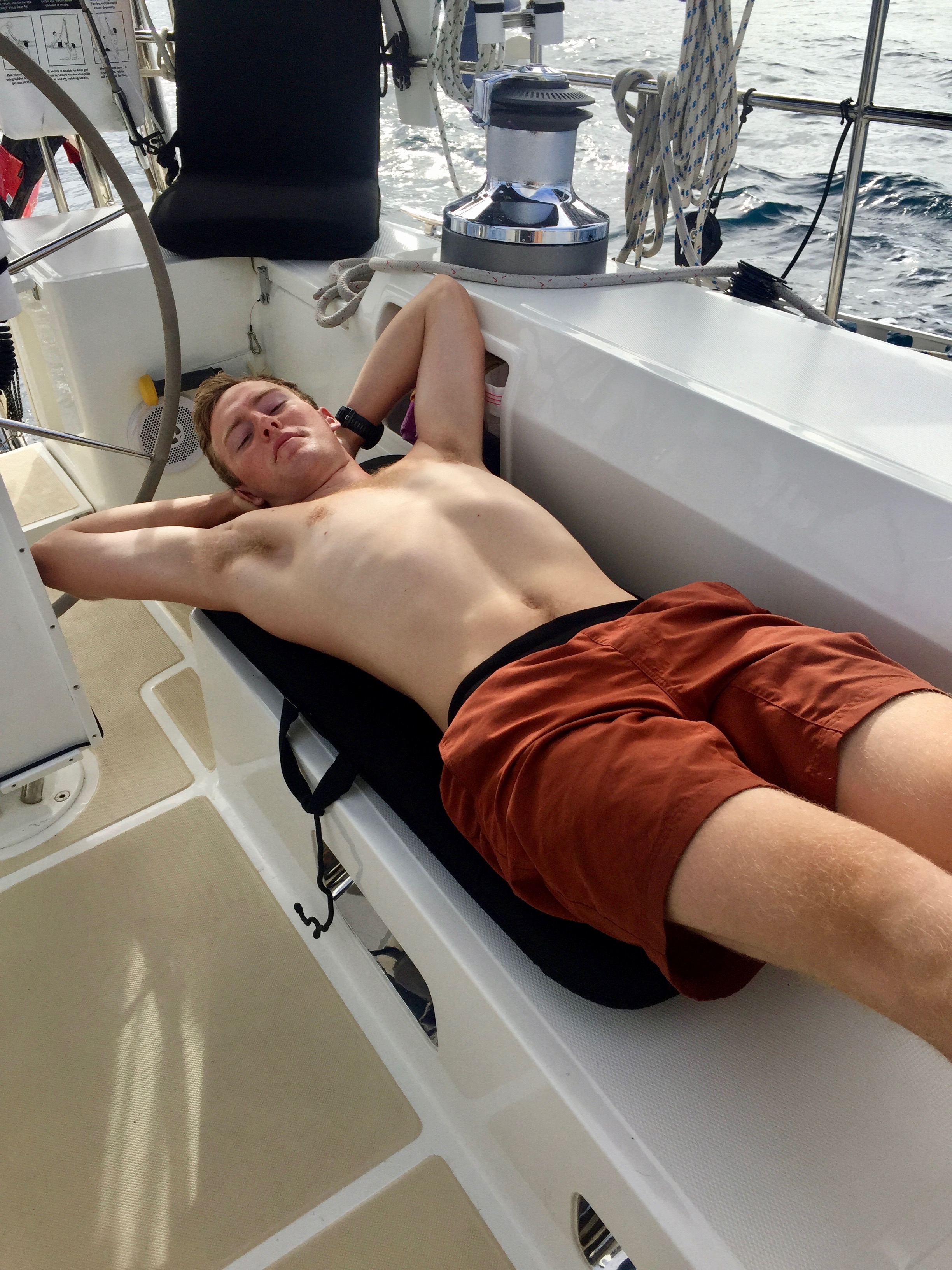
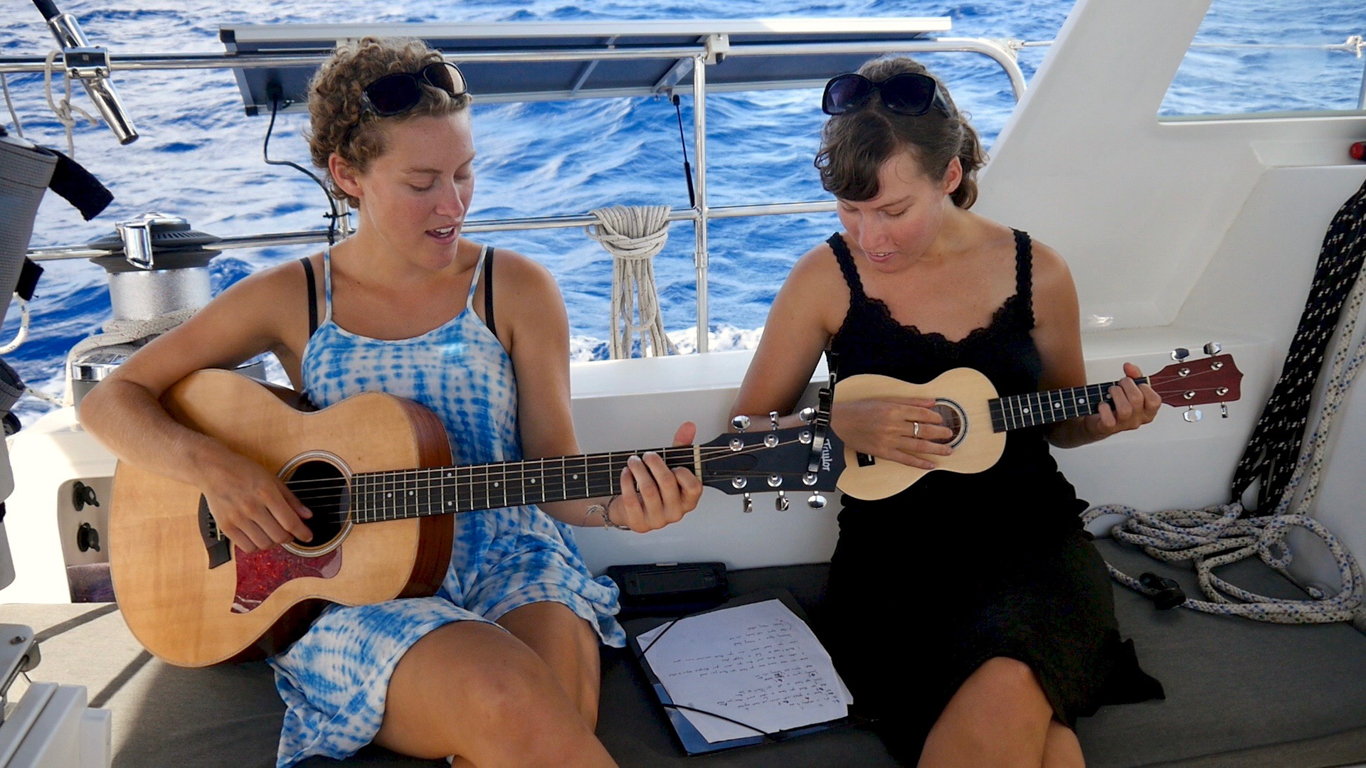
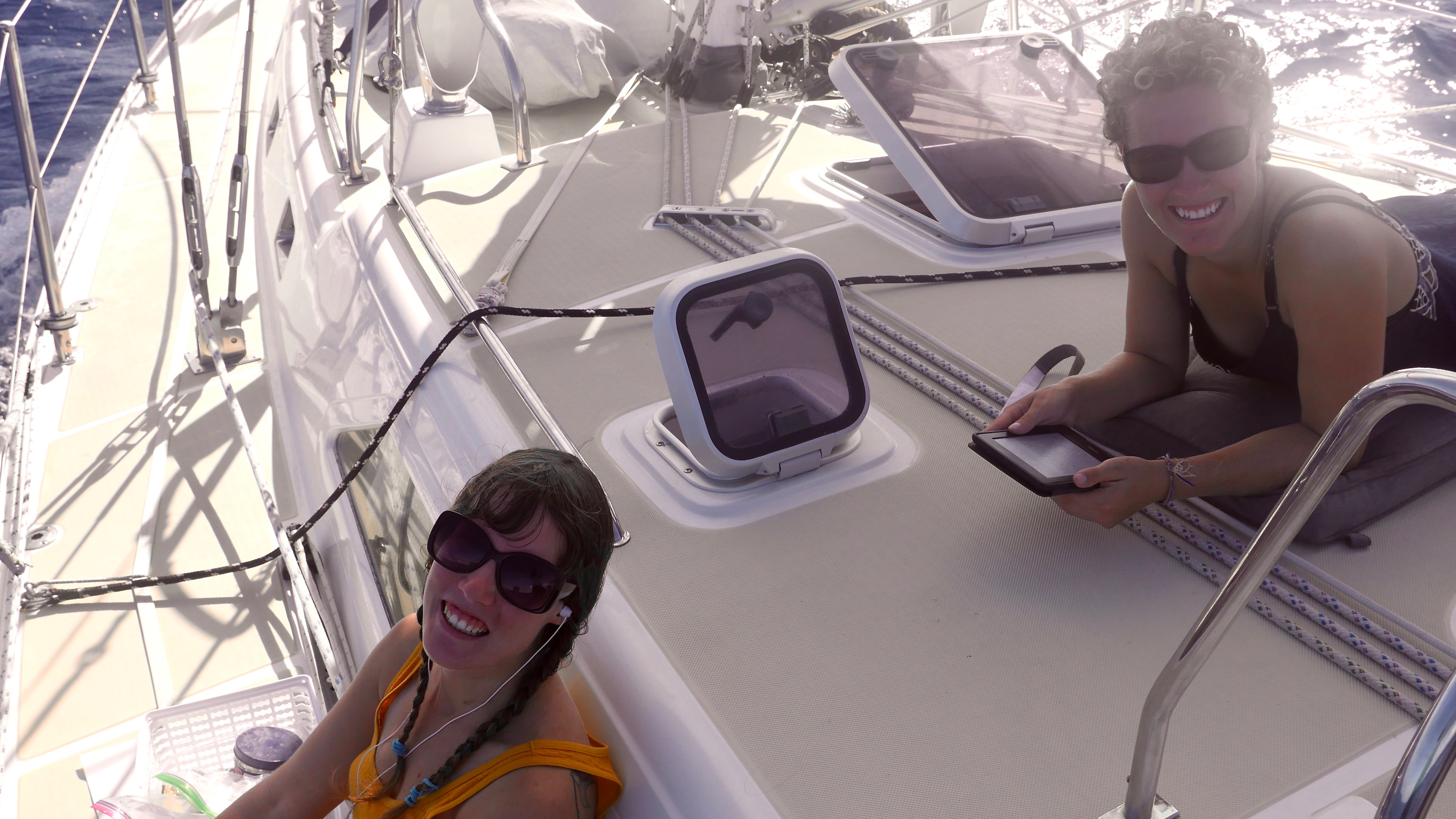
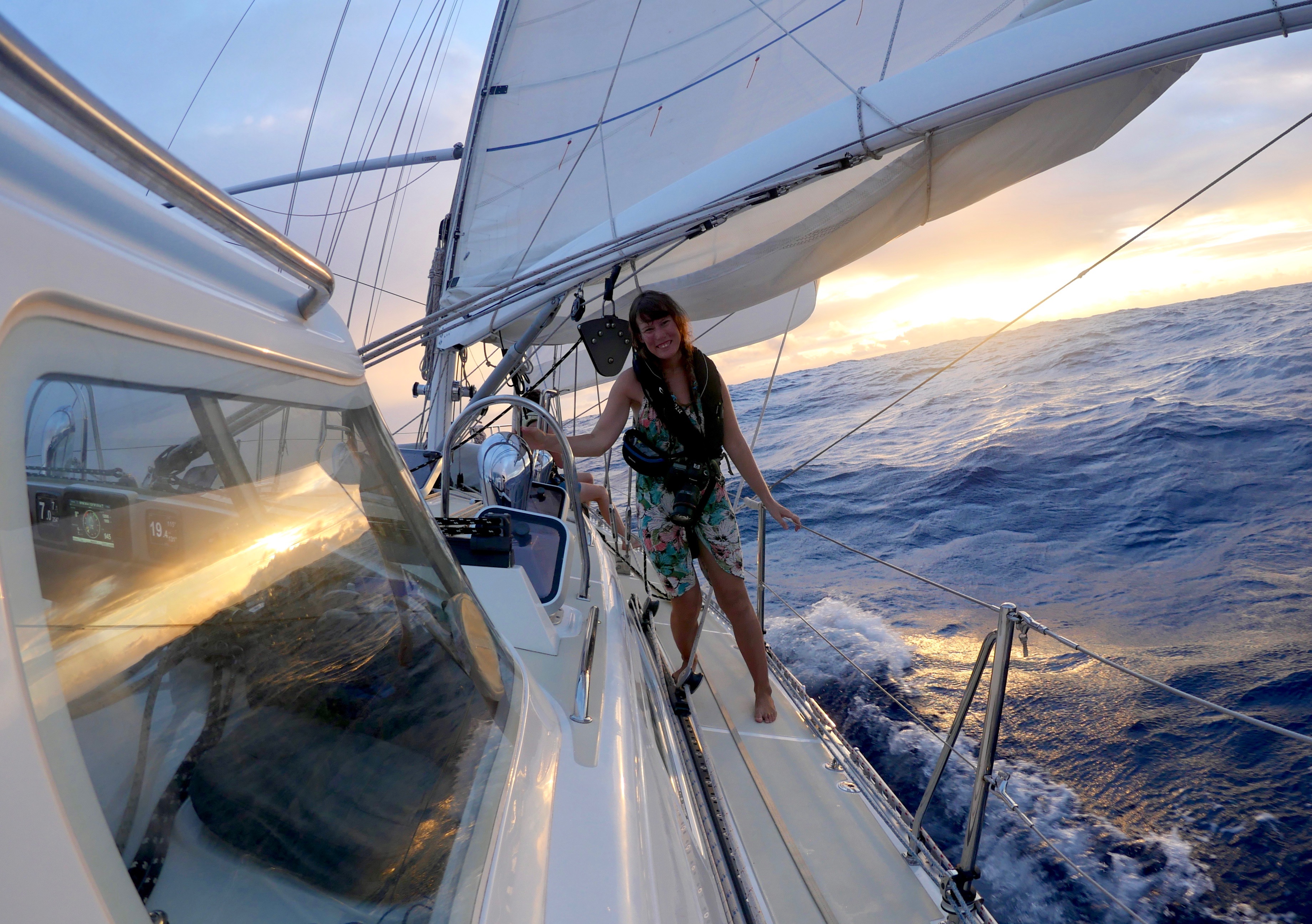
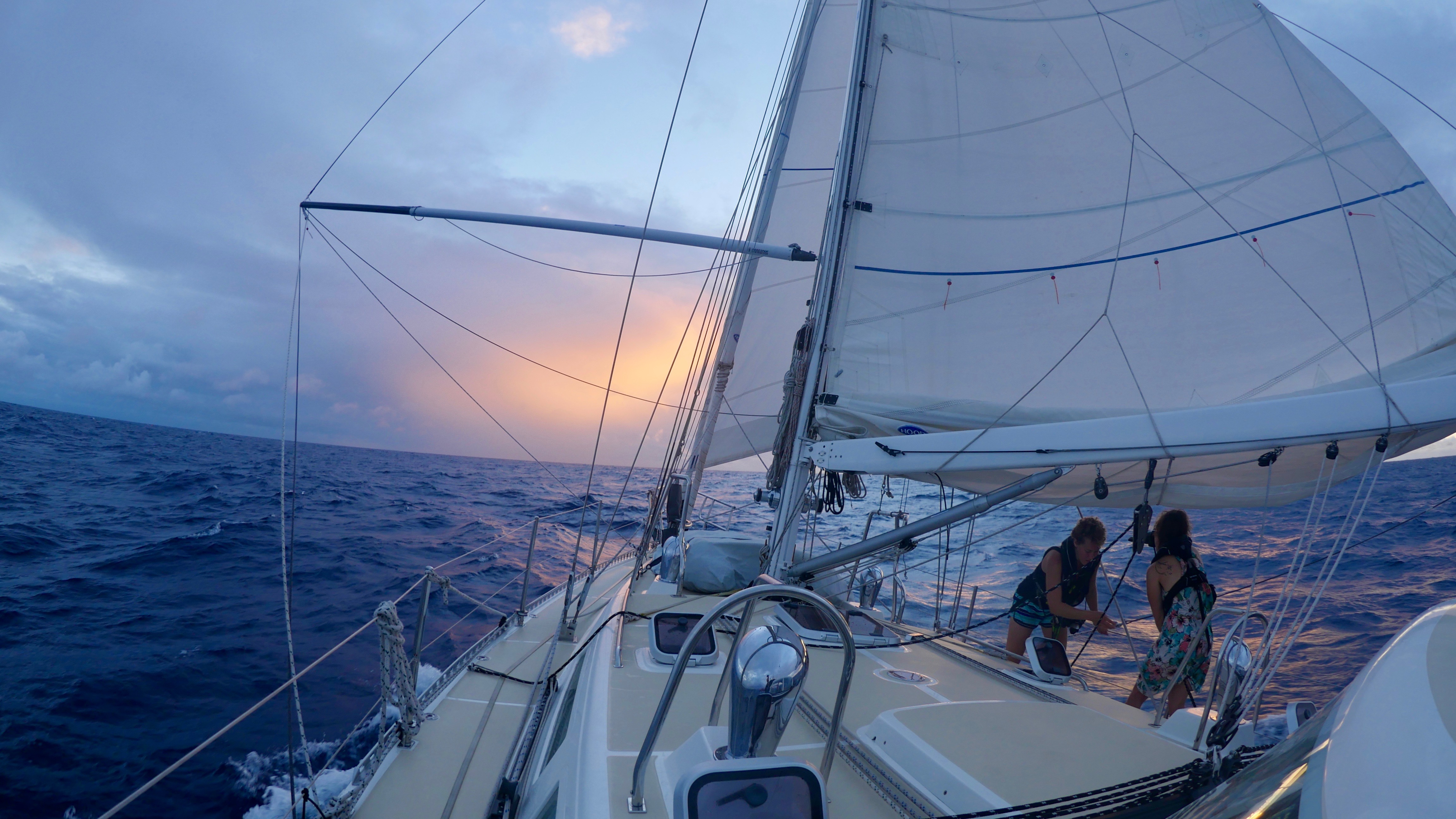
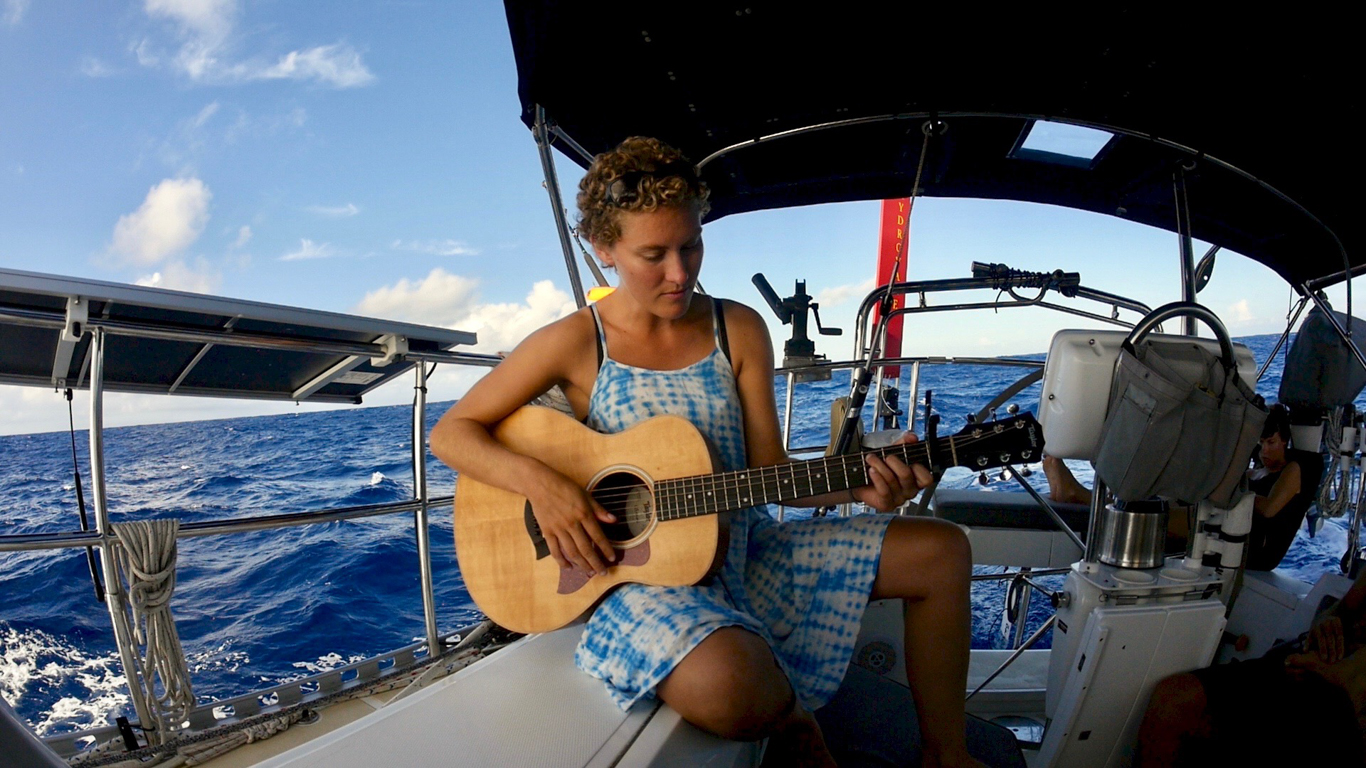
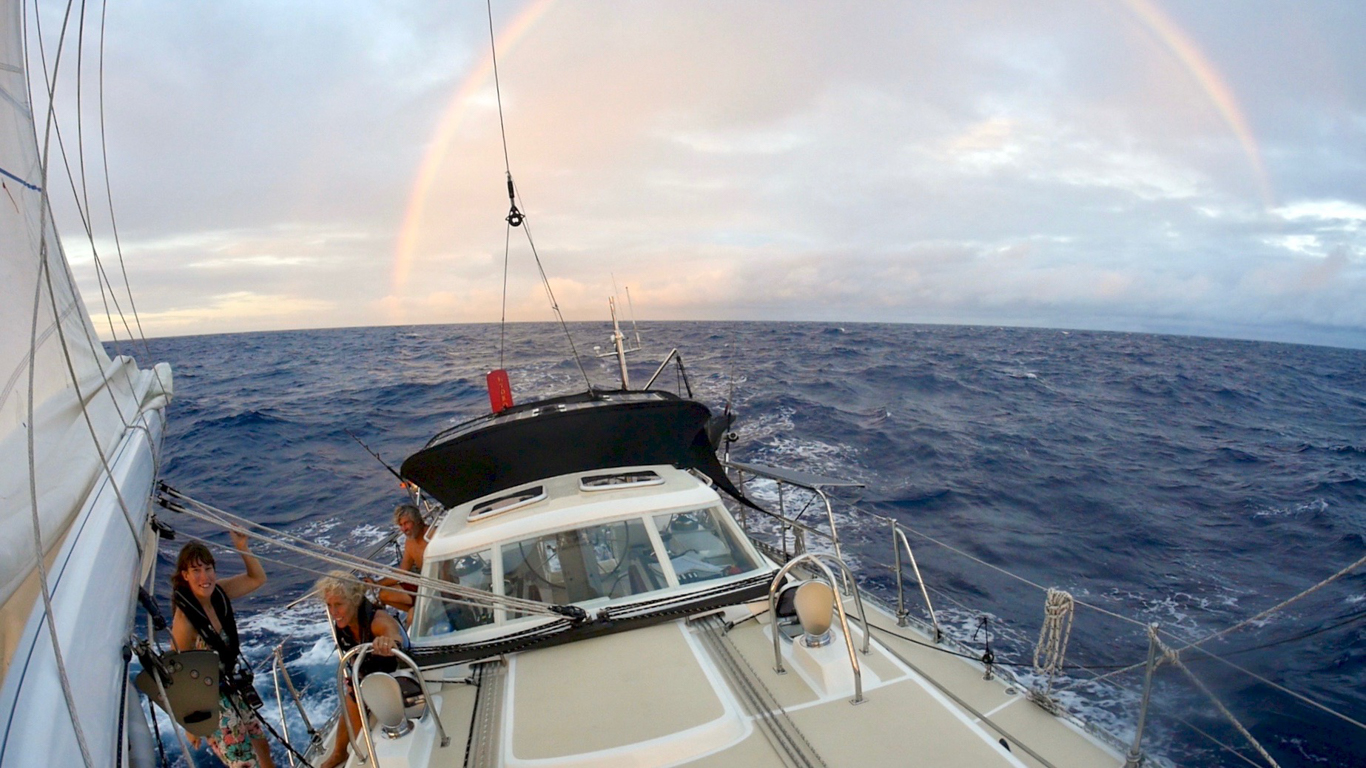
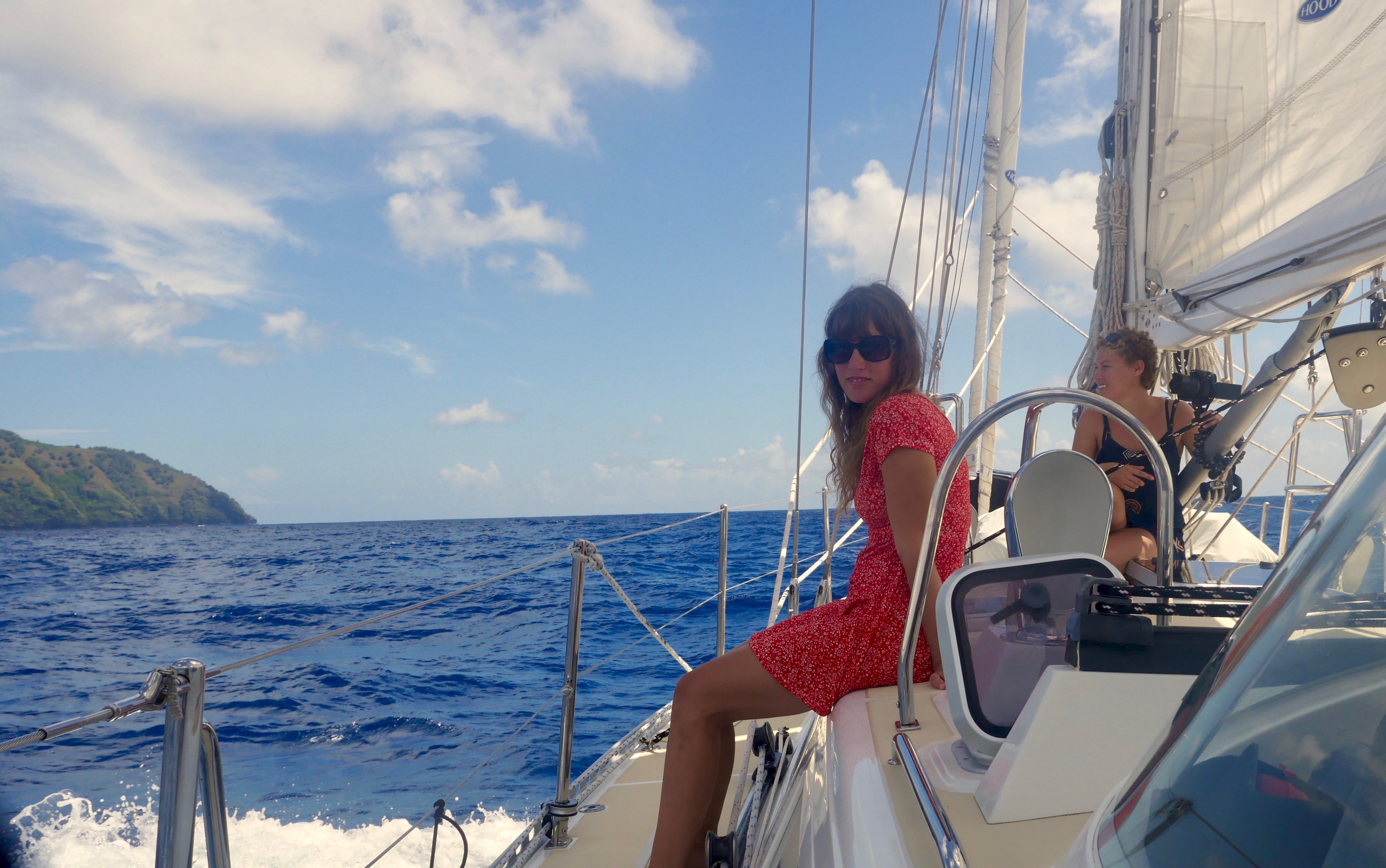
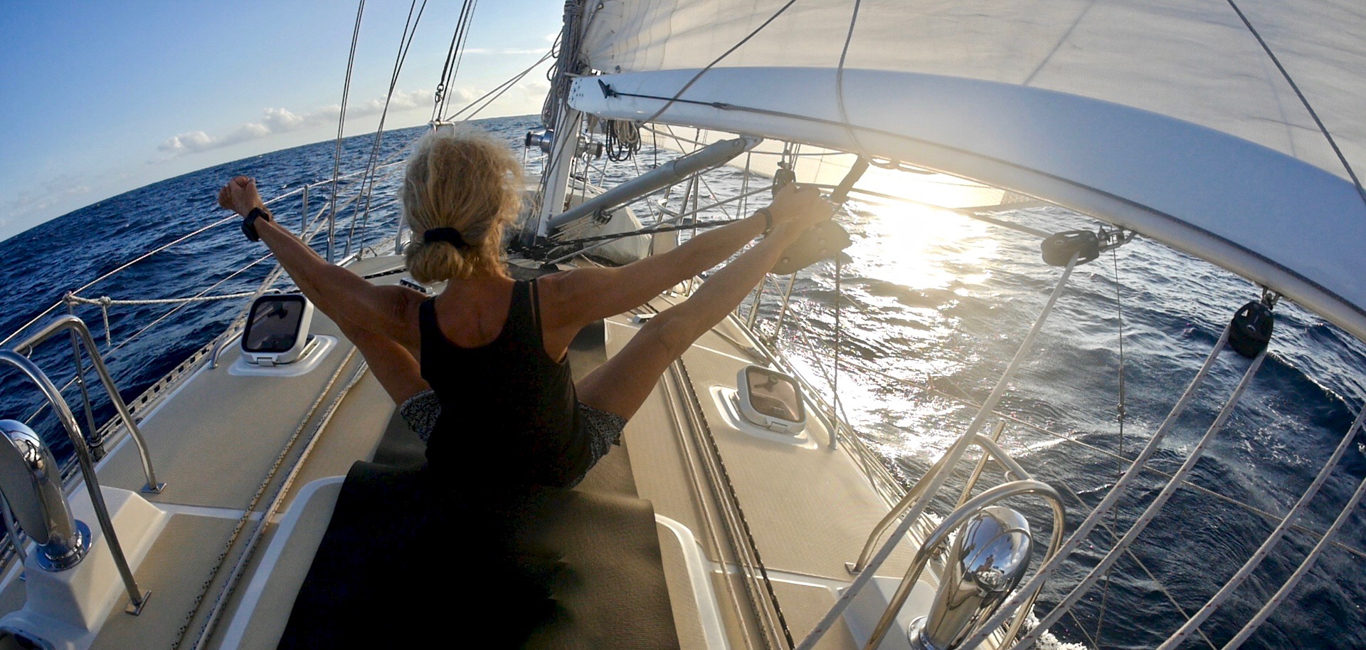
It’s been 6 months since Allora’s first ocean crossing. I am writing this from French Polynesia, eking out the time and wifi to finally share this treasury of experience. Gathering our 3 kids, Haley, Madison and Wyatt, as crew (we call them, ‘GREM’, to be explained later) was ideal and a bit of a miracle at this point in their busy and widespread lives. I have to say, I love that it felt imperative to each of them to make the voyage – what adventurous souls! Haley had already crossed the Indian Ocean with SeaMester; I think she knew something of the quiet and solitude we’d be experiencing.
We’re family, yes, but in this experience, we formed an alliance, a team. I was reminded of leaving Montana to live in Ravenna, Italia; we were drop shipped into a new culture – it was palpable, the intense newness of it all – but after that year, our family had shared something indefinably rich. Here, out on the illimitable sea, we truly relied on each other once again to ‘navigate the waters.’ Though I think each of us came away with an impression that also felt wholly personal, as I look back at those sweet days, I see a point in time in which we were able to slip into an eddy in our lives, to come together and share this magic – we were uncertain and proud, bored and content, tired and euphoric, collectively.
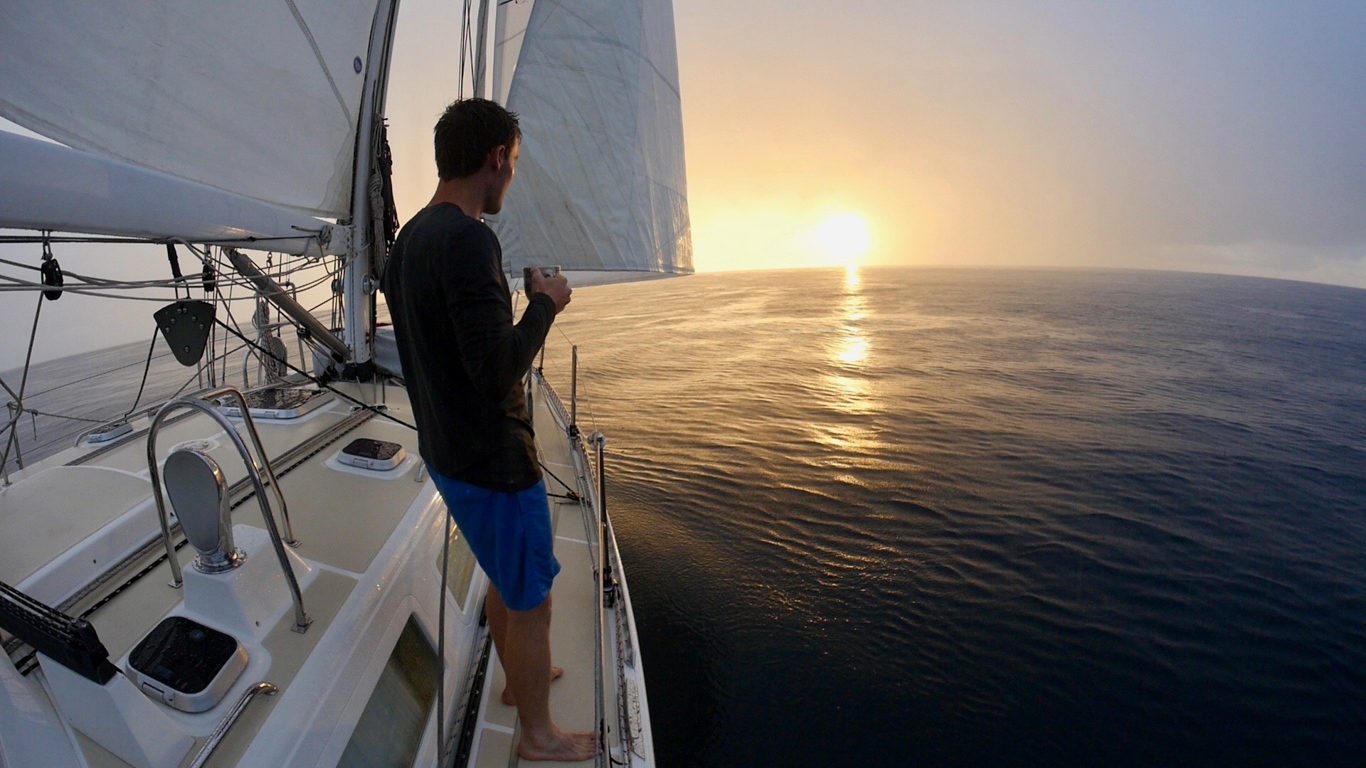
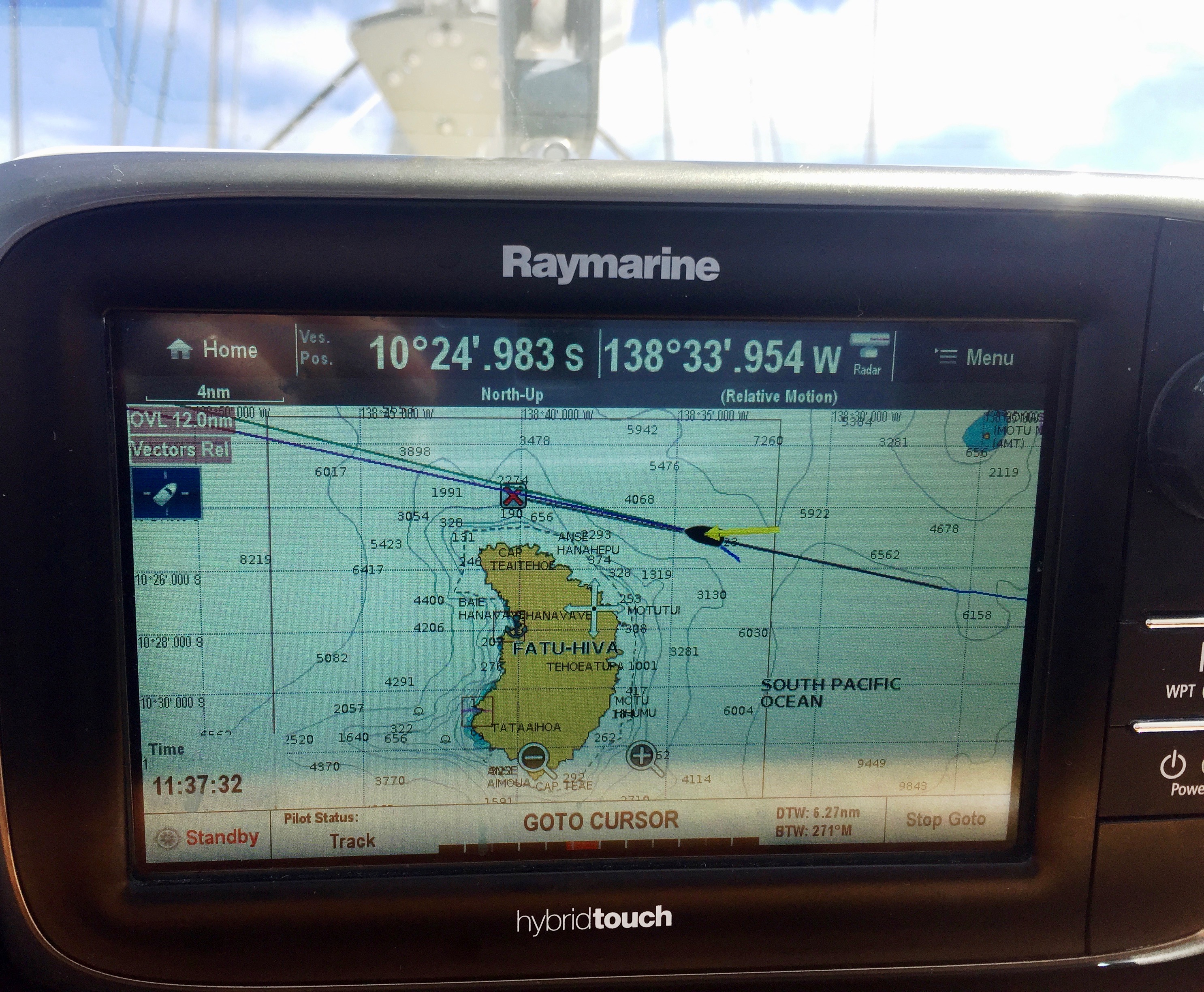
I hope to always recall the slow but sure rhythm of these 18 sweet days. My mosaic work often feels like this – bit by bit, piece by piece and one day, something’s manifested. In this case, we, with the wind, landed in paradise, Fatu Hiva, Marquesas. ~DS
Stats:
Distance: 2,956nm (3,401miles)
Avg. speed from Isla Isabela, Galapagos to Fatu Hiva, Marquesas: 6.895 knots/hr (7.9 mph)
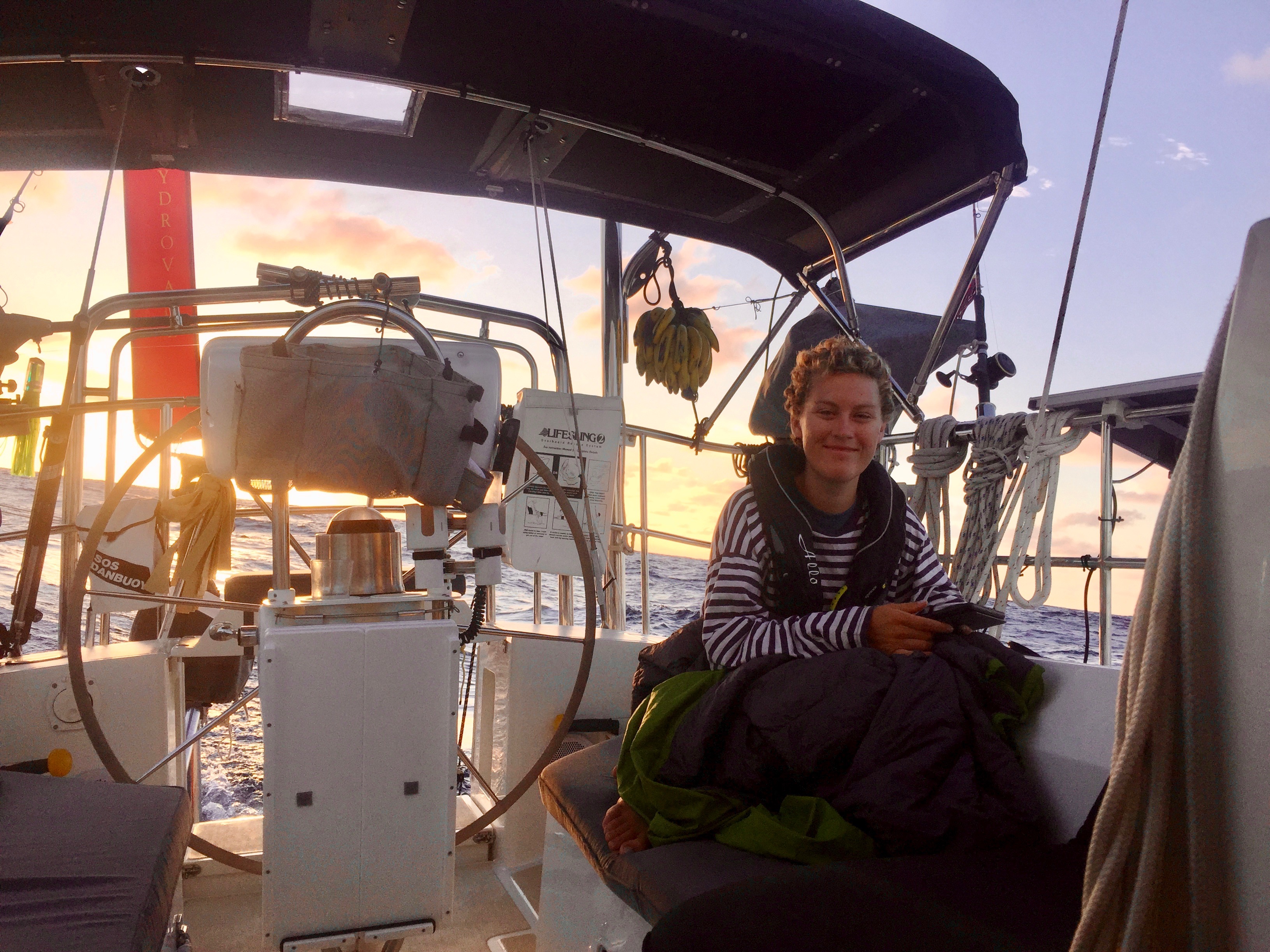
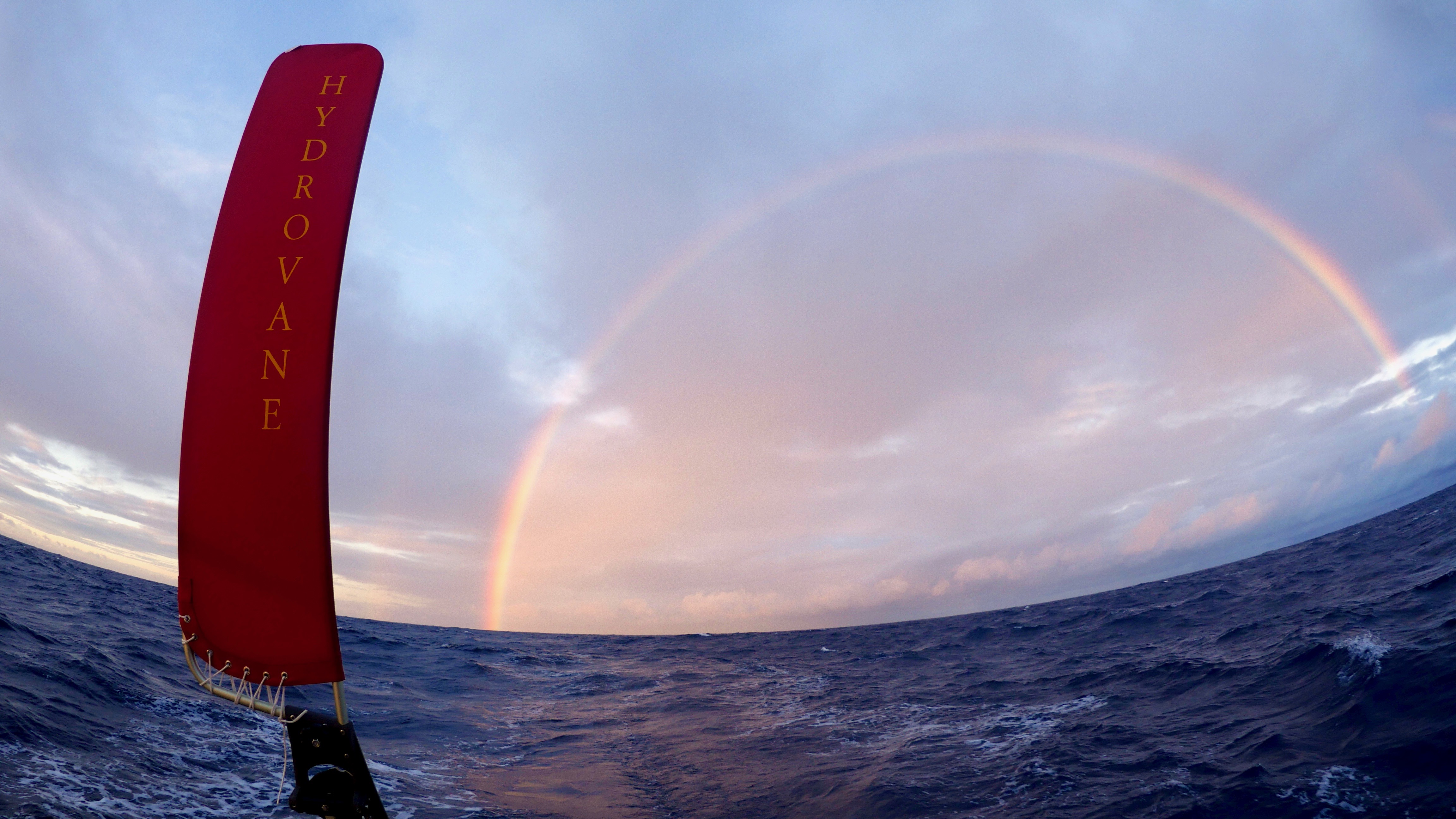
Our Hydrovane self steering unit, giving the auto pilot (and us) a break
Marquesas arrival!!!!
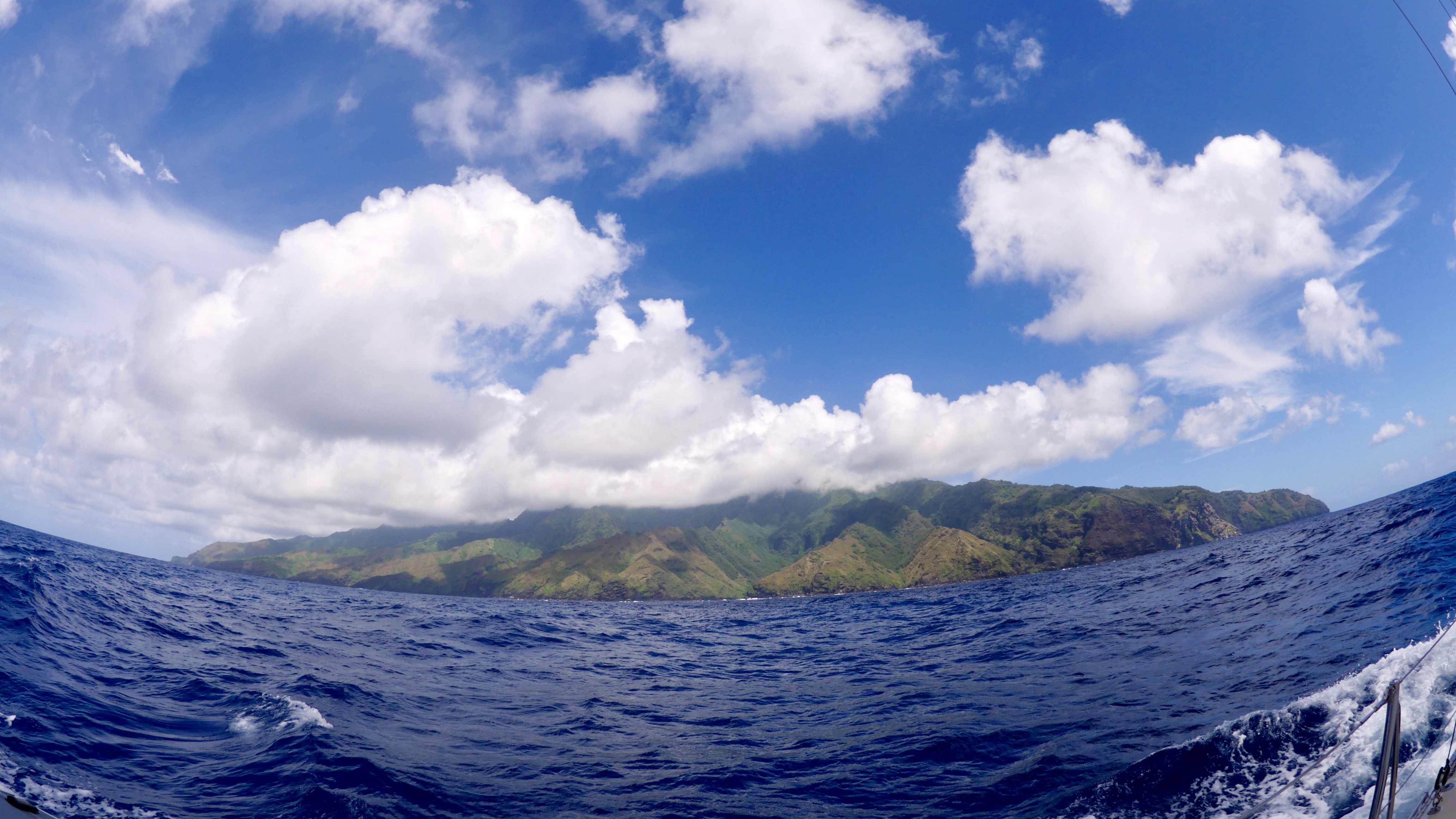
Land Ho?!
First land in 18 days! Fatu Hiva
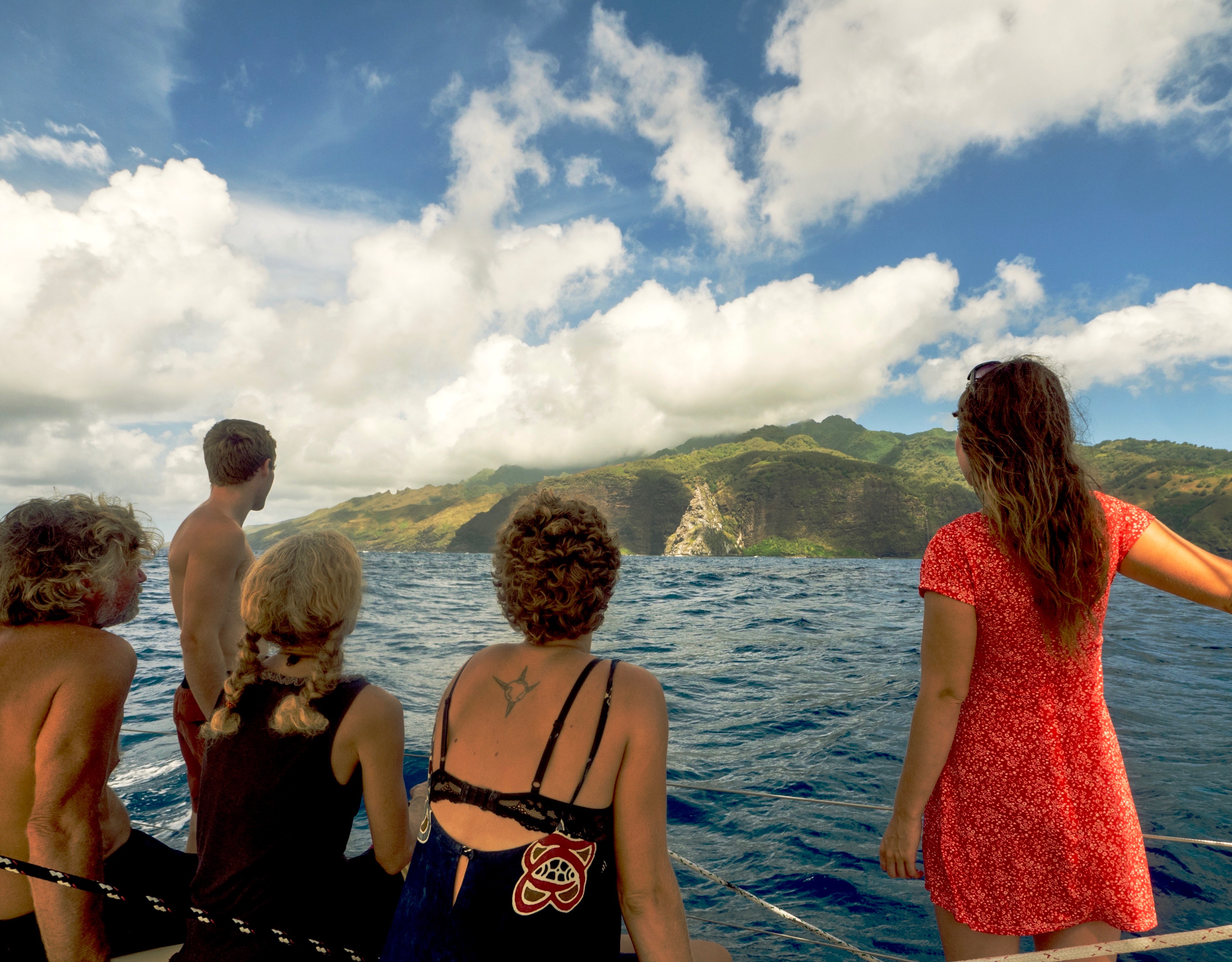
Allora’s crew arriving in the Marquesas Archipelago!
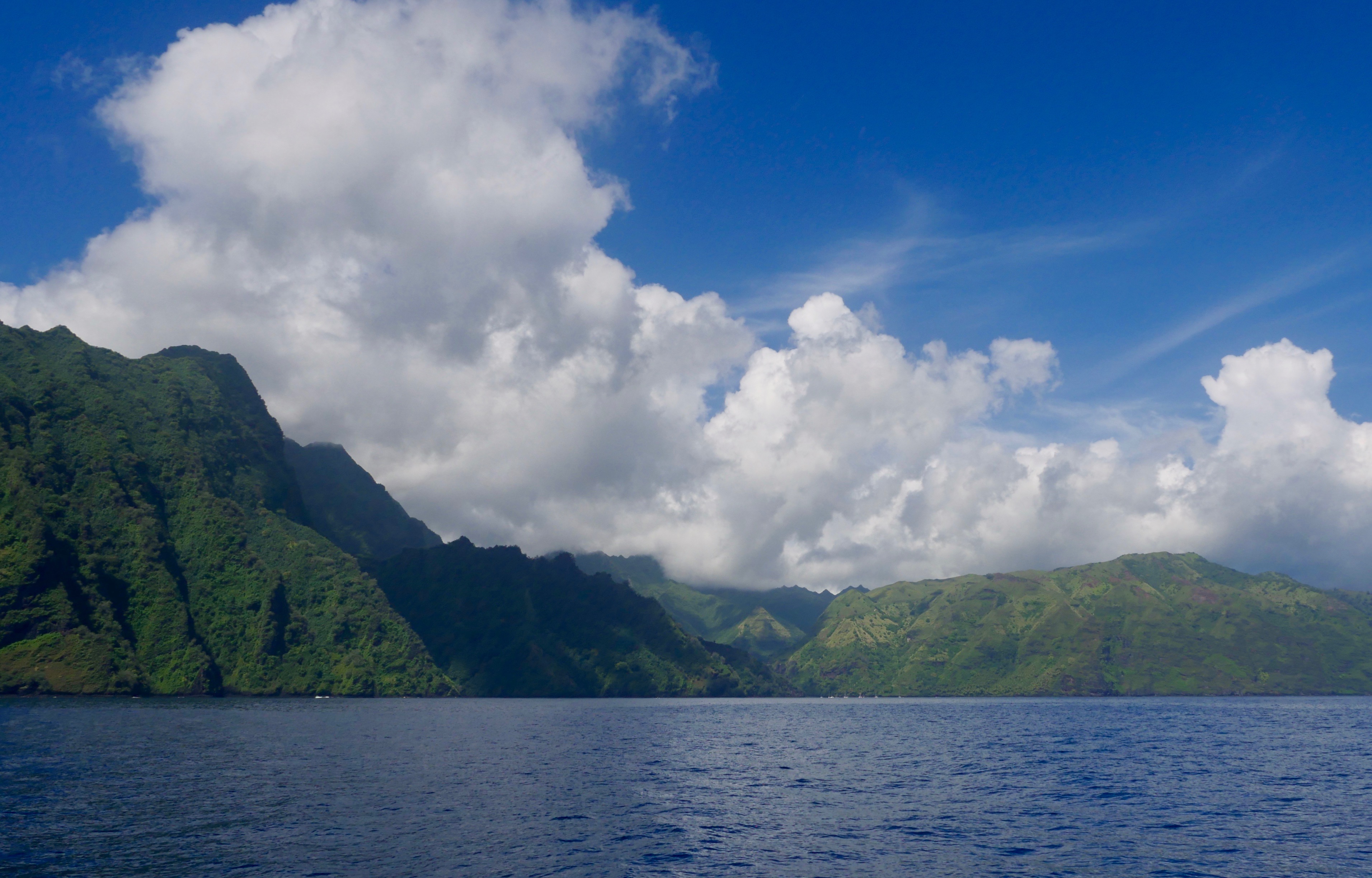
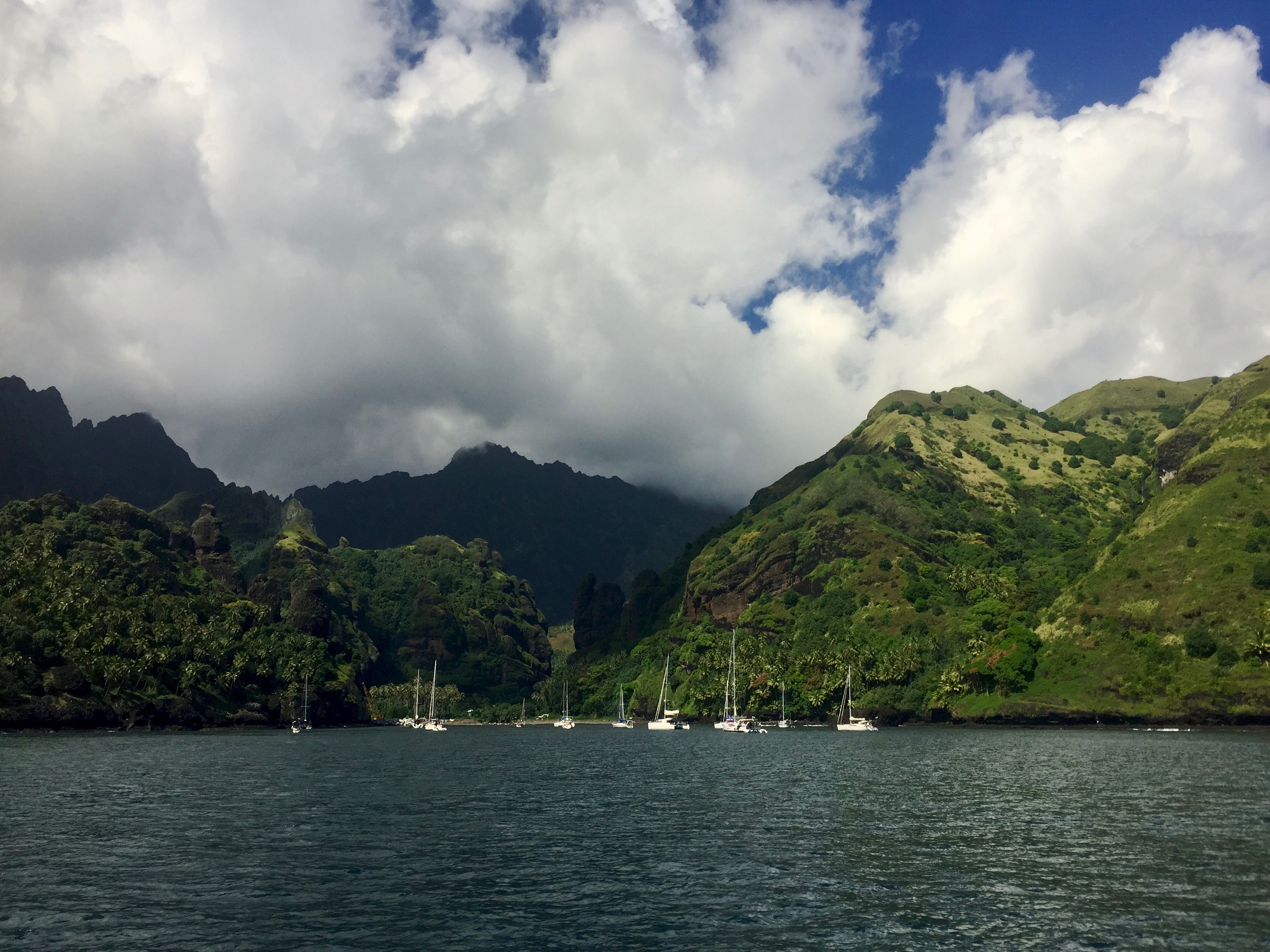
Hanavave, Fatu Hiva, Marquesas
Hanavave, Fatu Hiva, Marquesas
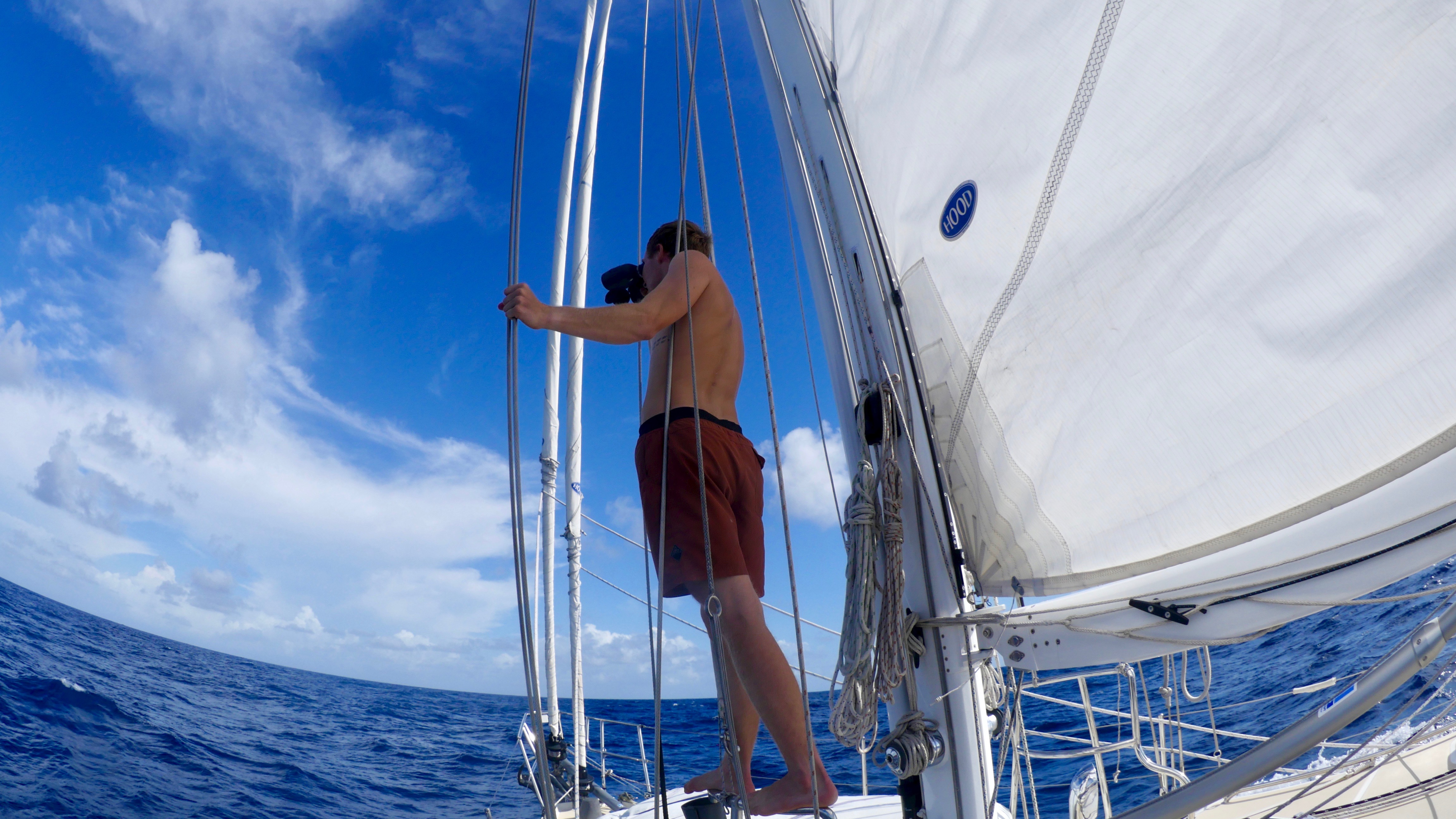
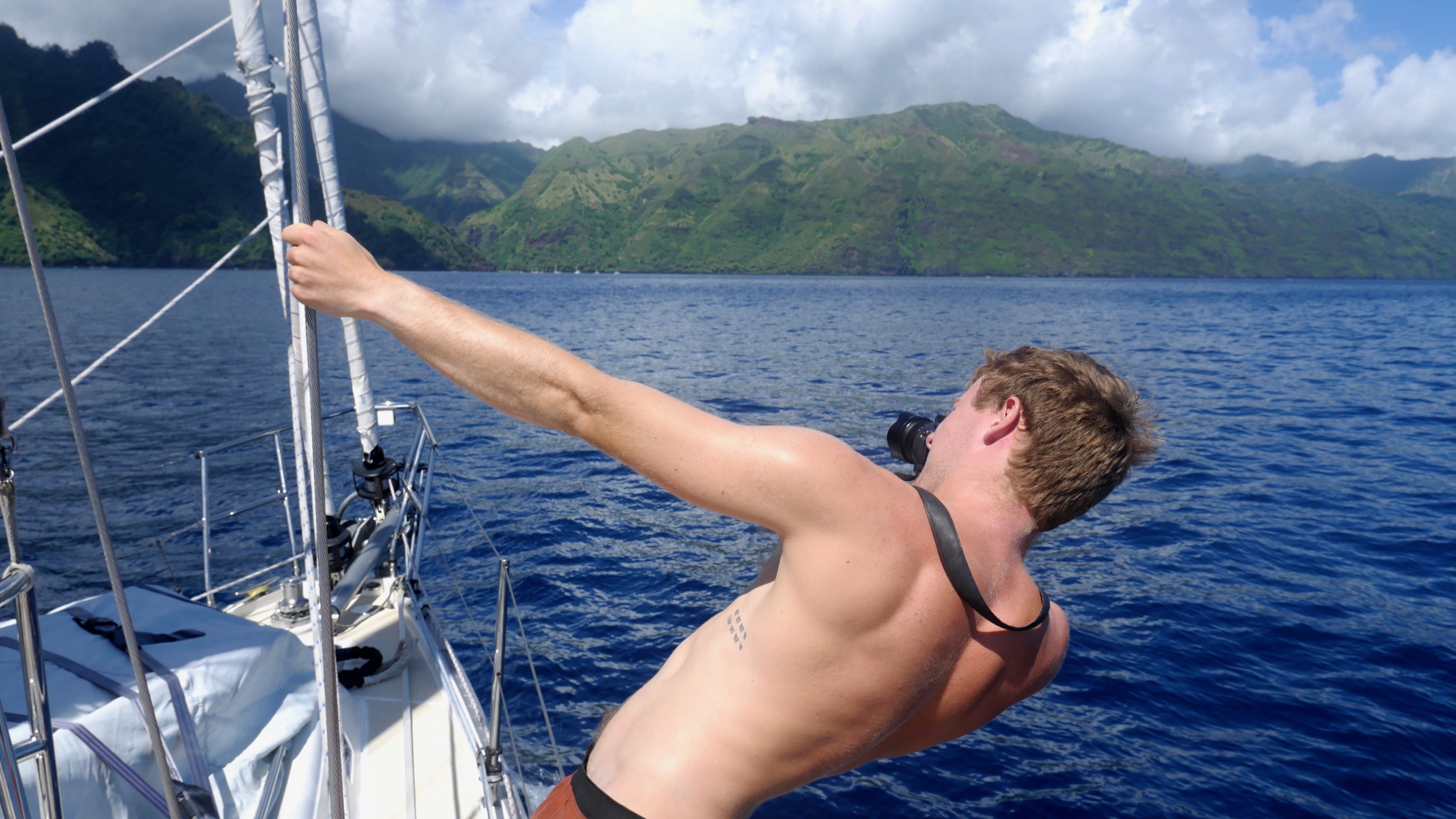
First shirt on in 30 days
We would have been happy landing anywhere, but this vision was surreal
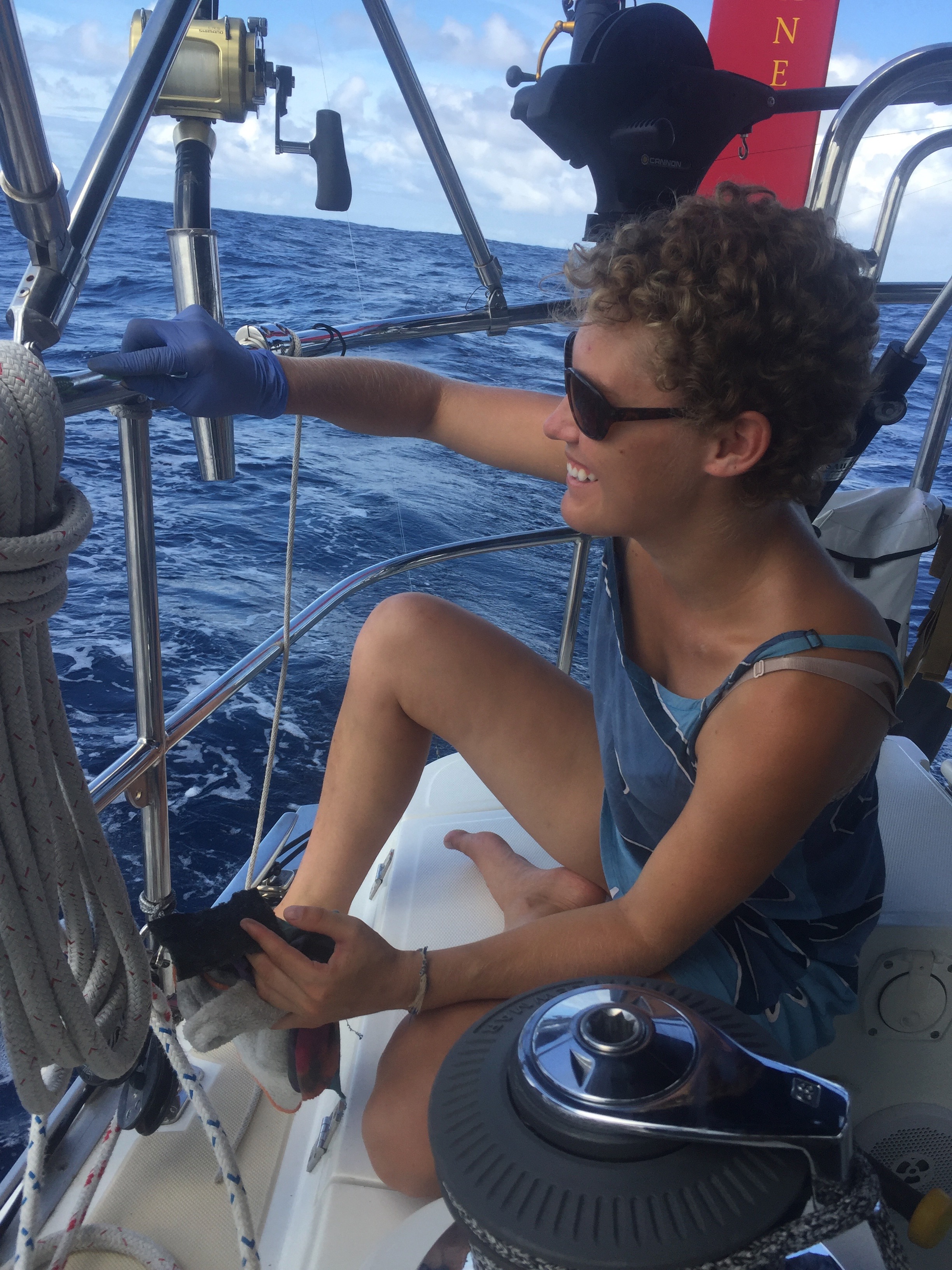
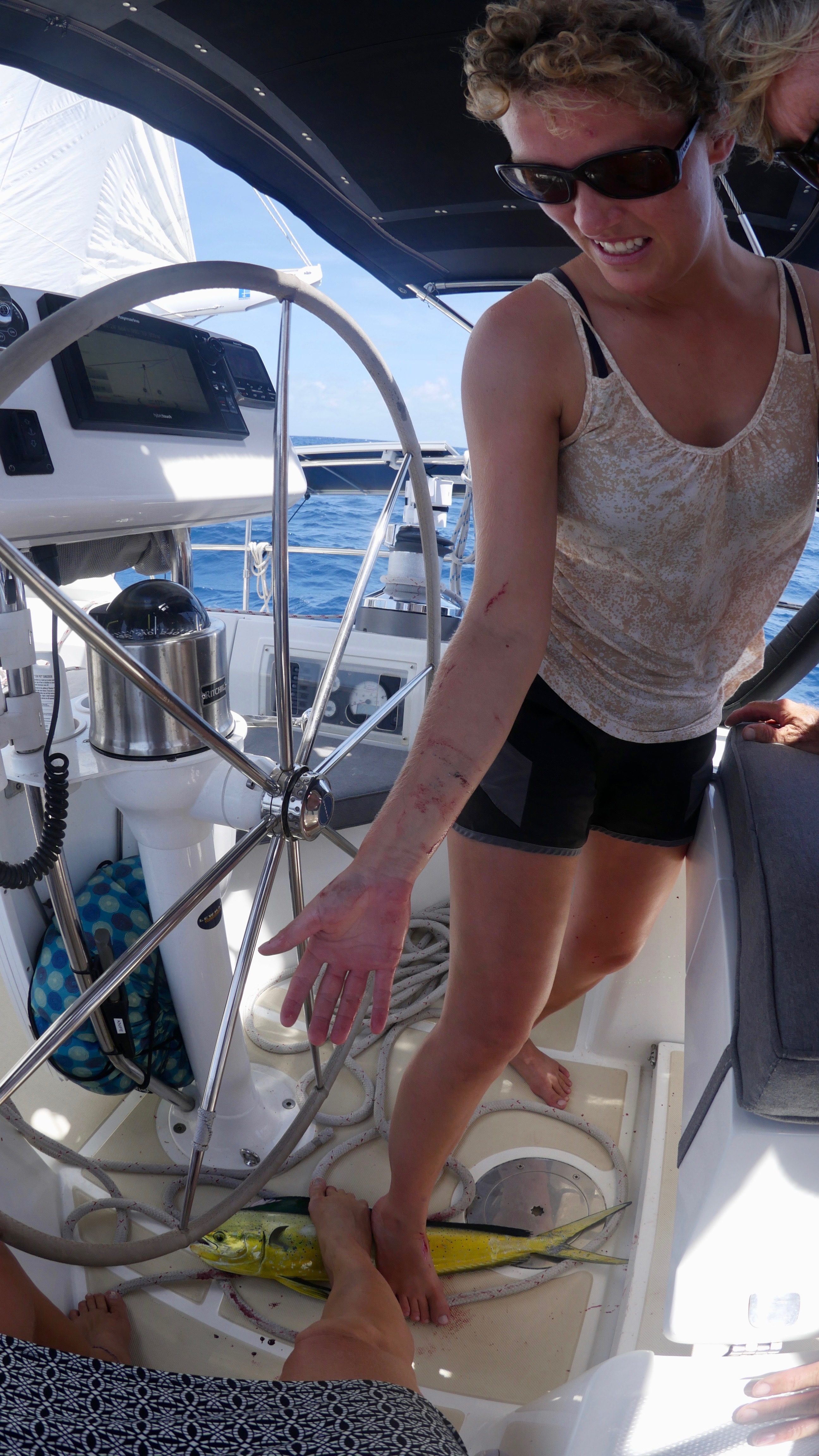
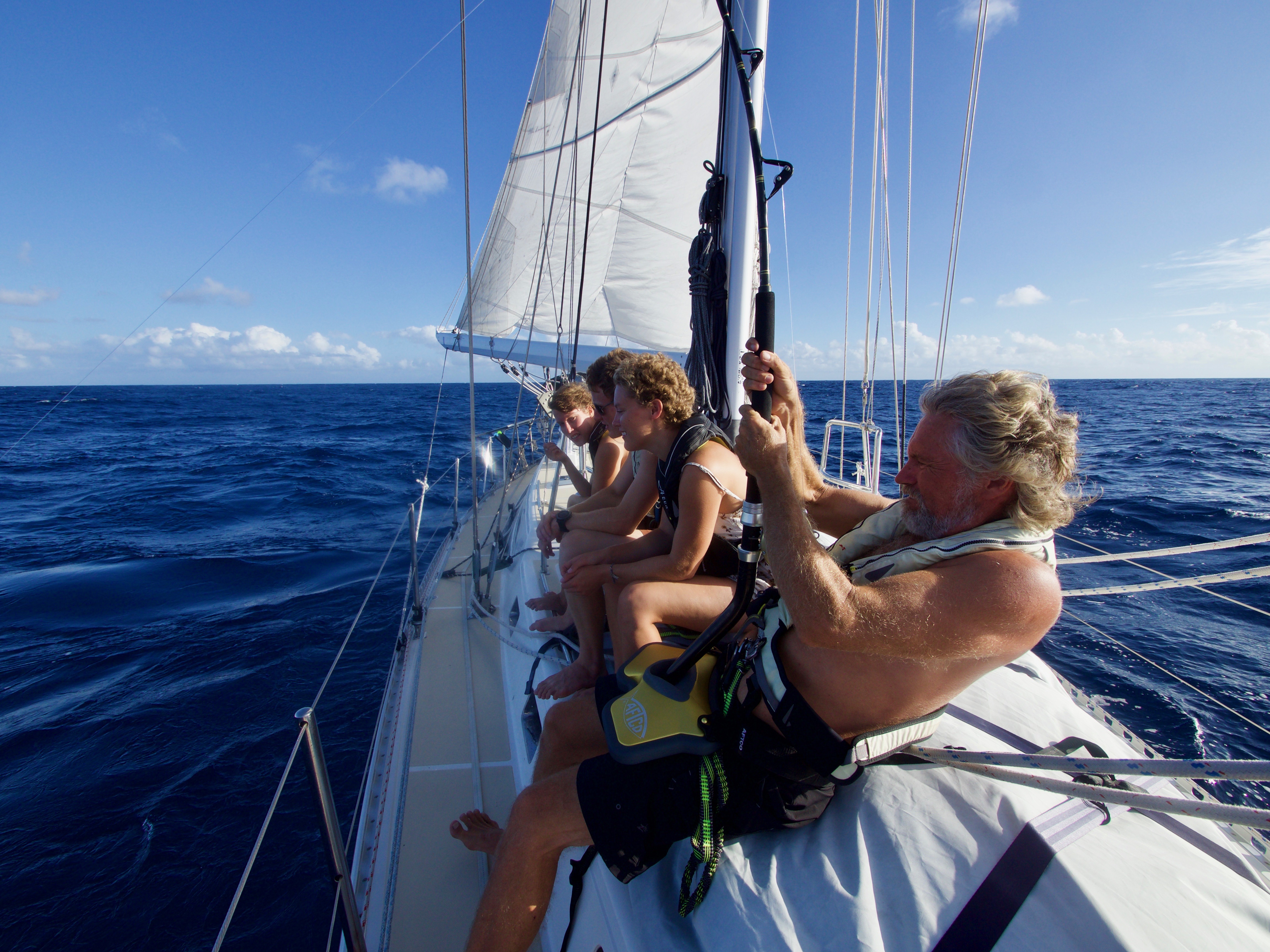
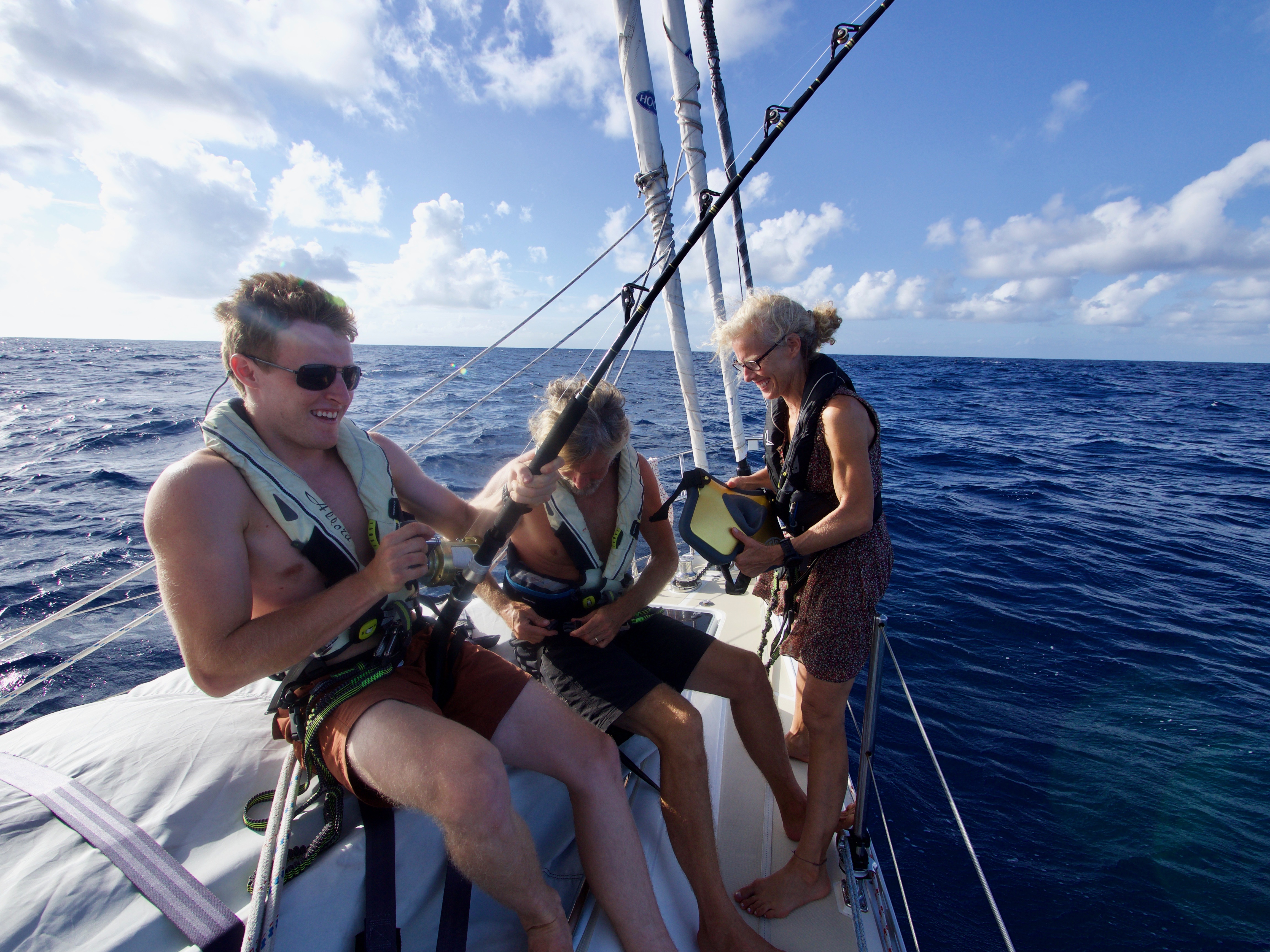
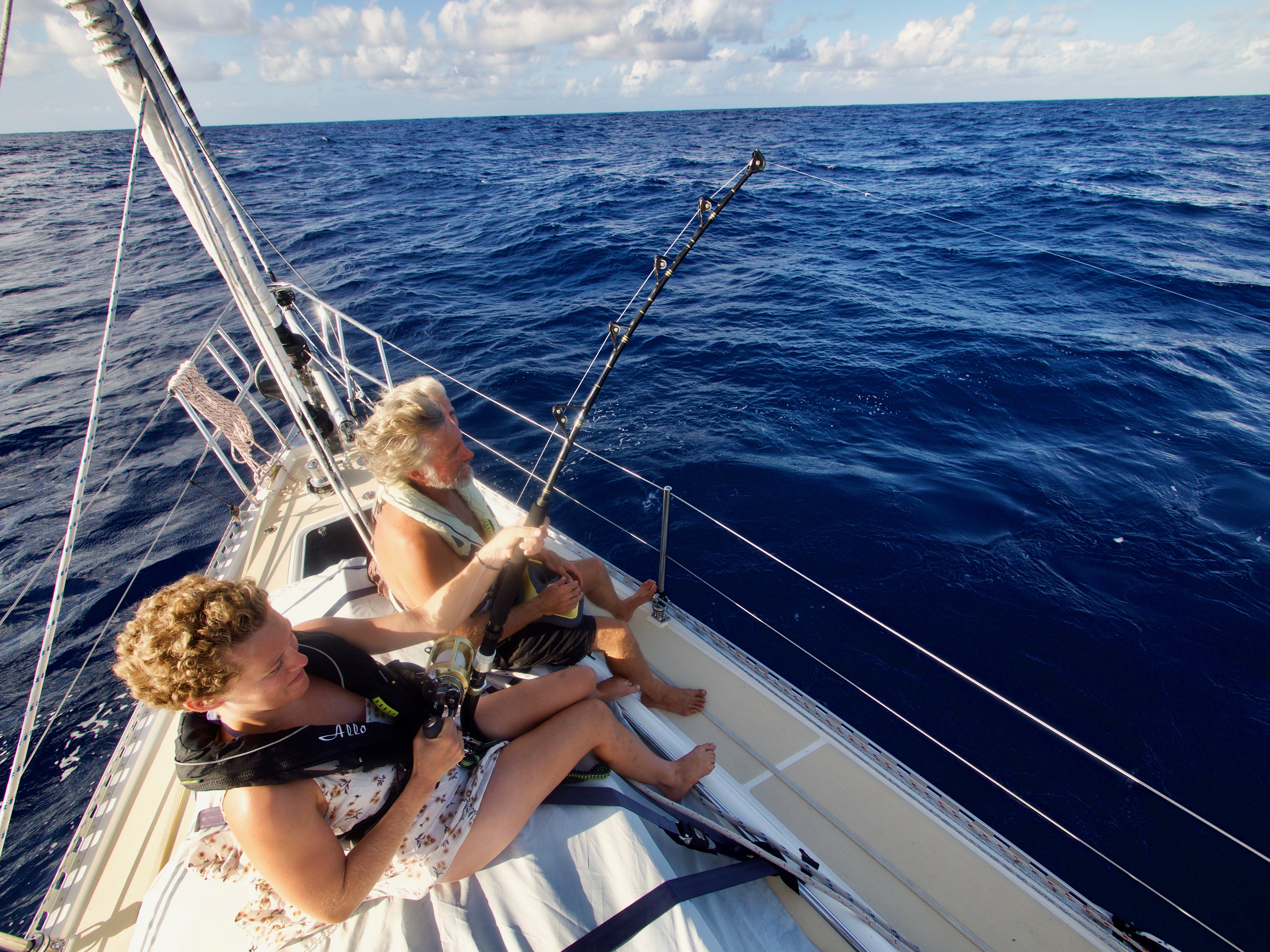
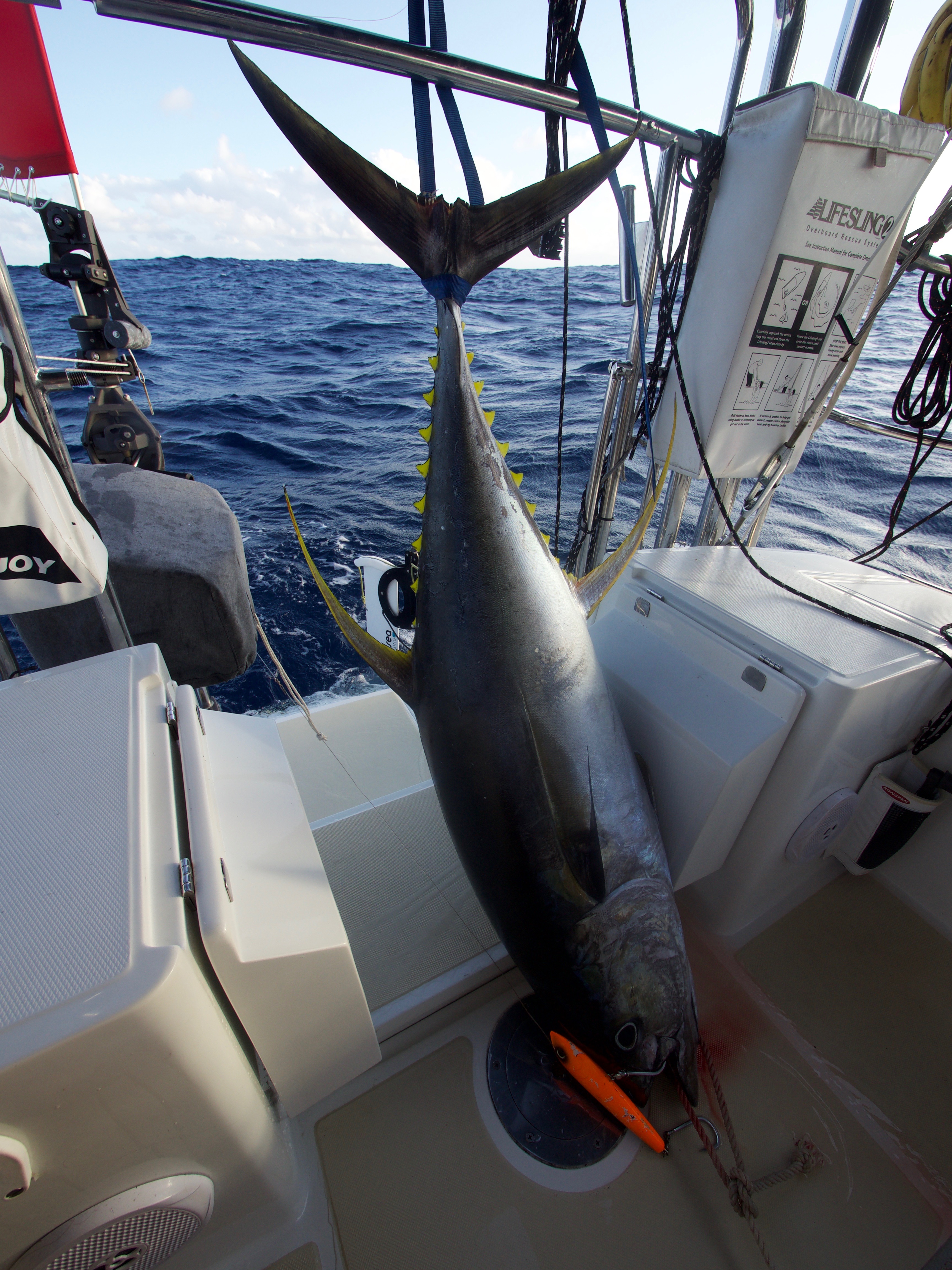
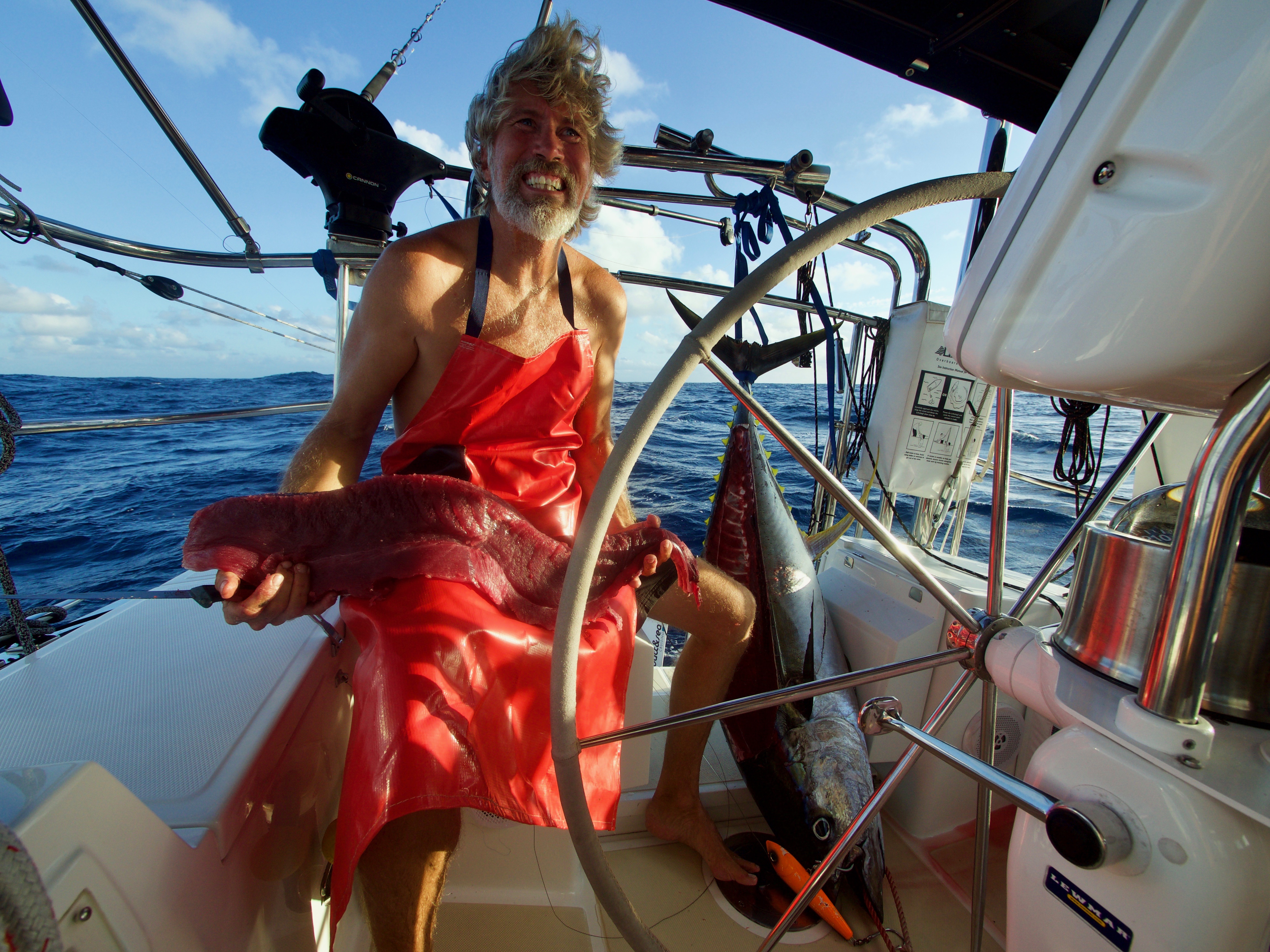
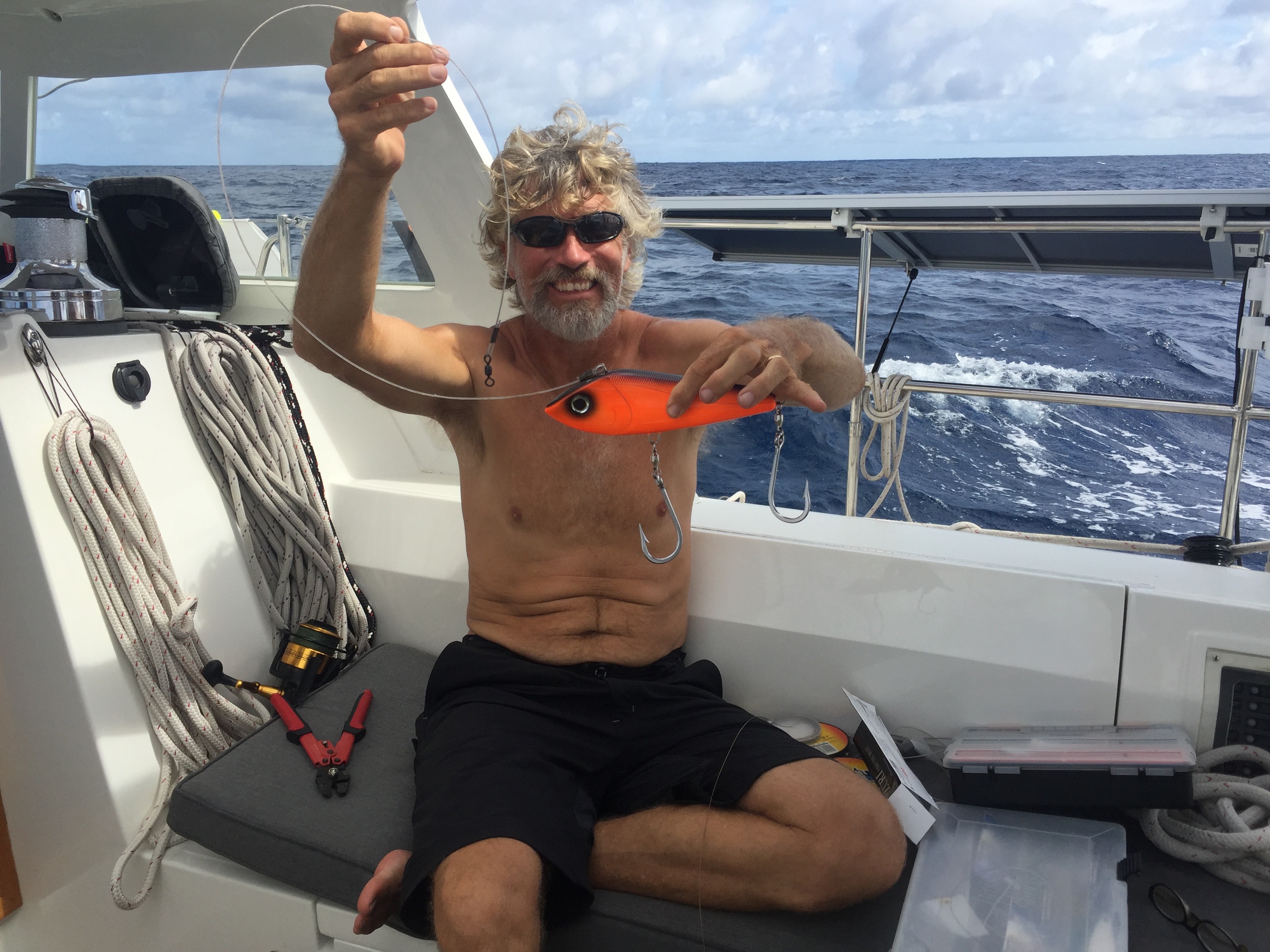
I’ve been thinking about the tuna I killed
the exhausted fish bleeding into the water
after our gaff cut its gill then came apart and fell overboard
clouds of blood, Maddi thought of whaling
what it would be like on another scale
the rivers of whale ichor gushing into this exact ocean
from a heart bigger than all five of us
even this, probably average tuna, appears from its deep refuge like a giant
the mass of muscle that challenged our arms despite enormous mechanical advantage
We confounded the powerful, sleek prince of blue water
though we cannot actually lift him, but barely heave him aboard
like a deer drug through the snow
our muscles are spent
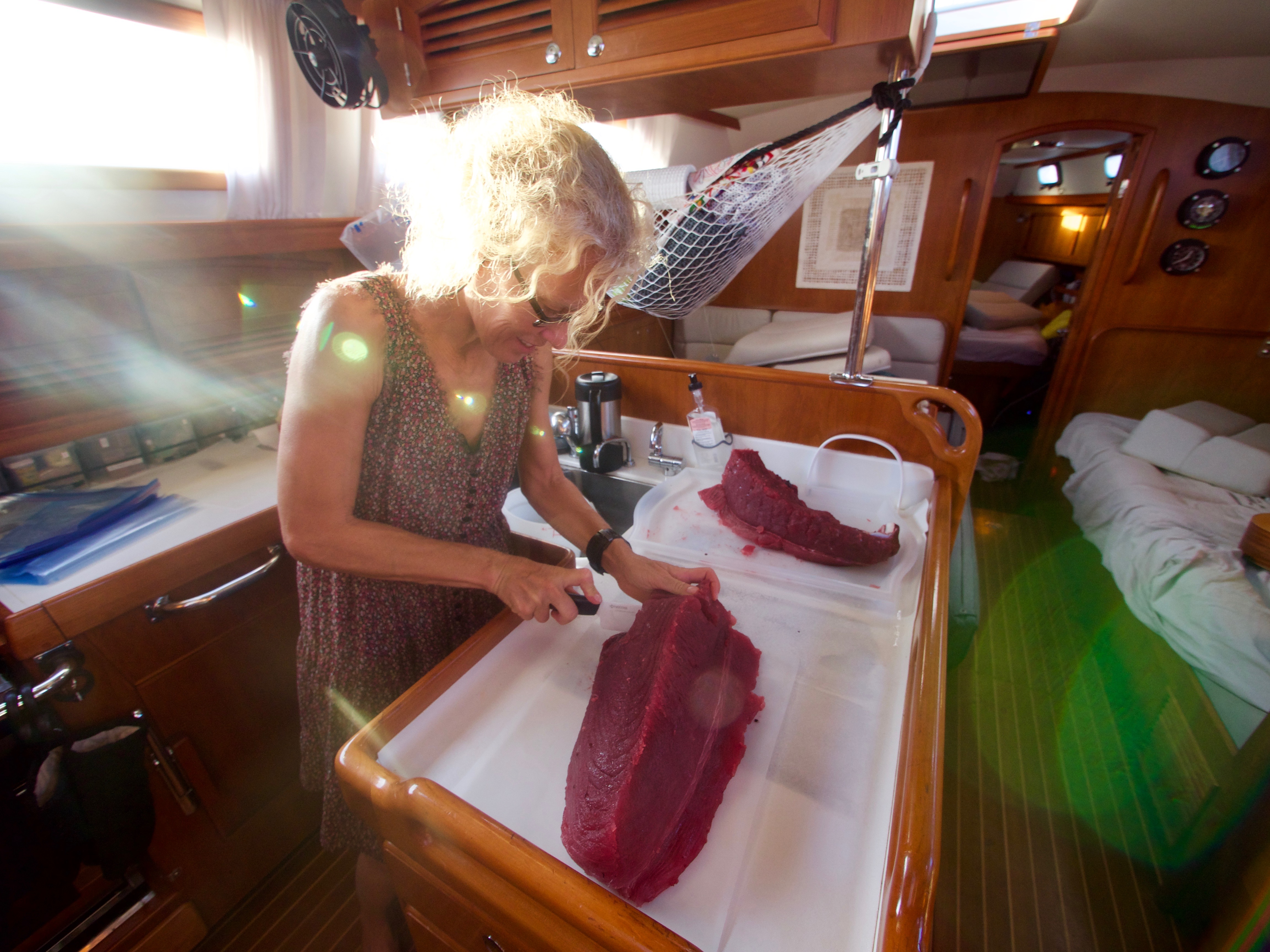
chunks of sashimi as big as an elk quarter
deep in the cheek, beautiful stuff I could, should eat from my knife even as I filet
I never ate deer raw
I worry I may one day think I have taken something I shouldn’t have
more than is left to take
for a man living in a world where food is easy
taken invisibly with efficient economic precision
swaddled in styrofoam and plastic
a big mac or burrata
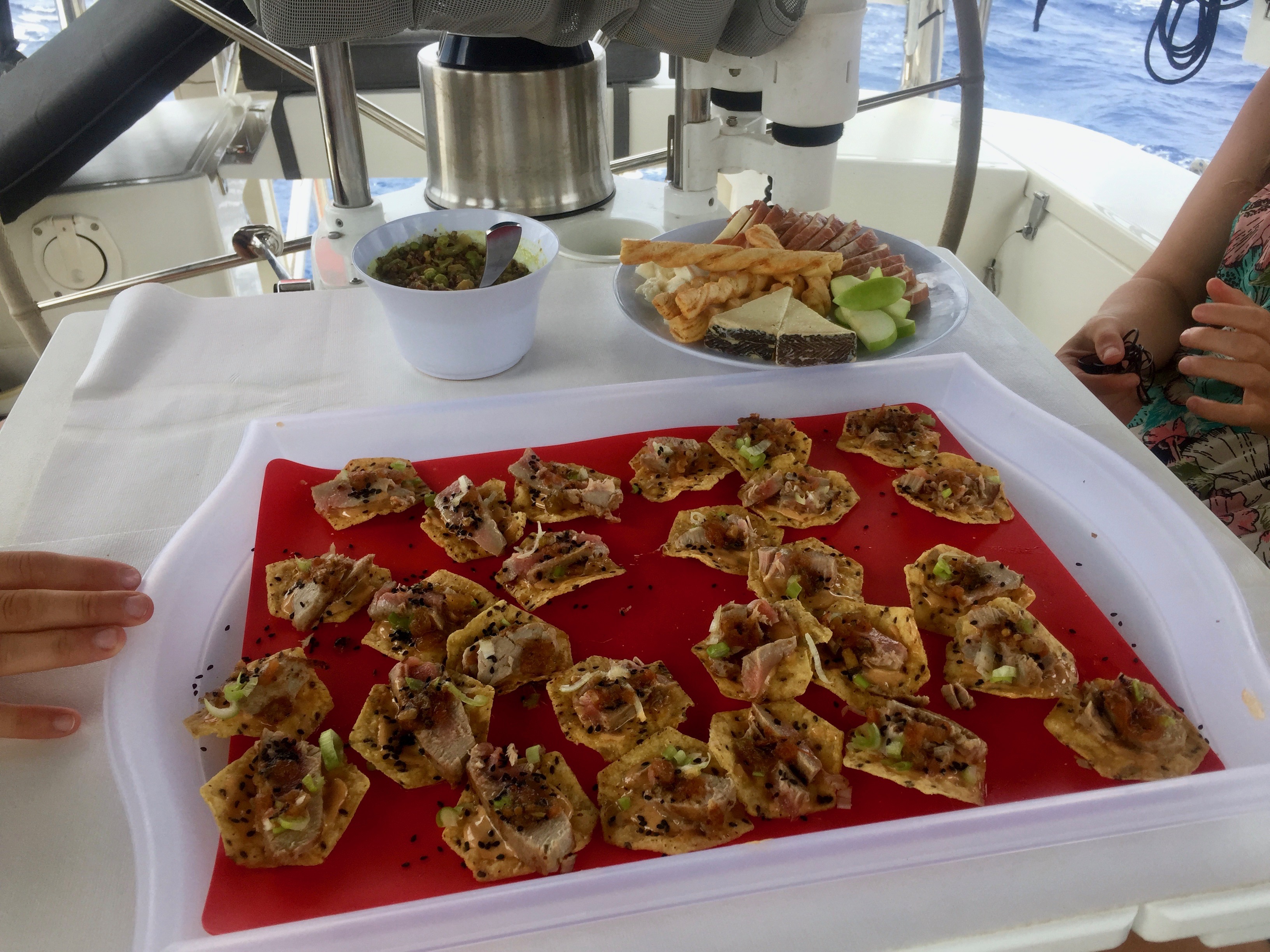
seared tuna or sushi
for anyone who indulges a whim
anywhere, anytime
even in places that in my lifetime once offered only boiled meat and potatoes
peaches and apricots in the season of miller moths beating against the screen door
the man across the street in Hillrose, Colorado had collections of arrowheads
chipped stone for killing, scraping and digging
New technology just a few decades or a century ago
Here we see white fishing boats with towers for spotting the game
powerful motors for dragging it from the deep
fishermen like whalers still, raw
distant lives, sheltered by unquestioning pragmatism
shortsighted, strong armed servants of a frivolous city dwelling species
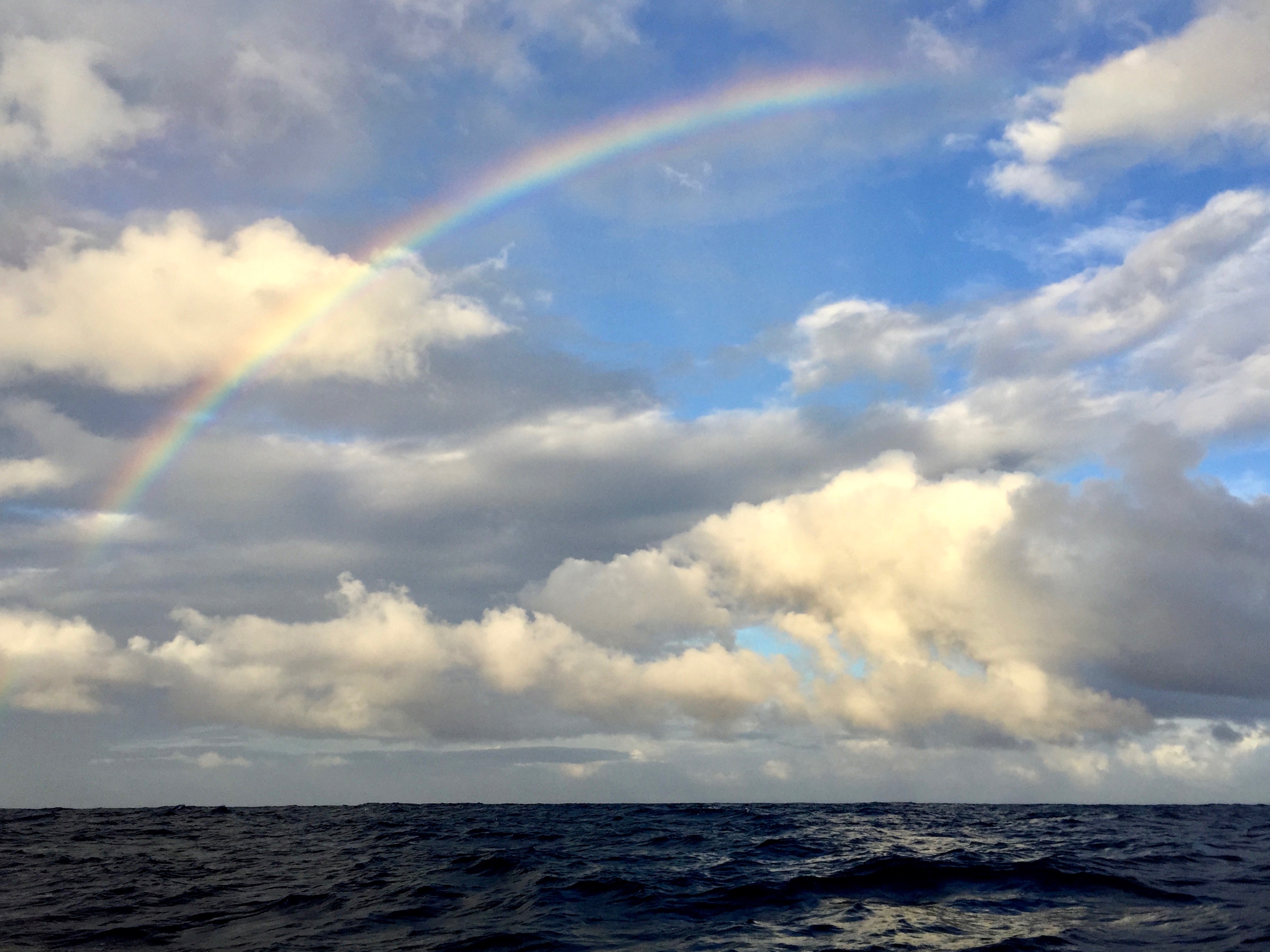
below us shifts Melville’s eternal blue noon
the multitude of shades of azure
that would have names if we were like eskimos naming snow
it all deepens to black
red squid and sperm whales
all that’s left of the world falls like ash into the deepest sea
~MS