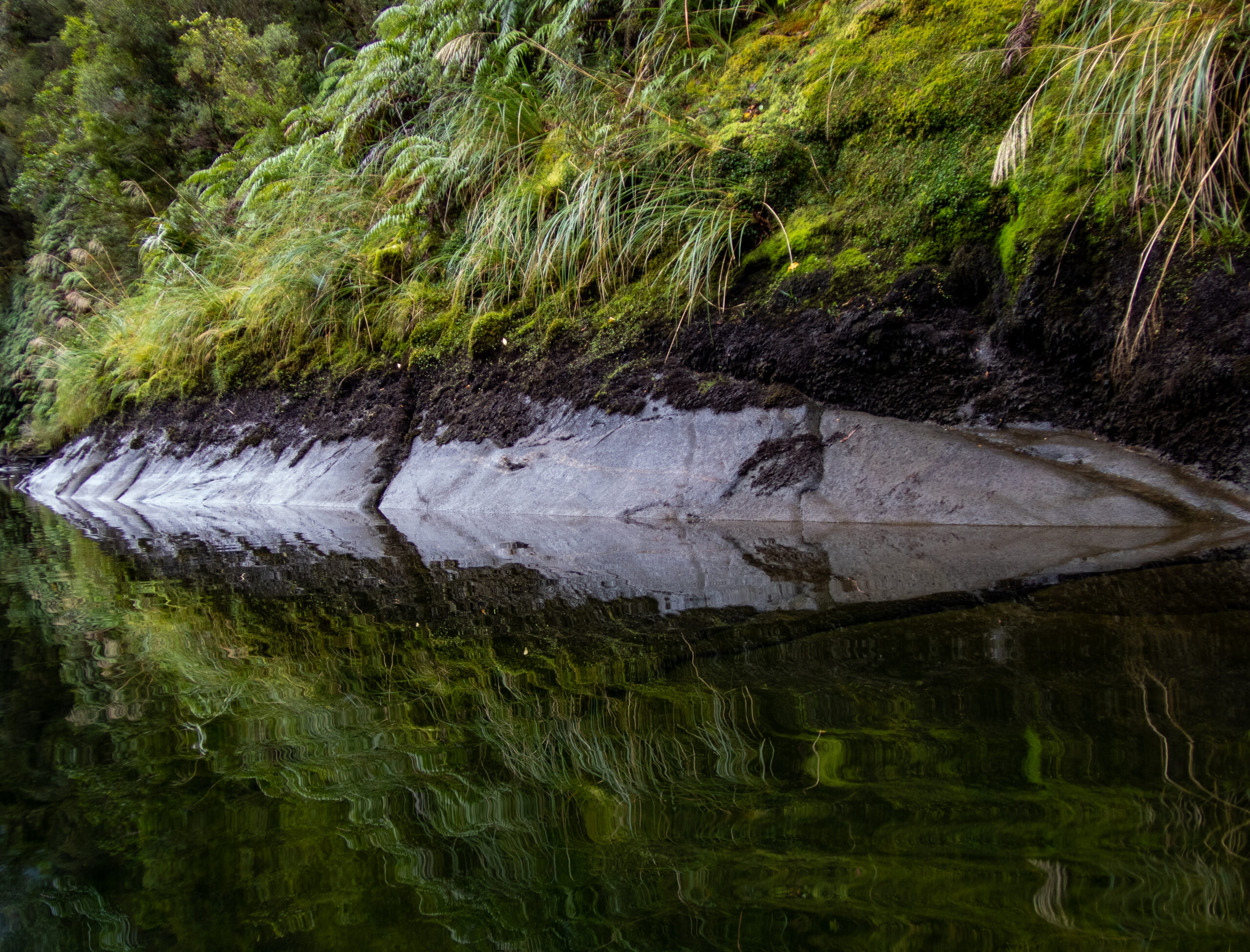
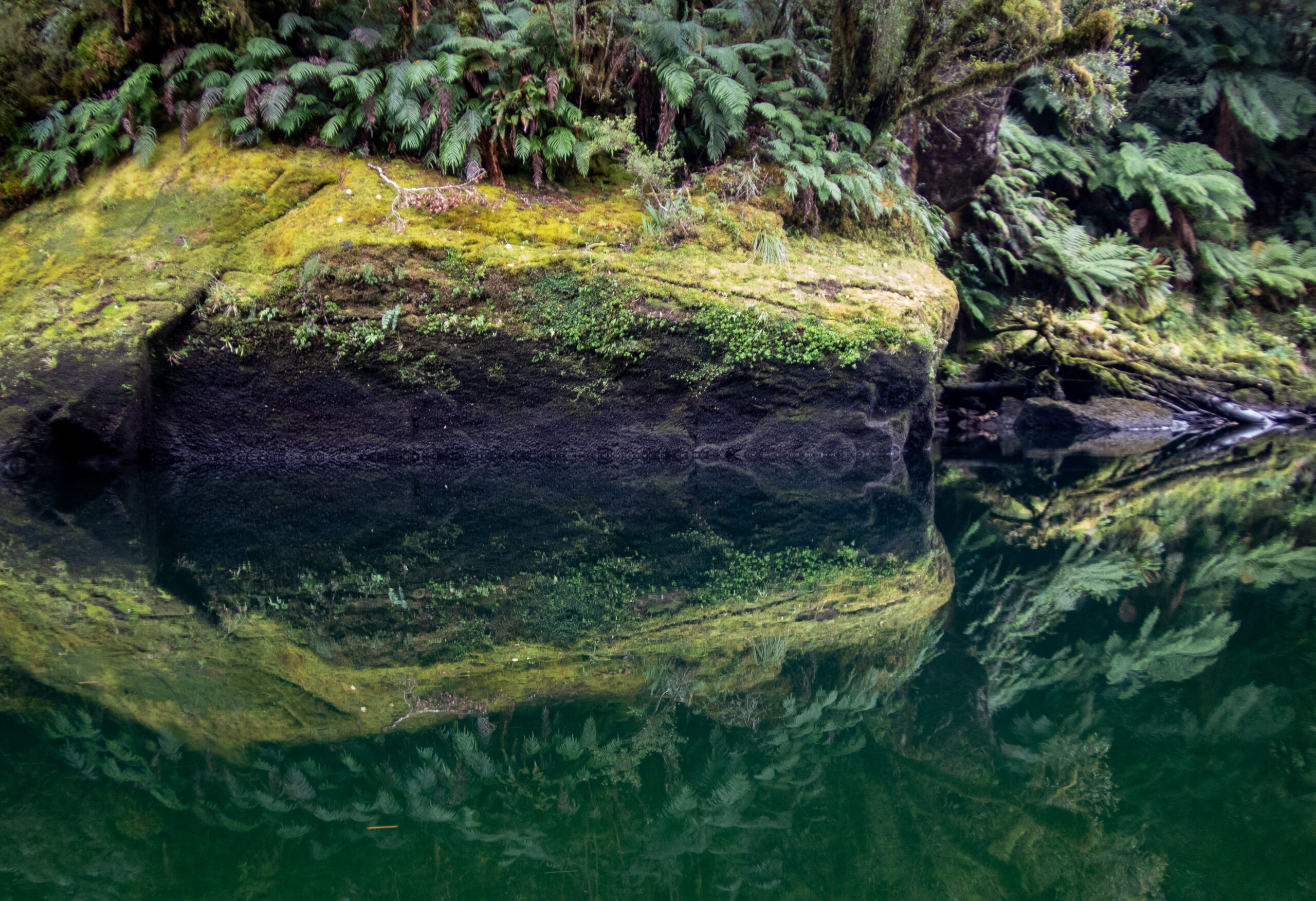
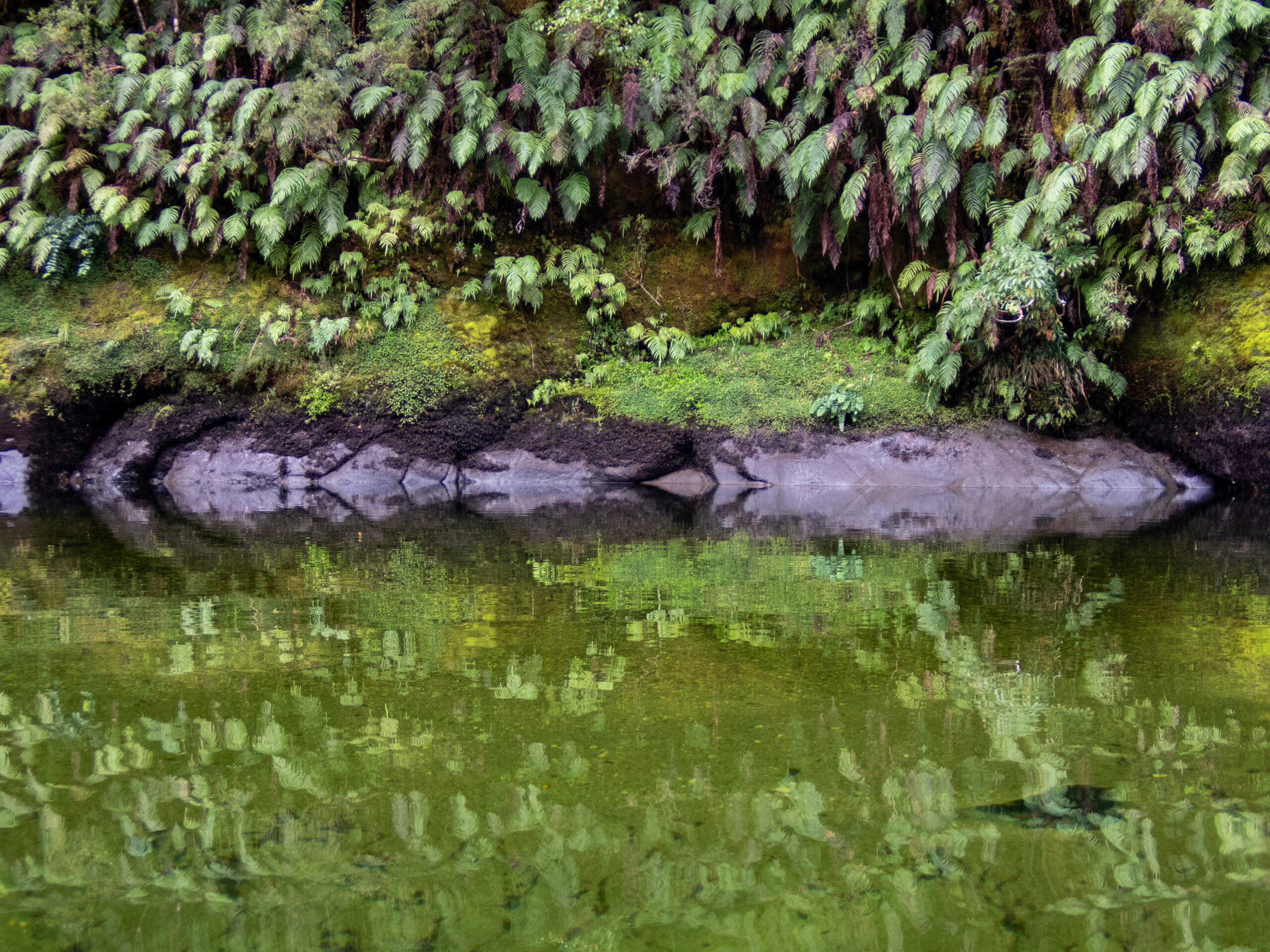
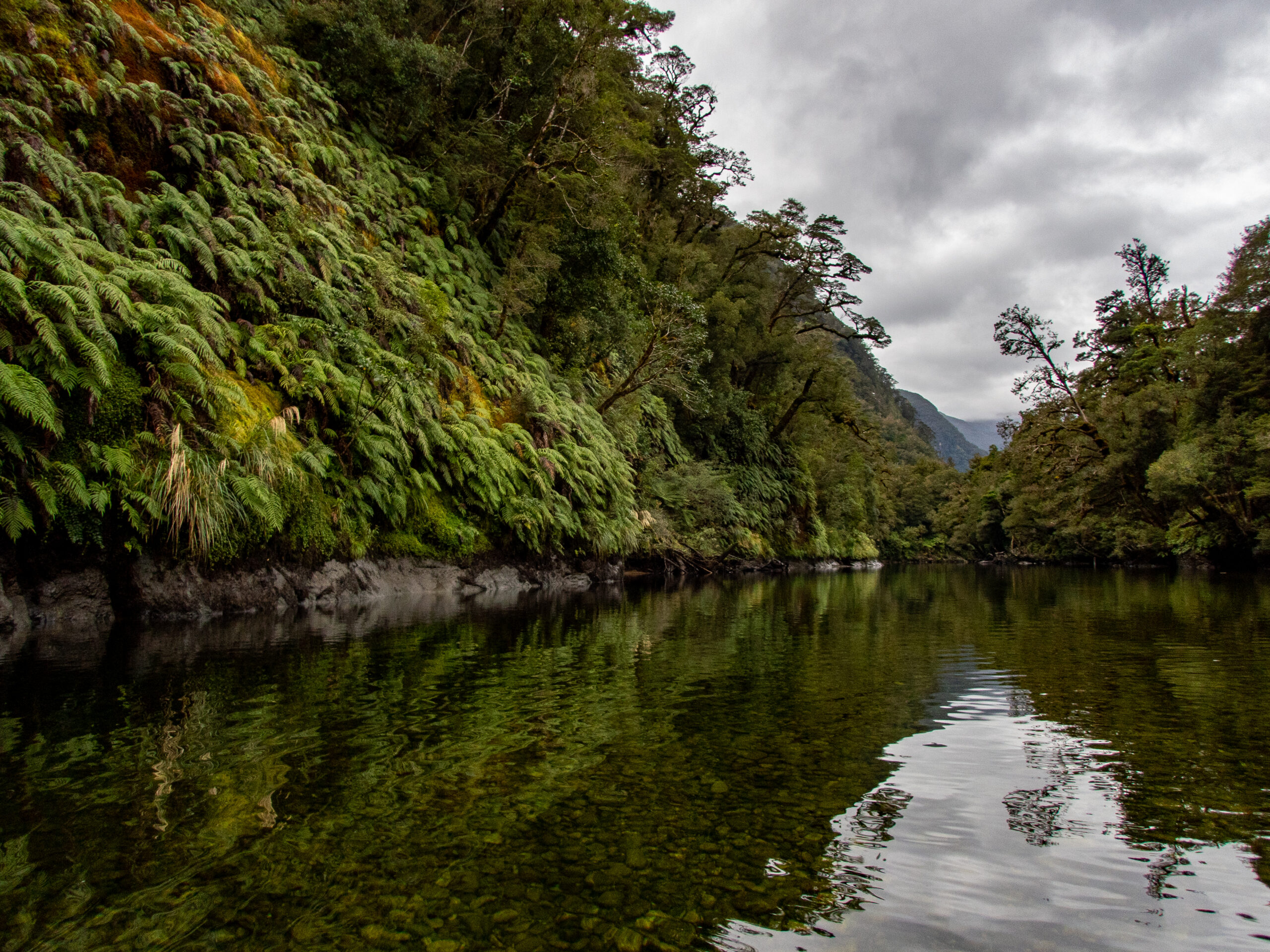
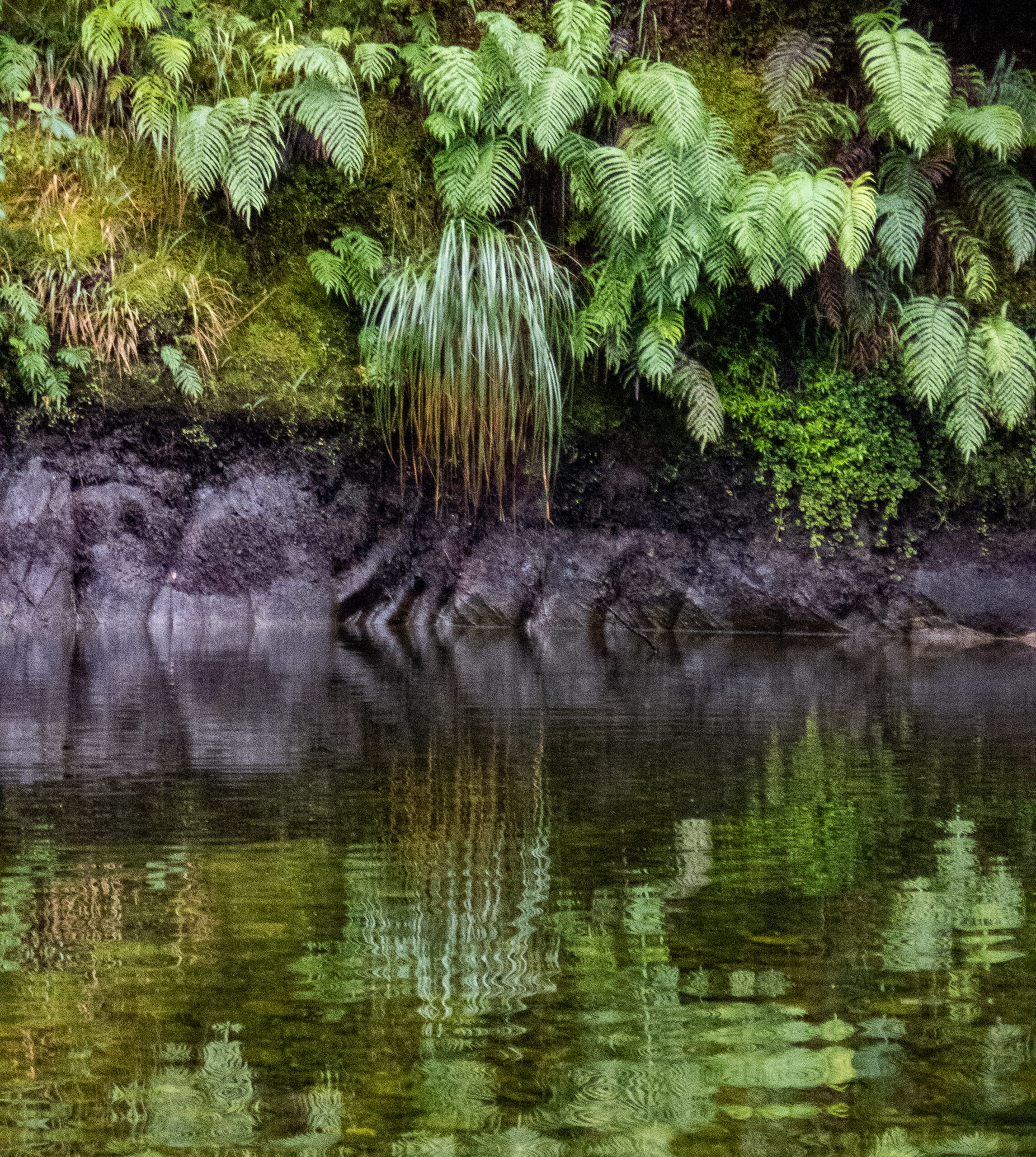
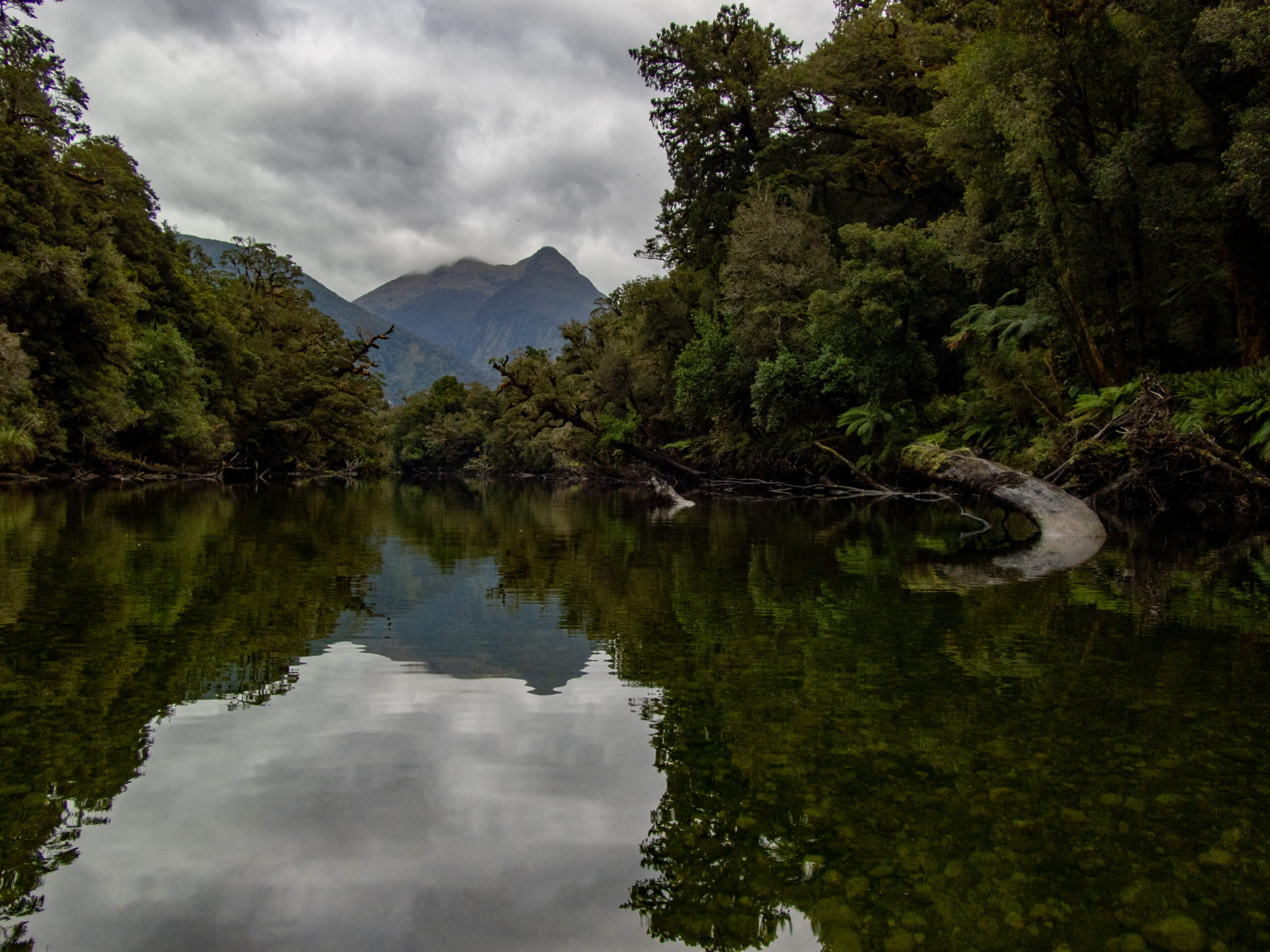
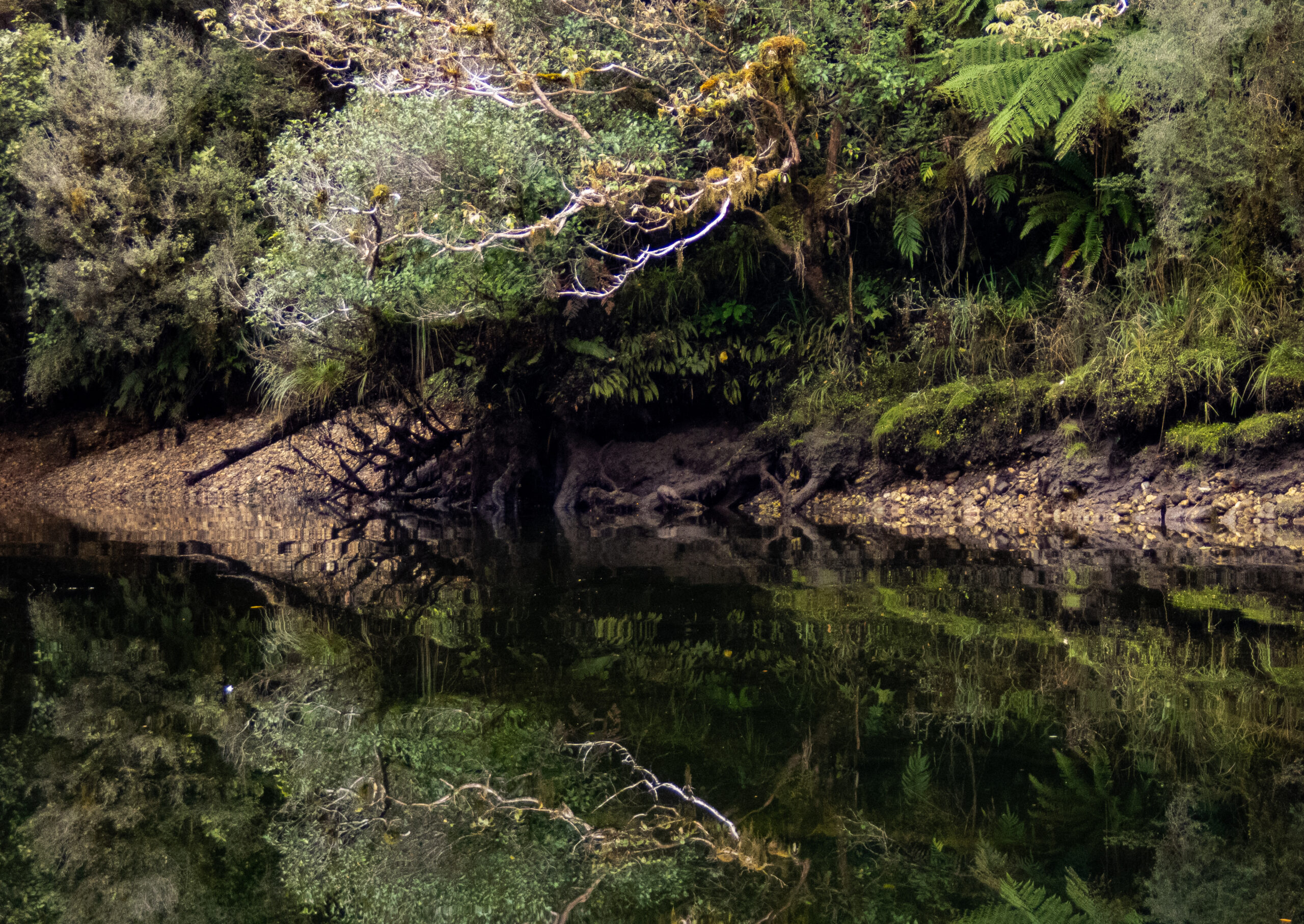
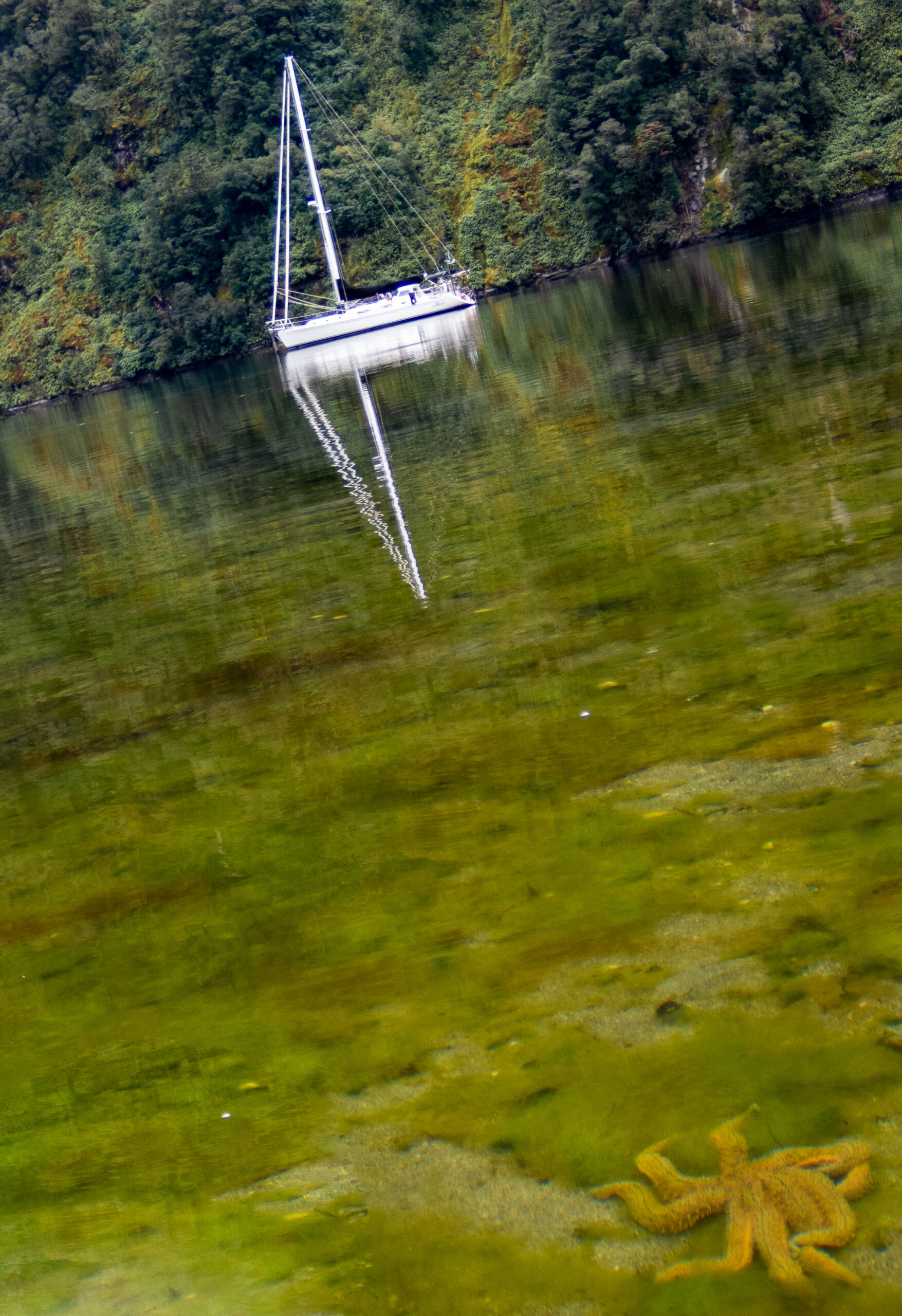
The warmly cool, clear, ringing, perfumed, overflowing, redundant days, were as crystal goblets of Persian sherbet, heaped up – flaked up, with rose-water snow. — Herman Melville
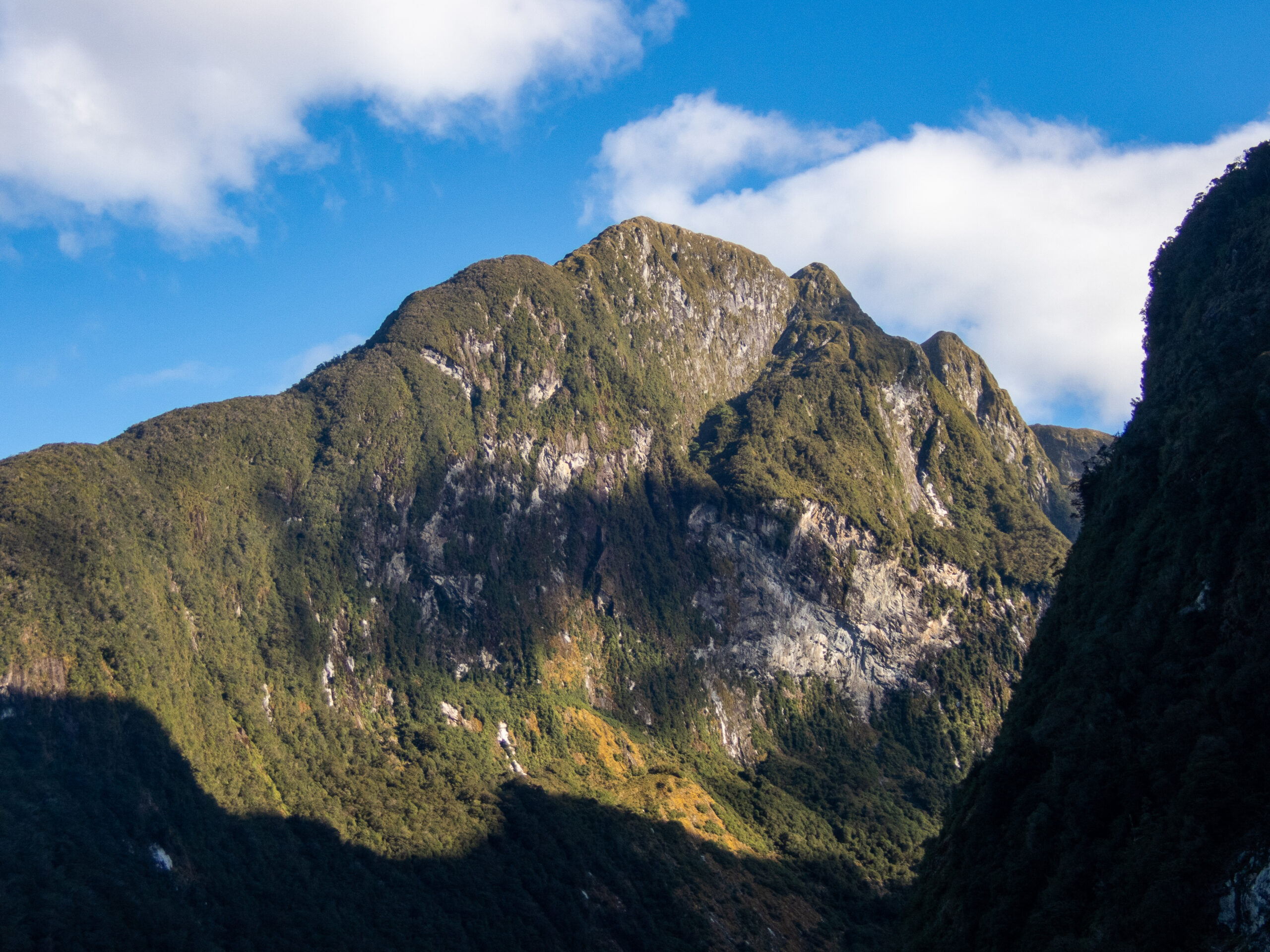
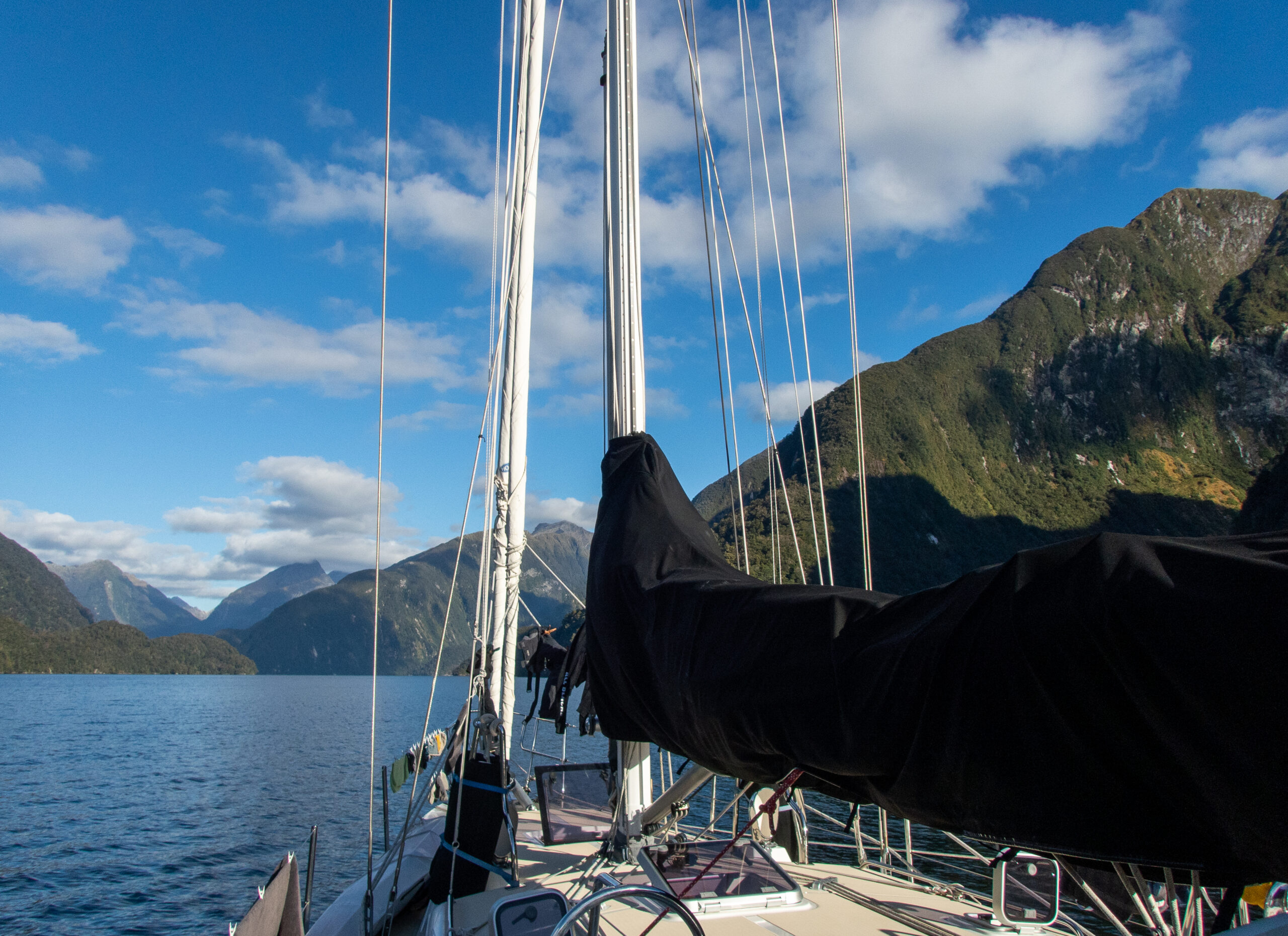
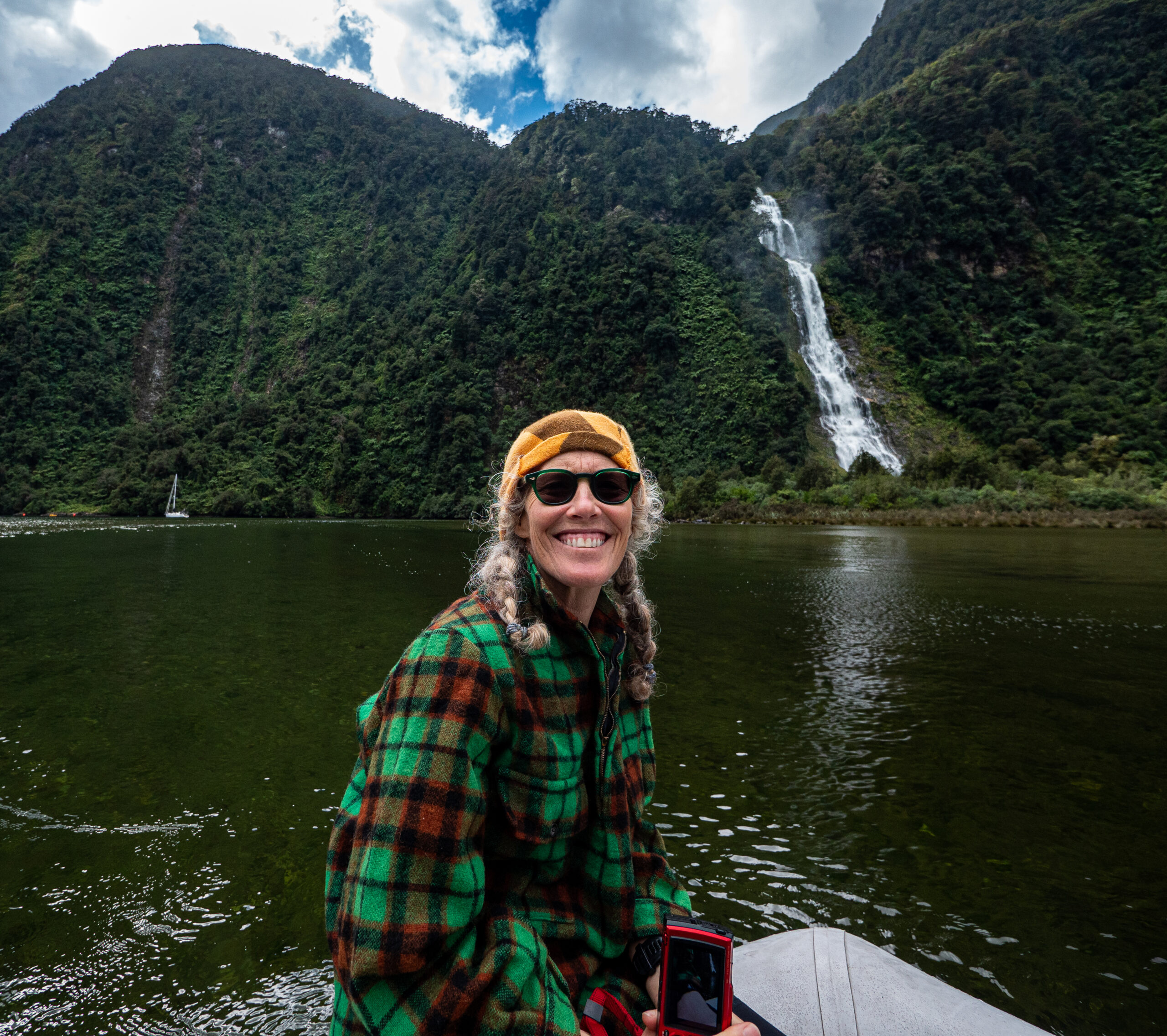
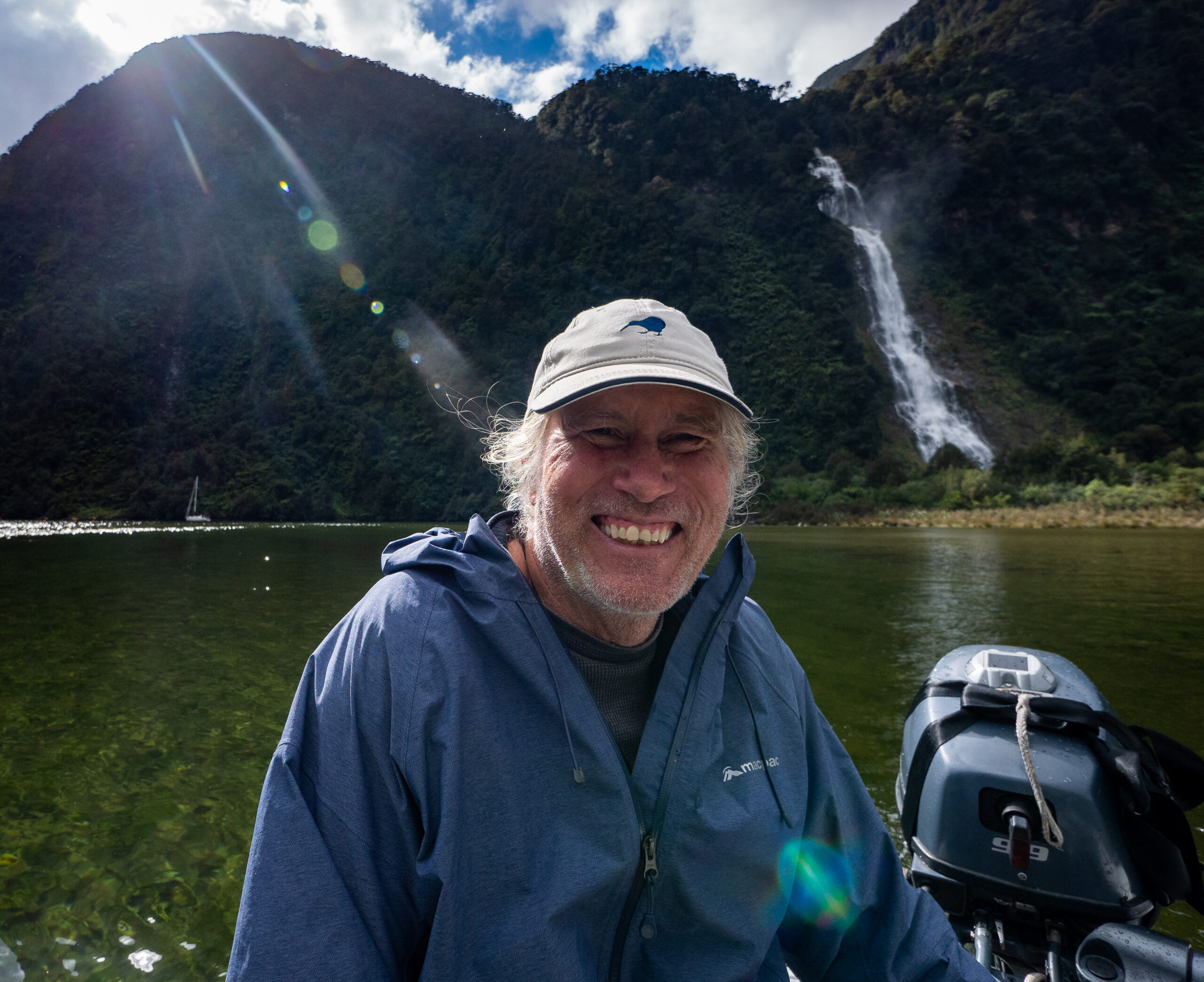
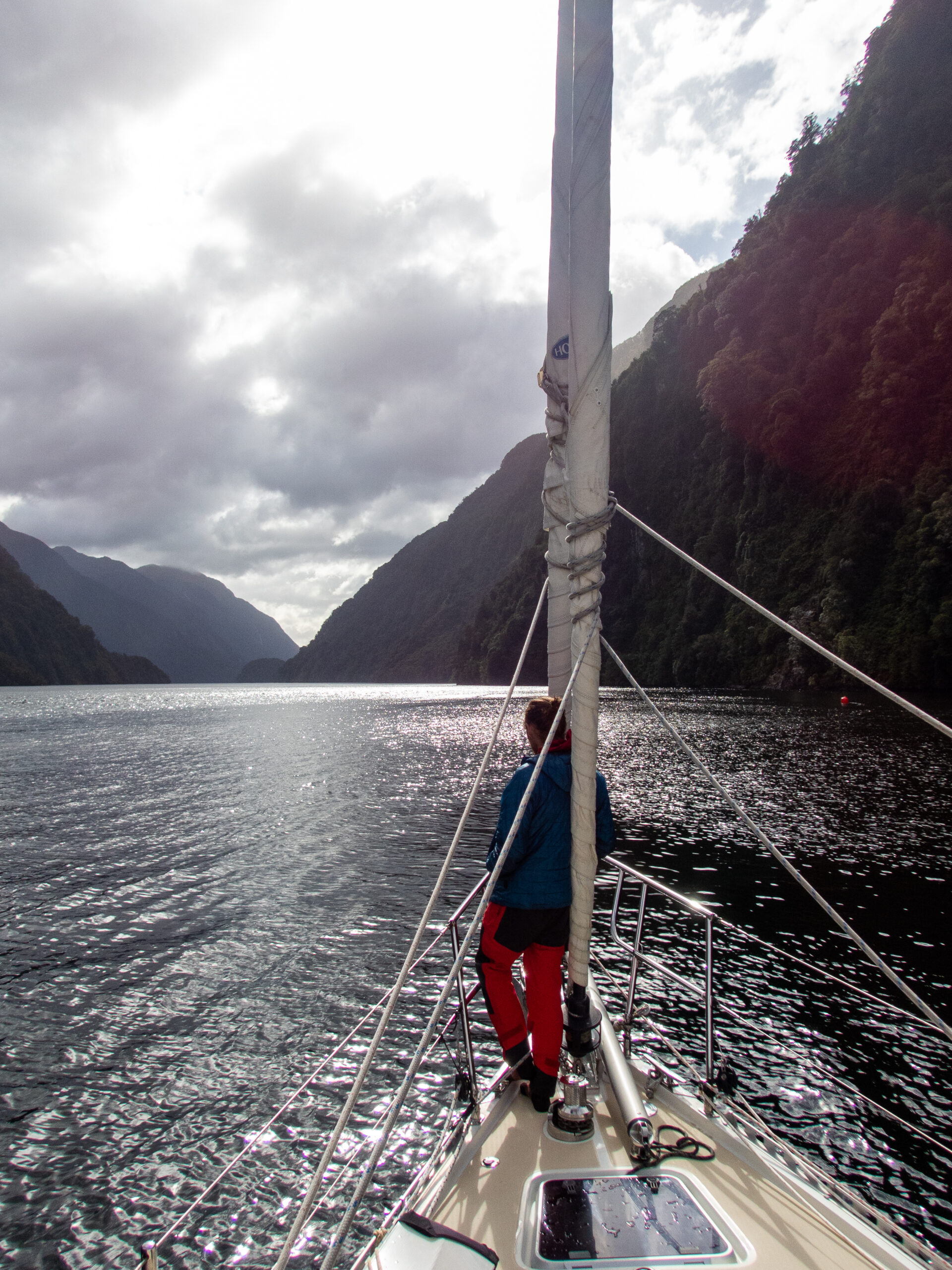
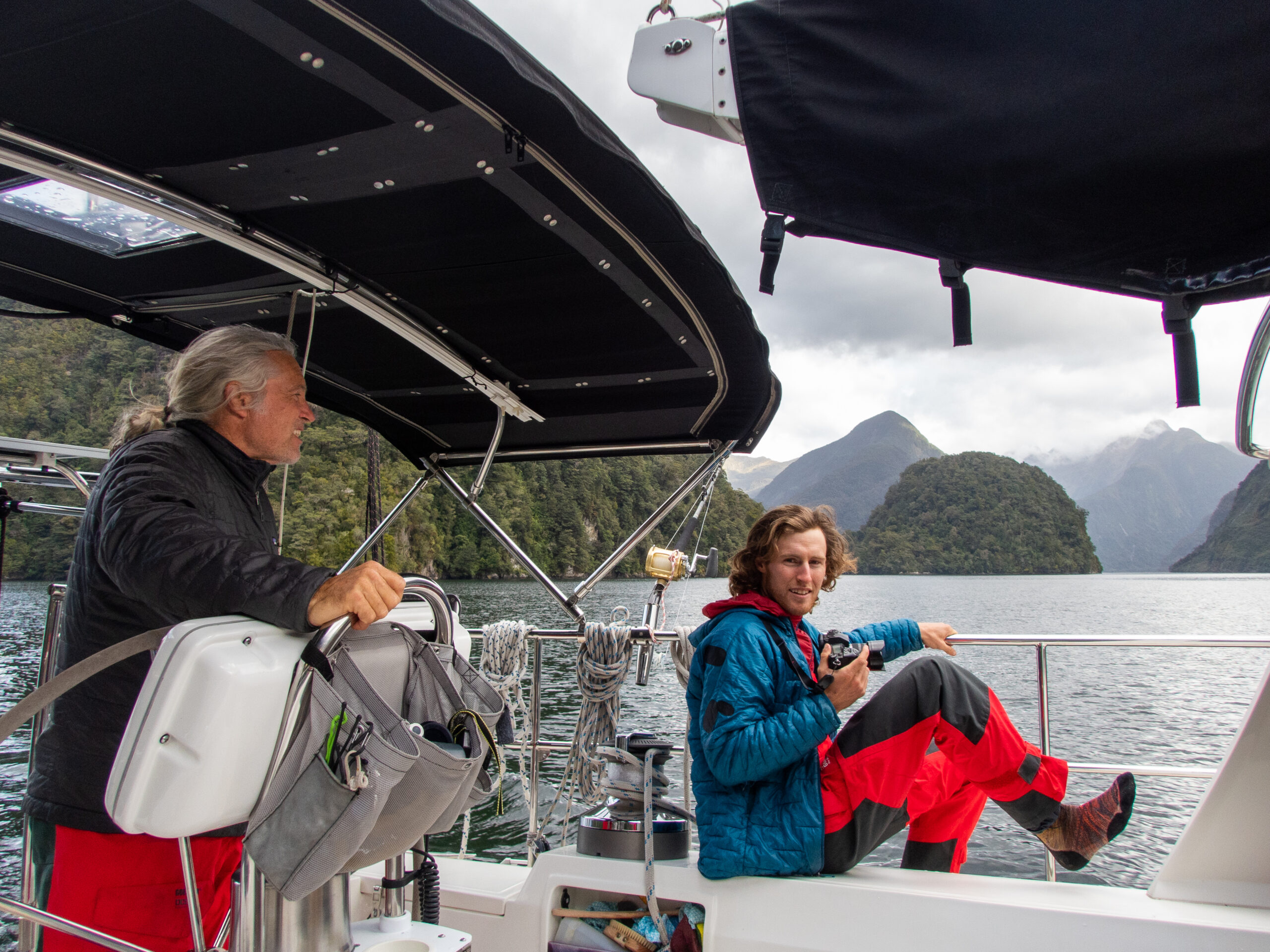
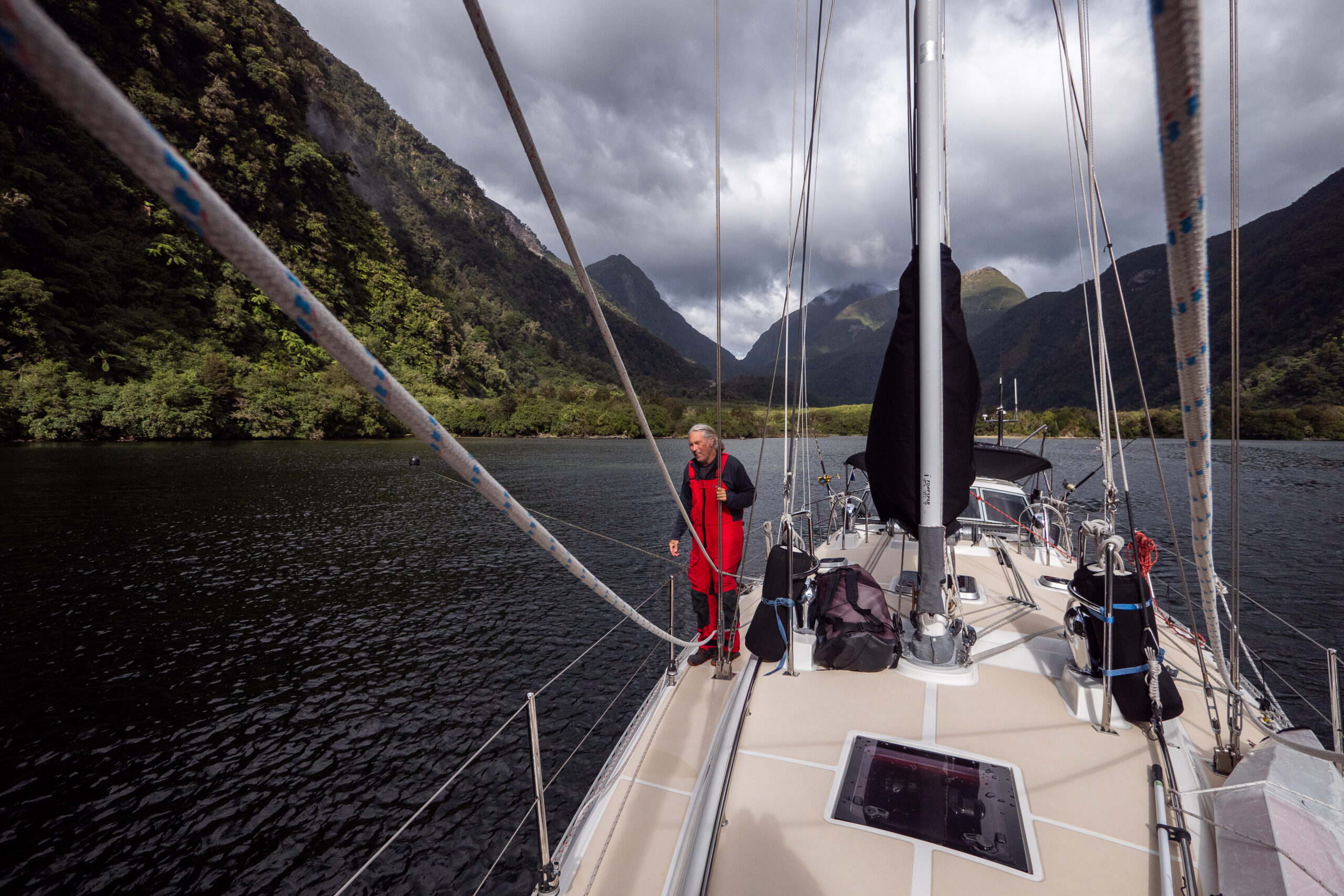
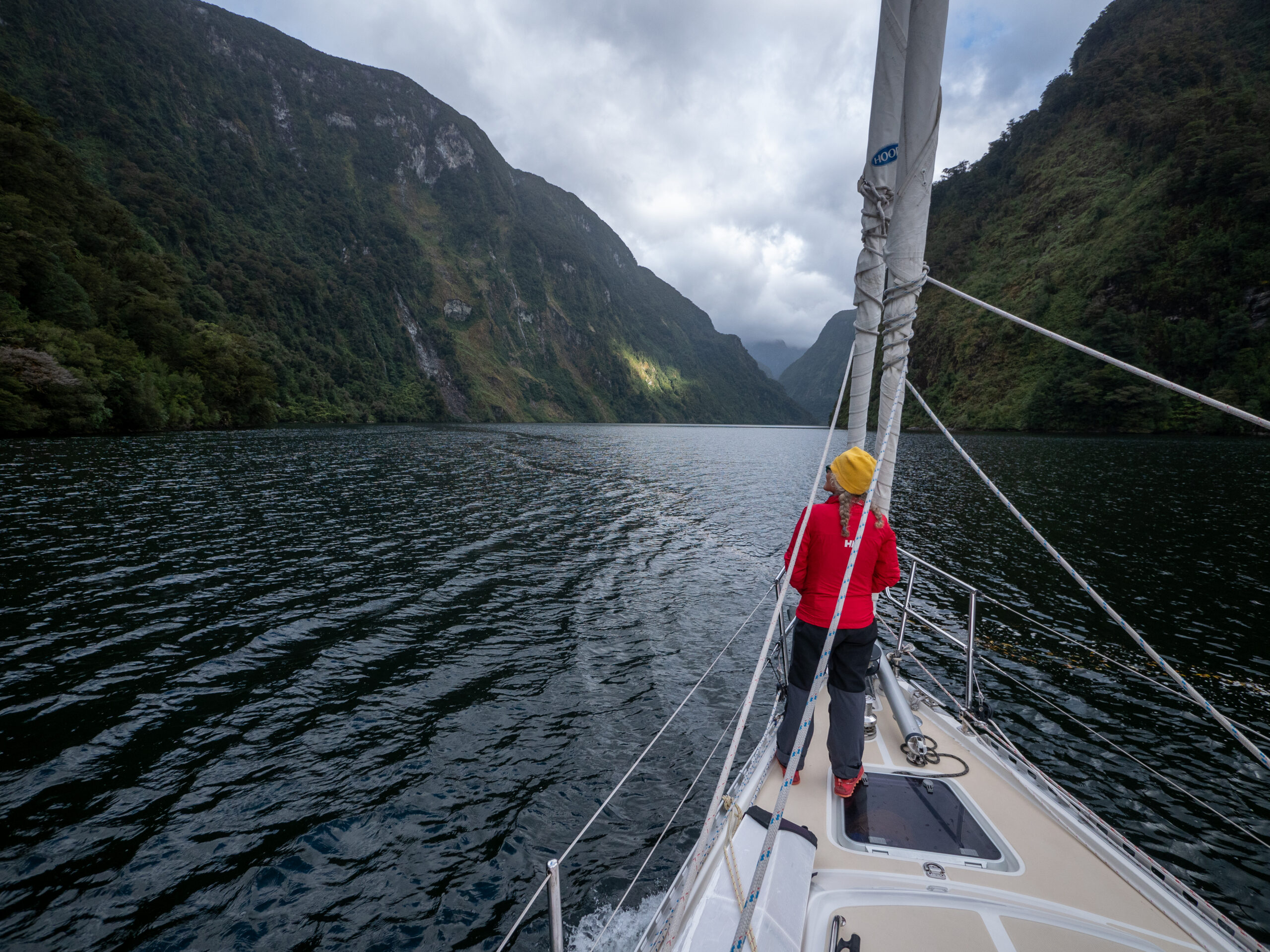
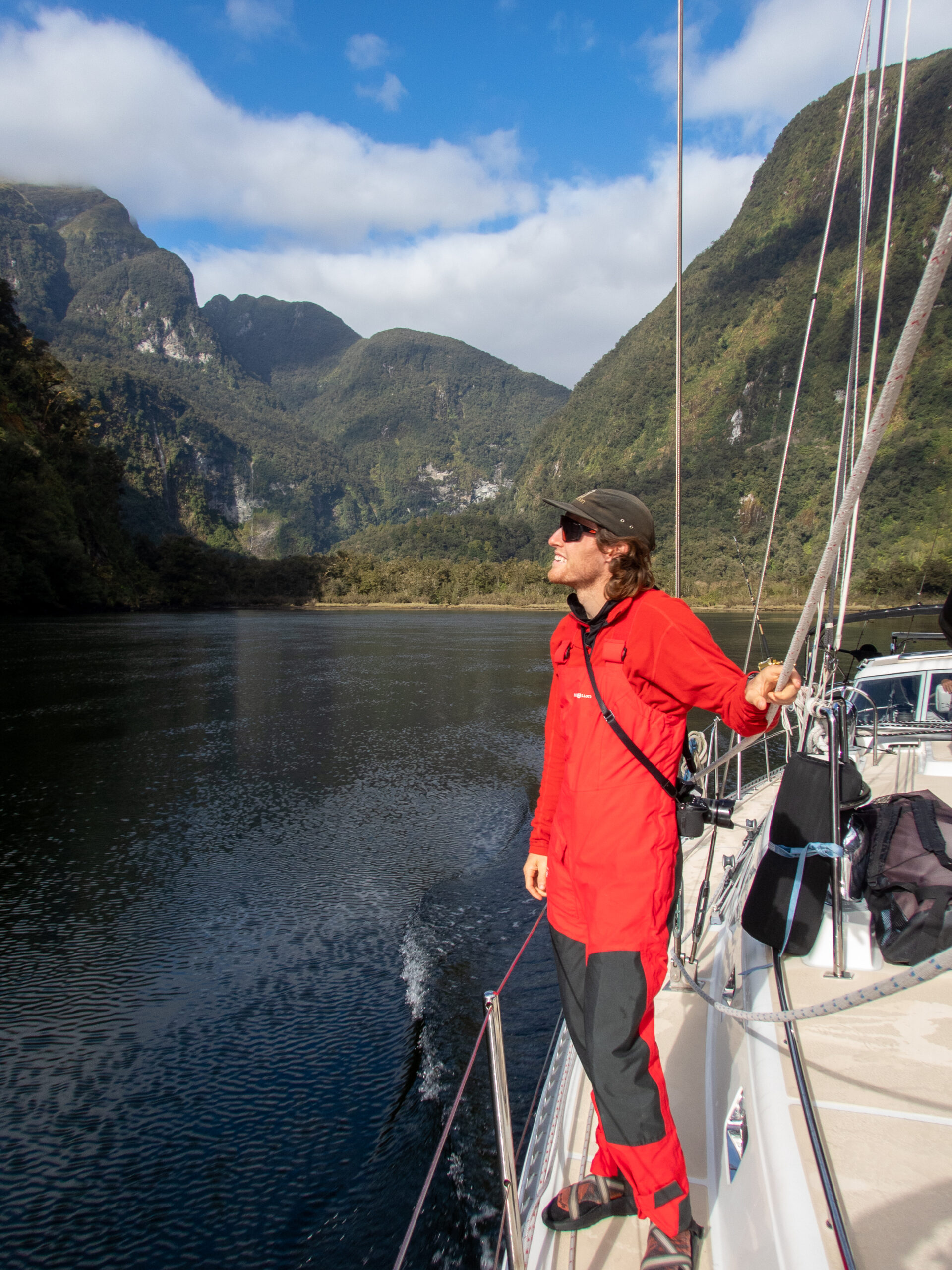
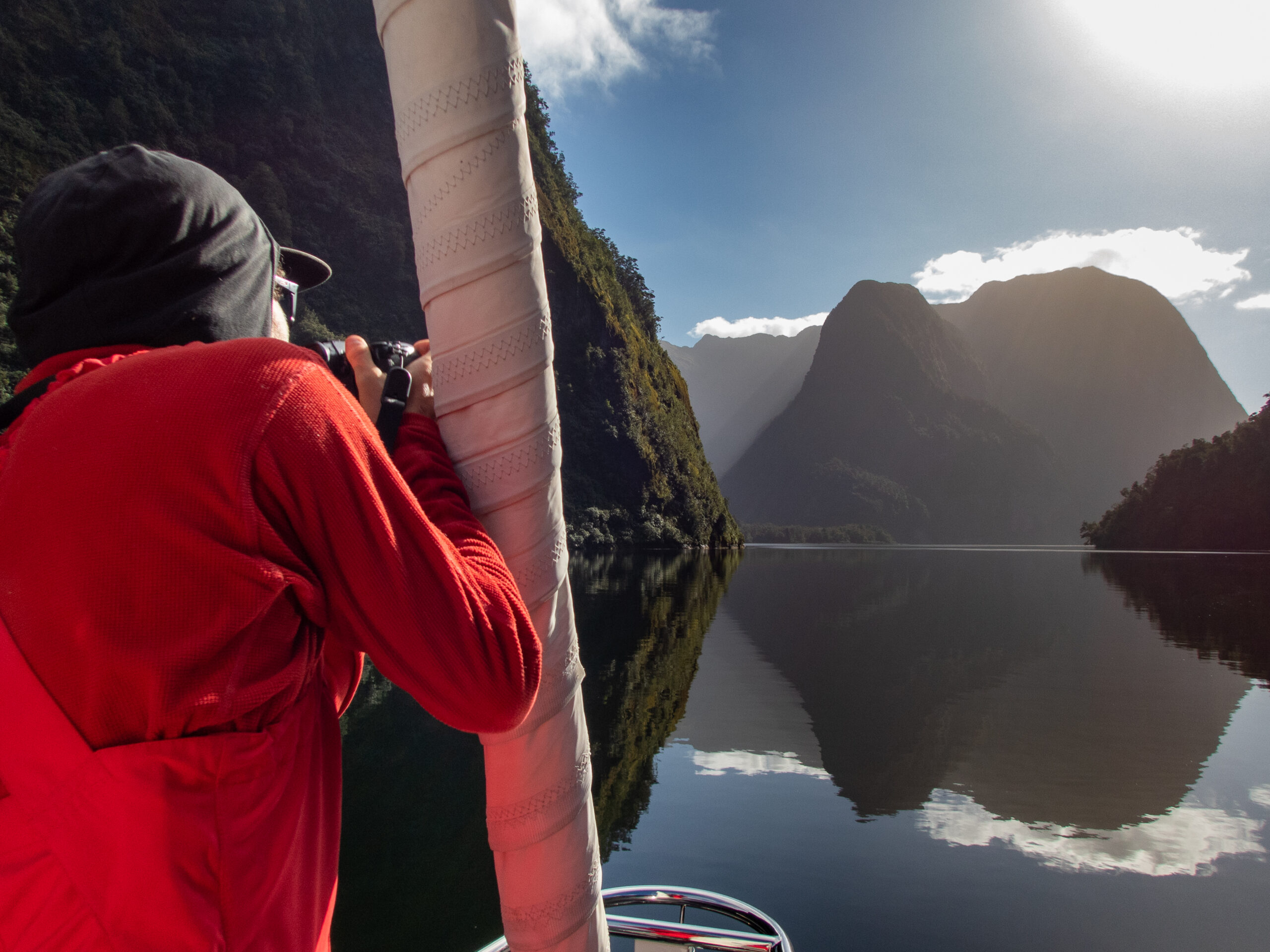
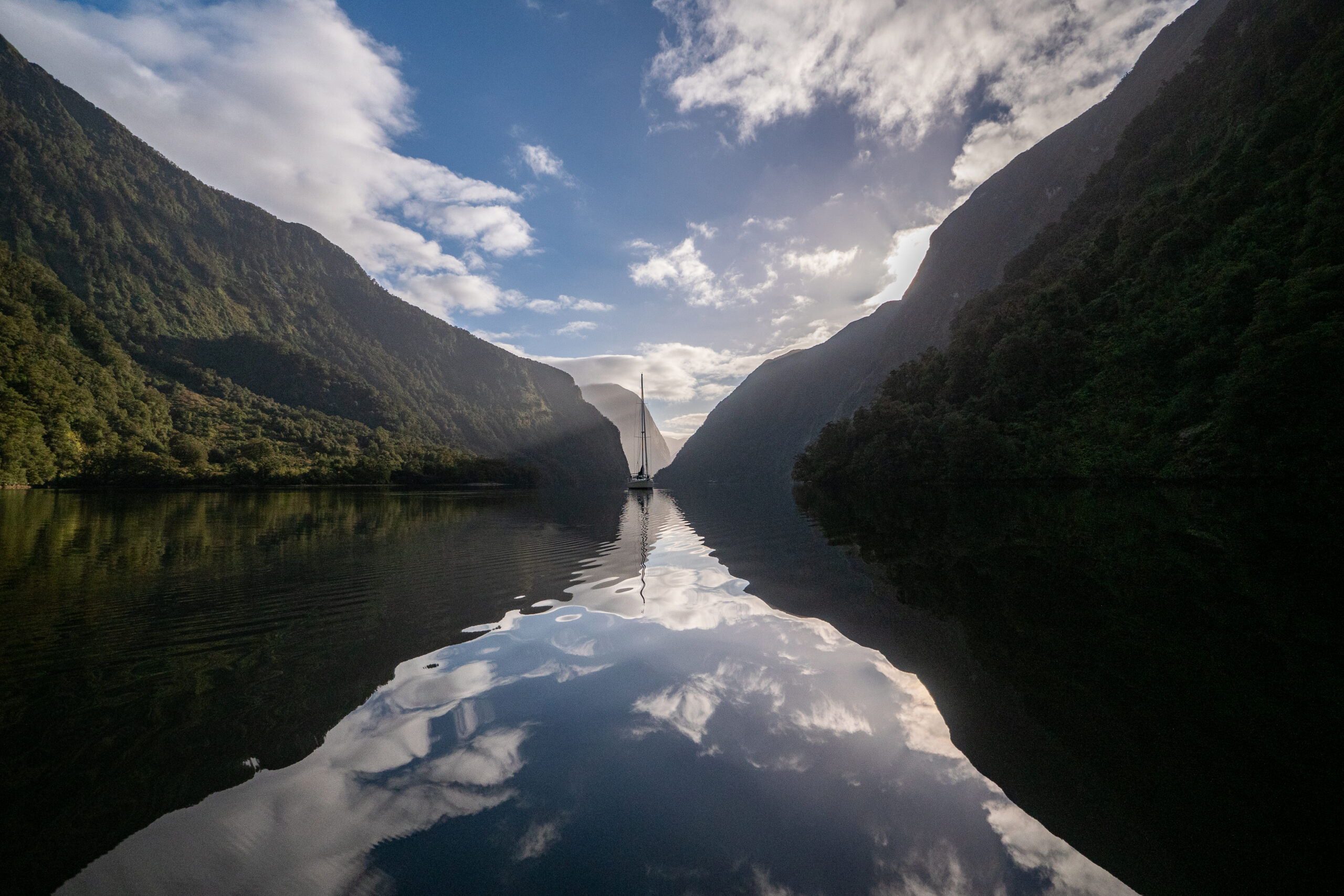
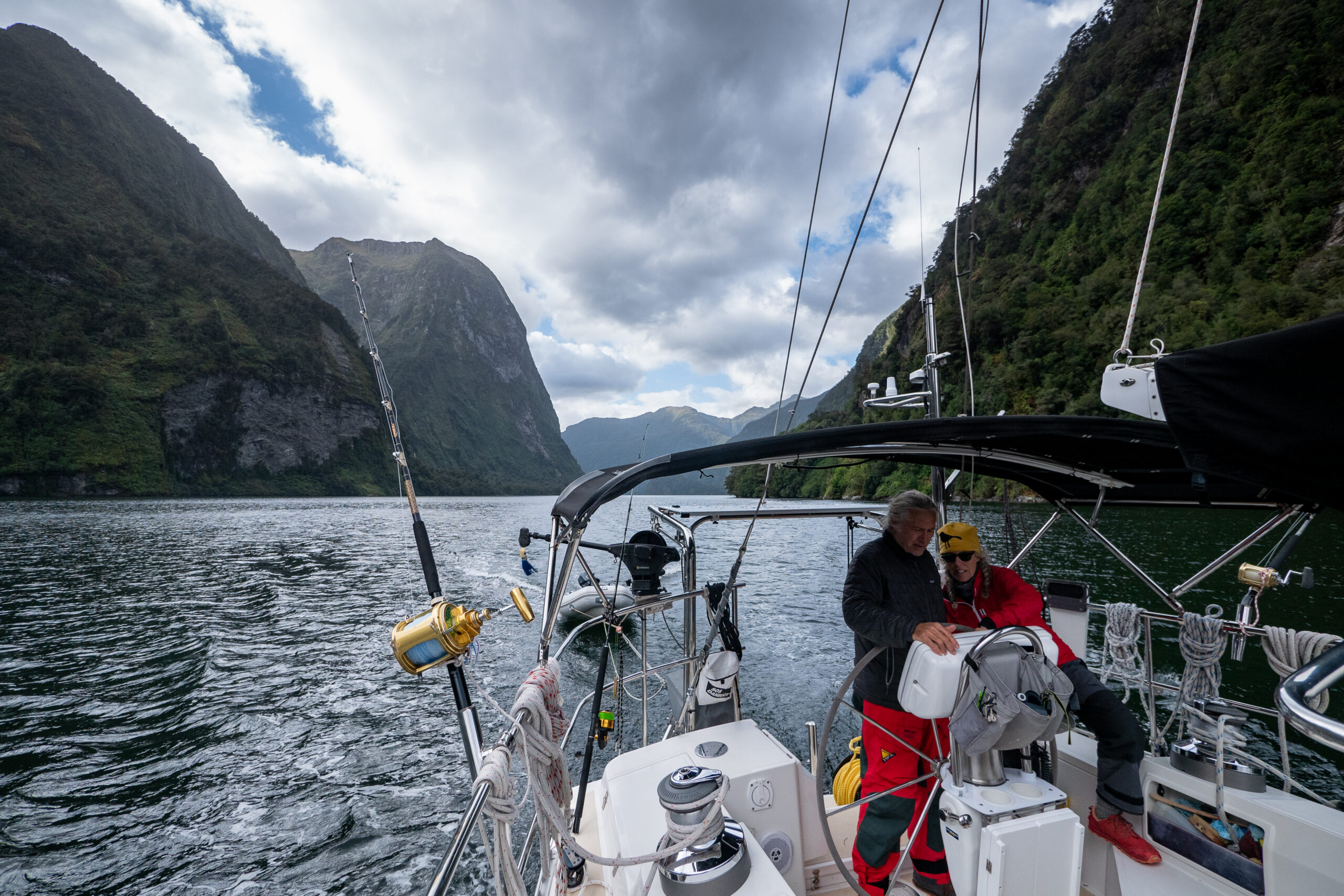
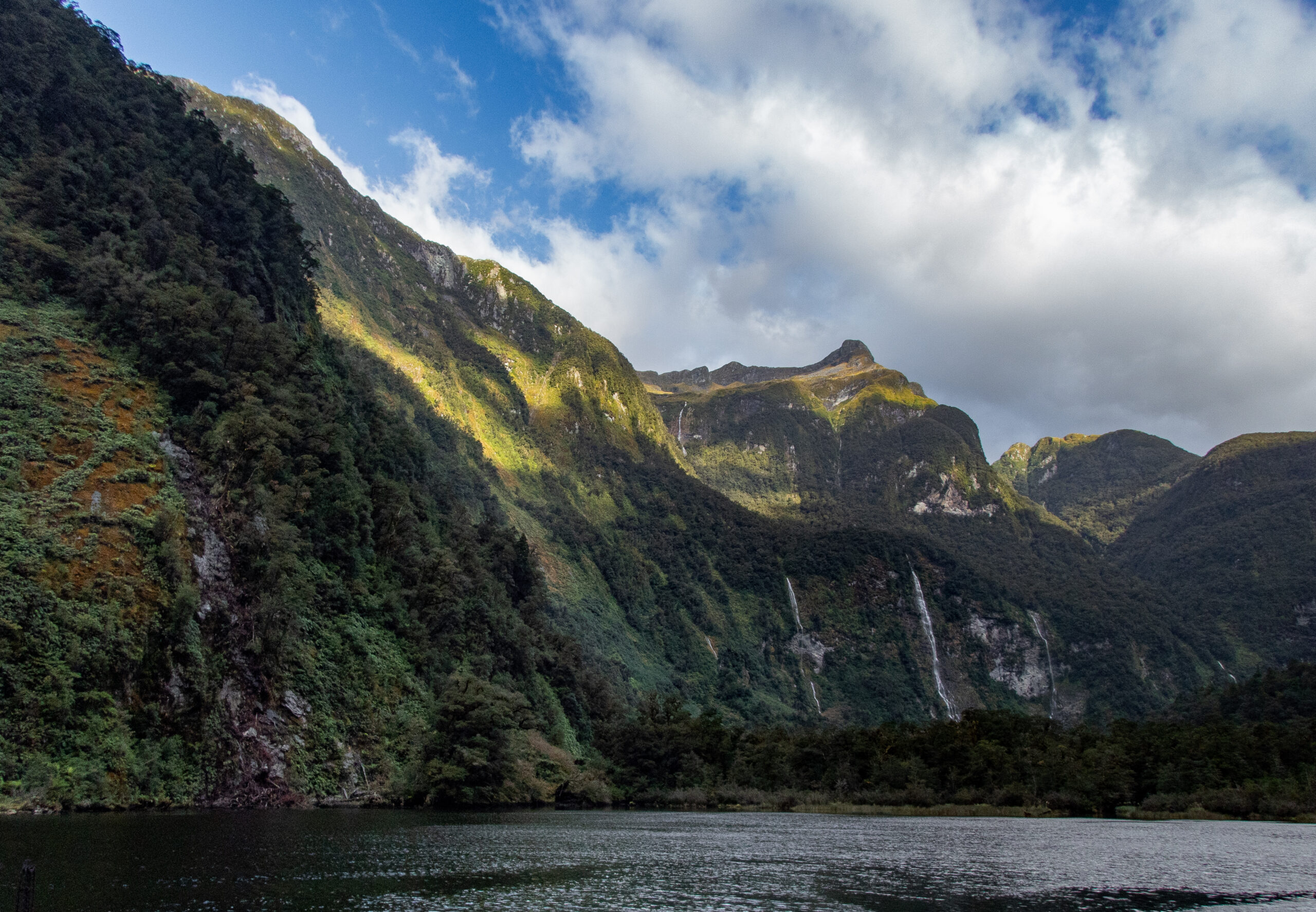
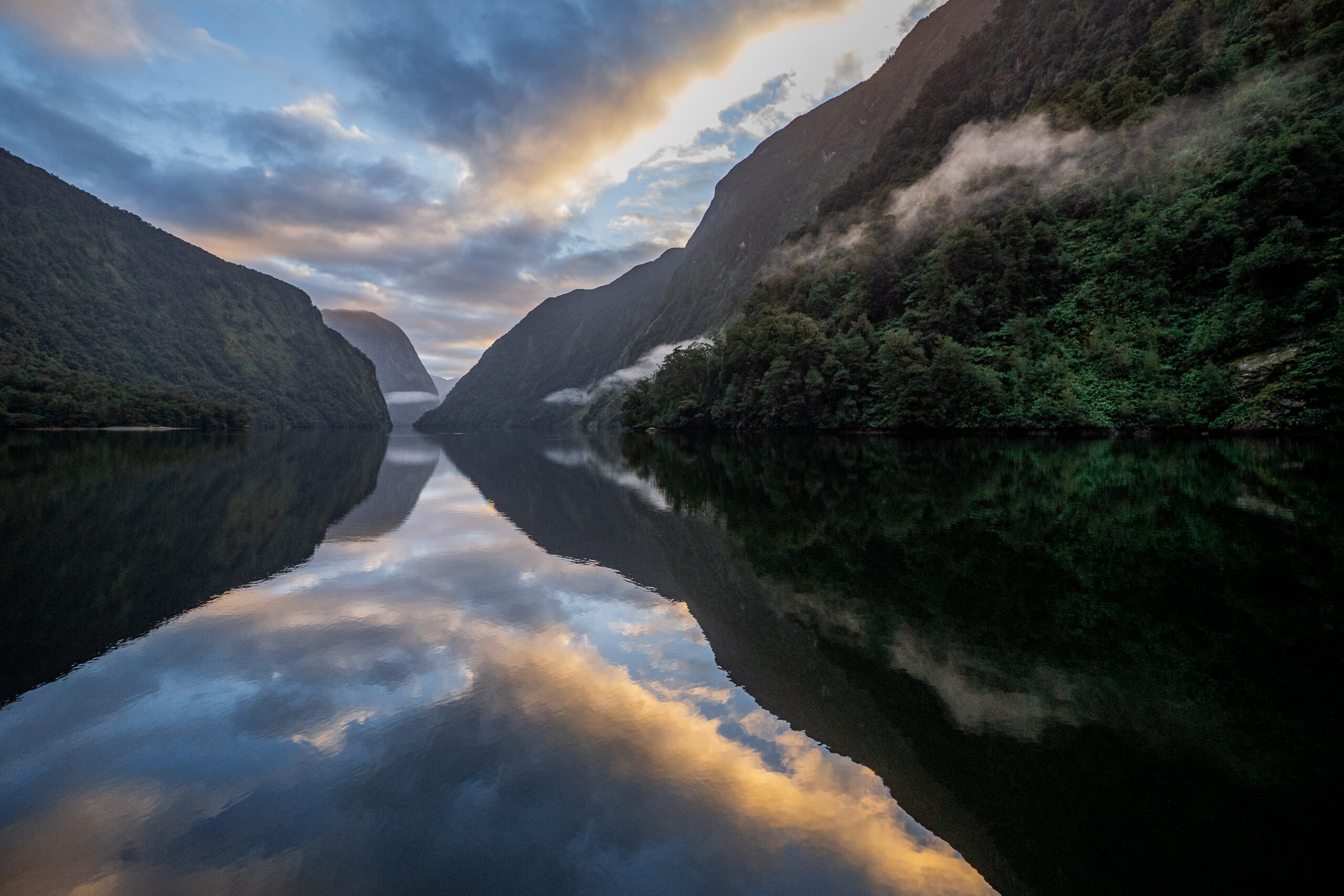
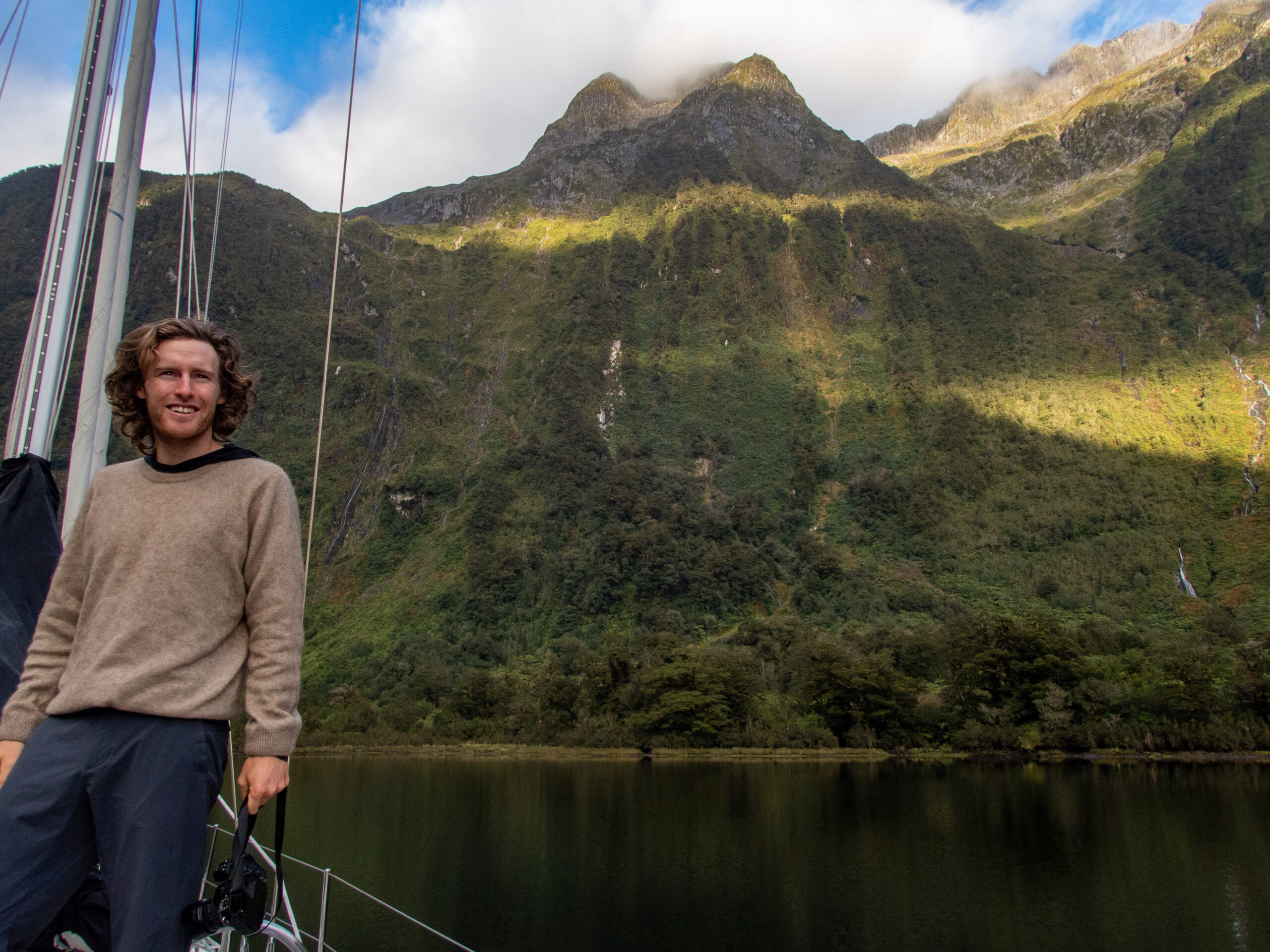
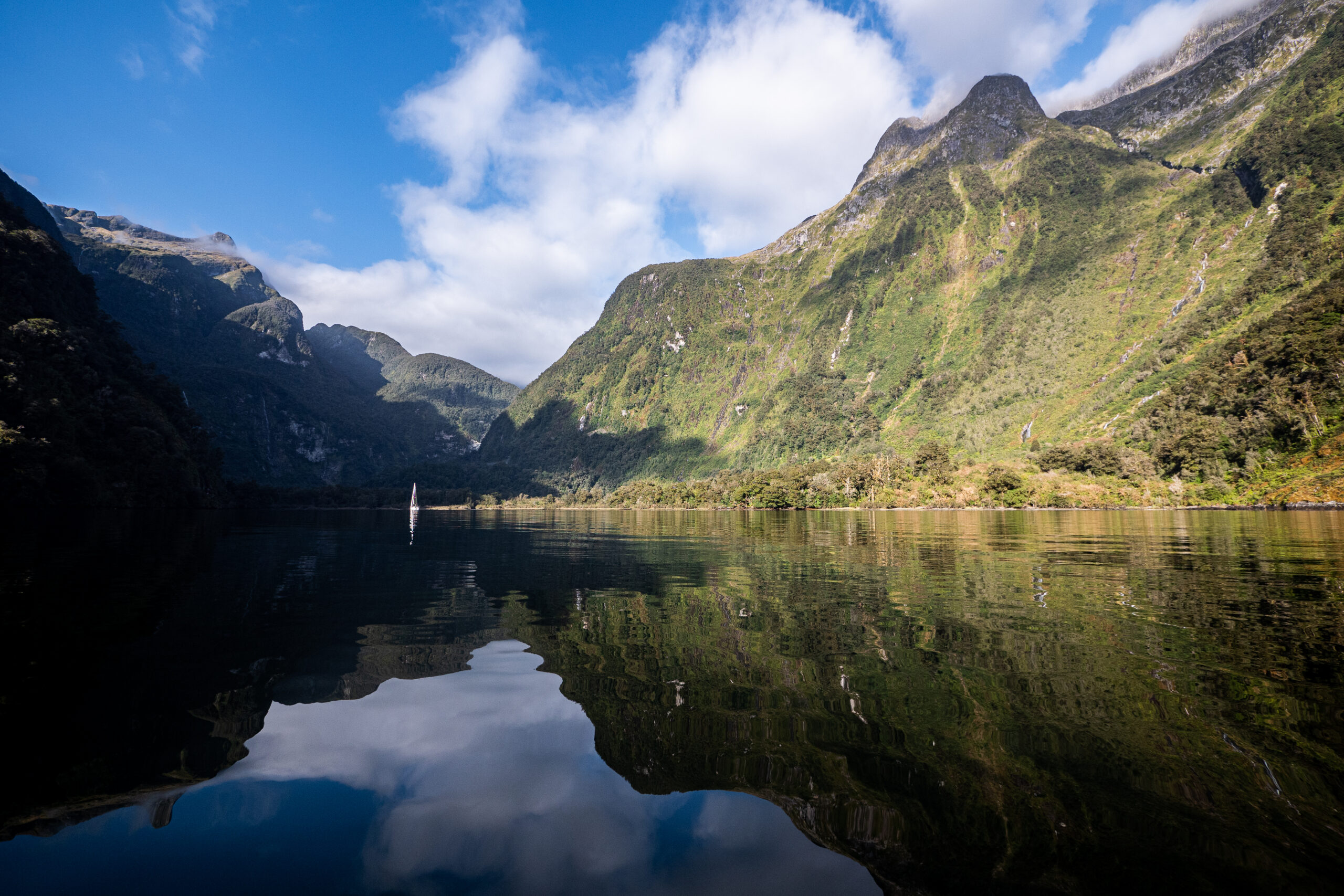
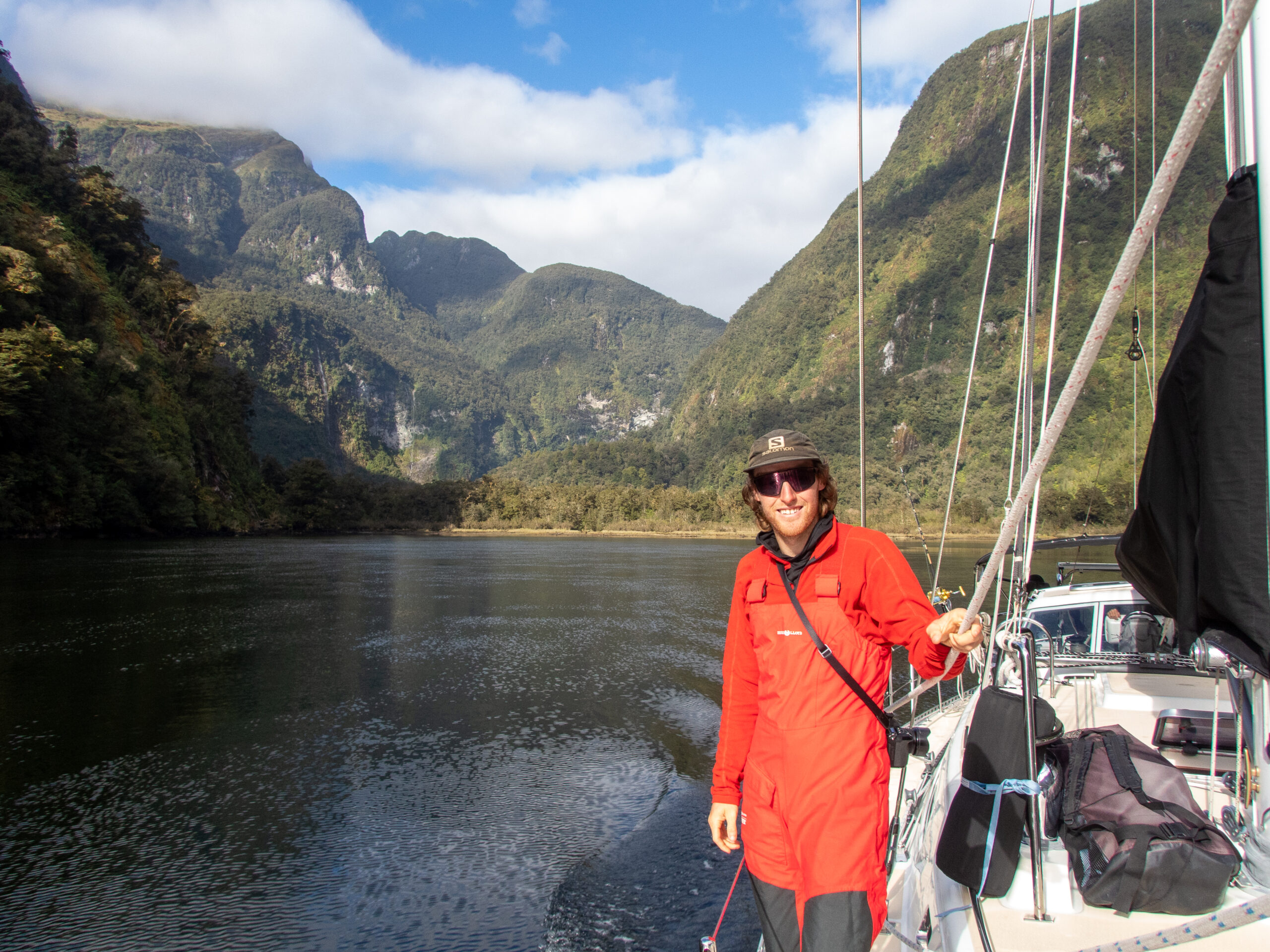
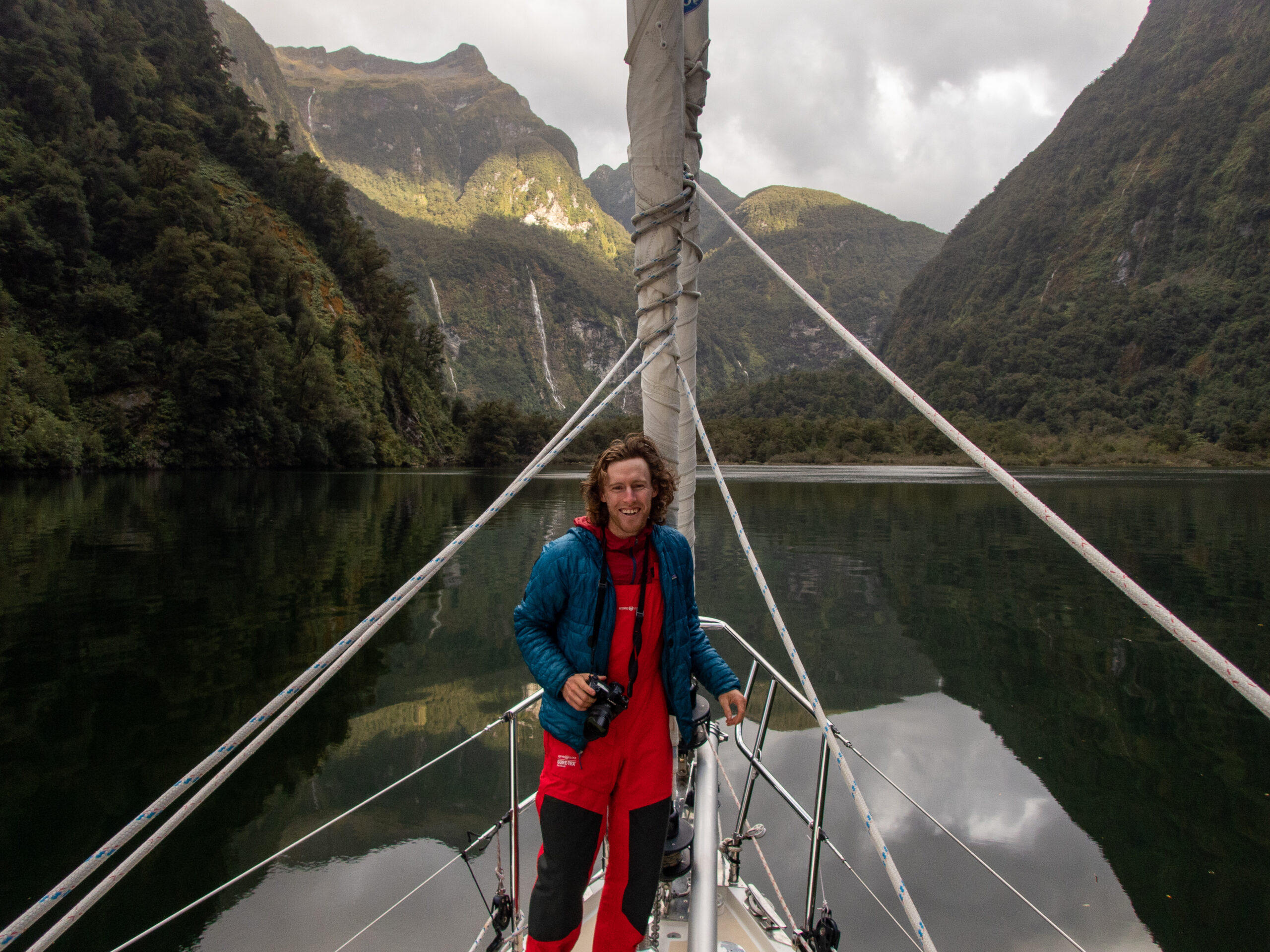
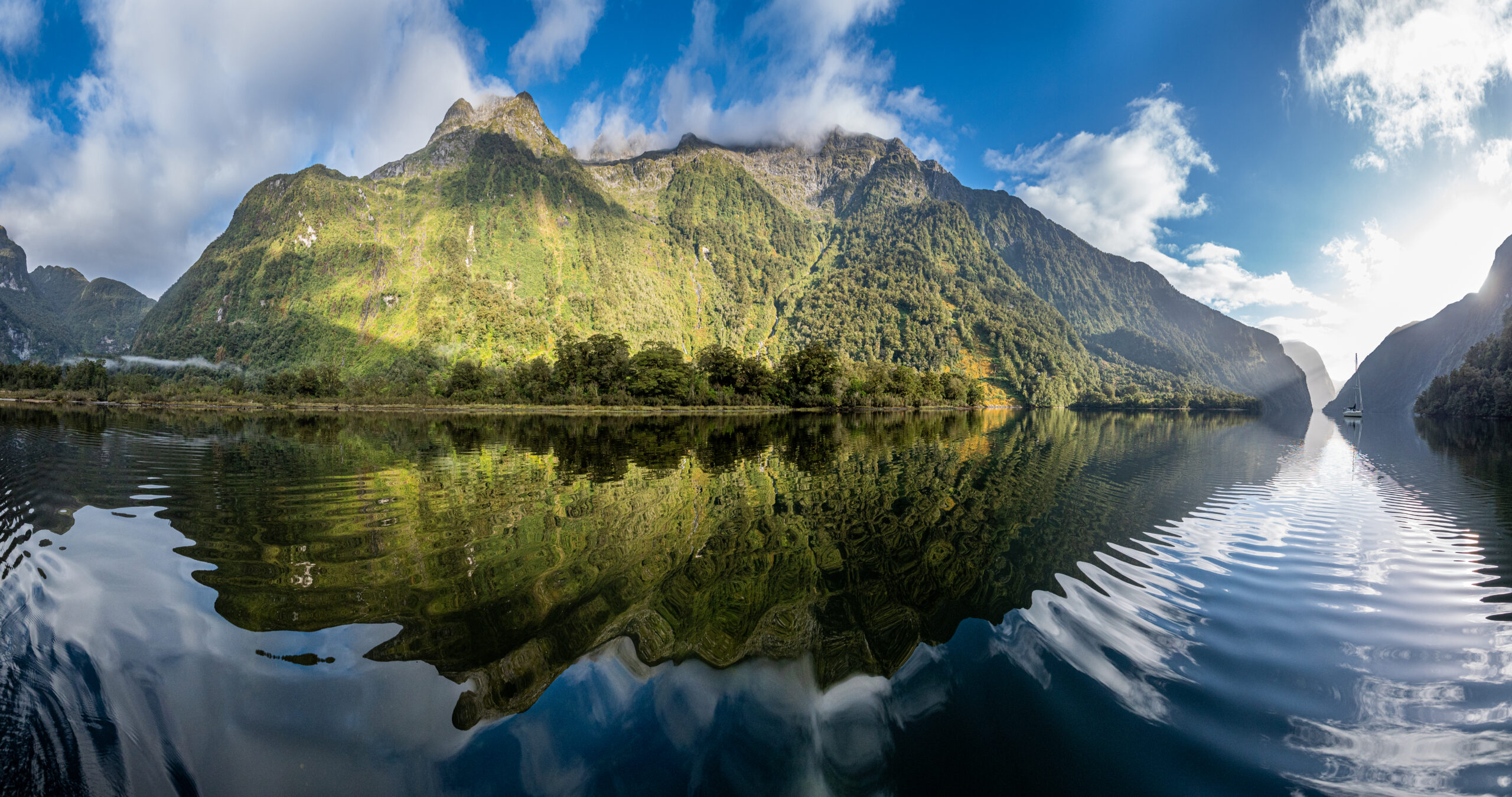
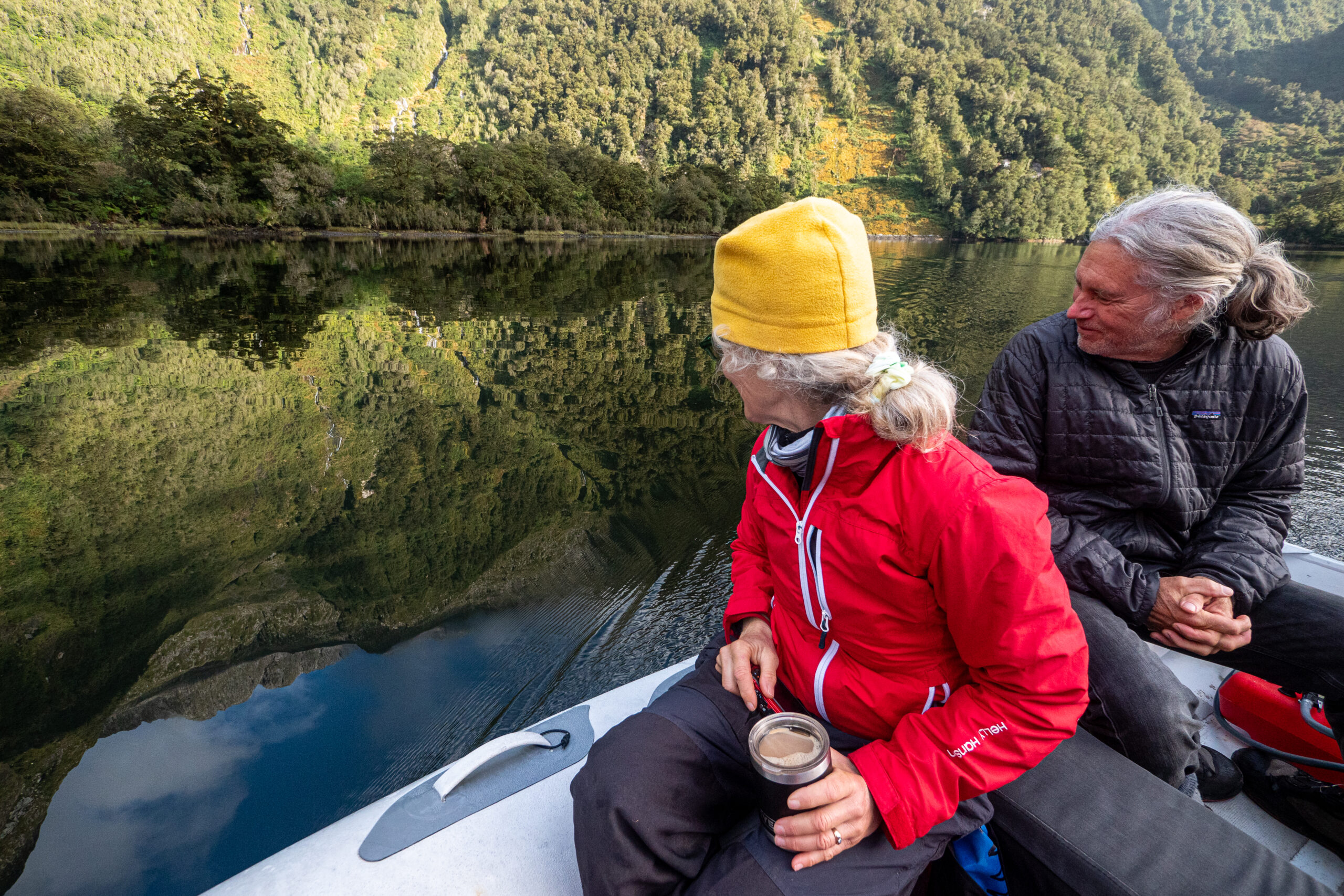
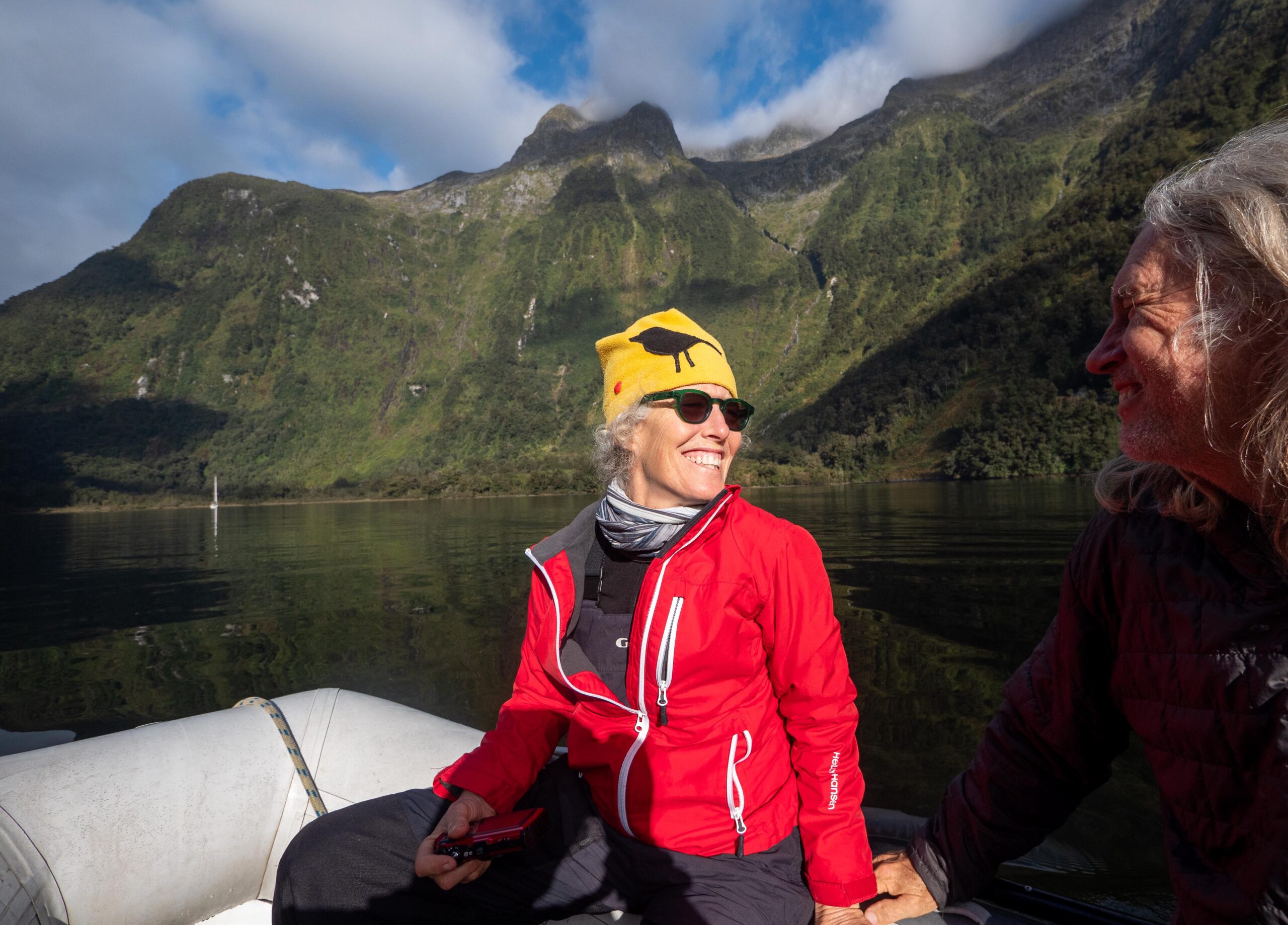
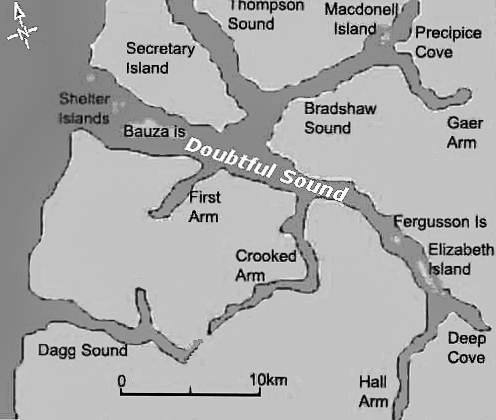
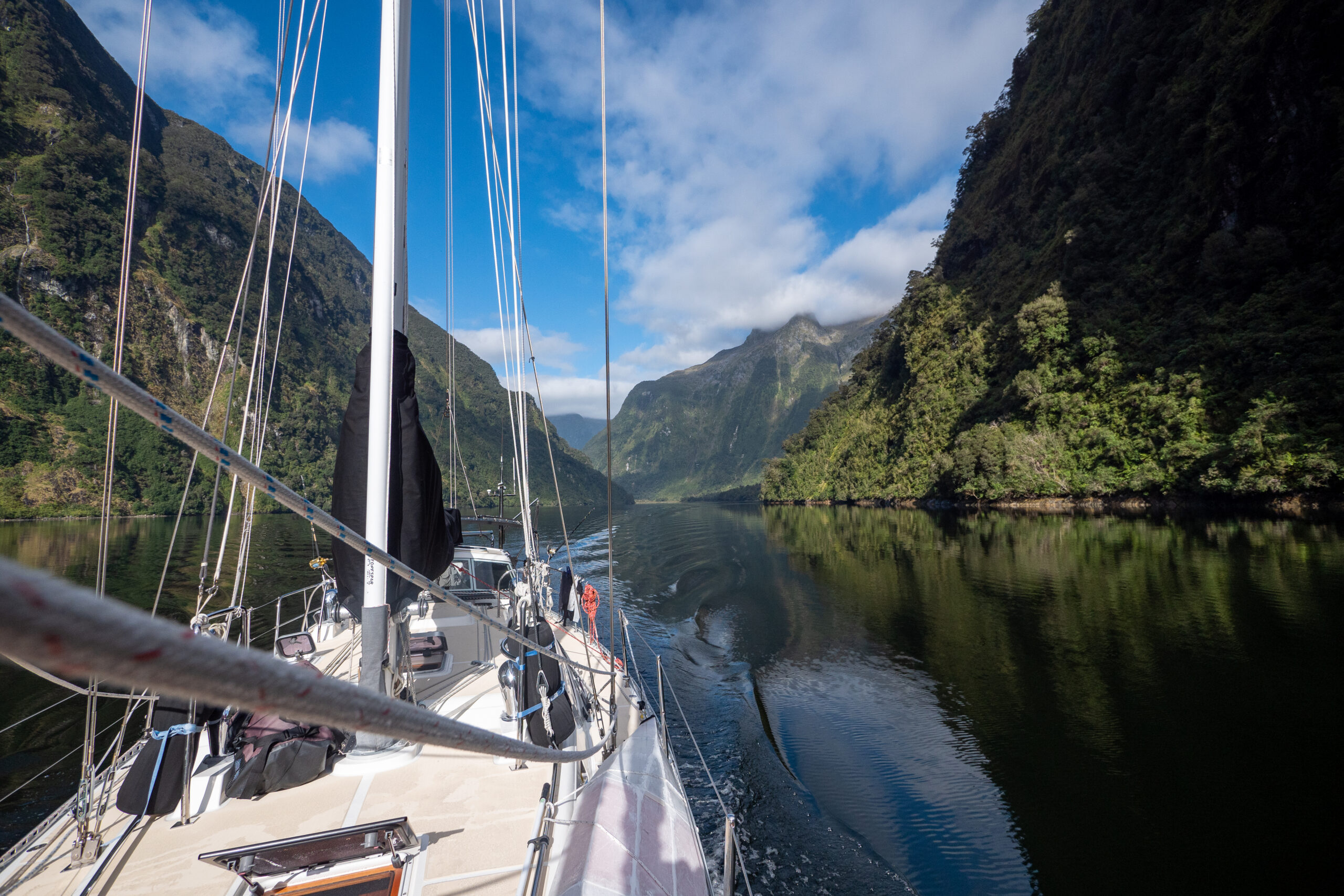
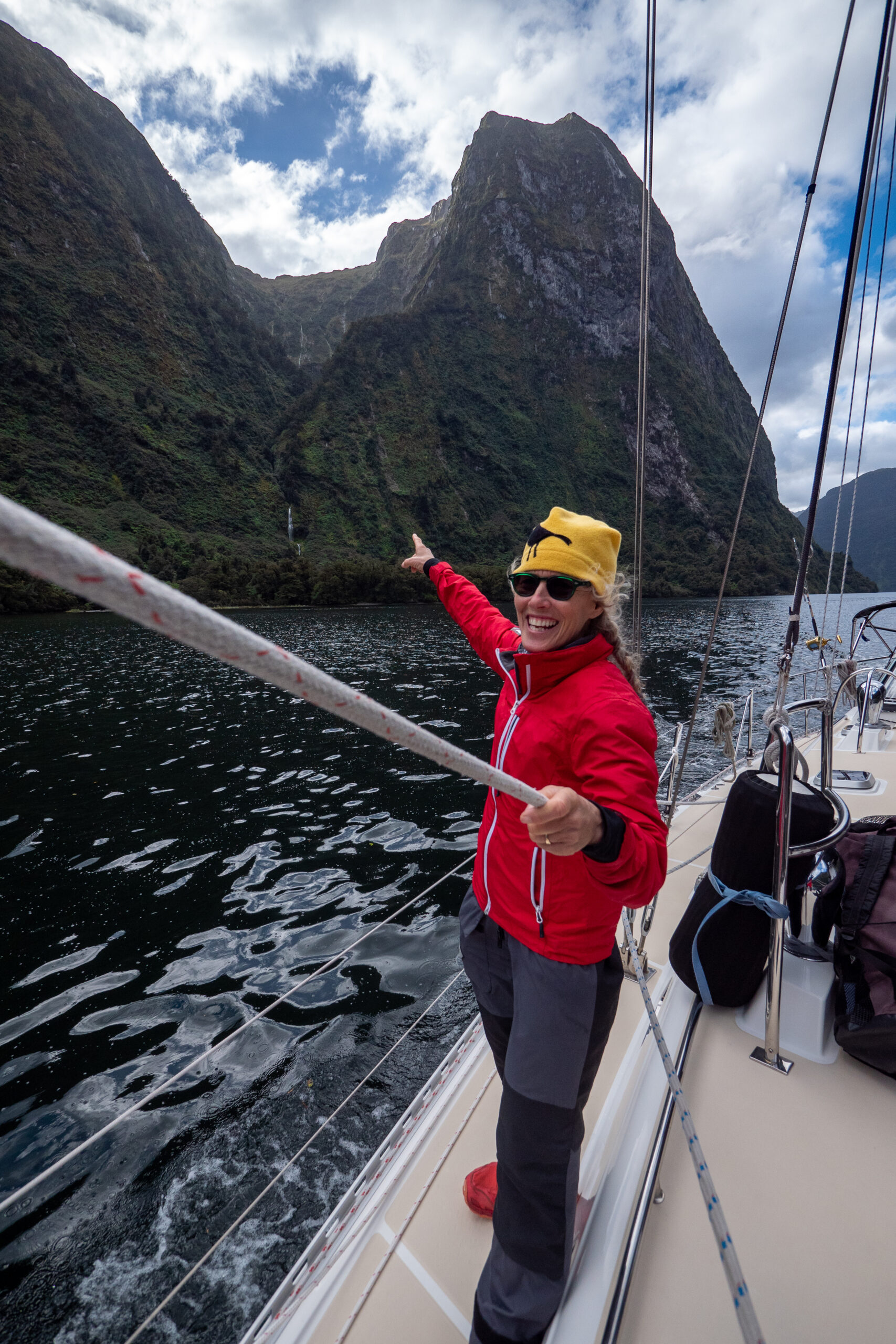
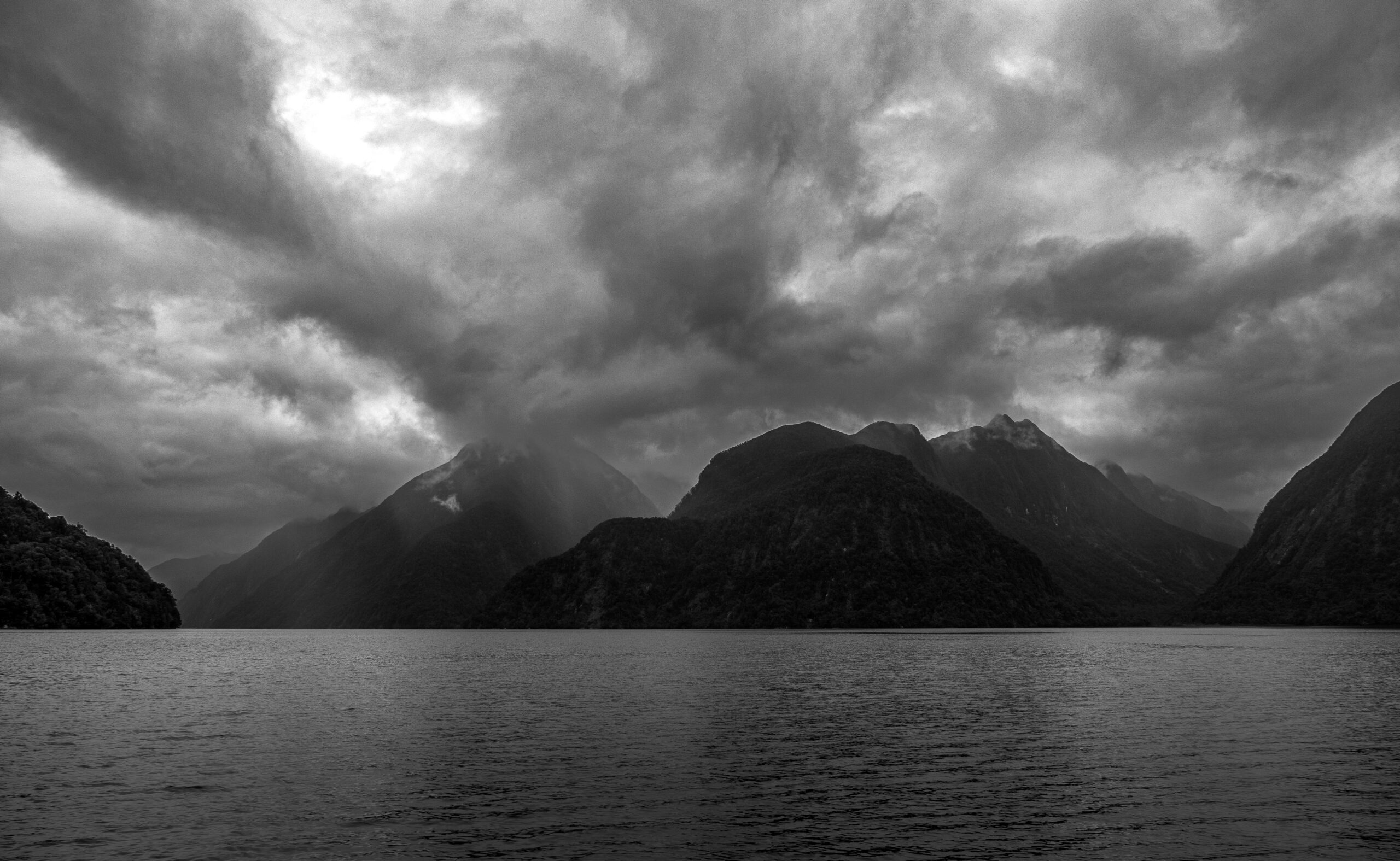
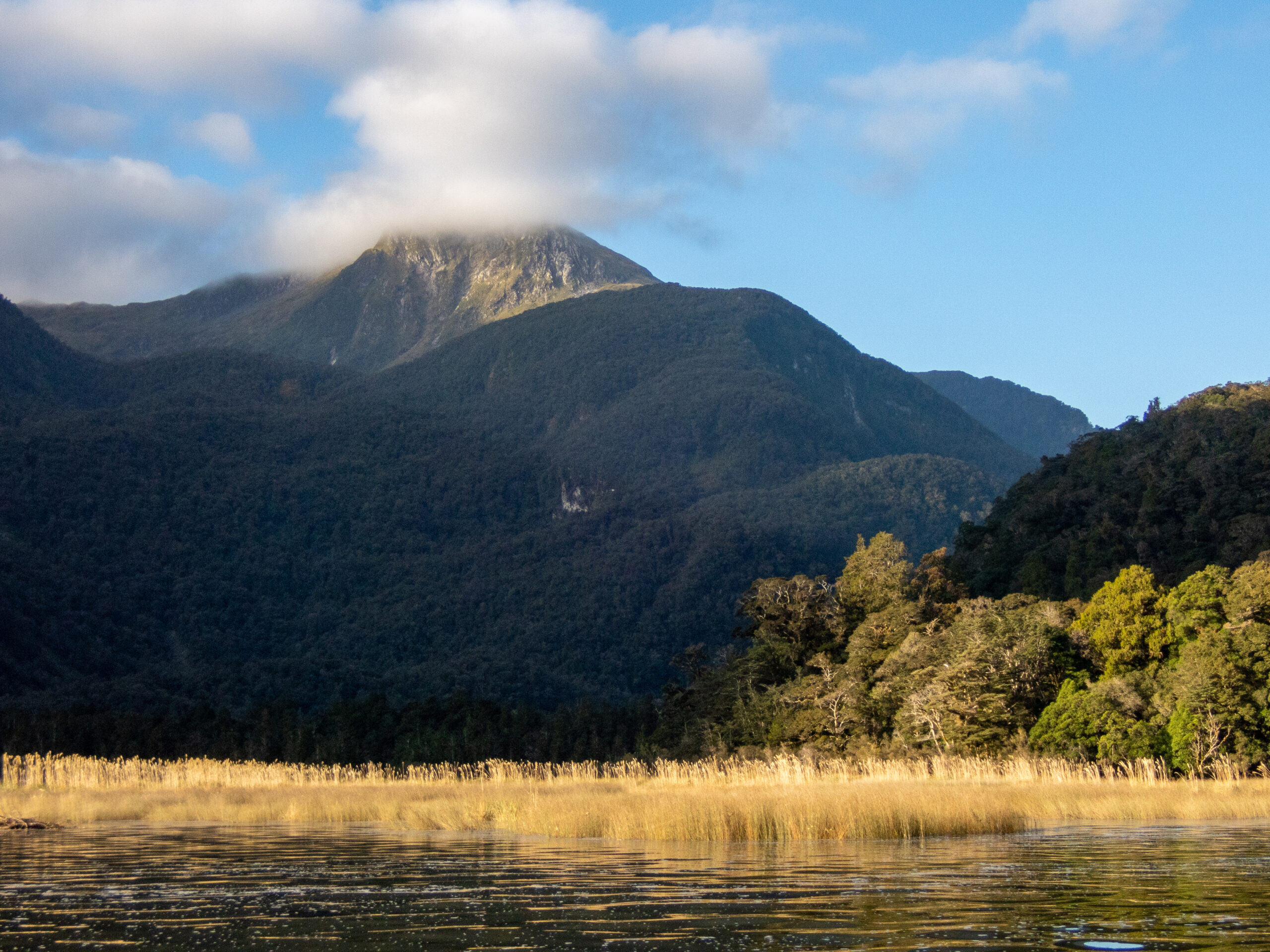
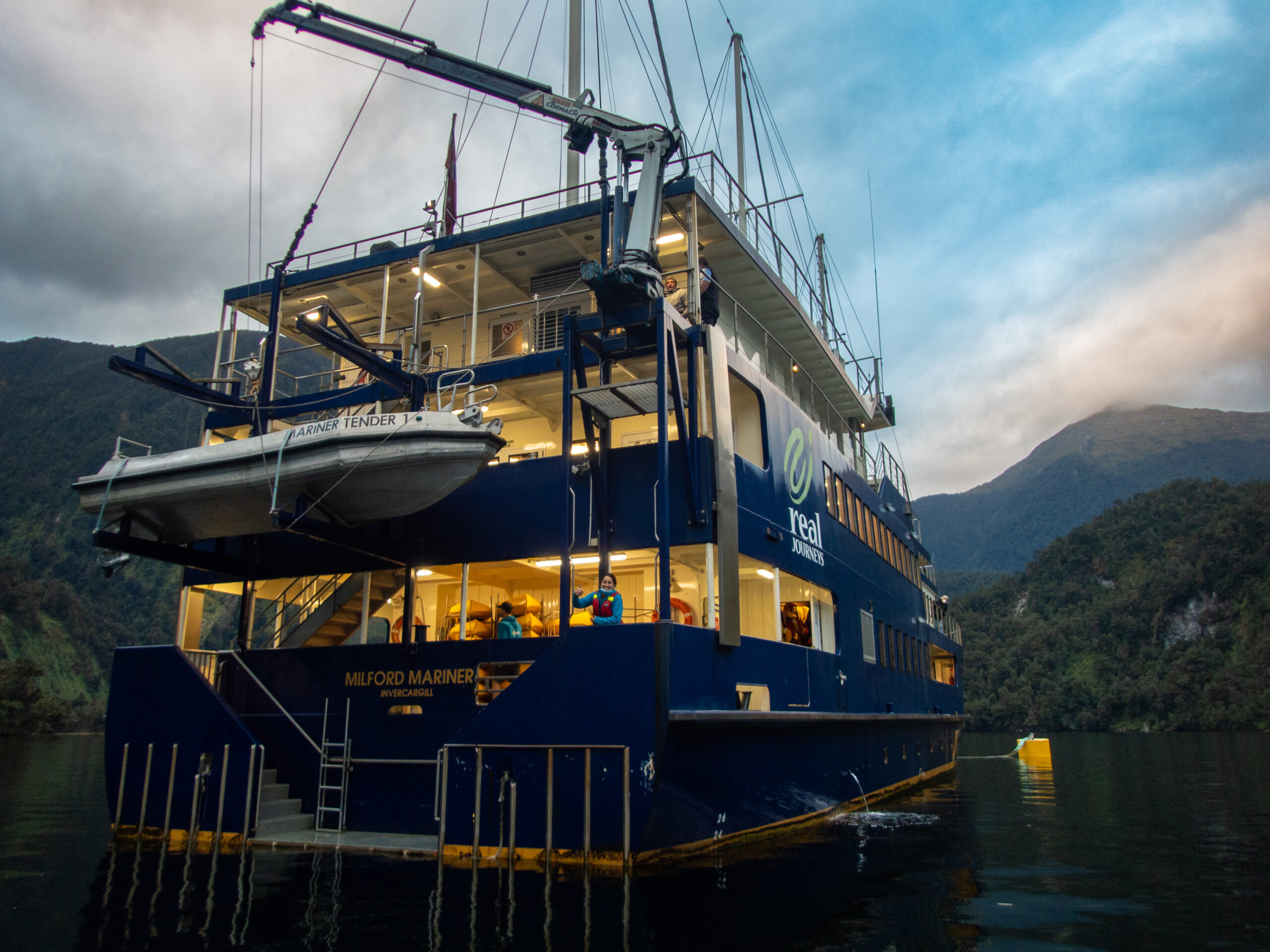
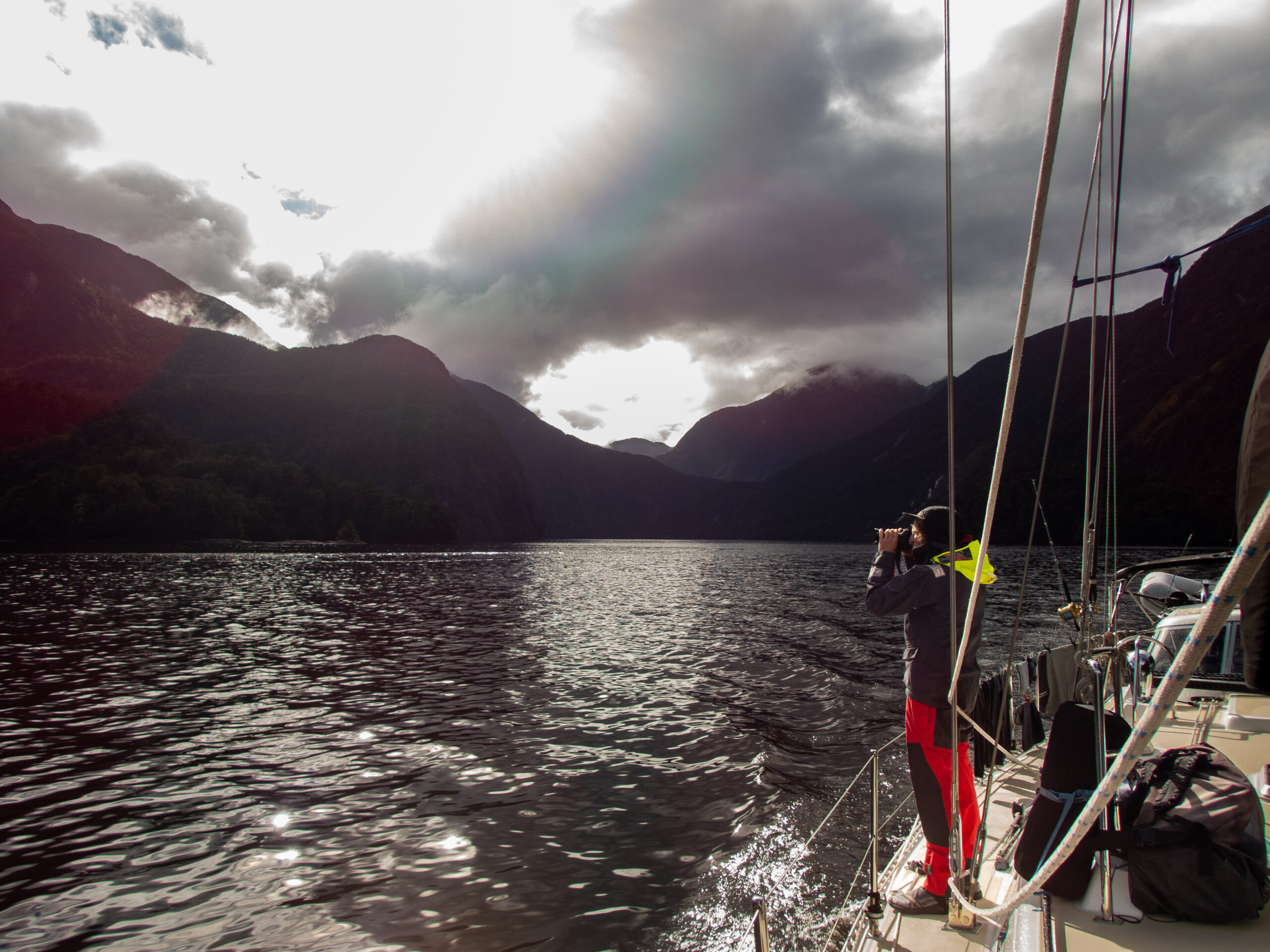
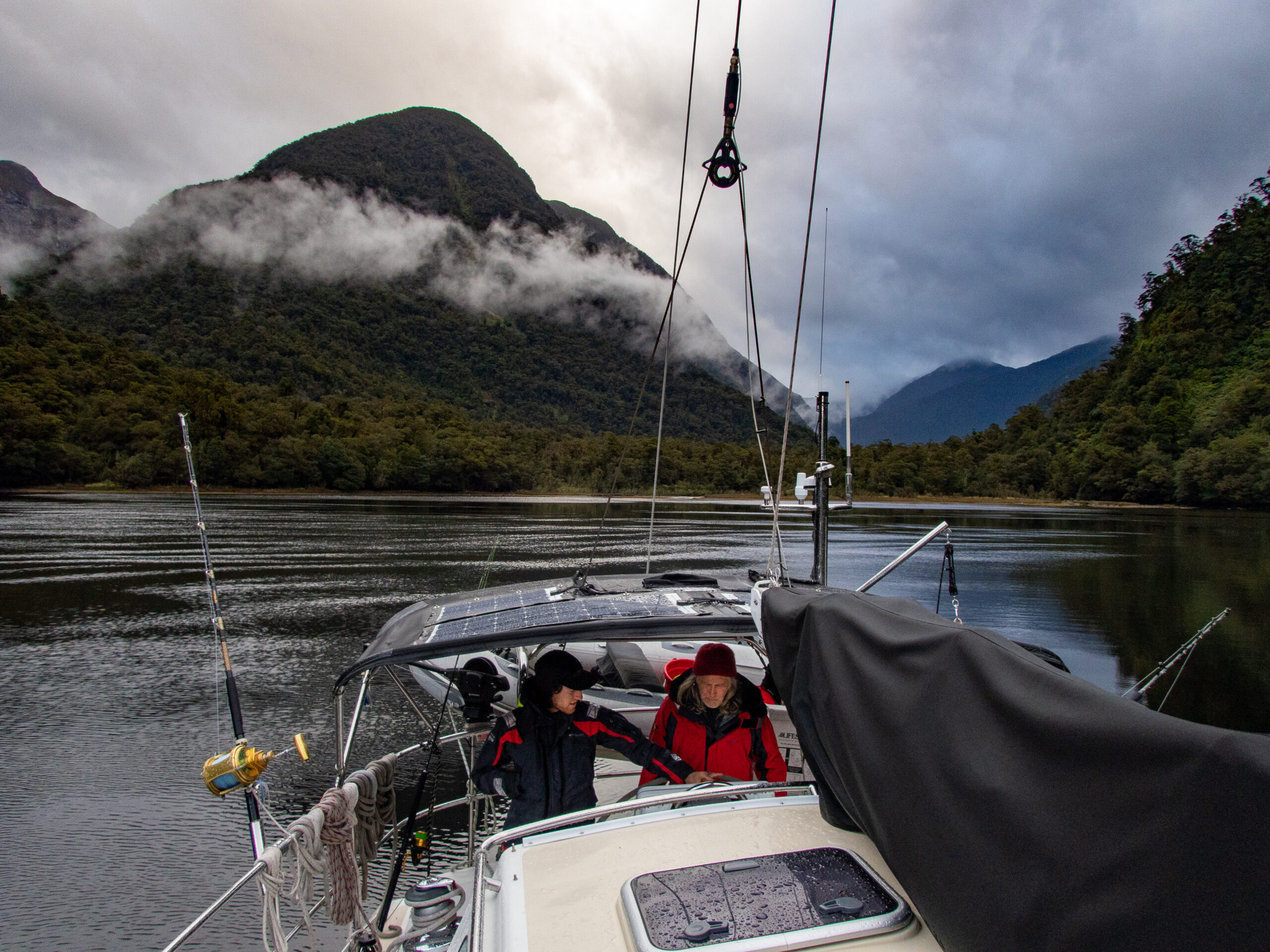
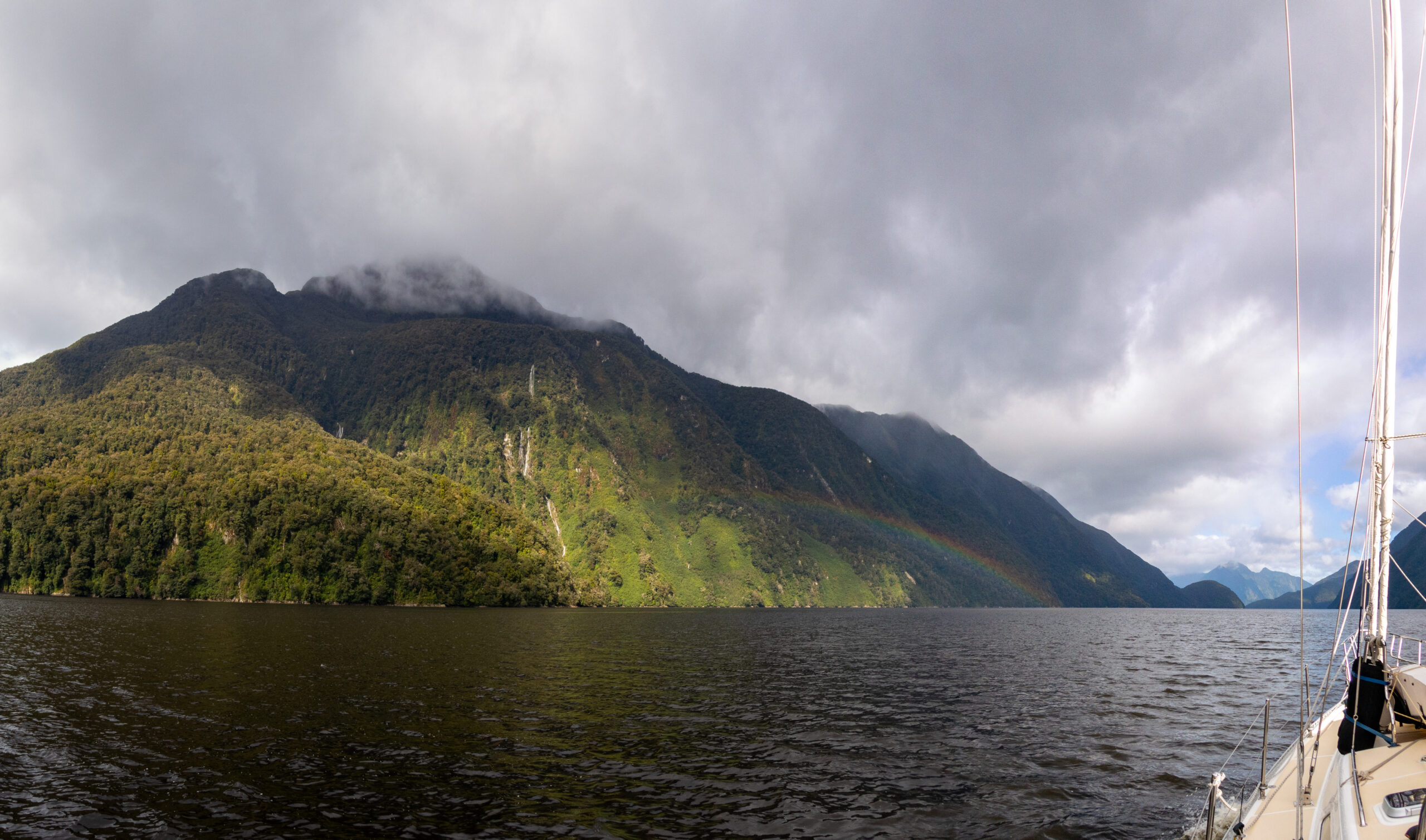
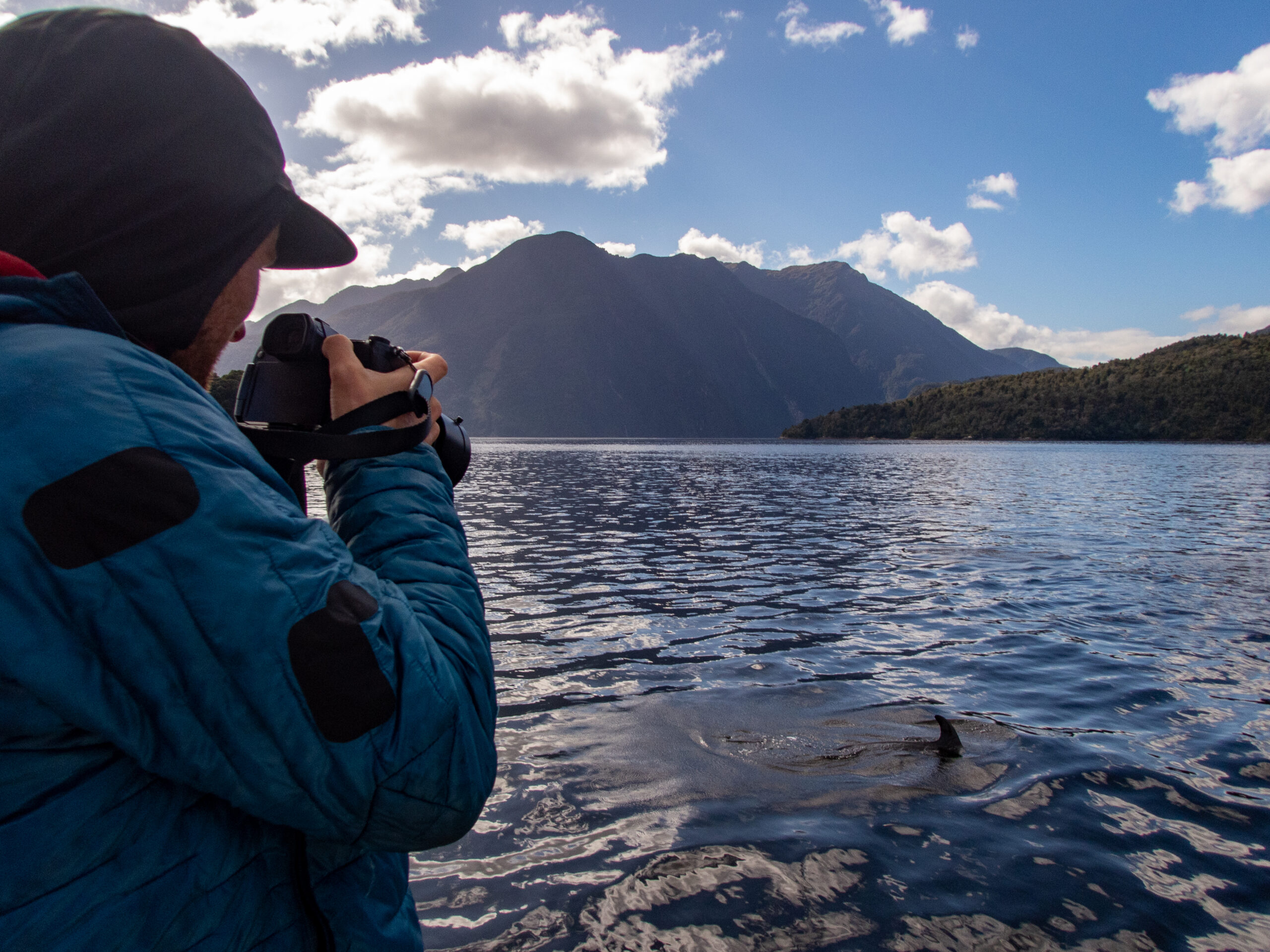
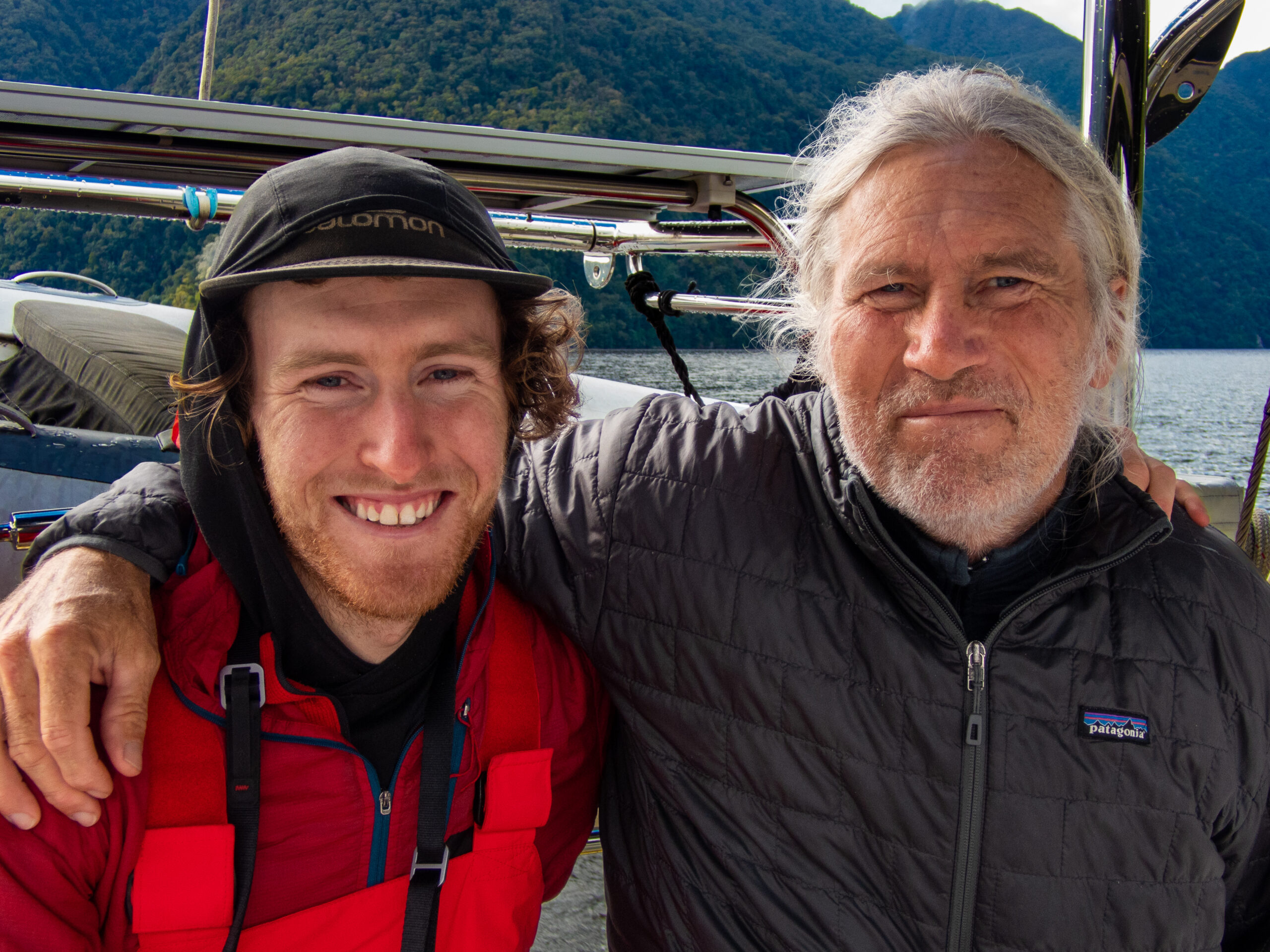
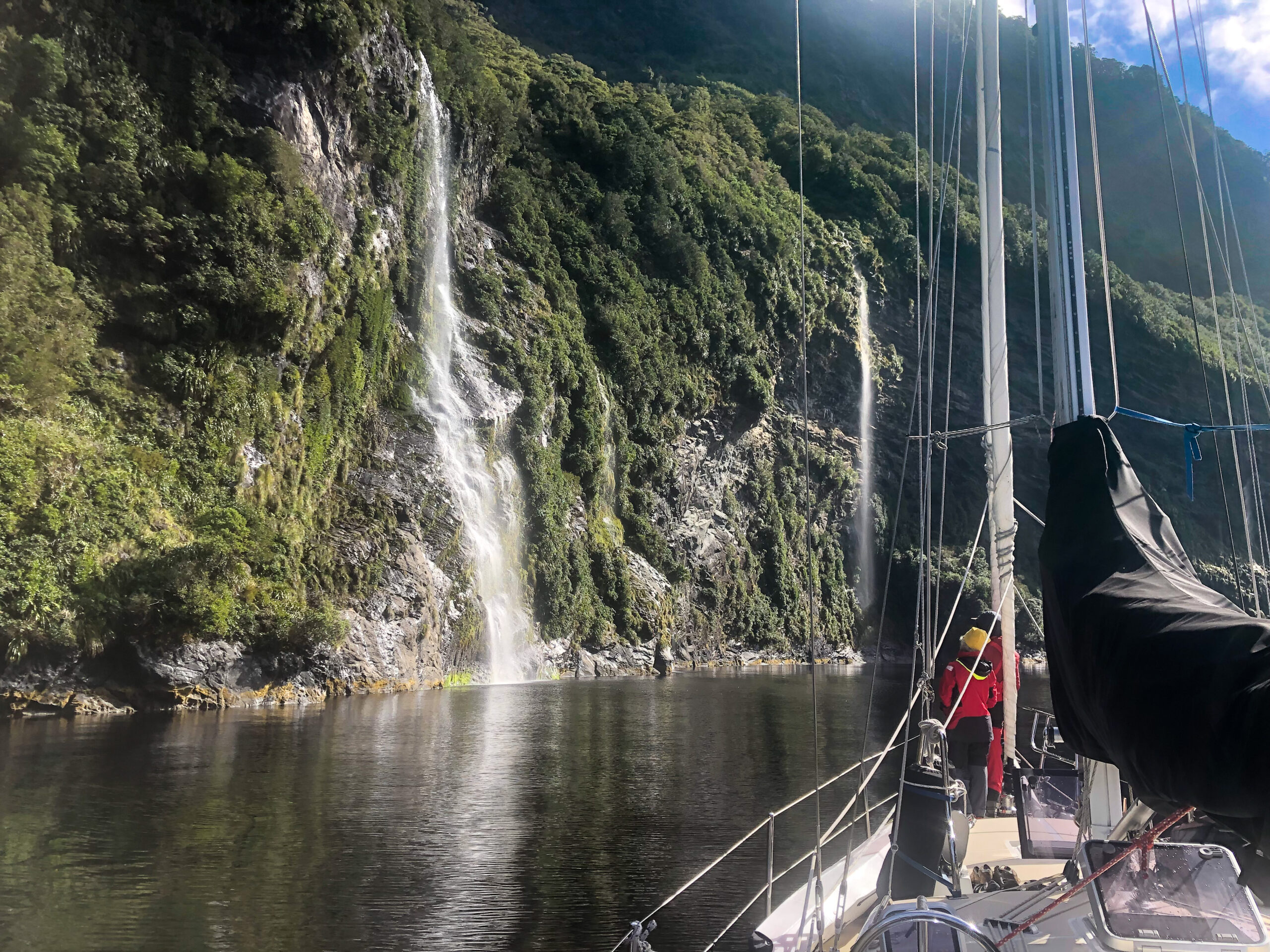
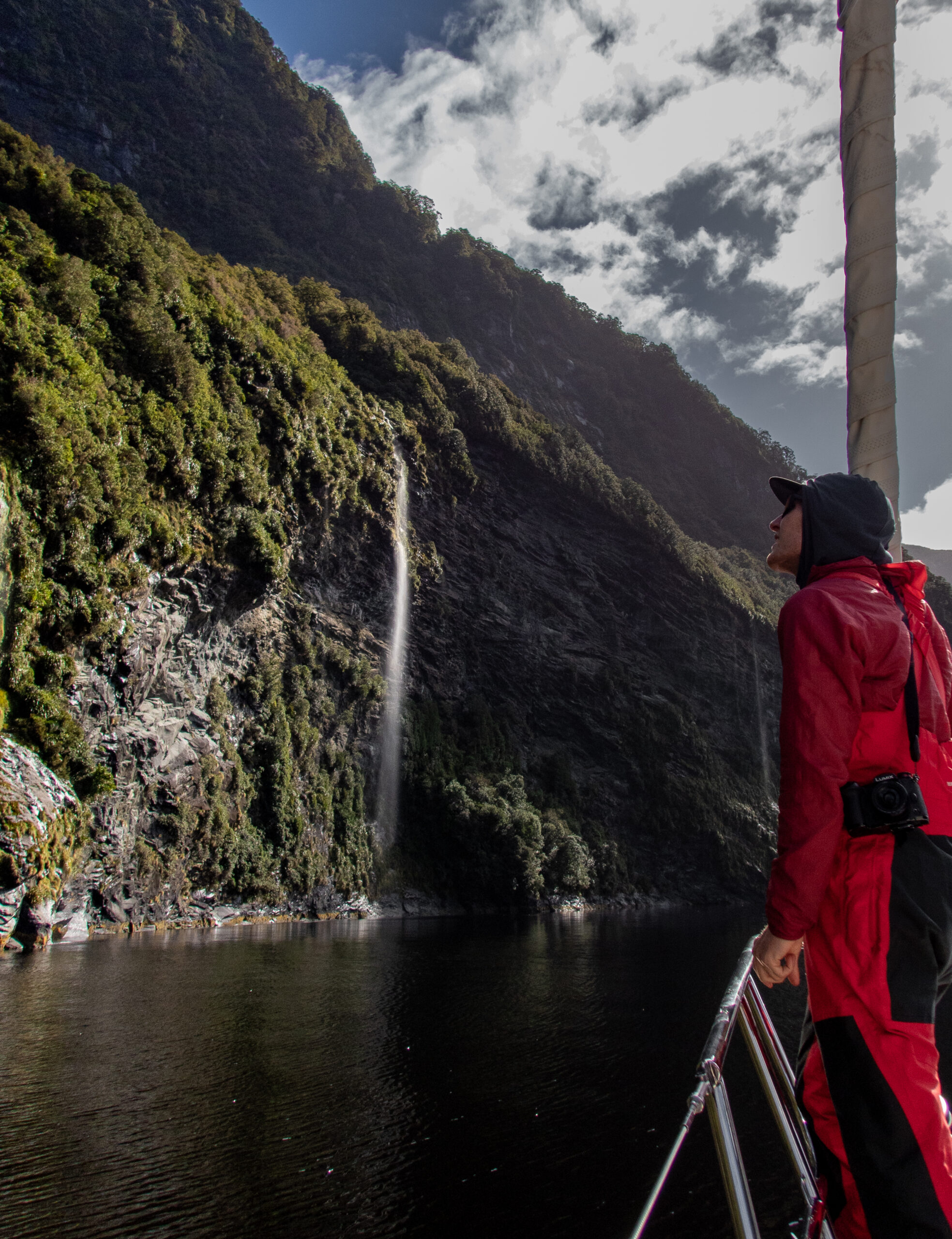
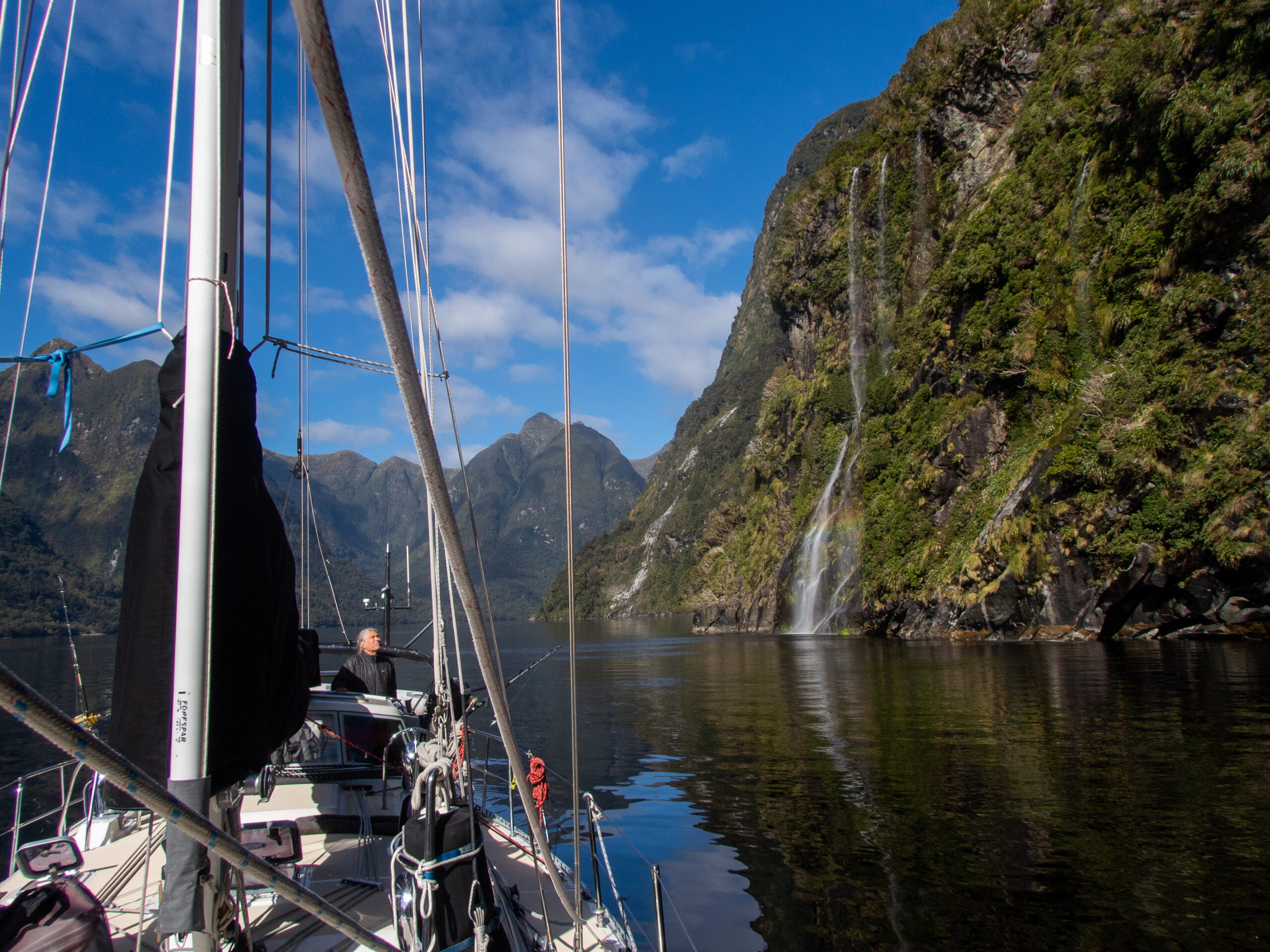
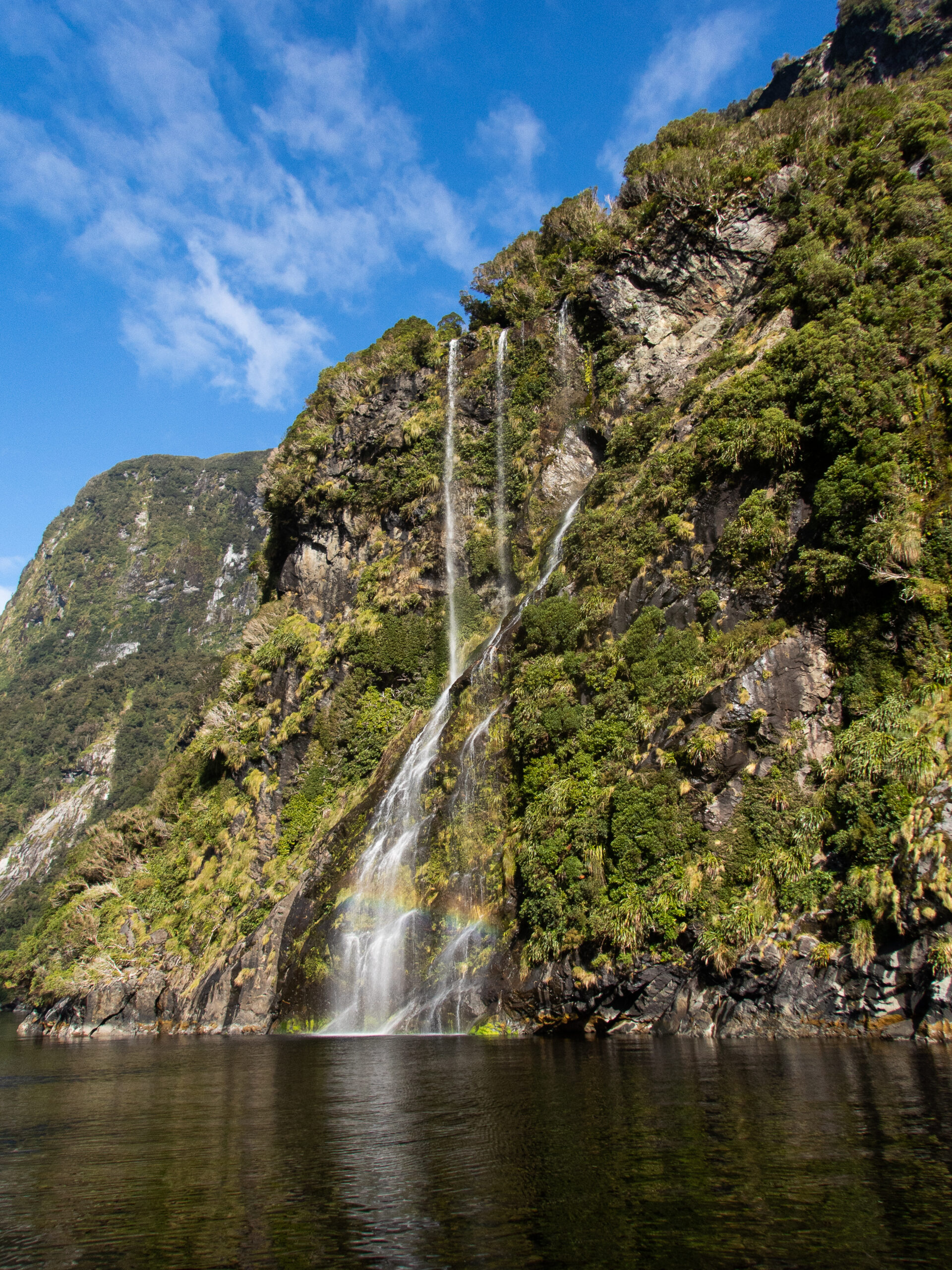
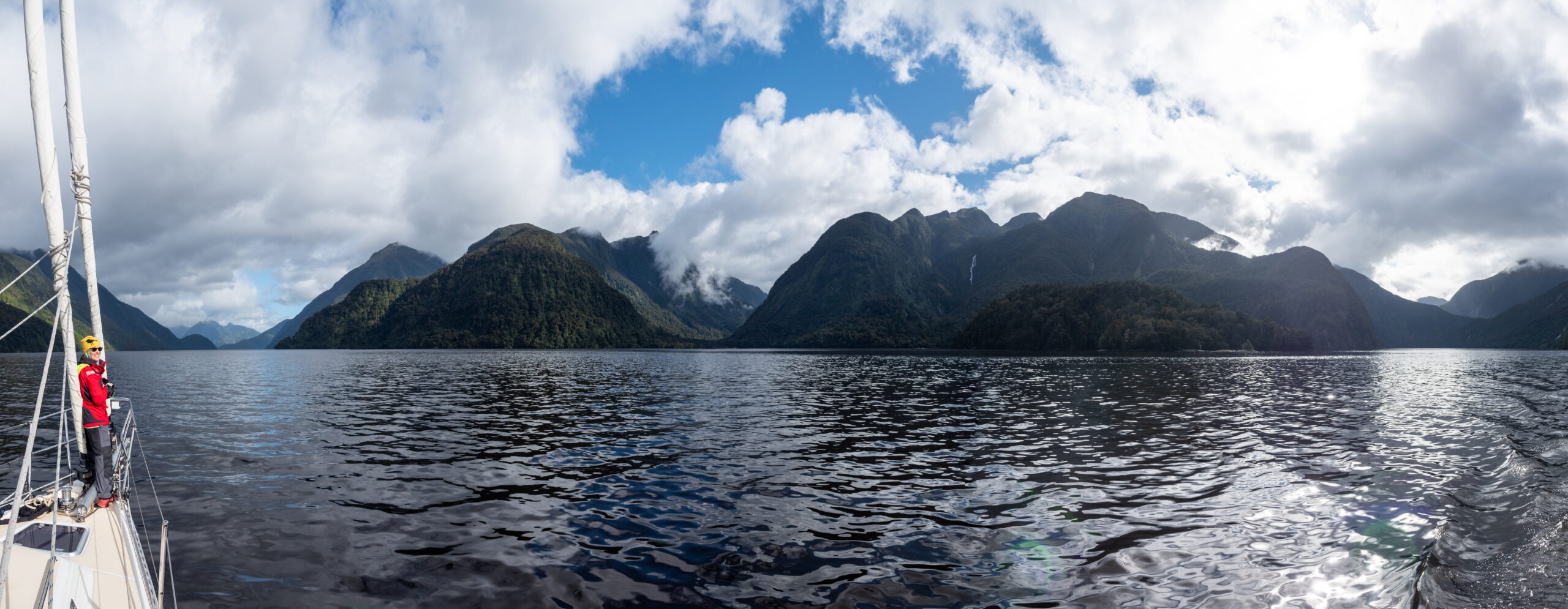
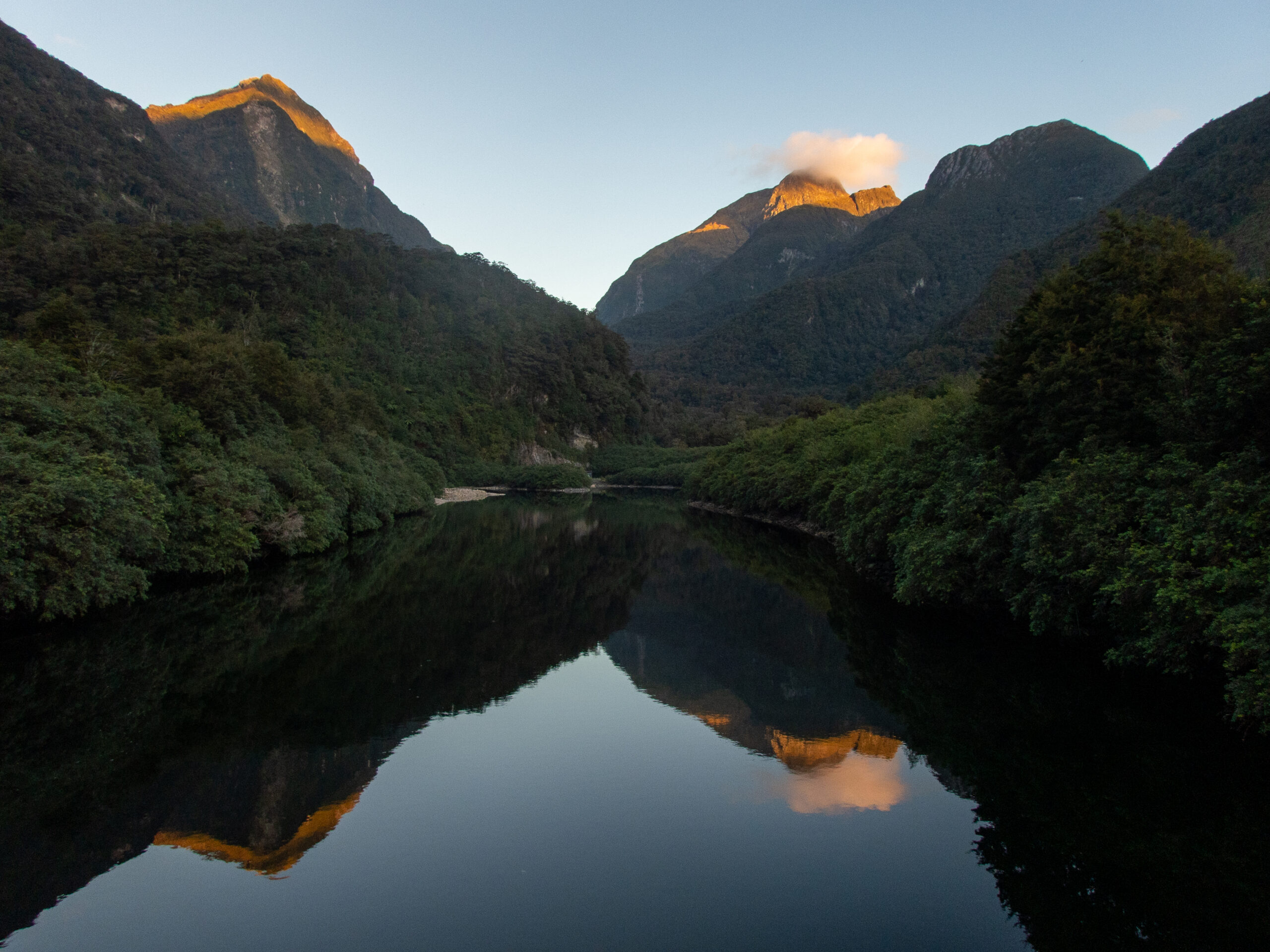
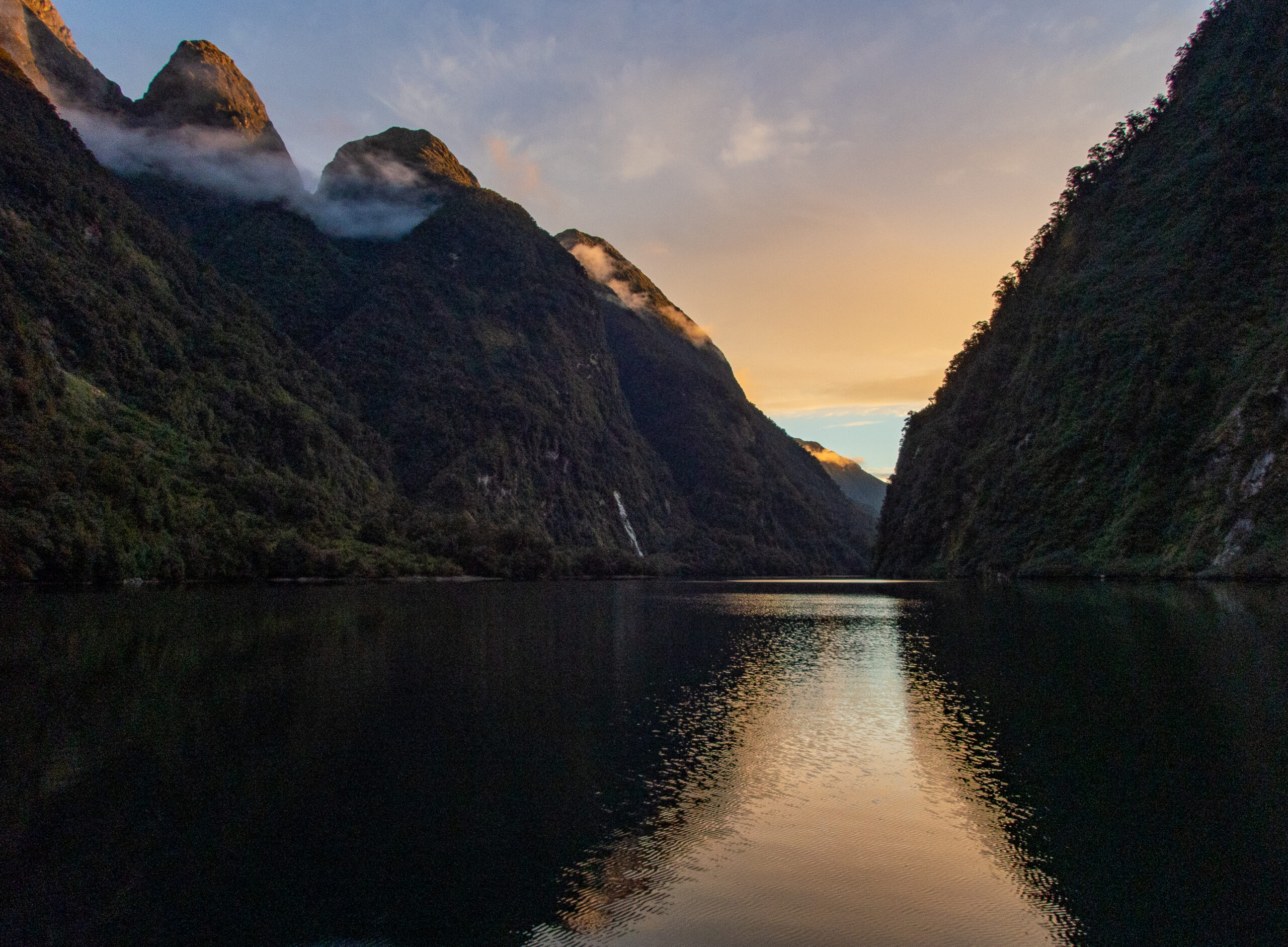
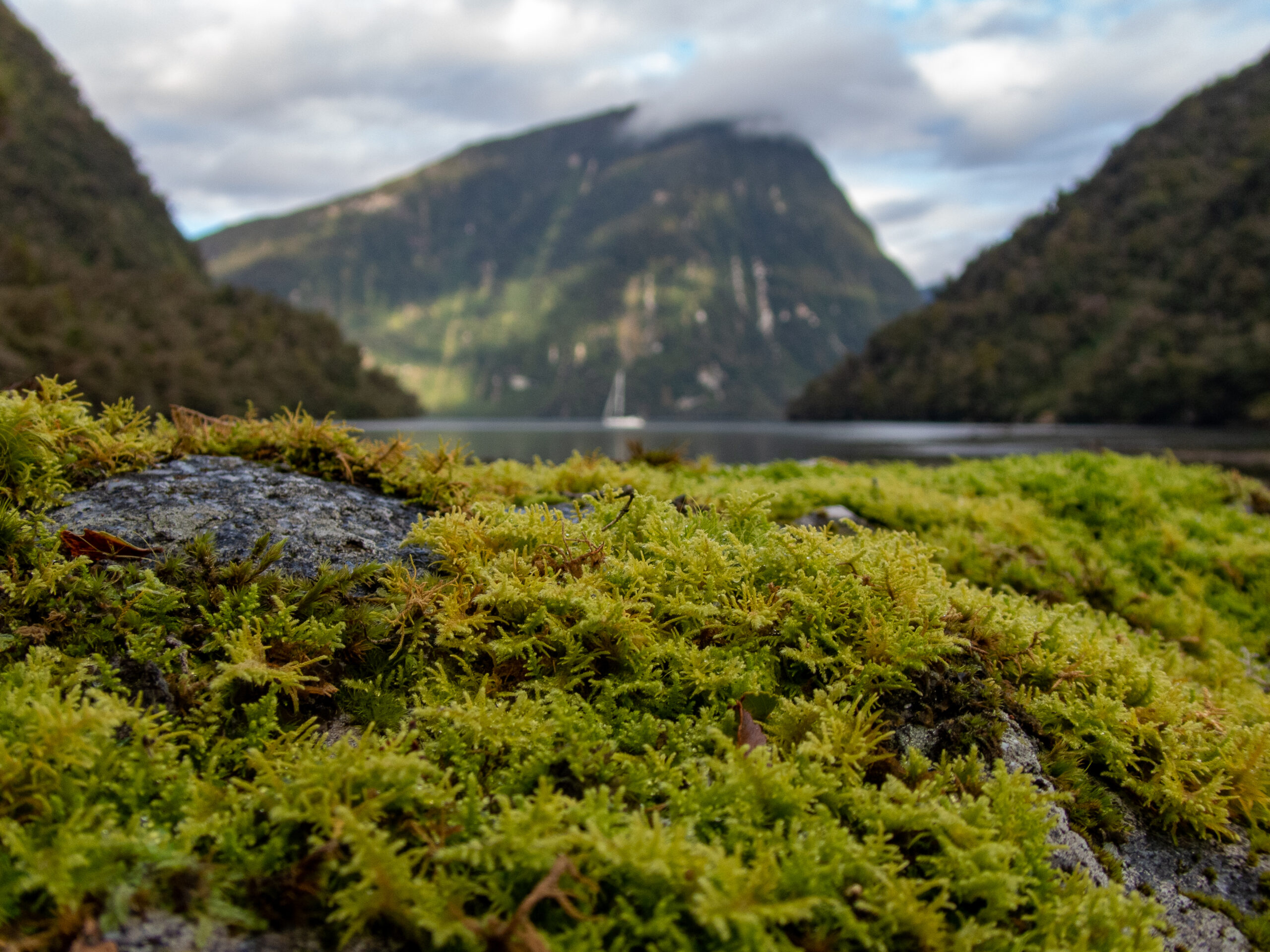
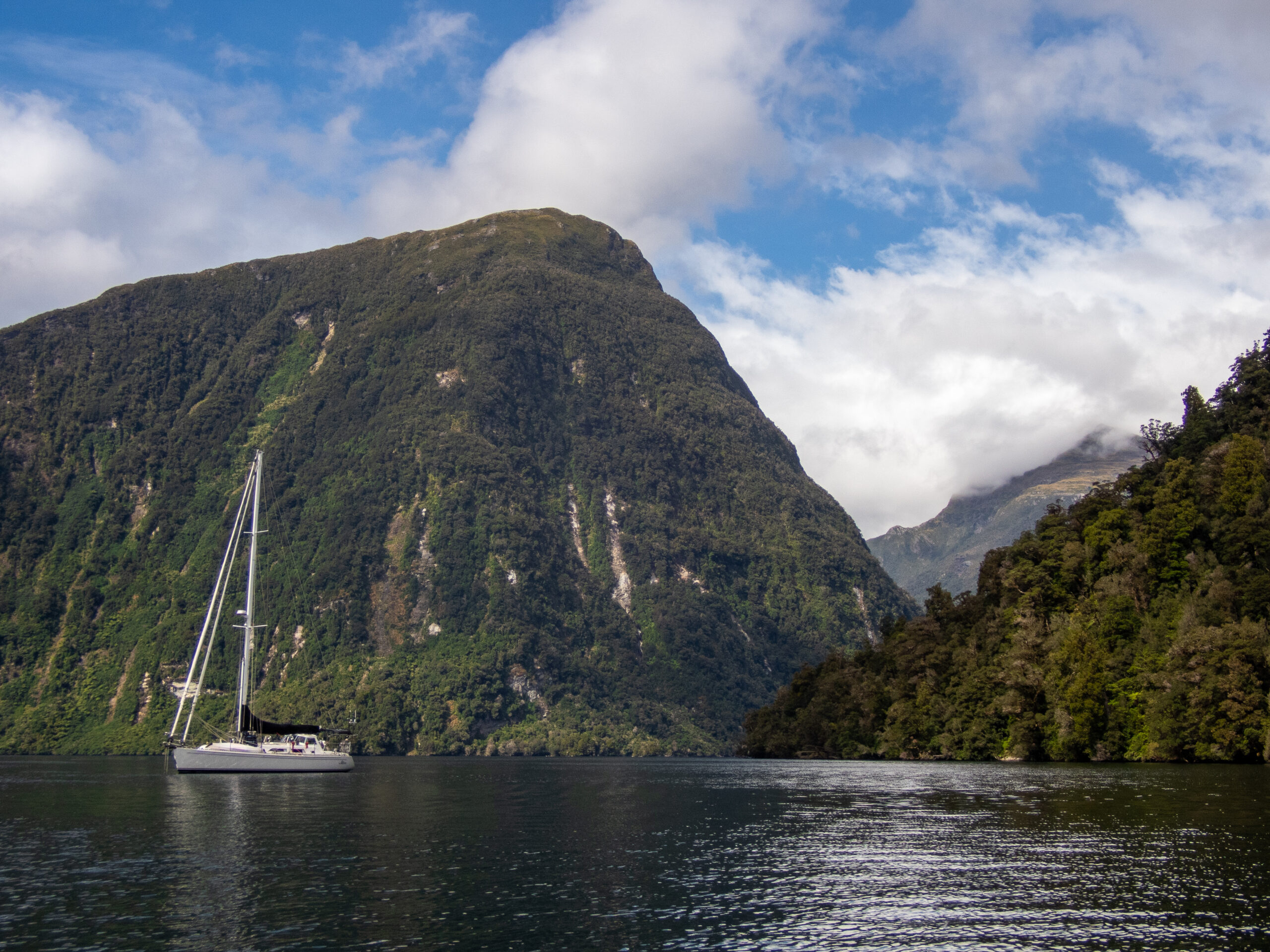
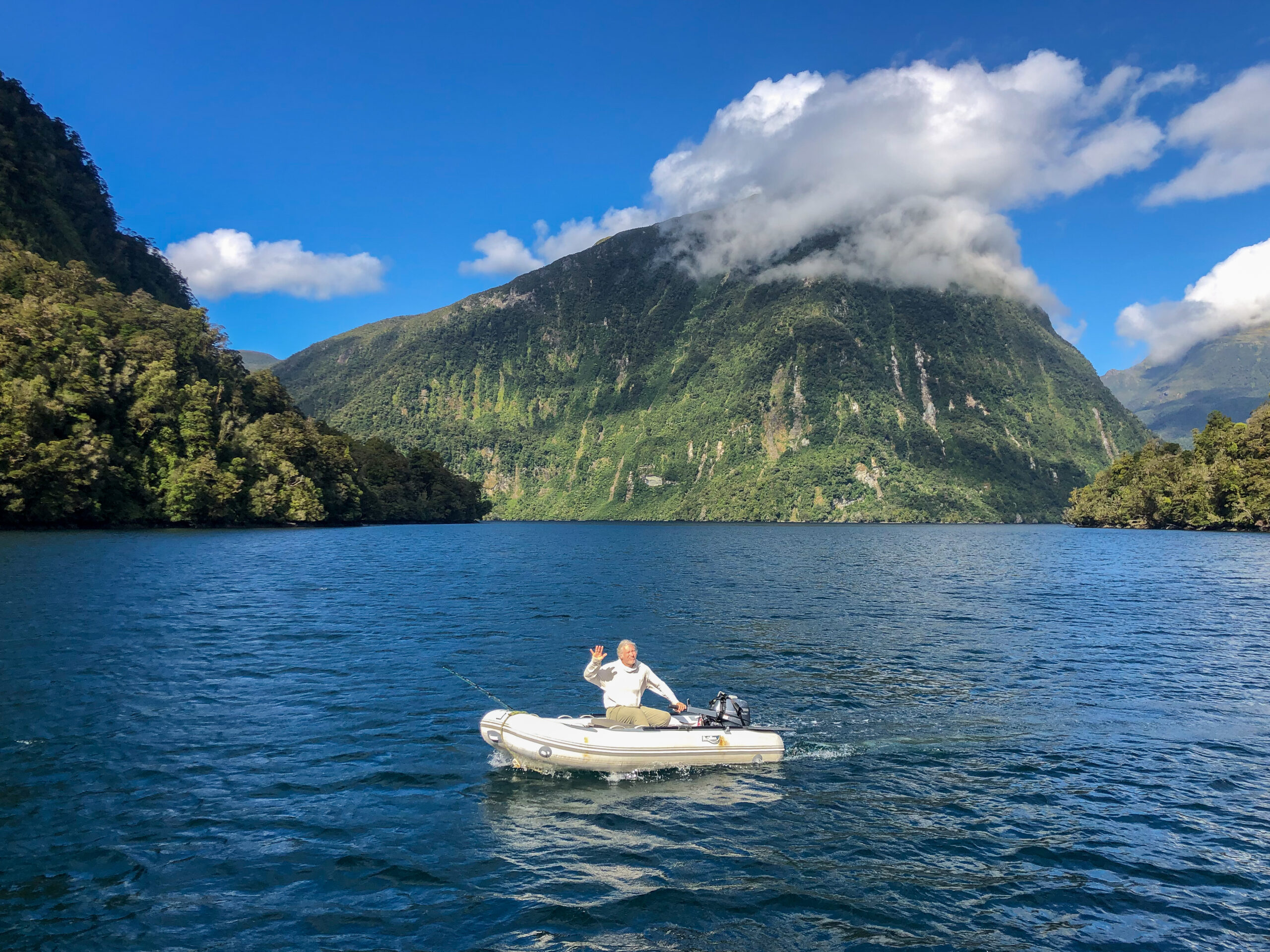
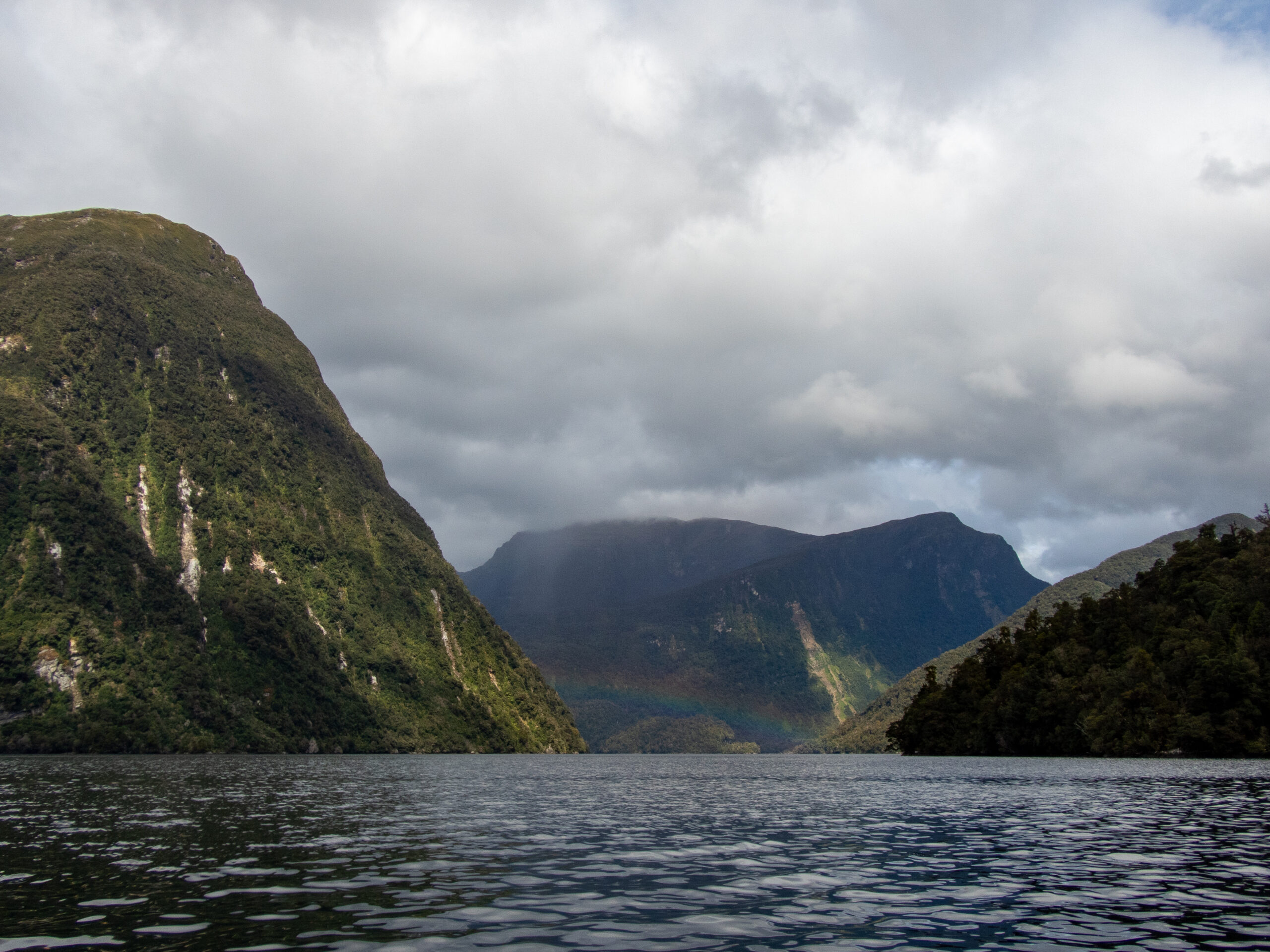
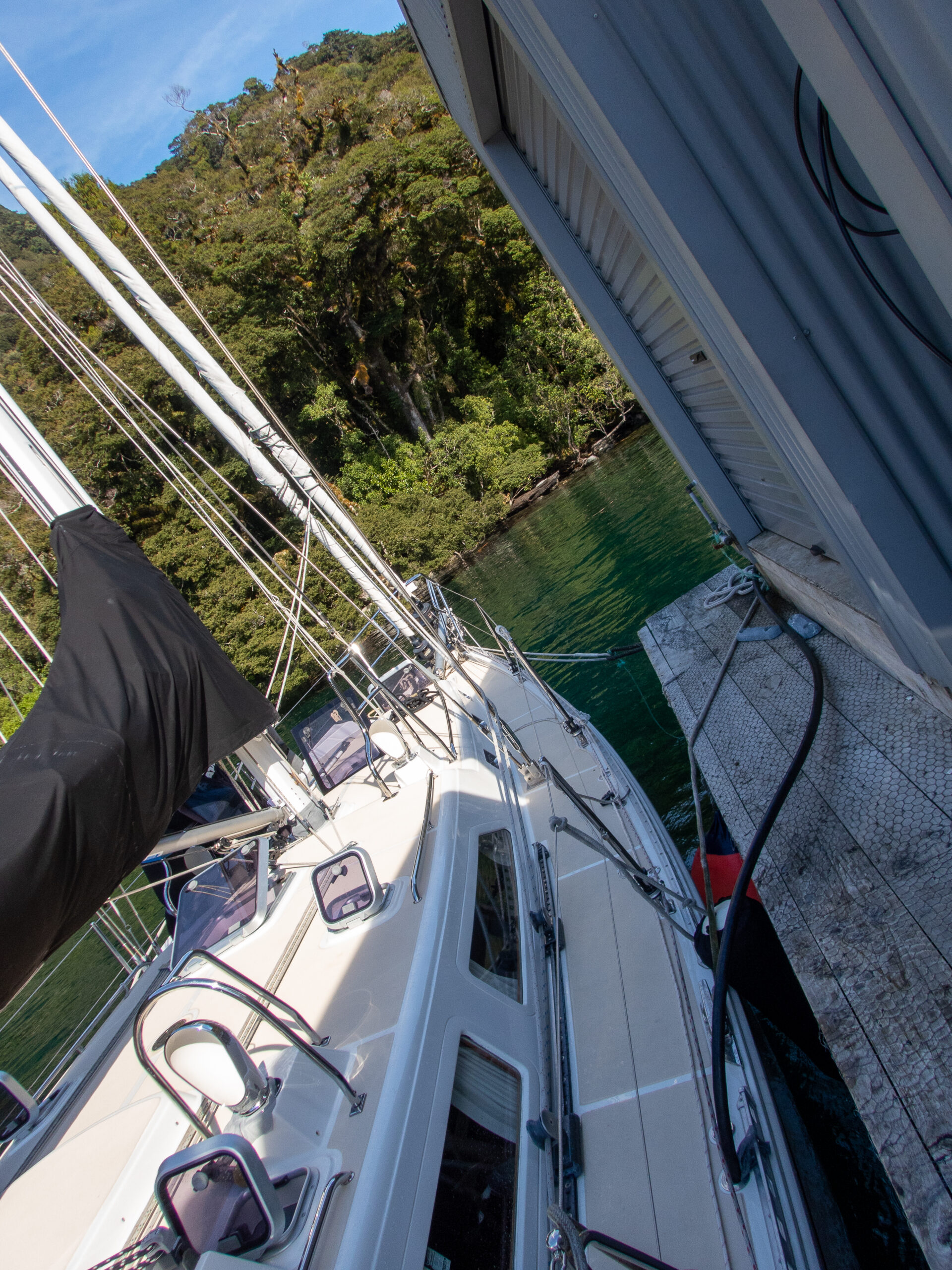
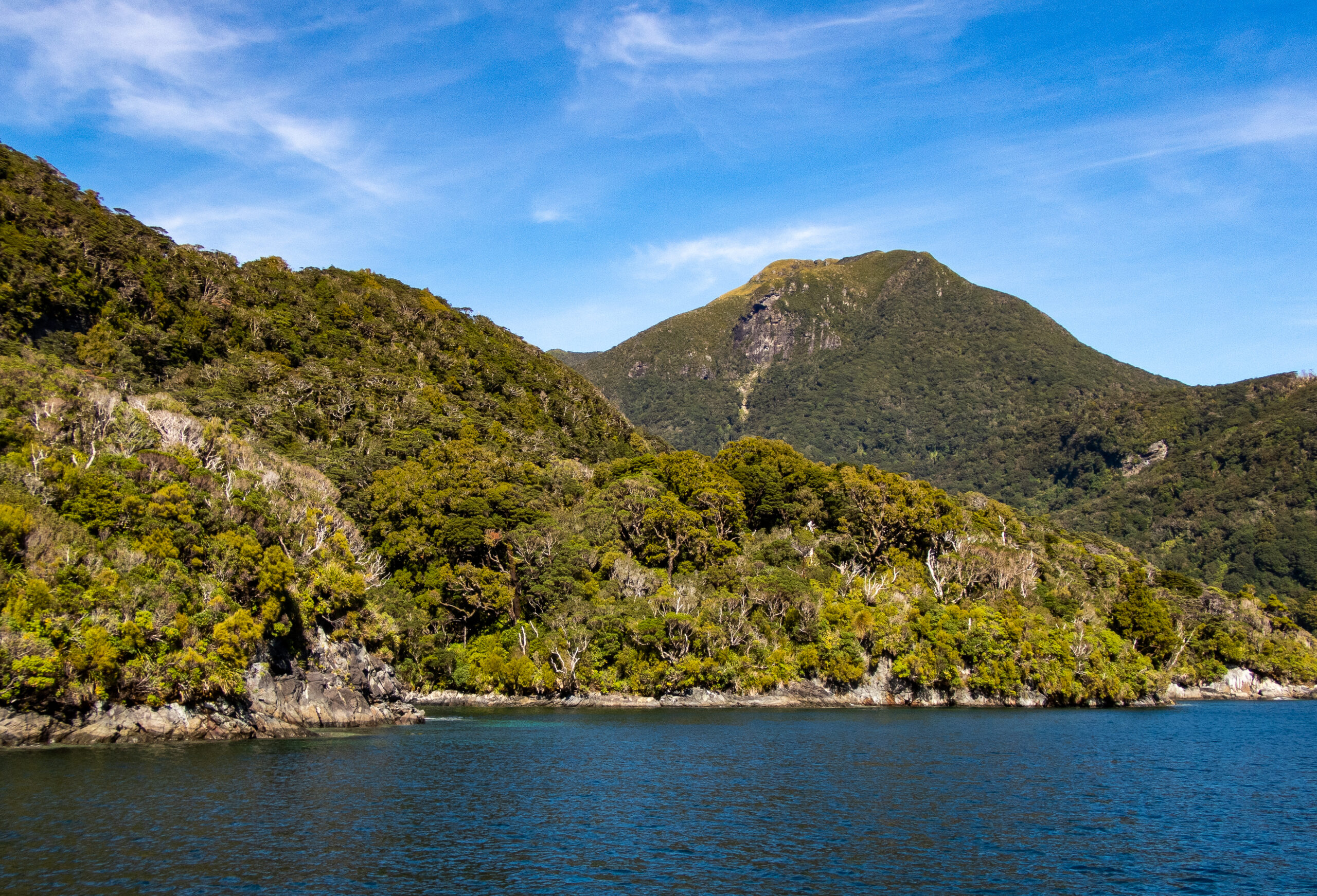
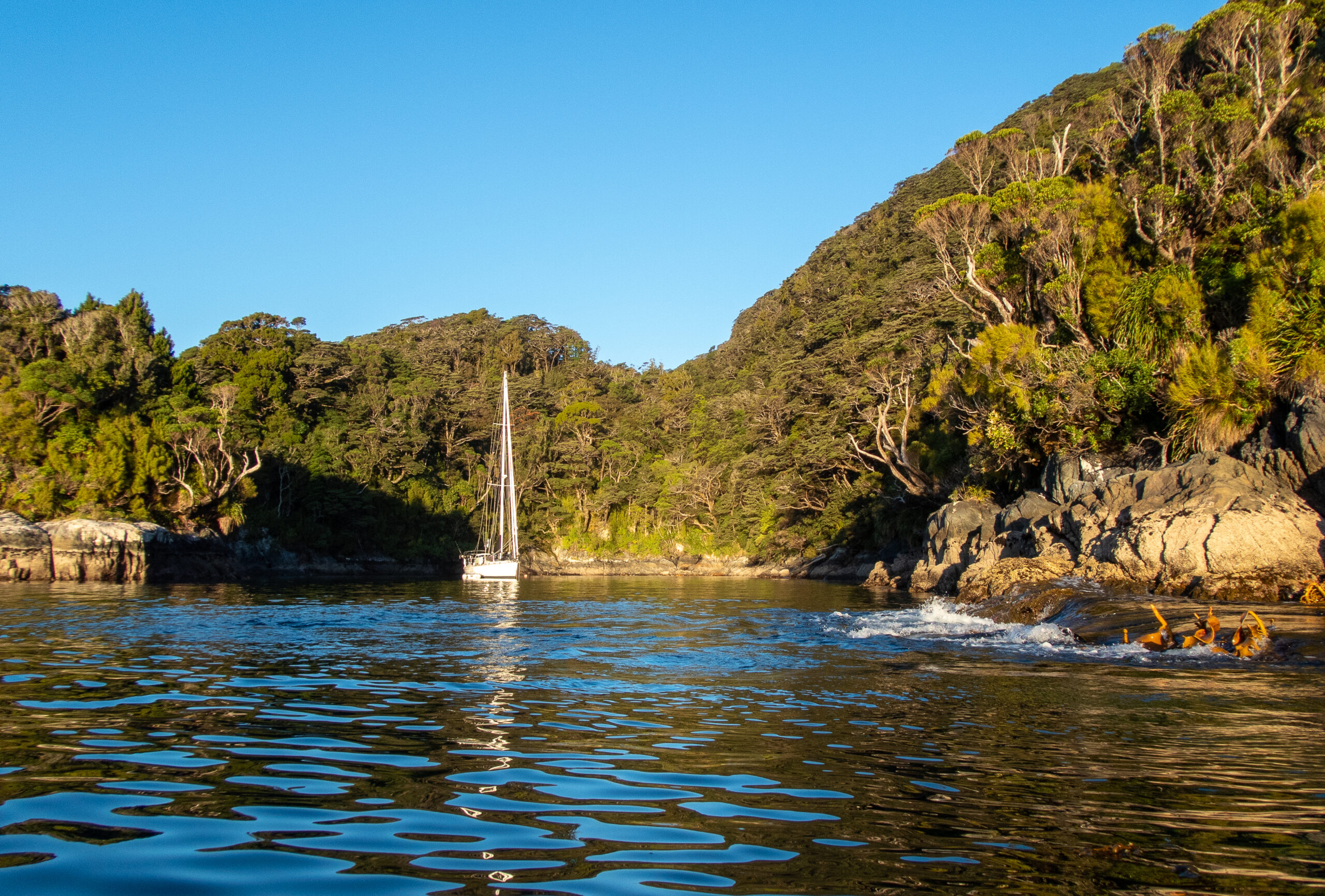
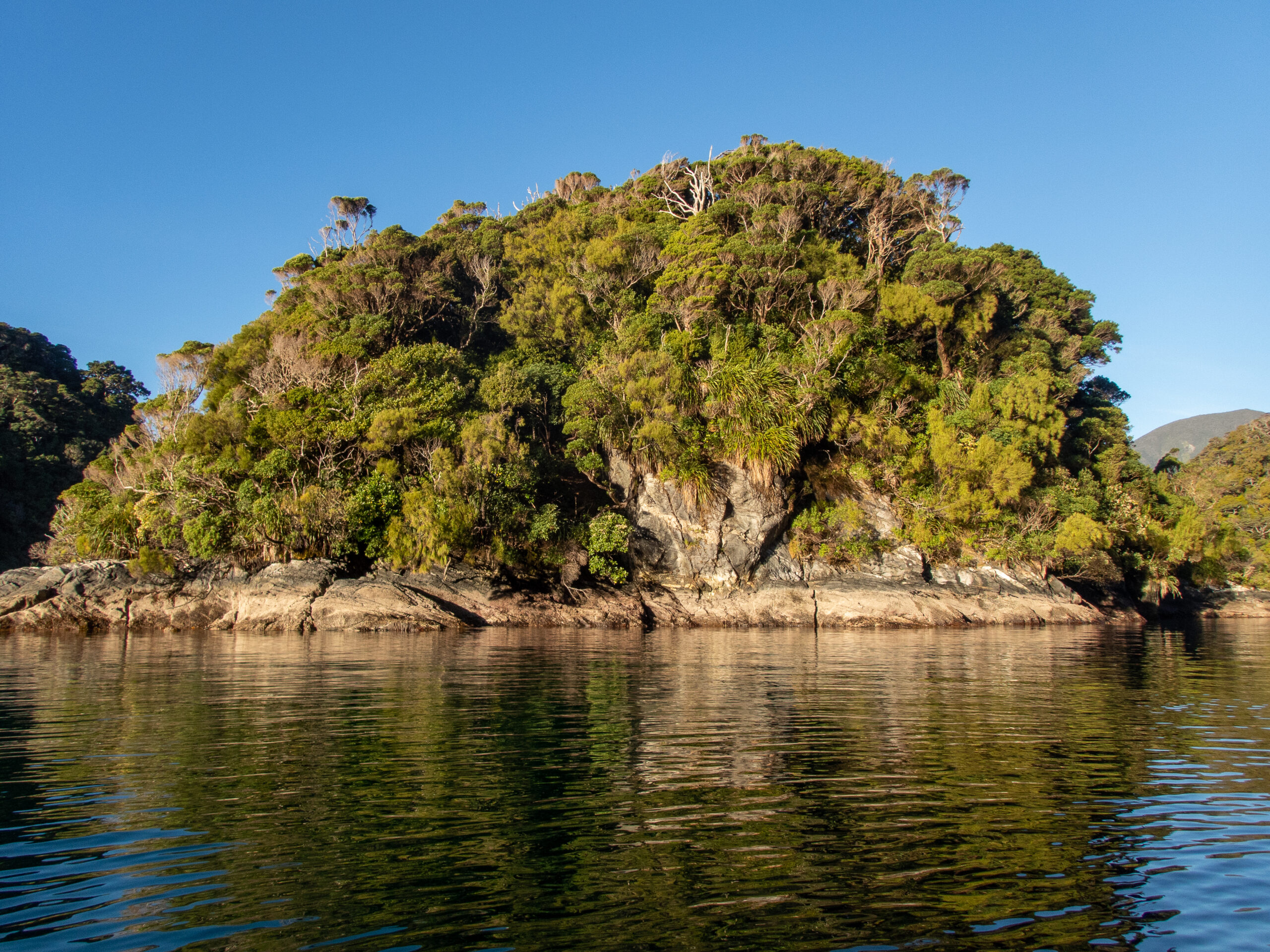
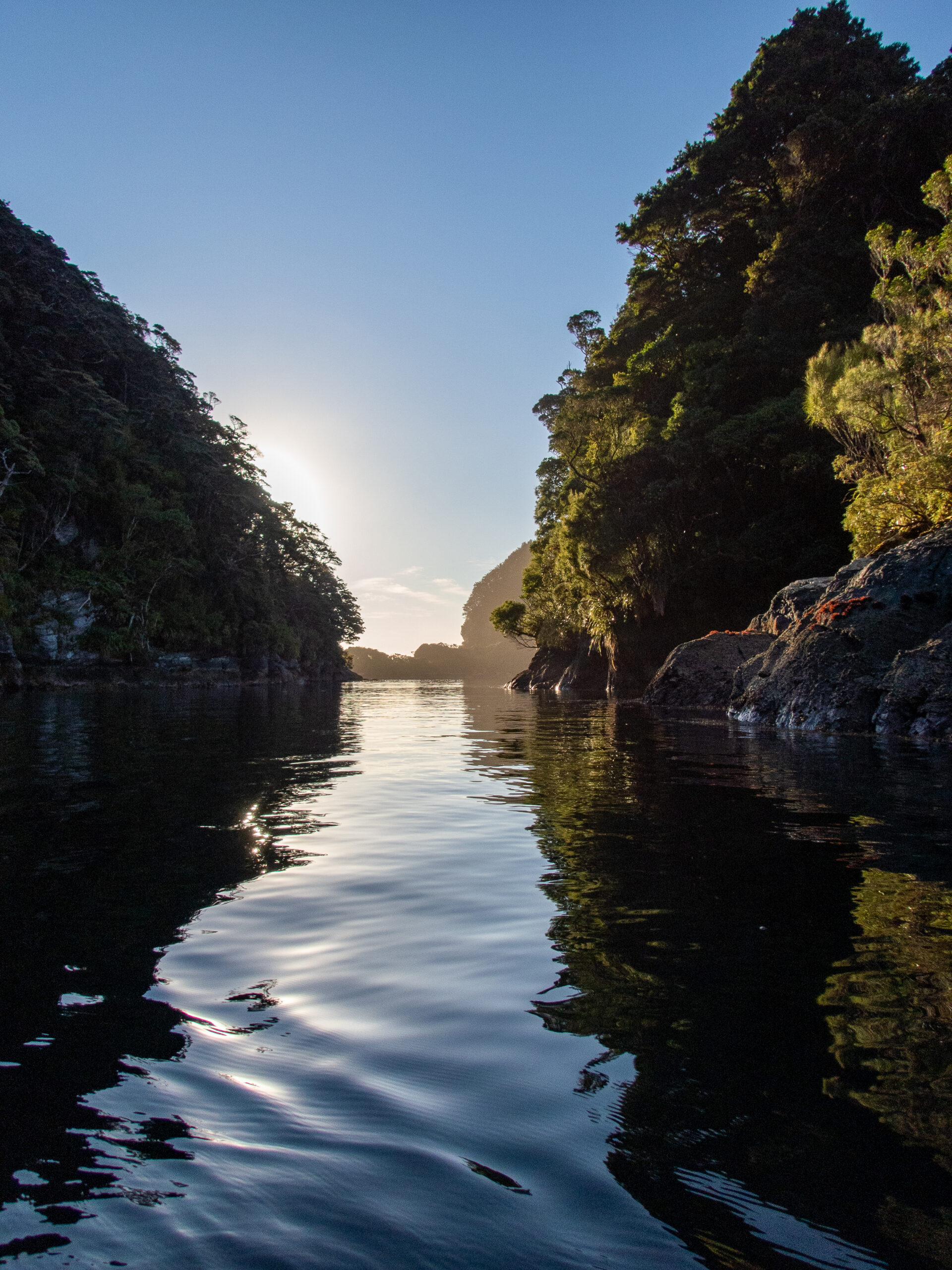
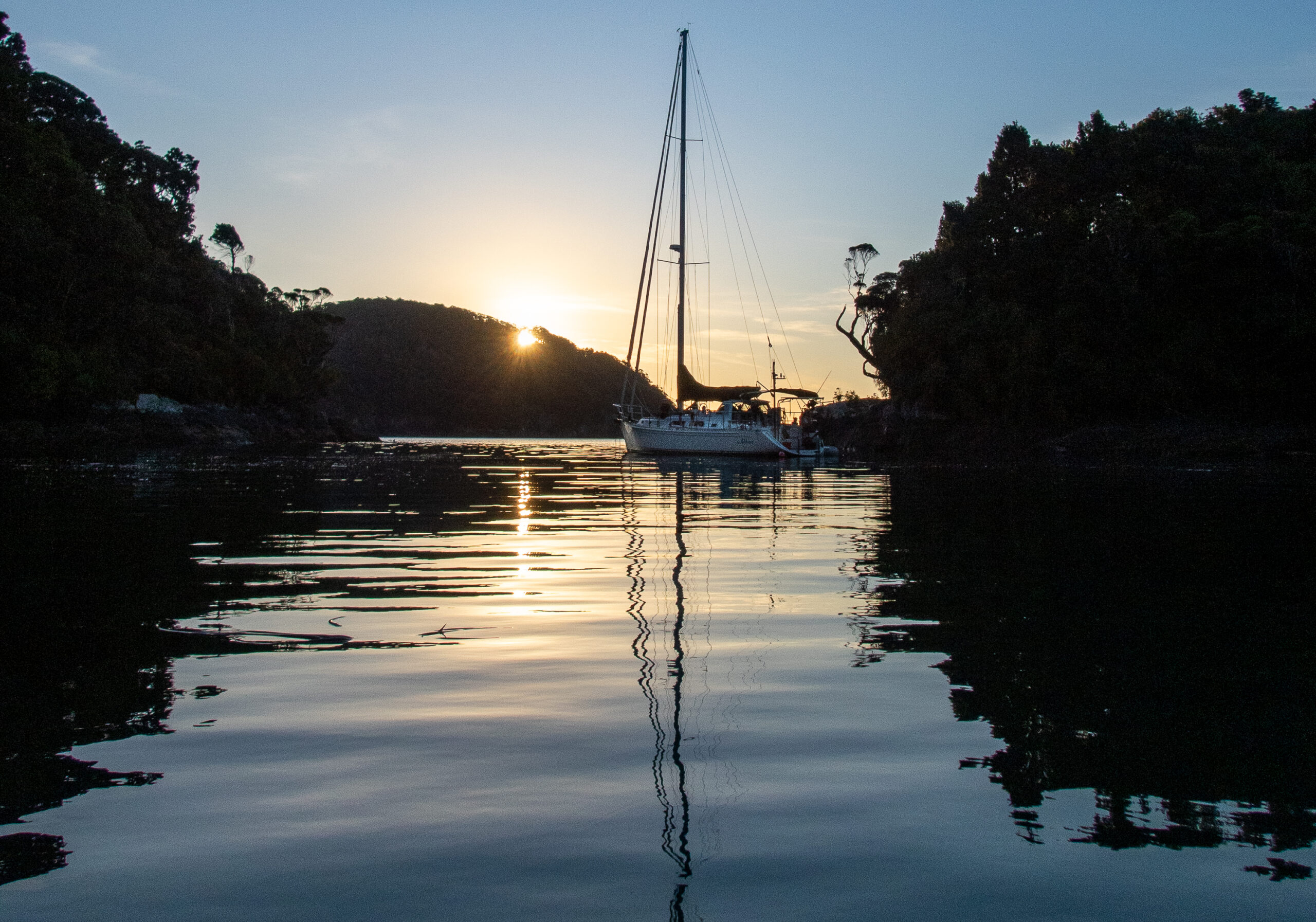
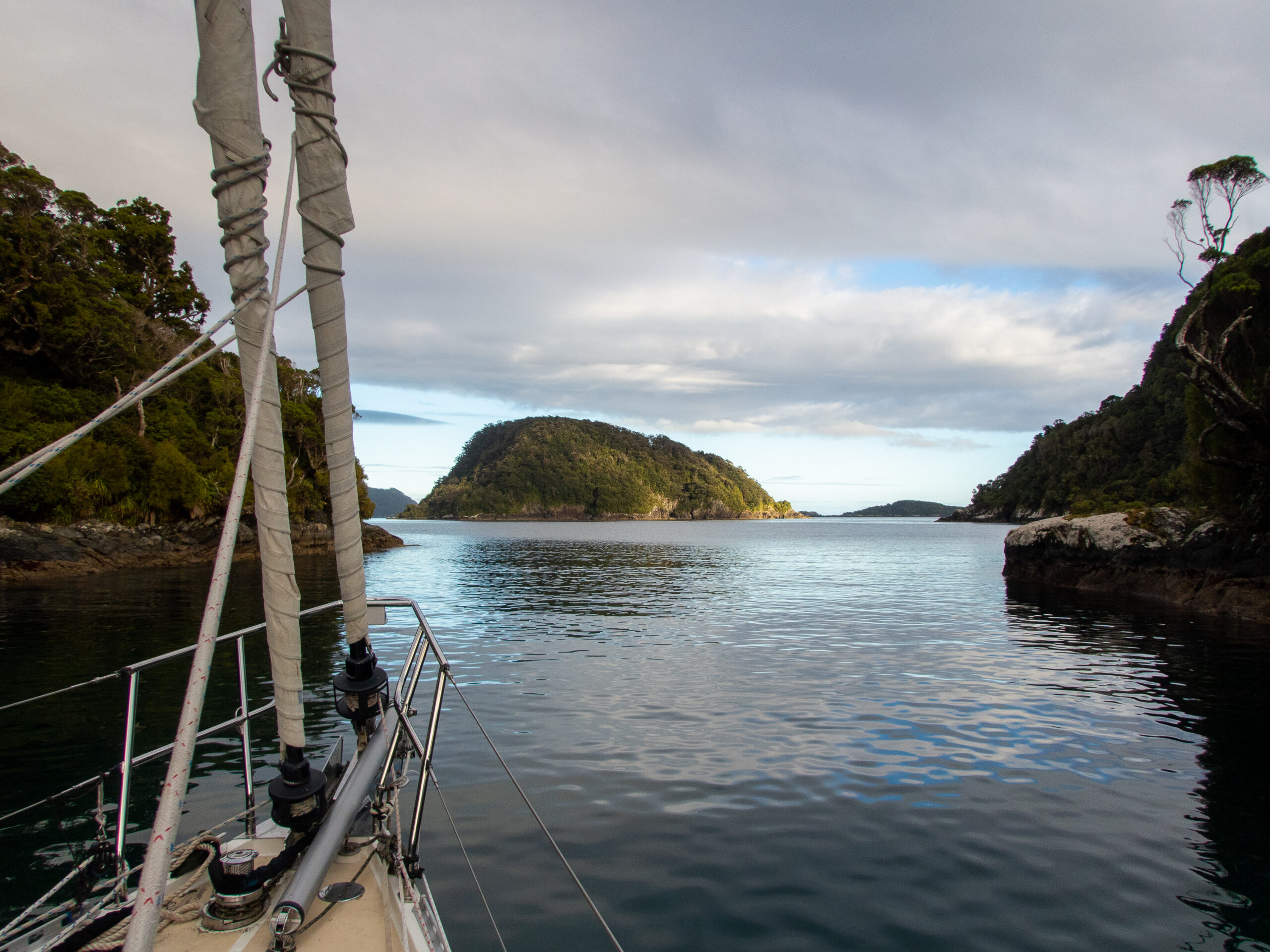
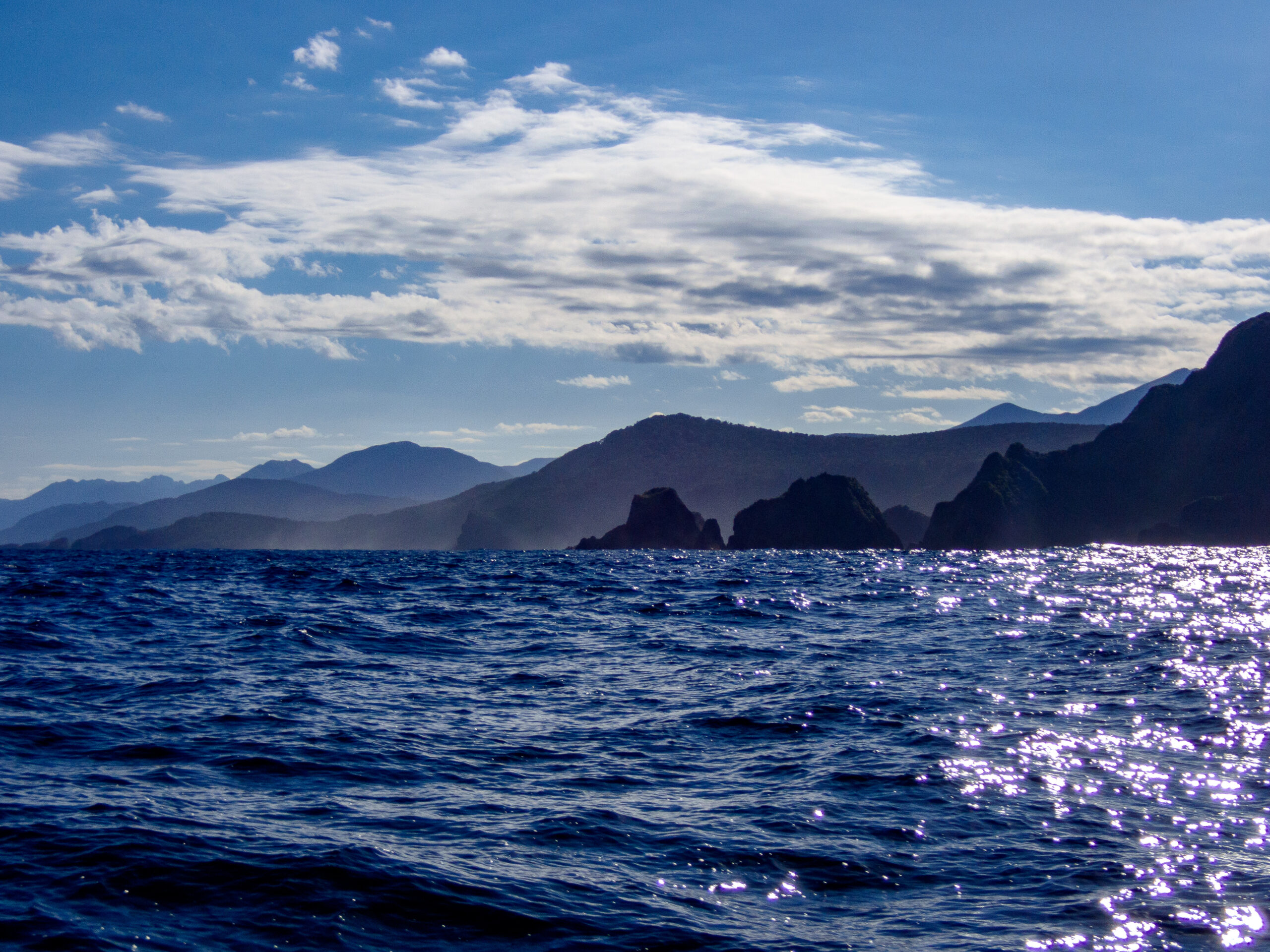
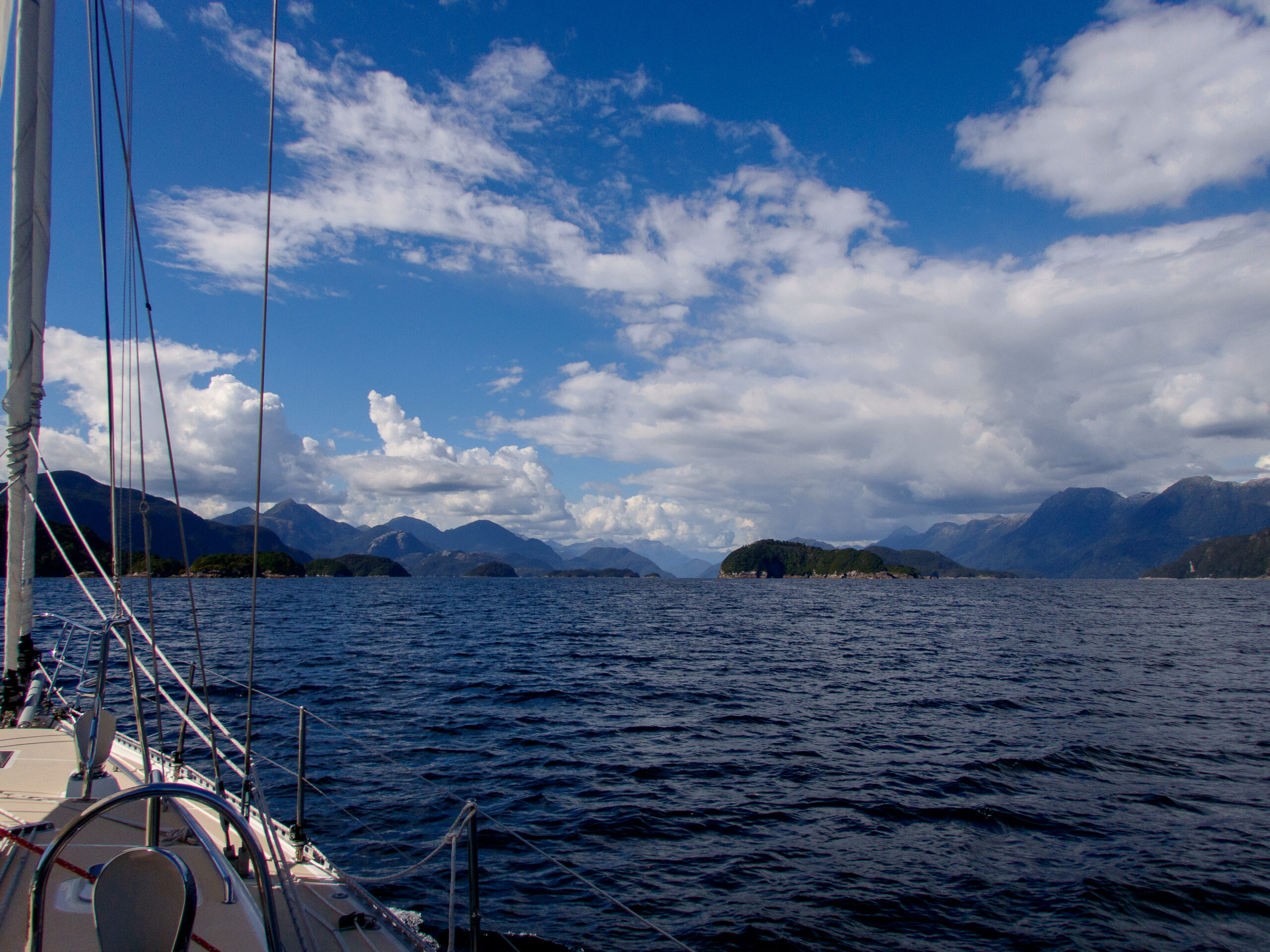
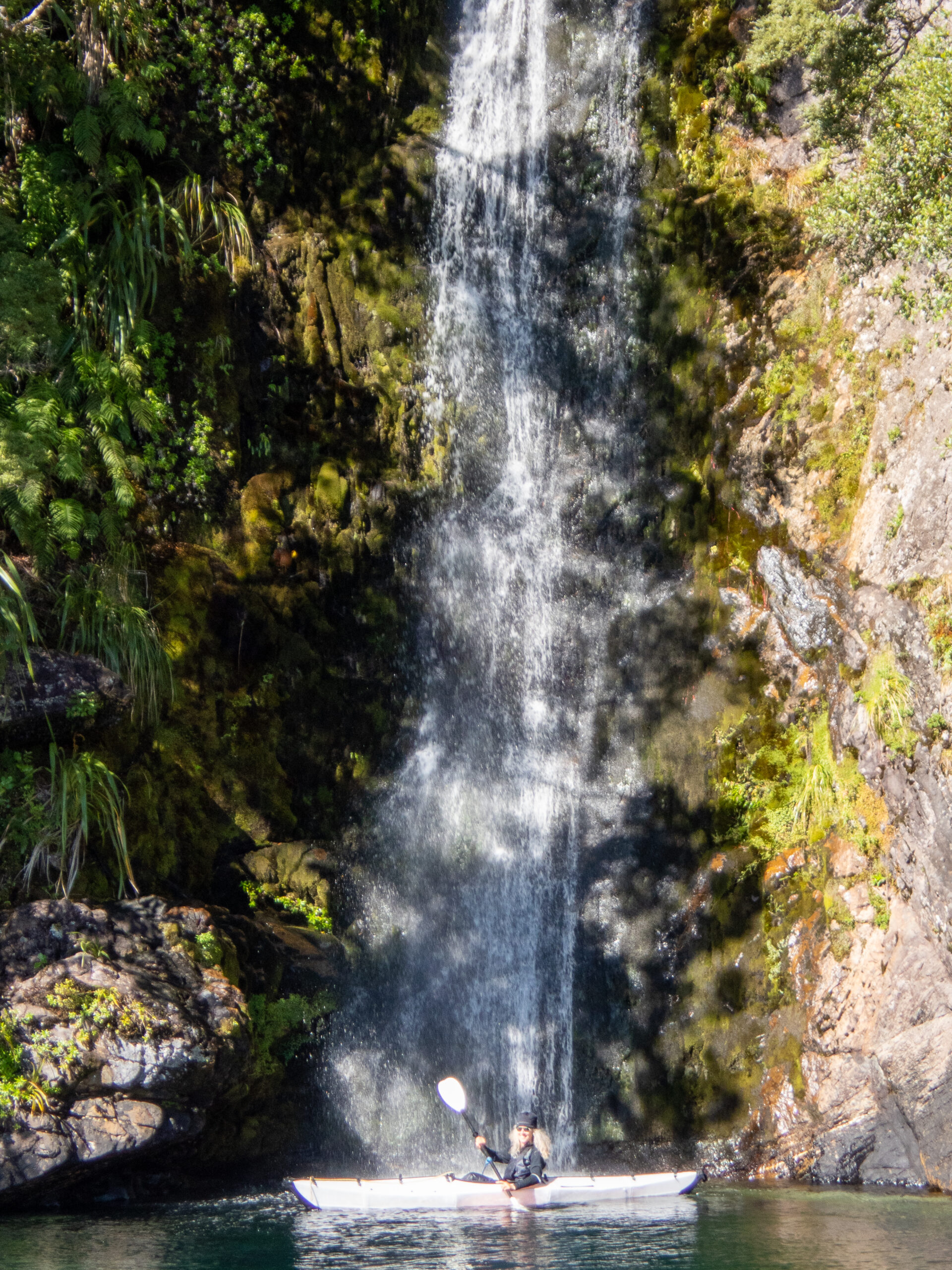
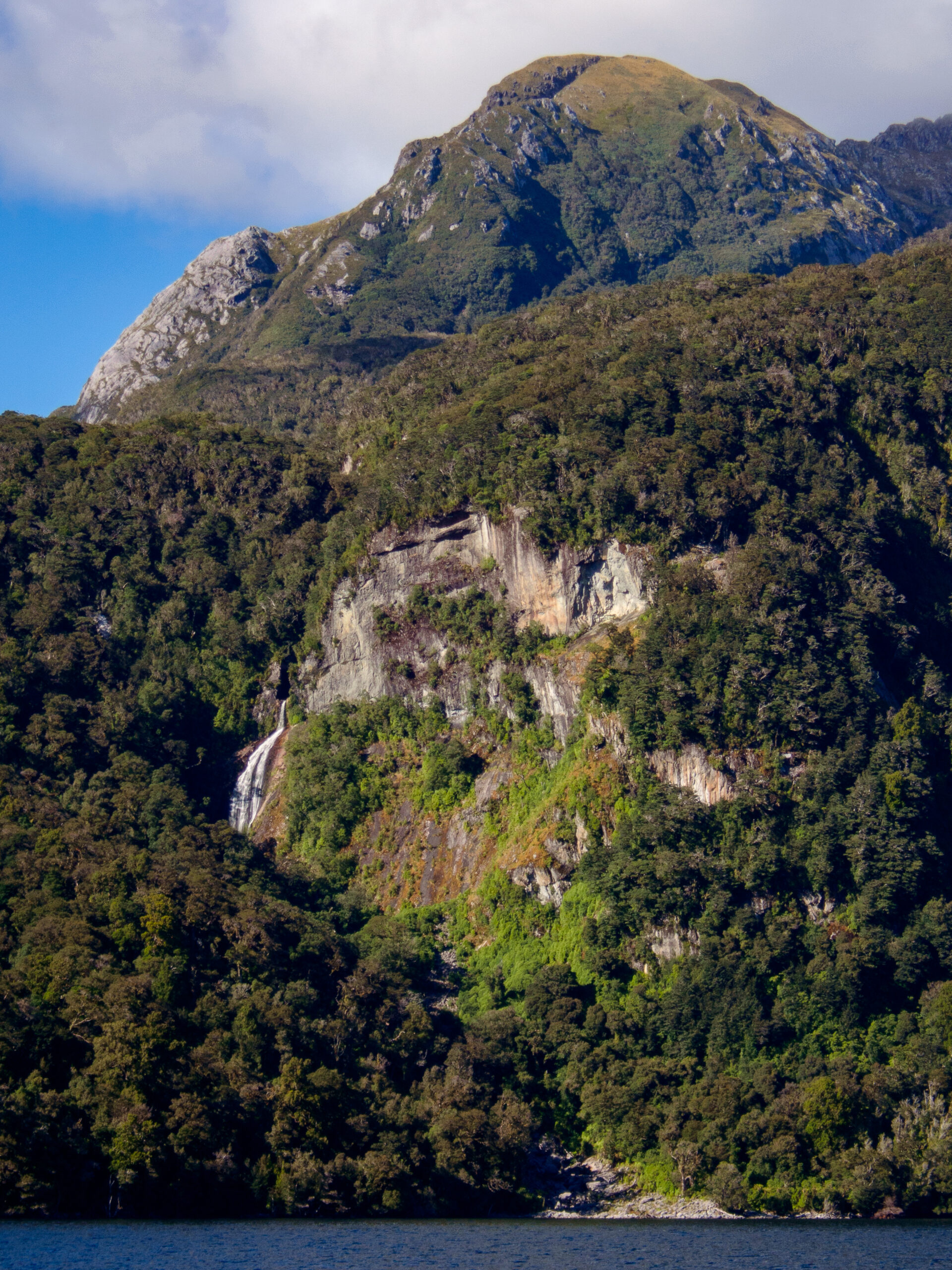
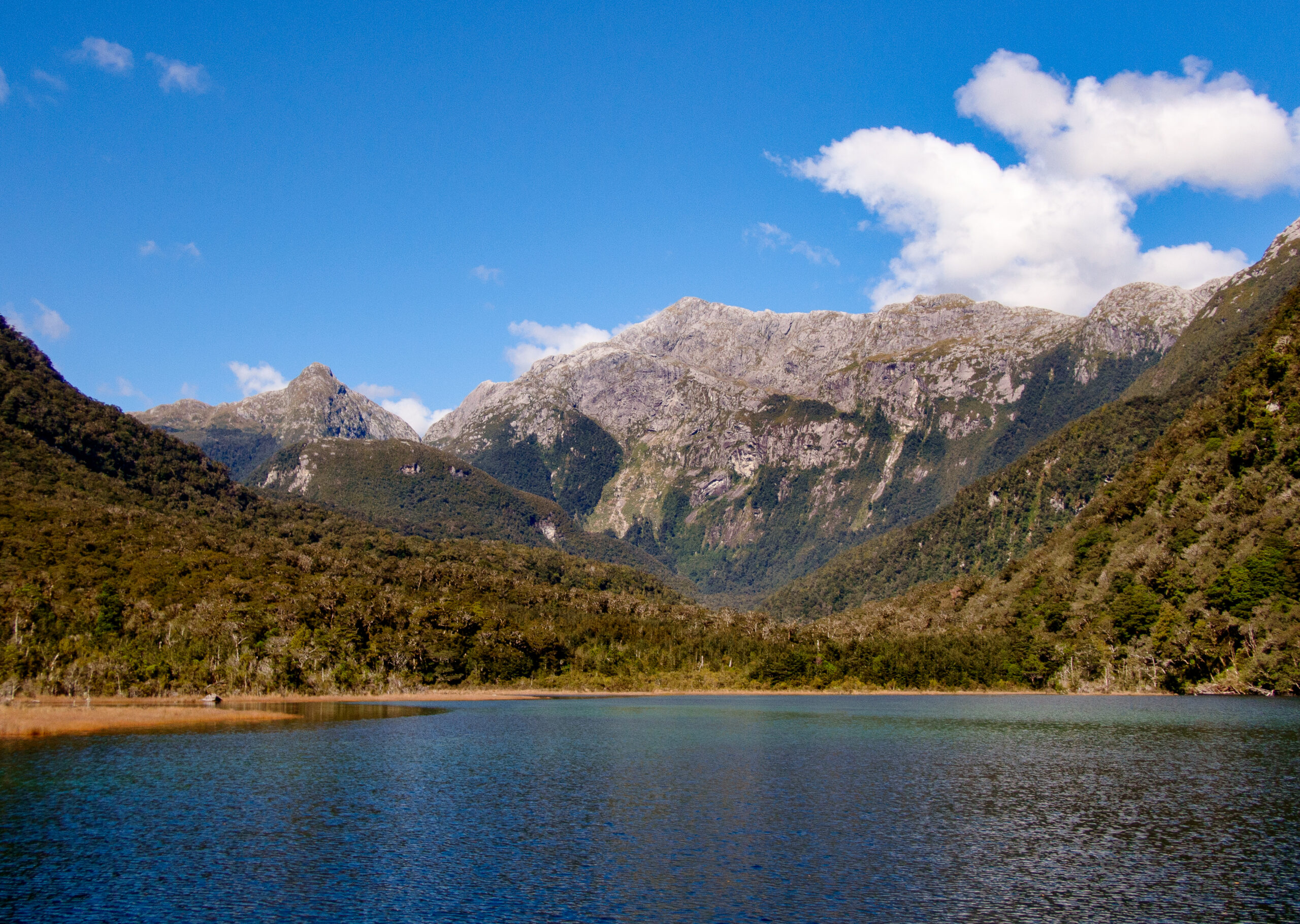
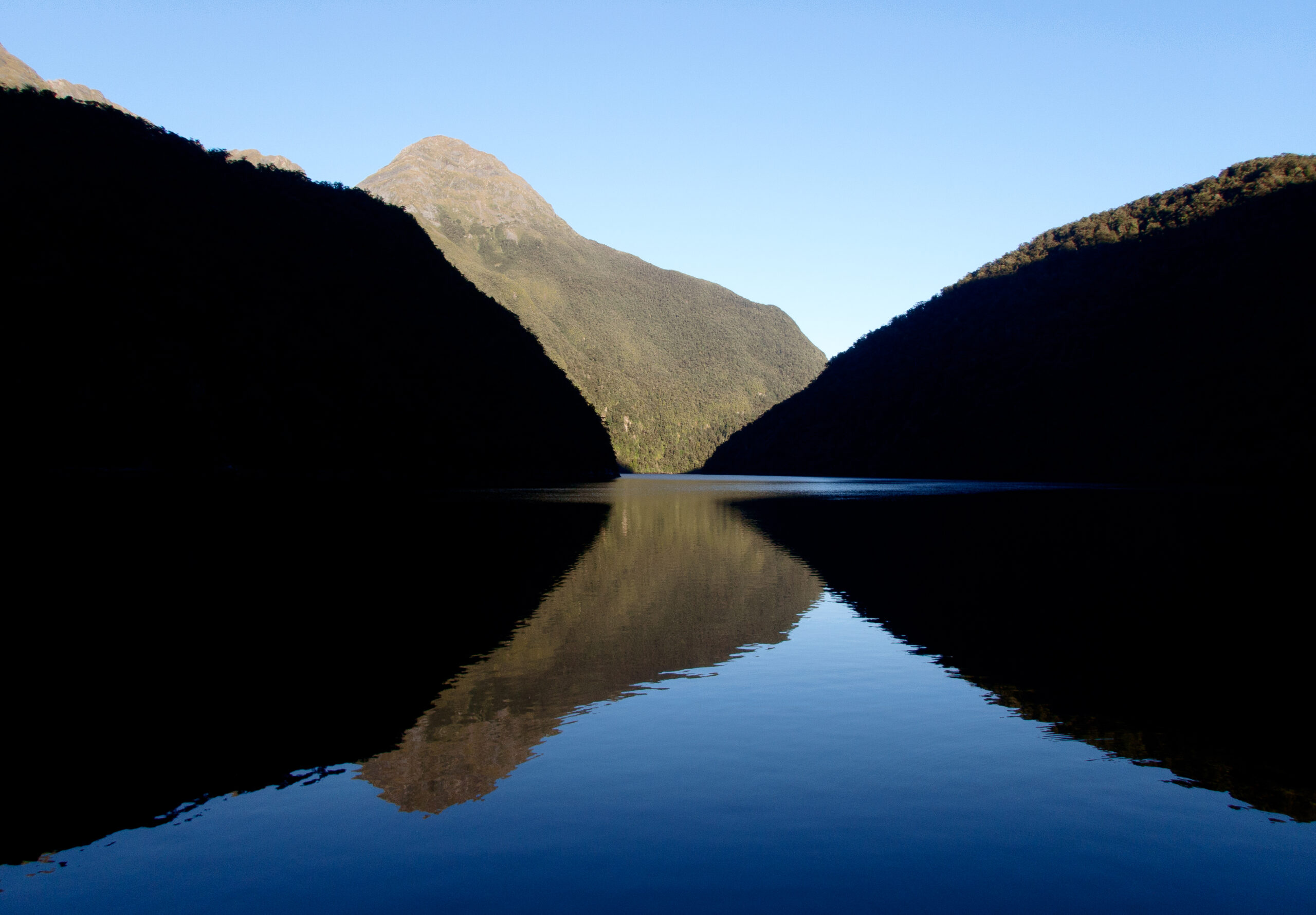
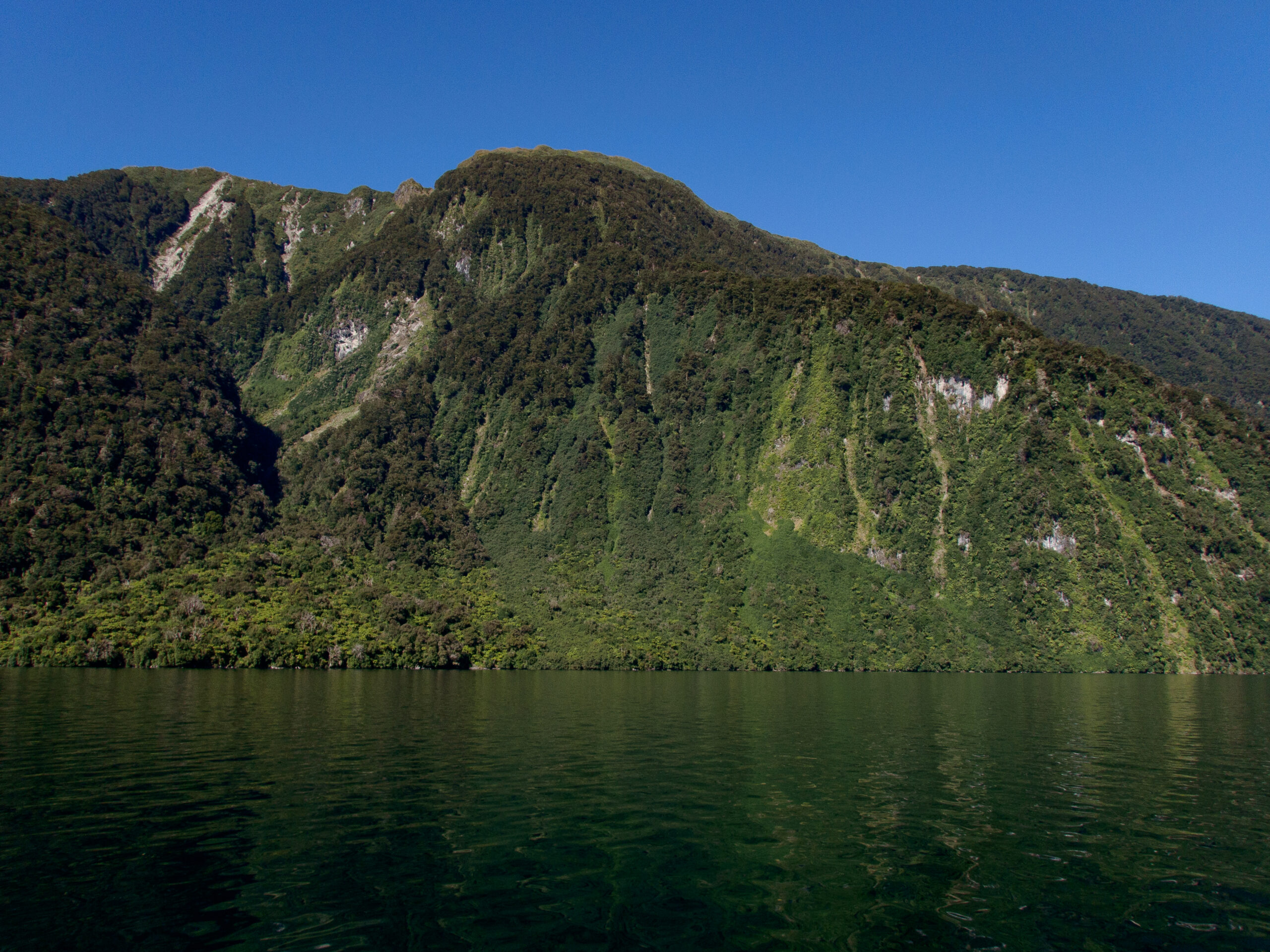
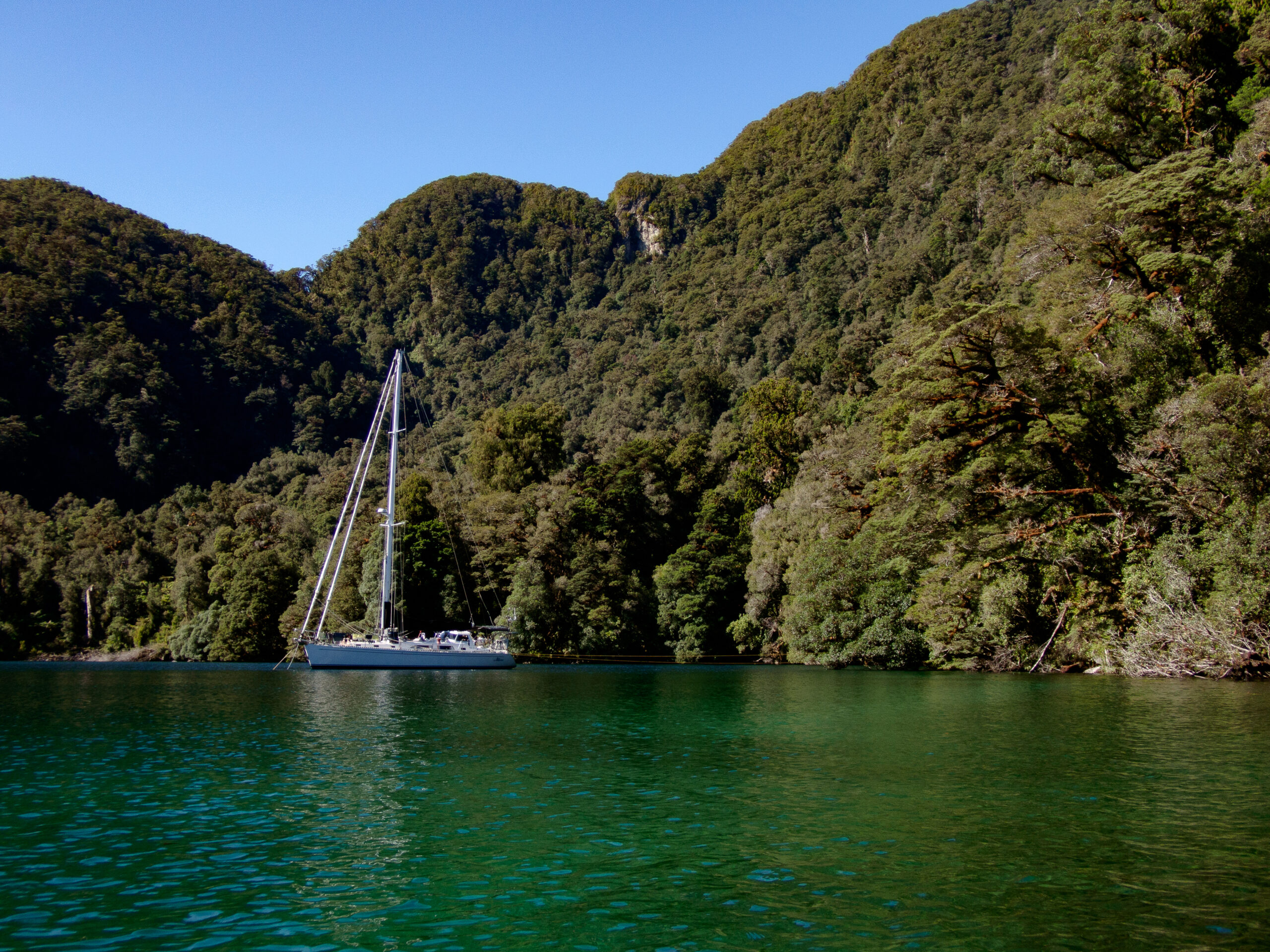
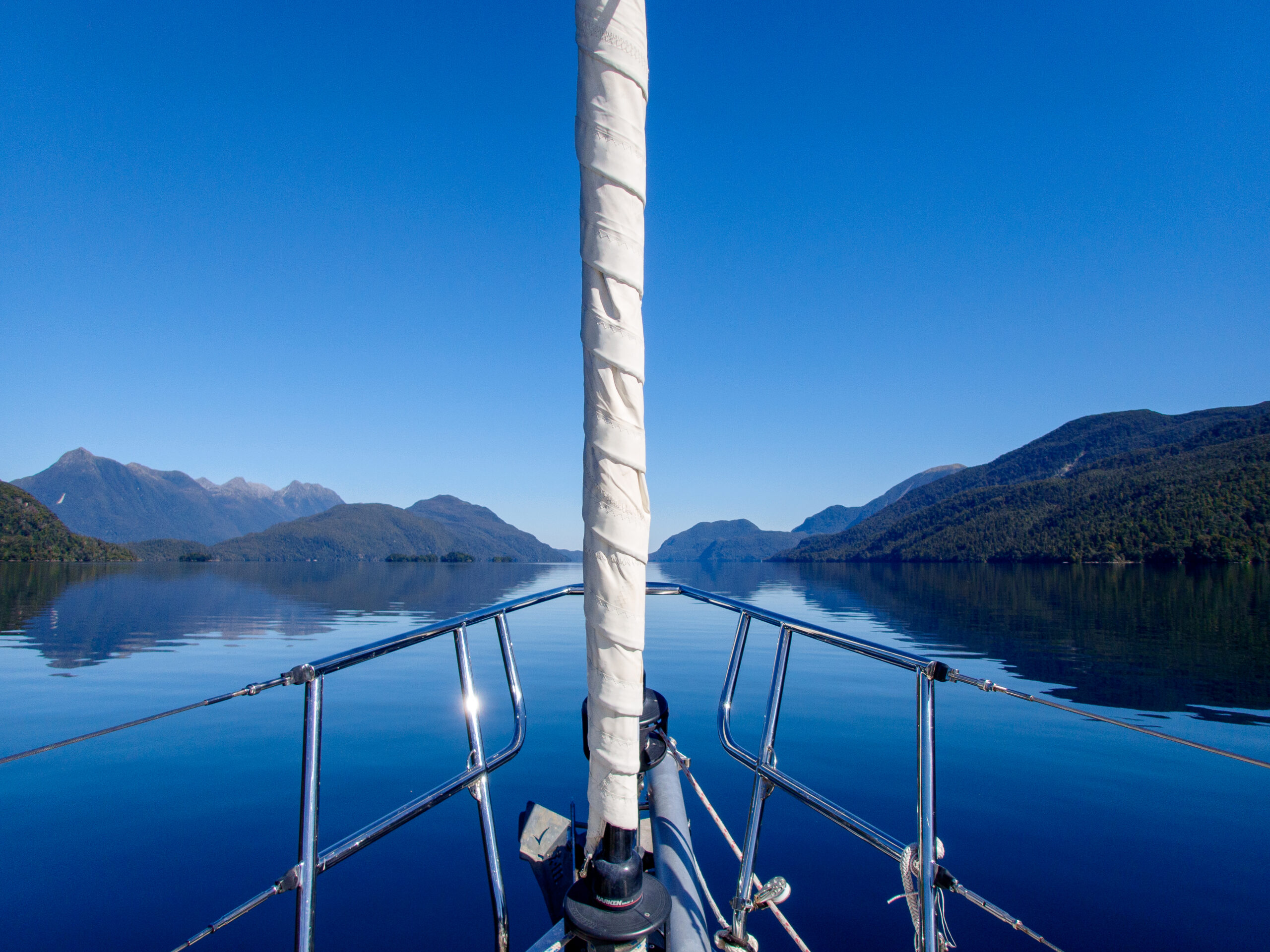
The relatively short distances between sounds along Fiordland’s rugged coast allow for mad dashes timed to brief calms, but you can’t really read the ocean’s mood sheltered in the steep granite walls of the fiords. Often the designation, “all weather anchorage,” means that fishermen have figured out that even in the worst conditions, certain spots are spared. The only way to know when it’s time to go, if you don’t have the benefit of years of local knowledge, is to study the weather models that we download twice a day from PredictWind. Because they are downloading via Iridium satellite, the resolution of the models cannot be higher that 50km. So there’s a bit of an odd effect as the models average how much the wind on the Tasman Sea is slowed down by the mountainous Fiordland coast, giving the appearance of lighter winds close to shore. They probably are a little lighter compared to what they are 20 miles out at sea, but our experience is that the models generally underestimate what it’s like on the outside and overestimate what we’ll experience once inside.Wind or no, gale or no, the seas are almost always a mess, particularly where local winds funnel through the openings of the sounds. Schedules are well known as the bane of sailing but in the land based world they are unavoidable, and Wyatt had a particularly narrow window of time to squeeze in a visit to us amid preparations to leave New Zealand. So we considered ourselves unreasonably lucky when the wind that pinned us down for a couple of days in Daag, relented in perfect time for us to make the dash. We arrived at the opening of Doubtful with what Wyatt would call a ‘splitter bluebird’ sunny day. ~MS
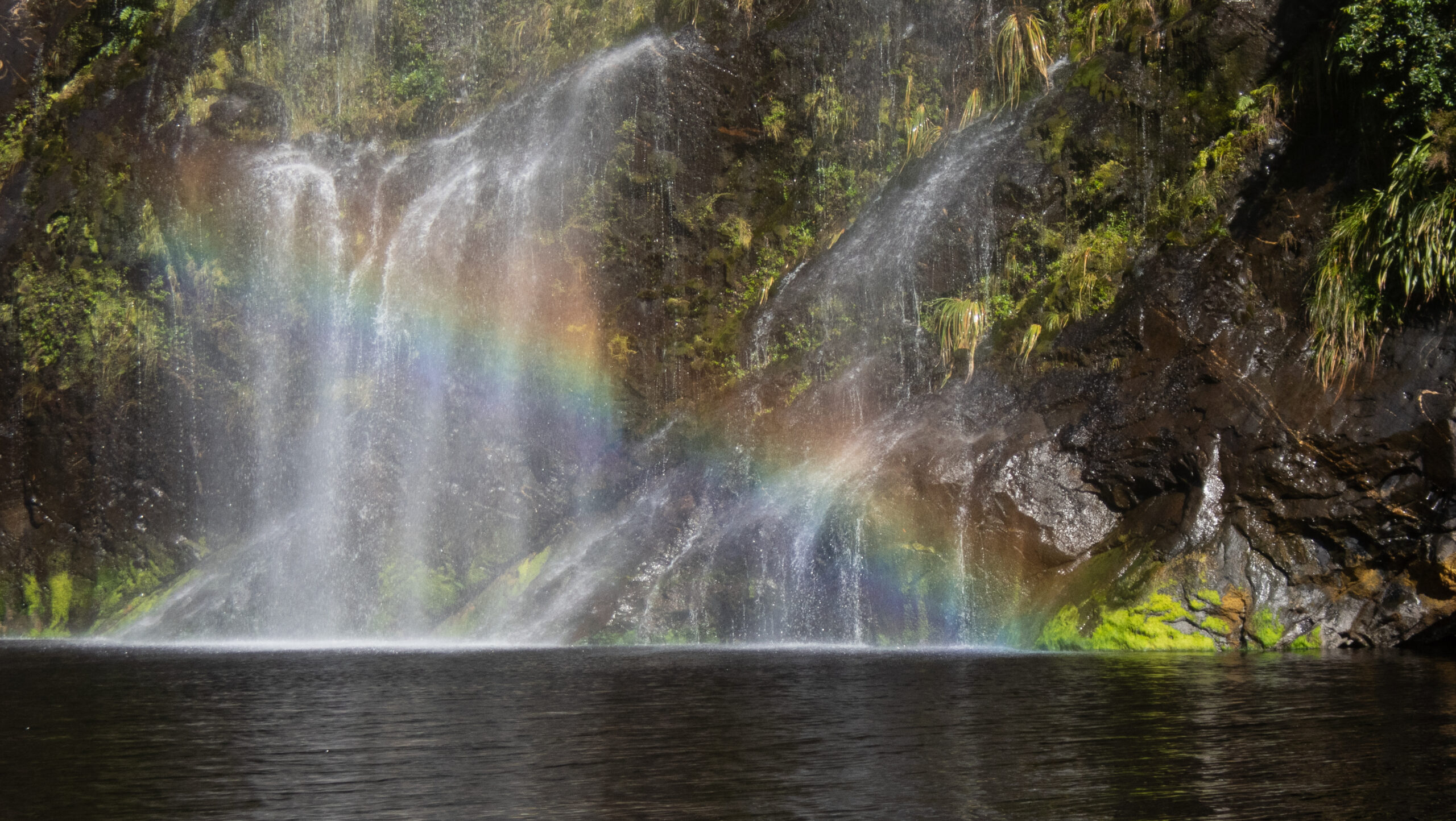
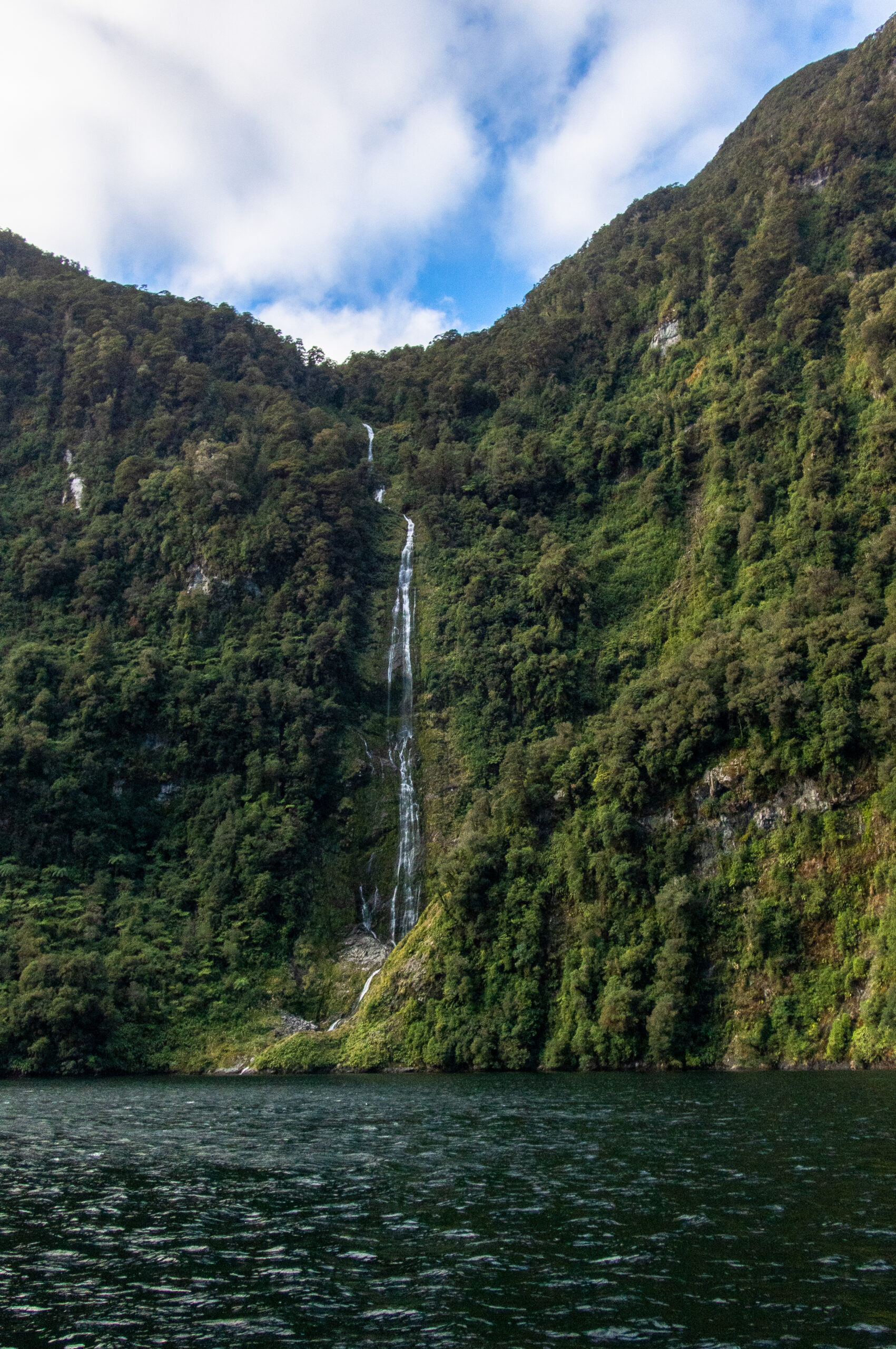
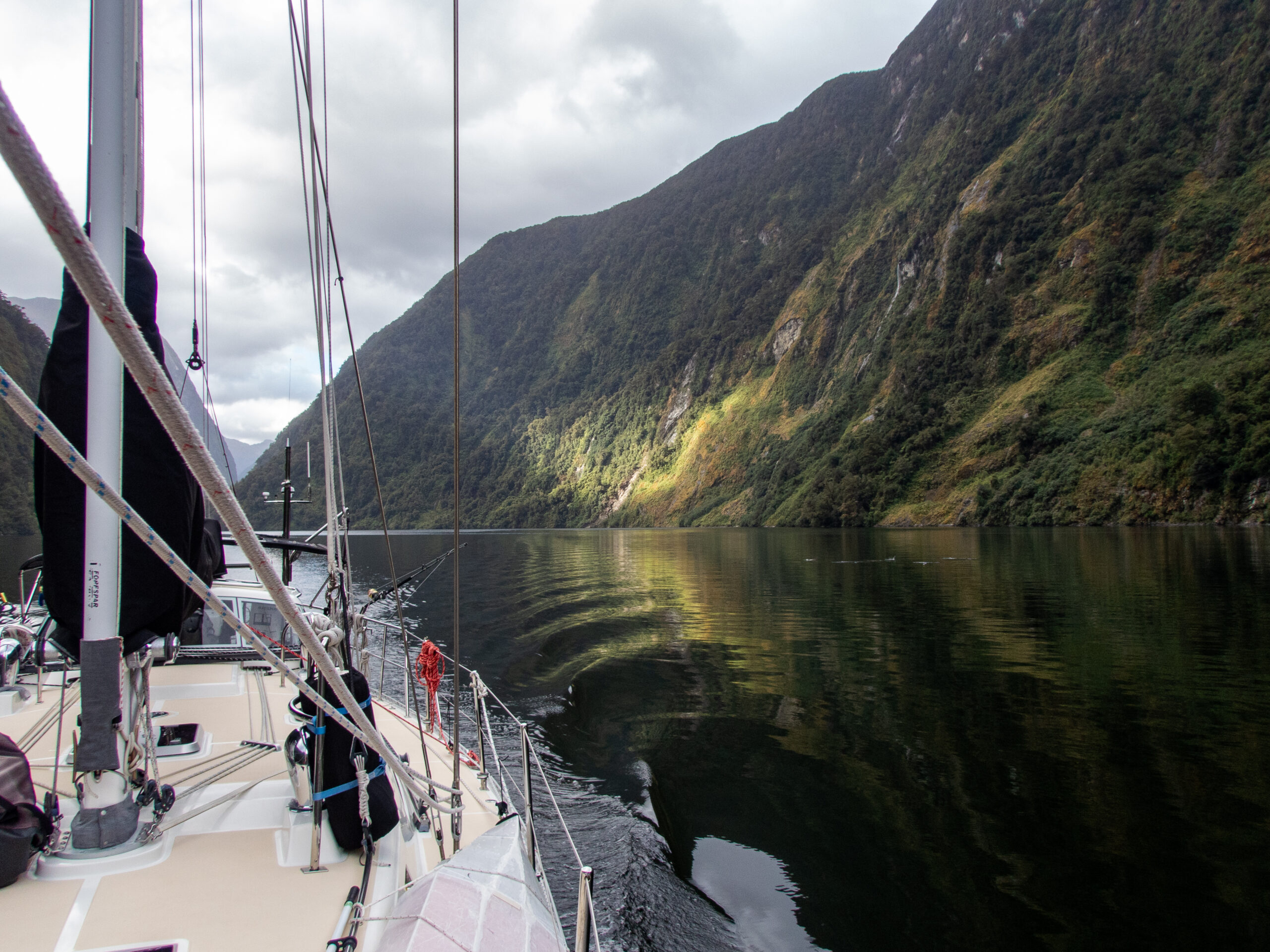
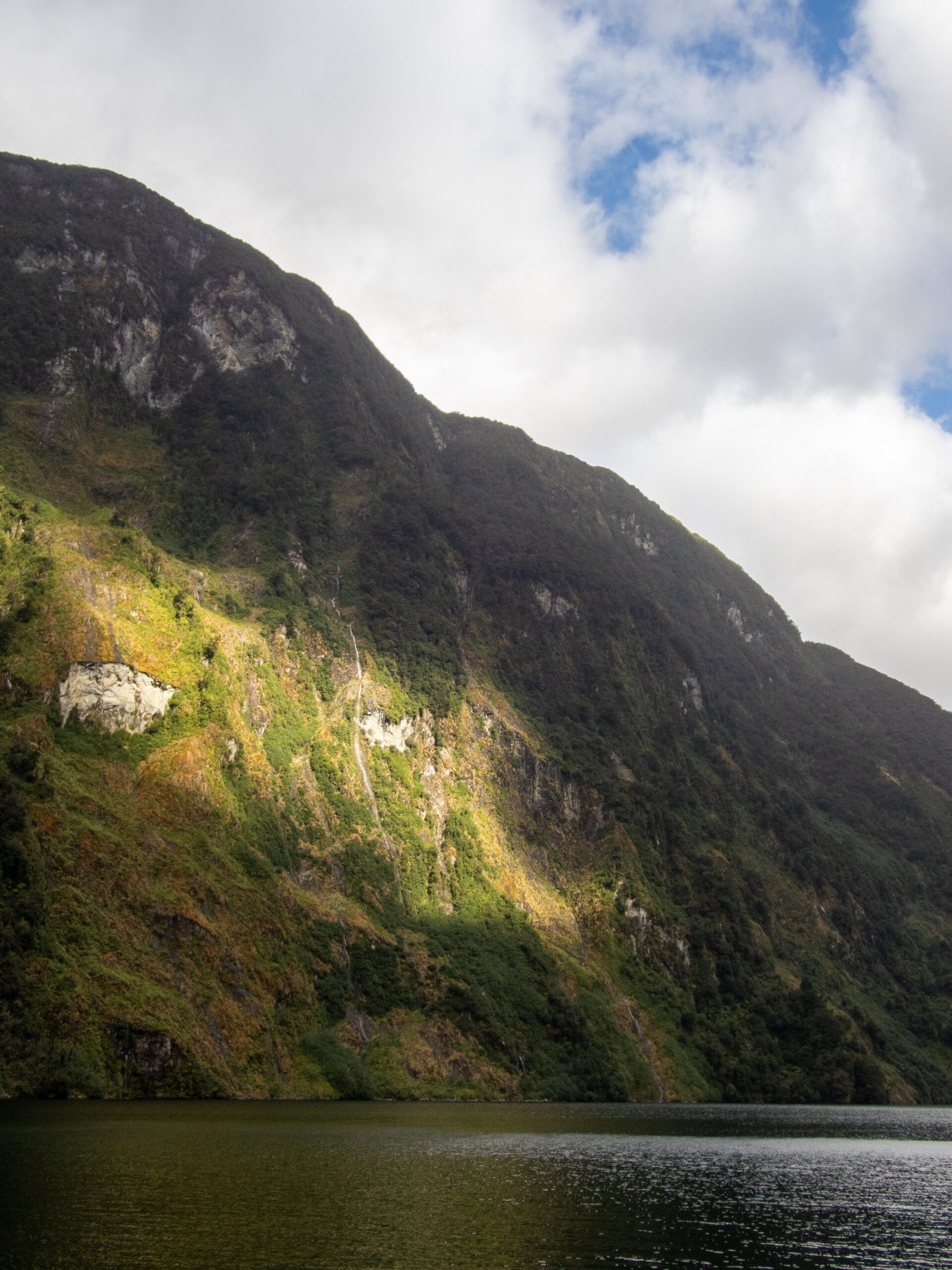
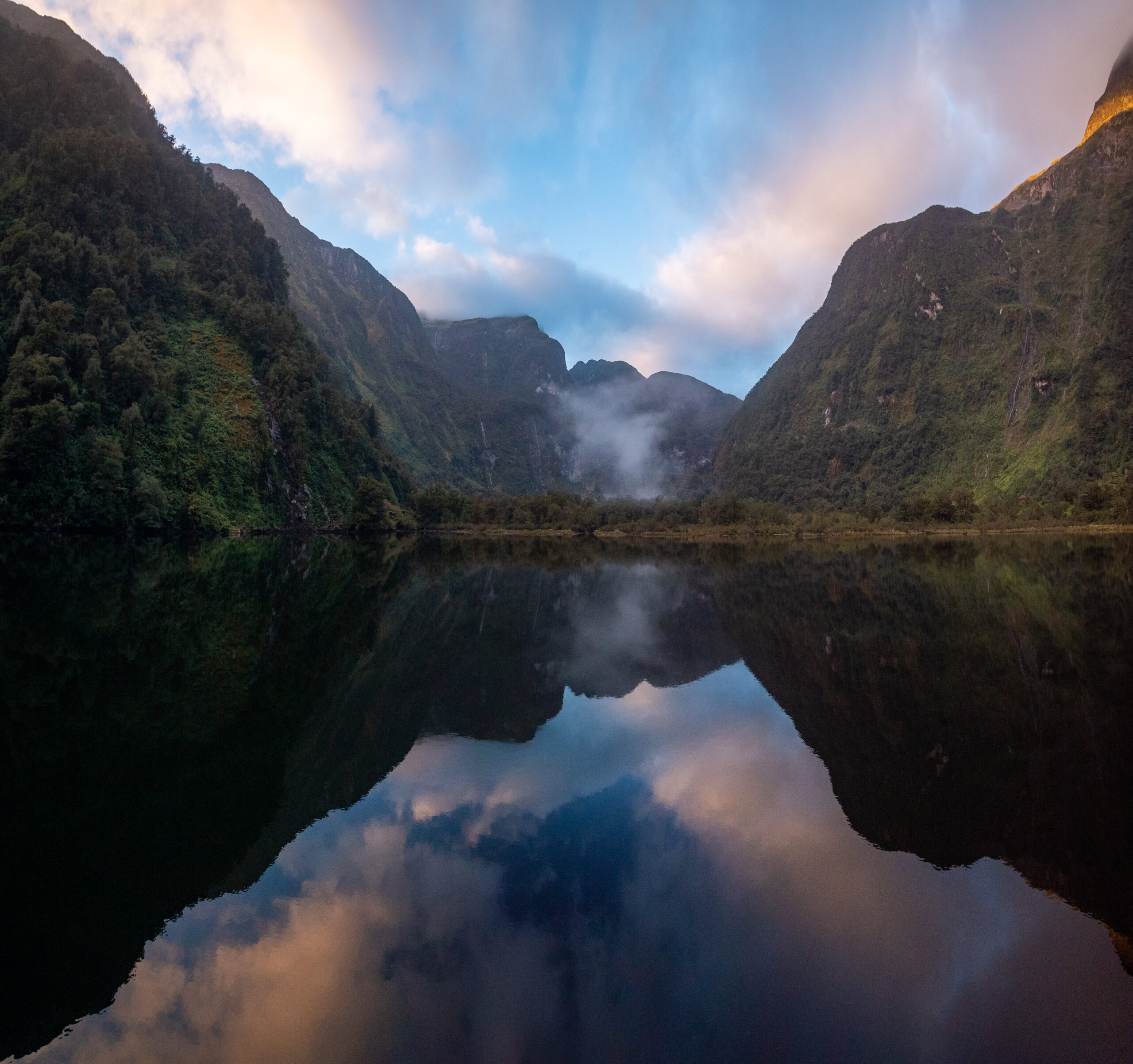
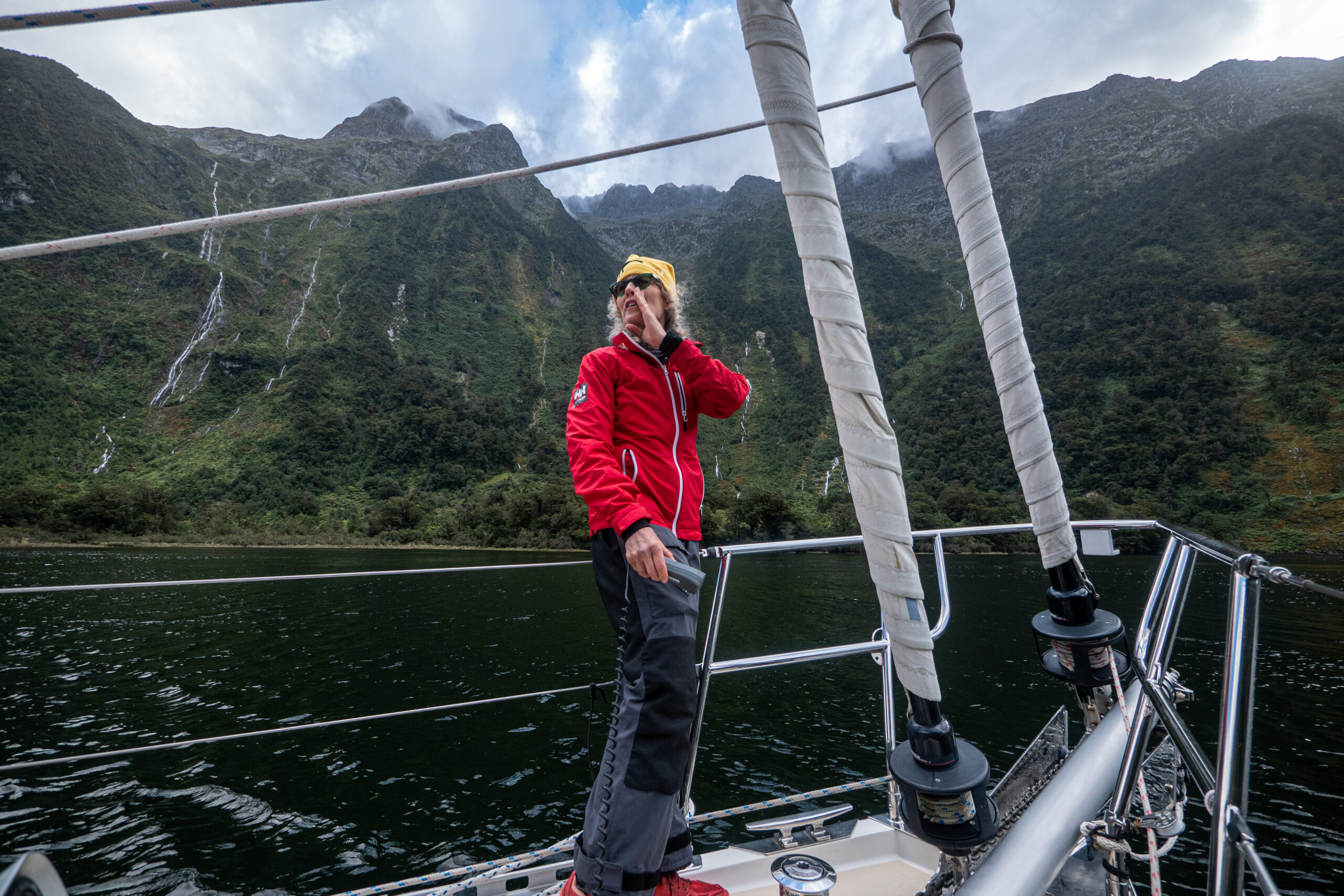
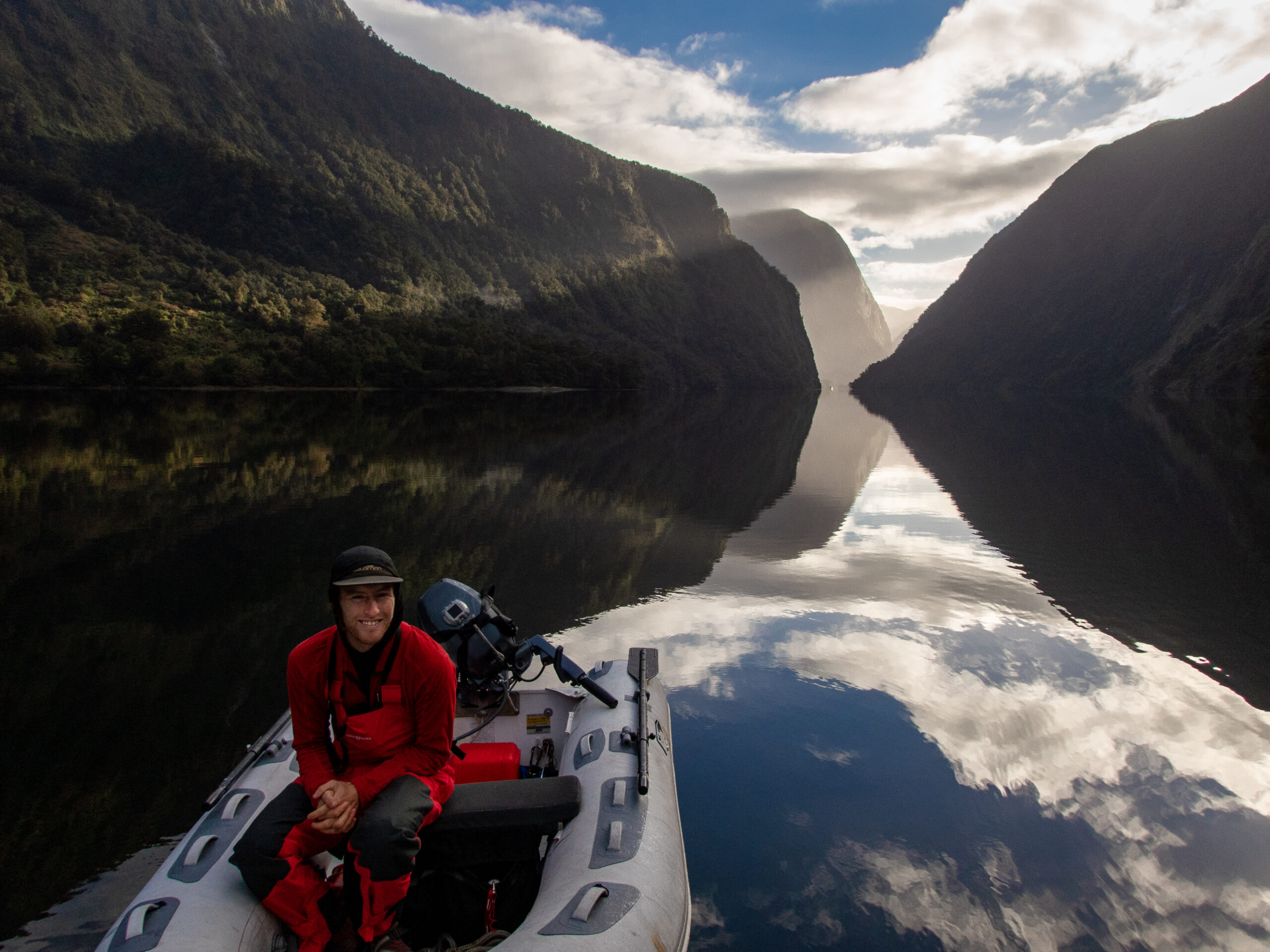
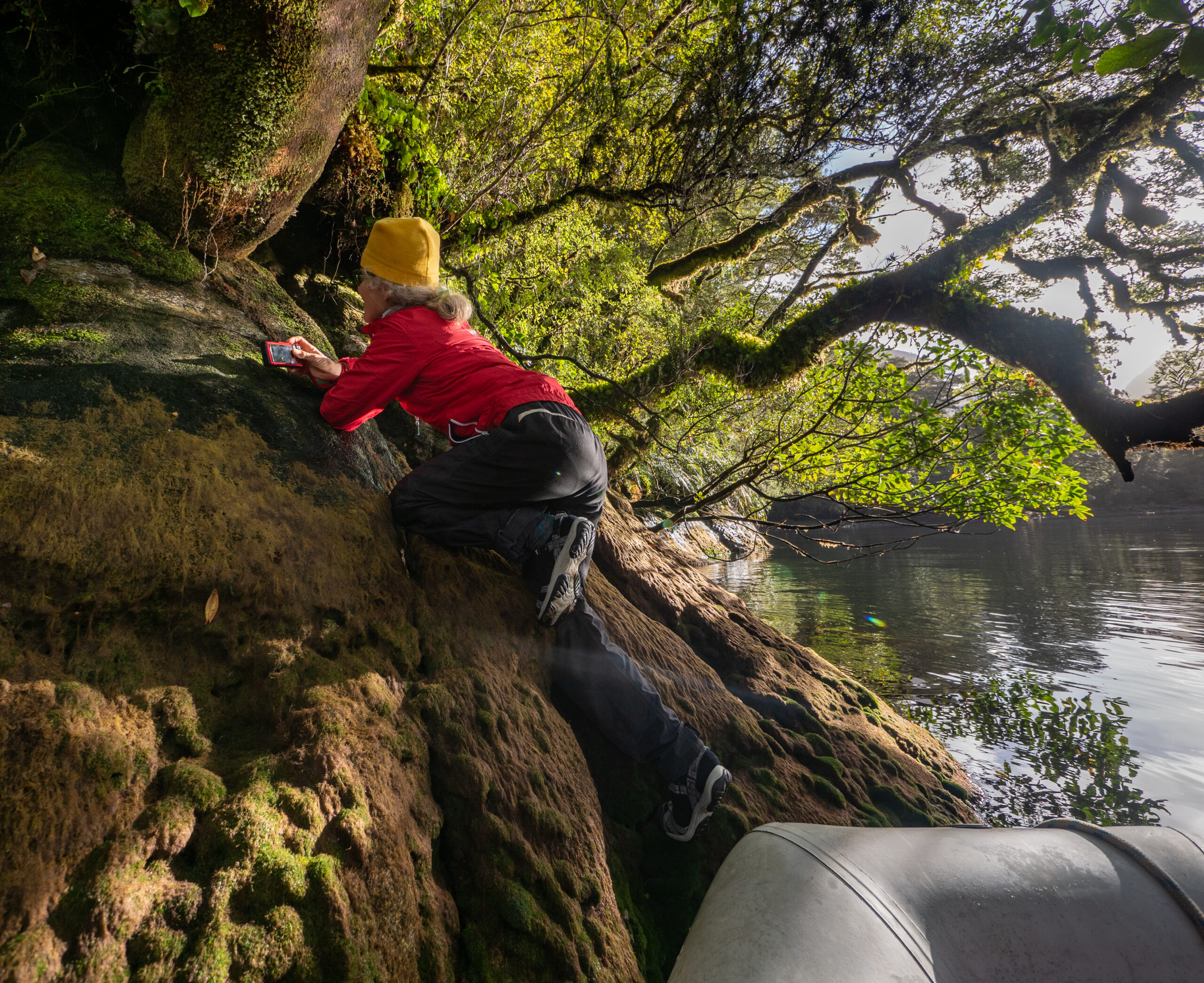
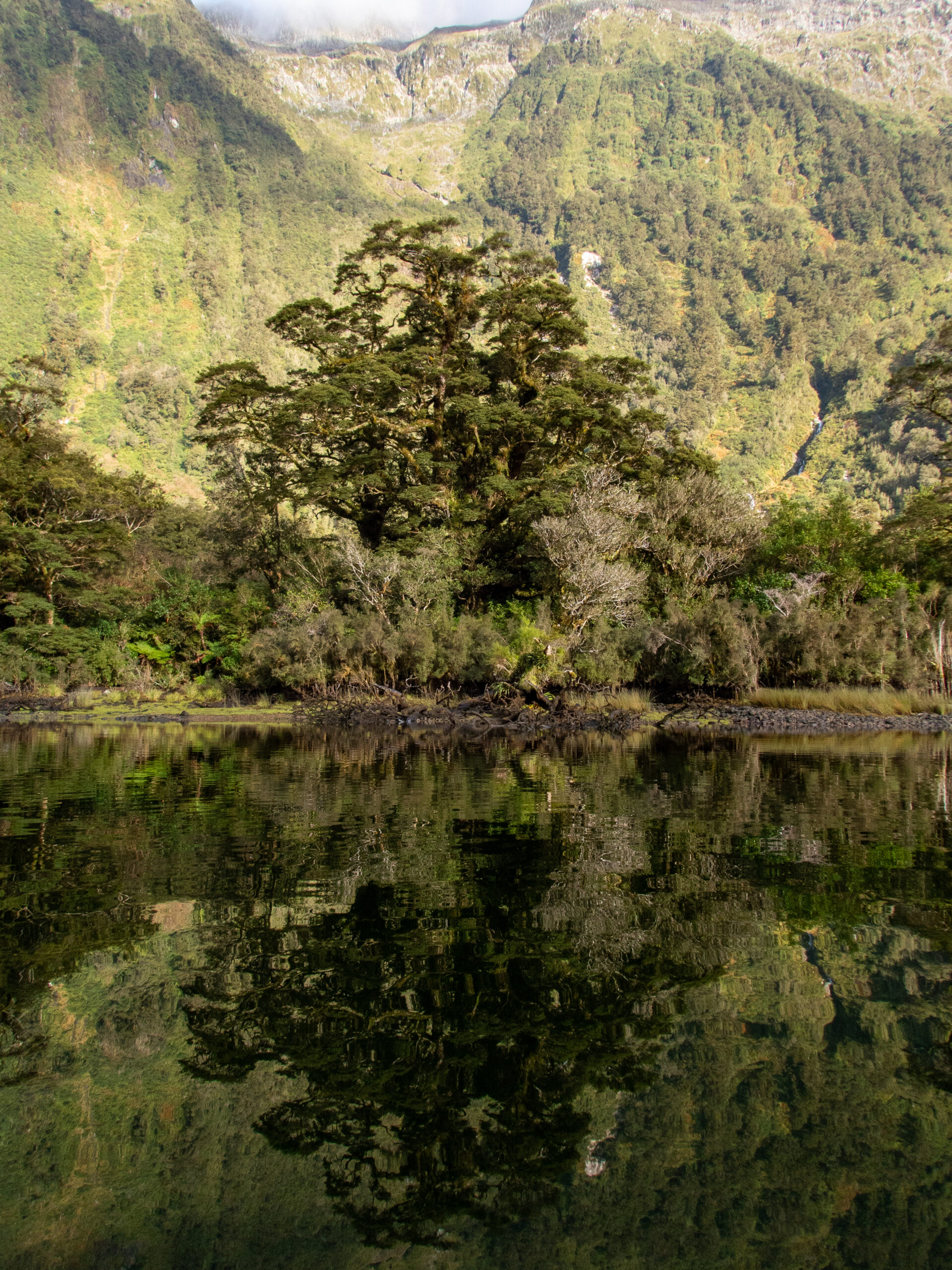
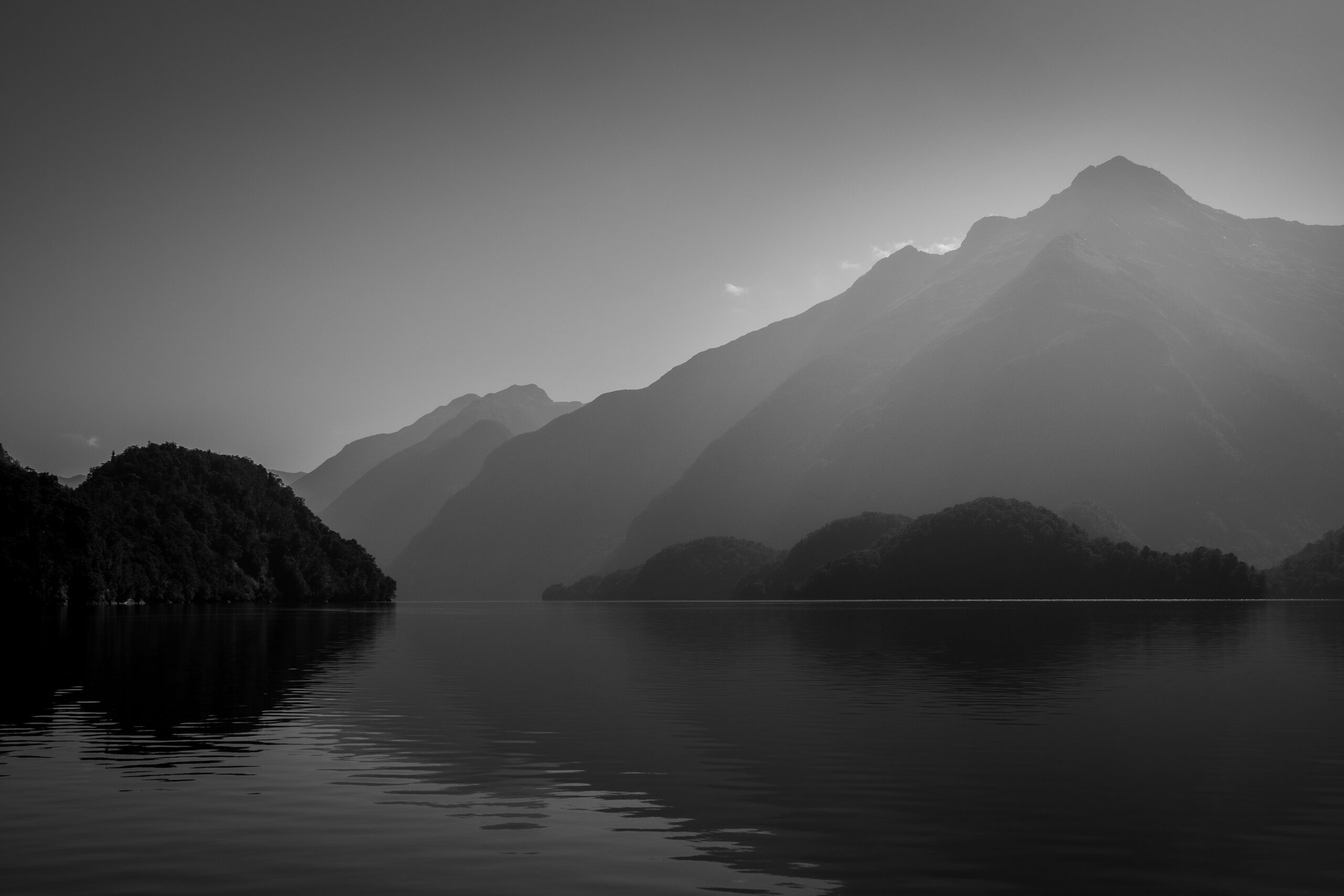
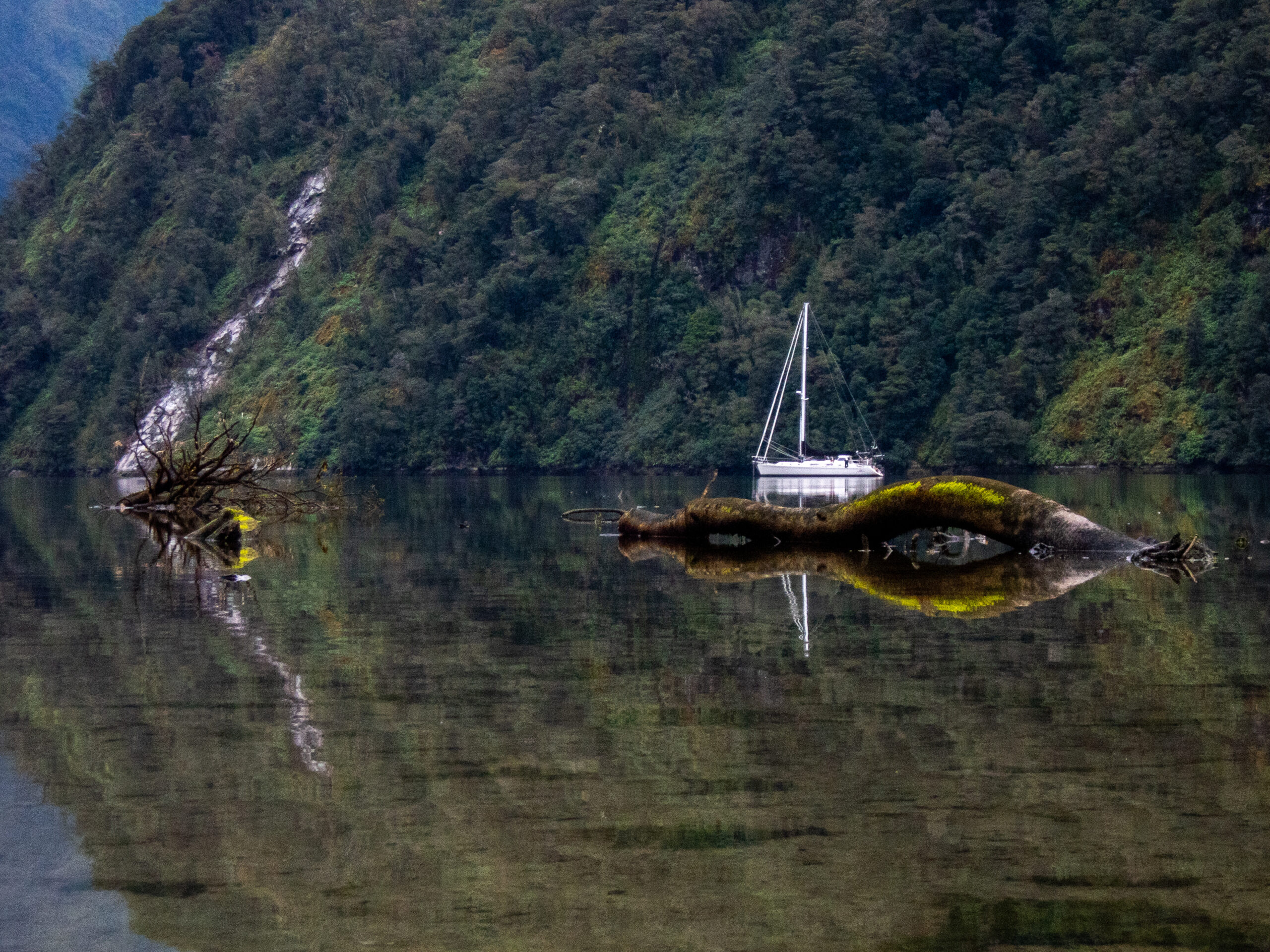
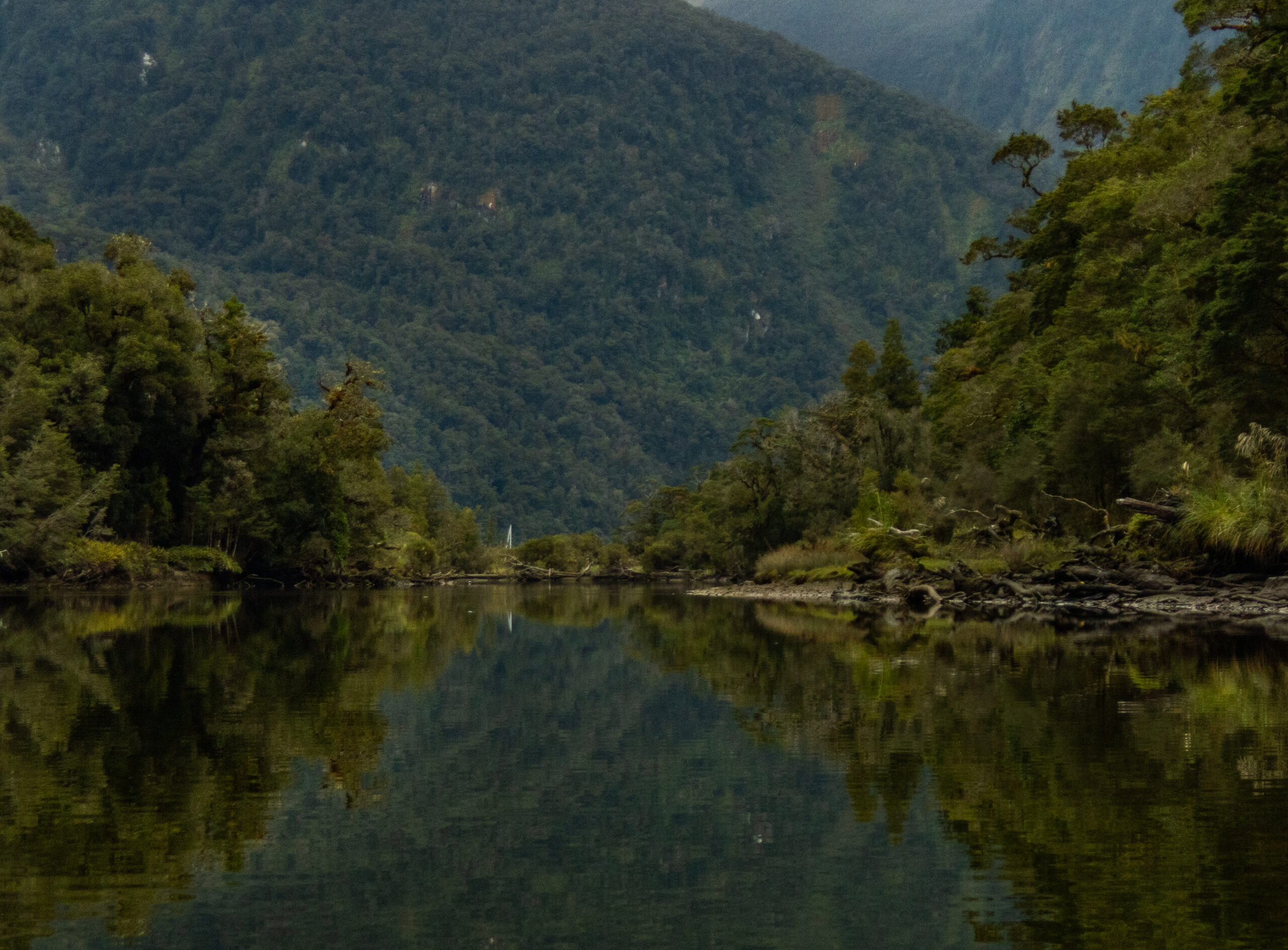
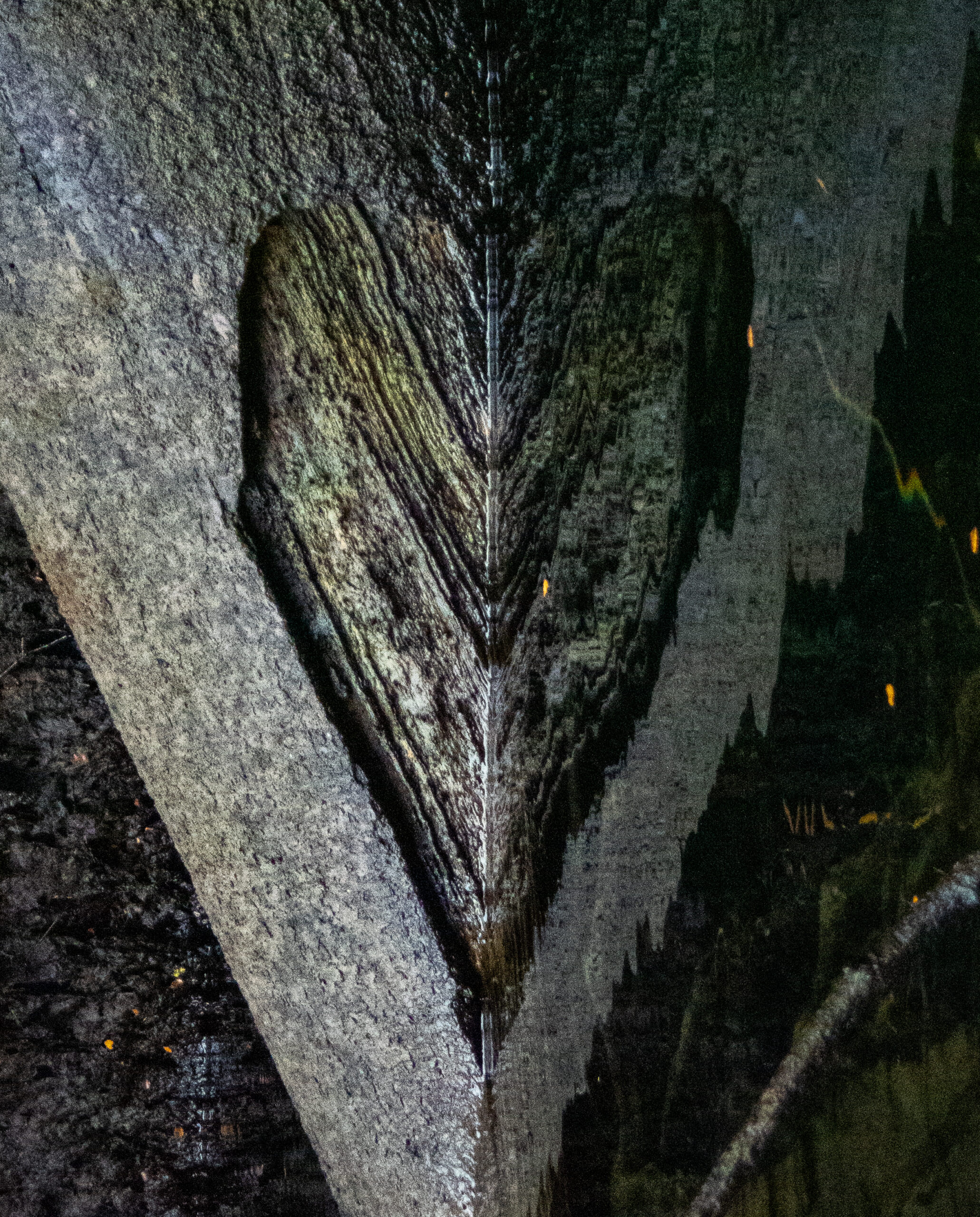
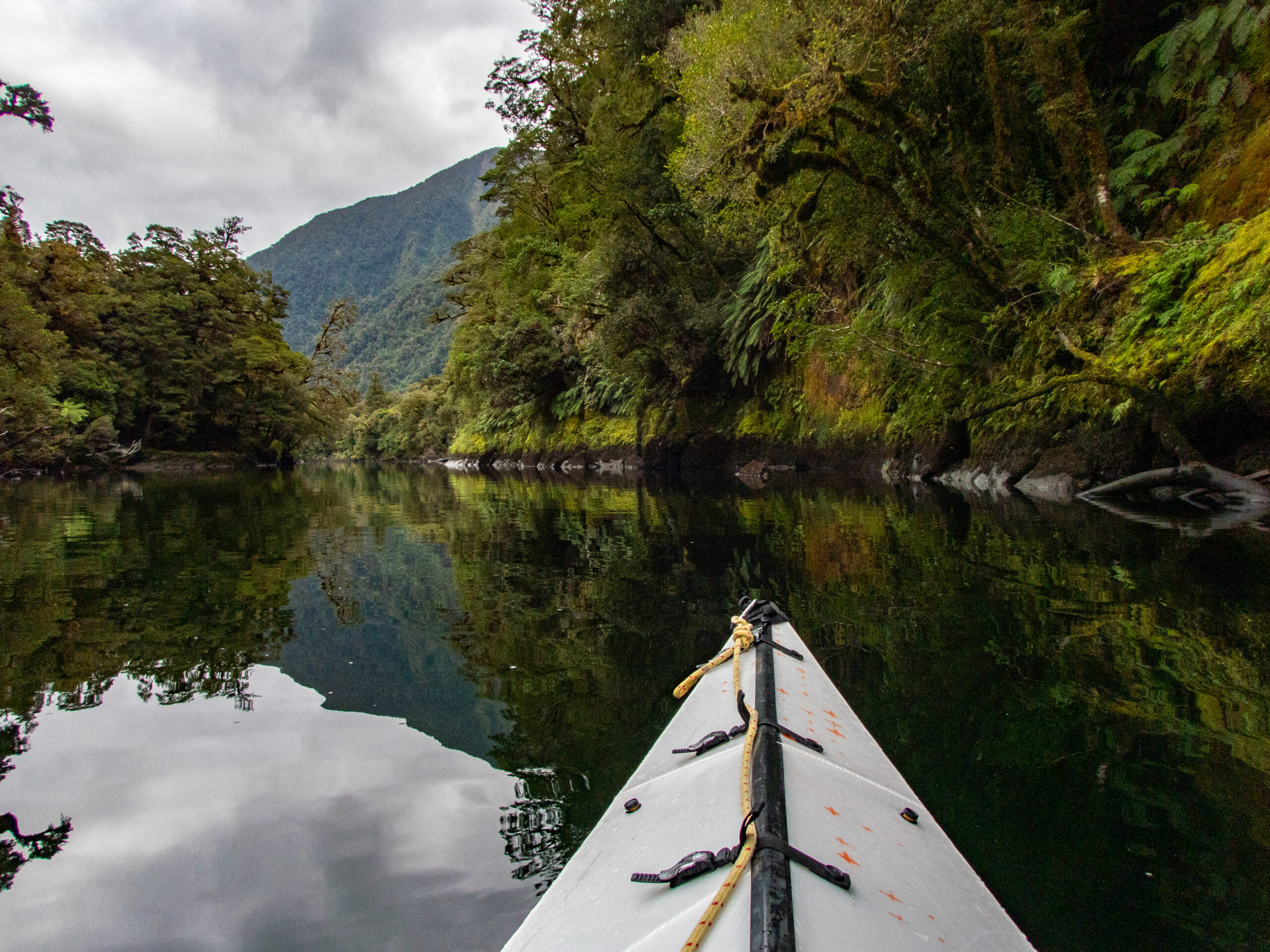
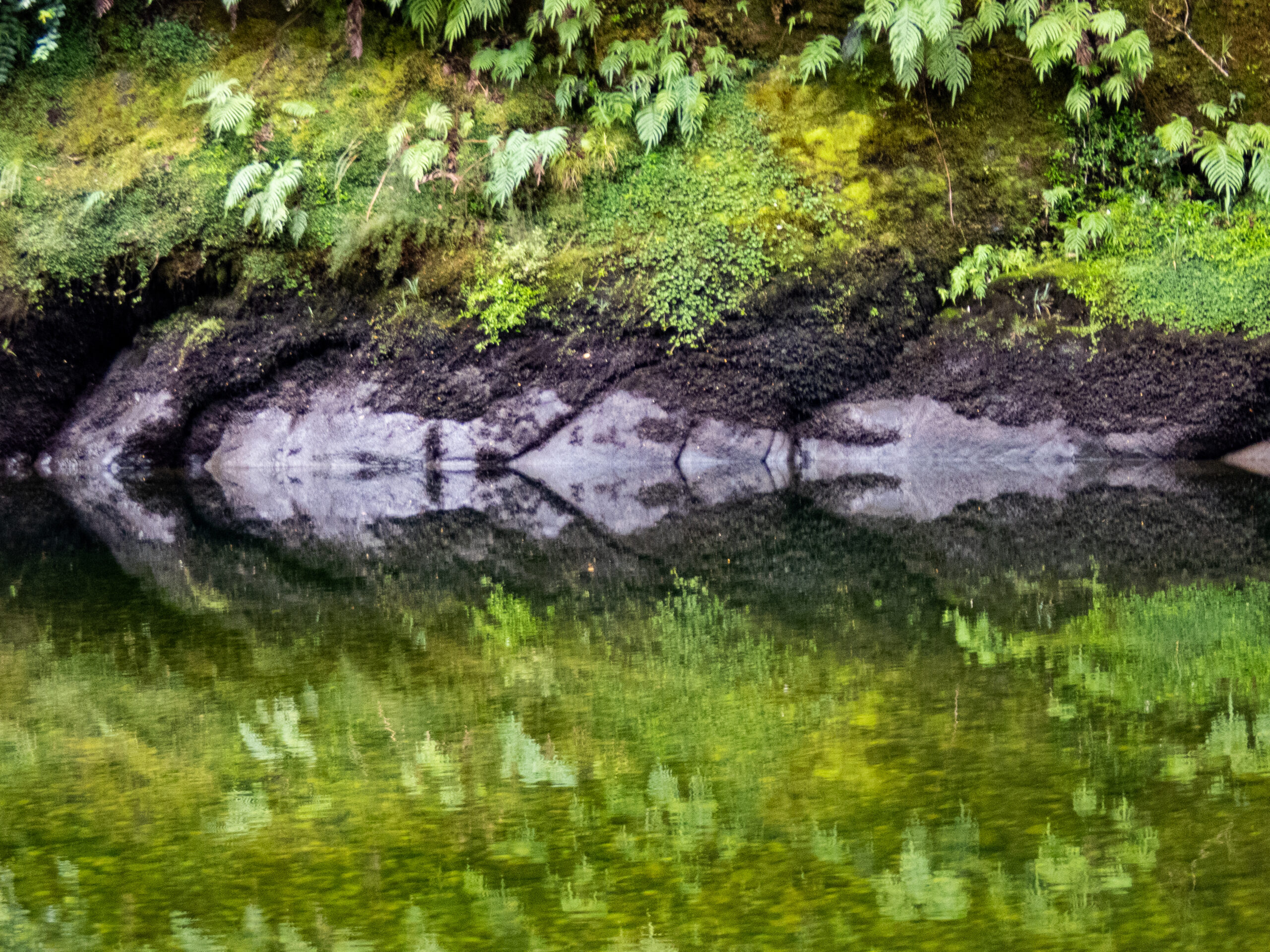
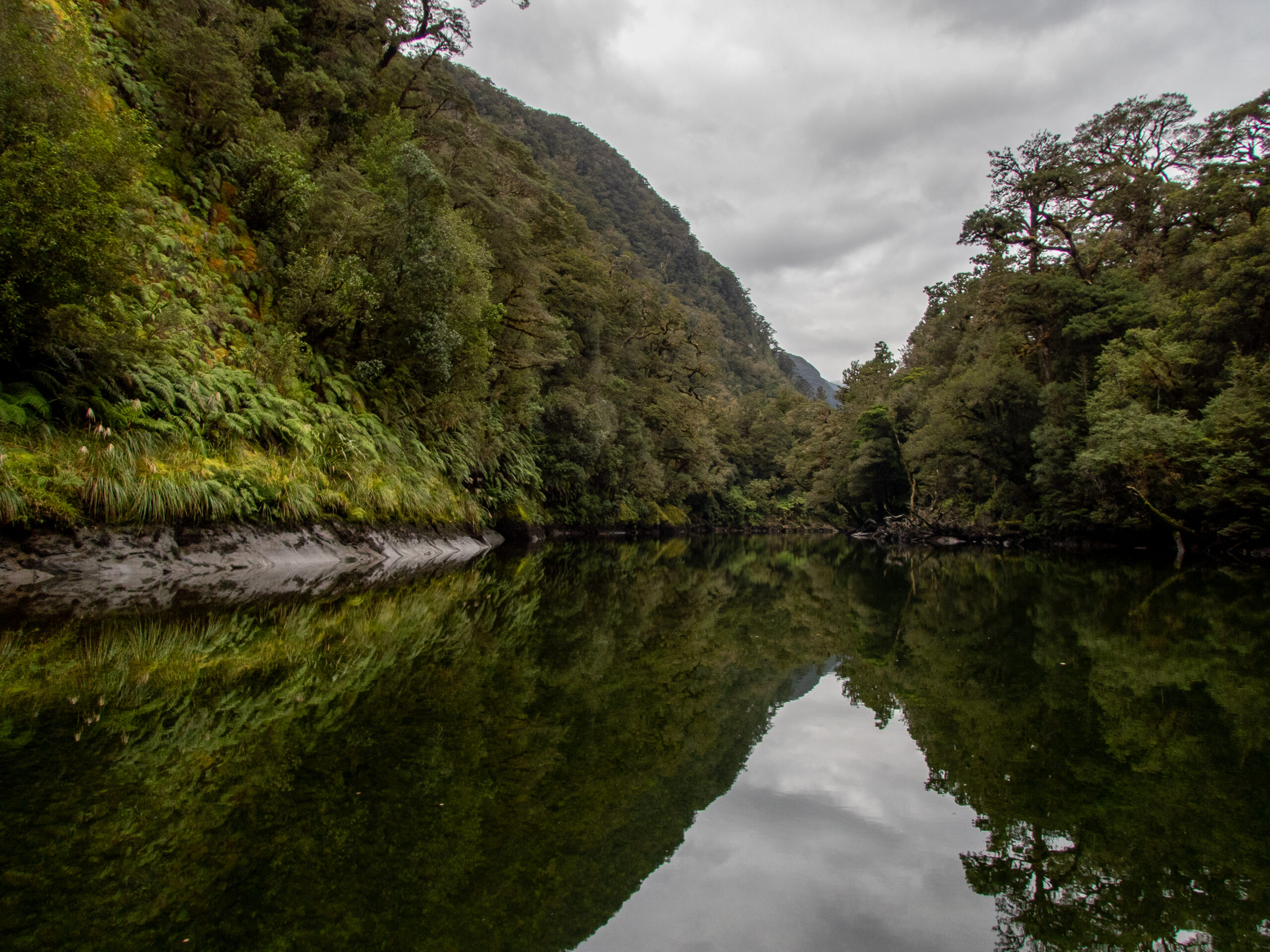
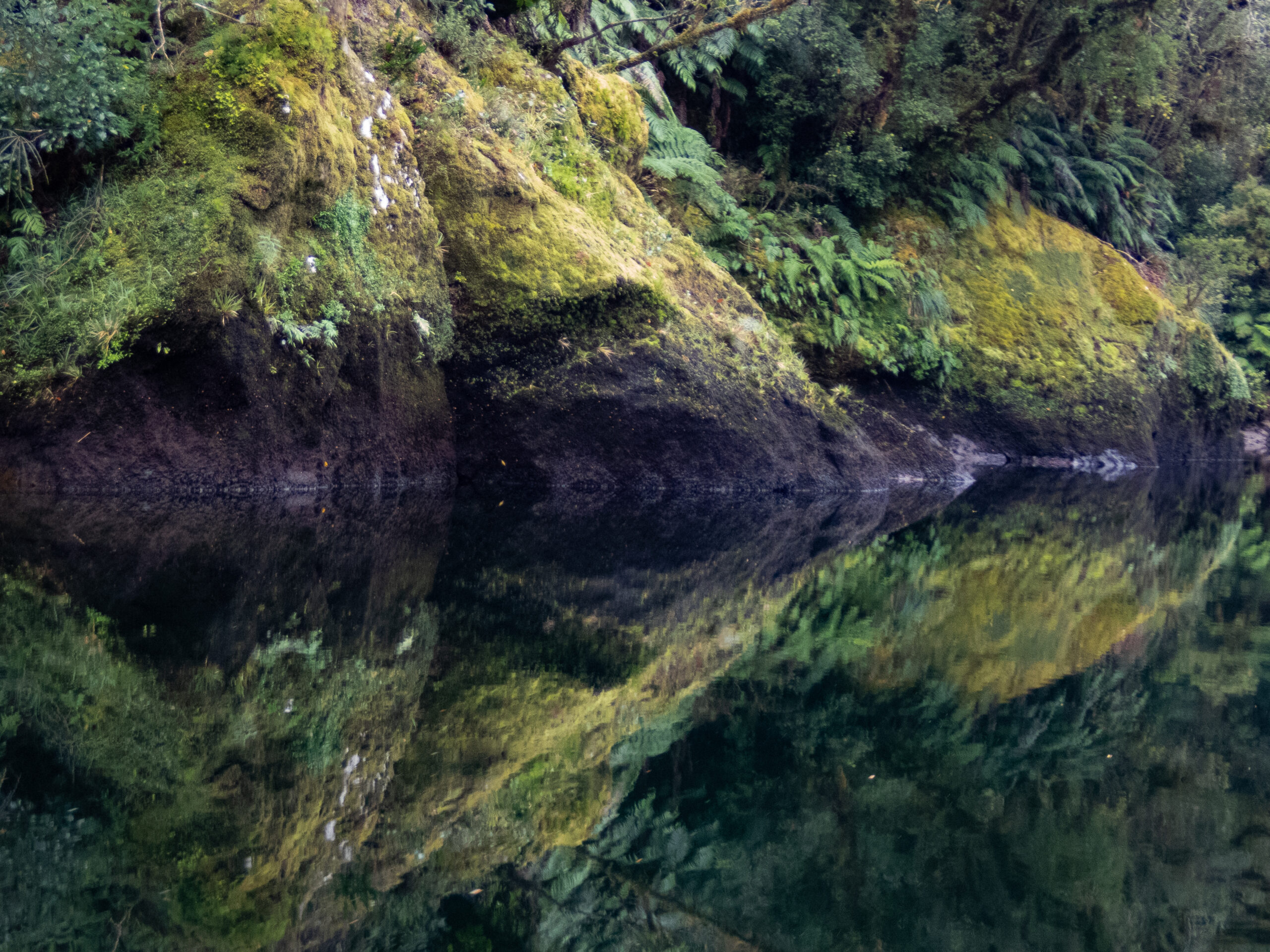
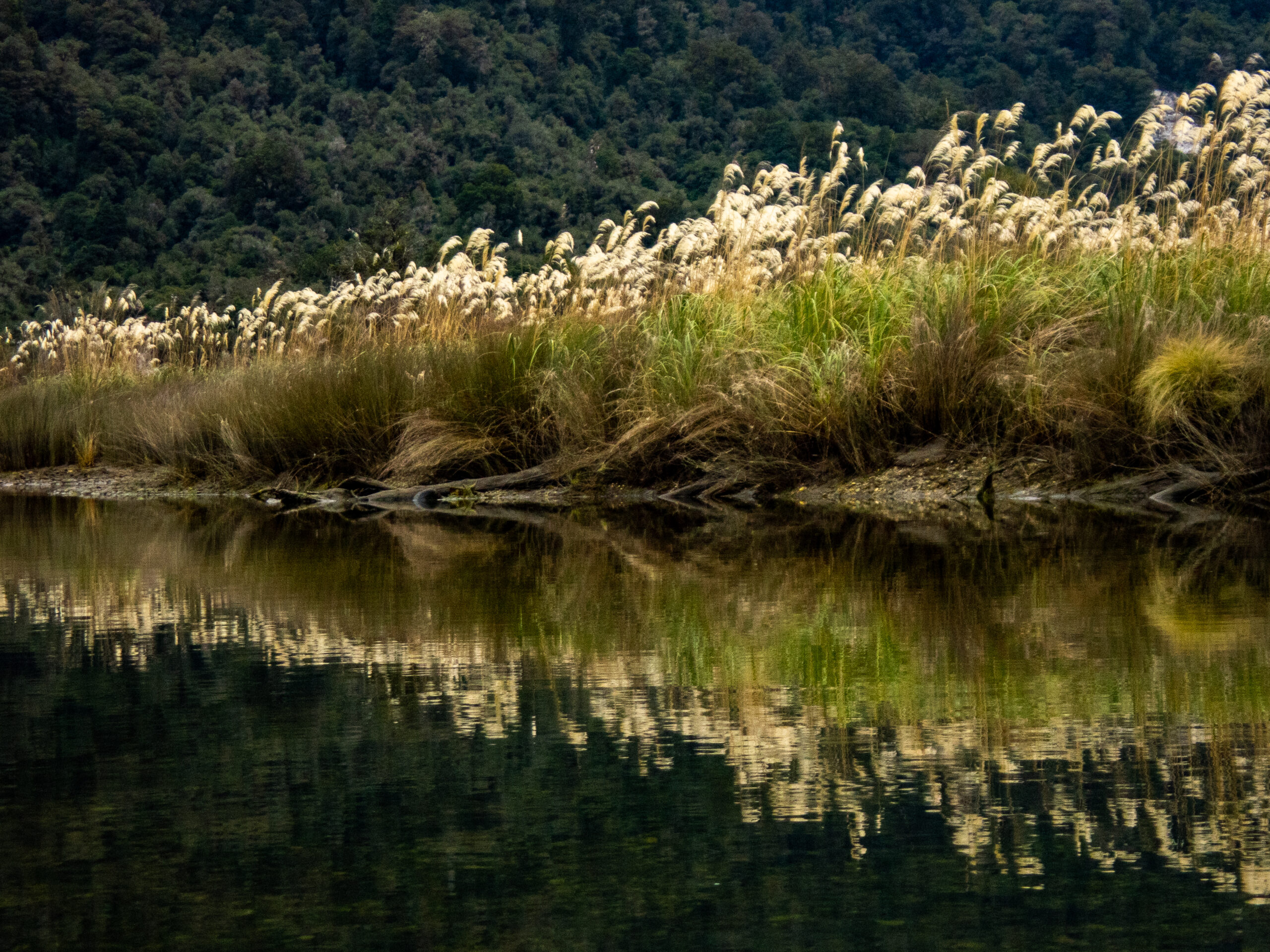
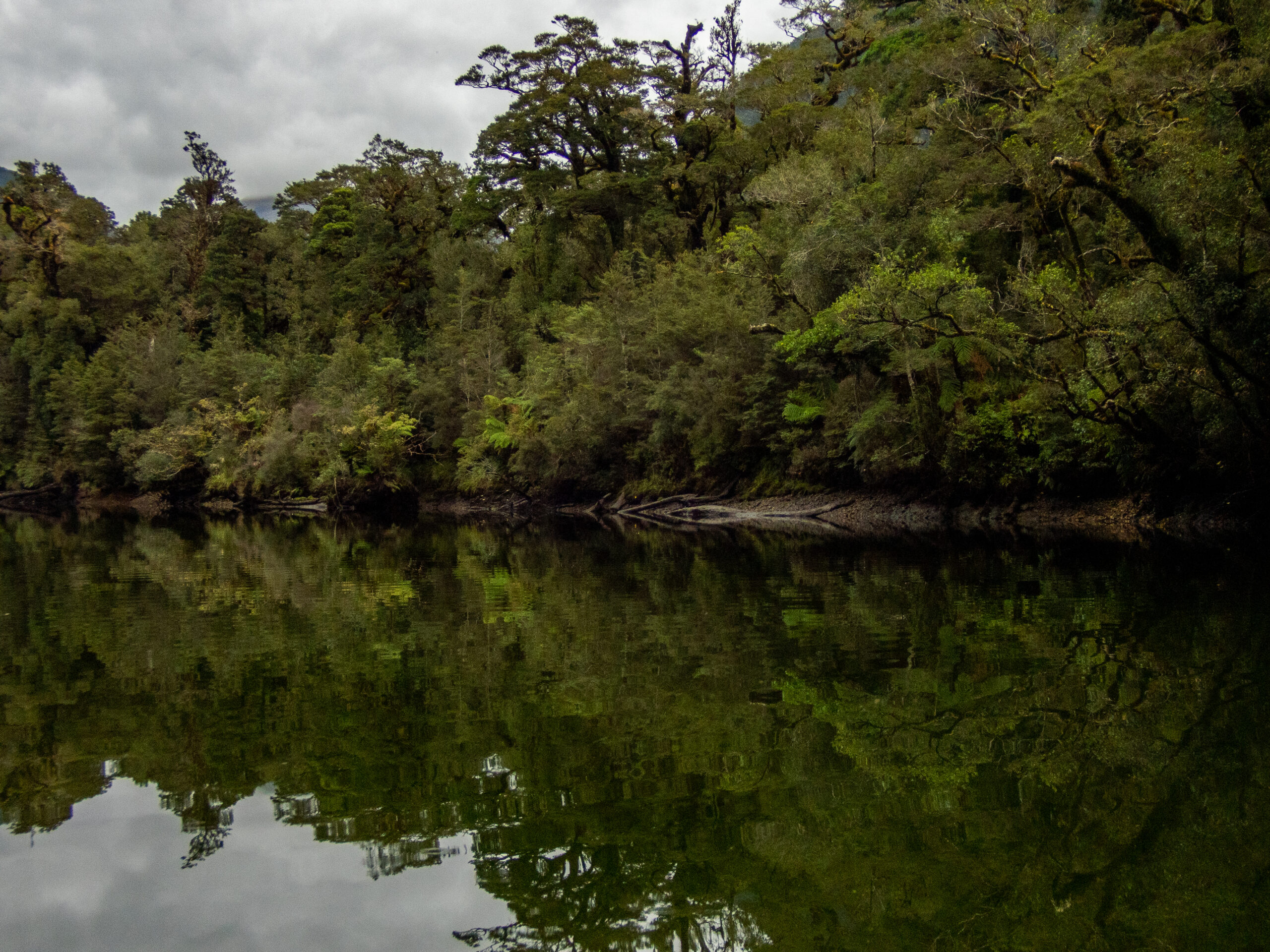
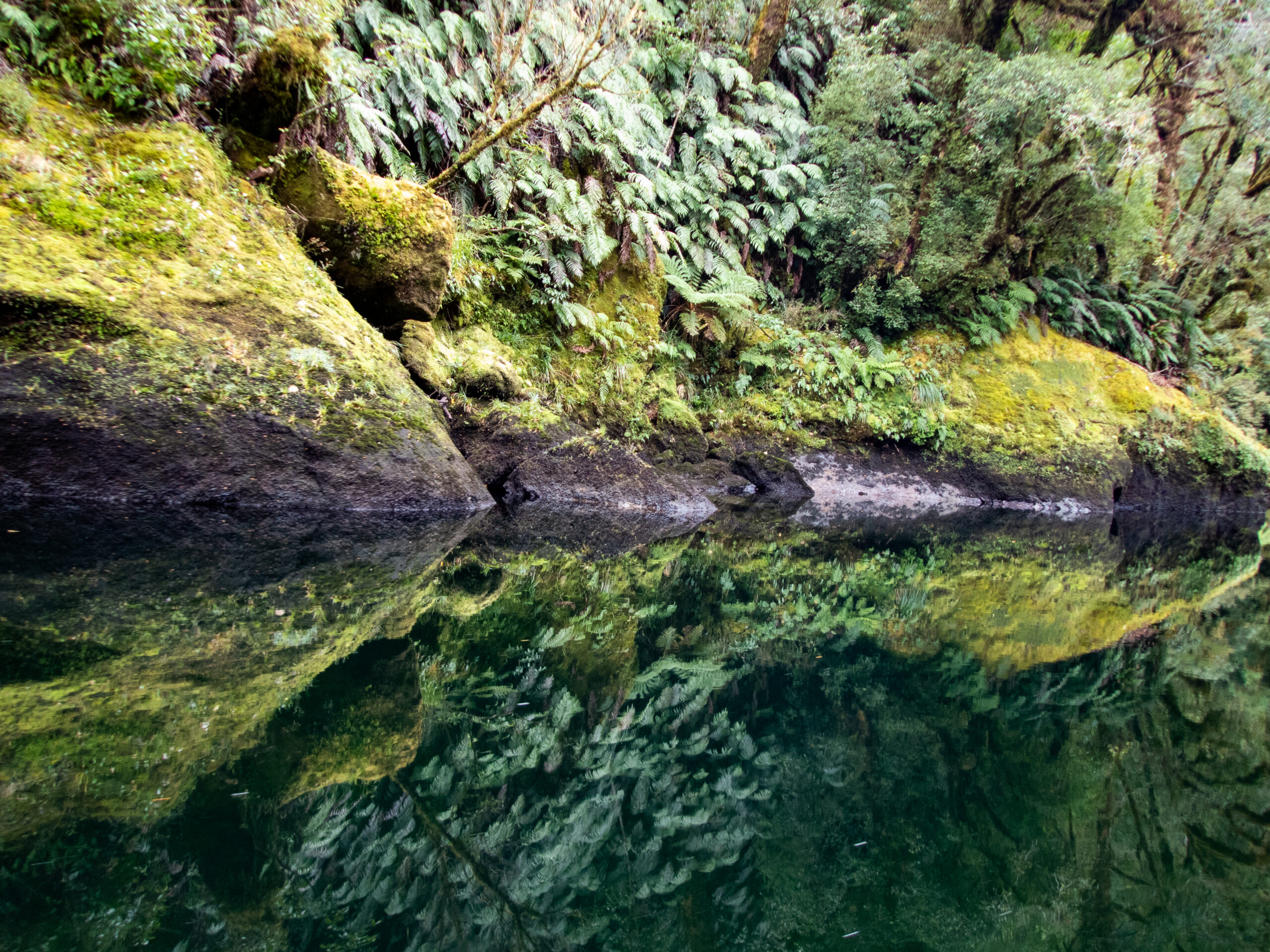
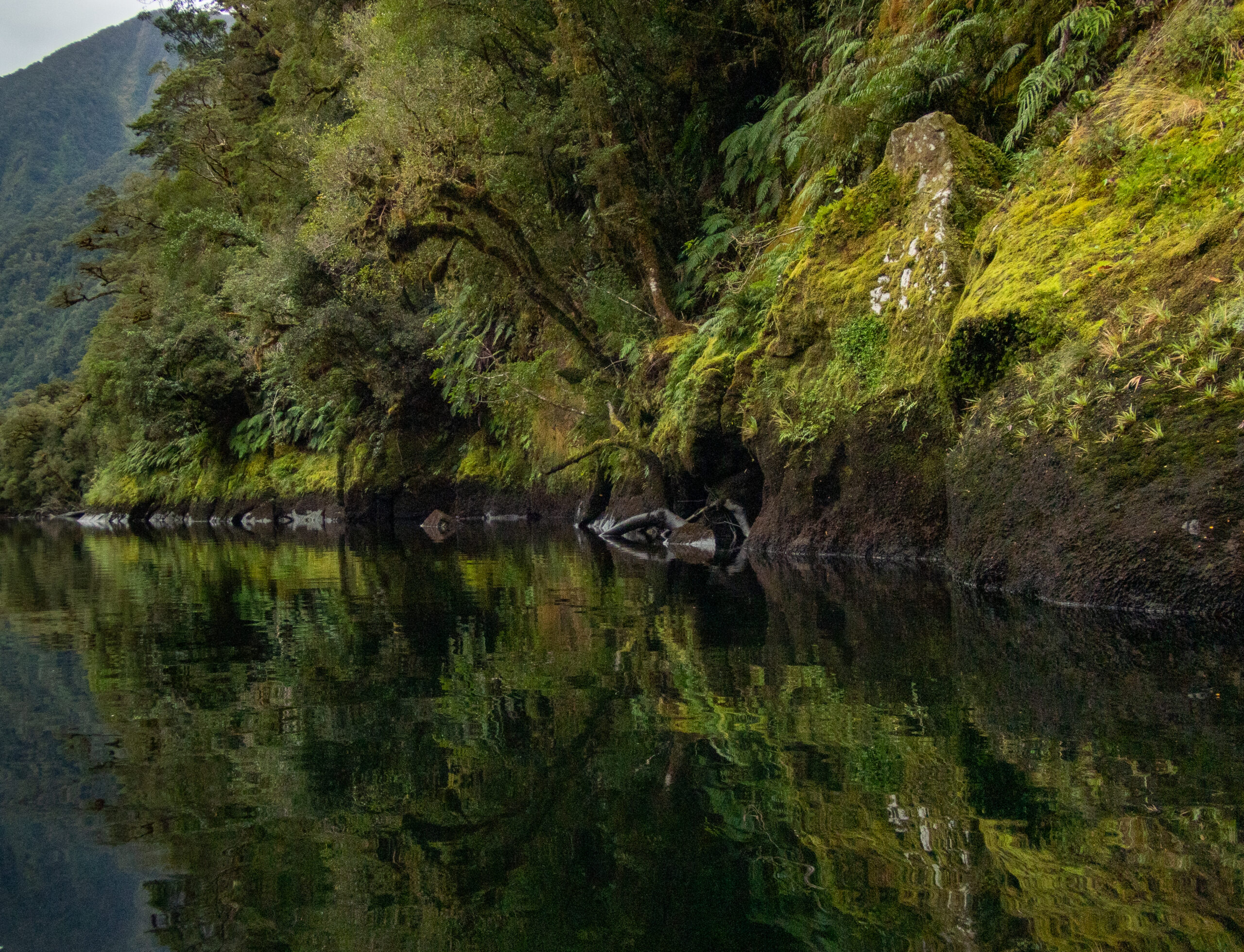
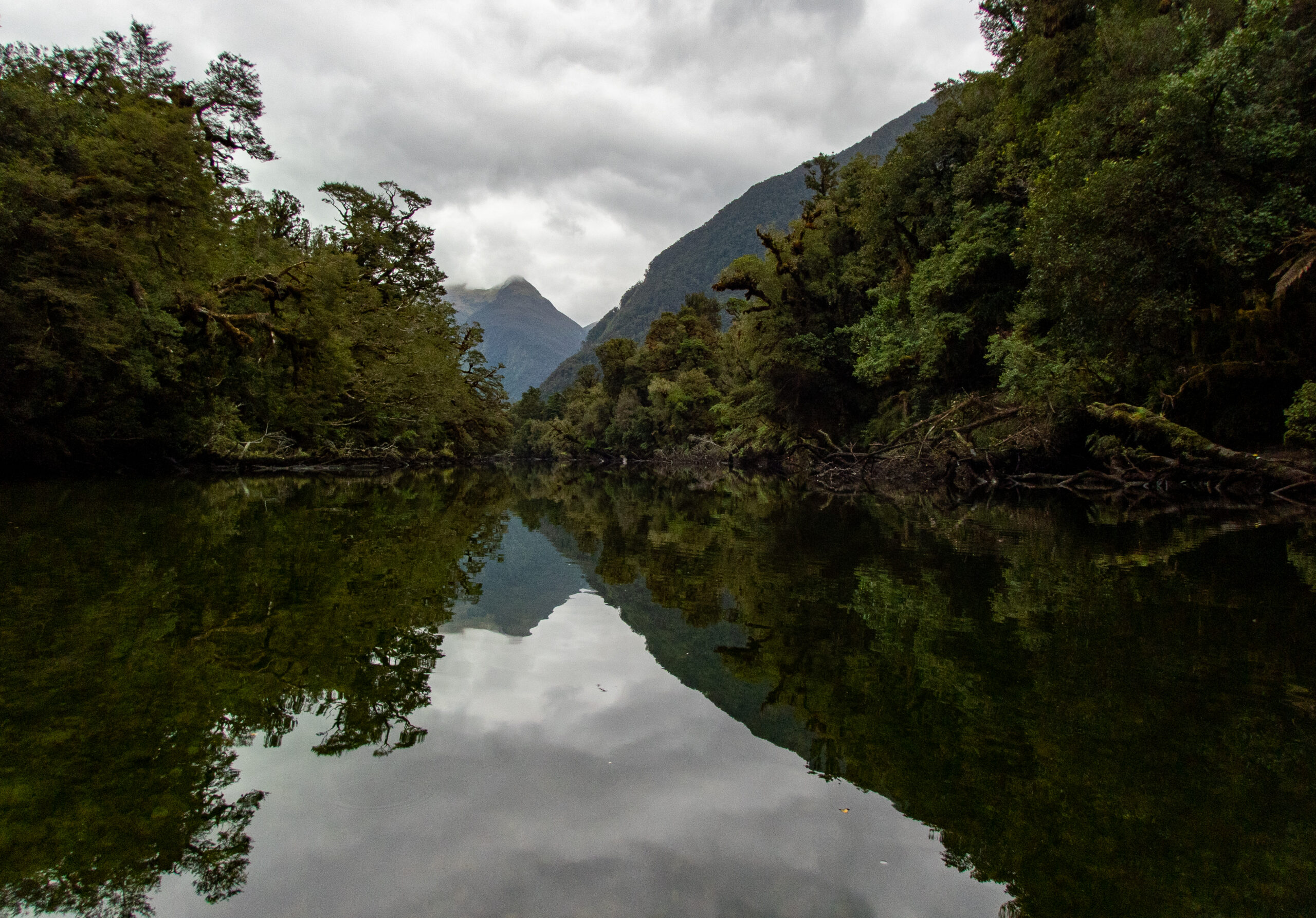
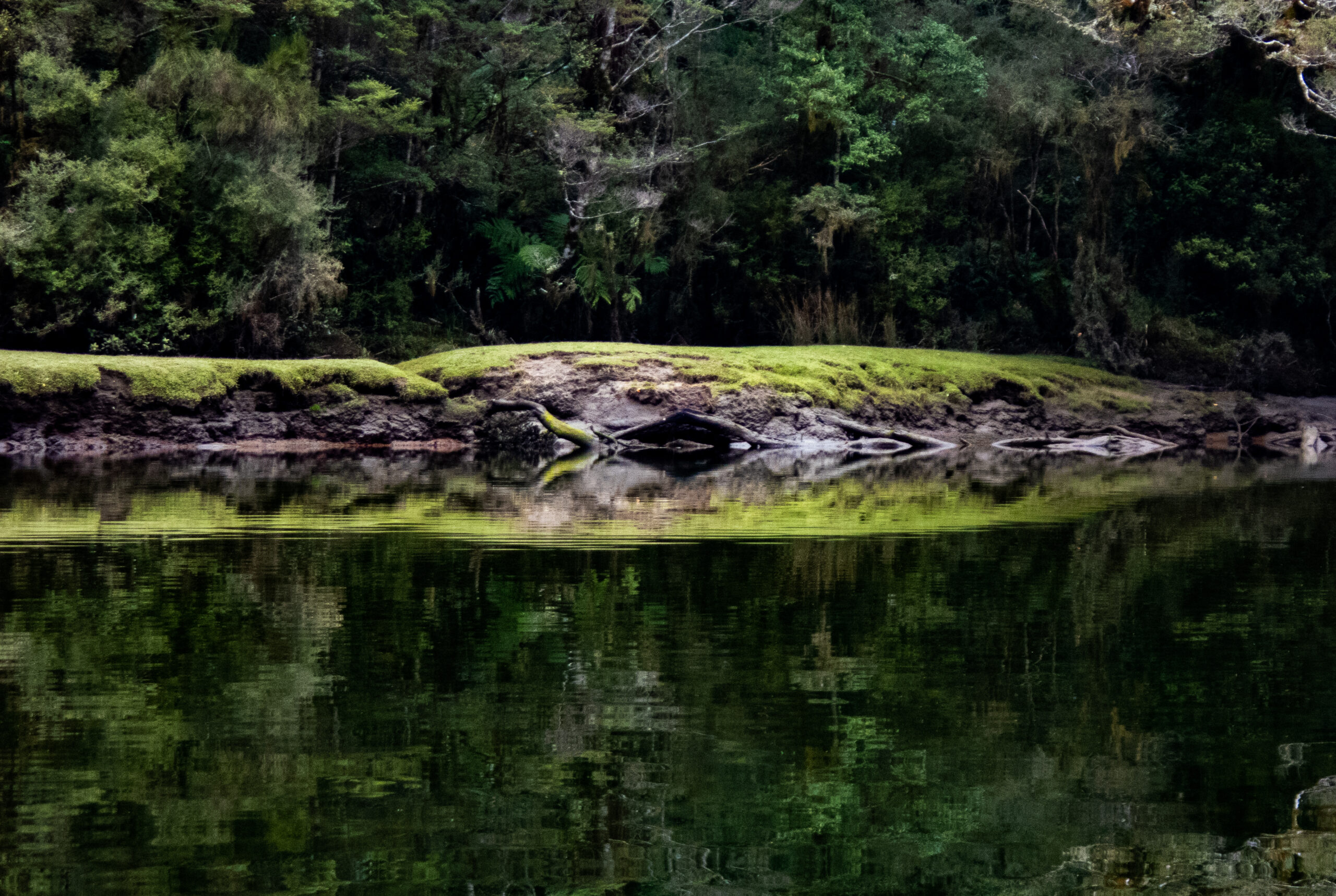
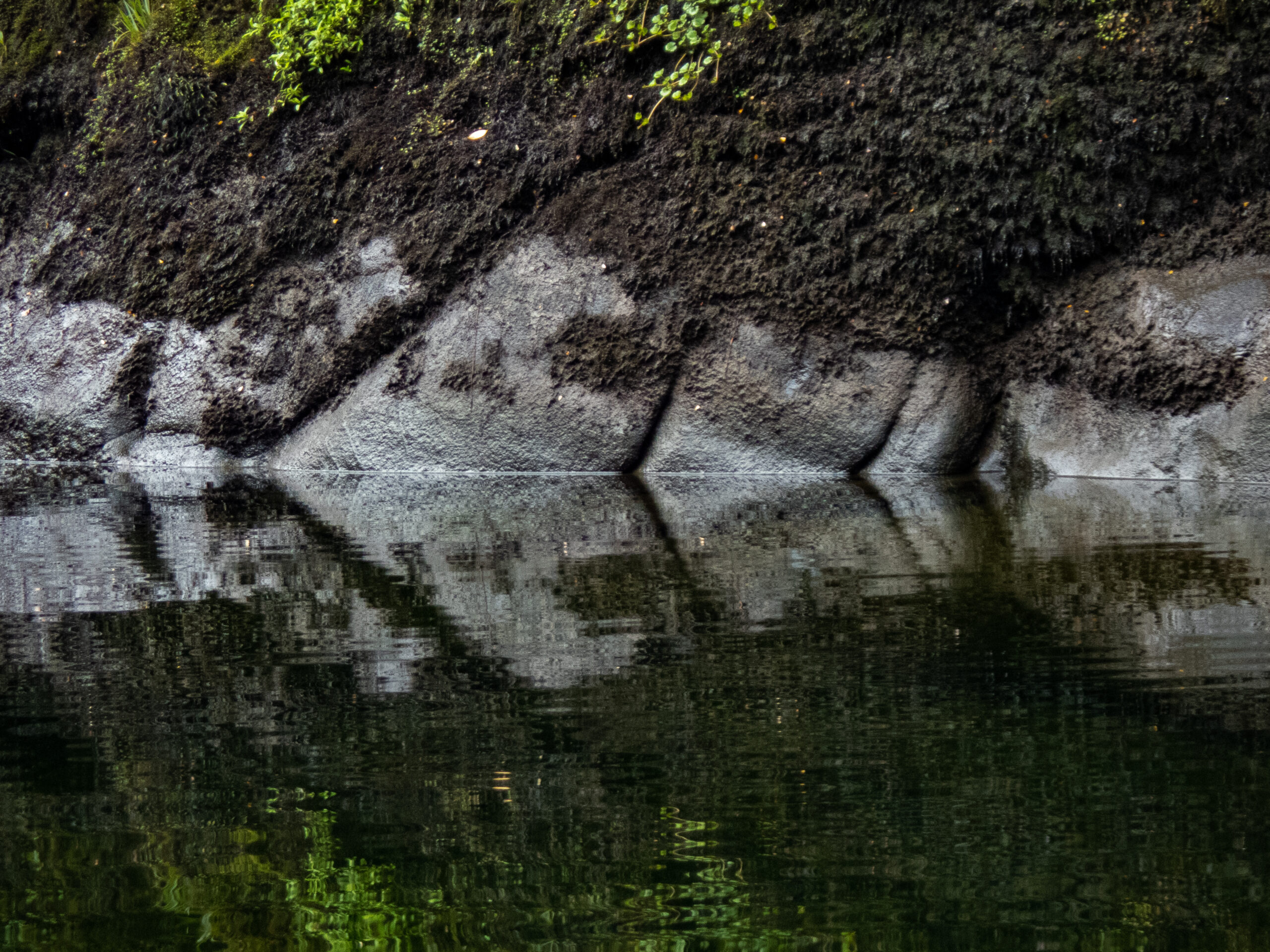
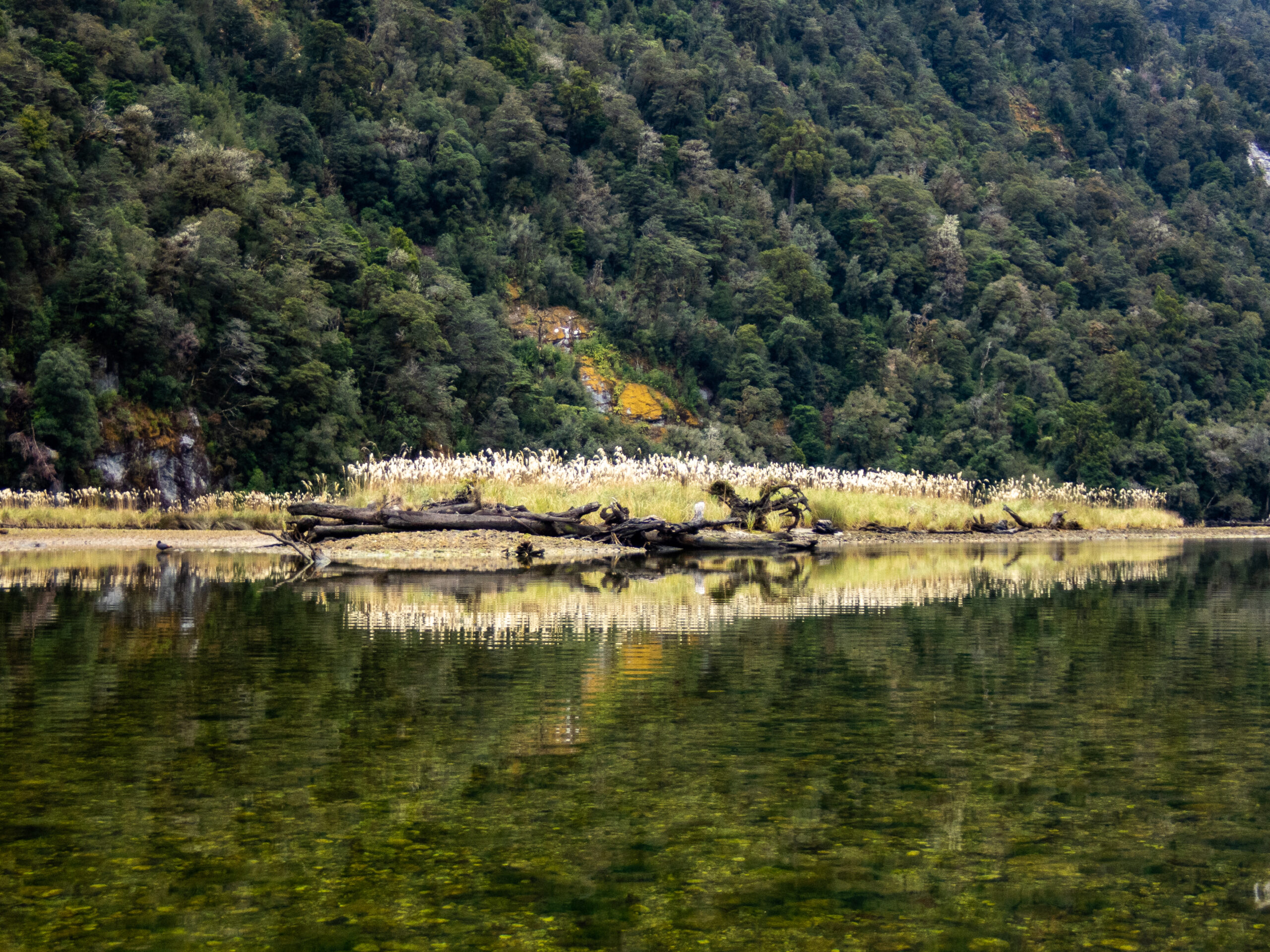
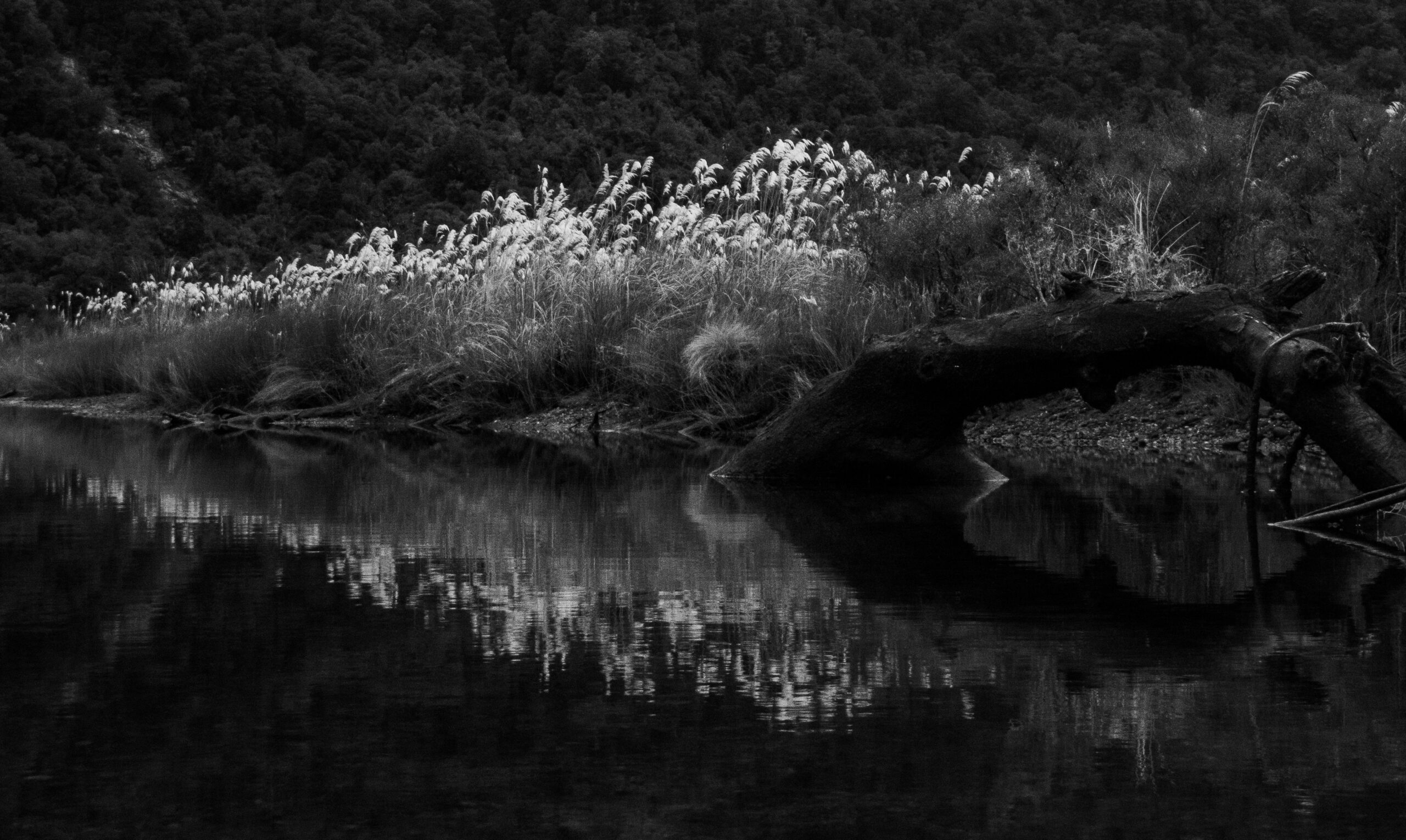
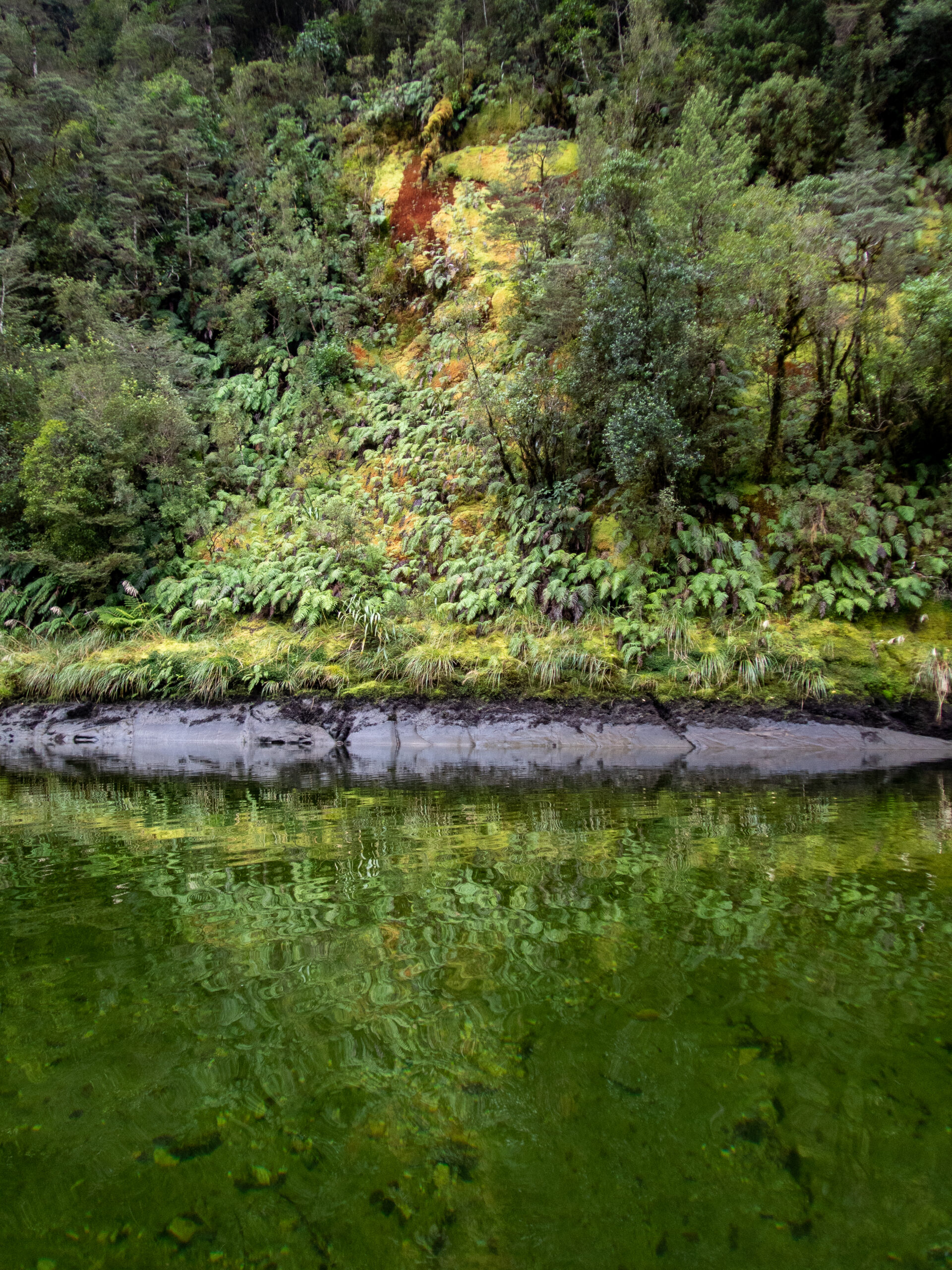
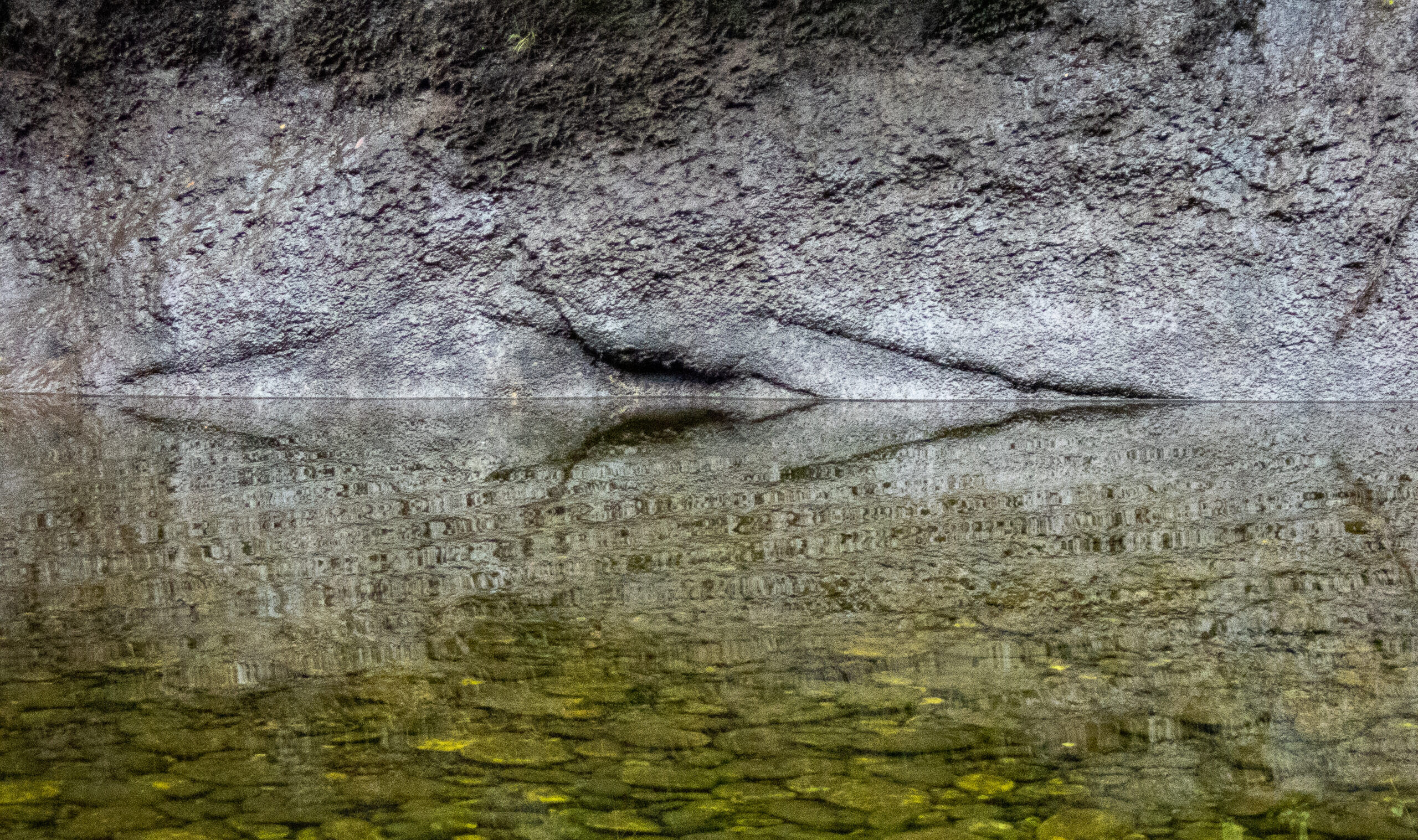
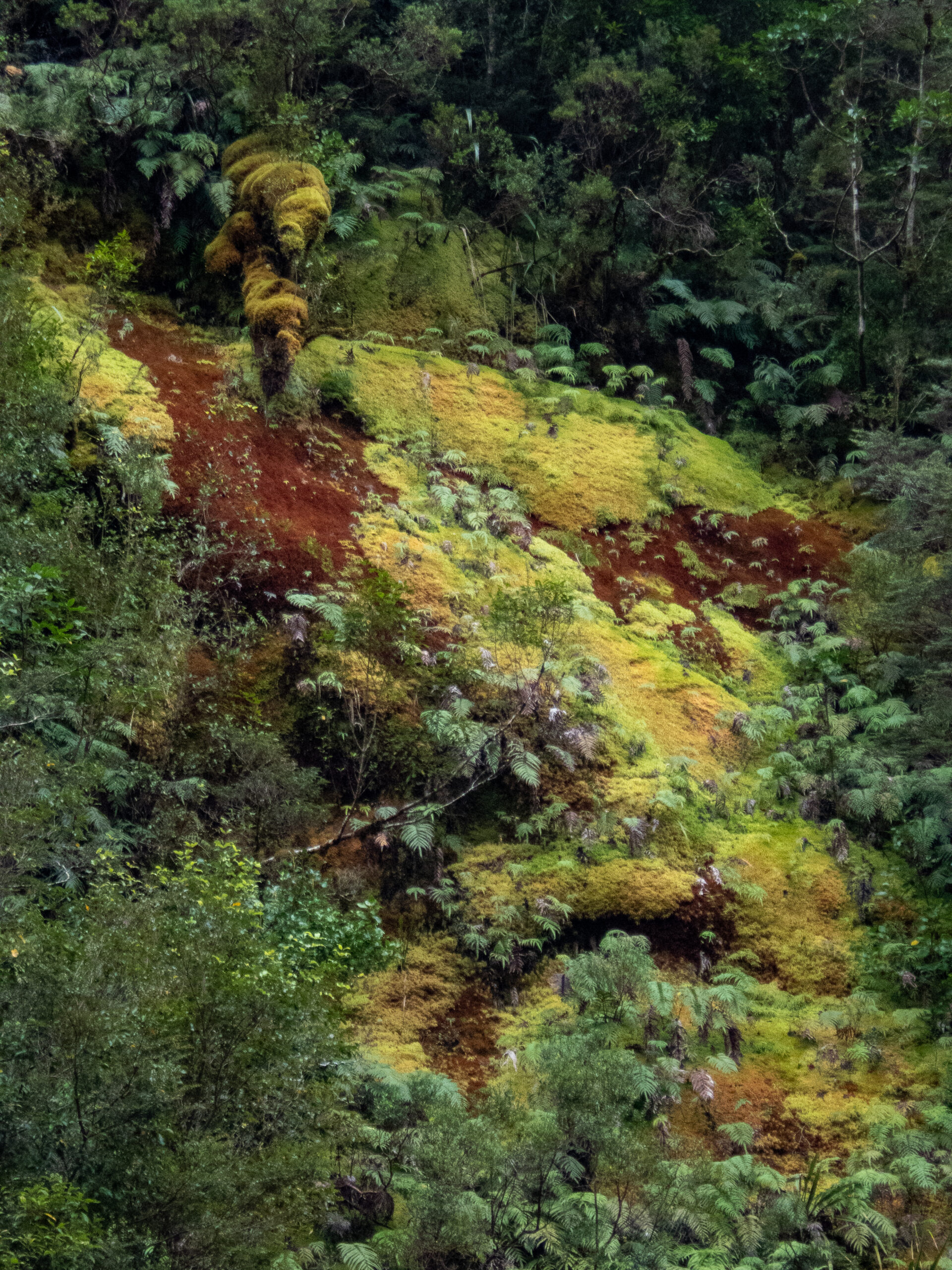
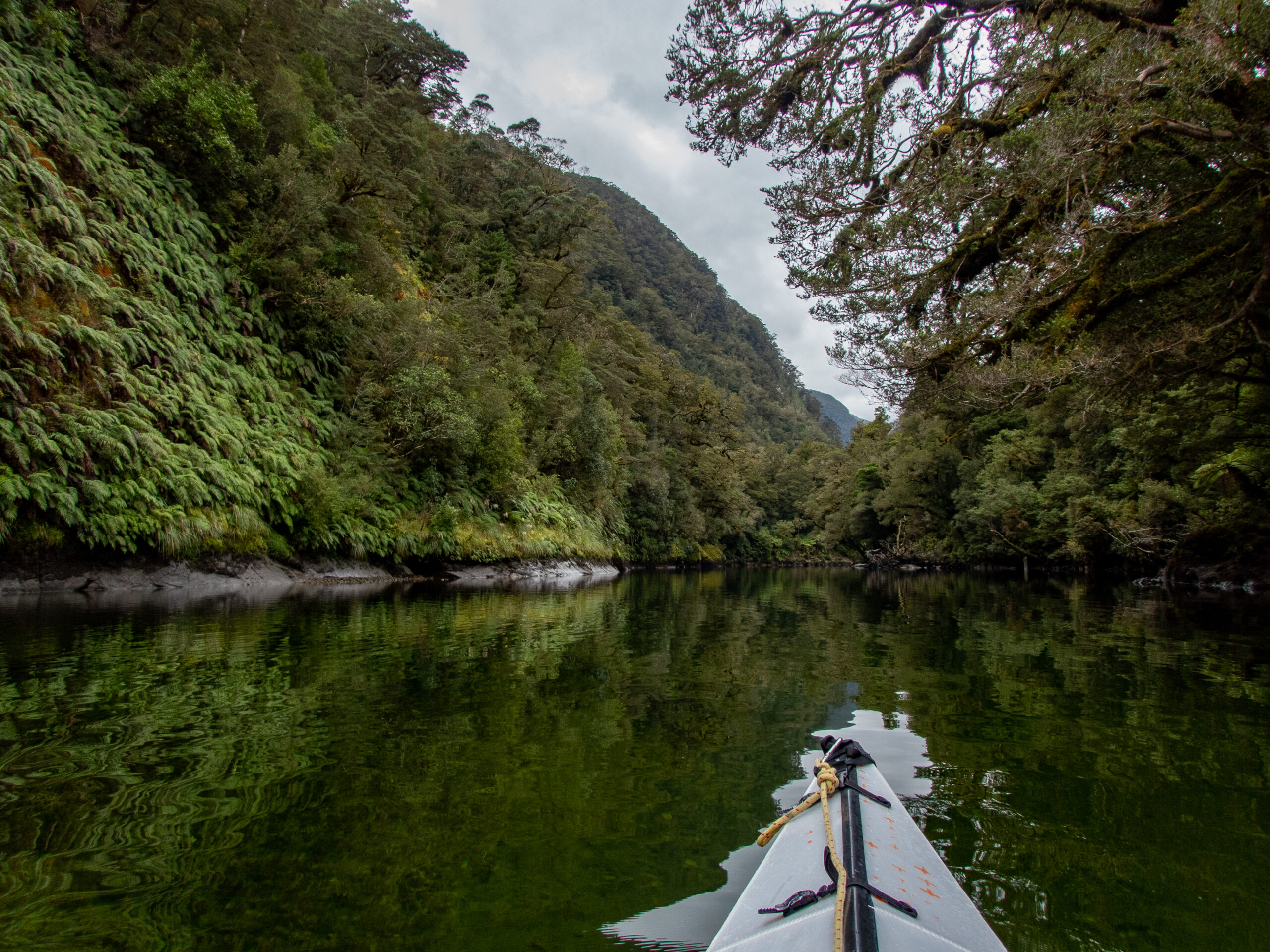
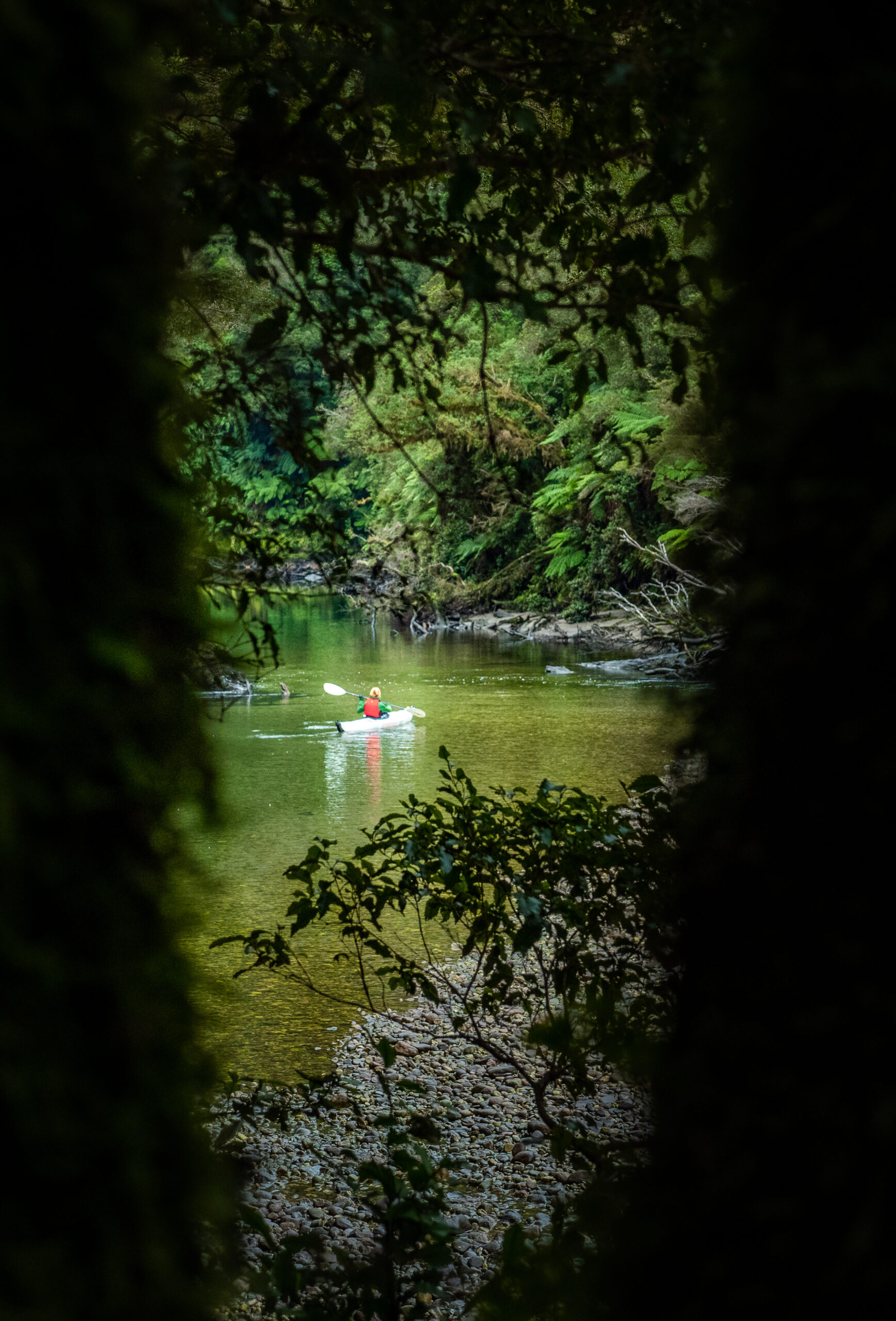
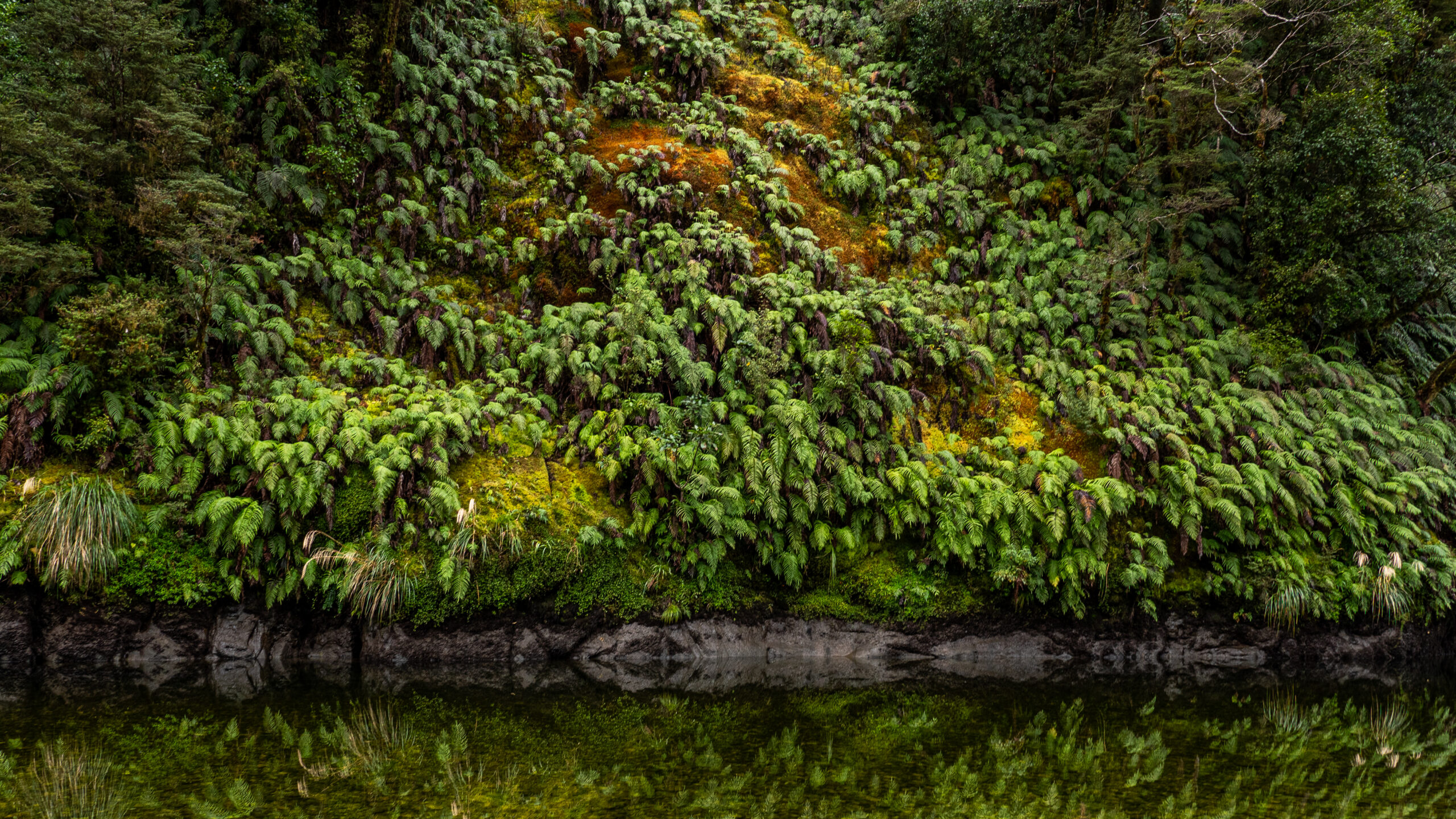
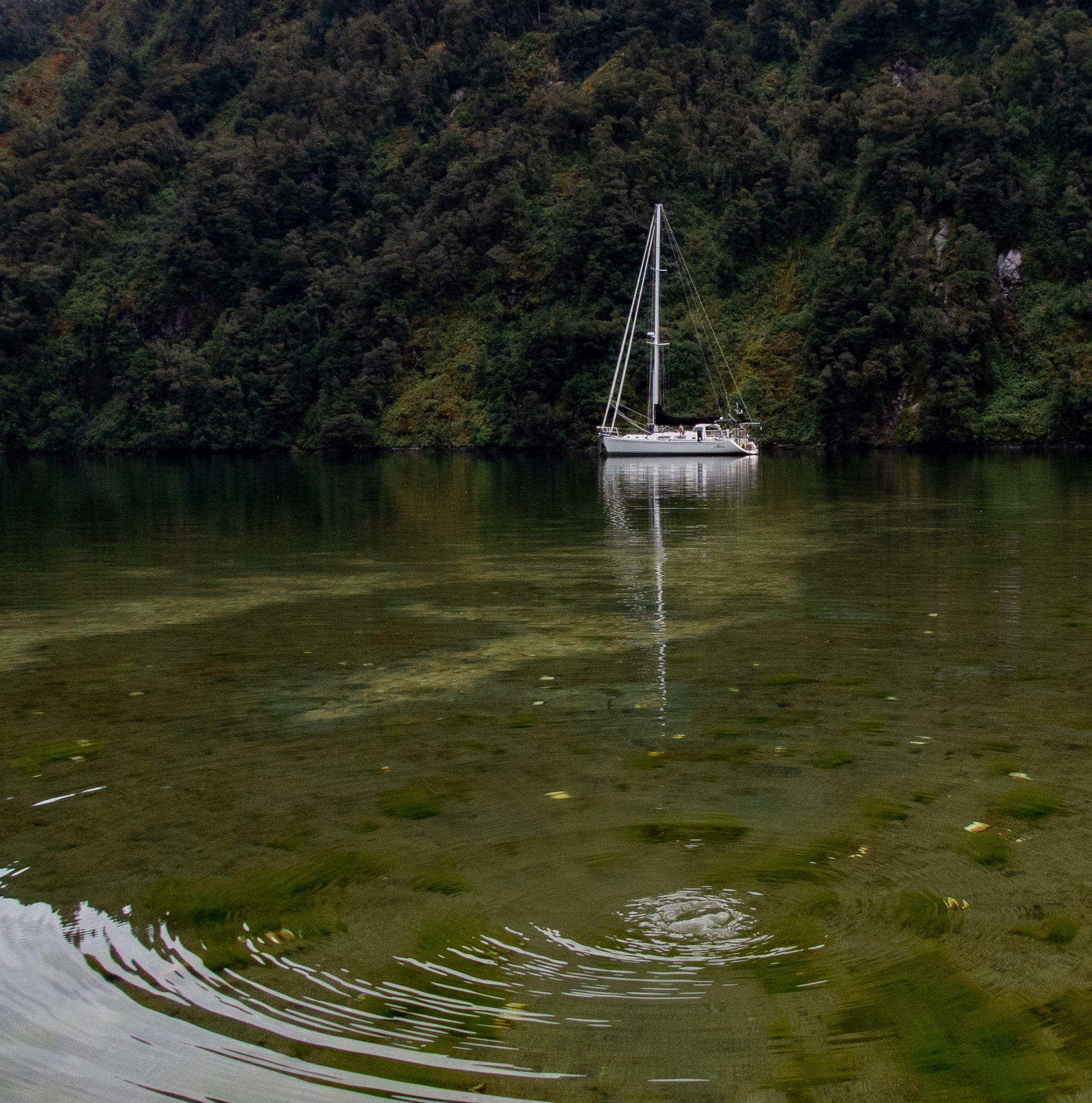
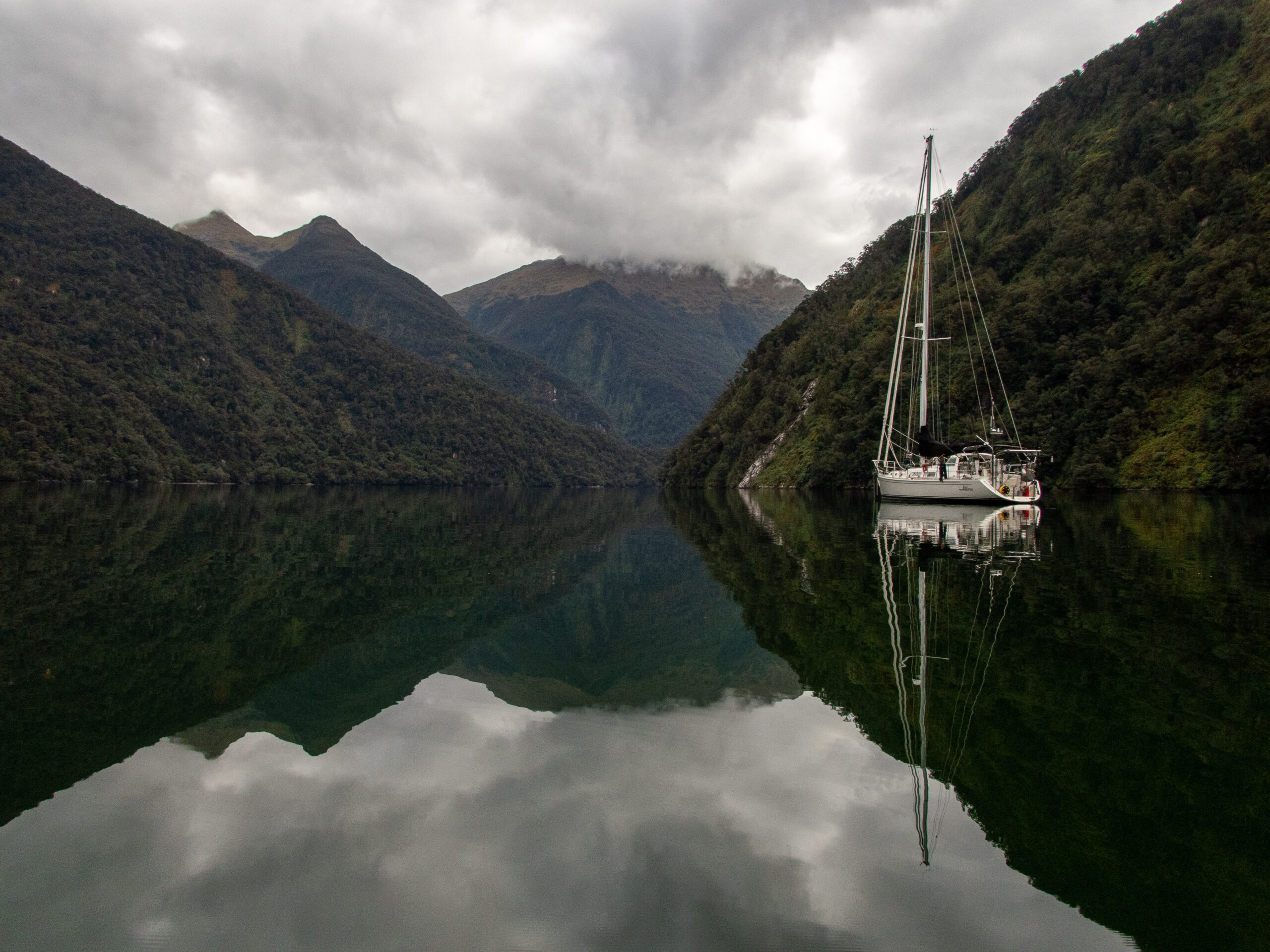
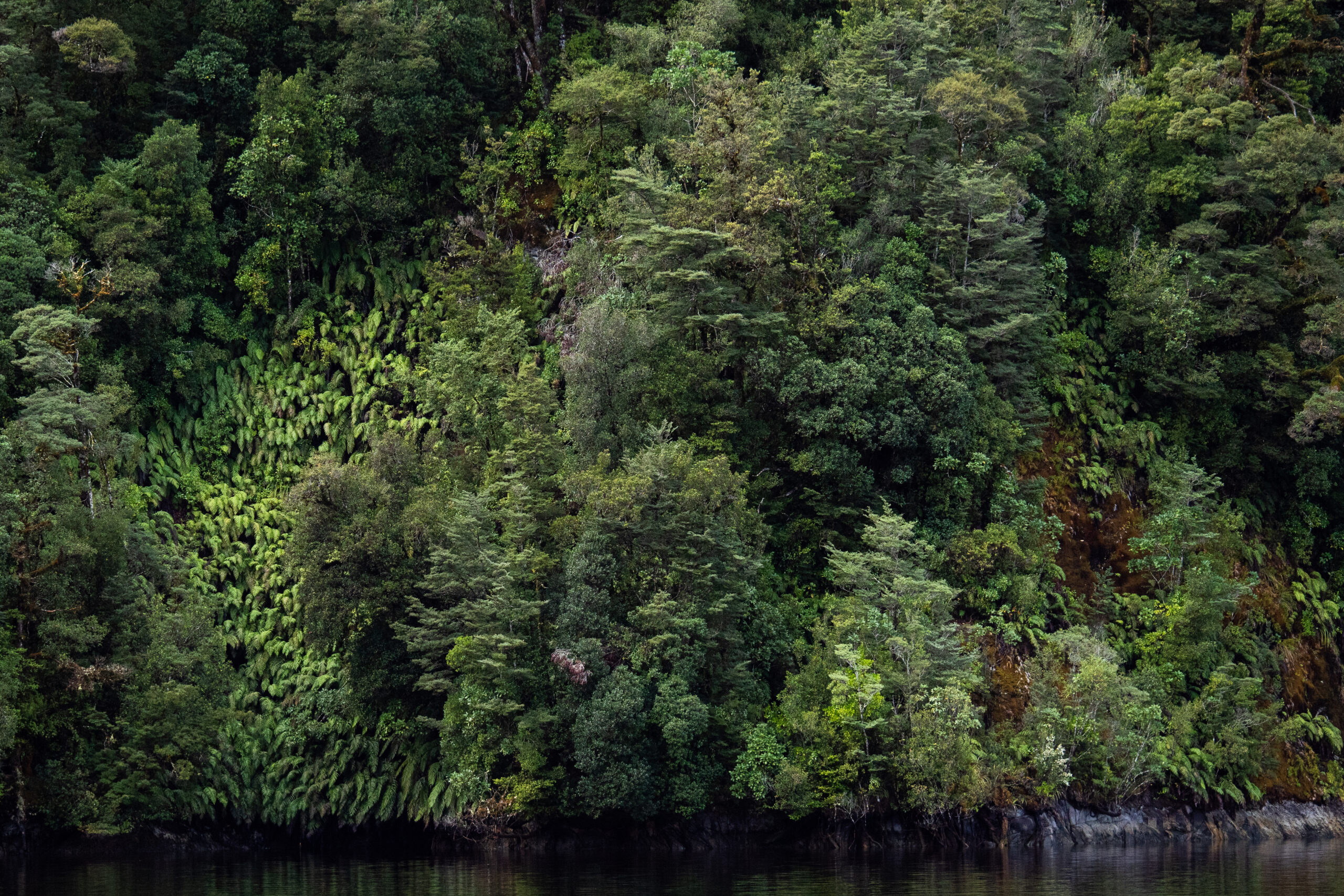
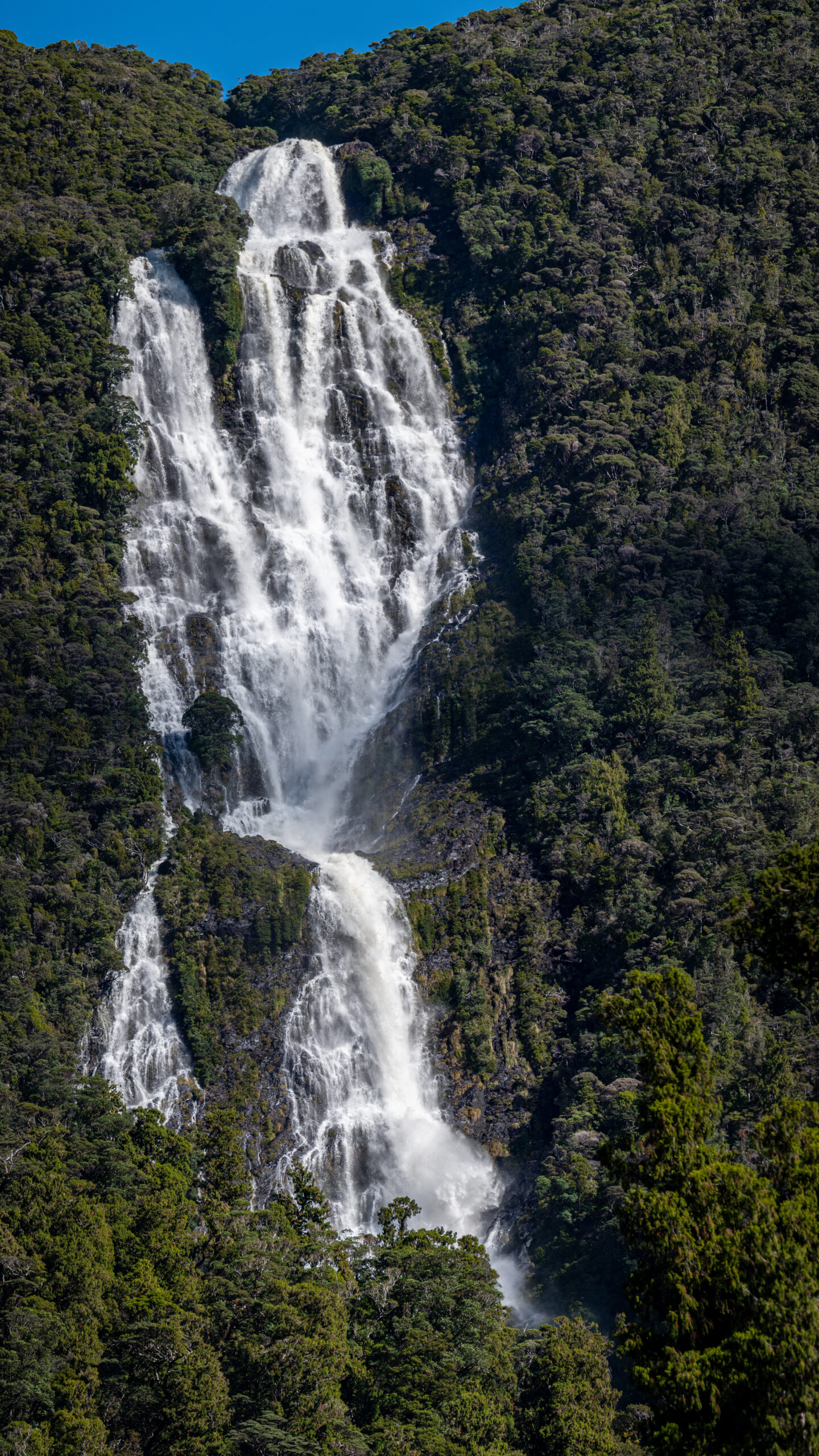
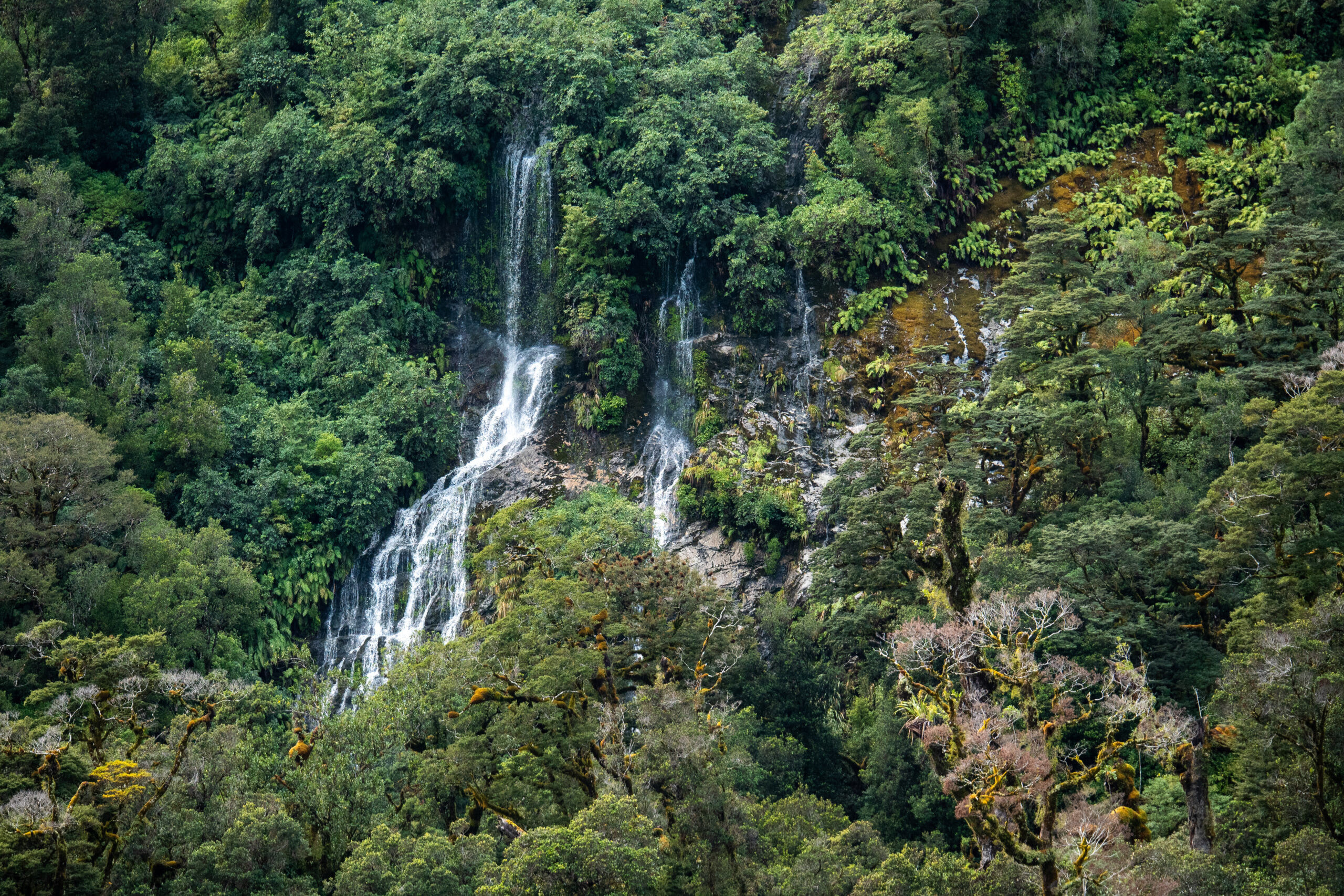
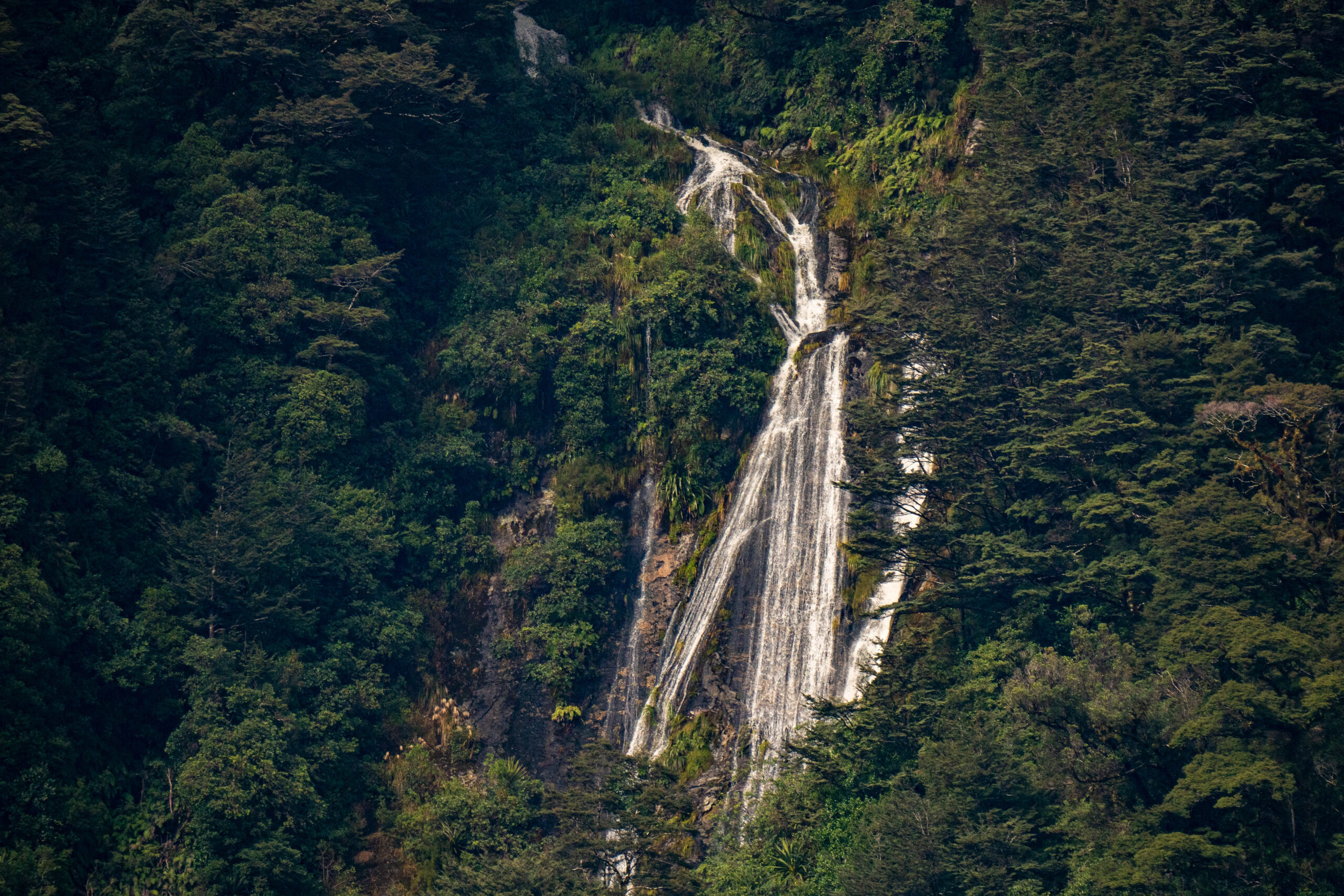
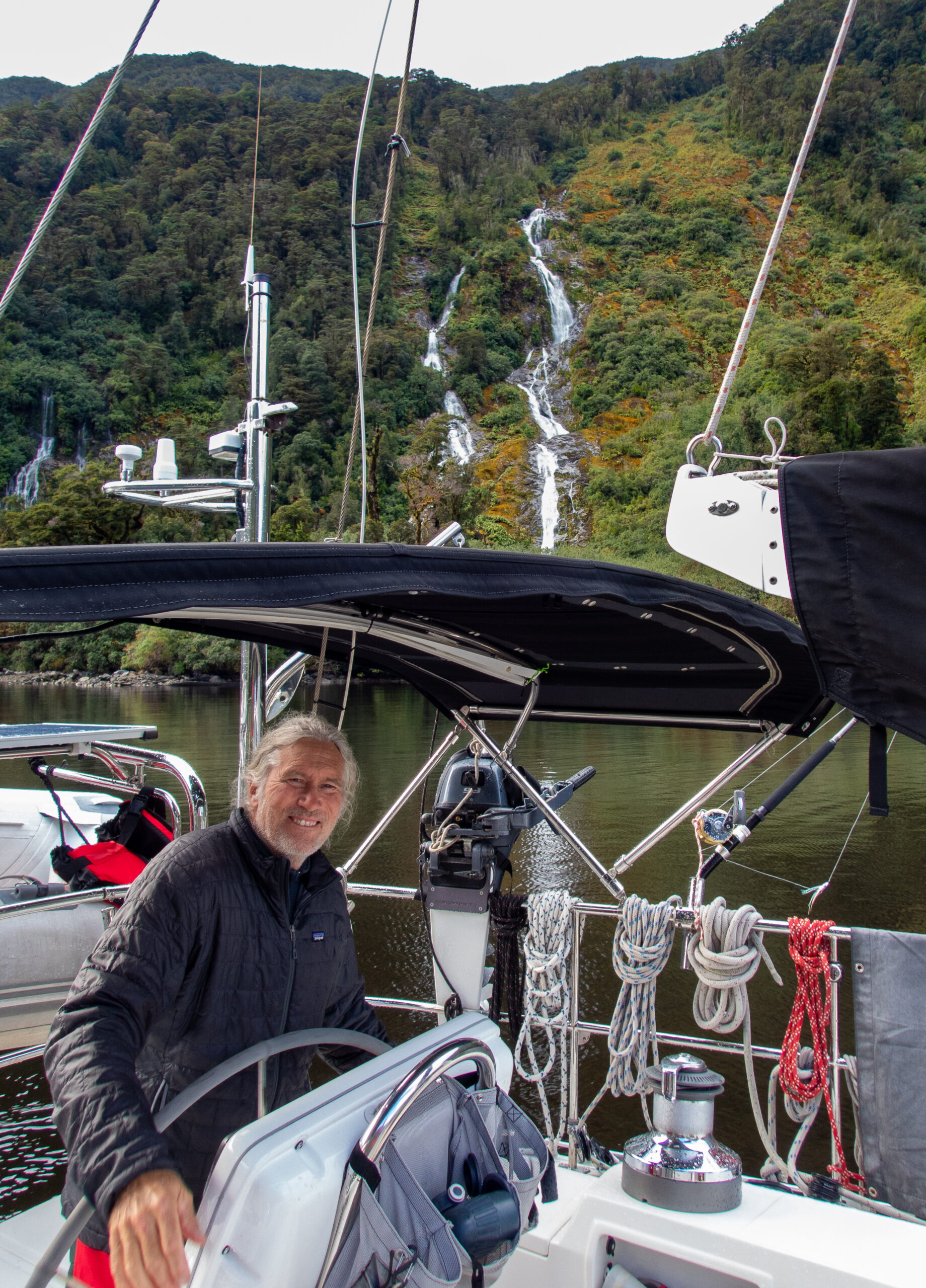
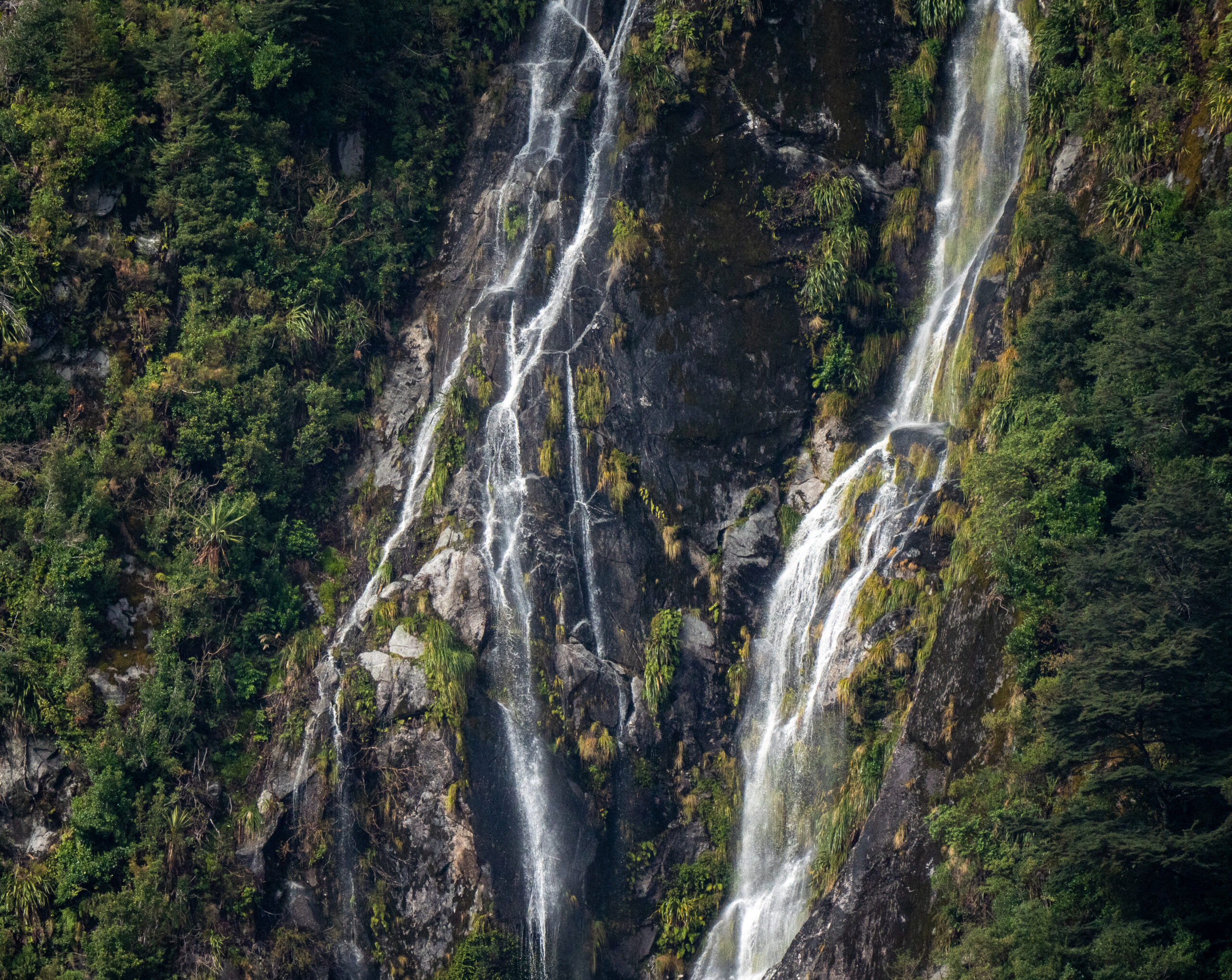
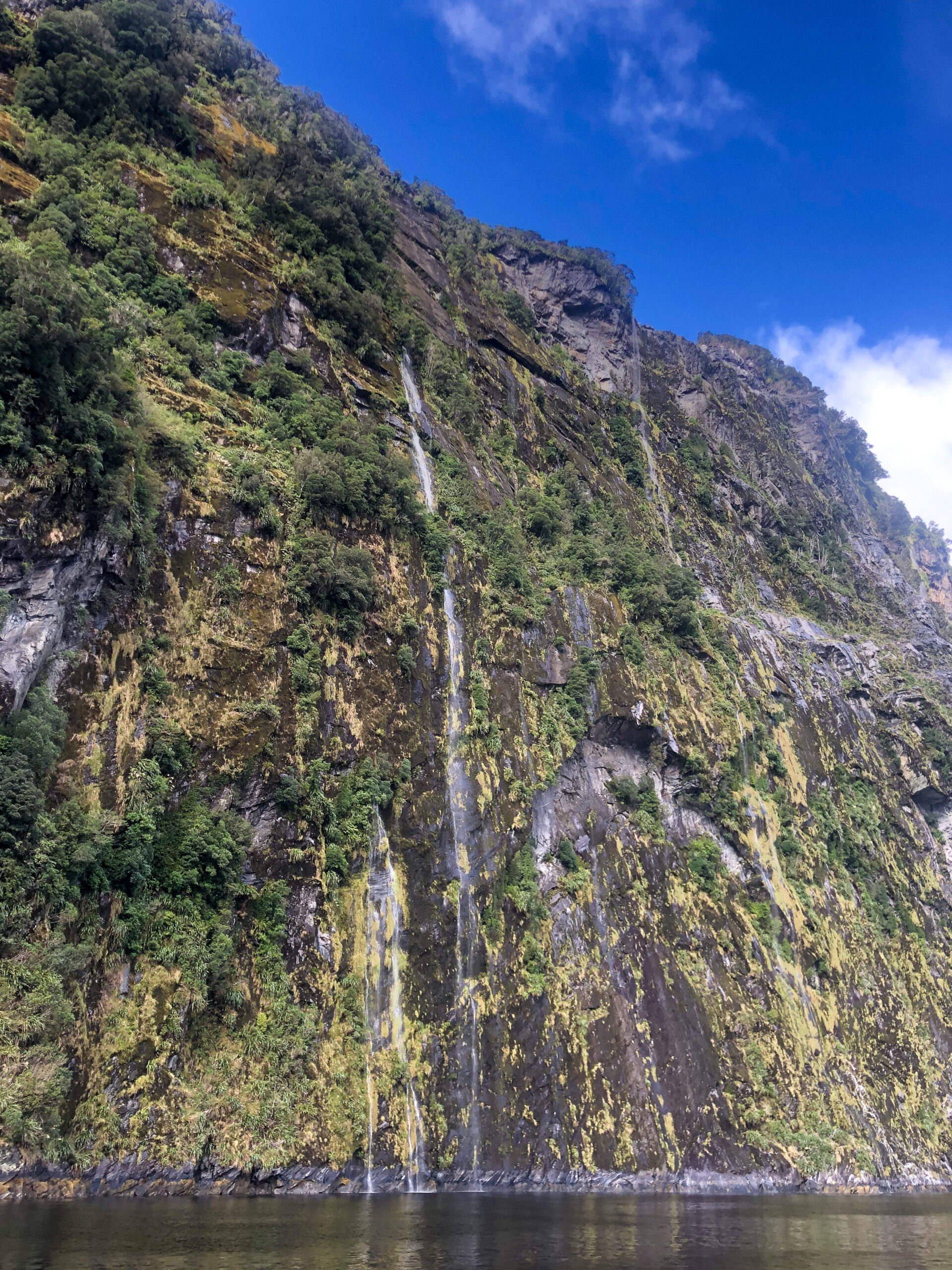
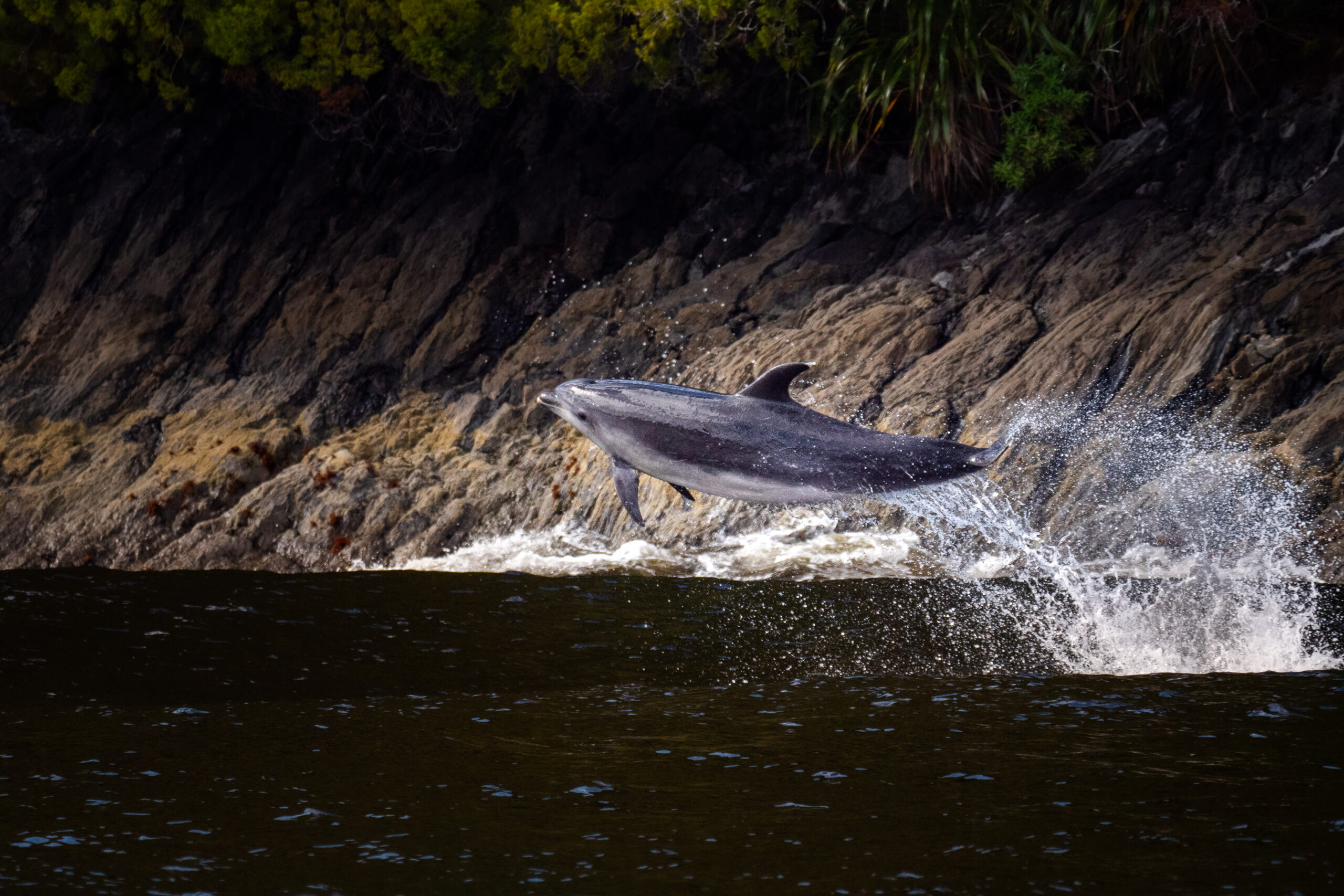
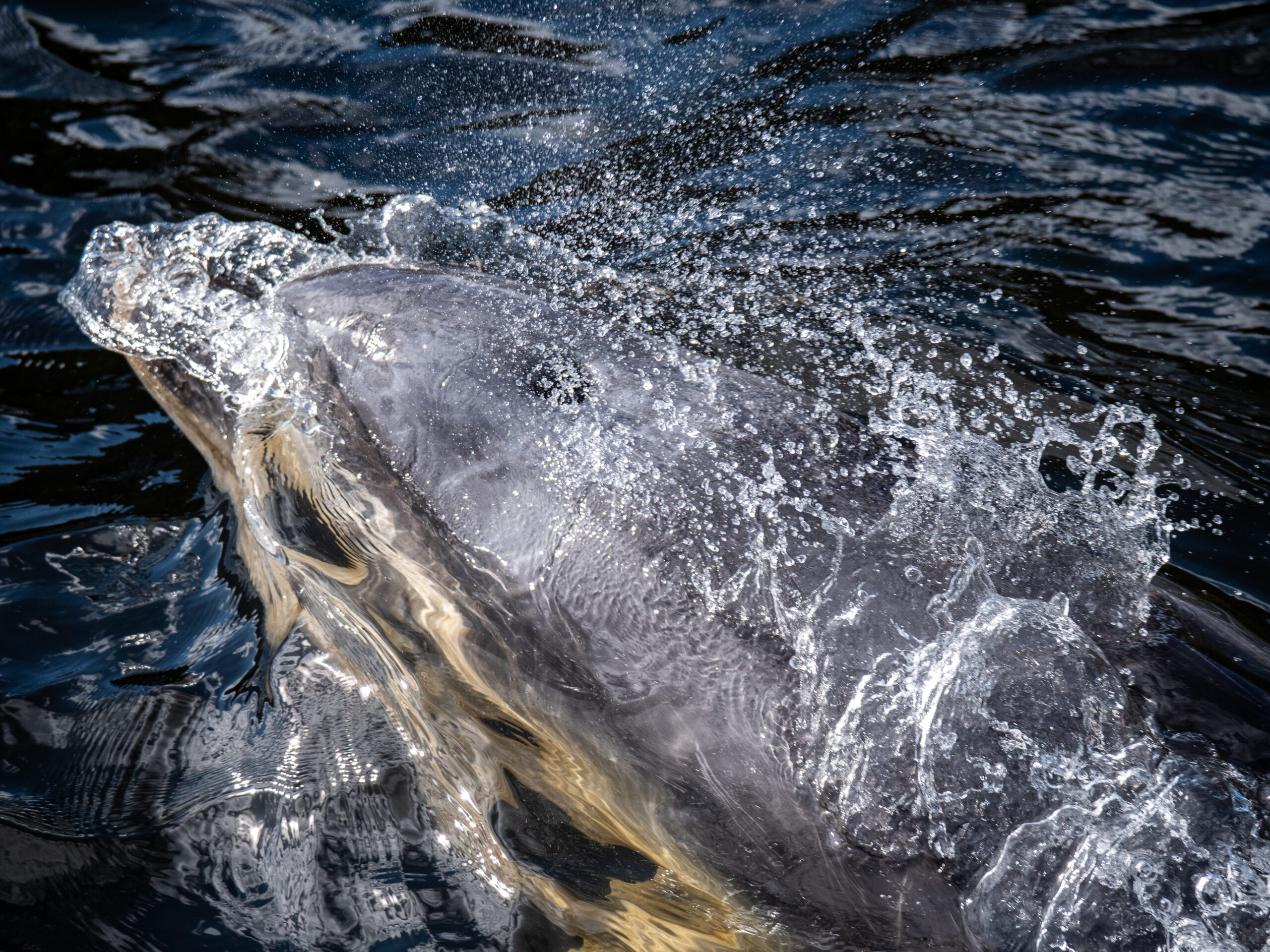
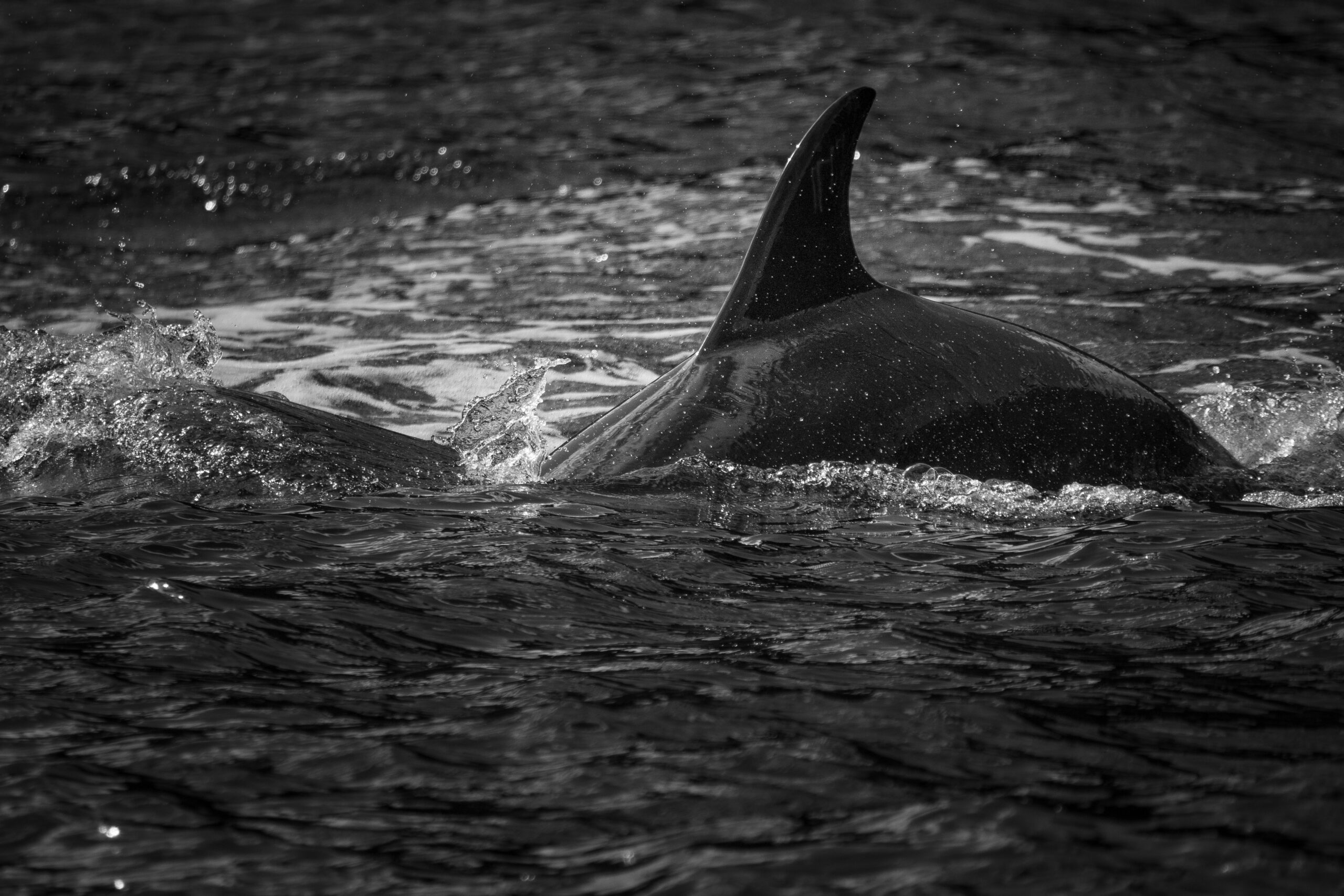
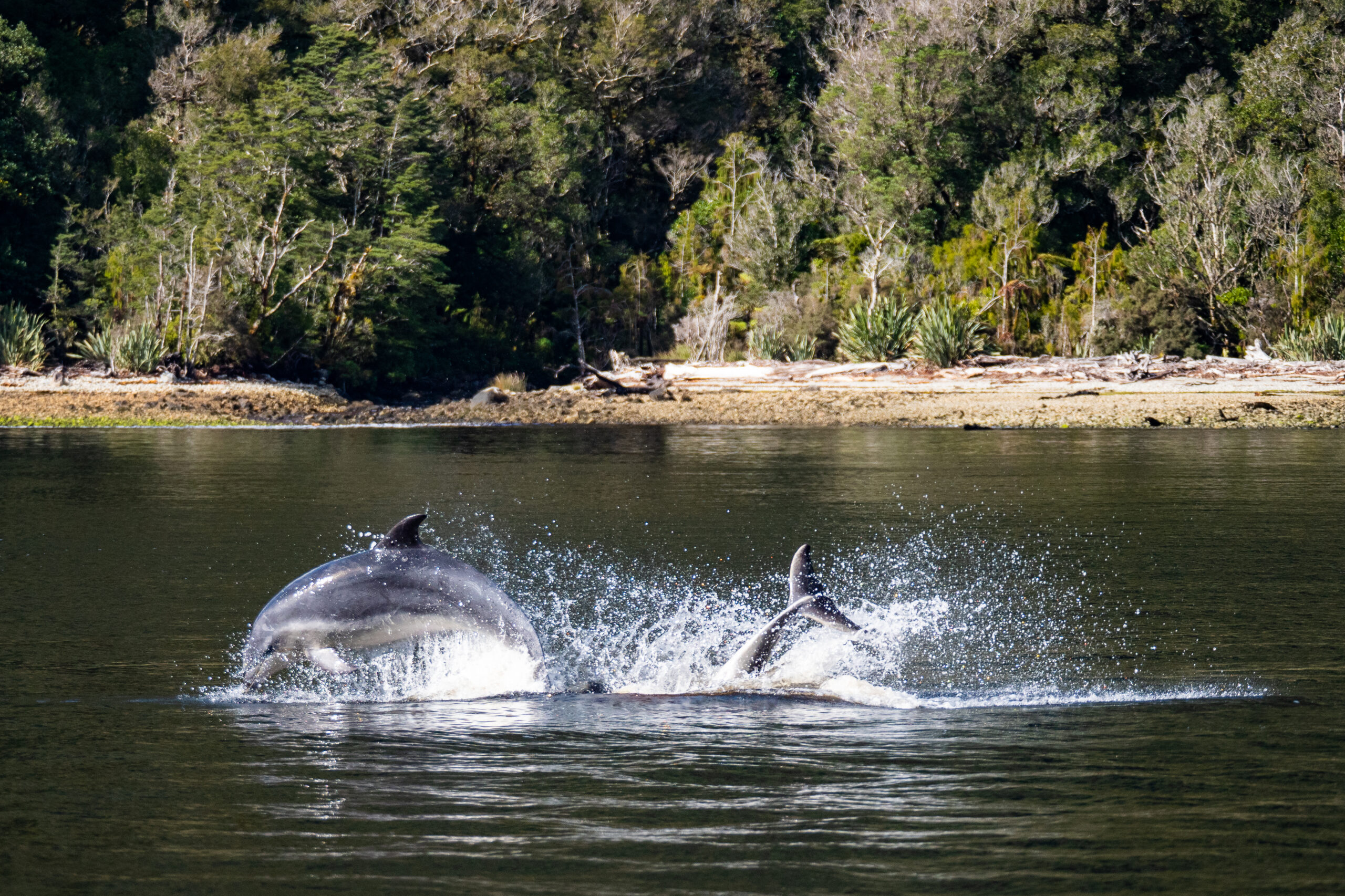
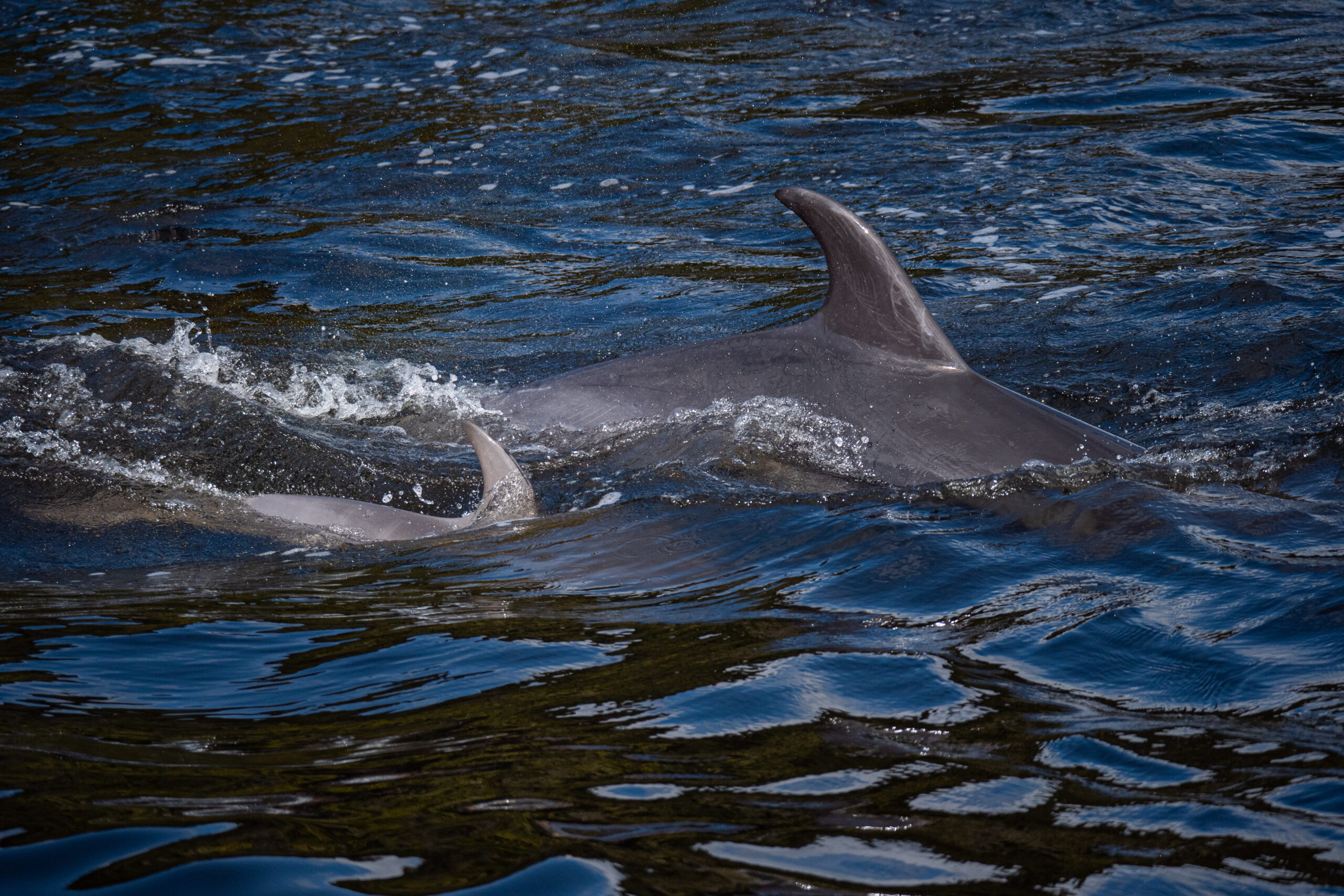
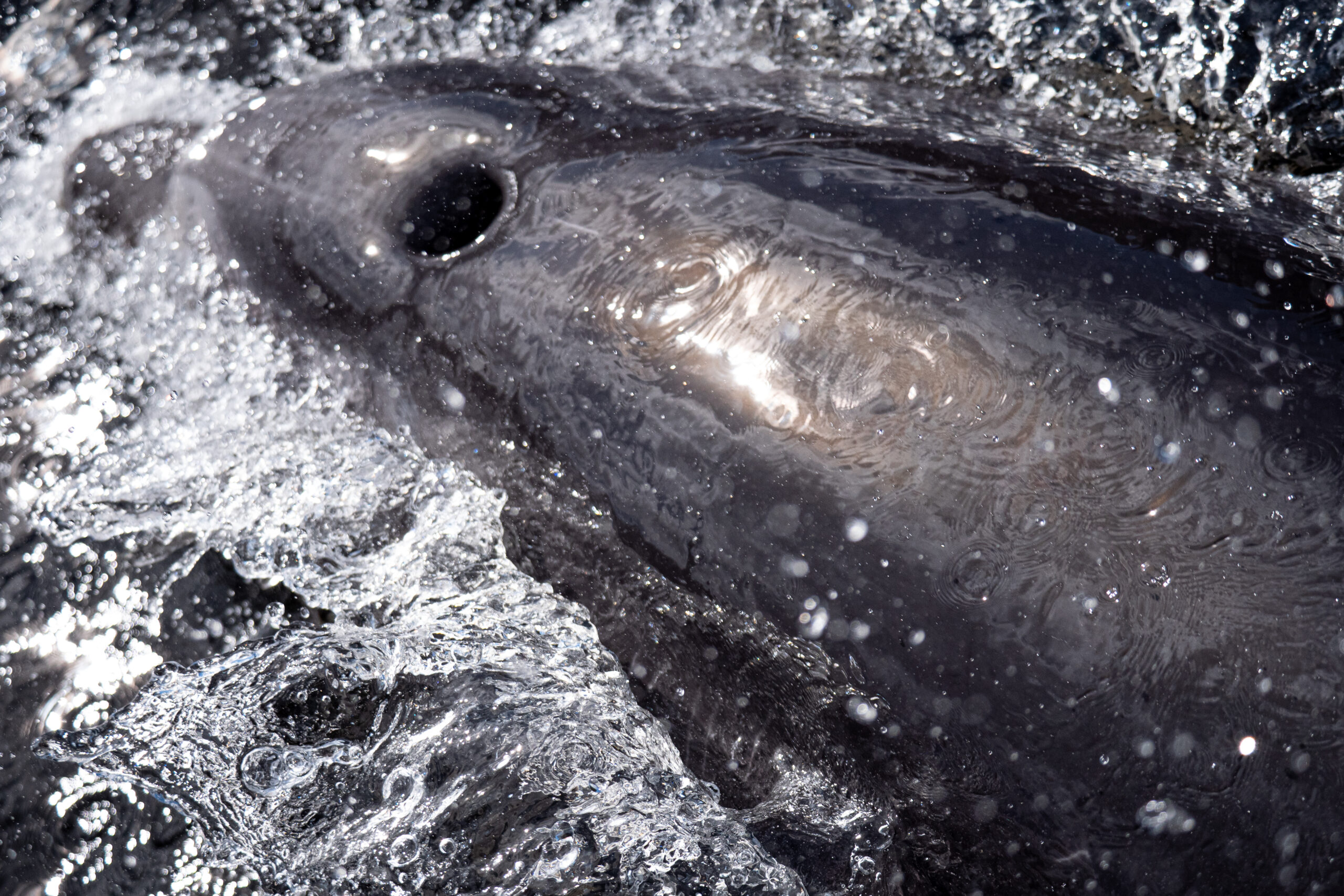
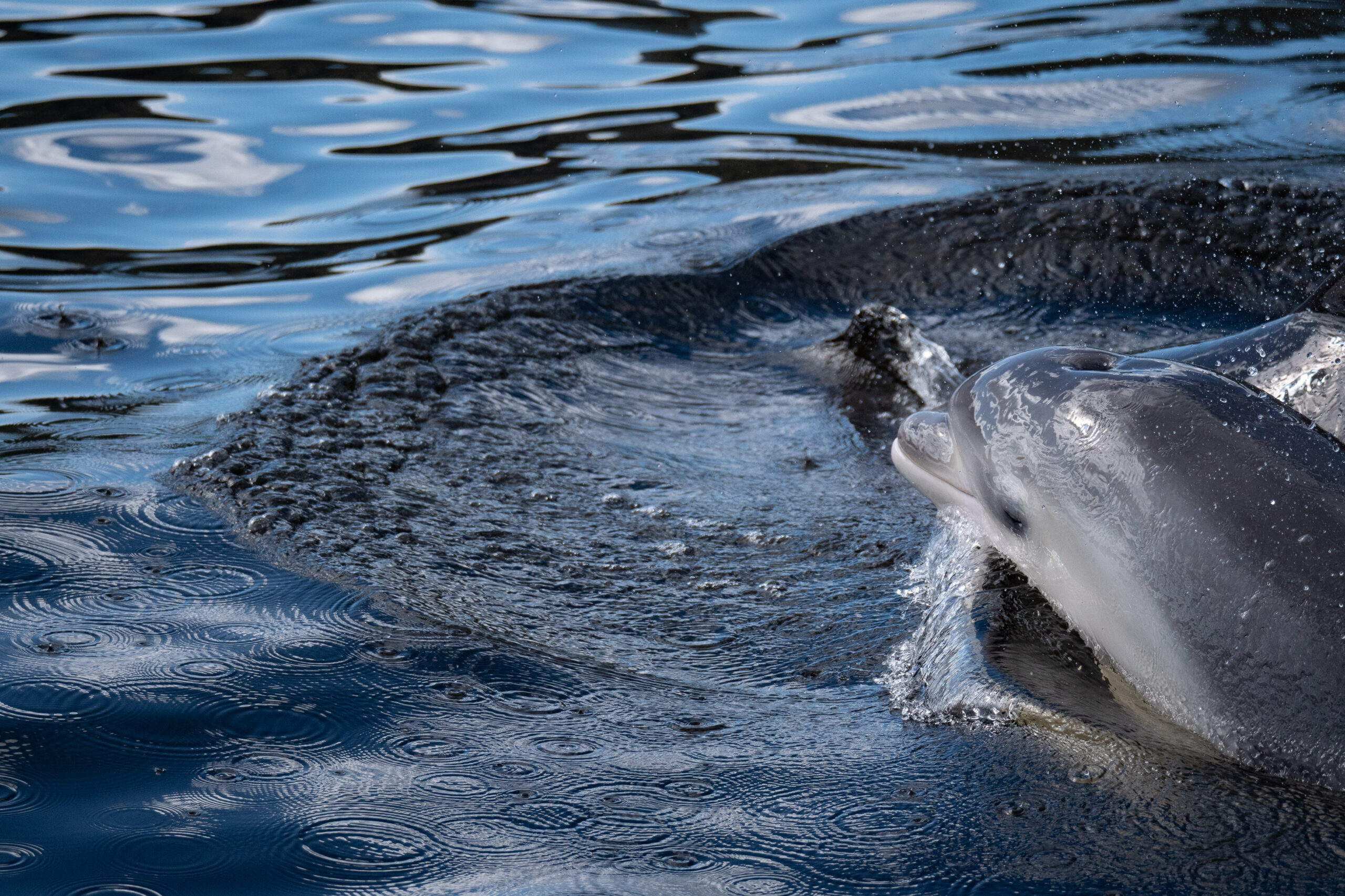
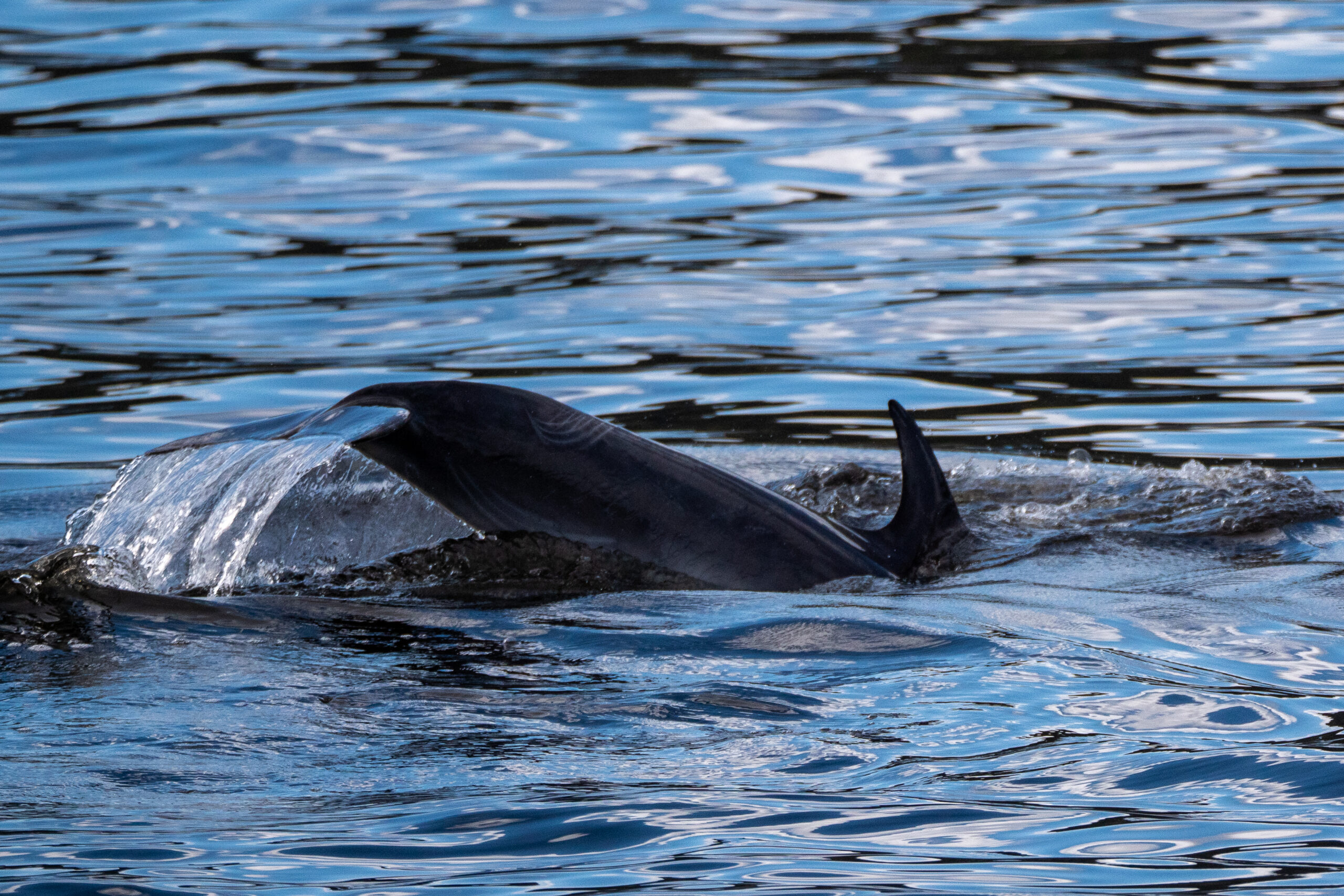
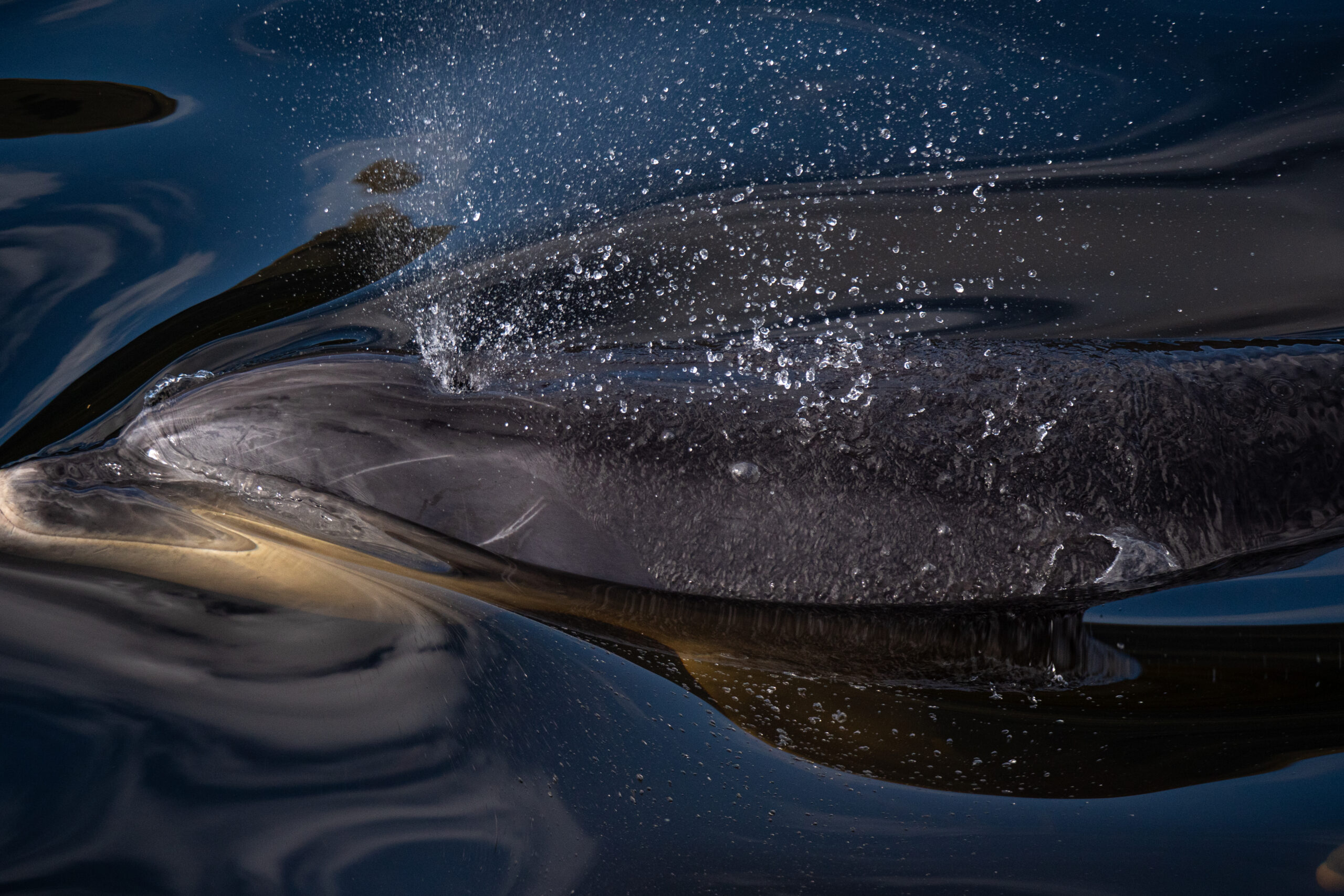
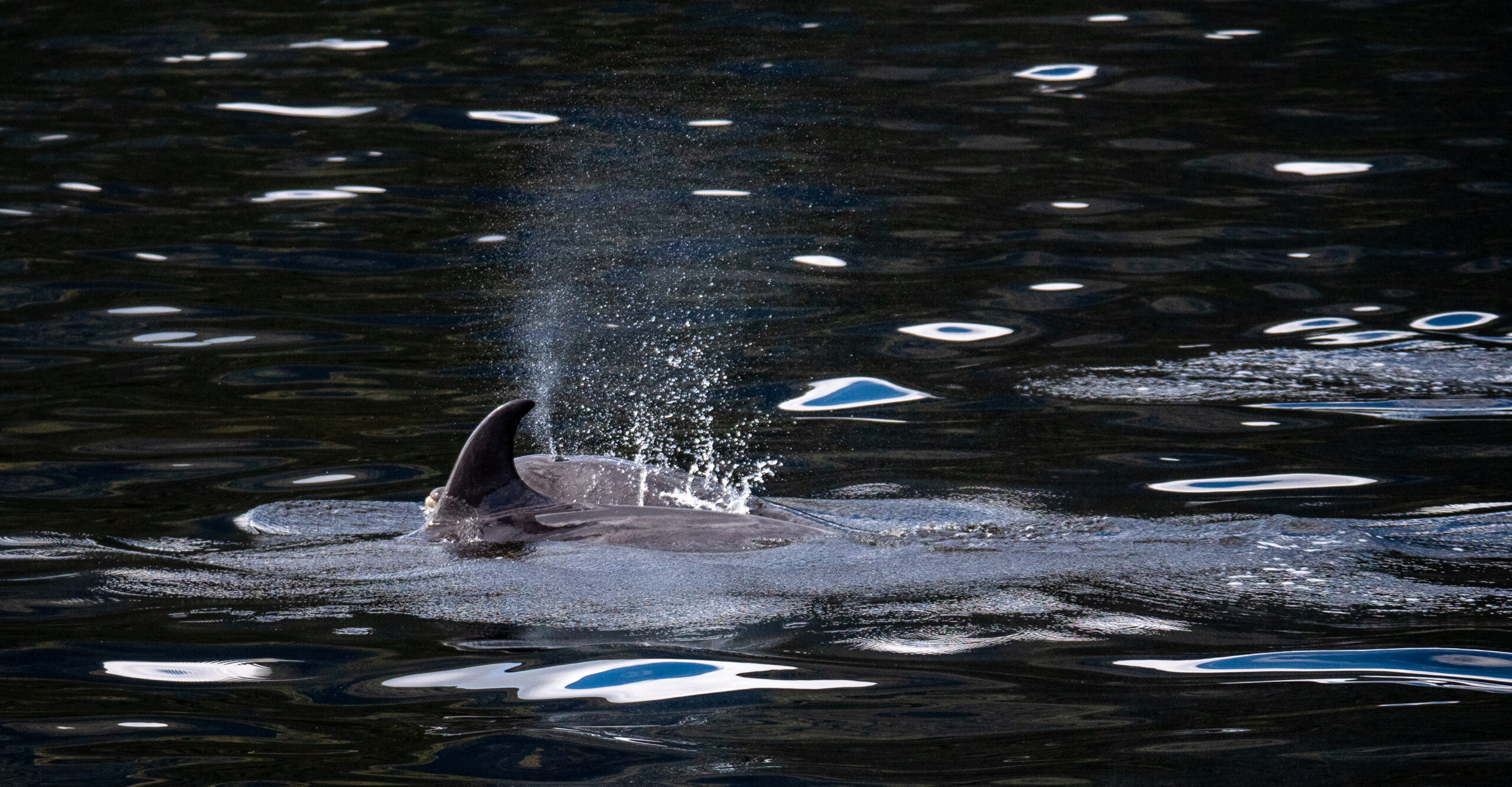
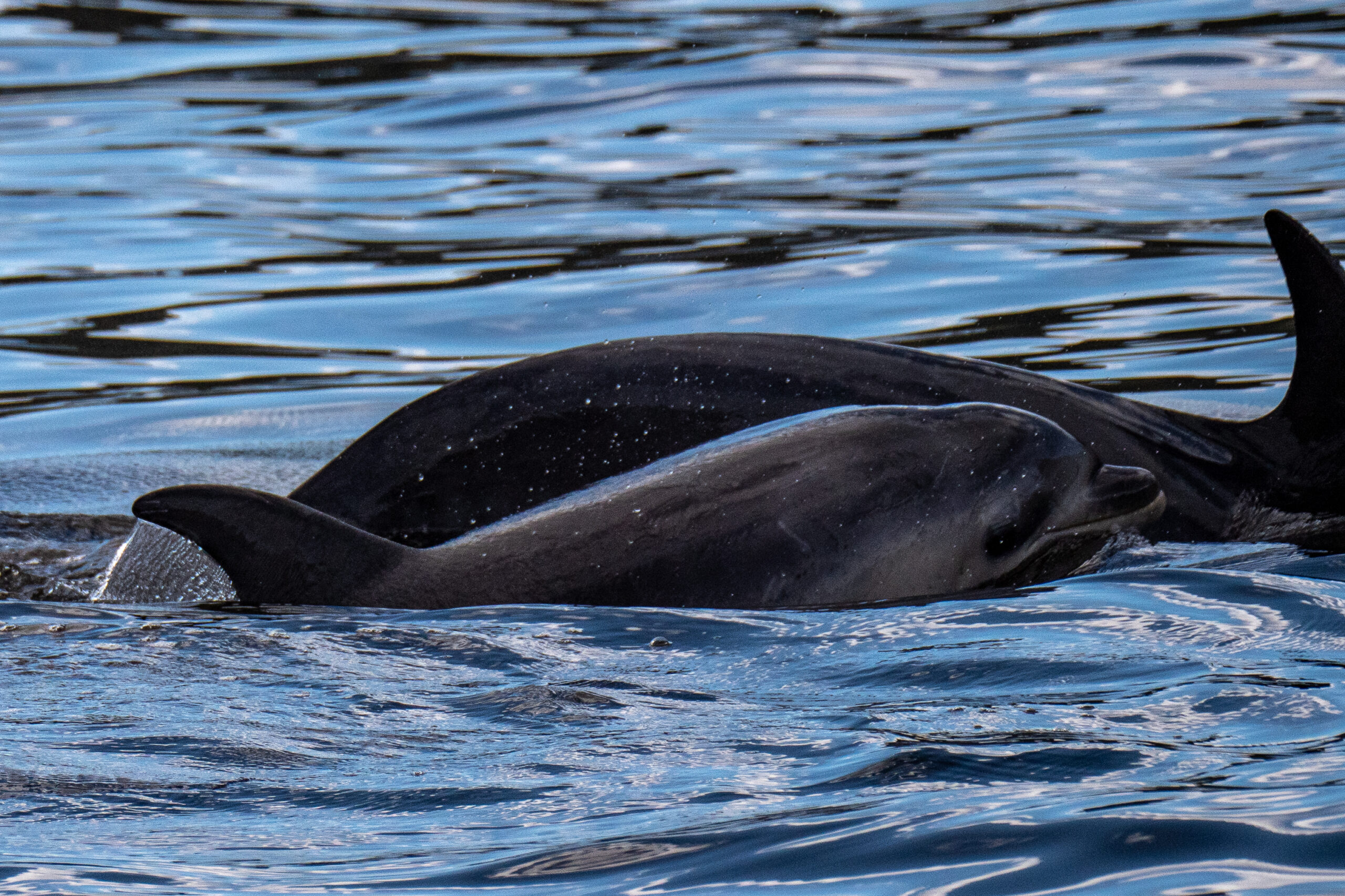
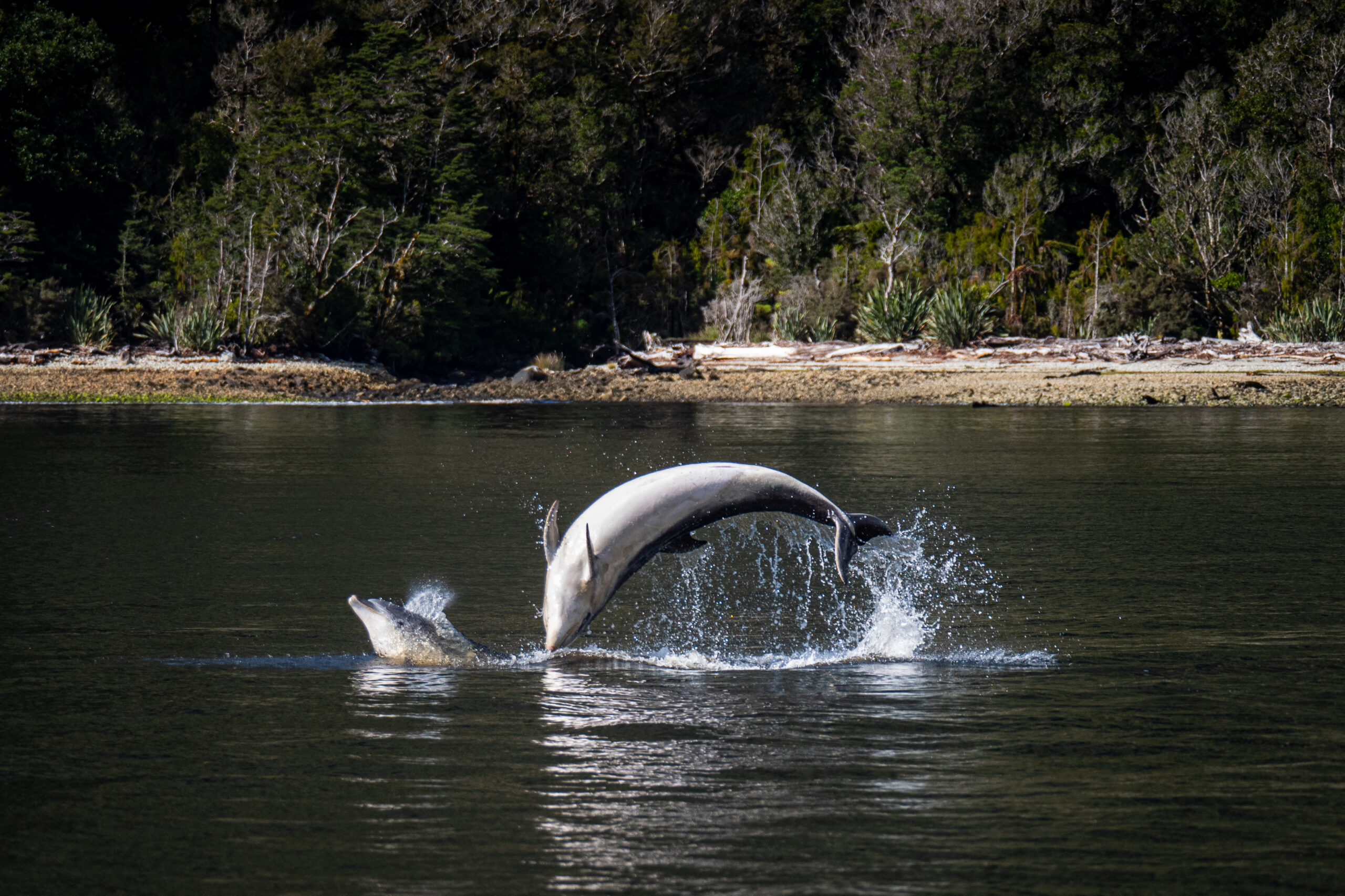
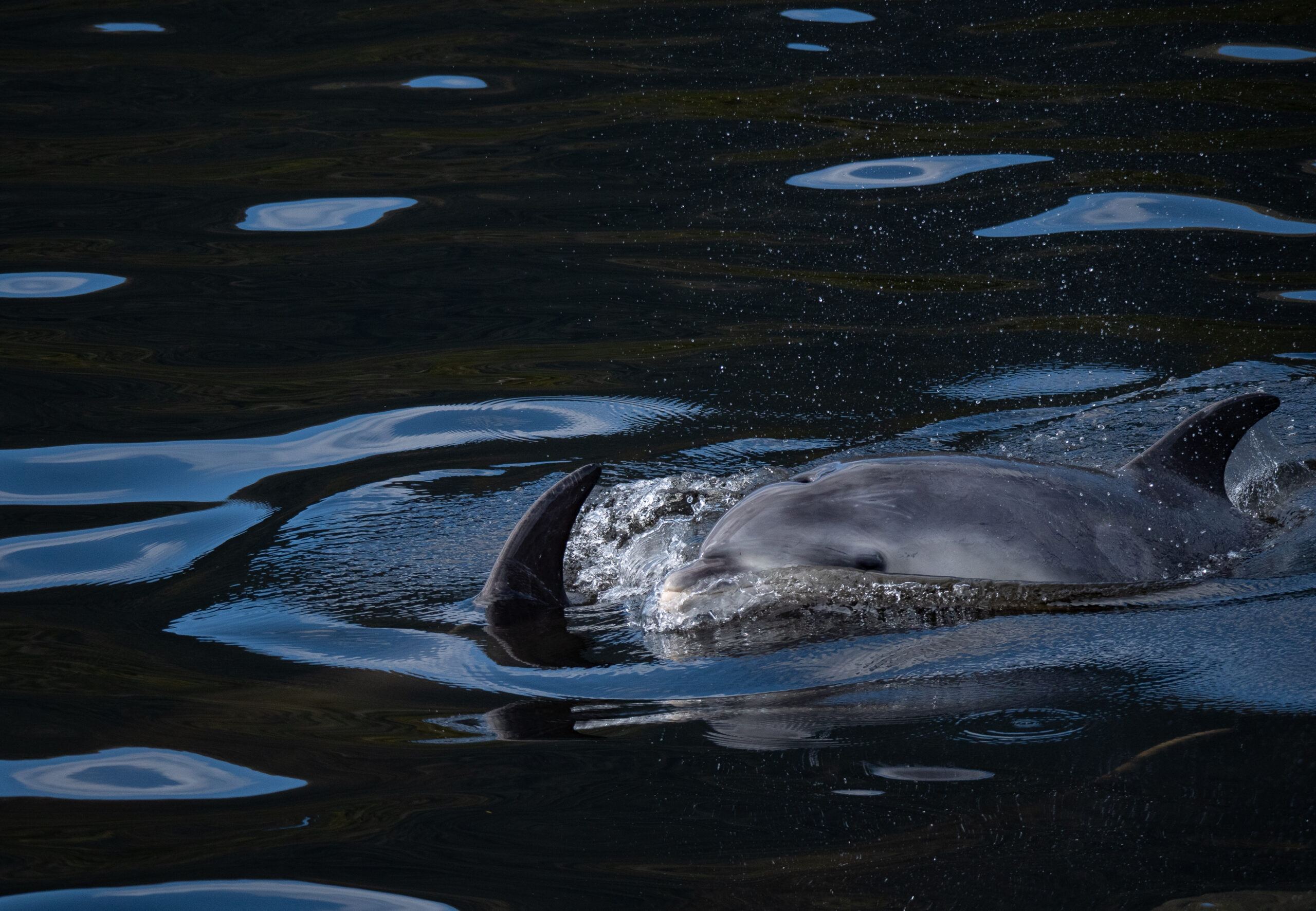
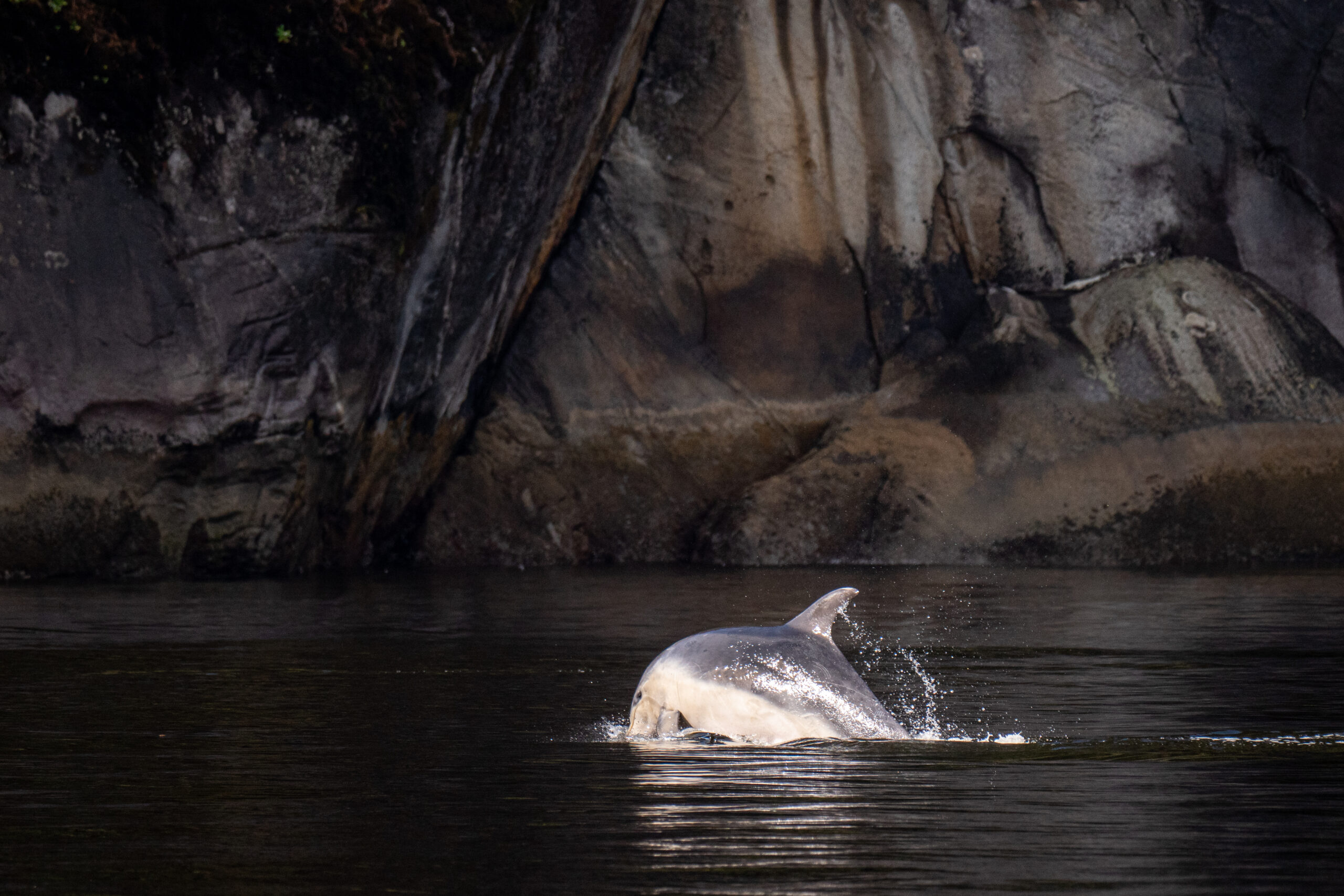
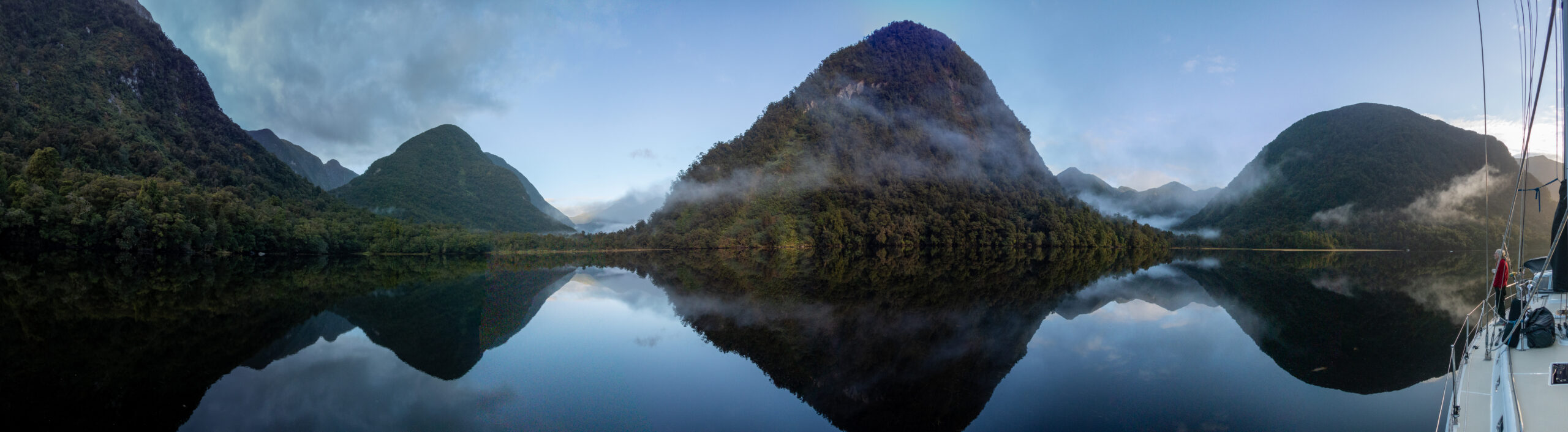
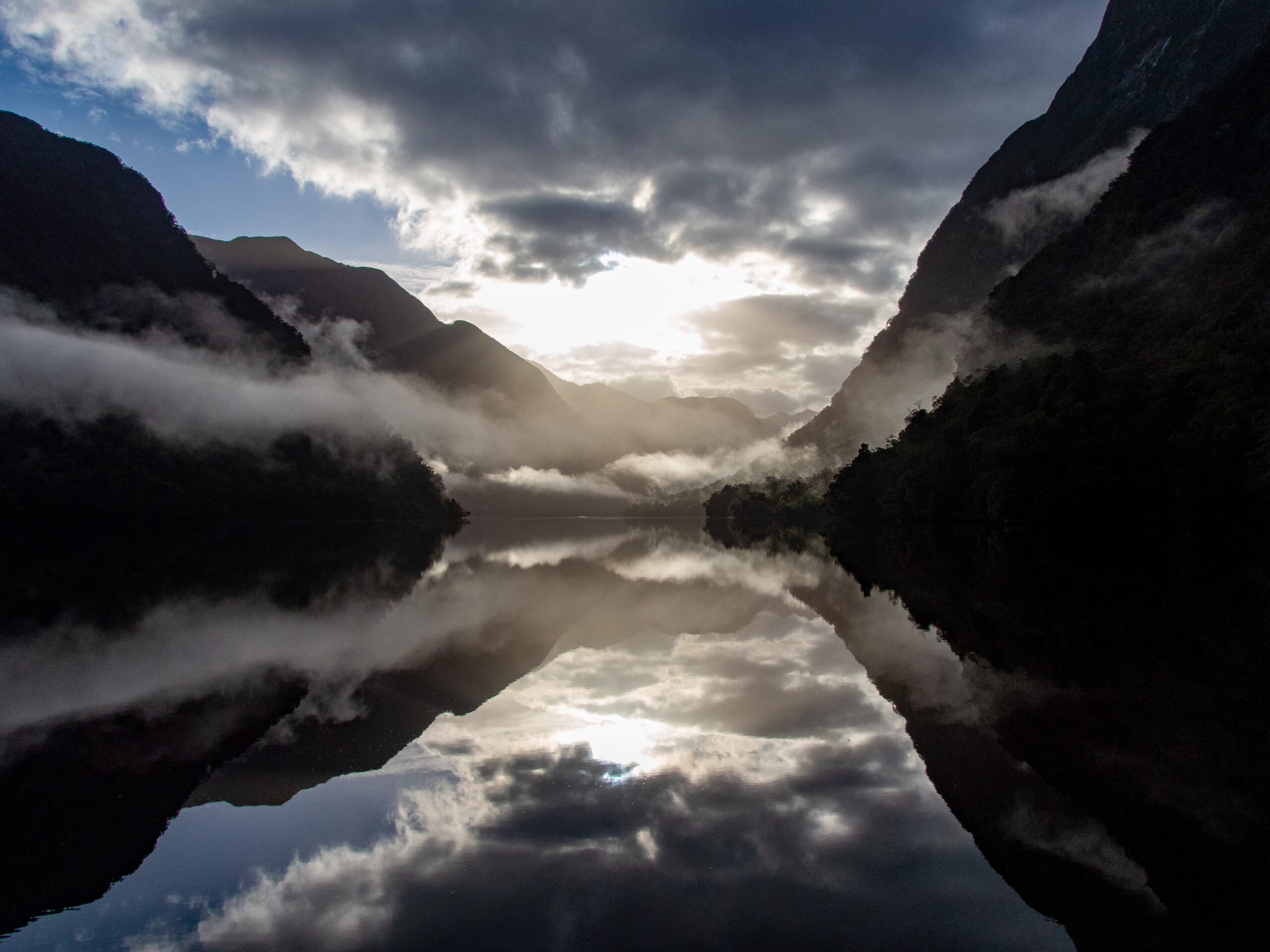
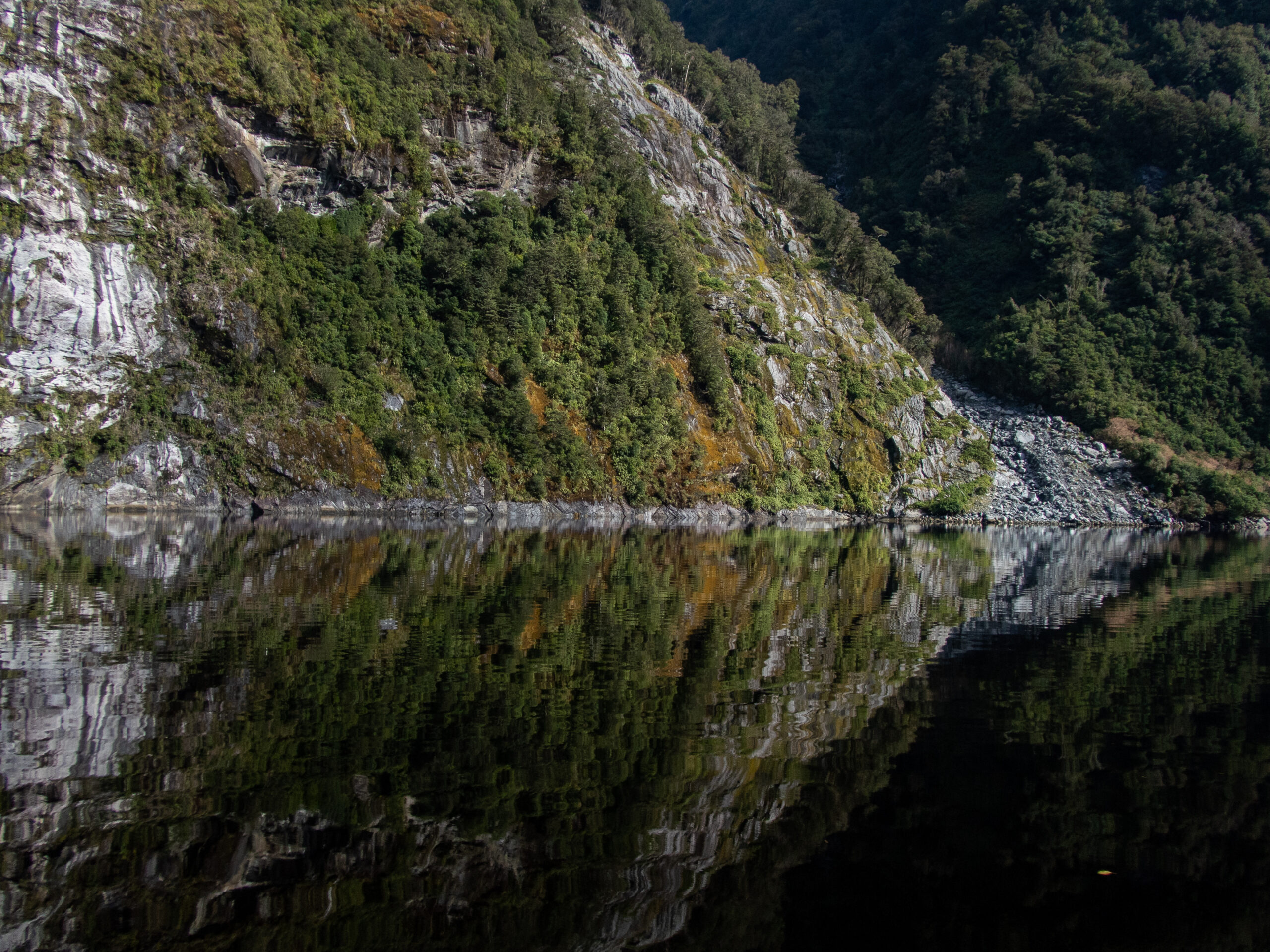
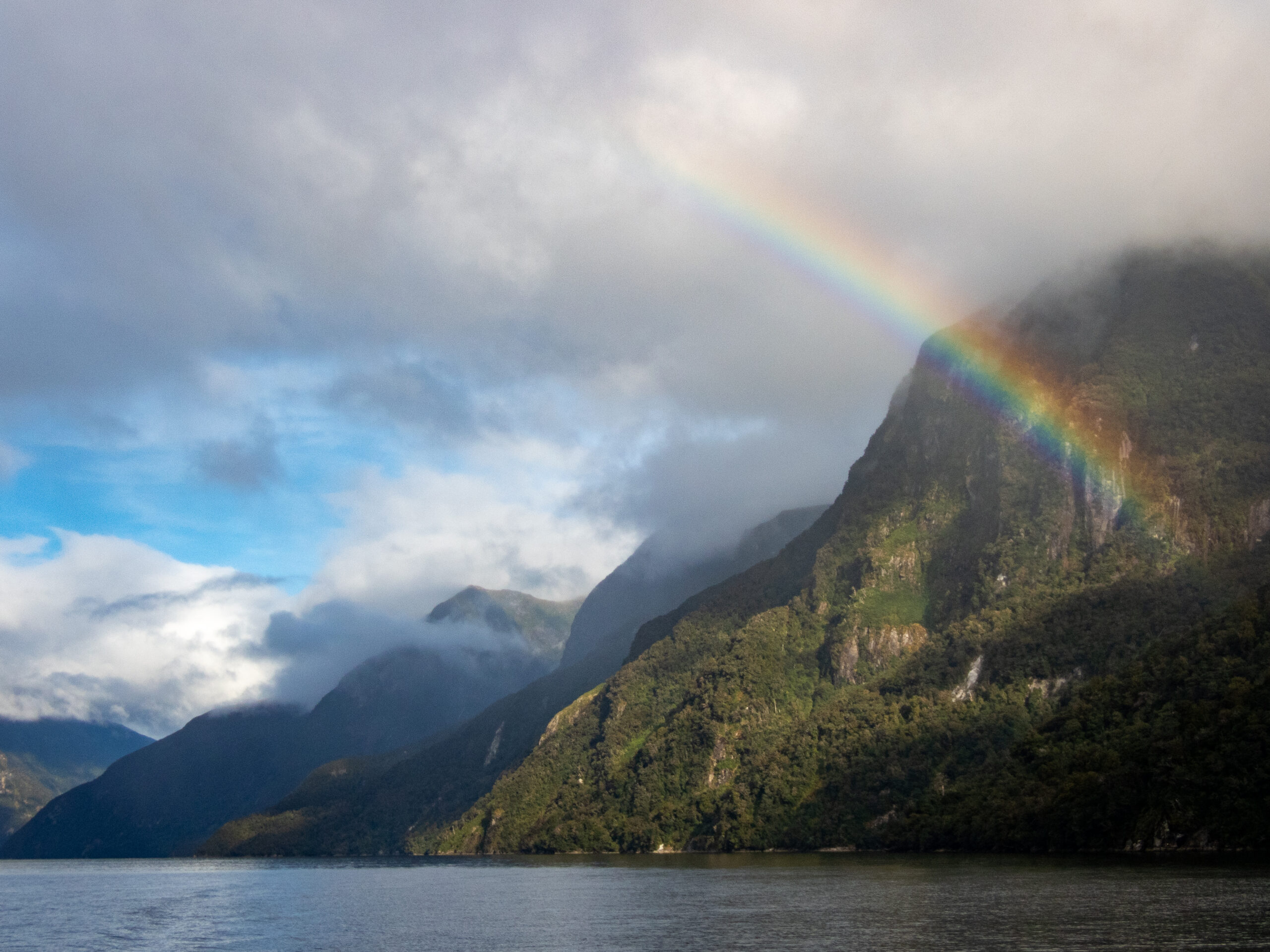
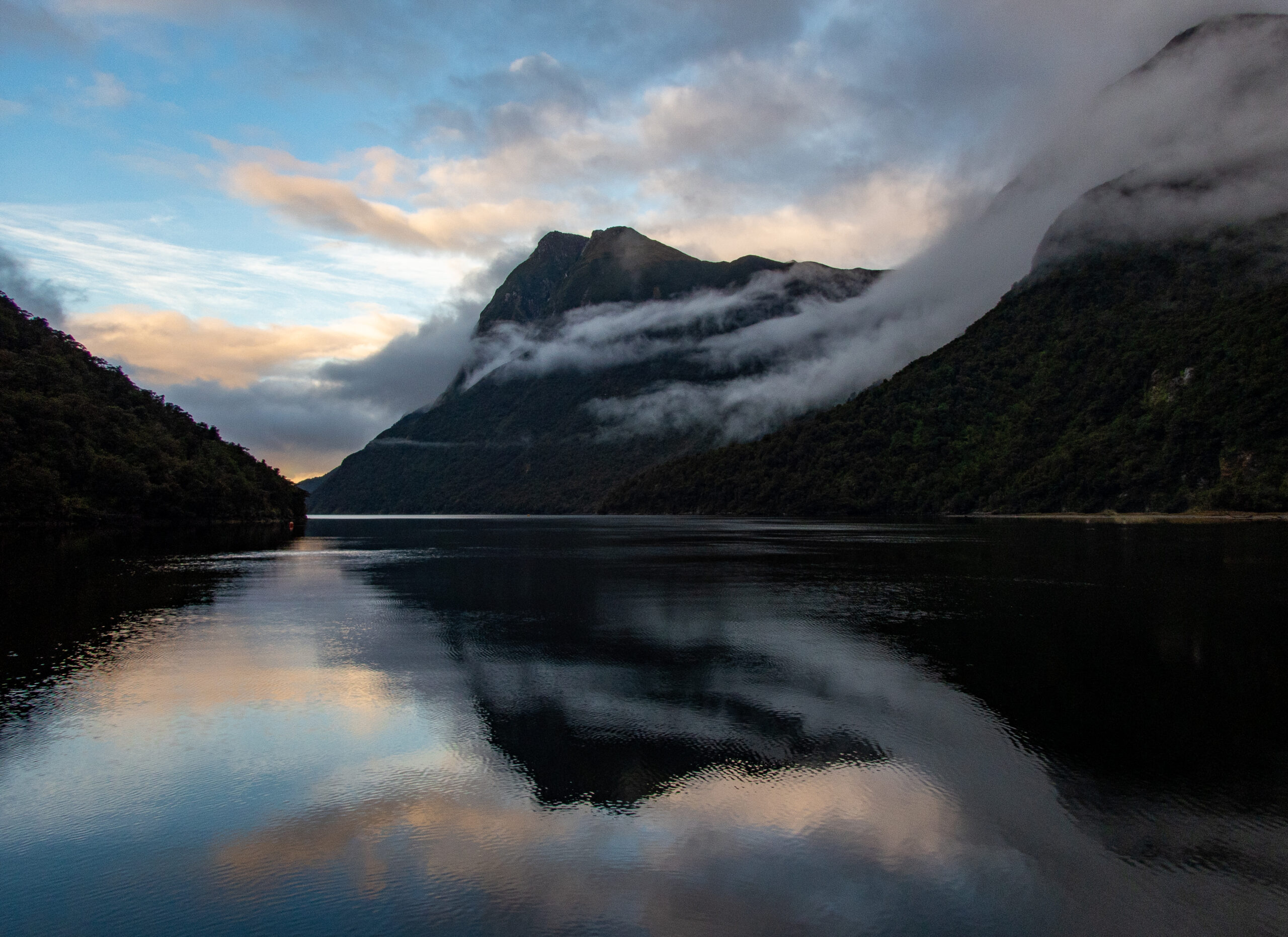
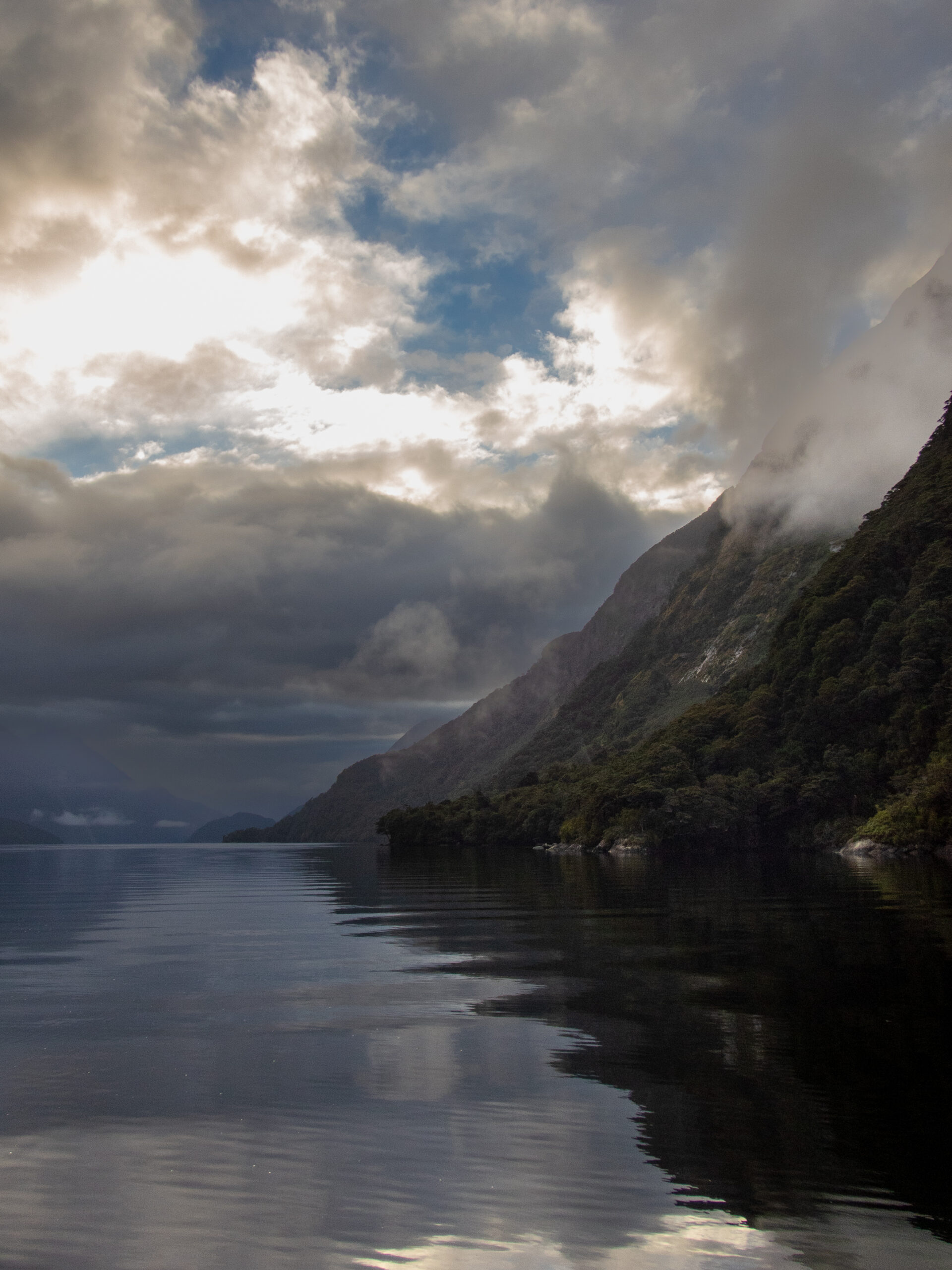
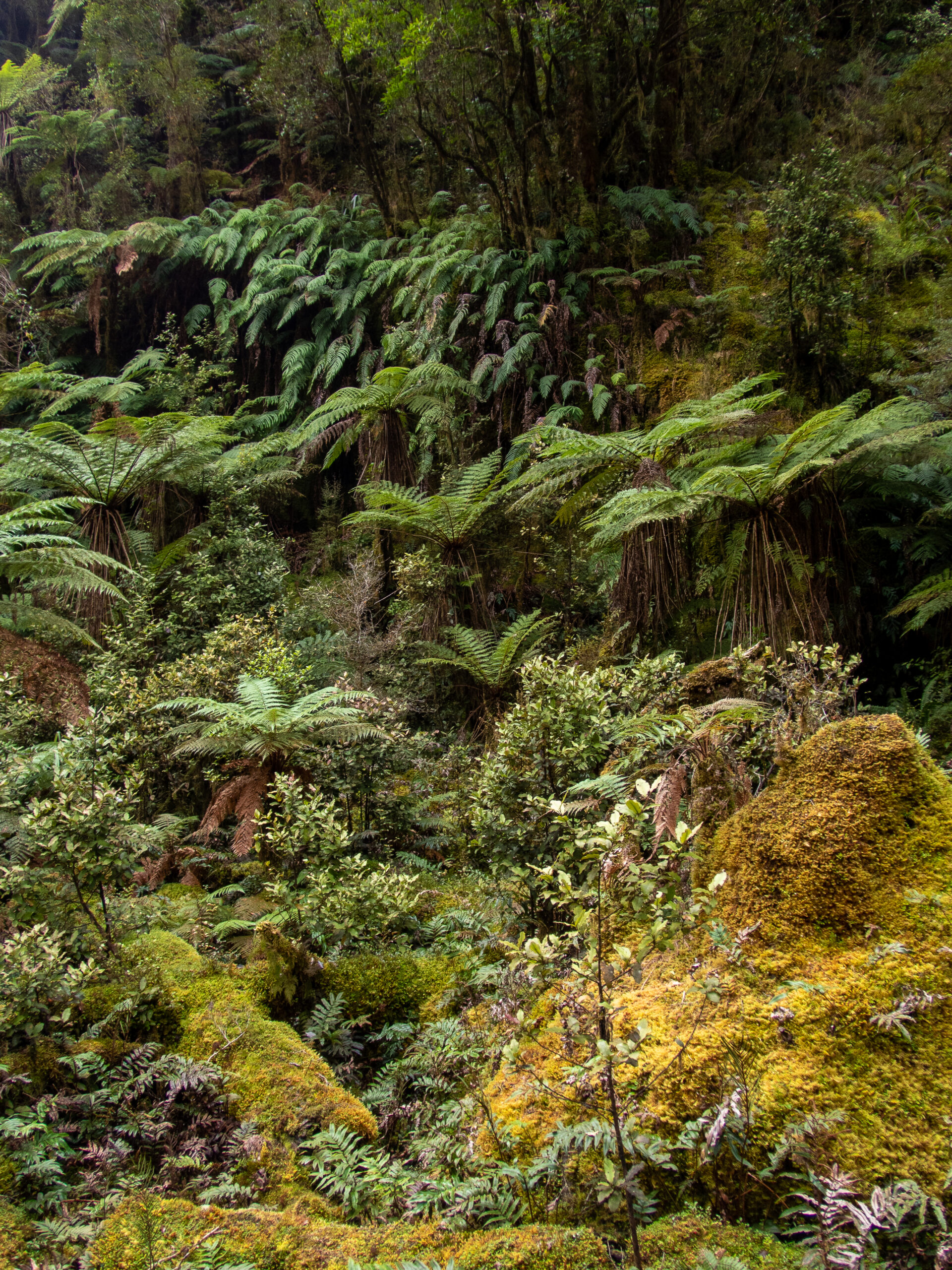
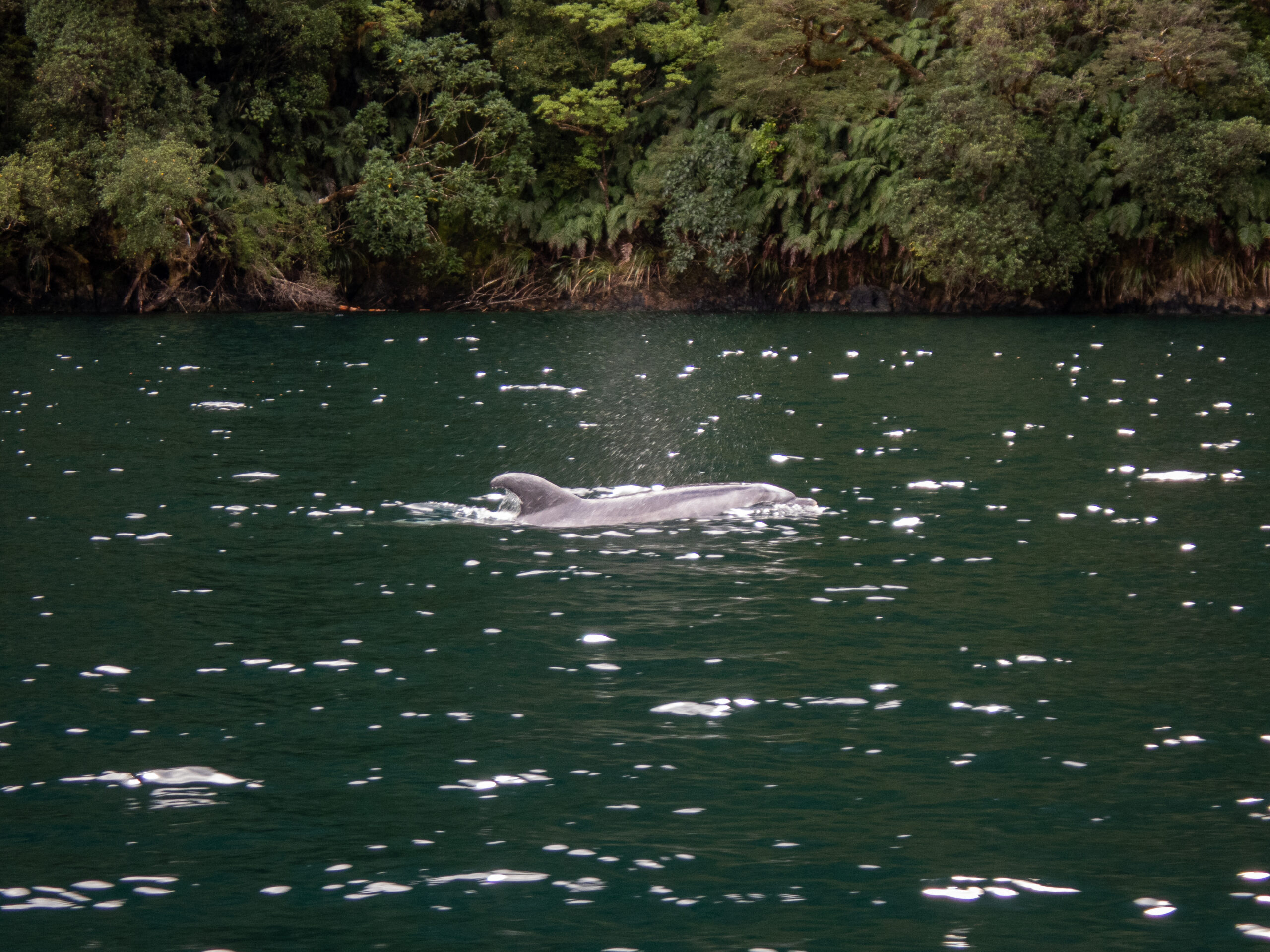
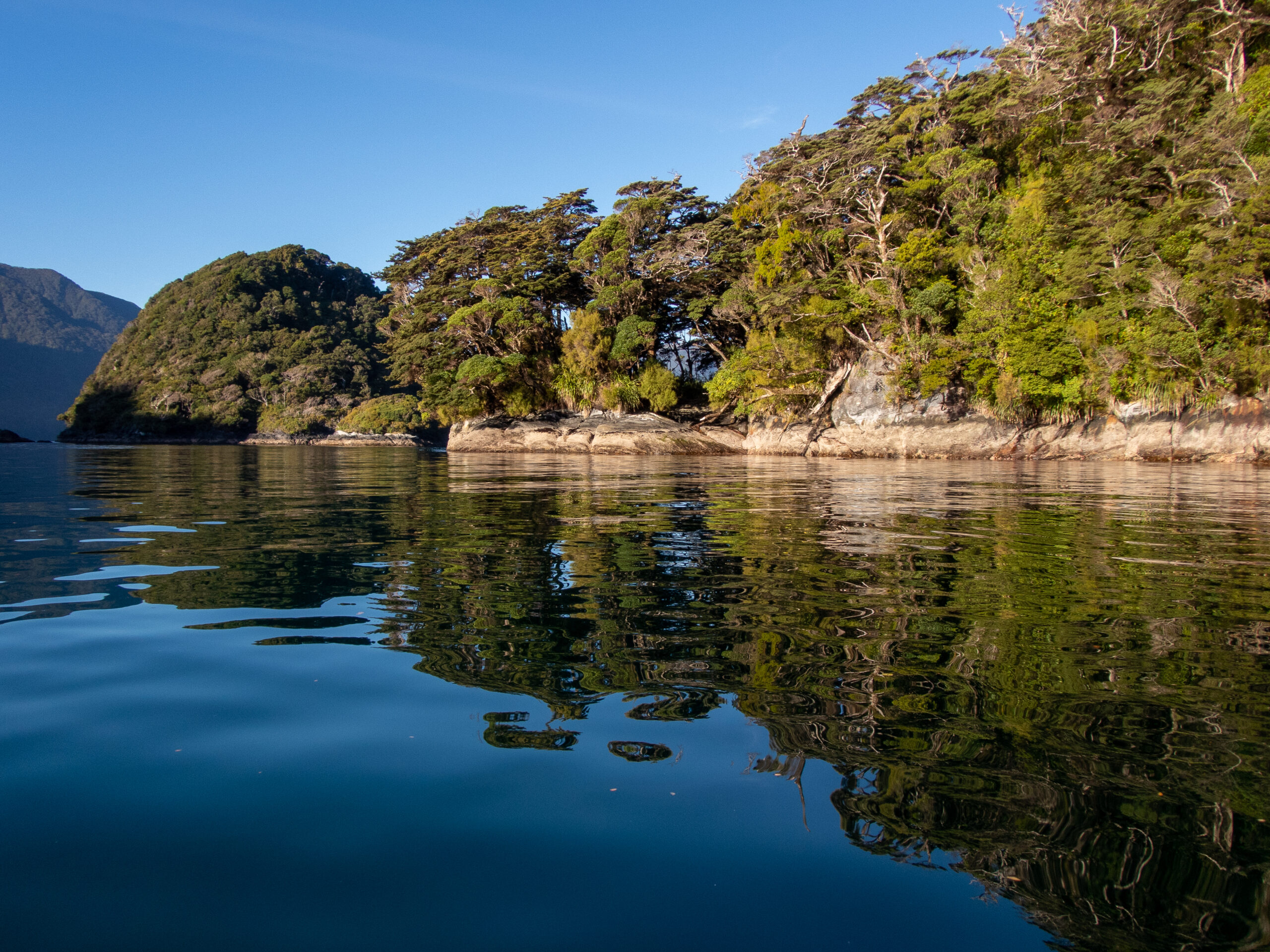
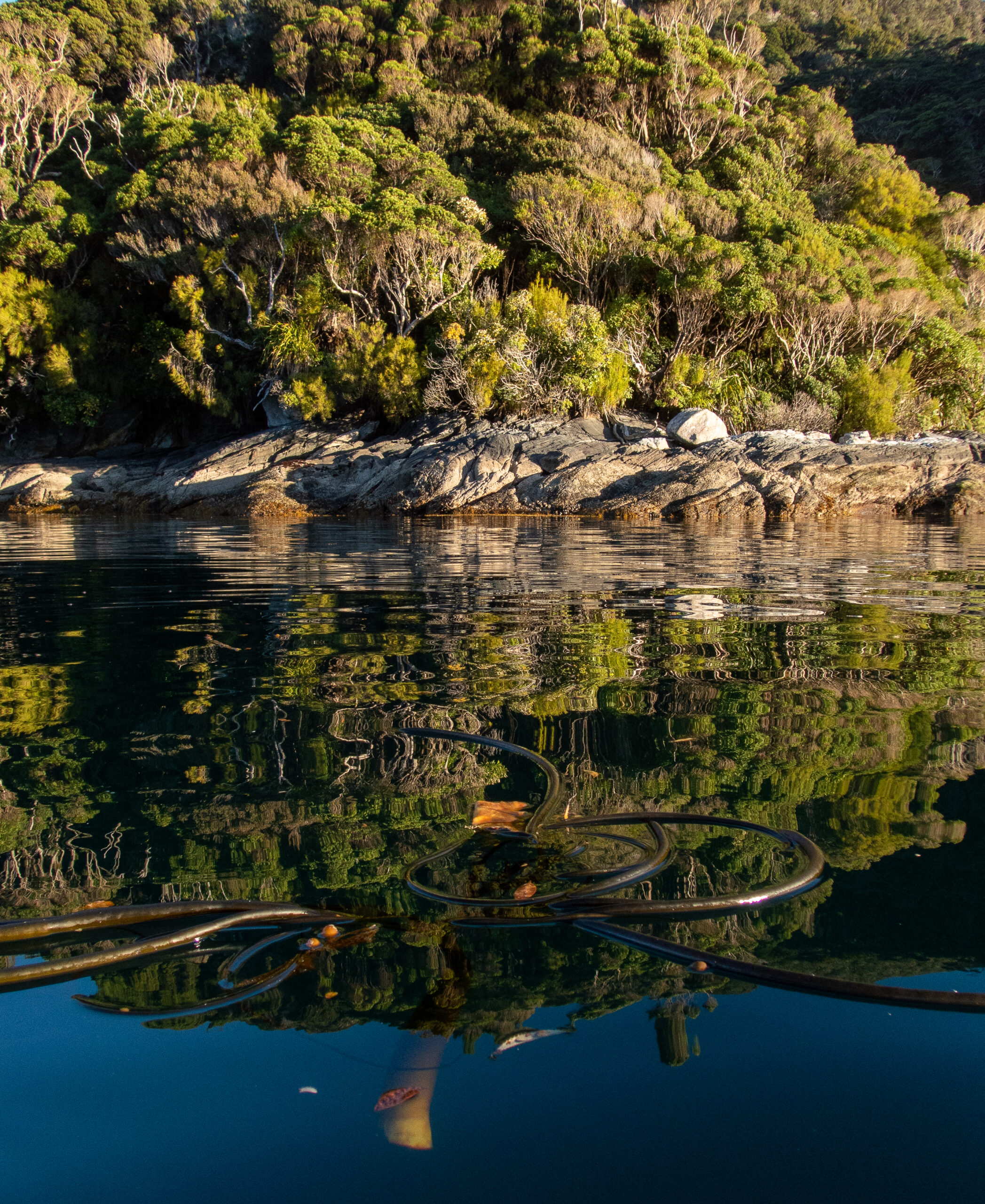
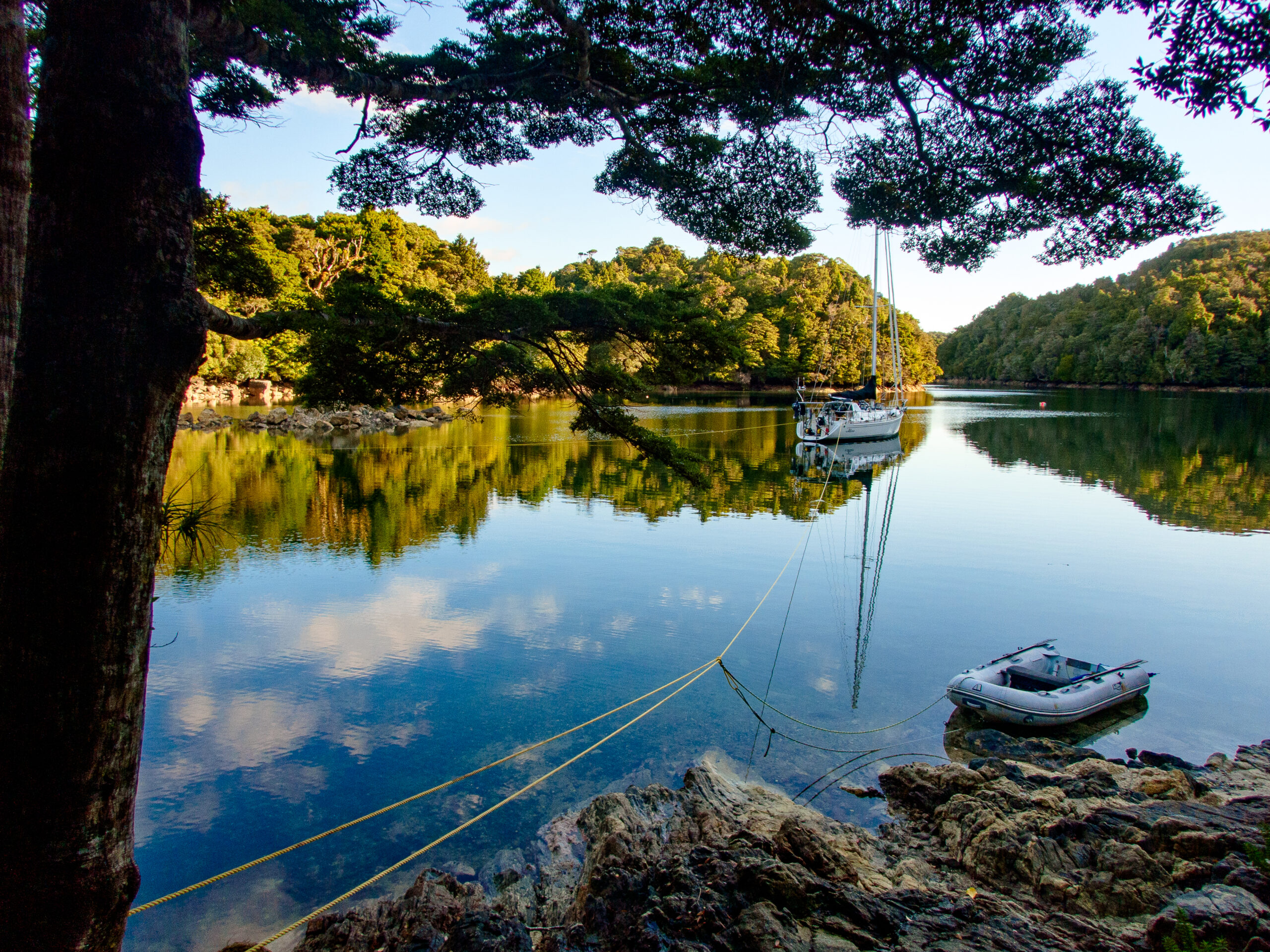
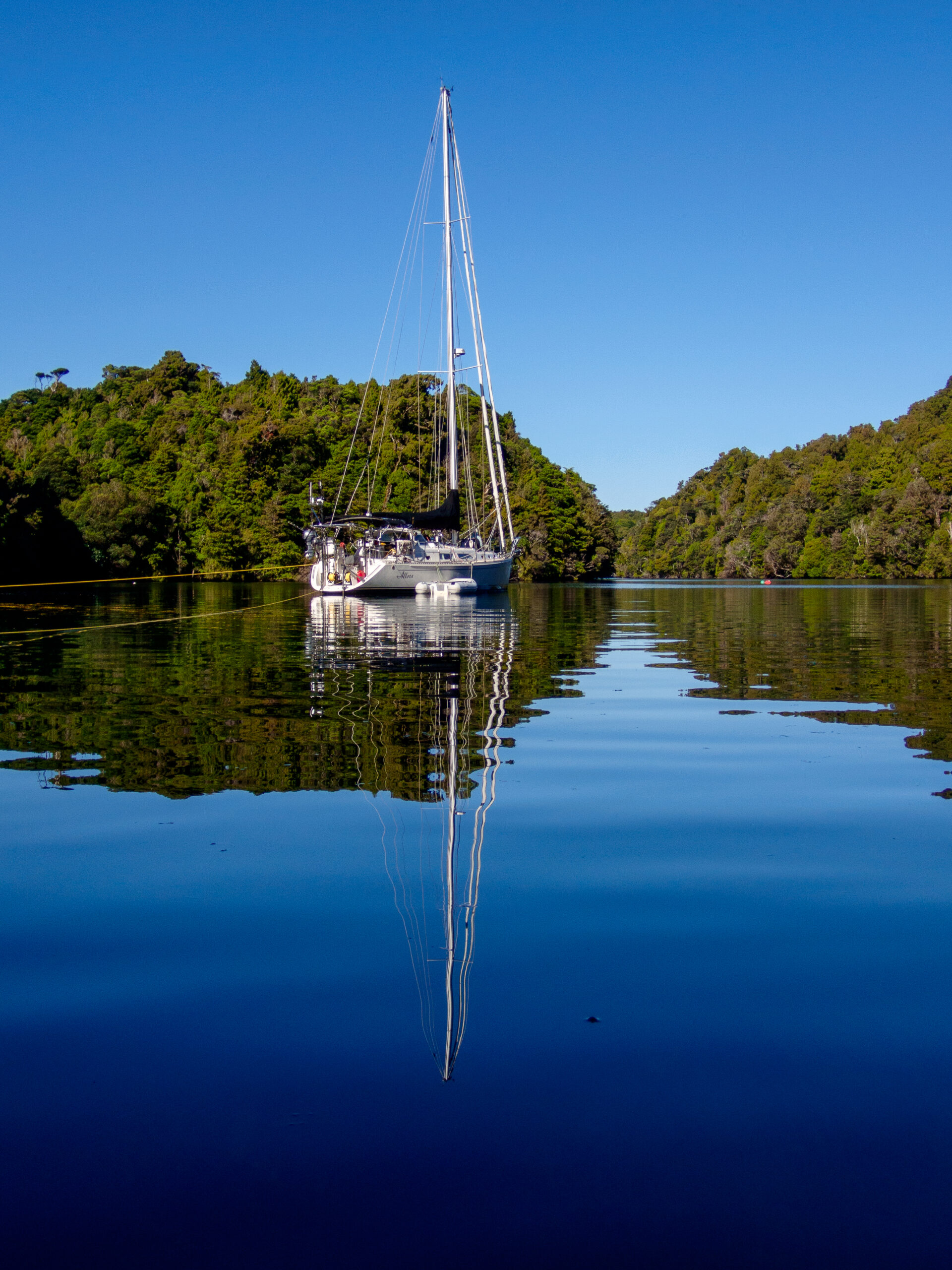
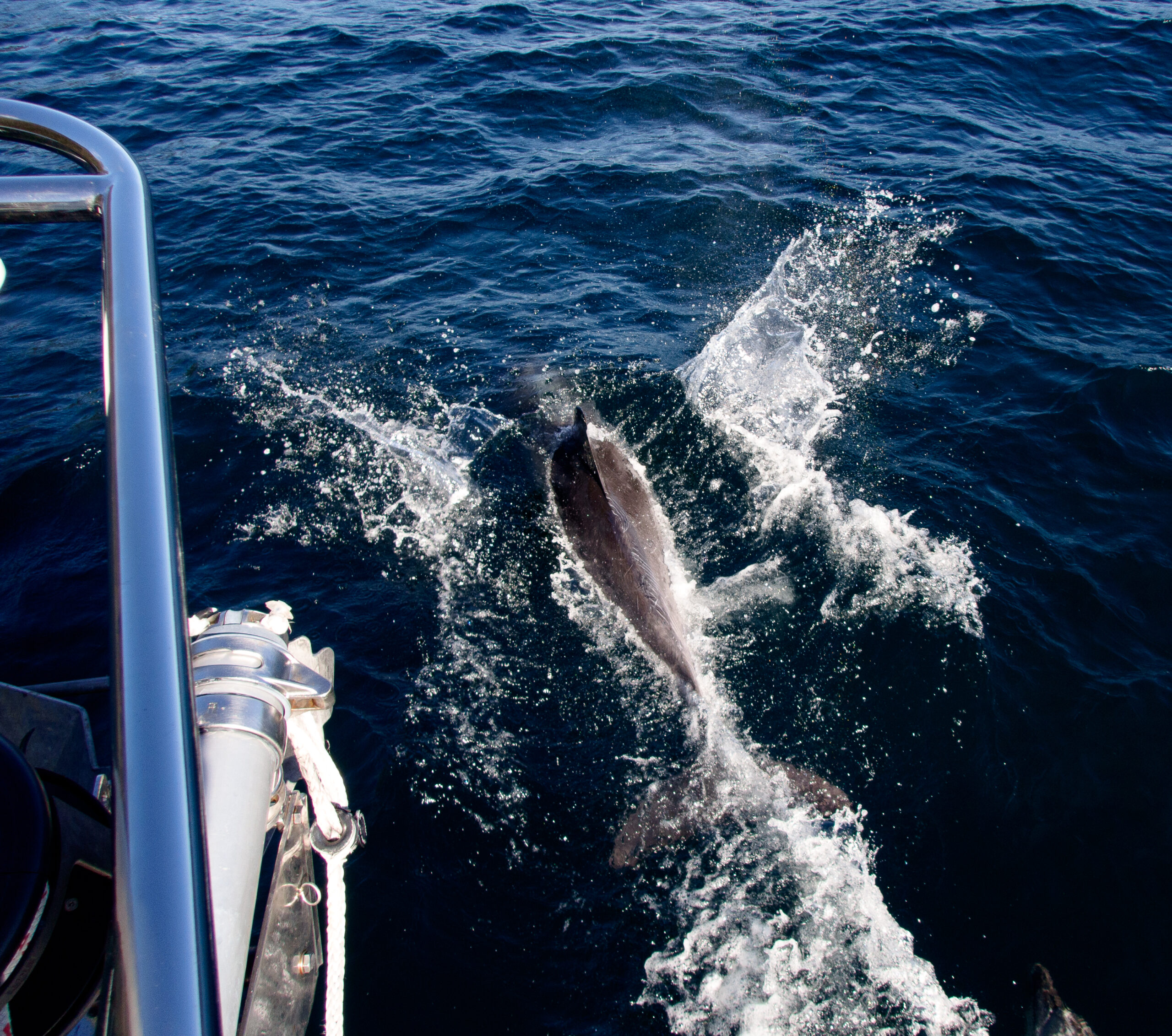
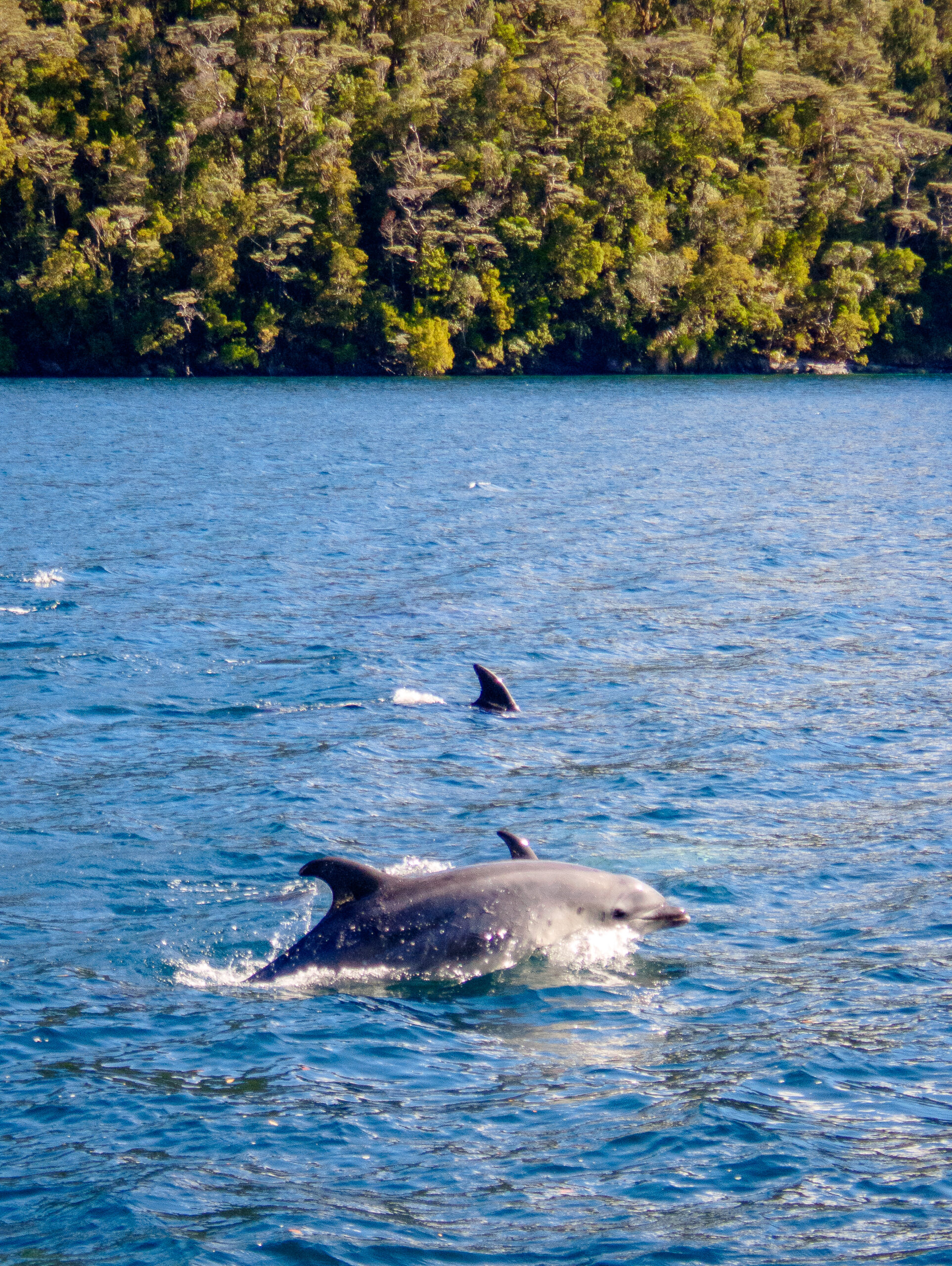
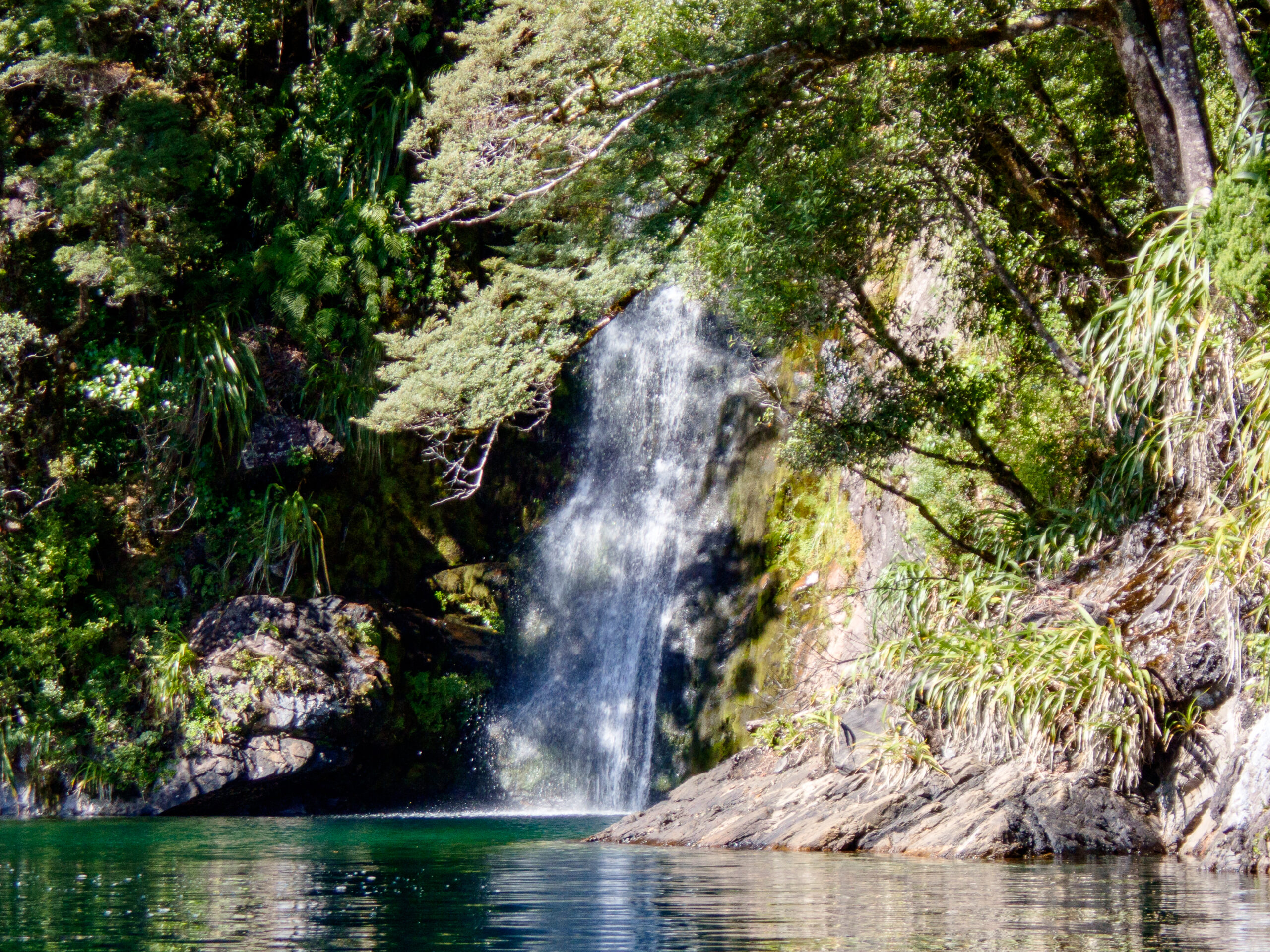
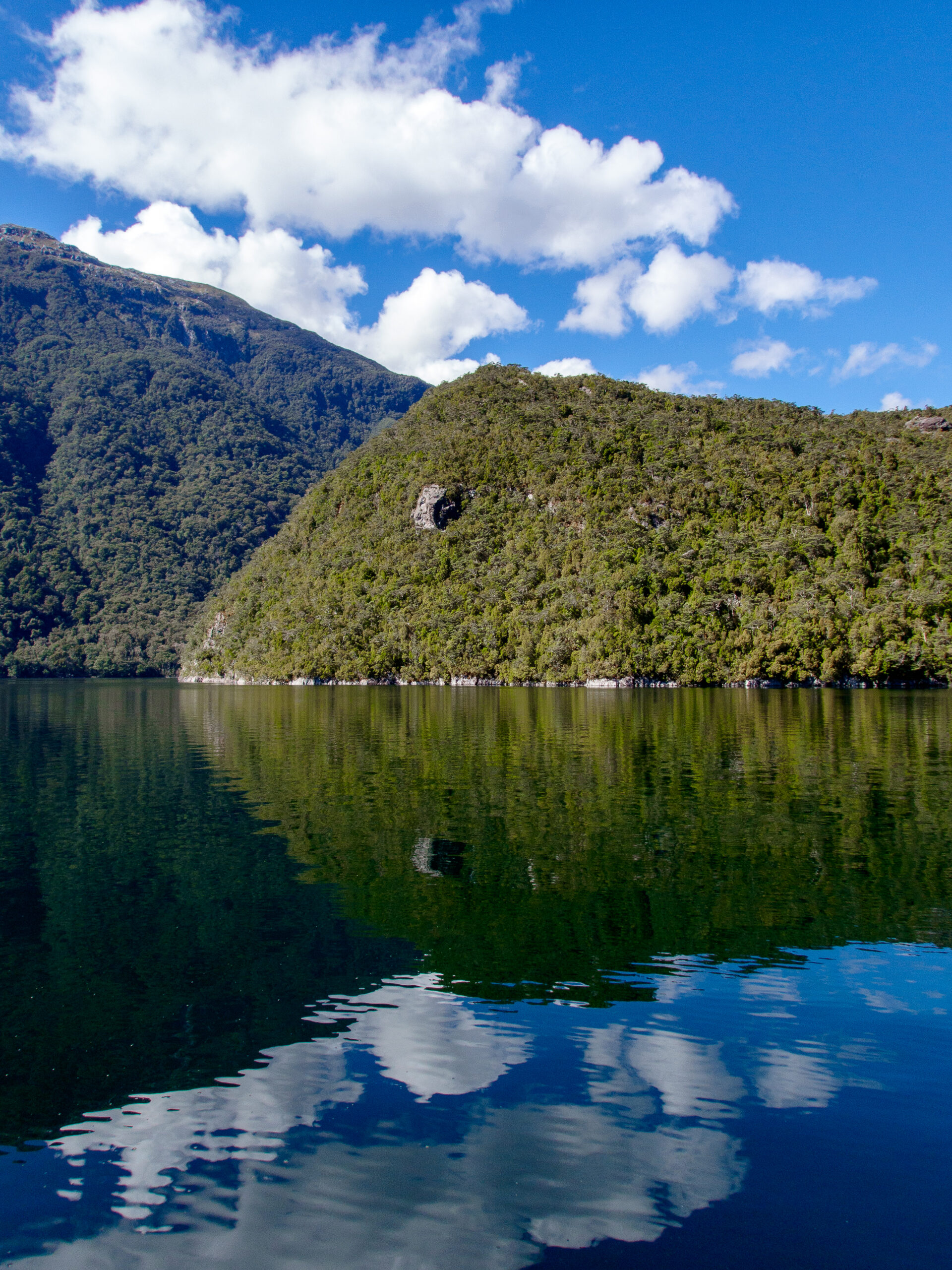
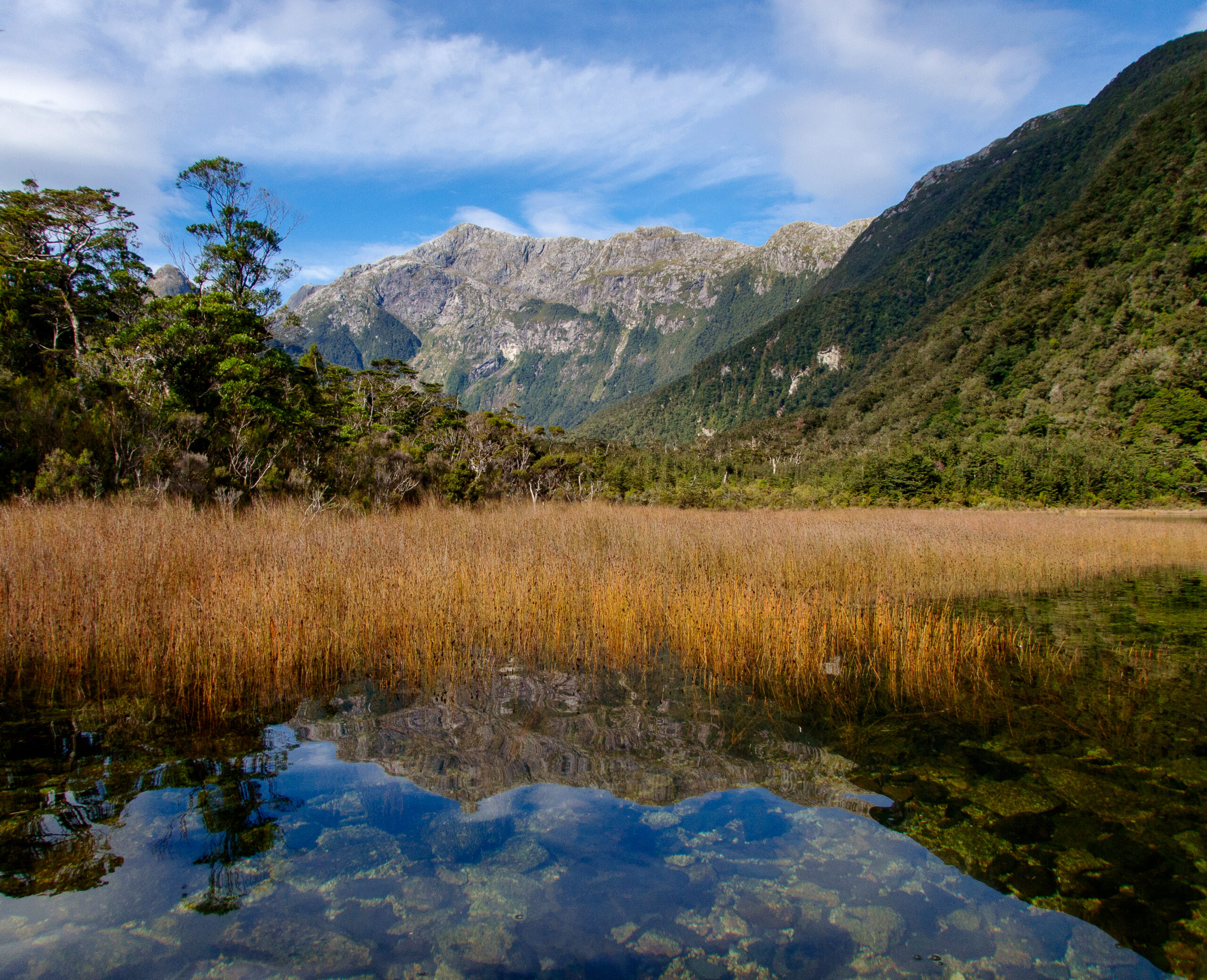
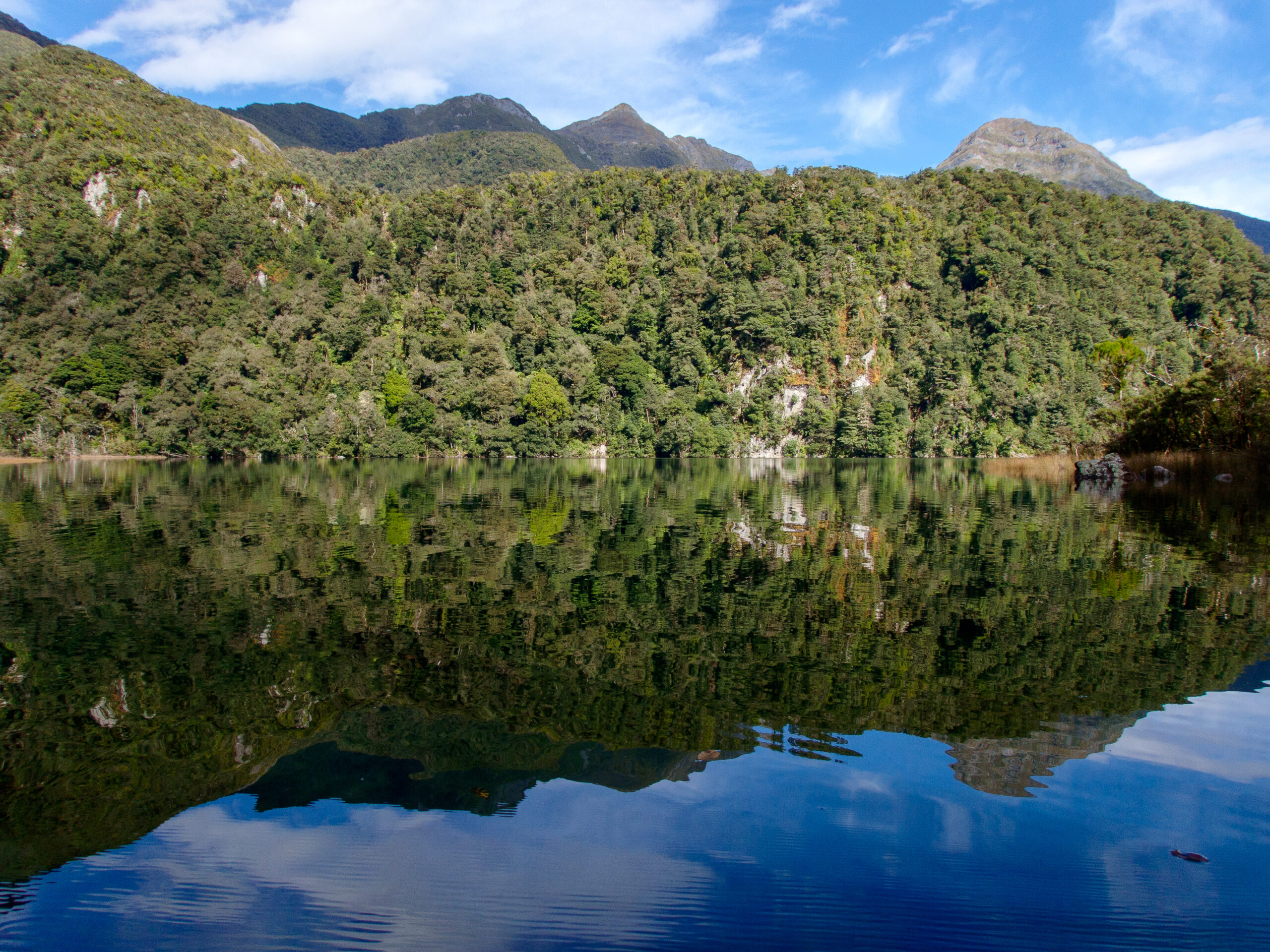
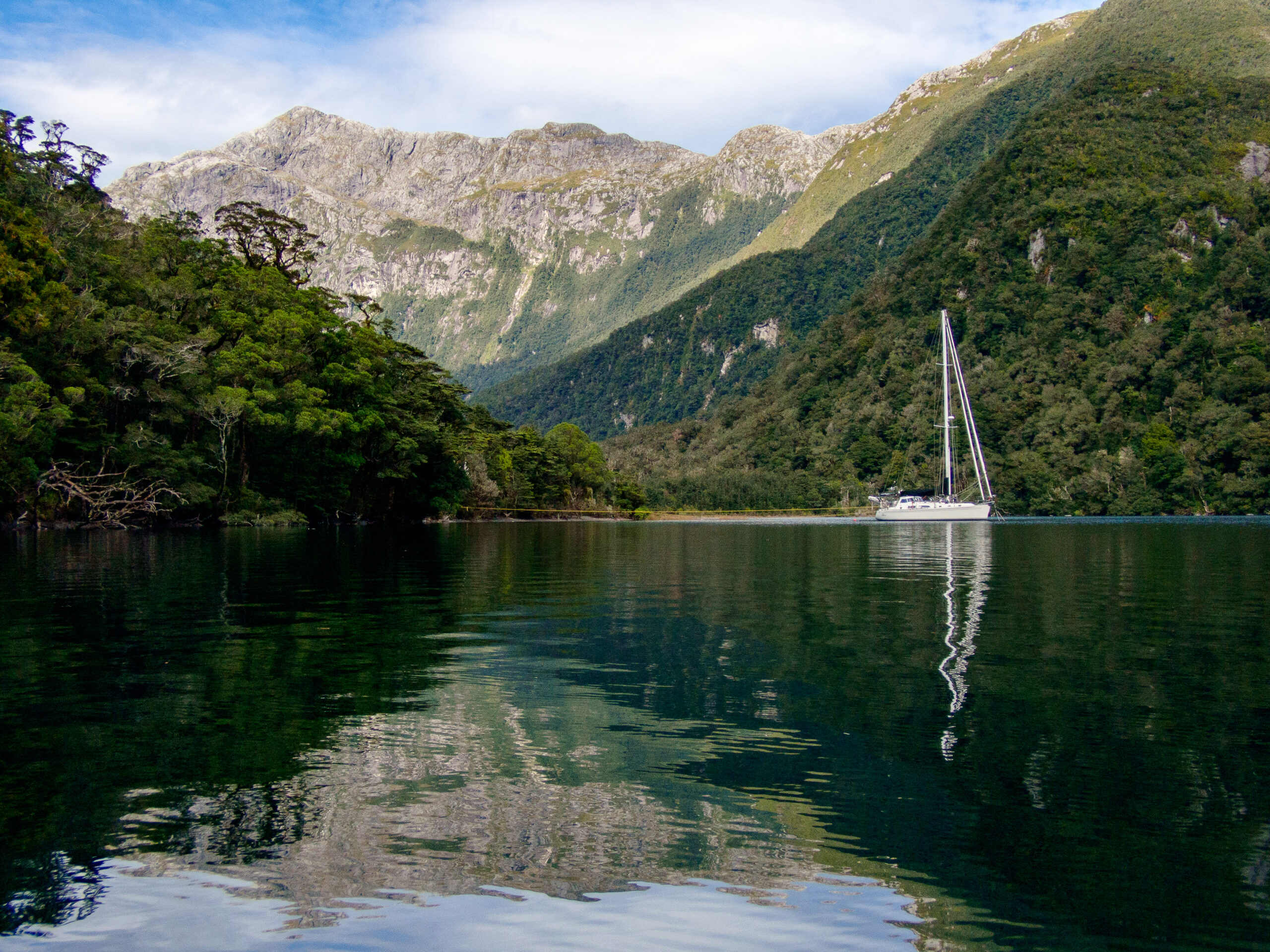
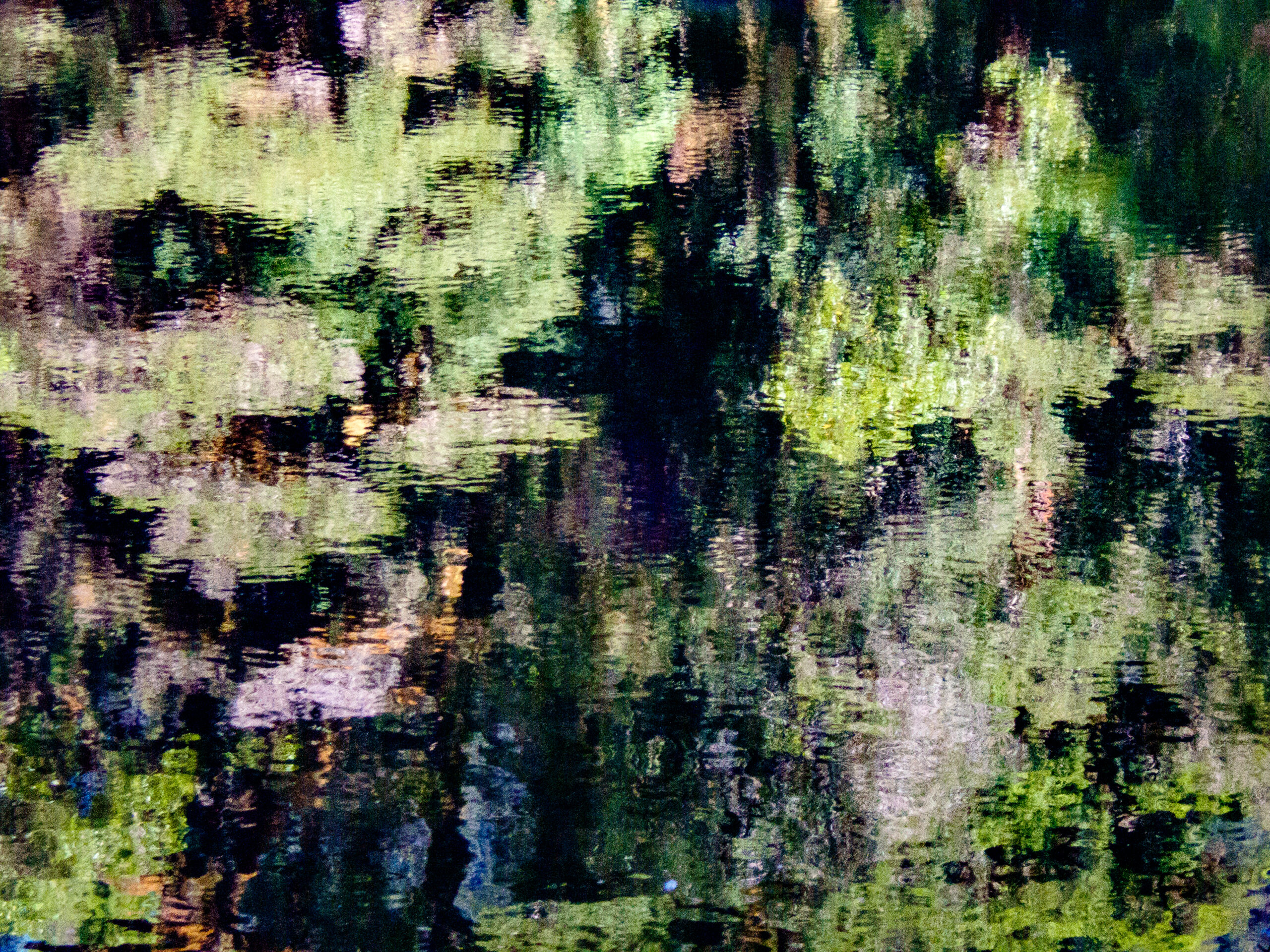
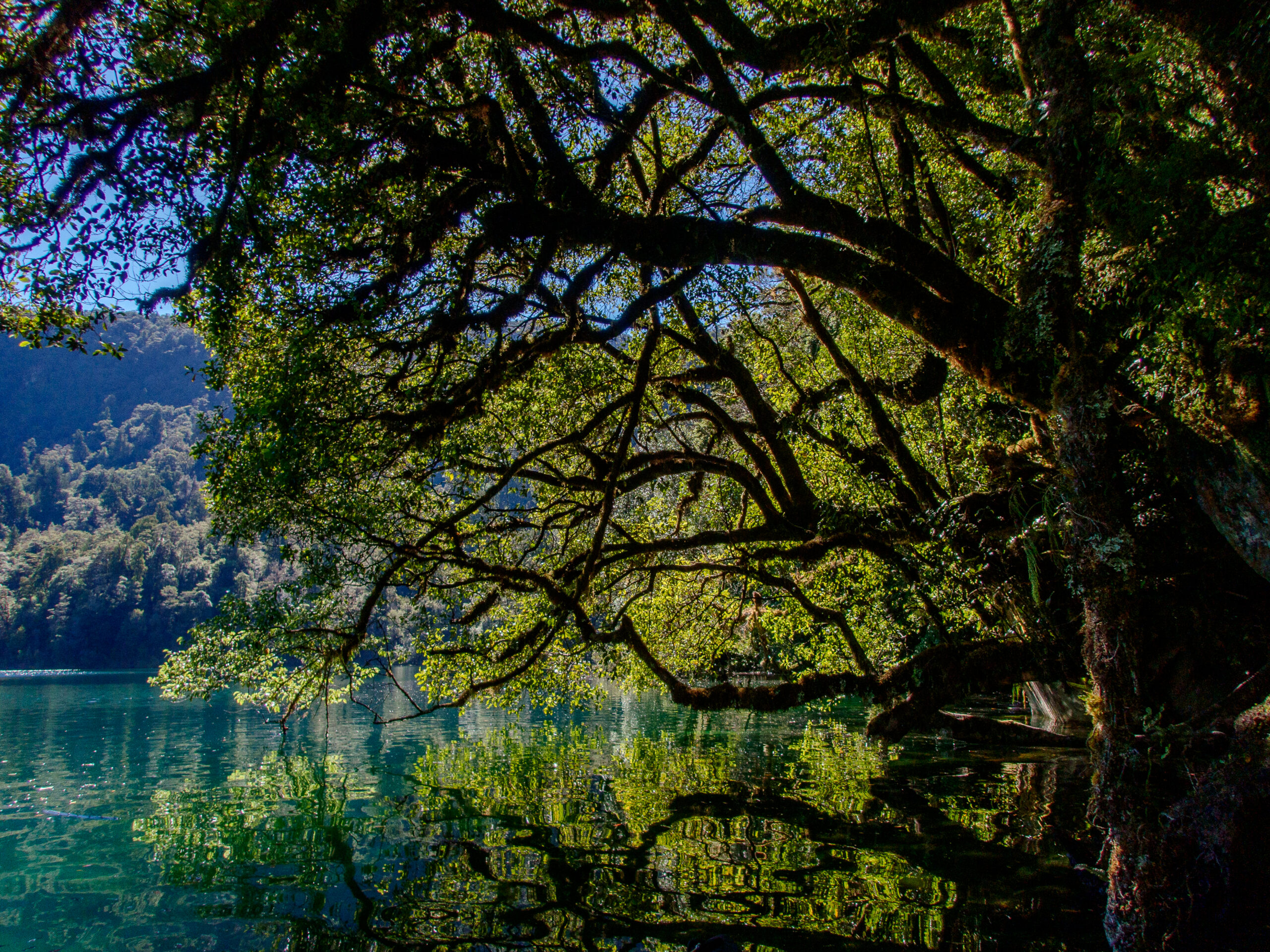
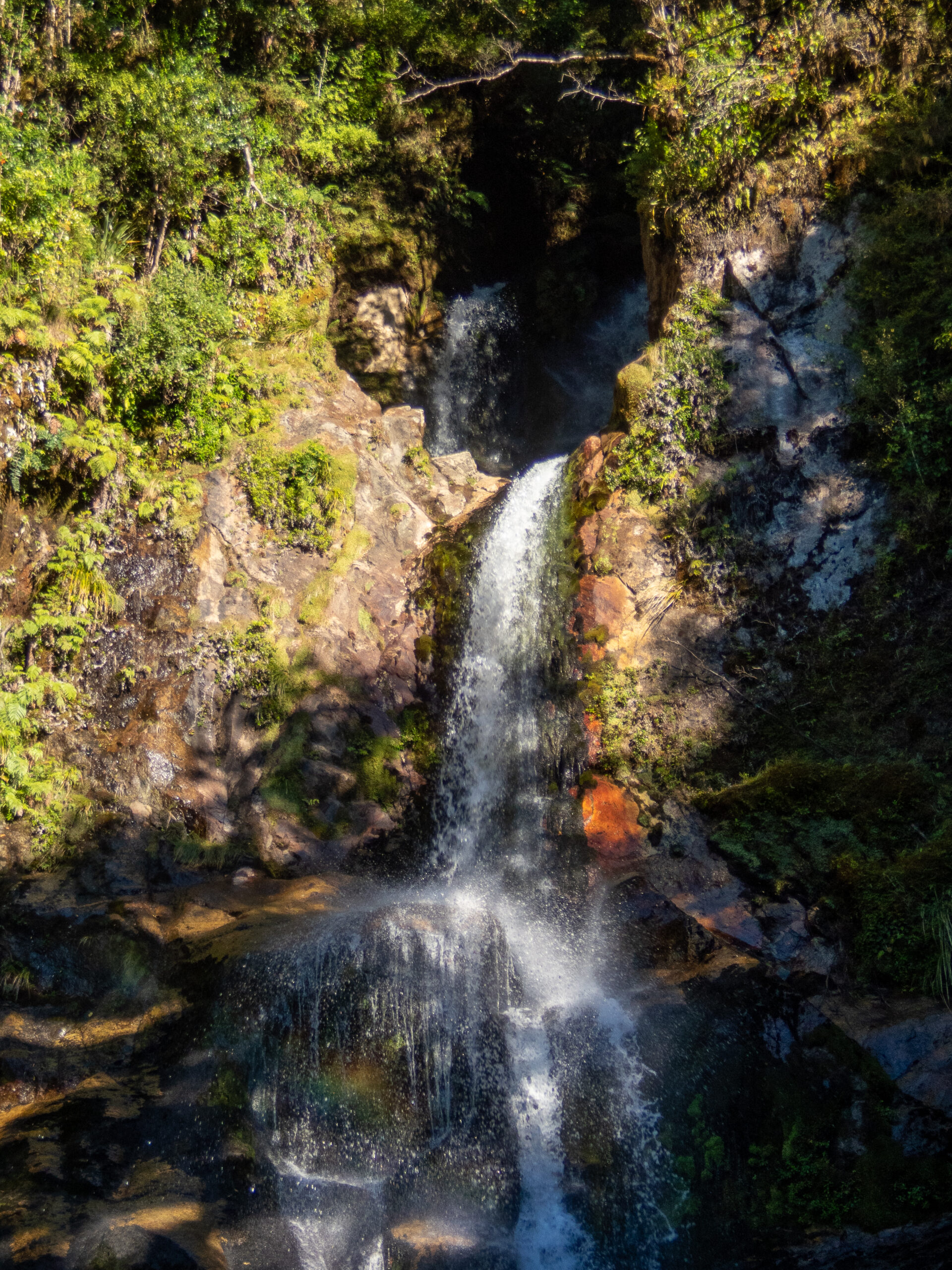
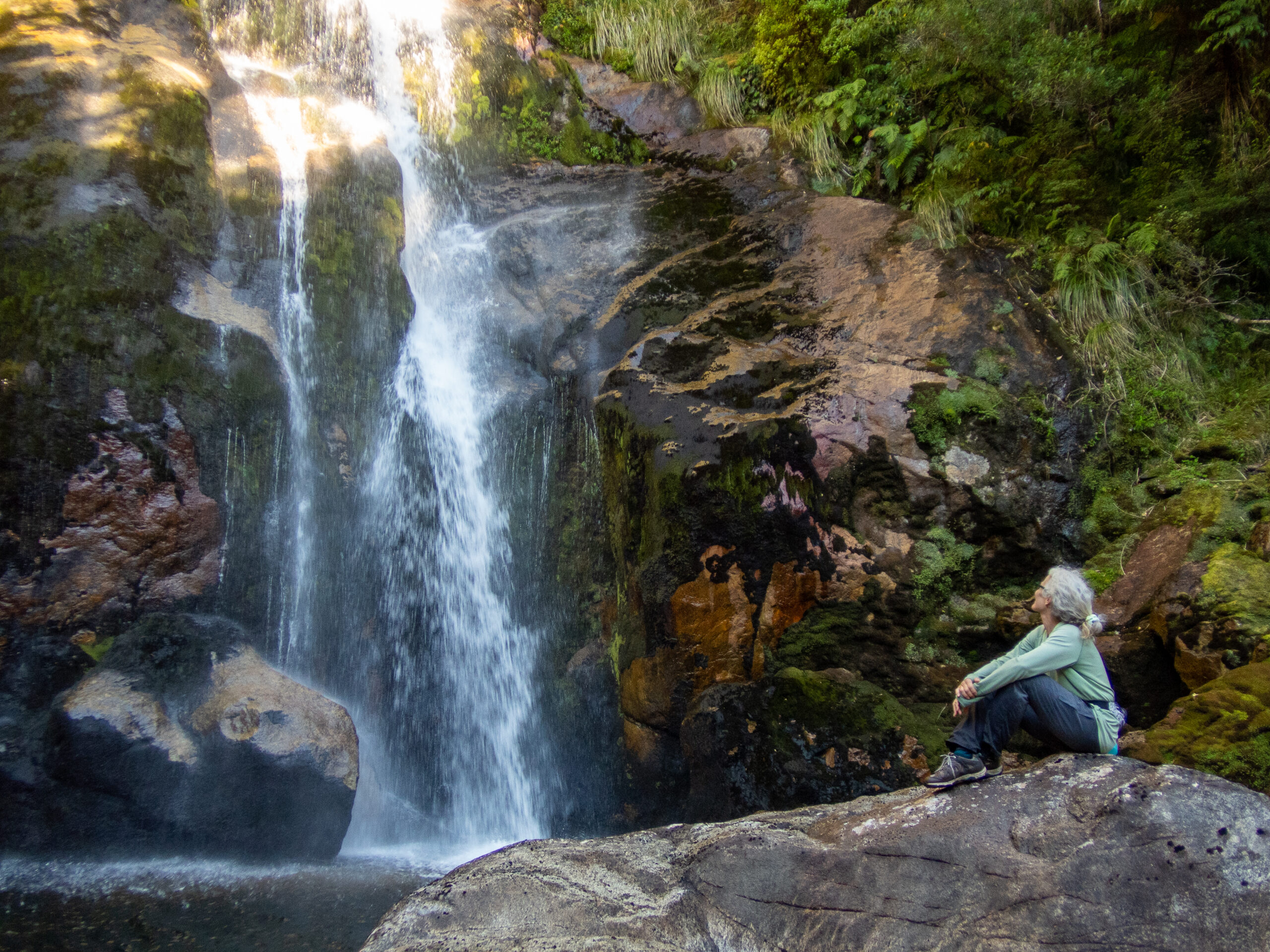
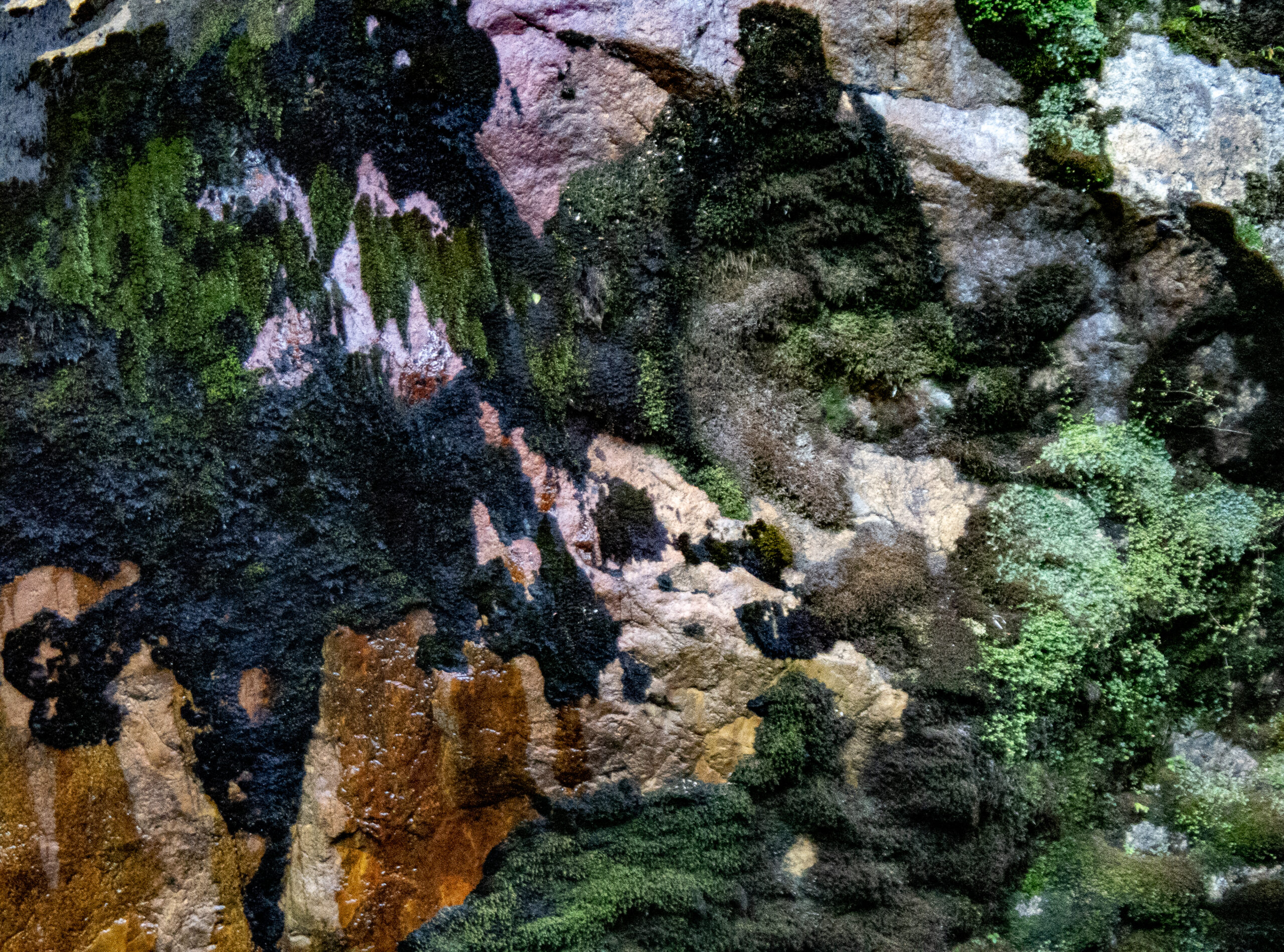
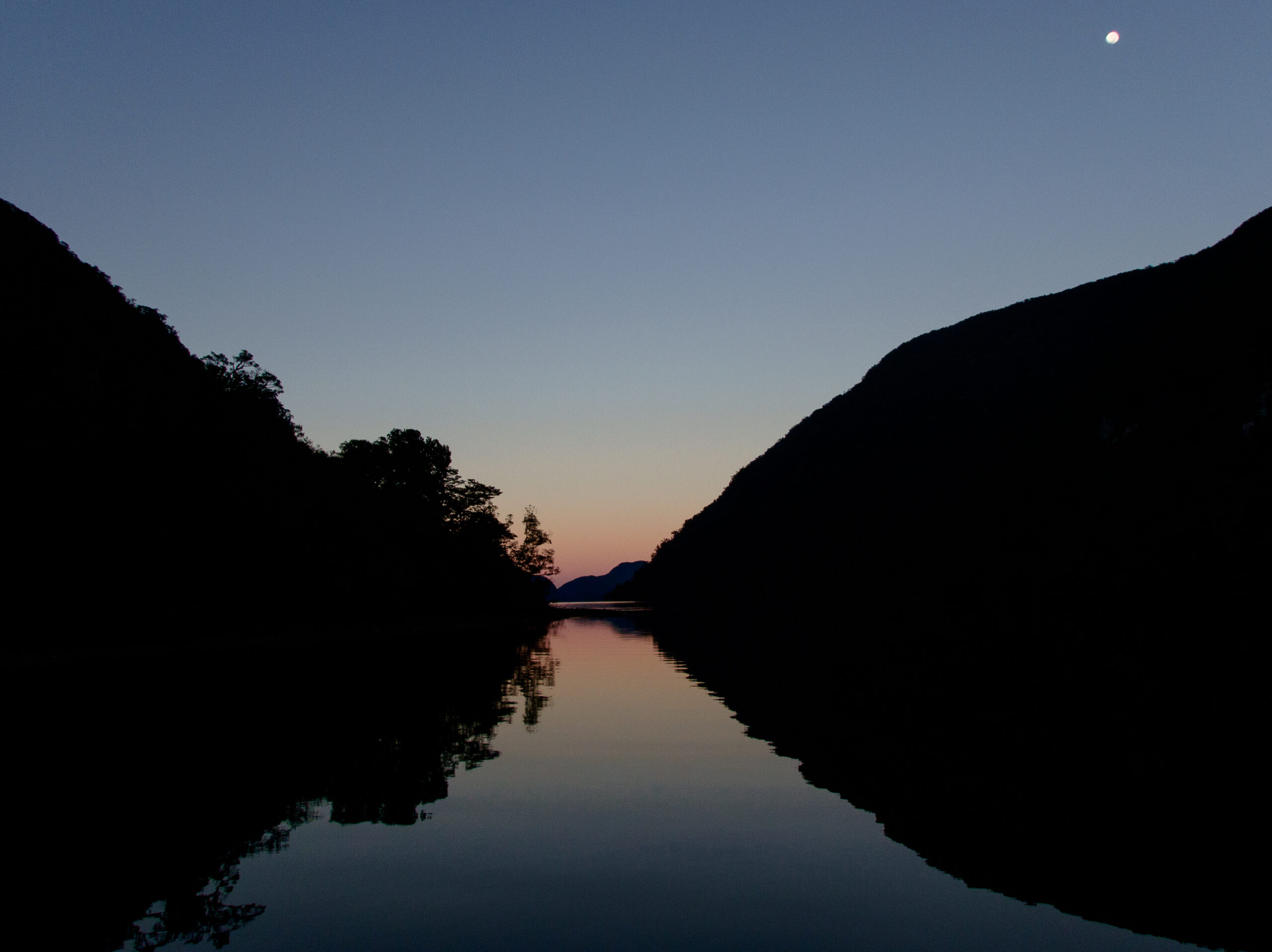
We have experienced a profound cumulative effect traveling through the wilderness of these southern fiords, as we mash through the tangled forest or glide like a whisper through glassy, watery mountain reflections. We feel a growing, deepening awareness of the liveness and power of this unfettered place. Every day Diana peers a little closer into the magical profusion of the rainforest, its tiniest creatures (or the smallest we may perceive) all this abundance of life fueled by fresh water, gray stormy clouds, shifting rays of sunlight, massive stone faces fading softly into the distance. The boundless imagination of nature is vividly accessible here, free of scheming human interference. Inexhaustible, effortless celebration. We feel blessed to feel like we belong, to participate at our particular scale, with our particular way of perceiving. Gratefully reconnected as dolphins come to play alongside Allora, turn and smile and look back at us with familiar eyes, into our own delighted gaze. As the sky softens at sunset, or looms heavy with rain before the storm, as water gushes from waterfalls that were not there before the deluge, thundering into the fiord, as williwaws tornado in wild rainbow mists across startled coves, how delightful it is to be alive, a part of, this marvelous, miraculous world. ~MS
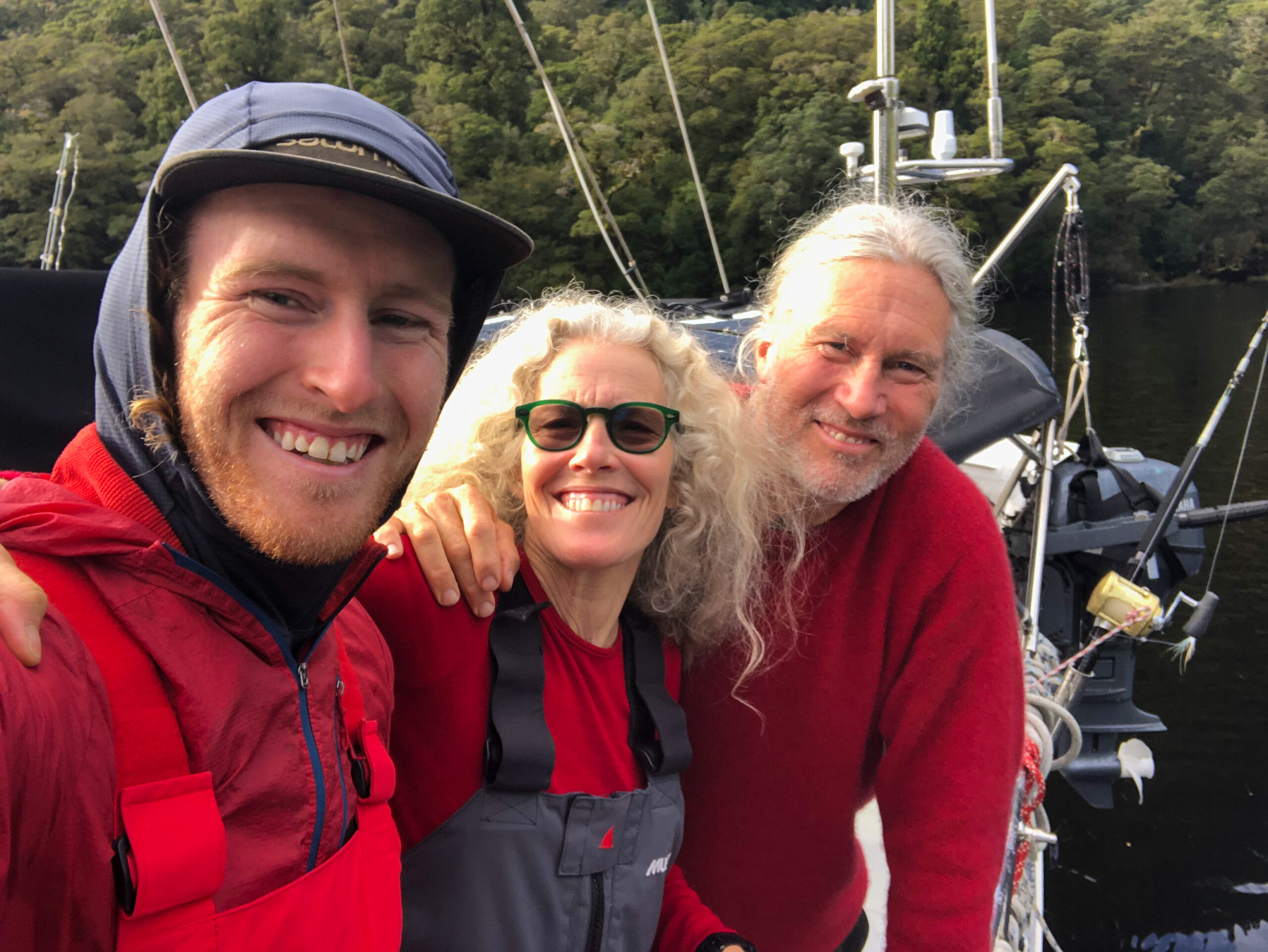
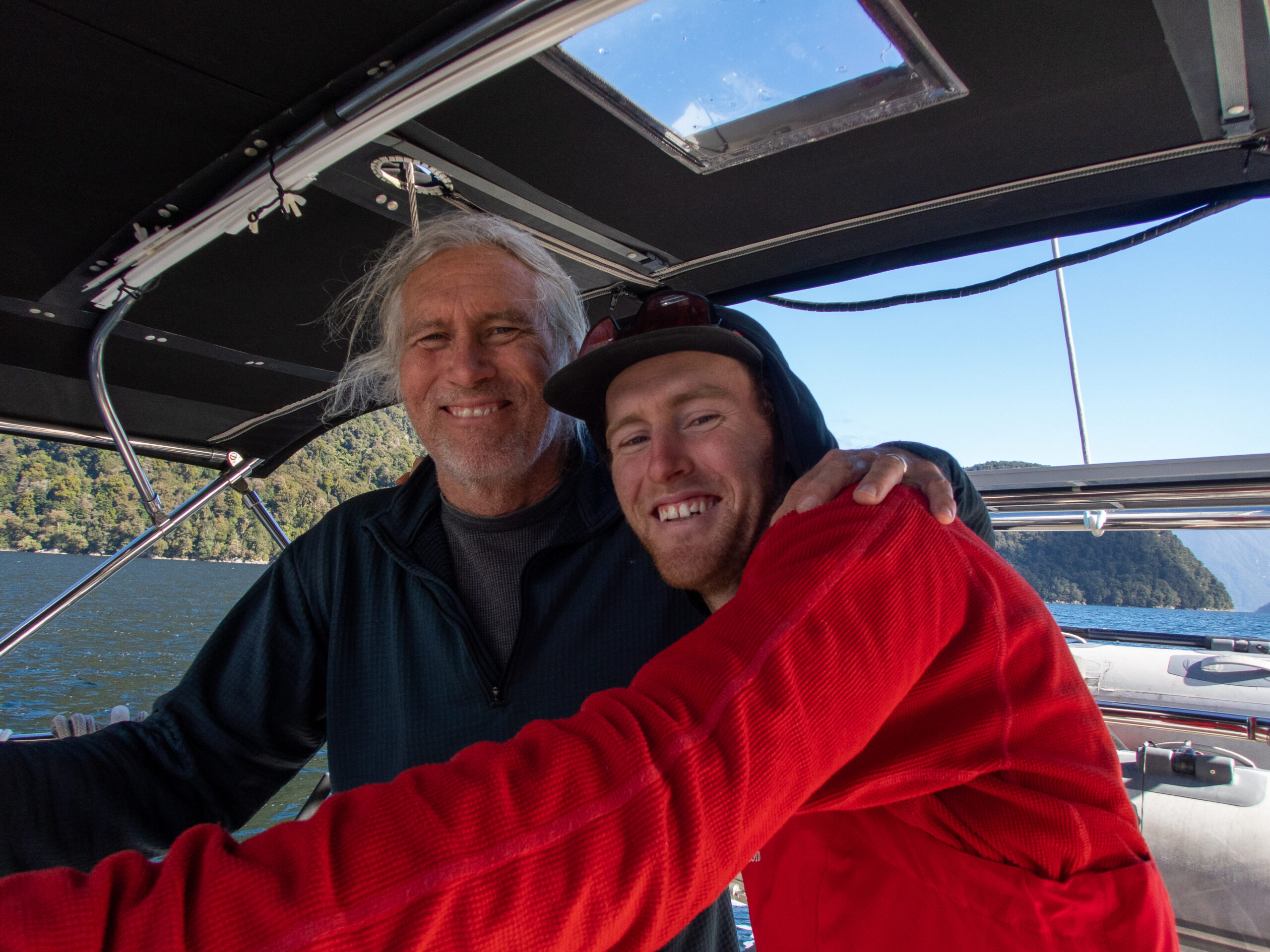
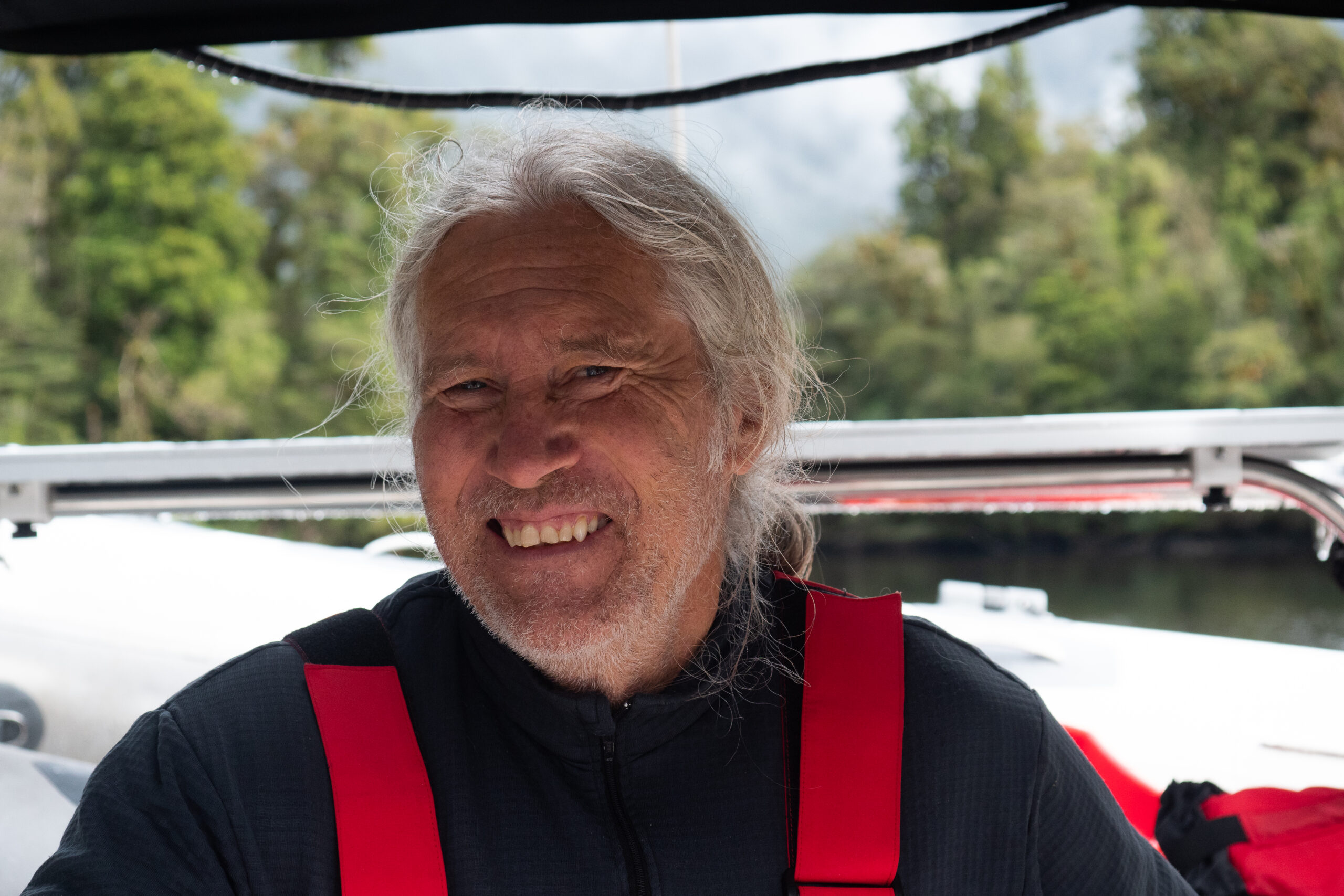
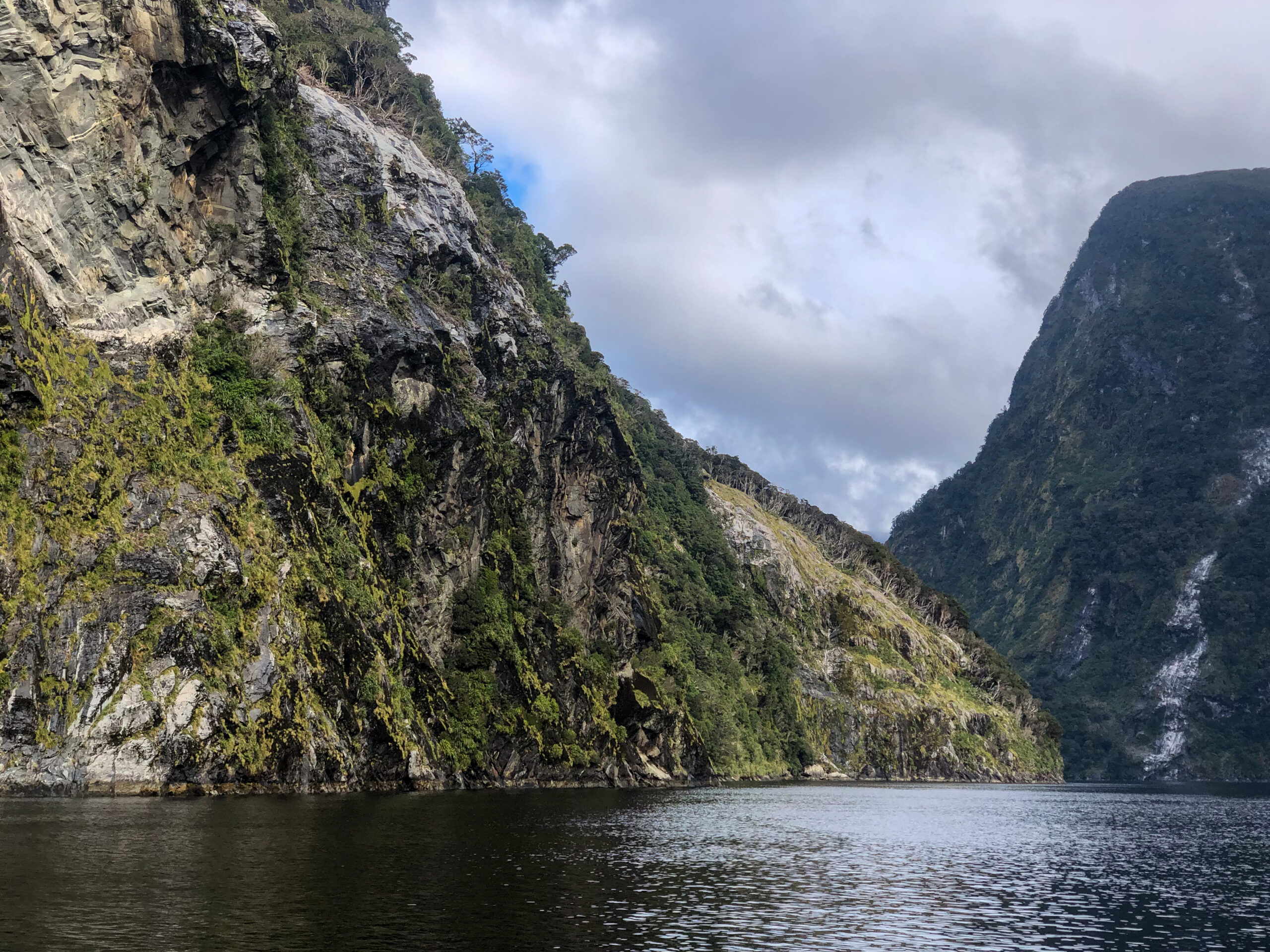
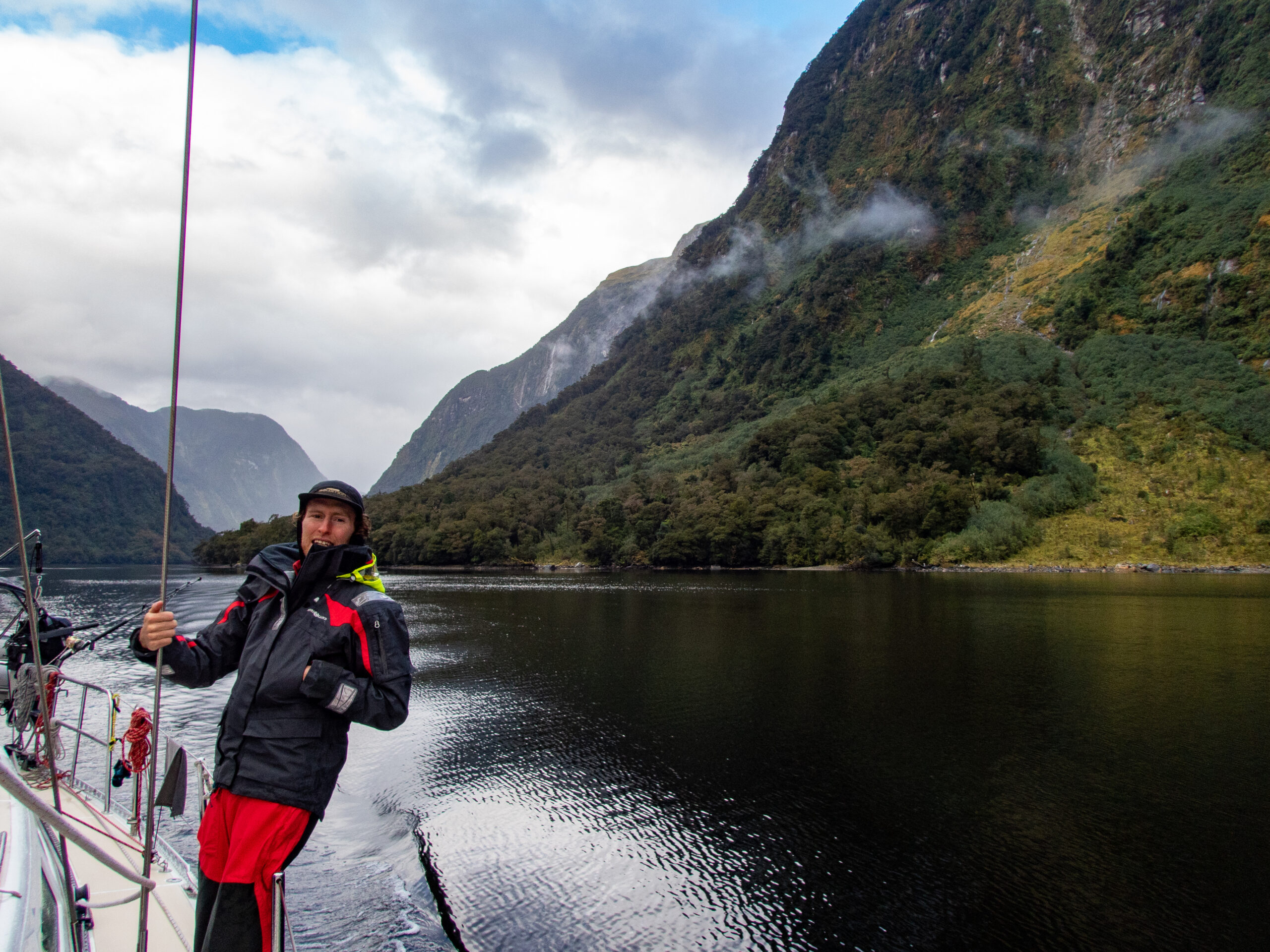
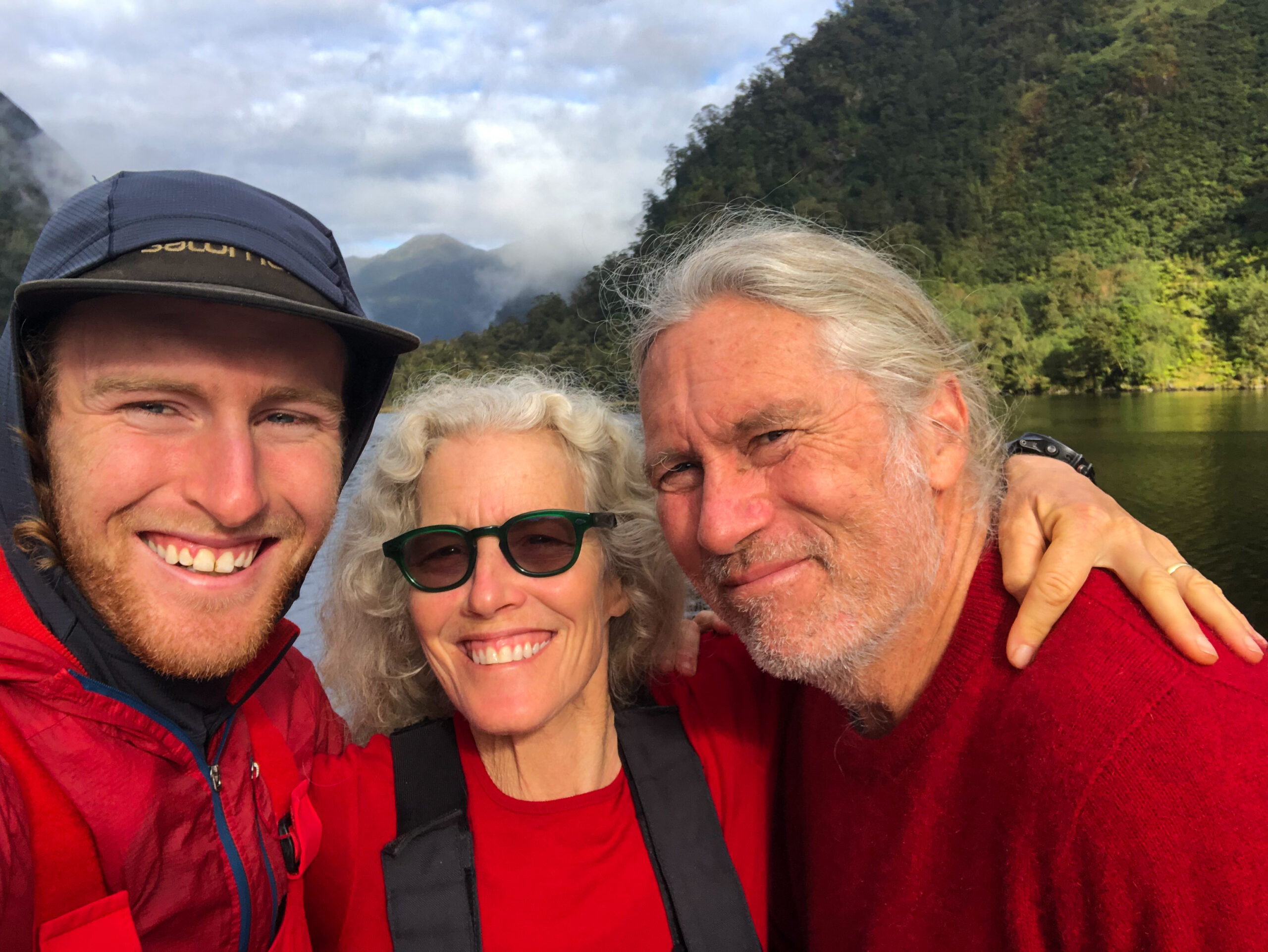
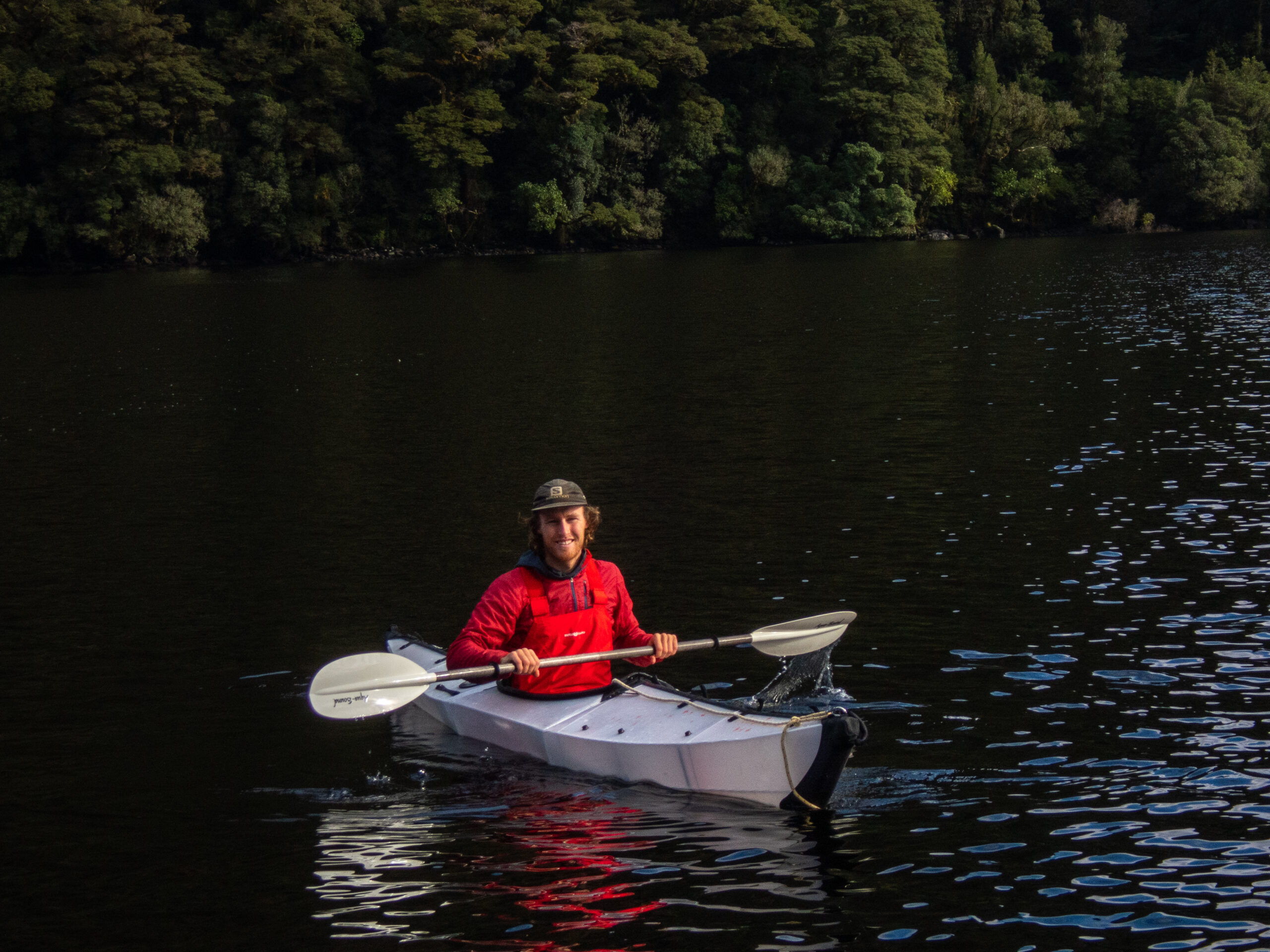
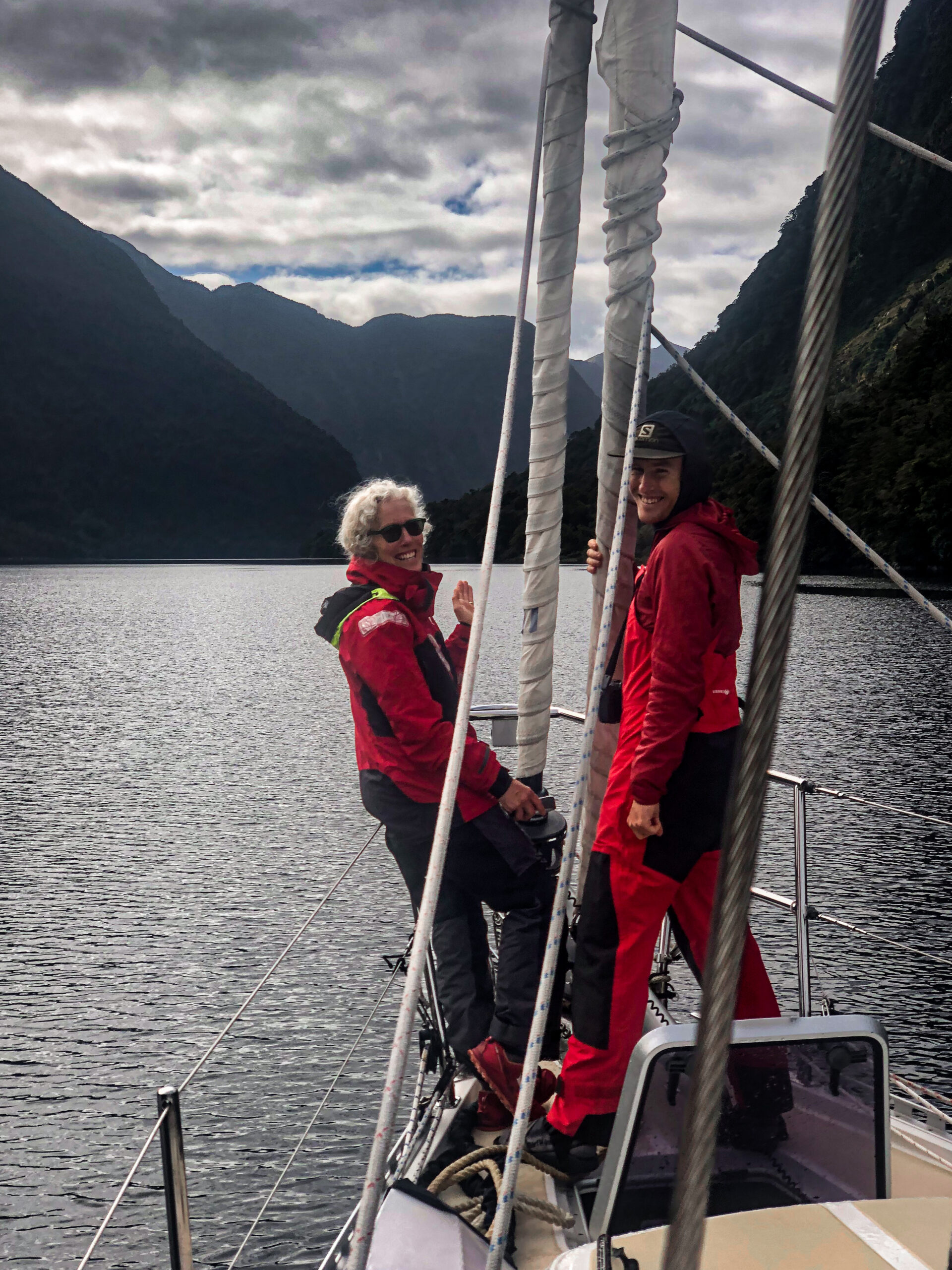
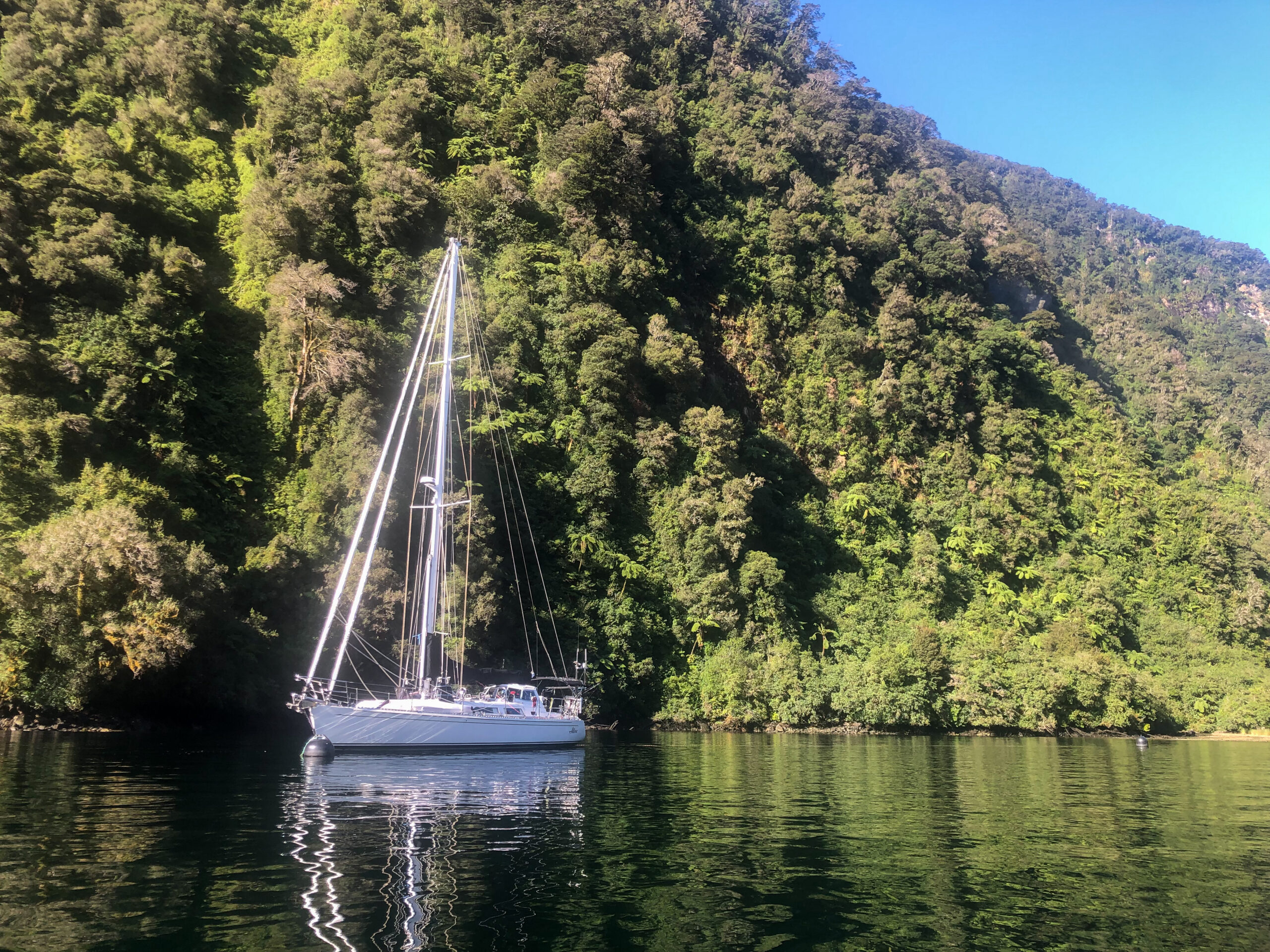
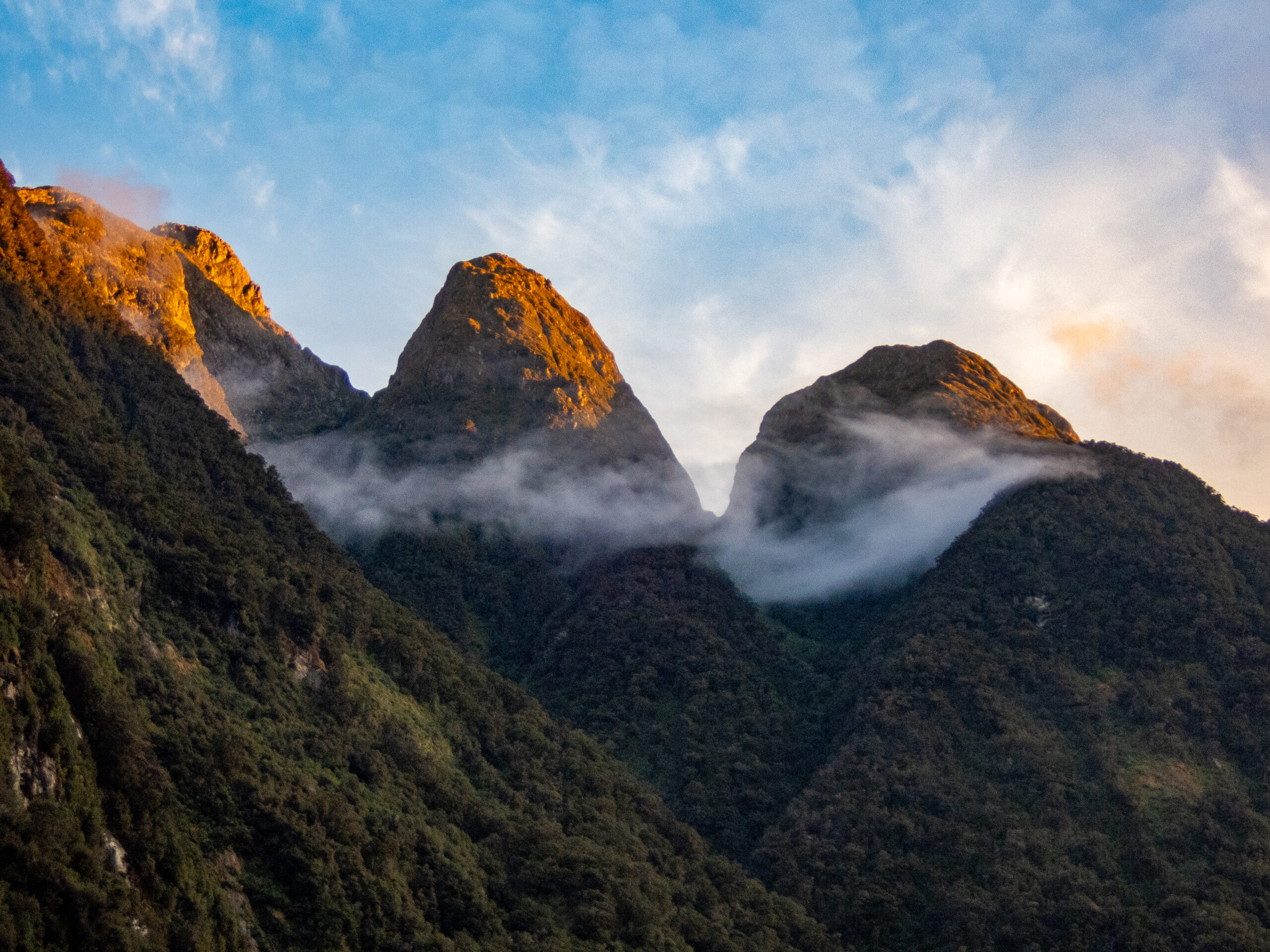
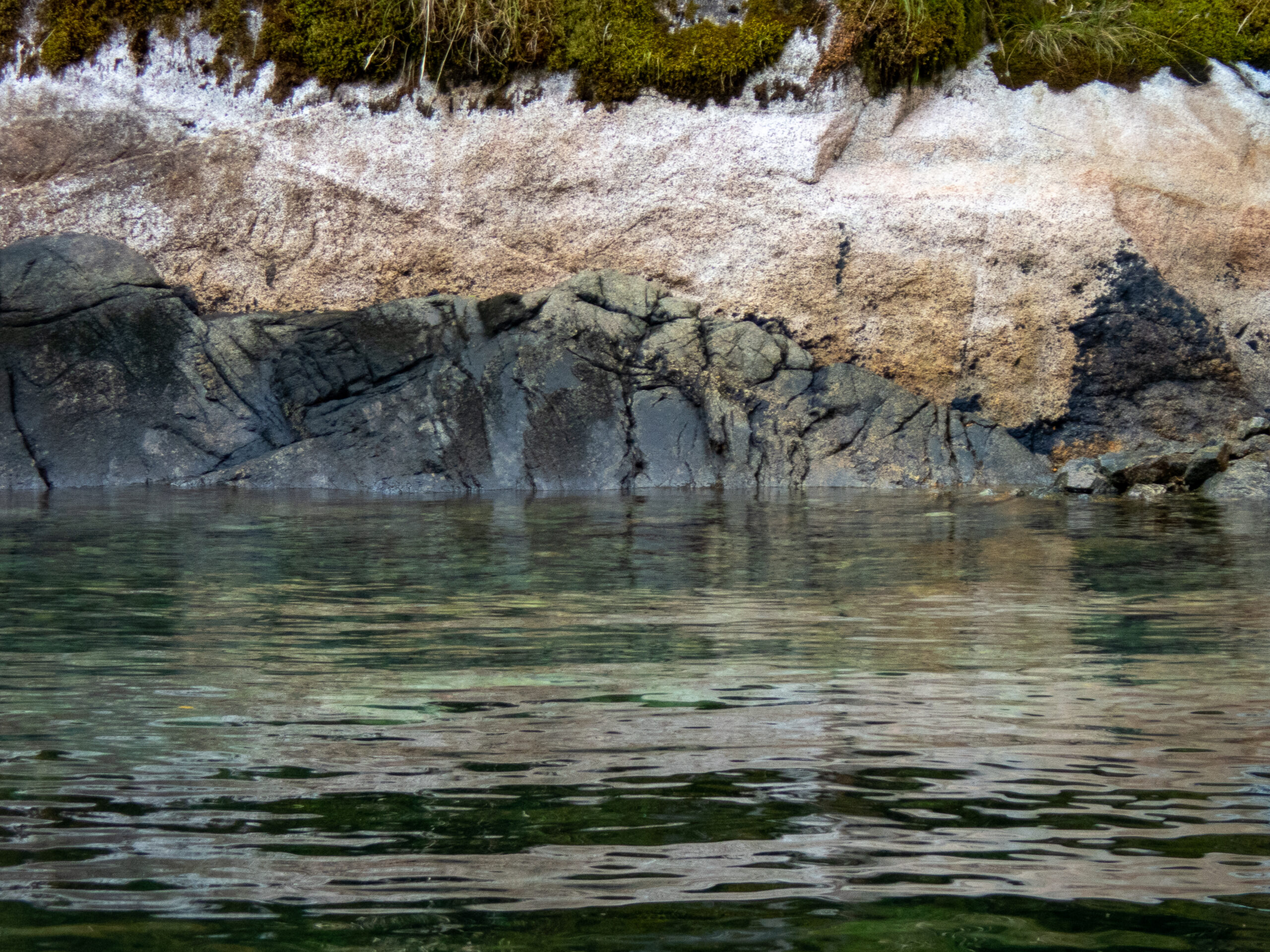
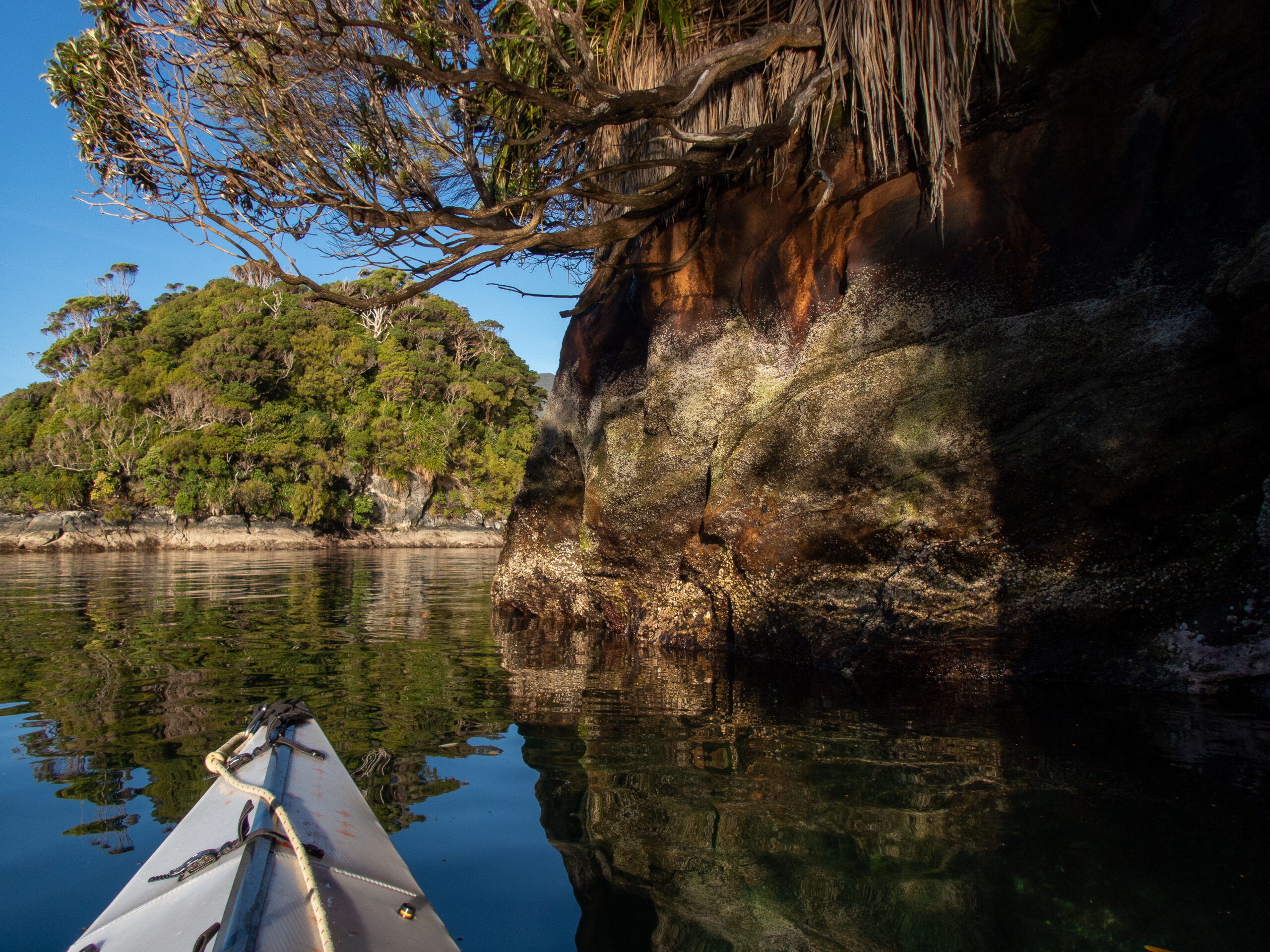
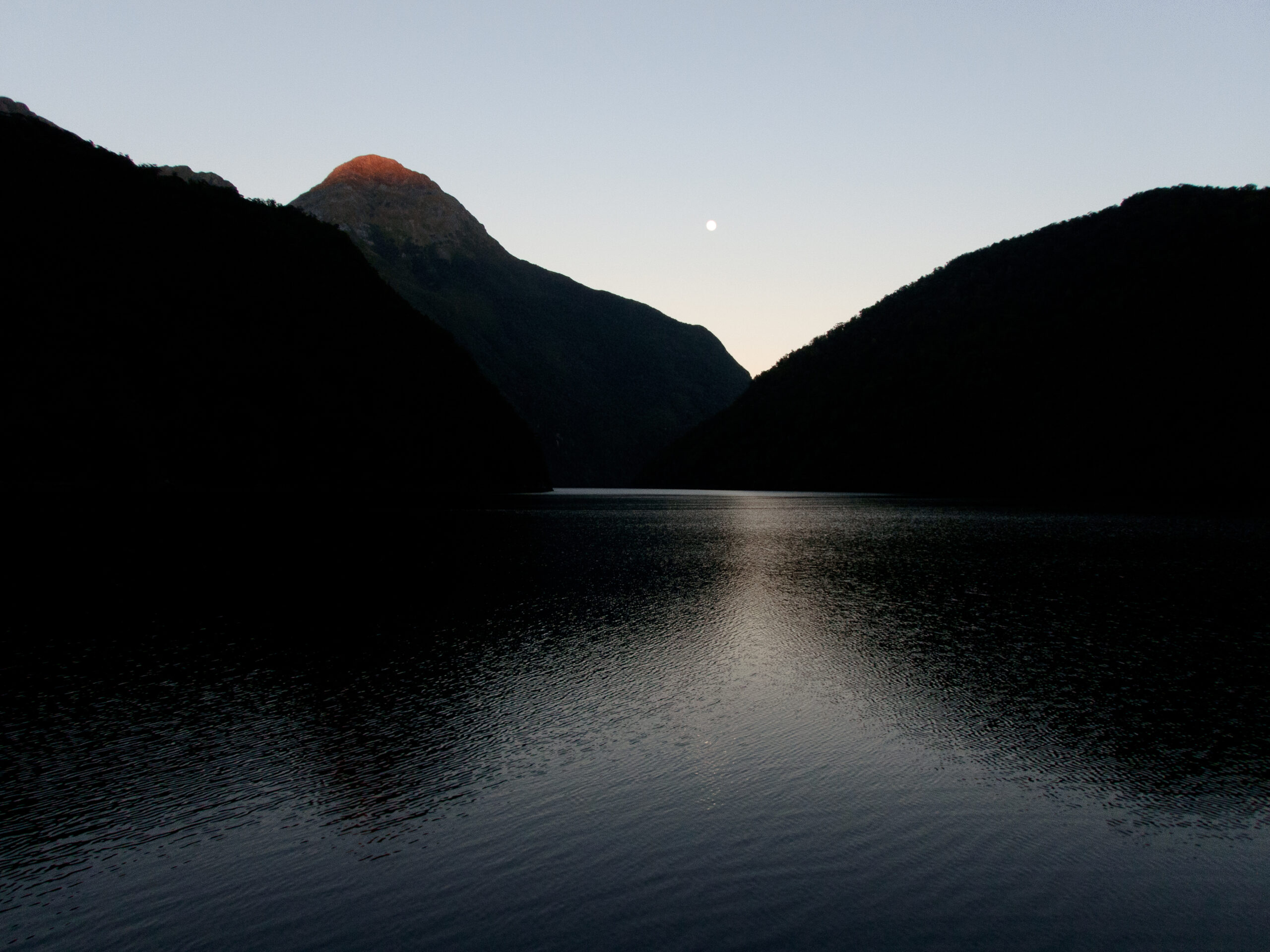
Always and already …We spent our last evening at the end of Crooked Arm, just 1 mile as the crow flies to Dagg Sound. I was sure Wyatt would want to run across, but we didn’t arrive till quite late in the afternoon and we were cherishing our last time for sweet conversation.And what an evening it was! Fiordland showed off a wee bit.We shot this when we thought Wyatt had the possibility of extending his stay one more day, hence the smiles. We learned soon after that we had to rush in the morning to get him back to Deep Cove for an earlier bus because they’d cancelled the other option. 🙁One last kayak outing.Leaving Crooked Arm and working our way back to Deep Cove, Marcus maneuvered Allora right up next to these stunners.
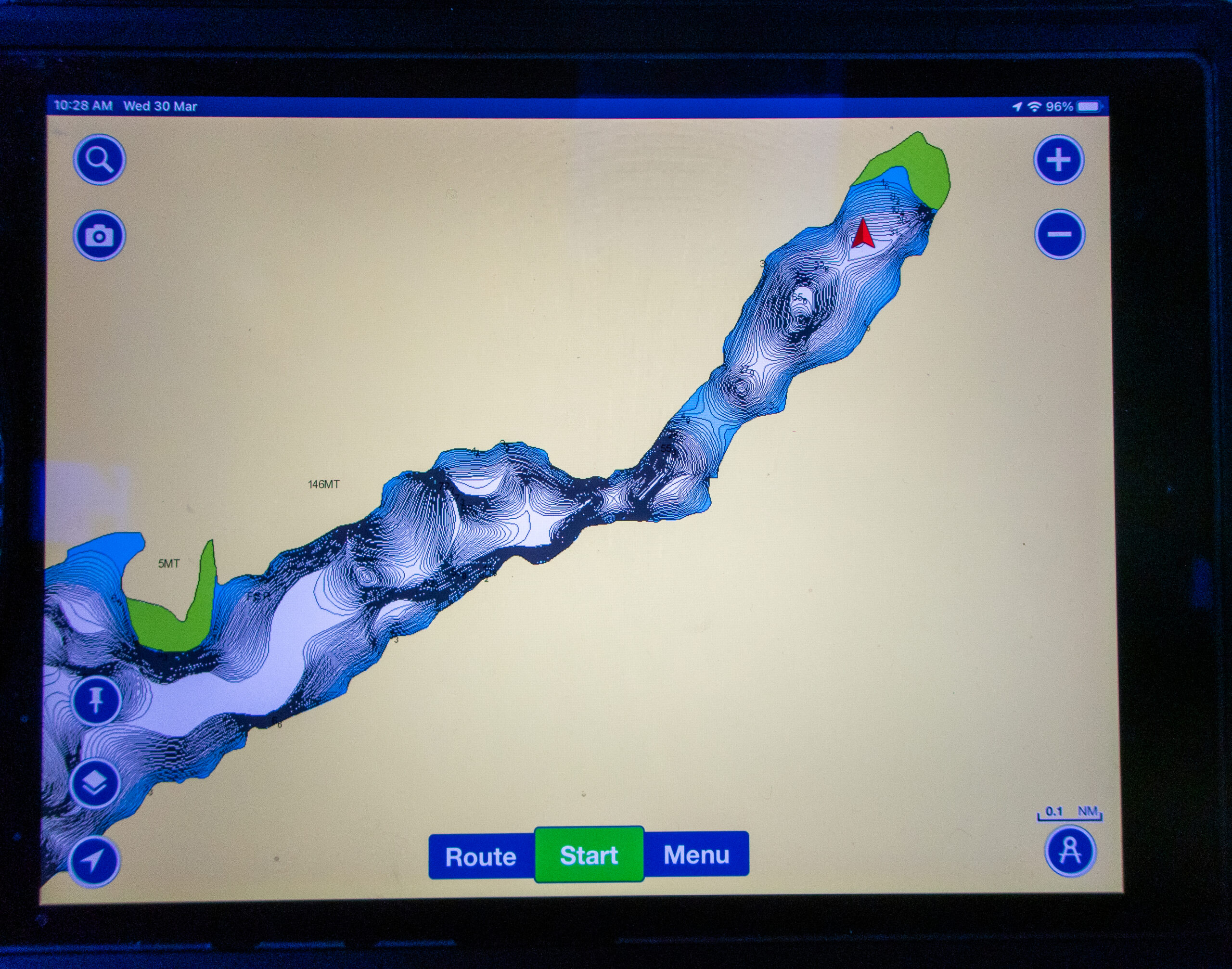
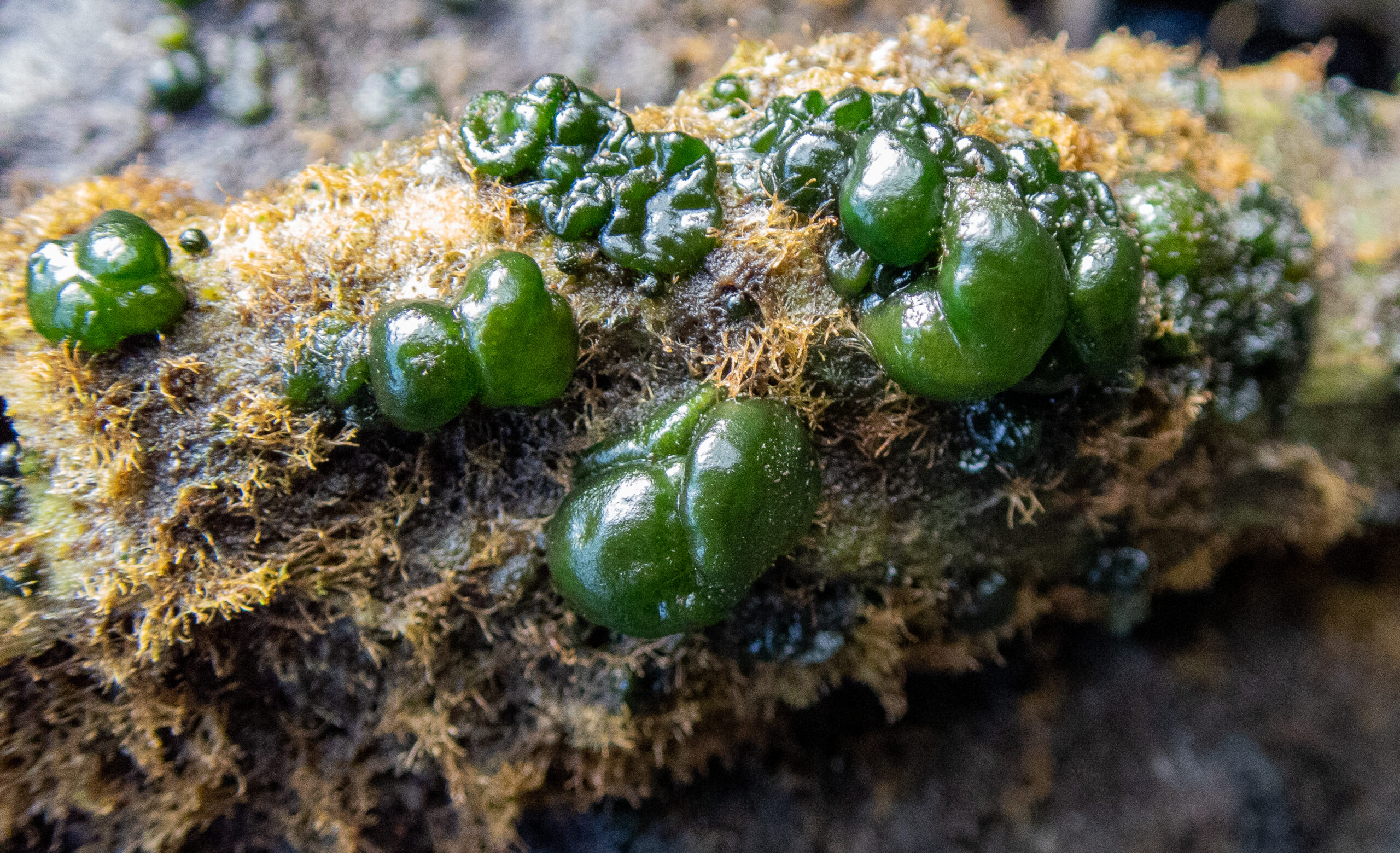
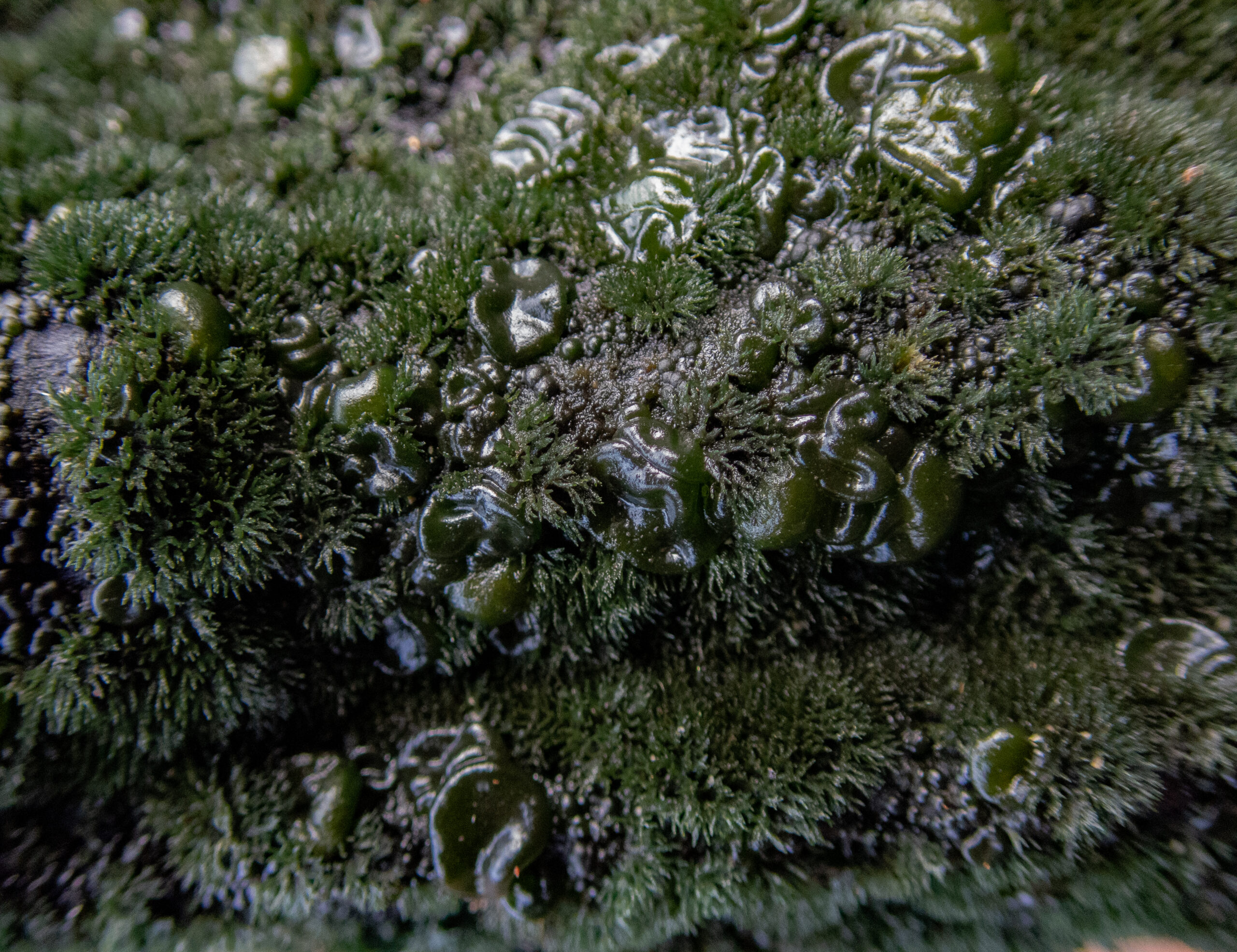
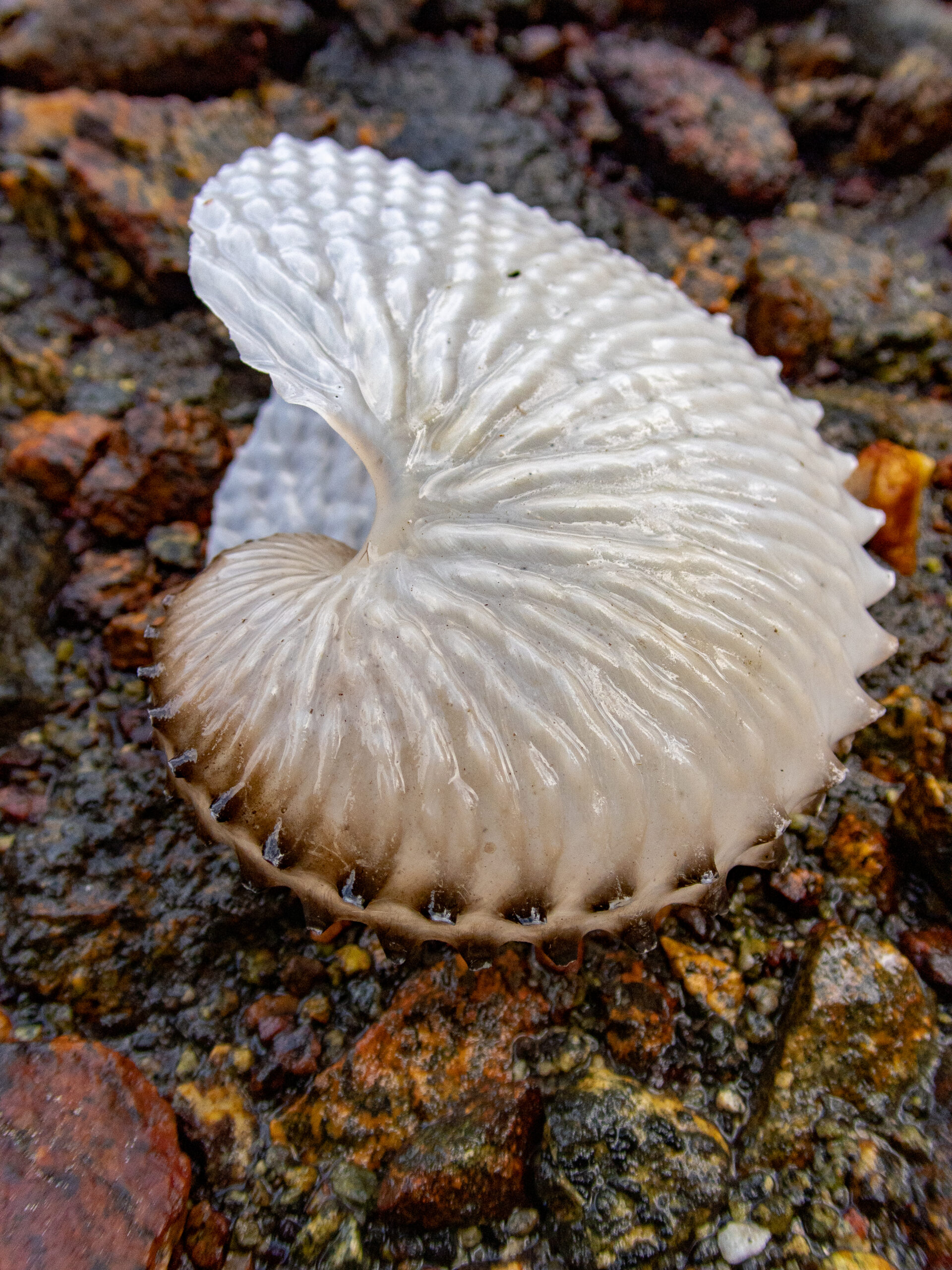
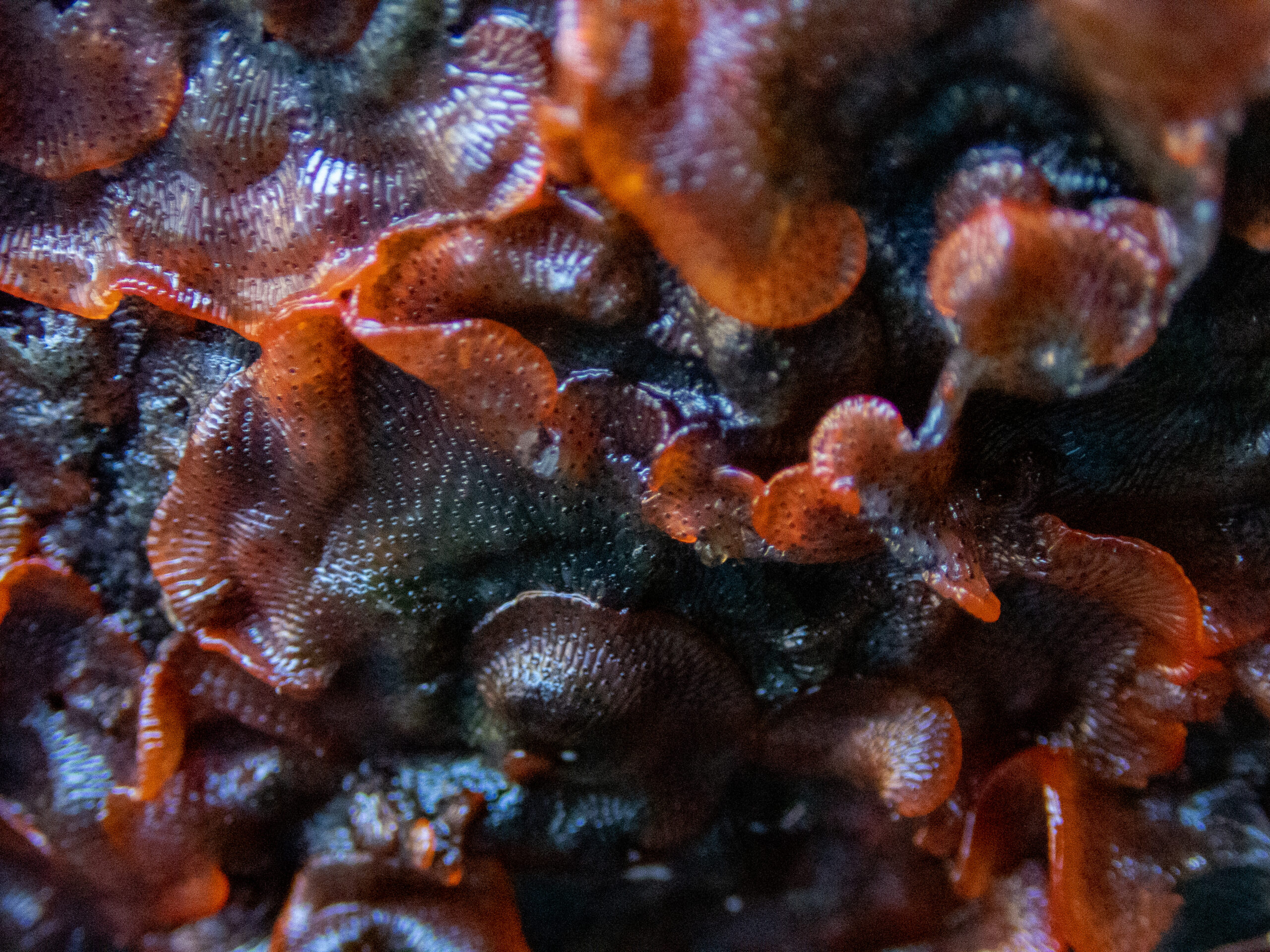
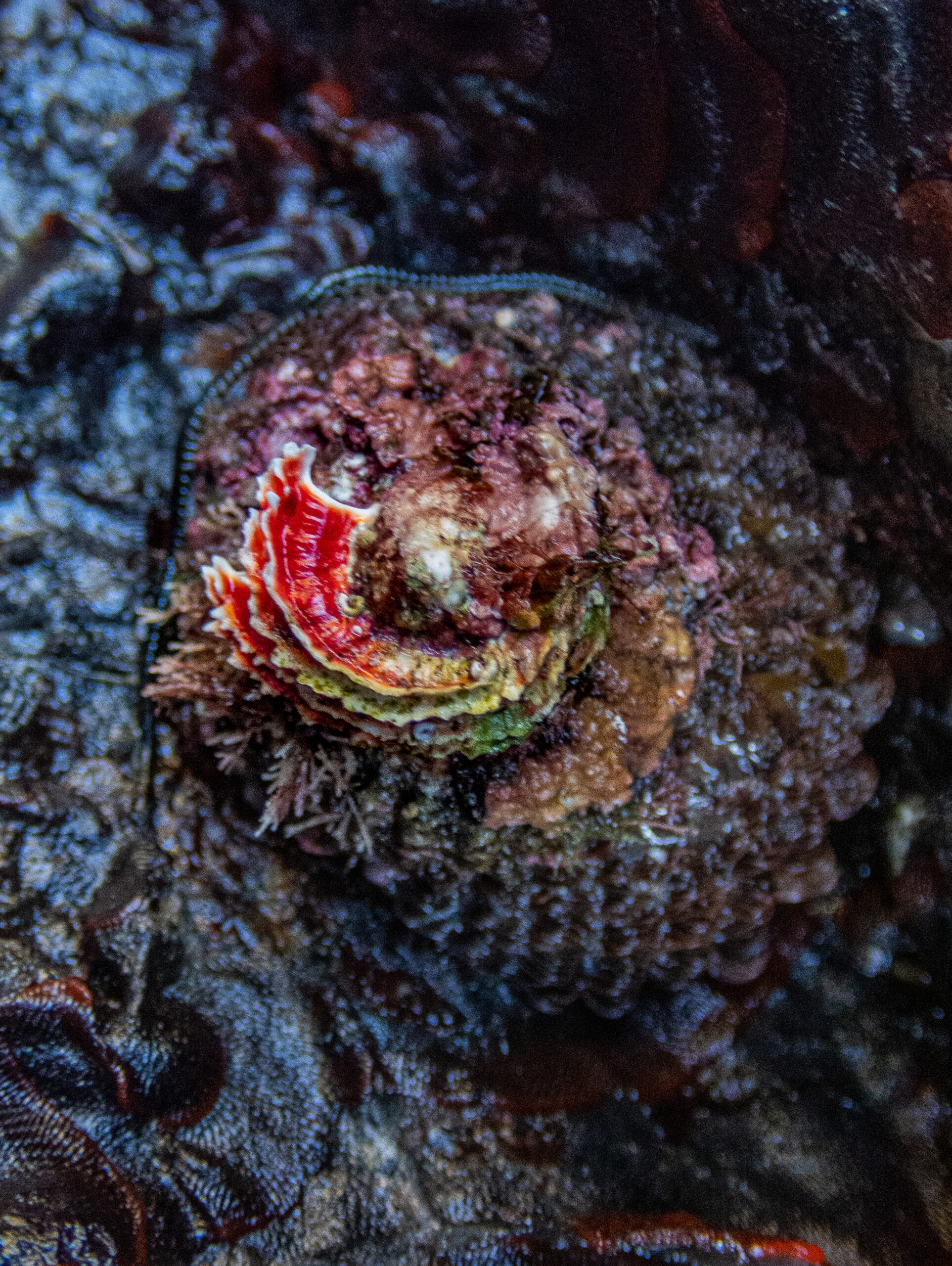
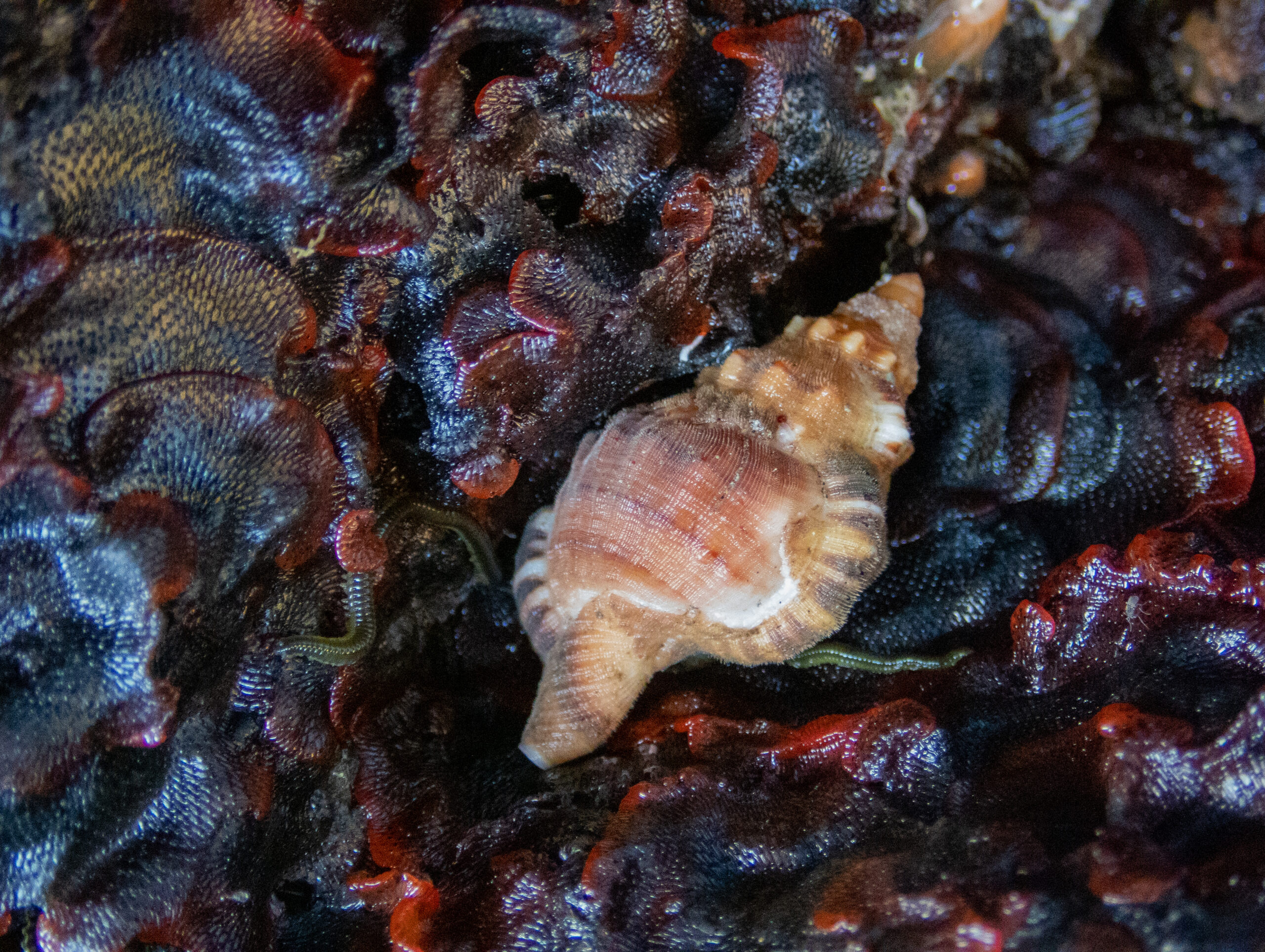
Bathymetric chart of Vancouver Arm – gives an image of the size, shape and distribution of features underwater.We just spent one quick night at the head of the bay in Vancouver Arm. We had plans in place to meet Wyatt in Doubtful Sound, 2 north of here, so we had to strategize our short stays with the weather predictions and what protection each anchorage might offer.Third Cove Anchorage. We worked hard finding suitable depths to anchor in here and ended up dropping in 25 meters (83′), which is quite deep, but the mud bank at the head of the bay was also tough to see and the edge of it fluctuated, so all in all, challenging. Our ‘guidebooks’ didn’t say anything about where other ‘yachties’ would anchor. First impressions: amazing birdsong and echoes in this biggish bay!I wonder if we were hideous even to the flora/fauna …?!… ok, I feel better now. This flora is pretty ‘warty!’ We had heaps of fun checking out the very colorful intertidal zone. Started at higher tide, but it was dropping really fast, so we had to be sure Namo didn’t get stuck ‘high and dry.’ Not sure what these are, but they were ALL OVER!You can probably imagine the smell that went along with this falling tide and exposed sea creatures?Marcus found this one shell just sitting in this position. No others about.Then we made it to the very spongy and lush forest. We’d been told there was a waterfall to be found, but we never found the ‘trailhead.’No matter, there’s plenty of water and wonder right here!
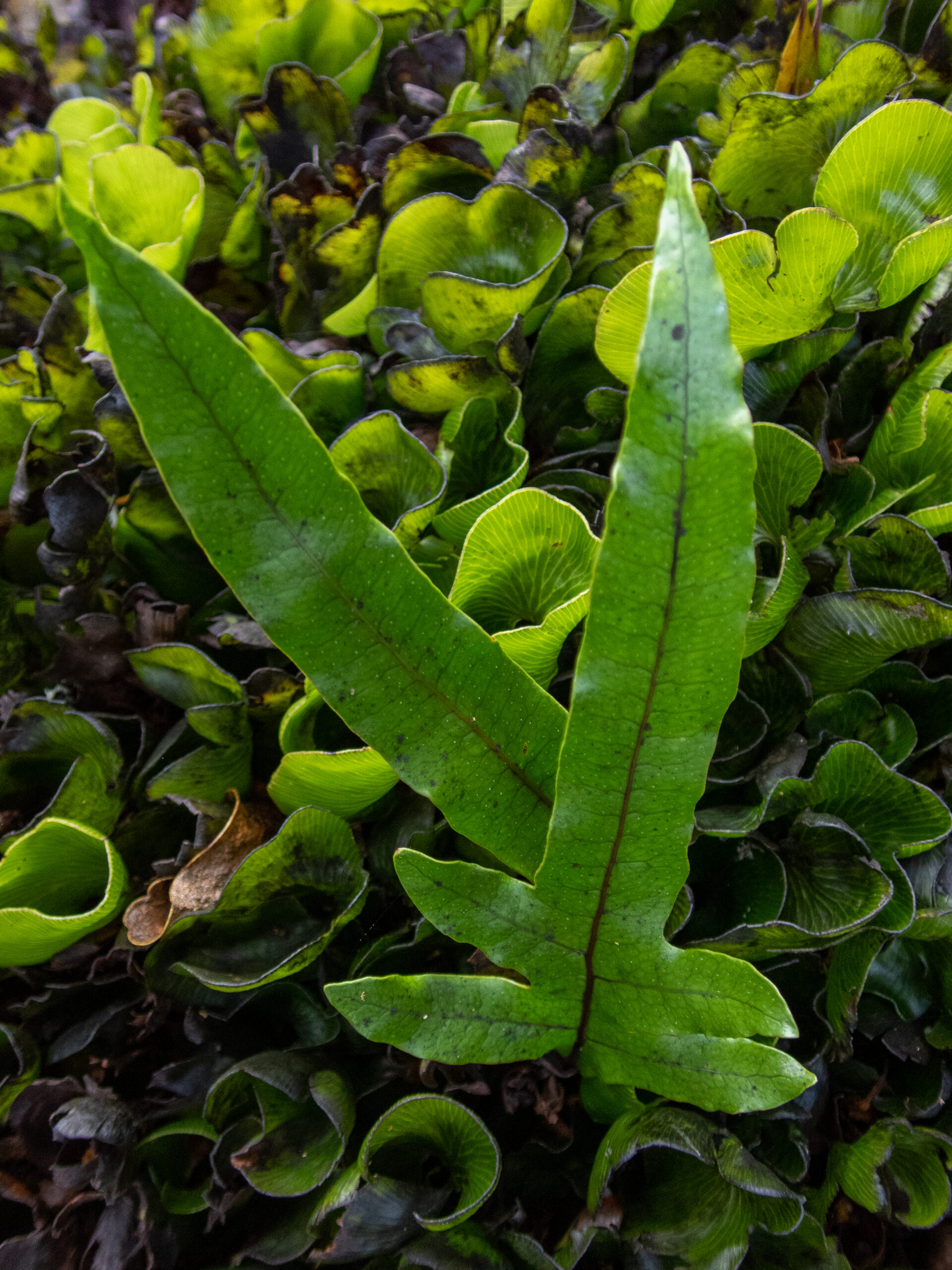
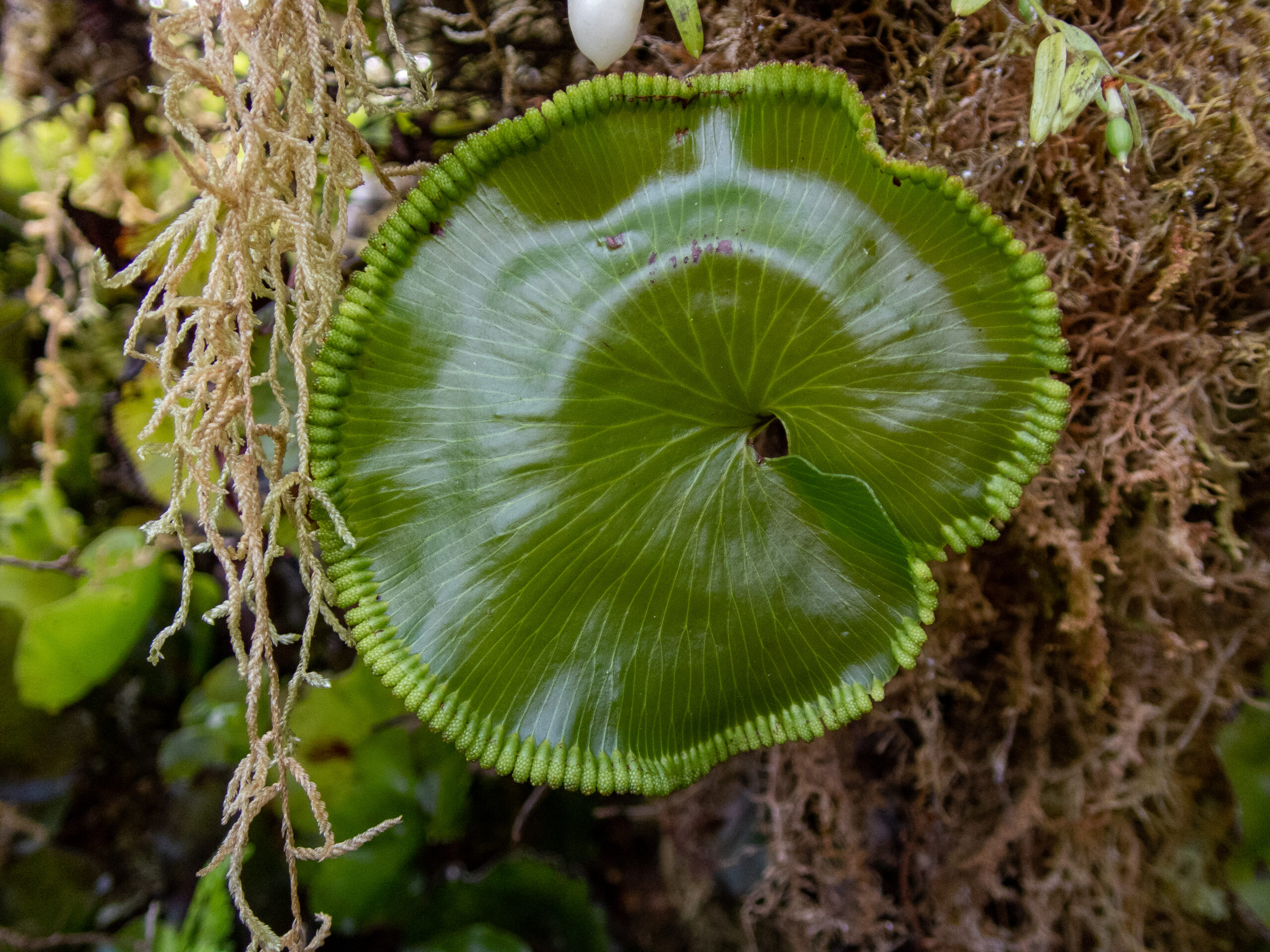
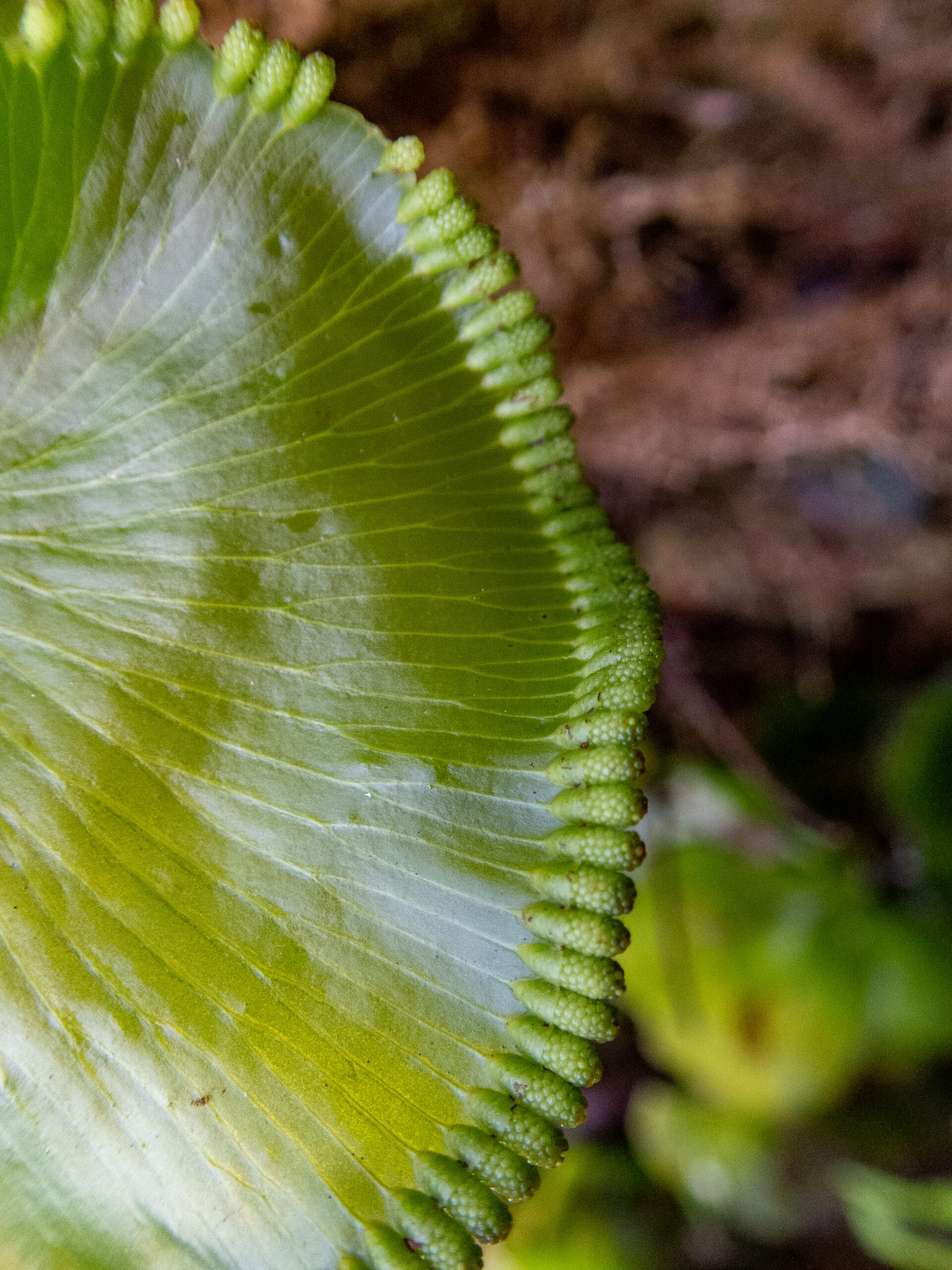
The Audrey Hepburn of the plant world – playful and elegant, both.
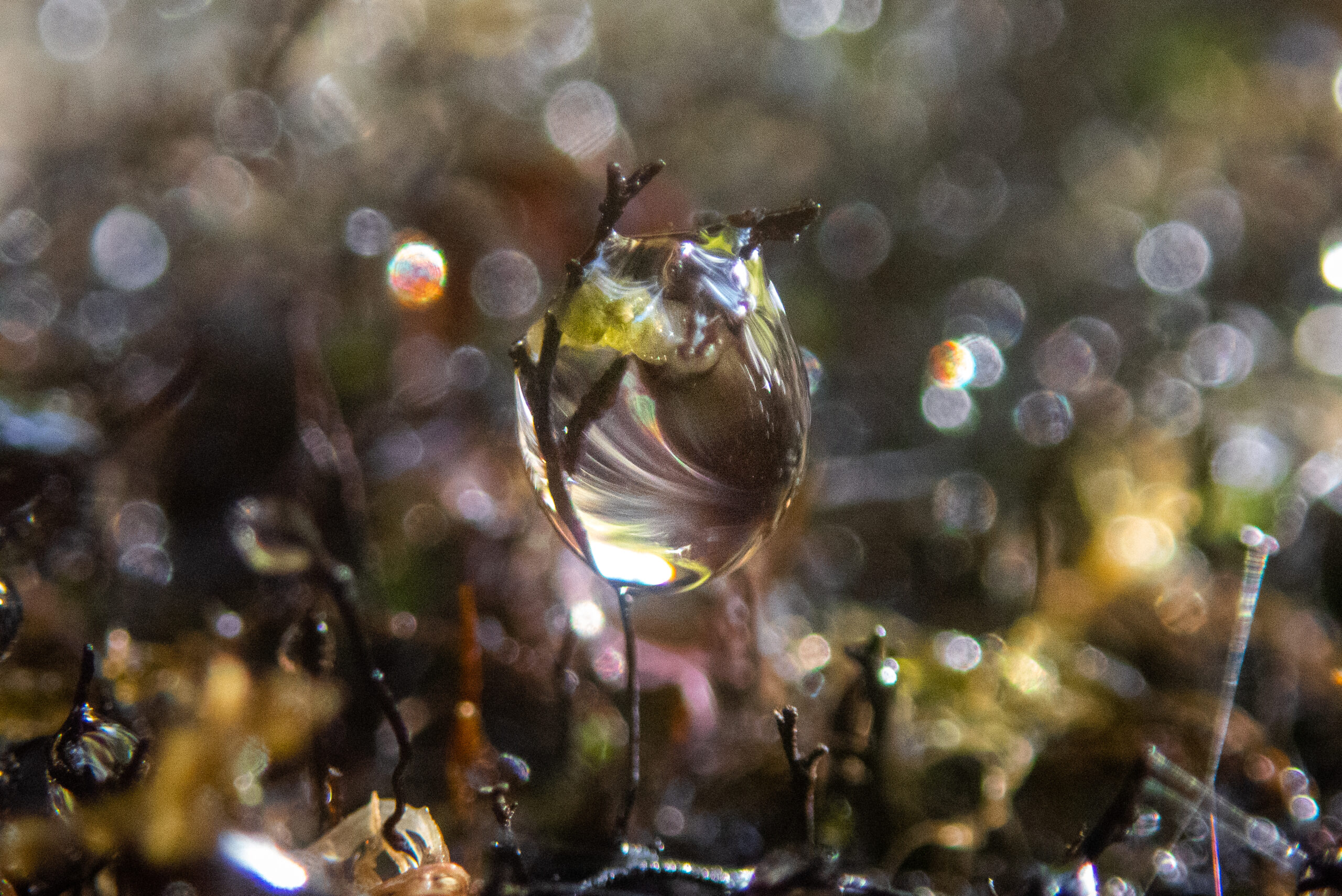
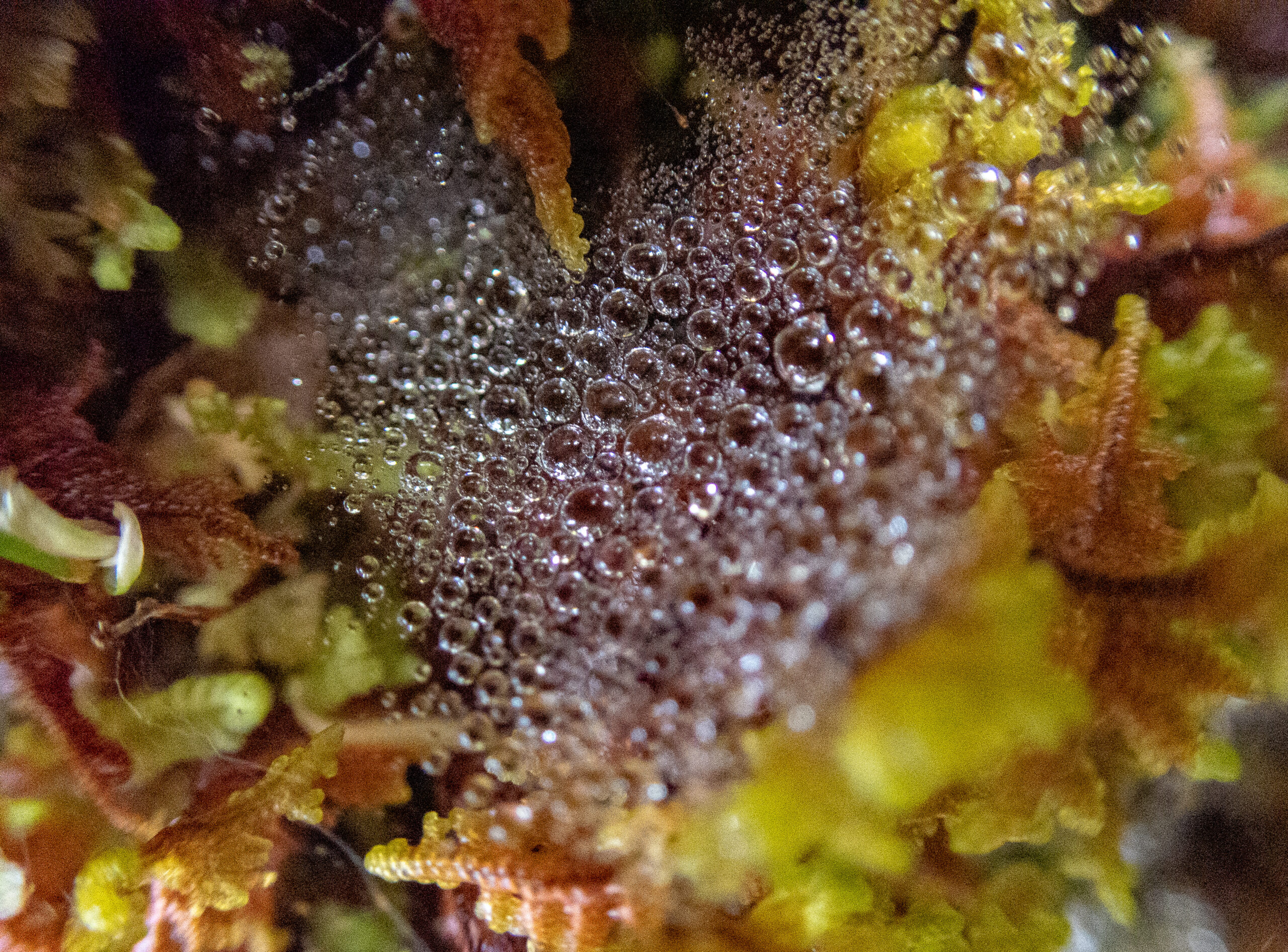
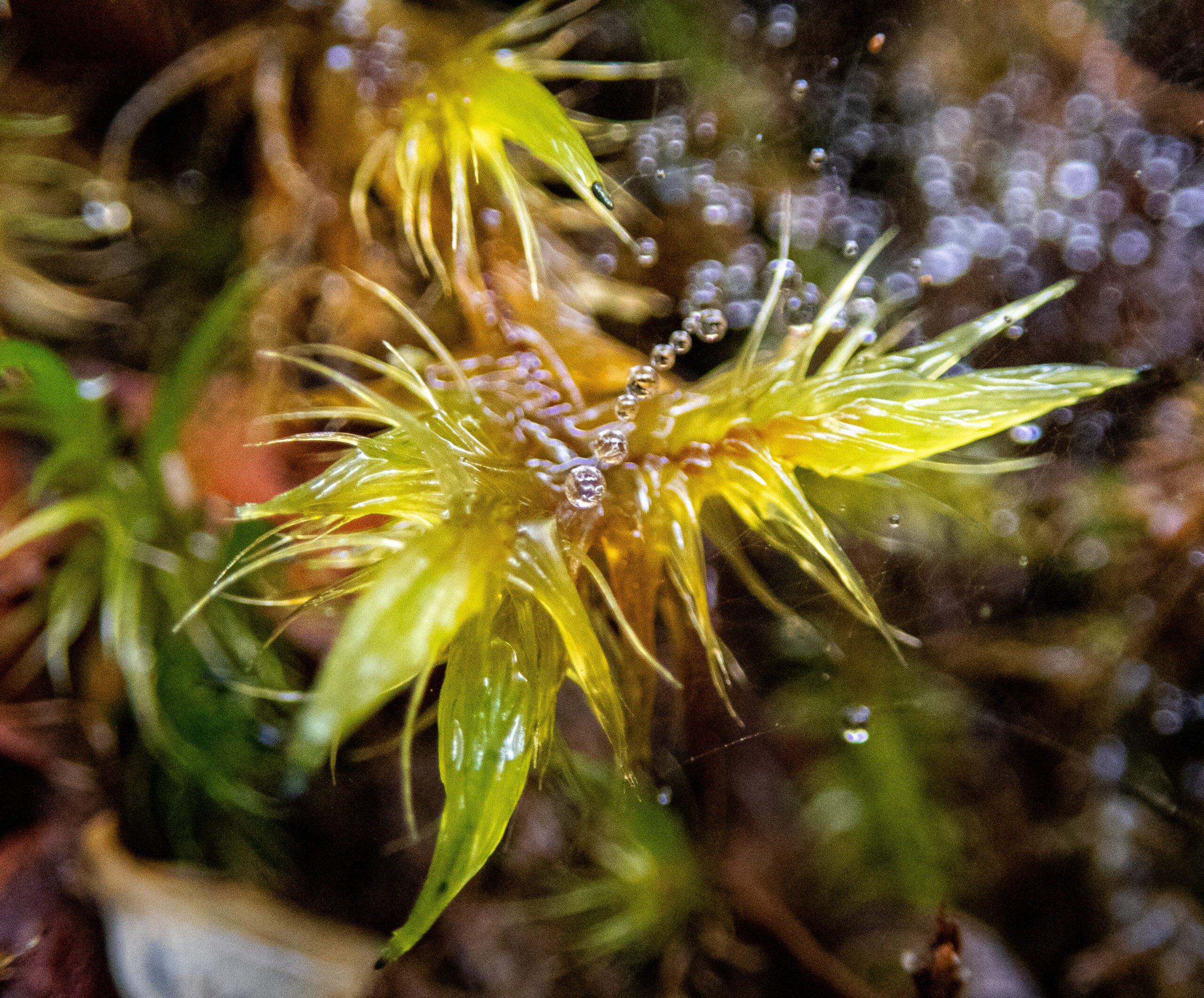
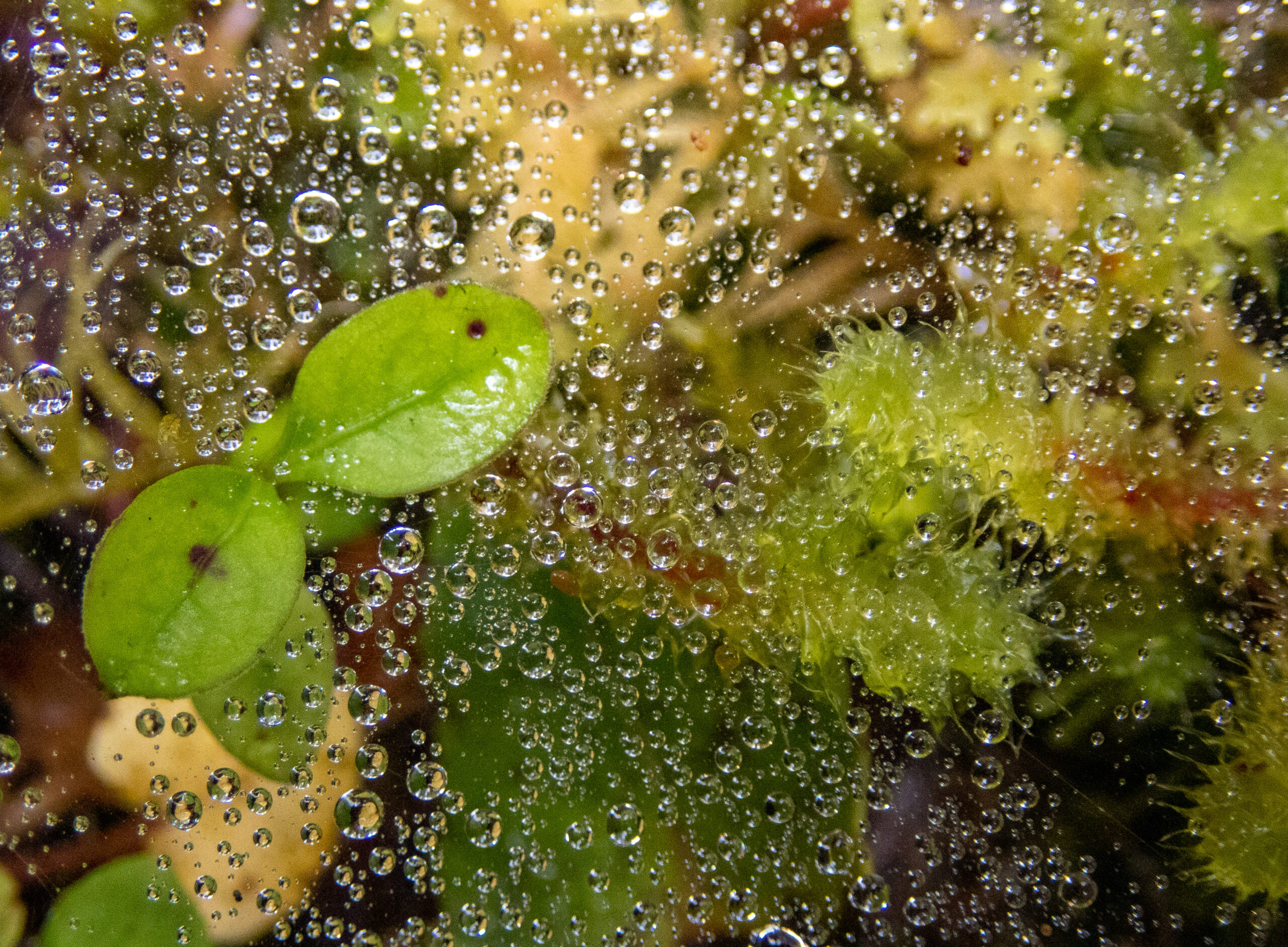
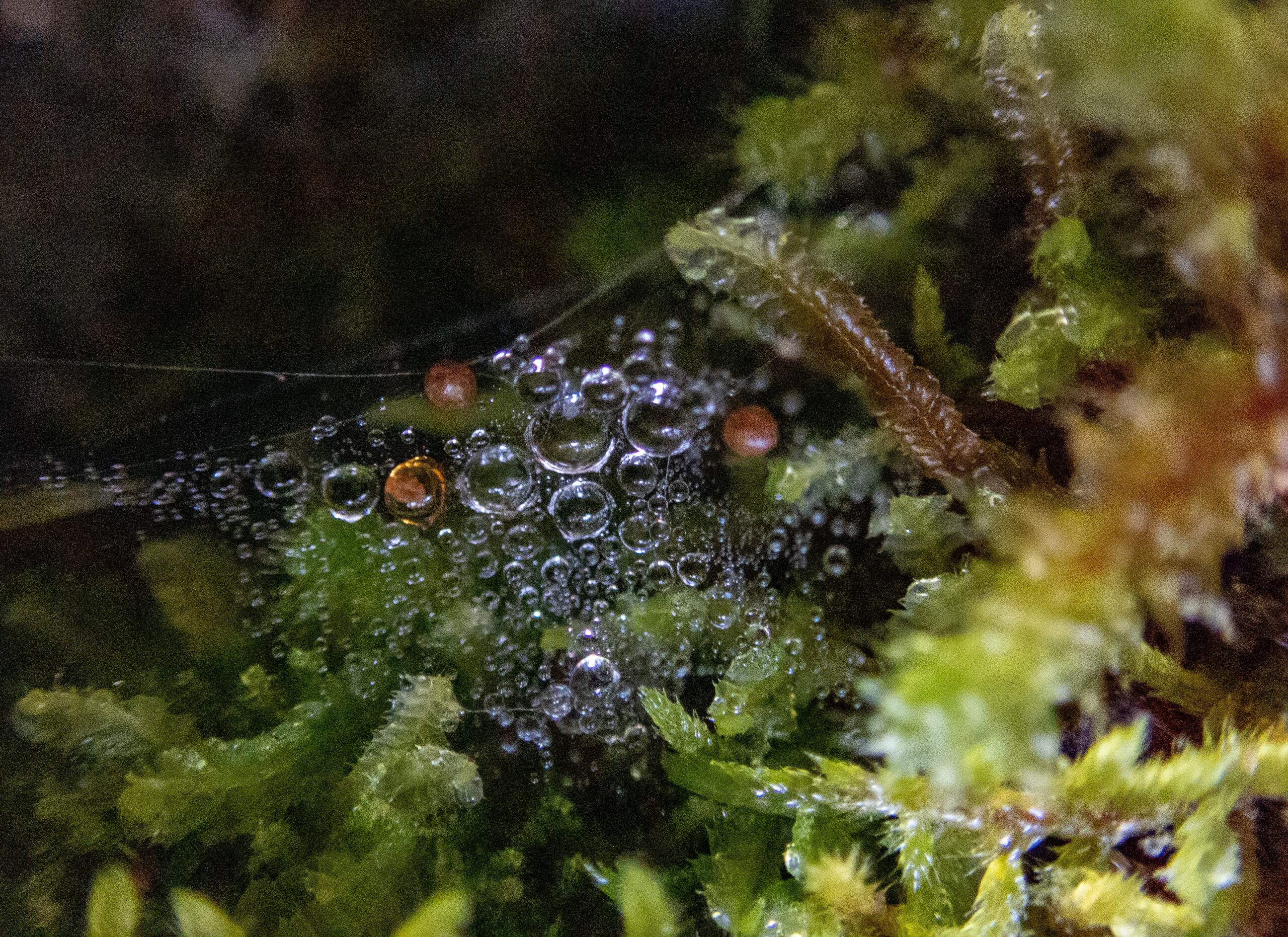
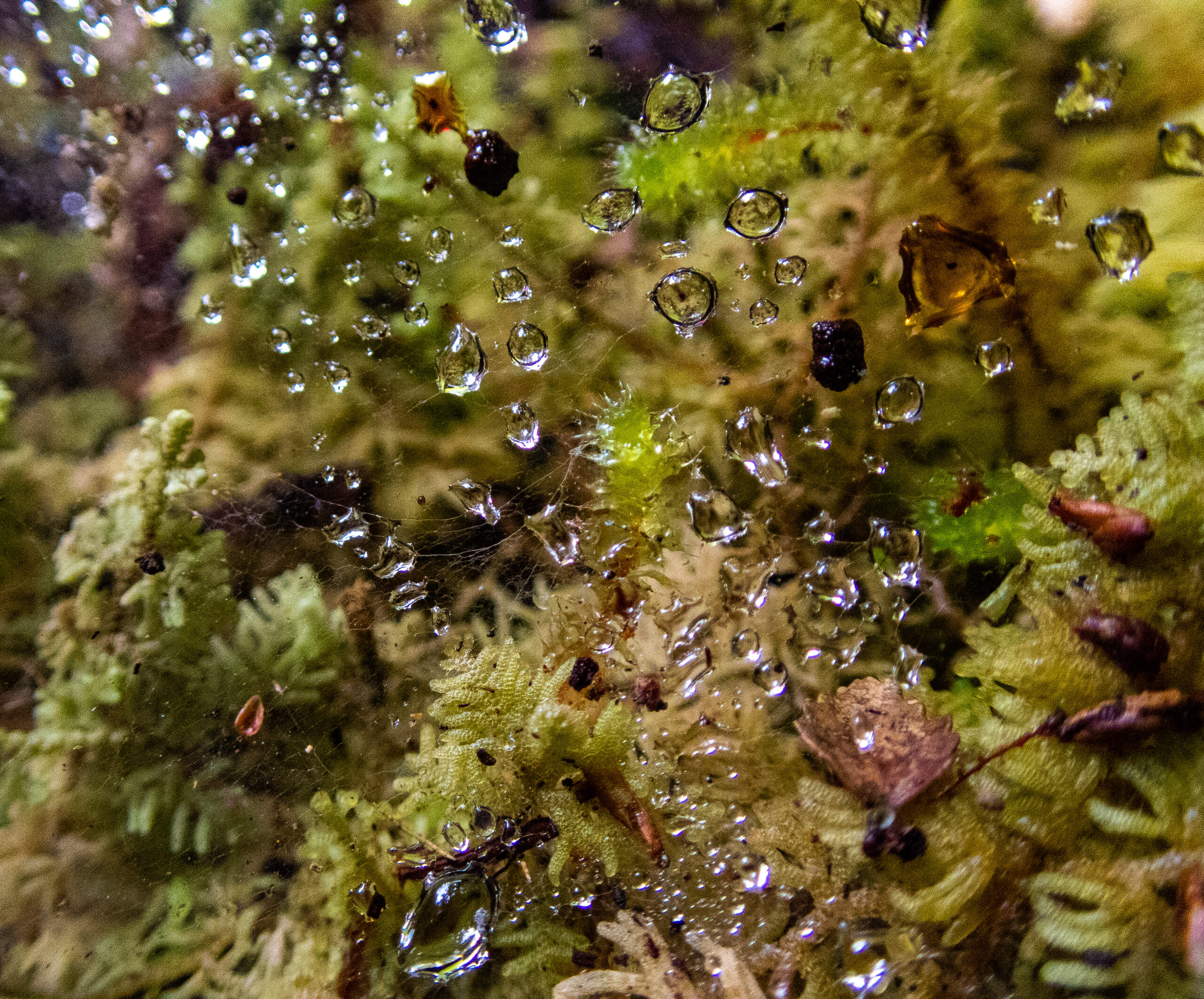
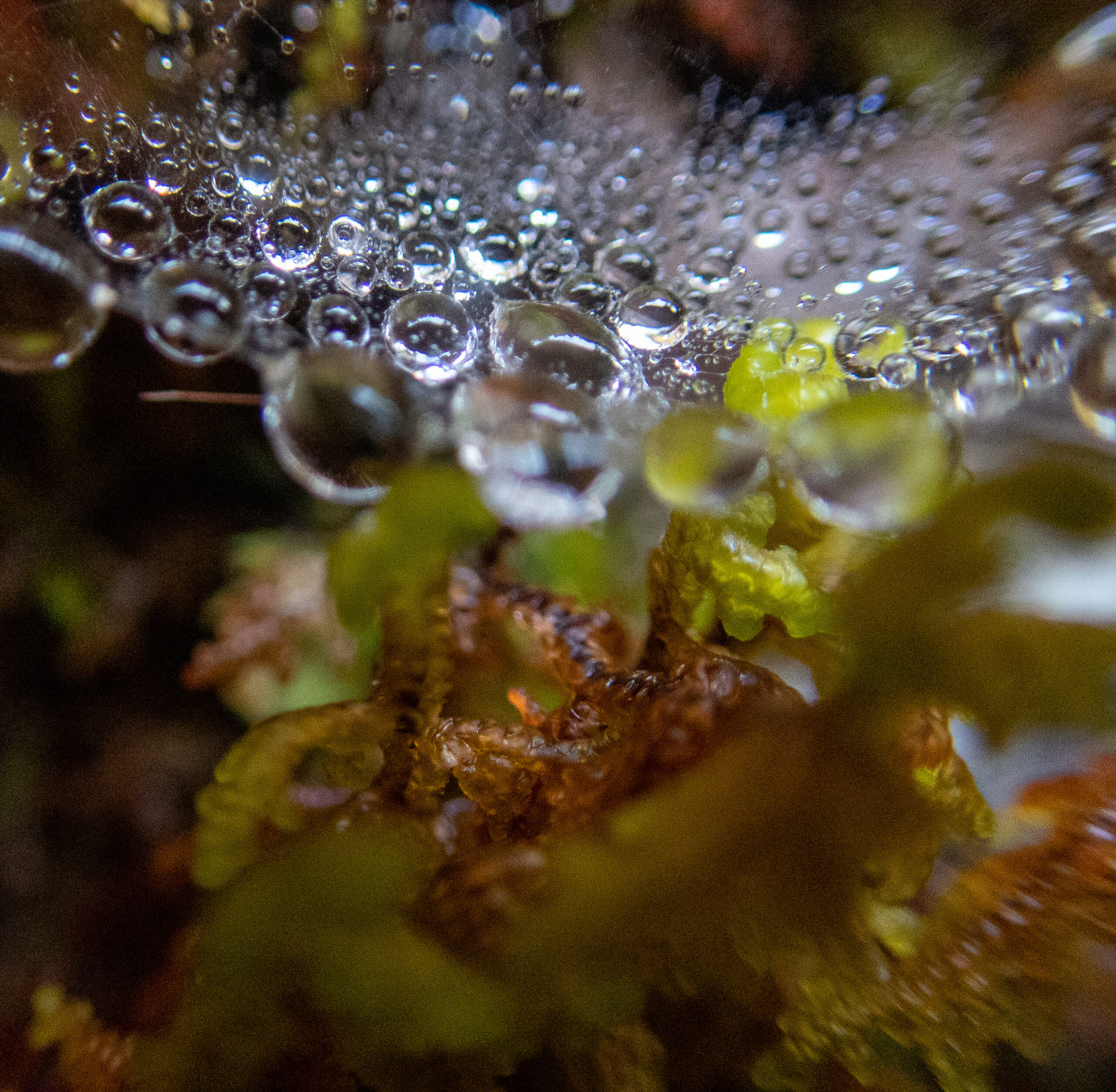
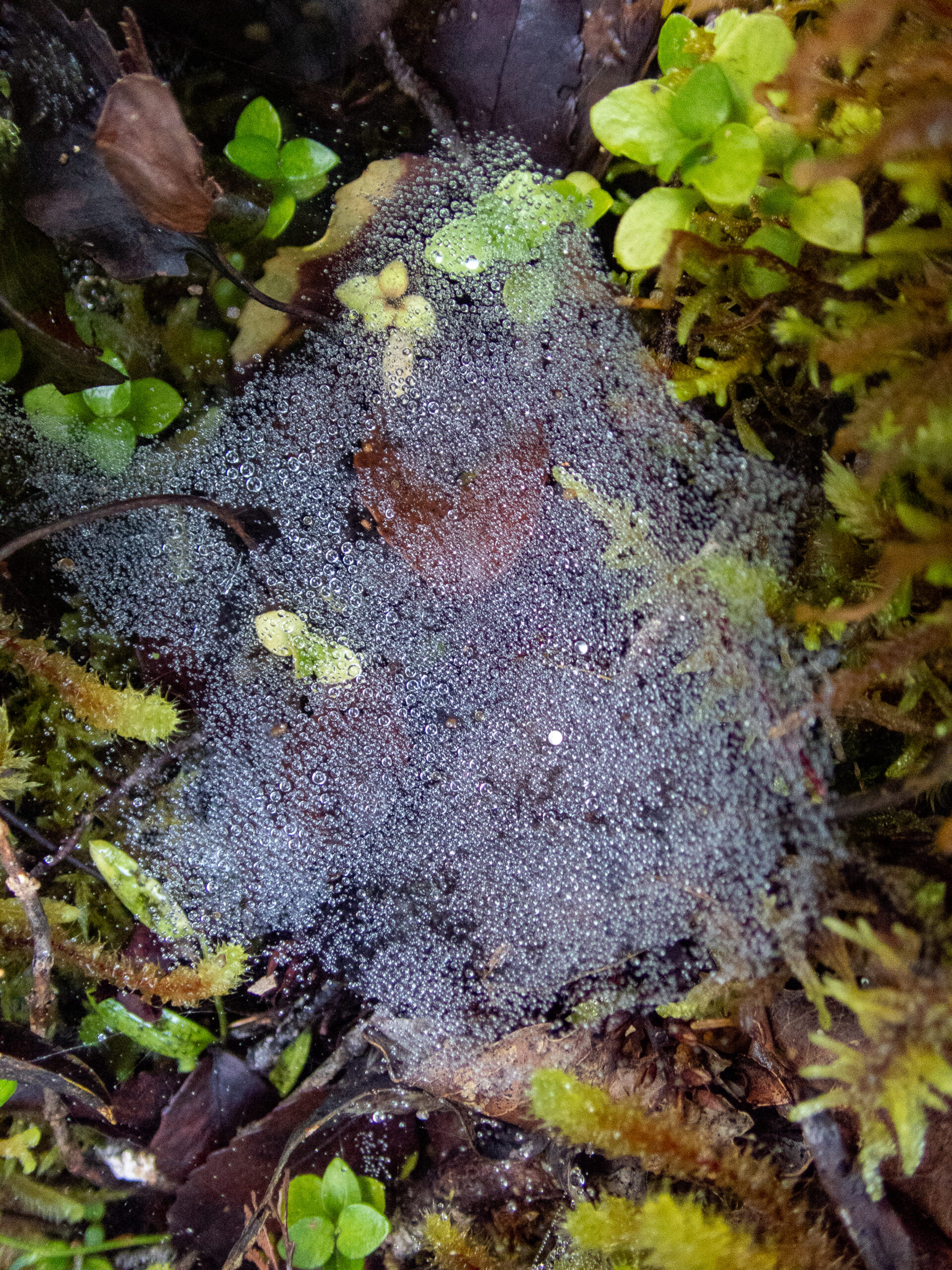
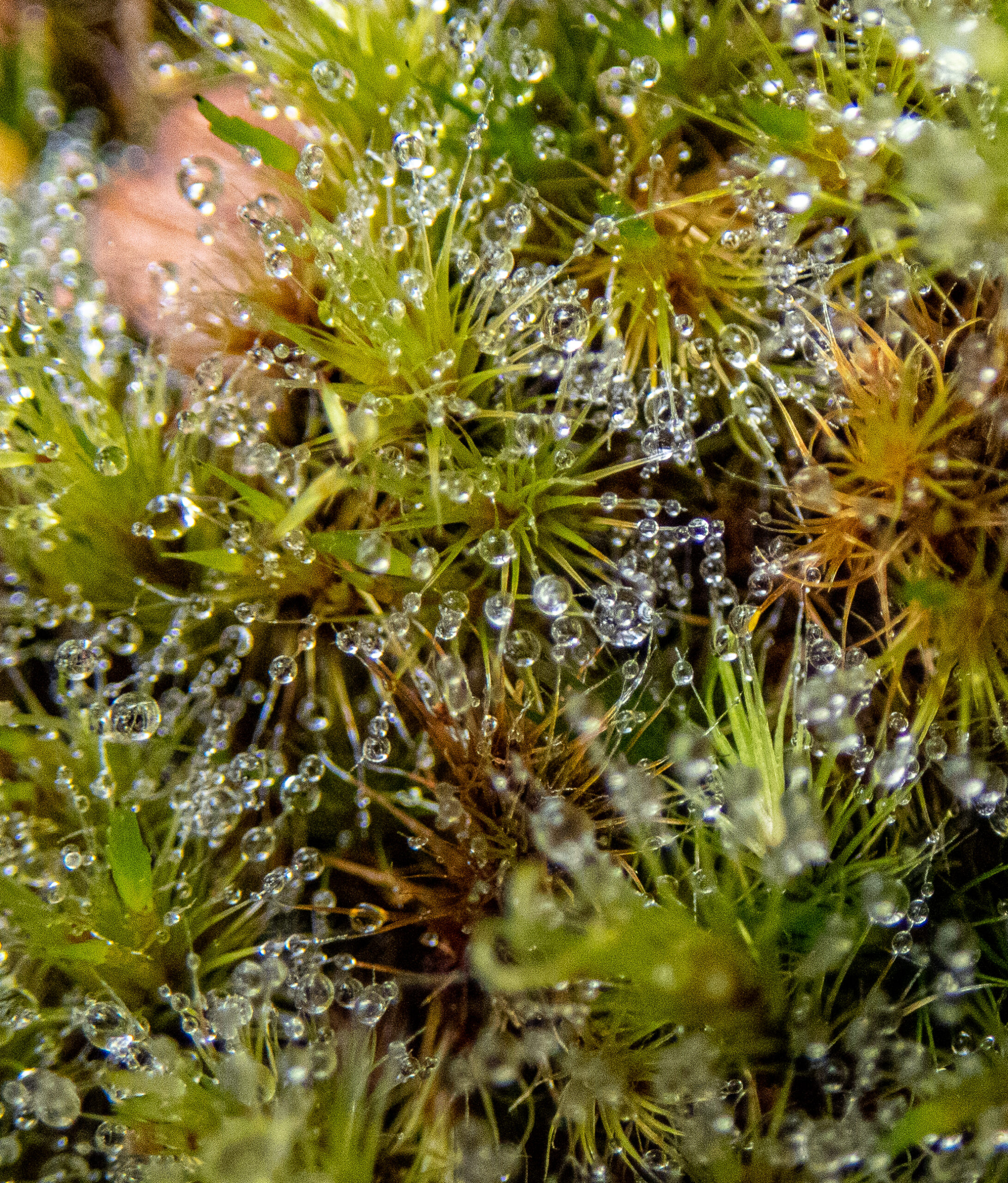
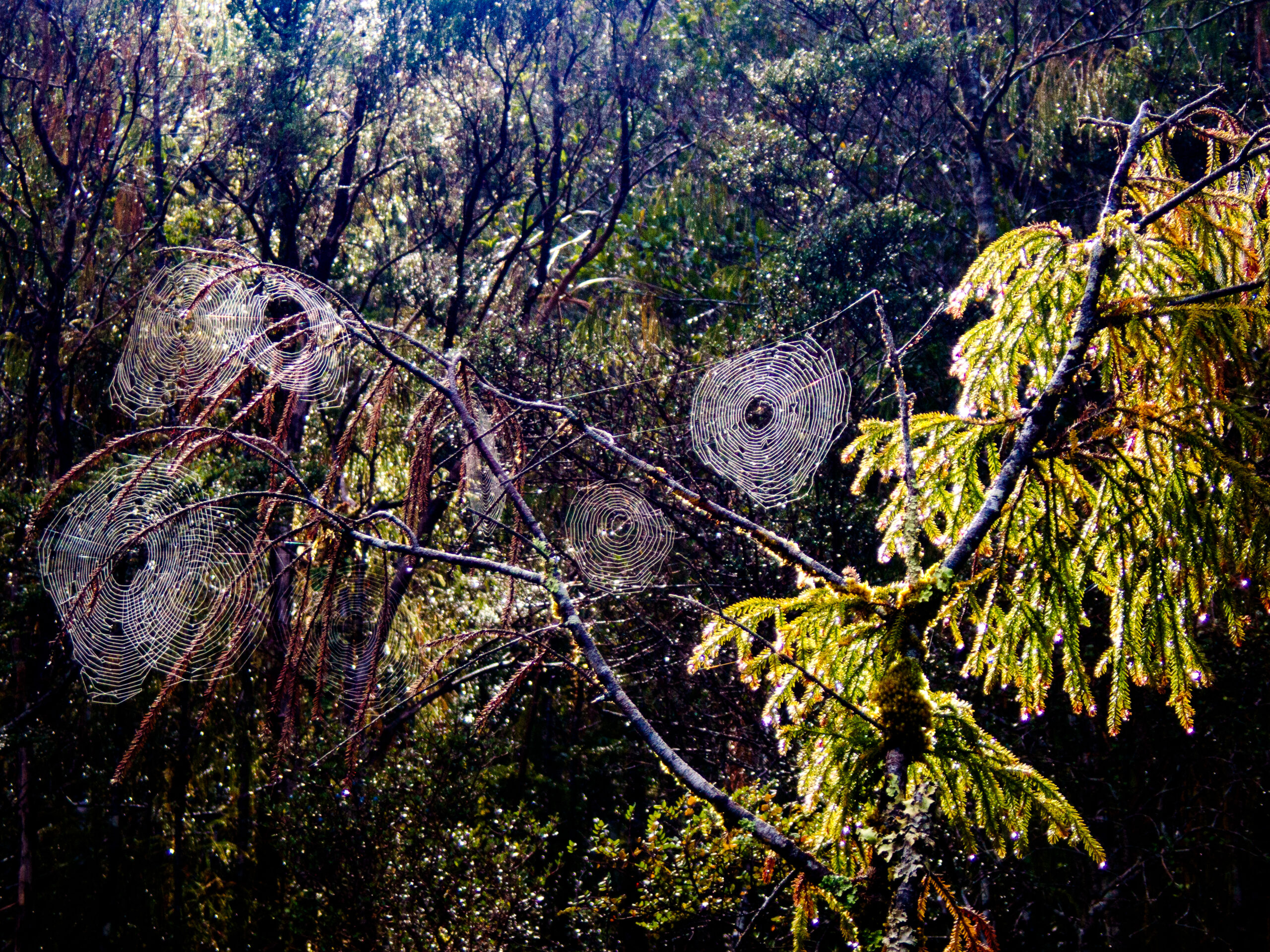
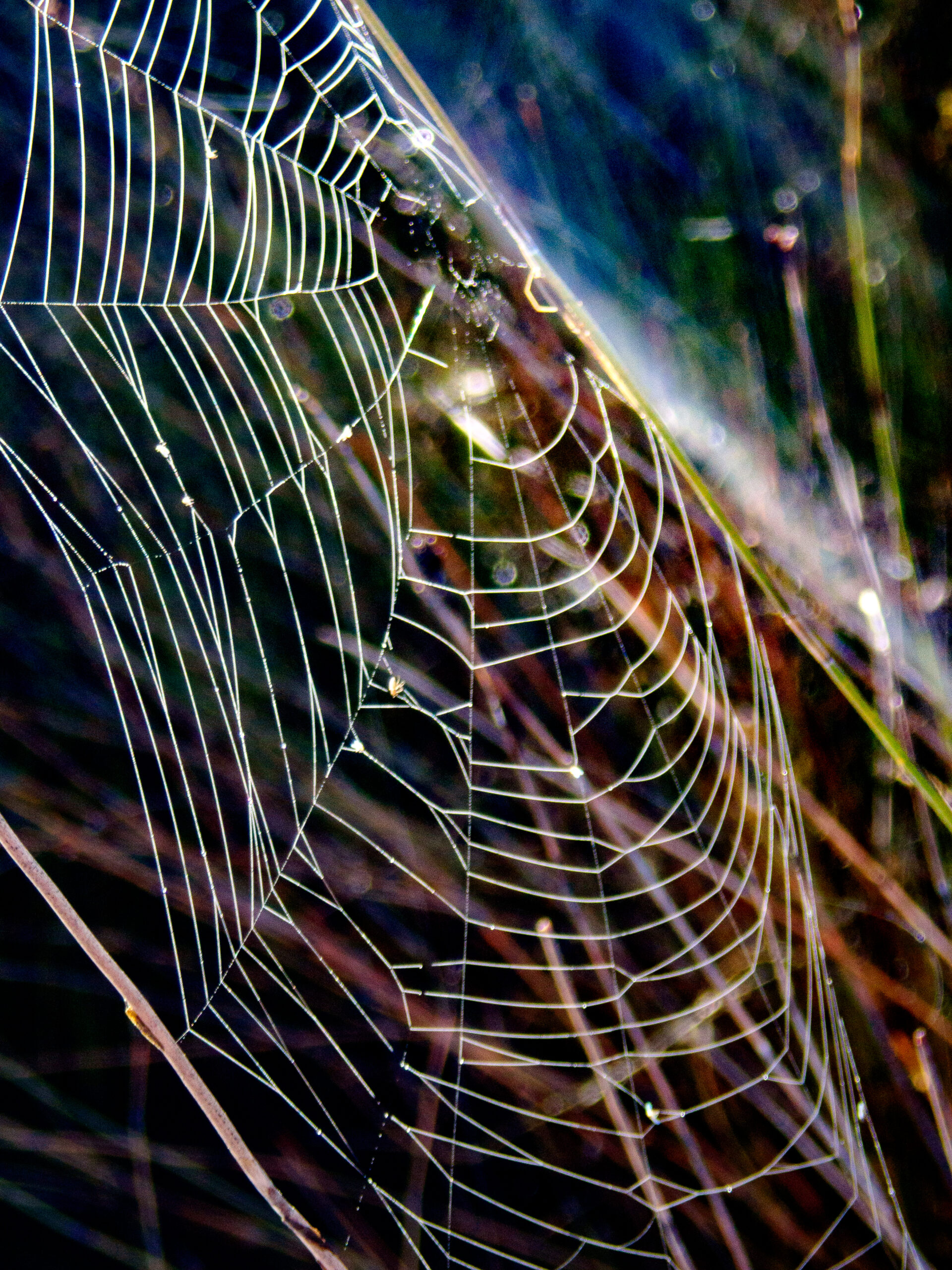
These little ‘webs’ of water droplets were everywhere!
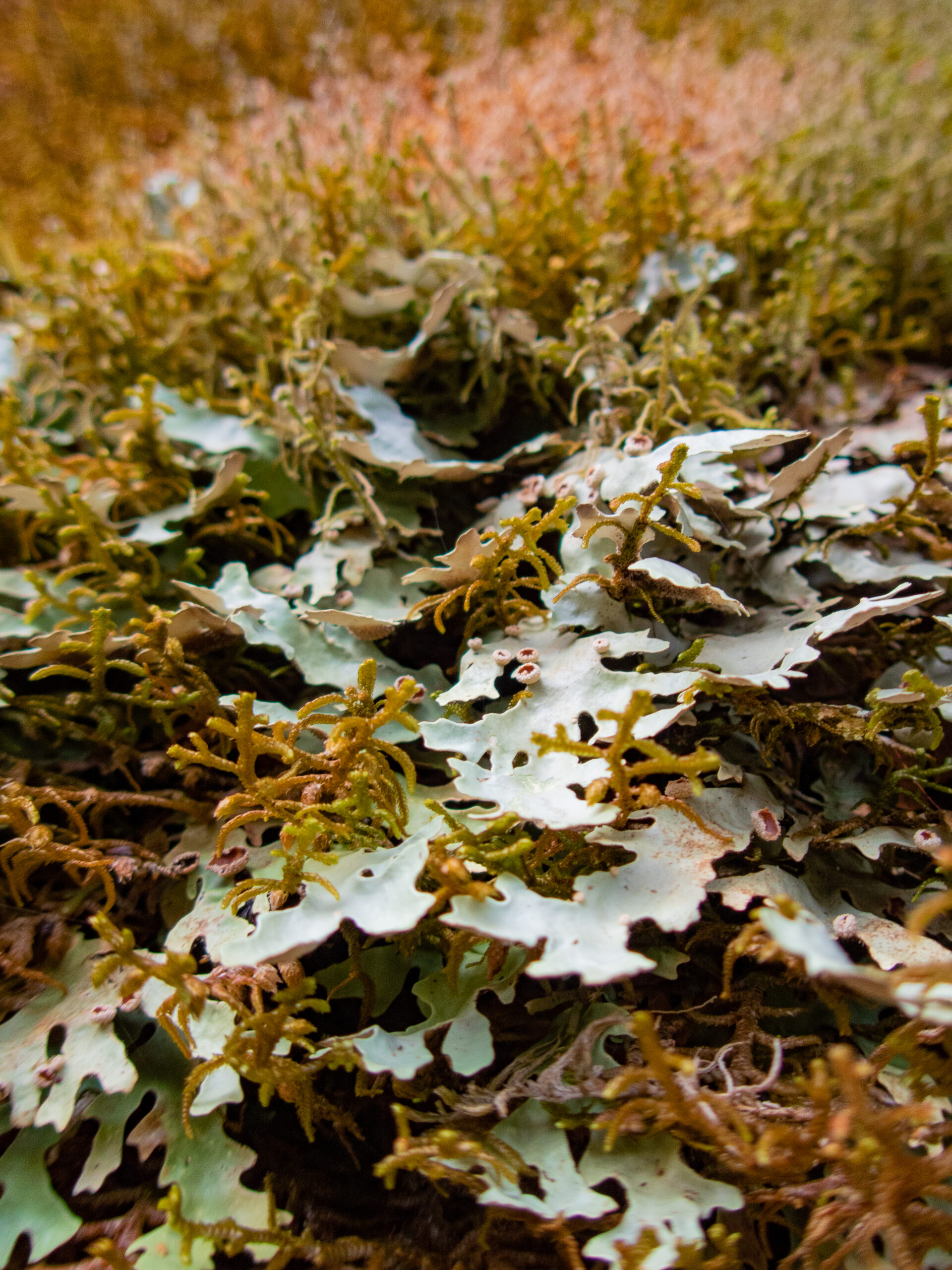
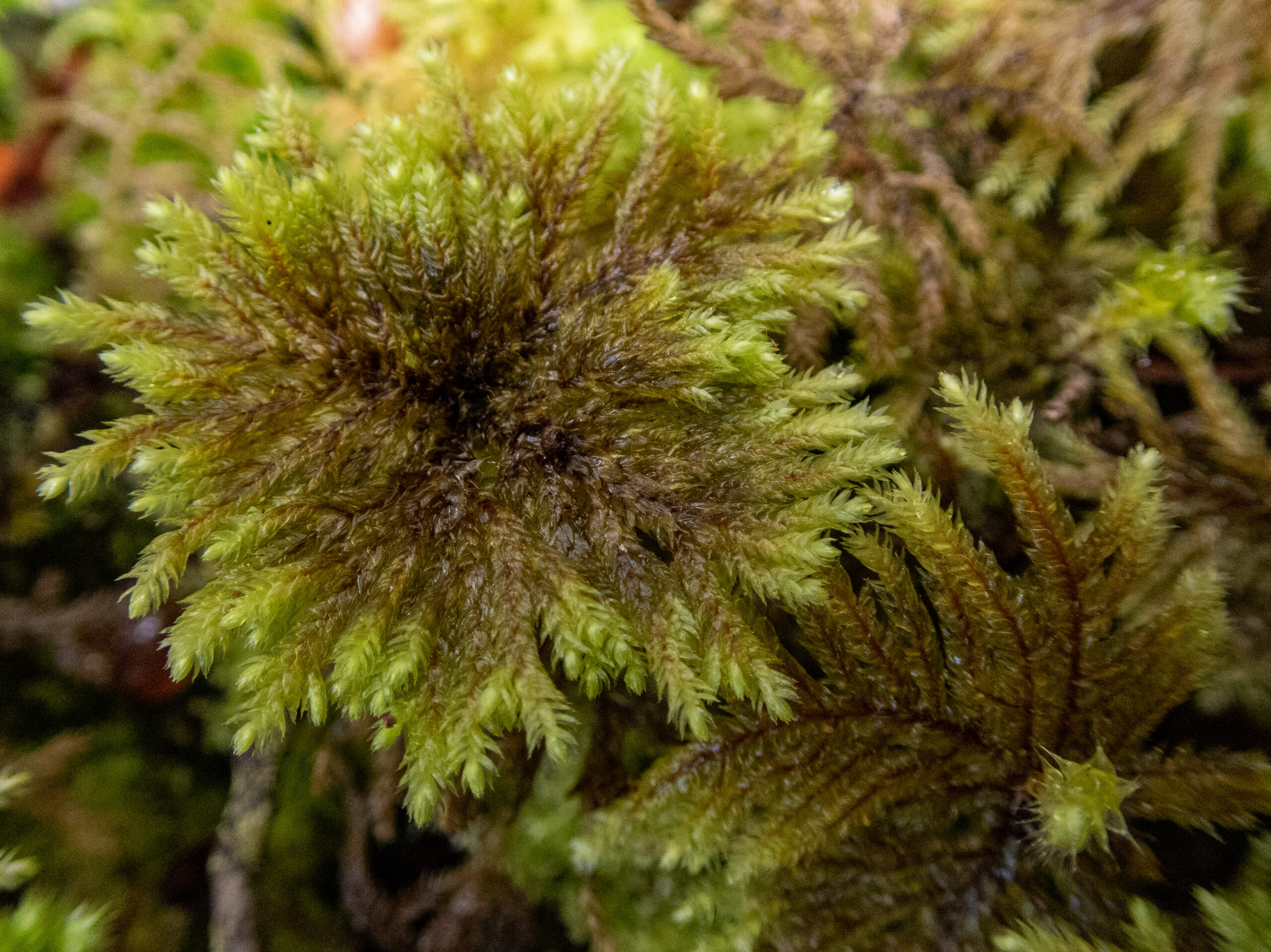
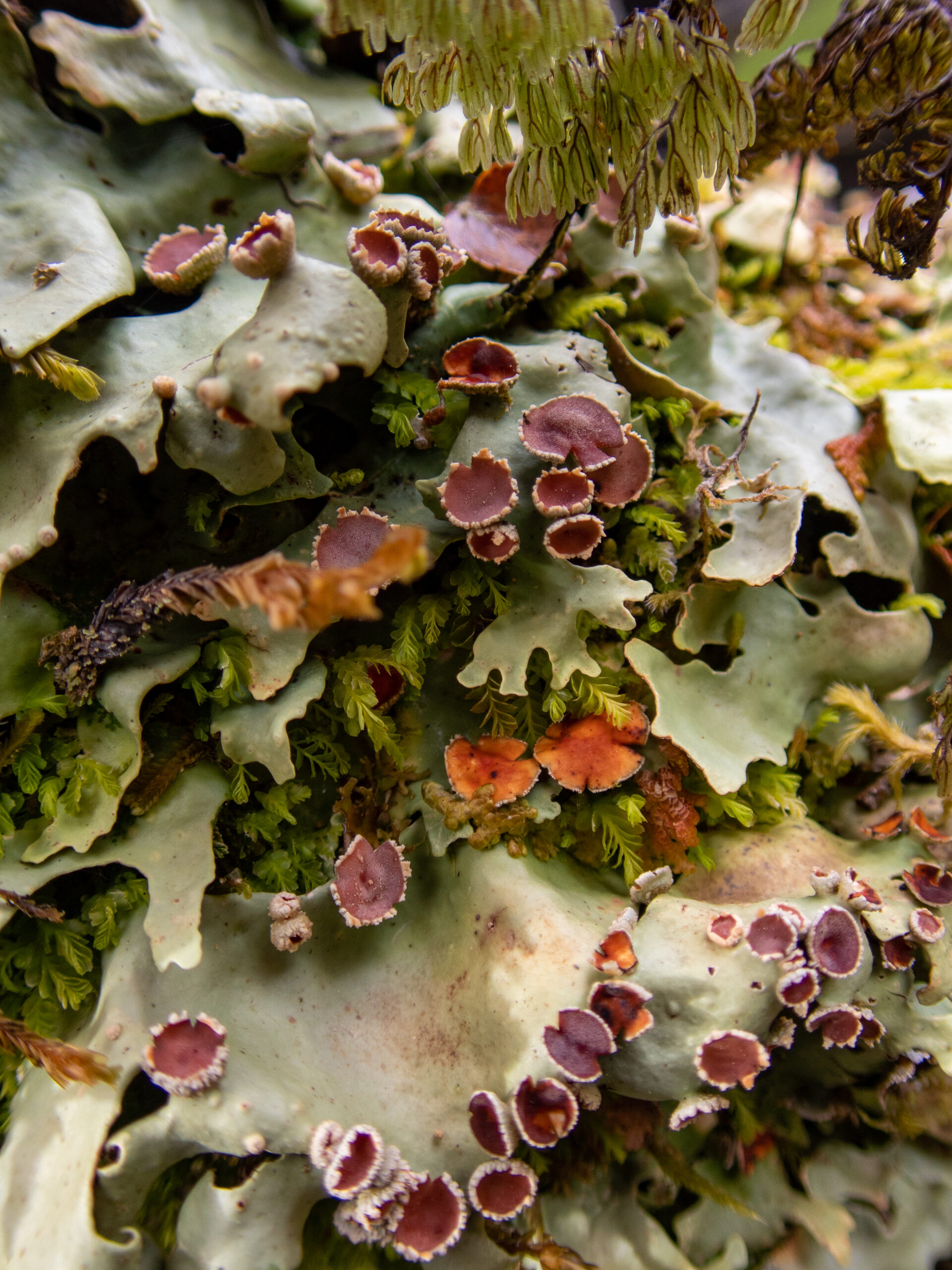
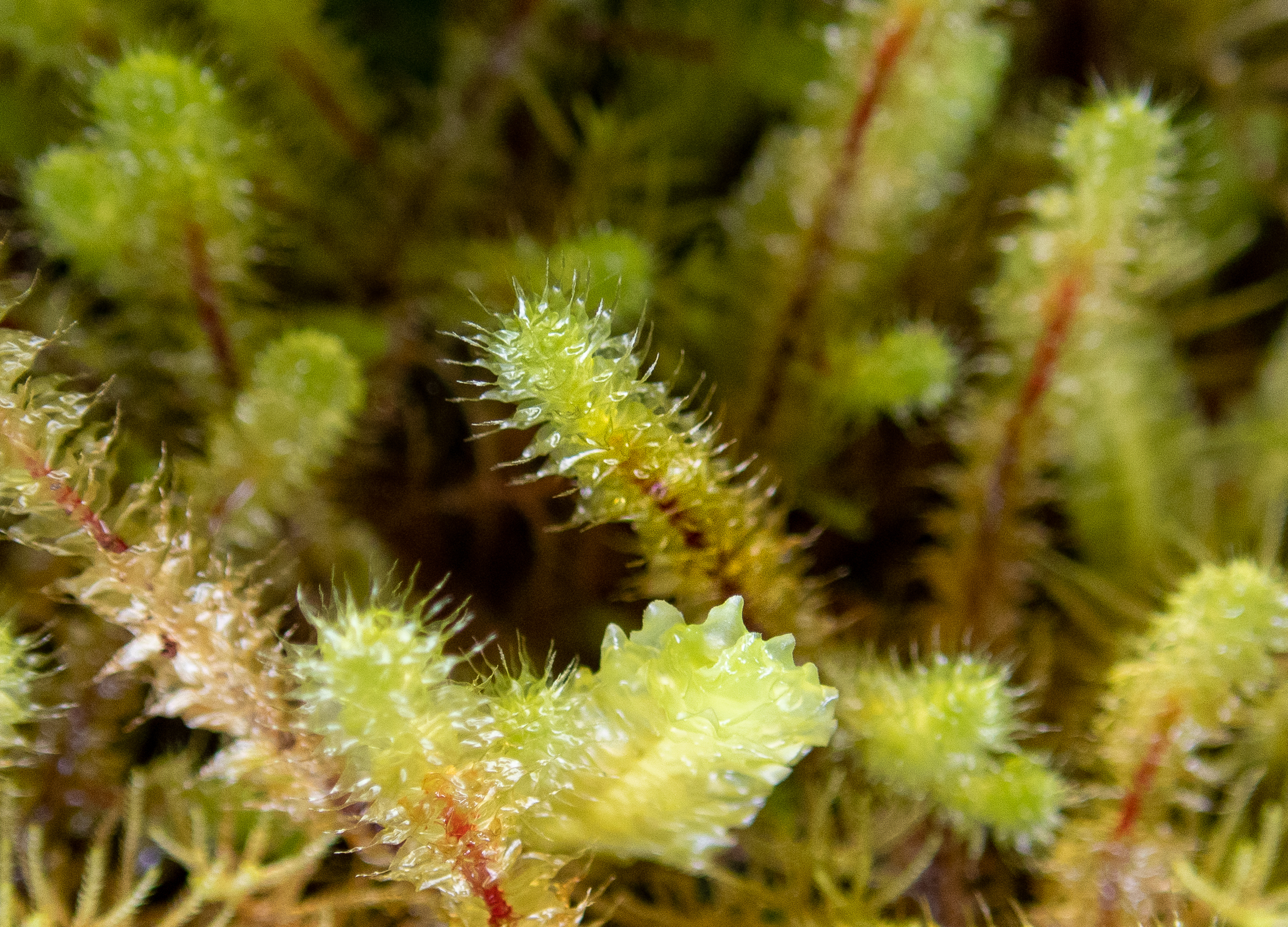
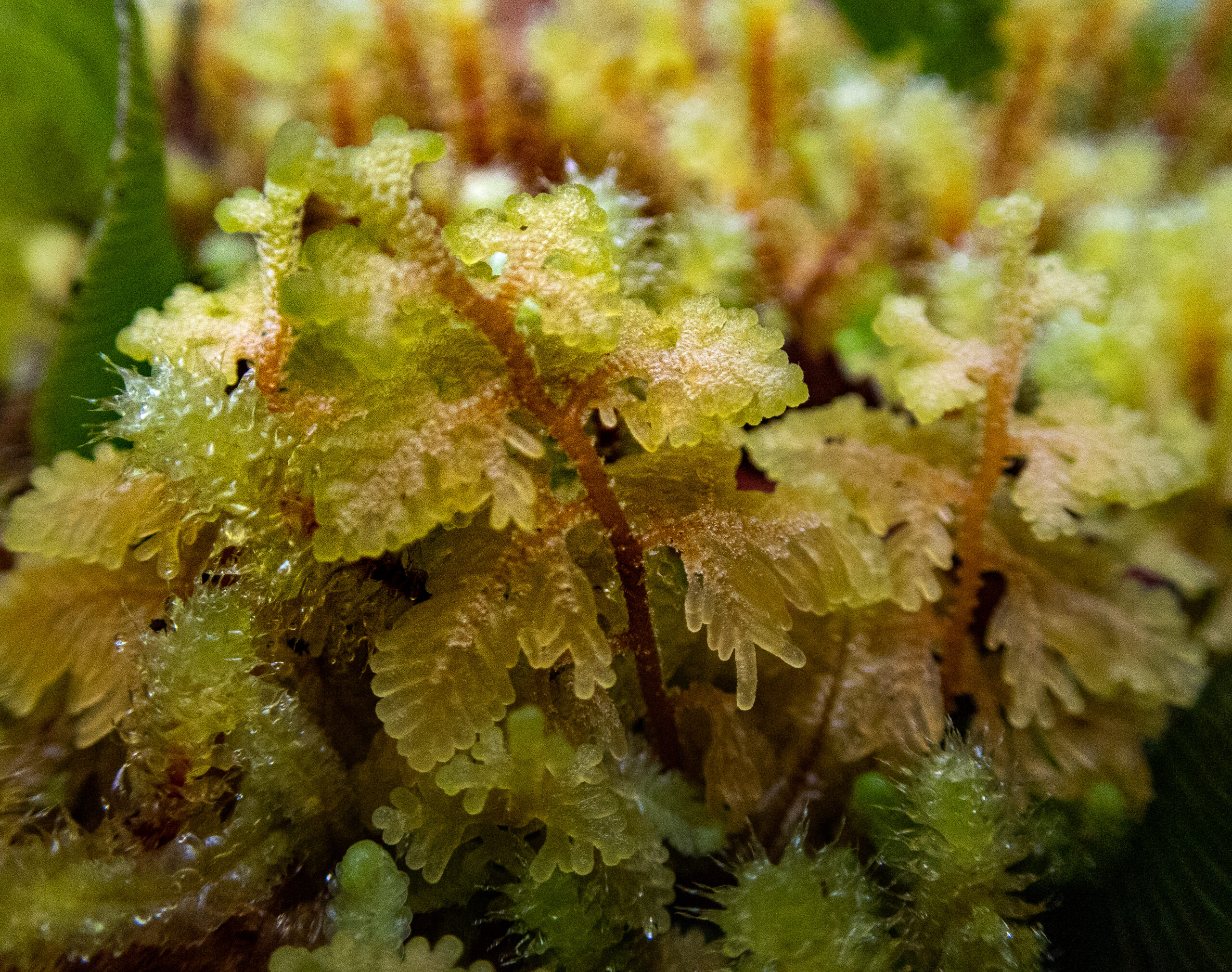
One version of an Umbrella Moss.This whole area had a playful feel about it. I took a million pics, very sprite like and Marcus had the good sense to keep track of how we were going to actually make our way back to Allora. Gratitude on all counts.Sticta Coronata.
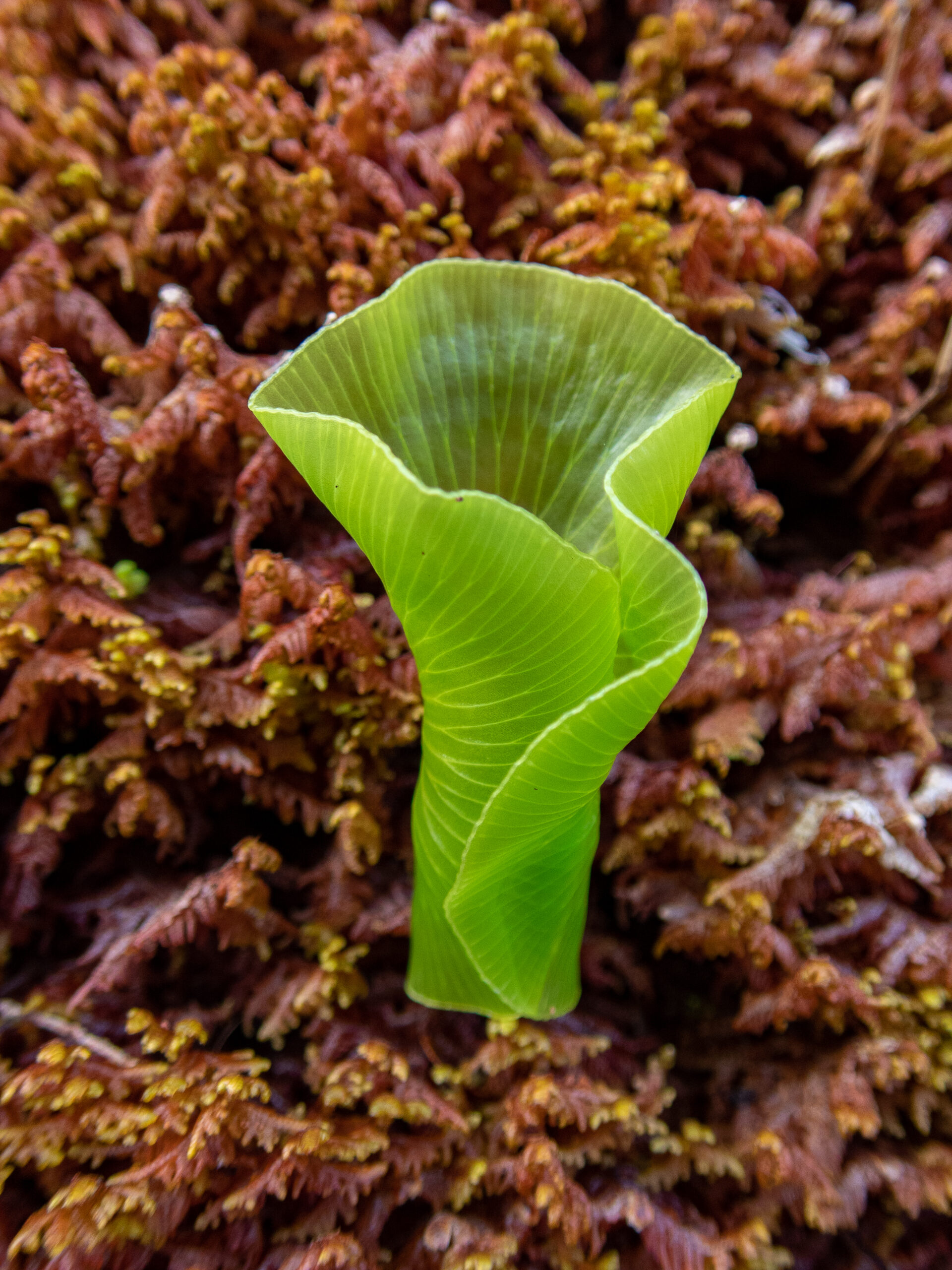
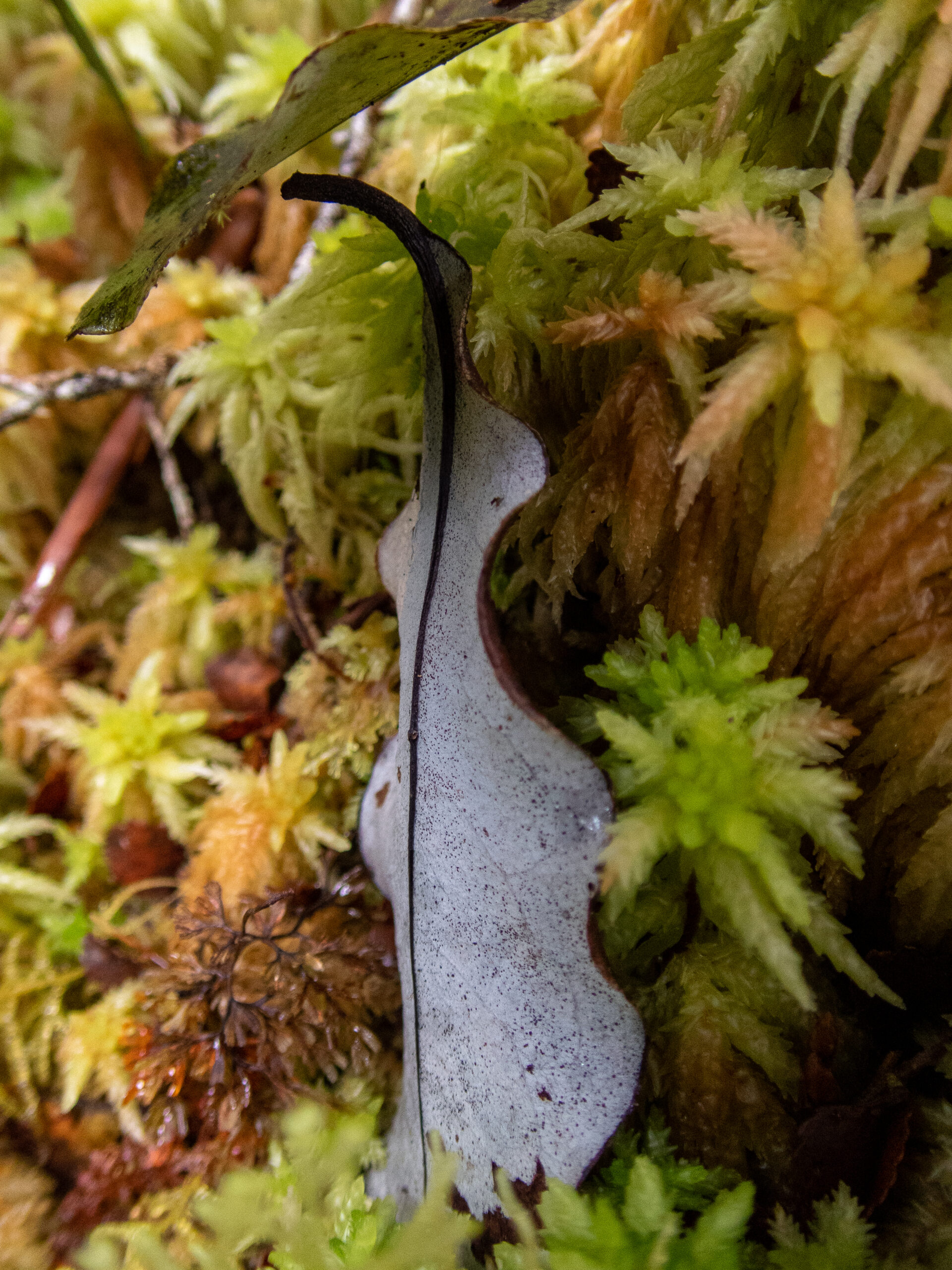
Dr. Seuss landA cello leaf.Peace.
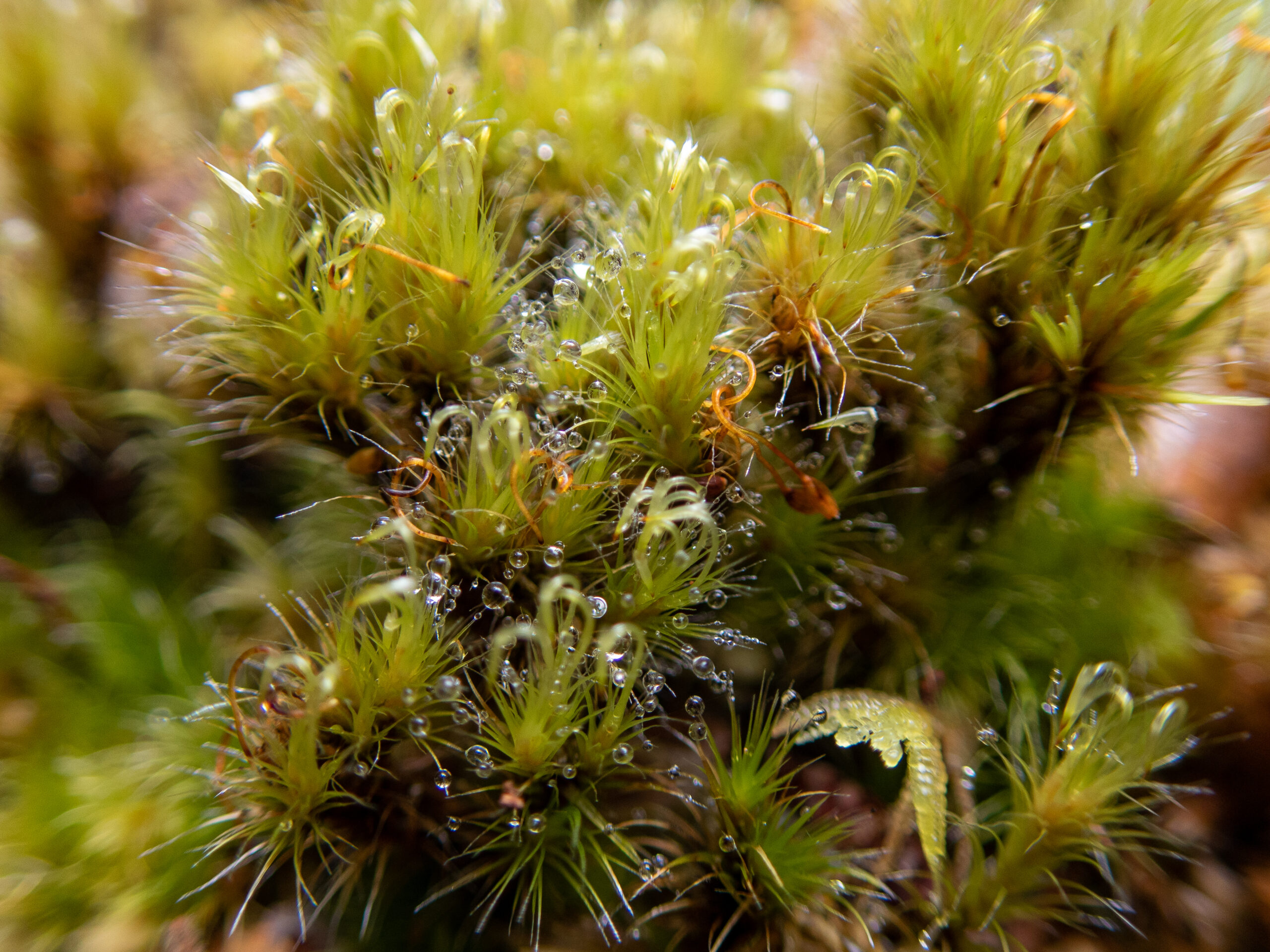
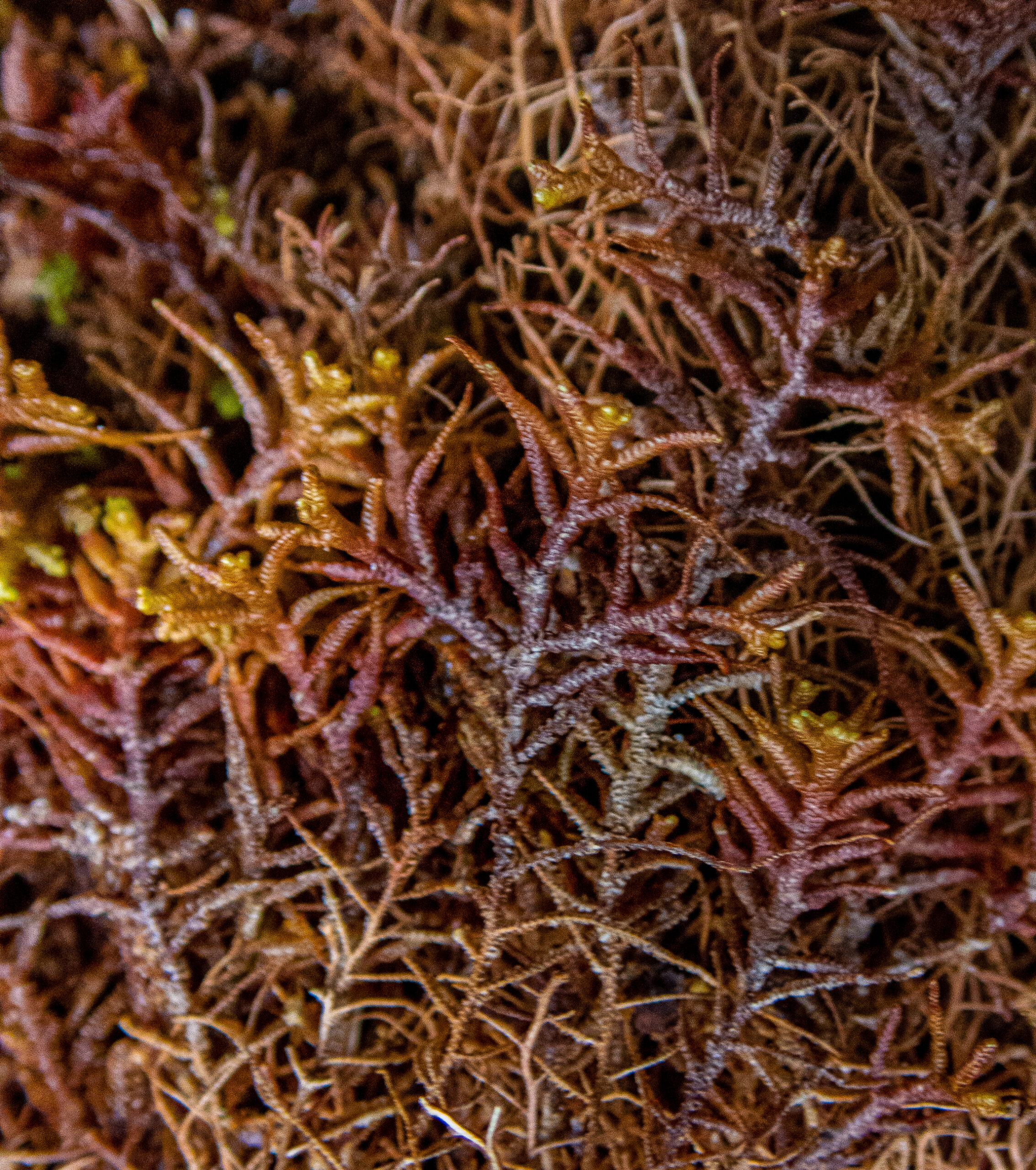
NEED to put these in my INaturalist/ISeek app to find out what they are, besides so wonderful?!Clever seed design!
Allora, free swinging in deep water, but staying put, thank goodness! (Imagine leaving your home for the afternoon and wondering if ‘she’ll’ still be there when you return?)
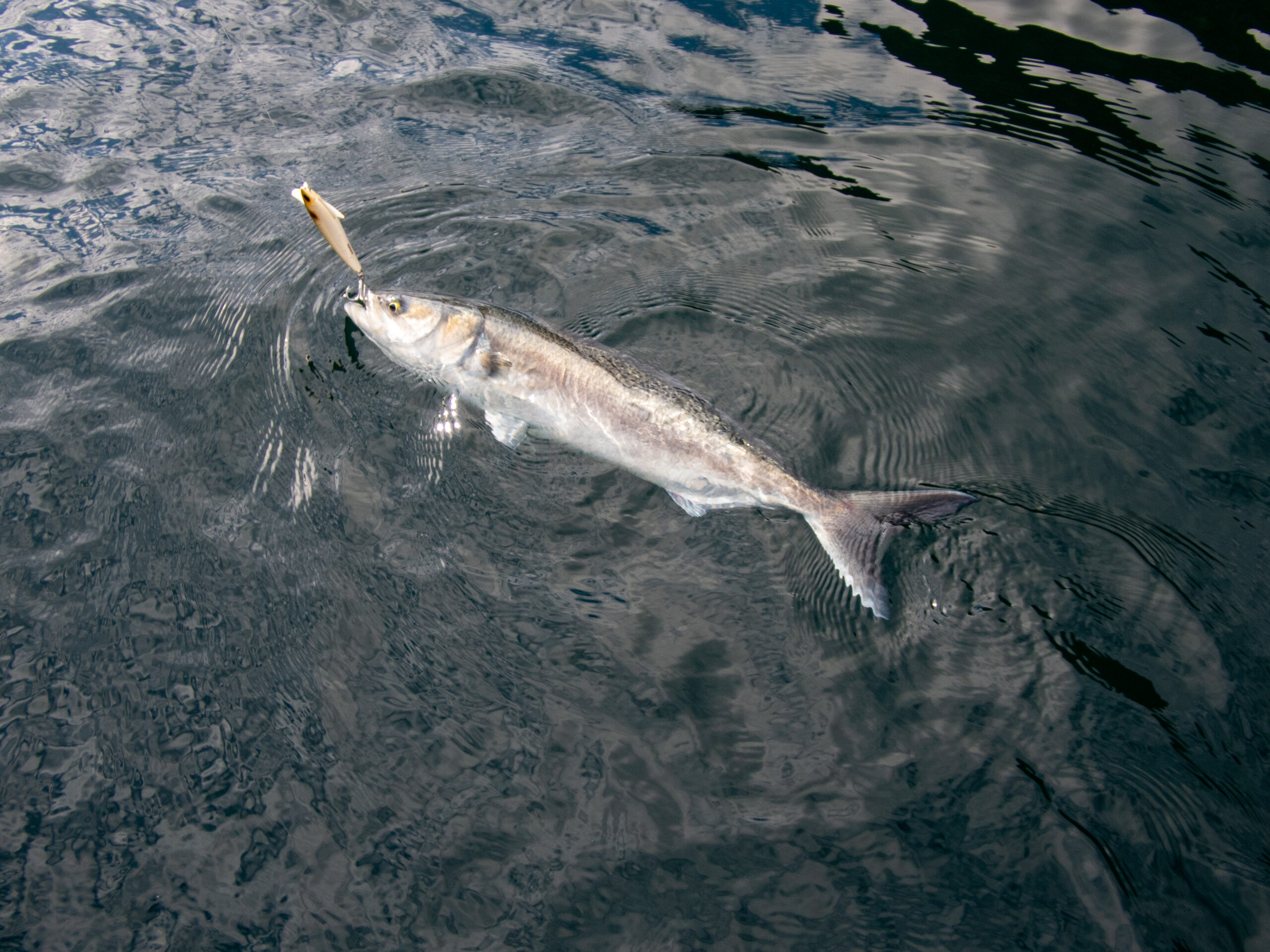
Kahawai
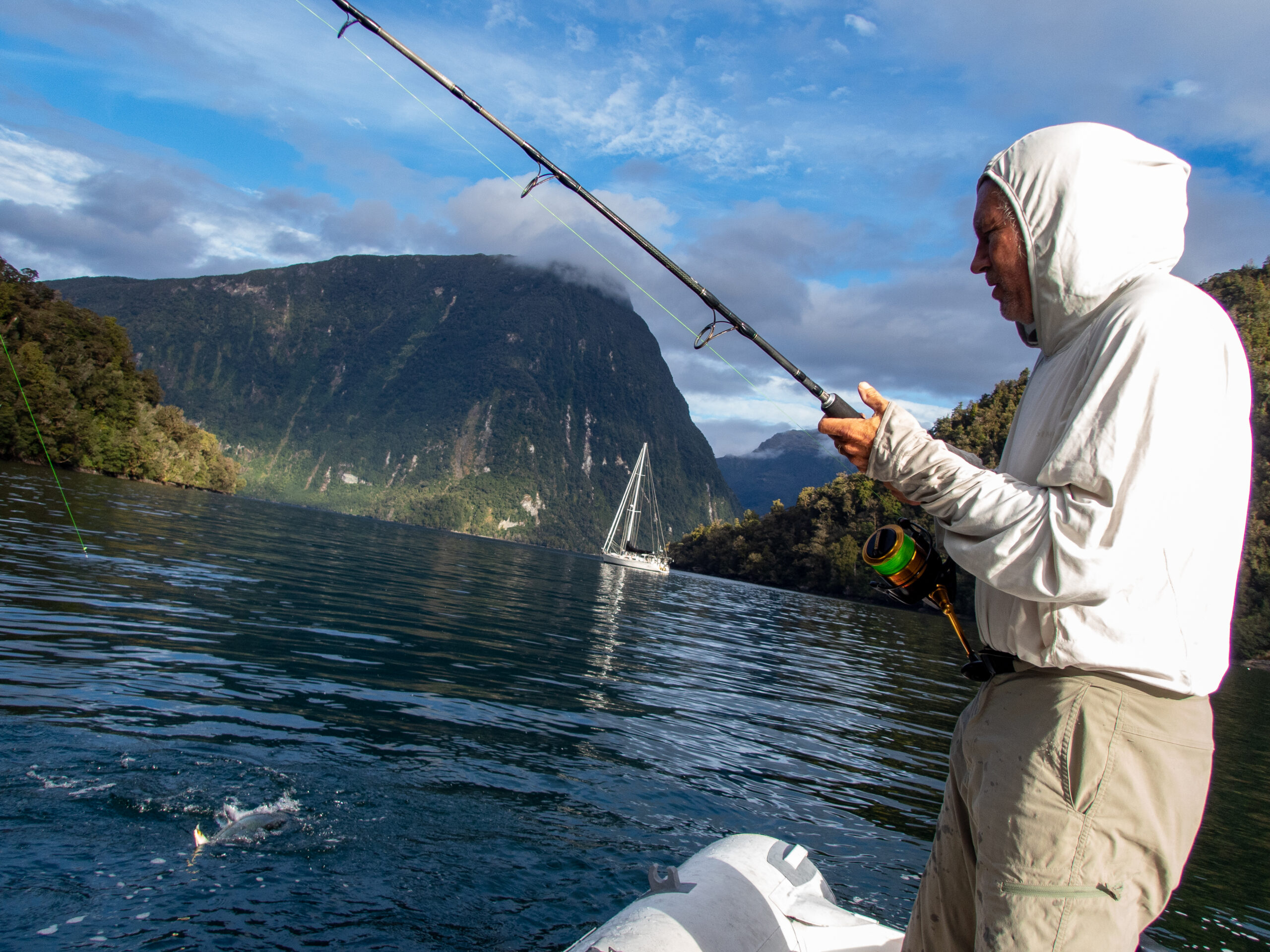
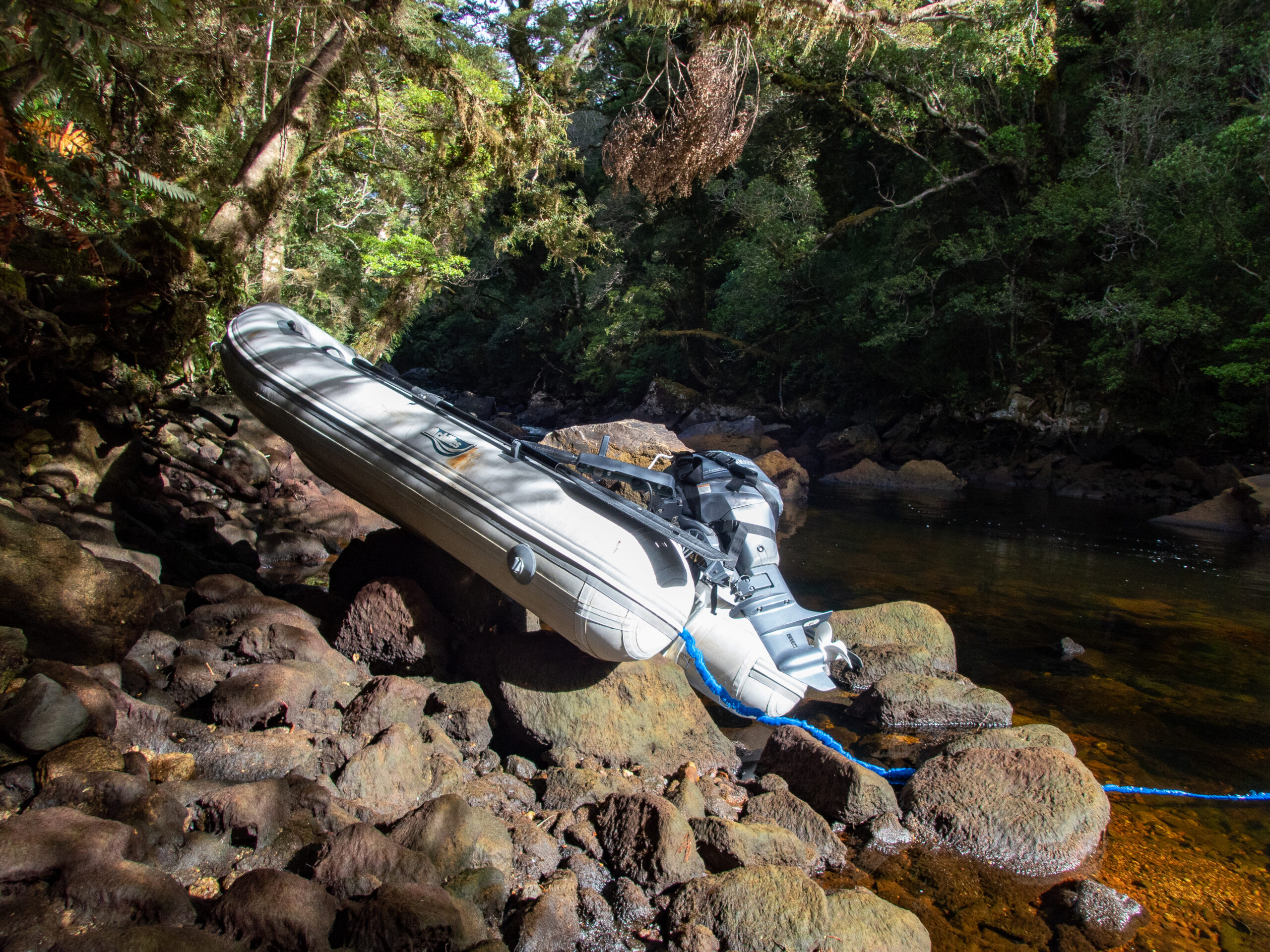
It seems to be an autumn thing that massive schools of Kahawai, Kingfish, and other predators chase the baitfish up to the heads of the sounds and gleefully spend their days slashing and crashing and feasting upon them. It starts at dawn and continues until dark. At completely unpredictable moments the water will suddenly boil with feeding fish only to disappear within a few moments. The first Kahawai I caught was with a spinning rig, which is well suited for frantic Hail Mary casts into the abyss. I will admit that catching that fish was closer to an accident than anything premeditated. One fish nearly chased the lure right into the boat. As we traveled through the fiords, the fairly constant surface action was nearly impossible to ignore, and sometimes the predators would use the boat to trap the bait and Allora would find herself at the center of the melee. Finally, at the head of Daag Sound I couldn’t stand it anymore; I rigged my 8 weight and propped it next to the dinghy ready to go at the next irresistible provocation. What ensued was pure madness. The fish would pop up, I would zoom over with the outboard roaring, then kill it as I coasted in, frantically start casting and get maybe one quick retrieve before the fish disappeared. As I zigged and zagged across the fiord, I’m probably lucky that we were certainly the only people then in Daag Sound so that no one arrived with white straight jacket and concerned expressions to intervene. Back and forth I dashed, tangling myself in my line, frustrated at the utter futility of stripping the fly back with the dinghy still moving forward. Once every tenth attempt, everything would work out, I’d even get in a second or third cast, and manage to get my fly to move fast enough to get some attention, and a slash maybe, a miss and back to the frantic game. I was exhausted and my shoulder was on fire by the time all of the crazy variables aligned and a willing fish slammed my fly and headed straight for the bottom of the Sound. The seriously outsized strength of that fish made me instantly regret picking my lighter 8 weight over my sturdy 9. In fact, I was pretty sure I was going to break the rod. What a relief it was to release that fish and release myself from any future notion of fly fishing for Kahawai. A River Runs Through It, it was not. ~MS
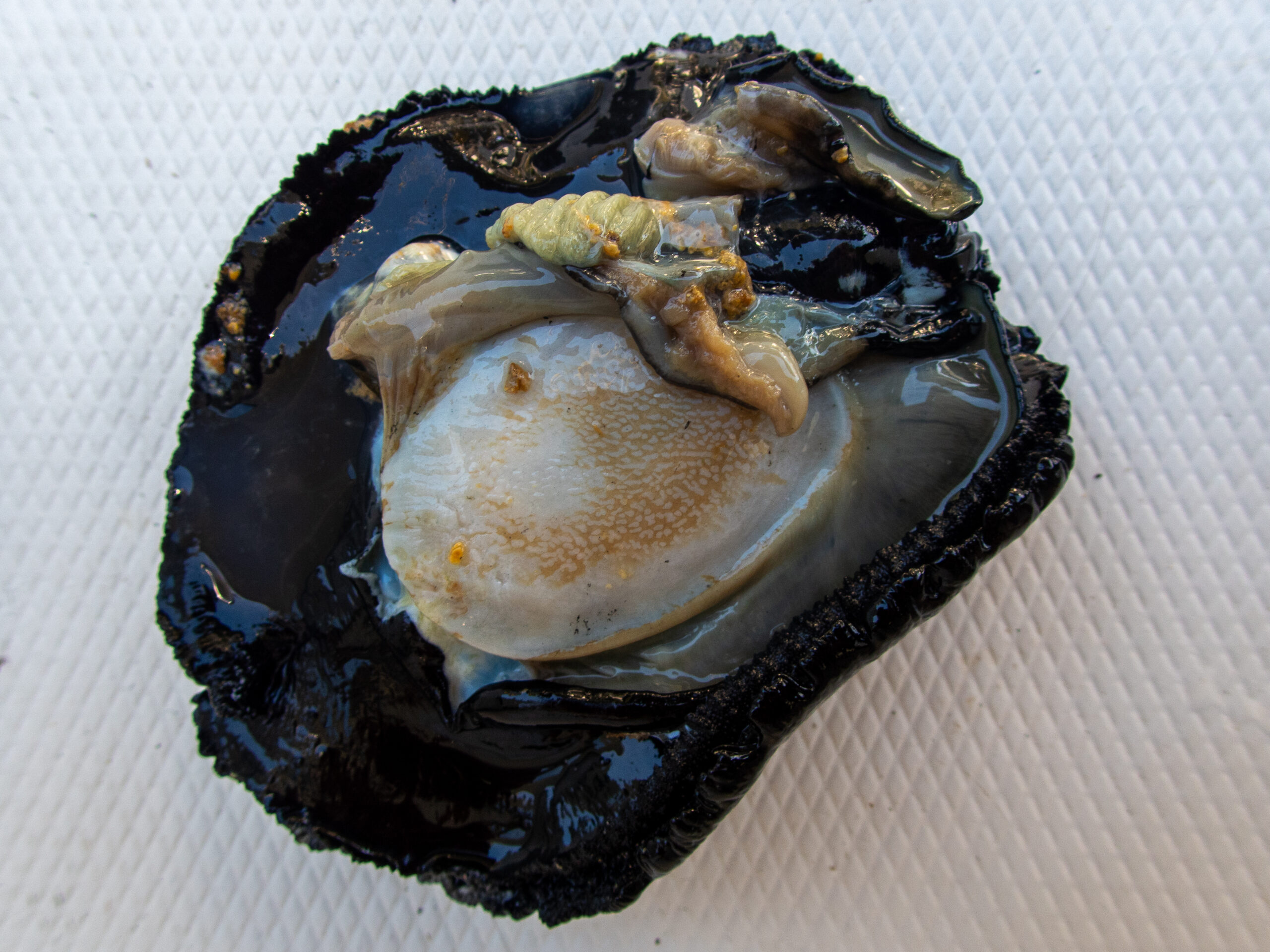
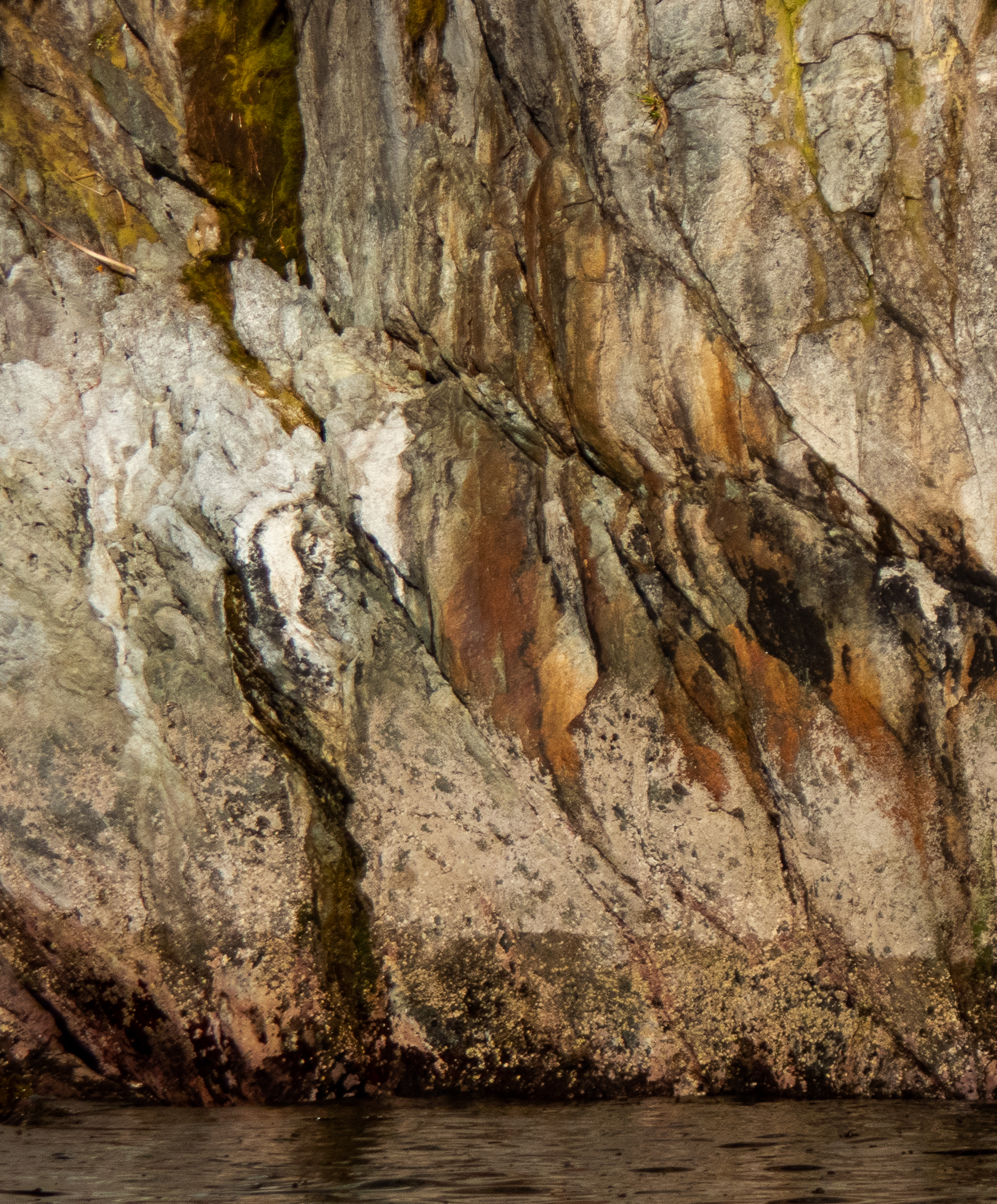
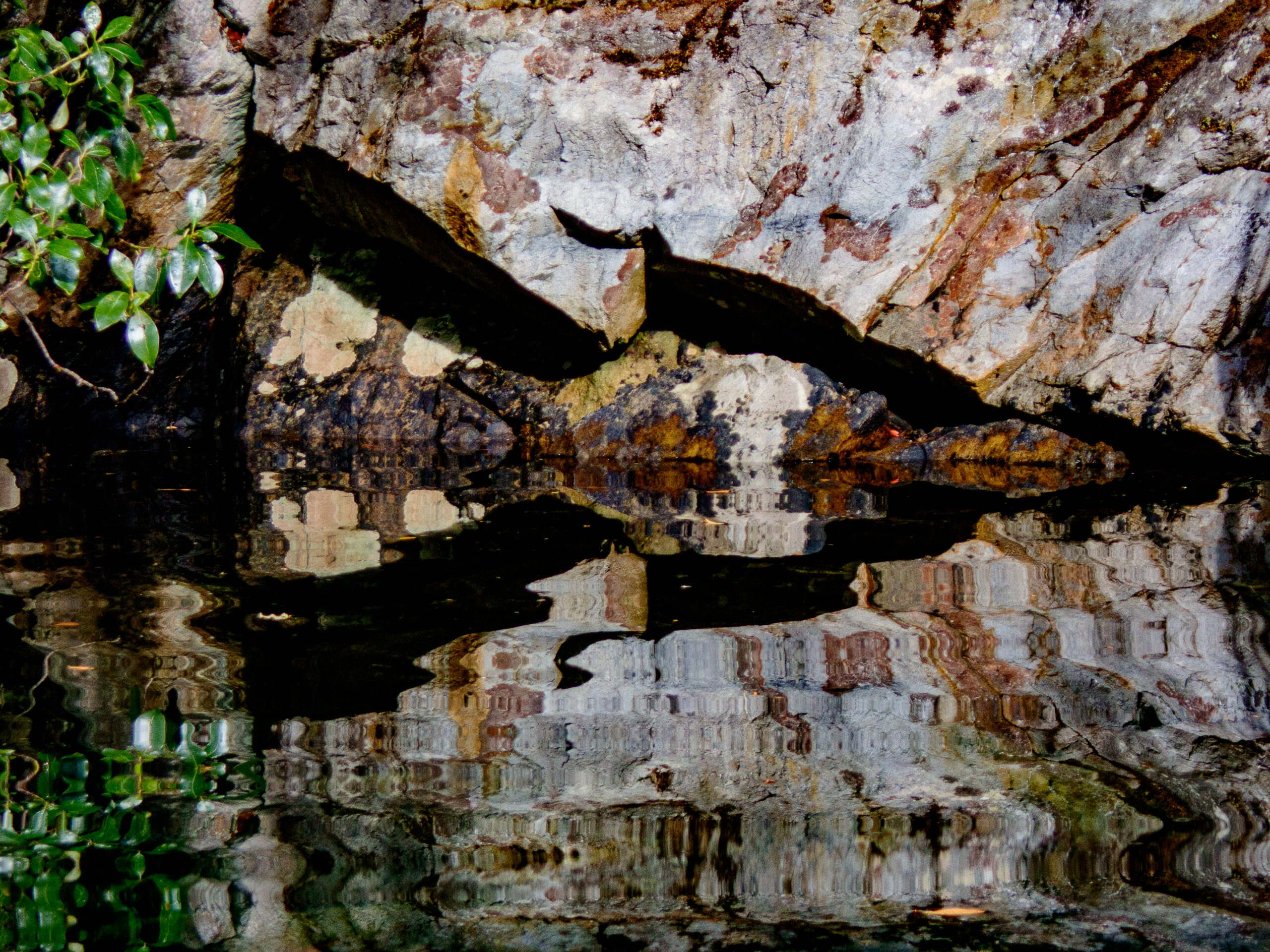
We let this Kahawai go since at that point, we weren’t even sure what it was! Turns out it would have been within regulation size to keep, but we already had a dinner plan in place and it always feels good to release them.Cityscape in the rocks (a bit dystopian).And mountains, too!One lone dolphin came cruising through the anchorage and did a rather quick loop around us. We kept thinking there must be two because he’d go under and then come up much farther along than we’re used to seeing, but we never saw more than the one.Moving from Third Cove to Stevens Cove!We stopped to fill up Allora’s water tanks at a little floating hut which is used by fishermen during the season. Our watermaker worked fine in this mix of fresh and salt, but it’s always nice to get quick, free fills.Another (power) boat queued up for a water fill after us so we got to talking and they shared a small Pāua (abalone) which they’d just harvested and described how to prepare it. I read that there’s a place in Hong Kong where they charge $2k per person for a Fiordland NZ Paua dinner! It was ALOT of work and yielded very little to massage this muscle into a source of protein! It would have been at least 5 years old.The name wasn’t the only thing compelling about Stevens Cove. It was super close to the entrance/exit of Breaksea Sound, so we’d be poised for a quick transit up to Dagg Sound when ready. The only thing is that it’s such a tiny spot that we had to hope we’d fit in there! The opening can barely be seen in this picture near the turquoise water.It was our trickiest maneuvering/anchoring to date, but we settled in to our little namesake anchorage quite sweetly. This is normally used by power boats/fishermen since it’s so close to outside and they squeeze 3 little boats in here.
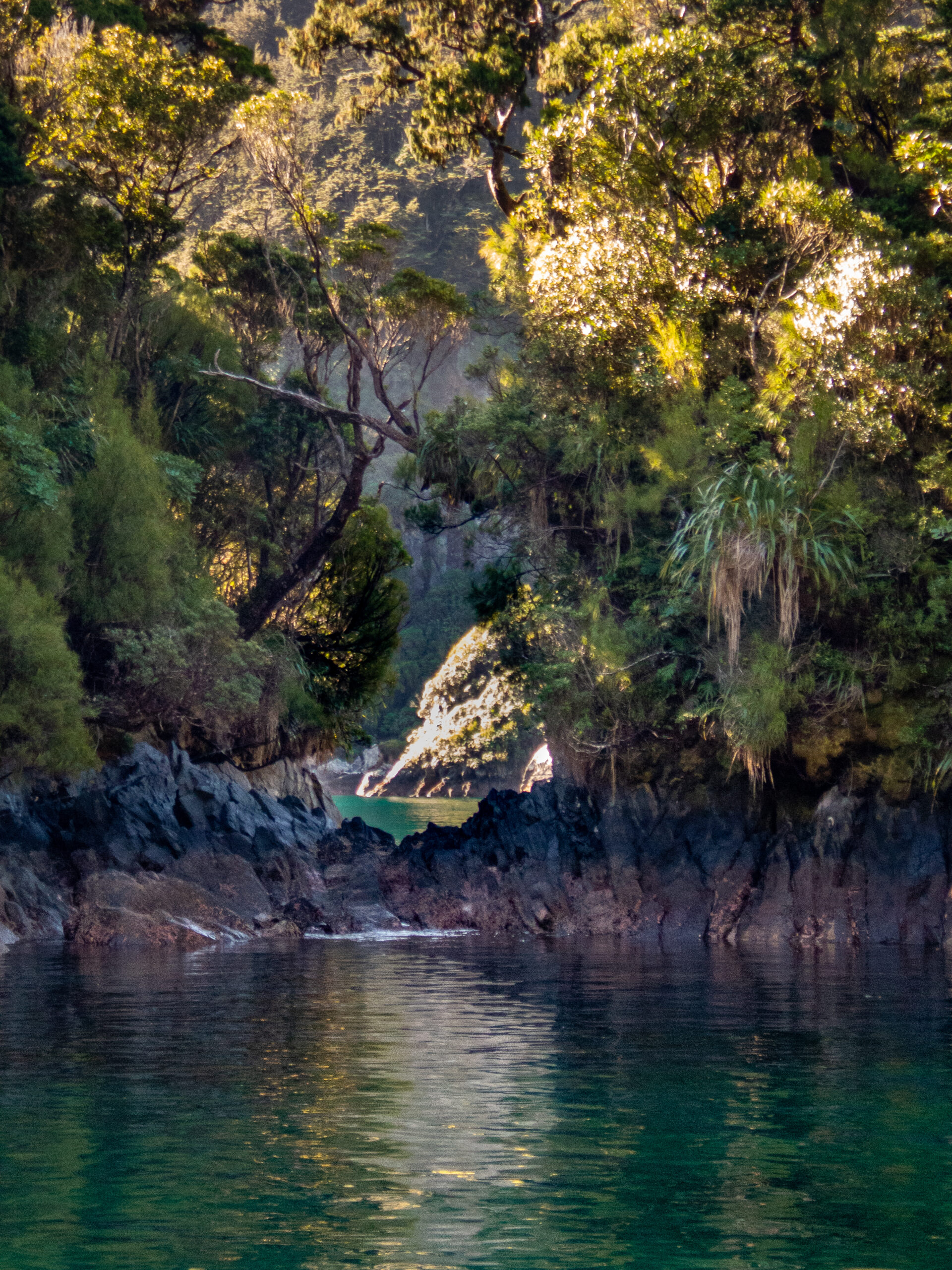
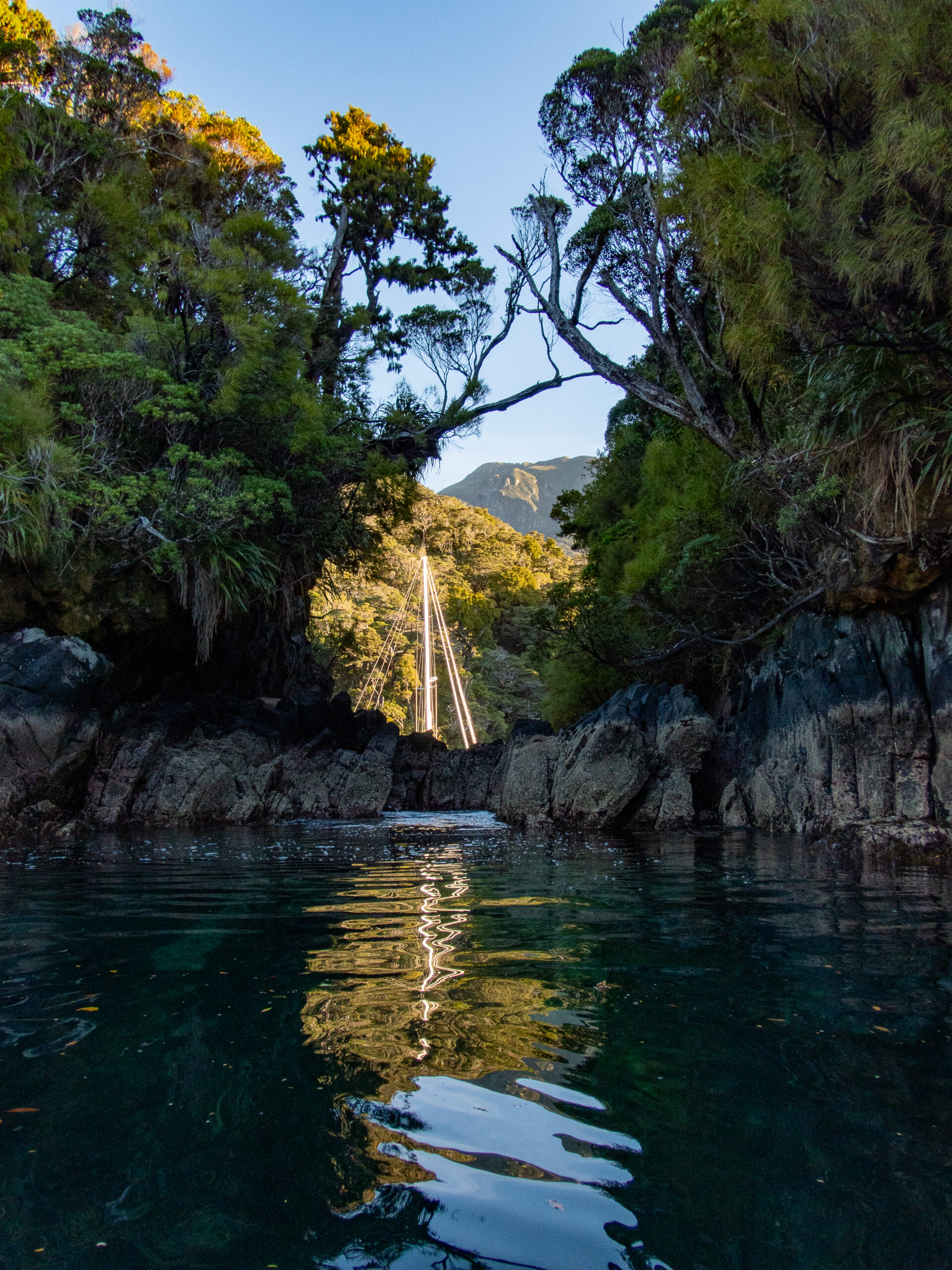
There were these two ‘keyholes’ inside Stevens Cove where you could see the main Sound which would cover over at high tide and I could squeeze the kayak through, theoretically, but my kayaking happened at lower tide, so no go.View of Allora from the Sound.Time to go check out the ‘archipelago’ of nearby islands!New forms to take in!
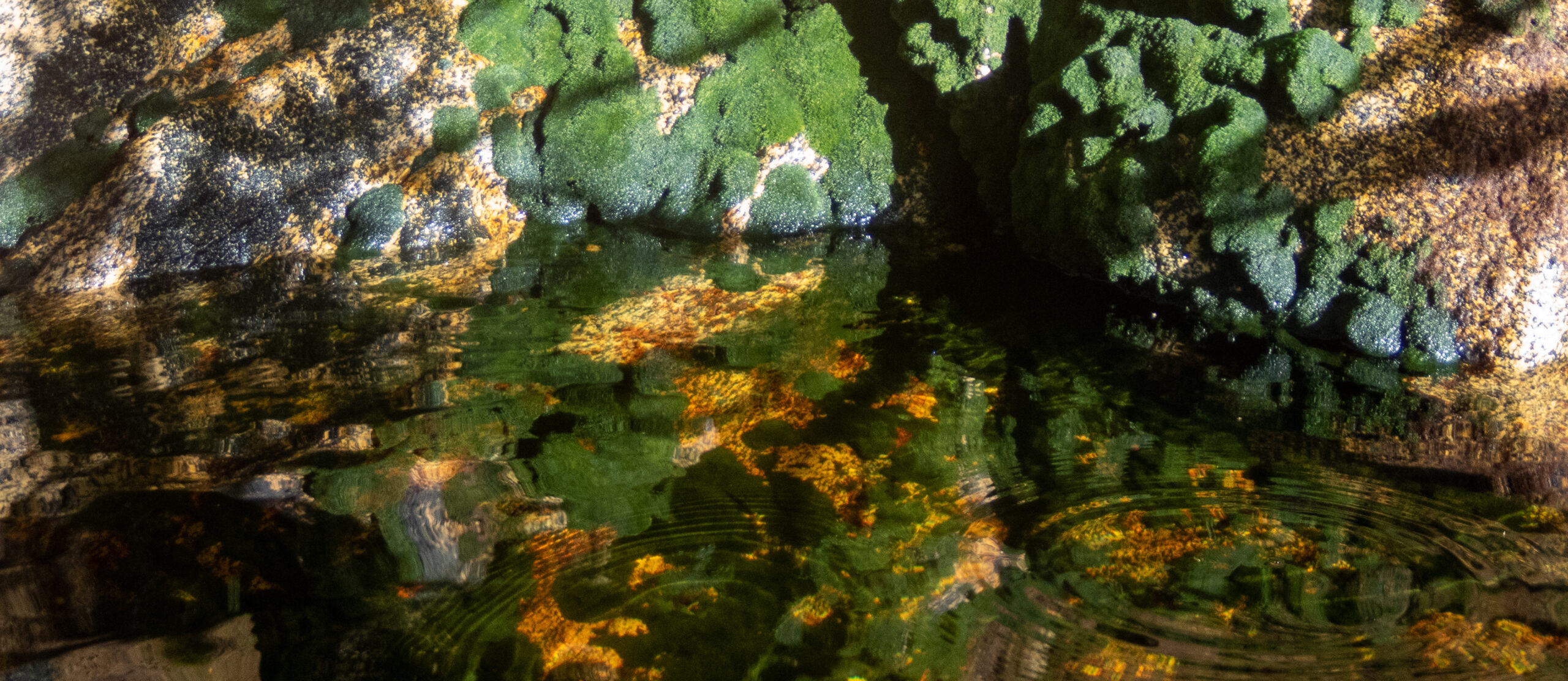
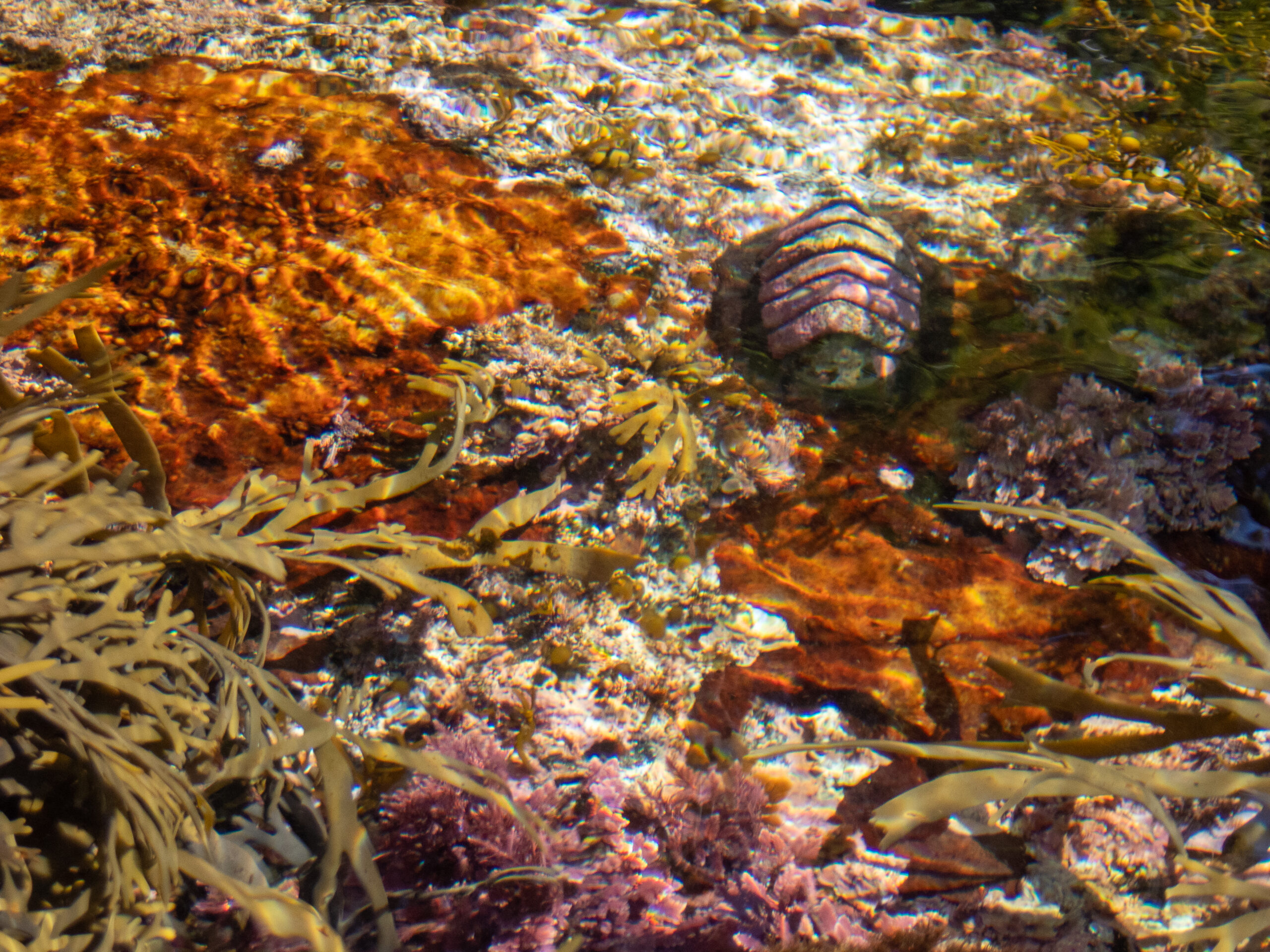
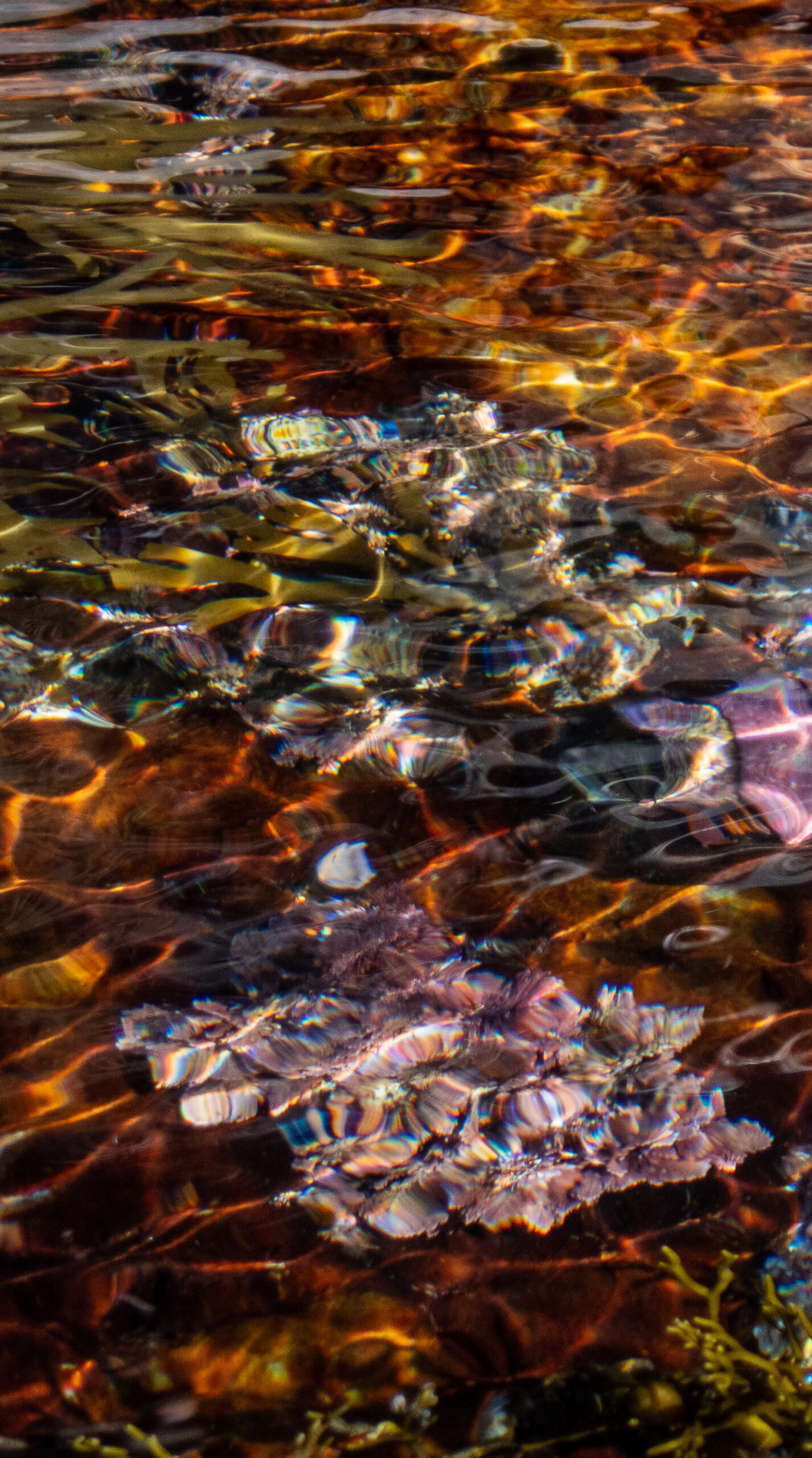
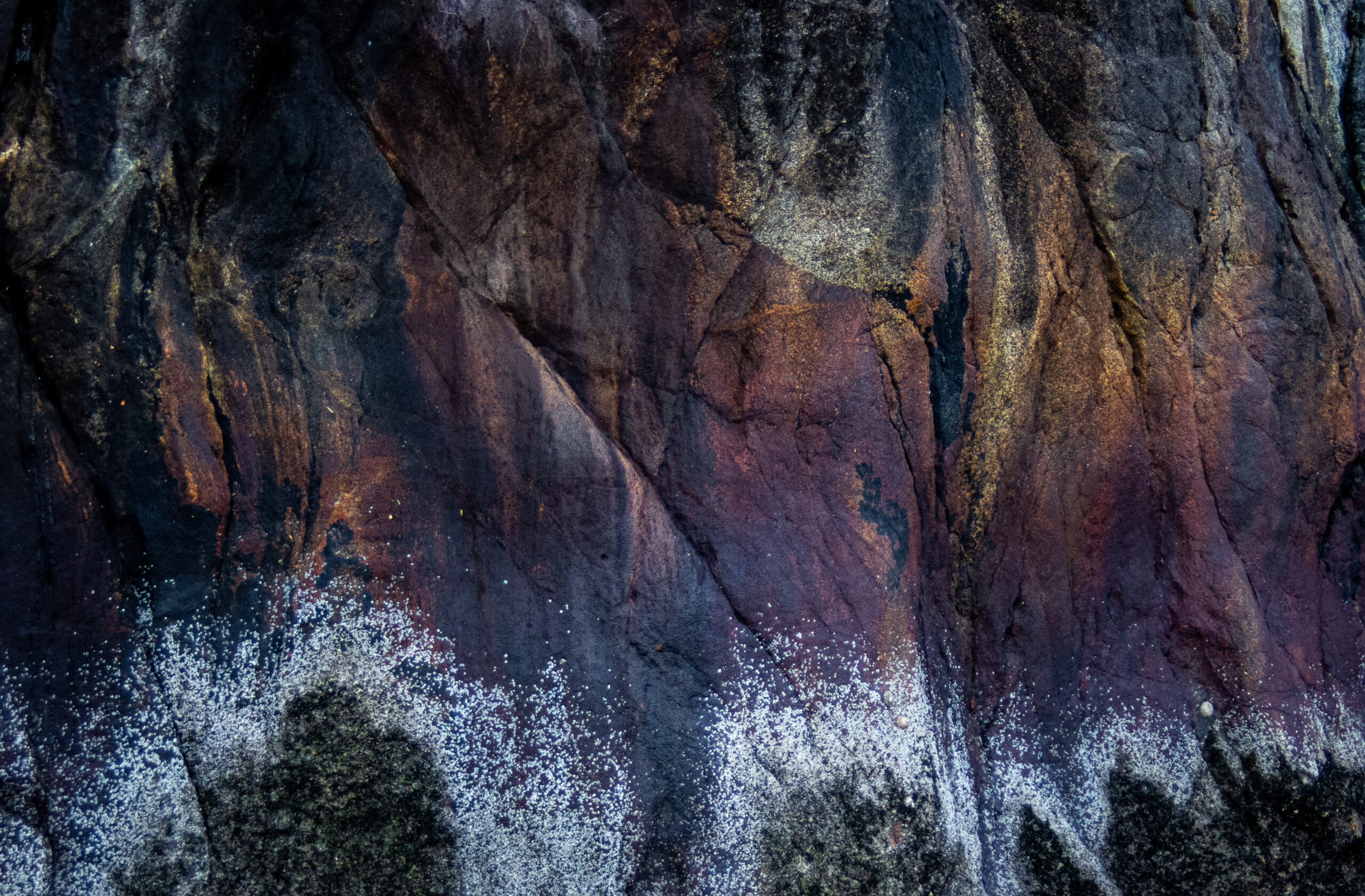
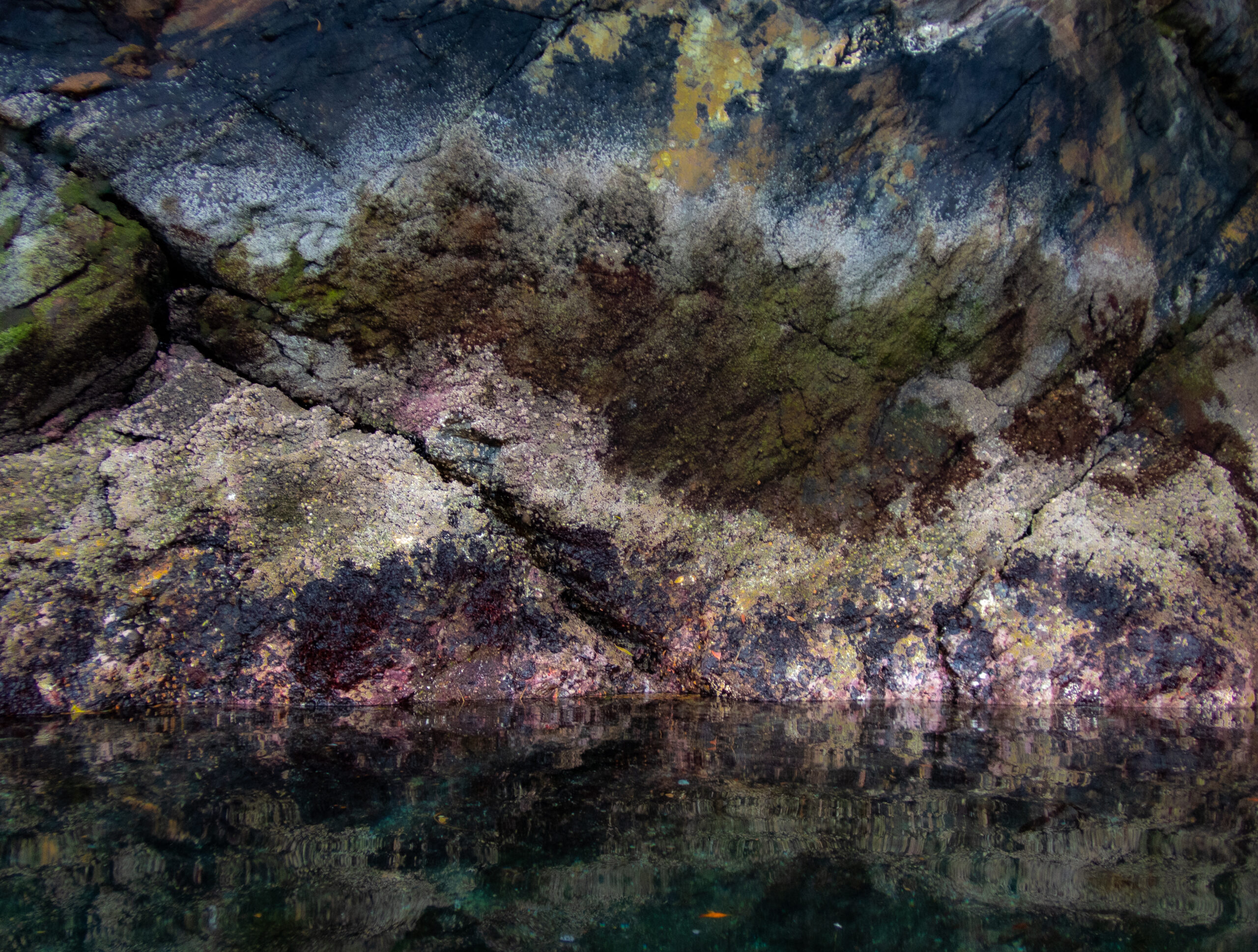
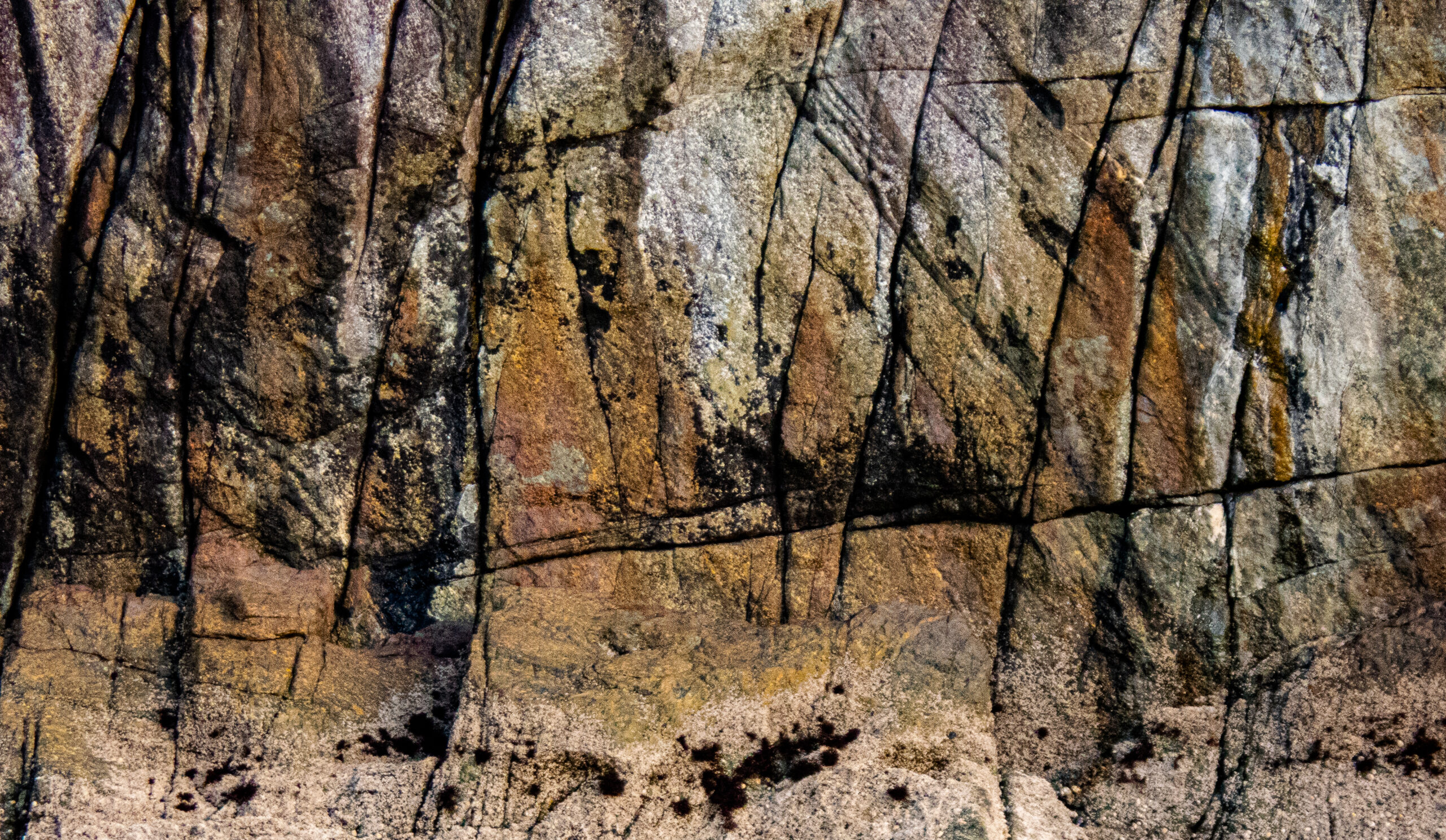
Tried to see this Chiton better, but the surge was quite strong and I really didn’t want to tip.Then I just got into the abstract of it. I could feel myself shift from trying to make something ‘clear’ to allowing it to be simply light and color.
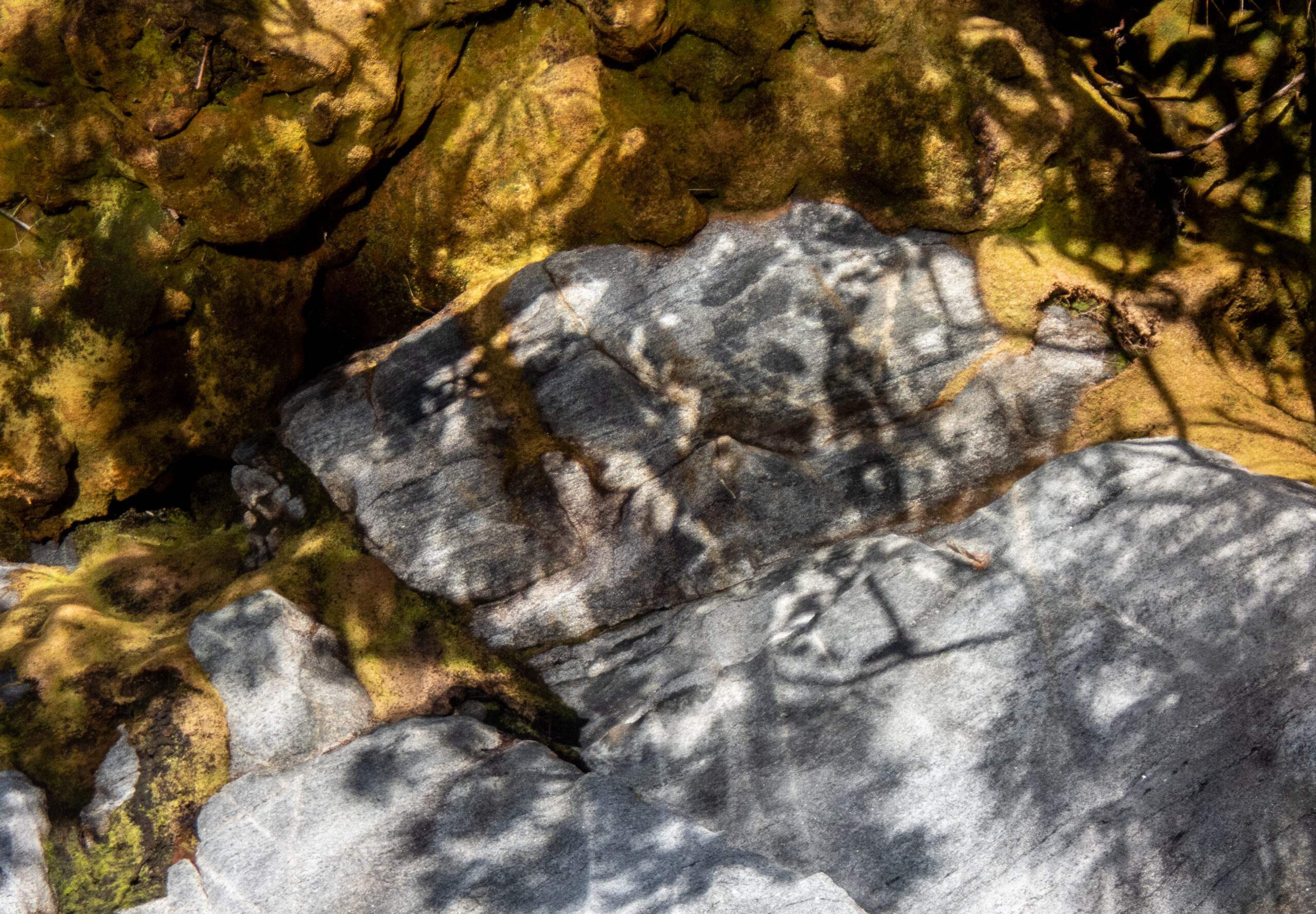
Shadow play.The ocean is miraculous!
One of my favorite pics. See the green sea worm?! (Going to look that up, too!)
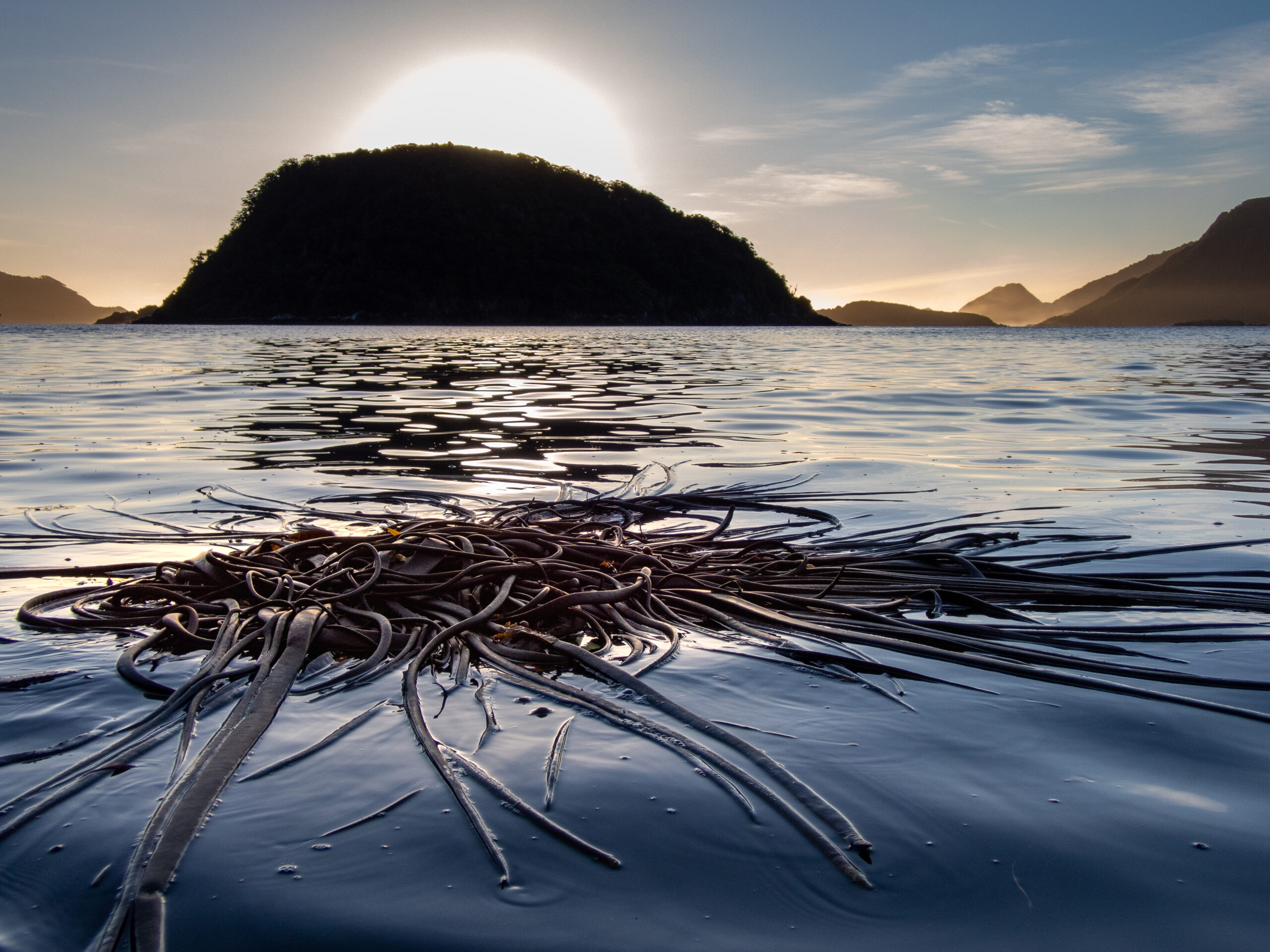
The water at sunset.Preparing to slip away from Stevens Cove, the birds regaled us with some riotous farewell songs! Dagg Sound, here we come!
Dusky is the longest and most extensive fiord in Fiordland at nearly 24 miles in length. Named ‘Dusky’ after Captain Cook’s evening sail by in 1770, and ‘Tamatea’ after the renown Māori explorer who spent much time there. He’s also known for the coining the longest name of a place near Hawke’s Bay ‘Taumatawhakatangihangakoauauotamateaturipukakapikimaungahoronukupokaiwhenuakitanatahu,’ so I’m glad I didn’t have to work that into our logbook! ~DS
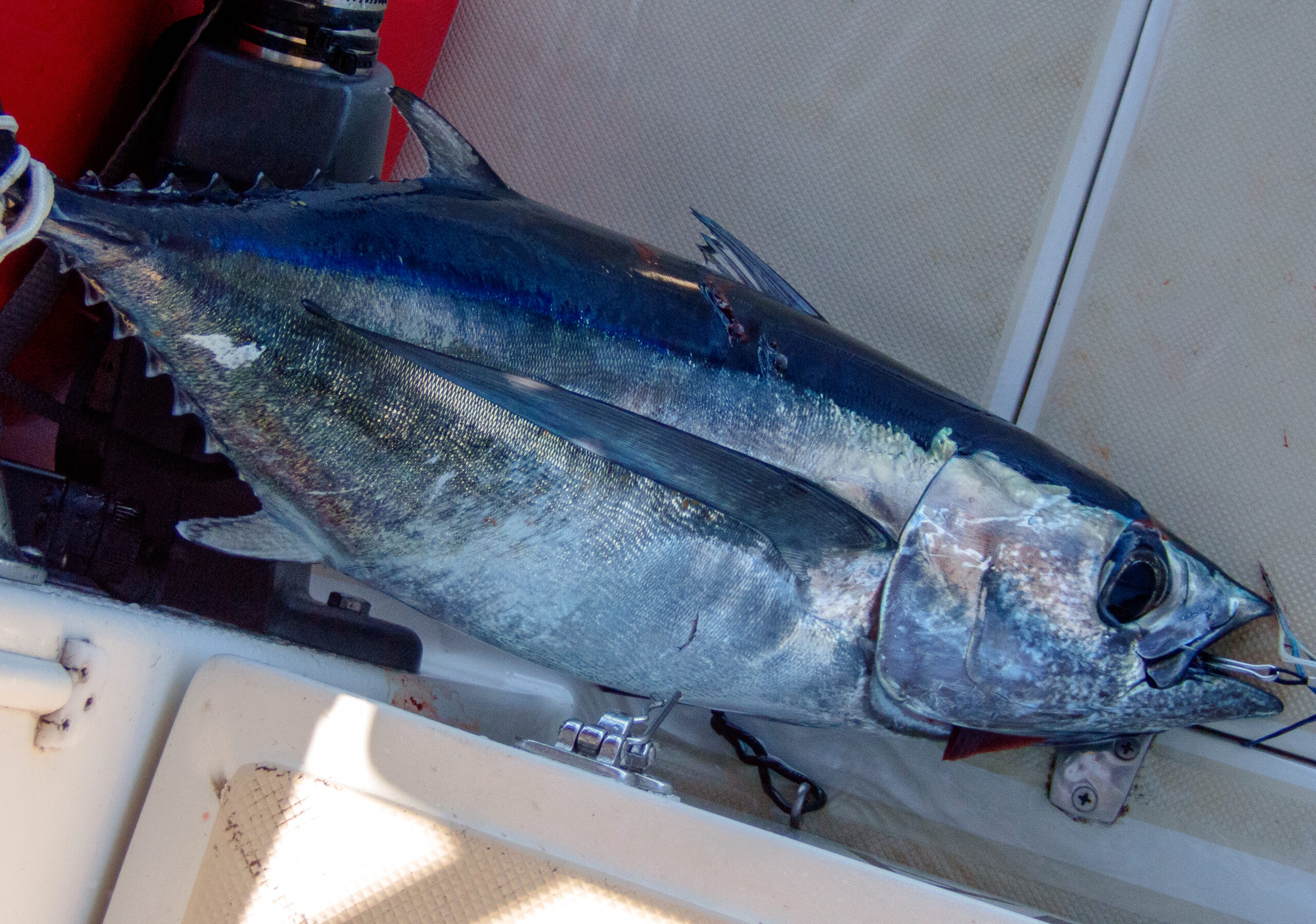
From ‘the outside,’ transiting open ocean between Preservation Inlet to Dusky/Tamatea Complex. The endless layers of blue …Sometimes the entrance to the fiord would be relatively narrow and the transitions could be tough depending on the conditions. We avoided a reef by taking a dishearteningly named shortcut, ‘Broke Adrift Passage,’ leaving Preservation.Thank you, Albacore, for being just the right size and feeding us.We wove our way back through the narrow twists and turns to find ourselves alone in this magical nook.
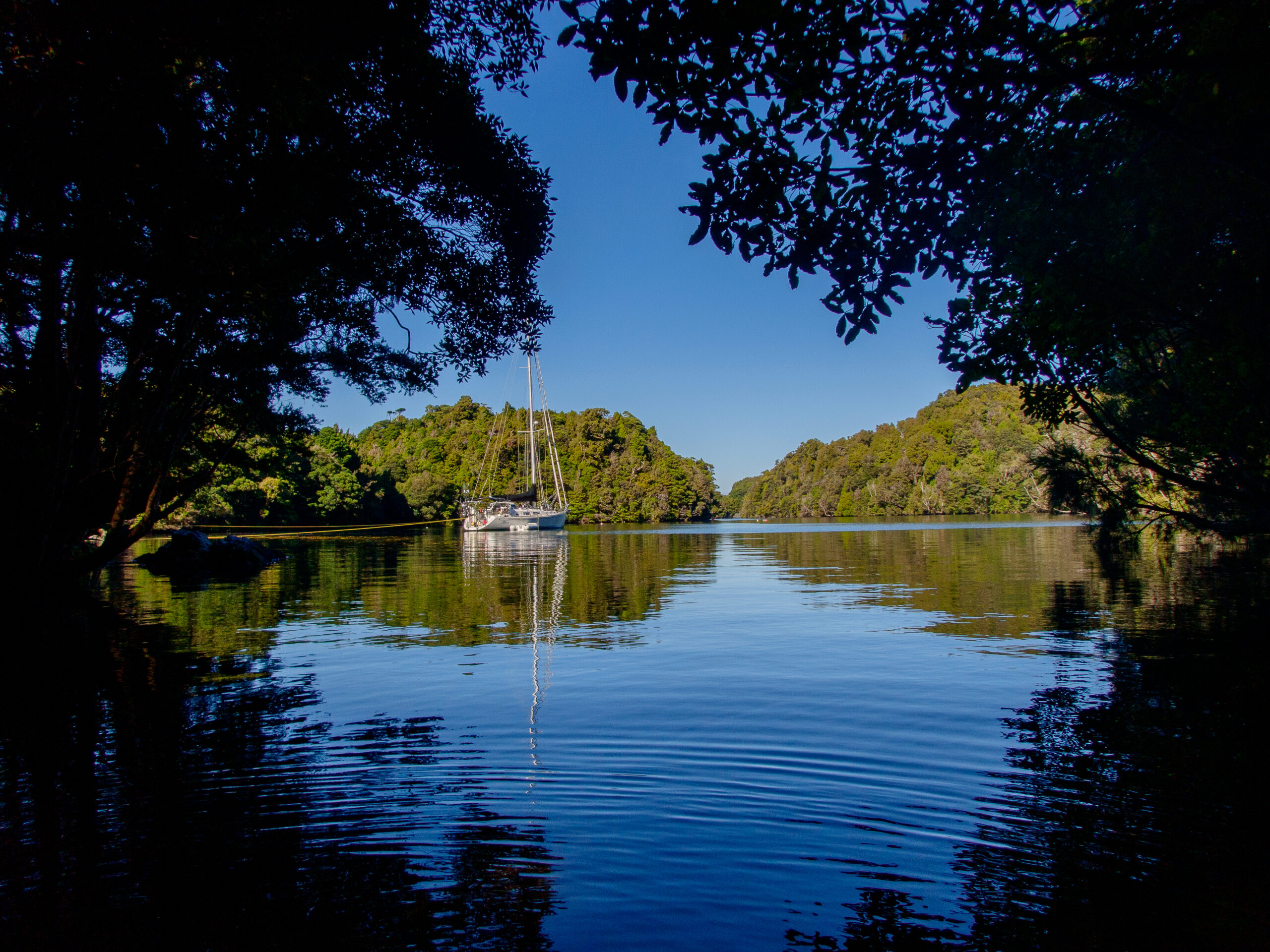
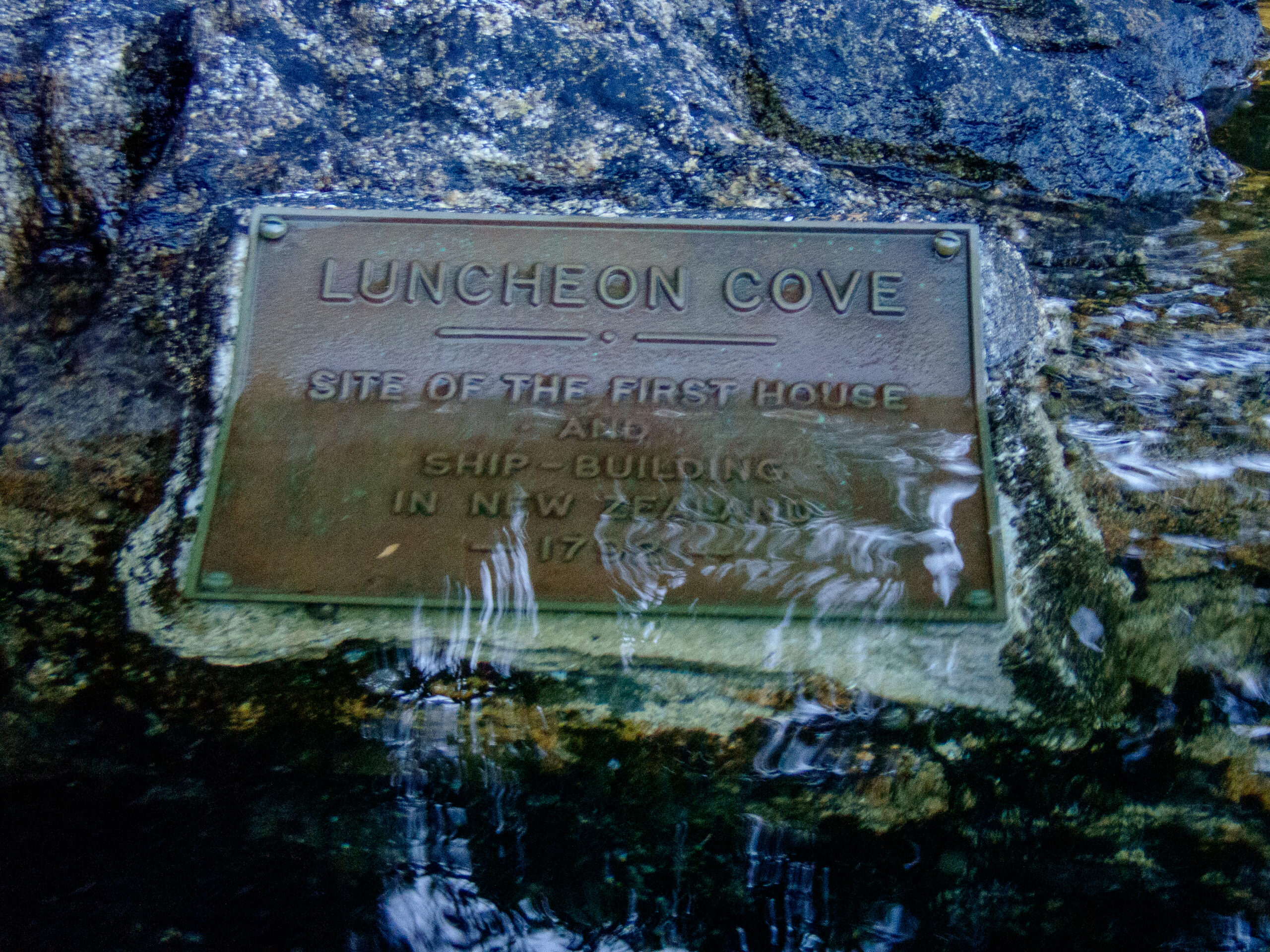
Inner Luncheon Cove on Anchor Island, Dusky Sound
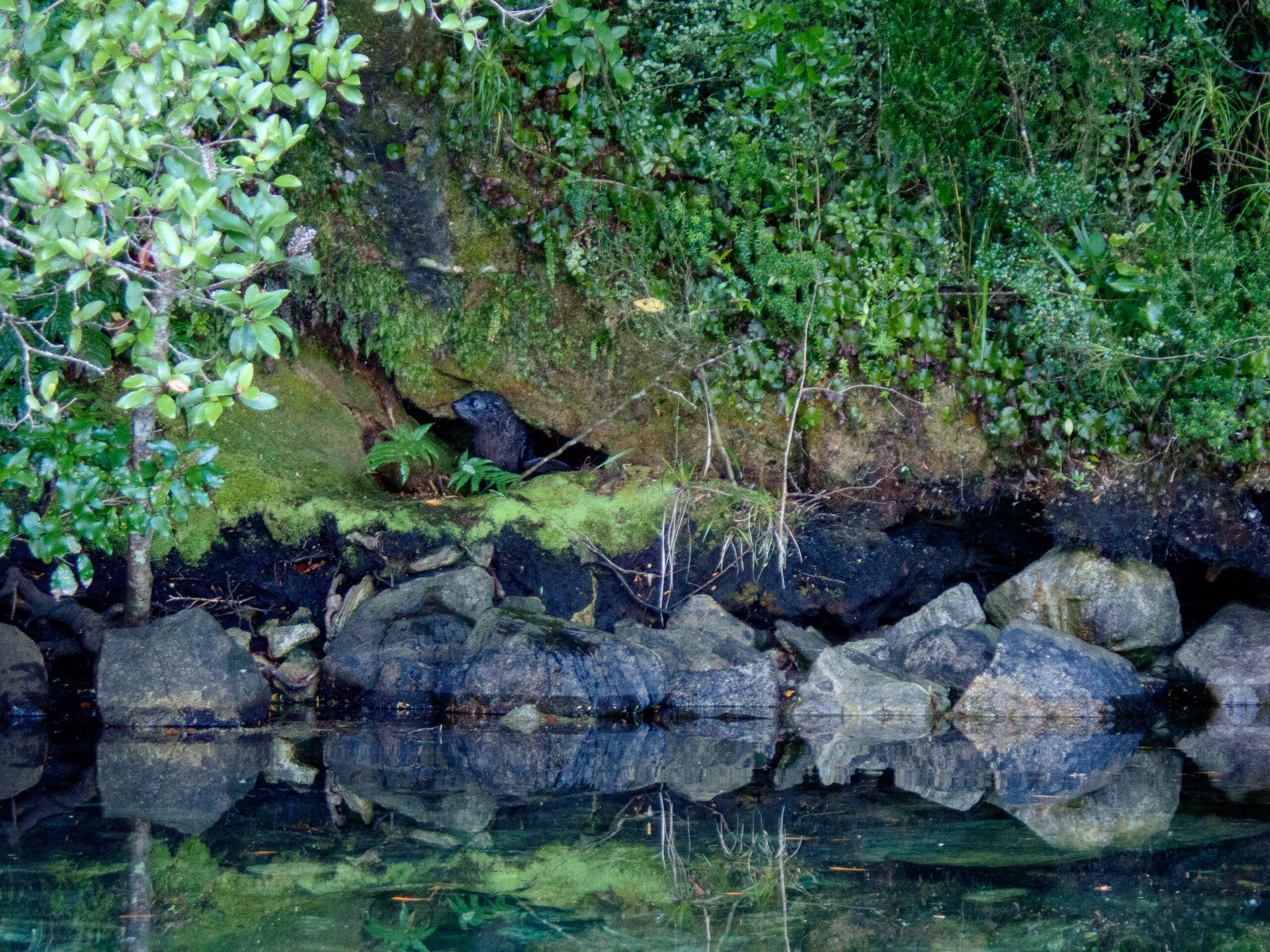
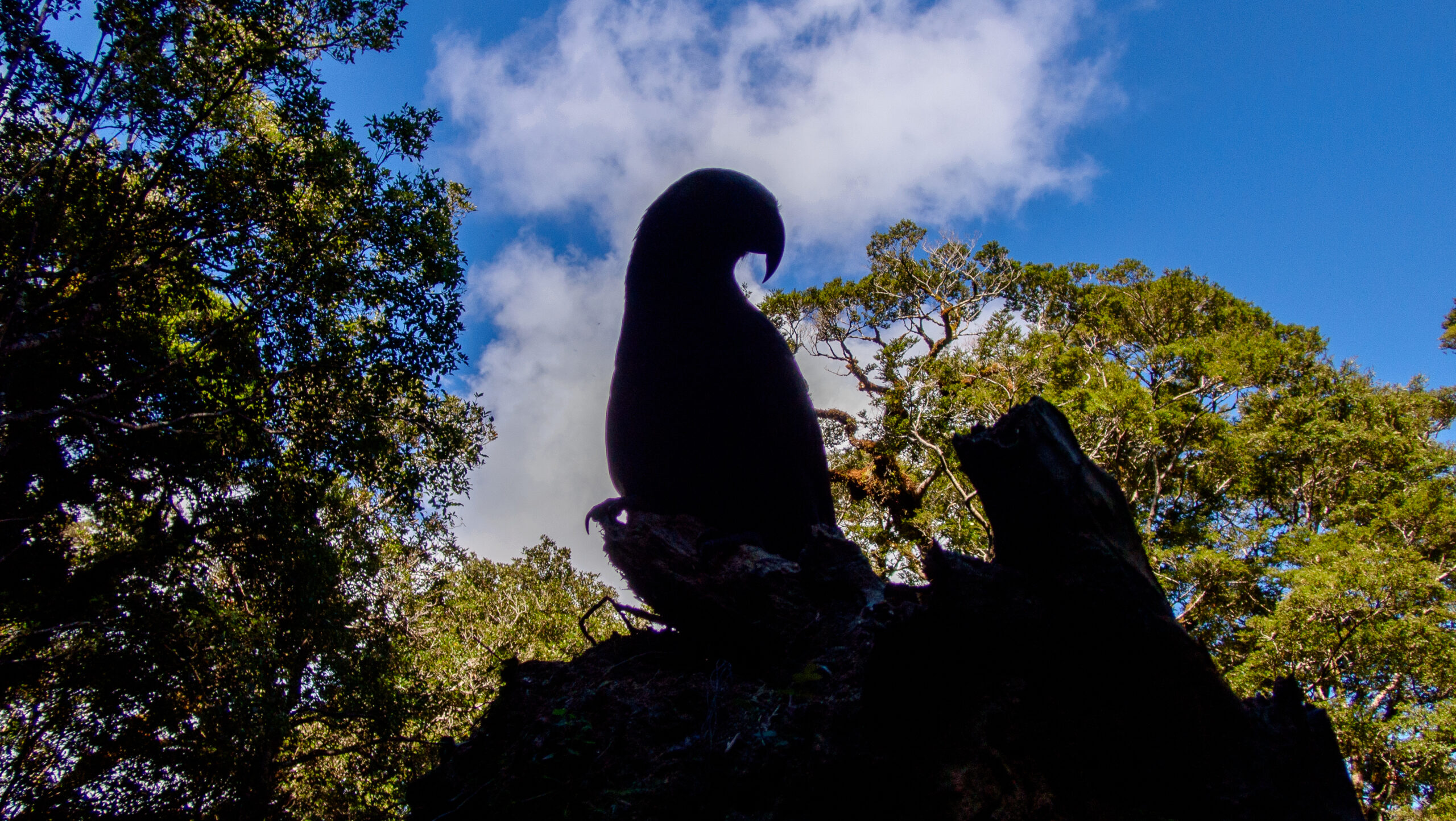
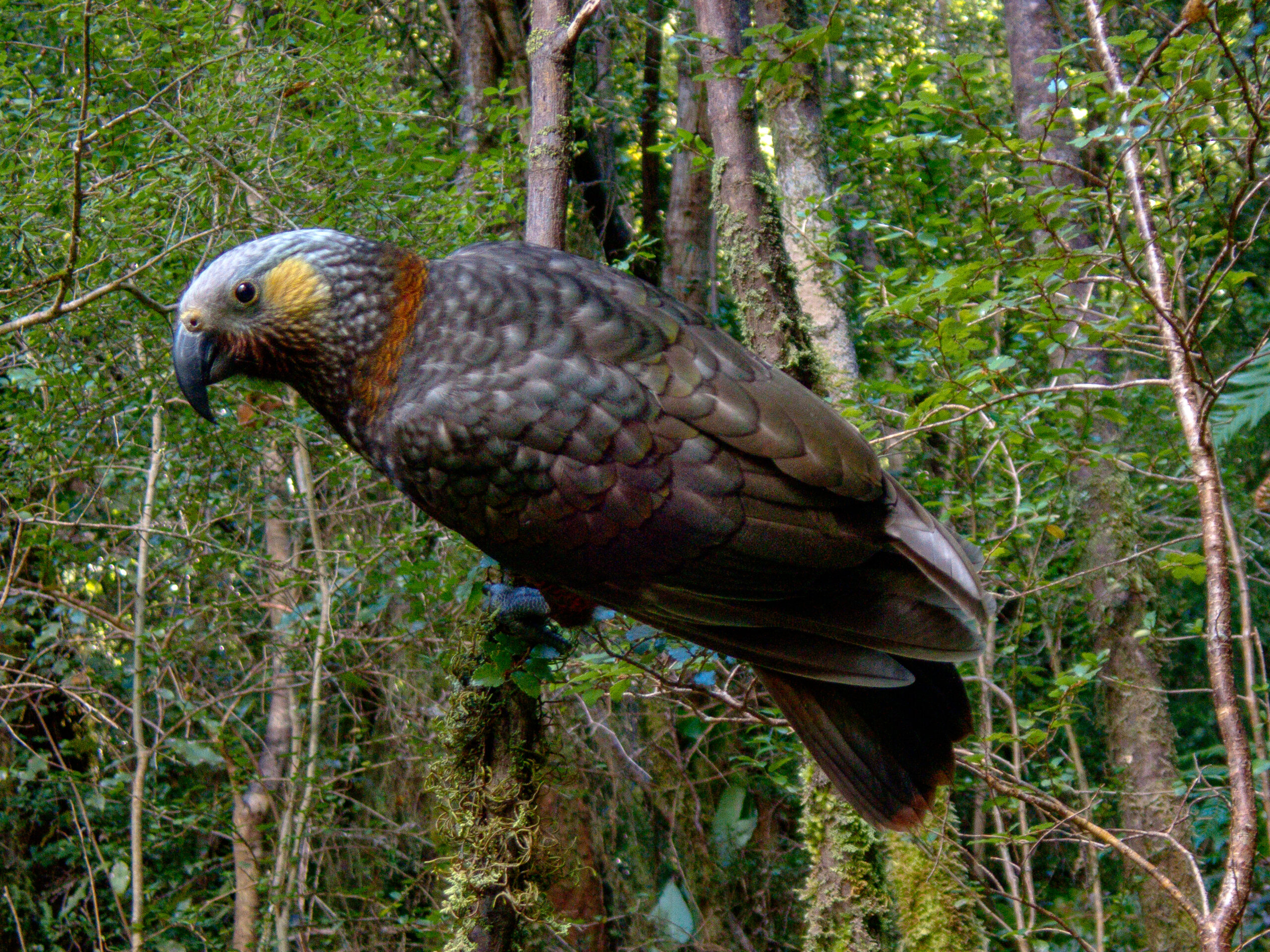
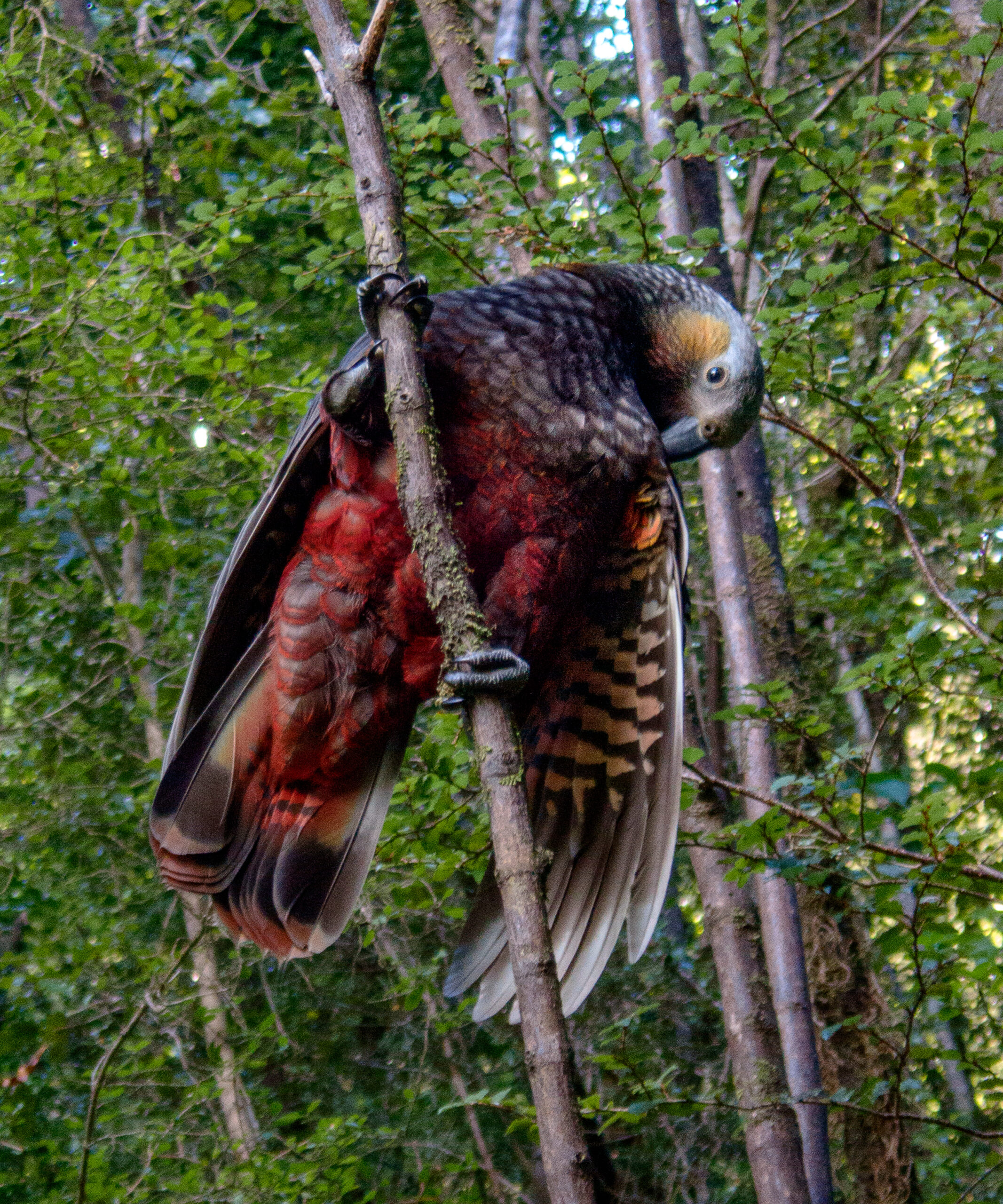
We are anchored in an 18th century naturalist’s illustration. The Kākā, subtly colored parrots, russet and carmine, gray and mossy green, chatter in mobs back and forth. Fur seals and their pups bawl and rumble along the densely wooded shore, draped on rocks, sunning just out of the vivid green tide, or hidden mysteriously in the forest. Rays and Broadnose Sevengill sharks patrol the shallows. Bellbirds chime and Wood Pigeons dive and soar in mating displays, wind whirring in their wings. The water is supernaturally still after the tumult and breaking swell of Broke Adrift Passage, and the long motor up the easing blue Pacific around Cape Providence. The scale of the world is abruptly more intimate. Captain Cook dined on crayfish here in 1773. He left behind a recipe for brewing beer from the bark of Rimu trees, molasses and yeast. The island is also predator free, and refuge to the rare ground parrot, the Kākāpō, once thought to be extinct – rediscovered in Port Pegasus, Stewart Island by Rodney Russ, a sailor/explorer we met in Christchurch.
A chance to sit on the bow and meditate outside, to the constant music of birds, “Here and now boys, here and now.”
The dearth of sandflies and still air made for a pleasant barbecue, cooking up fillets of the Albacore tuna we caught on our way into Dusky.
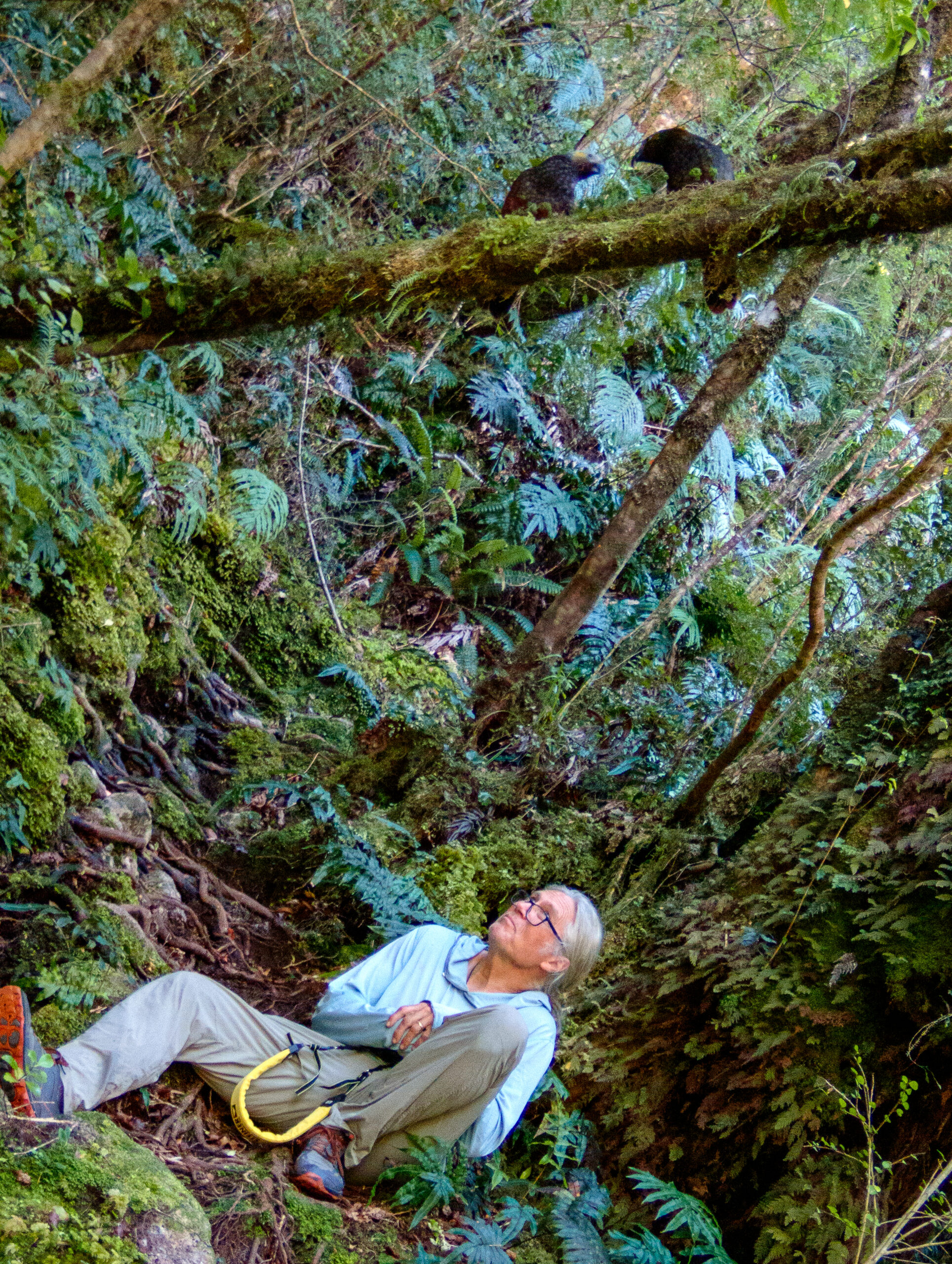
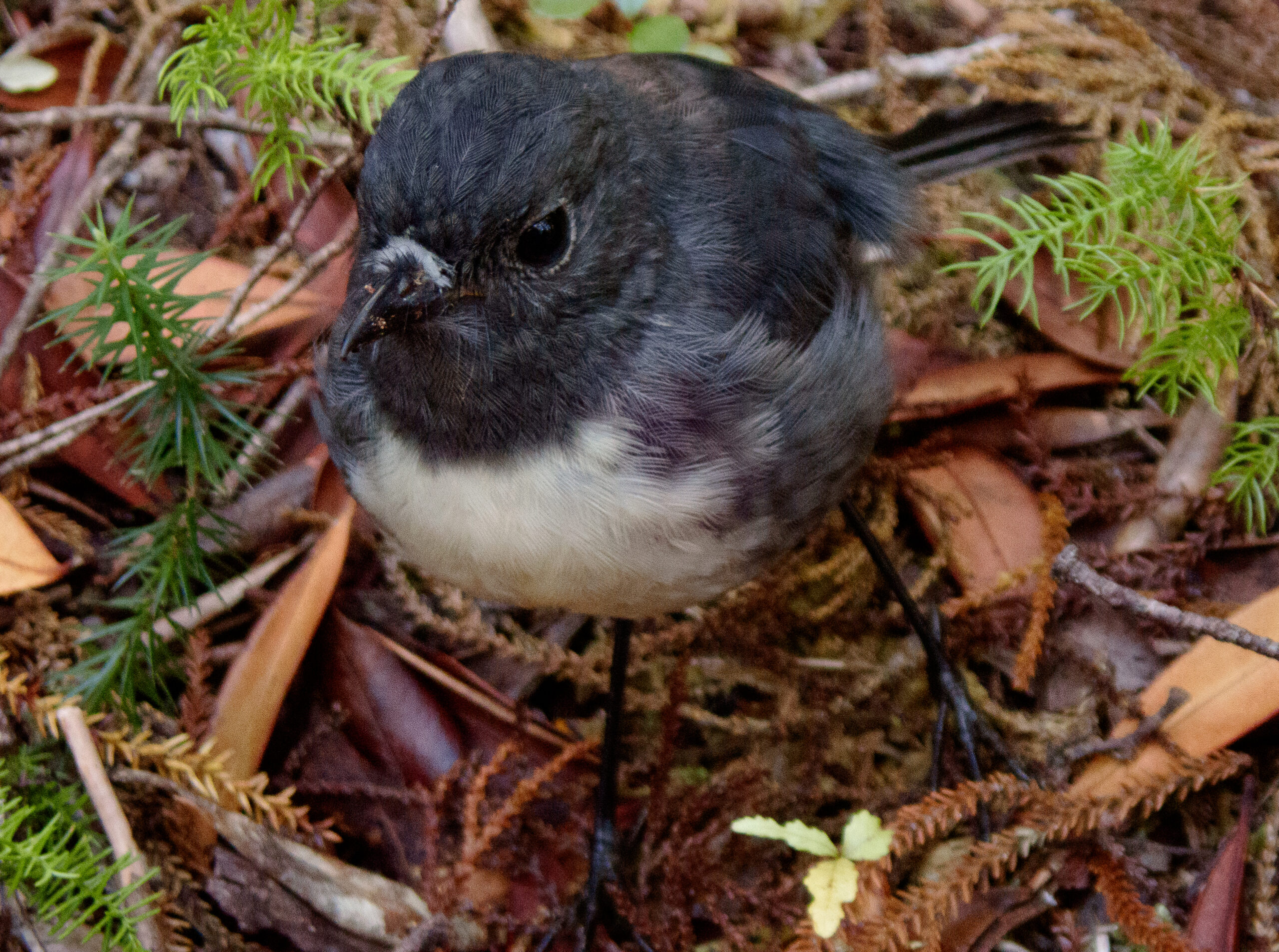
The trails on Anchor Island are named and well marked, though oddly, do not seem to clearly indicate which of the many paths lead to the lake (just a kilometer or two away). We weren’t very far along the “wrong” trail when a mob of Kaka settled noisly into the trees over our heads. We sat still and waited and they ventured closer and closer, sailing back and forth, gnawing at the branches with their strong beaks and then landed a few feet away, turning their heads upside down for a curious closer look. A South Island Robin/Kakaruai (re-introduced in 2002) also hopped over to say hello, as they do, finally summoning the courage to peck at the bottom of my shoe. ~MS
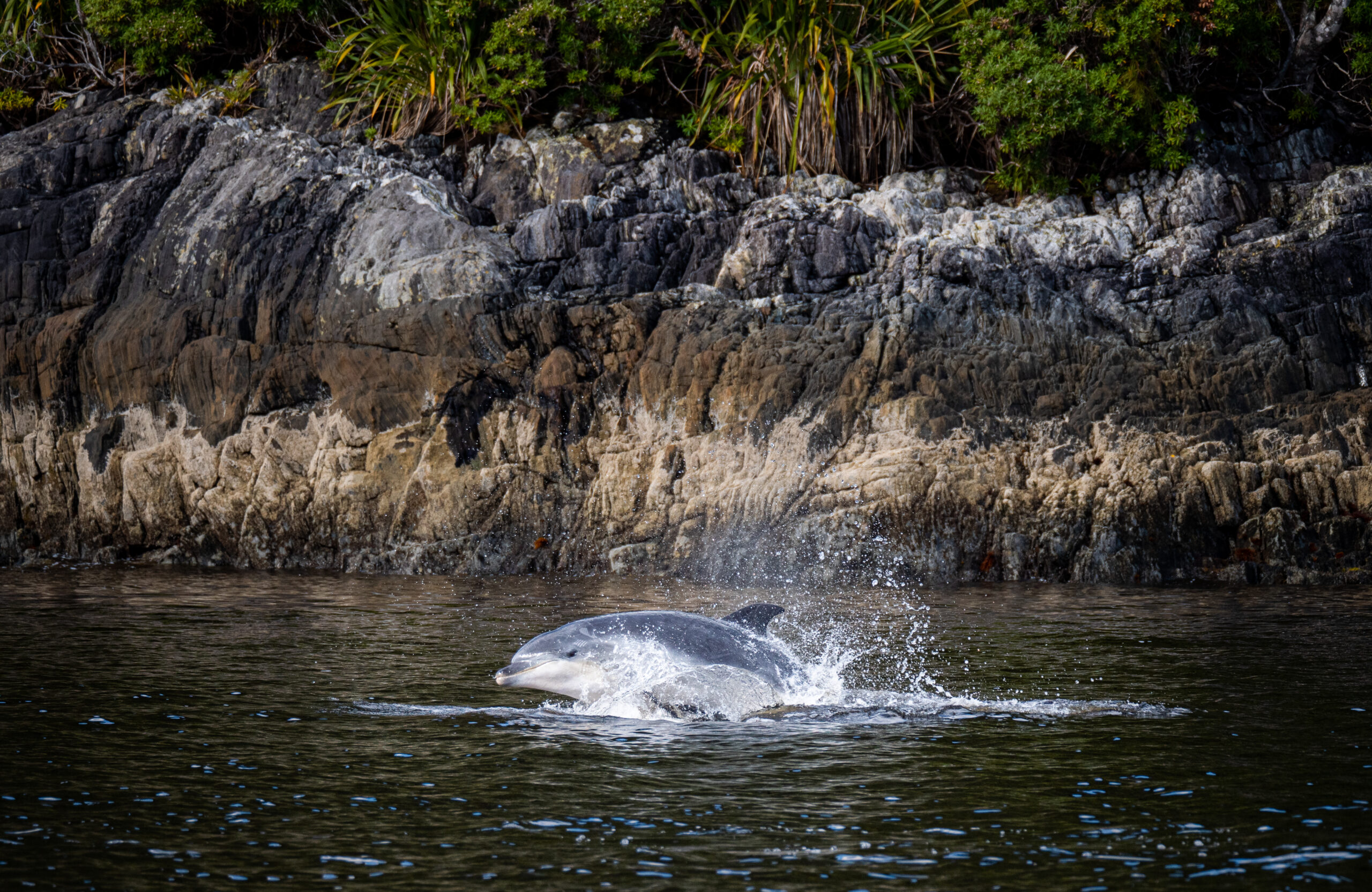
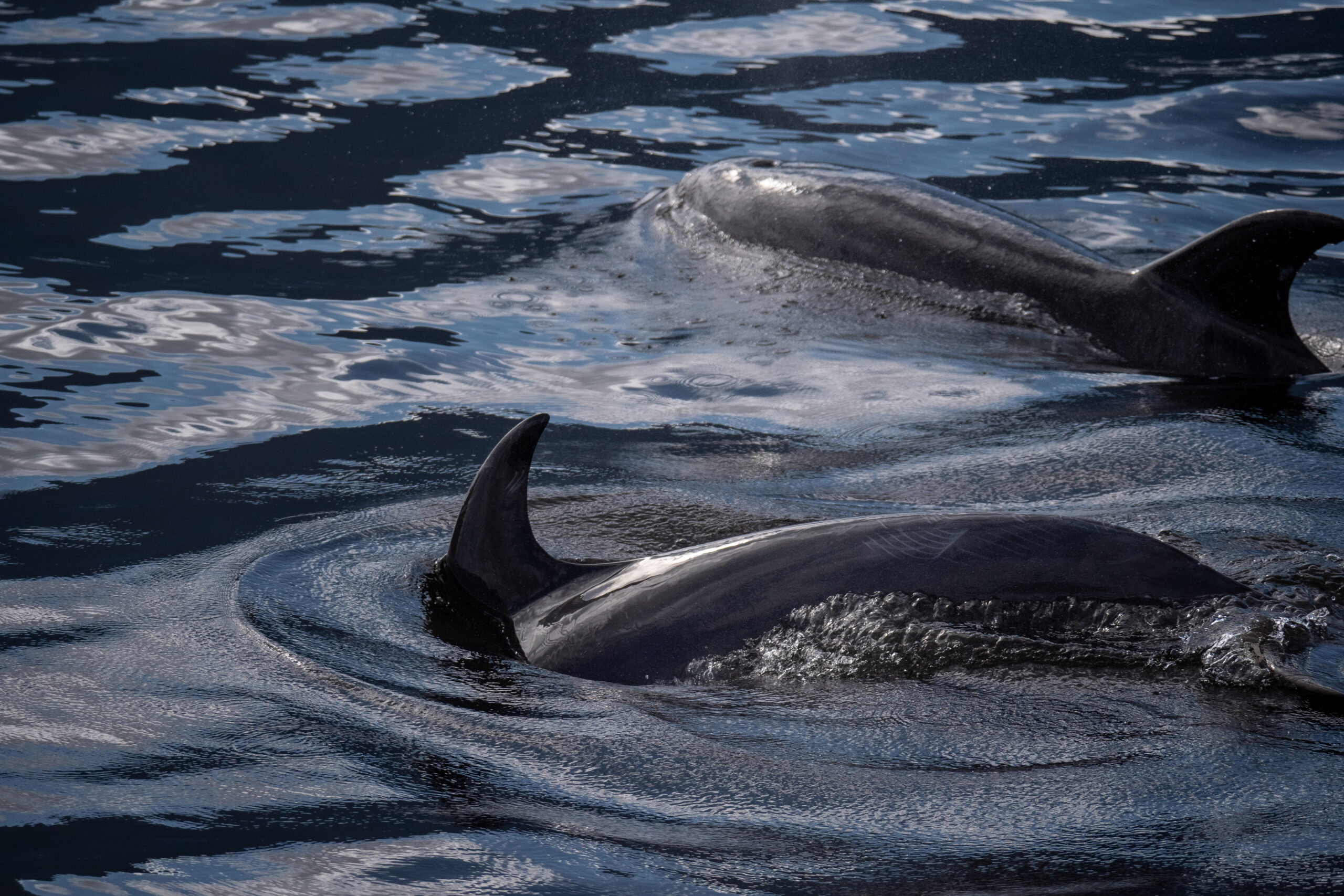
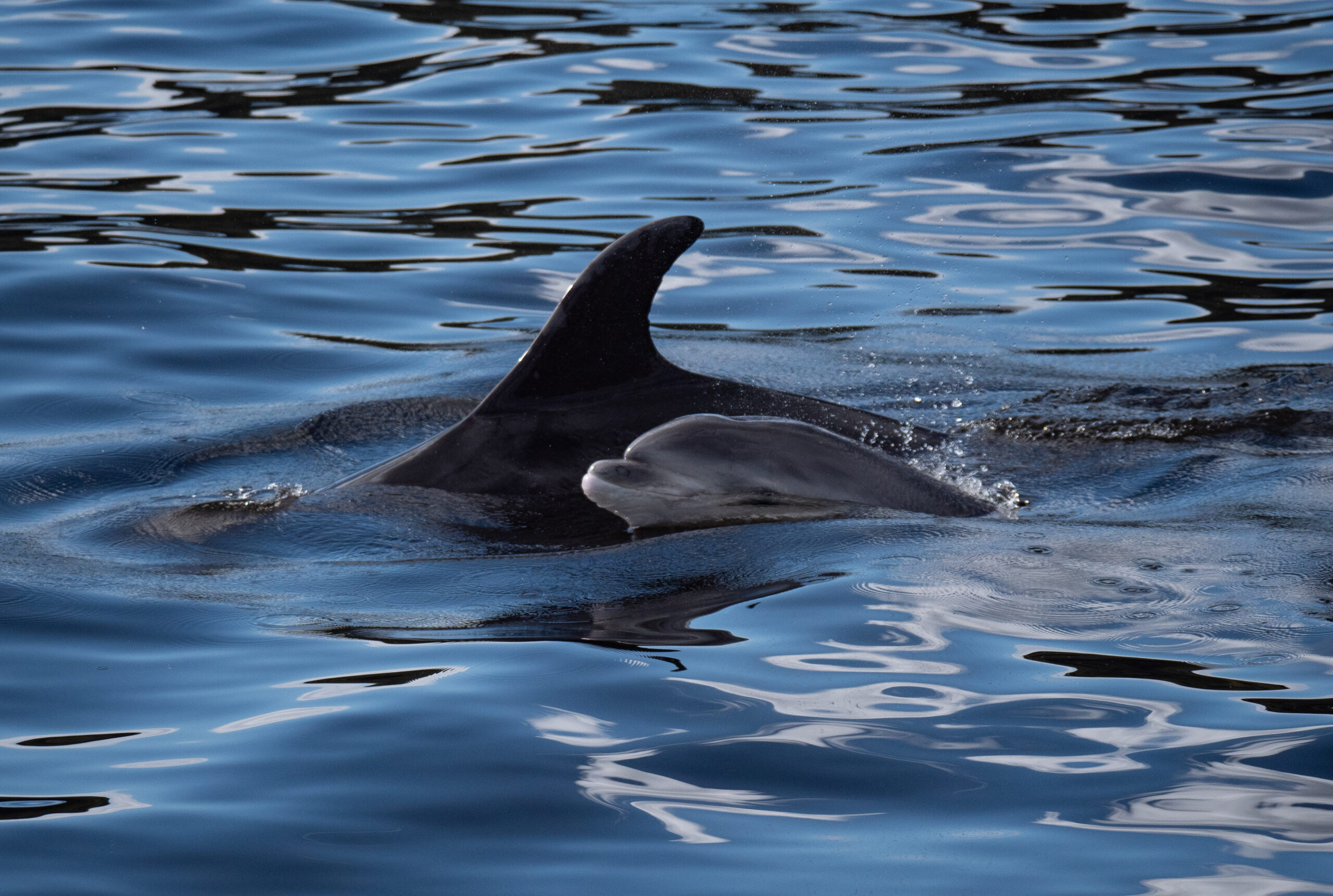
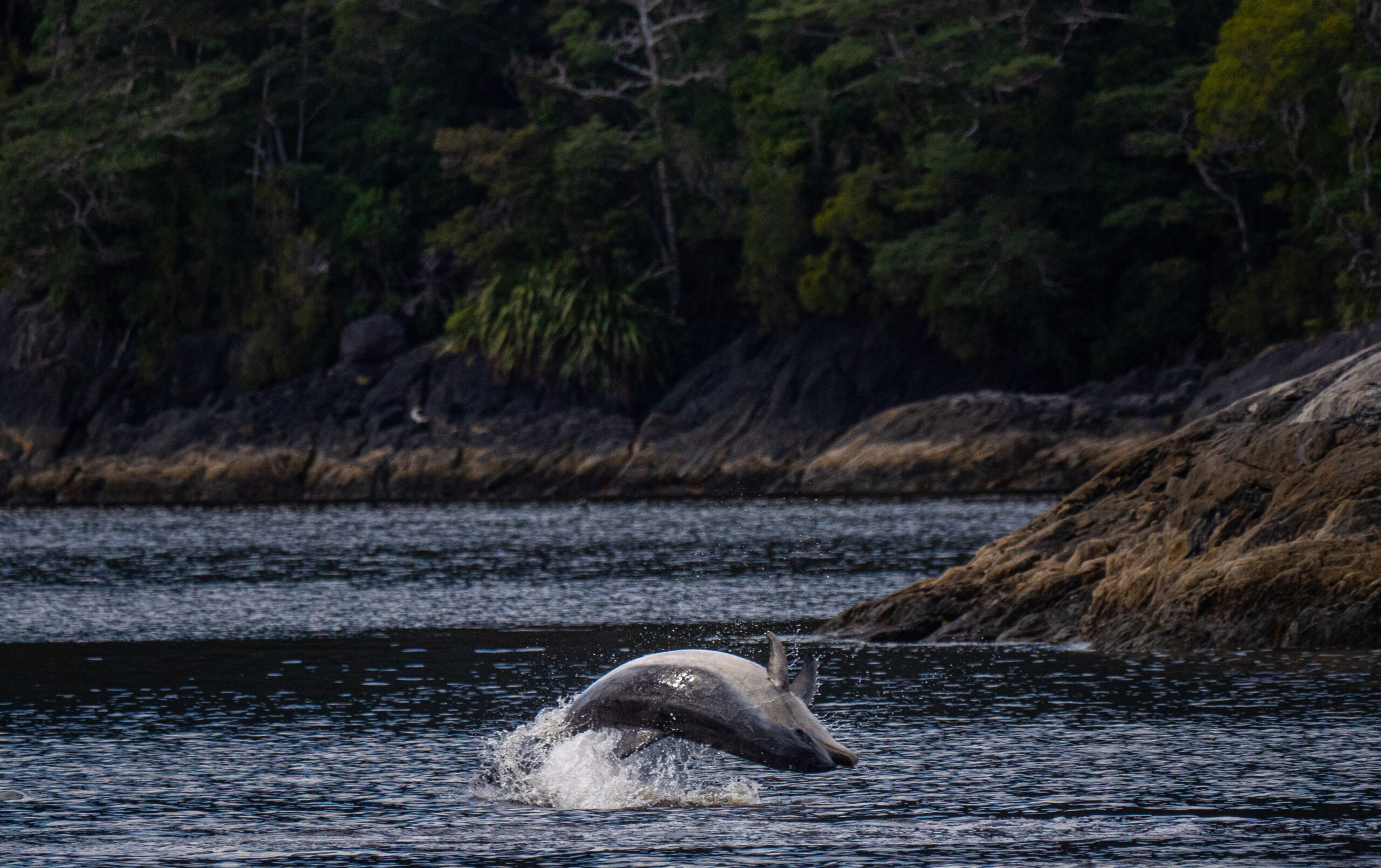
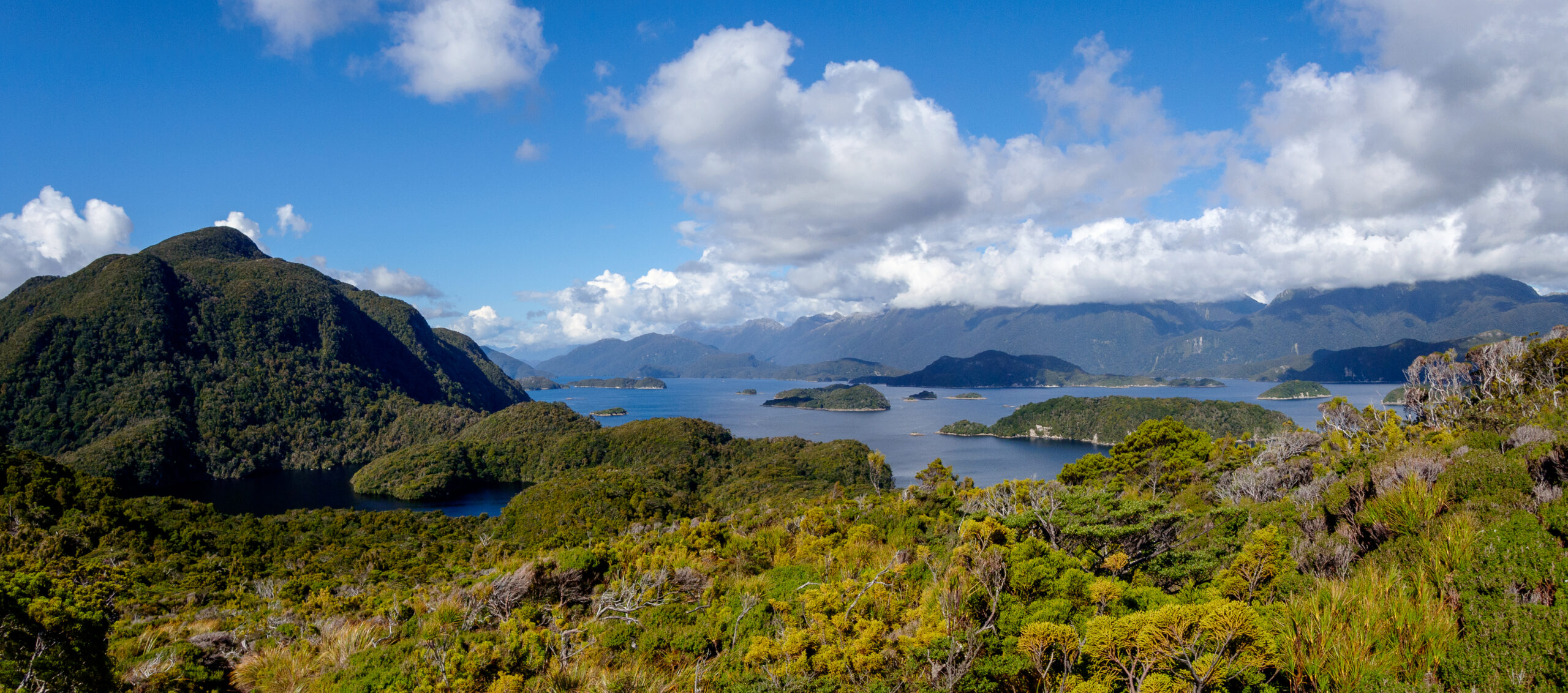
Itty bitty baby fur seal curious about my kayak.Some facts. Thanks Southland Historical Committee!We’d have to consider the sizable tides when tying up Namo (our dinghy).Until this encounter, we’d only seen Kākā from a distance.A connection was made.Gorgeous underbellies!Such a treat!South Island Robins follow hikers, nibbling on what gets stirred up underfoot and generally being joyful.Still haven’t figured out what these are called – besides COOL!!!The view from atop Anchor Island and the freshwater lake in the interior.Coulda stayed here forever!Dusky (Bottlenose) Dolphins bringing GLEE with every splash!!!And smiles …
Fanny Cove, Dusky Sound
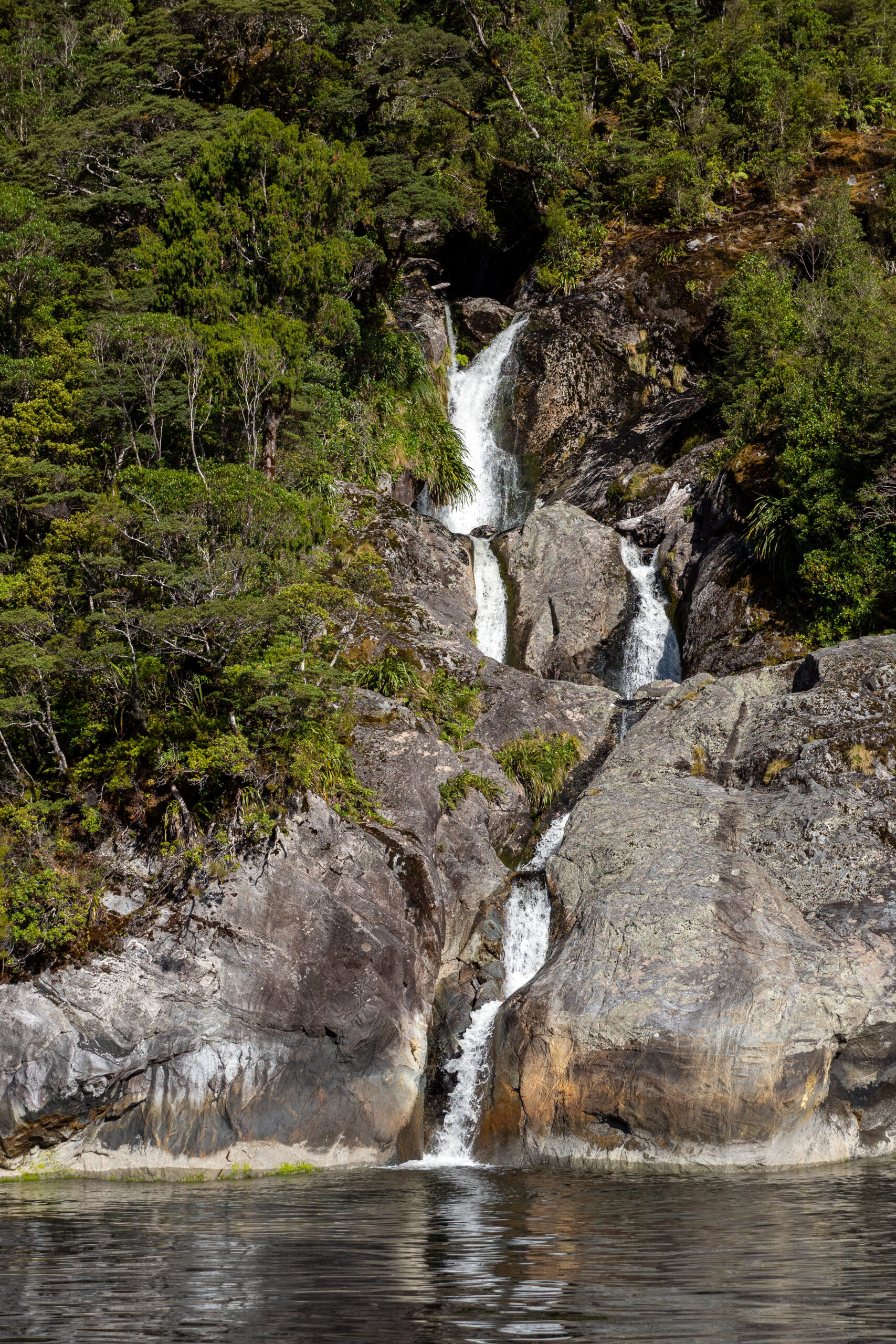
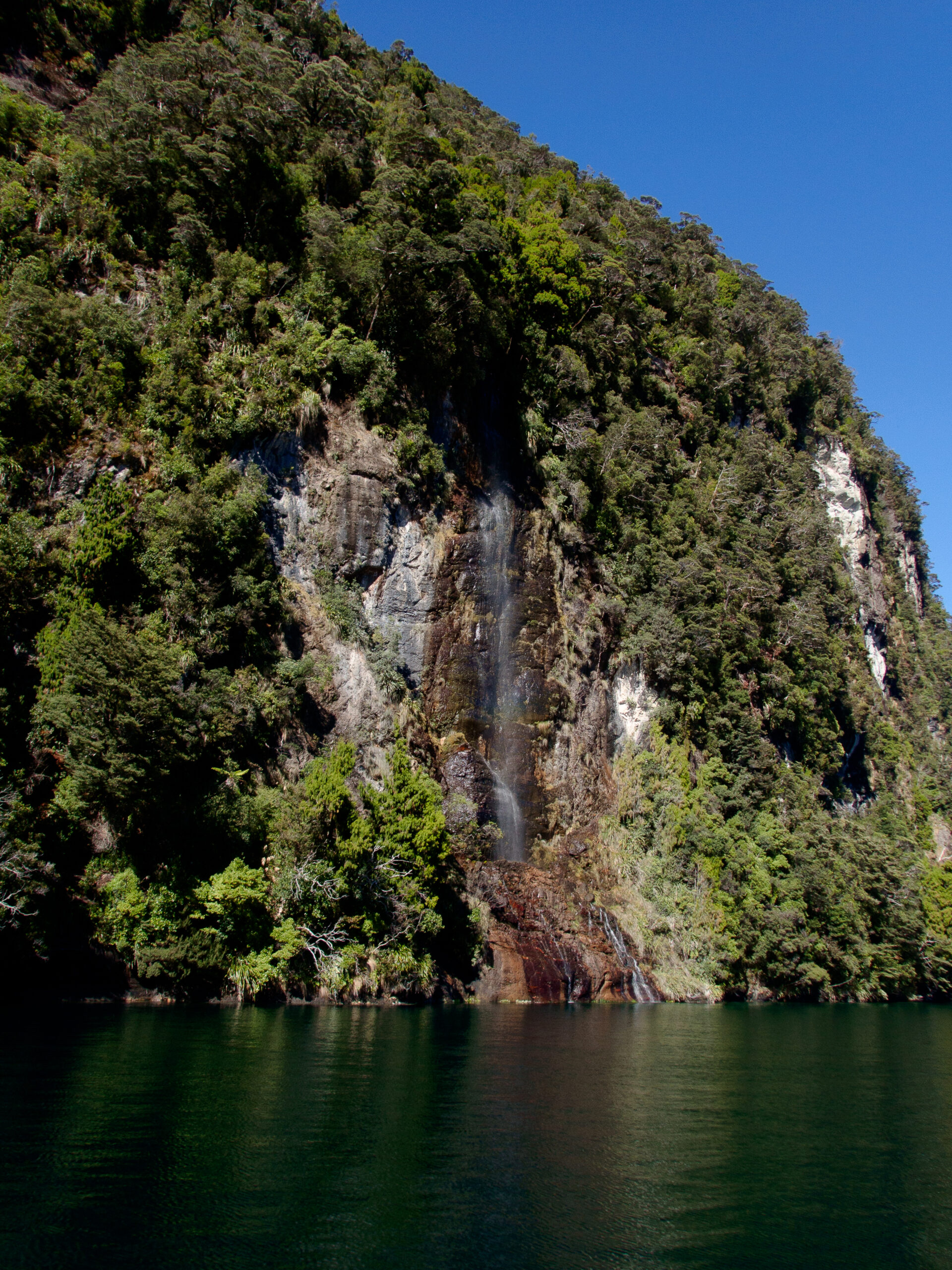
It was still when we arrived after the move from Anchor Island. Along the way we enjoyed the company of some of Dusky Sound’s residence Bottlenose dolphins, and stopped for a closer look at a waterfall, a hundred feet of depth under Allora’s keel a boat length or less from shore. We ate some bread that Diana pulled from the oven just as we entered the broad cove and thought about our plan for anchoring. The forecast was for twenty-five to thirty knots of northerly on the outside (a little less than the full Pusygar gale which prevails three hundred days out of a year), but all the models showed much less fifteen miles inland form the open sea. Still with the wind and williwas, we didn’t really know what we might get. The dramatic cove with the huge granite wall of Perpendicular Peak at the head is much bigger than in looks on the chart. The opposite of intimate Luncheon cove. We dropped in 60 feet of water and laid out all of our 100 meters of chain at a shallow angle along the shoreline, still sitting in thirty feet of water but with rocky shallows close by. Our first line would not really hold us off, and we ran a second as the wind came up and it was clear that the topography of cove seemed to twist the north wind with just a hint of west in it to solid west, coming at Allora from the port side and pushing us toward shore. The cove is big enough for a reasonable bit of fetch too, but the water on the east side is just too deep. Already worn out from setting the first two lines we debated putting out a second anchor from our midships cleat, but we worried about dealing with picking it back up if things got rough and we hand to move. We finally settled on putting out a third shore line using forty feet of chain to tie around a rock and pulled that up tight. By then the wind was pushing us with gusts of 18 knots. It went against every sailor instinct to be holding off a lee shore this way, but as long as our lines held it would take some mighty force indeed to drag 100 meters of chain and an anchor uphill. A power boat came in, and poked around on the east side and dropped anchor along the east side which we thought was too deep and we briefly wondered if we’d read the situation wrong (having no advice in our books about where to anchor in this broad open cove). But then they sent a dinghy over and we recognized the driver as he approached. Junate! from Hokey Pokey, a catamaran we knew from Papeete and the Gambier! We shared a brief excited catch-up about the last three years before he headed back. They’d also decided that it was too deep to anchor on the more protected east side and were zooming off (as only a power boat may) to find a mooring in another cove, much too far away for us to make before dark. And we were left alone with the wind, checking our shorelines and worrying how much more the night would bring. Just before dark the wind gusted to the mid twenties and Allora settled back about fifteen feet closer to shore than she had been. Our starboard shoreline went momentarily slack and the depth rose to twenty five feet. It began to rain.We donned foulies and went on deck ready to take more drastic action if it turned out that our anchor was actually not holding. We tightened up the breast line chained to the rock to pull us out into deeper water, and checked the GPS. We finally decided that the low tide had allowed some slack in our chain which the gusts shook out and we were holding fine. We made sure the dishes were away and everything was ship shape for the night, just in case, and then the wind quit completely, the rain settled in gently. In the middle of the night we woke up to an amazing stillness, just the finest pitter patter of rain. Light from a still nearly full moon softly lit the stunning granite faces that guard the entrance to the cove and the fine rain softened their reflection in the still water. It felt like a big reassuring landscape hug for a wonderful, still, uneventful night of sleep. ~MS
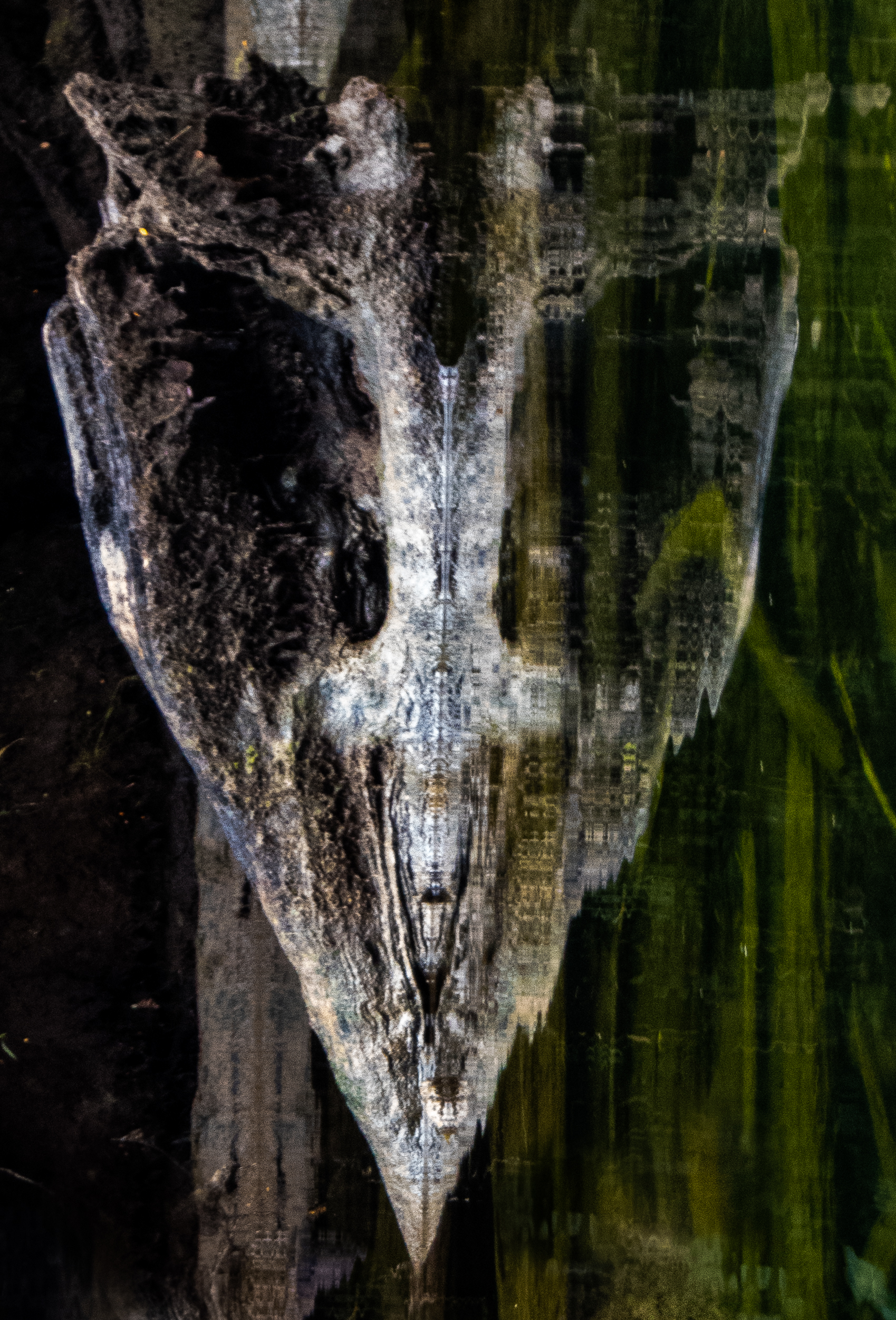
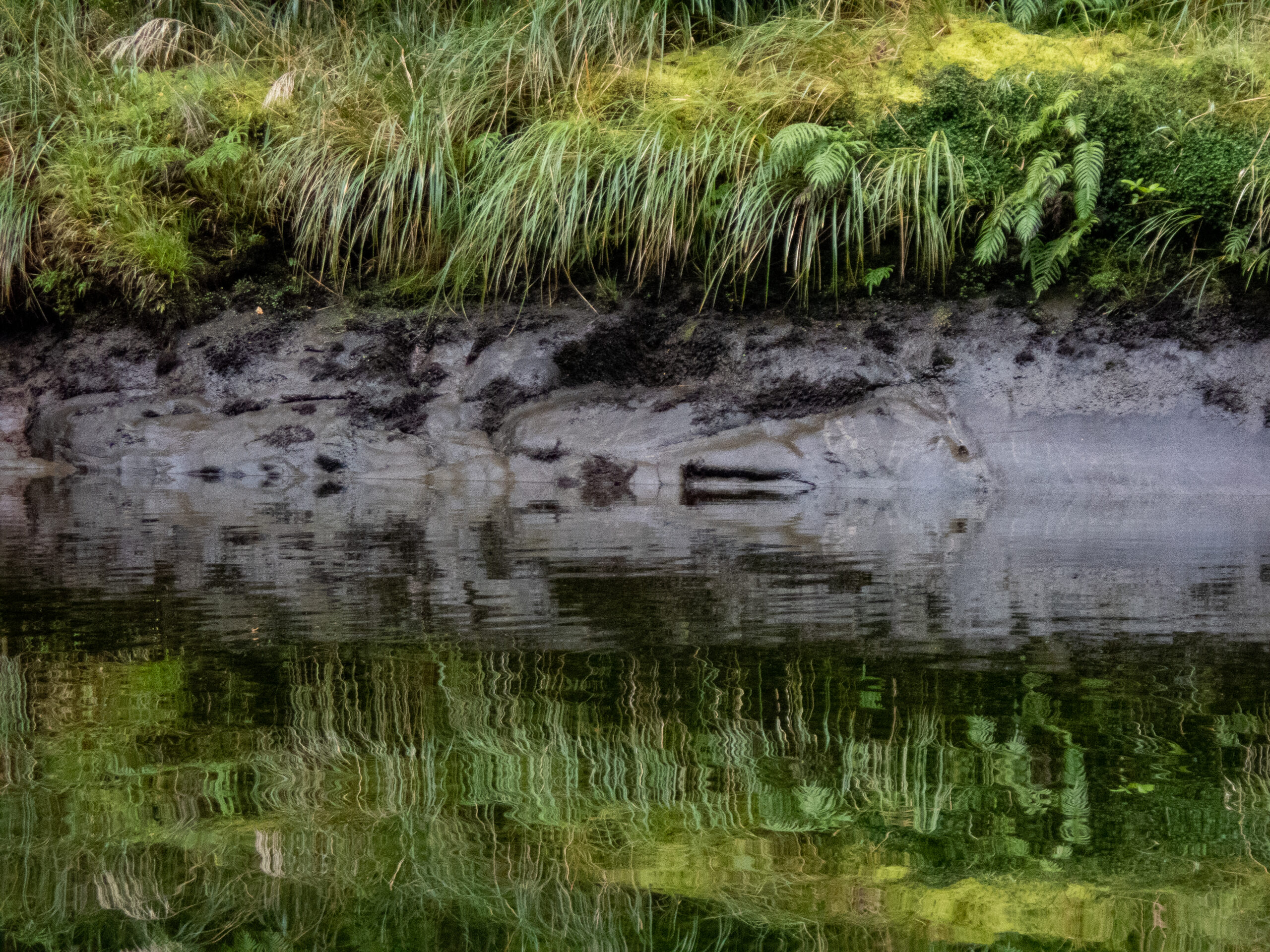
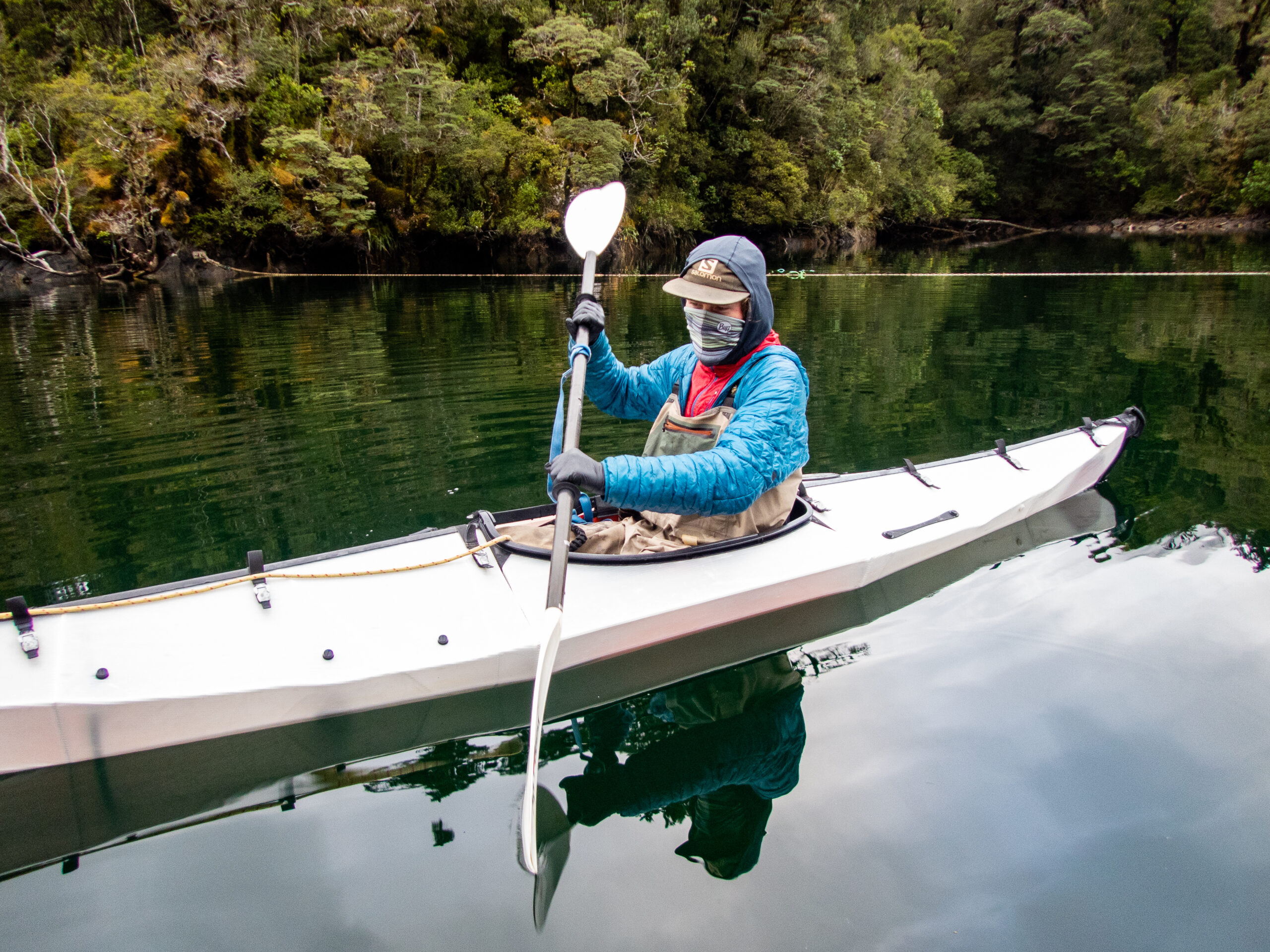
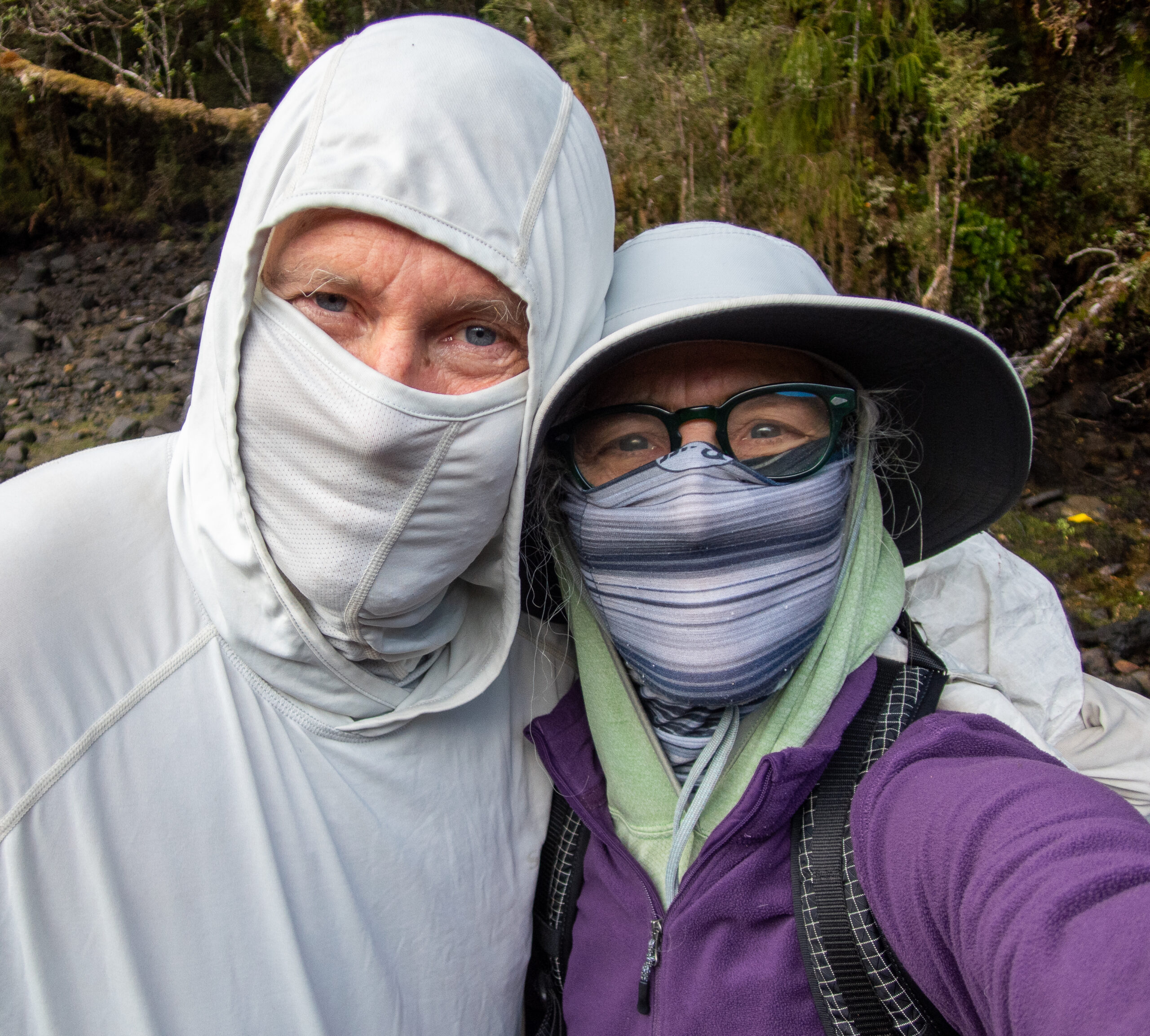
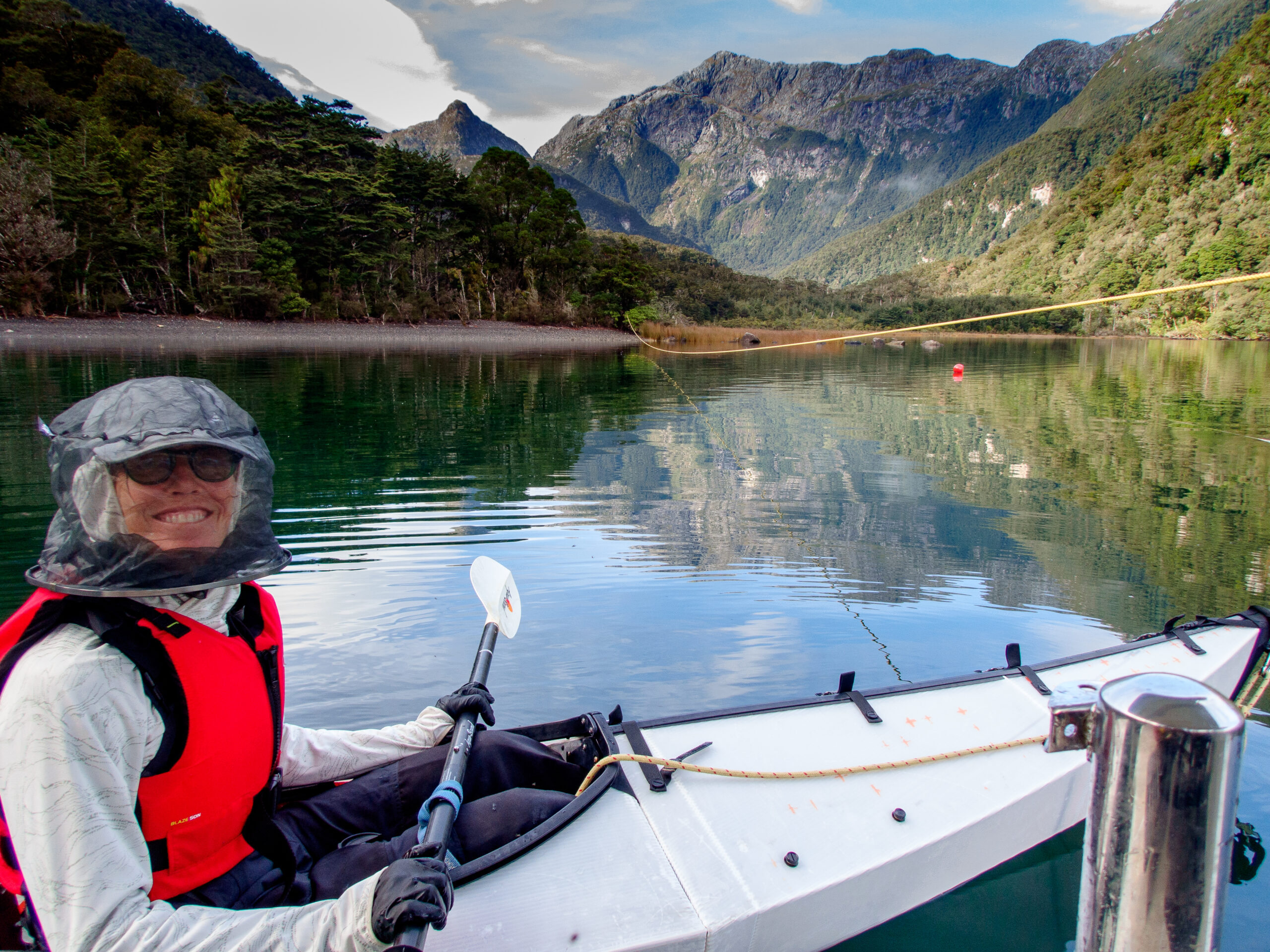
We could motor over and get super close to shore with Allora because of the steep drop offs/depths.Couldn’t resist. Dropped the kayak while Marcus held Allora just off shore. The force of the water was strong enough that I couldn’t swish under it like I’d imagined.This is one frame of one spot in one fiord. Think about the scale and magnitude and impenetrability of this wilderness area?!!I kept seeing an Animé character in this one!Fanny Bay: Choosing the exact whereabouts of where we’d be about!It’s so exciting to add a whole (reflection) dimension to your visual field.After 7 years, my Oru kayak is on its’ last adventure (I was sitting in a fair amount of water!), but boy did we get about! (Me here in full dork garb for sandfly avoidance.)There are more where this came from! I had a blast cruising along the water’s edge and finding snippets to savor.There were heaps of these backlit webs, but no spiders to be seen?
Special spot, Fanny Bay.
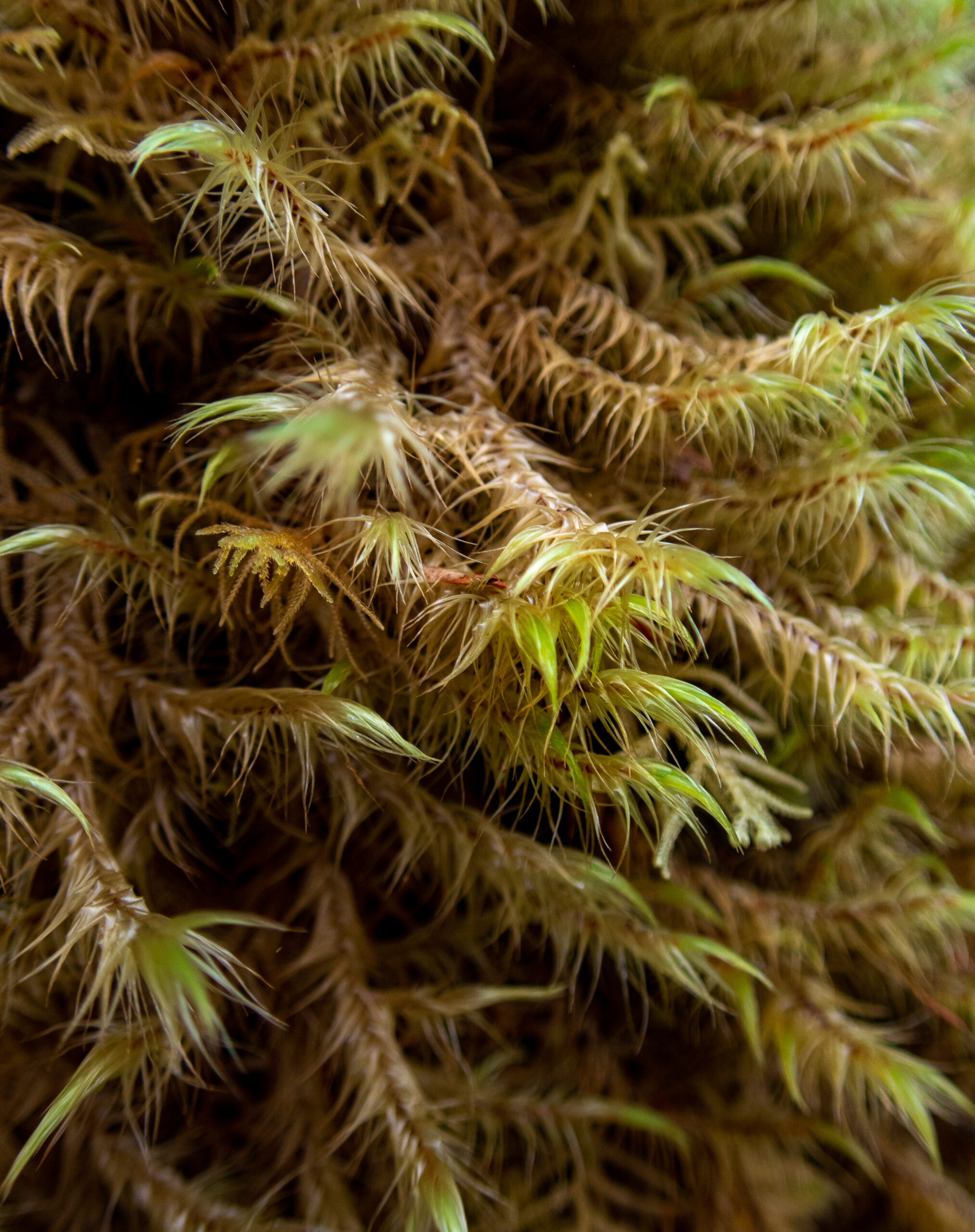
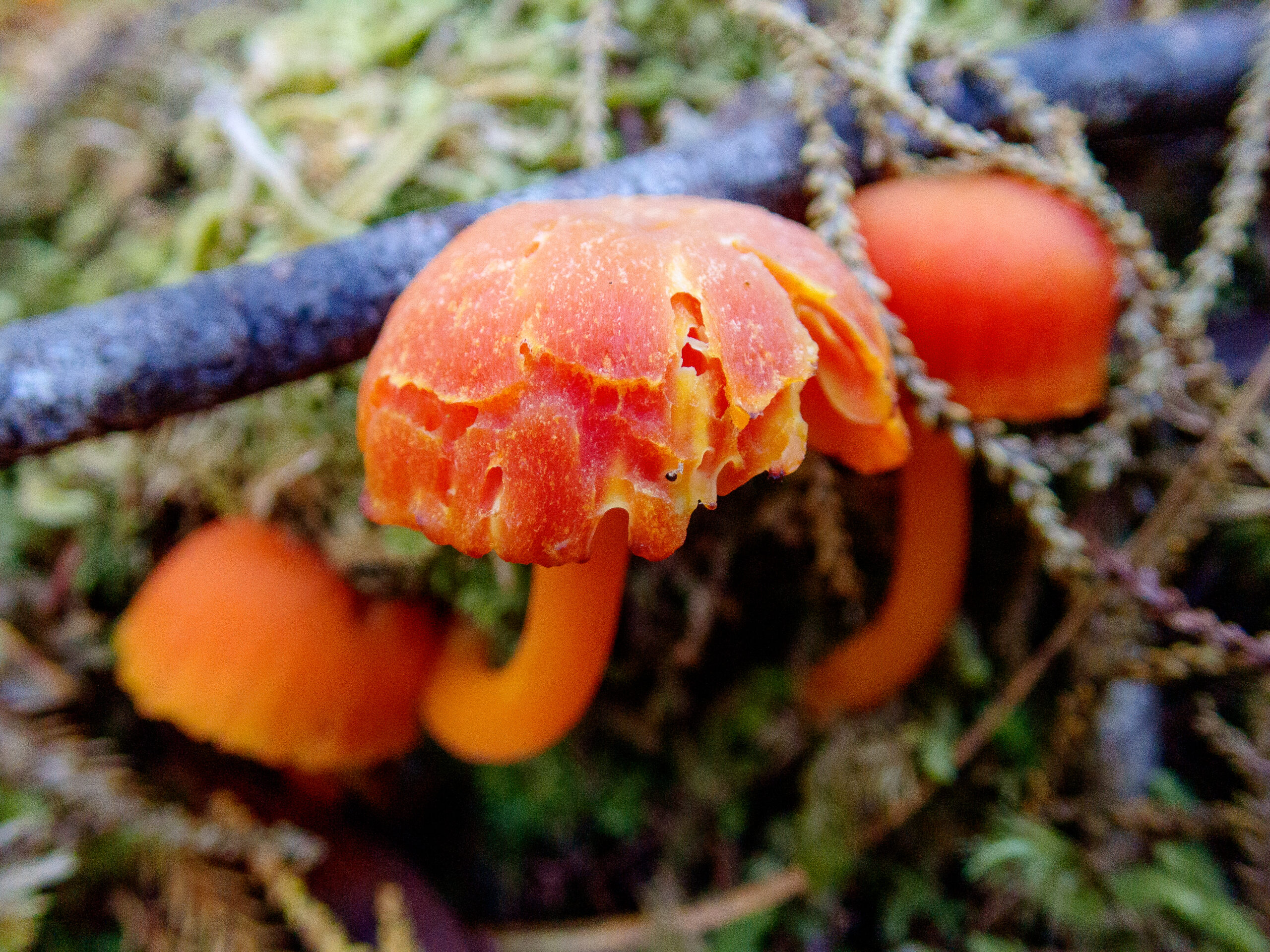
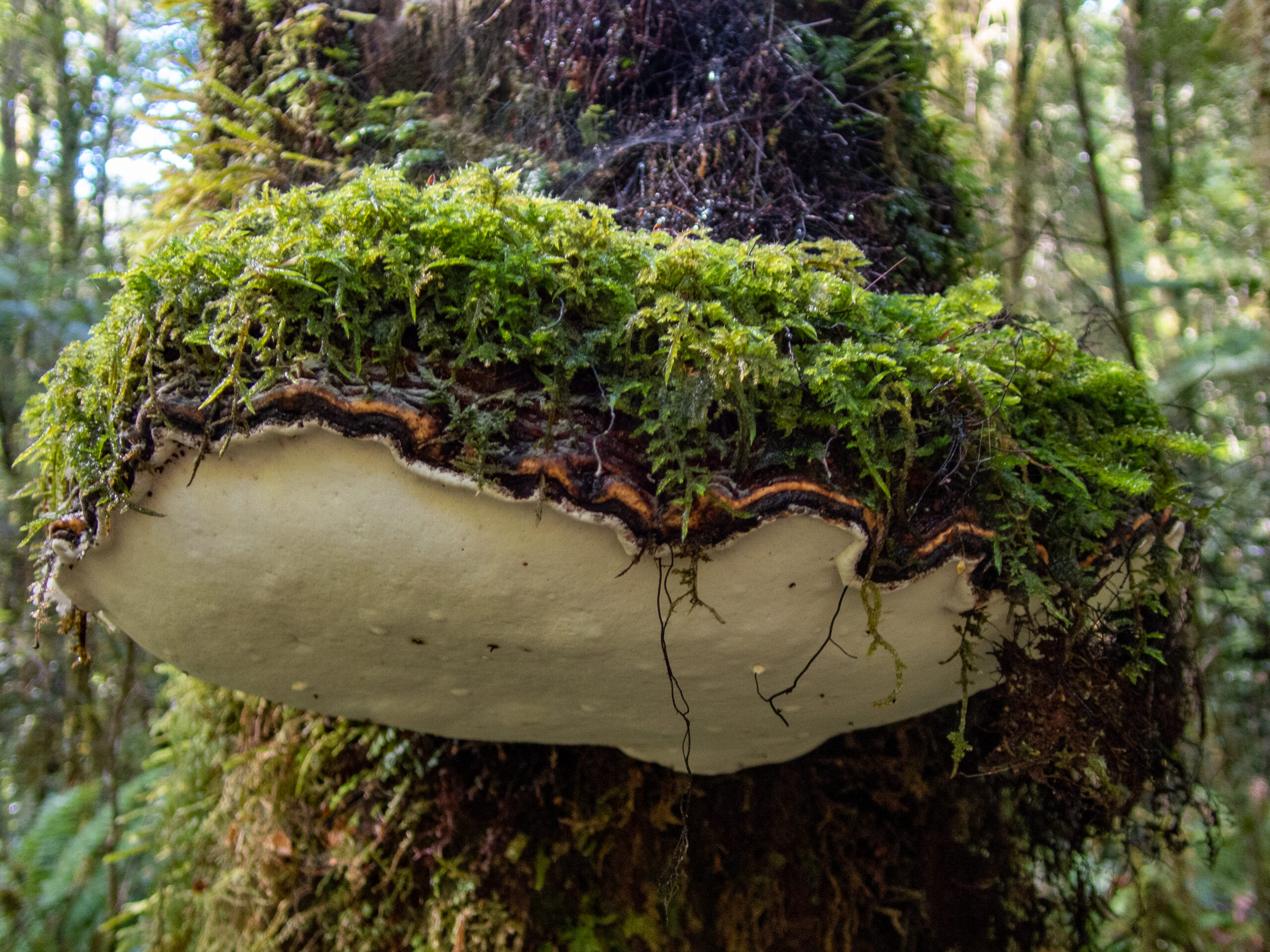
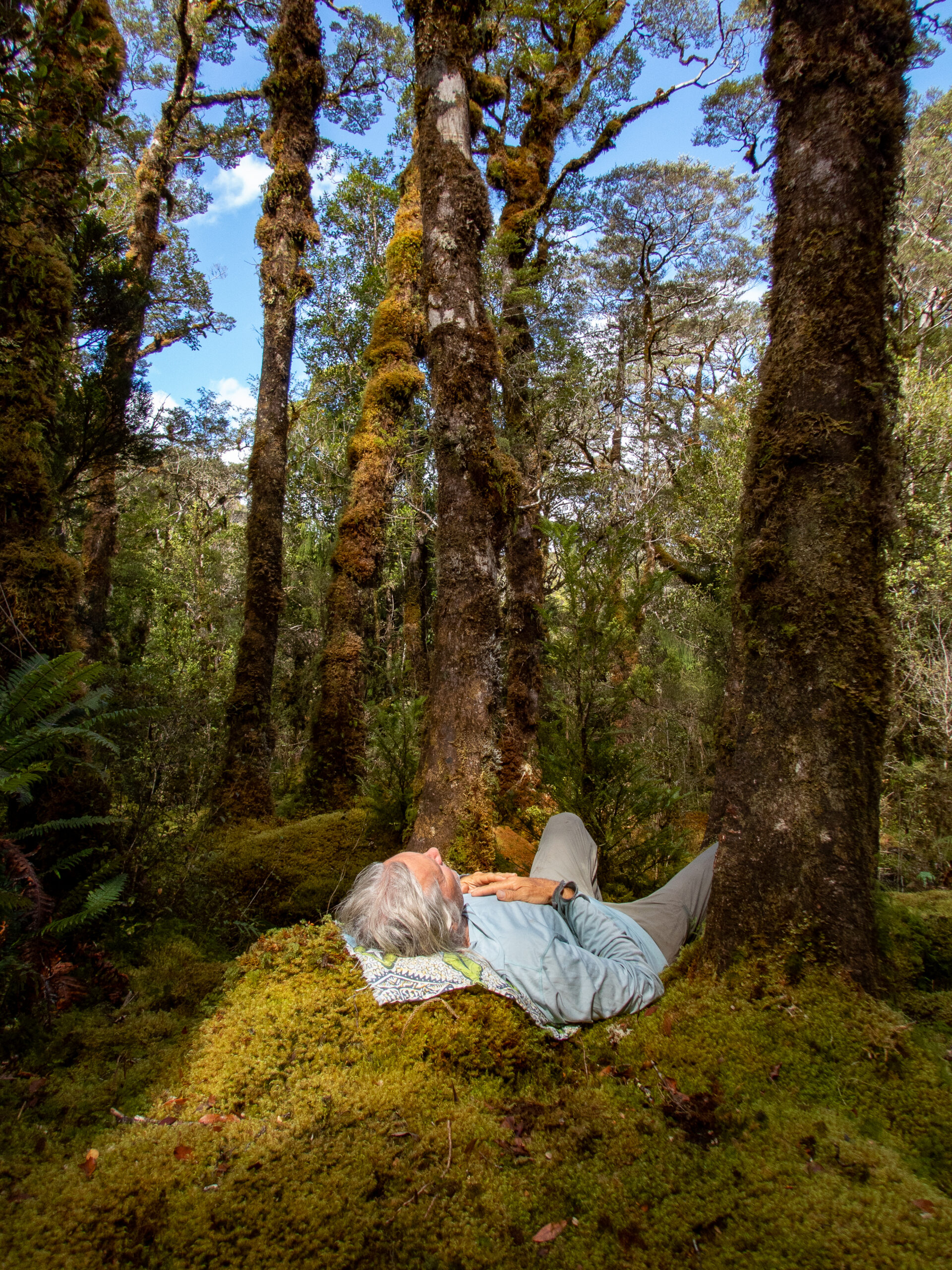
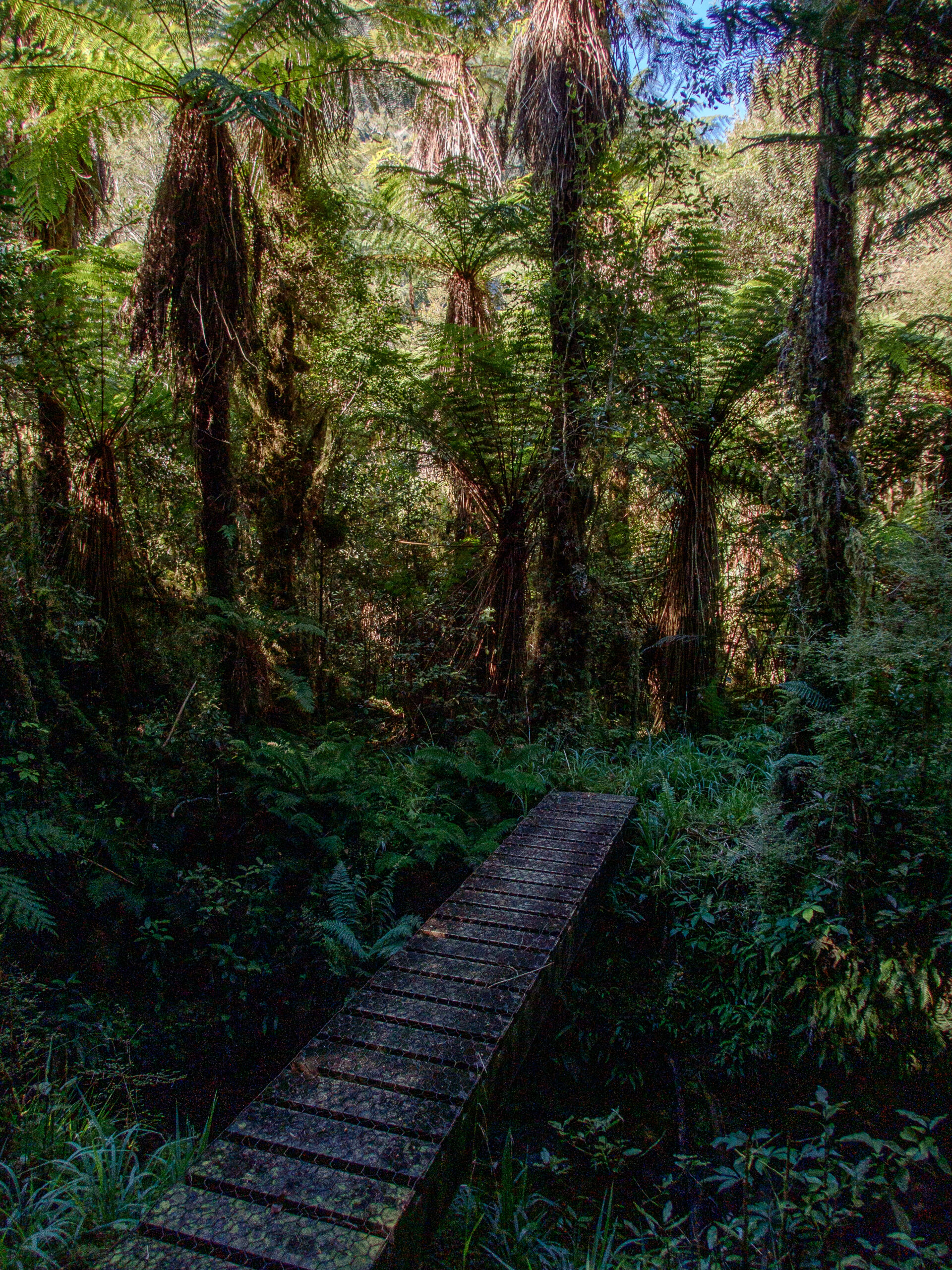
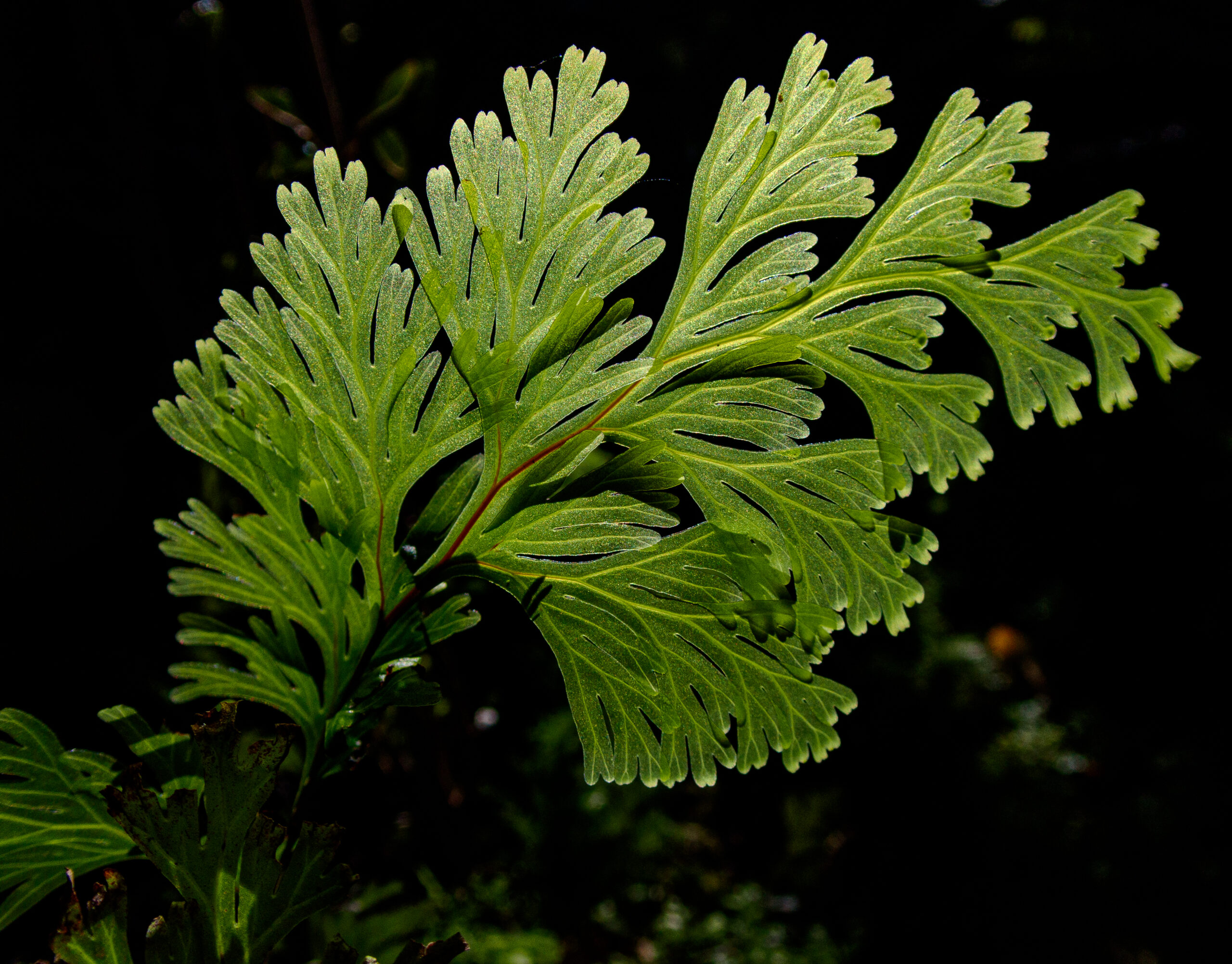
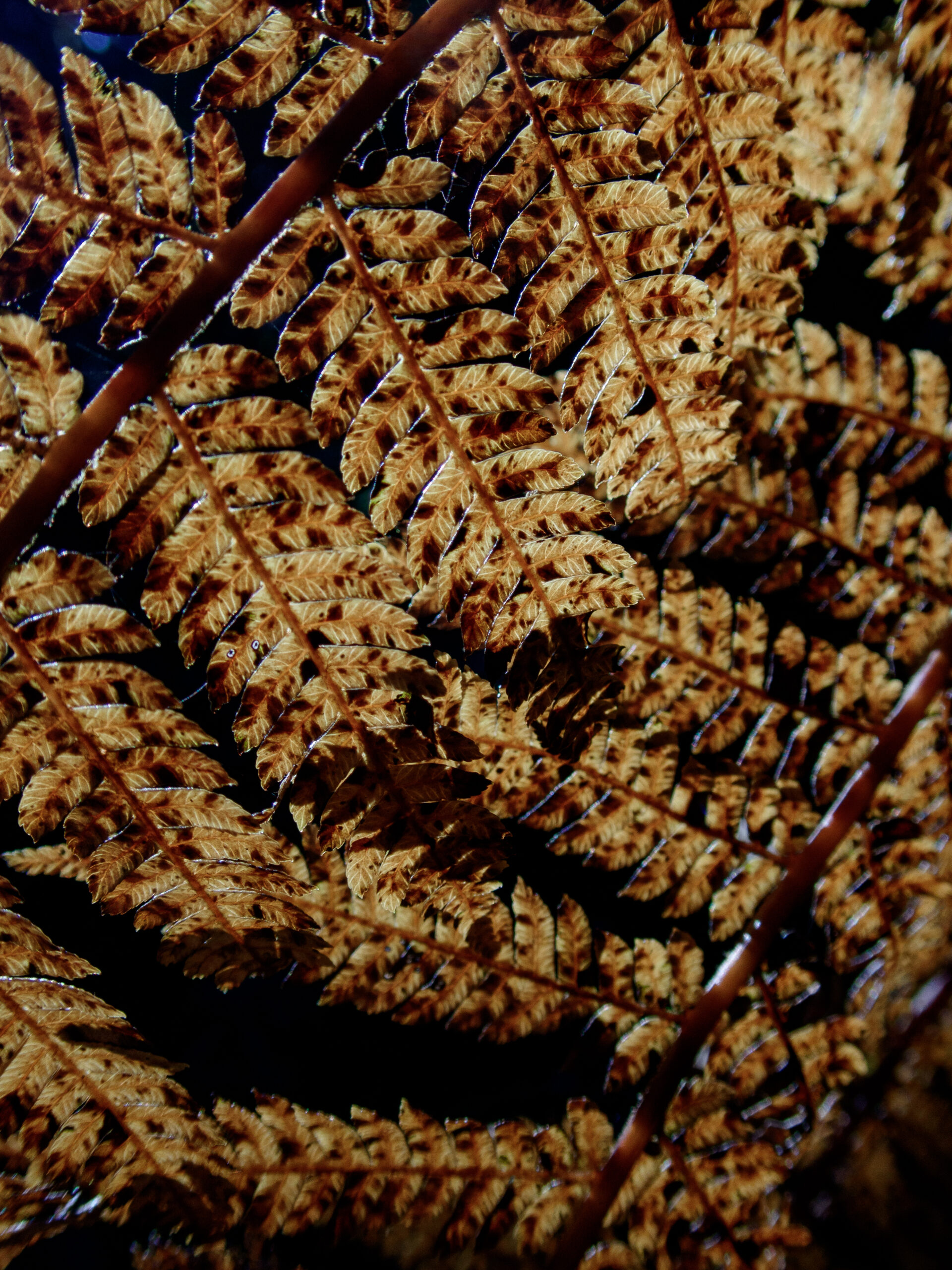
Ahhh, the graceful FERNS!!! So so many!!!The wind in Fiordland has two speeds: gale or glass.We ended up feeling like we wound our own web with all the lines securing Allora!Had some fun trying to find a lake which we’d read was just a kilometer up the forest basin.A healthy shelf fungi – they get HUGE in Fiordland.It was love at first sight – Marcus meets sponge moss! Nap time.Hehe. Seeing through new lenses.
So much green … So much life …Finally made it to the lake, but we’re not getting any FKT’s (fastest known times)!OOPS! Also not making any ‘how to’ videos on leaving your tender! Didn’t quite calculate THAT tide right! Sorry Namo!Back on Allora, watching the moonset.On the move again, heading through Bowen Channel toward Shark Cove.
Shark Cove Anchorage – our bow anchor and two stern lines to shore. See ‘backstory’ below!
Seaforth River, Dusky Sound
It took us three tries to get the anchor to hold in Shark Cove. Communication from bow (Diana) to the helm (Marcus) is always a bit challenging (West Marine sells headsets called “marriage savers”). The view is different, too. We did alright for the first couple of attempted sets, but both got a little impatient and grumpy by the third. It held, and we were finally tied up, but tired and neither of us feeling great about how the teamwork had held up. There’s a lot at stake — sudden weather switches, unpredictable williwaws make it crucial to get this right. Every couple of days we get another chance to see if we can improve on our mutual desire to work together.
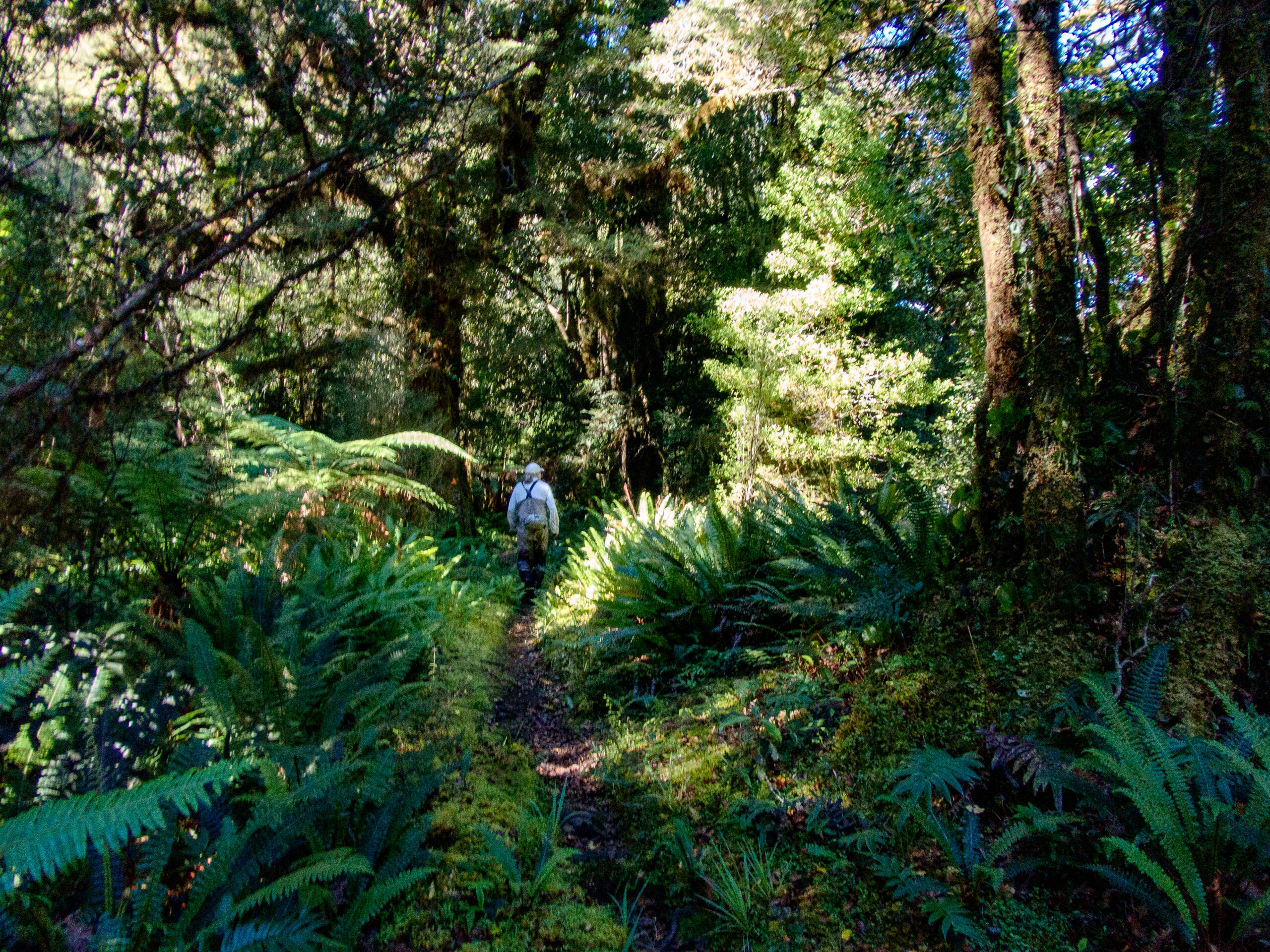
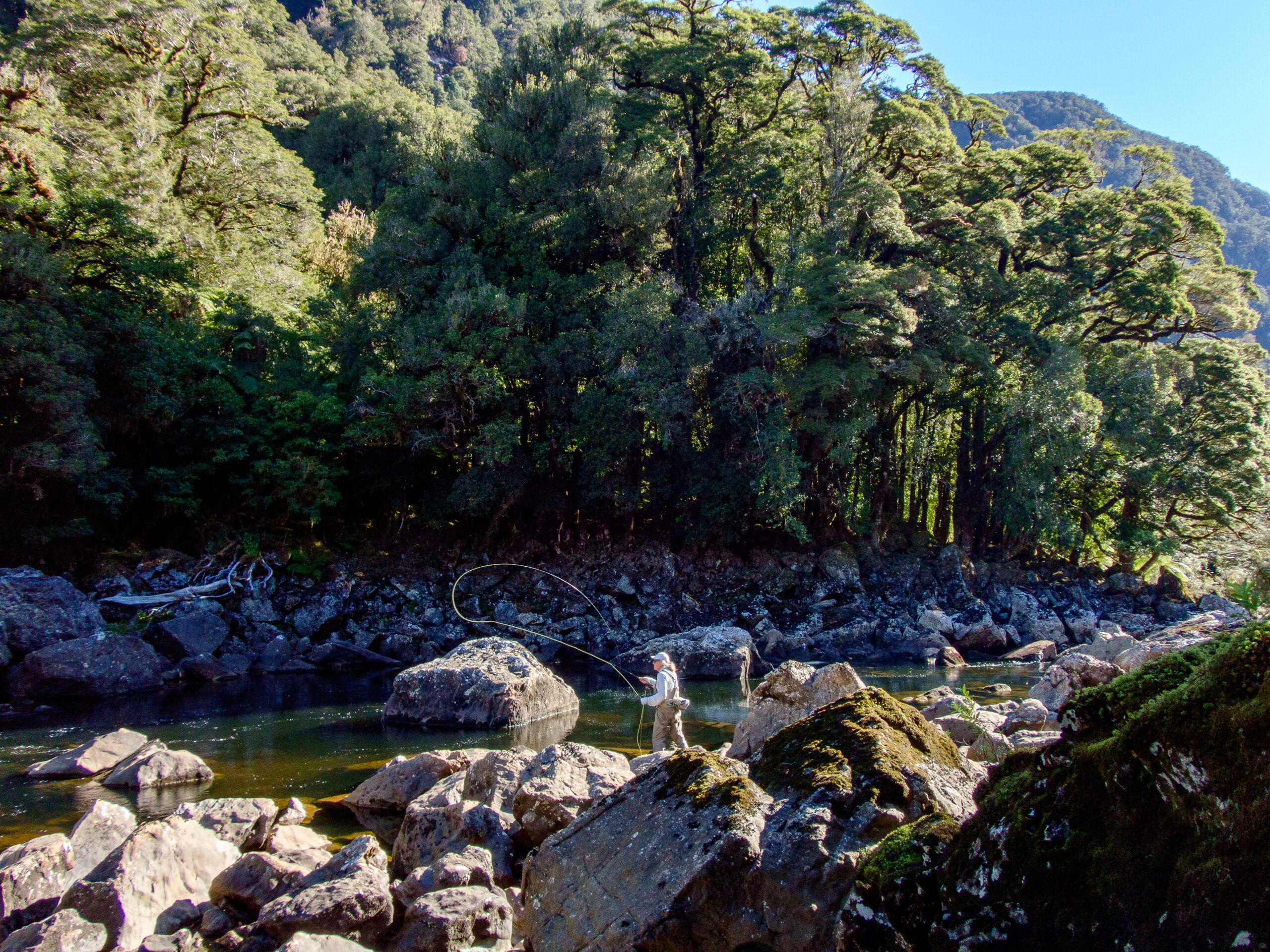
We got a little of a late start for the longish dinghy ride over to Supper Cove where the Seaforth River enters the Sound. It’s reported to hold brown trout! The Dusky trail slopes along the banks, through mud puddles and a podocarp forest of magnificent rimu, kahikatea, miro, mataī and tōtara trees. The river tumbles off some boulders and then flattens like a lake for several kilometers. Tea stained with tannins, spotting fish (the only way to fish in New Zealand) was tough. Ultimately we didn’t see any, though a few rocks got some very intense attention.~MS We took Namo over to the next bay, Supper Cove, to be able to hike on the Dusky Track. It’s an advanced tramper track – 84km one way, but we just did 6km and found it muddy but heavenly (not bushwhacking).
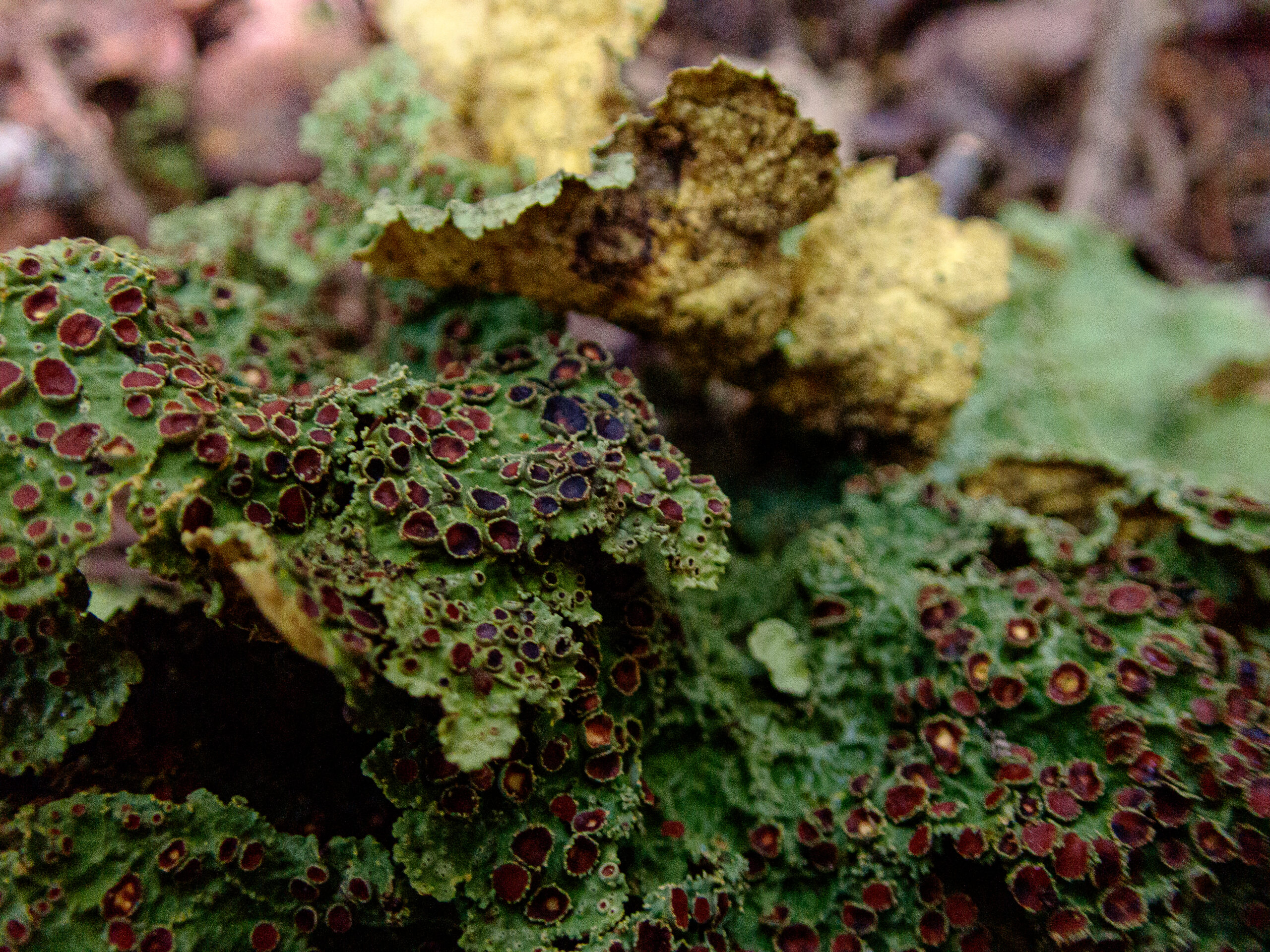
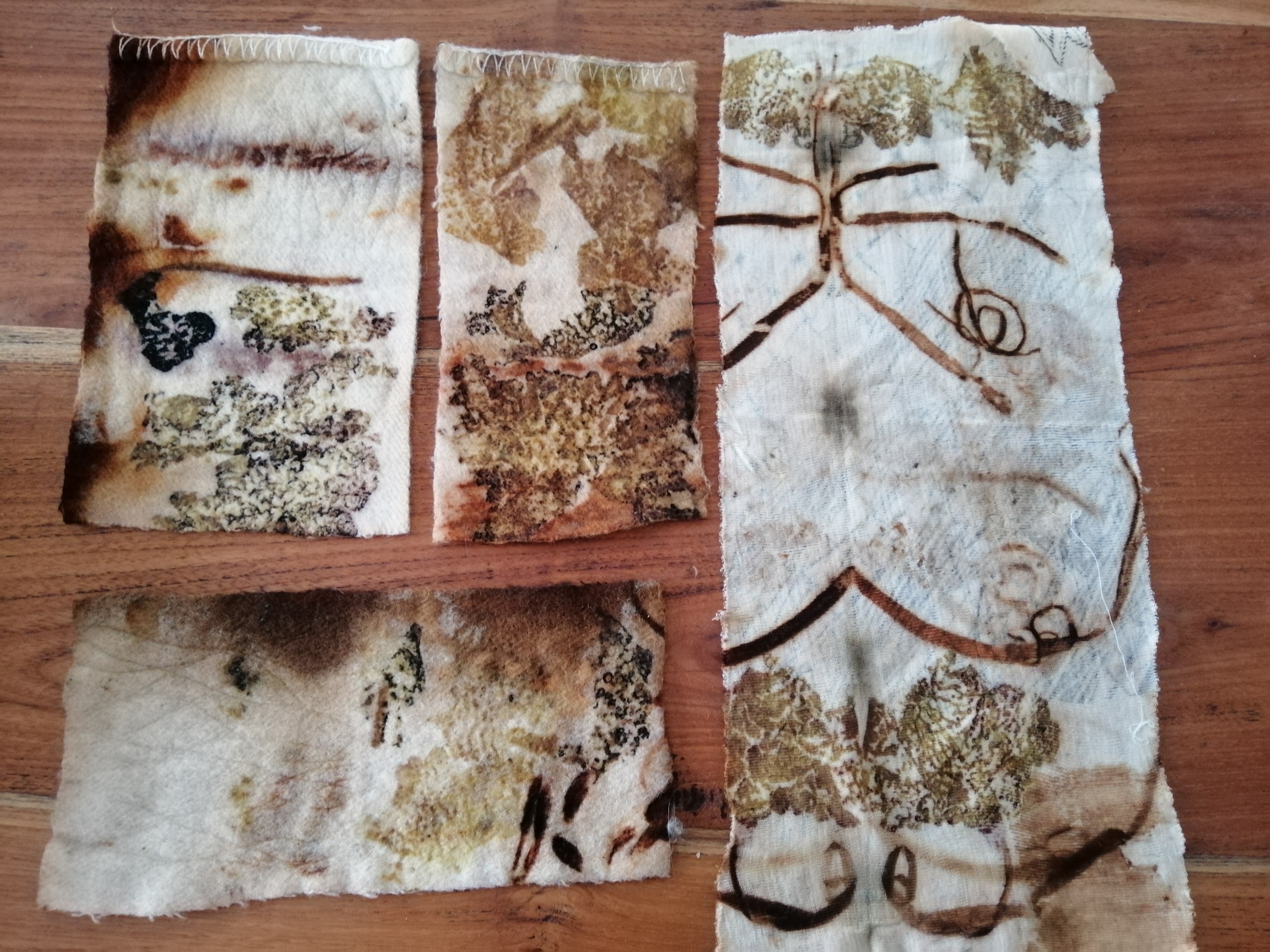
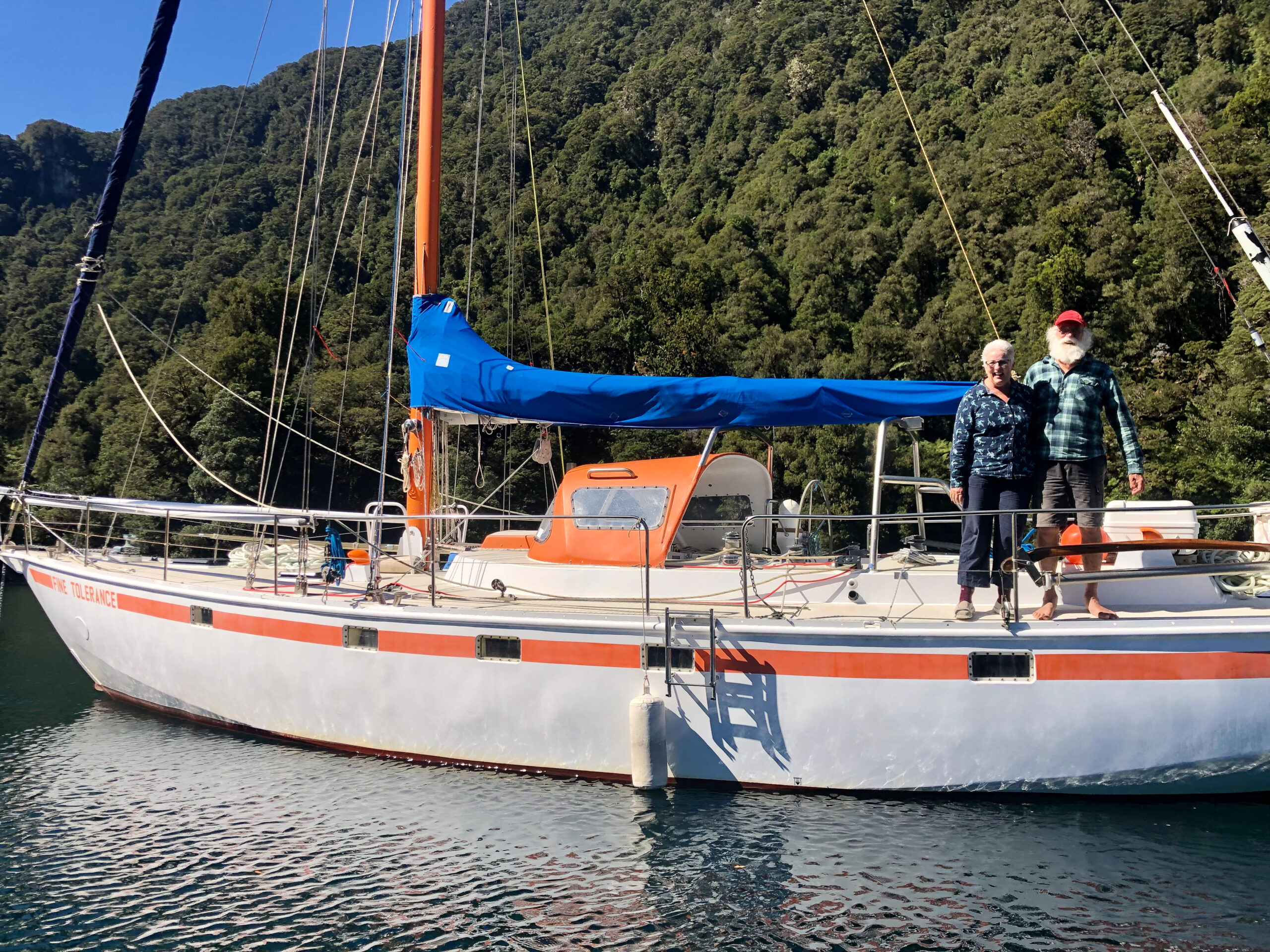
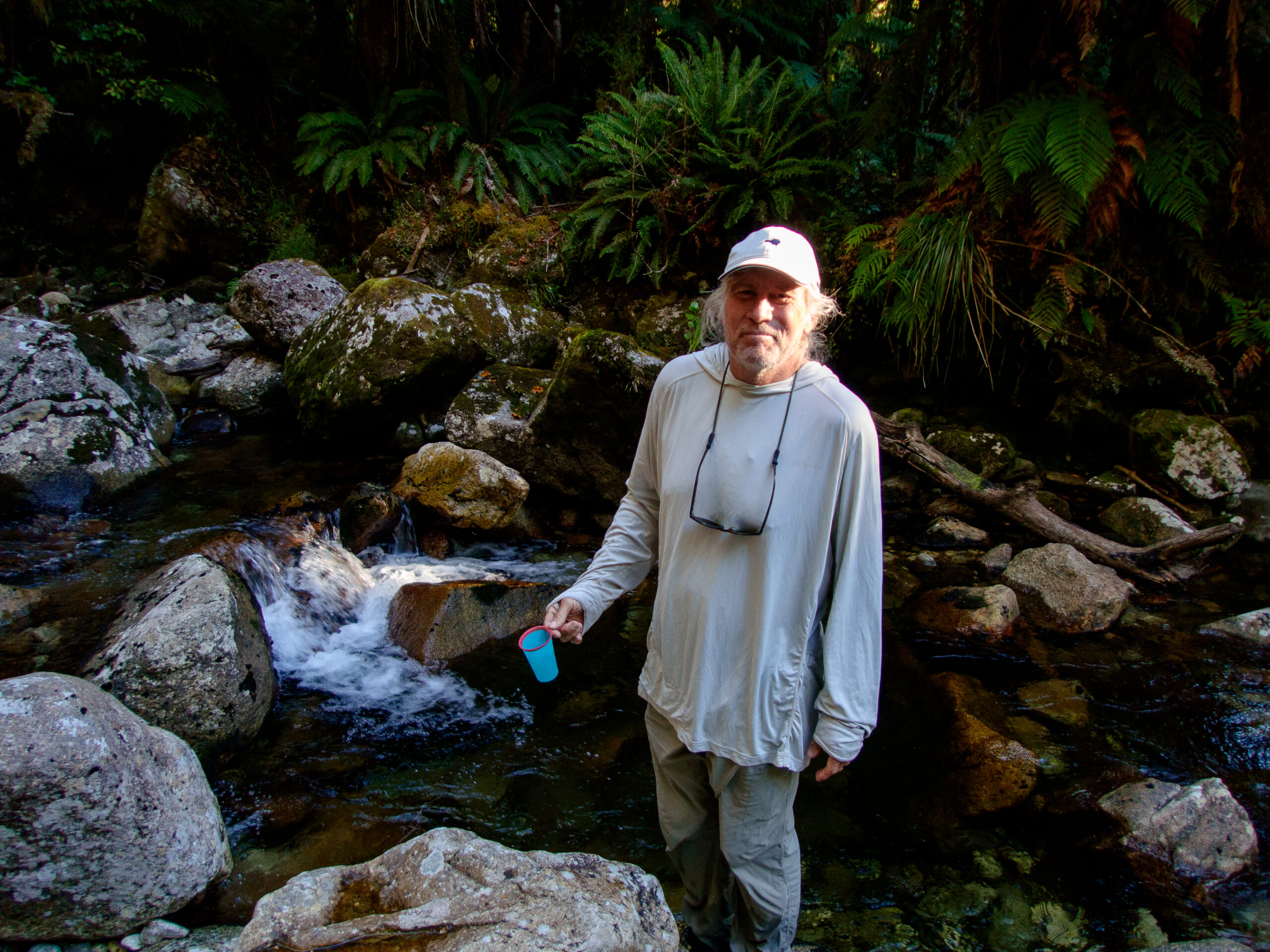
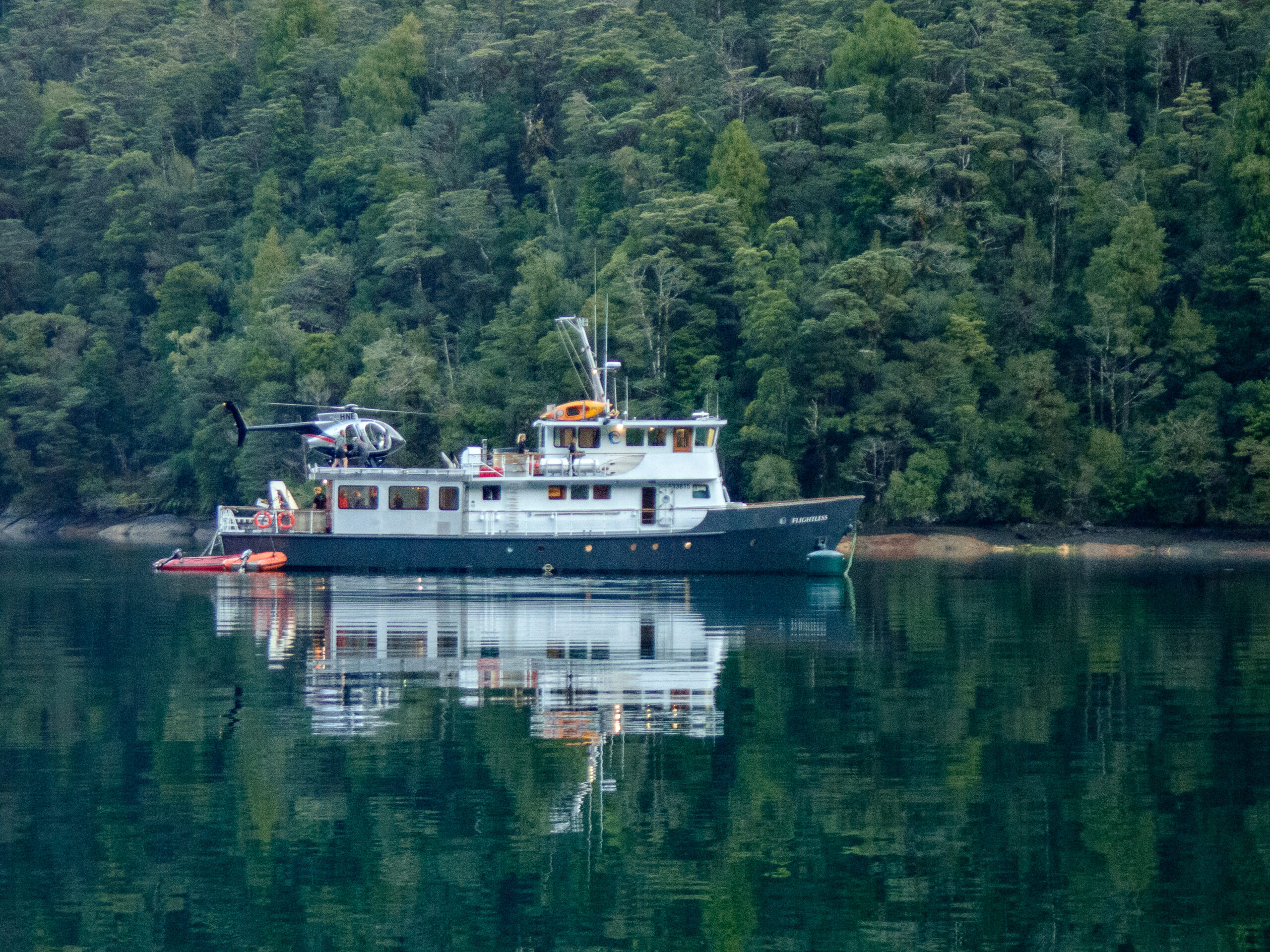
An official TRAIL, baby!Forest light can look like studio light!Focus schmocus, look at those colors!The non-green vegetation really stood out.The leaves of the Beech trees leach acidic tannins into the rivers making them appear ‘tea stained.’Sticta Coronata, a lichenized fungi. We learned from our Lyttelton artist friend, Virginia, that it makes fabulous natural dye for fabric!Virginia’s Sticta dyed wool.Back in Shark Cove. No sharks spotted but some magical kayaking and wise trees!Some really lovely Australians invited us aboard their custom built boat of 30 years, s/v Fine Tolerance for tea!I’d heard a waterfall from the kayak and went back to get Marcus so we could try to find the source! Took this pic to show that we can drink the water ANYWHERE in NZ without fear of getting Giardia. This ‘quick cup’ is our favorite thing from Wyatt’s running world – clip it on your backpack and it’s light as a feather – voila, water at the ready!Paradise found!What is it about falling water?!!Just might have to be a mosaic someday?!Our last night in Shark Cove. We ended up with just under two months in Fiordland and we’d have loved twice as much at least.We saw so few other boats, but at dusk this boat ‘Flightless’ showed up and picked up the big mooring. In the wee hours of the morning (hence the soft focus), the morning, the helicopter dropped in from the head of the bay, landed and shifted out crew for this tour boat operated by a conservation minded company called, ‘Pure Salt.’The Acheron Passage is a north/south running inland route which connects Dusky Sound to Wet Jacket Arm to Breaksea Sound. Quite nice from our perspective as we didn’t need to go ALL the way back out to the open ocean to traverse up to Breaksea. Plus, we had the benefit of securing ourselves in what’s known as an ‘All Weather Anchorage,’ and the safest spot in all of Fiordland for a W/NW blow due in the next day. Sure couldn’t imagine it with these mirror like conditions though …
While Wet Jacket Arm and Breaksea Sound are still part of the Dusky/Tamatea Complex, I’ve broken them up, if for no other reason than my own sanity, so I can feel a sense of progression, ha! ~DS