Overnight, Santa Rosalia to Isla Tiburon

Isla San Pedro Martir

Isla San Pedro Martir

The midmast view from the elevated fuel dock, looking down at Allora made me want to get more comfortable climbing the mast. She shimmered in the bright lights set against the dubious waters of the strange little harbor at this French mining town, Santa Rosalia. Lyndon, captain of the sailing vessel, Moon (a beautiful 42 foot Hinkley with generous cockpit, tall, tall mast and navy blue hull), a marine biologist, or something like that, mused about the chemicals on the periodic table that neighbor the copper mined here for decades. Arsenic, lead. What else would have settled in the mud inside this industrial looking harbor, carved out of the shoreline with its grey stone breakwater? In a square, the wreck of a mid-size schooner still nestled half sunk and rotting in one corner. We topped off our forward tanks, backed away in the windless water and motored out around the ludicrously outsized yellow buoy that marks the shoaling on the east side of the entrance.

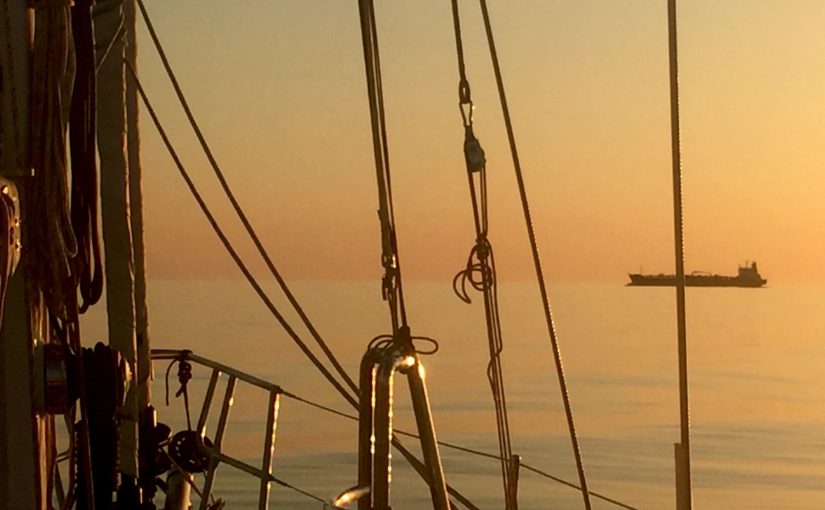
We did not expect a breath of wind for the planned 77 mile trip up to San Francisquito. The forecast showed zero, but within half a mile we had 8 to 15 out of the west, which took us out passed the first point, then died. We could smell smoke from the shore, but couldn’t’ see the fire. We started up the engine and Diana took the first watch, turning the engines off less than an hour later as a nice NW breeze settled in convincingly. We will probably keep saying it, but the bioluminesence was off the charts. Really. The waves slipping off the bow lit with green lines of fire that was bright enough to light up the sails. The hydrogenerator on the stern churned a comet tail in our wake. It was mostly overcast. Diana turned on the red light in the cockpit to record our position, speed, course over ground, and wind conditions. We weren’t moving super fast, ultimately averaging about 4 knots an hour as things slowed down a little on my watch. The best course we could make without tacking sent us straight north up the Sea headed directly for what initially looked like a little island, Isla San Pedro Martir. Diana woke me at three thirty, as usual going later than she should on her watch. She said she would have kept going but was concerned I might be disappointed to miss the night sailing. I promised to wake her at sunrise if it was as spectacular as it promised to be. The sky was now about 5/8 which is how we list cloud cover in the log.

Before she went to sleep she set me up with our, now traditional, mint tea. She had also dug out my favorite chocolate cookies (a little thing at home in our pantry, a much bigger event here tucked into Allora’s tightly packed nooks and crannies) and set me up with a big loaf of sweet bread from the famous French bakery in Santa Rosalia (the one just a few blocks up the one way “up street” from the steel Gustav Eiffel designed church). The bread kept me awake, though it tasted like everything else from the bakery, not particularly French, a little underwhelming like the landmark church, set among the colorful clapboard buildings of the little mining town. A better set of words than reality provided, but charming nonetheless.

When I couldn’t eat anymore of the sweet doughy bread, which reminded me of sneaking raw pie crust as a kid, I clipped my harness in on the starboard padeye to gaze at the bioluminescene (which deserves a better, more magical and easier to spell name). By now the moon was peeking out on our port side, but the green lit waves (as bright as our running lights) on the starboard was mesmerizing.  I couldn’t help be stunned at this tiny glimpse of infinity. If we could sail for miles in the sea, and everywhere the water could be filled with countless millions of these glowing little creatures, how many of them could there be? I looked up at the stars shining in the gaps of the thinning clouds. Okay, right? Now the devout among my friends must forgive me, but really, in a universe as vast as this, that crushes human names for numbers (except in the abstract), how can our puny religious fictions, with all their thou’s and begats, come close to the spiritual gigantic-ness of the real unknown, even the tiny slice of its awesomeness we can see with our earthbound eyes. This is why I’m an atheist, so I set no limitations on my awe.

As the eastern sky paled slowly with dawn, visible to my darkness adjusted eyes almost an hour before I expected it, the wind began to slow down. So far in our experience, when the wind drops below 4 knots, it also starts swinging around the compass and with any swell at all, the boom rocks back and forth, the jib fills and collapses. It’s a frustrating mess. But the Sea of Cortez was mirror flat, barely ruffled by the remaining breeze, and the wind dropped down to three knots, but stayed constant from about 300 degrees. Allora kept moving, slipping along at 2 knots or so. Because we were not on a direct course to San Francisquito as it was (pointing against a NW wind) our computer calculated (and recalcualted constantly) that we would make it there, not the next day but the following, sometime around three in the morning at this veloctiy made good (VMG). Still, I didn’t really feel like starting the engine. Diana was in a deep sleep, and there just didn’t seem to be any compelling reason that we needed to be moving faster. After all, we were, as we always are, already home.

With Allora moving so slowly now, just slipping through the sea, the wavelets off the bow, rippled outward, luminous caligraphy in the slick water. It was also beautifully quiet, no sound from the sails, Allora barely whispered. We’re always floating (the laws of entropy willing!), but now we really floated, like a bird gliding on a light breeze. Sound travels on still water, so the whale I heard blow could have been right by the boat (I could hear that weird phasing whistle of the inhale), or several hundred yards away in the liminal ocean. I stared, but I could not see even a dark shadow. When it blew again, I woke Diana. Whale!

We sat at the bow, listening intently and staring as the sunrise quielty gathered light and Allora glided northward. We never saw the whale, and it must have been several, which blew and splashed along our path until it was light enough to see, and then they slipped away into the subterranean blueness and the wind came up again and ushered us onward.

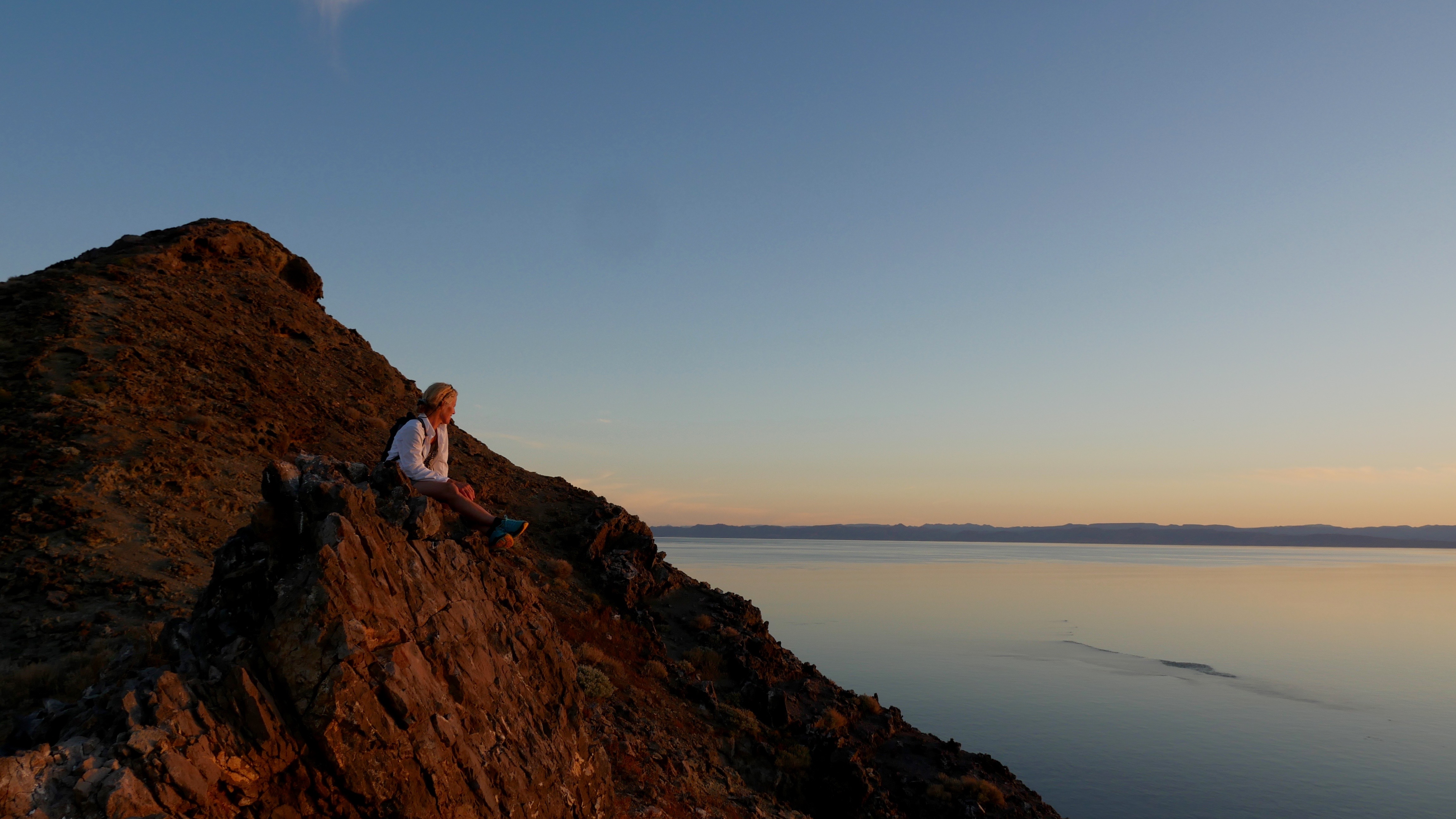
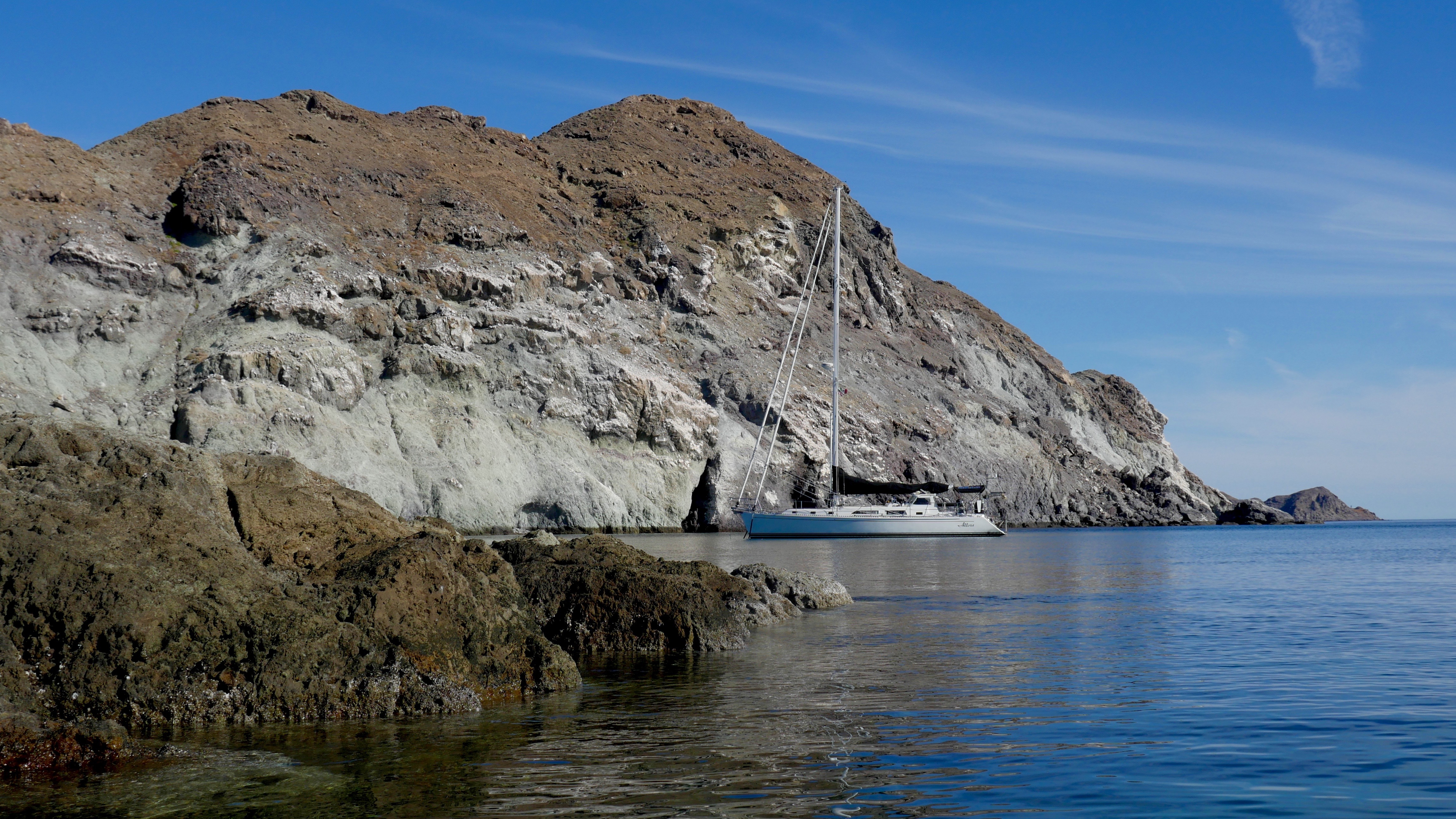
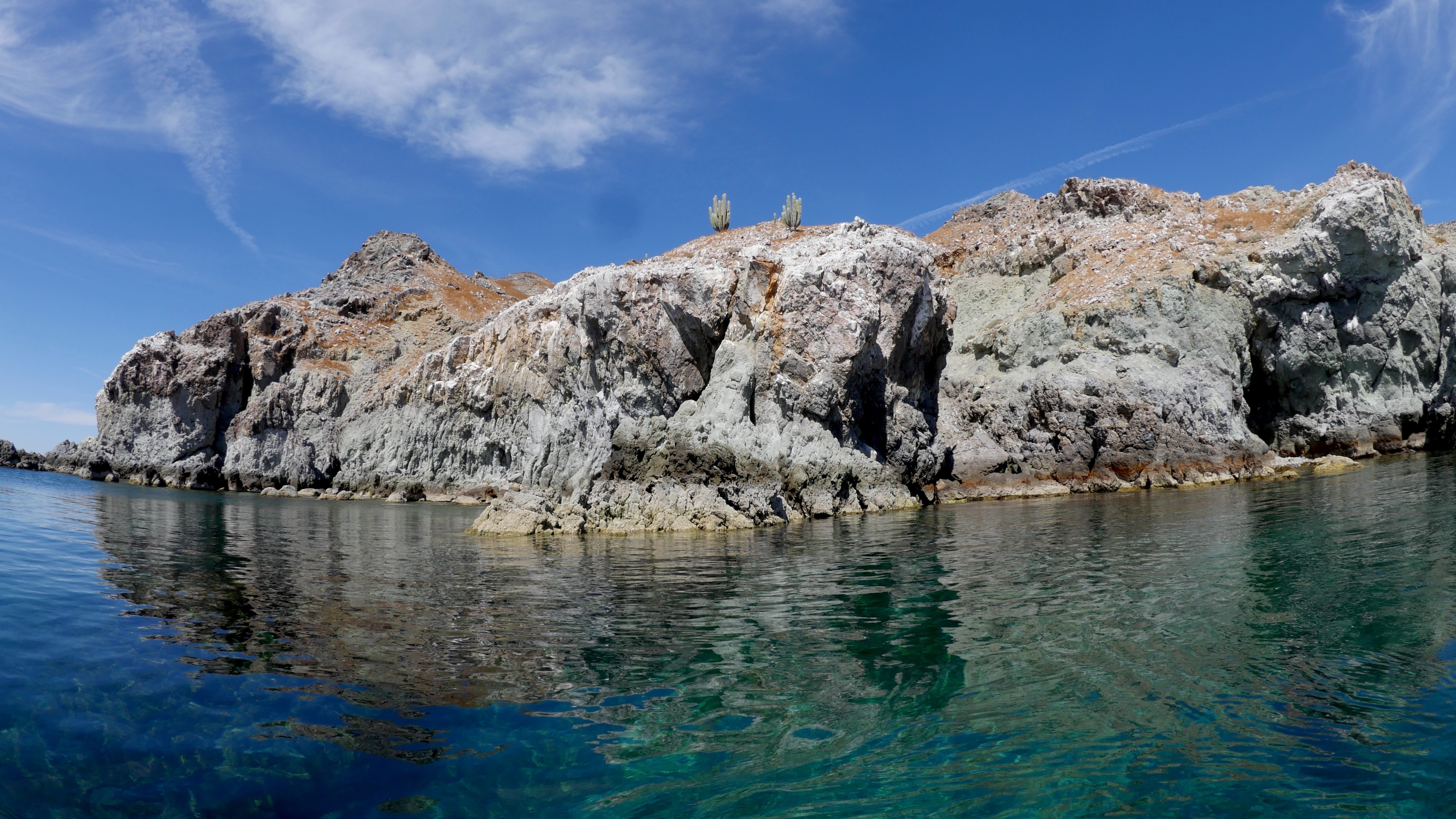
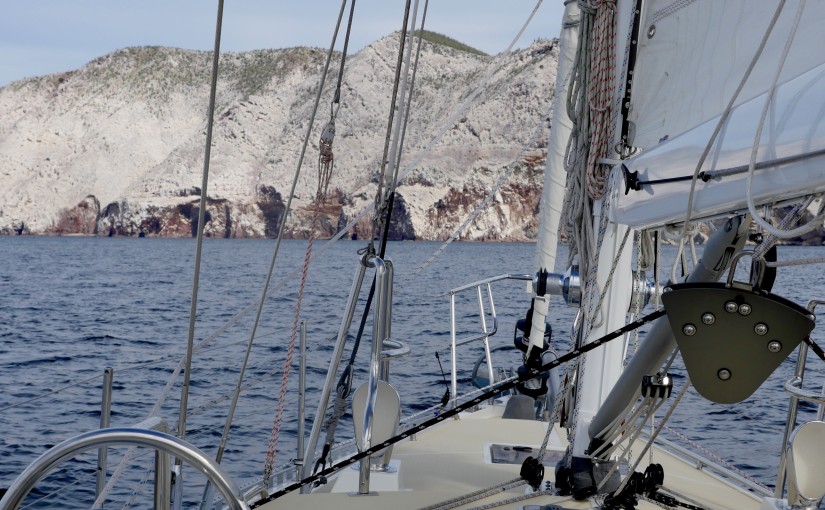
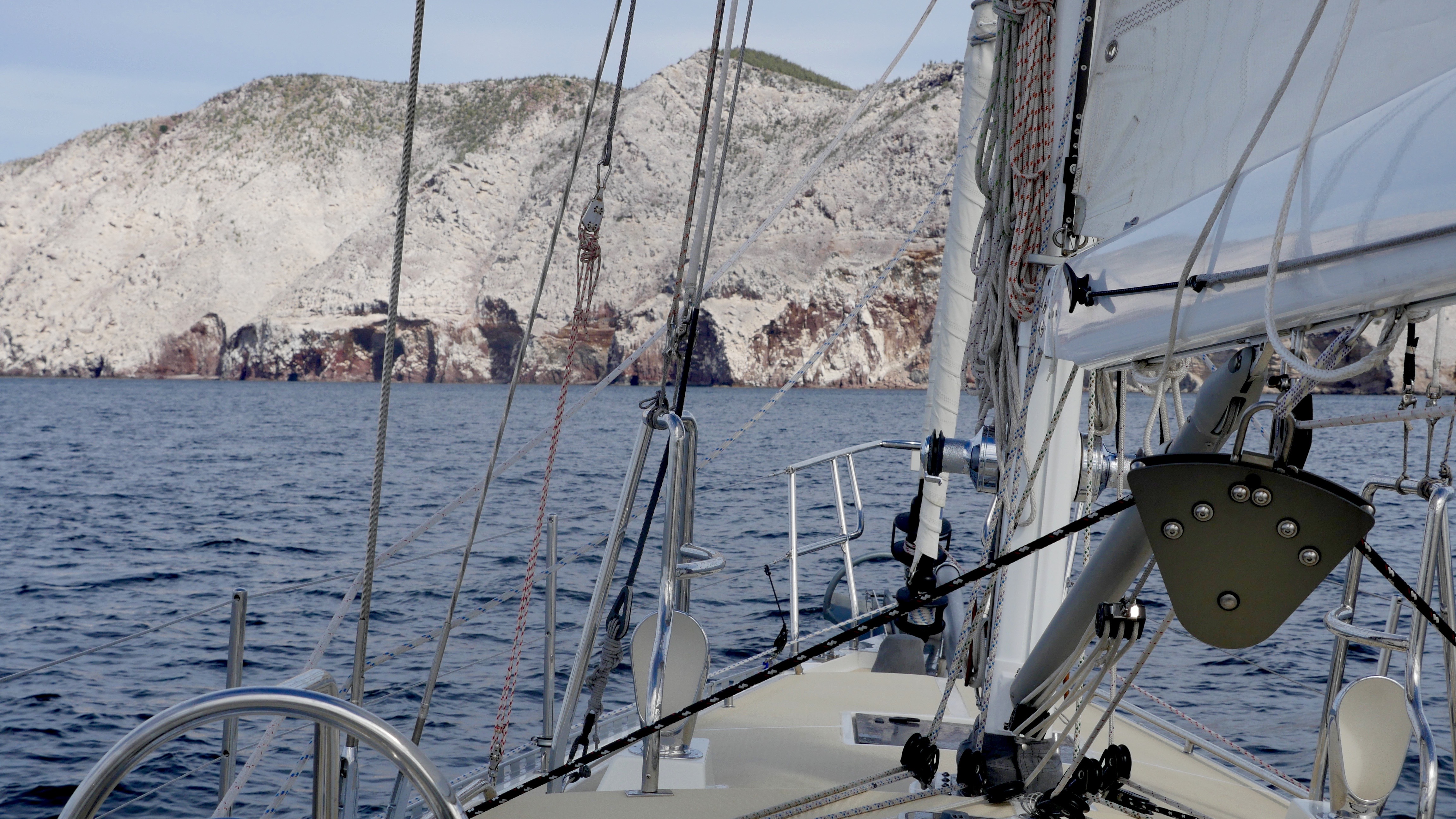
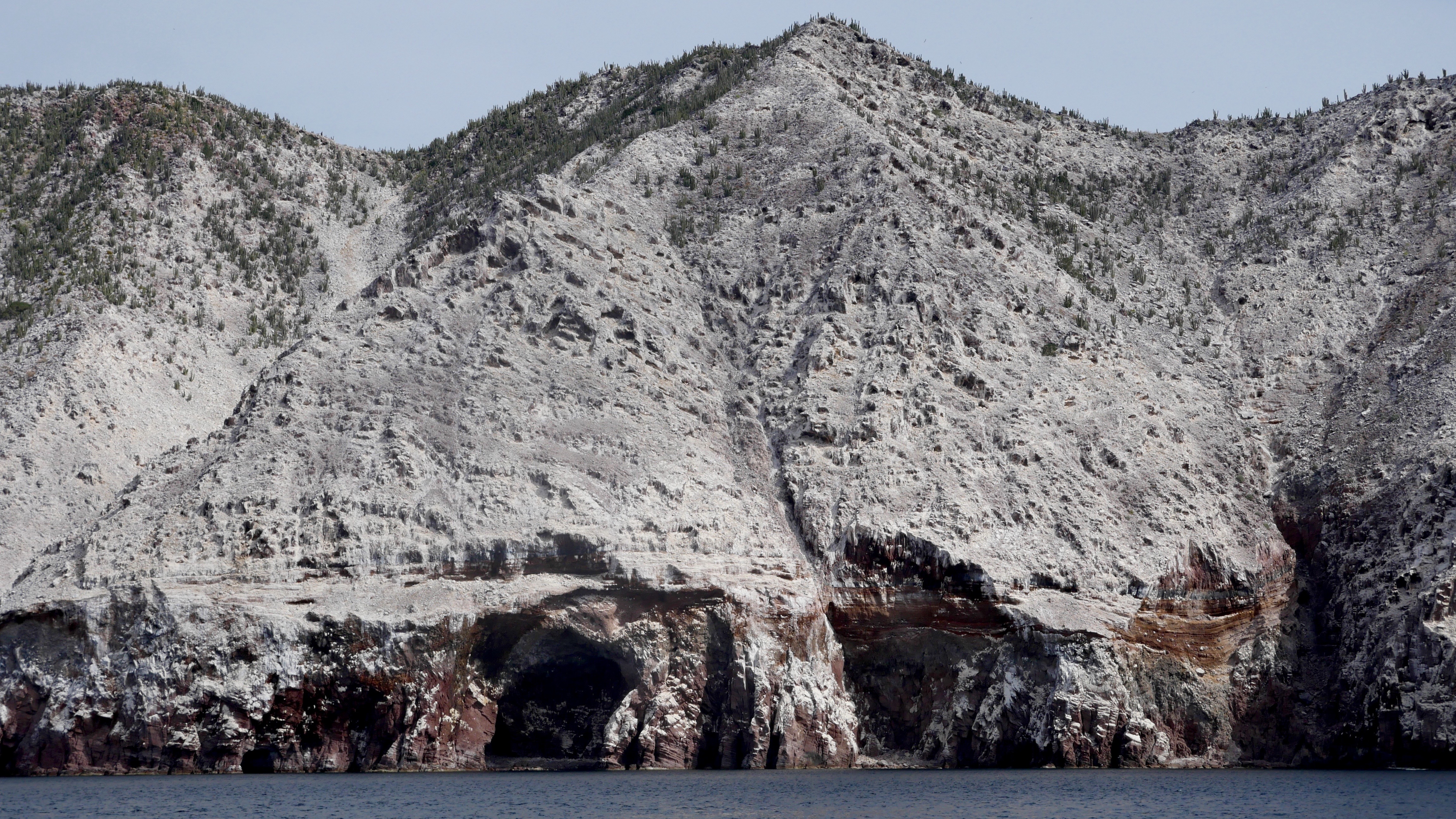
We arrived at Isla San Pedro Martir, which has another name in the local indian language, and a very special spiritual significance. A rock like a mountain from Montana, dusted white with guano, with dark green trees atop which looked like pines. With deep caves in the massive stone along the shoreline and crazy currents in the deep water known for giant Humboldt squid and the Sperm whales which feed upon them. Diana did her best to drift Allora along the 200 foot contour and I jigged with an iron lure hoping for Yellowtail or Cabrilla. Diana suggested that when we have internet again I watch a video on jigging, since I was basically making it up. We had no luck and finally sailed around the south side of that magnificent island.

San Franscisquito was still almost directly upwind of us, but we realized, Isla Tiburon was straight along our course, so with nothing pressing us but the need to find a good anchorage for the predicted northwest blow, we continued our northward diagonal crossing of the sea. The wind had come up into the gusty teens. Diana wisely proposed setting the solent (the smaller of our two headsails), and we scooted along with a knot of current in our favor at over 8 knots toward Isla Tiburon. We should have had lunch when the wind was 8 knots, but Diana made sandwhiches with bread from the french bakery (think Baja Wonder Bread and you’ll have a good idea of this famous ‘pan’) and we ate them bracing ourselves on the starboard bench. Being on the low side, the settee was perfectly set for a nap, cradling me nicely as the waves and wind built. An hour later it was Diana’s turn to wake me with, ‘Whale!’  Amazing how hard it is, rising from a nap, to negotiate a boat heeled hard over and pounding against a steep chop. The whale Diana had seen, must not have known we were there, because when we surprised it (just off our port side bow), it slammed its tail as it dove and left a massive swirl of churning ocean behind.

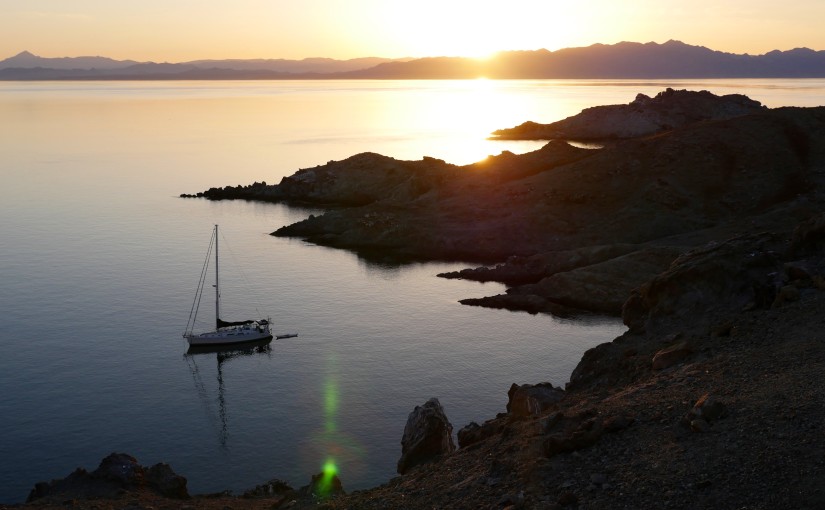
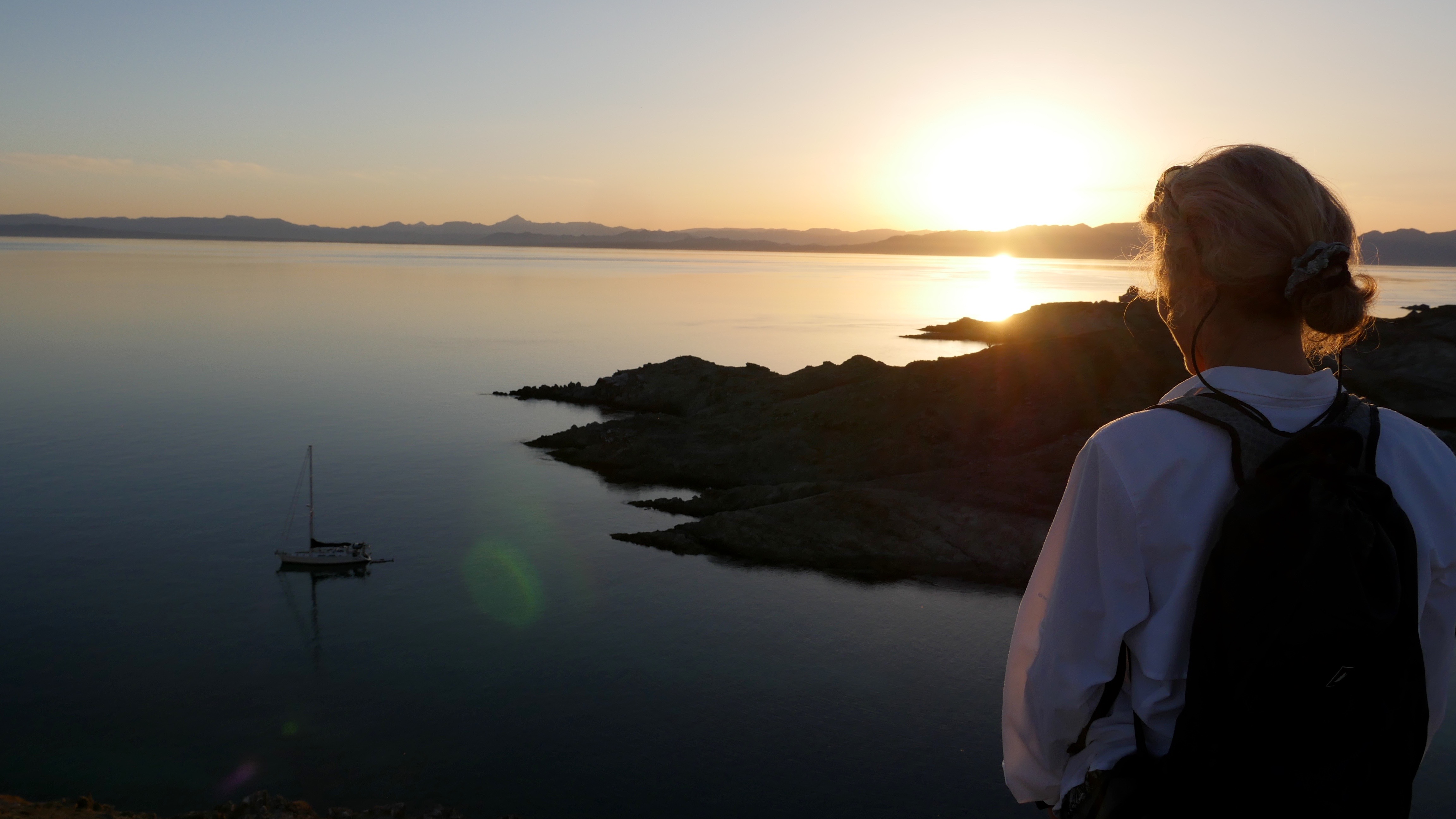
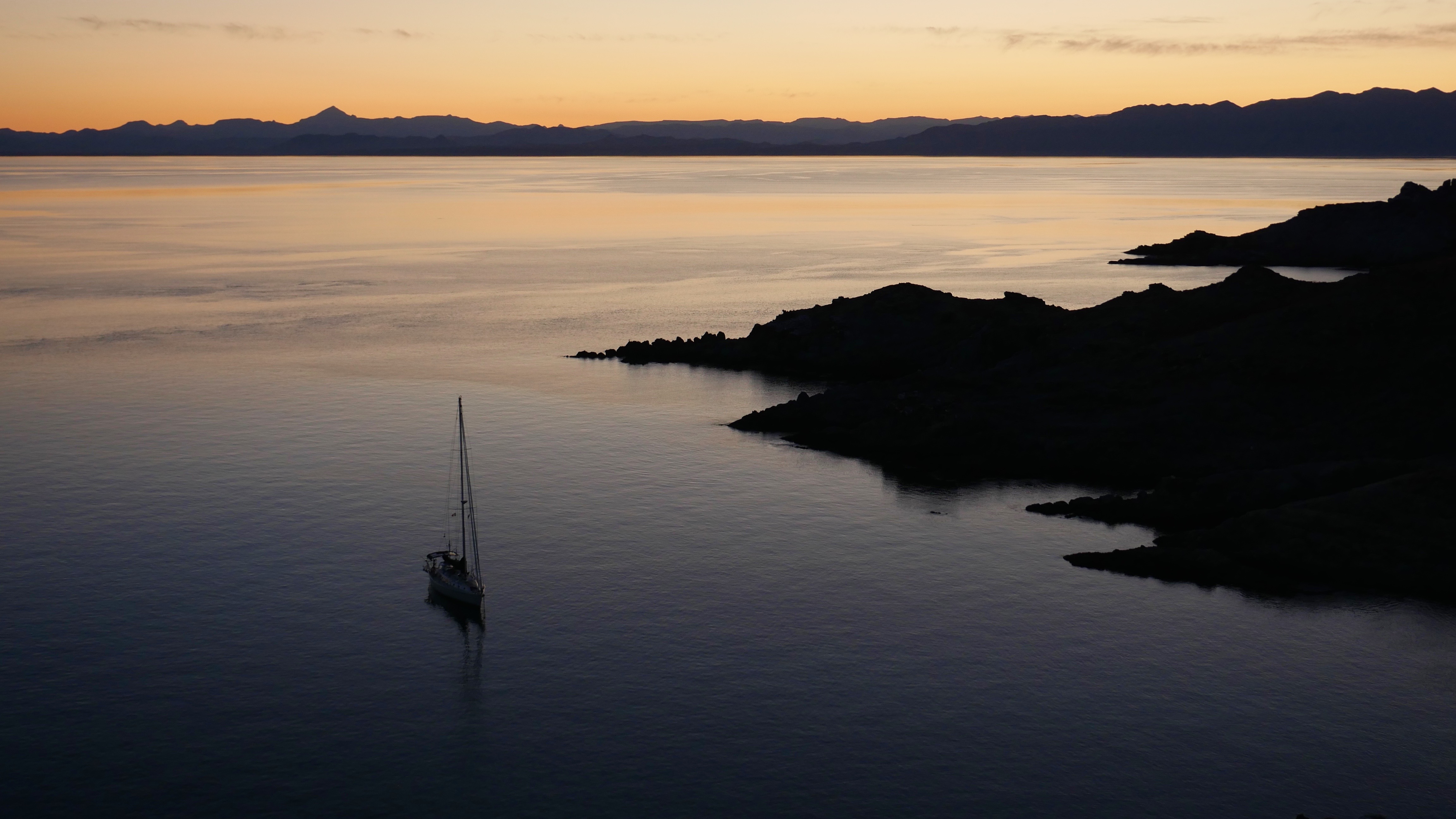
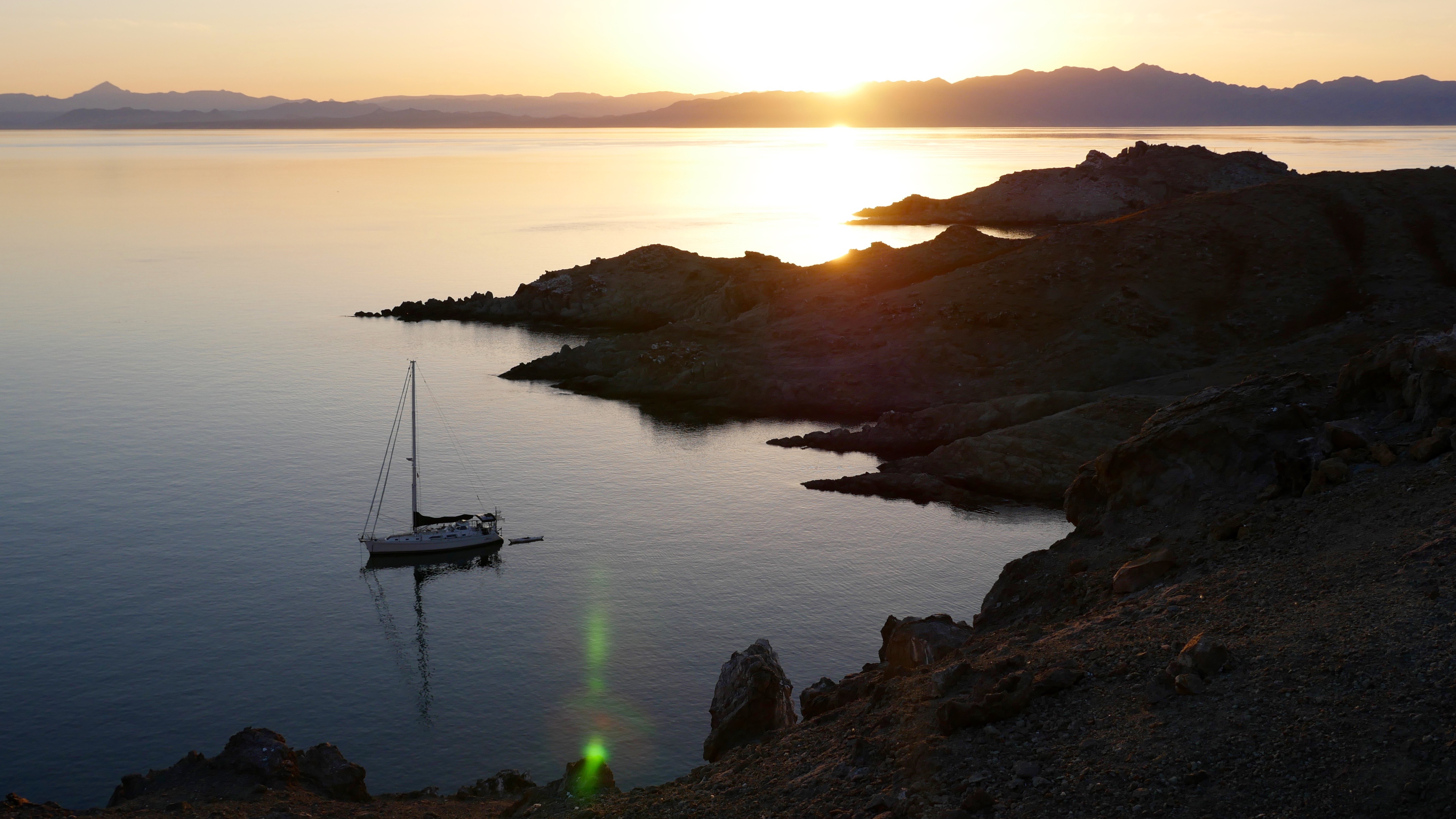
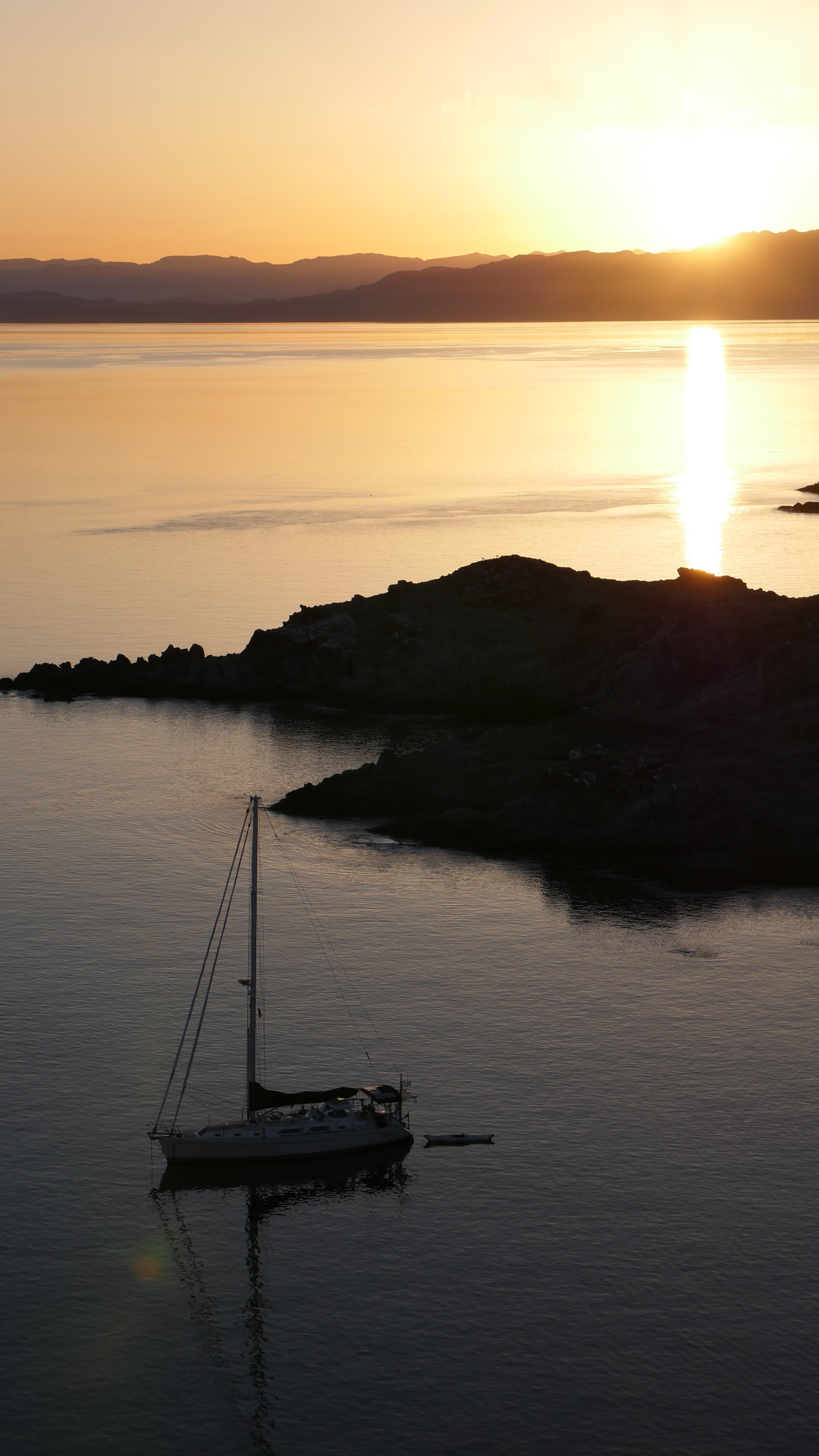
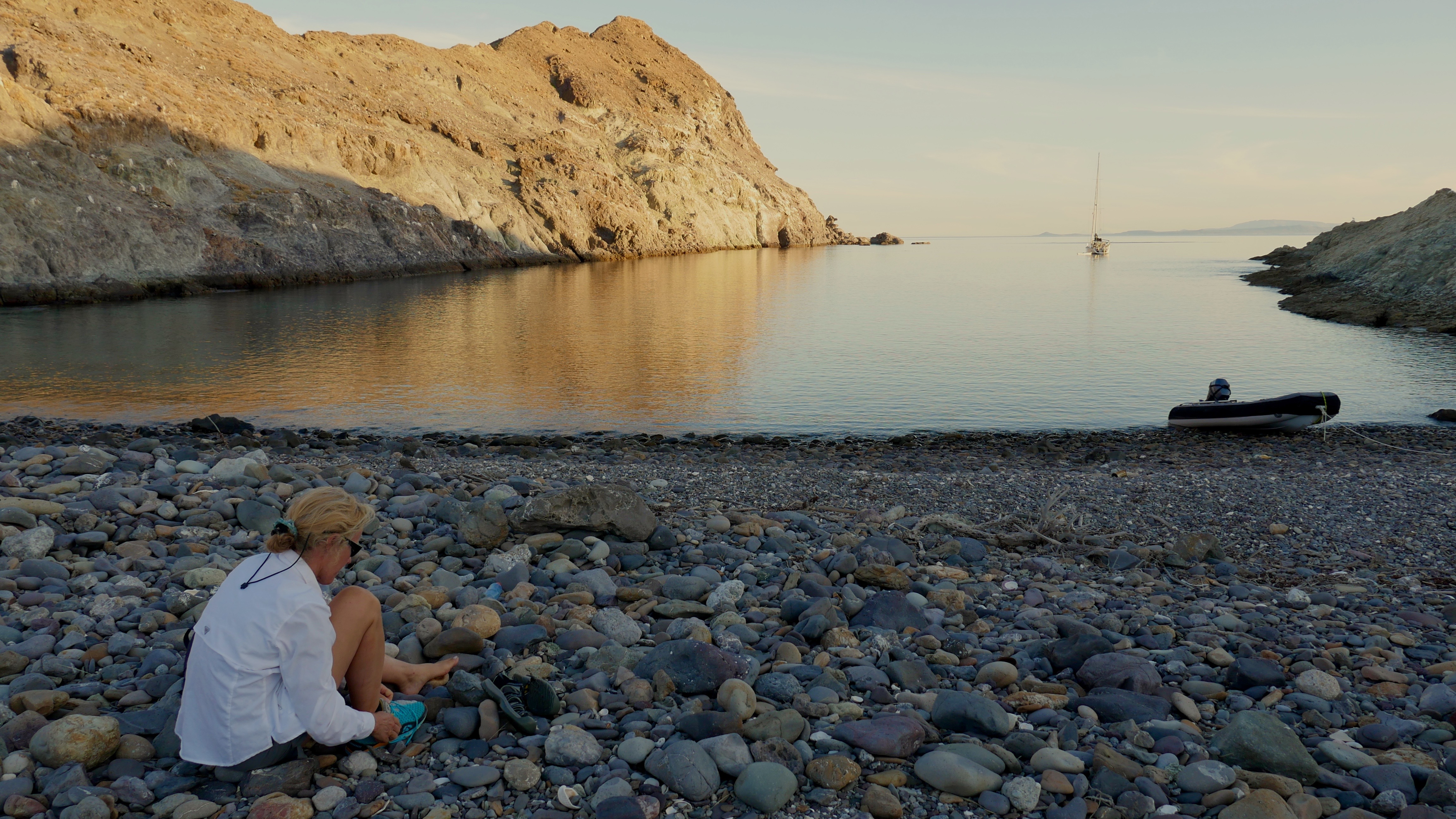
We reefed and sailed hard for Tiburon, rejecting the first anchorage and motoring around the rocks to another, better protected one, where we dropped anchor at Ast Ahkeem or Hast Hakim, depending upon which reference you use. The sunset was as stunning as the sunrise, and we slept soundly waiting all night for the predicted north wind that never showed up. Clear skies in the morning and a pefect heavy dew to use to wipe the salt from Allora. Pastries from the french bakery, which have indistiguishable sweet fillings with crust or buns that must be poured like everything else there for the giant vat of dough that gives Santa Rosalia its dubious fame.
Boat hits whale – San Carlos/Guaymas, Mexico

Sea Boa.

On the Sonrisa Net this morning, the SSB ham radio channel we listen to for weather each morning, it was announced that a boat named Sea Boa (spelling?) was “hit by a whale” and quickly sunk. 27 miles SW of Guaymas at five in the morning. The singlehander, Allan Tweten (56), was able to get his dinghy launched and get off with his liferaft on board. He set off an EPIRB and was rescued. His boat sunk.

Wow.

We think about the whales we could hear but not see in the dawn sailing up from Santa Rosalia, though we did not have our engines running, and we were making about 2 knots. Too slow if we’d hit one then, certainly, to sink the boat. Probably too slow to surprise one. On the other hand, we were moving fast sailing south of Isla Tiburon when we startled a whale off our bow, that splashed big getting out of our way.

Like lightning, not much you can do to avoid the remote possibility of a collision with a whale. It was wise of him to launch his dinghy, since then he’s not simply drifting, but only because he is close to shore.

What’s the order of priority?

Grab the ditch bag. Liferaft ready to launch.

Determine if the water is coming too fast to pump?  Would a collision mat solve the problem?

Launch the dinghy. Get the outboard on if possible. Liferaft/Ditch bag in Dinghy. Grab anything else there is time to grab. Passports. Computers. Wallets/Purses.

Whales. Certainly they don’t hit boats intentionally. There have been boats breached upon, but that, too, seems accidental. You can imagine them hitting boats inadvertently when startled. It’s easiest to imagine a boat, moving at 6 to 8 knots colliding with a sleeping whale that did not see it.

Isla Salsipuedes

Isla Salsipuedes

Isla Salsipuedes

Isla Salsipuedes

Isla Salsipuedes Isla Salsipuedes Isla Salsipuedes Isla Salsipuedes

Isla Salsipuedes

Isla Salsipuedes

Isla Salsipuedes

Isla Salsipuedes

Isla Salsipuedes

Isla Salsipuedes

Isla Salsipuedes

Isla Salsipuedes Isla Salsipuedes

Isla Salsipuedes Isla Salsipuedes Isla Salsipuedes Isla Salsipuedes Isla Salsipuedes

Fishing Report, February 27 2016

Isla Salsipuedes. (Leave if You Can)

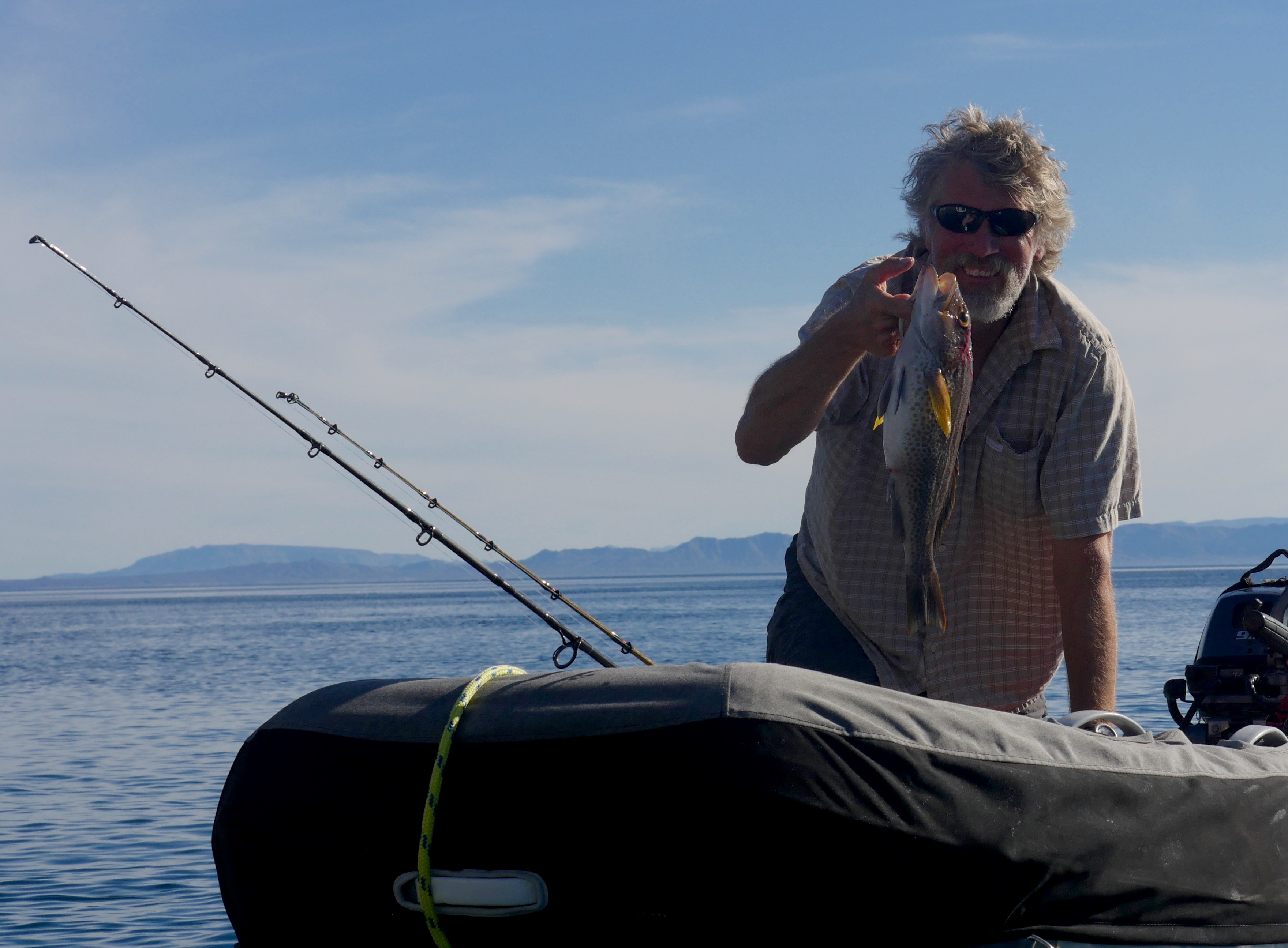
With coffee just ready we had the morning SSB weather report tuned in, listening to the preamble of sailboats underway checking in, when our neighbor at the anchorage, tucked around the rocky point from us came over with his wife in their fishing skiff. In terms of size and industrial heft this would put any Florida flats boat to shame. Their boat, named (not coincidentally) Salsipuedes, is a Selene trawler. Diana mistook them as local fishermen at first due to their quiver of fishing poles, and in a sense they were. They said they’d been coming to this area for fifteen years. Turns out they are from Great Falls Montana, retired ranchers or farmers. He reminded us a bit of Chum (our former Springhill neighbor), very friendly, good sense of humor, with lots to say. They had Sally, their very polite dog, some kind of brown poodle on board. I snuck in as many fishing questions into the general howdy-do palather as I thought I could get away with. Enough to make an impression. They went ashore so the dog could have a little land break, then showed up a while later and invited me to go fishing with them. Diana stayed because she was in the middle of making some killer zucchini bread (as she does). I got my lesson in how to jig the bottom for golden spotted bass and accompanying species. Exactly the kind of thing I had read about and never really figured out. Not complicated, but with its own subtleties. Brian likes catching, so being able to release fish was an important consideration. He had his iron jigs set up with a single hook, not trebles, up at the top of the lure. His poles were set up with nice small reels (easy to handle) with spectra line. Jigging: drop the line, controlling the free spool with the thumb of your left hand with your right hand ready on the drag to click it on the moment the lure hits bottom and then ready on the reel handle because it seems like the fish hit the lure almost immediately settles. Half a turn on the handle and then jig it along as you drift bouncing off the bottom. So simple, fishing authors take for granted that you’ve known how to do it since you were five. Strikes sometimes feel like the jerk of the heavy jig against the line.

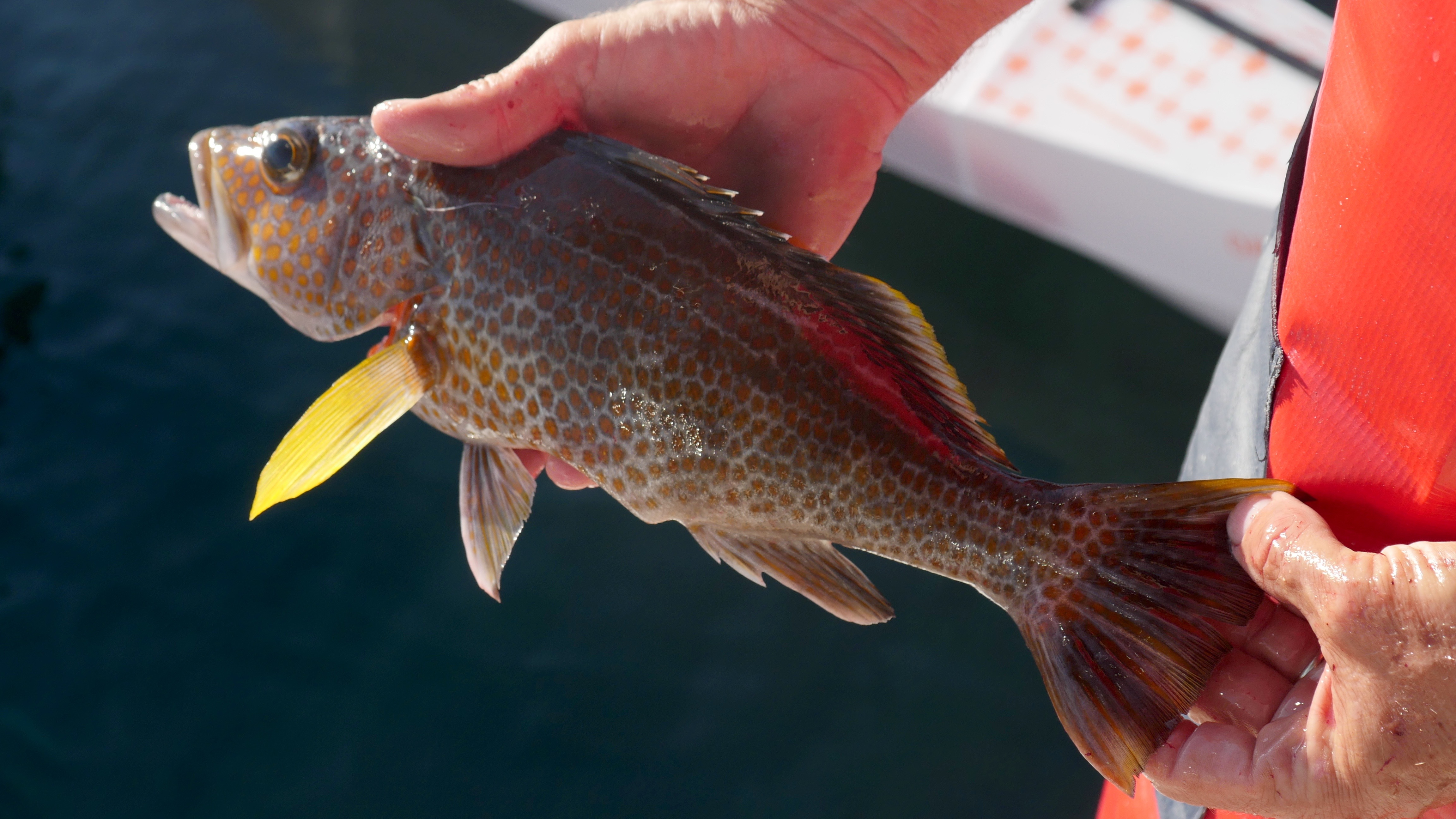
Brian hooked up on his very first drop as I was still trying to figure out how to get my bucktail jig on my spinning outfit to drop, and then how to tell it was on bottom. He reeled in a nice golden, a “three-taco” (3-4 pounds I’d guess). I was still flailing when he caught a one-taco on his next drop. I think he had released four fish before I finally managed by accident to do something right and hook a one-taco golden. Not sure if he registered that I’d actually managed to overcome my ignorance and actually catch something, but he then suggested I use one of his rods. This lure was a little heavier than his, so he warned me to be careful about not lingering on the bottom as I would probably get hung up. Mastering the order of events, from guiding the drop to setting the drag on and getting the jig jigging, took a little but it was a whole different deal than trying to do it with the spin outfit  (in that it actually made sense). I caught another one-taco, as Brian caught a few more and then things slowed down. Throughout he was talking pretty much non-stop, so that if there actually was a moment of silence, it really did feel like something was sort of wrong. Lynn did not say a word, Brian spoke for her. “She” used to love fishing, and was really good at it, had caught a 200 pound Tuna once and then sorta quit, cuz how do you top that? She nodded.

I’m sure it was as obvious to them as it was to us that we each represented two different “Montana” types and an age-old cultural divide. On one side you have those farmer/rancher/miner types who would never ask the question “am I an authentic Montanan?” On the other you have the gentleman farmer, not-a-rancher-or-miner type, outdoors enthusiasts I guess, who populate places like Bozeman and Missoula, who are aware of the question of authenticity in everything. We feel the need to mention our bonafides, twenty-five years in Montana, so that we do not appear to be, what we so definitely self-identify as, namely “newcomers.” We’re newcomers to Baja, of course, too, and sailing, and as was brilliantly obvious, jigging. In some way, we are culturally condemned to always be newcomers. Perhaps we would do better to adopt the label, nomads, which conjures figures like Geronimo more than the college educated city-slickers we are commonly identified with. Montana friends who know our actual history well enough to know better, still think of us as Californians even though for me, that period represents less than 15% of my life. I don’t know what Californians think of us as, but they can definitely tell, that nomads like us don’t belong there either. I guess the reason I’m sensitive to all of this is my own Eastern Washingon/Idaho family who have always represented a cultural alter ego — me worrying that they think I’m some liberal cityslicker and them worrying that I write them off as redneck hicks. The truth of course is some kind of hybrid for all of us, along a spectrum, but newly meeting fellow “Montanans” we naturally look for the things we have in common. Fishing and a passion for remote places seemed to provide the intersection.

They dropped me off, and then offered (with some slightly un-subtle hinting from us) to sell us some gasoline since we’d forgotten to fill up the jerry can before leaving Santa Rosalia. We got a tour of Saslipuedes, a look at the “dark side” of powerboating. Spacious means extra space you have and don’t even have to use.

In the afternoon I went fishing on my own, armed with new information and actual training. The jigs I had bought (based on nothing but my total ignorance and the willingness of tackle shop owners to sell you anything) had treble hooks and were a size too big (#6). I cut the hooks down to one and went out to try my luck. Brian had a fishfinder with a seven inch screen and gps for marking his spots on his fishing skiff. I had a handheld depthfinder, which actually turned out to be very useful at finding a drop off and water that wasn’t too deep or too shallow. The current over the reef south of our anchorage was running like a river. You could actually see it welling up and boiling around the rock pinnacles. I came upon one just under the surface which was downright scary and quickly turned away. It took a little bit to get my Penn reel to spool off nicely on the drop and it was hard to feel the hit on the bottom (at first), but I fished for a couple of hours and managed to catch one two-taco golden and about four one-tacos as well as two Triggerfish. I kept the two-taco and a one-taco I couldn’t release because I had caught him in too deep water and his buoyancy bladder had blown up on the too rapid ascent. I also kept one of the triggerfish to see how it was to eat. They are such odd looking fish (to a trout fisherman), and it boggles me that a fish with a mouth that small would go after a lure that’s five inches long. We are feeling much more comfortable with eating reef fish after Diana asked Brian who’d been fishing here for 15 years about ciguatera and he’d said, “cigua-what?” with that particular, northern drawl of an eastern Montanan.

Spotted Golden/Isla Salsipuedes