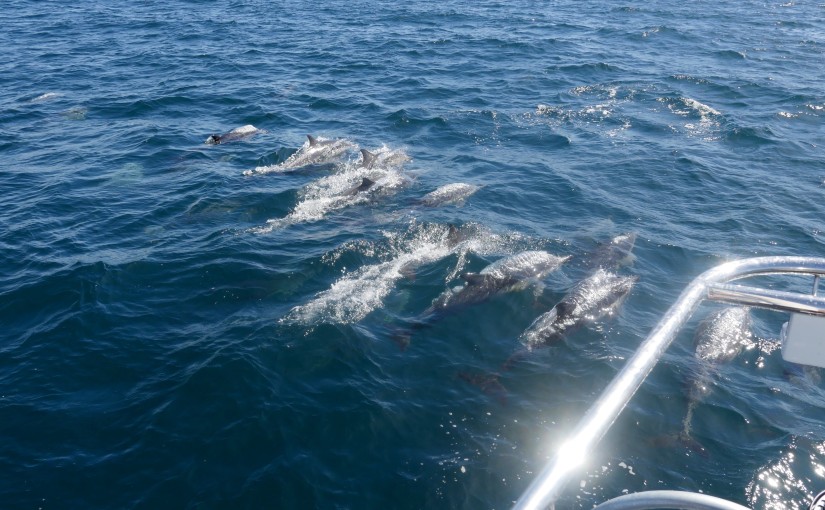
They stayed with us for almost an hour of frolicking.
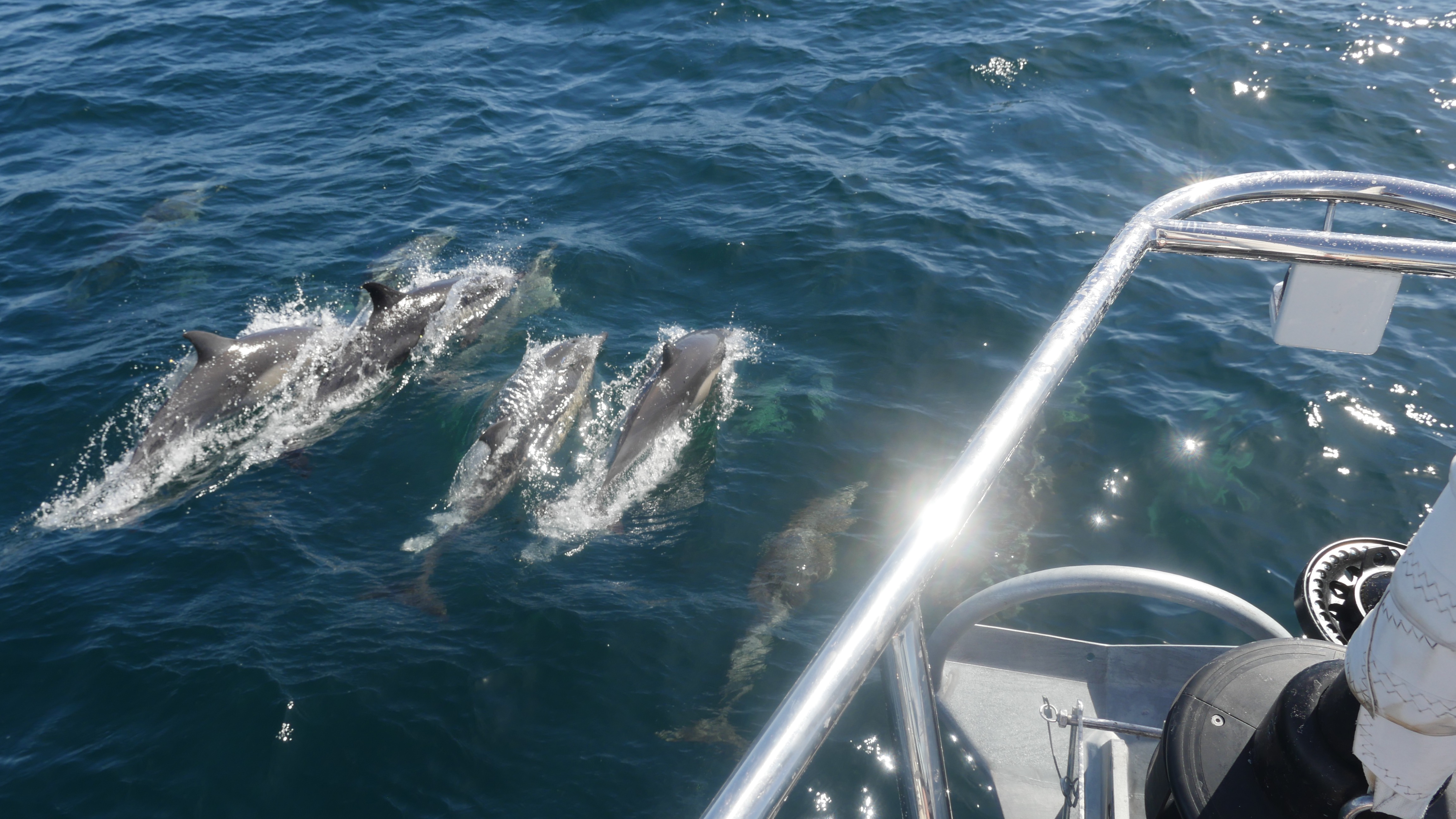

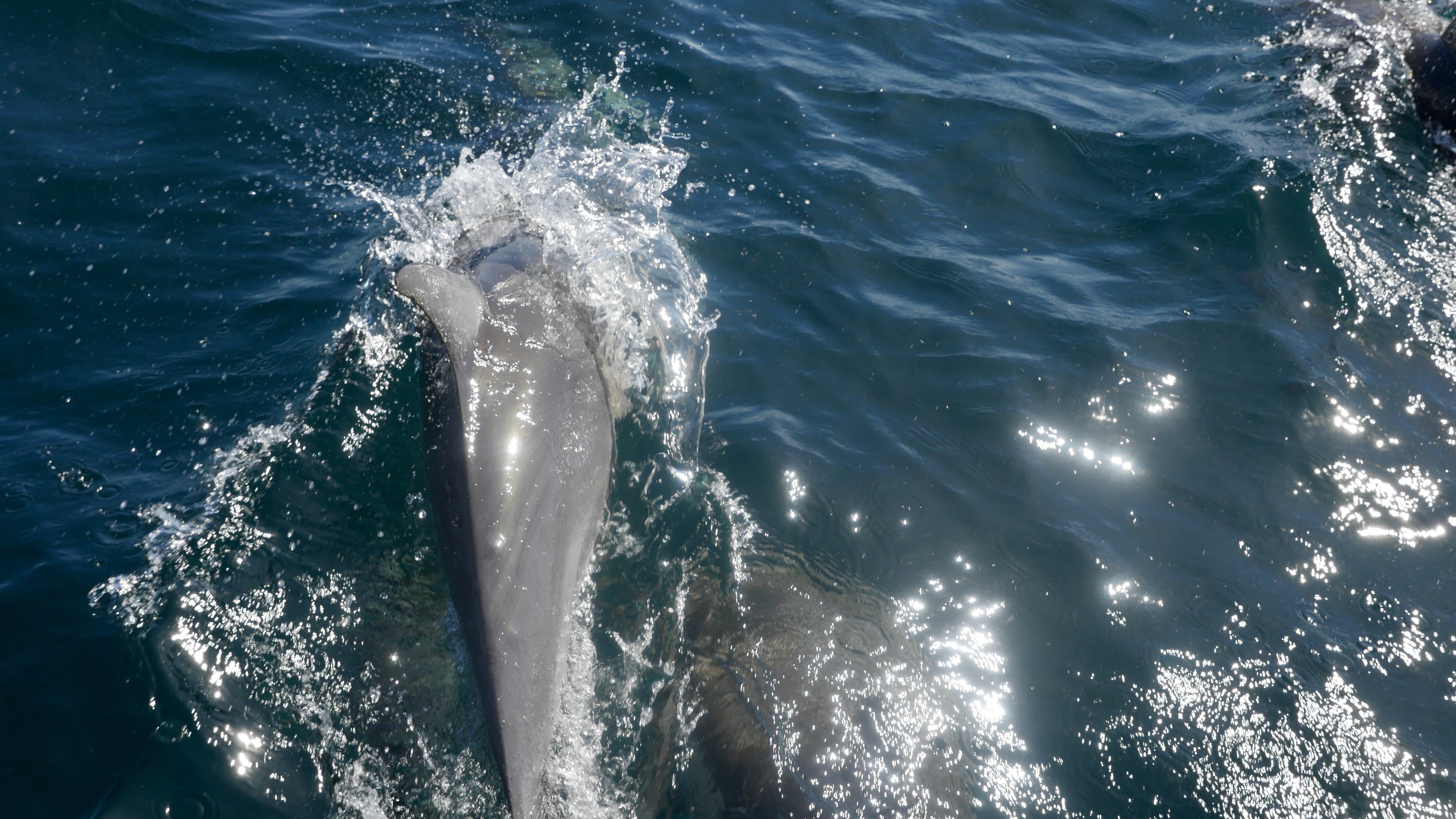
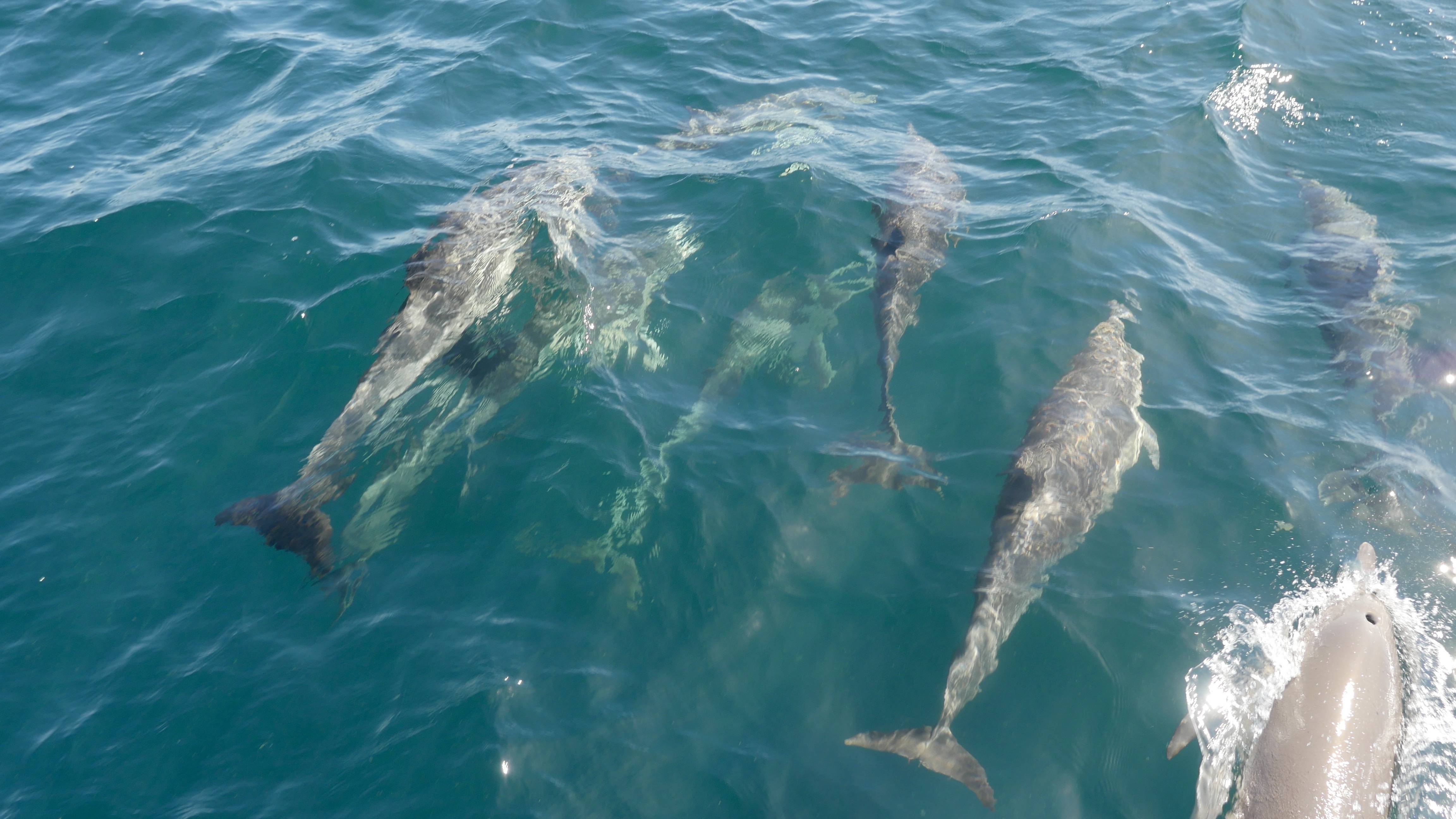
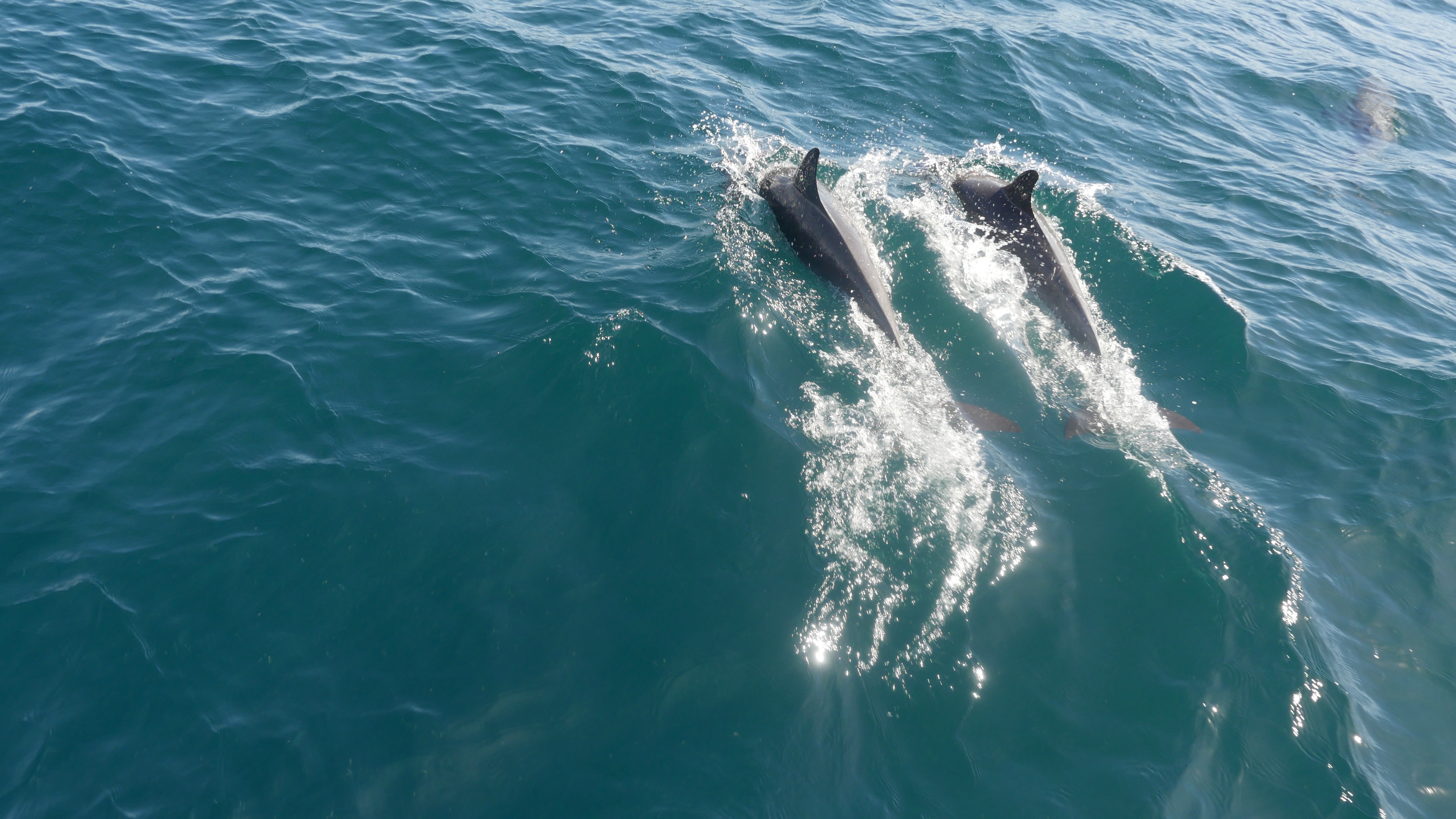
They stayed with us for almost an hour of frolicking.
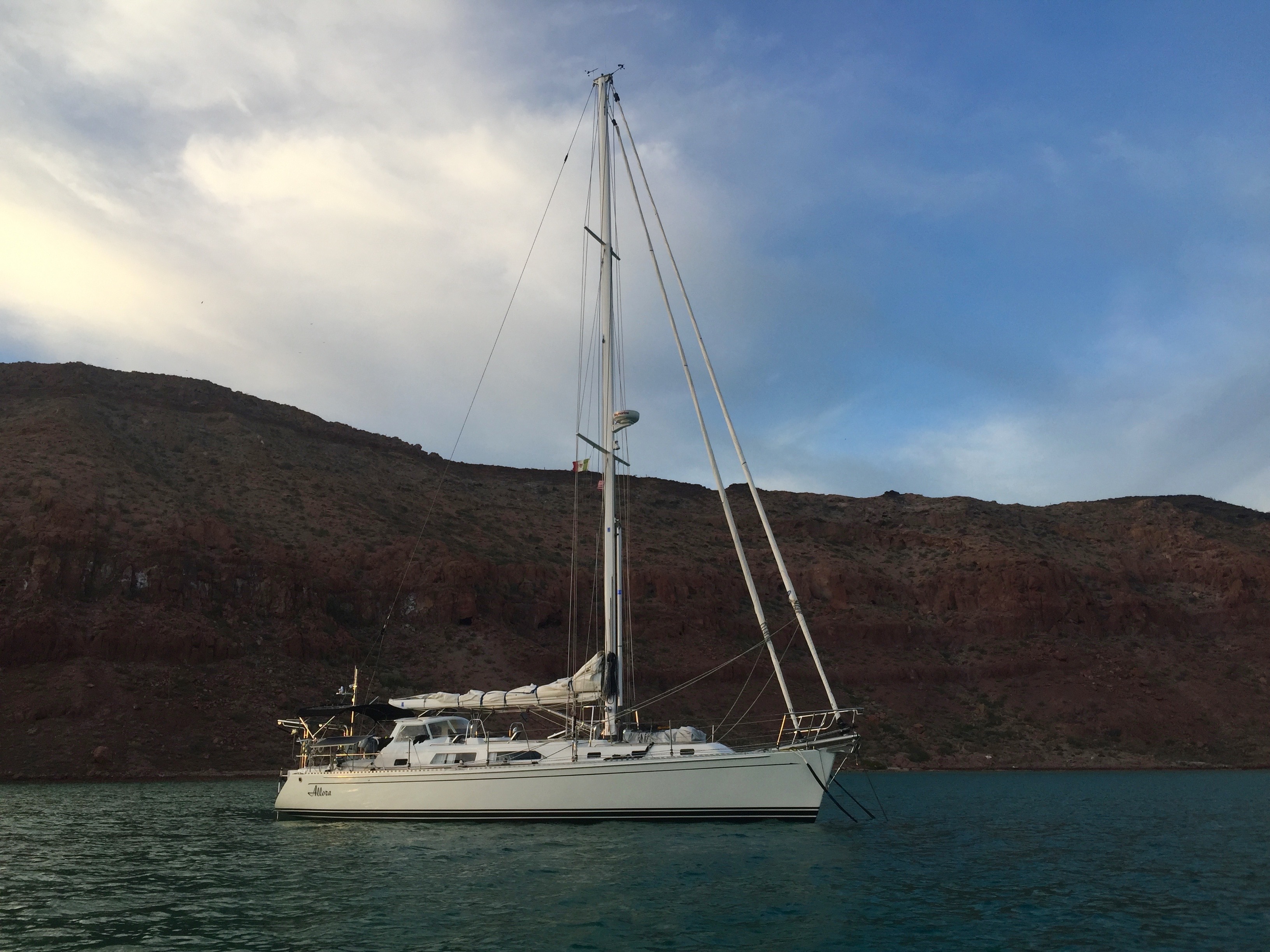
We really didn’t want to arrive in La Paz on Christmas Day, Friday before a weekend, knowing we needed to be all the way to Loreto by the thirty-first. A night sail was proposed. The winds were forecast as practically non-existent, but a nearly full moon would make a pretty motor of it anyway, and we’d have half a day before businesses closed to get a few things done. We weighed anchor after a nice meal ashore, marred only by a drunk Gringo reverting to toddler state from an afternoon of margaritas.
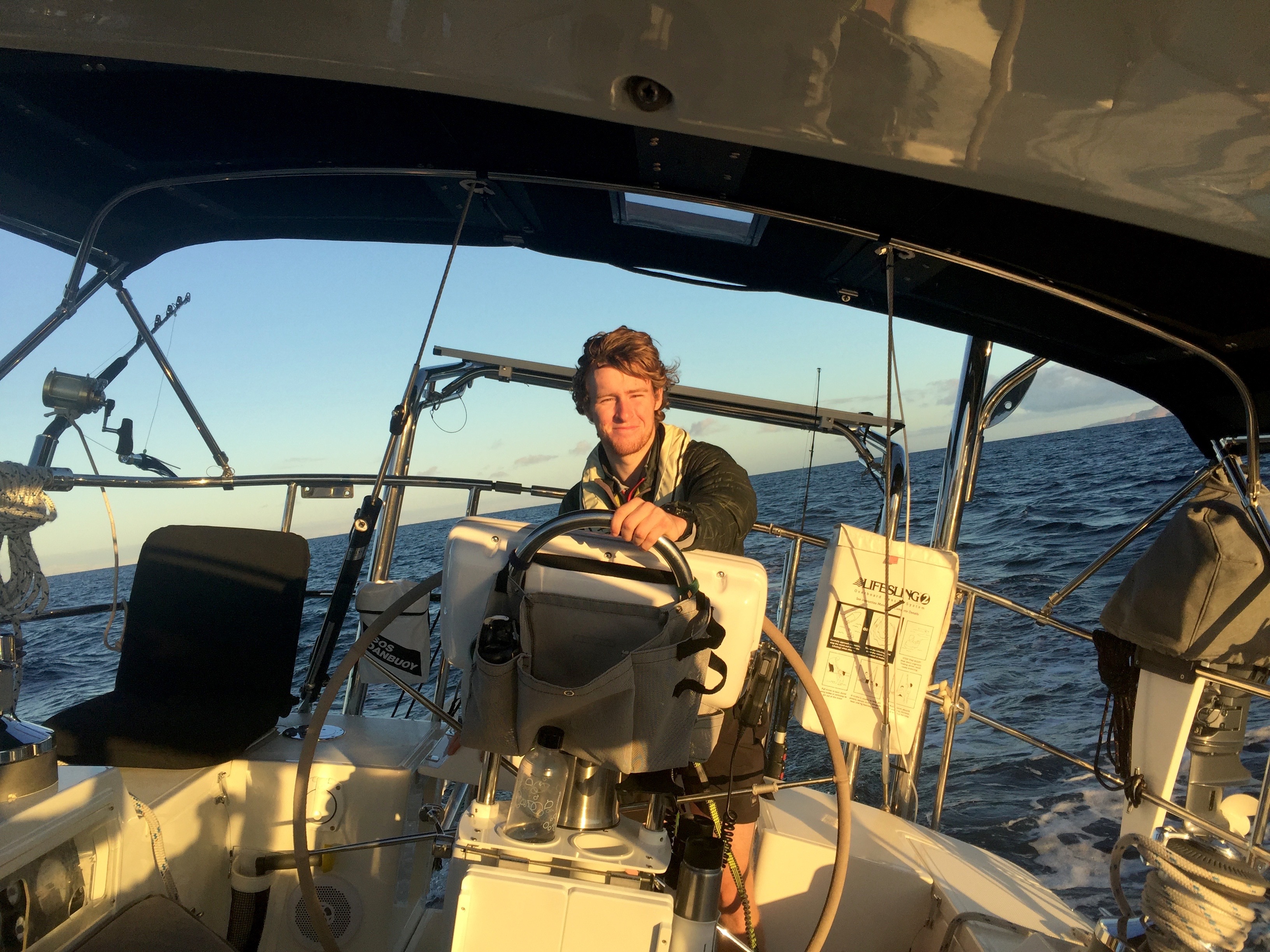
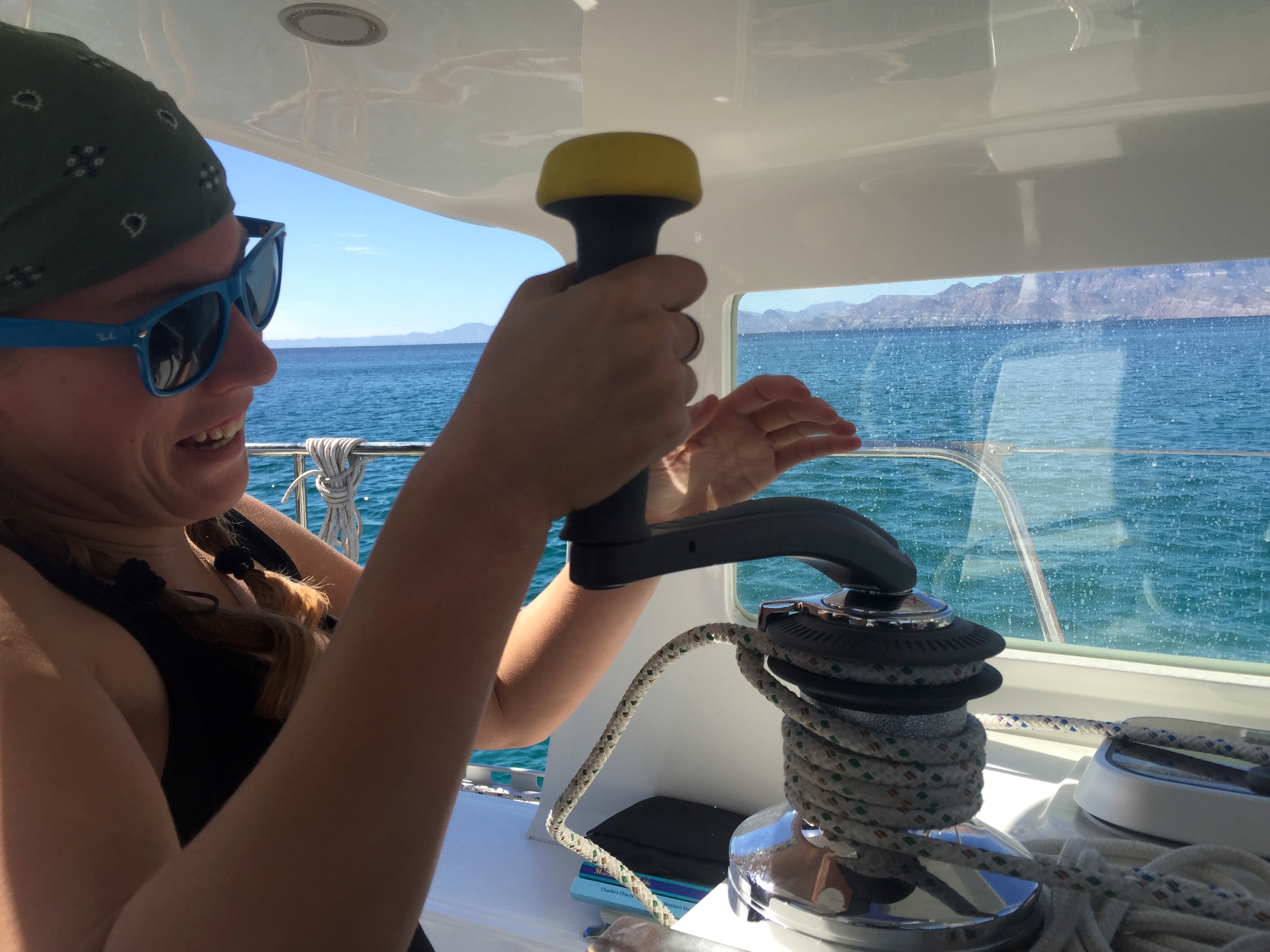
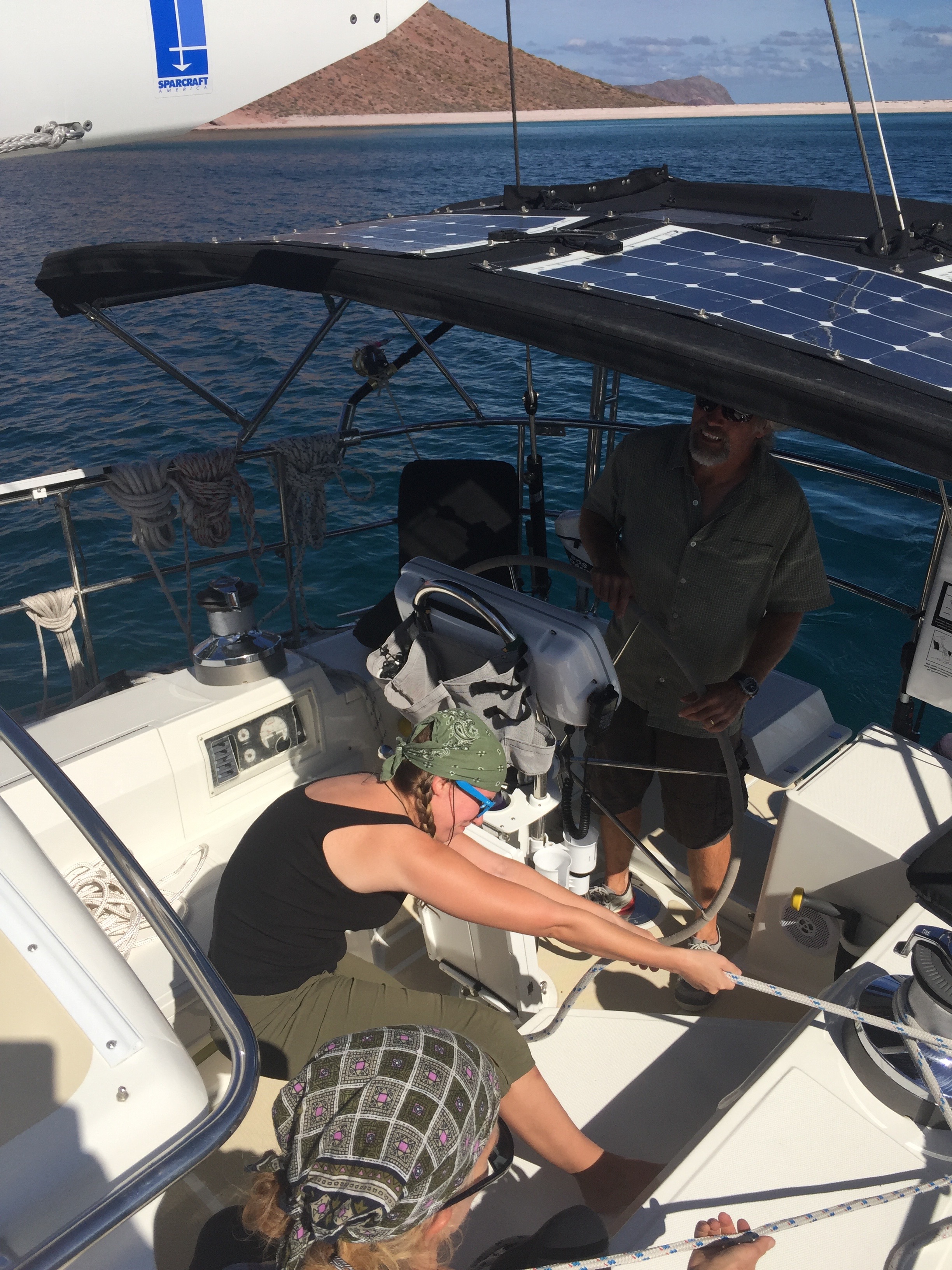
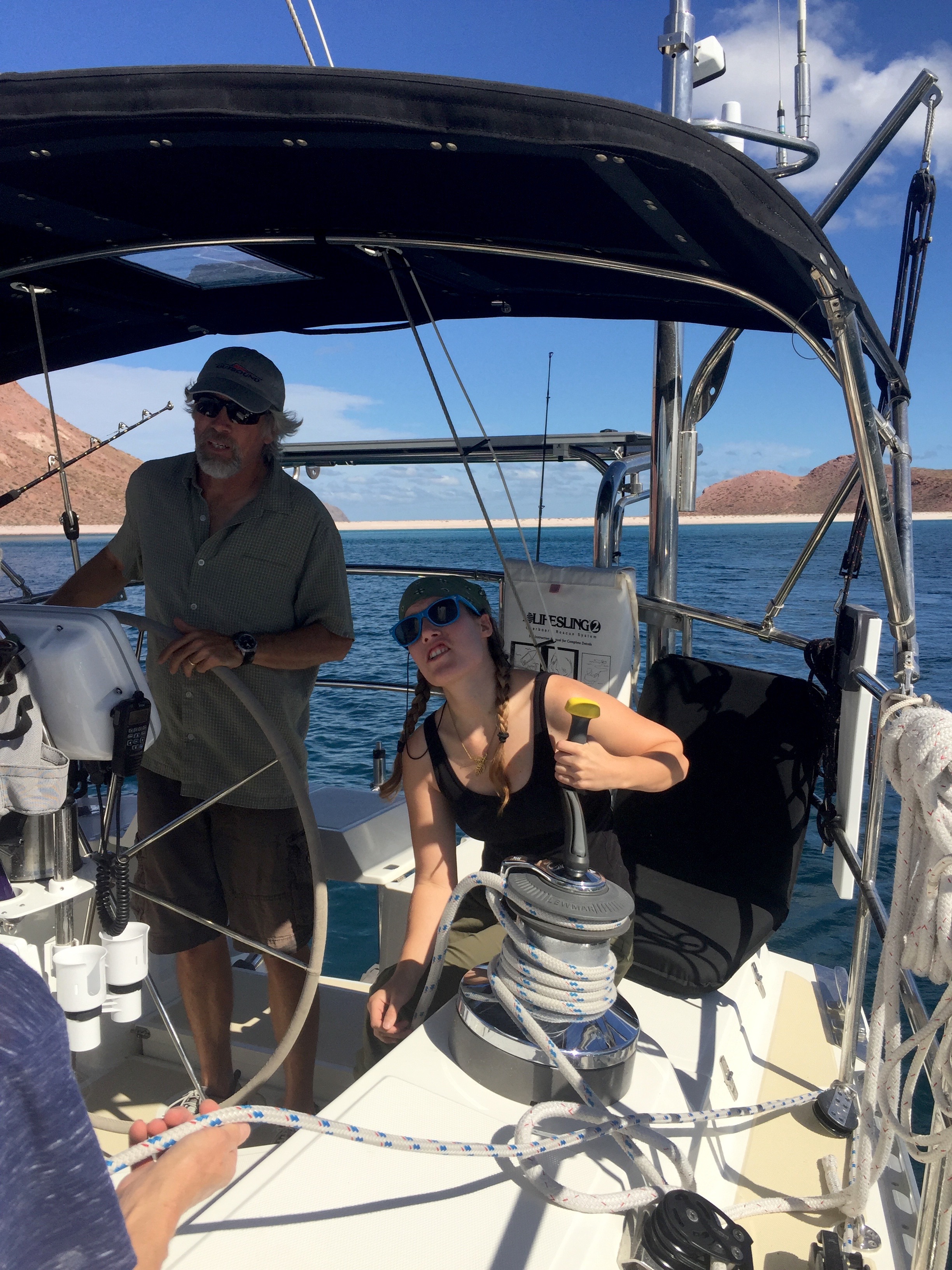
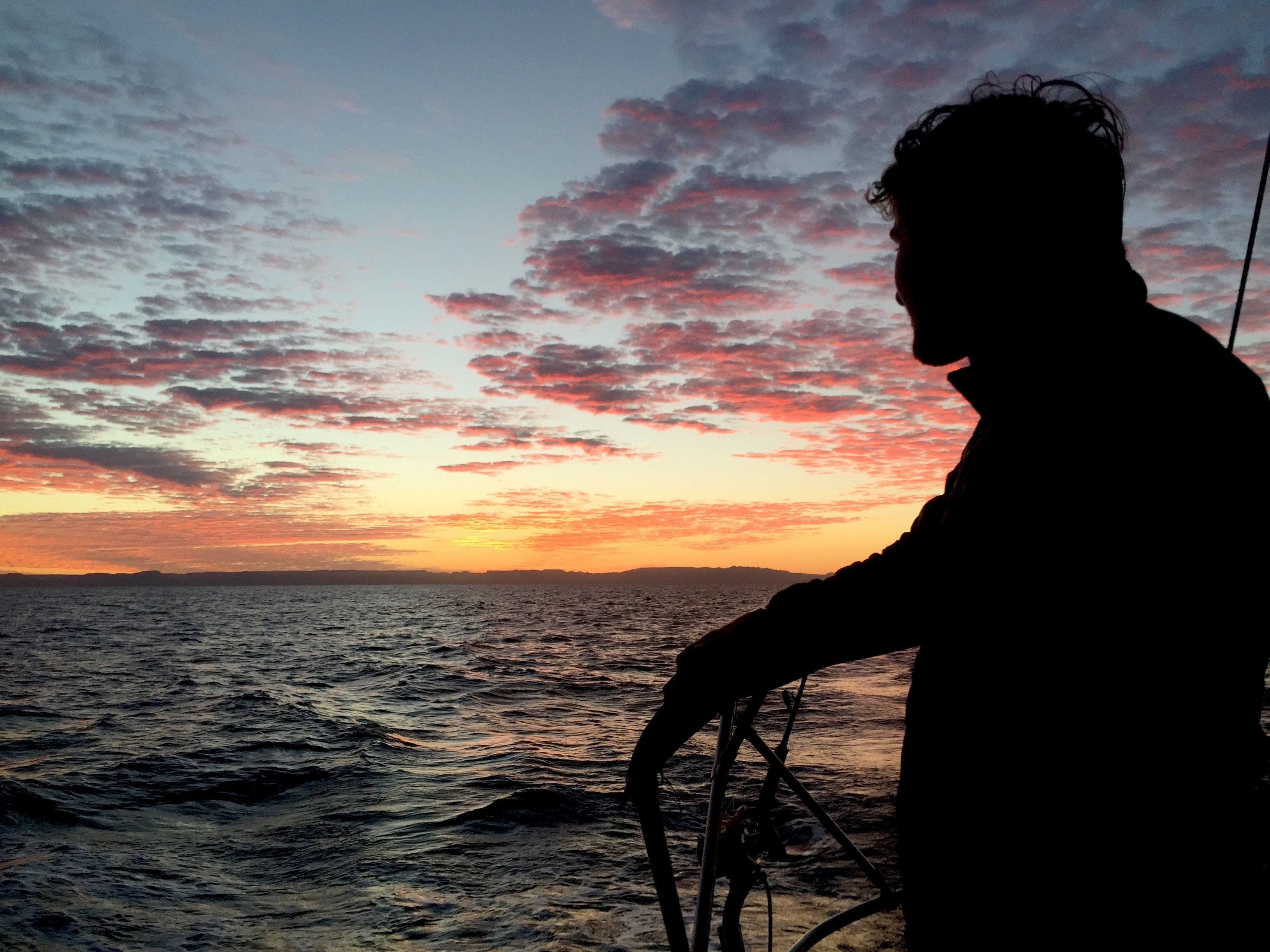
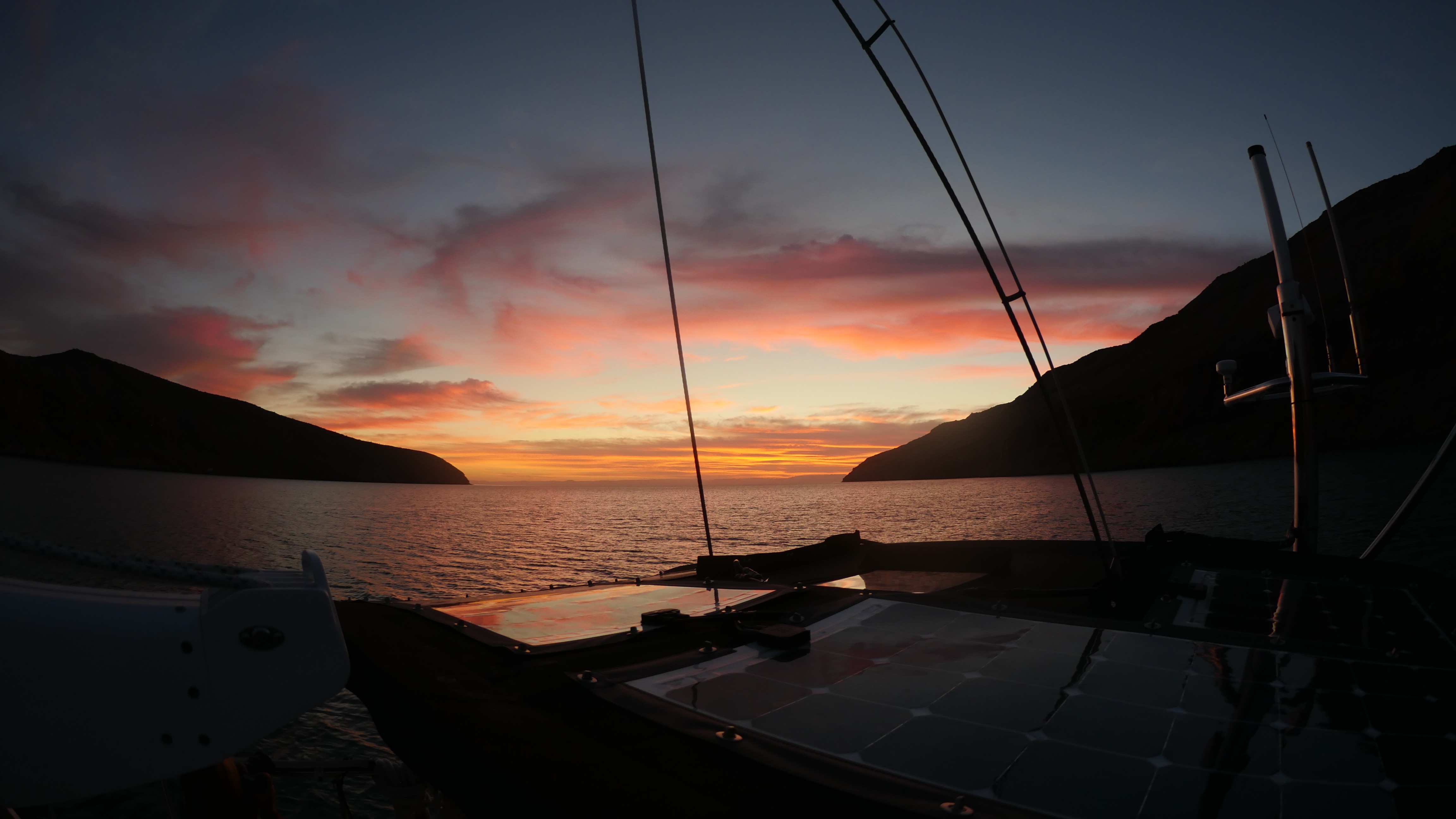
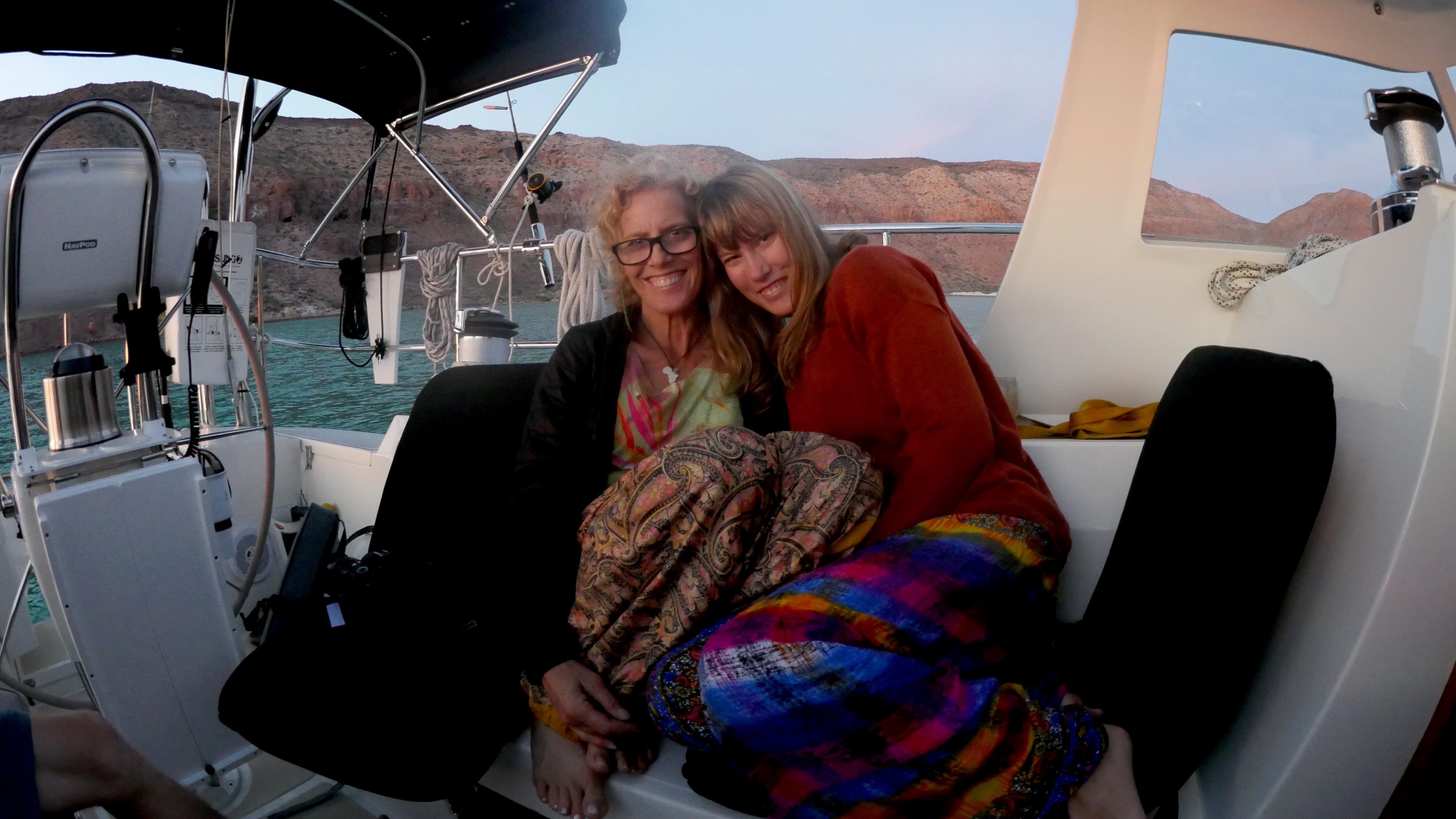
We motored far enough to clear the shoals and raised the main just in case the wind came up despite the forecast. Wyatt and Haley retired to their bunks and sure enough a nice breeze kicked up as we cleared the point. With the genoa unfurled and a beam wind from WSW, Allora took off nicely. The moon was nearly full and it was magical. I went to my bunk and Diana woke up Wyatt to share the watch with her, in case the wonderful sailing didn’t last. But the breeze held as we sailed up the Cerralvo channel at eight knots. There’s something about sailing at night that we really are hooked on, the stars and dark horizon and the anticipation of dawn. Diana woke me around 2 o’clock. The wind had veered ahead of us now, but it still looked like we could make our waypoint at the San Lorenzo Channel into Bahia de La Paz. Haley joined me for the next watch as we headed up and tacked our way through the channel markers, looking up at the stars and snuggling to keep warm. The moon shimmered on the waves and we watched a small forest fire burning high in the Sierra de la Laguna. We inched our way back and forth against a west wind through the small red and green channel markers, that seemed so close, even miles away. Haley went back to her bunk after a couple hours and I continued tacking against wind and current which seemed determined not to let us pass. Swinging ever more due west and forcing me north on the port tack and chasing me back into the channel on starboard. But it was fun sailing and other than waking my sleeping crew with each tack as the sheets ground through the genoa cars right over their heads, it was a great. We had moved so quickly during Diana and Wyatt’s watch and we didn’t want to arrive in La Paz in the dark anyway. Just before dawn Wyatt took over for the sunrise watch and I slept until he got a call from the Lompampo Ferry on the VHF, bearing down on us at 17 knots as we approached the channel entrance. I helped Wyatt with a quick tack and made coffee while he steered and Allora topped 9 knots.
We pulled into our slip next to a couple particularly ostentatious motor yachts (which does seem to be the whole point of these vessels) and Diana went into Diana mode — compressing the errands which any sane crew would allot a week for, to half a day. The plan was to sail to Loreto, upwind over the next five days, so we needed provisions. We also needed to make room for “the Grandmas,” Elizabeth and Camille, which involved some repacking of the stuff in the big cavern forward under our bunk.
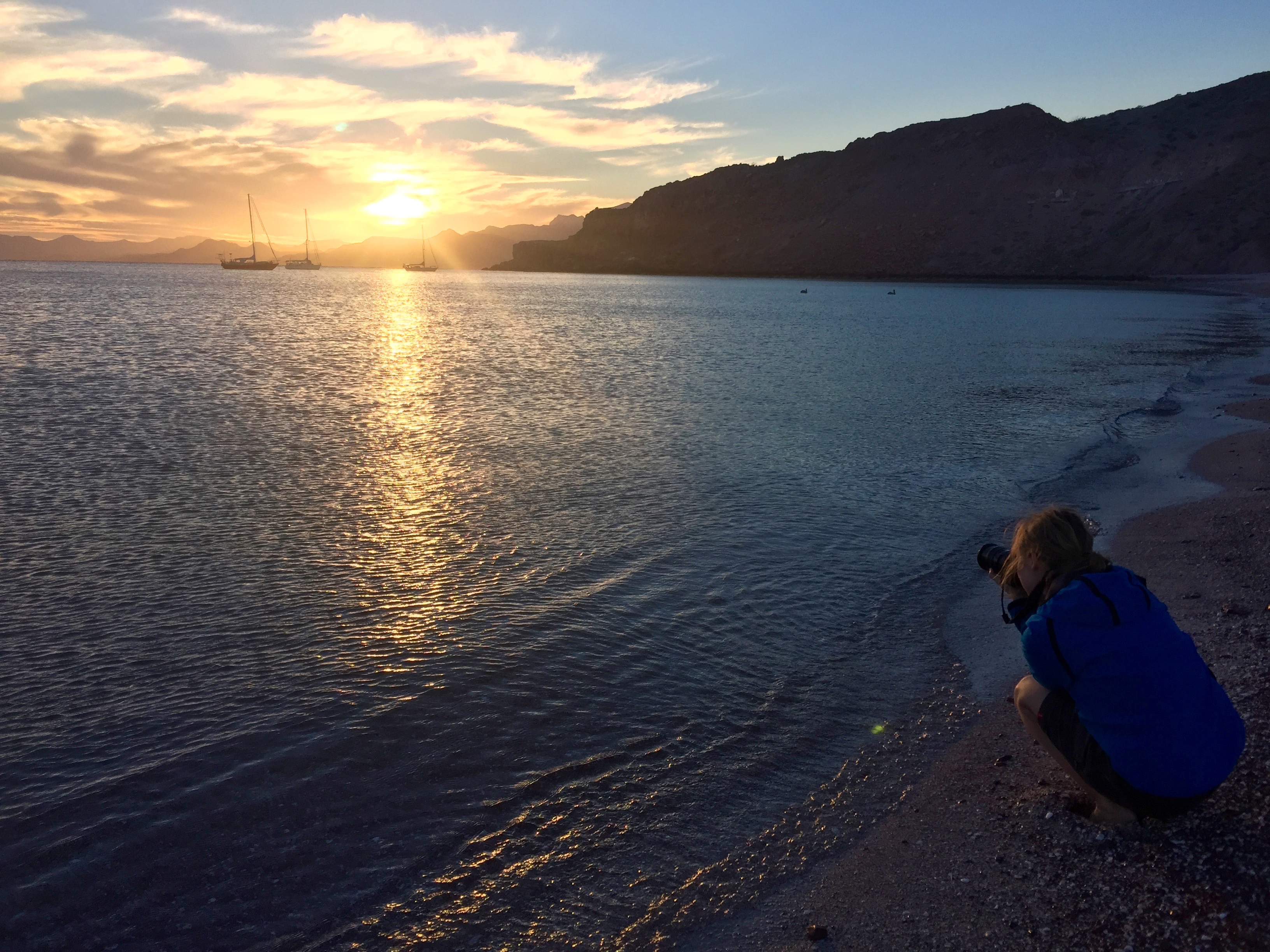
Things closed at one o’clock and as we unloaded our provisions, Christmas eve was celebrated with carols sung at the marina in an organized program put on by the boating expats of La Paz. There was amplification and electric guitars, but I couldn’t help feeling that my fellow sons and daughters of meek religious pilgrims didn’t really seem to put their hearts into it. I guess the reticence of our Mayflower ancestors runs deep. Nobody applauded, no doubt because it was a singalong and that would involve the mortal sin of applauding yourself. It was the tenth annual mumble-along to be held at Marina La Paz. Maybe my personal reaction had more to do with misunderstanding the religious component of the holiday. Maybe Christmas eve is supposed to be solemn and serious. We had our own quiet celebration aboard Allora and Haley took some pics of the boats festooned with lights.
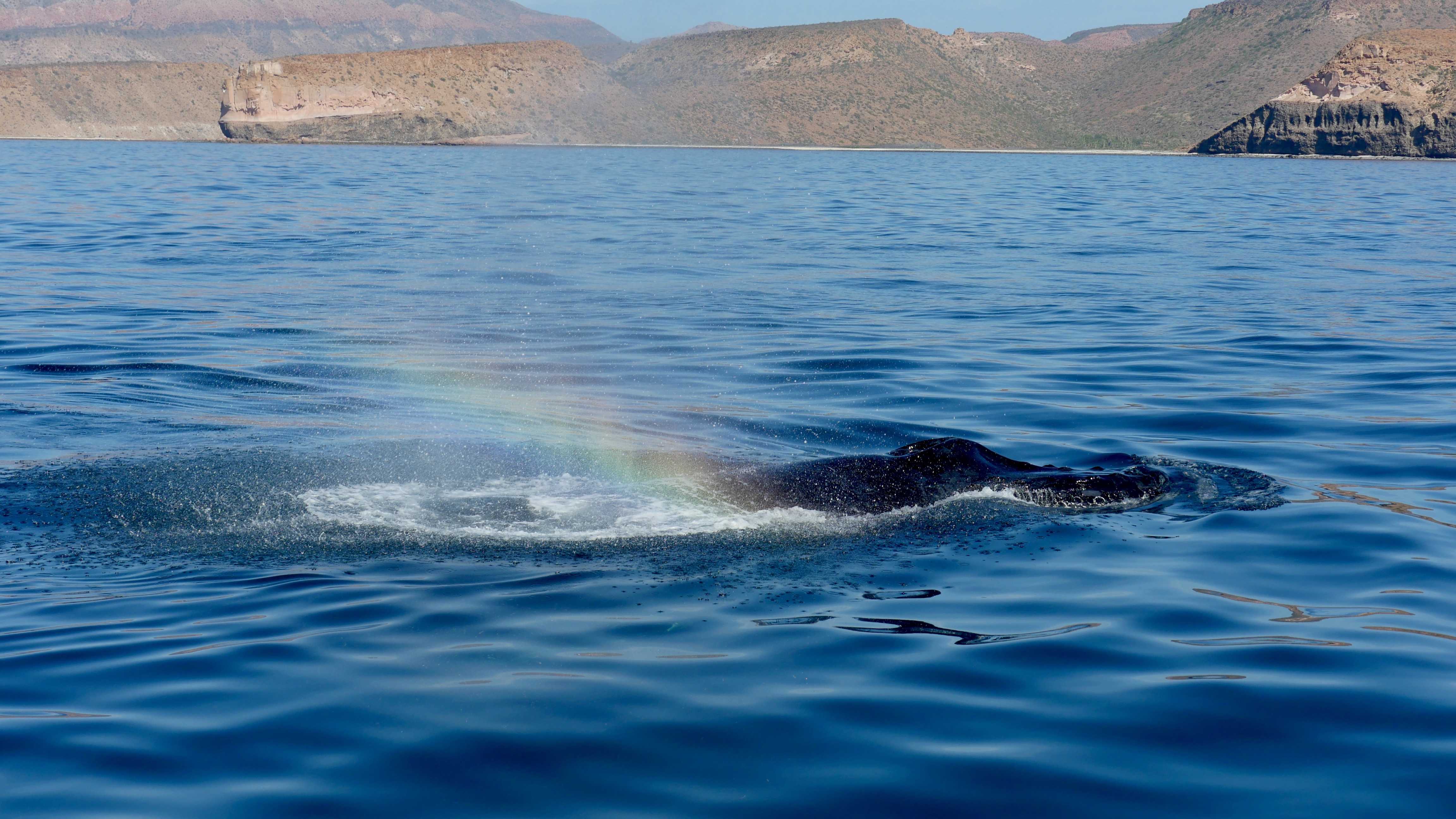
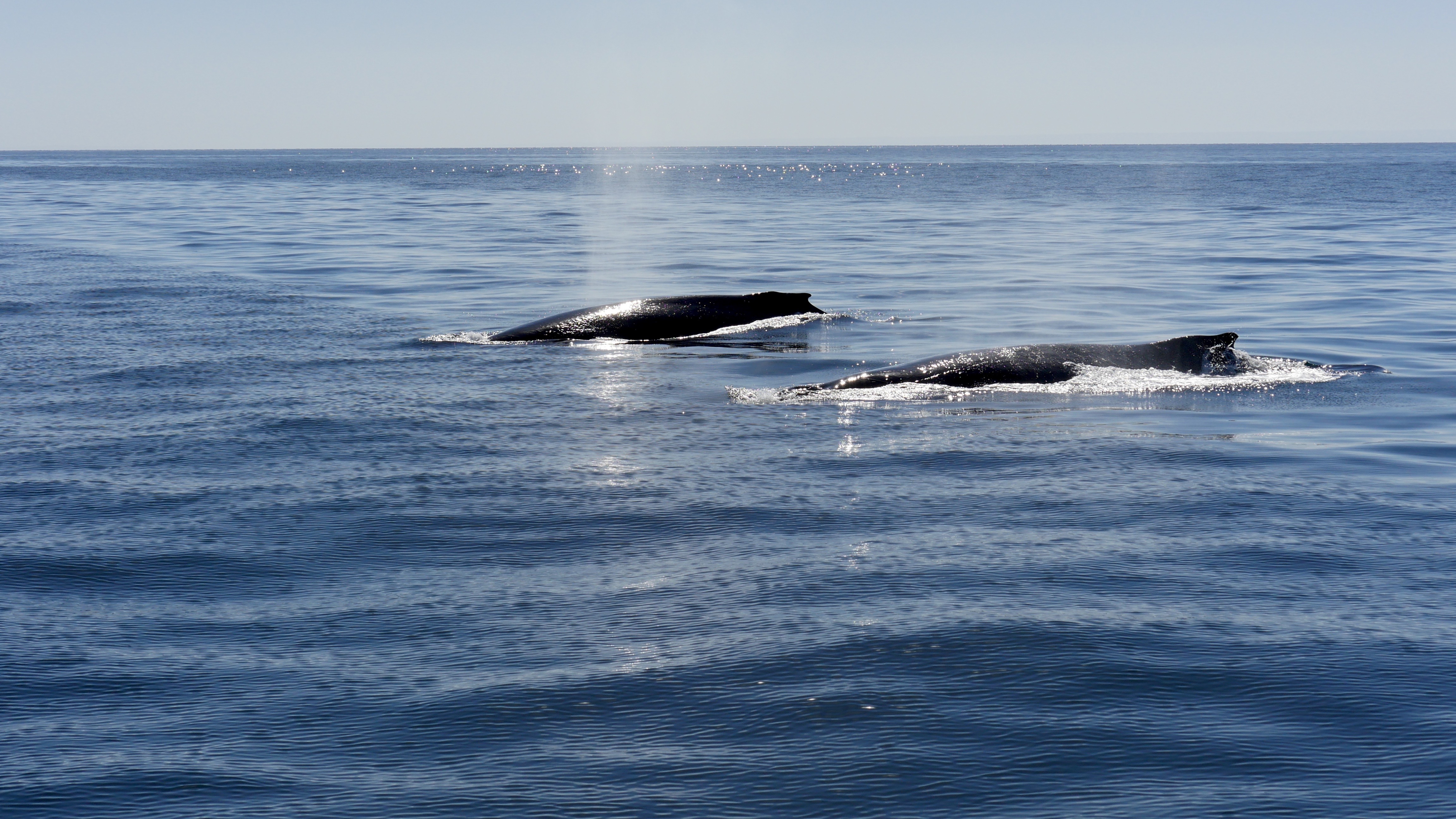
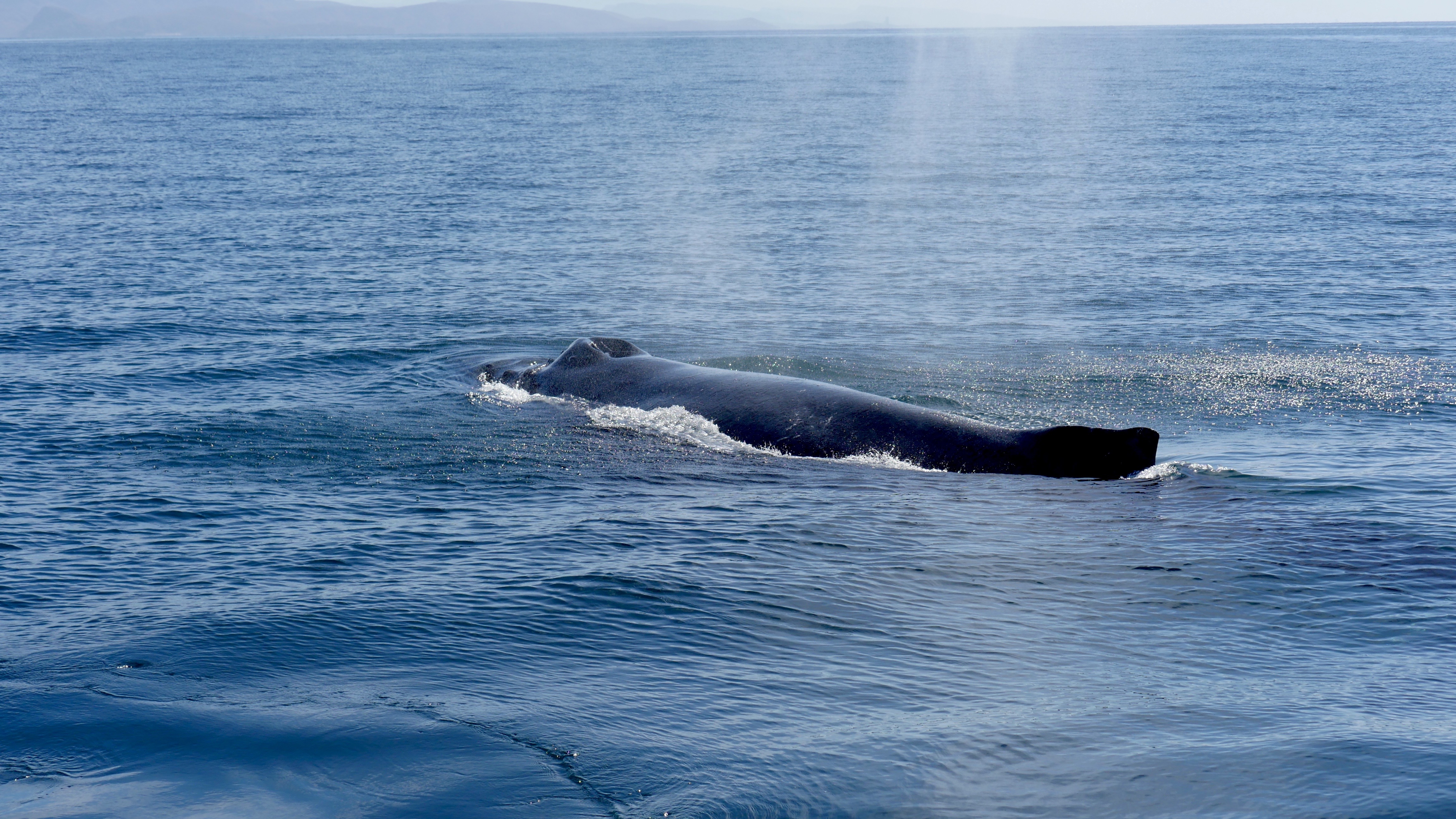
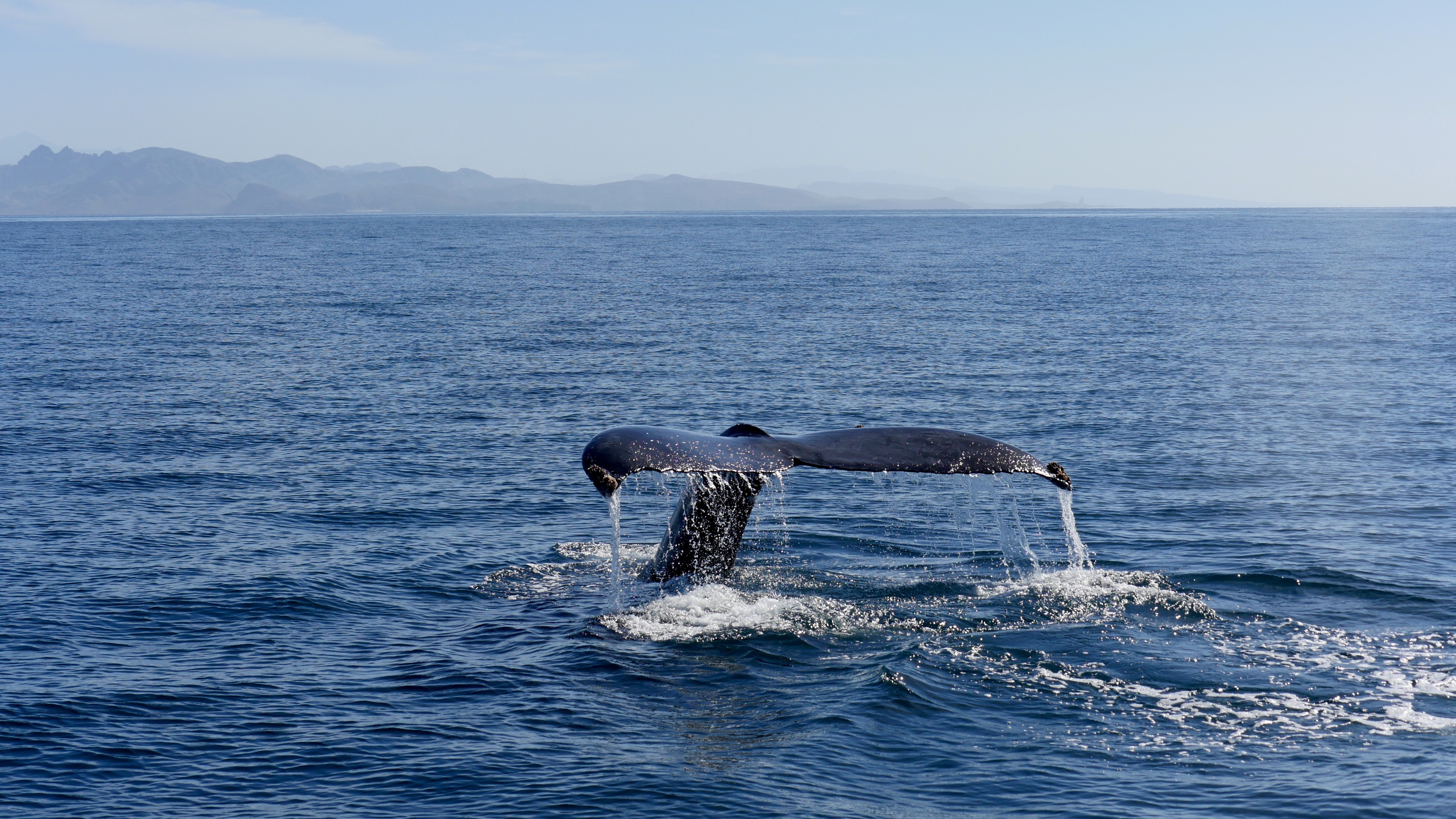
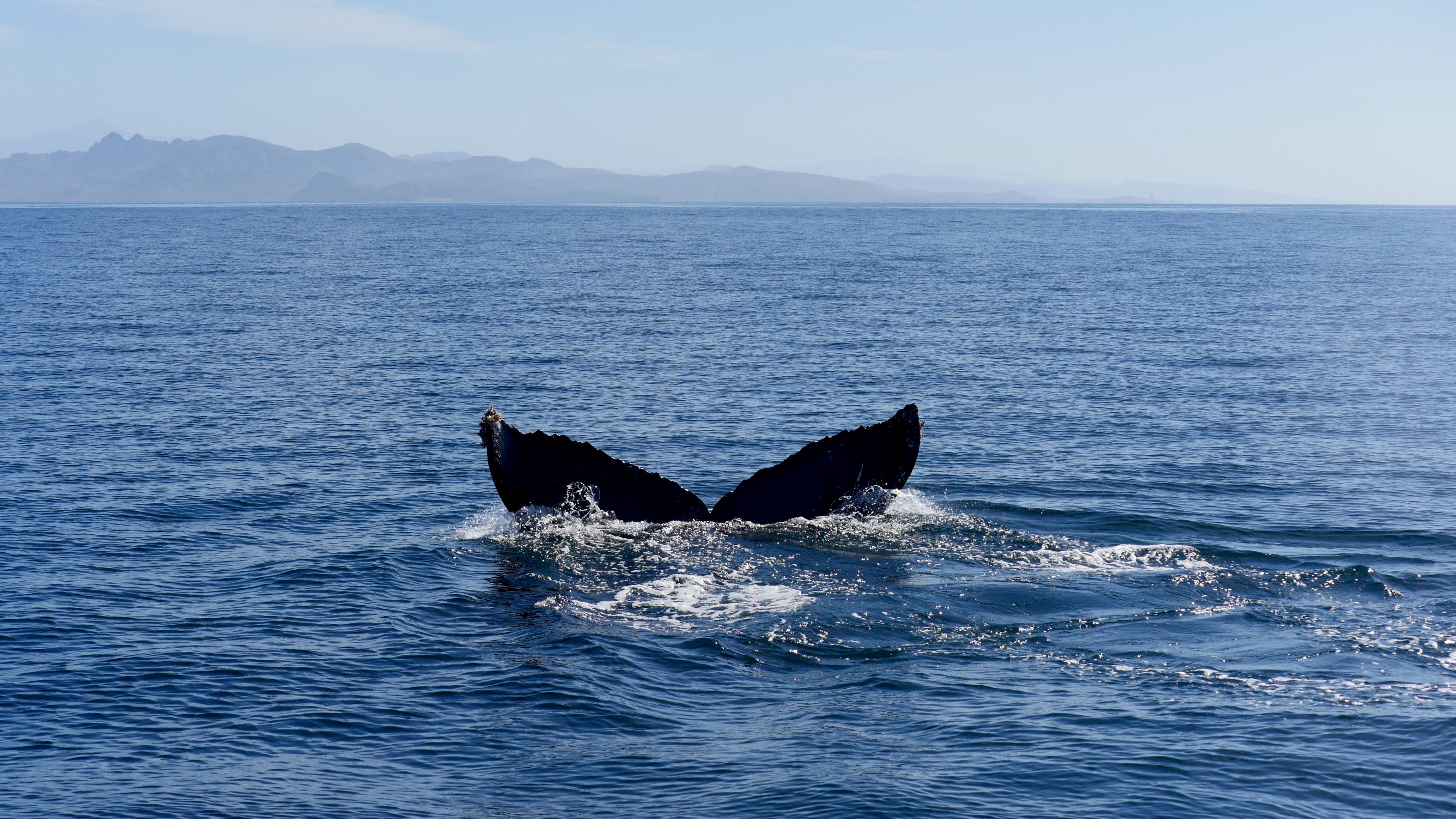
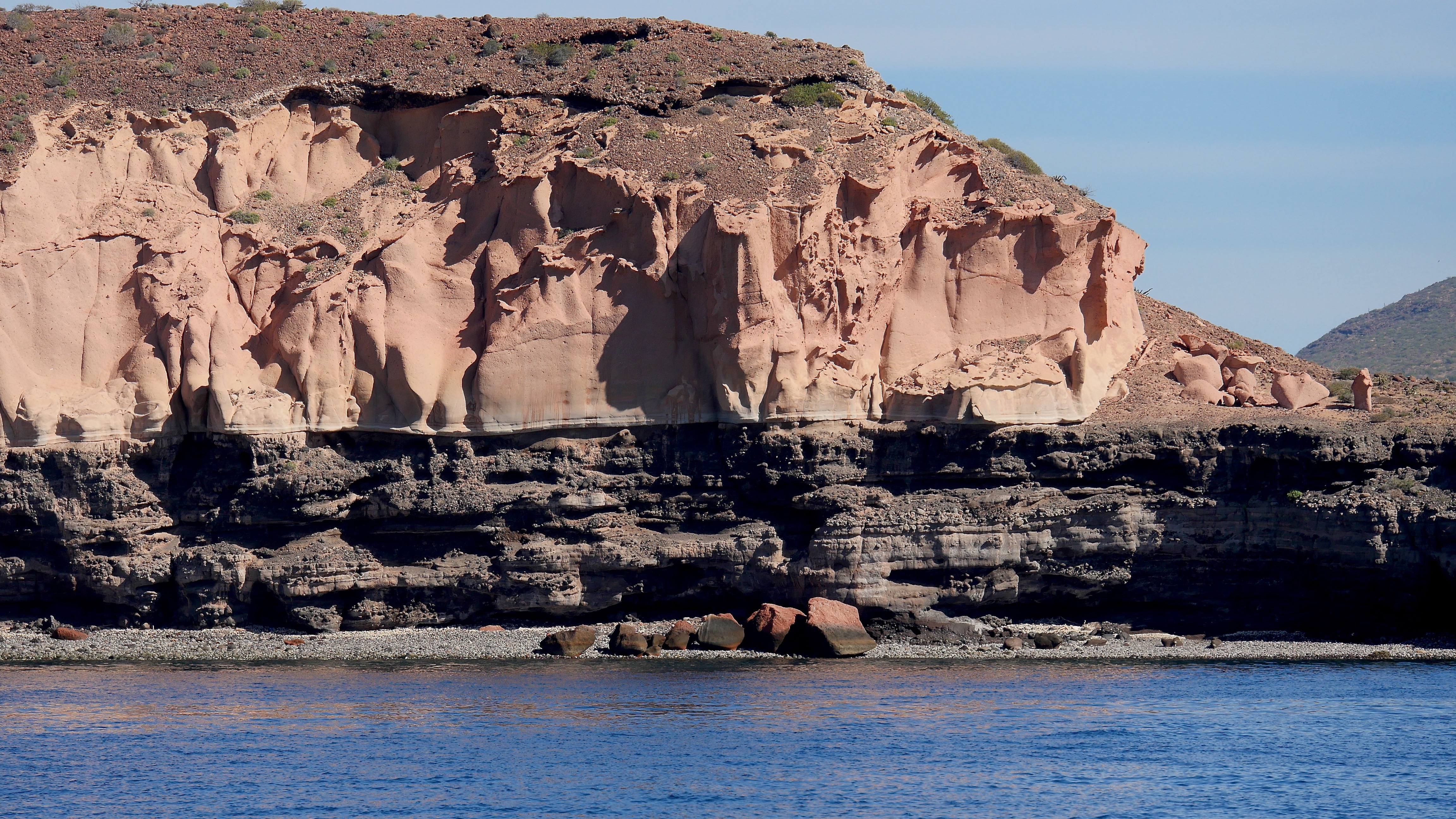
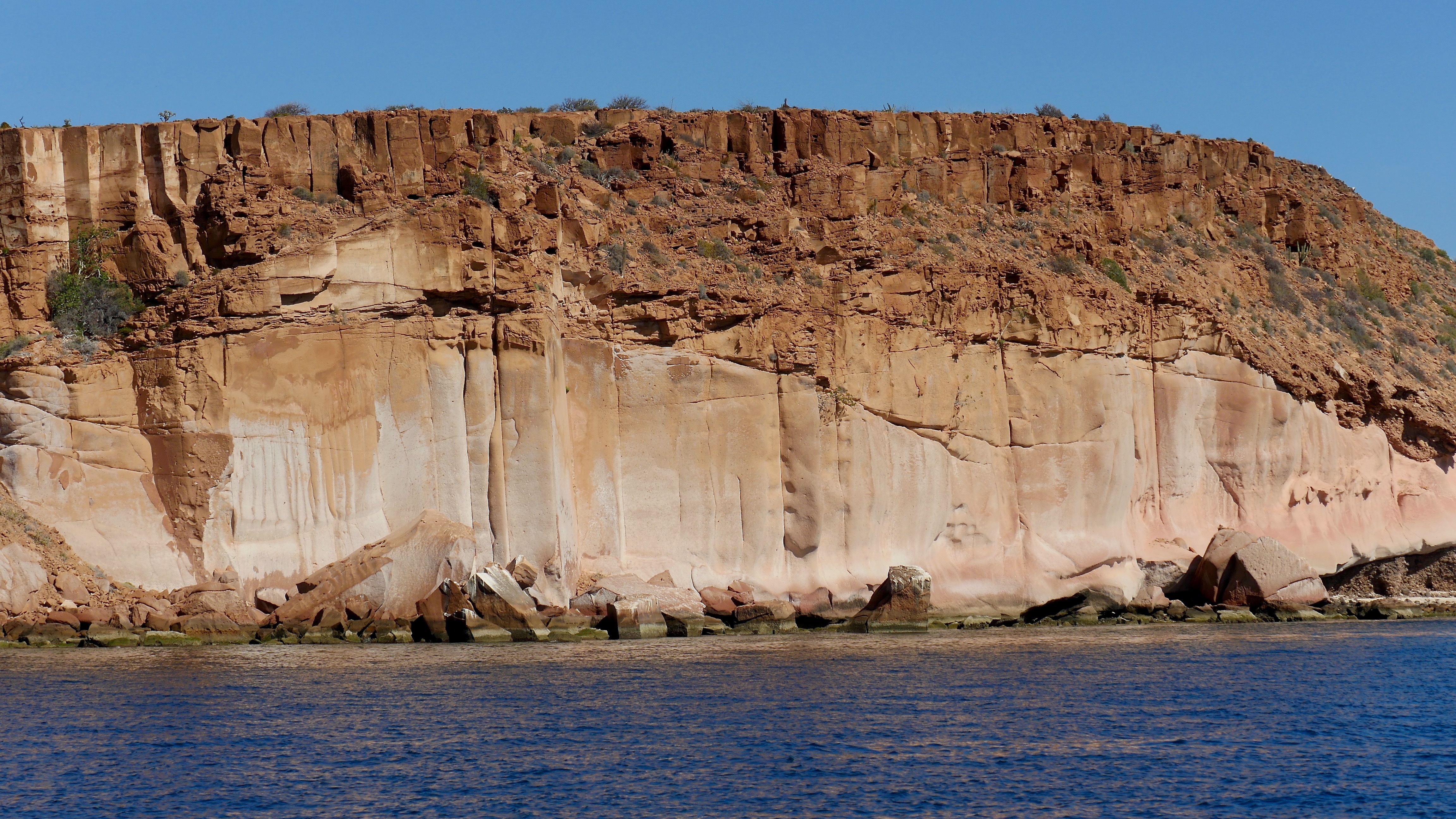
We sailed Christmas day on a whisper of wind, which finally quit as we approached the beautiful island, Espiritu Santo. Along the way we spotted some humpback whales, and though a few of the tourist pangas that ferry people out of La Paz for day trips also found them, they hung with Allora. Maybe it’s her black bottom paint that attracts them, but though we didn’t jump in this time, they came close and dove right under us (spottable on the fishfinder), then curiously stuck their noses out of the water.
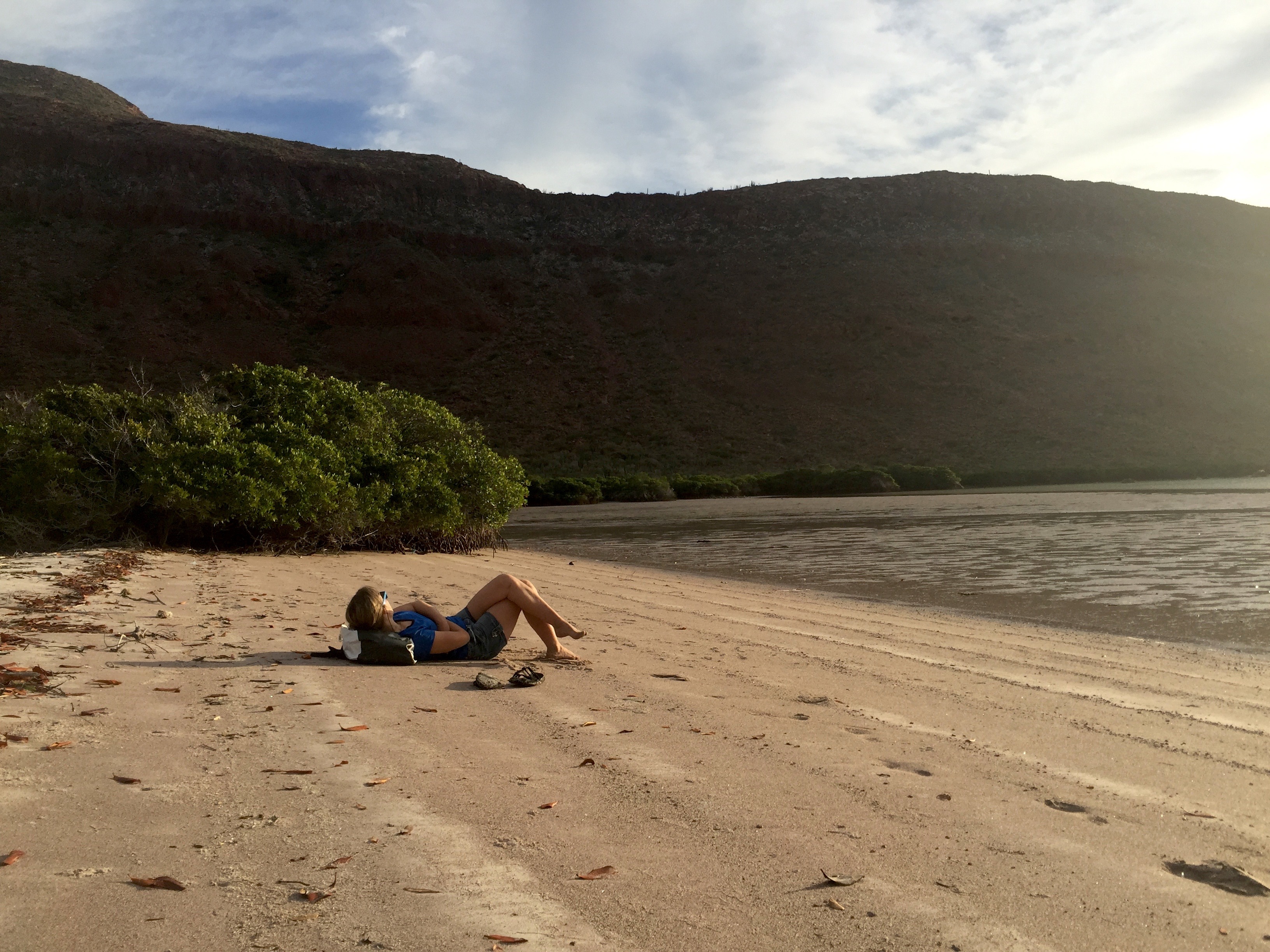
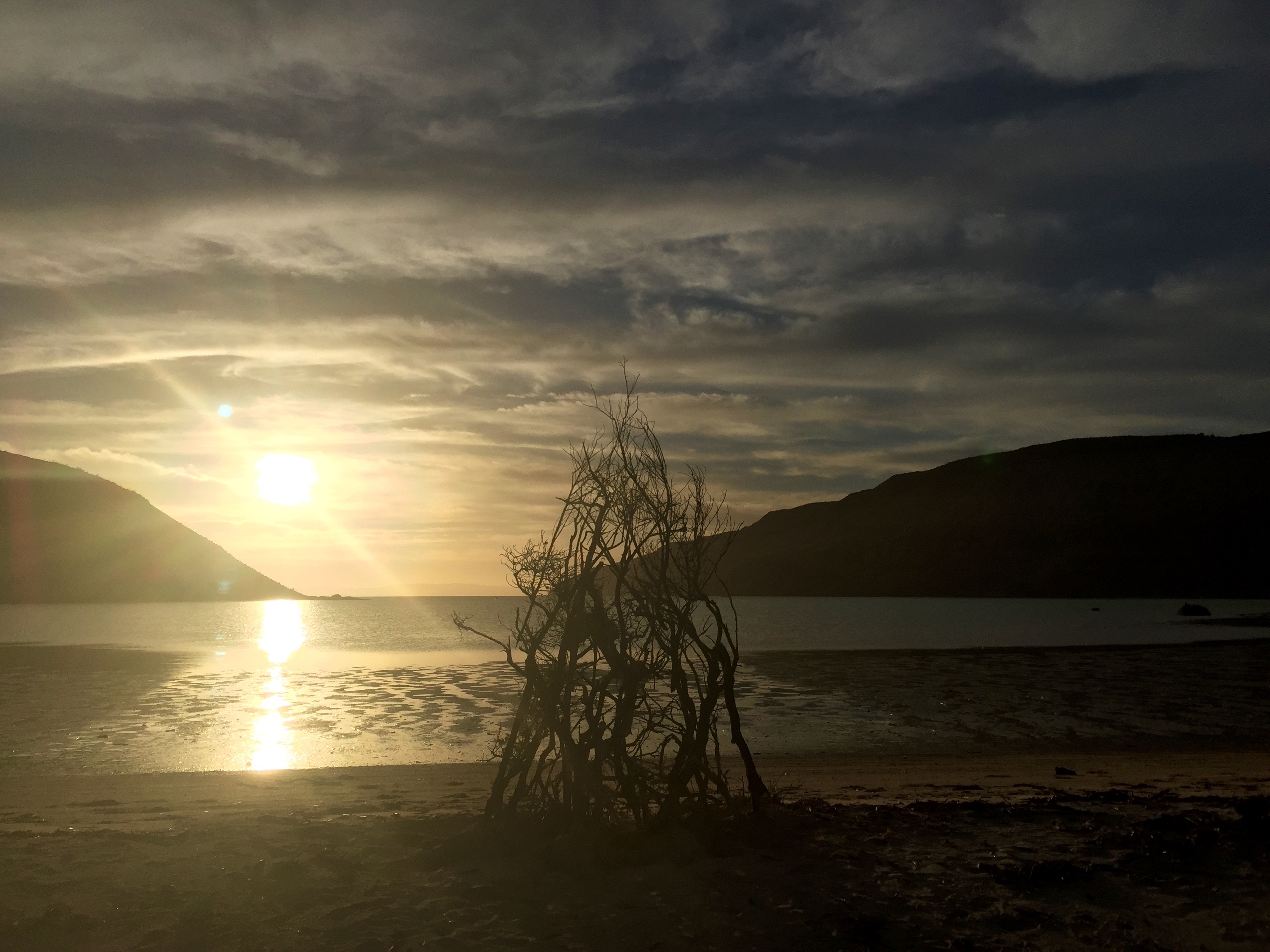
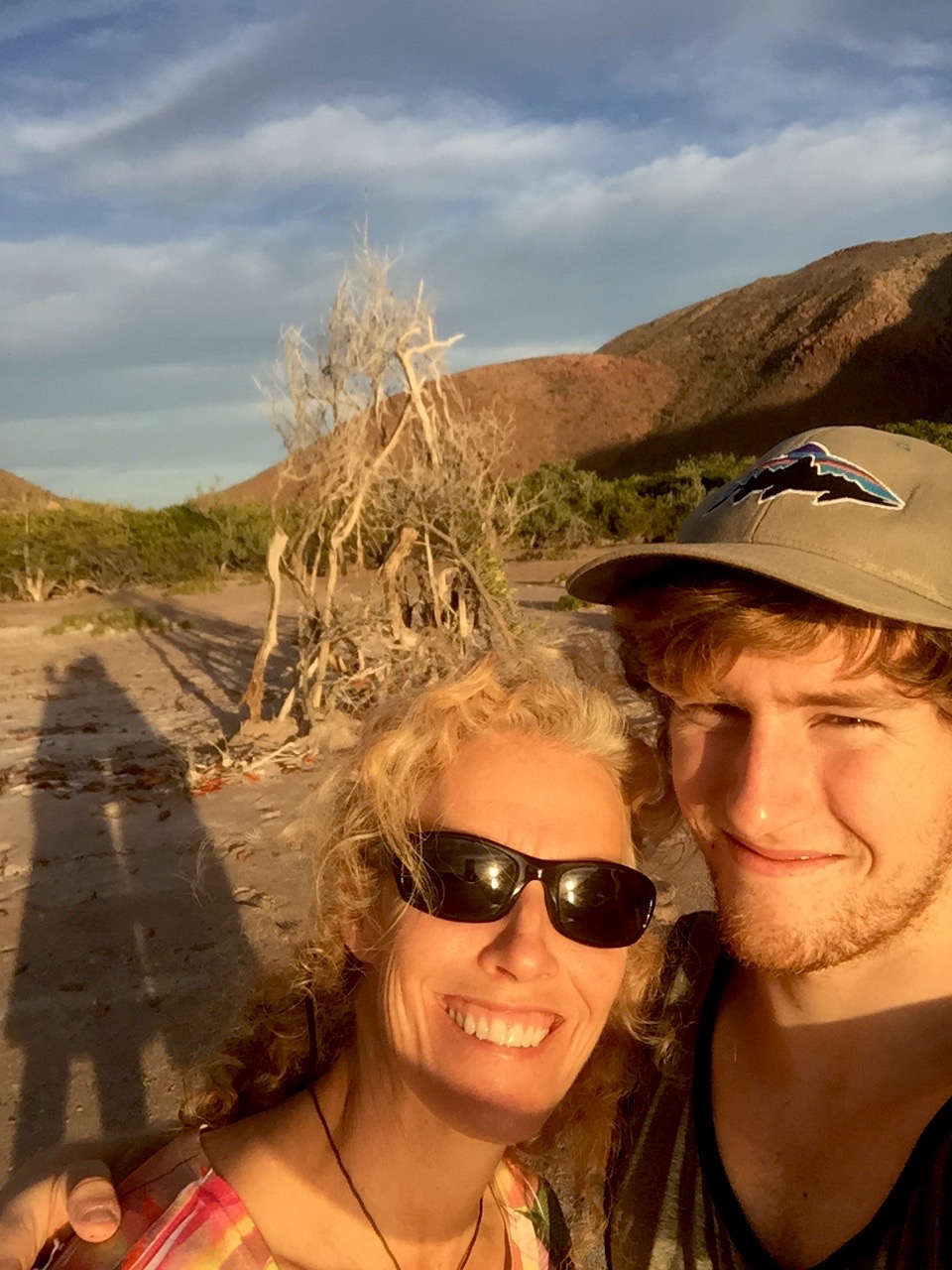
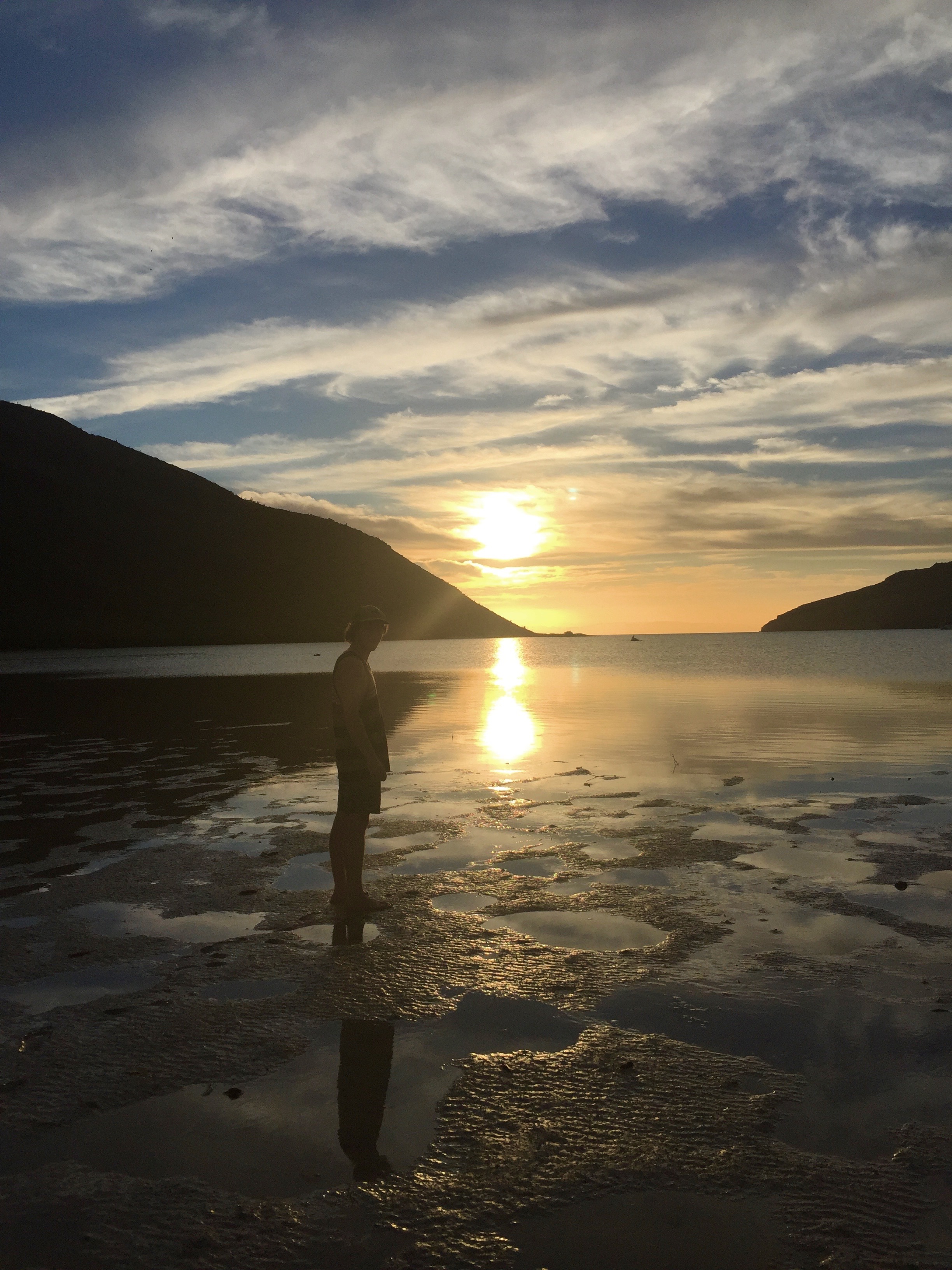
We anchored at Ensenada el Cardonal. Diana and Wyatt built a driftwood Christmas tree on the beach (while I tried a little fishing and Haley took a catnap onshore) and we celebrated the full moon and the holiday by rowing ashore in water as still as a mirror. We made a bonfire of the tree which scattered sparks up into the starry sky, then hiked across the lagoon through the ghostly cactus to the other side of the island.
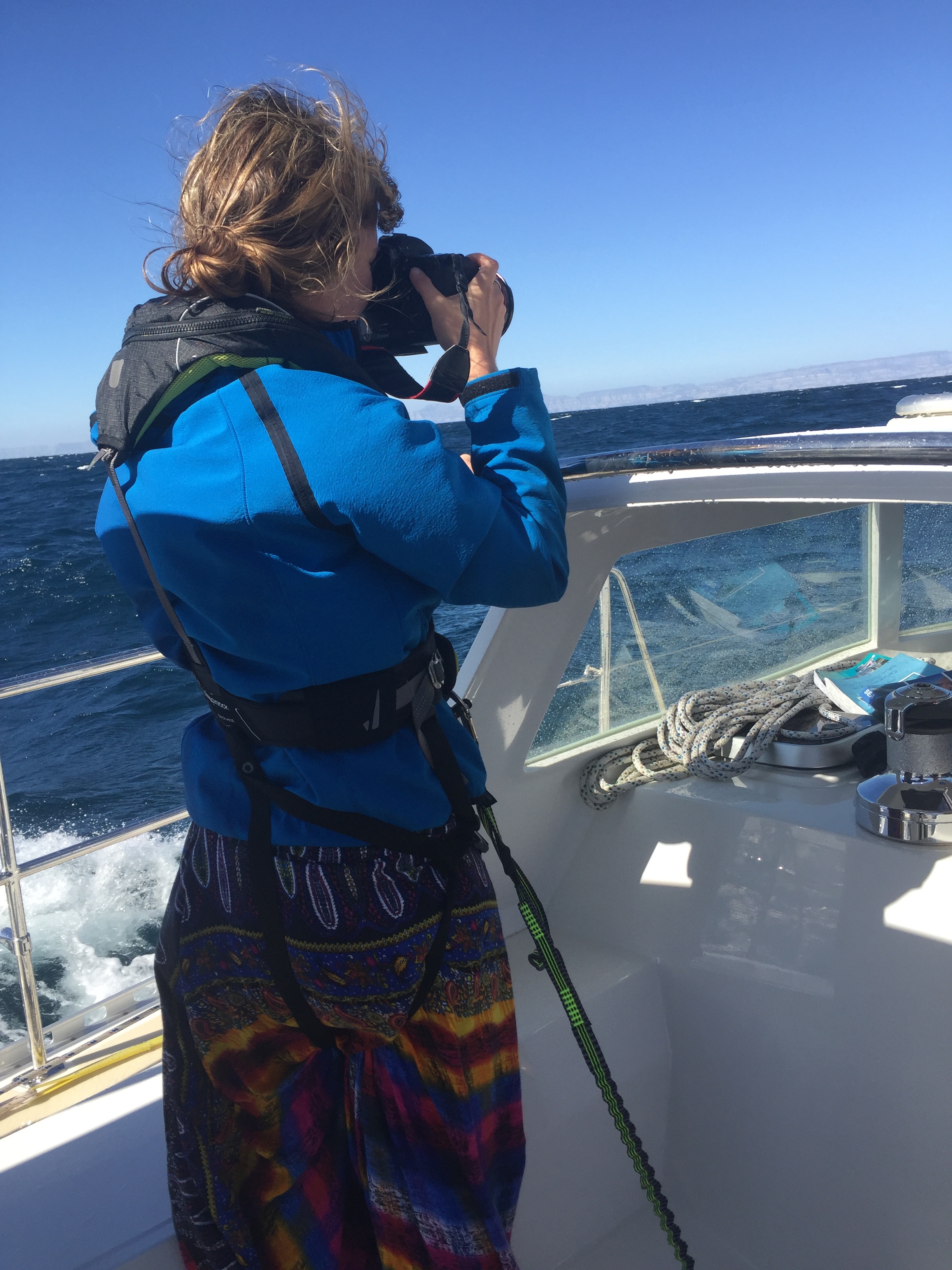
By morning the wind was howling out of the west. Further lessons were learned about the importance of putting the dinghy onboard at night, and especially getting the outboard off while the sea is relatively calm. Our only other company in the harbor pulled anchor a few minutes before we did and we watched them head out through the pounding white caps. They started to put up their mainsail, but quickly decided not to and headed south, unfurling some of their jib. It was a stiff breeze out there with some steep chop. Our prop worked hard trying to push us out passed the point, the waves slamming over the bow. We left our main furled, too, and unrolled the working jib and were quickly moving at 9 knots under jib only. Haley had her camera out and popped out now and then from behind the hard dodger like a war corespondent to get shots of the waves breaking over the bow, until Wyatt went forward to take care of the main halyard and noticed that the sail hatch was open. Fixing that problem was a lot of work, and there are still problems we’re dealing with including a bowthruster that still isn’t working. There was a lot to be dried out at the anchorage at Isla San Francisco. THAT won’t happen again!
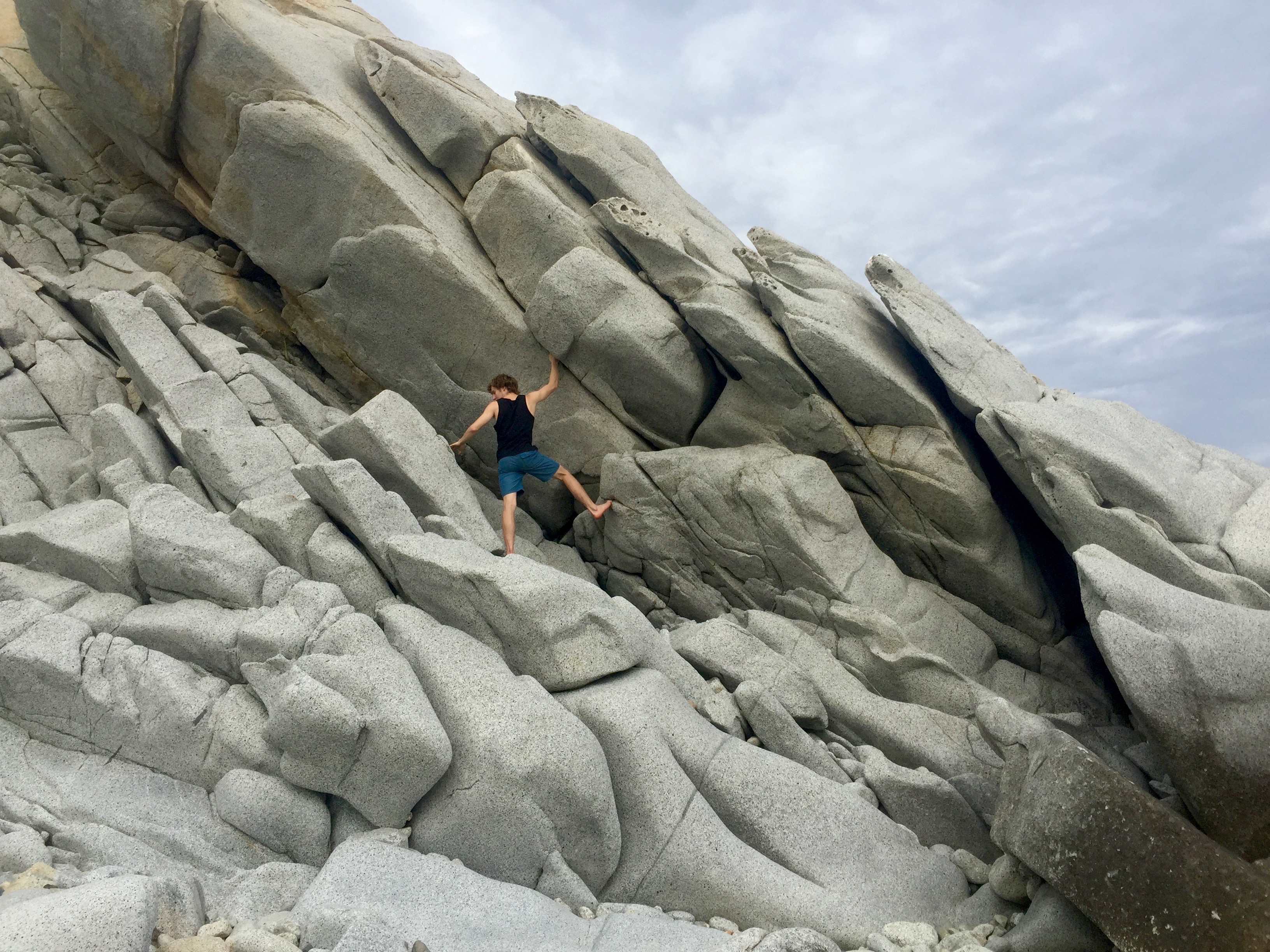
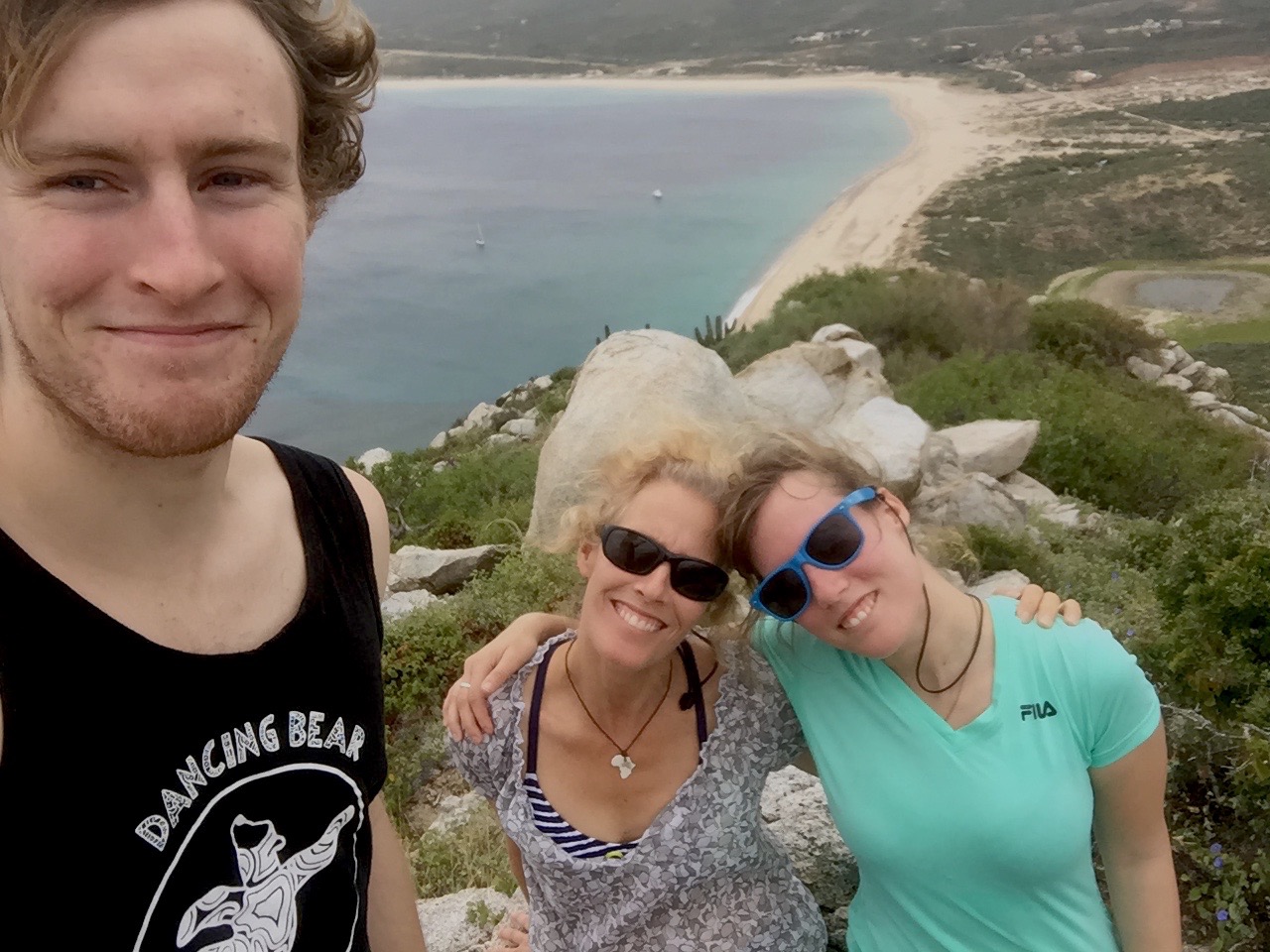
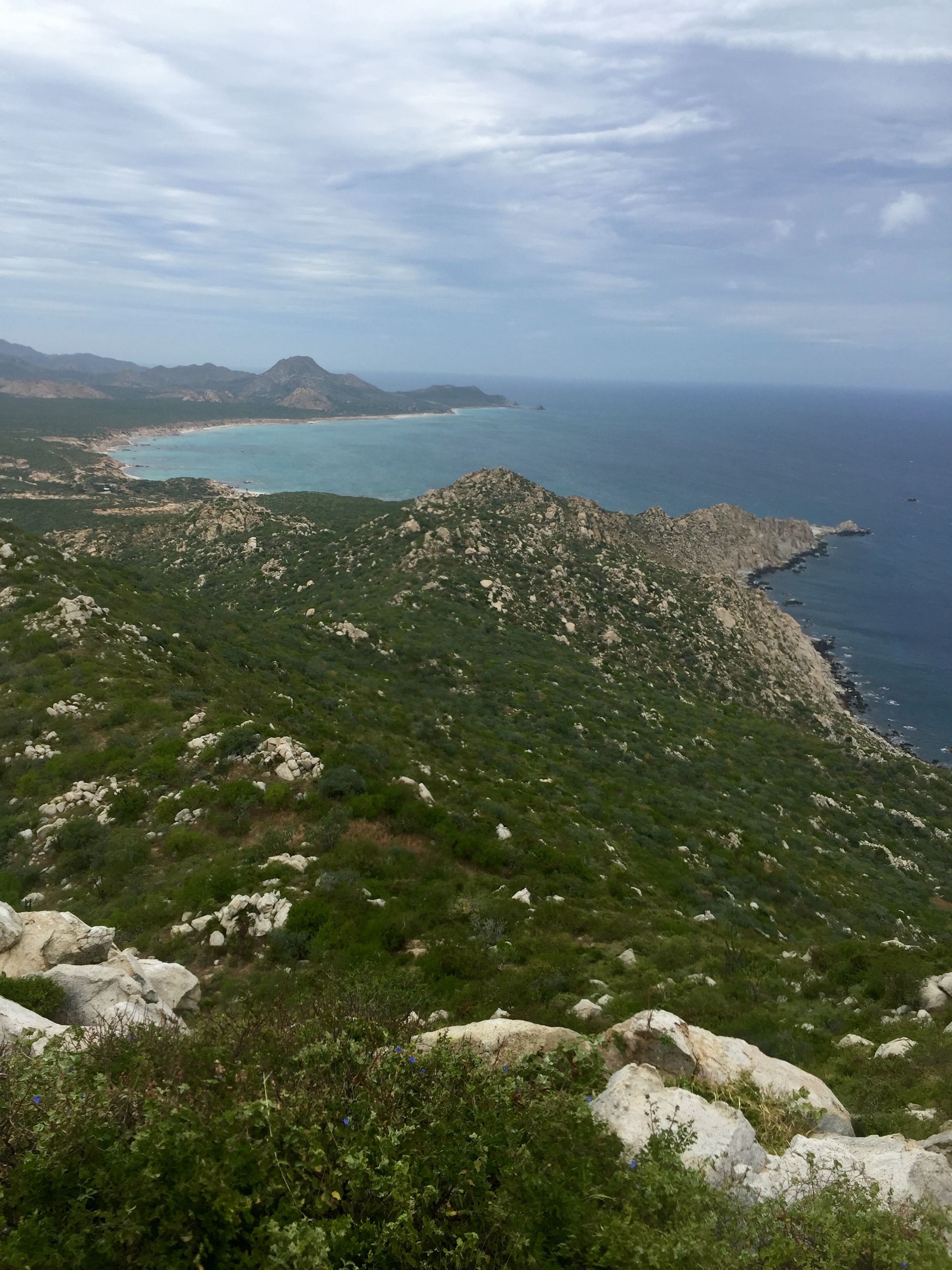
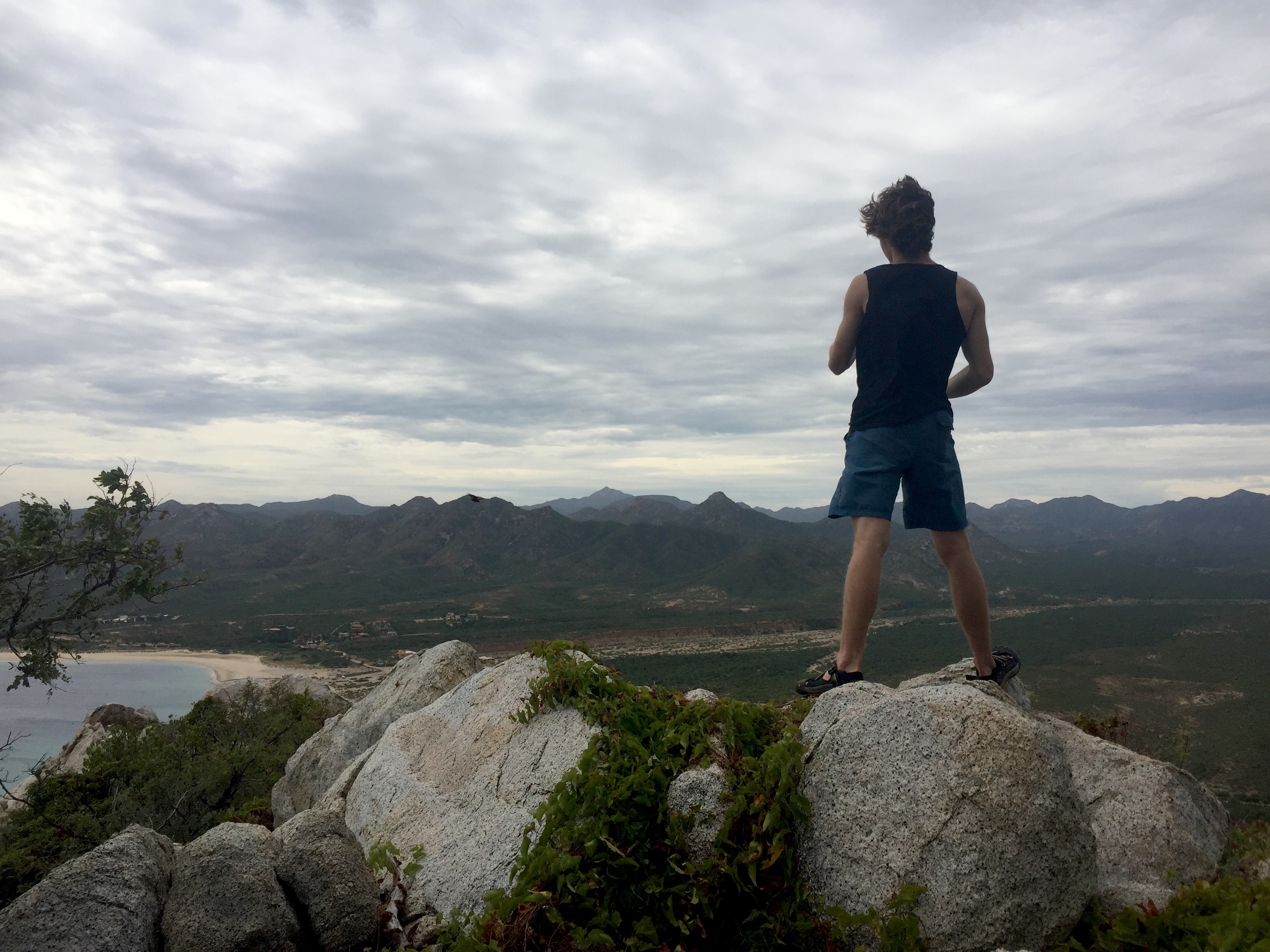
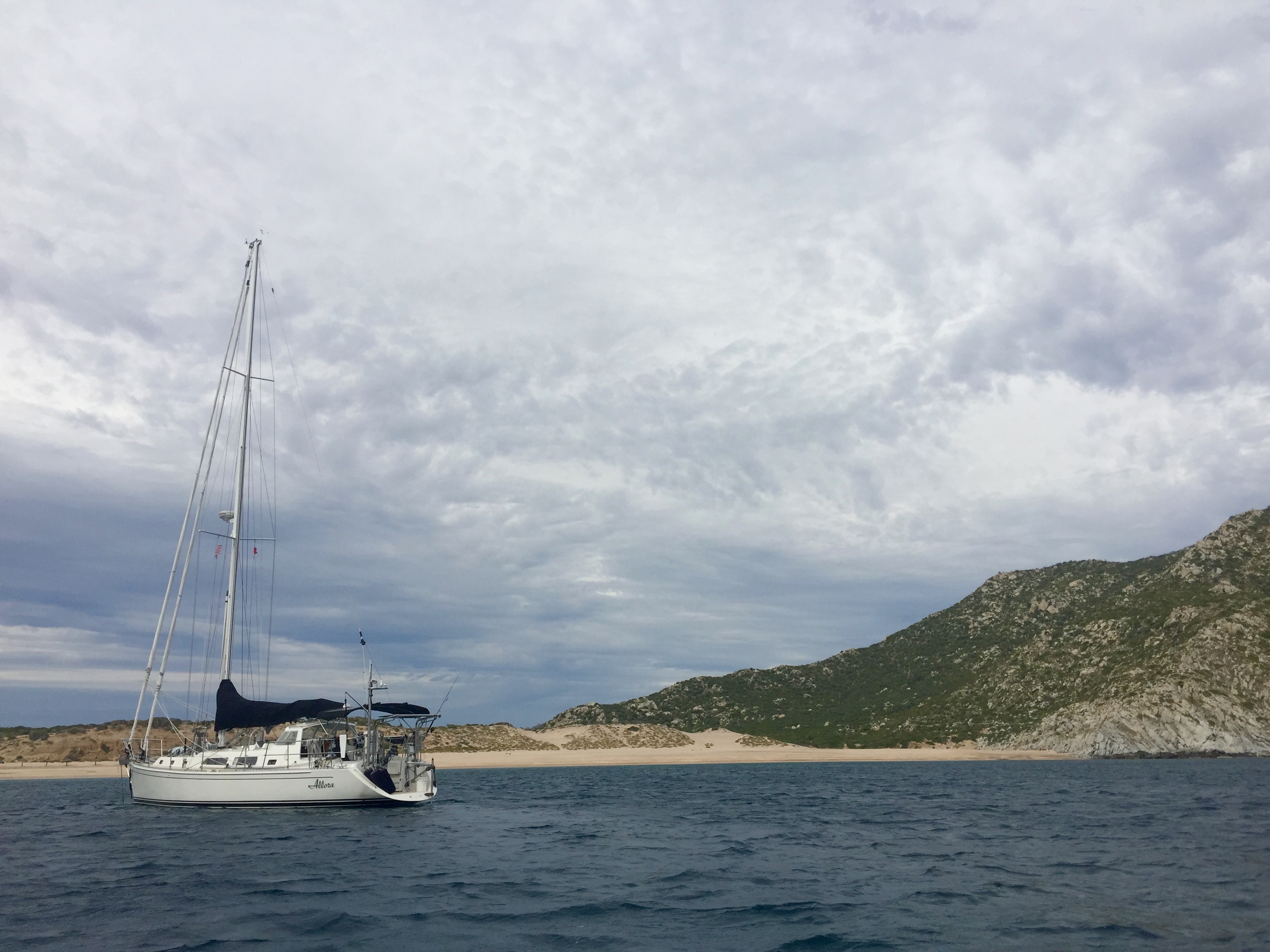
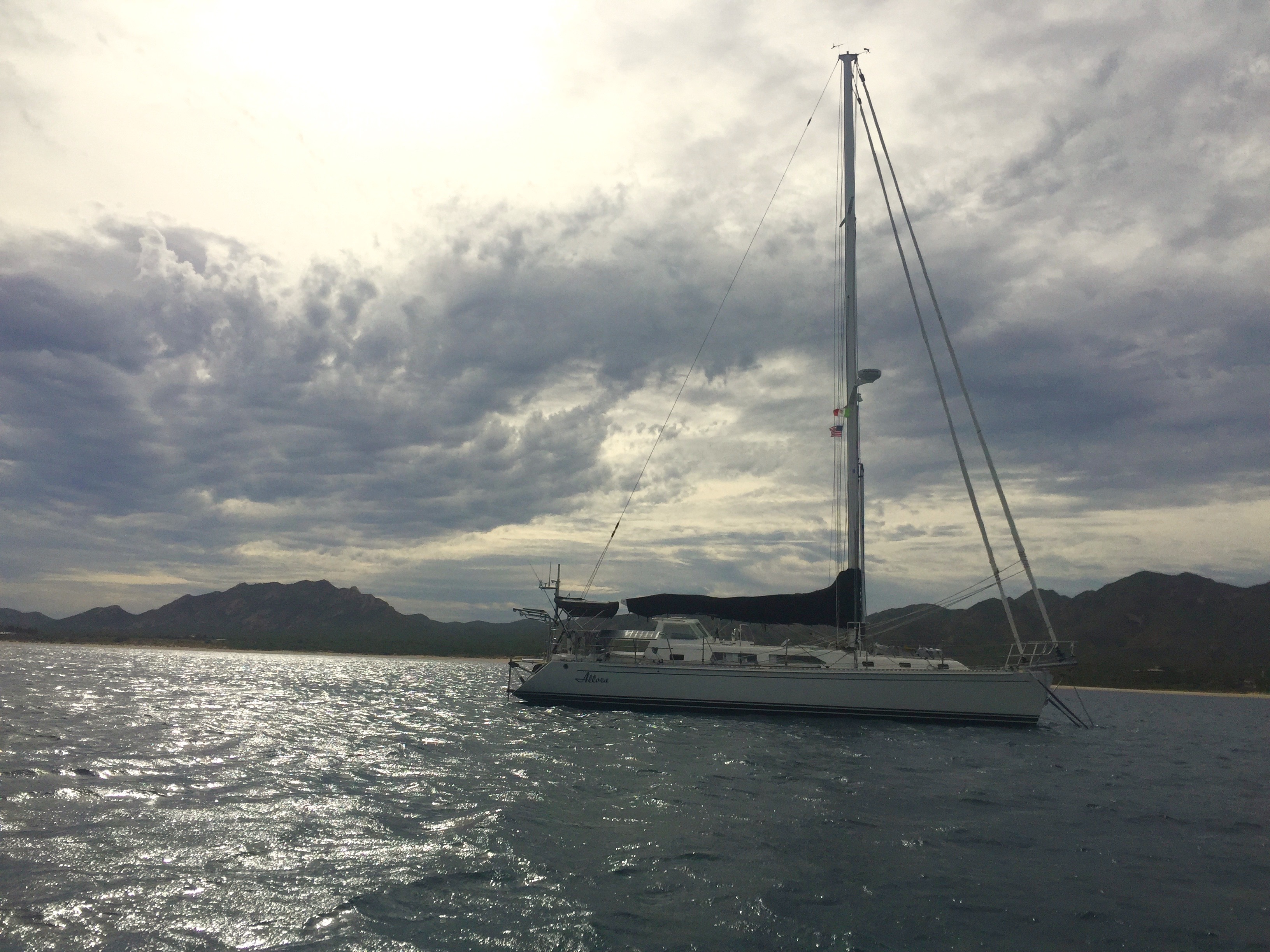 

We spent a long, cloudy day at Los Frailes. The point was summited by a shore expedition, and I wore out my arm blind casting without any luck along the surf. The wind came up during the night, blowing from the north, but the forecast was for NNW in the teens which didn’t sound bad. We didn’t really know (yet) what to expect from the wave forecast, but the 5 second period (between swells) should have been an obvious warning. We decided to go for it and if it was too unpleasant, head for a new Marina less than twenty miles away. The wind had calmed in the anchorage, and it didn’t look that bad out beyond the point. We left in a bit too much of a hurry. We reefed the main almost immediately and then rolled up the jib. We’re still getting the process of reefing down, so the extra messing around was too much for Wyatt’s stomach, and Haley wasn’t too pleased about it either. Going back would have been a good choice, and we will remember the wisdom of retreat for the future. Especially important for the Captain who was feeling fine and kind of loving bashing into the seas, to take sea sickness more seriously. The second reef, put in hove-to, was too much for Diana, and all the crew was down.
The first mate suggested trying to motor so we could head straight for the marina at Cabo Riviera, but our Yanmar quickly overheated. I thought it was the heel that was causing the problem, so we went back to sailing and puking overboard. On the port tack we were making almost zero headway, but just needed to get out far enough to turn to starboard and then it was only 14 miles. Wyatt settled in from an initial sea sickness panic (his first, ever), to something more of a meditation on misery. Haley, more experienced with the feeling, retreated immediately to a sullen quietness in the aft berth. Soon, all three had found a modified fetal position somewhere on the boat as Allora sailed merrily on, double reefed. This gave me a moment to reflect on the morning’s hasty departure, and to realize that the problem with the engine was that El Capitan had left the through-hull for the engine cooling system closed after checking the strainer. Oooops! But then, with it open, the engine still quickly overheated. Problem not solved. Meanwhile, the first mate, with the earnest desperation only sea sickness can inspire, was making various attempts to contact Marina Cabo Riviera. Nothing on the VHF. A recording from the SAT phone in Spanish seemed to suggest that the phone number did not exist. It was hard to imagine that a ‘new’ Marina could come into existence and then disappear, but there was nothing on the charts and it was only listed in one out of our three books.
I kept an eye on the windspeed, as Diana summoned her early religious life with a prayer that the ghost marina would manifest. The wind had settled in the mid-twenties, which, going up wind, is a stiff breeze, but then it began gusting. It topped 35 for a moment and I looked to see if Diana had noticed, but she was focused on her catechism. Then it bumped over forty. She still didn’t notice, and I resolved to keep quiet. It hit 50 knots as she looked up and then for a second, unbelievably, it topped 60 knots. It must have been some kind of wind sheer hitting the top of the mast where the wind is measured, because on deck it didn’t feel like a hurricane. Finally Marina Cabo Riviera answered on the VHF. I started up the engine and Diana mustered the strength to help drop the mainsail, but in the process, a batten caught in the lazy jack cheek block and before we could straighten it out, the lazy jacks (which help keep the mainsail under control) on the starboard side came raining down on deck. Despite the building wind and crazy seas Diana wrestled the sail onto the boom. Then the engine overheated again and had to be turned off. We didn’t want to deal with the main, so we unfurled the jib and Diana got on the VHF to ask Cabo Riviera about the feaseablitly of sailing into the harbor. They didn’t think it a good idea, mainly because the narrow channel had a shallow spot and they were worried about our 6 foot 6” draft as it was. As we approached under reefed jib we could see waves rolling into the entrance which were going to make it difficult even under power. To the profound consternation of the seasick crew, we hauled up the main to its’ double reefed position and sailed directly out to sea,
AWAY from the Marina with exactly two options. Get enough sea room to heave-to and fix the engine, or if that was not possible, sail 15 miles further on to Bahia de los Muertos, seriously, Bay of the Dead, where we could drop anchor. Cabo Riviera, meanwhile, hailed us on the VHF wondering why we weren’t coming in and expressing concern that conditions were worsening and that the window was closing. I shit you not.
We keep an inventory onboard of where we put everything including spare engine parts. We got the boat hove-to, Wyatt rising heroically from his seasick depths to lend a hand, and I went below to find the impeller, which was my first guess of what could be causing the engine to overheat. Down below, the steep waves had turned our quiet little home into something of a madhouse that required a white knuckle grip to keep from being tossed around like a rag doll. EVERNOTE politely informed me that it could not access the inventory, because, so sorry, that required internet access, though, the cheery little app reminded me, we could solve that problem by upgrading to a paid version. Not helpful under the circumstances. Diana had a couple ideas where they might be and together we tore the boat apart as it slammed and tossed in the waves and wind howled overhead, finding the engine spares, finally, where I had missed them in the first spot Diana told me to look. Changing the impeller was miraculously easy, and in moments we had the engine running.
Now all we had to do was make it in over the waves behind the breakwater and not run aground. It helped me to remember the experience of ducking into Pier 39 in SF Bay in a 5 knot current as we surfed through the steep waves into the muddy channel. It didn’t feel THAT bad. The only remaining trick was to get beyond the shallow spot. Diana convinced the guy from Cabo Riviera that he had to come out and talk us passed the point. I watched the depth as we approached the area – 11 feet, then 9 feet and then seconds after he said we were clear, 7 feet. There were four people to help us tie up, the only sailboat (the rest were fishing boats) and definitely the biggest boat in Marina Cabo Rivera. Diana kissed all four. Allora’s crew regained composure, took a cold shower onshore and the main caretaker at the marina drove us all to dinner, waited while we ate and drove us back to our home afloat. We showered them with packages of marlin to show our appreciation for their very existence.
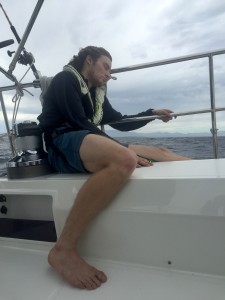 The only photo taken during all the mayhem.