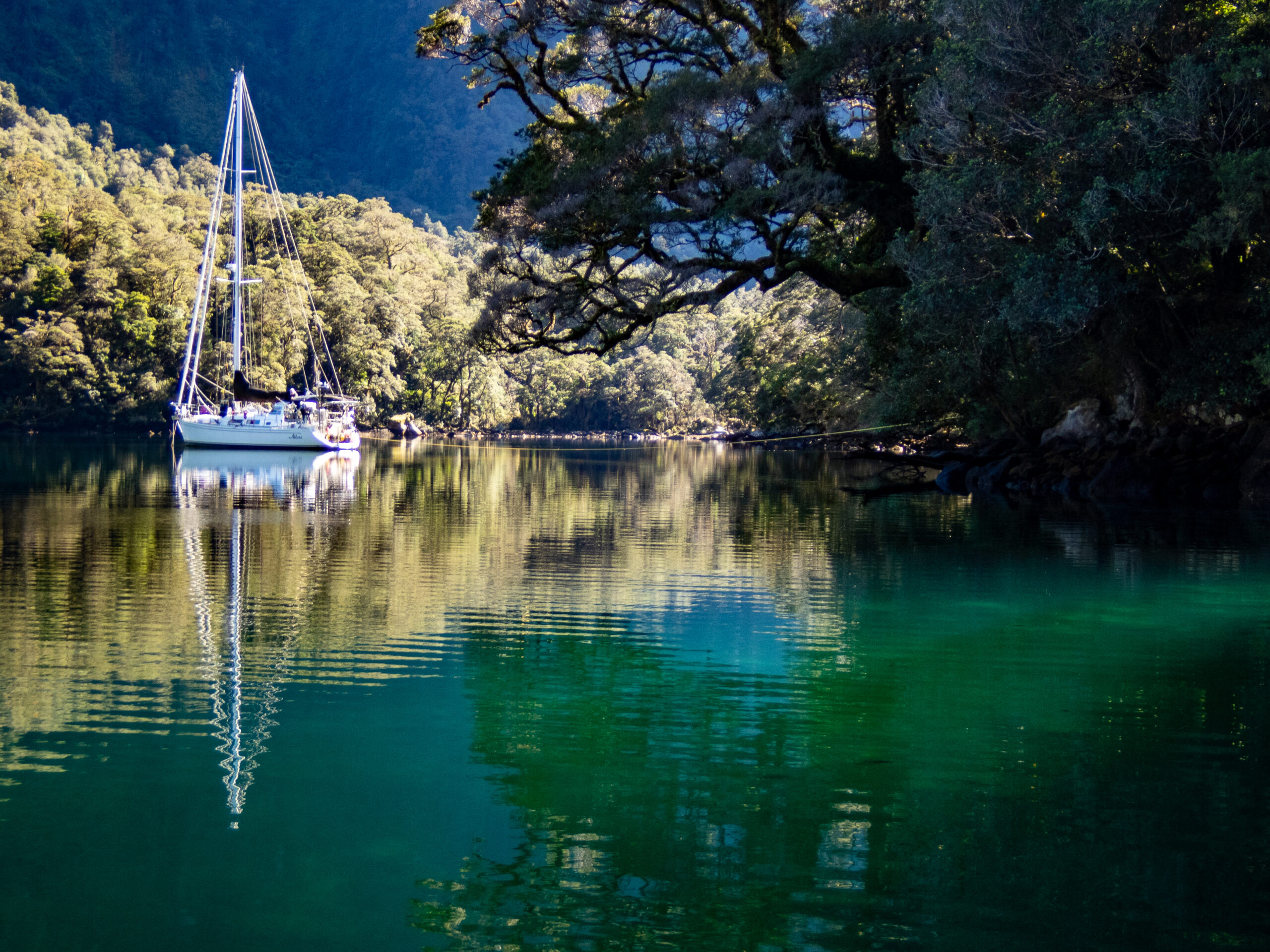
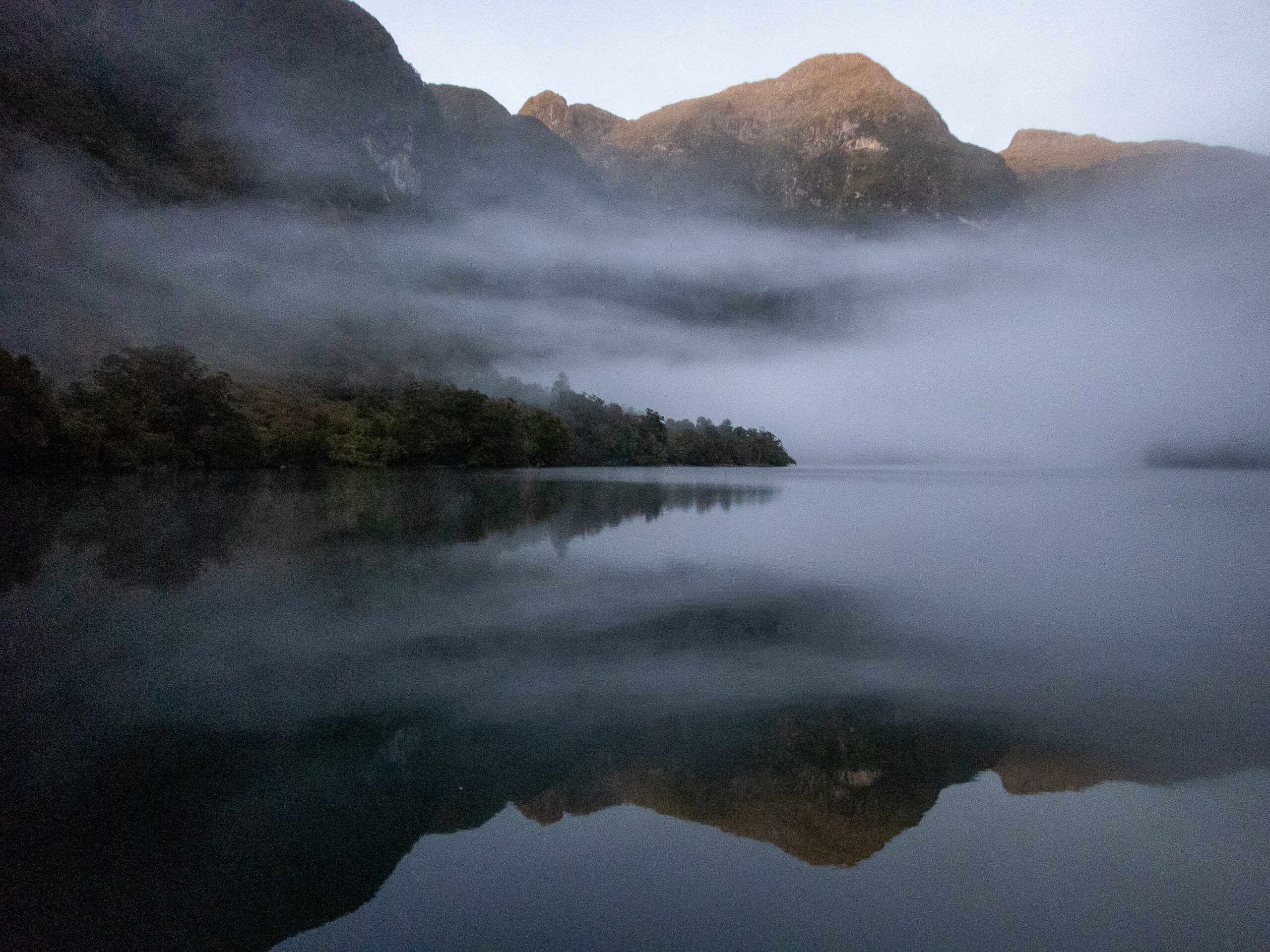
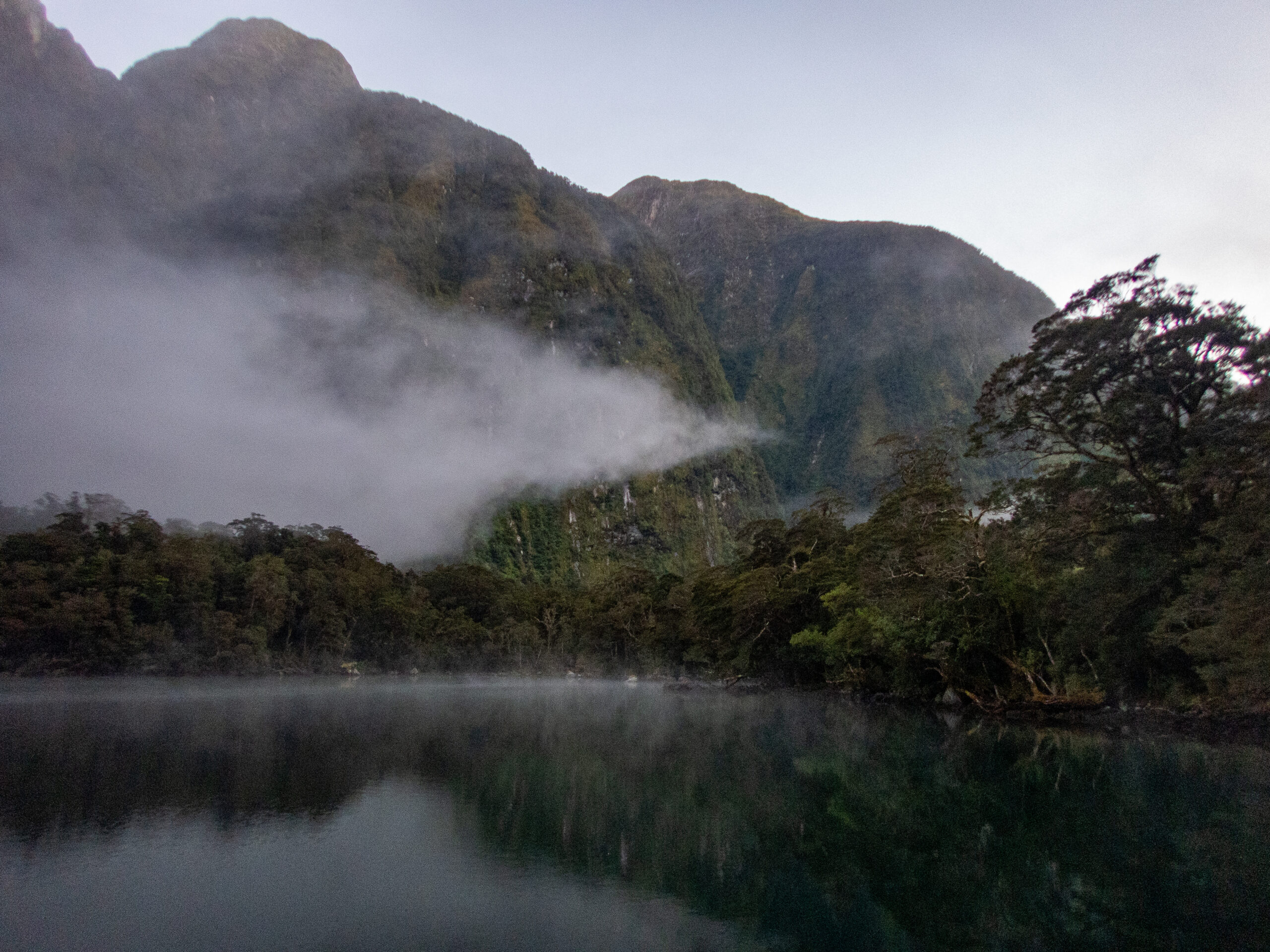
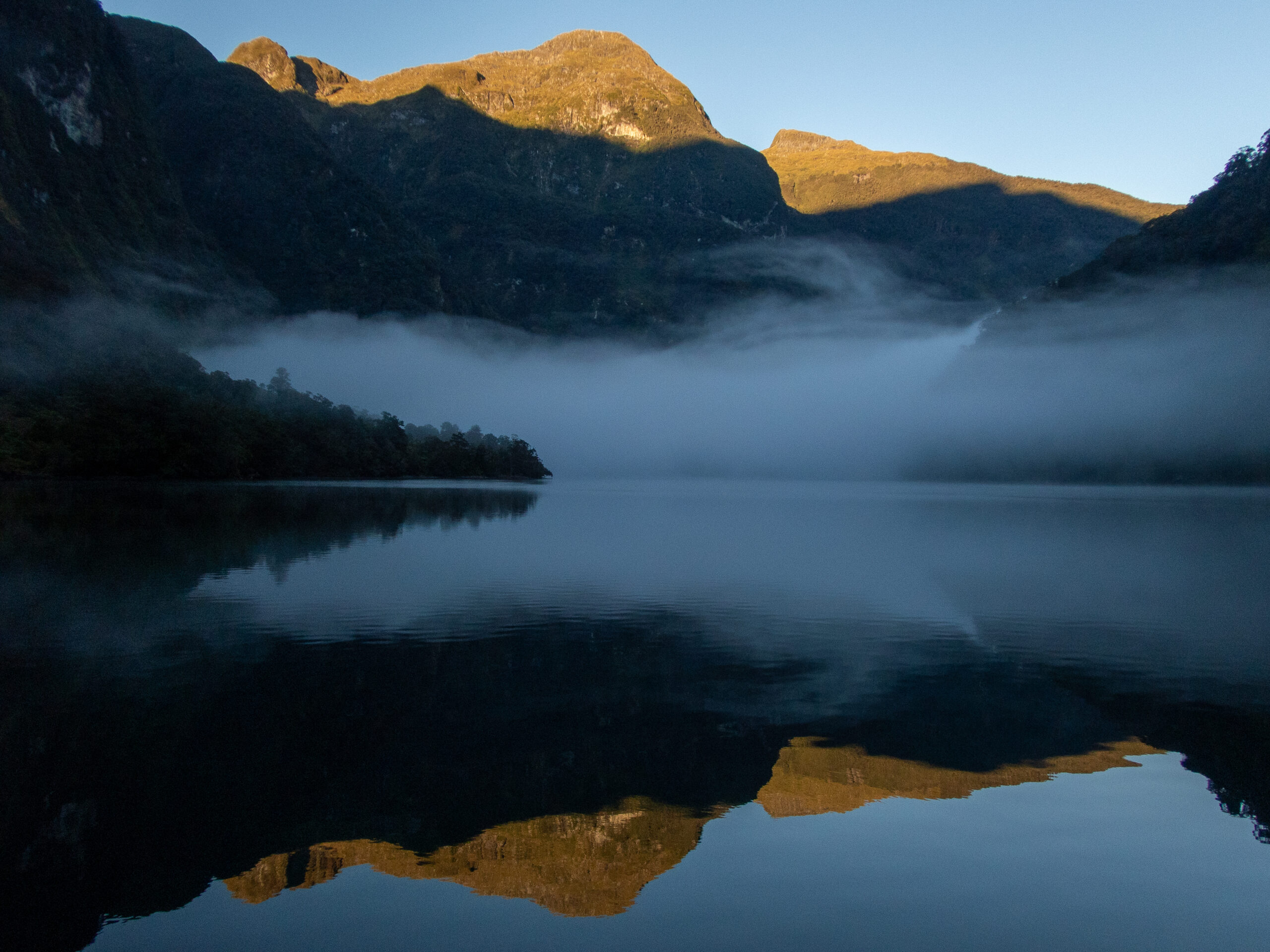
The warmly cool, clear, ringing, perfumed, overflowing, redundant days, were as crystal goblets of Persian sherbet, heaped up – flaked up, with rose-water snow. — Herman Melville
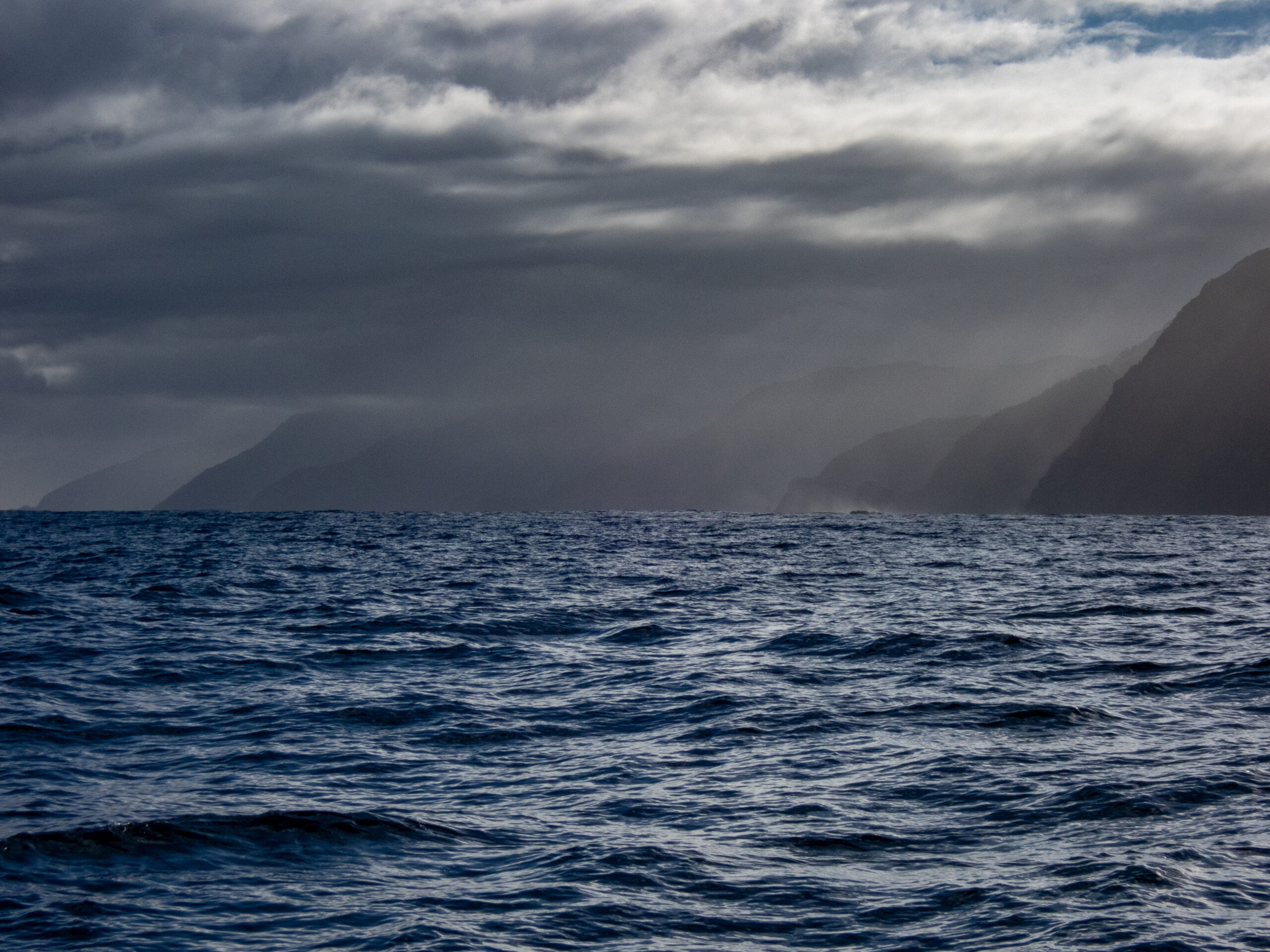
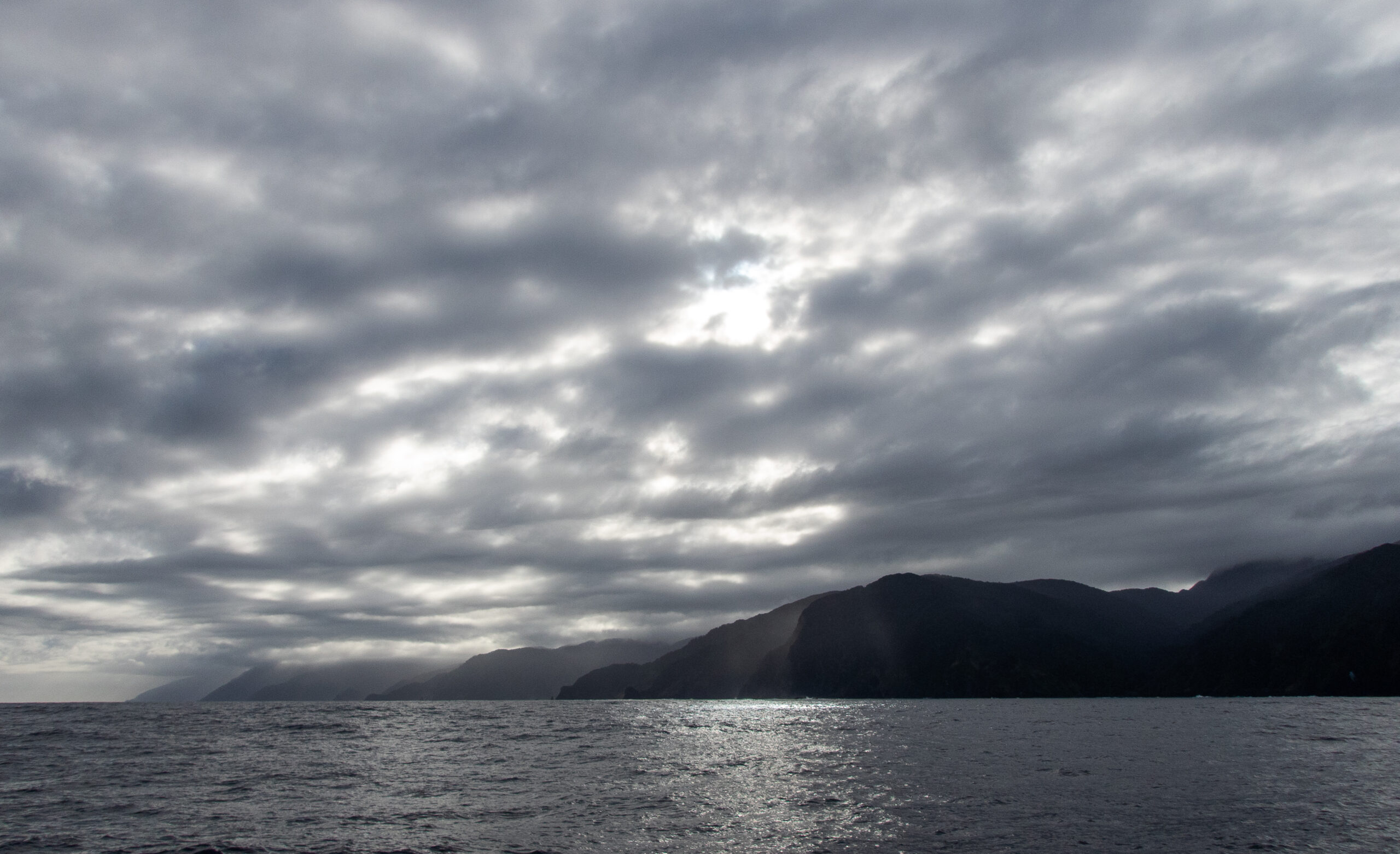
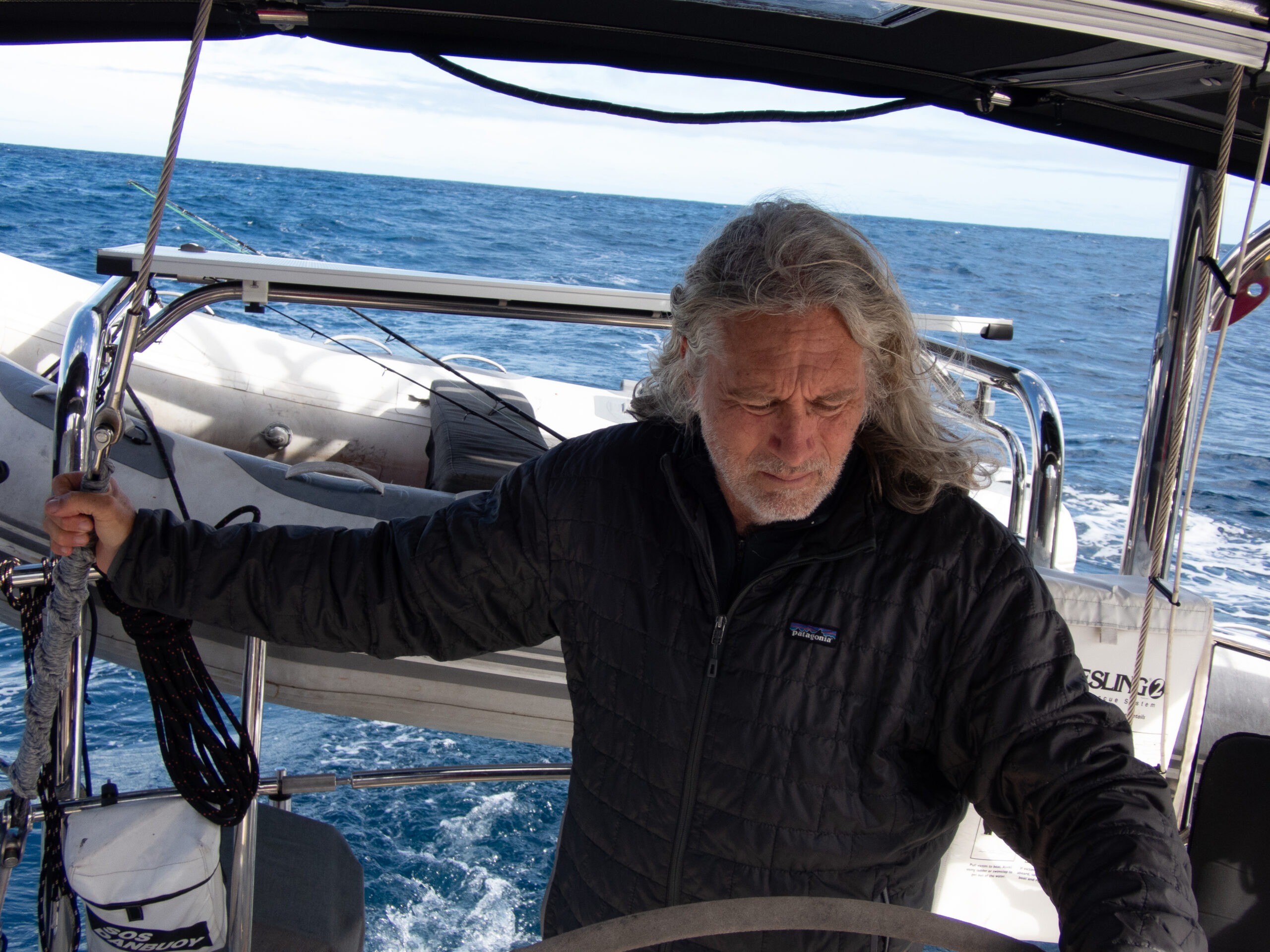
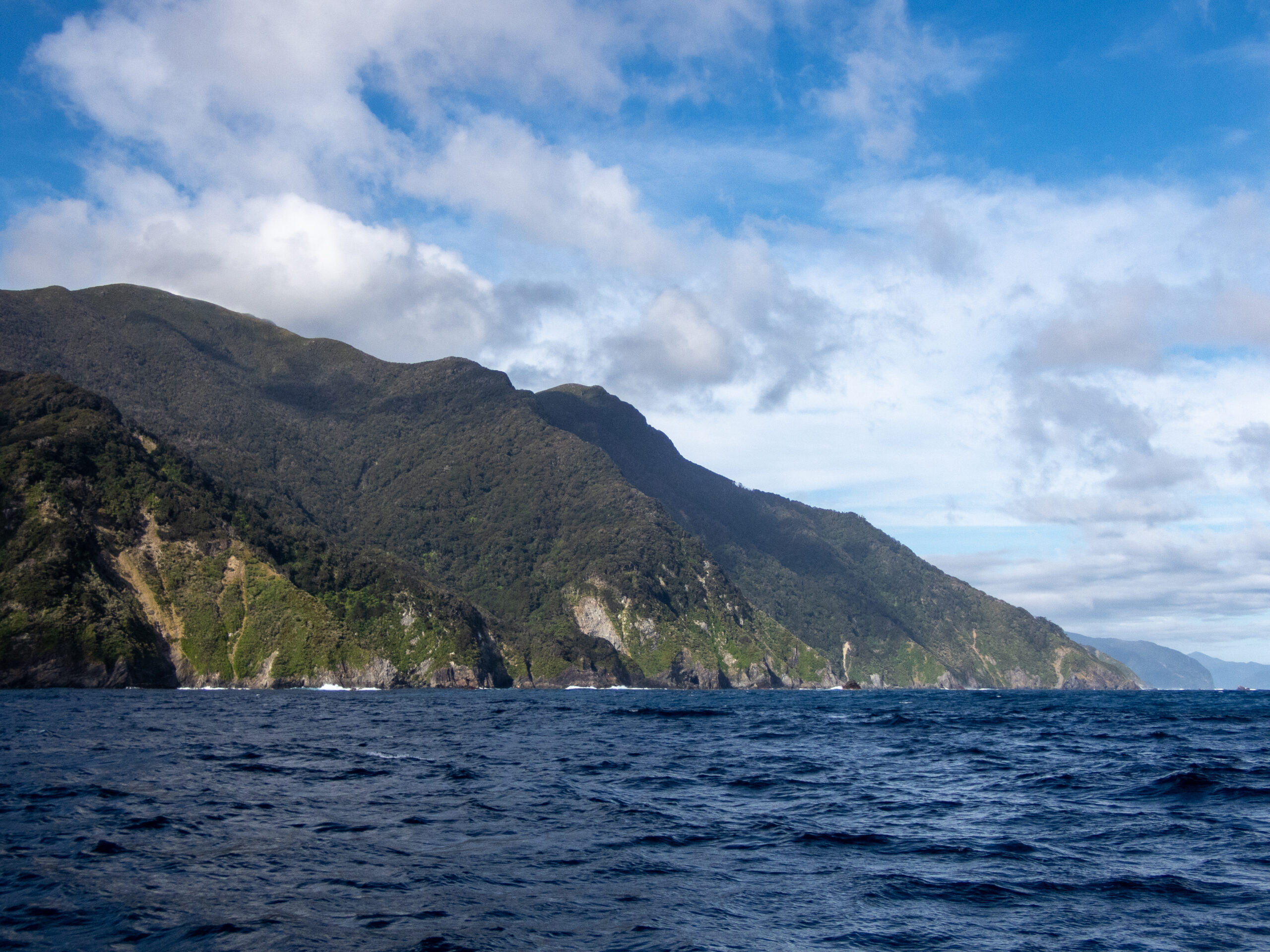
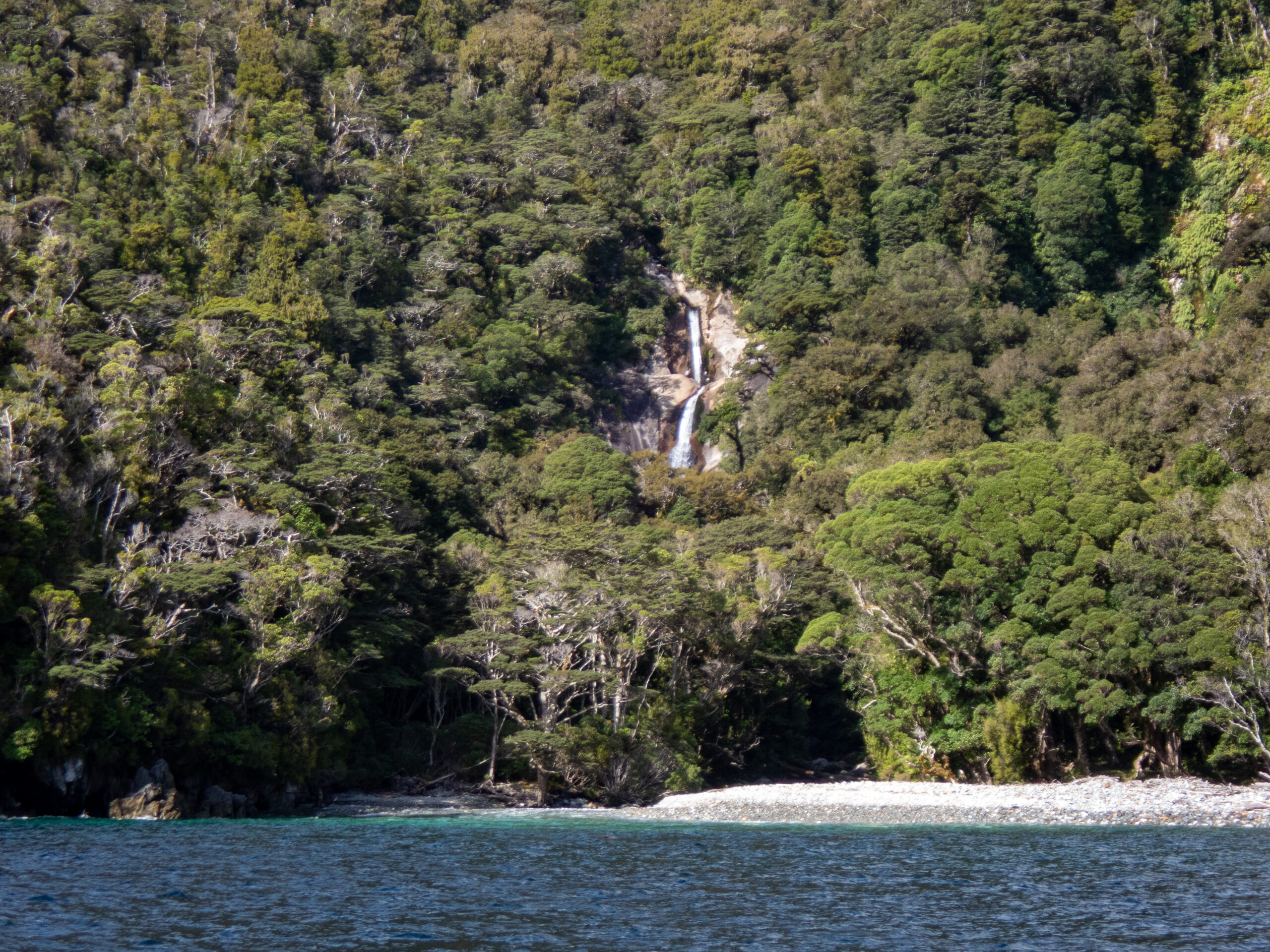
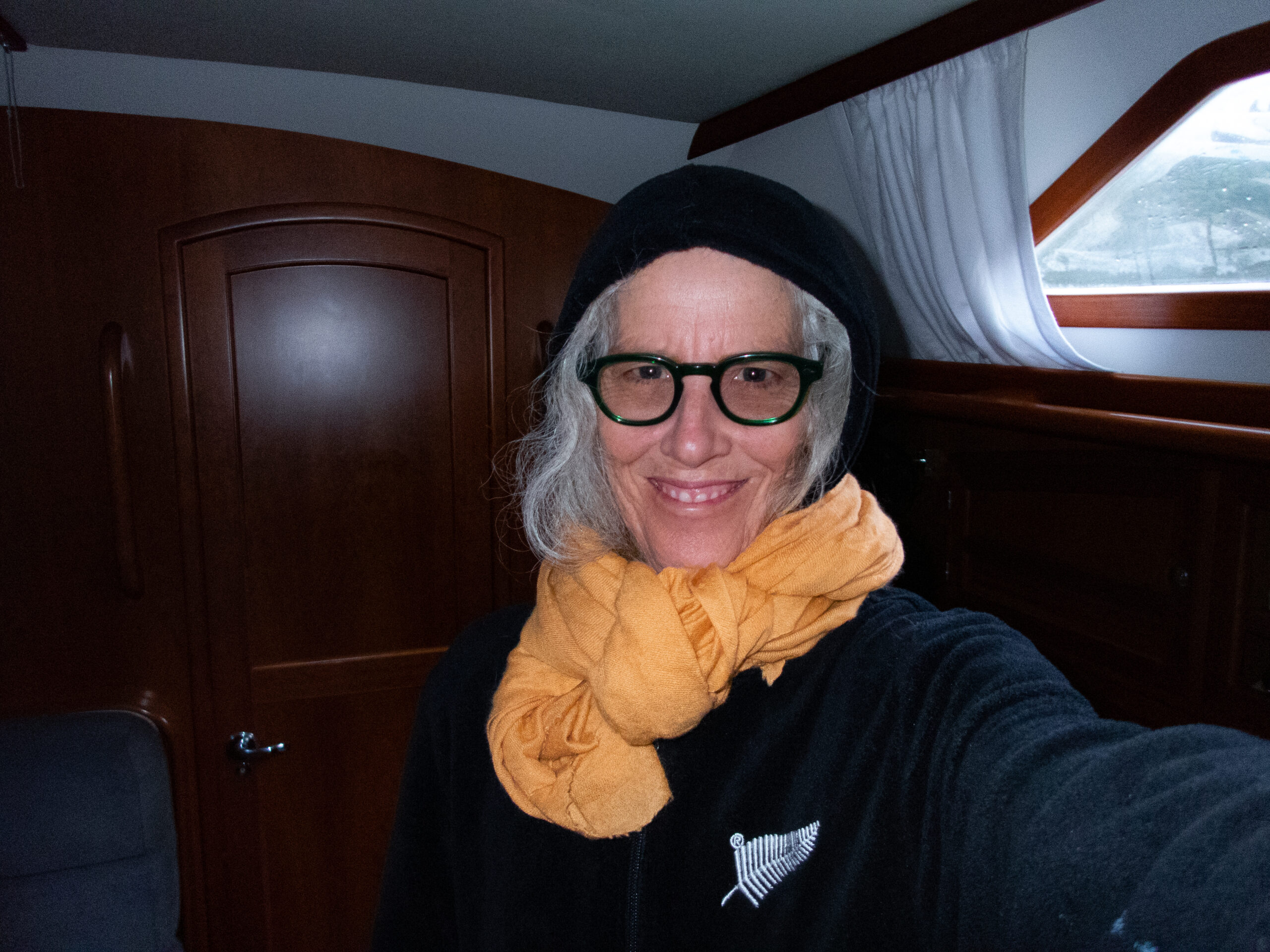
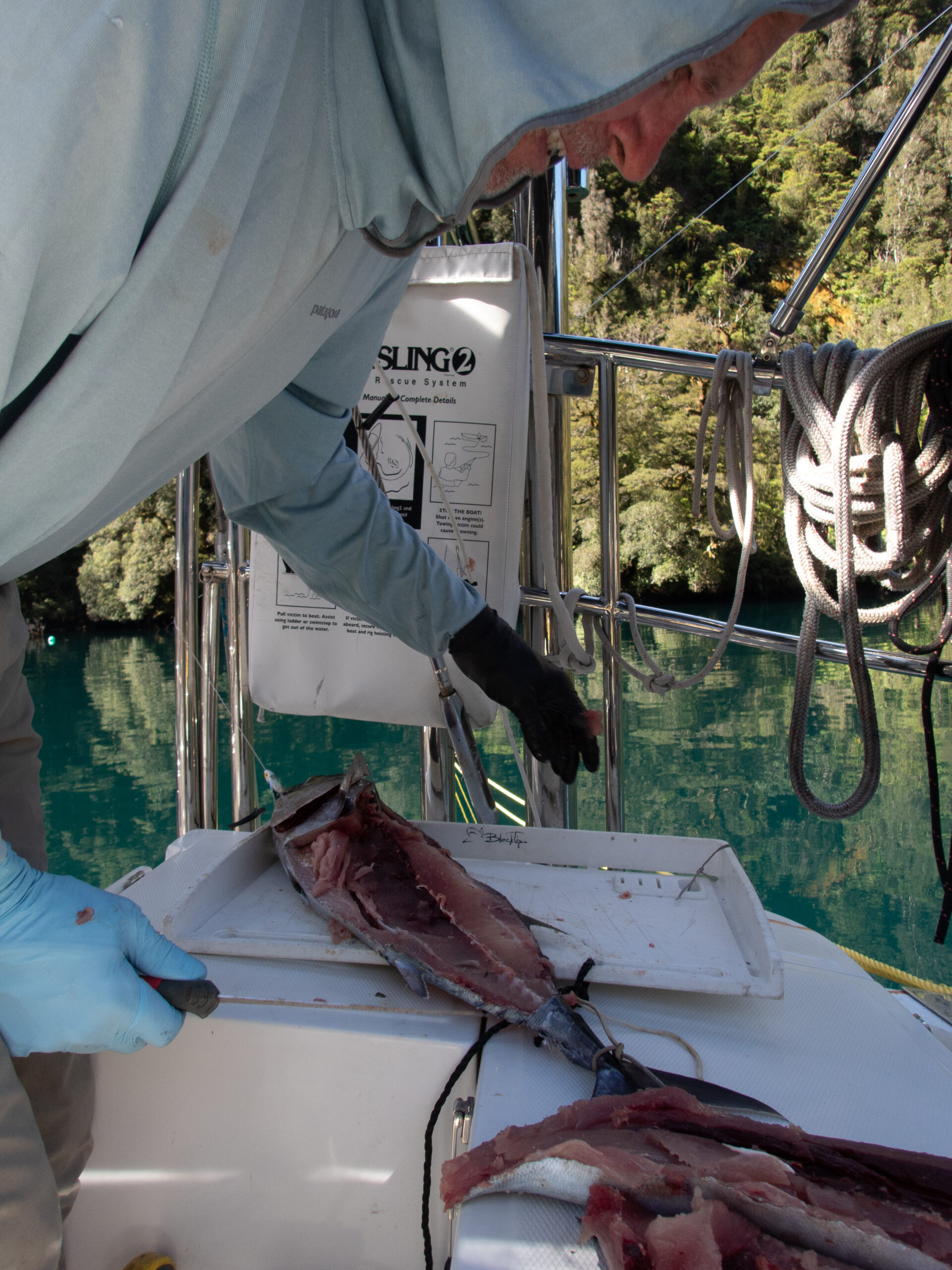
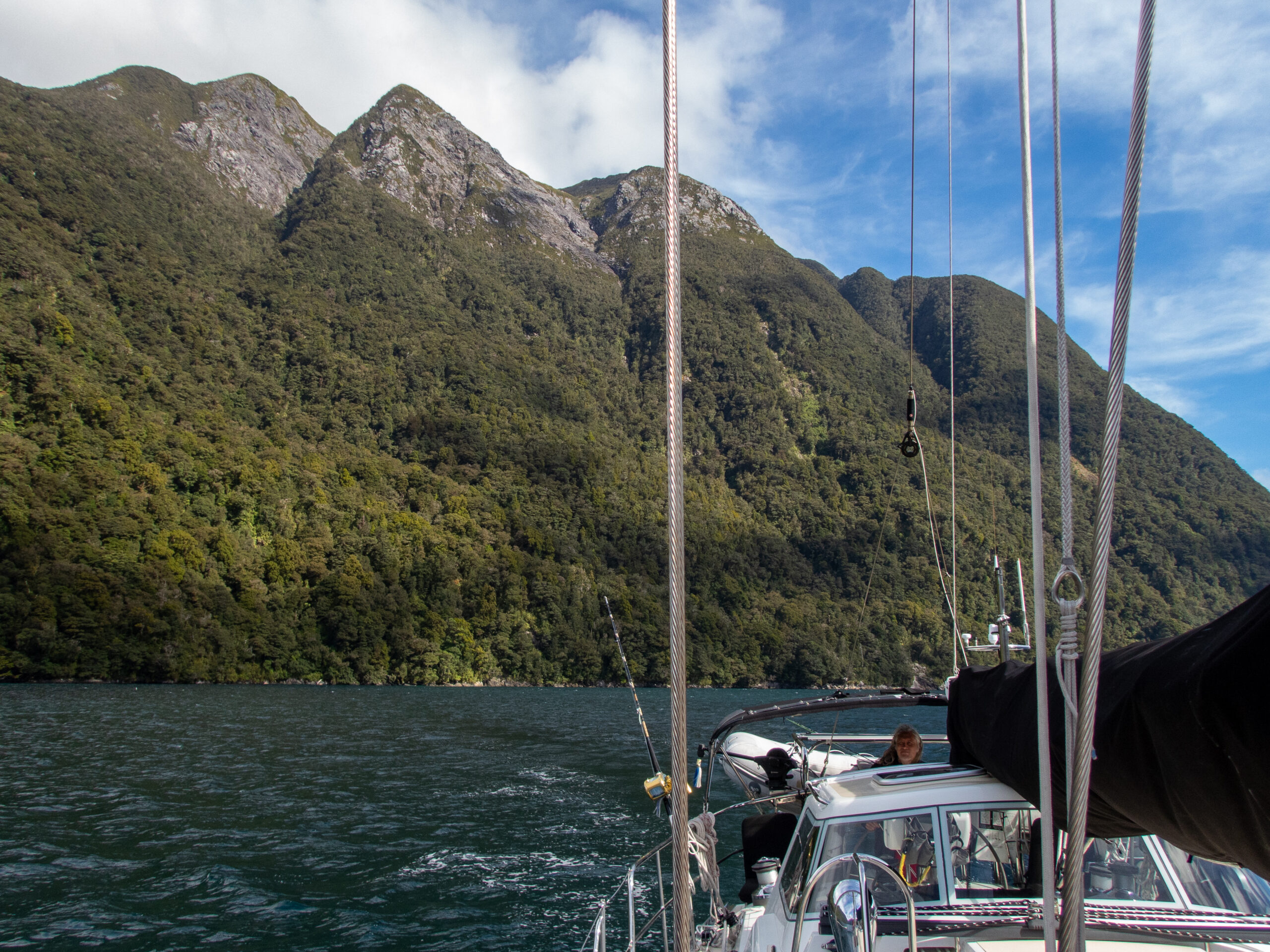
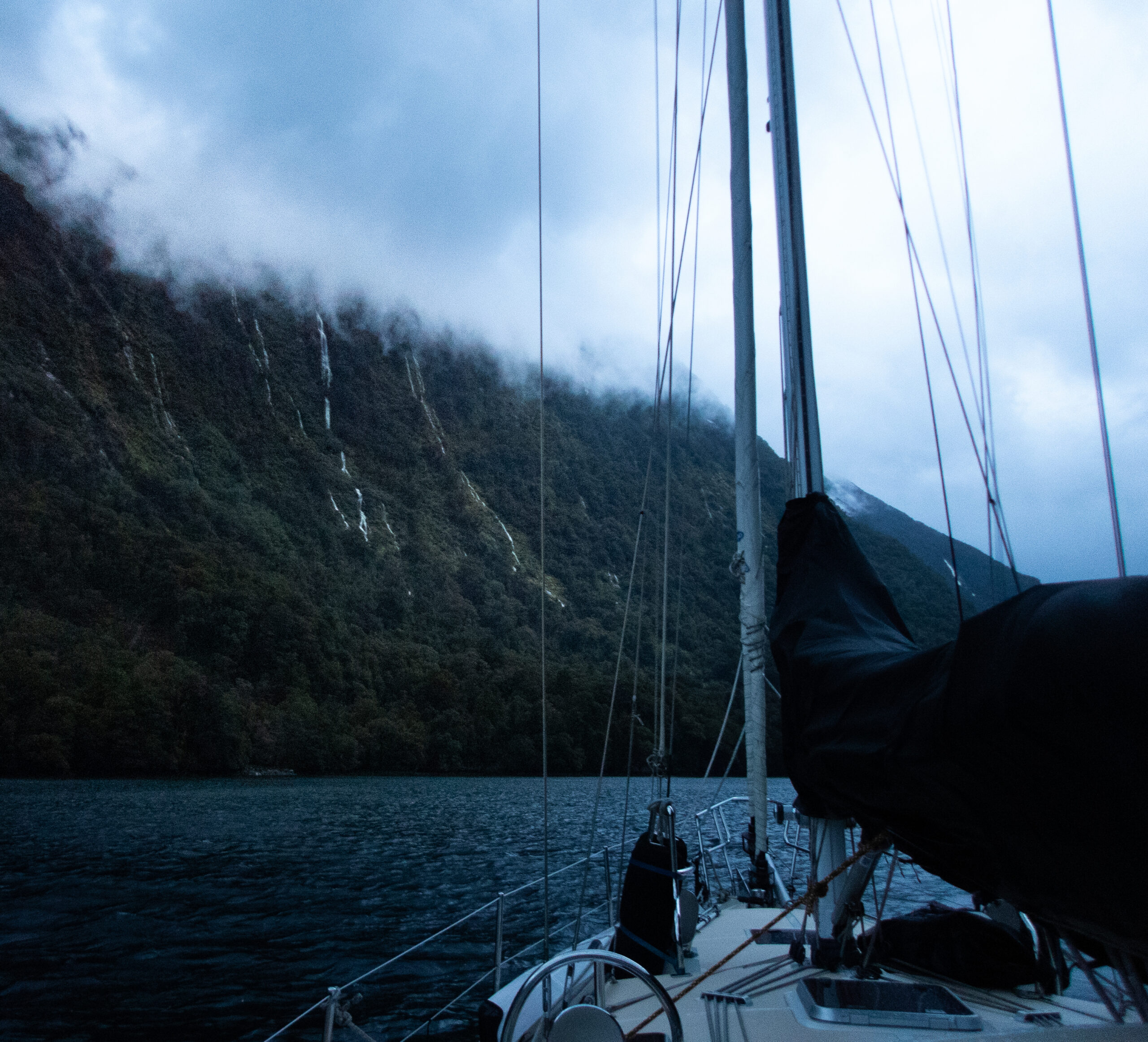
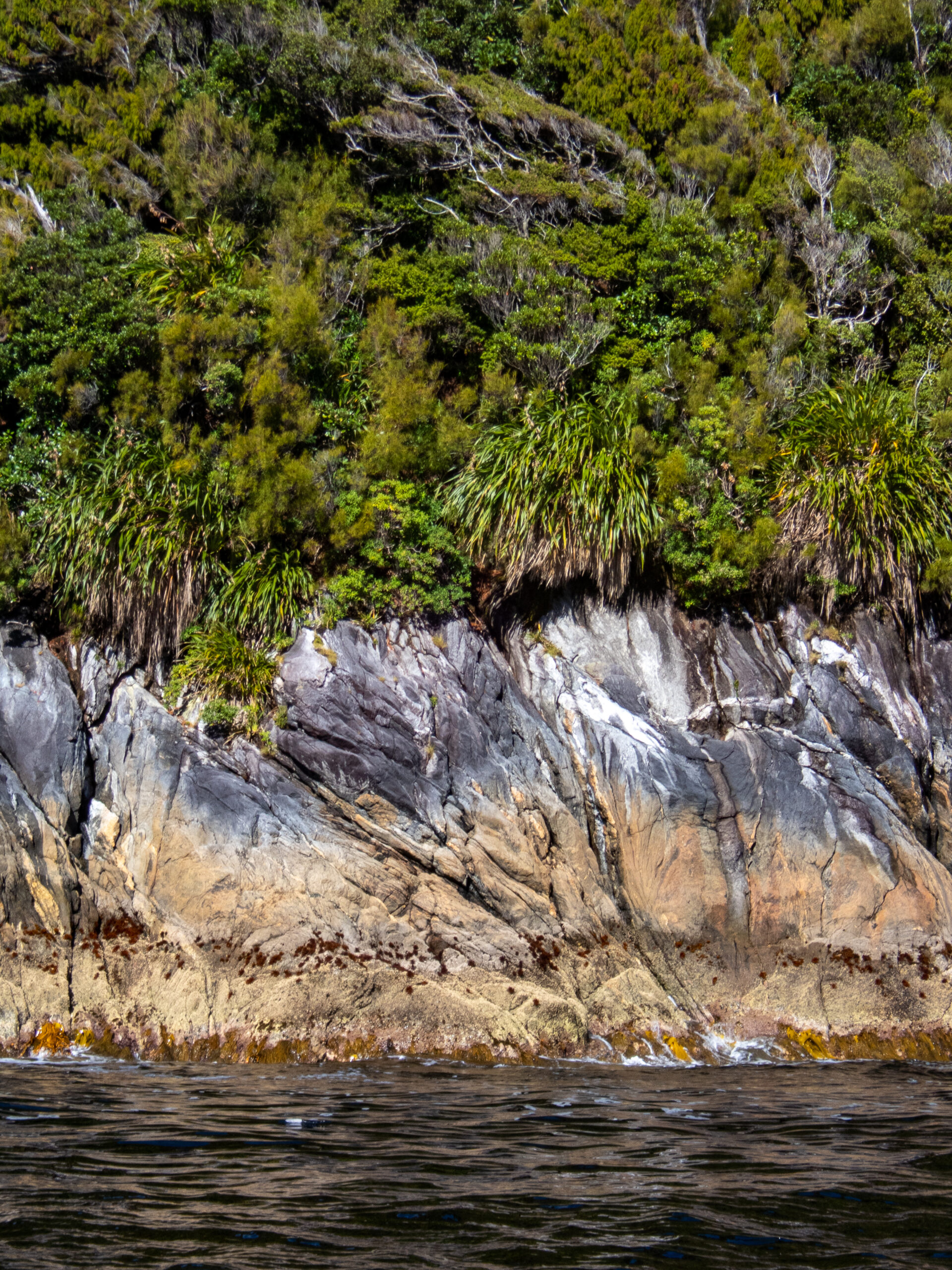
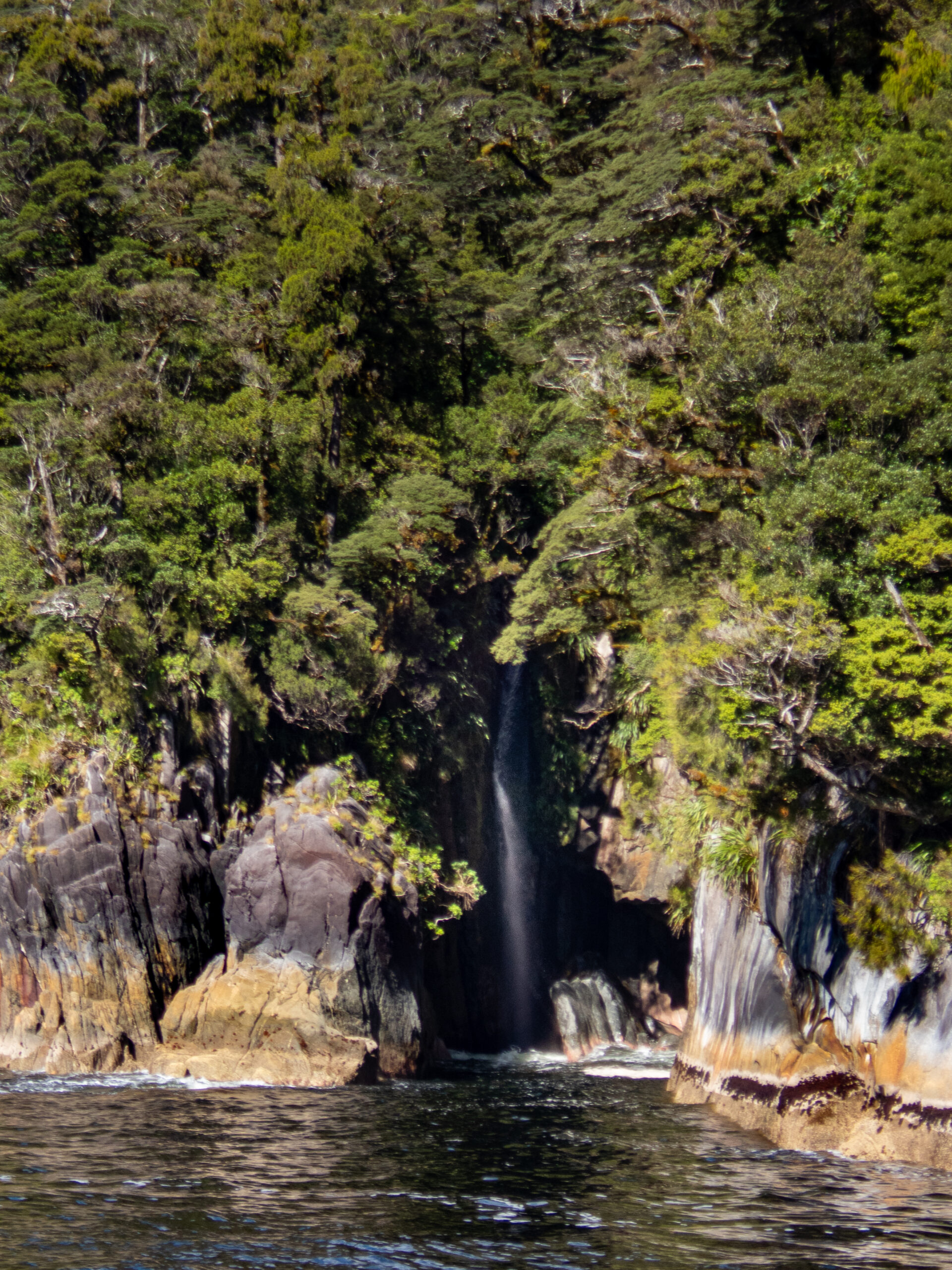
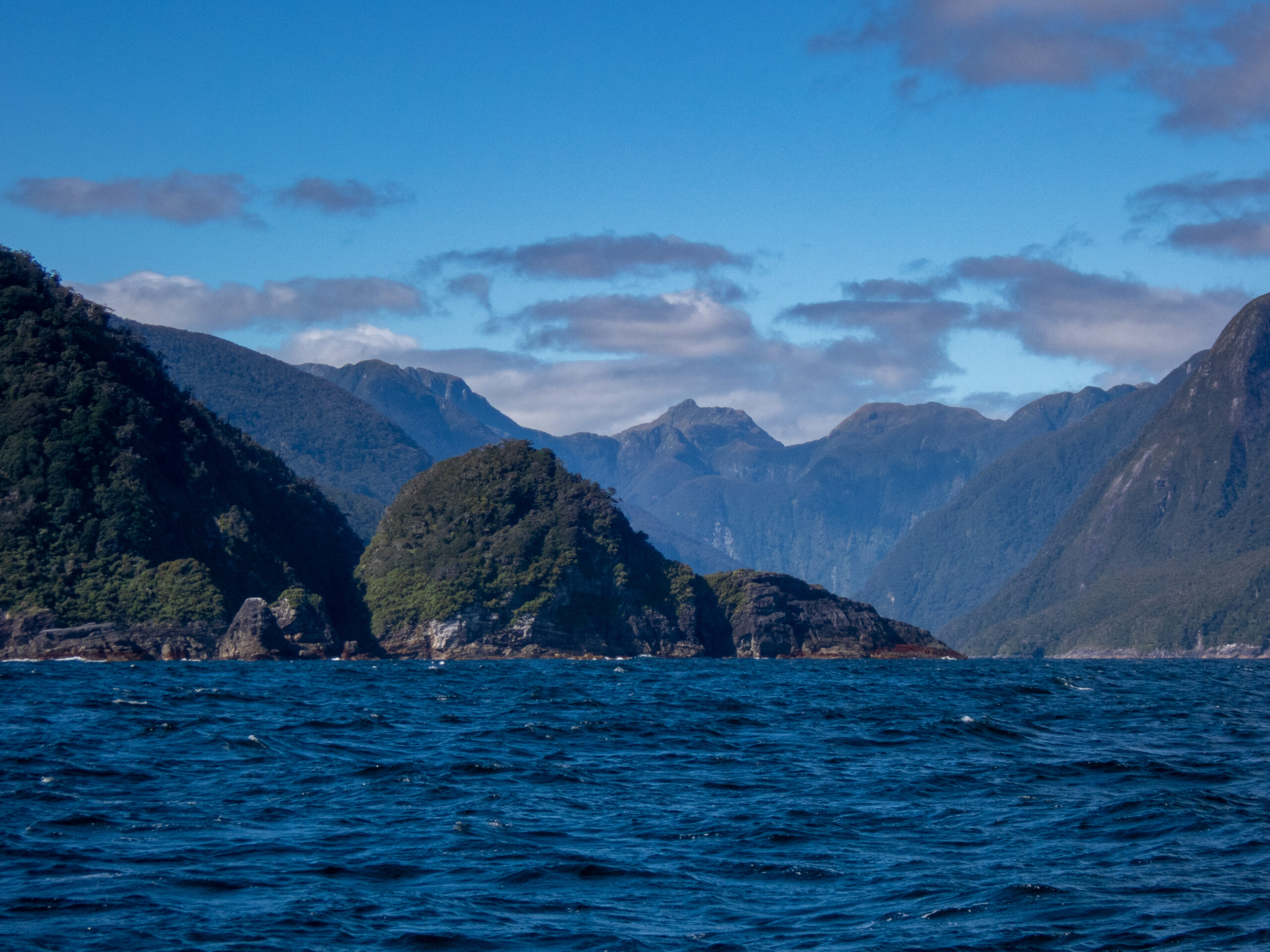
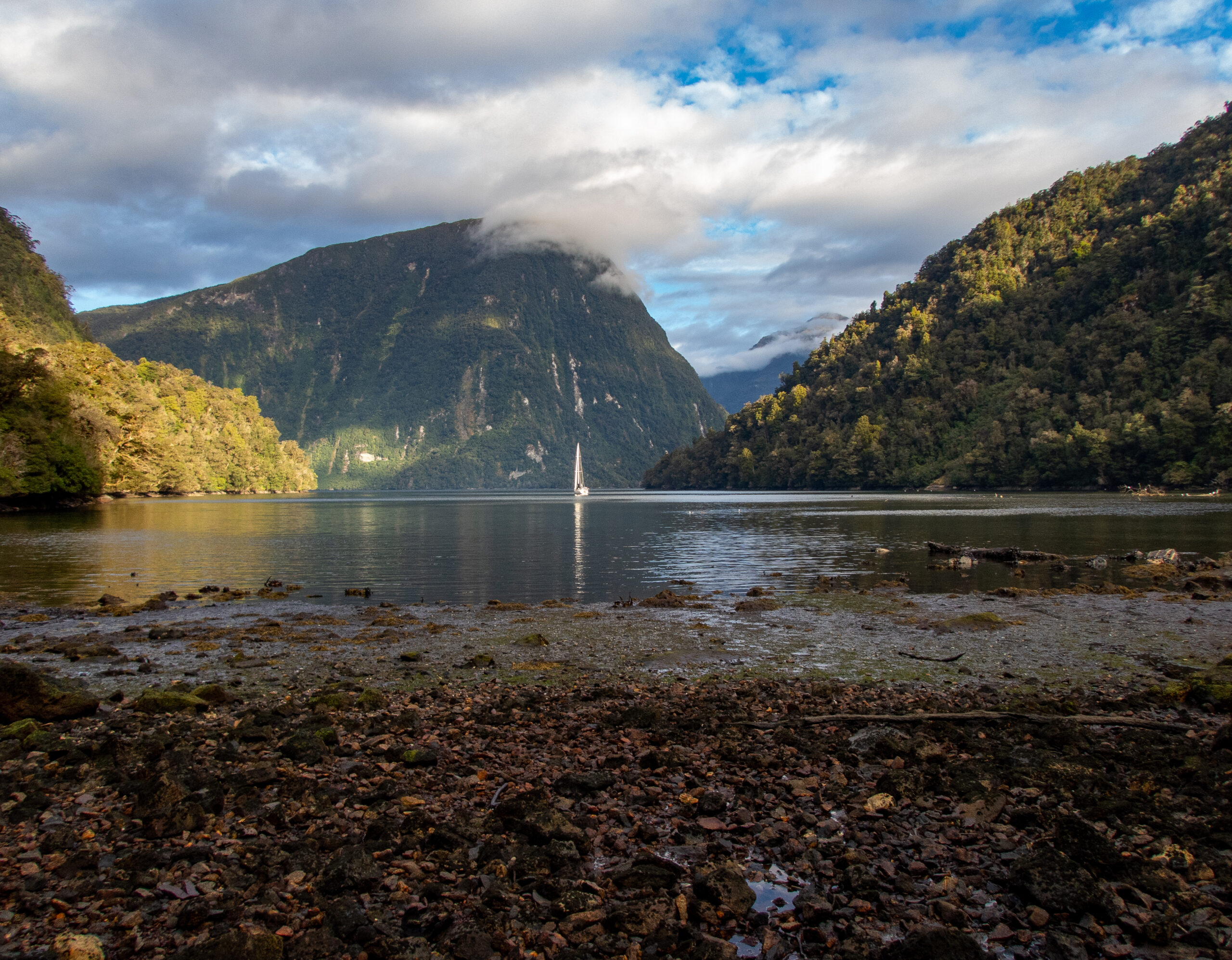
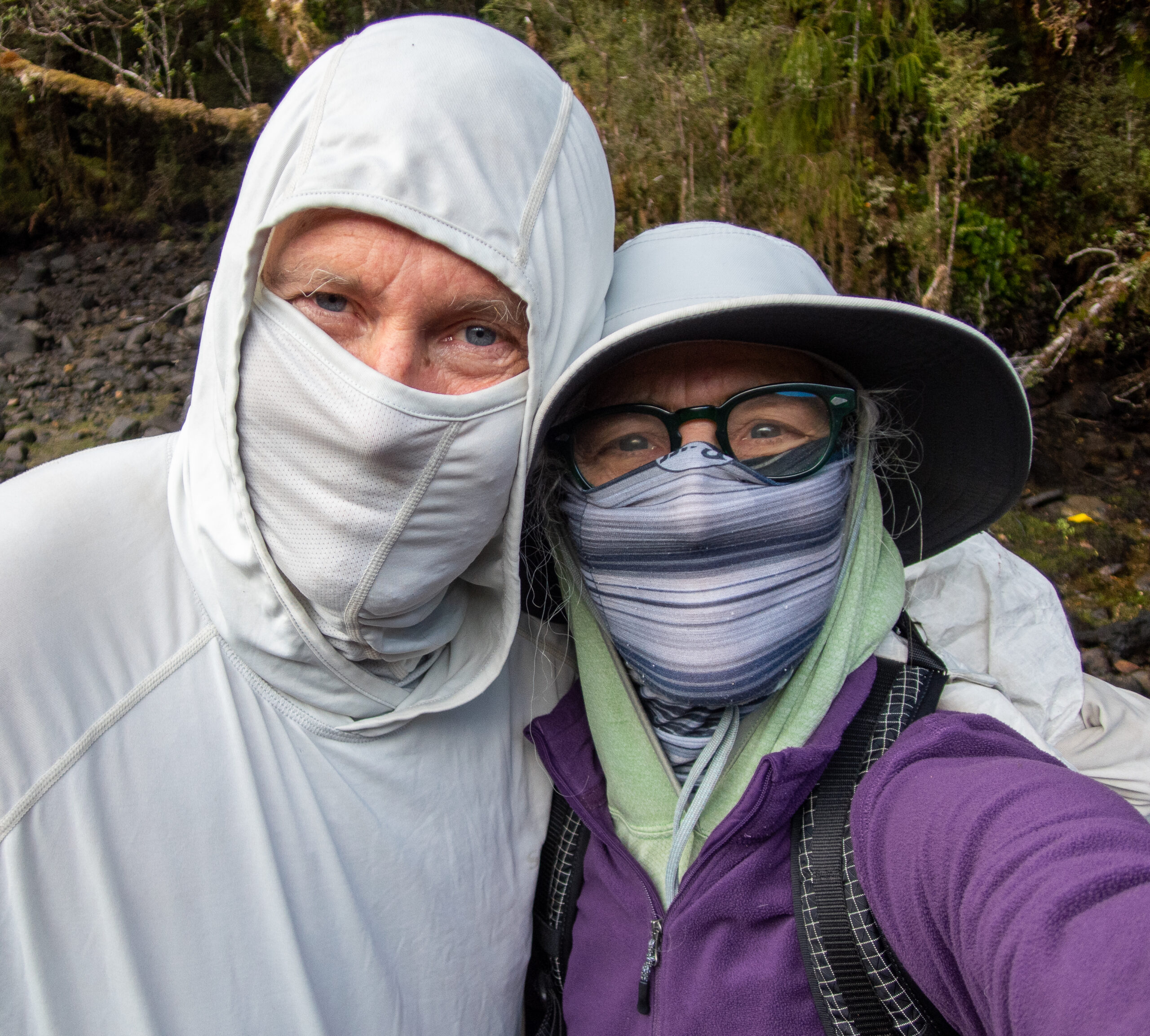
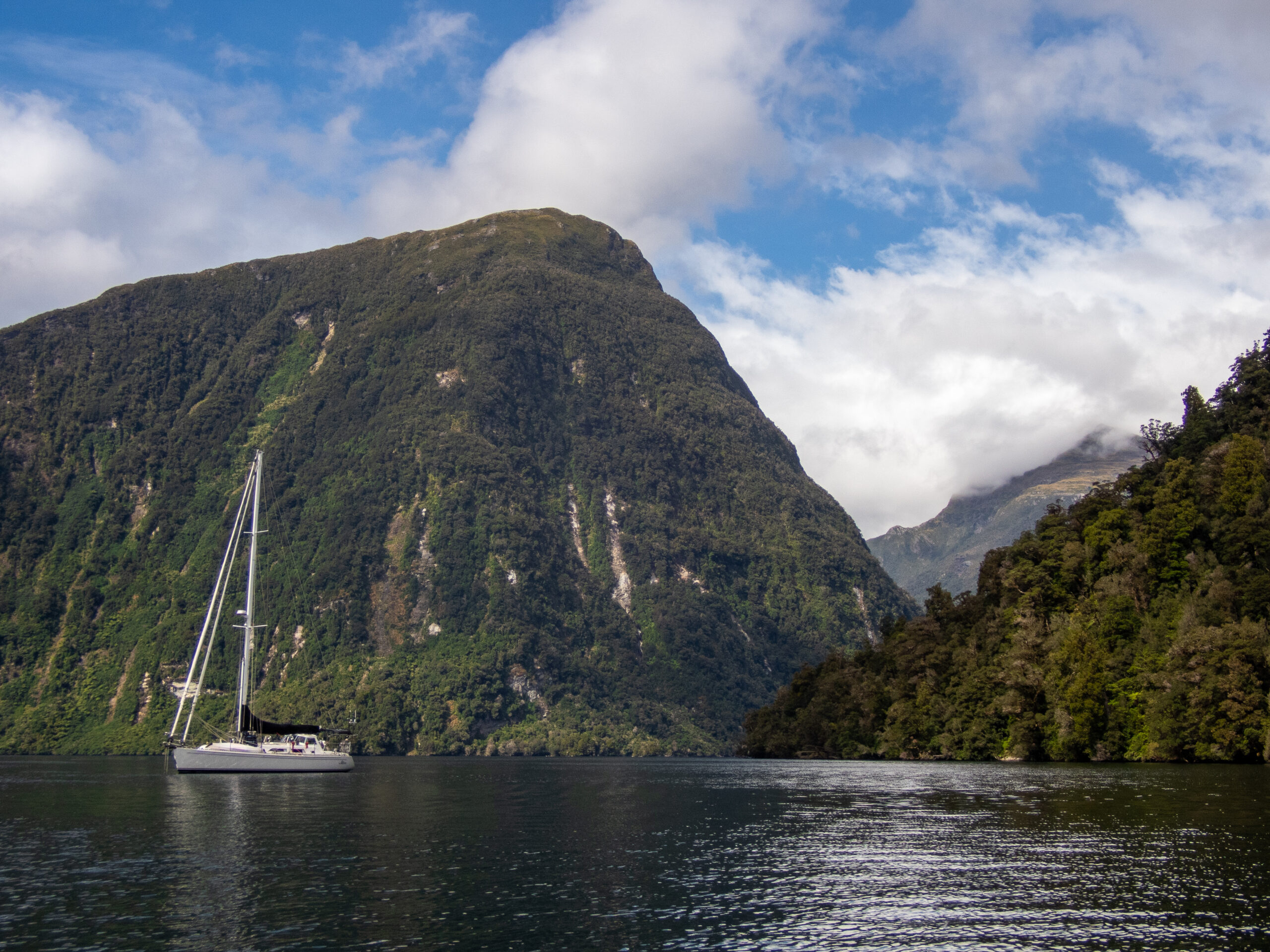
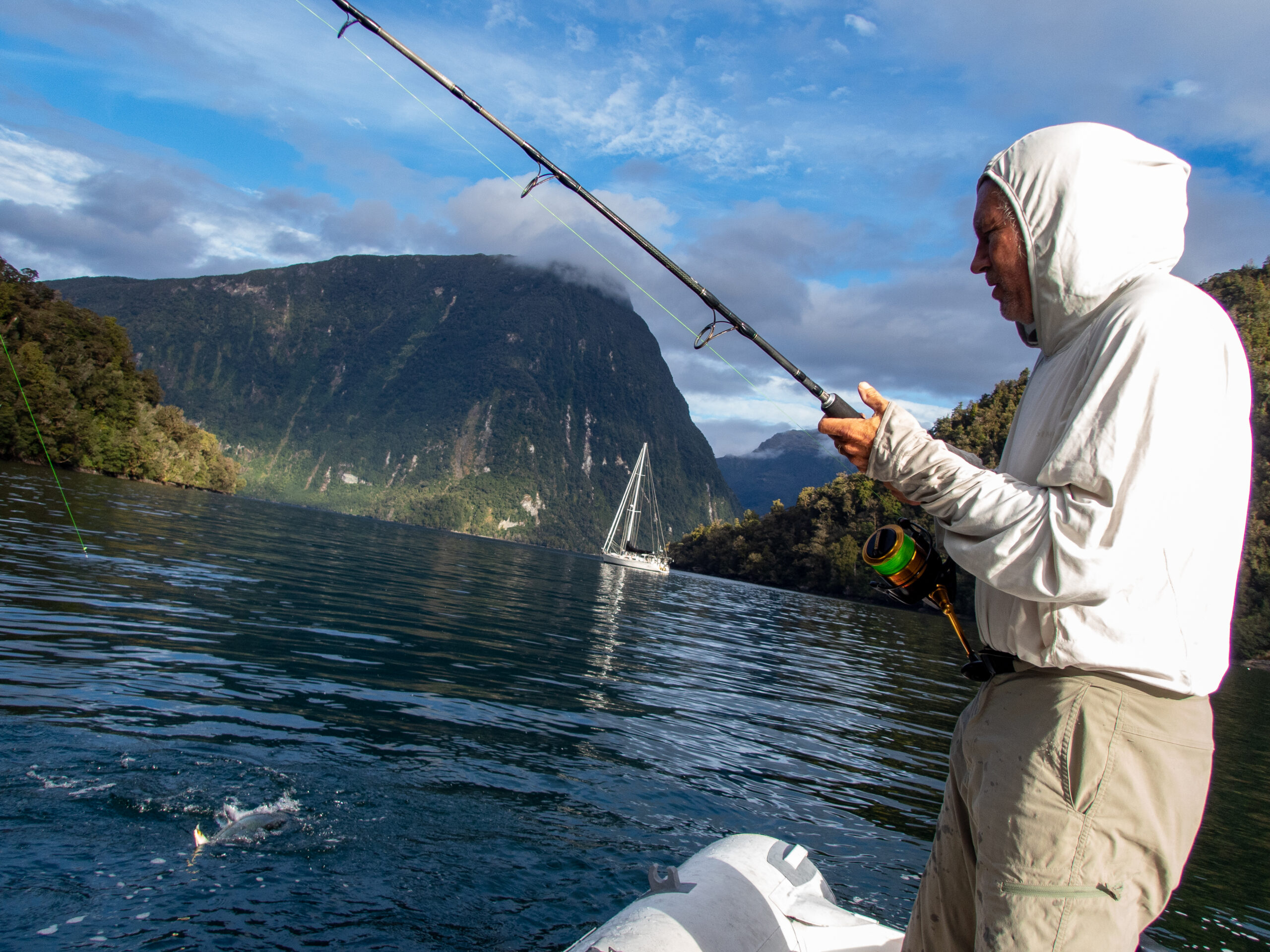
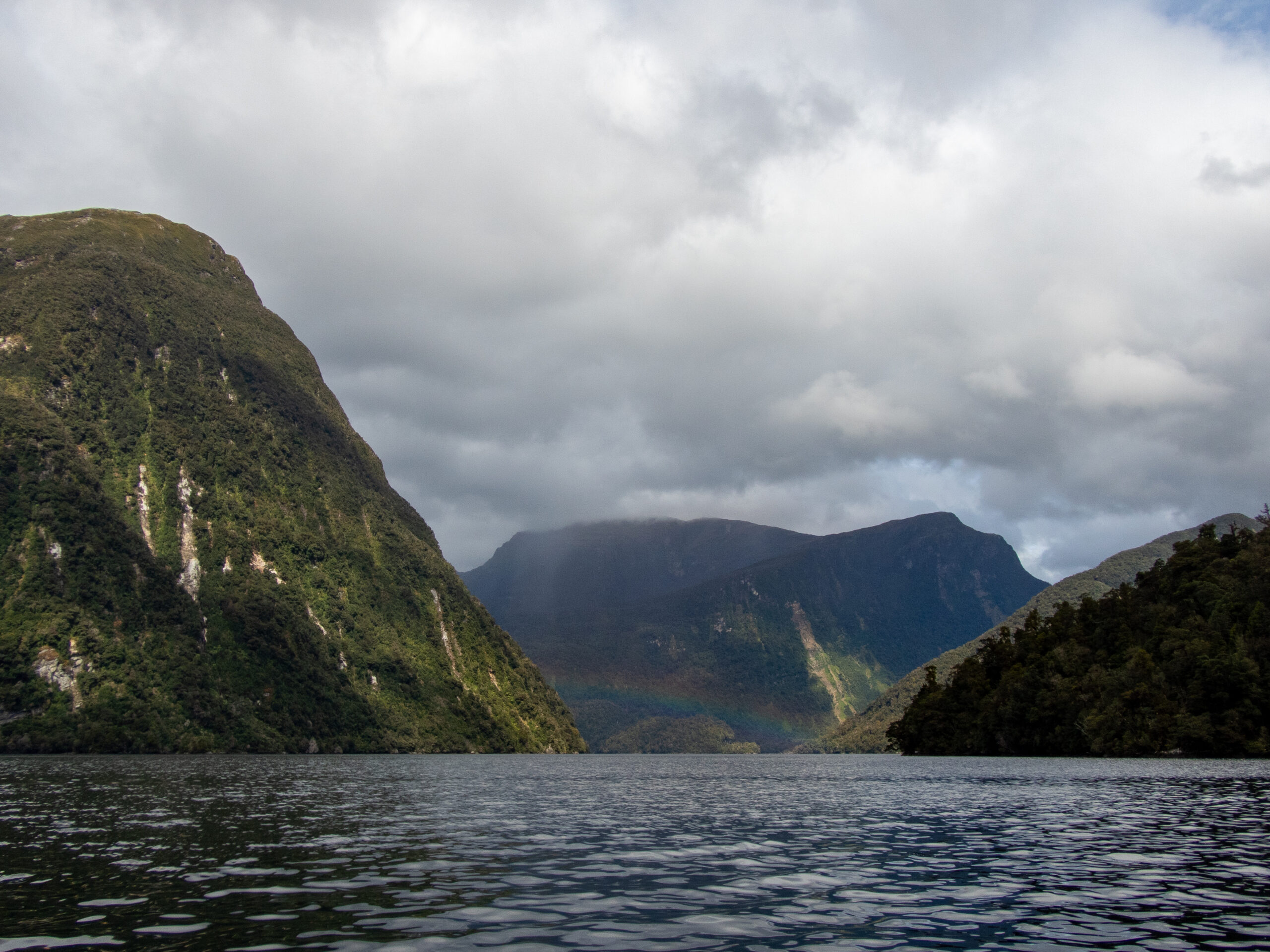
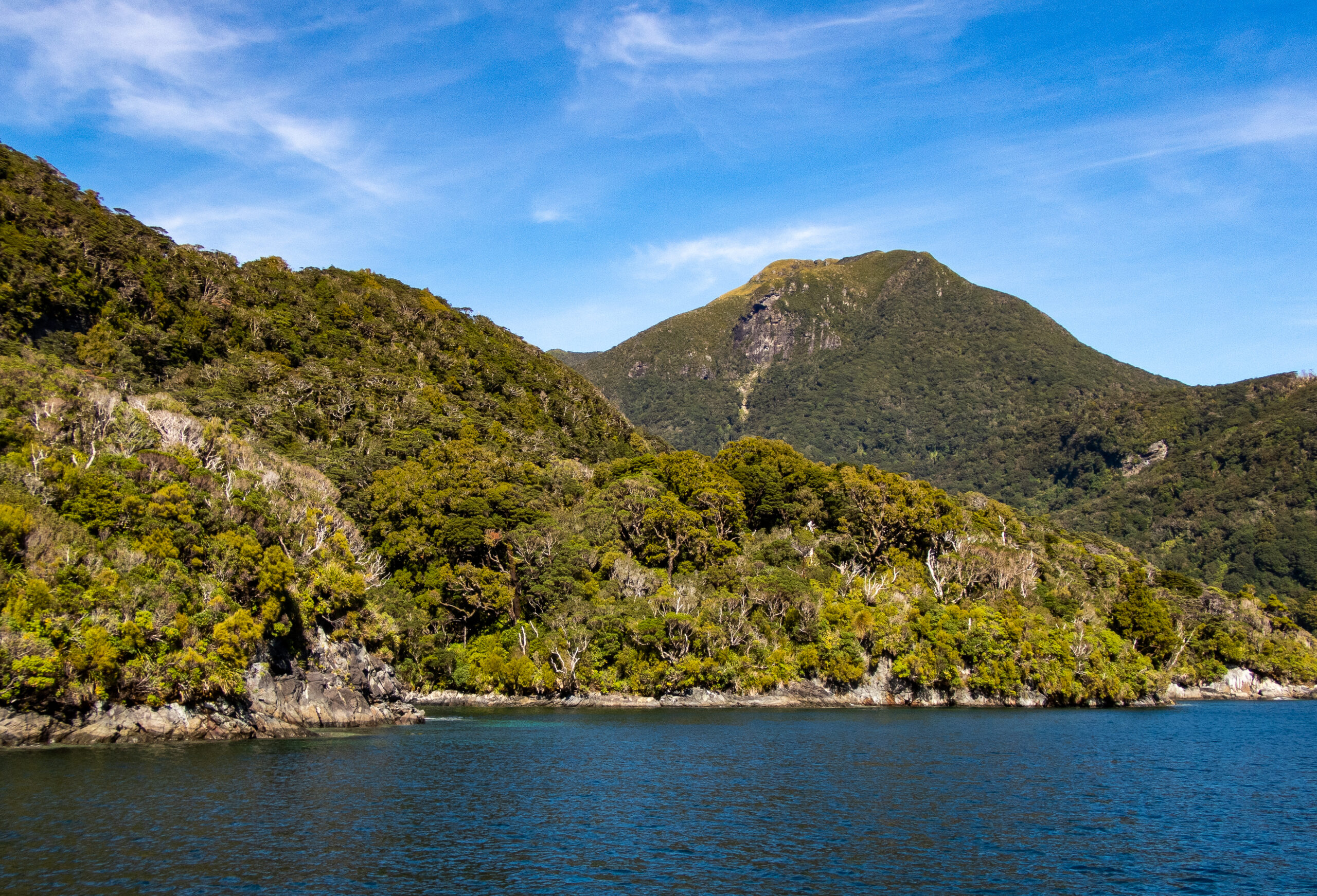
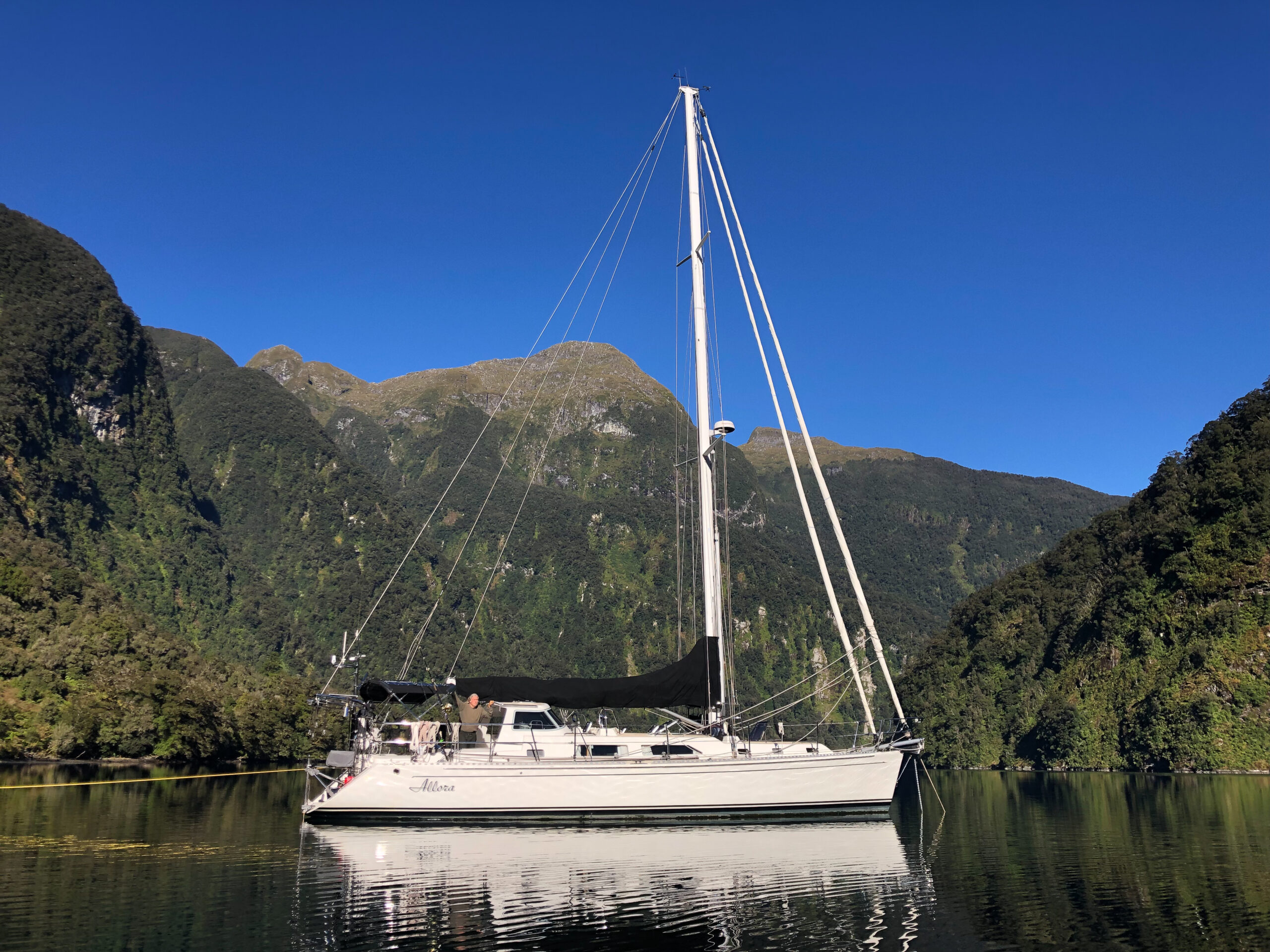
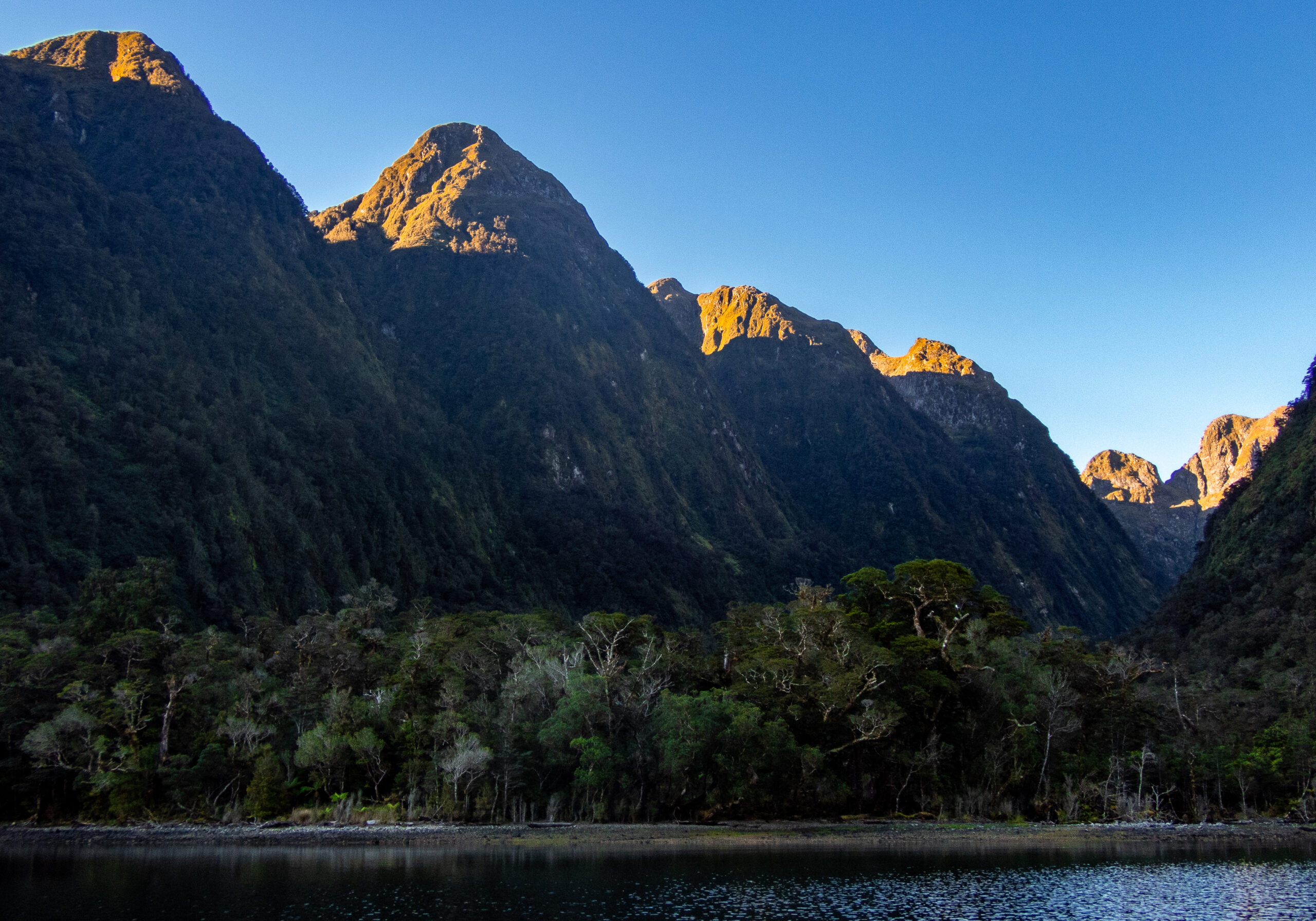
Heading north along the west coast of the South Island, soon to turn east into Dagg Sound!The sun started making an appearance, highlighting the seemingly endless layers unfolding into … infinity?!We both saw a crazy optical illusion as we headed out of Breaksea Sound – of breaking waves in the distance ACROSS the entrance/exit. Turns out, the path was clear and calm, but some light bending effect had us both pretty focused and ready to retreat back to Stevens Cove if necessary! In general, the chart plotter and real life conditions both need our attention. We found our Navionics charts to be thankfully accurate in Fiordland, though still a fair amount of erroneous depth readings and the occasional goofy moments when small islands would be charted which weren’t there.Approaching the Dagg Sound entrance.Always a nice exhale when we cross from the ‘outside,’ to the ‘inside!’The ‘grotto’ beneath this waterfall must have been gorgeous?! I wanted to drop the kayak and go over there, but we had an anchorage to go find.Dagg Sound is 8+ miles long and branches into two arms. We first chose ‘Anchorage Arm’ and had glassy calm conditions. Instead of trying to find shallow enough depths in the middle to anchor in, we snugged up super close to shore utilizing some fishermen’s lines which are rigged in place. Wonderful protection from winds, mellifluous creek sounds and voracious sandflies!Such a little creature to cause so much mischief!My armor: fleece onesie, scarf and balaclava/hat (ready to be dropped over my whole face when, after about 7 seconds of being outside, every sandfly in the universe descends on me. Haha, unless Marcus is out there too!)Caught this Albacore on the ‘outside,’ just seconds after videotaping Marcus setting out the rod and line, and commenting that I wasn’t sure I wanted to even catch a fish because of the large swell!Went out on Namo with MS to explore the colorful shoreline at the end of the day.
We moved to the southern arm of Dagg to the ‘All weather anchorage’ since bigger winds were predicted and we liked the idea of a swing anchorage instead of being tied so close to shore.Always fun to see what’s around the corner!New spot!
Something happened when the twenty North American Wapiti Roosevelt gifted to New Zealand in 1905 found their way into the heart of Fiordland’s steep and impenetrable wilderness. Maybe there’s a perfectly rational scientific explanation (maybe it has something to do with crossing breeding with Red Deer?). They got a bit smaller than the fat and happy elk of Yellowstone (which certainly makes good sense given the dense rainforest) but they also changed their tune, no longer bugling with that iconic, haunting call that resonates across the frosty parklands, lodgepole forests and granite peaks of the Rockies. Our visit to Daag coincided with height of the “roar.” It’s a sound that does not “belong,” but also feels so fitting, as though giving voice to the thick ferny jungle of that unpeopled wilderness. Deep, guttural, plaintive and haunting (in their own way) – their roars echo across the still water and ridiculously precipitous canyon walls. You can hear individual stags make their way up and down the steep shore, and we paddled Namo as stealthily as we could manage along the shore hoping for a glimpse, and though they often seemed very close, we never saw them. We could only imagine their antlered heads tilted back, belly’s trembling as they gave voice to the wilderness.~MS
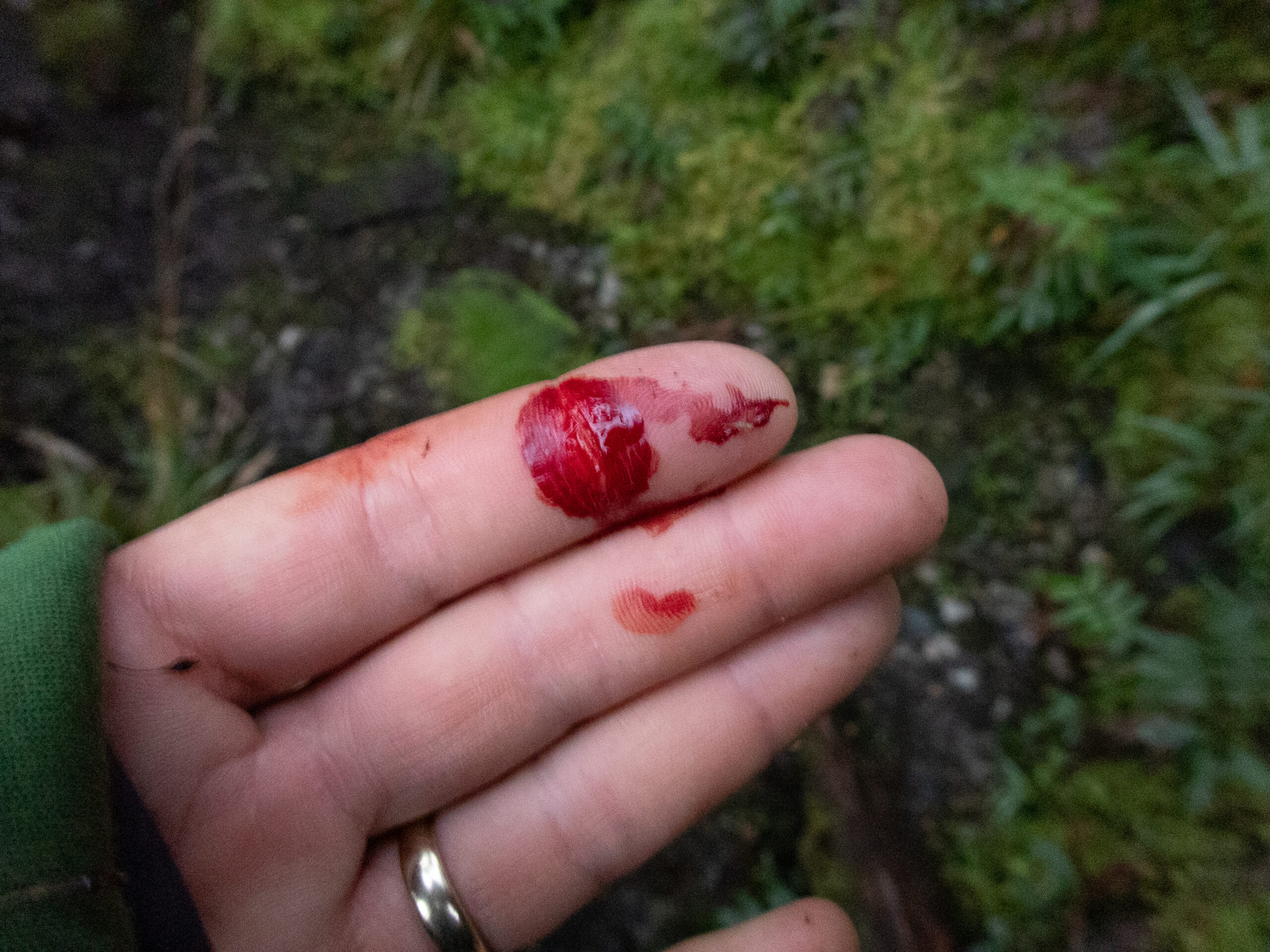
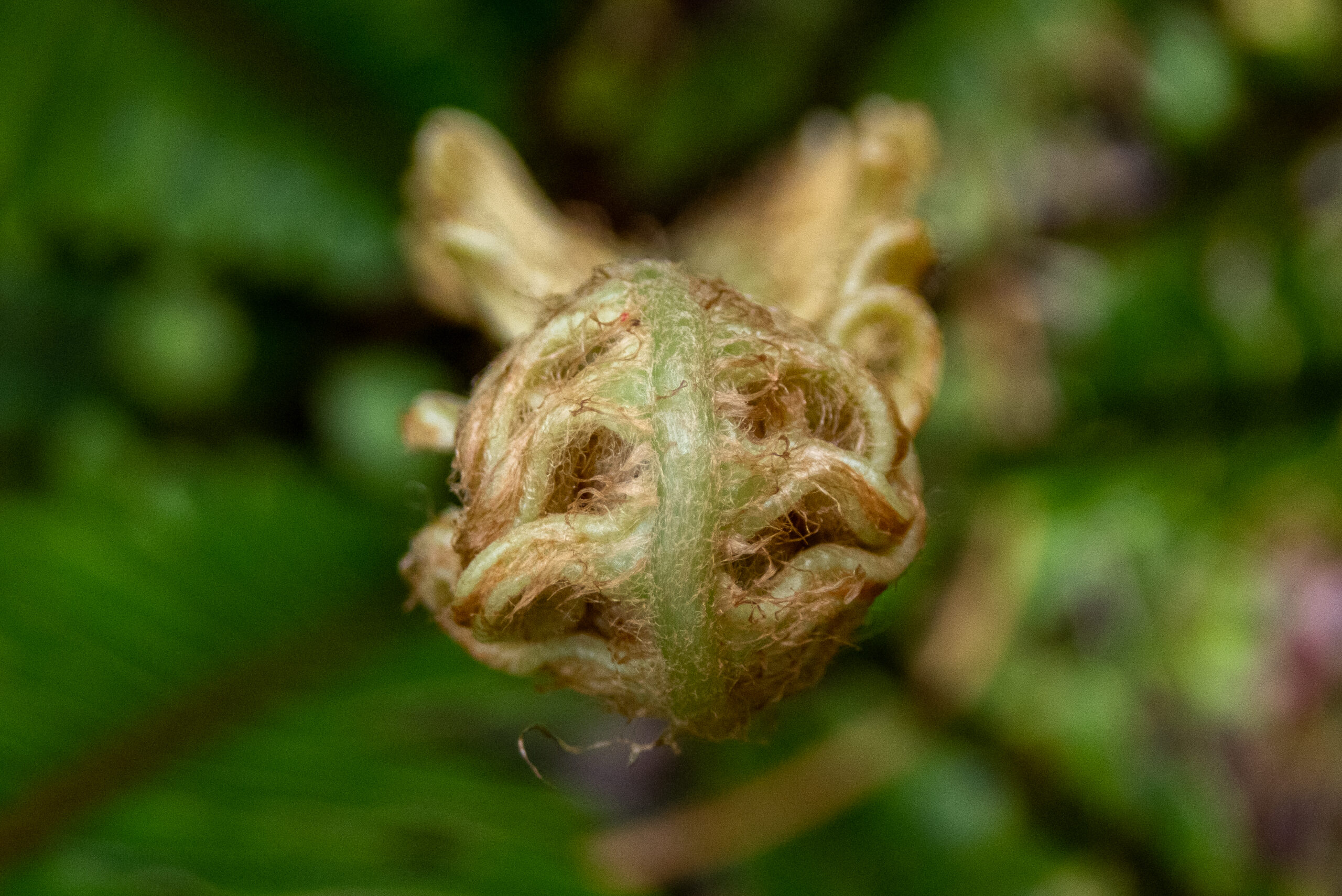
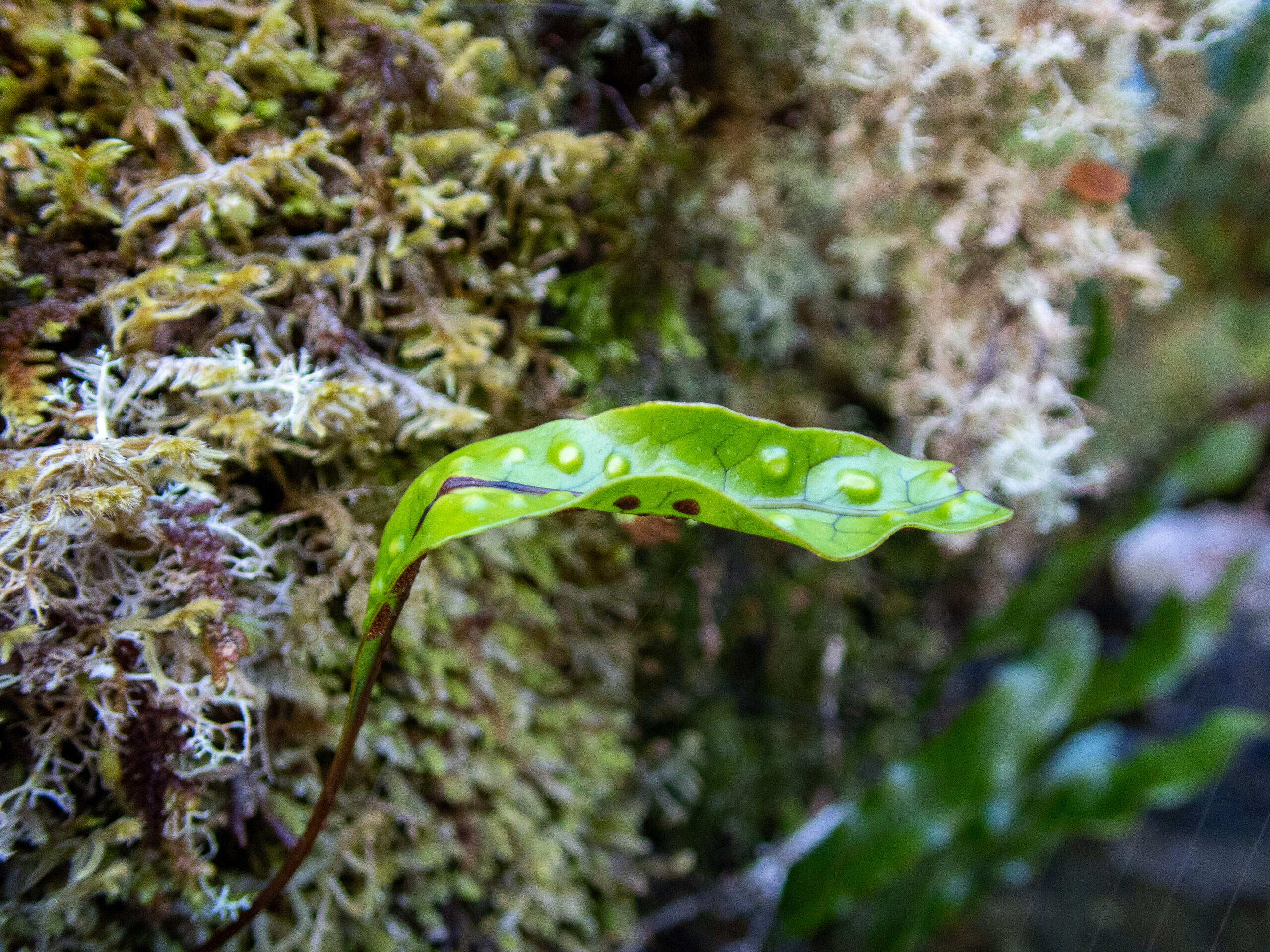
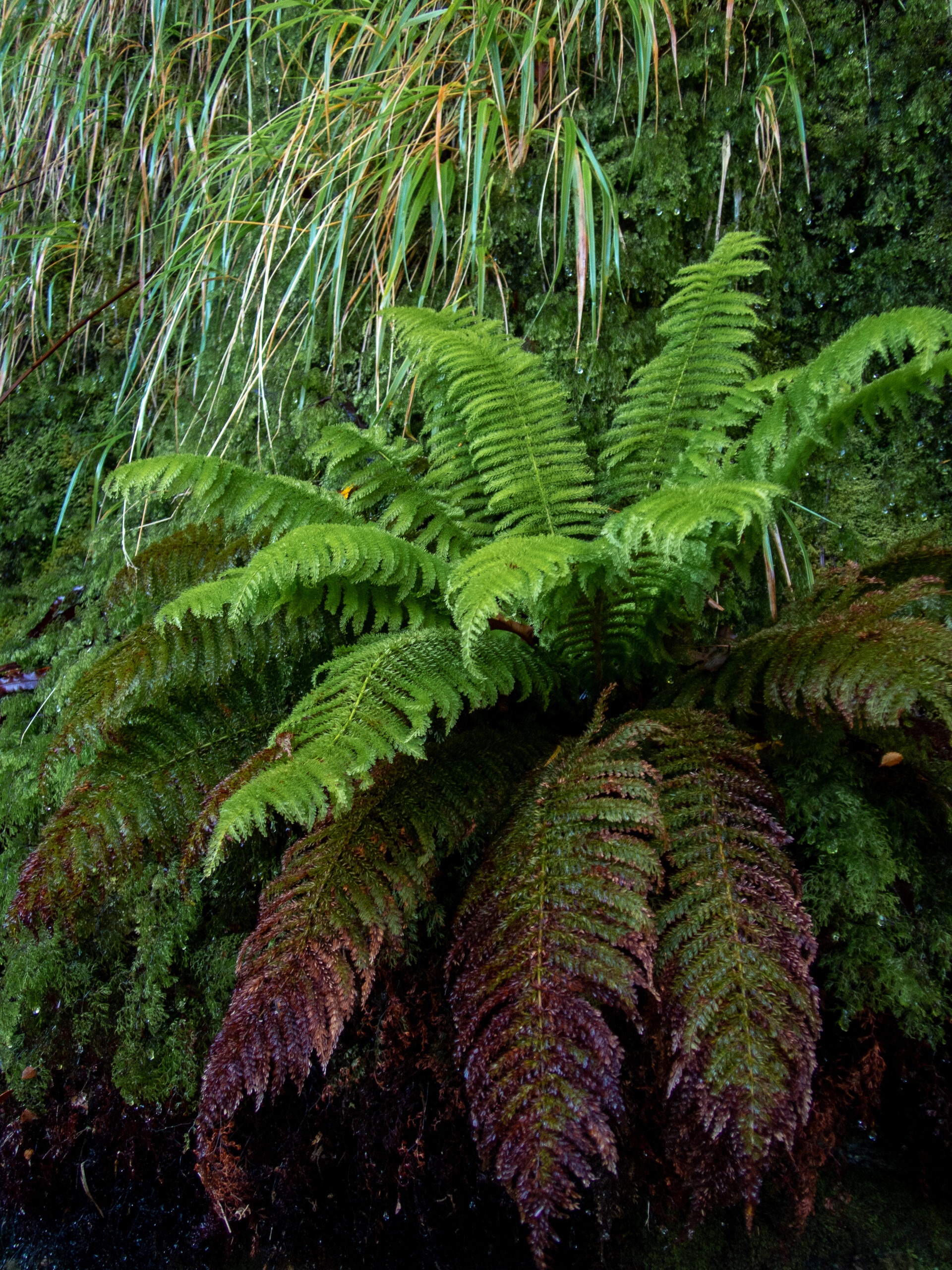
There’s a 1 kilometer trail between Dagg and Doubtful Sound, so we set out (too late) to try to dash across, but only got halfway and had to turn back, both because of light and falling tide.One of the many amazing things about the bush is that there are very few ‘pokey’ things. I am in the occasional habit of ‘greeting’ the ferns as I walk by, but I found one that didn’t want to be touched.
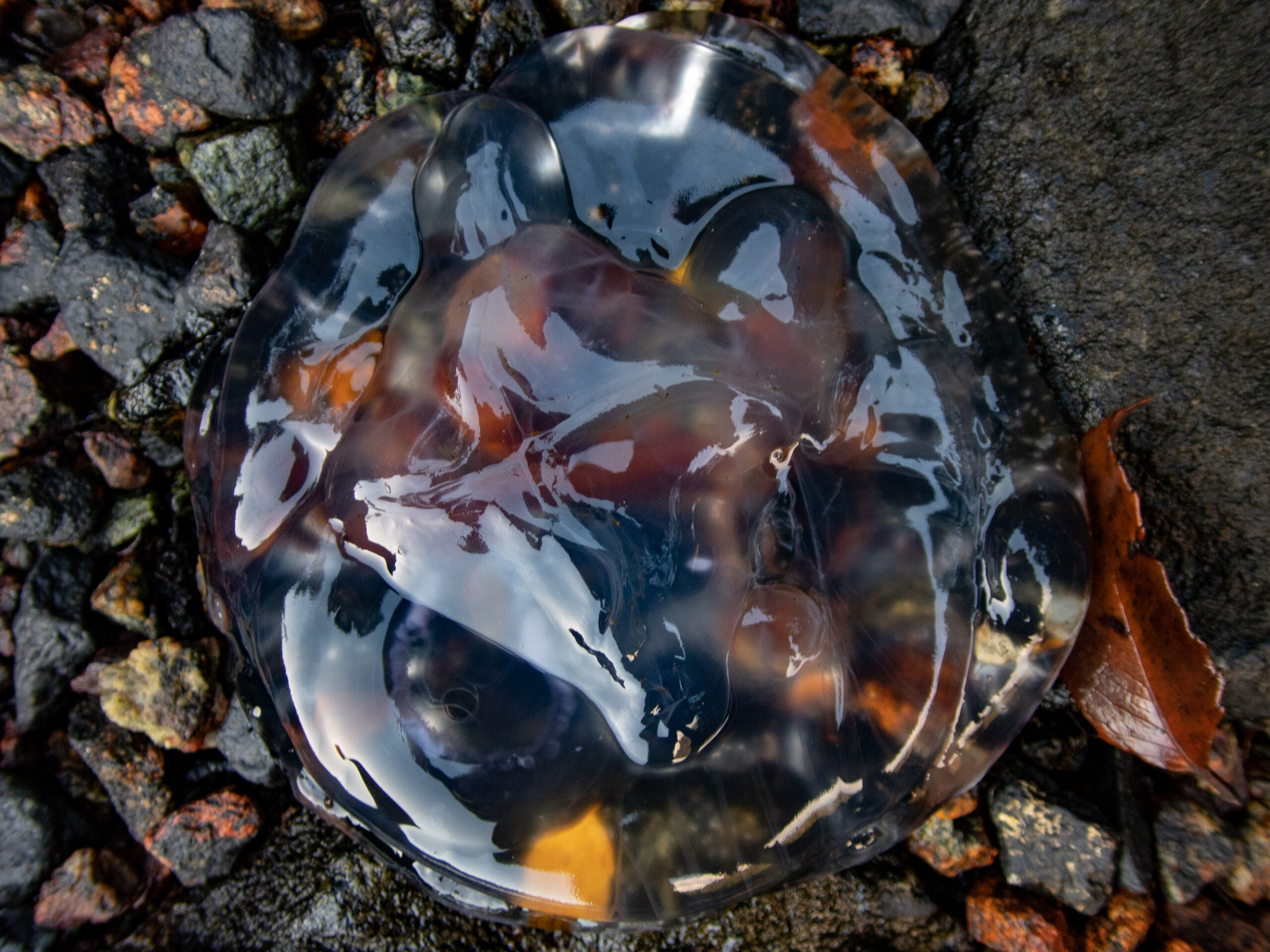
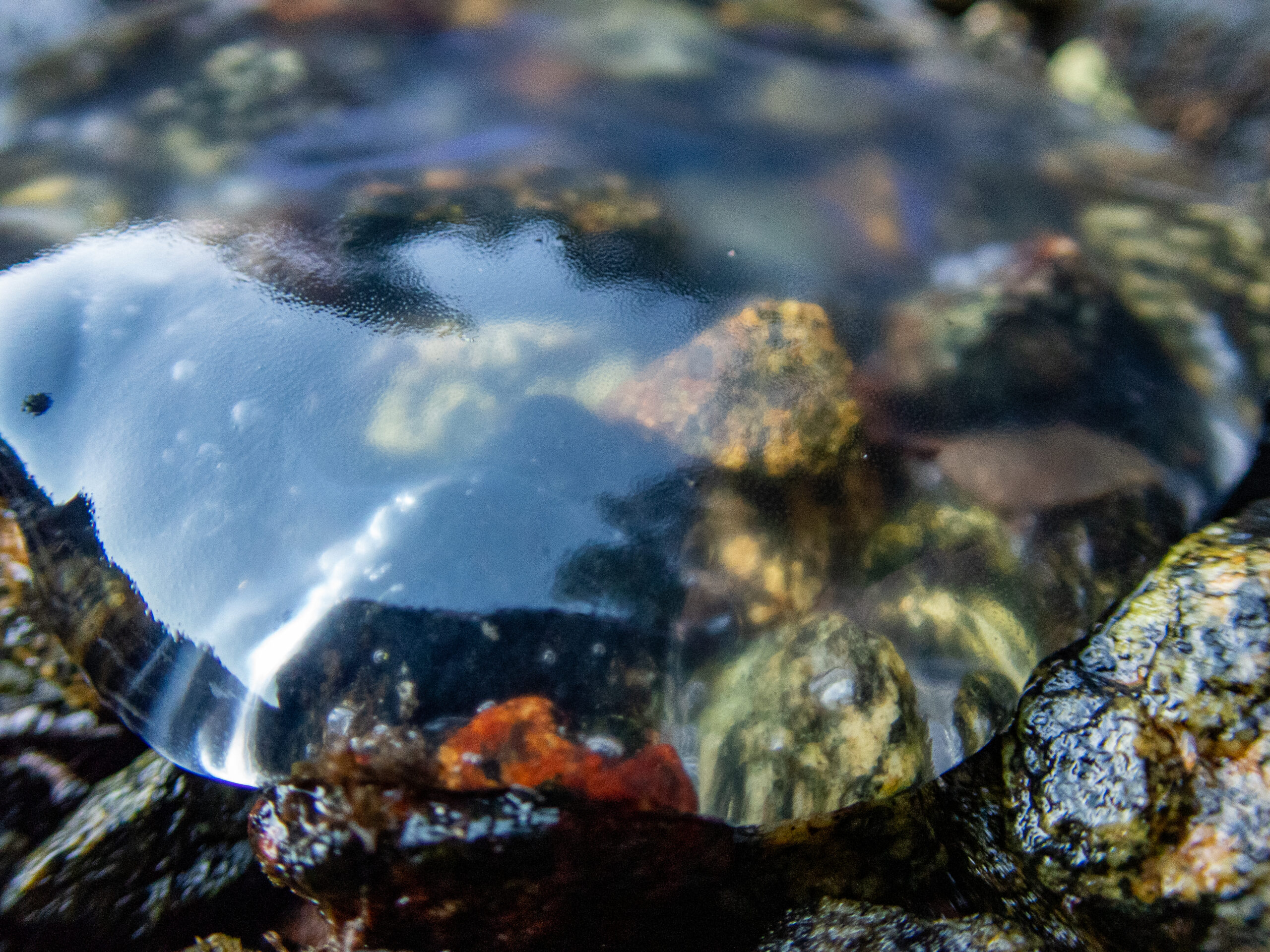
Jellyfish!
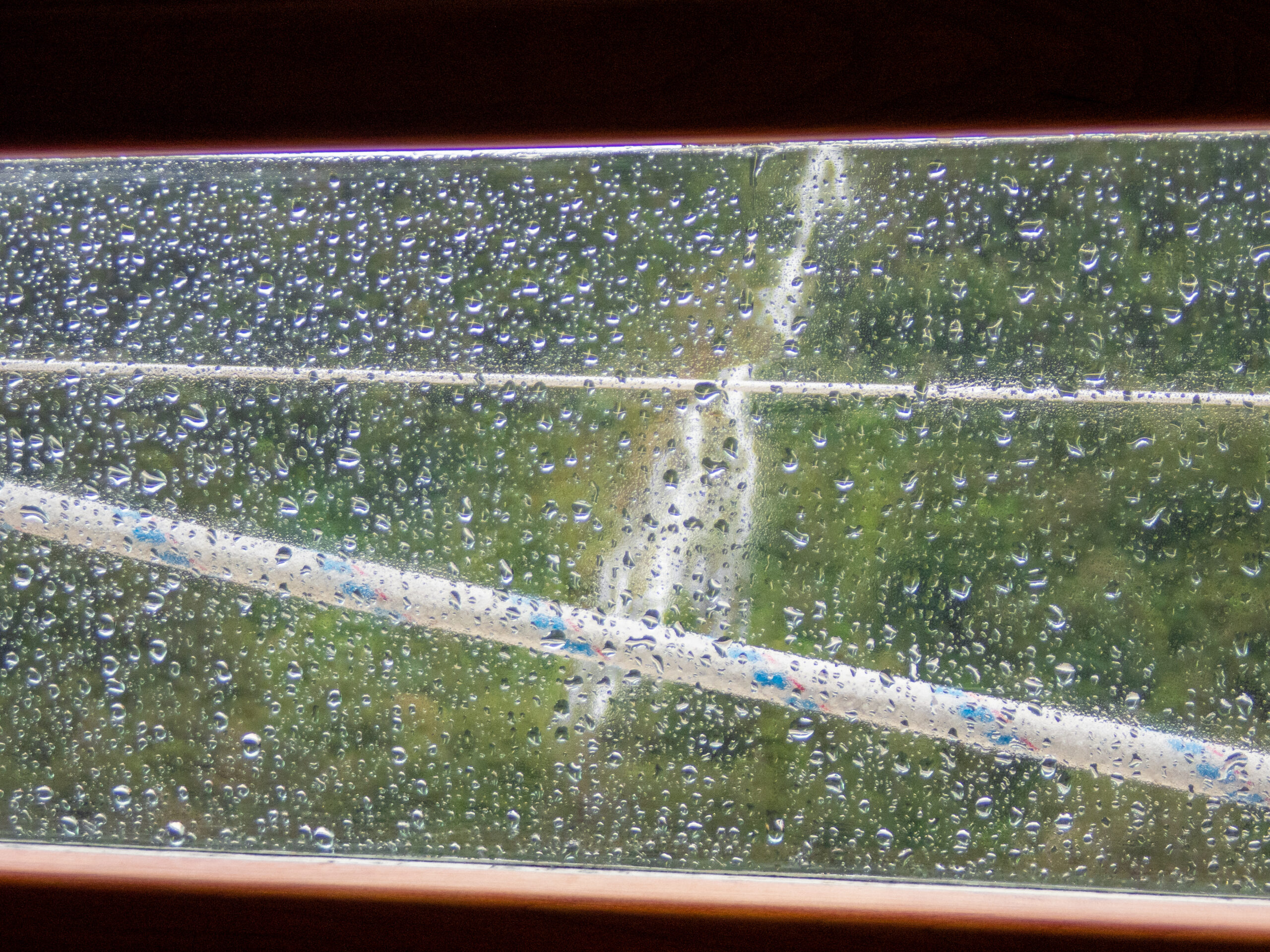
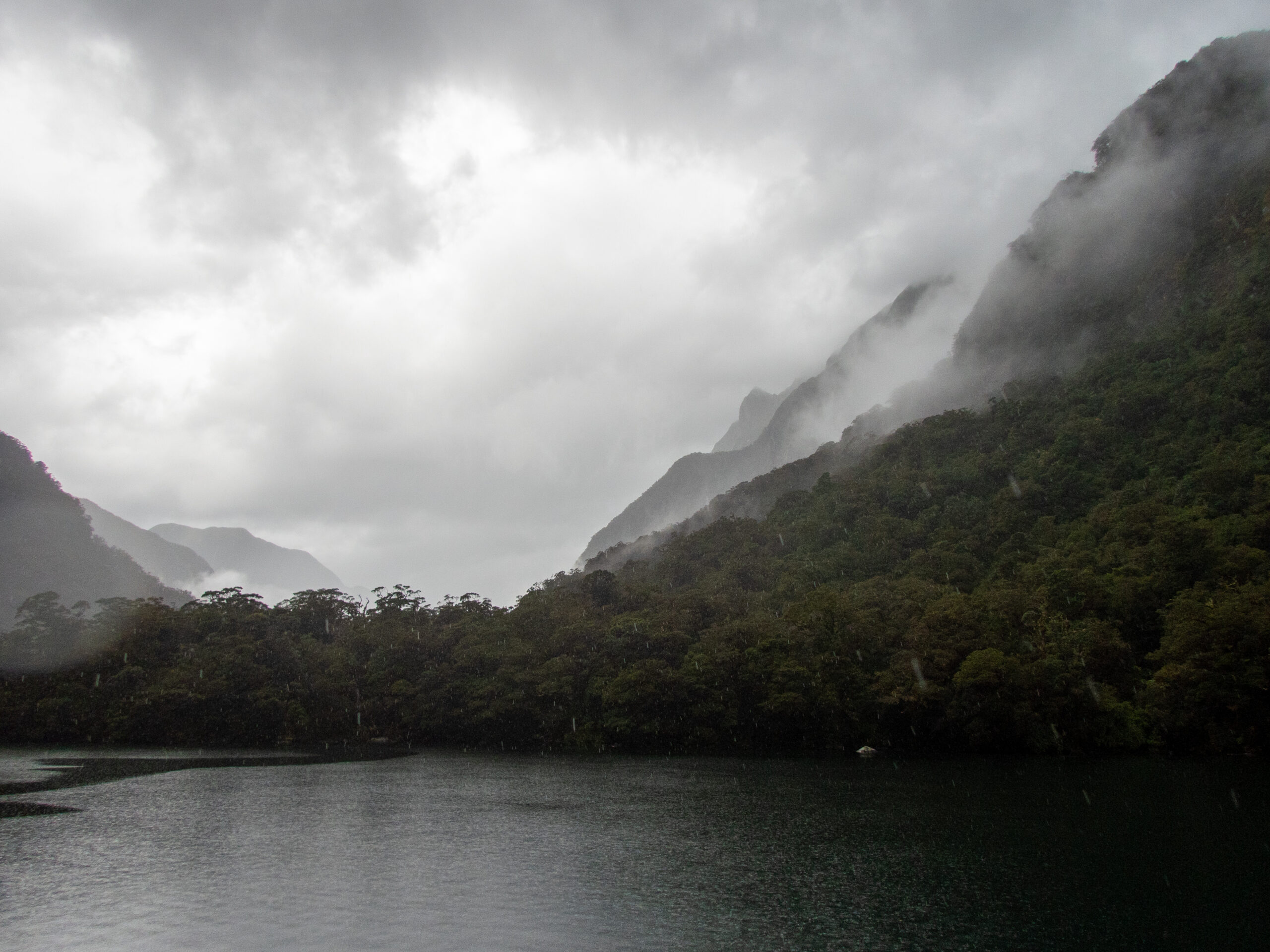
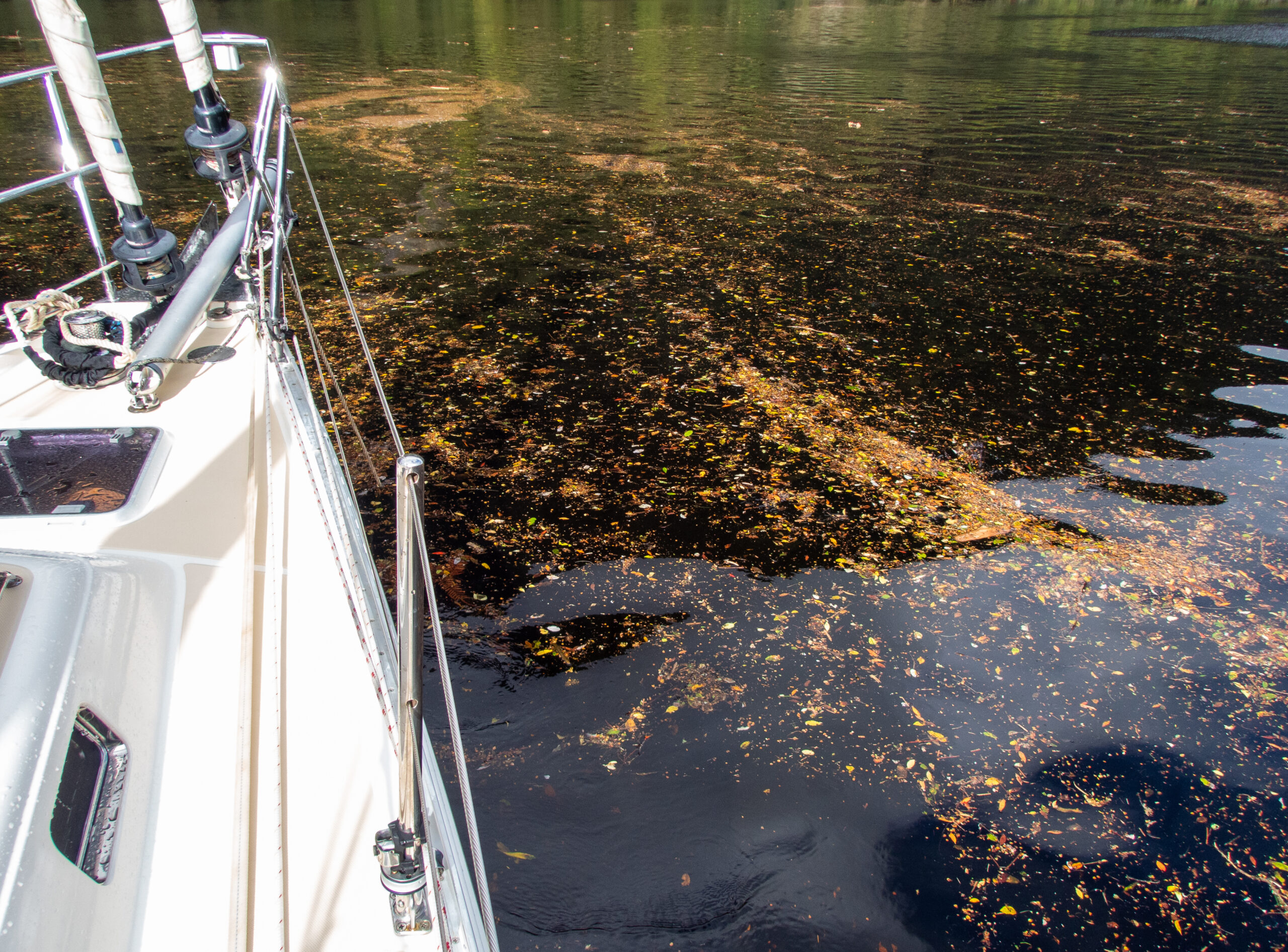
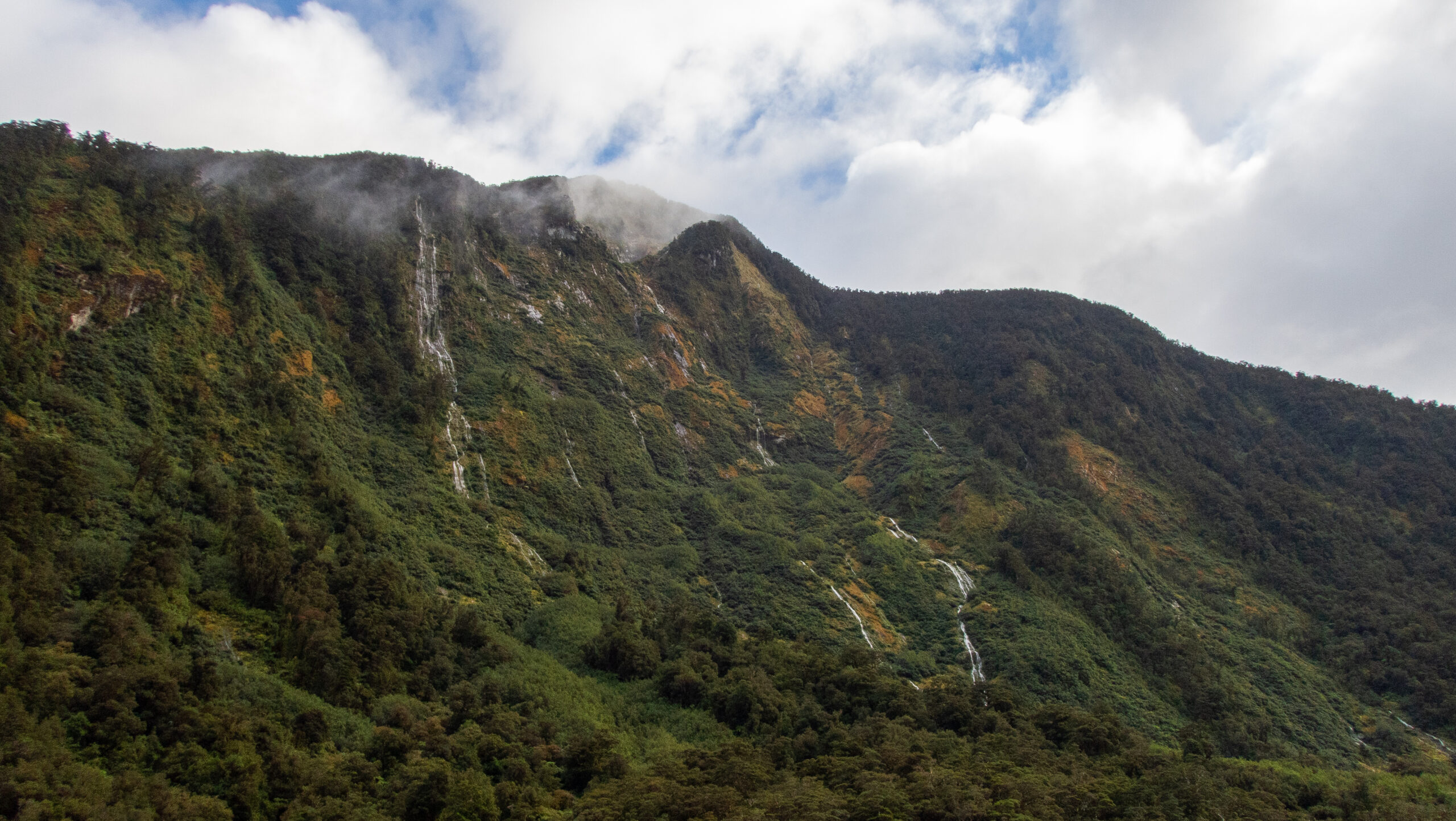
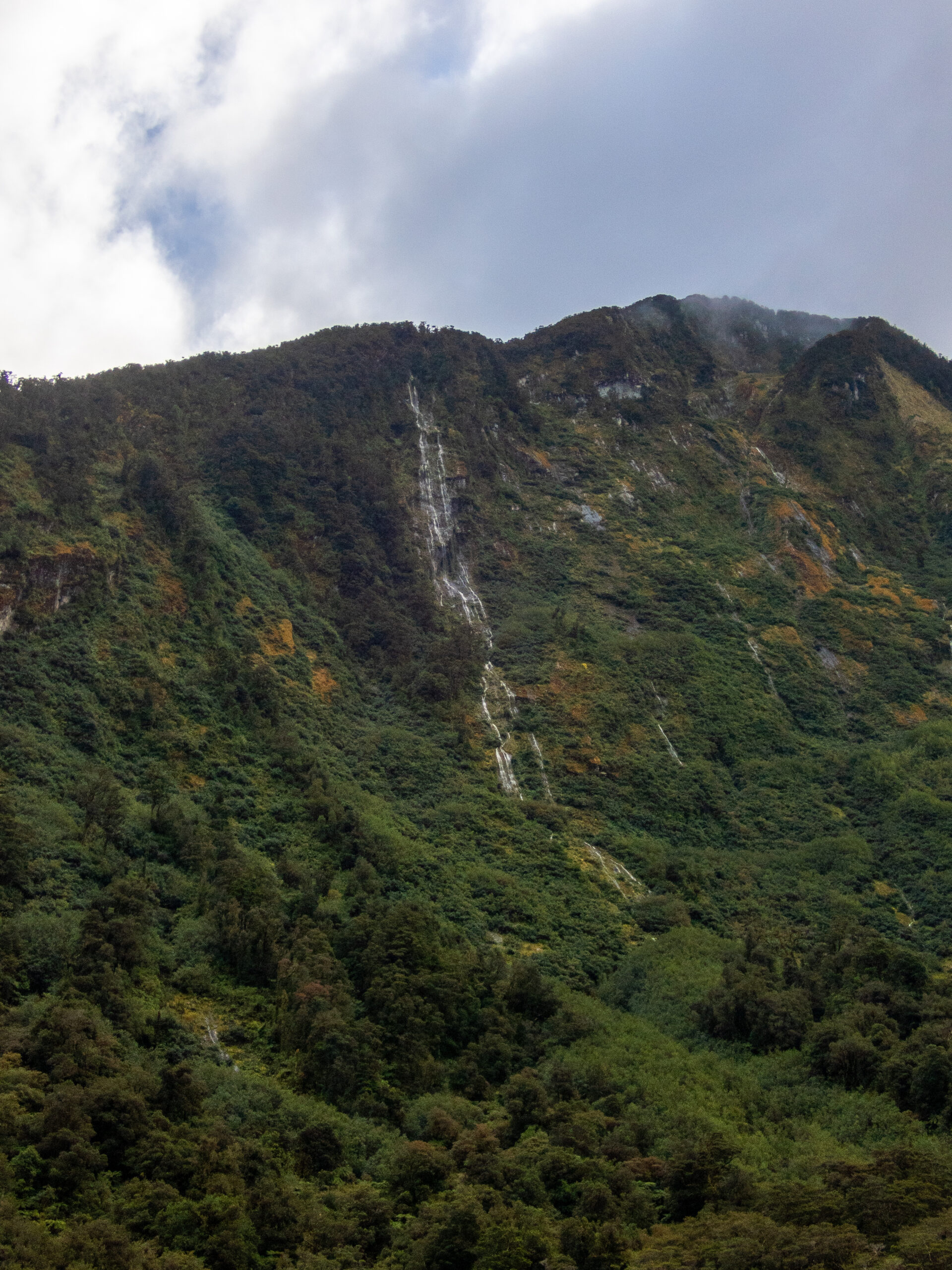
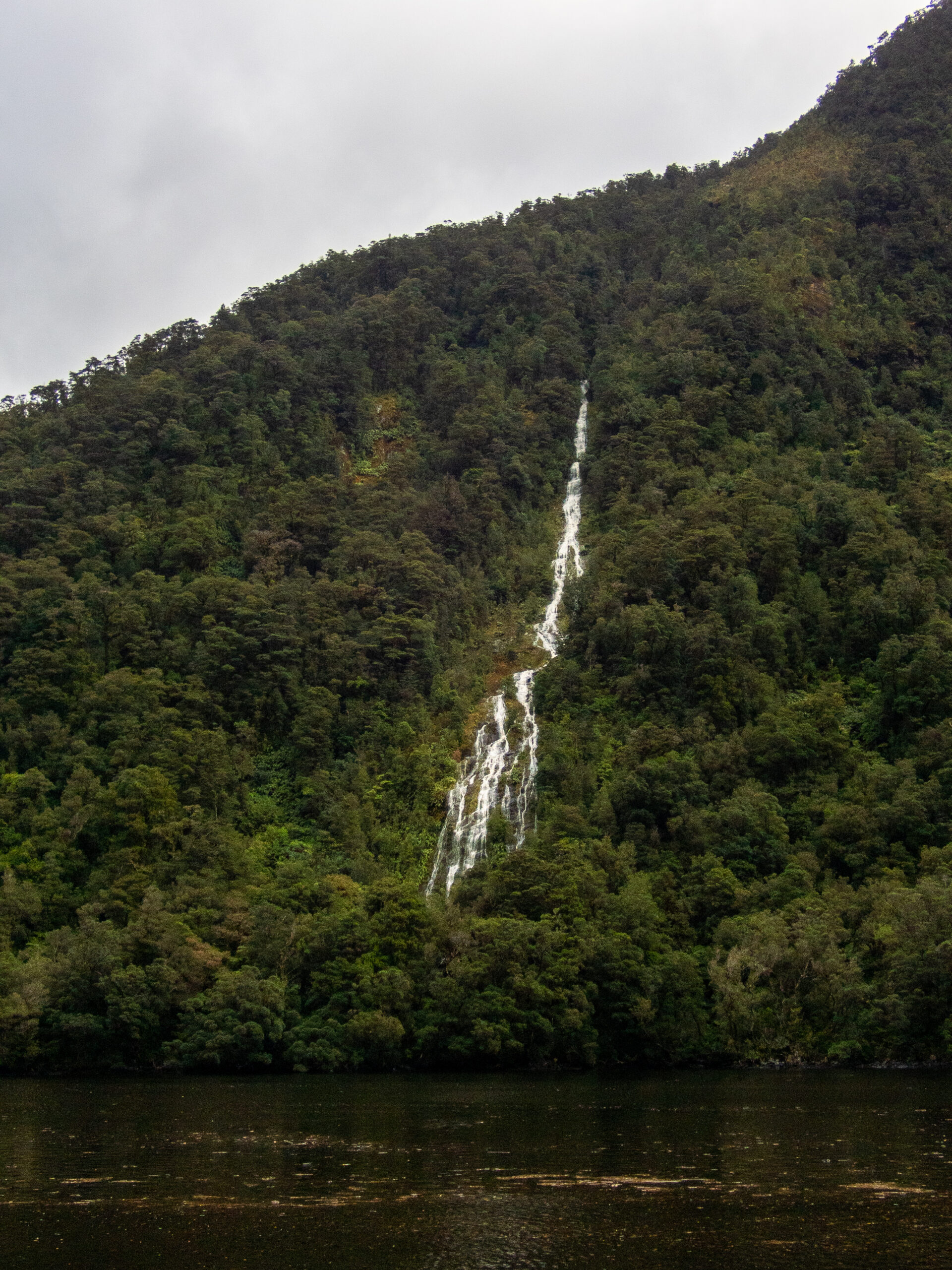
We had one day and night which was cloudy and rainy; the water became very brown with loads of fresh on top, heaps of forest debris floated around us and new, gushing waterfalls sprouted everywhere! Most folks agreed that these conditions were more the ‘norm’ and that we’d been having wild good fortune to experience a of almost non-stop glorious conditions.Guess we’re playing music!
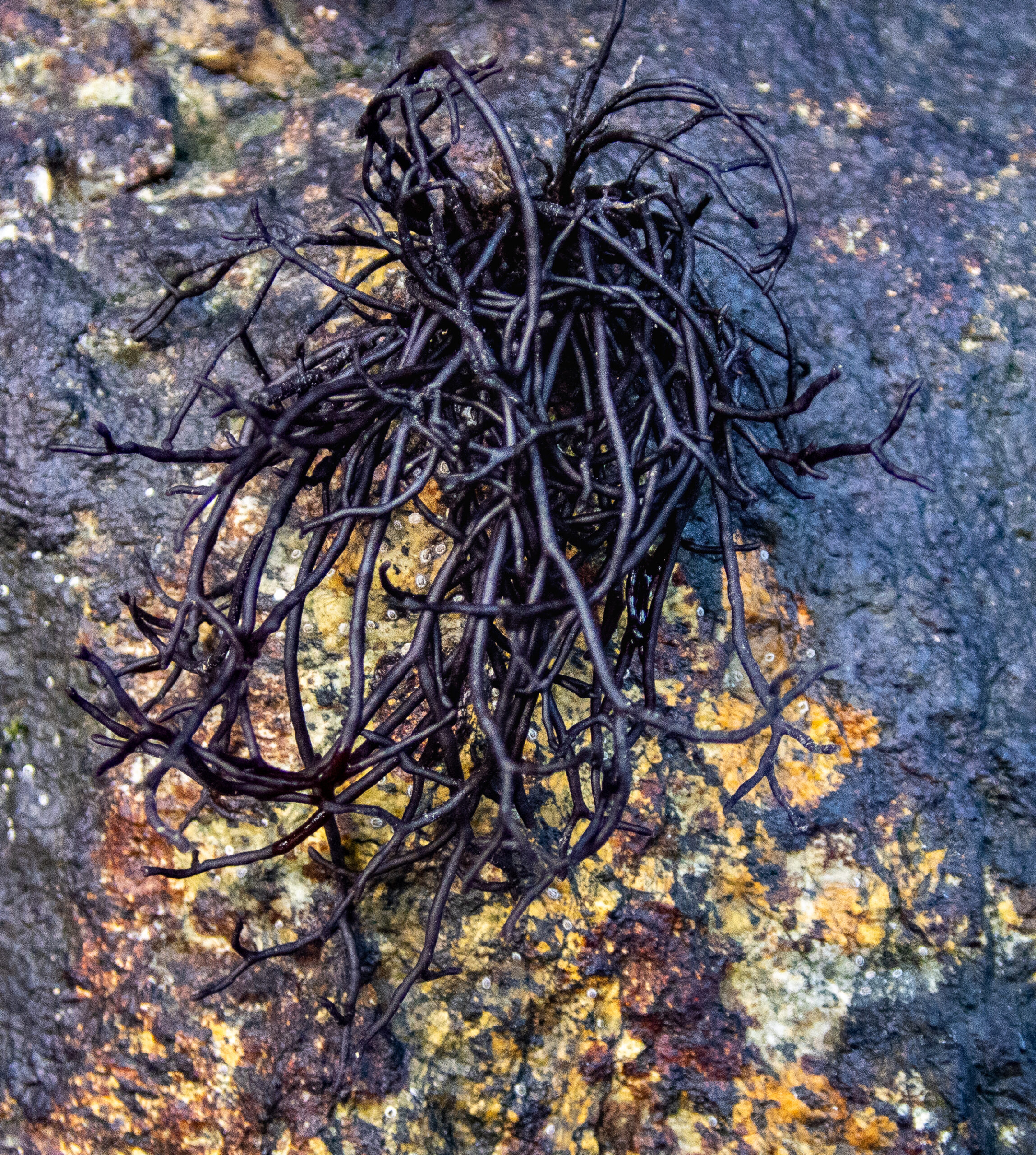
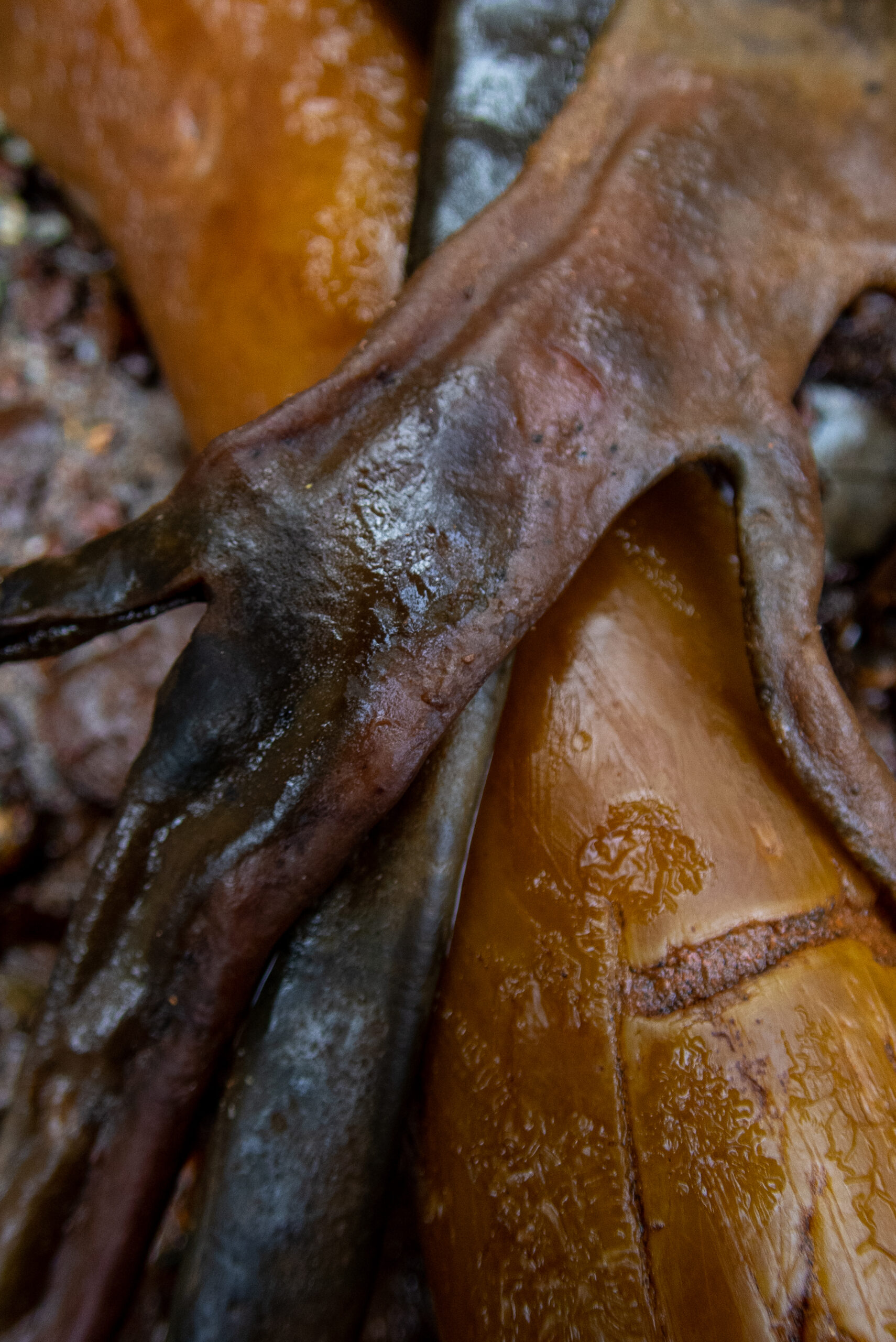
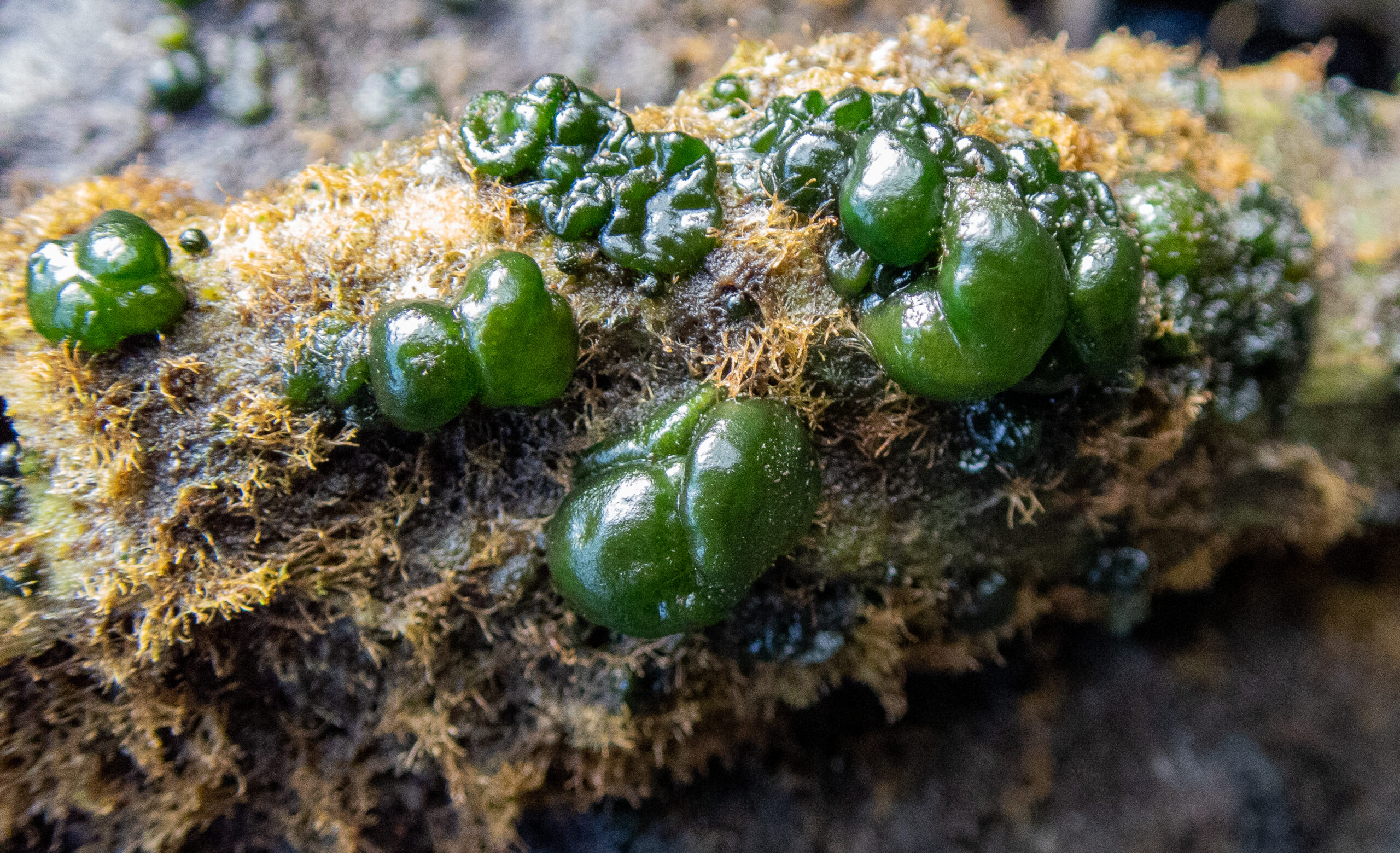
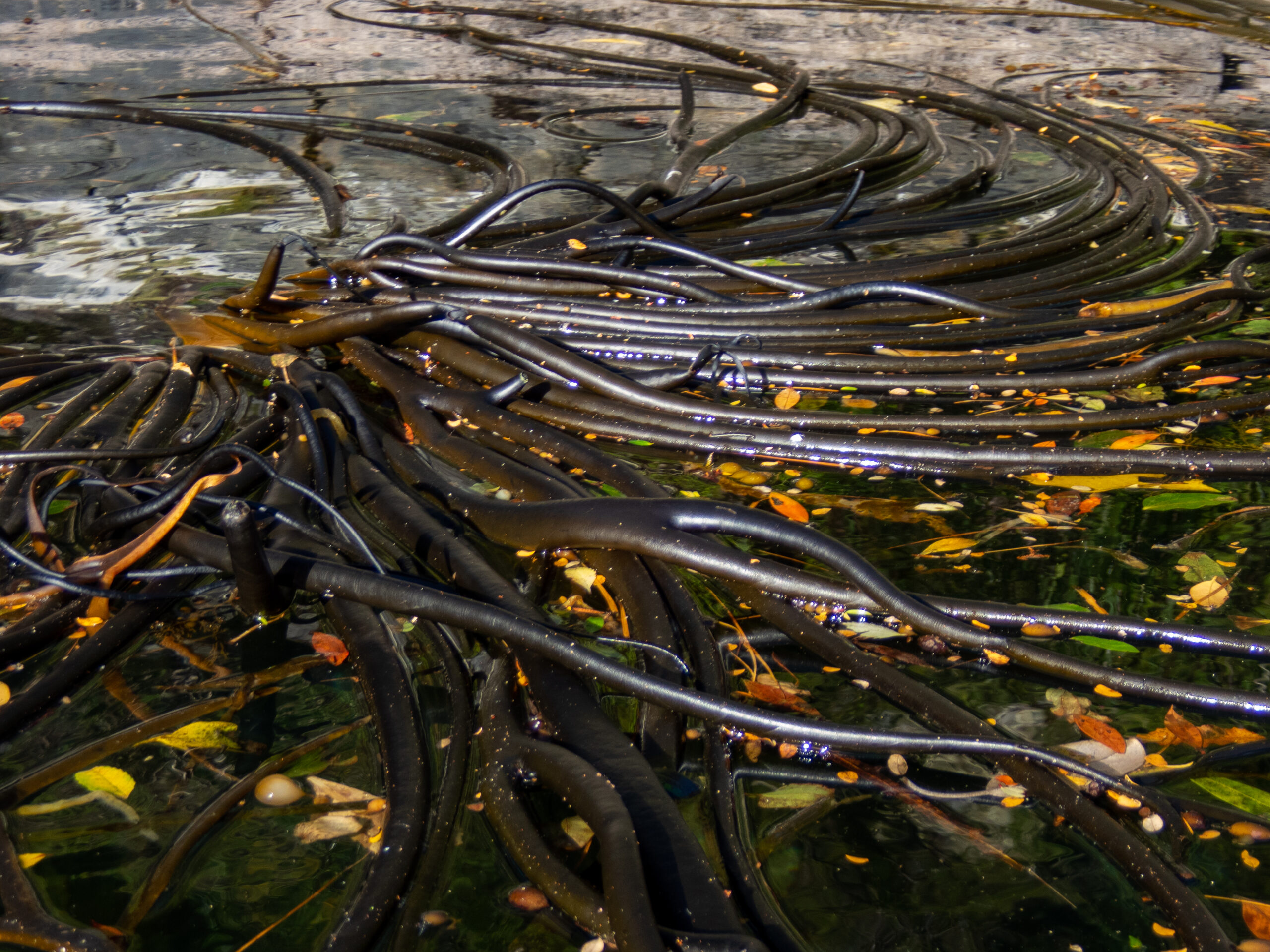
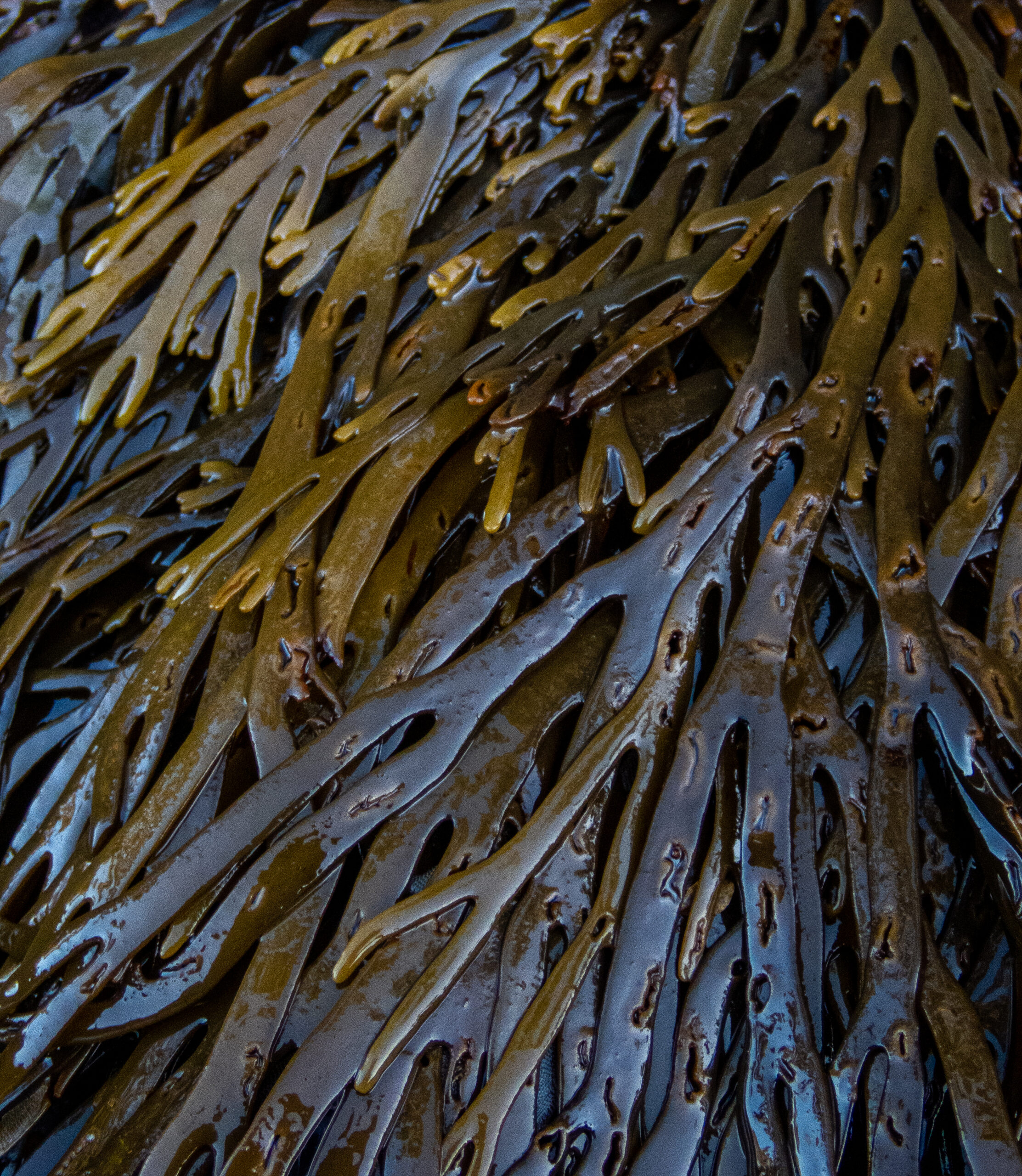
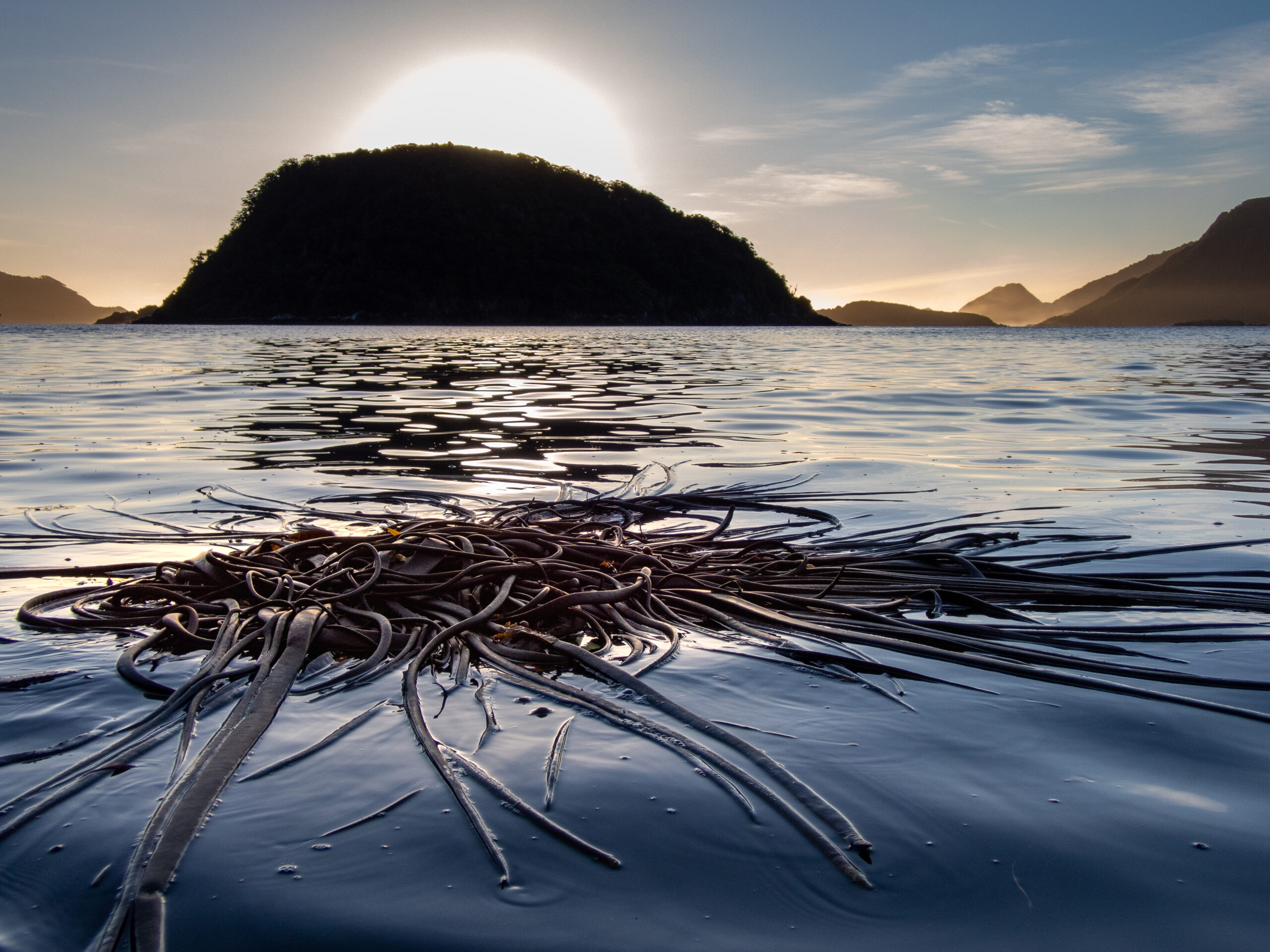
When the weather cleared, I went on a ‘playdate with nature’ hike across to Haulashore Cove/Doubtful Sound, while Marcus went out on Namo to perchance catch sight of the Wapiti which roared in ‘surround sound’ most of the time we were there!Ok, wanna go have a close look?!Seaweed on shore, looking so ET!
Last sight of Allora for a few hours.Even a ‘dead’ tree stump is quite full of life.
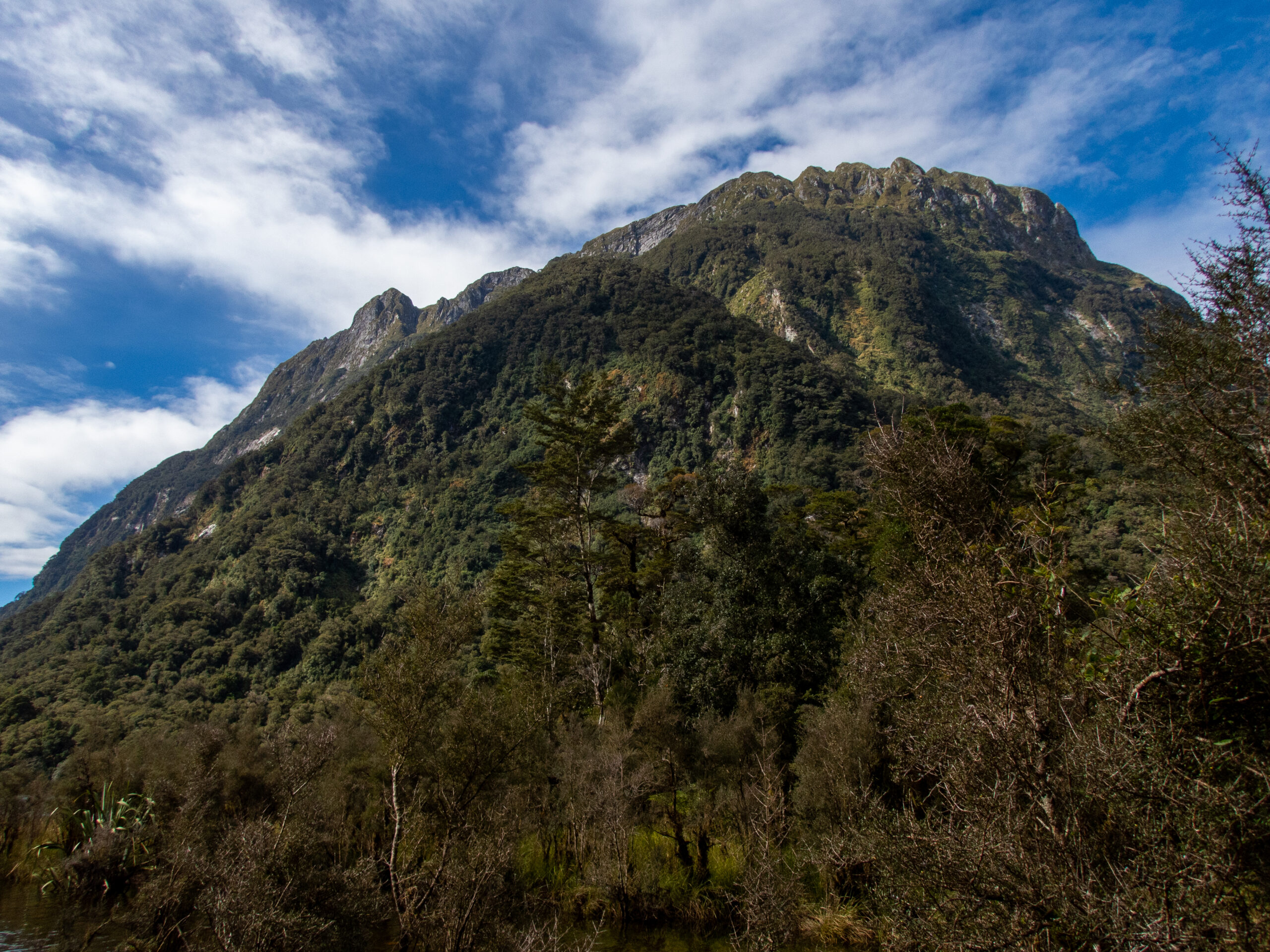
The kōtukutuku, also known as ‘the tree with the peeling bark’ or Fuchsia, is one of the most easily recognisable trees in the New Zealand bush. I must have been hungry, because I saw artisan CRACKER!Most of this short trail is in dense forest, but occasionally I’d pop out and see these peaks.
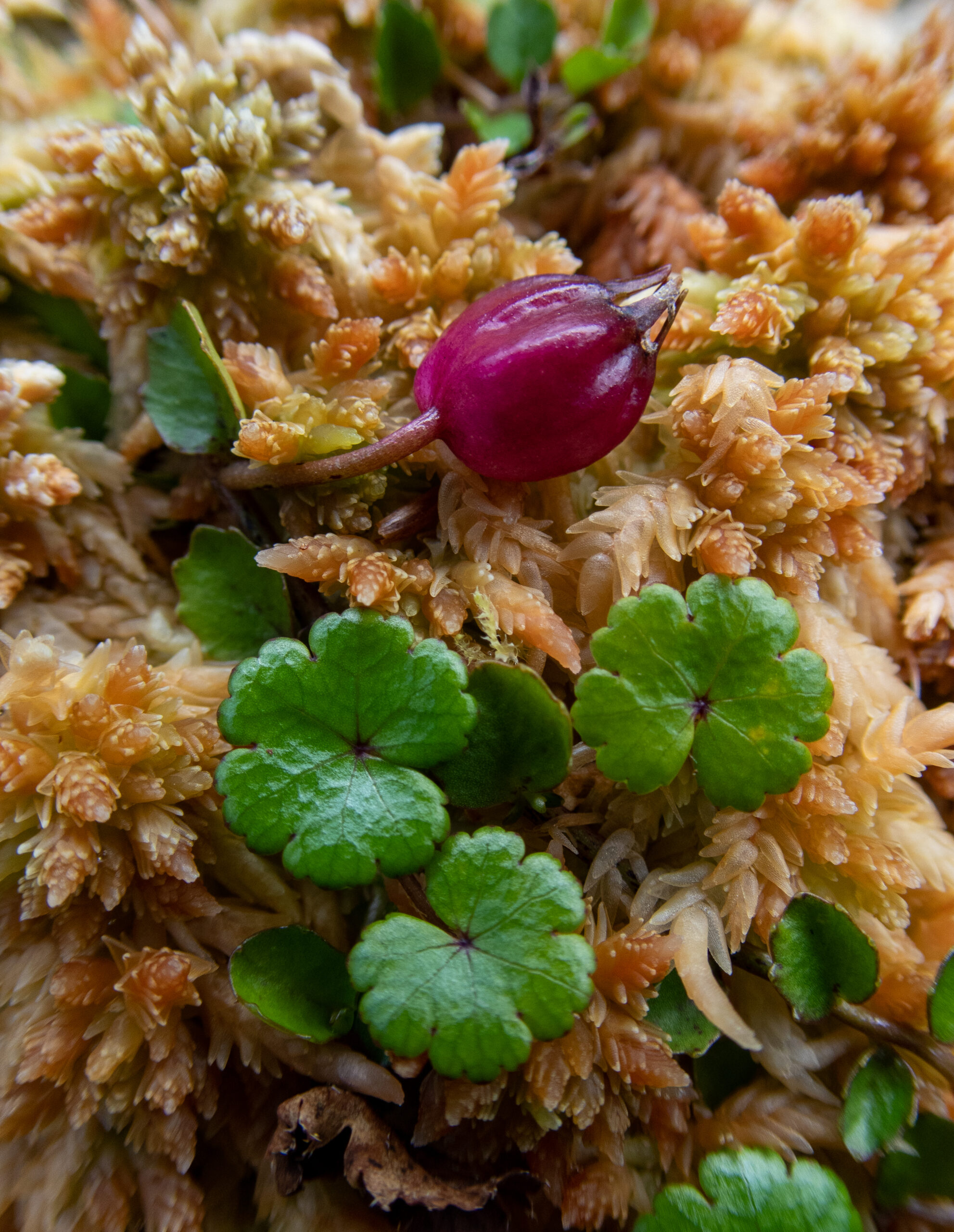
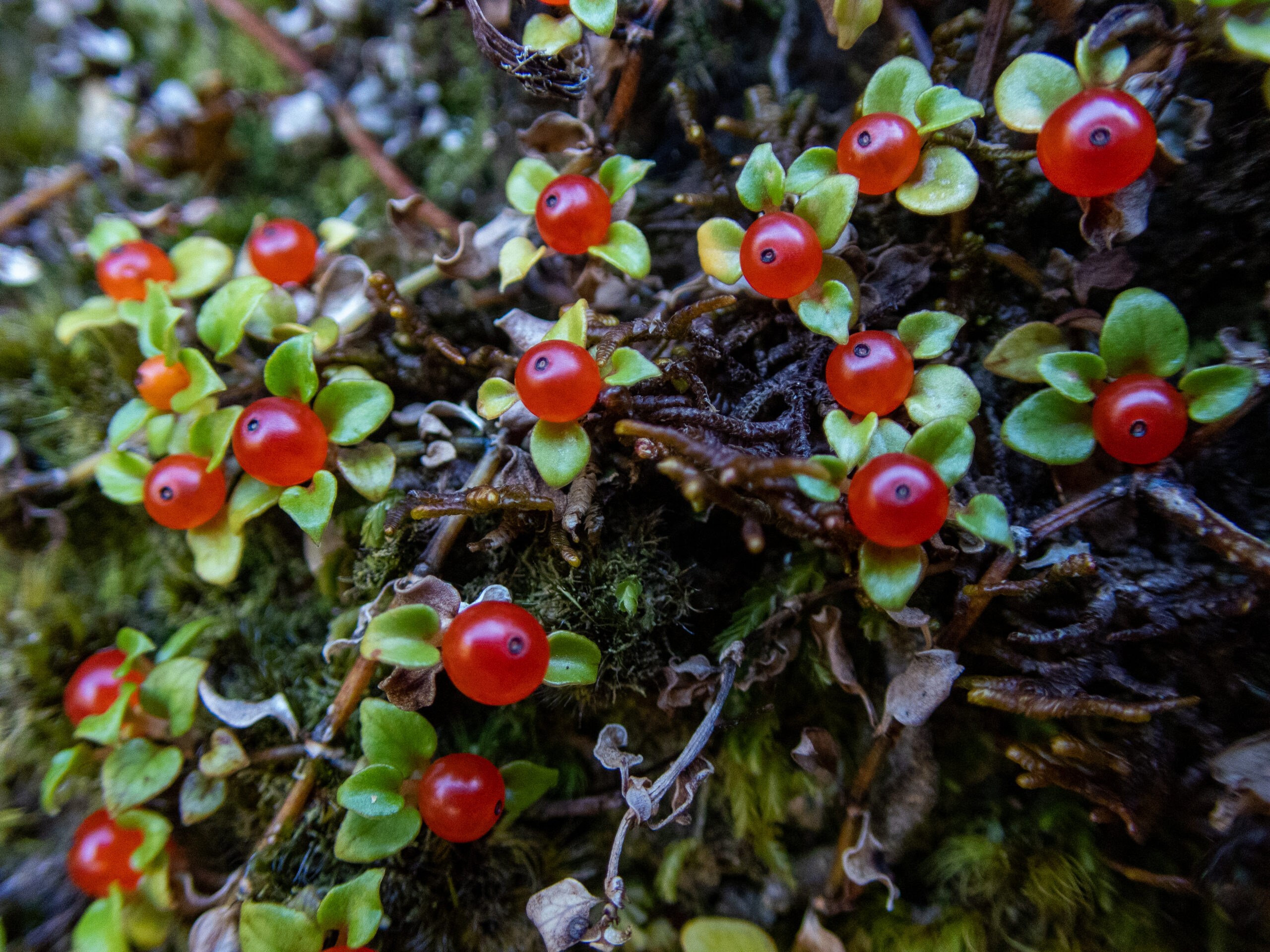
Too many years of berry bewareness to feel free enough to nibble these, however tempting!
Just seein’ if you’re paying attention!
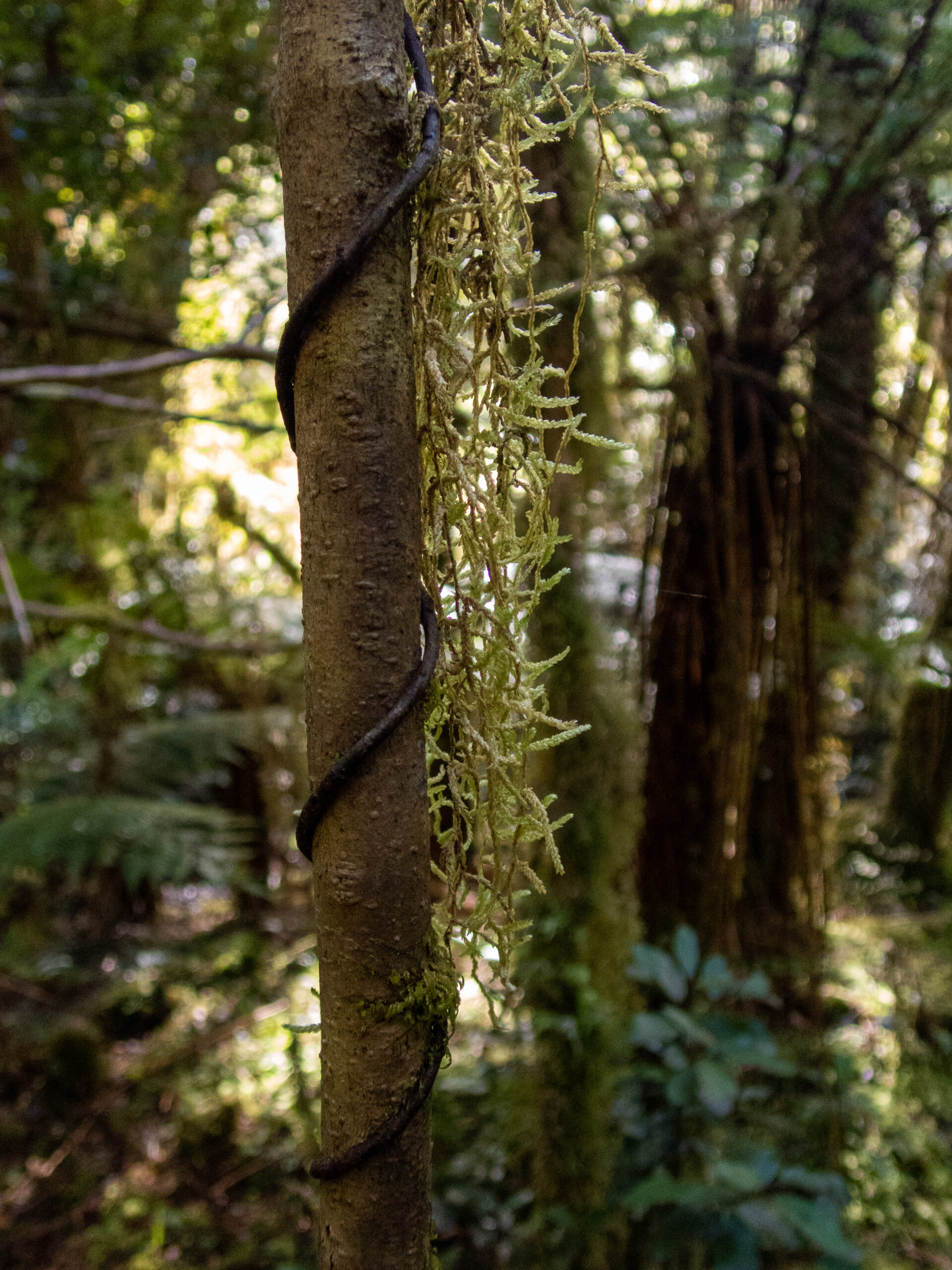
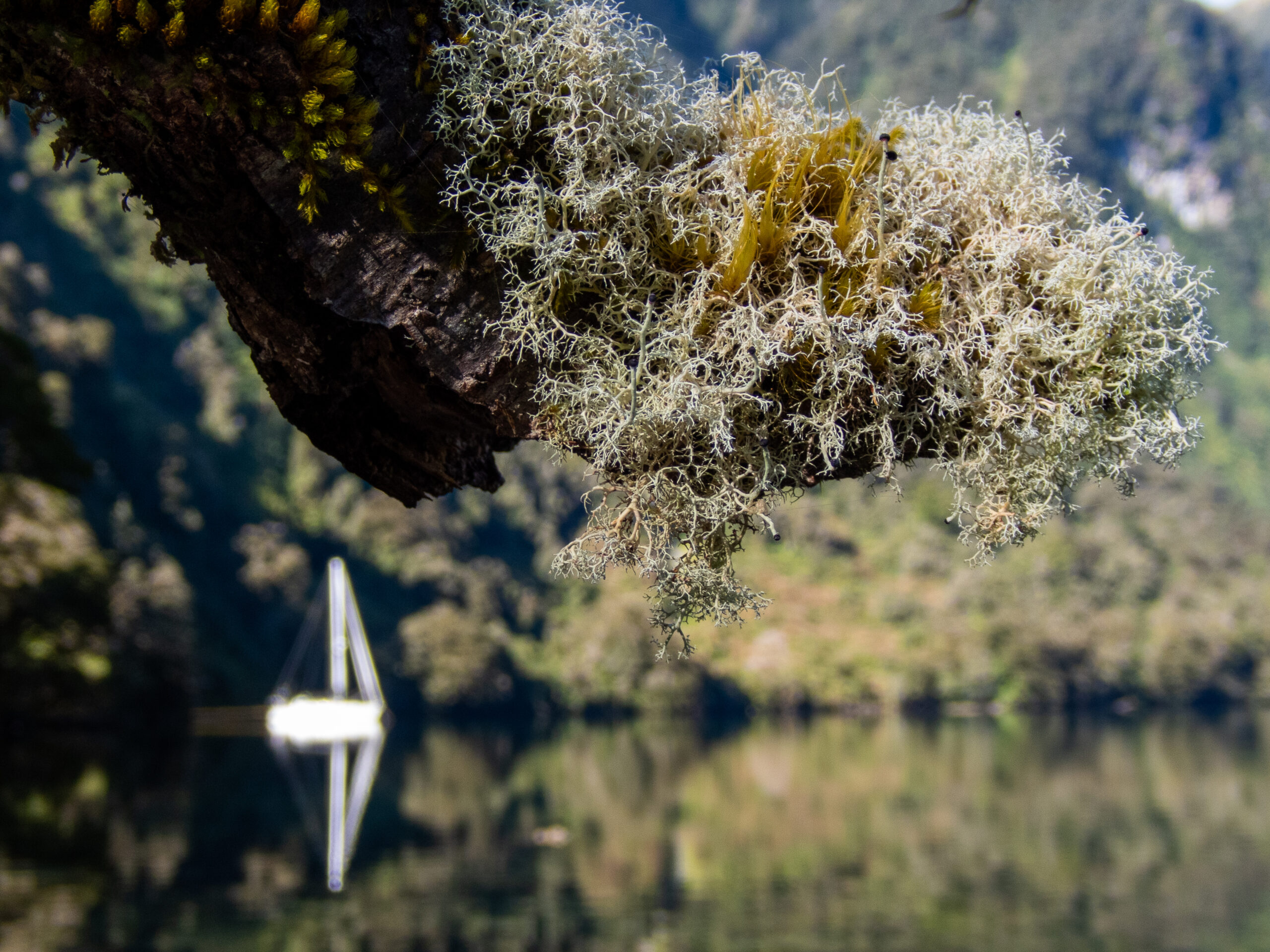
Classic ‘Tarzan’ vines following their twisty, viney nature! And Spanish moss/Tillandsia usneoides is not a moss at all, but a bromeliad, which means it is in the same taxonomic family as pineapples and succulent house plants!
Although Spanish moss grows on trees, it is not a parasite. It doesn’t put down roots in the tree it grows on, nor does it take nutrients from it. The plant thrives on rain and fog, sunlight, and airborne or waterborne dust and debris.
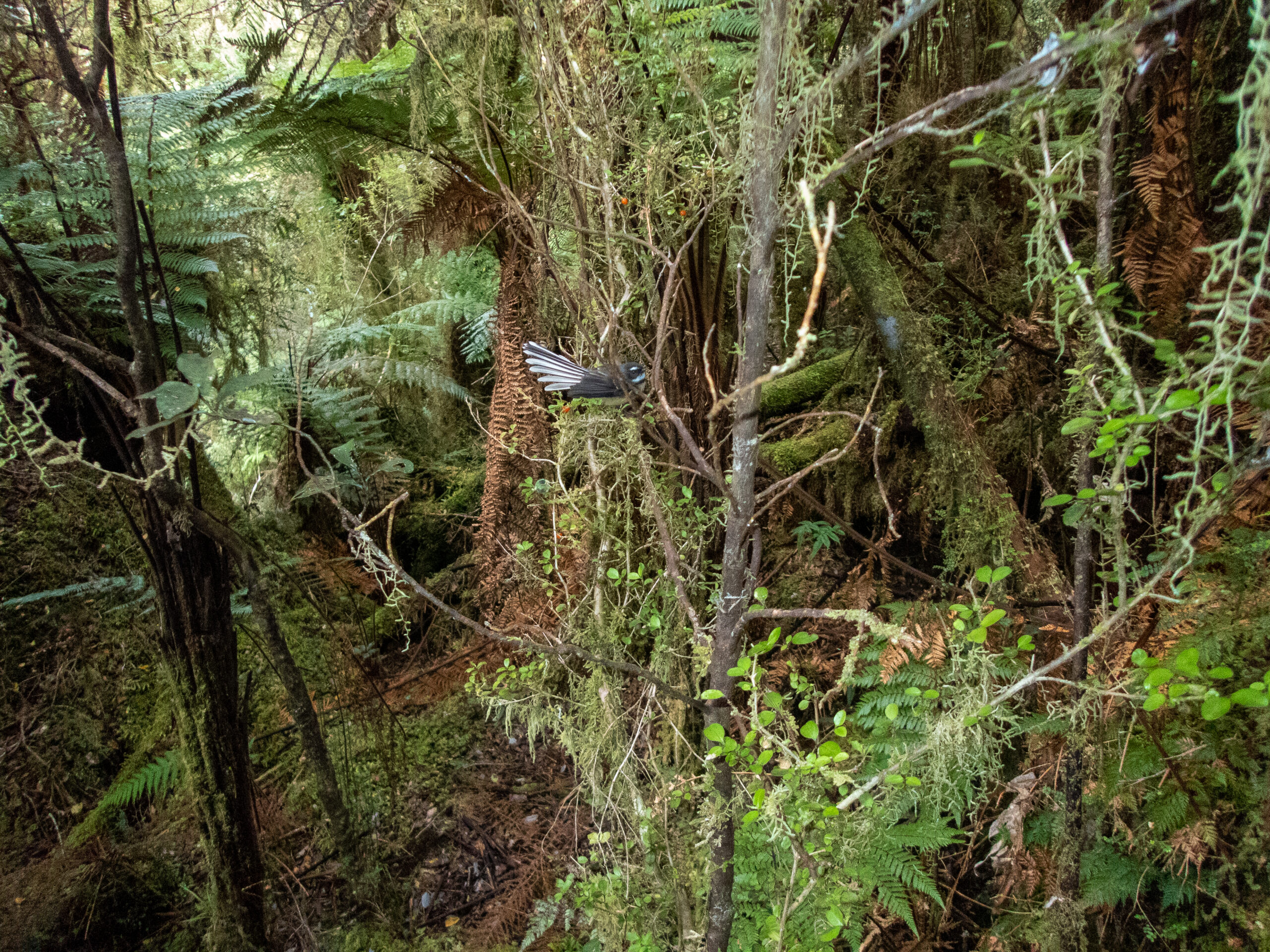
Known for it’s friendly, ‘cheet cheet’ call and it’s crazy flying antics, the Fantail or Pīwakawaka often follows another animal (and people) to capture insects. Time and time again, though, they acted as guides; when we were off track in the woods, they’d appear, chirping energetically, as if to say, ‘no … not that way, THIS way!!’ I learned to always follow them!
Ahhhh!!
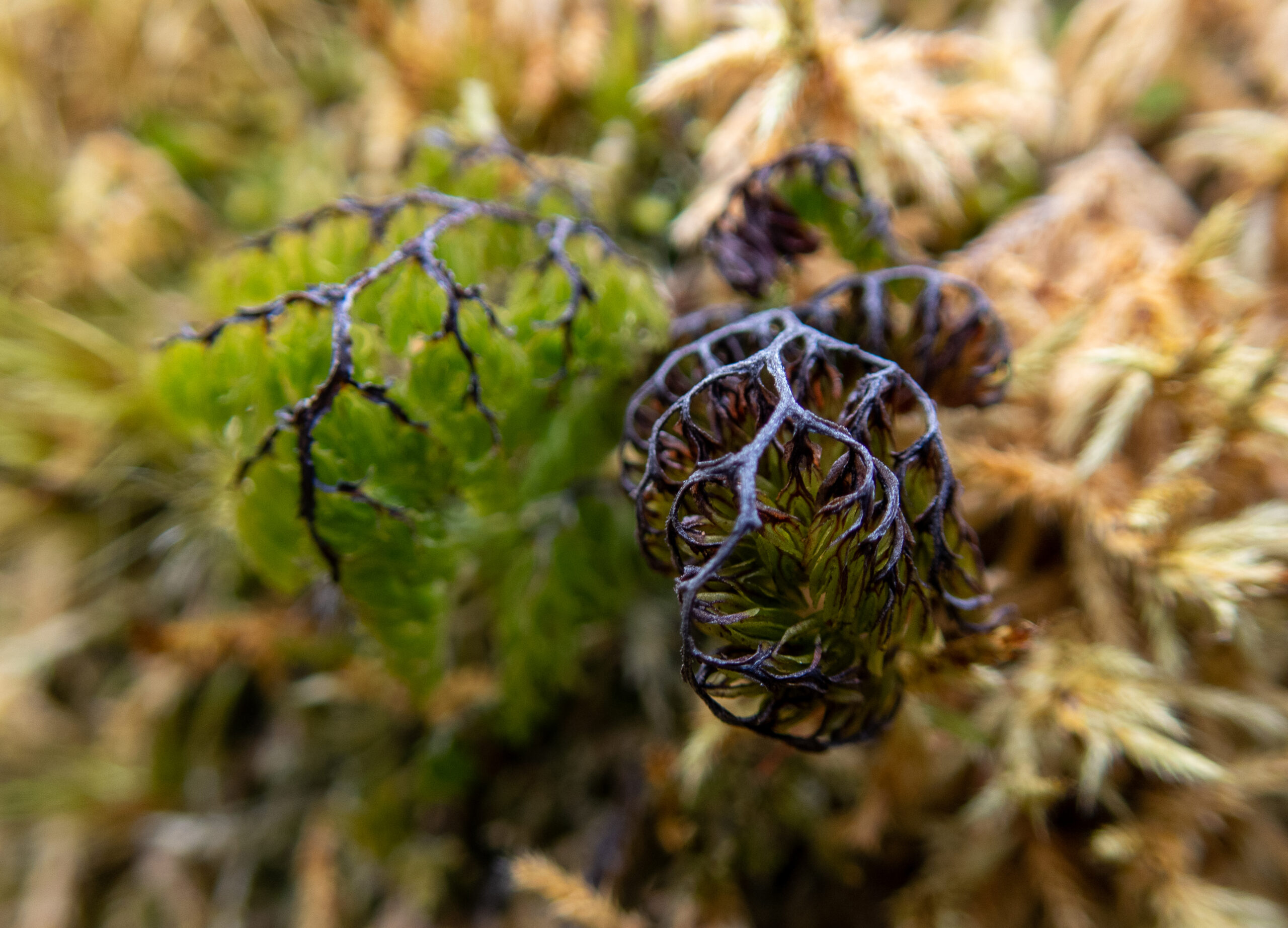
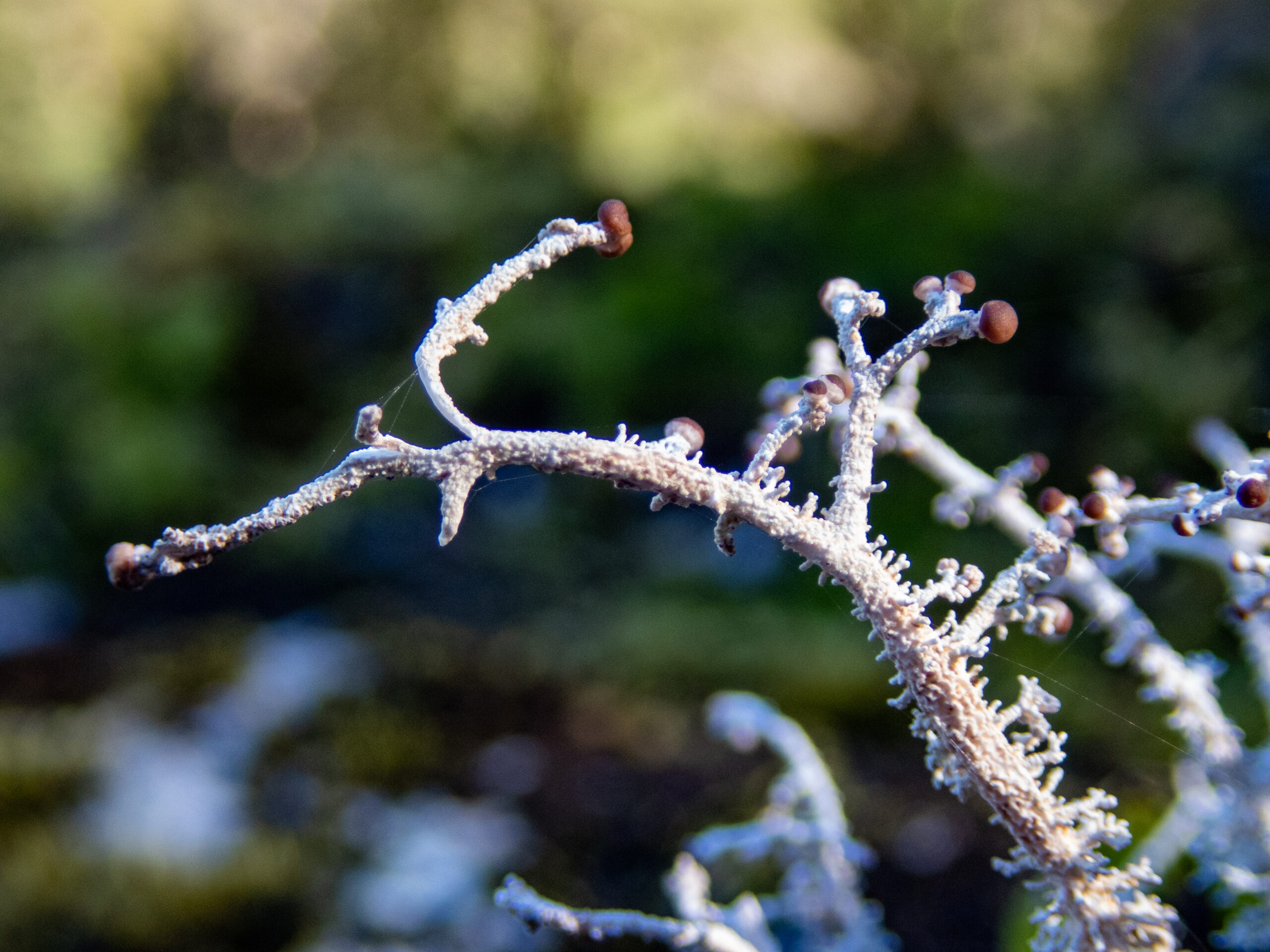
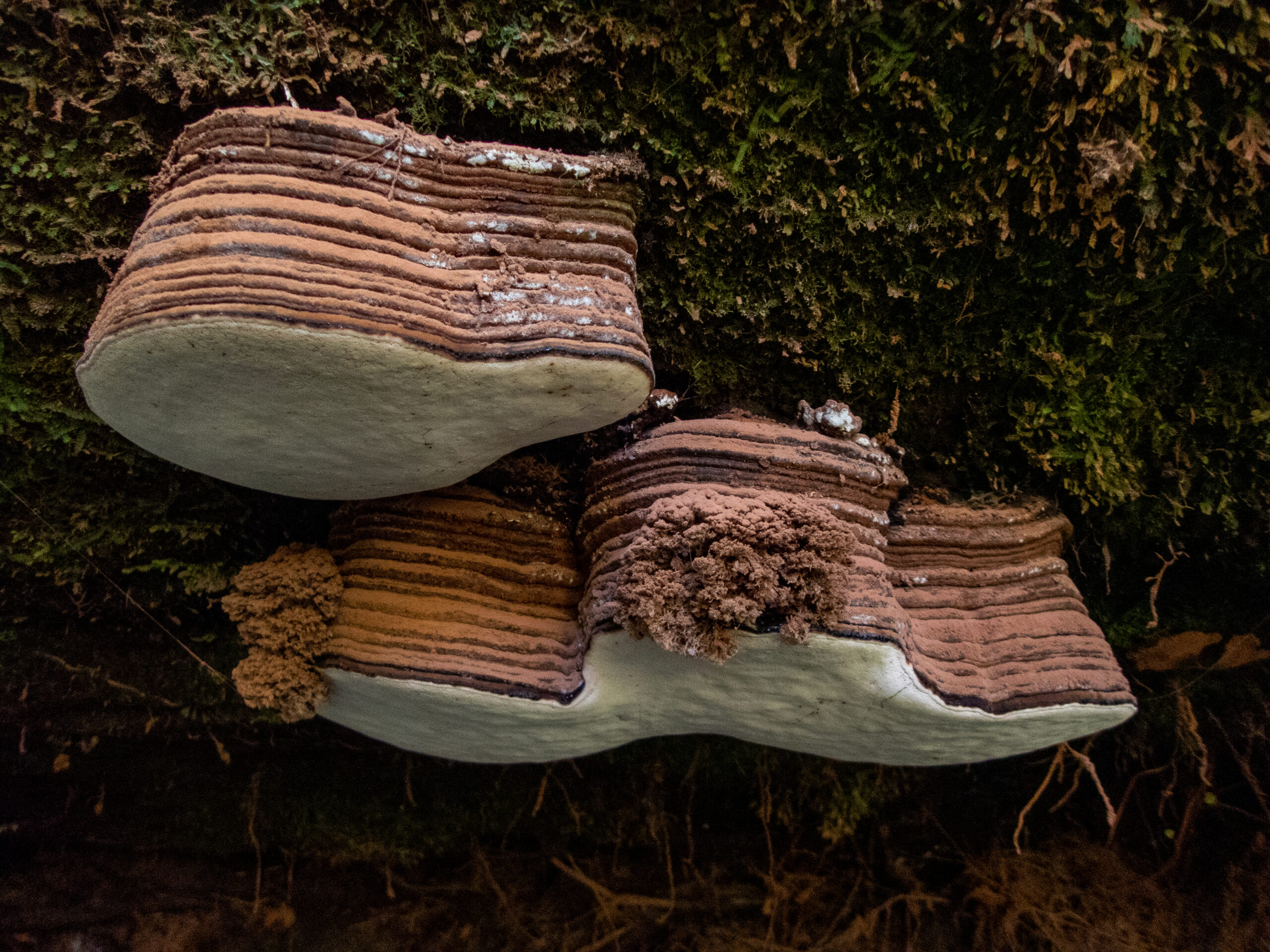
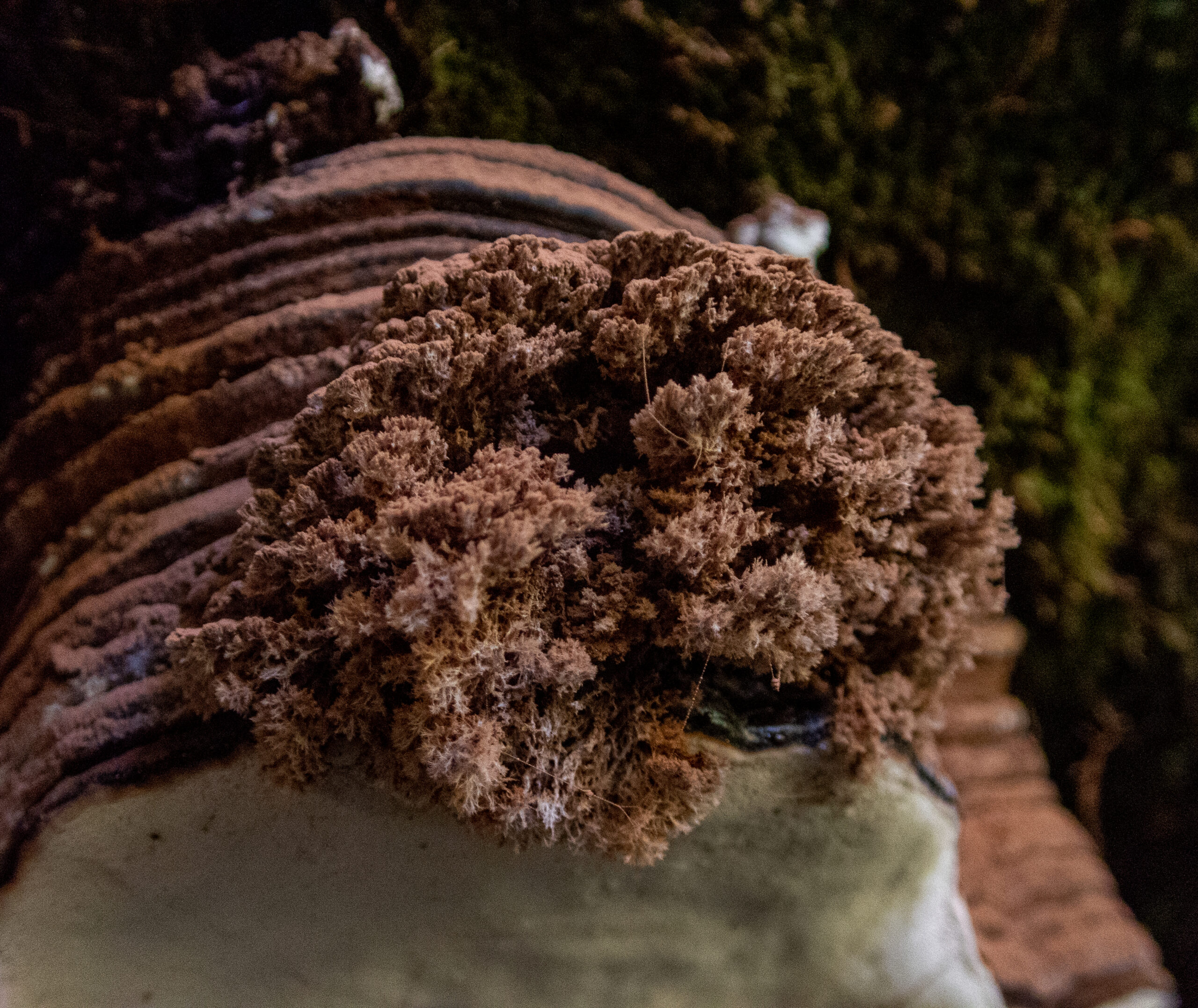
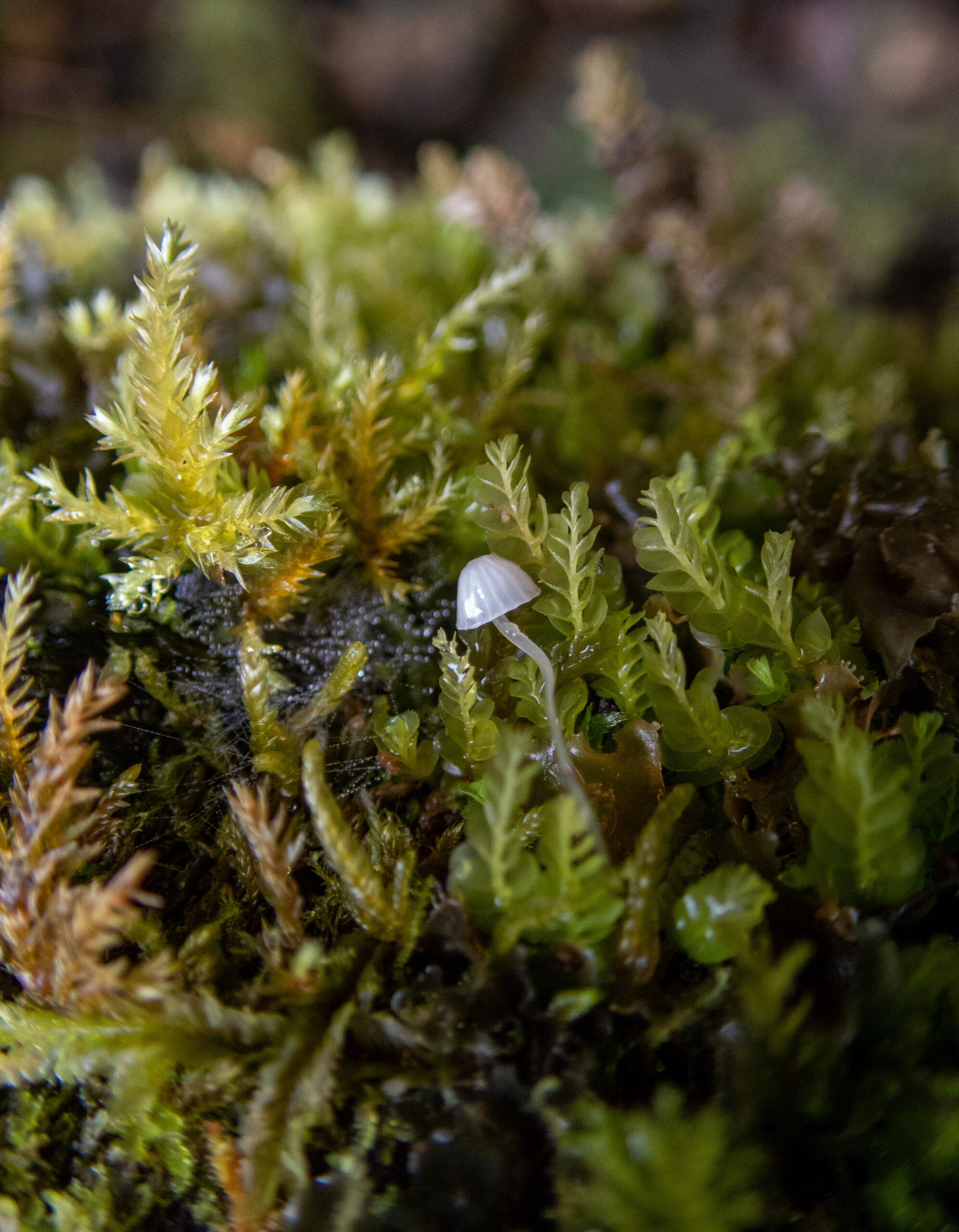
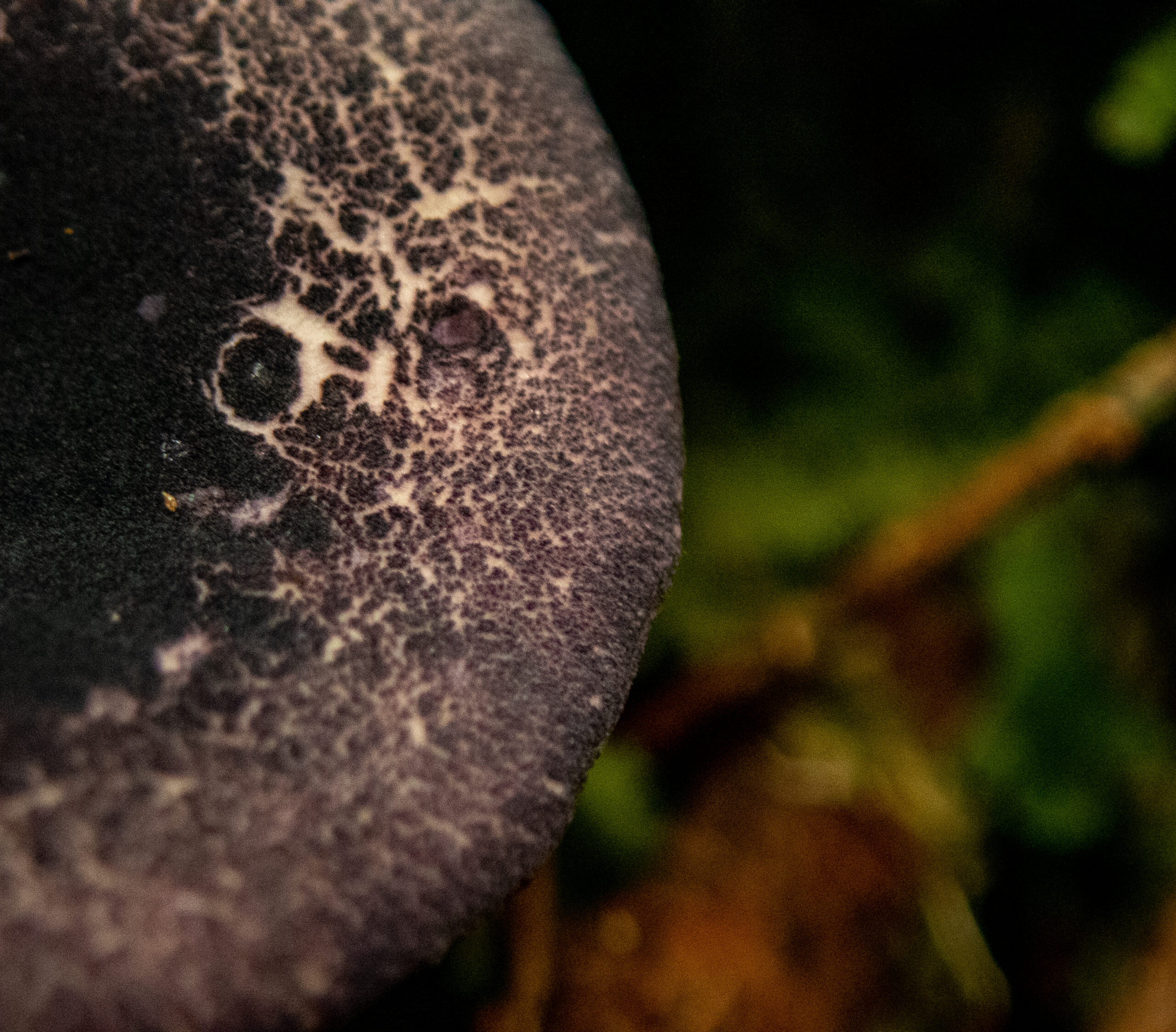
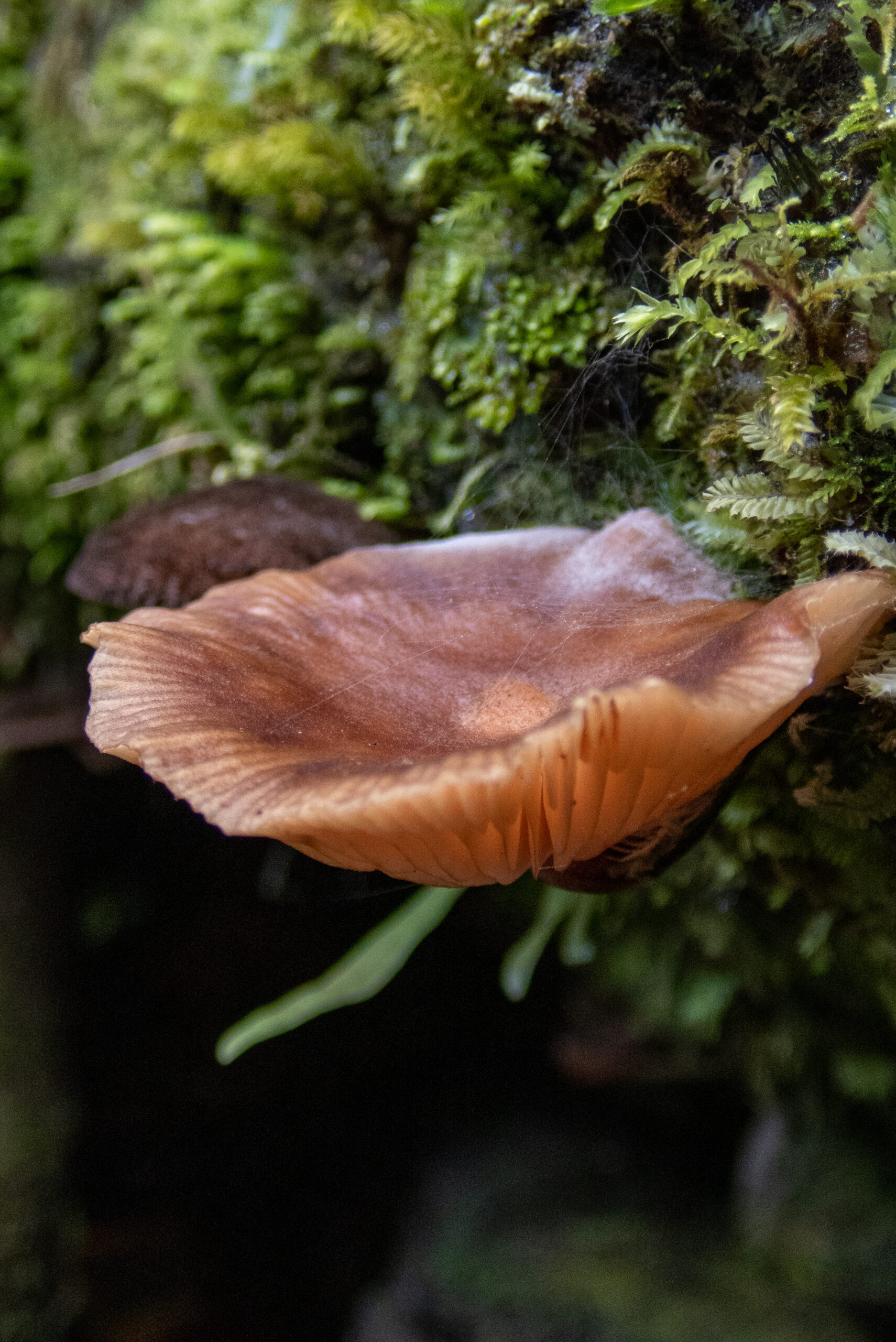
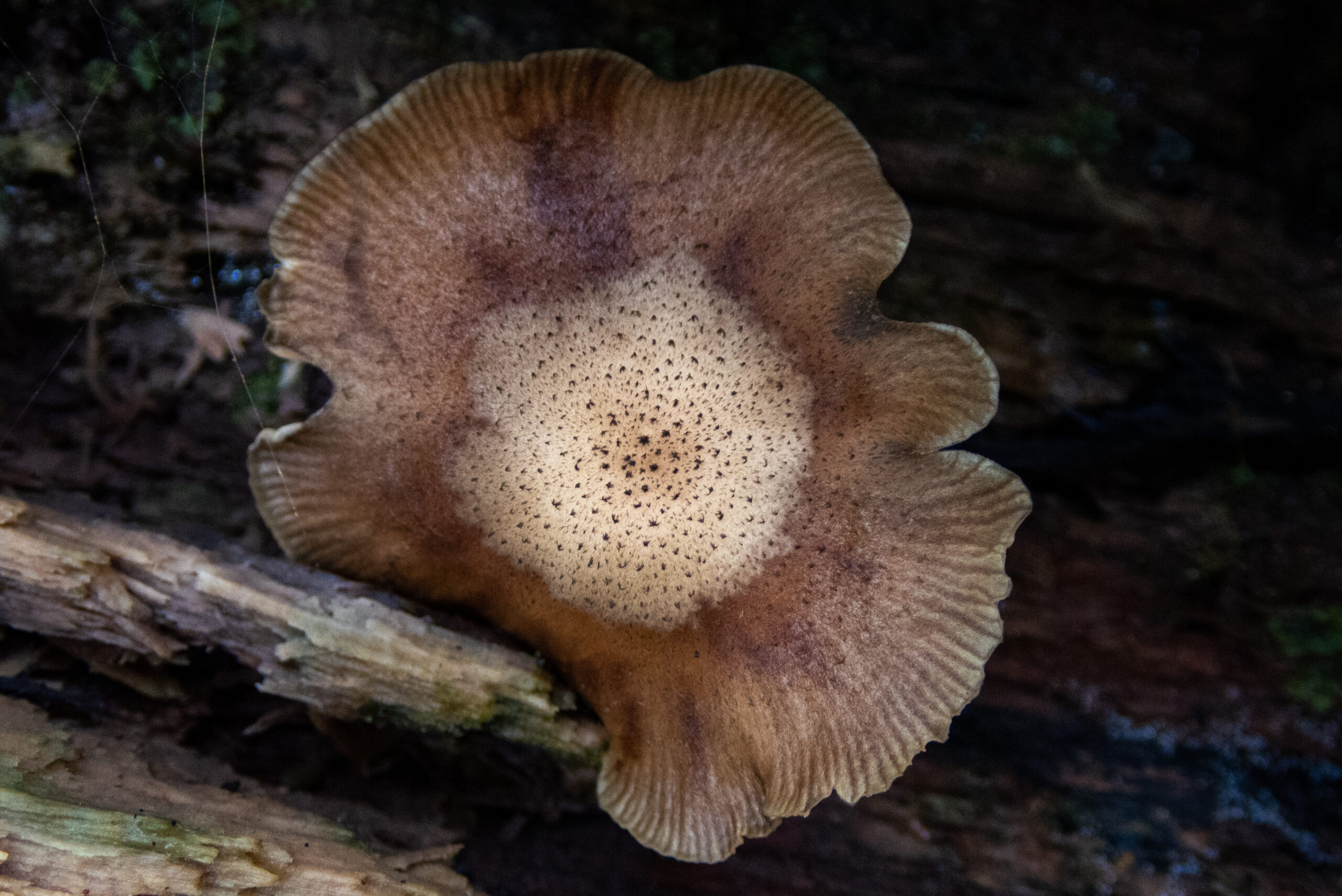
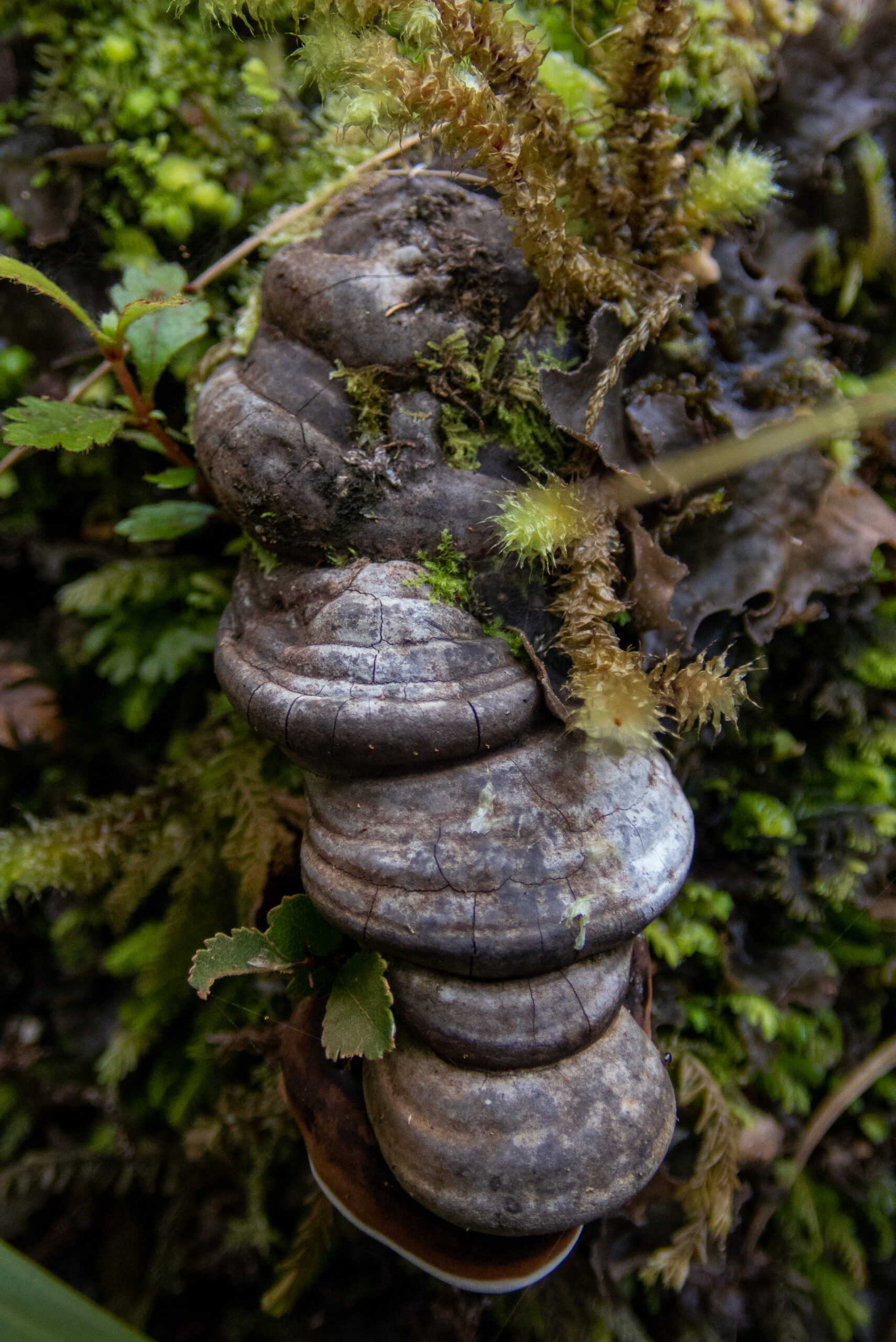
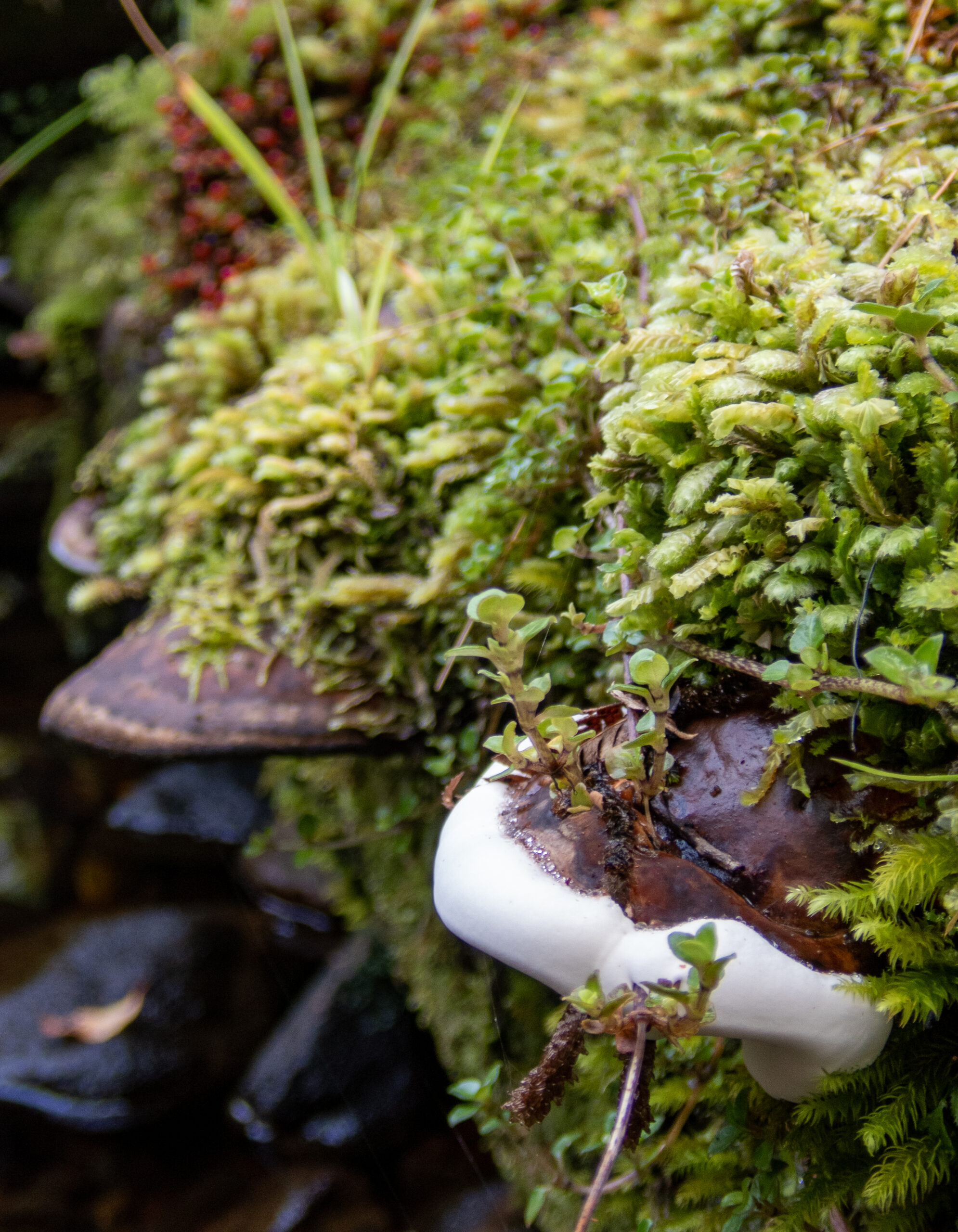
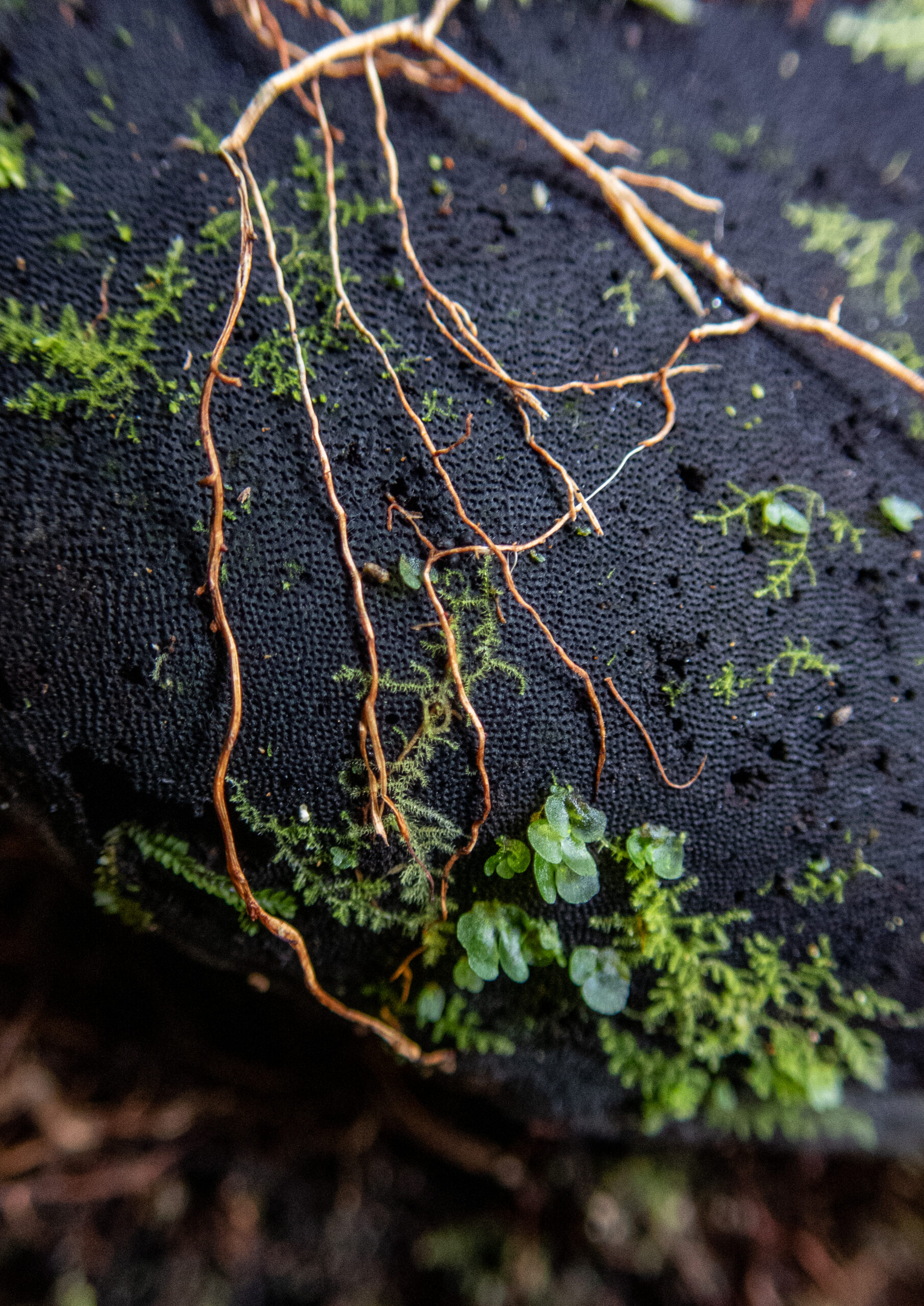
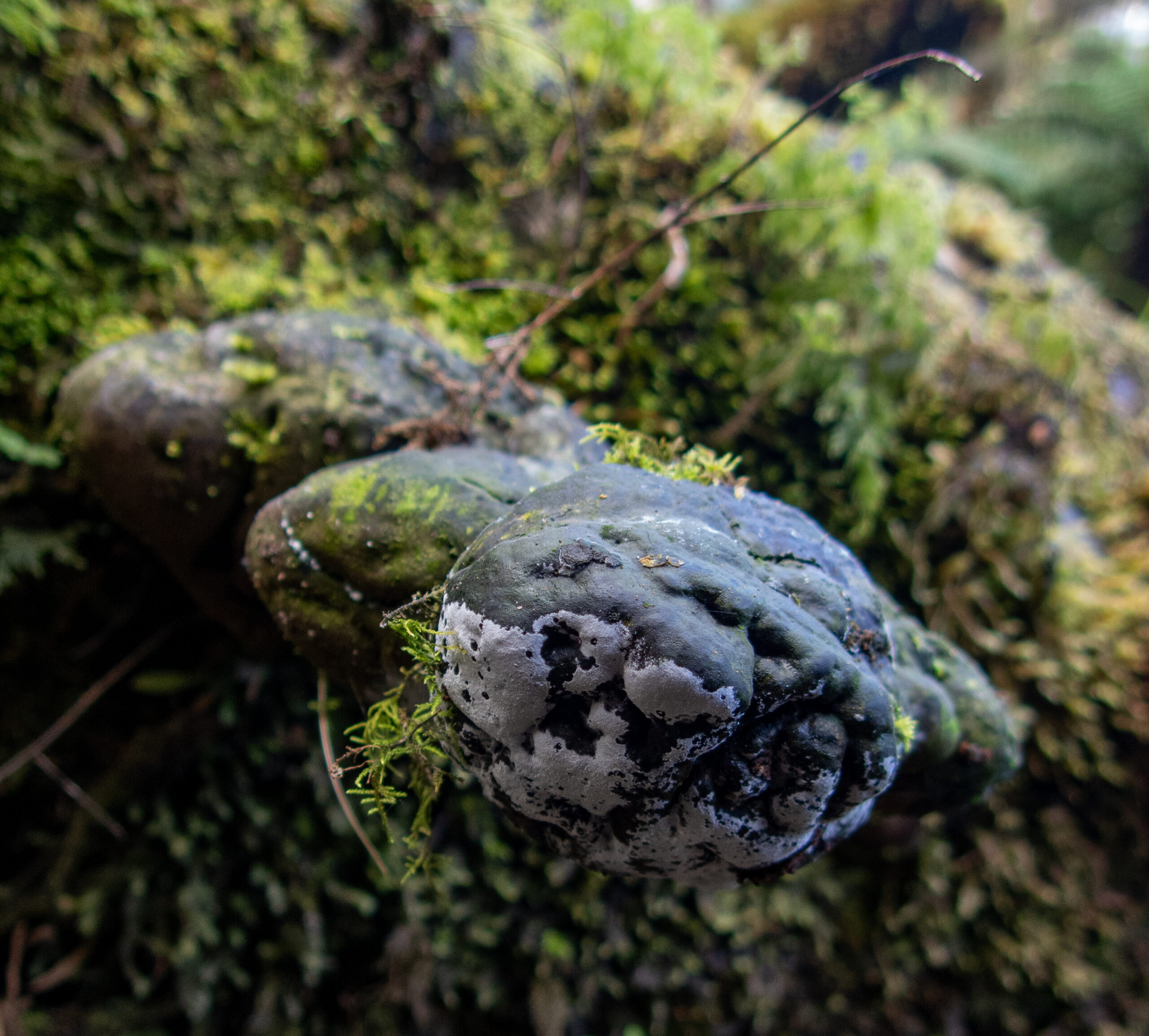
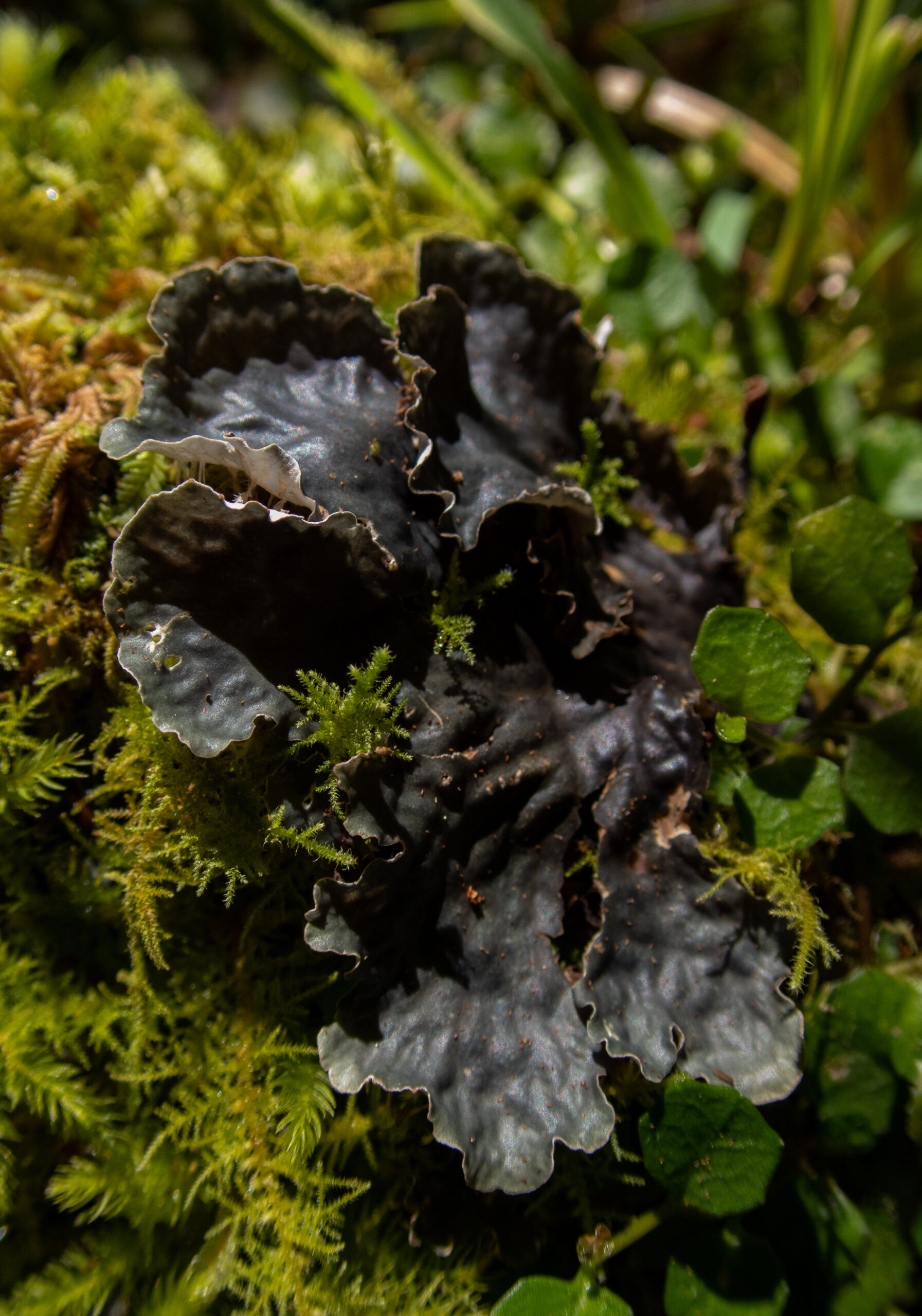
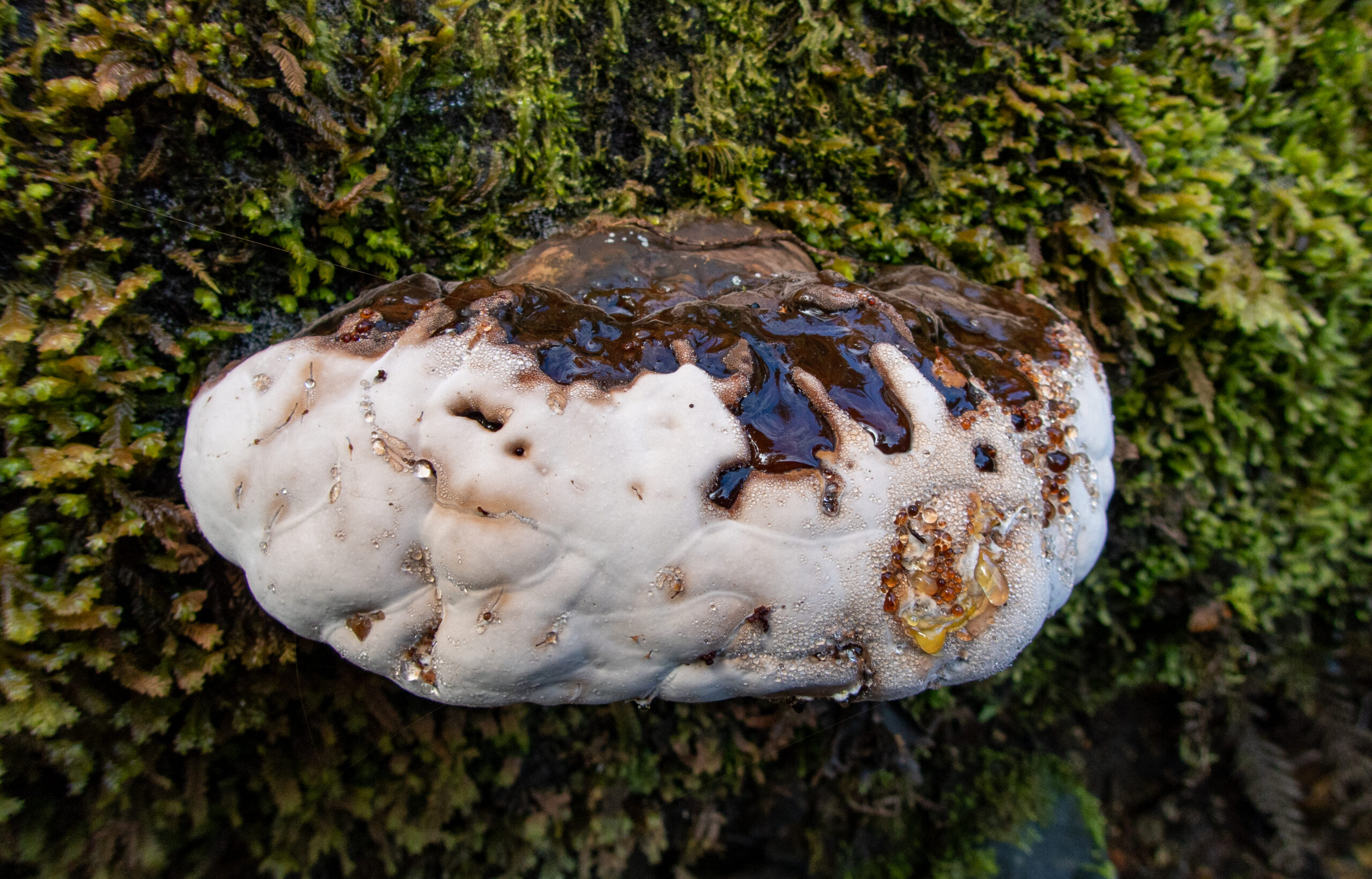
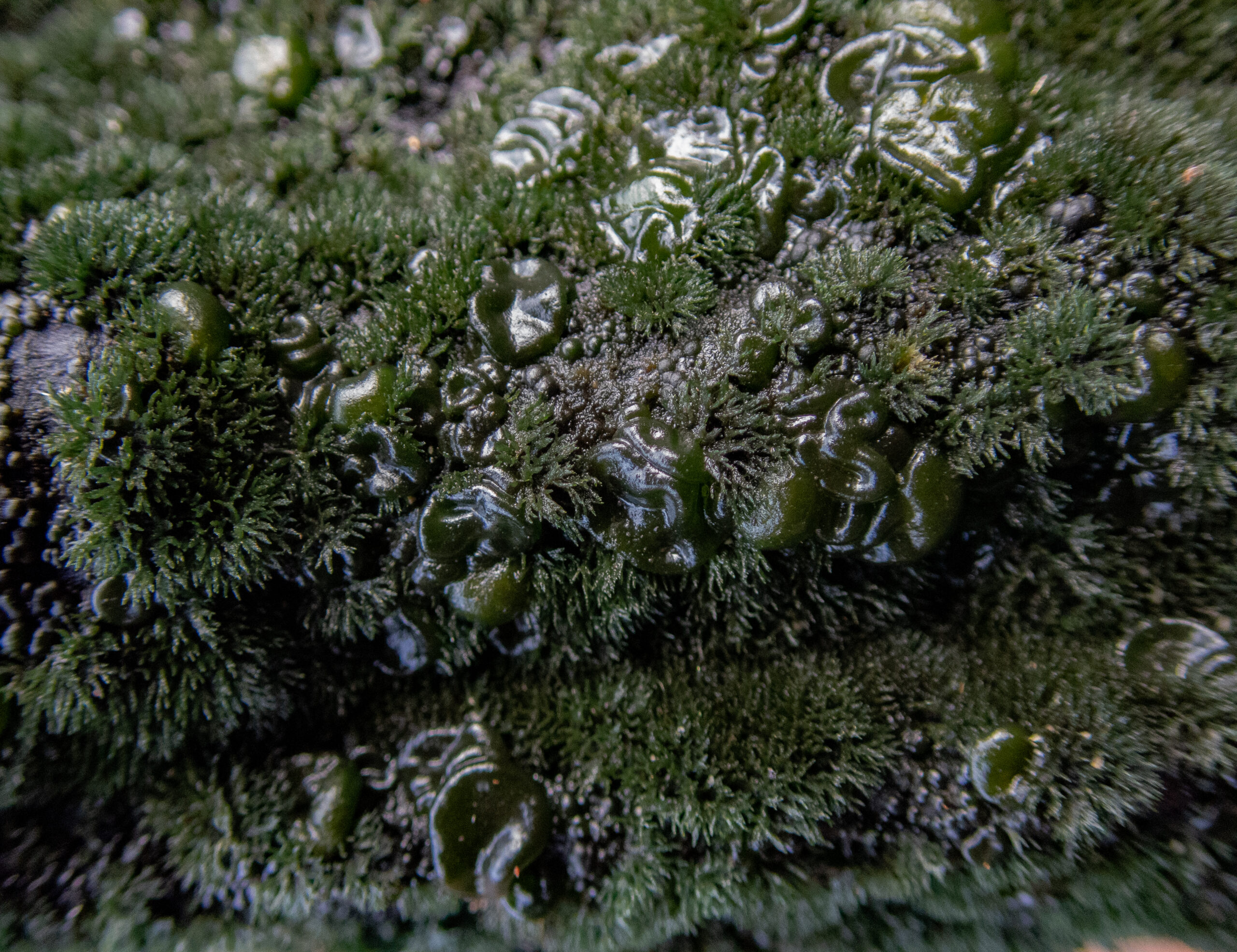
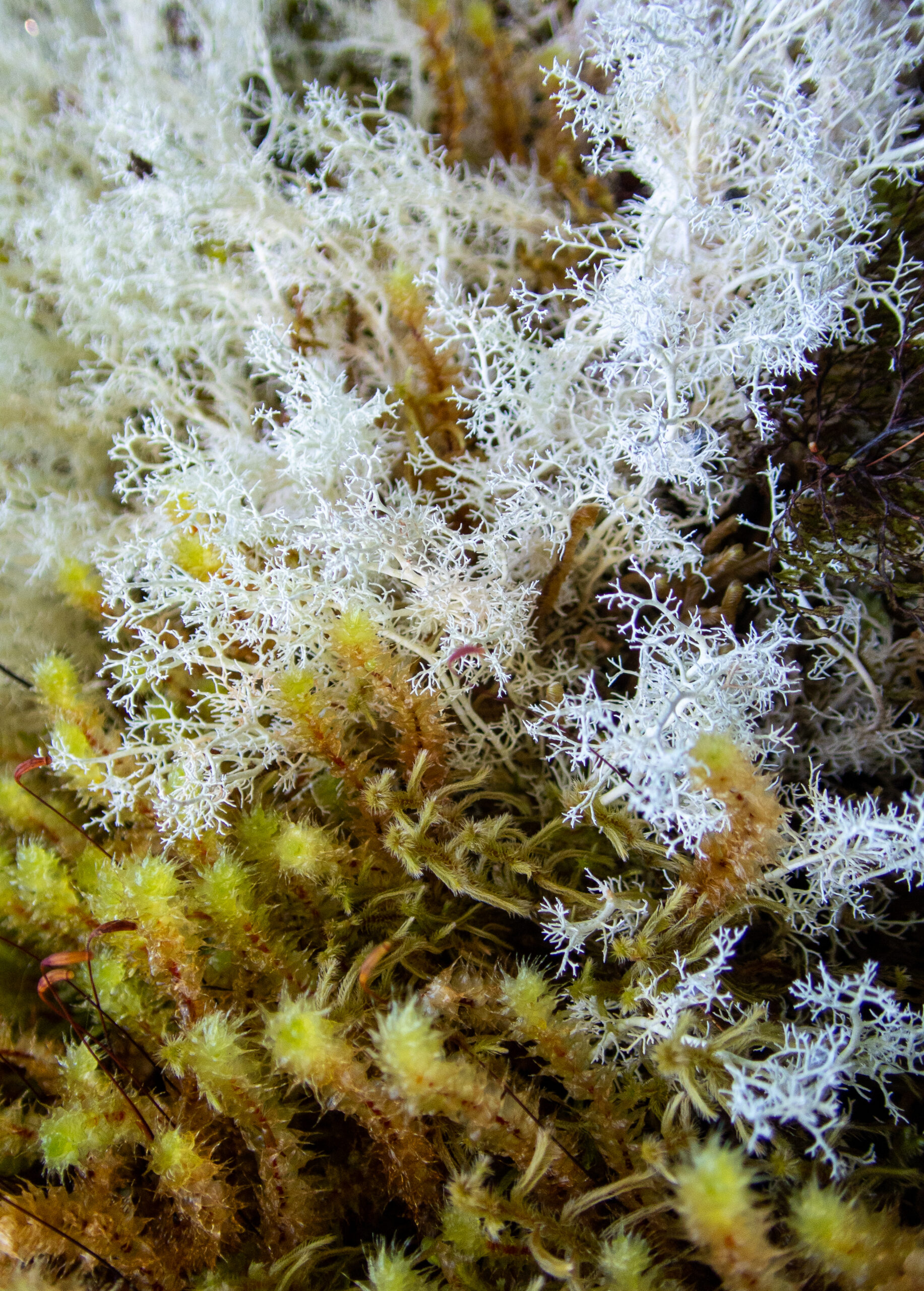
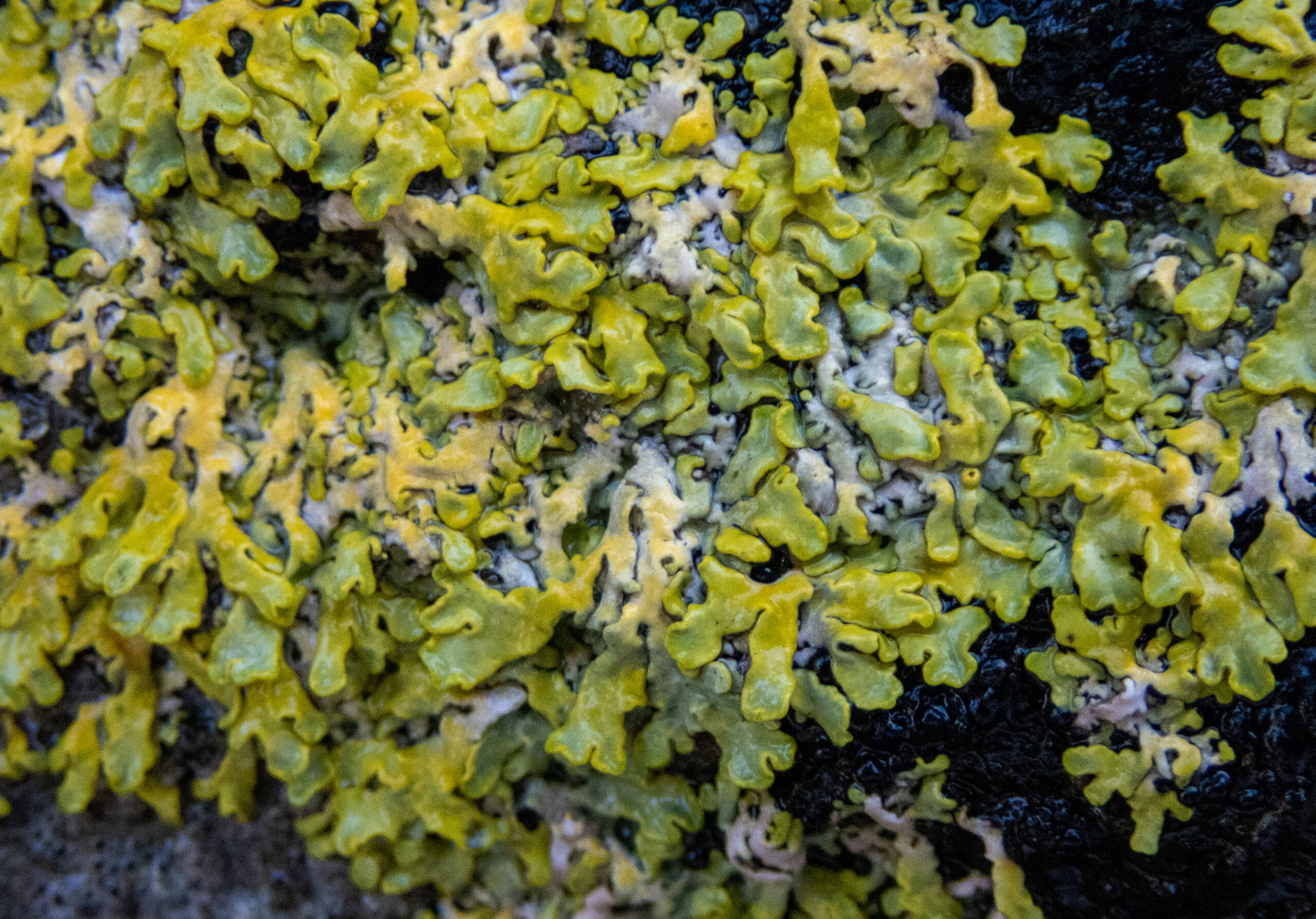
Some fungi fun: I haven’t had the time to research ID’s on most of these, so write me if you know and are keen to share?!
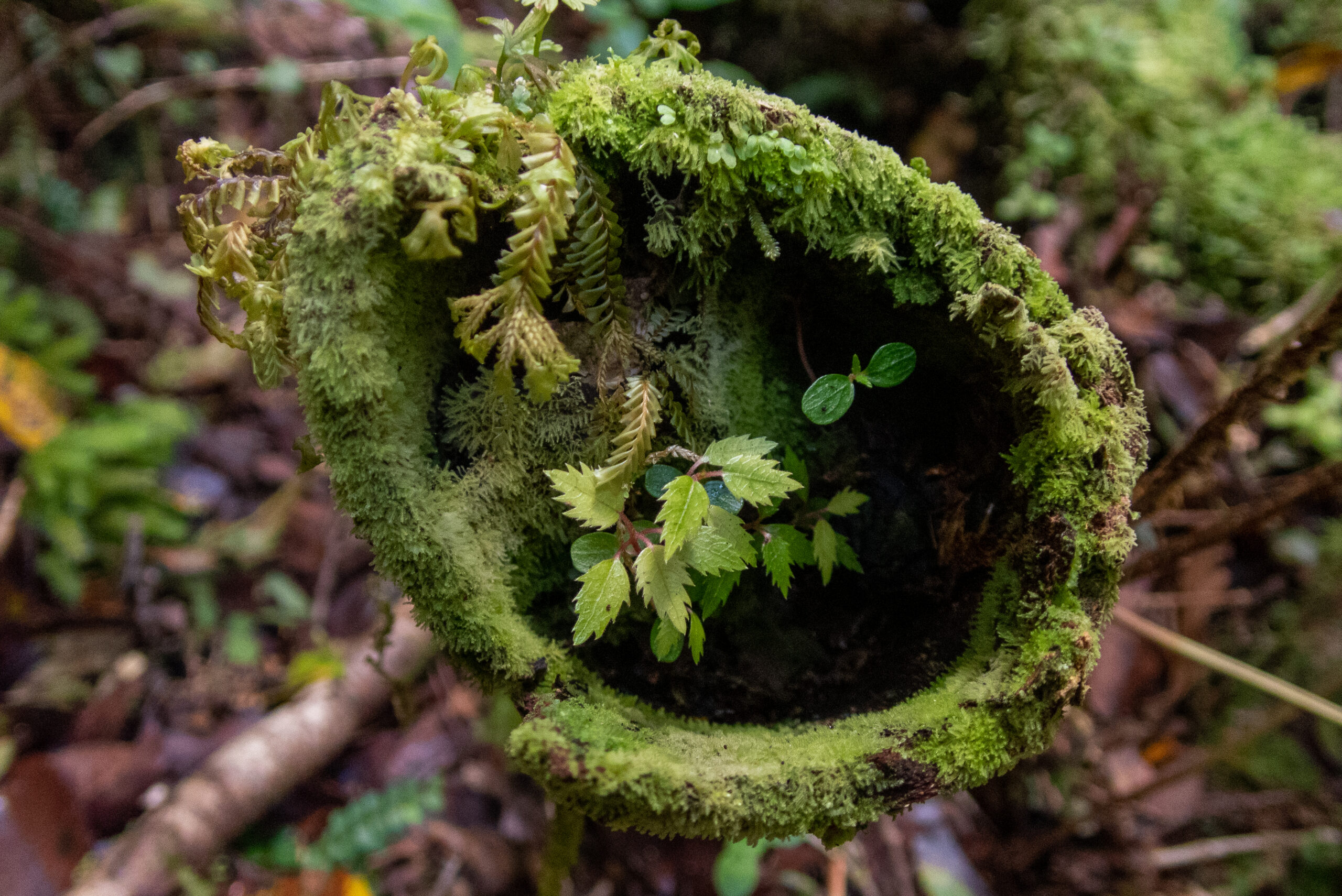
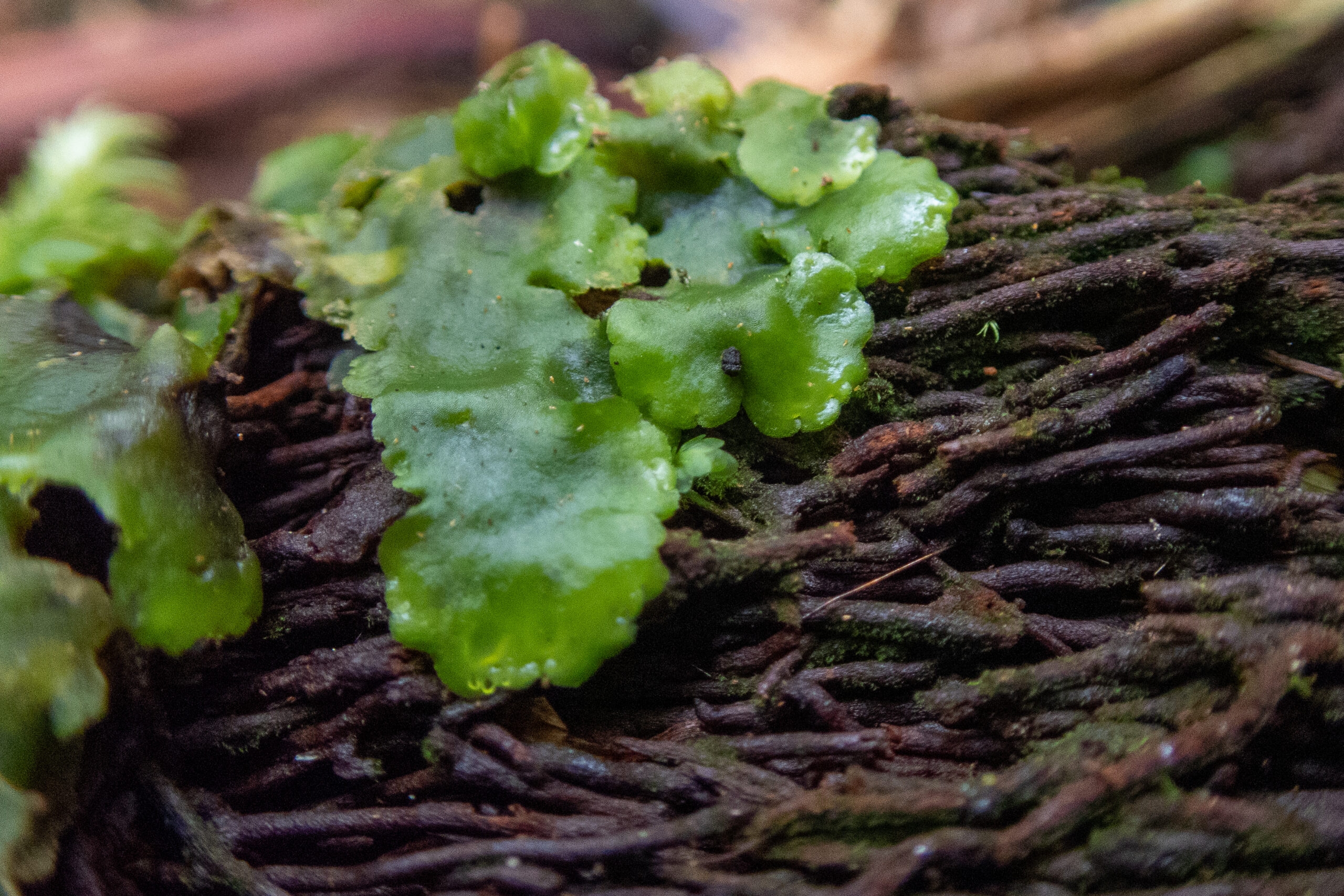
These ‘nurse logs’ are fallen trees which become garden beds for new life with the help of insects, microbes and fungi, eventually turning back into rich humus.
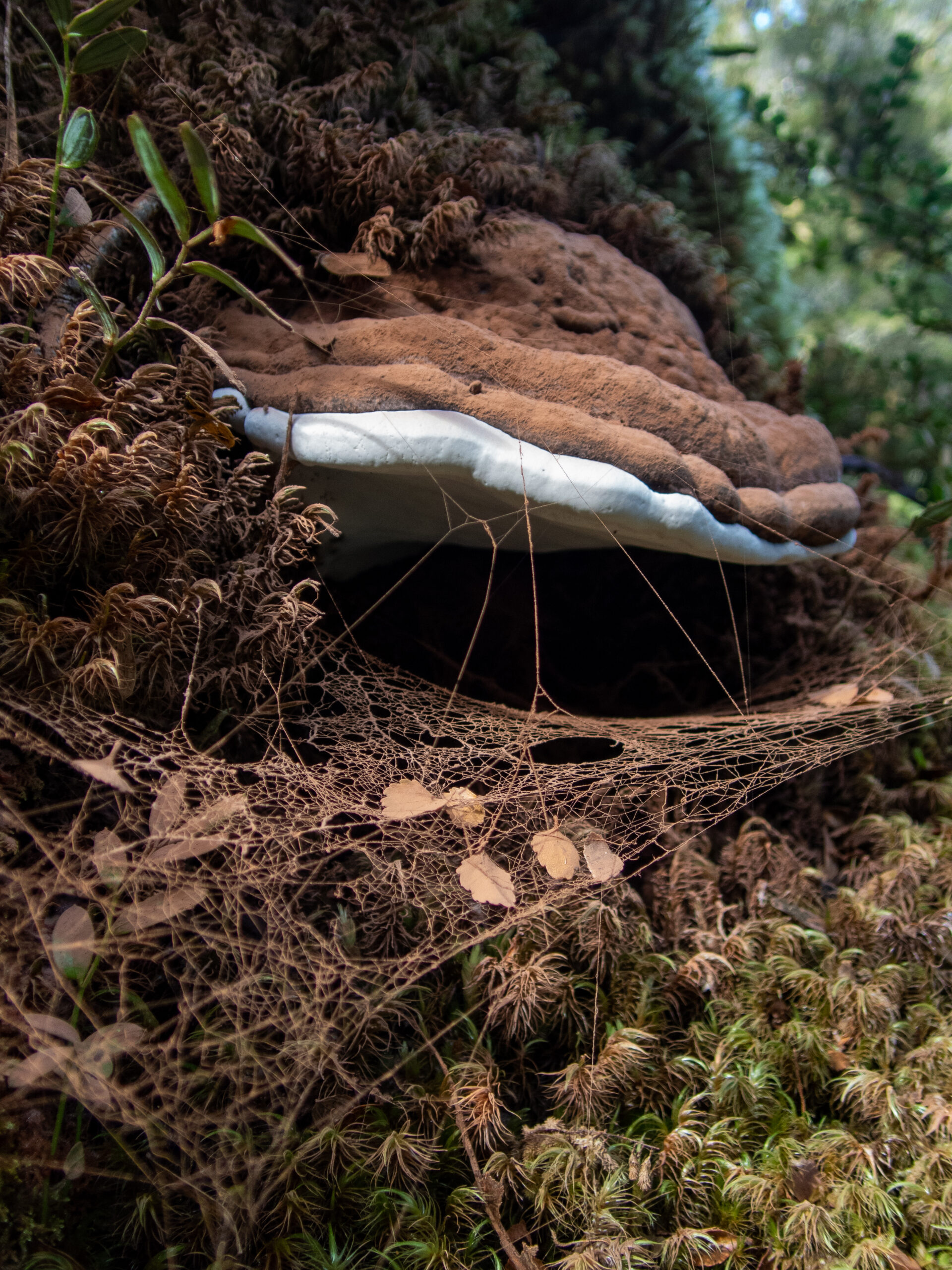
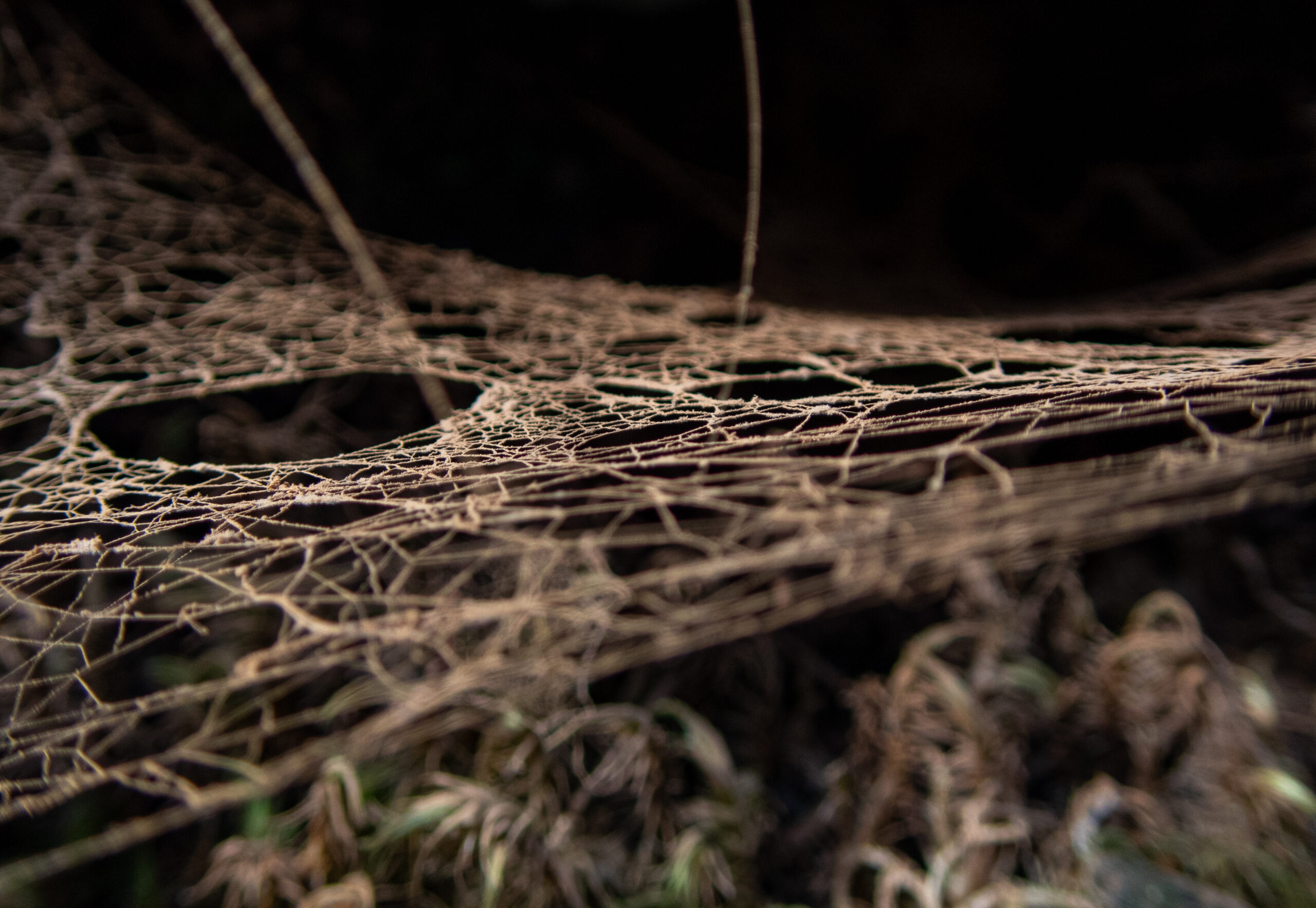
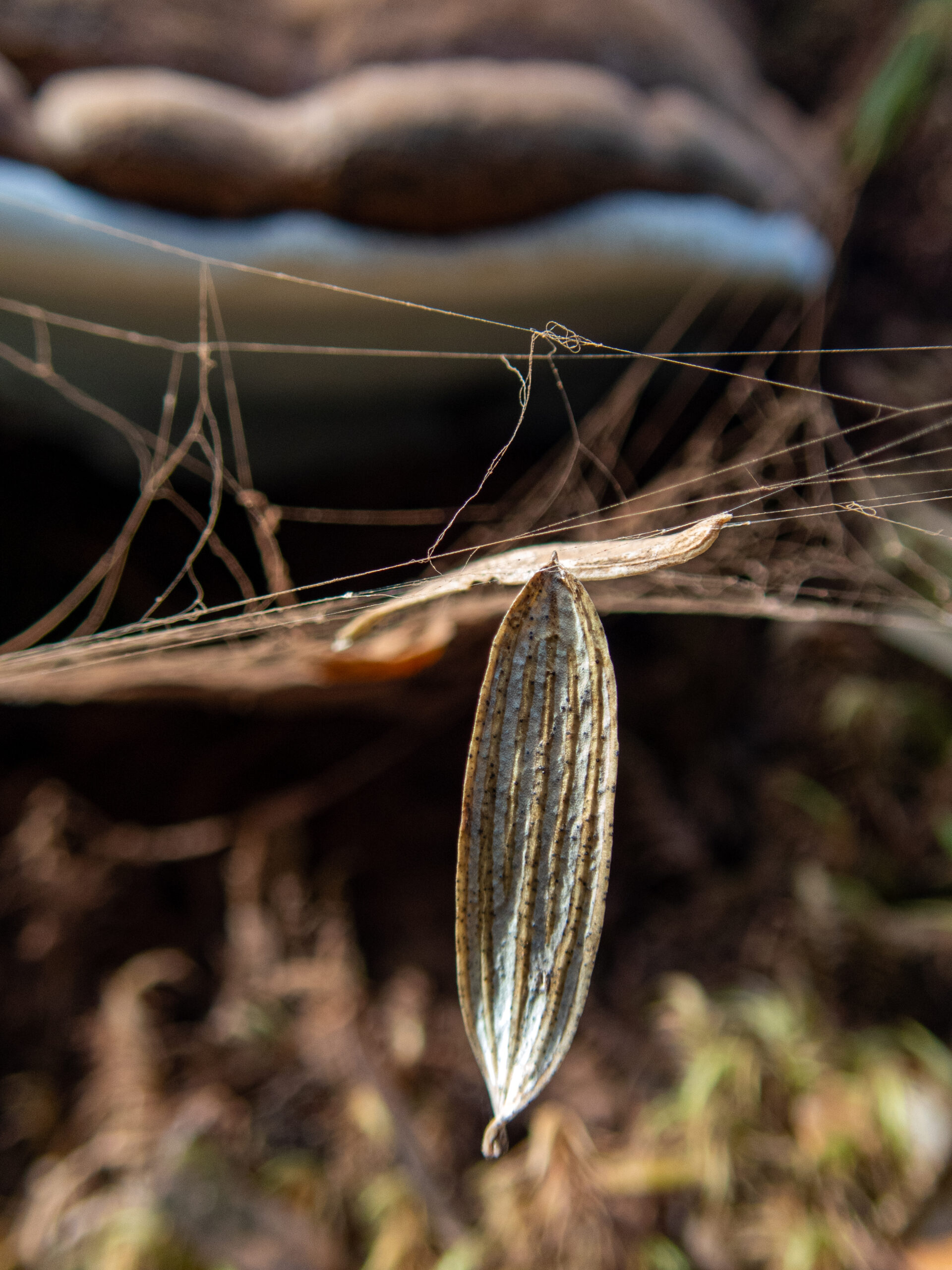
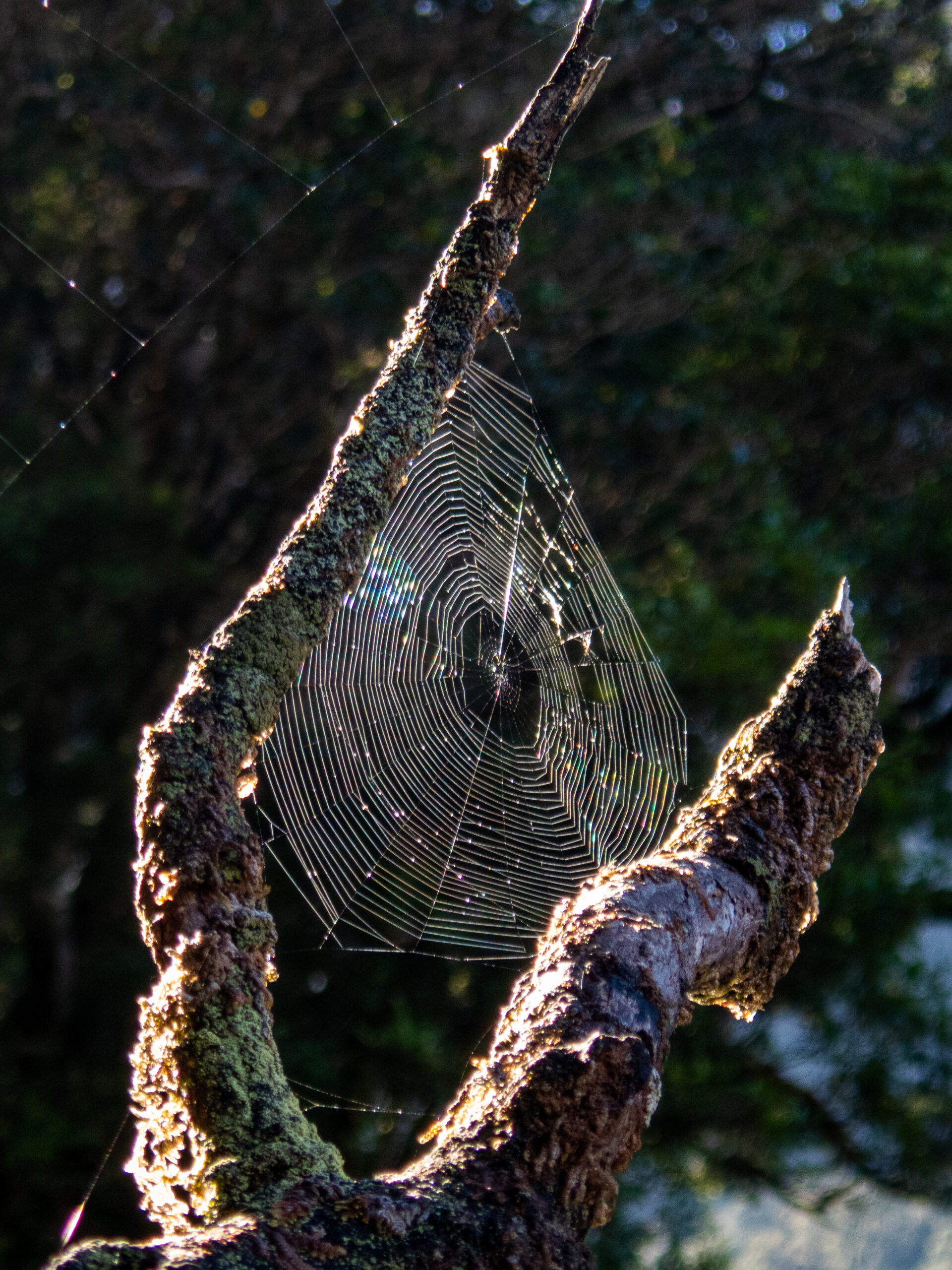
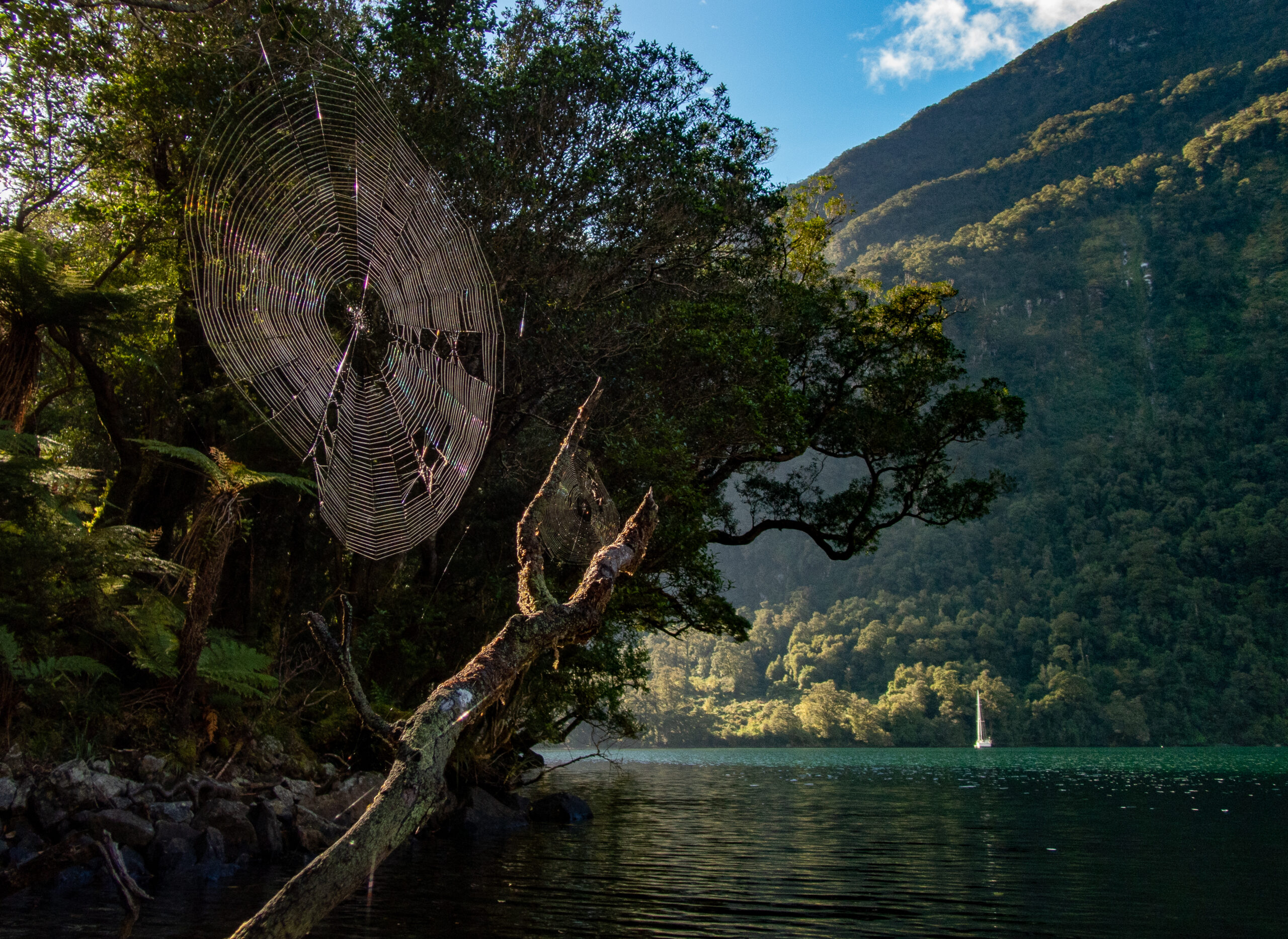
REALLY want to learn about this ‘web,’ which was considerably thicker than any spider web I’ve ever seen and the filaments looked to be made of the same ‘stuff’ as the mushroom?! Anyone?!
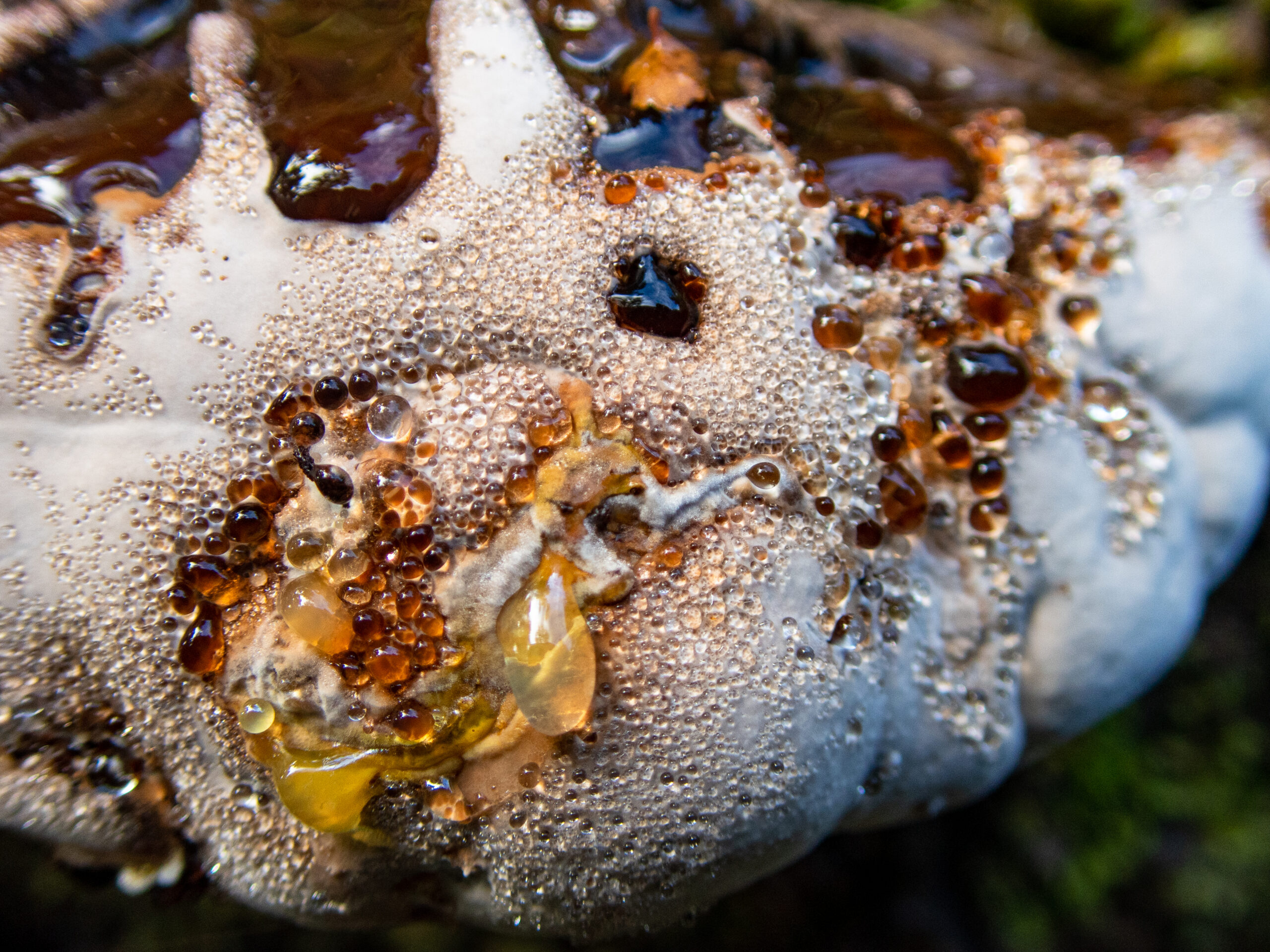
My very favorite find! In a process called, ‘gutturation,’ the mushroom will ‘weep’ excess pigmented moisture!!
Quite late by the time I got back to shore.
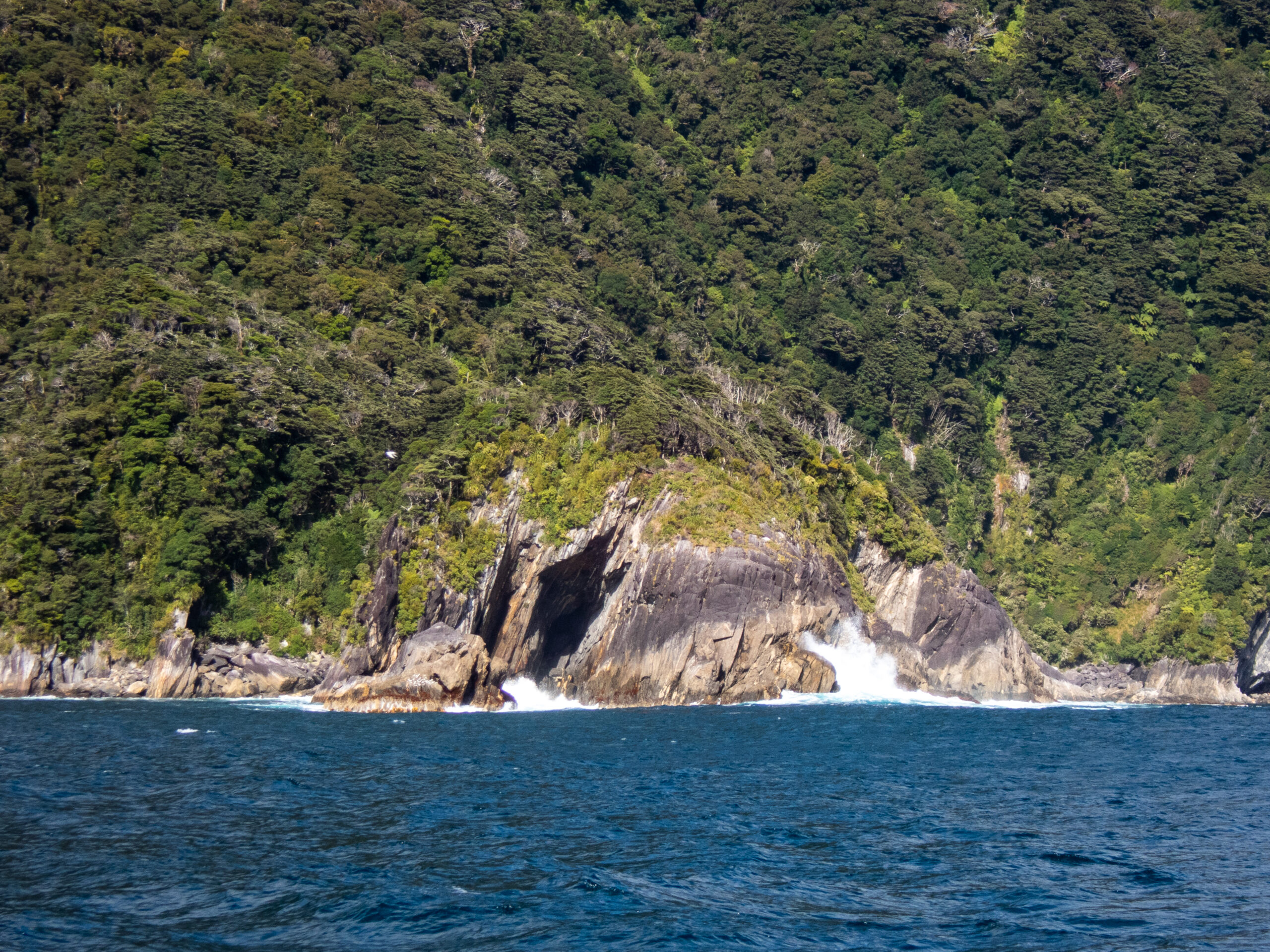
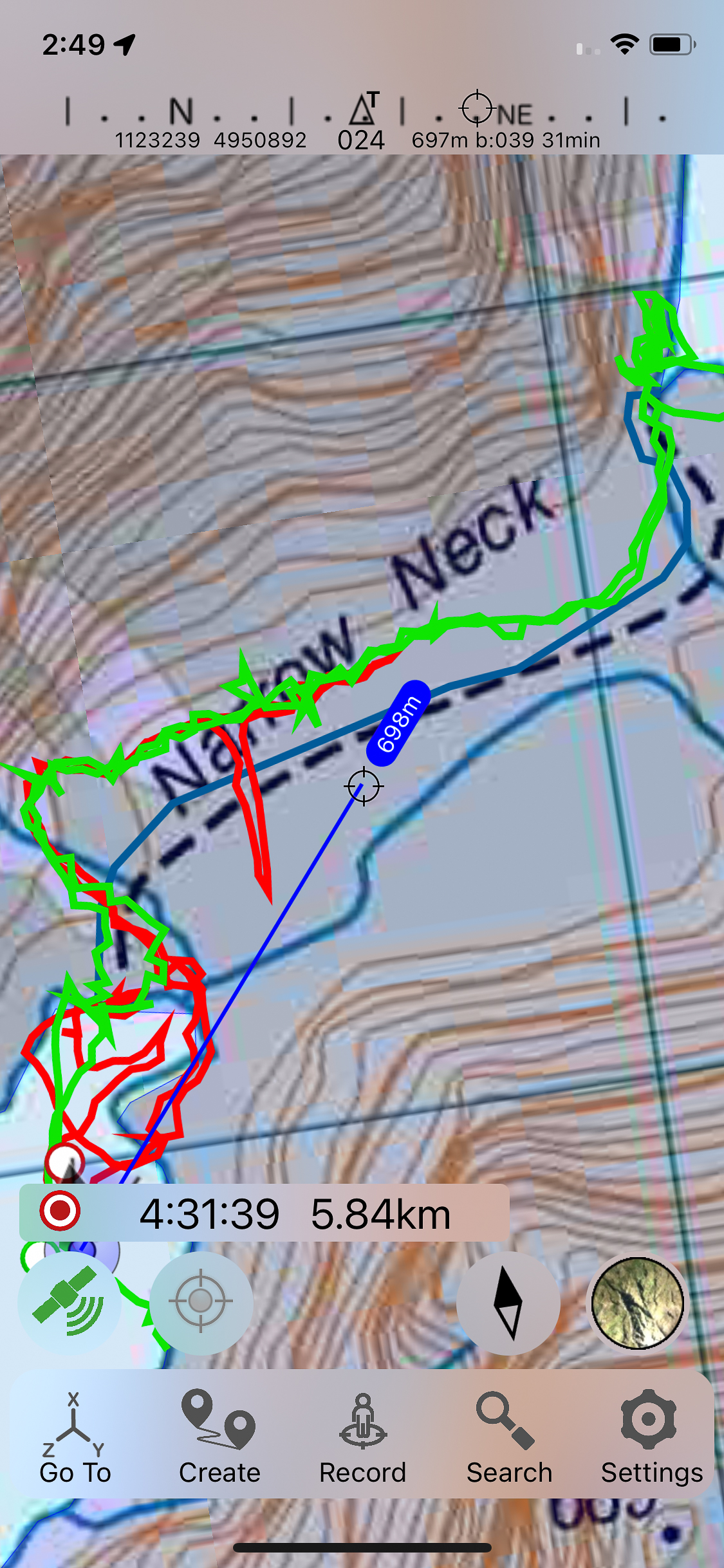
Marcus had dropped me off, so I hailed him on the handheld VHF to come retrieve me – thankfully he could get across the ‘bar’ in what amounted to no usable light.Our red half way track and my green, very distracted by flora track. A 1 k hike turned into almost 6 round trip! I didn’t get any interesting pics from the Doubtful Sound side, but that’s our next Fiord, so there will be PLENTY!Eagerly heading out of Dagg … Why? Because Doubtful is our next Sound and Wyatt is joining us there!!!! Allora scoots along with a bit of extra oomph!Formations near the exit of Dagg Sound.Wonderful little ‘nook.’On the outside now, through the pass. Last look back at Dagg.
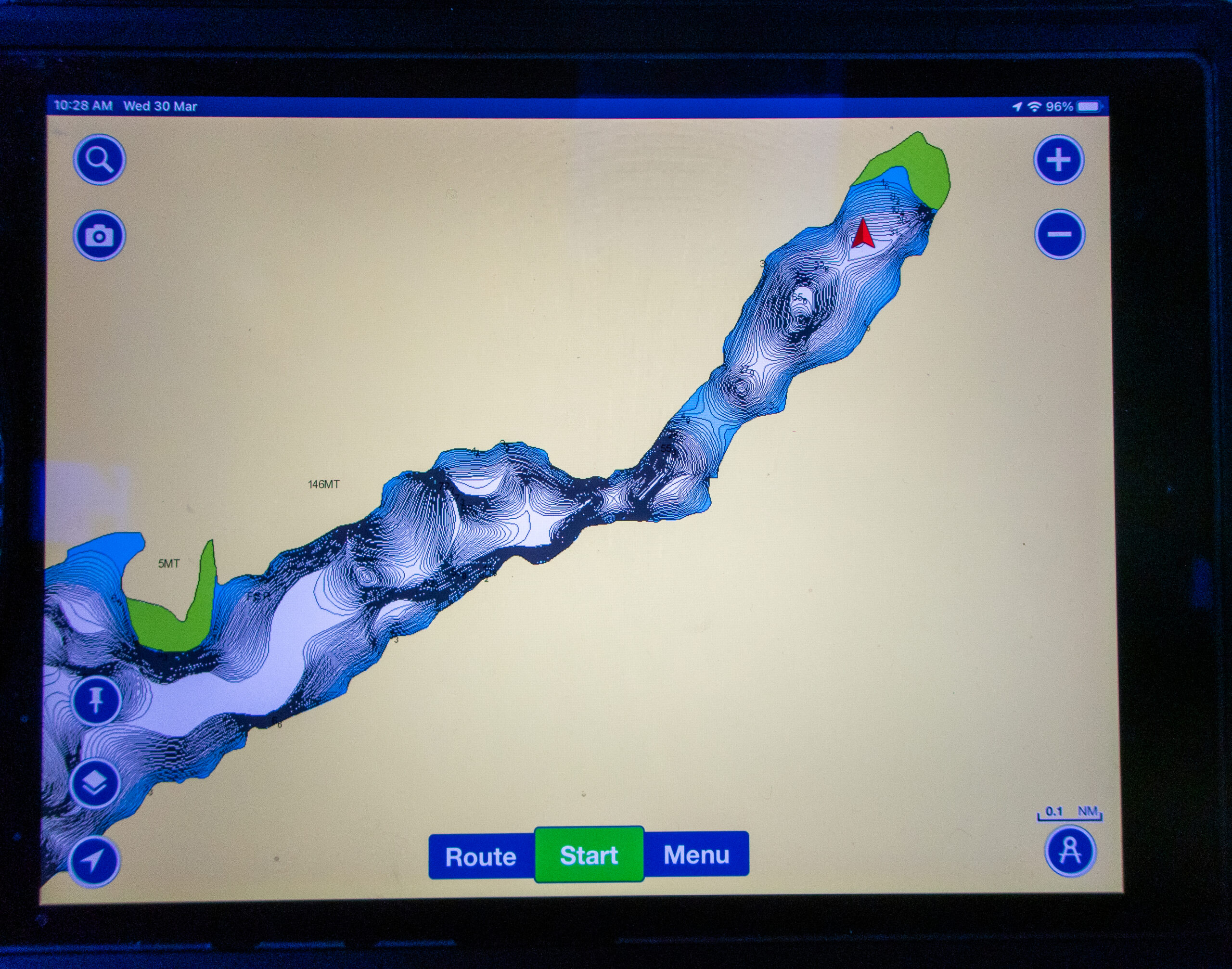
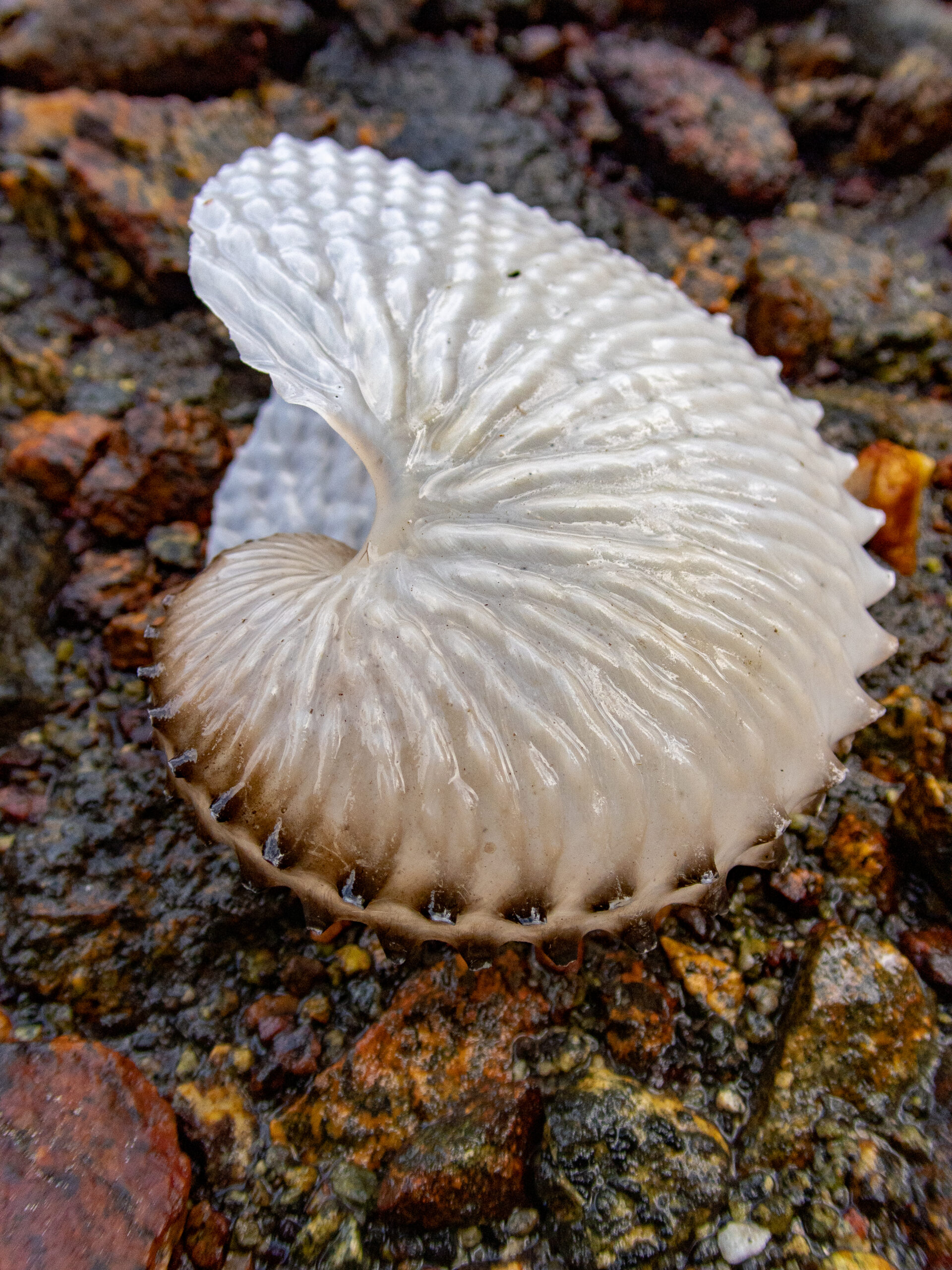
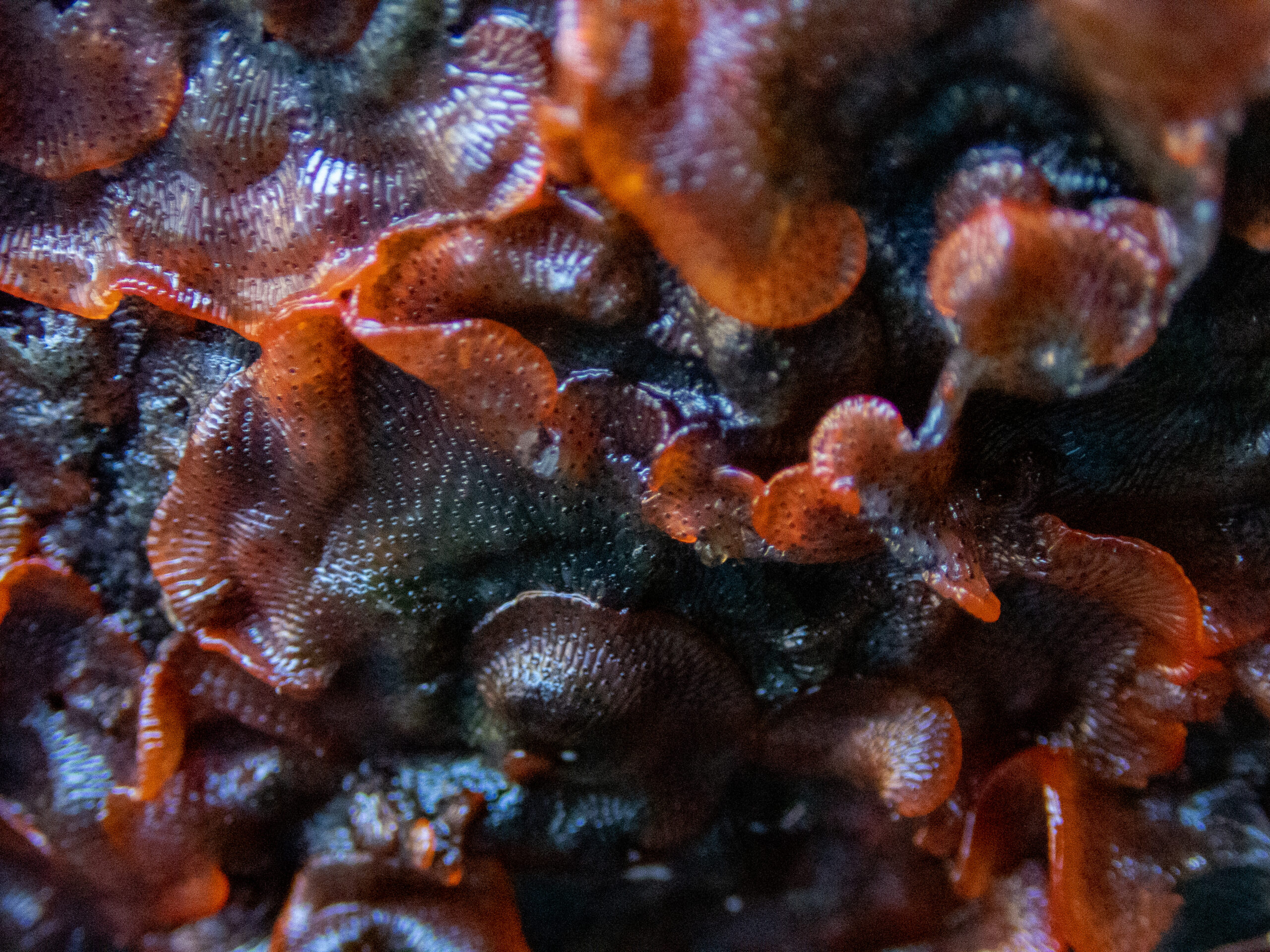
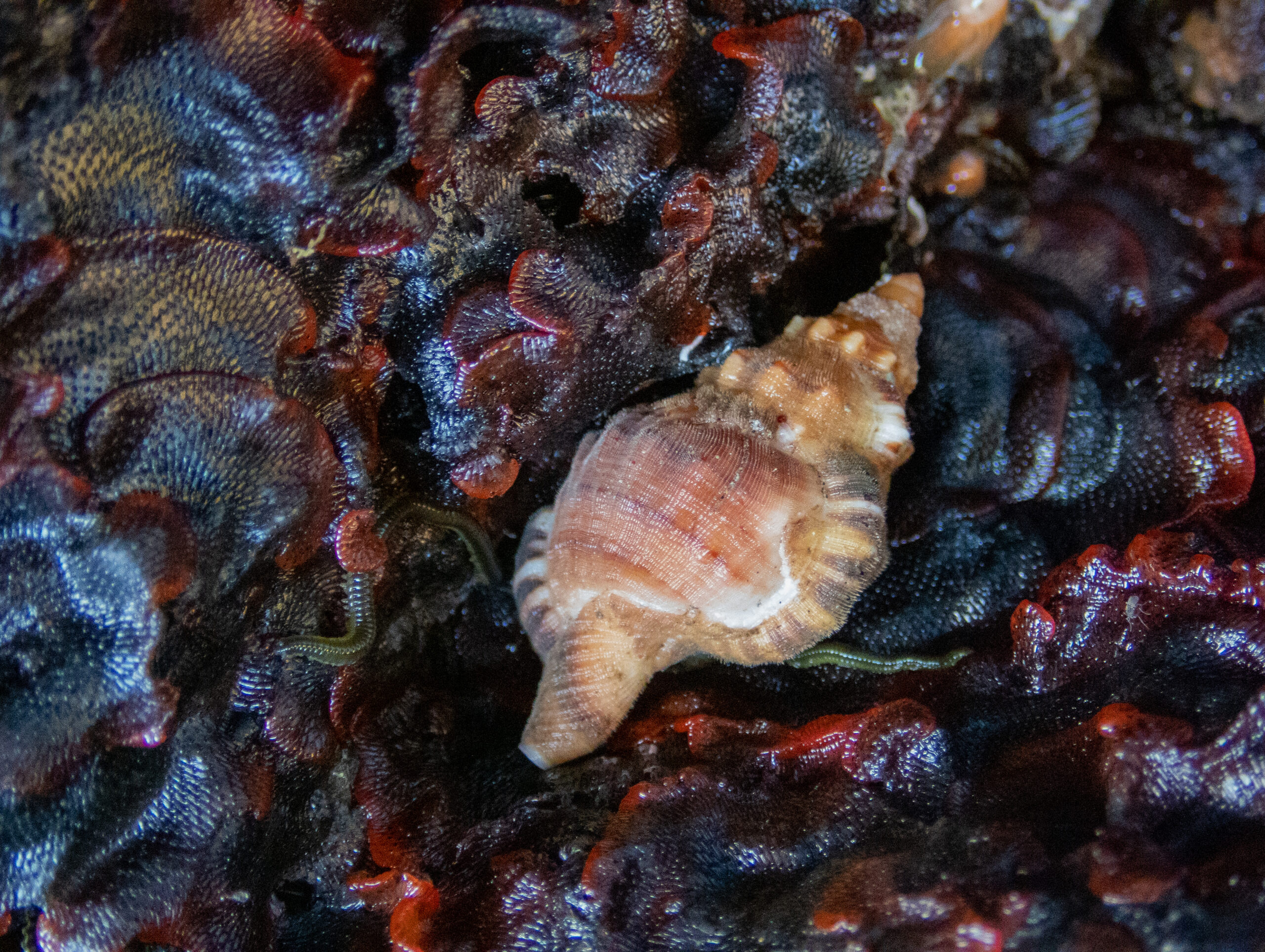
Bathymetric chart of Vancouver Arm – gives an image of the size, shape and distribution of features underwater.We just spent one quick night at the head of the bay in Vancouver Arm. We had plans in place to meet Wyatt in Doubtful Sound, 2 north of here, so we had to strategize our short stays with the weather predictions and what protection each anchorage might offer.Third Cove Anchorage. We worked hard finding suitable depths to anchor in here and ended up dropping in 25 meters (83′), which is quite deep, but the mud bank at the head of the bay was also tough to see and the edge of it fluctuated, so all in all, challenging. Our ‘guidebooks’ didn’t say anything about where other ‘yachties’ would anchor. First impressions: amazing birdsong and echoes in this biggish bay!I wonder if we were hideous even to the flora/fauna …?!… ok, I feel better now. This flora is pretty ‘warty!’ We had heaps of fun checking out the very colorful intertidal zone. Started at higher tide, but it was dropping really fast, so we had to be sure Namo didn’t get stuck ‘high and dry.’ Not sure what these are, but they were ALL OVER!You can probably imagine the smell that went along with this falling tide and exposed sea creatures?Marcus found this one shell just sitting in this position. No others about.Then we made it to the very spongy and lush forest. We’d been told there was a waterfall to be found, but we never found the ‘trailhead.’No matter, there’s plenty of water and wonder right here!
The Audrey Hepburn of the plant world – playful and elegant, both.
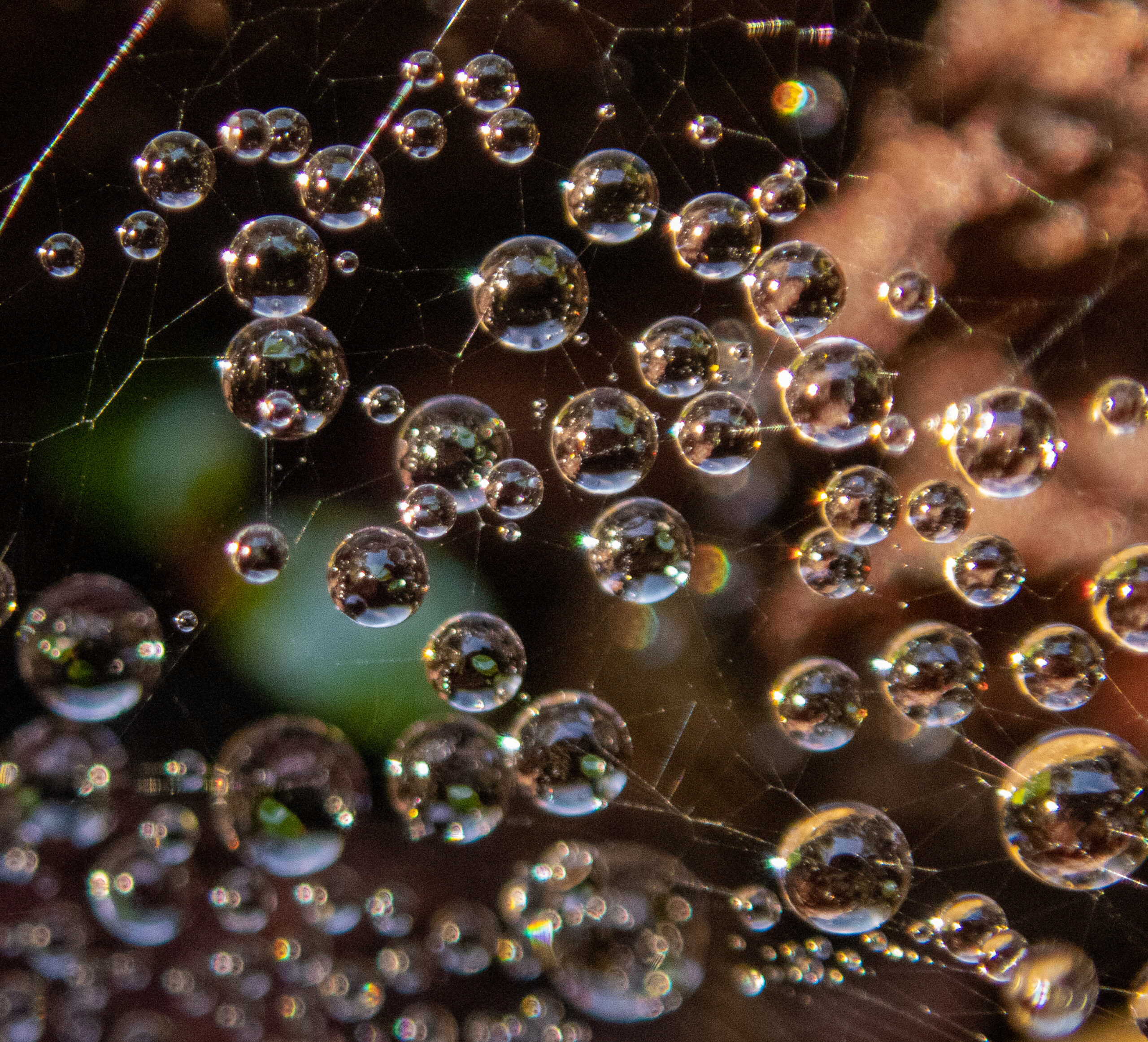
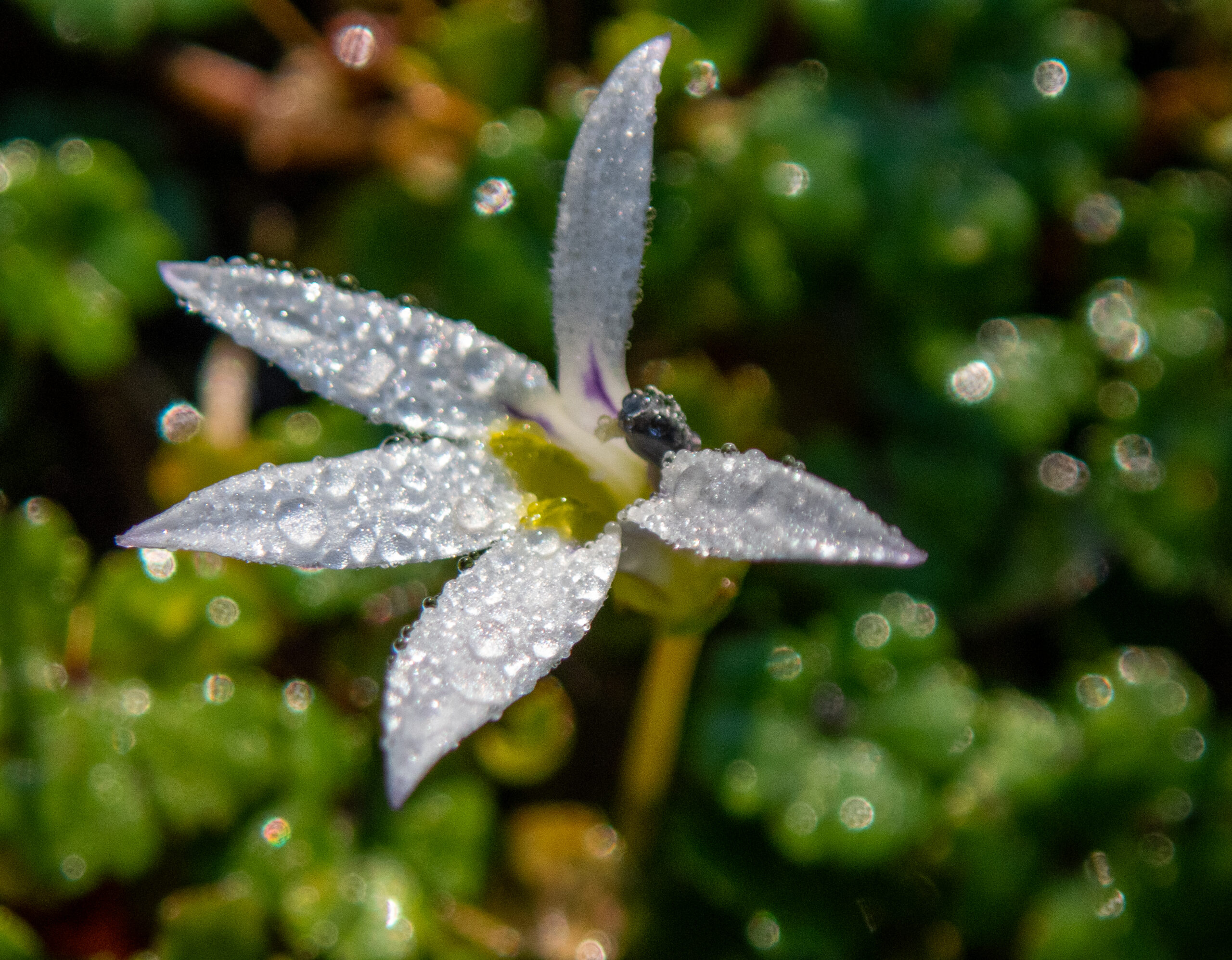
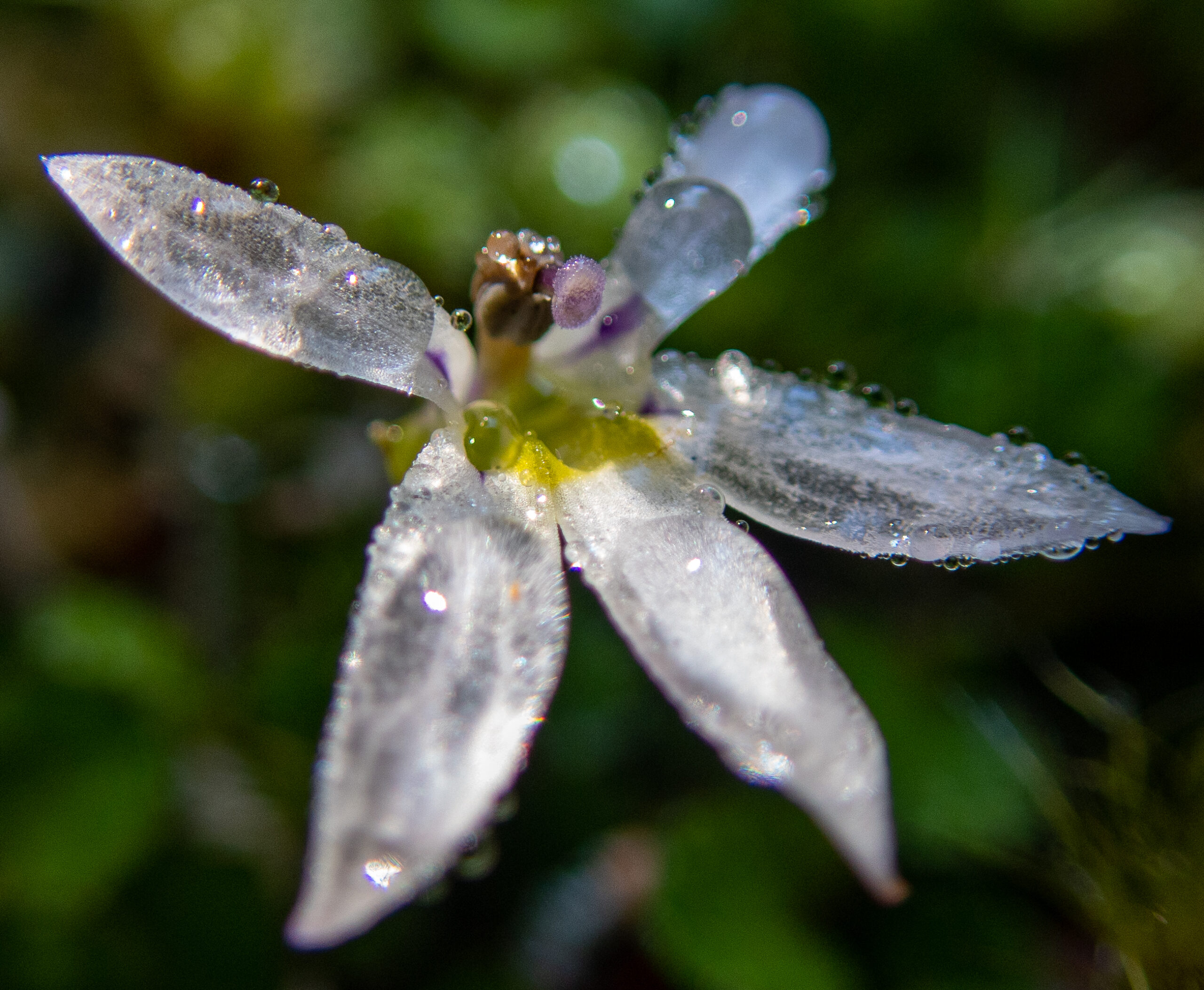
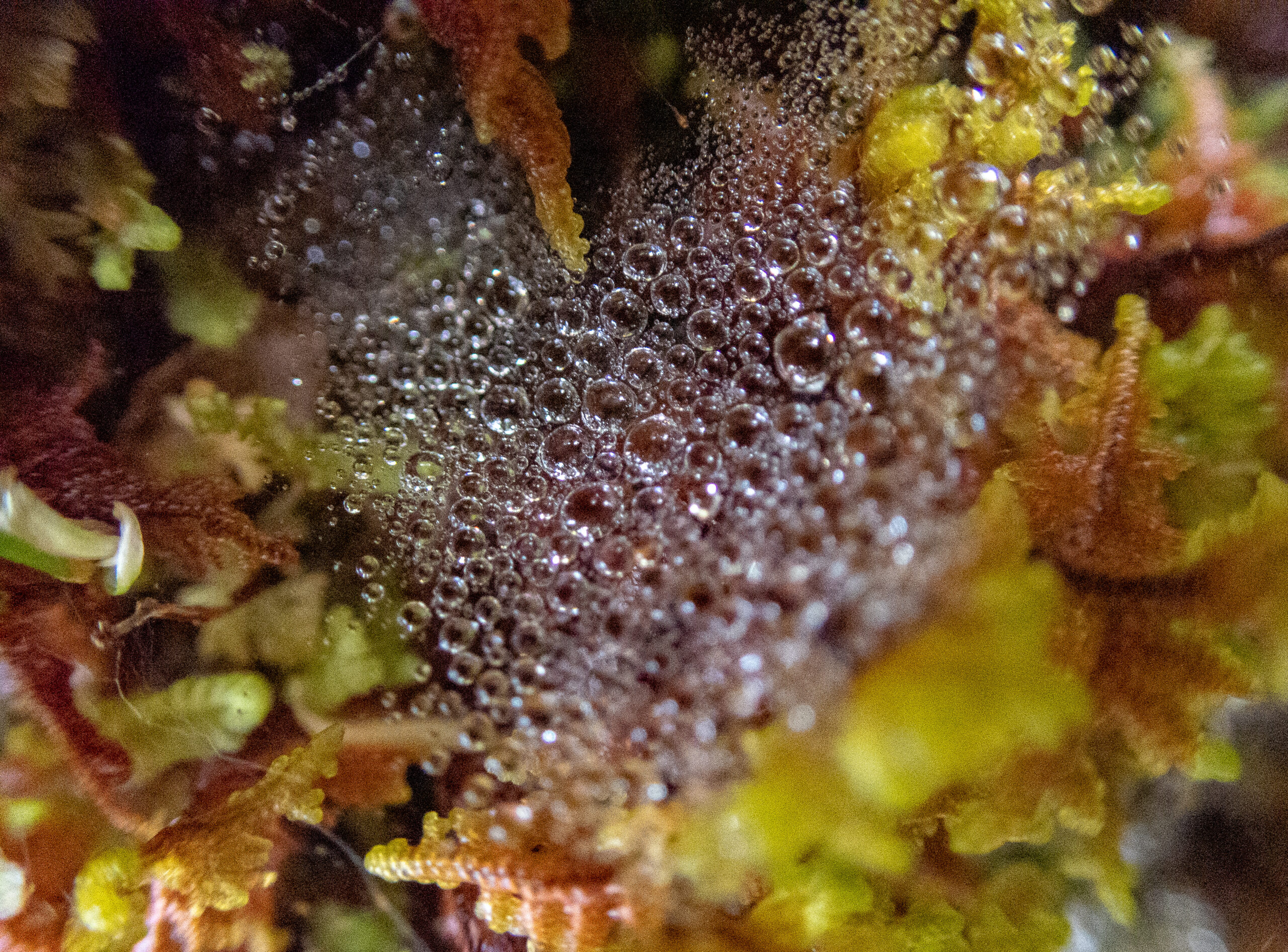
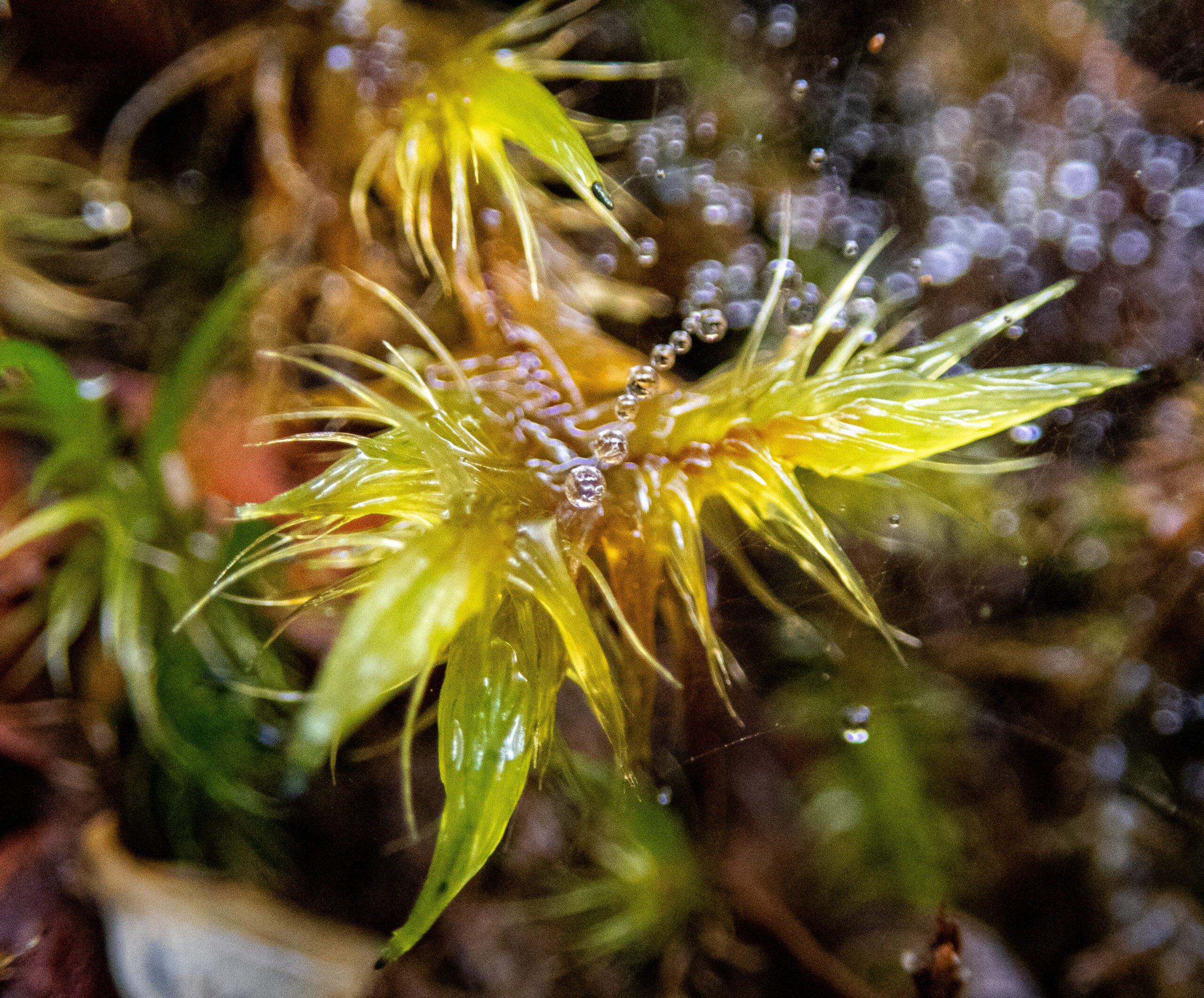
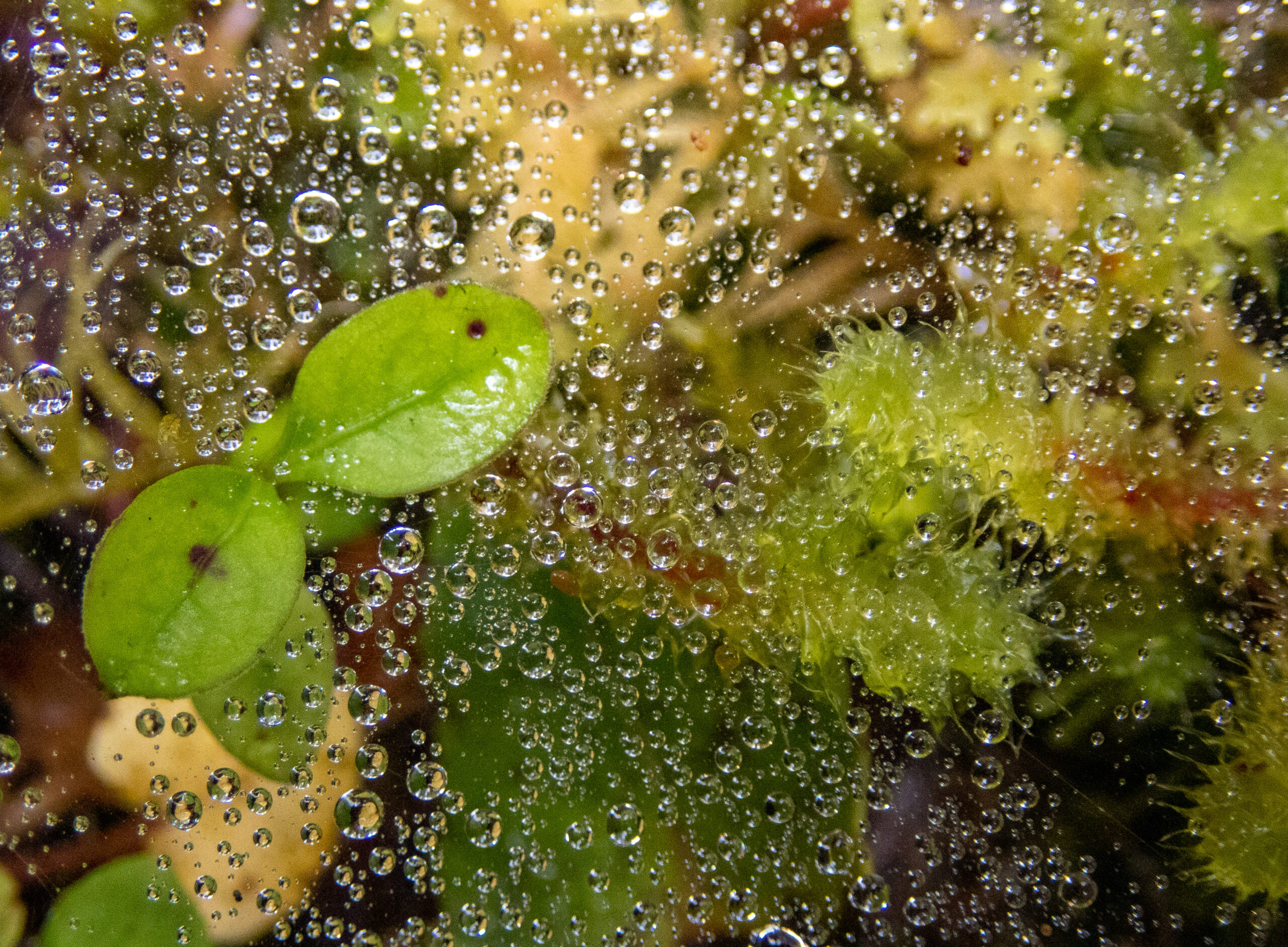
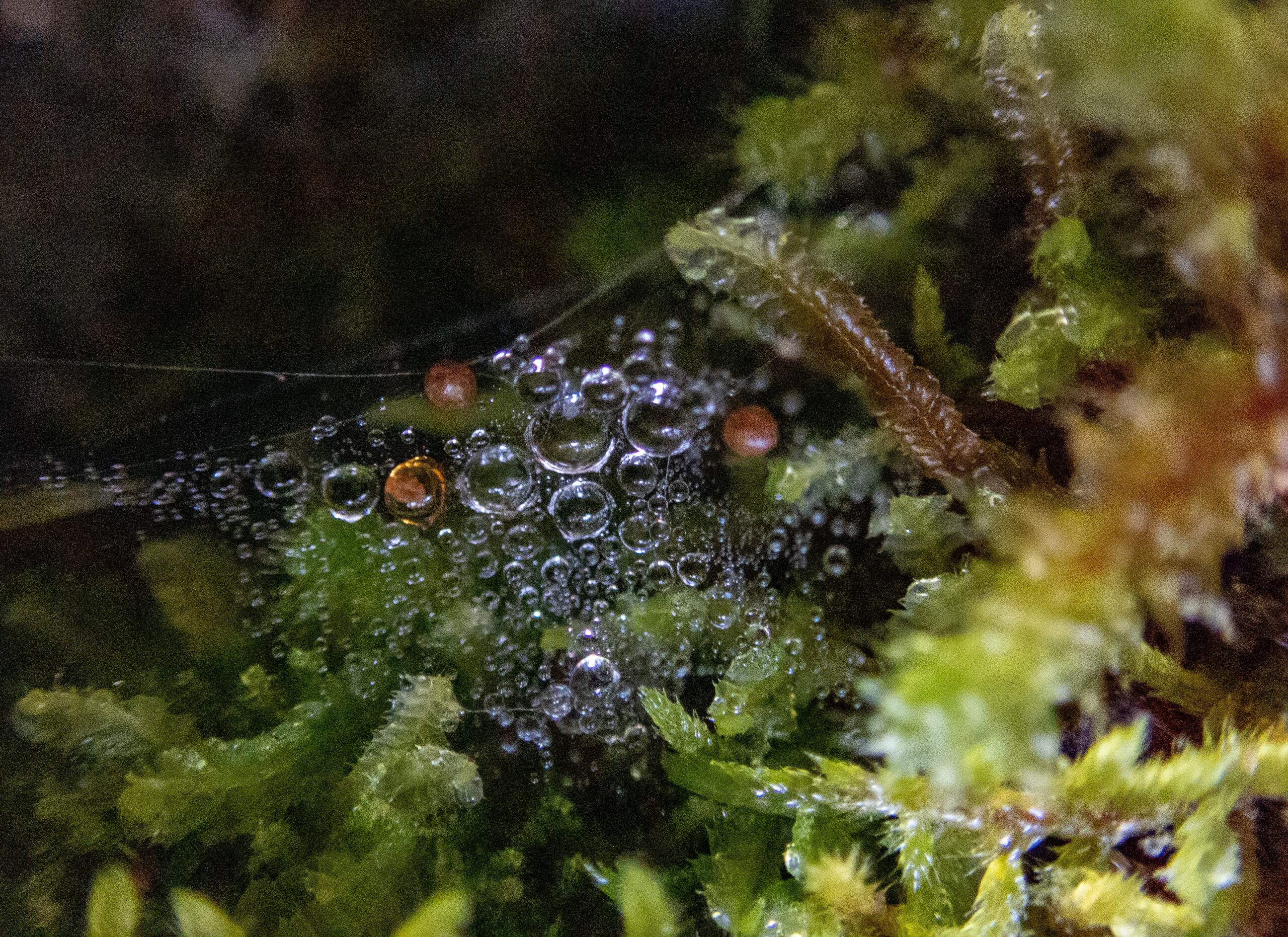
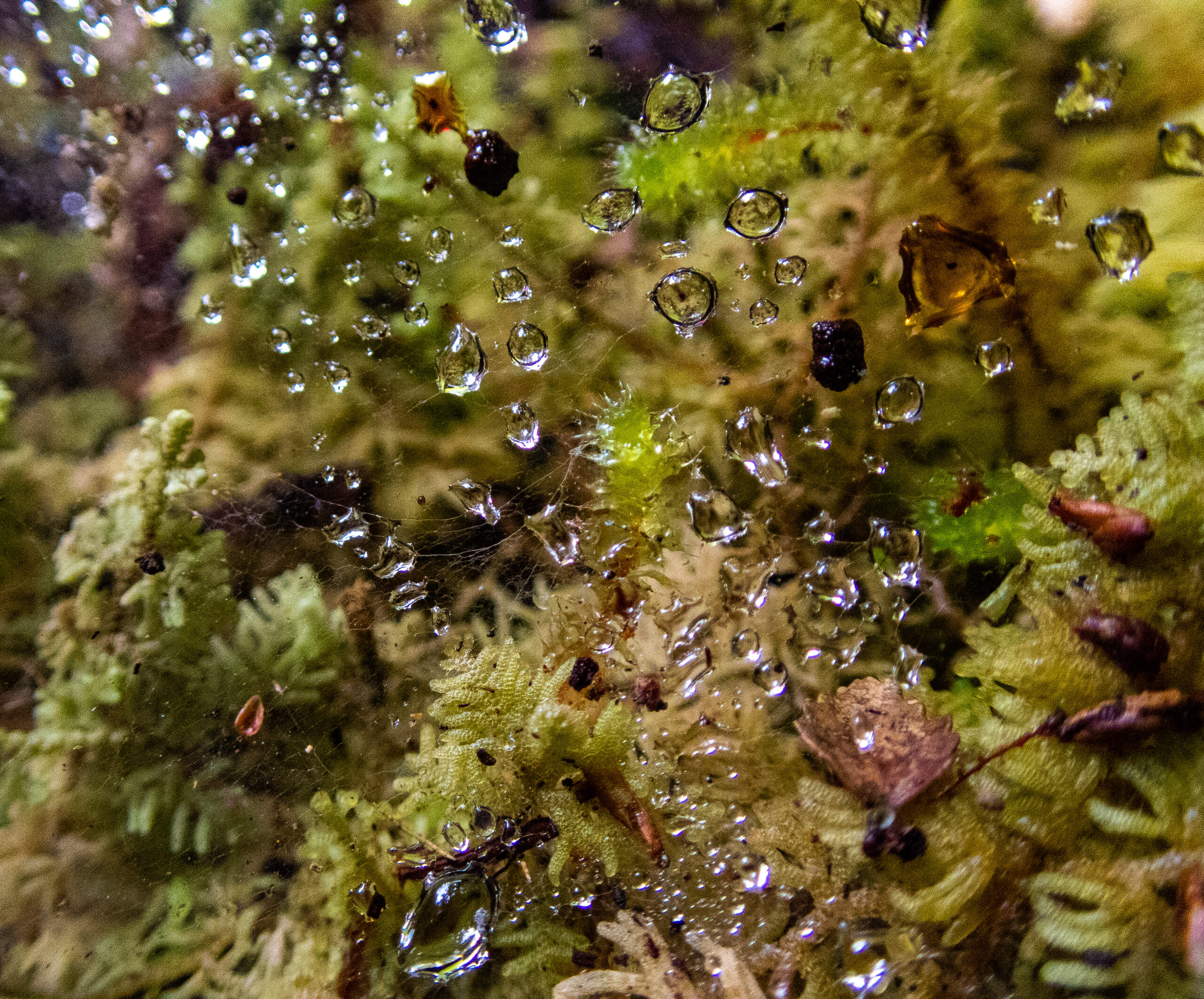
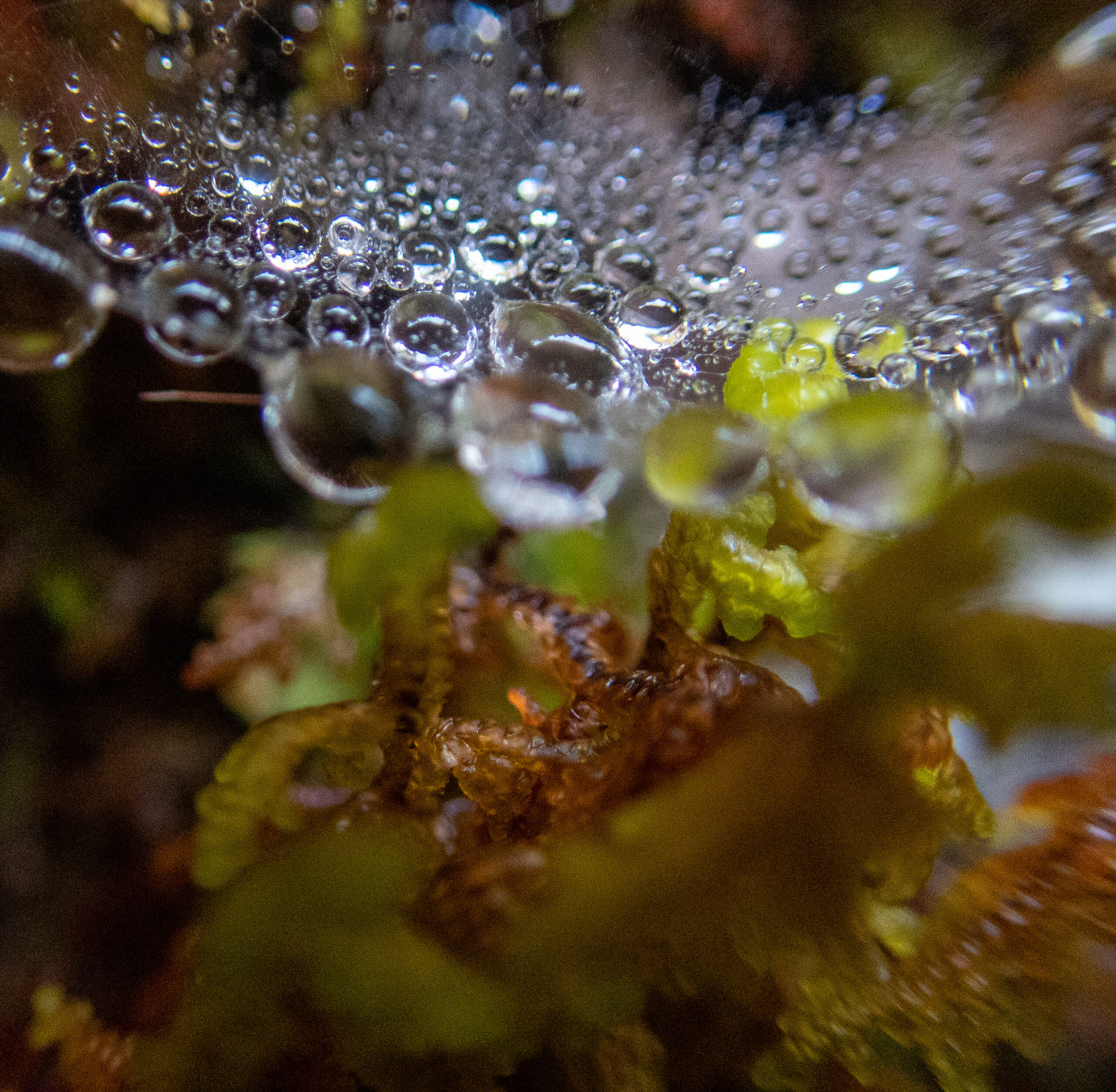
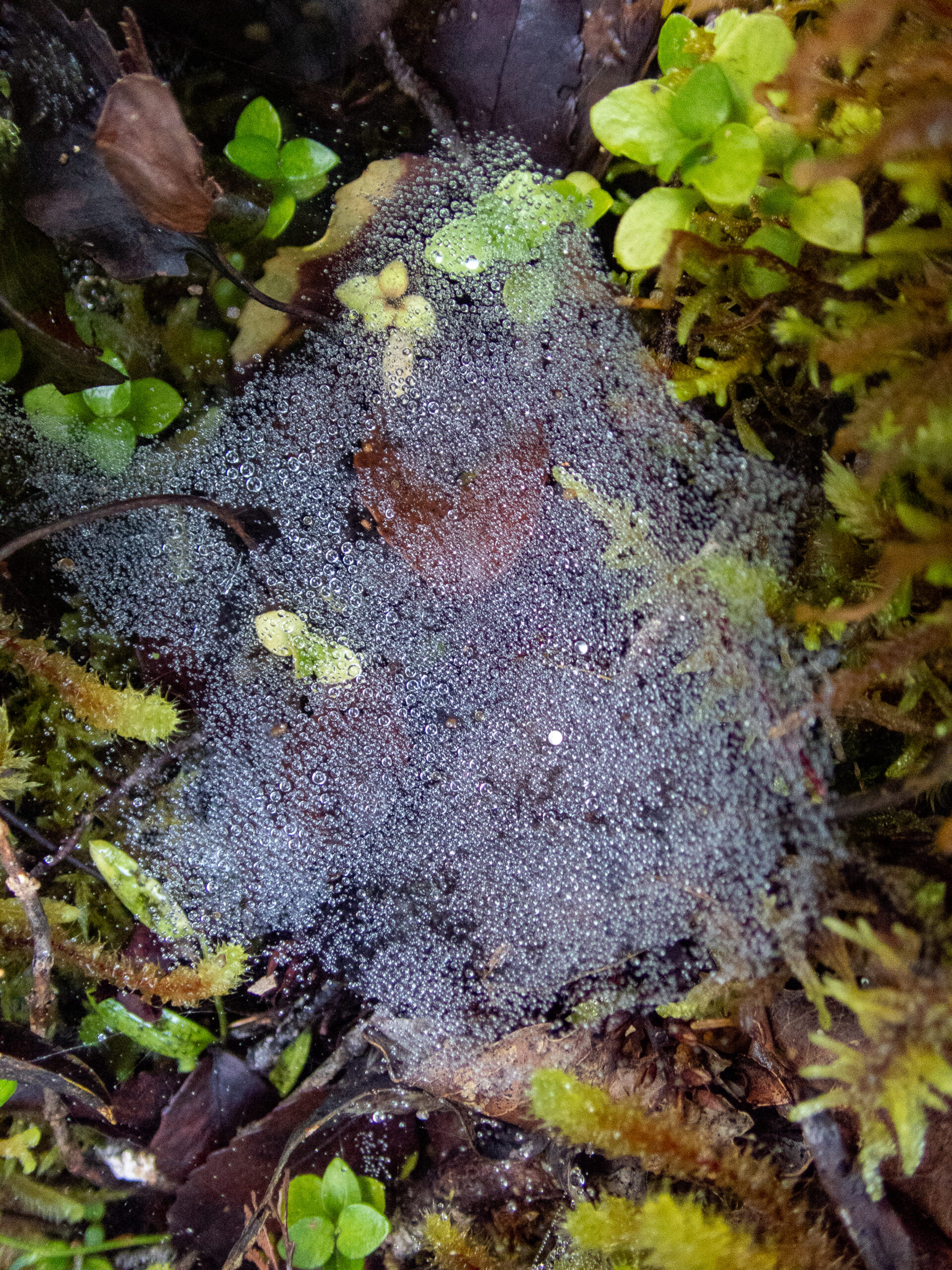
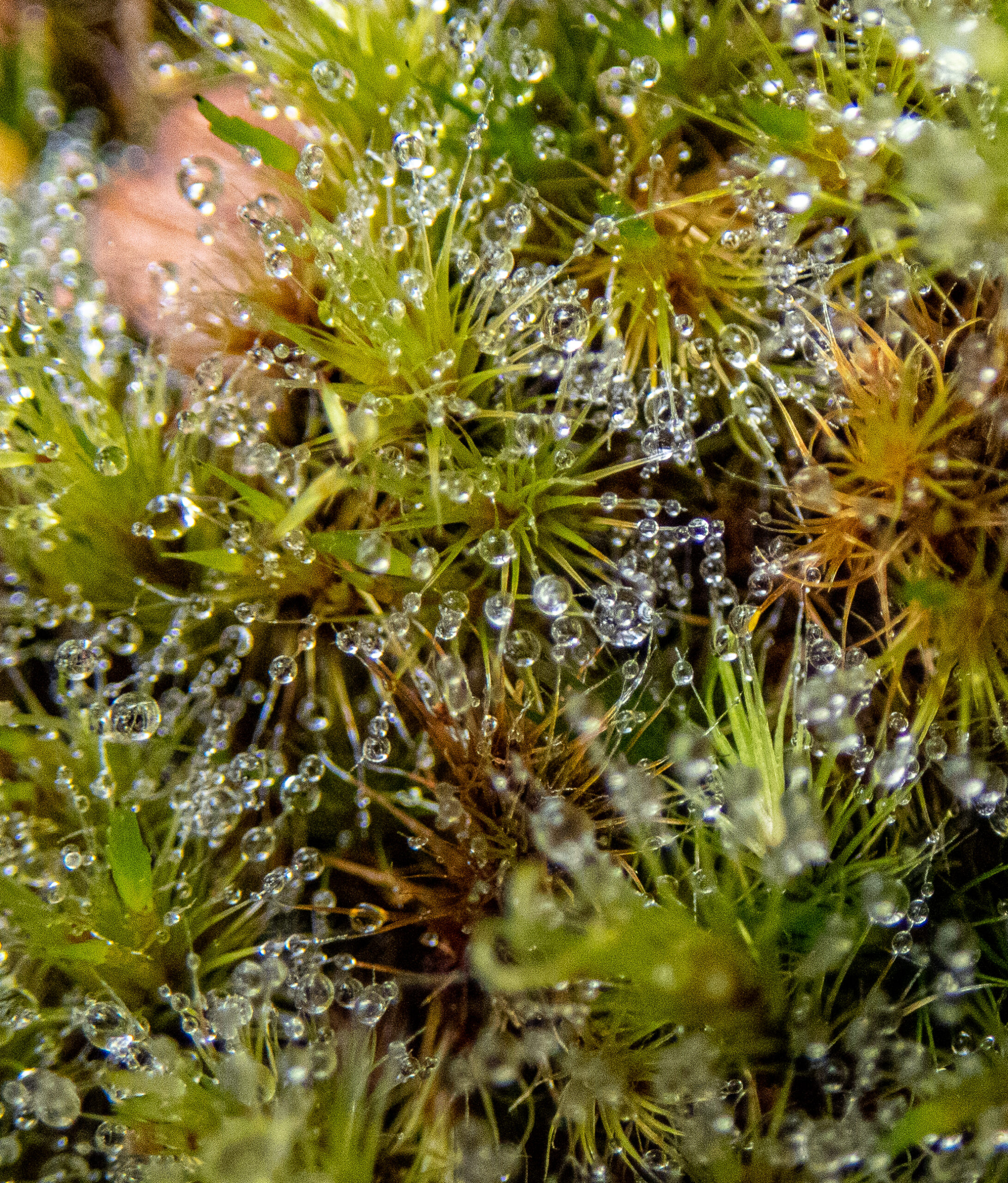
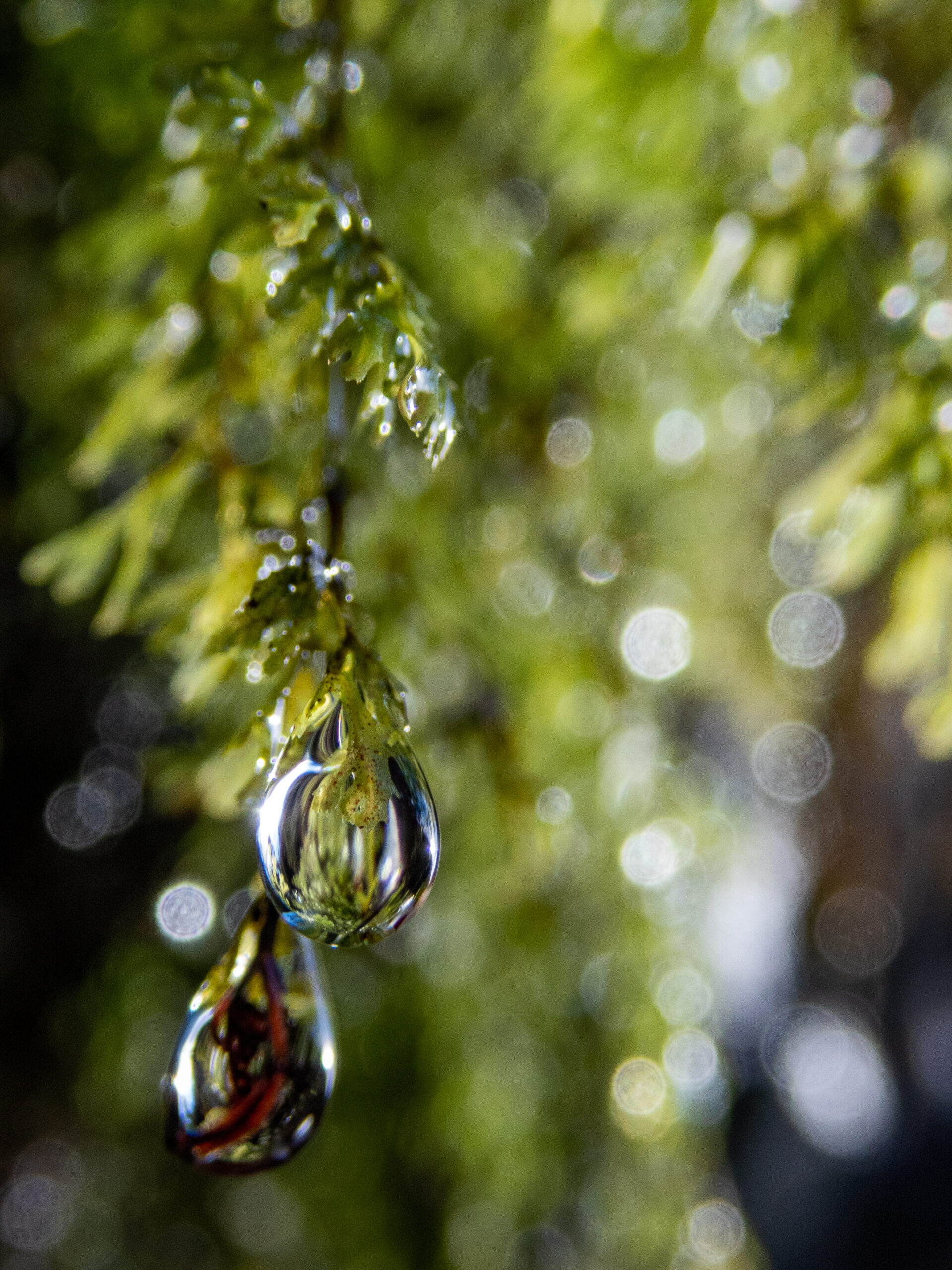
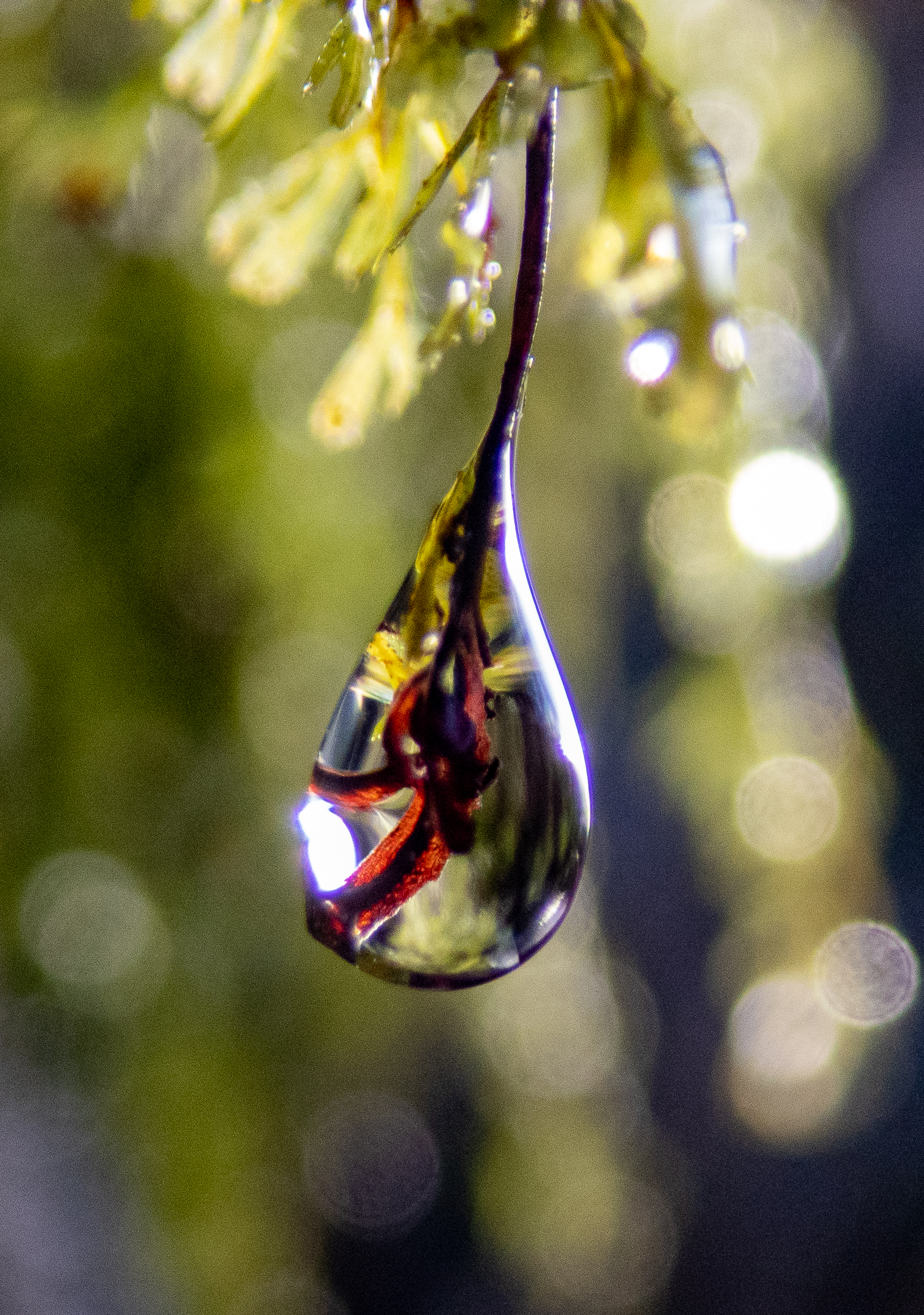
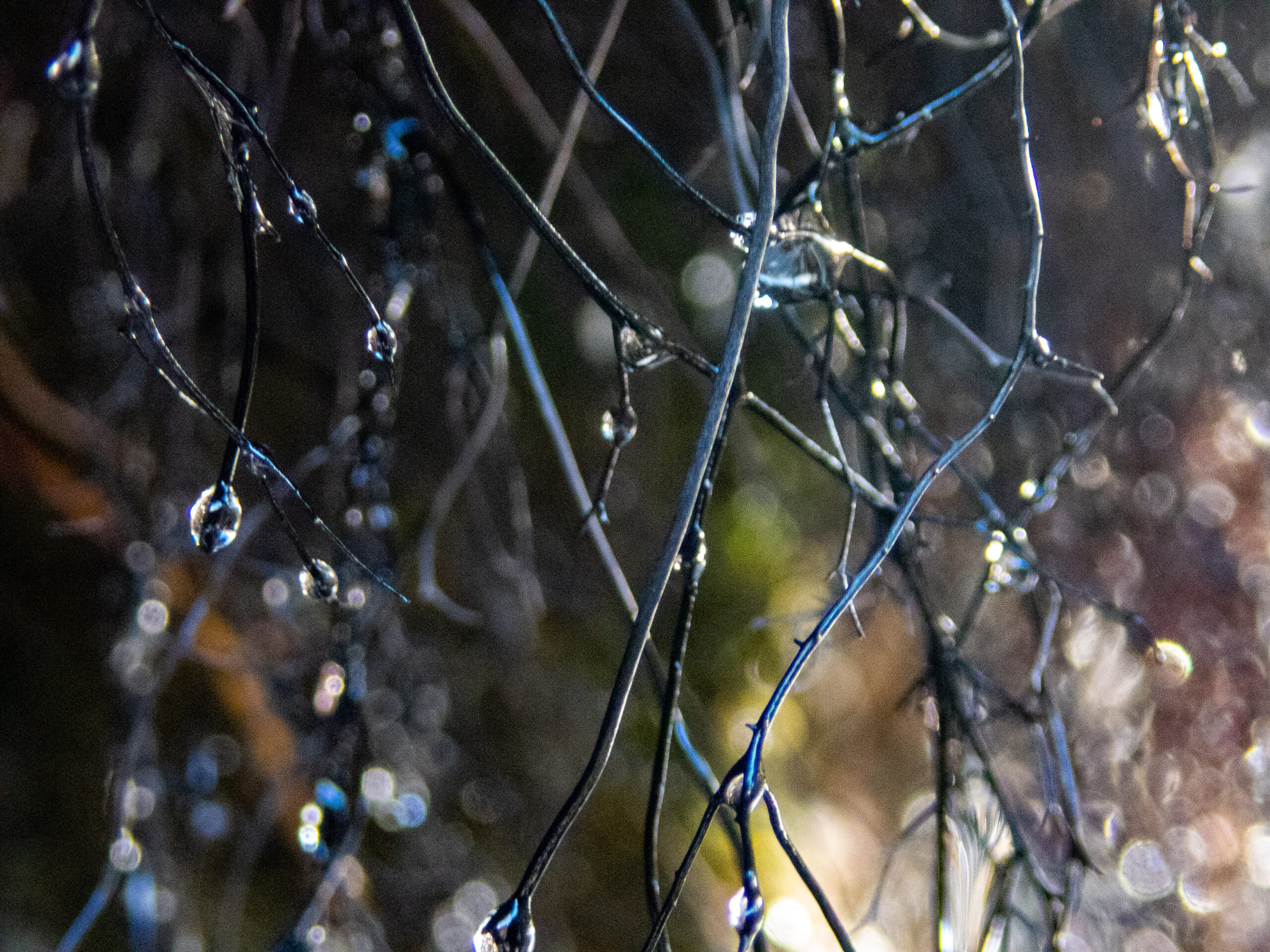
These little ‘webs’ of water droplets were everywhere!
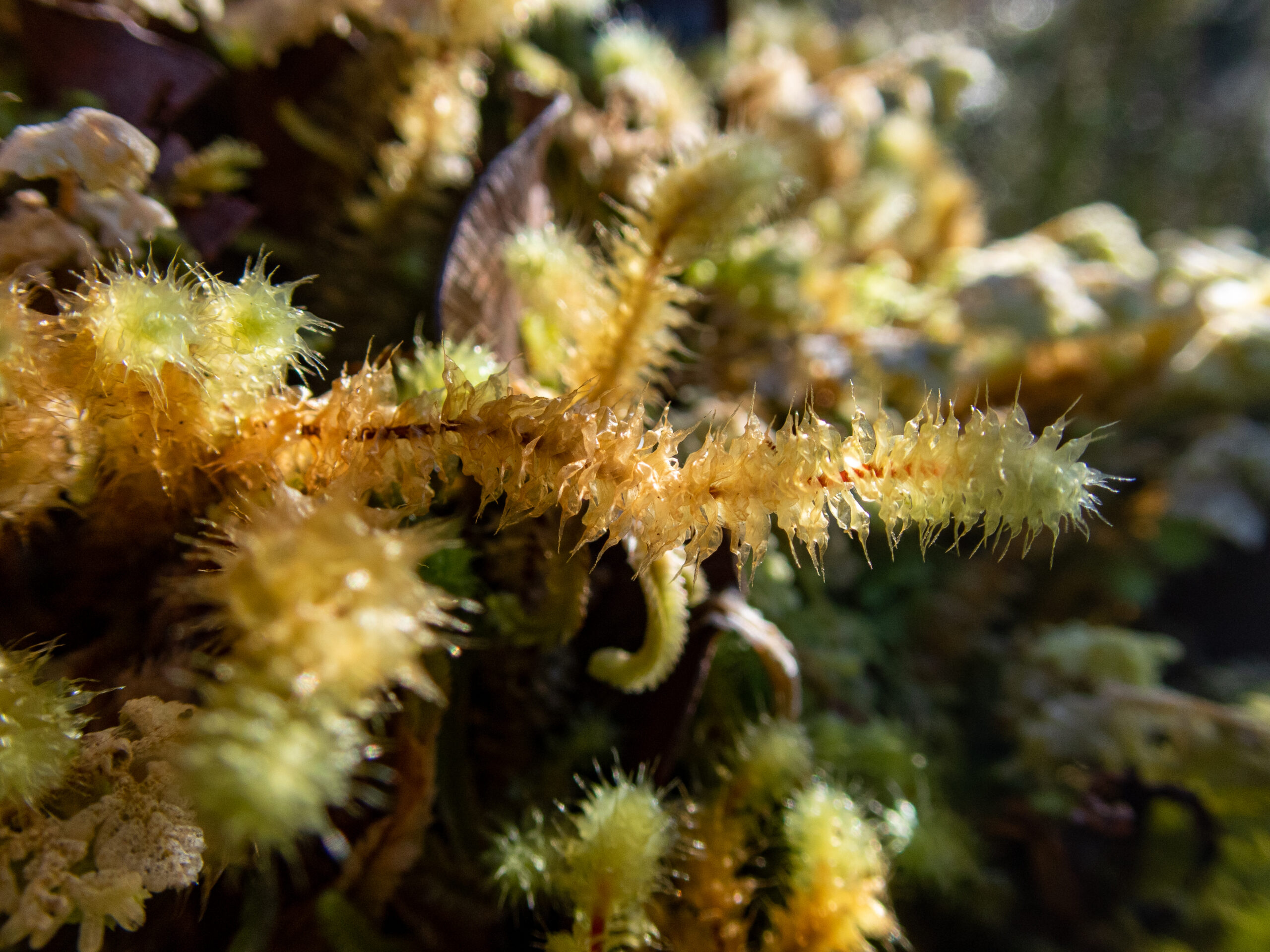
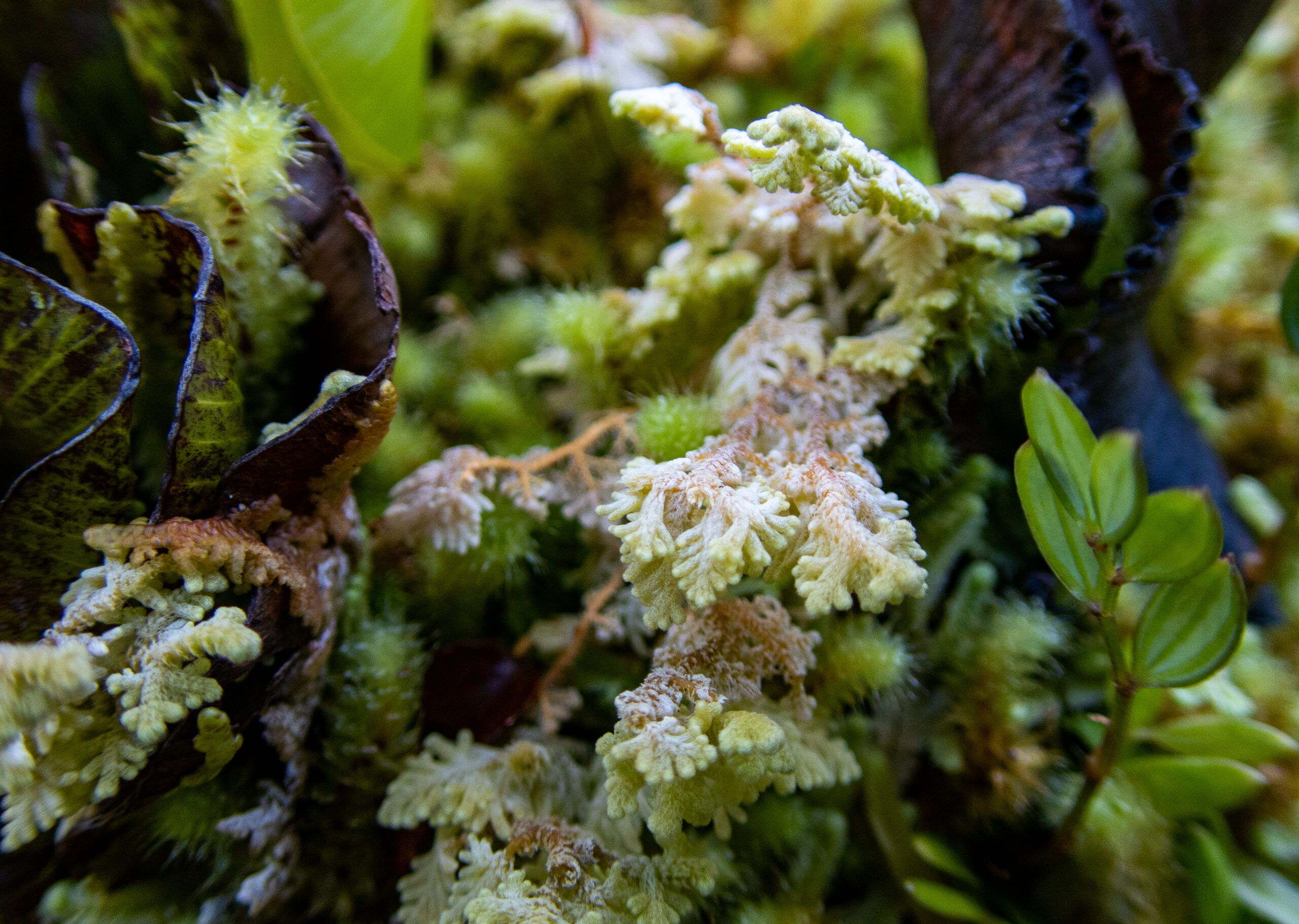
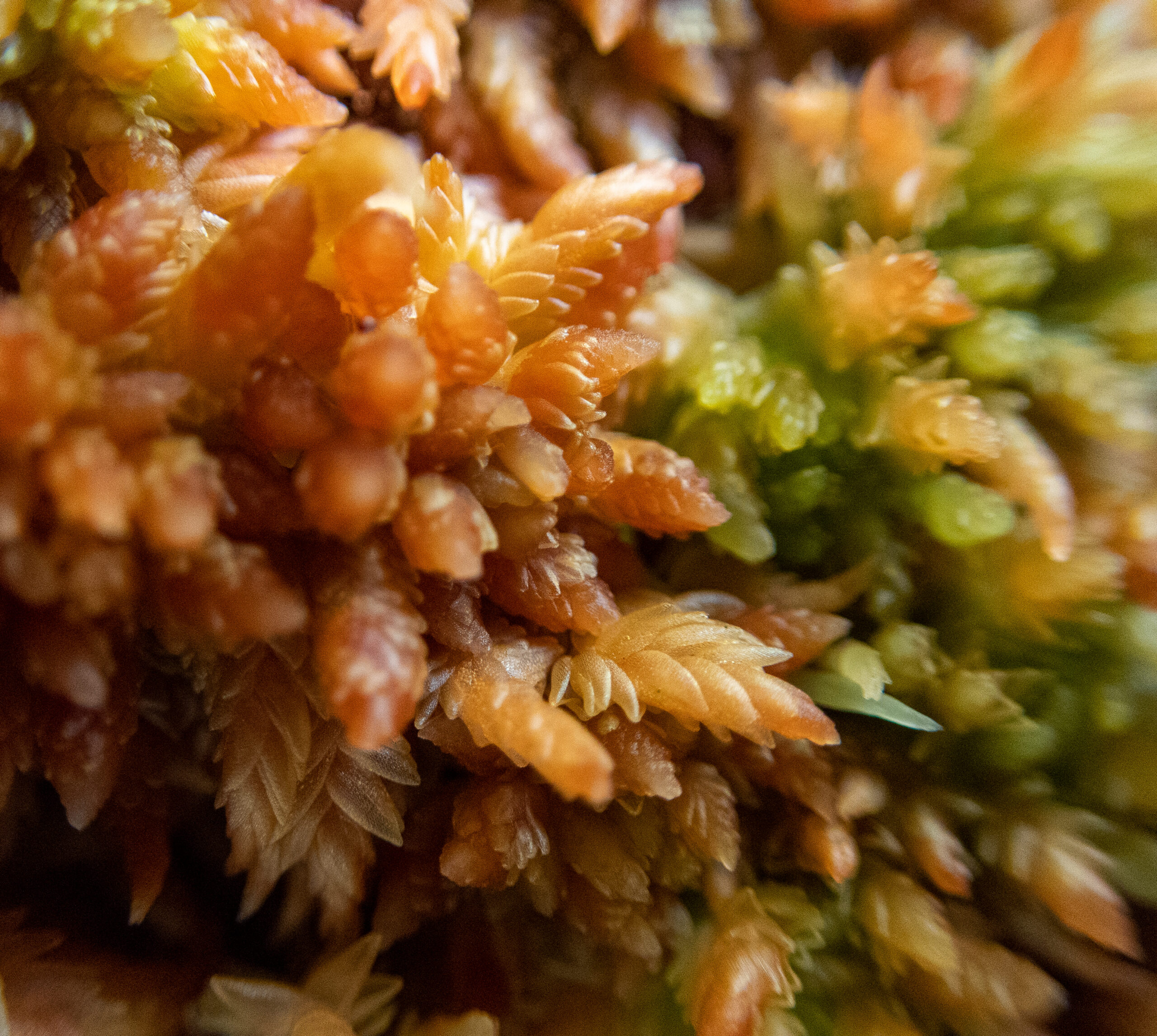
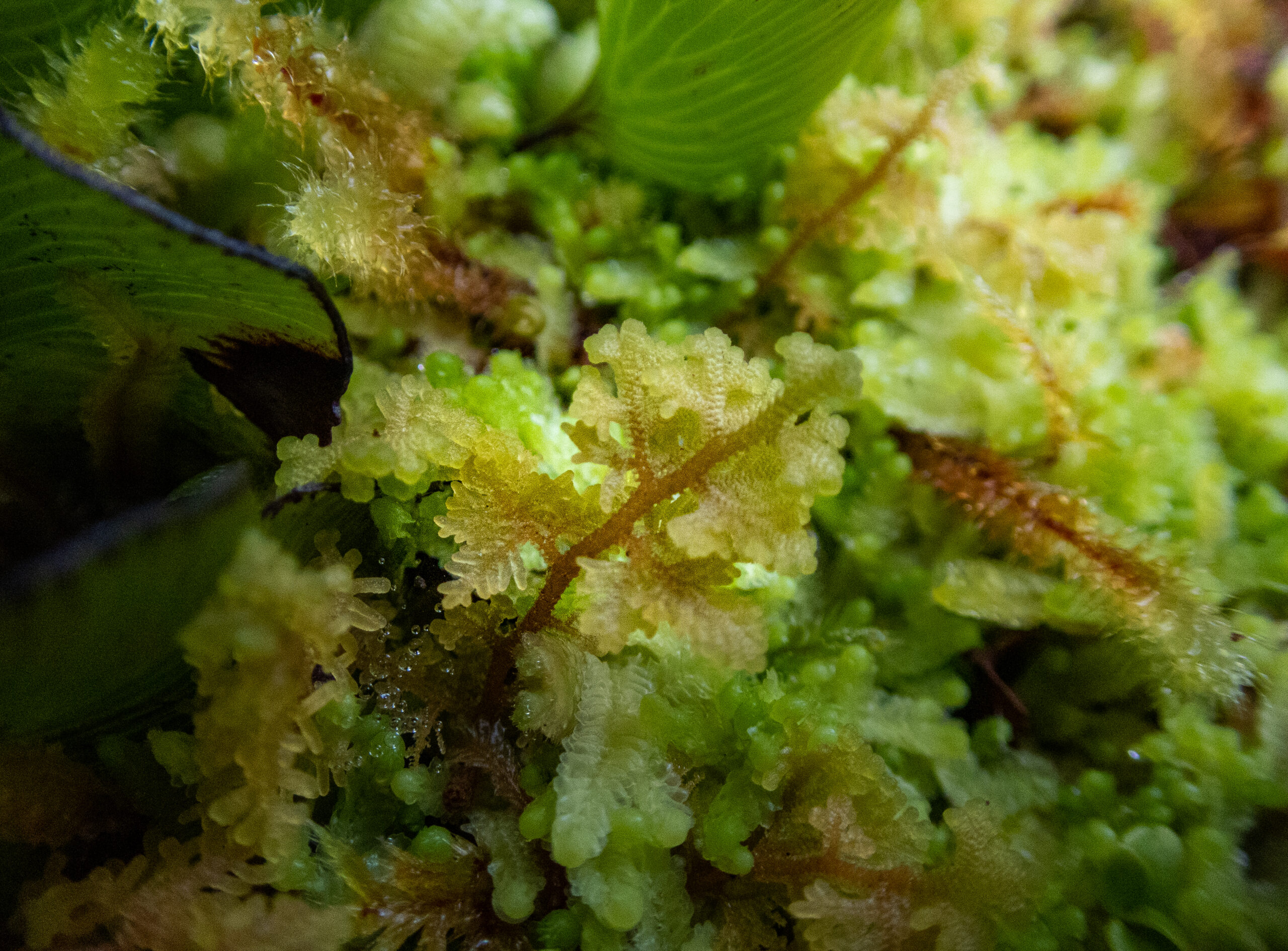
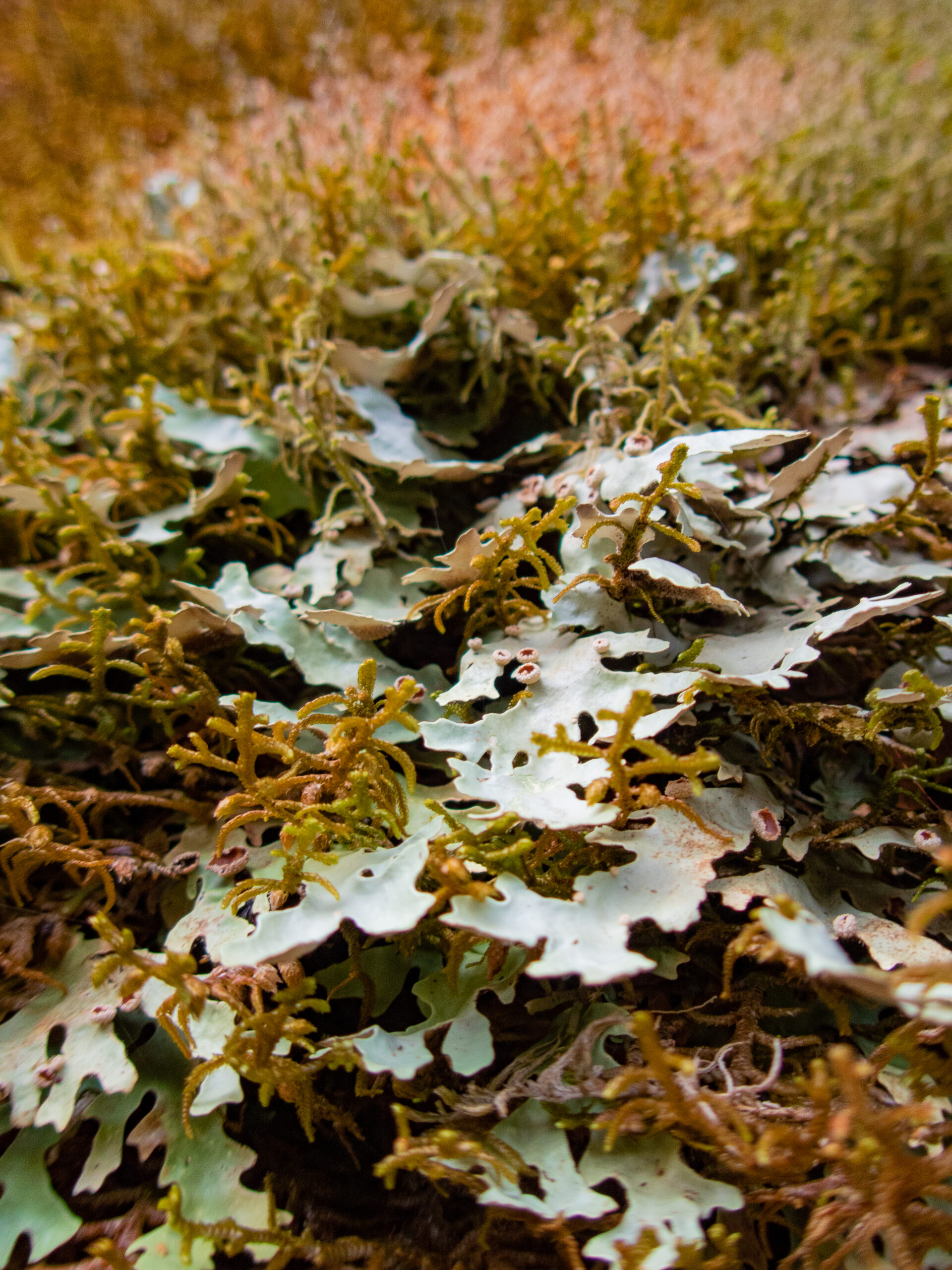
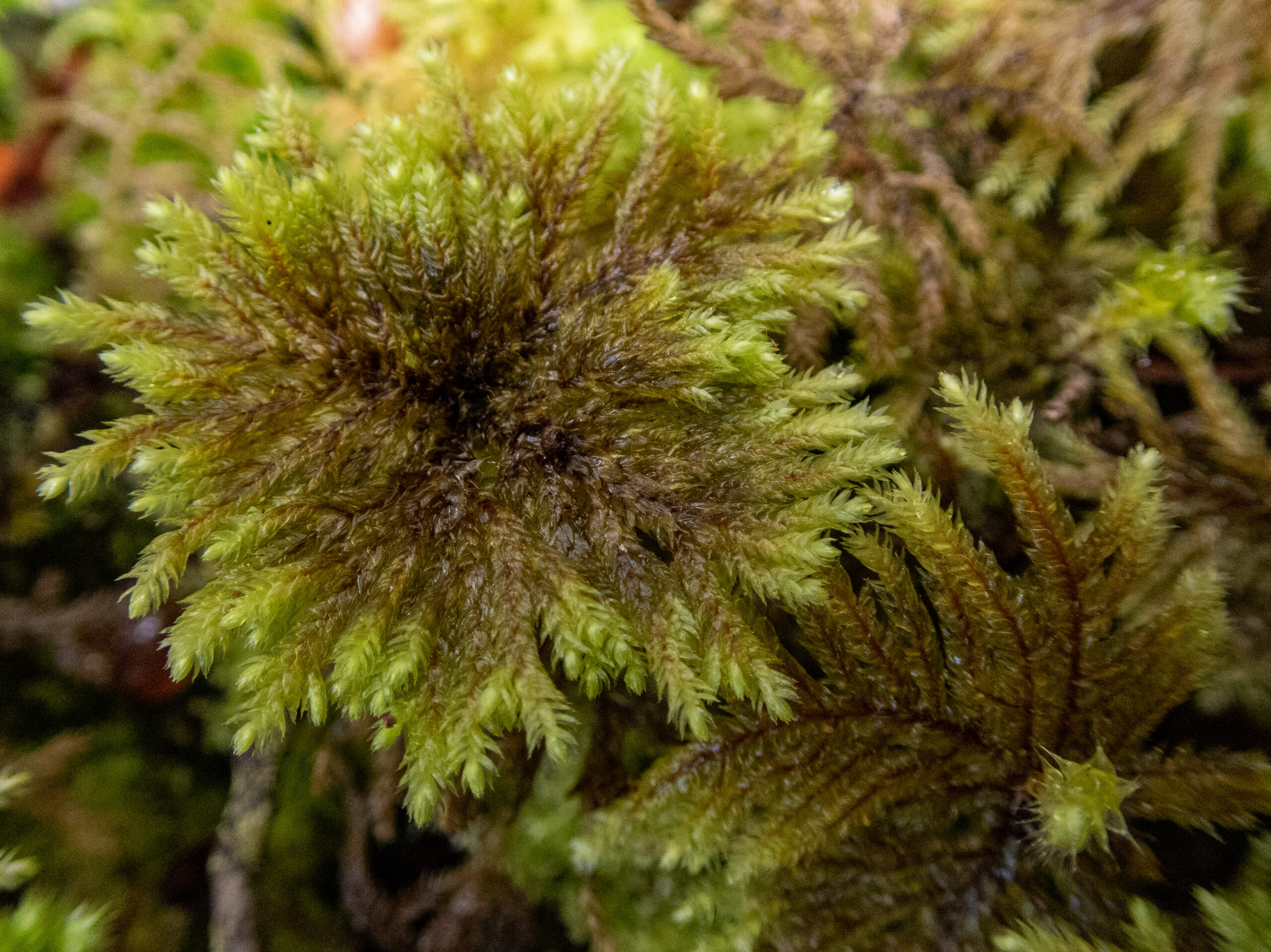
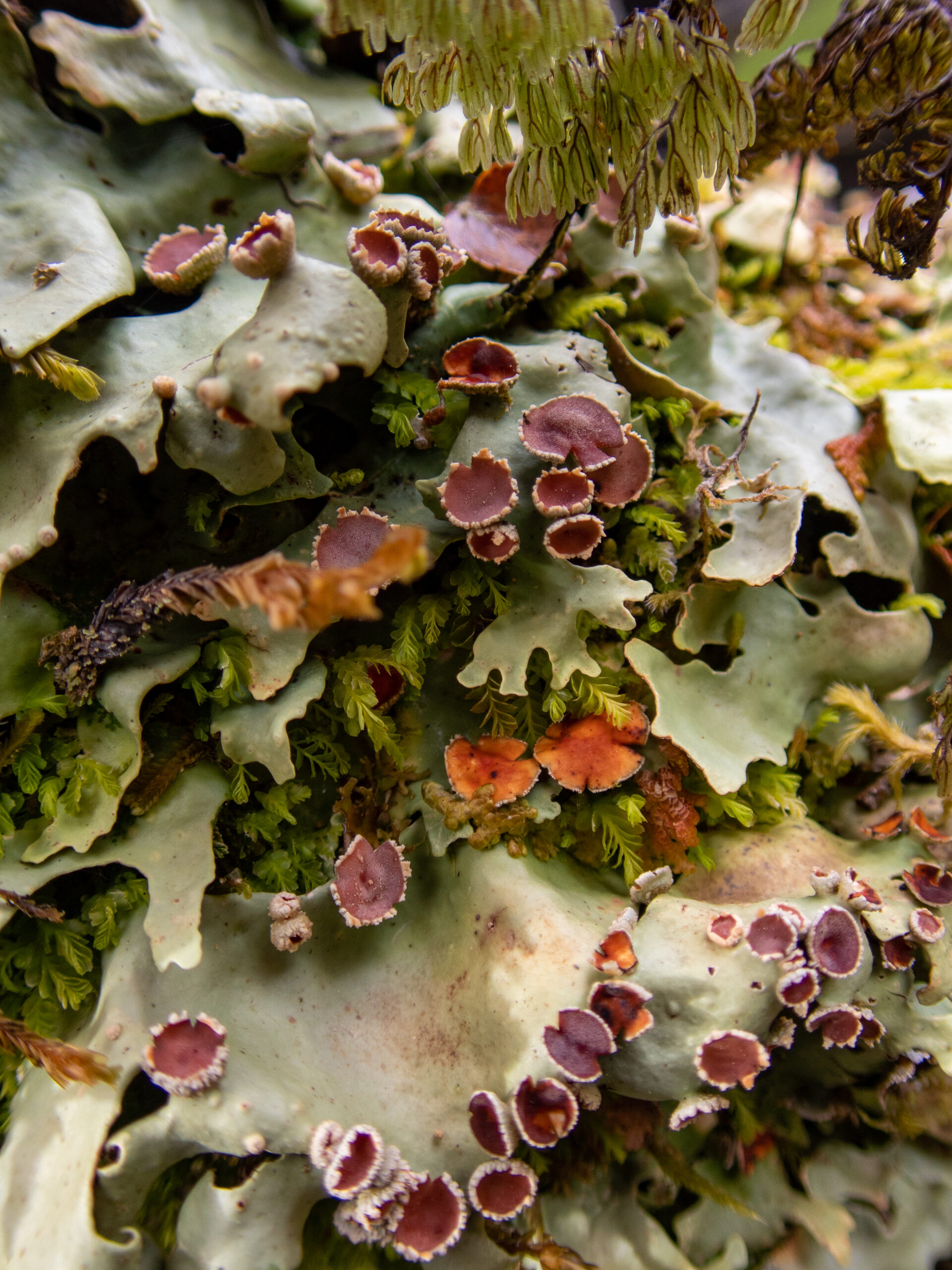
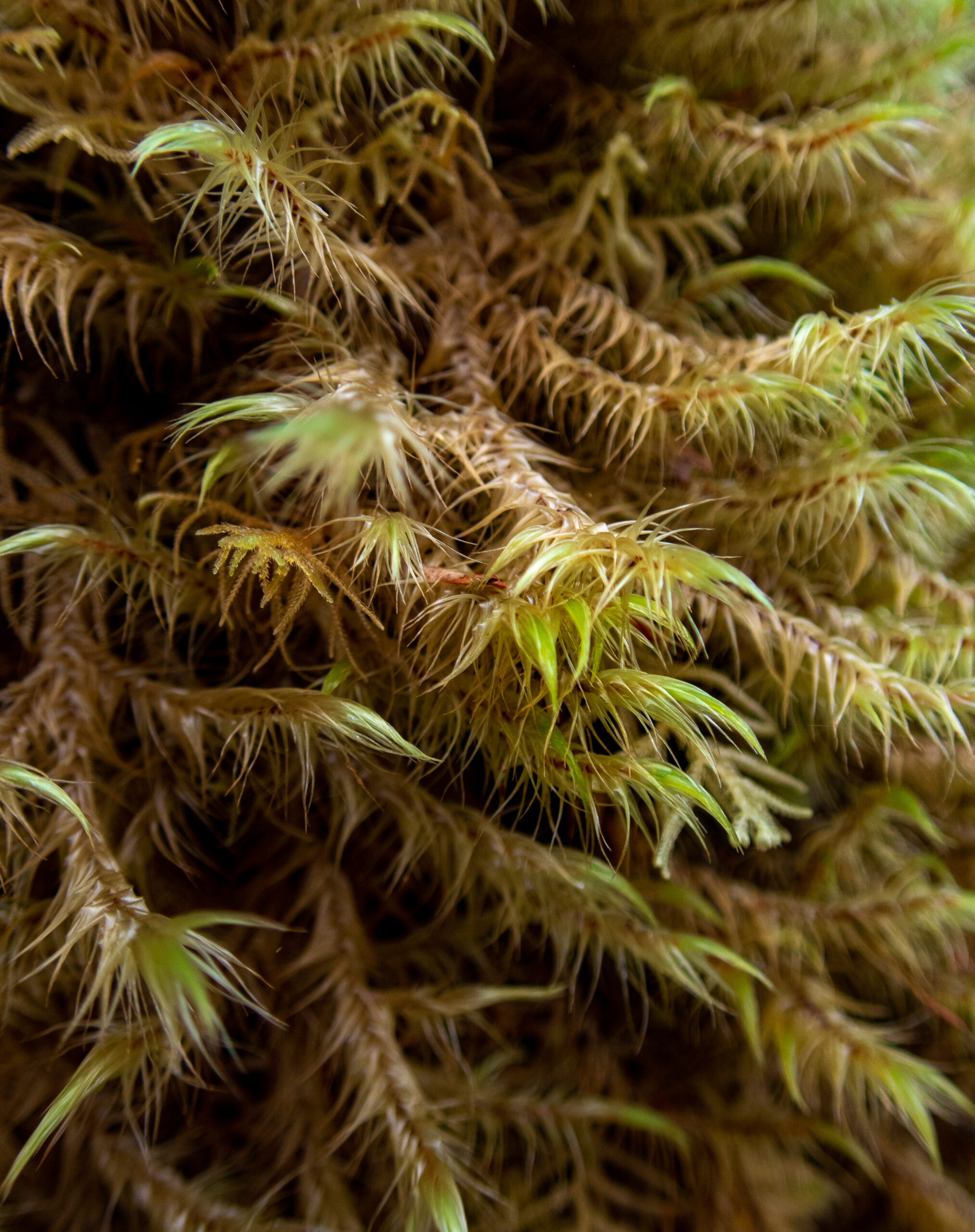
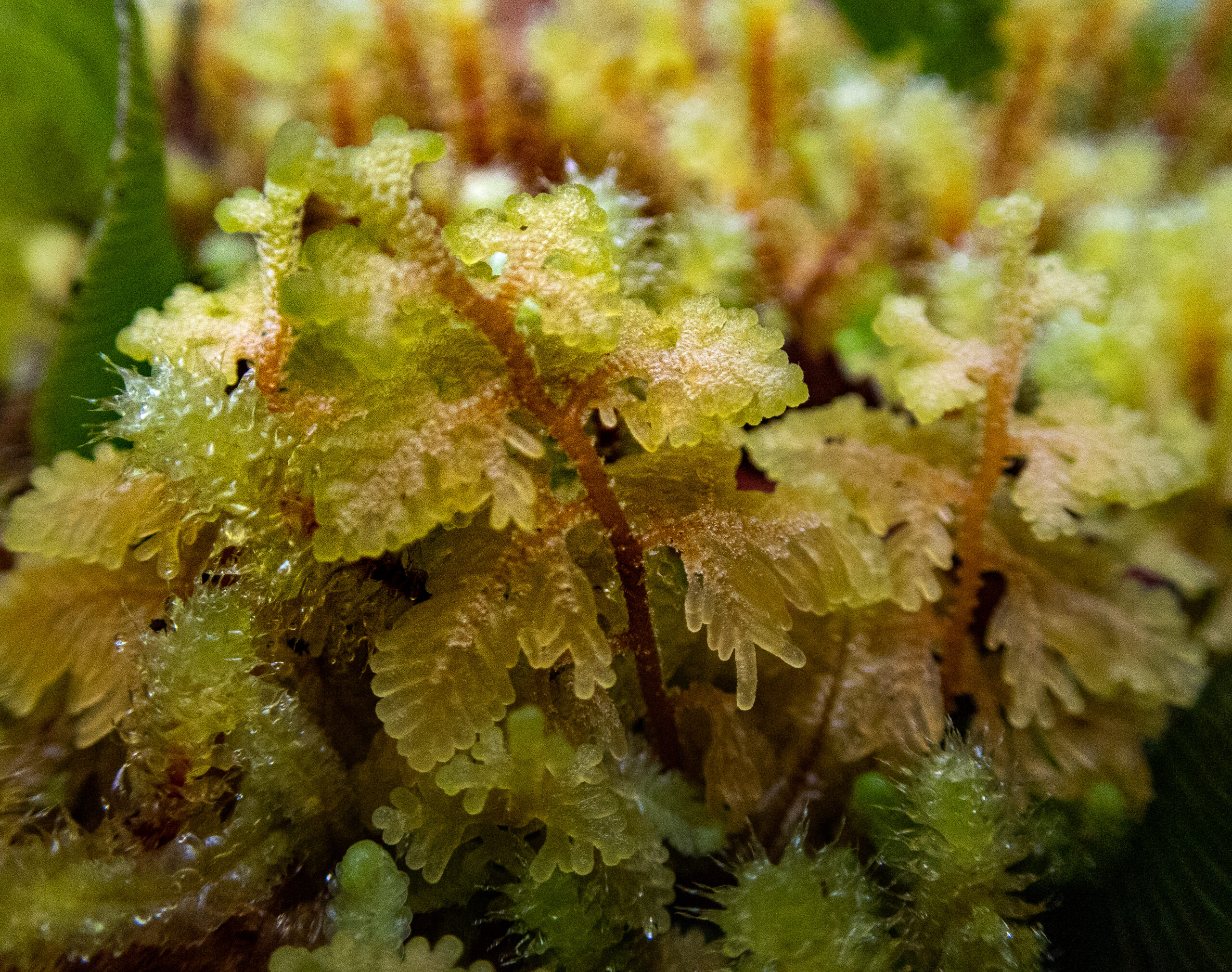
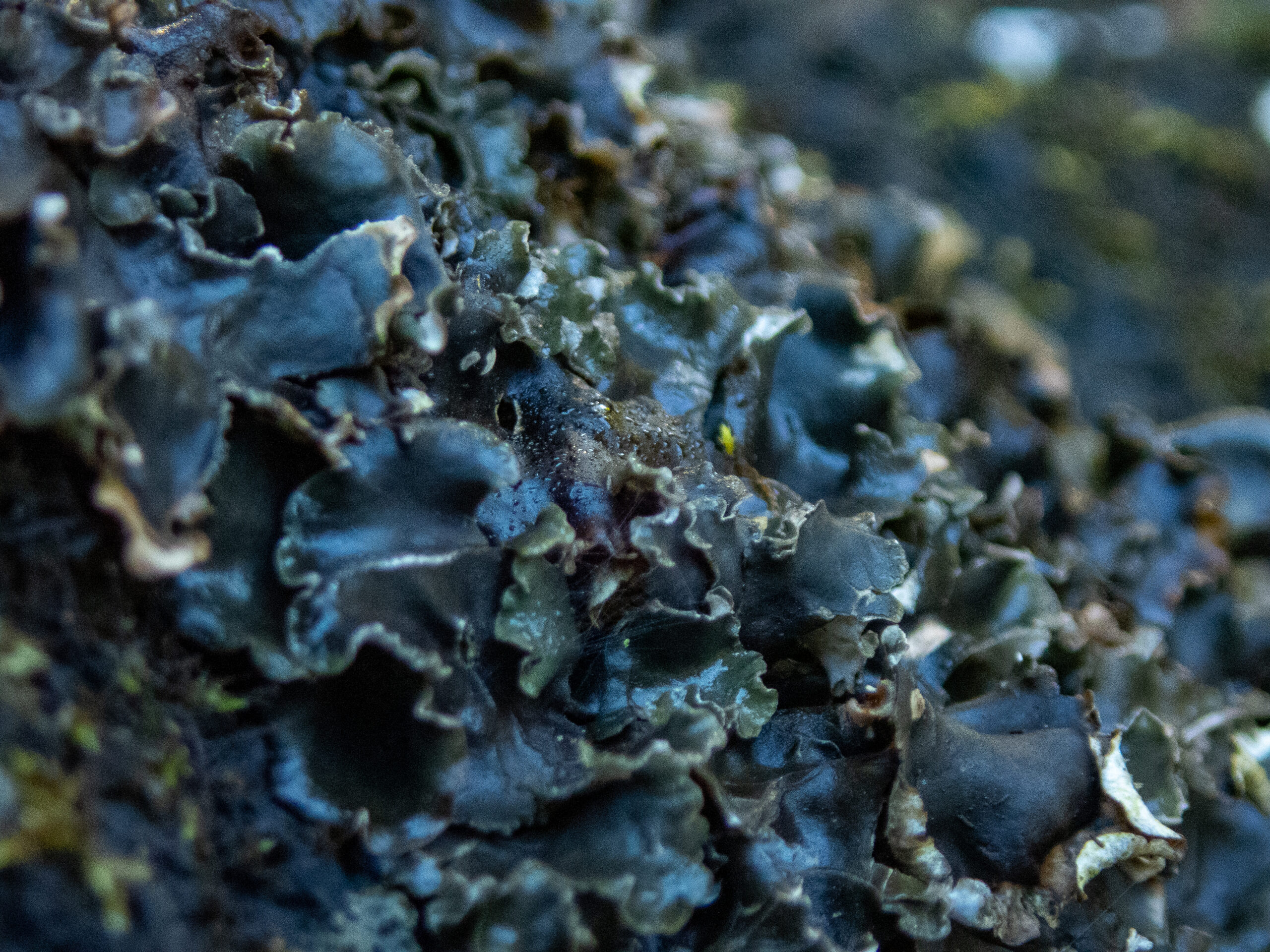
One version of an Umbrella Moss.This whole area had a playful feel about it. I took a million pics, very sprite like and Marcus had the good sense to keep track of how we were going to actually make our way back to Allora. Gratitude on all counts.Sticta Coronata.
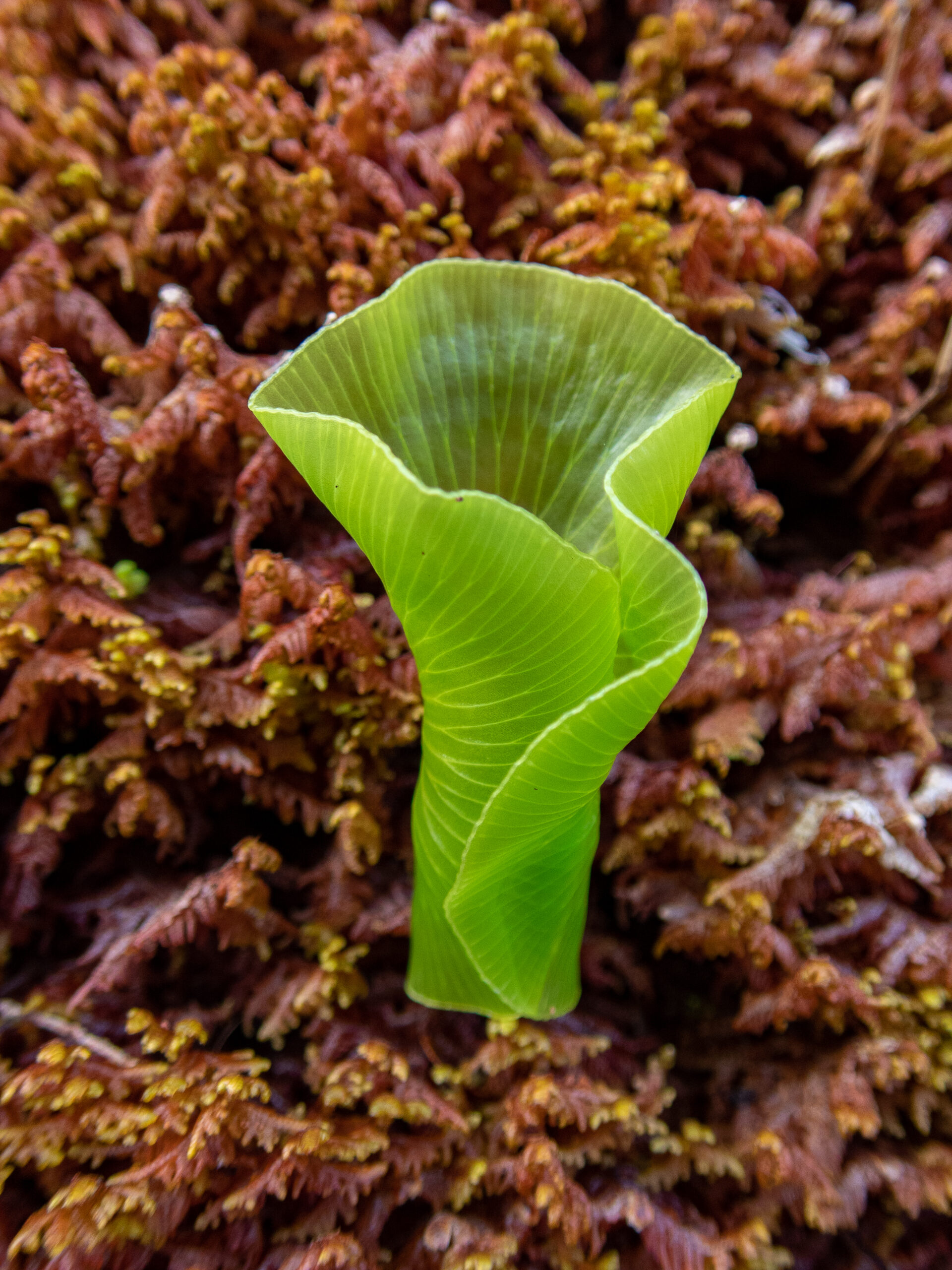
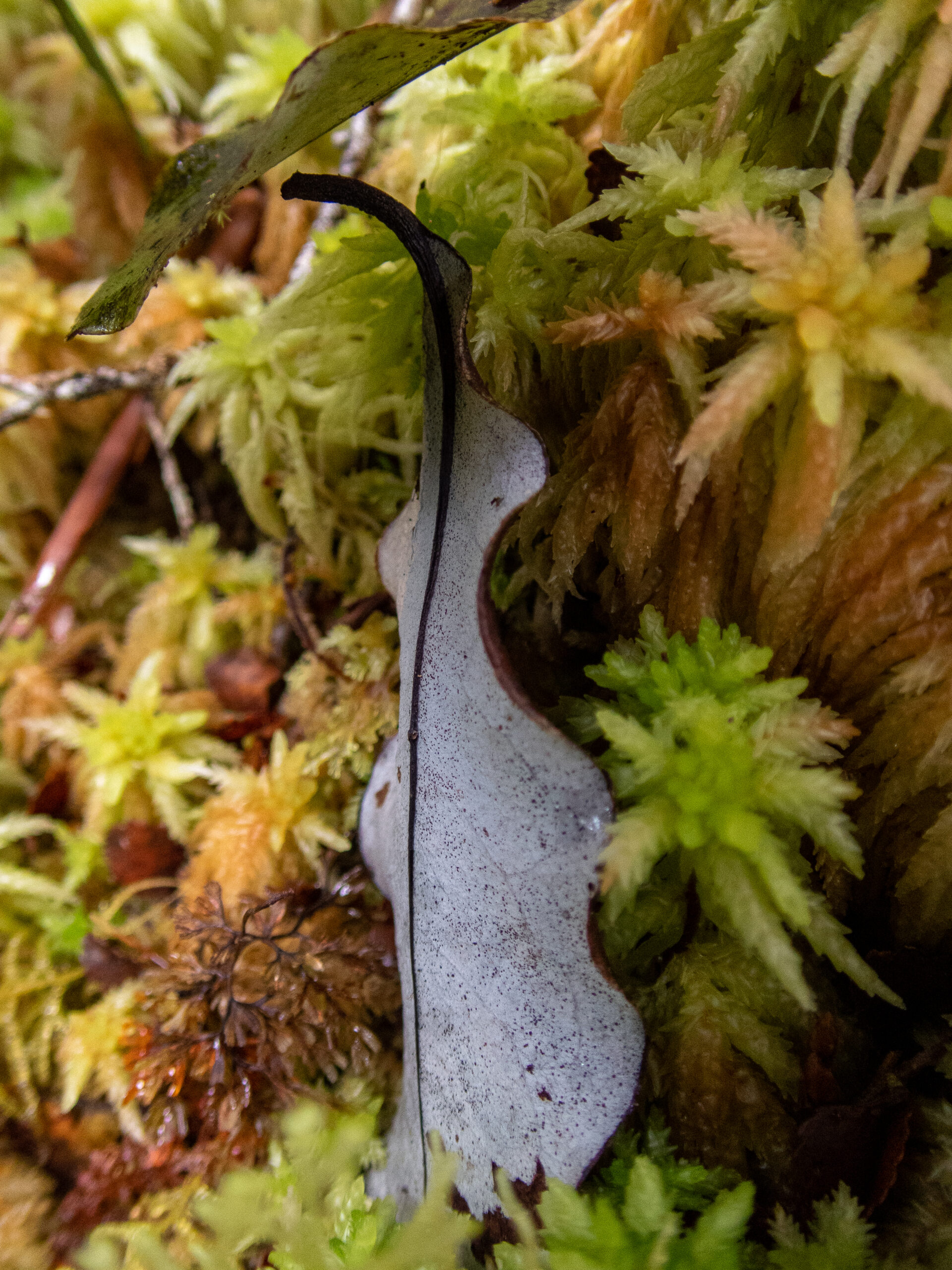
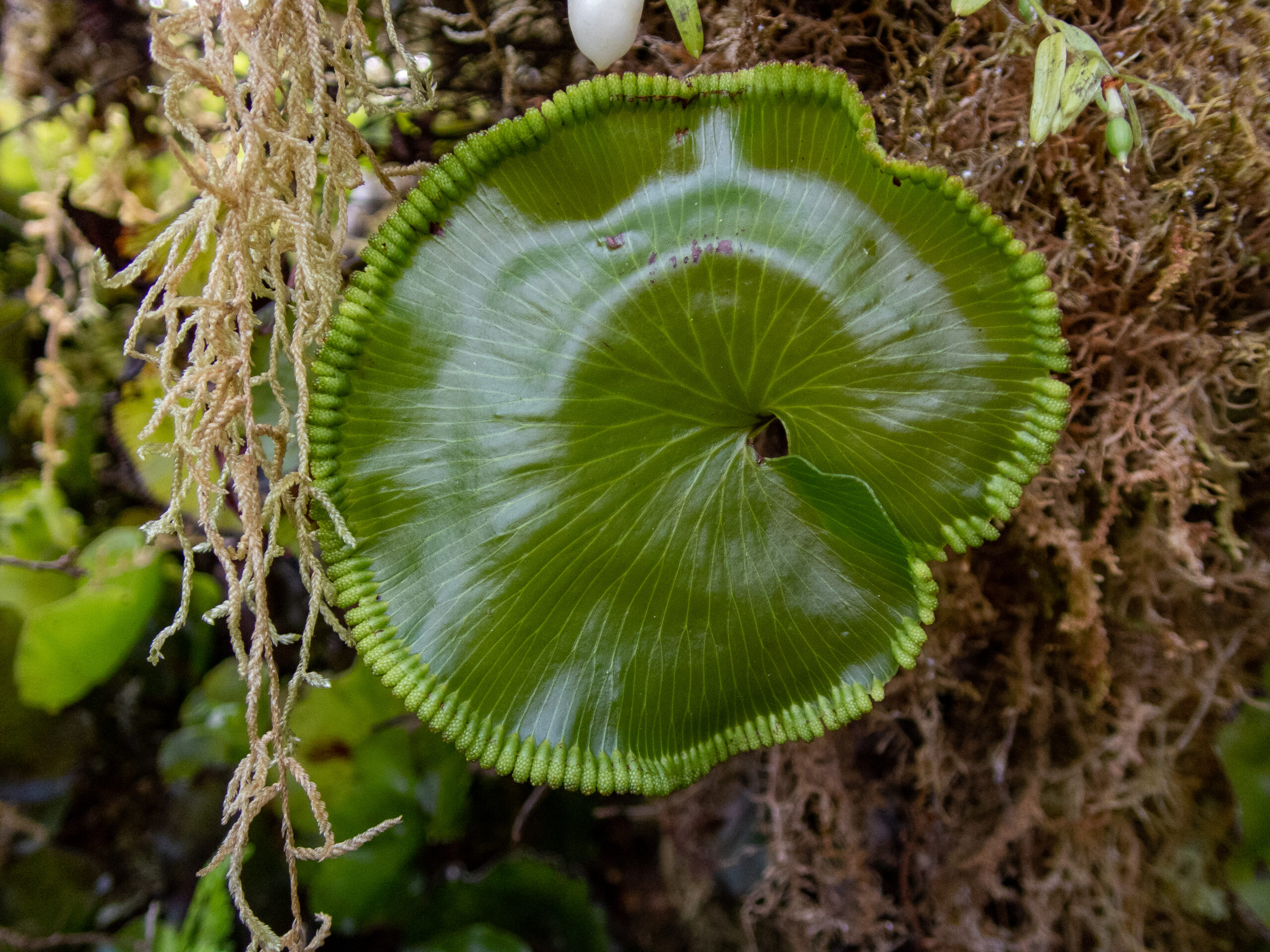
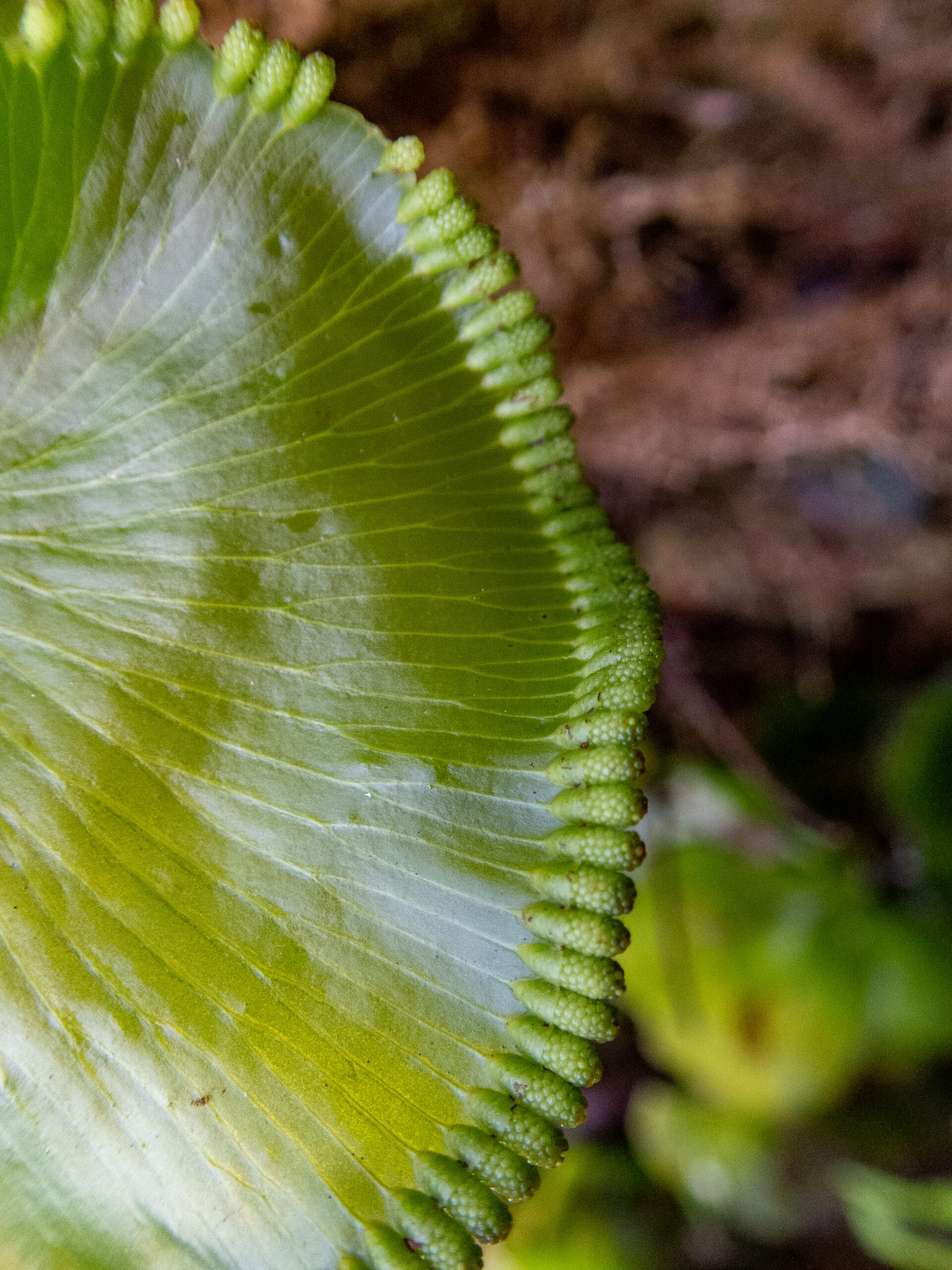
Dr. Seuss landA cello leaf.Peace.
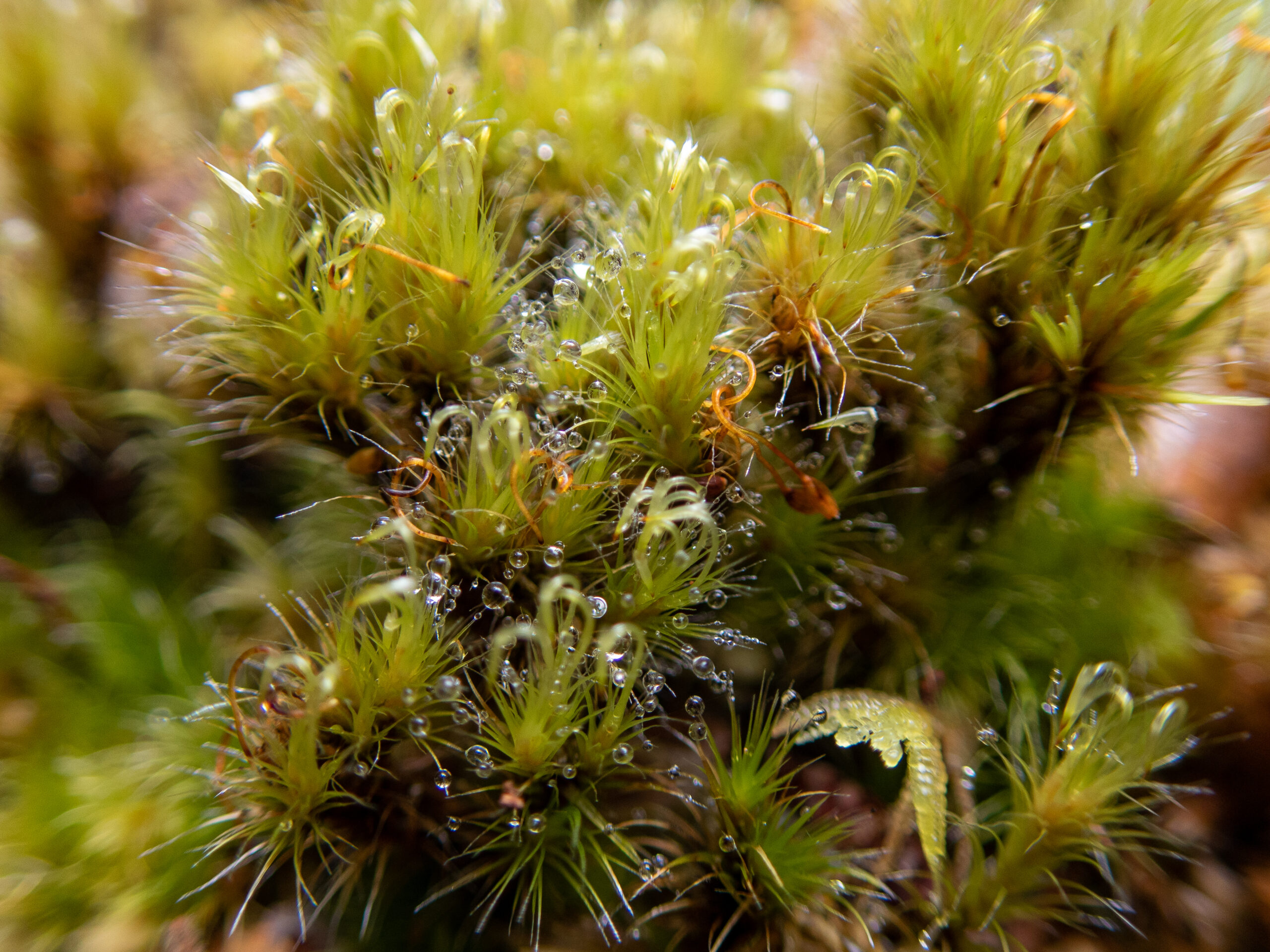
NEED to put these in my INaturalist/ISeek app to find out what they are, besides so wonderful?!Clever seed design!
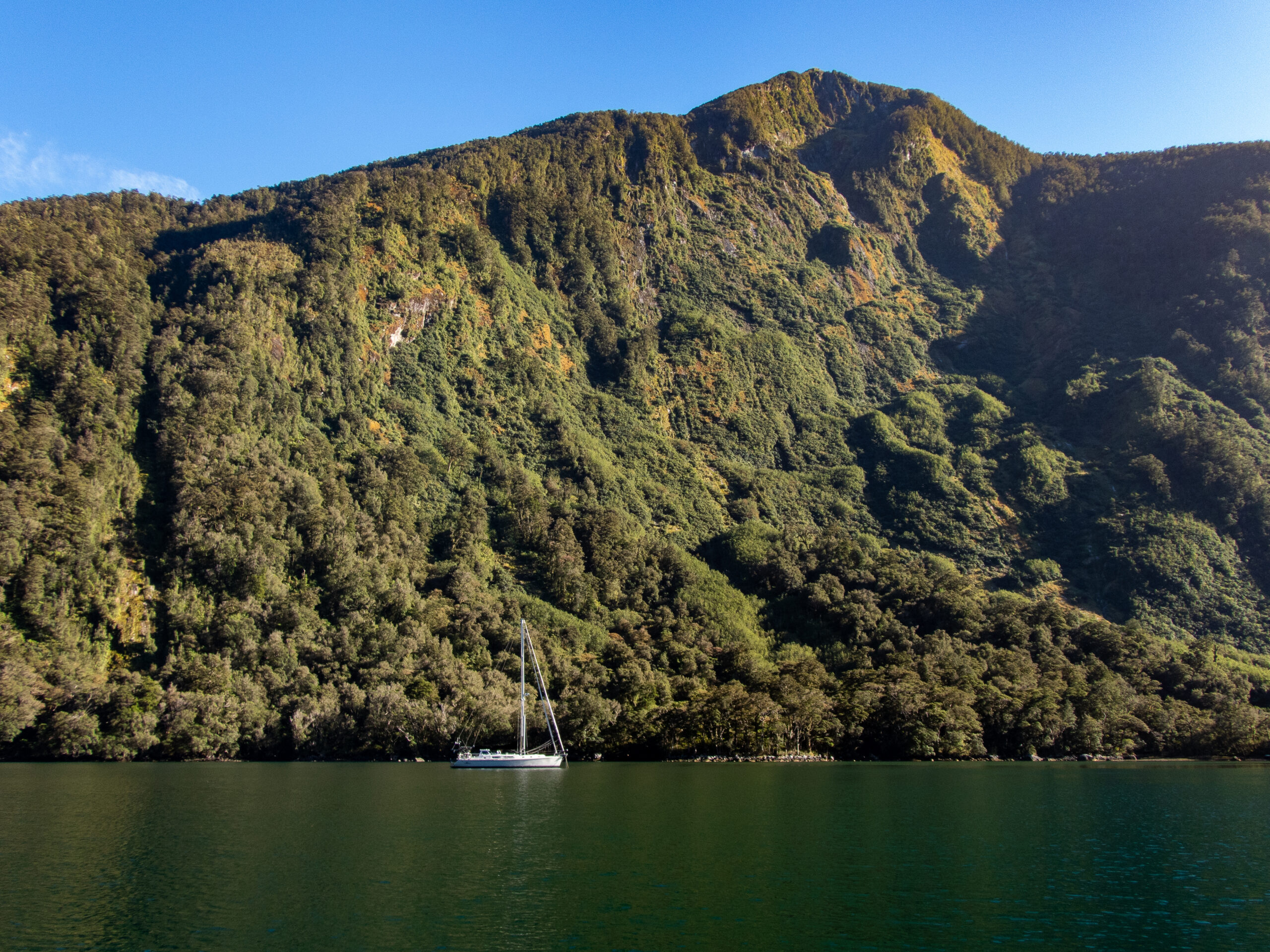
Allora, free swinging in deep water, but staying put, thank goodness! (Imagine leaving your home for the afternoon and wondering if ‘she’ll’ still be there when you return?)
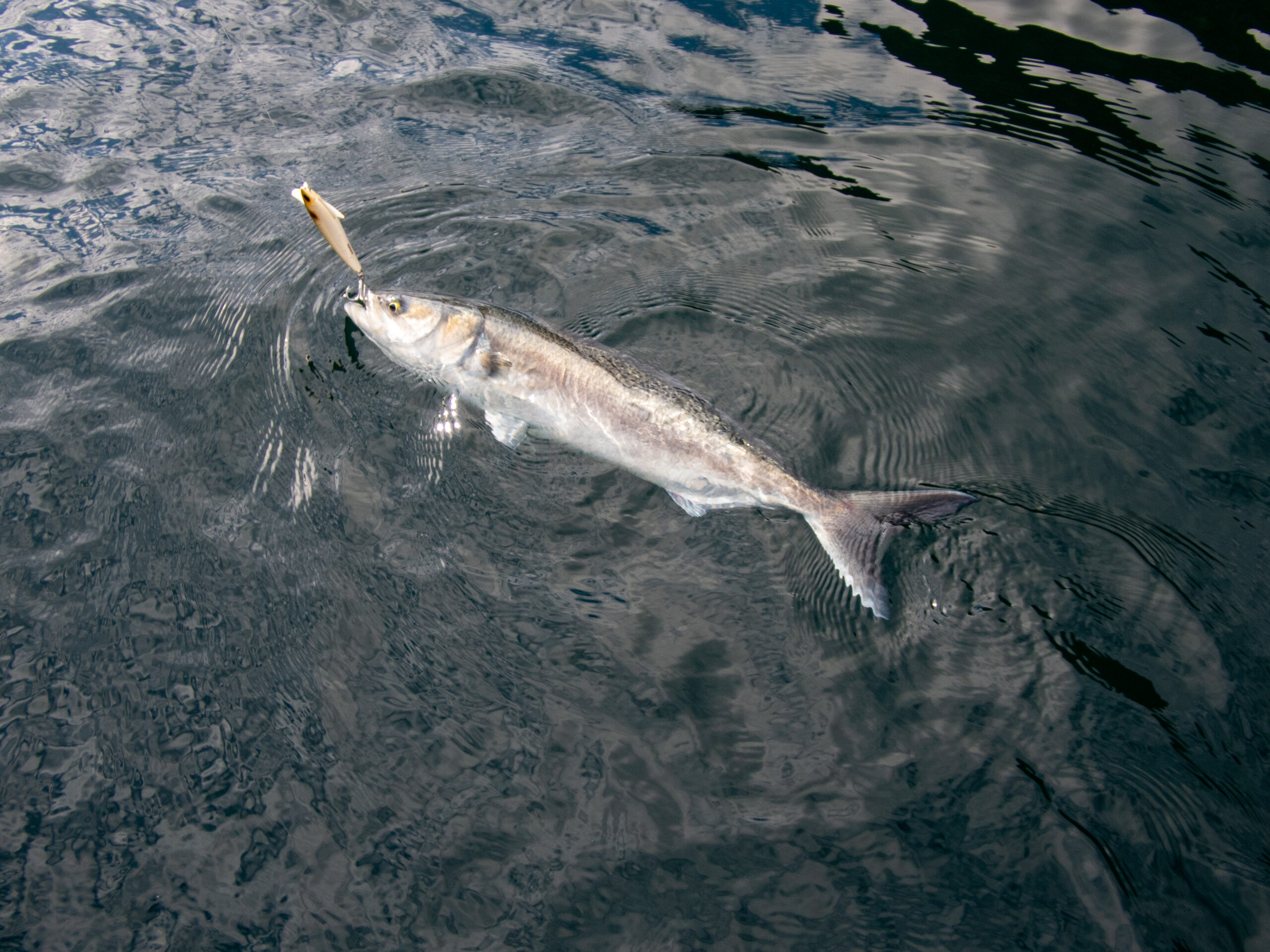
Kahawai
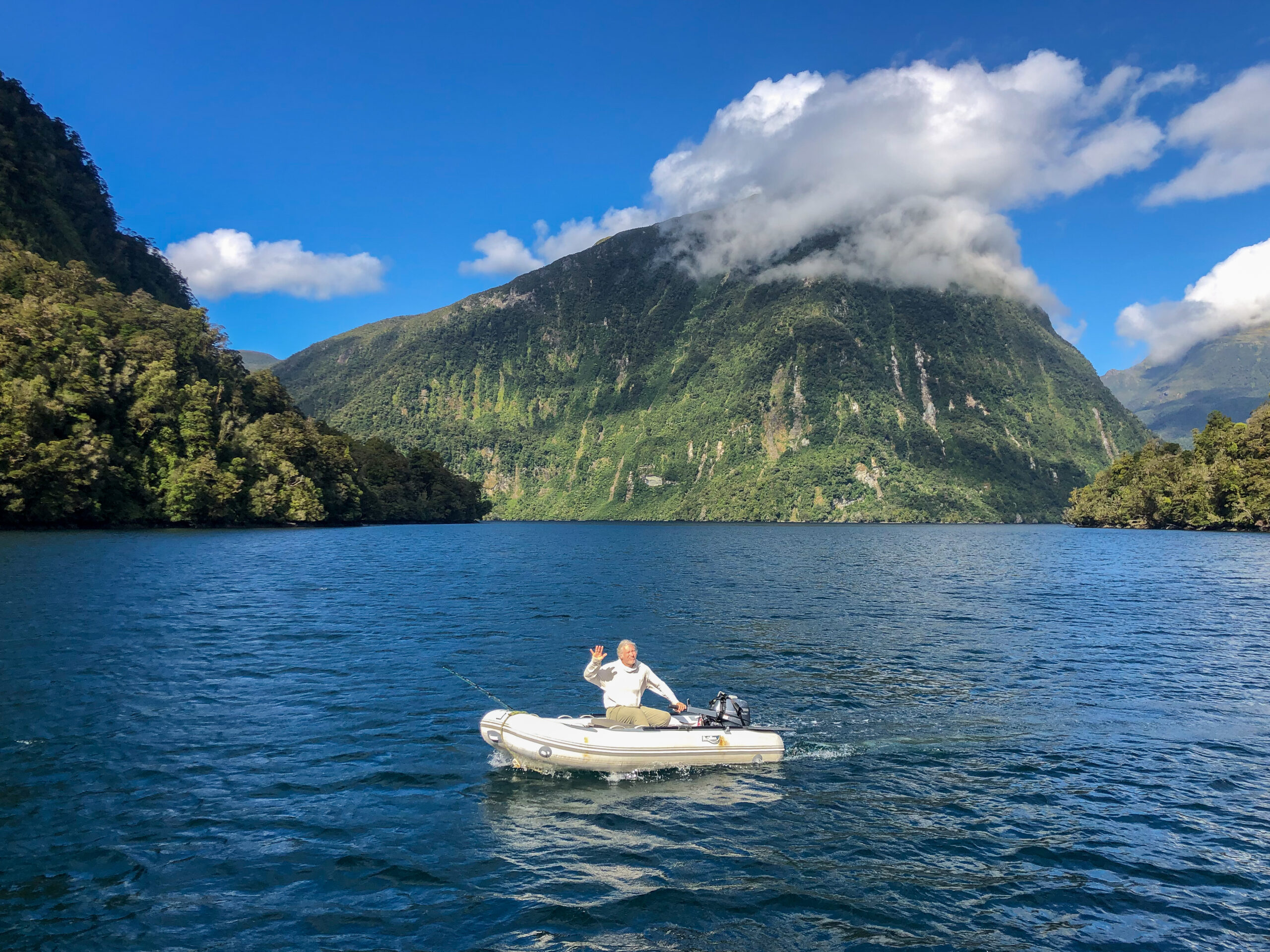
It seems to be an autumn thing that massive schools of Kahawai, Kingfish, and other predators chase the baitfish up to the heads of the sounds and gleefully spend their days slashing and crashing and feasting upon them. It starts at dawn and continues until dark. At completely unpredictable moments the water will suddenly boil with feeding fish only to disappear within a few moments. The first Kahawai I caught was with a spinning rig, which is well suited for frantic Hail Mary casts into the abyss. I will admit that catching that fish was closer to an accident than anything premeditated. One fish nearly chased the lure right into the boat. As we traveled through the fiords, the fairly constant surface action was nearly impossible to ignore, and sometimes the predators would use the boat to trap the bait and Allora would find herself at the center of the melee. Finally, at the head of Daag Sound I couldn’t stand it anymore; I rigged my 8 weight and propped it next to the dinghy ready to go at the next irresistible provocation. What ensued was pure madness. The fish would pop up, I would zoom over with the outboard roaring, then kill it as I coasted in, frantically start casting and get maybe one quick retrieve before the fish disappeared. As I zigged and zagged across the fiord, I’m probably lucky that we were certainly the only people then in Daag Sound so that no one arrived with white straight jacket and concerned expressions to intervene. Back and forth I dashed, tangling myself in my line, frustrated at the utter futility of stripping the fly back with the dinghy still moving forward. Once every tenth attempt, everything would work out, I’d even get in a second or third cast, and manage to get my fly to move fast enough to get some attention, and a slash maybe, a miss and back to the frantic game. I was exhausted and my shoulder was on fire by the time all of the crazy variables aligned and a willing fish slammed my fly and headed straight for the bottom of the Sound. The seriously outsized strength of that fish made me instantly regret picking my lighter 8 weight over my sturdy 9. In fact, I was pretty sure I was going to break the rod. What a relief it was to release that fish and release myself from any future notion of fly fishing for Kahawai. A River Runs Through It, it was not. ~MS
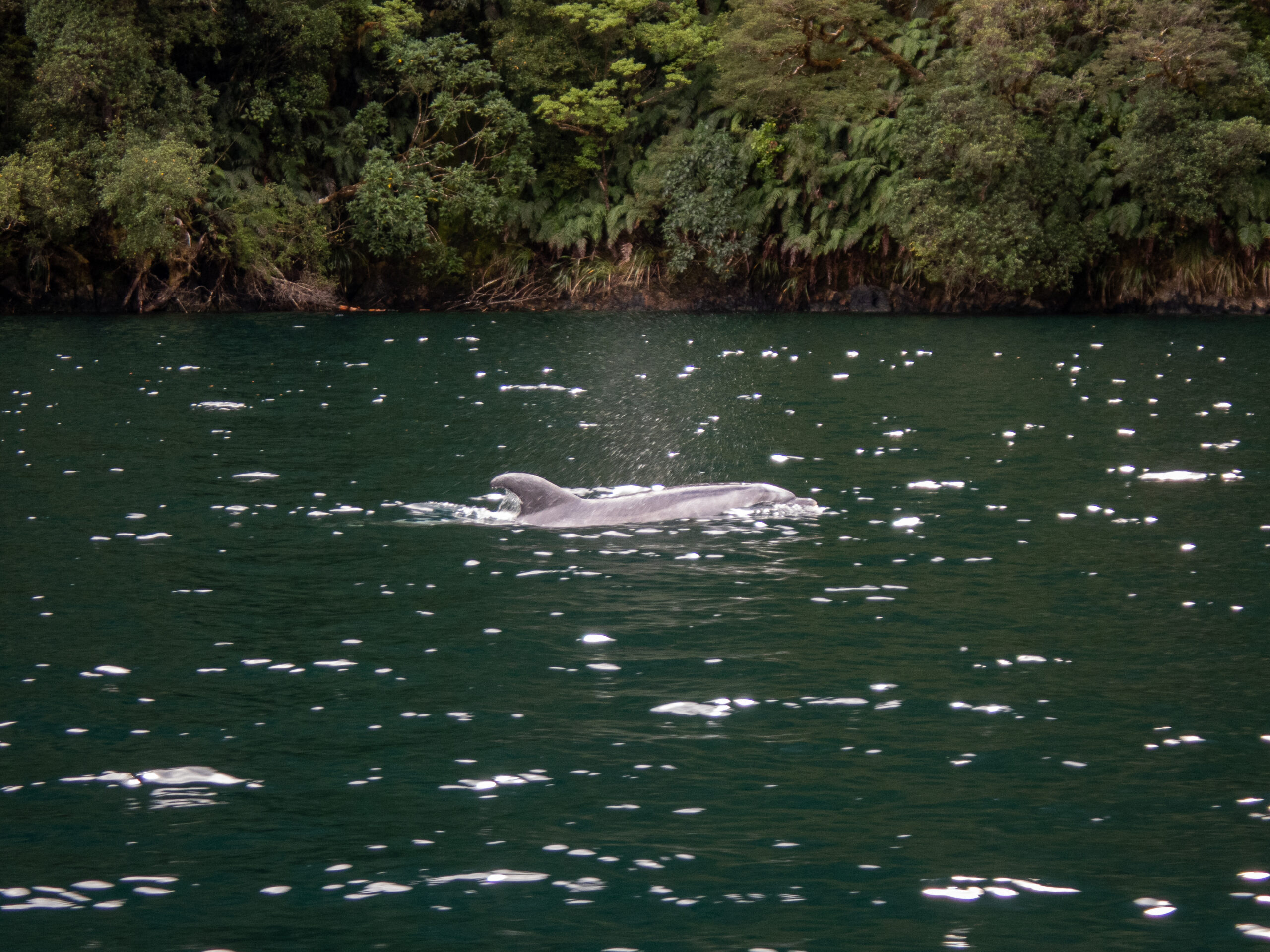
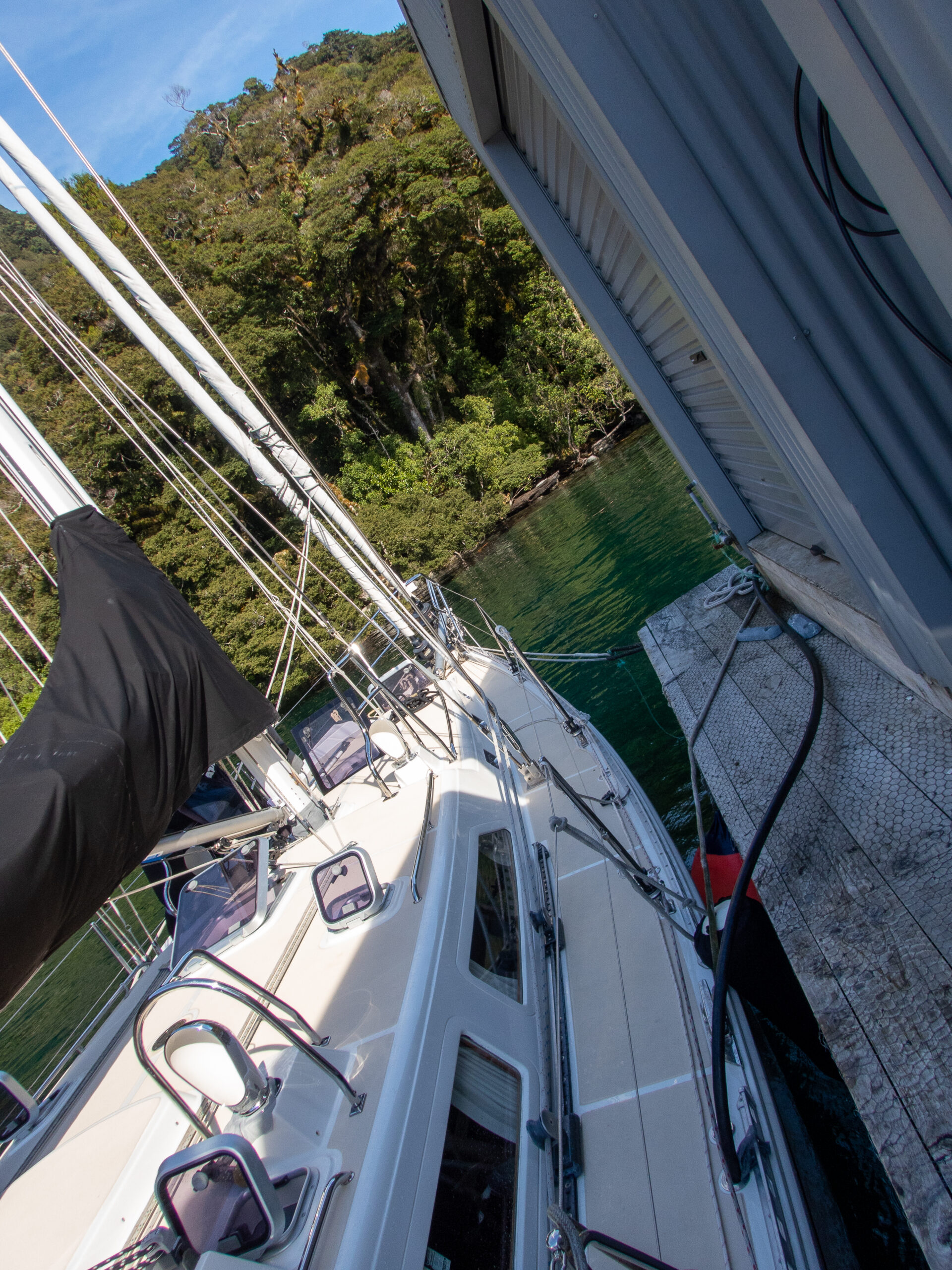
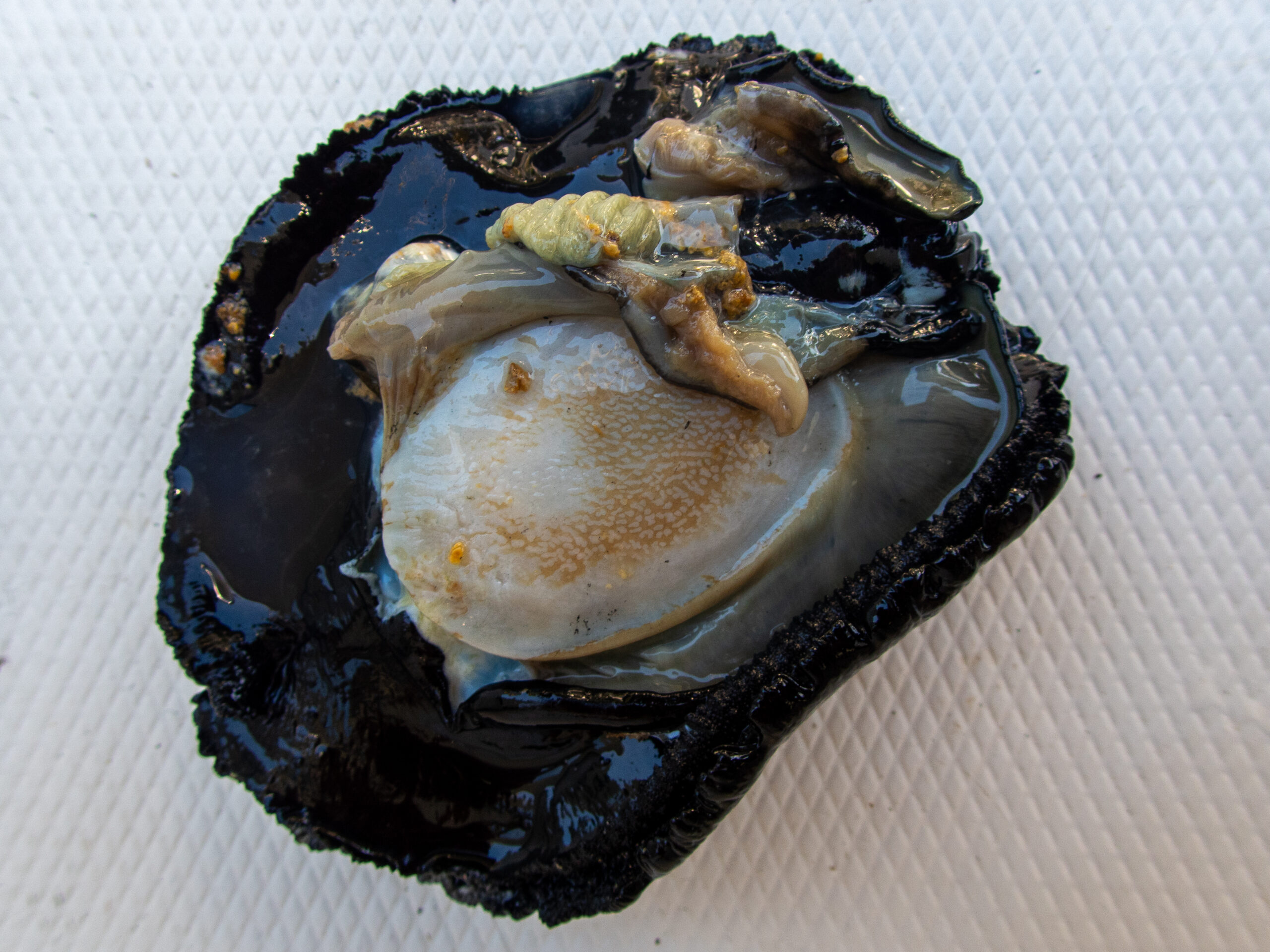
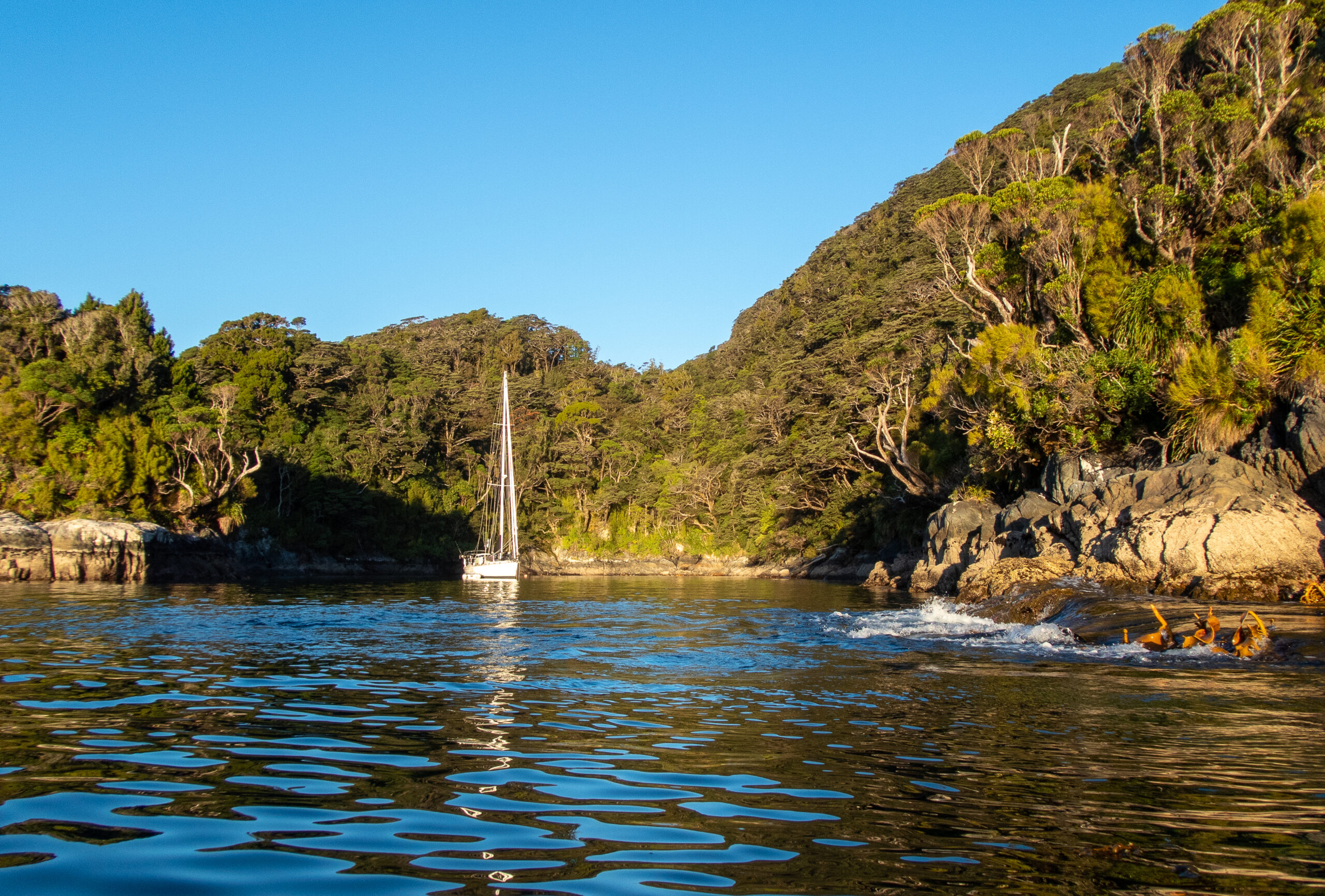
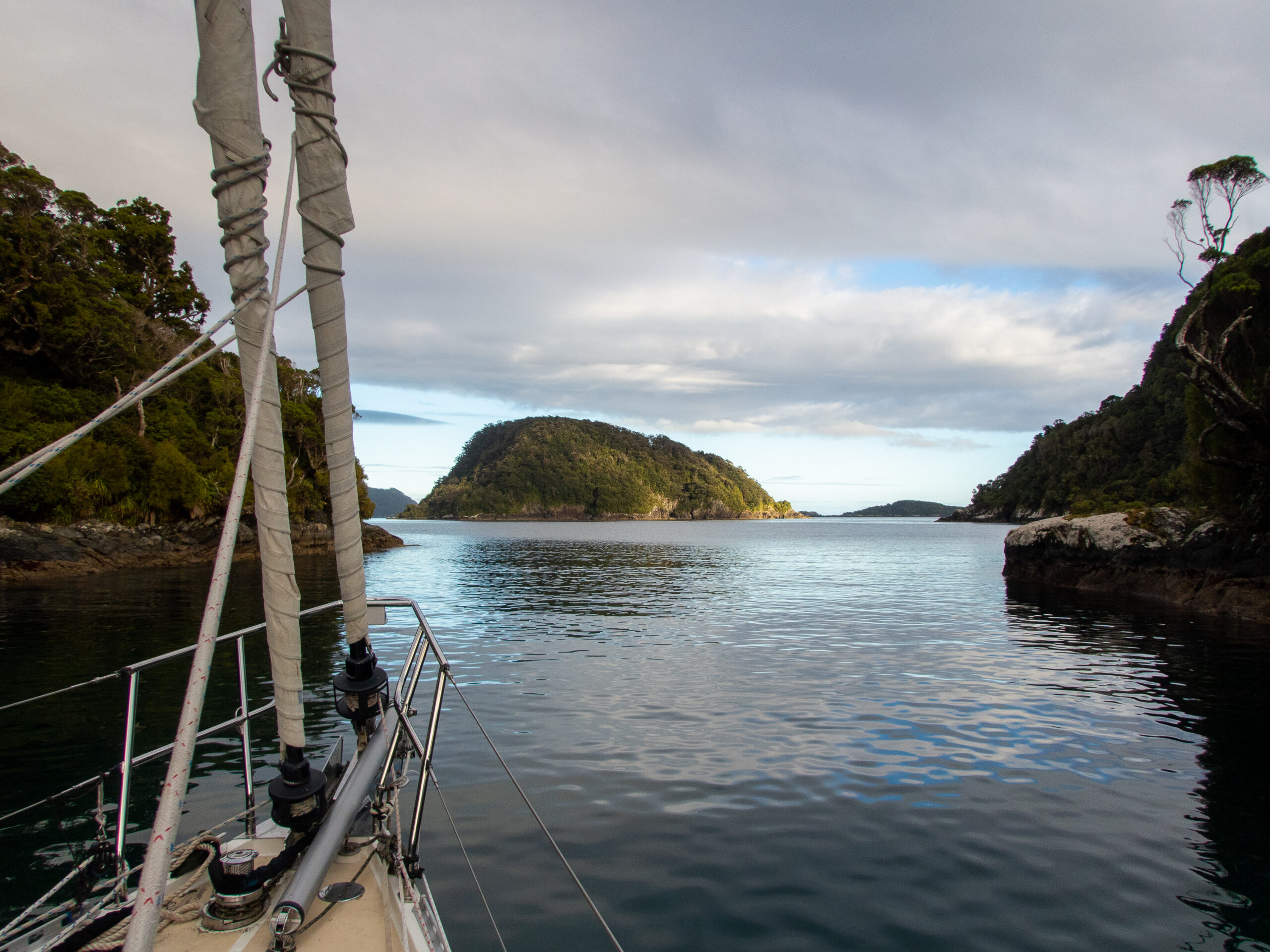
We let this Kahawai go since at that point, we weren’t even sure what it was! Turns out it would have been within regulation size to keep, but we already had a dinner plan in place and it always feels good to release them.Cityscape in the rocks (a bit dystopian).And mountains, too!One lone dolphin came cruising through the anchorage and did a rather quick loop around us. We kept thinking there must be two because he’d go under and then come up much farther along than we’re used to seeing, but we never saw more than the one.Moving from Third Cove to Stevens Cove!We stopped to fill up Allora’s water tanks at a little floating hut which is used by fishermen during the season. Our watermaker worked fine in this mix of fresh and salt, but it’s always nice to get quick, free fills.Another (power) boat queued up for a water fill after us so we got to talking and they shared a small Pāua (abalone) which they’d just harvested and described how to prepare it. I read that there’s a place in Hong Kong where they charge $2k per person for a Fiordland NZ Paua dinner! It was ALOT of work and yielded very little to massage this muscle into a source of protein! It would have been at least 5 years old.The name wasn’t the only thing compelling about Stevens Cove. It was super close to the entrance/exit of Breaksea Sound, so we’d be poised for a quick transit up to Dagg Sound when ready. The only thing is that it’s such a tiny spot that we had to hope we’d fit in there! The opening can barely be seen in this picture near the turquoise water.It was our trickiest maneuvering/anchoring to date, but we settled in to our little namesake anchorage quite sweetly. This is normally used by power boats/fishermen since it’s so close to outside and they squeeze 3 little boats in here.
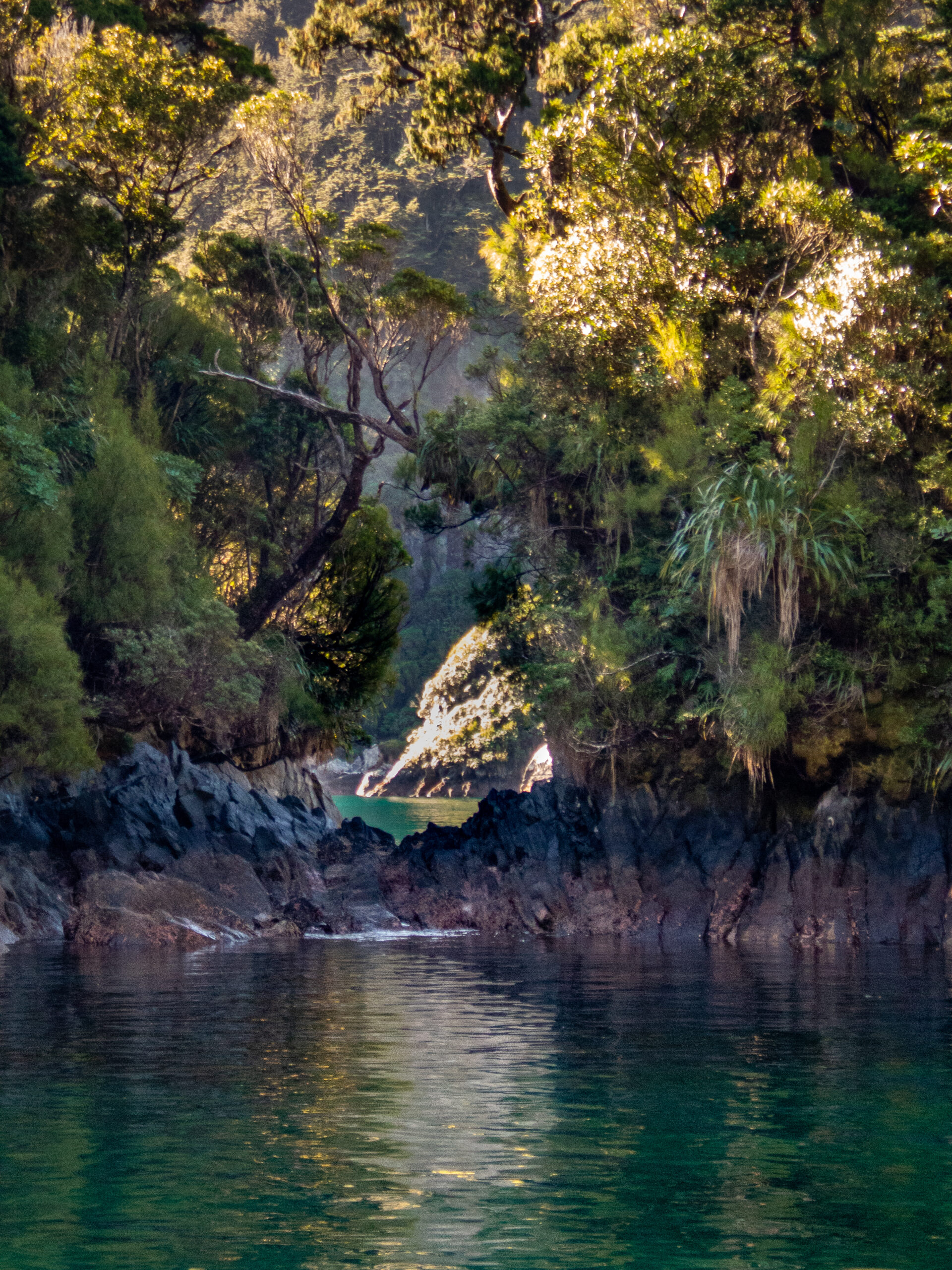
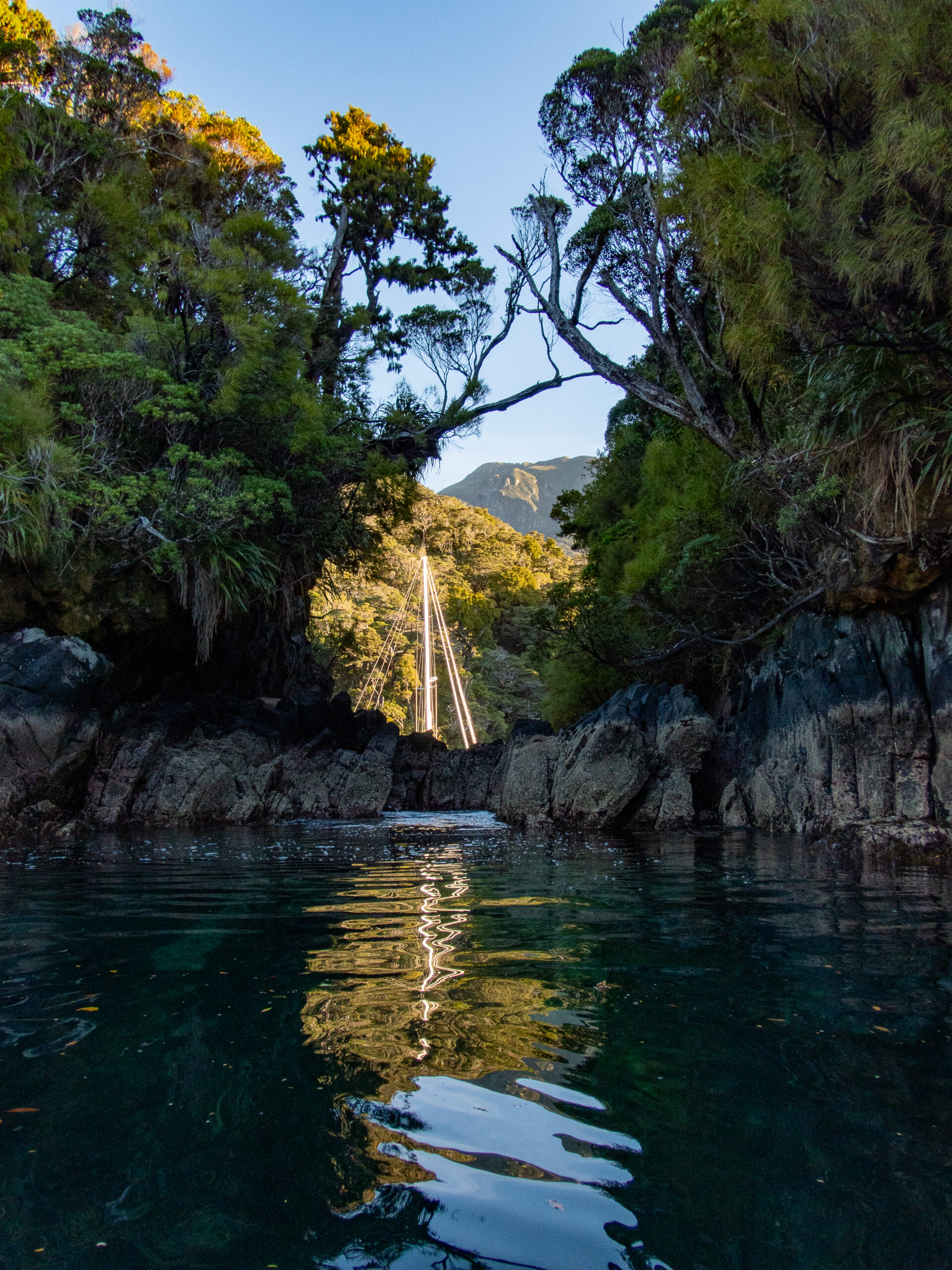
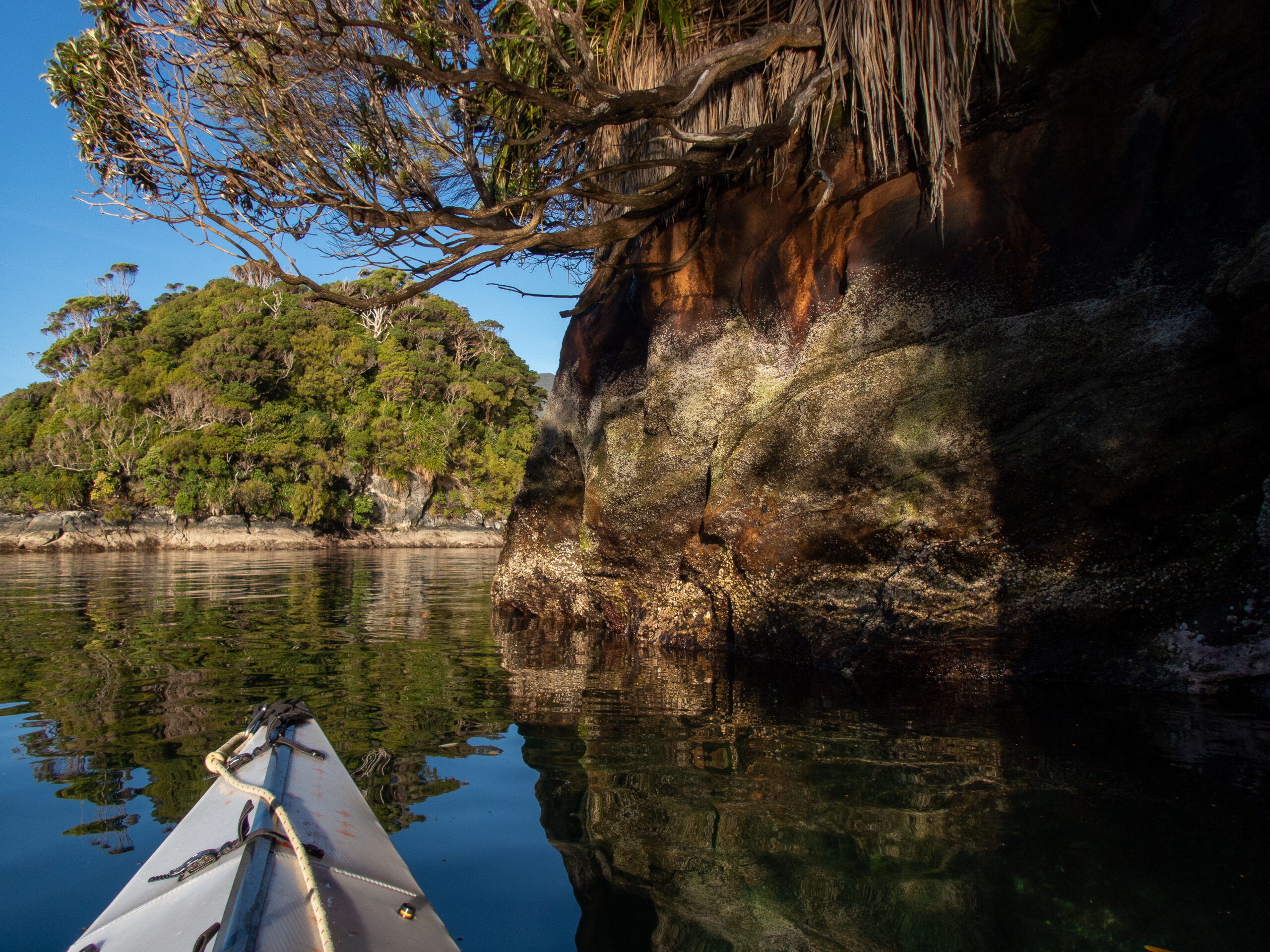
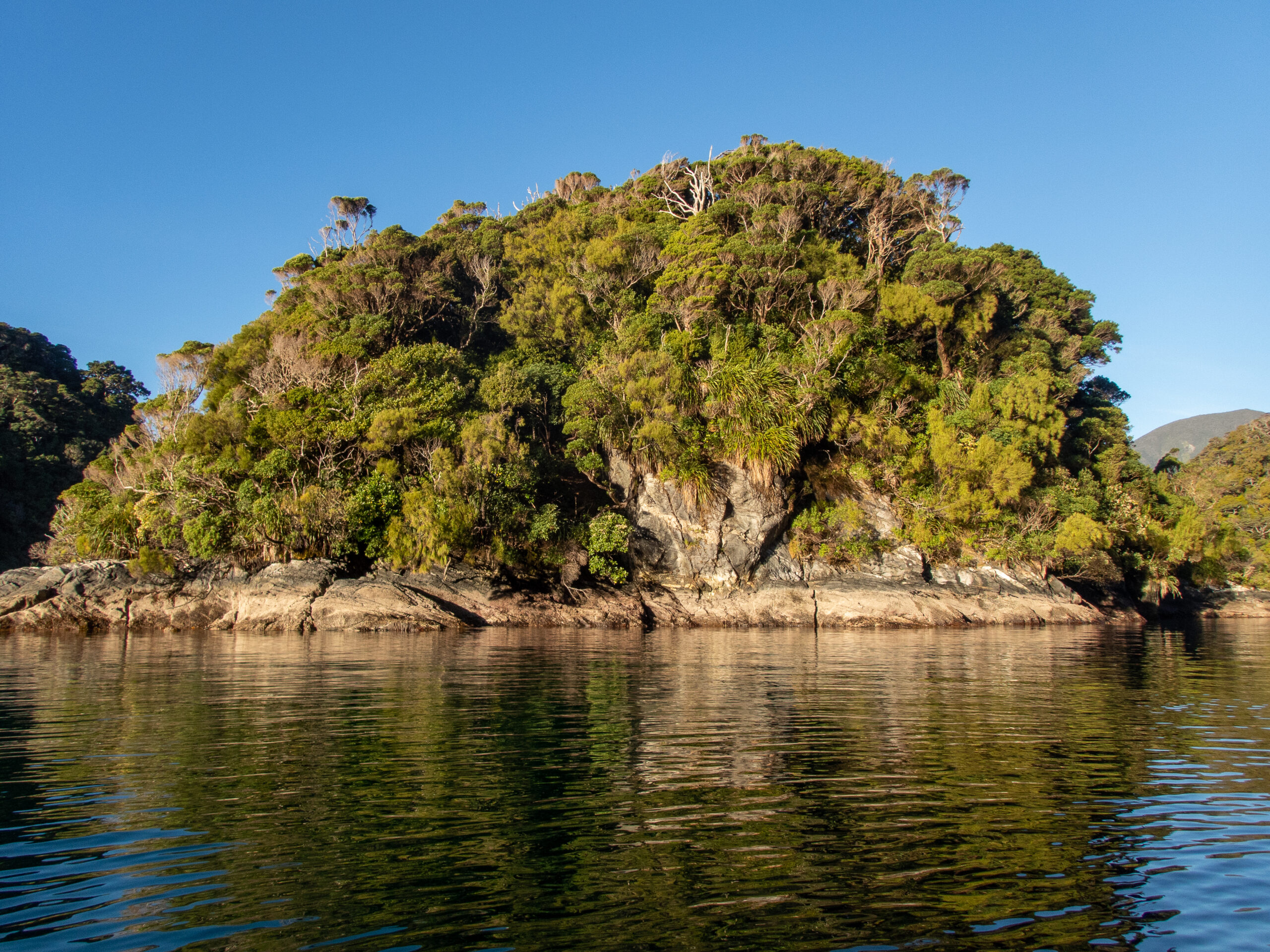
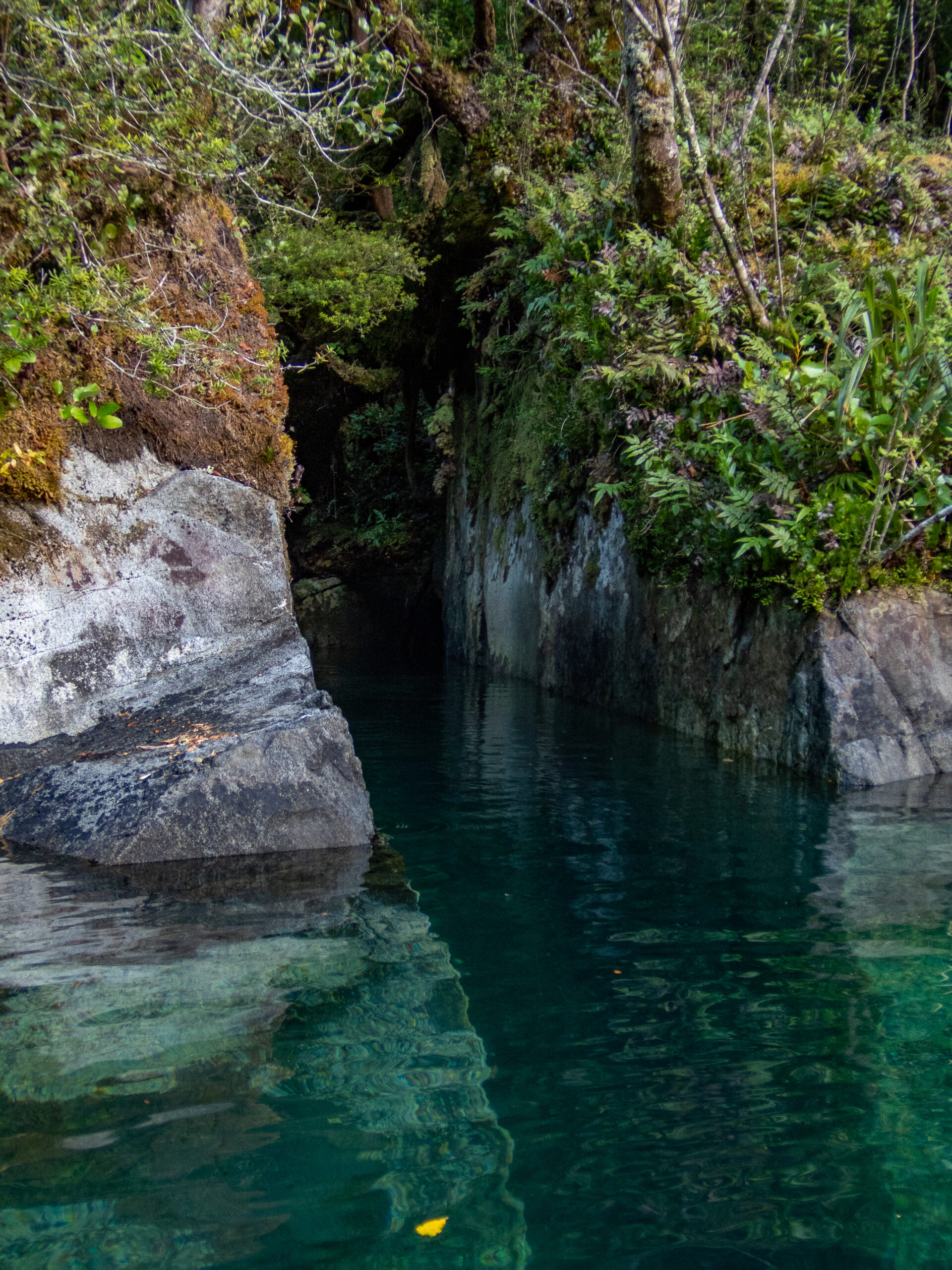
There were these two ‘keyholes’ inside Stevens Cove where you could see the main Sound which would cover over at high tide and I could squeeze the kayak through, theoretically, but my kayaking happened at lower tide, so no go.View of Allora from the Sound.Time to go check out the ‘archipelago’ of nearby islands!New forms to take in!
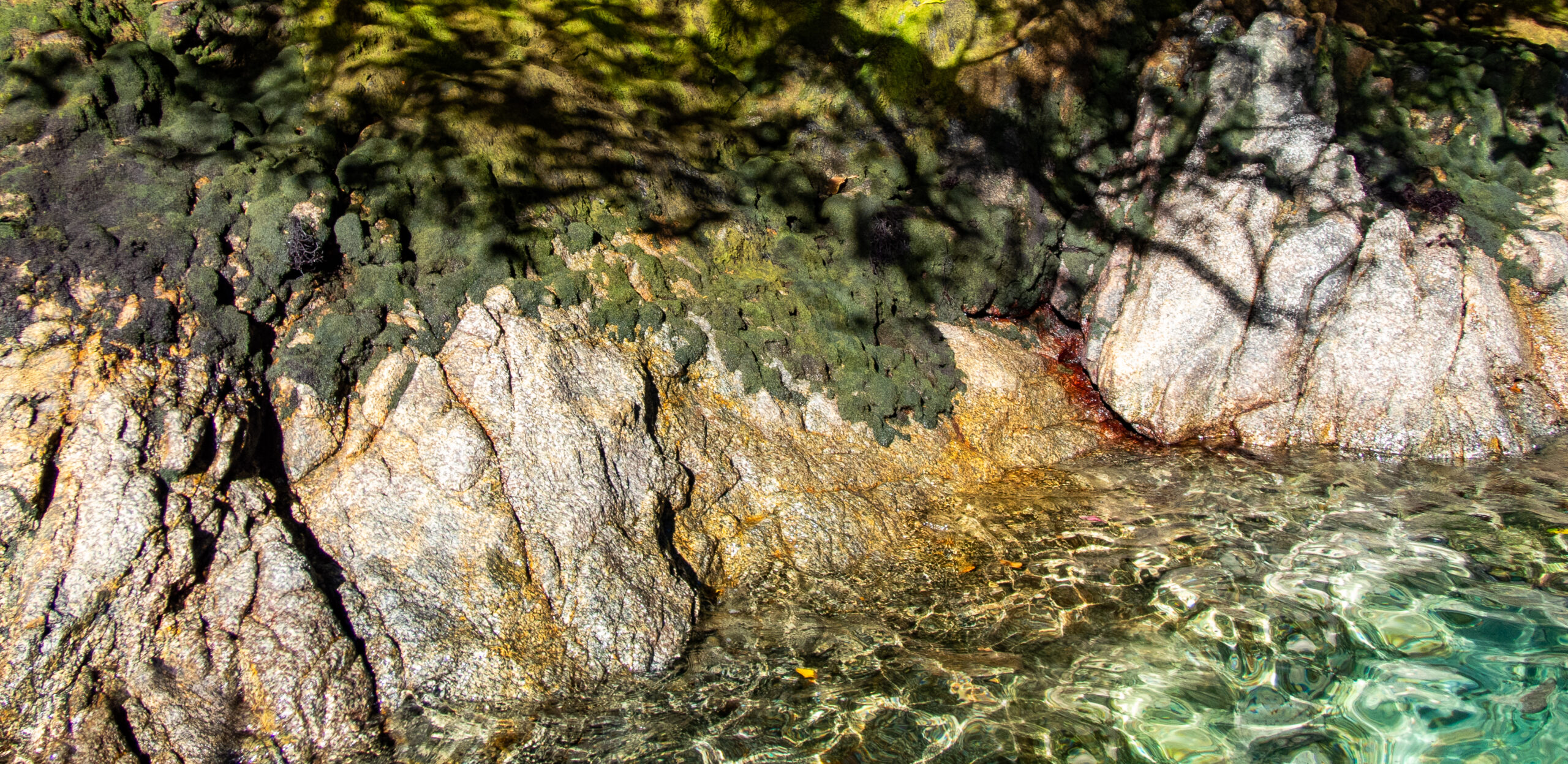
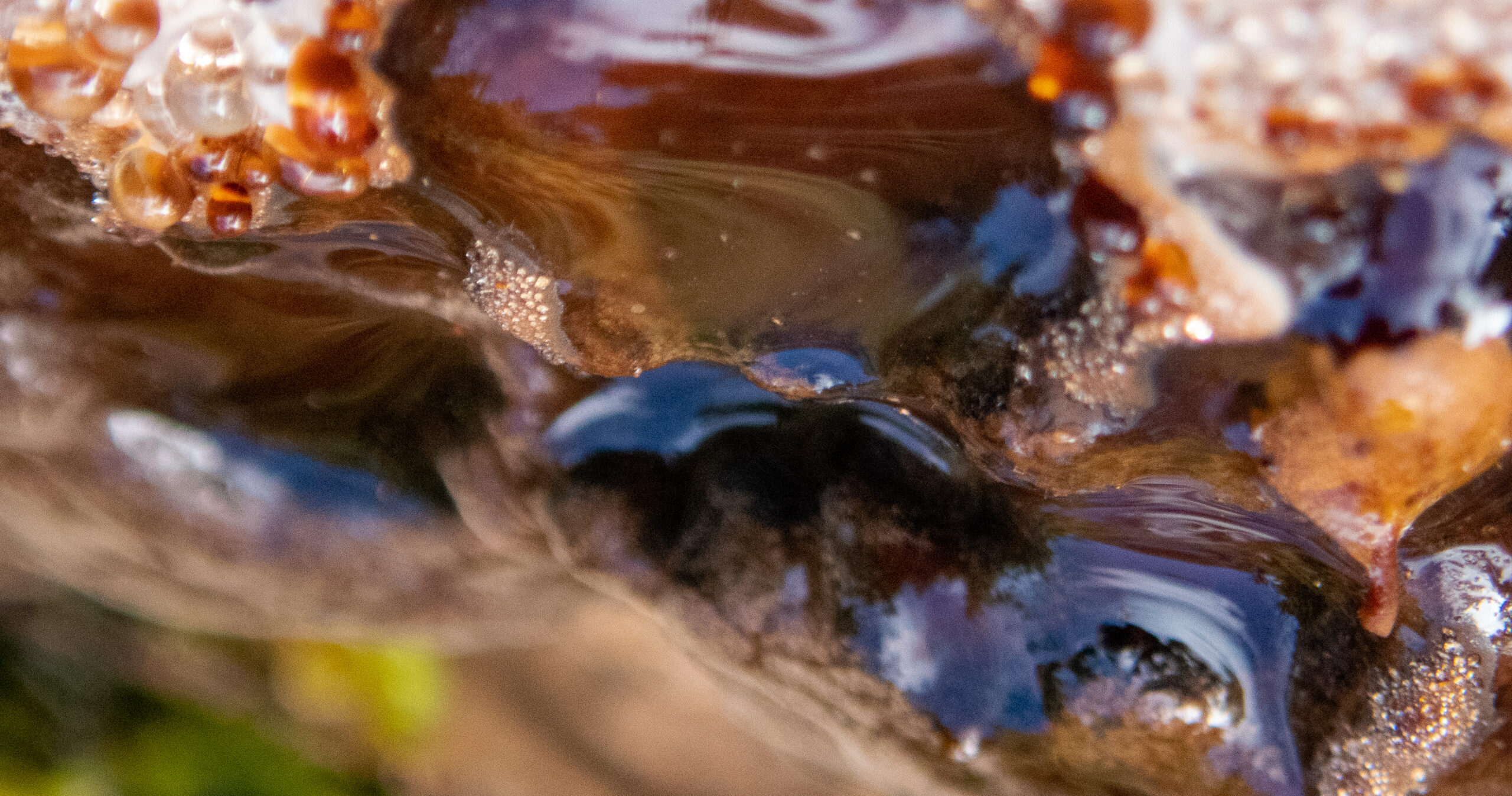
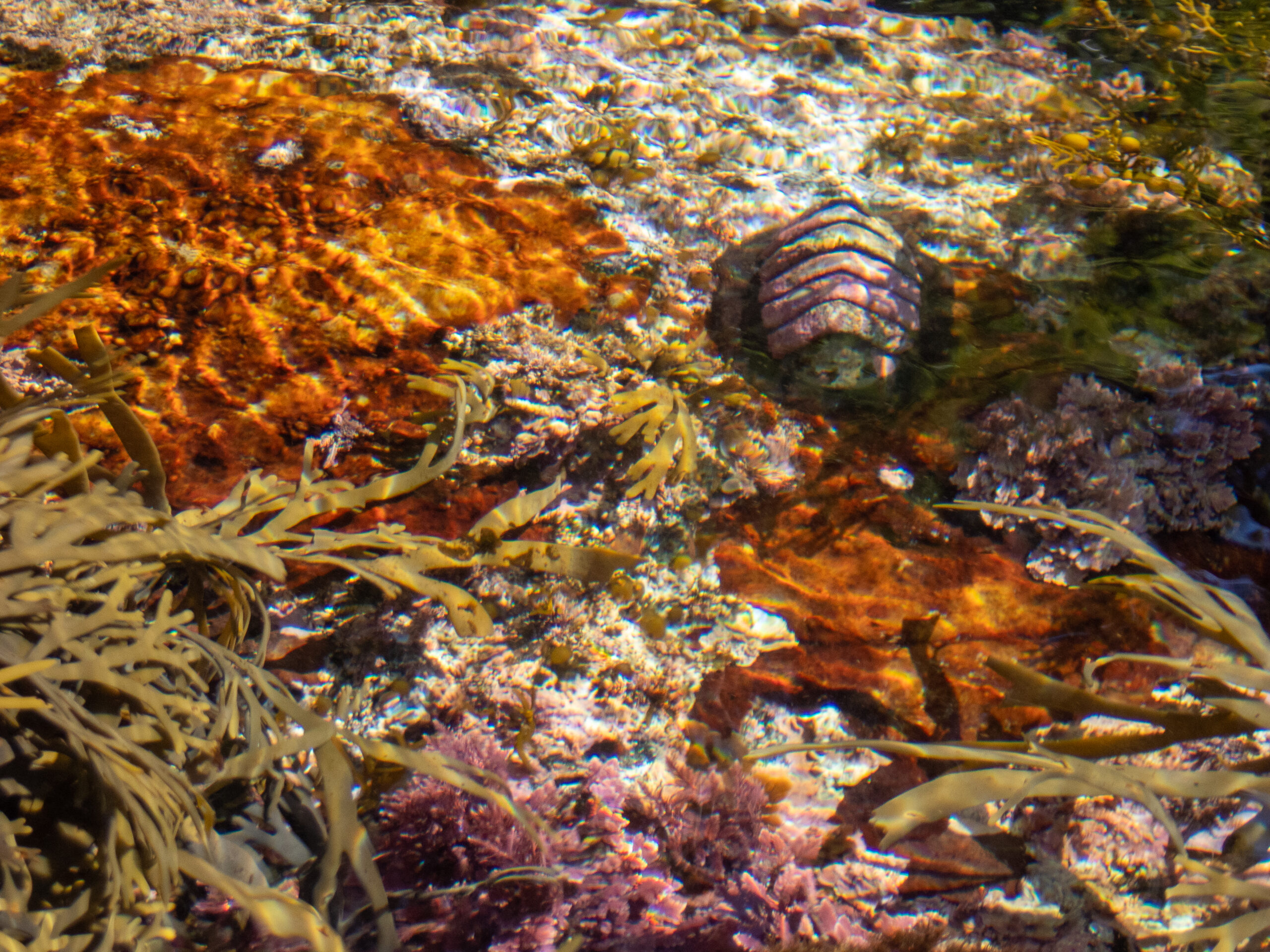
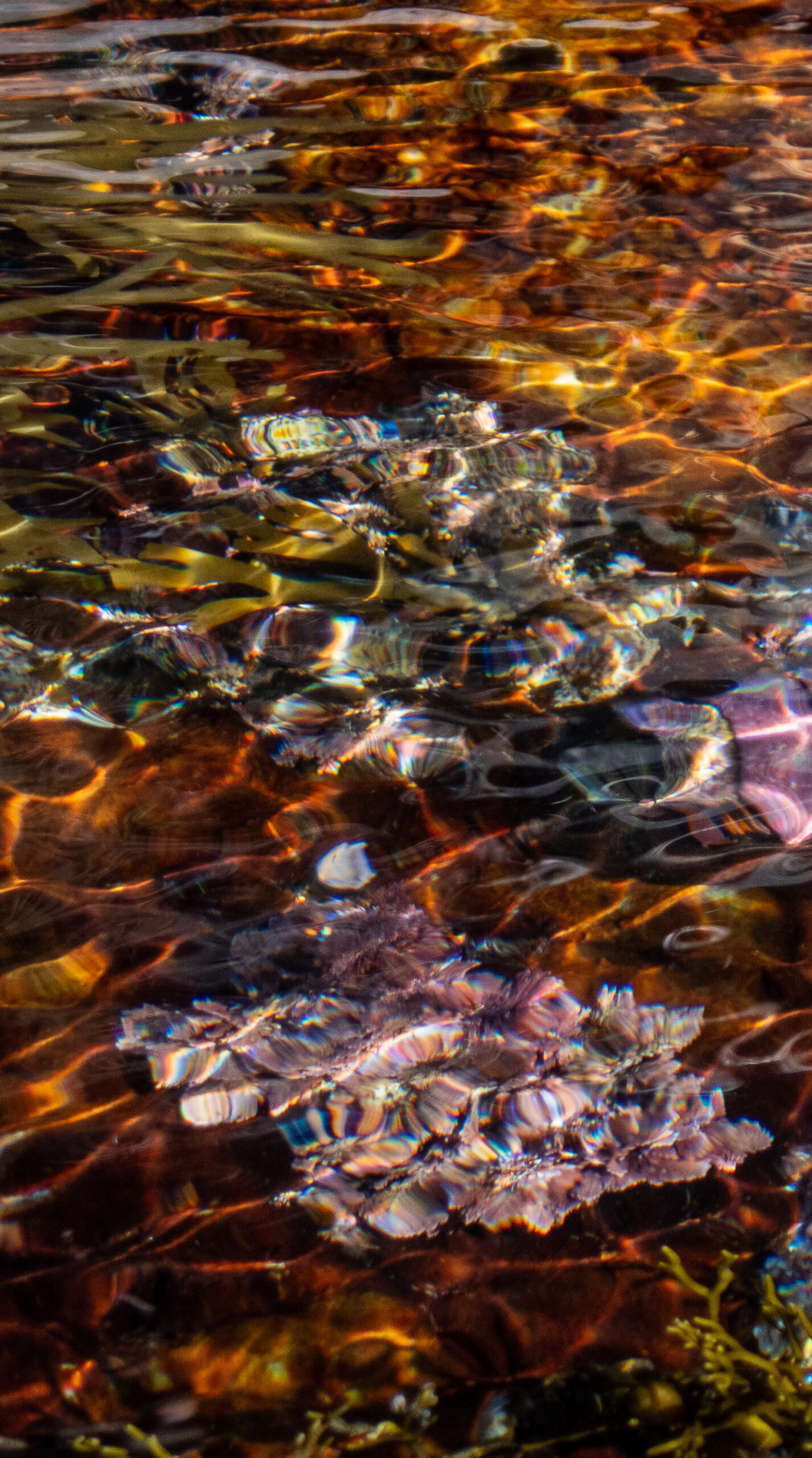
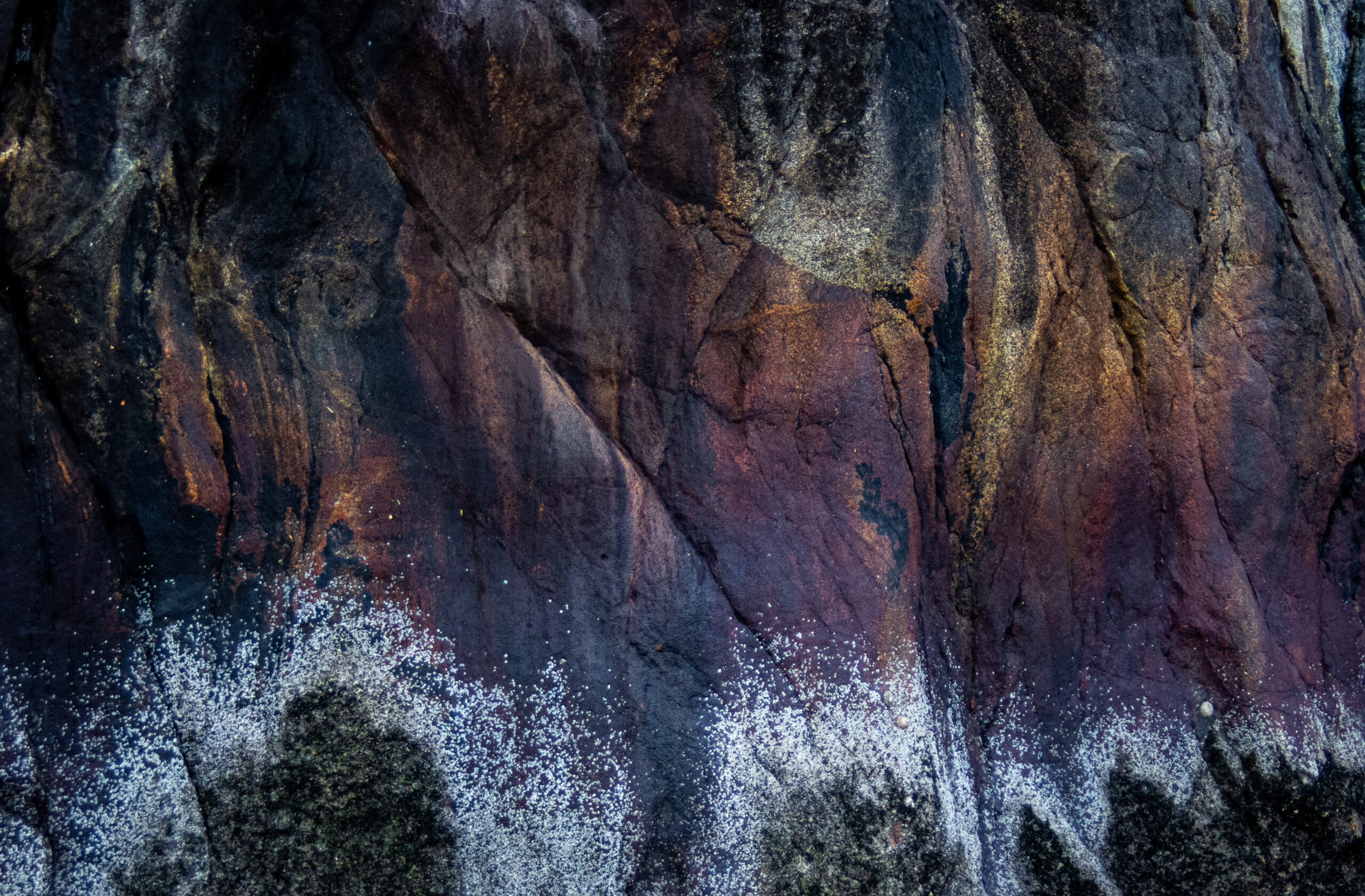
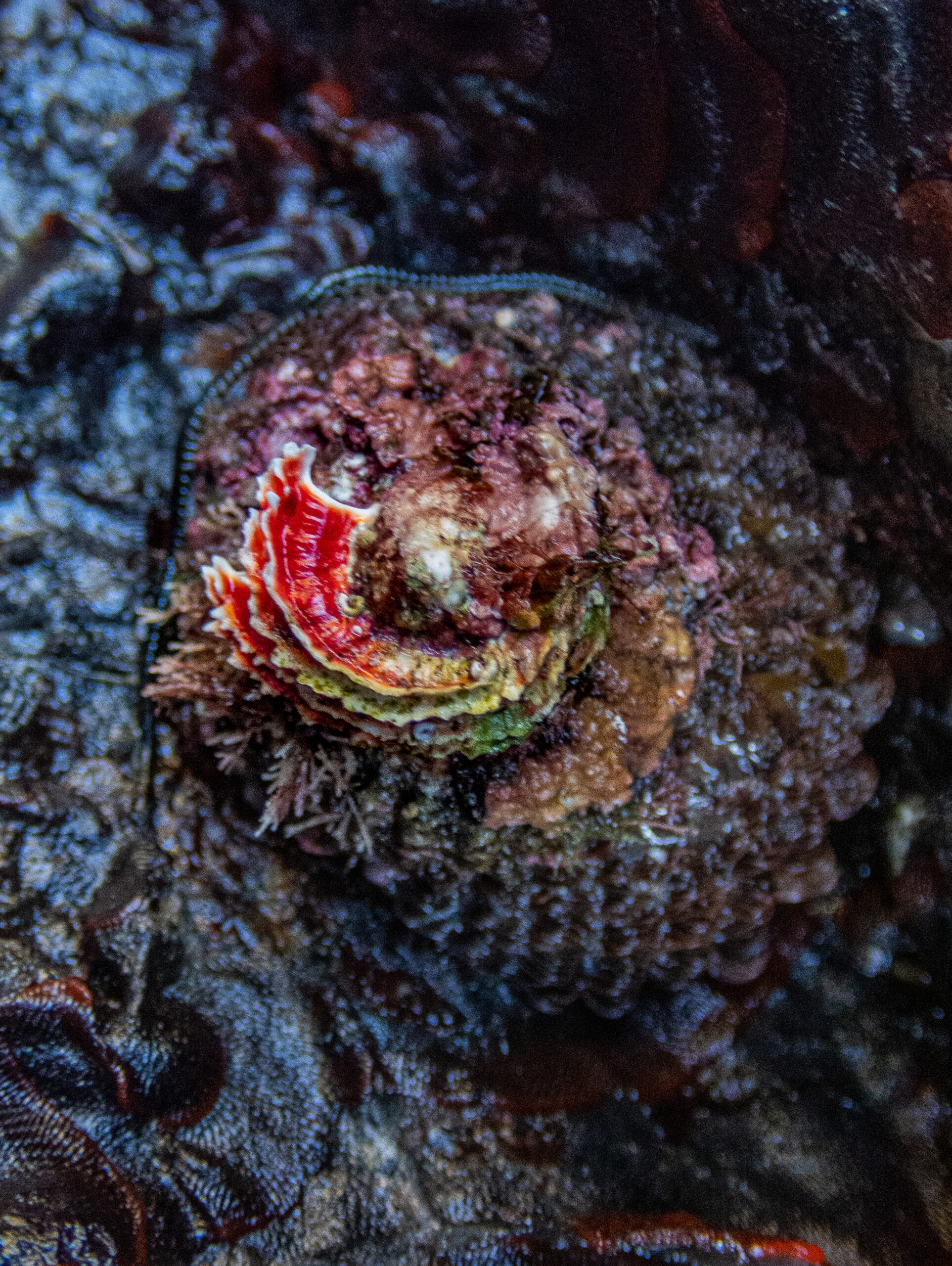
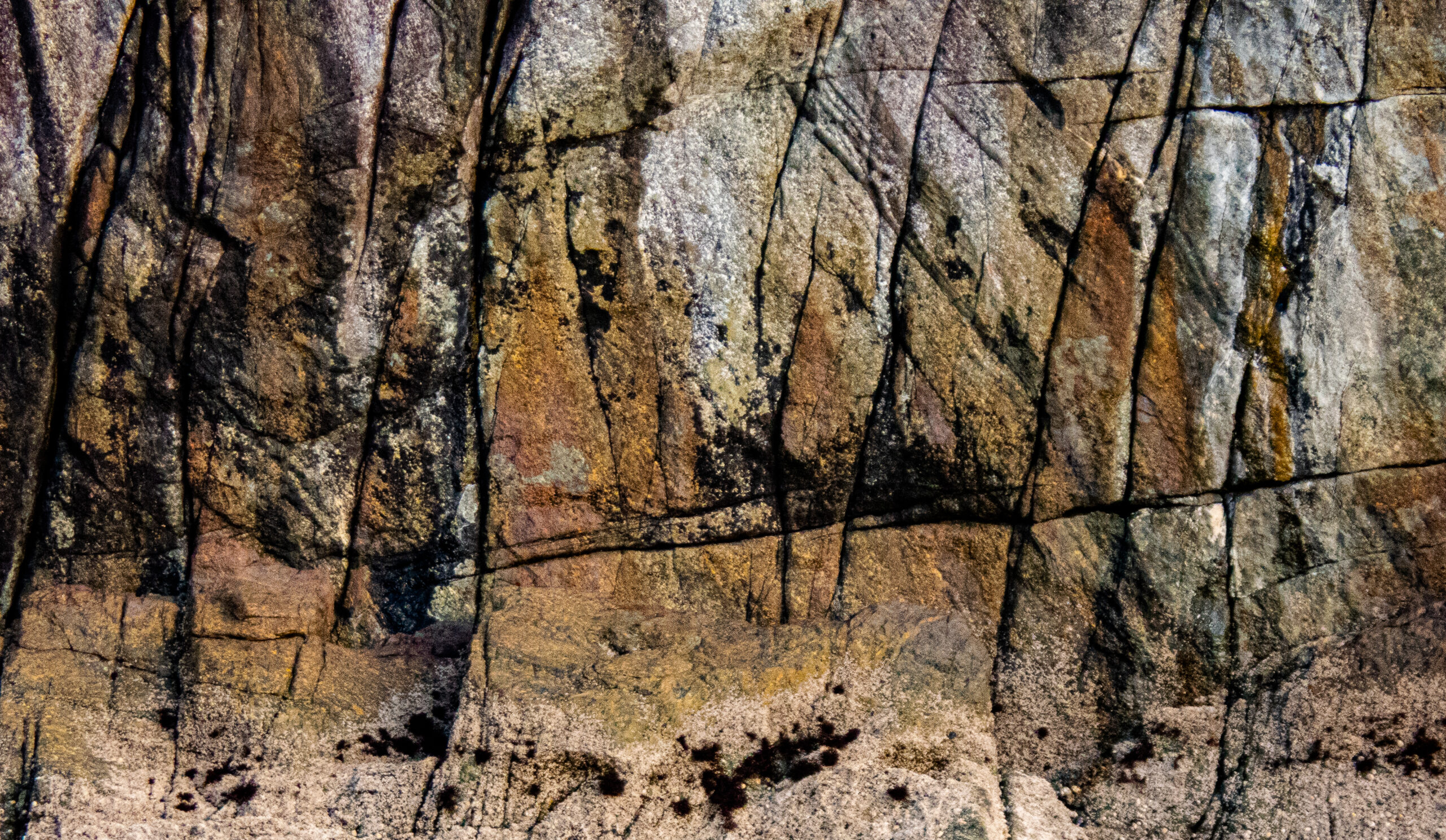
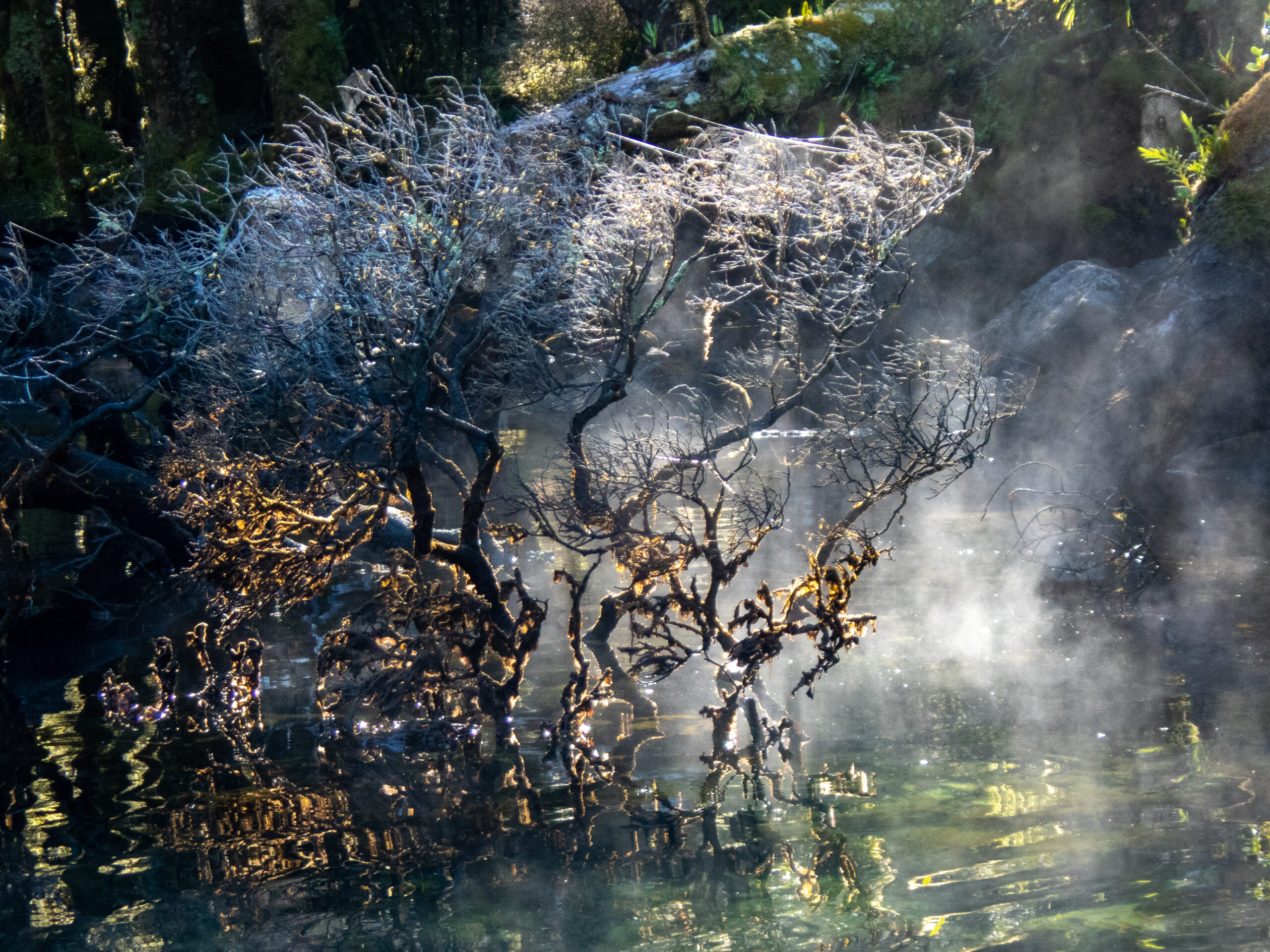
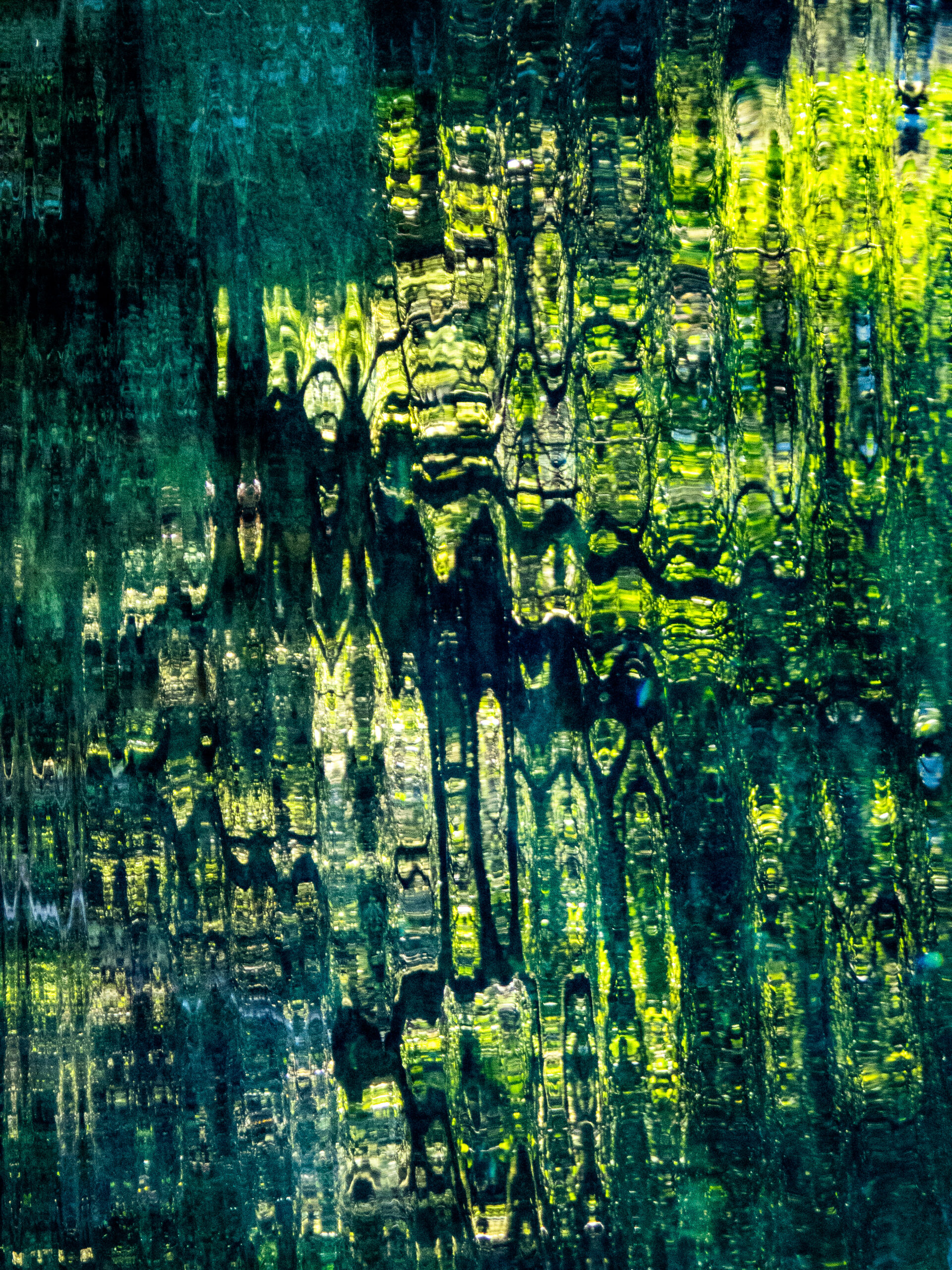
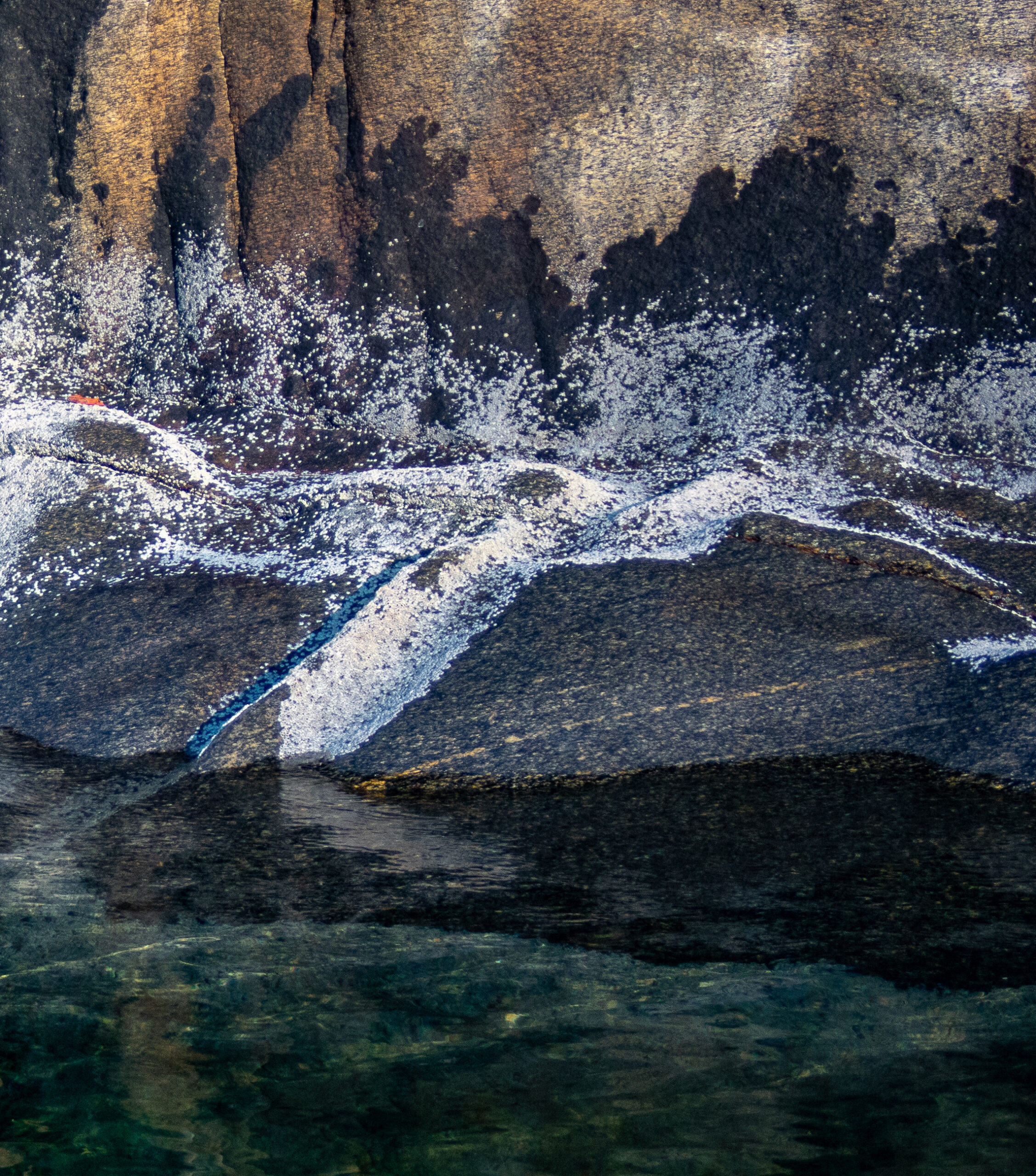
Tried to see this Chiton better, but the surge was quite strong and I really didn’t want to tip.Then I just got into the abstract of it. I could feel myself shift from trying to make something ‘clear’ to allowing it to be simply light and color.
Shadow play.The ocean is miraculous!
One of my favorite pics. See the green sea worm?! (Going to look that up, too!)
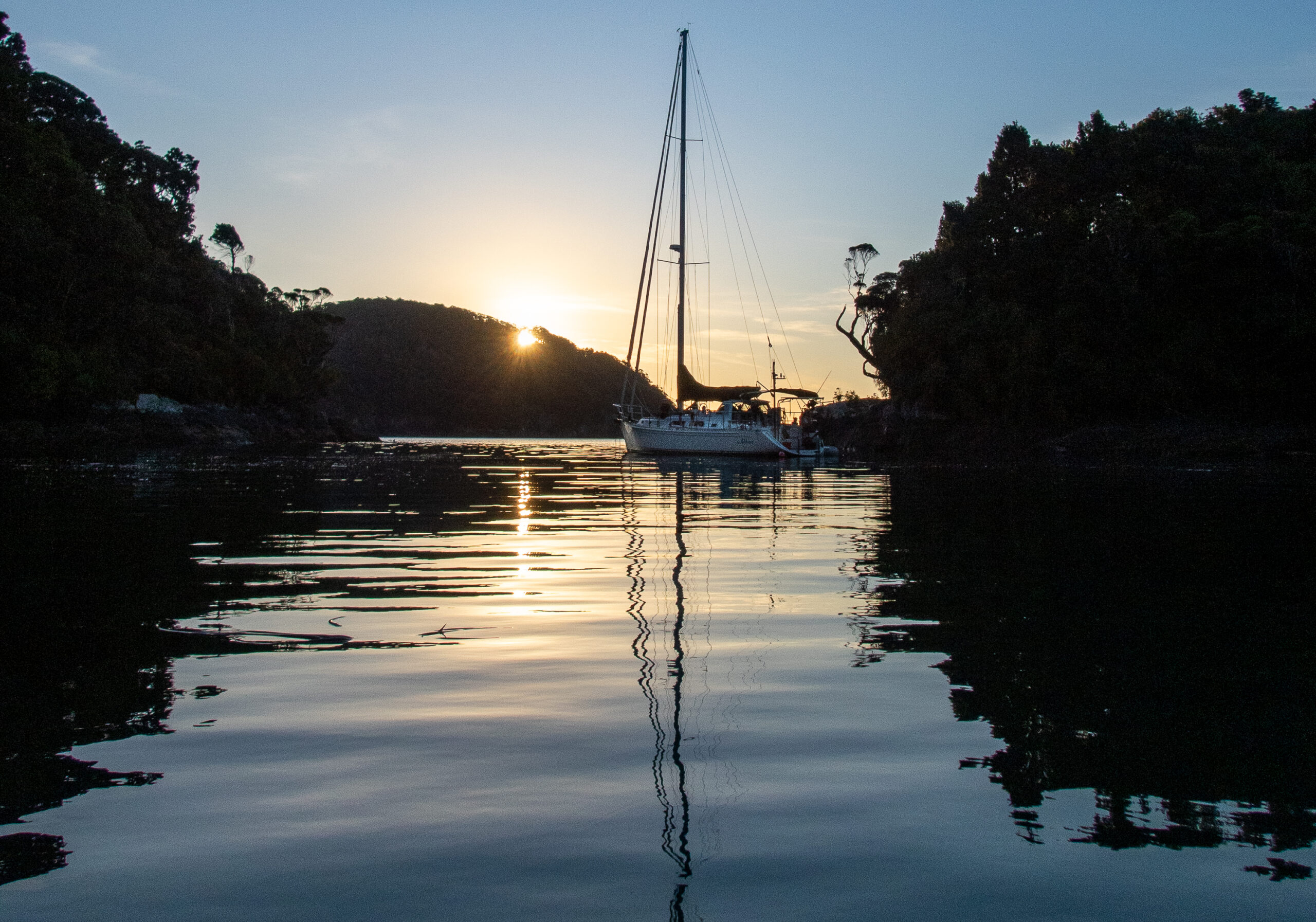
The water at sunset.Preparing to slip away from Stevens Cove, the birds regaled us with some riotous farewell songs! Dagg Sound, here we come!
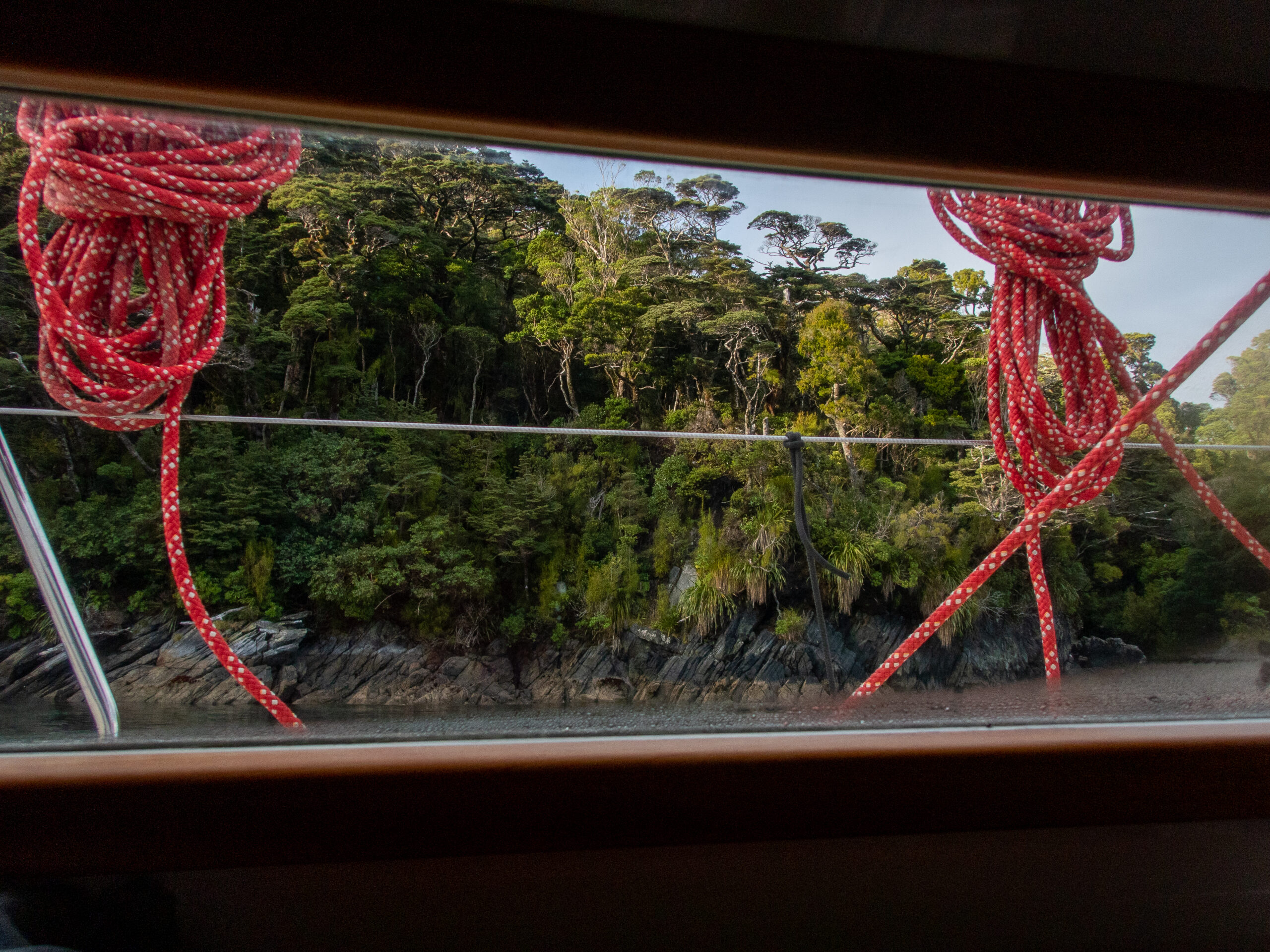
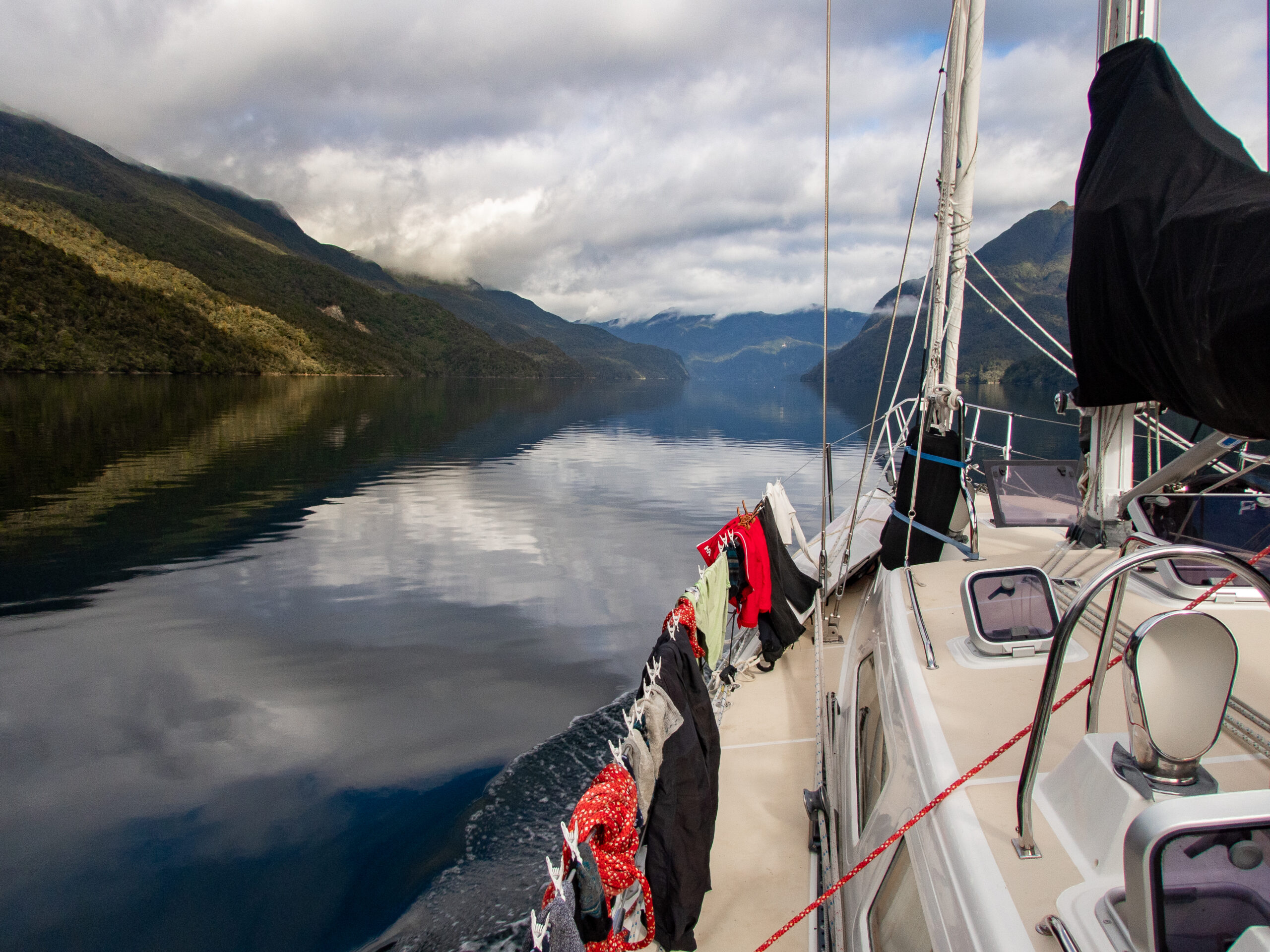
Drying out the PRADA on Allora’s lifelines!Moving from Wet Jacket Arm to Breaksea Sound.
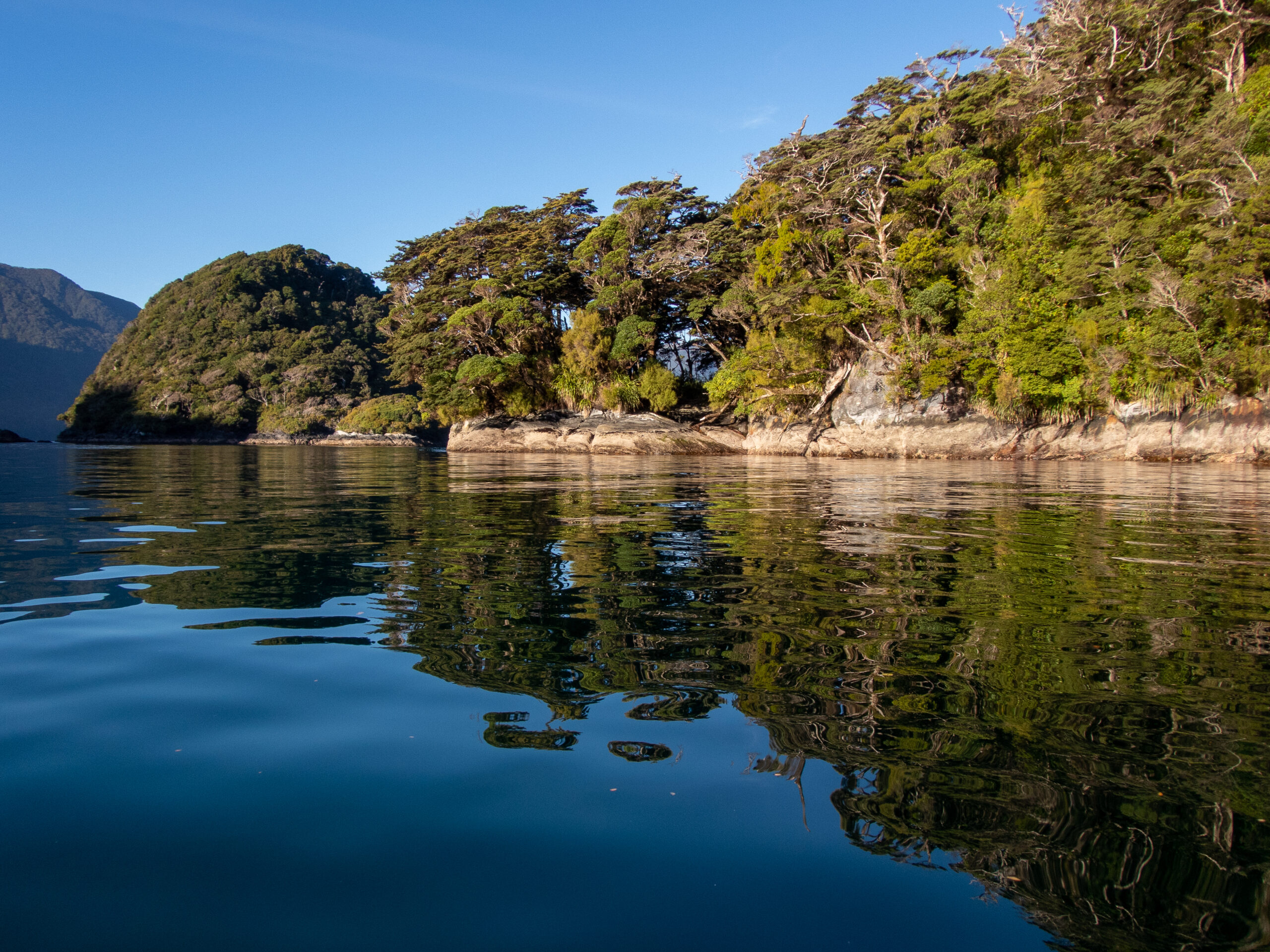
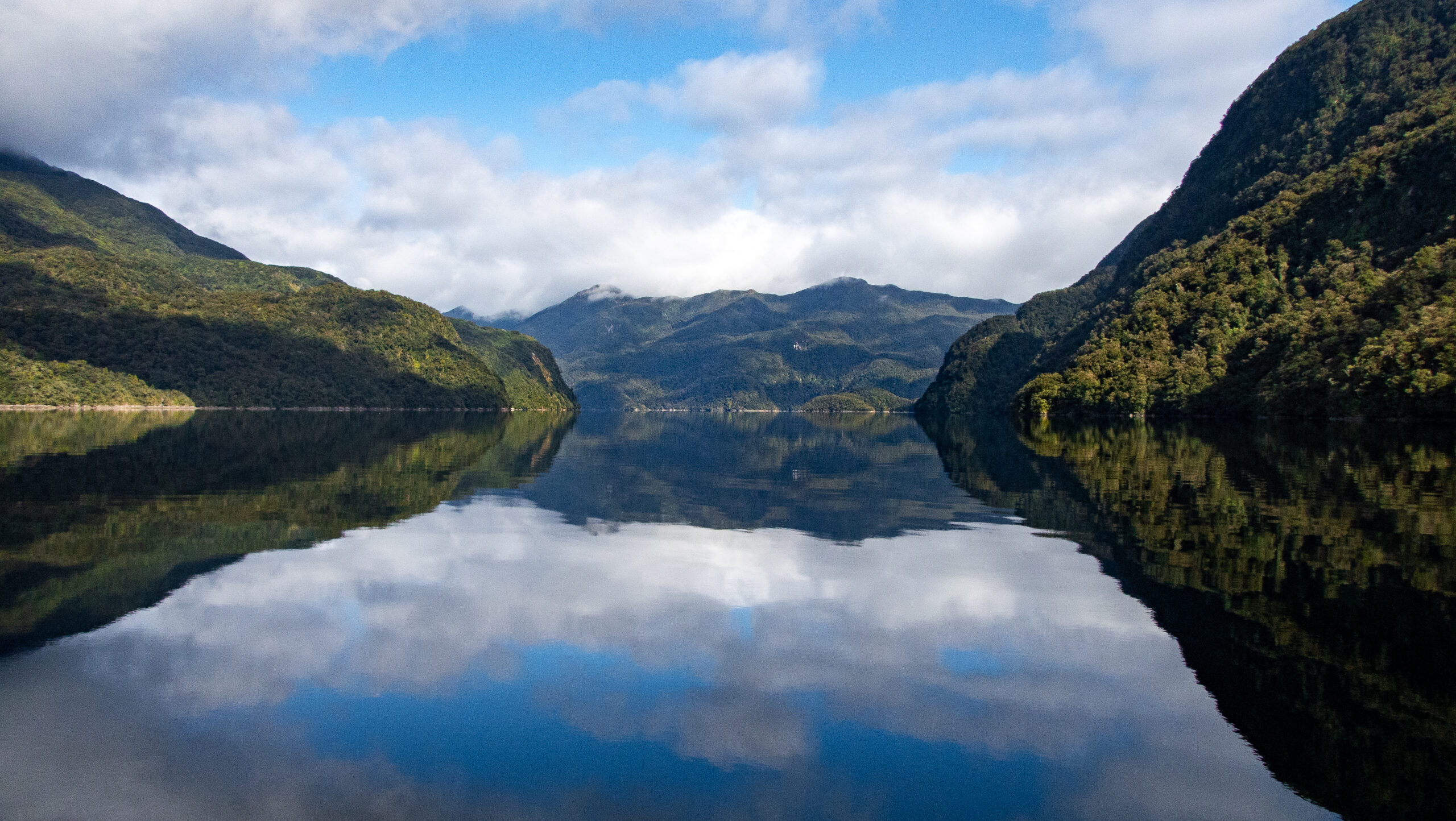
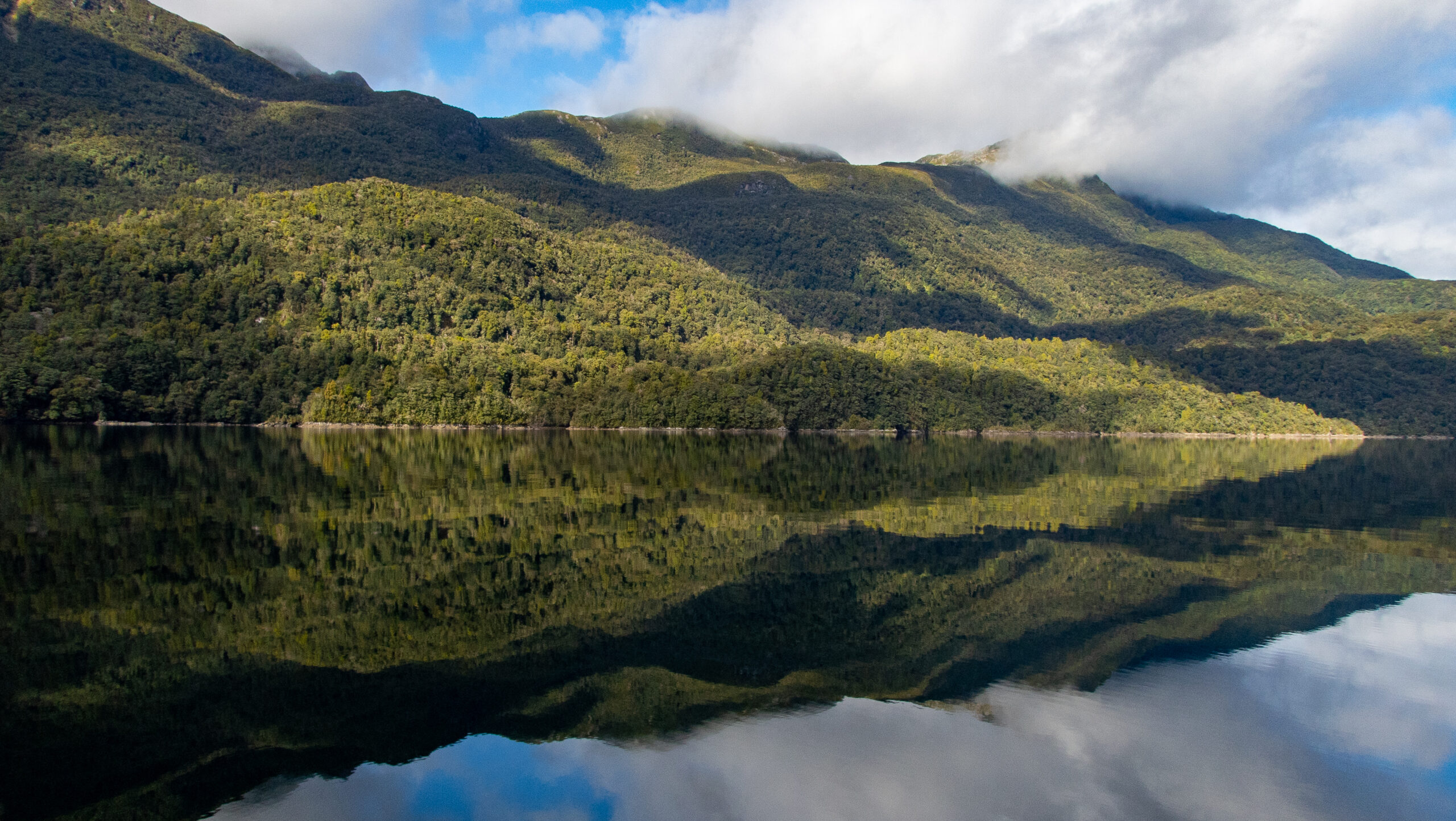
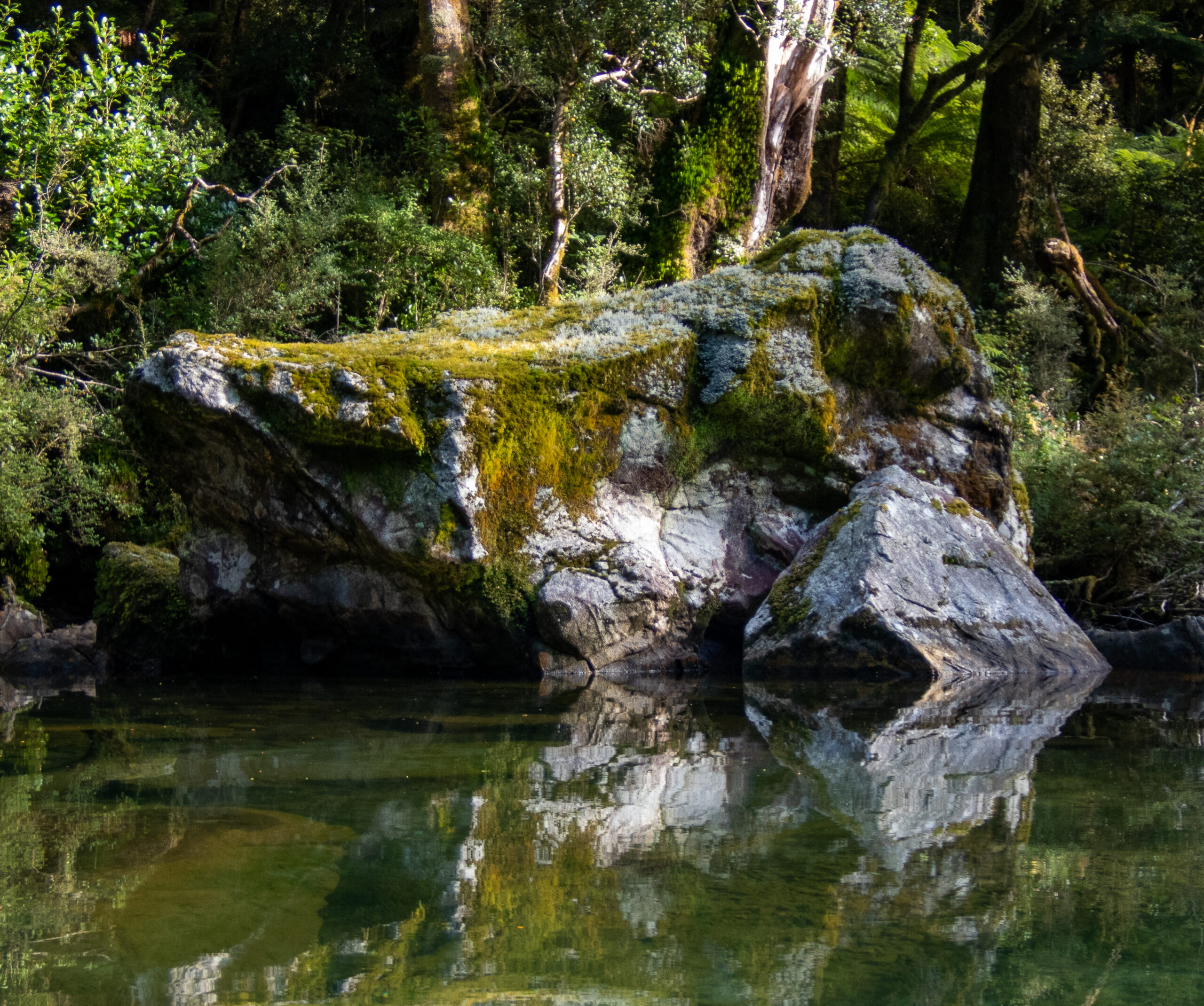
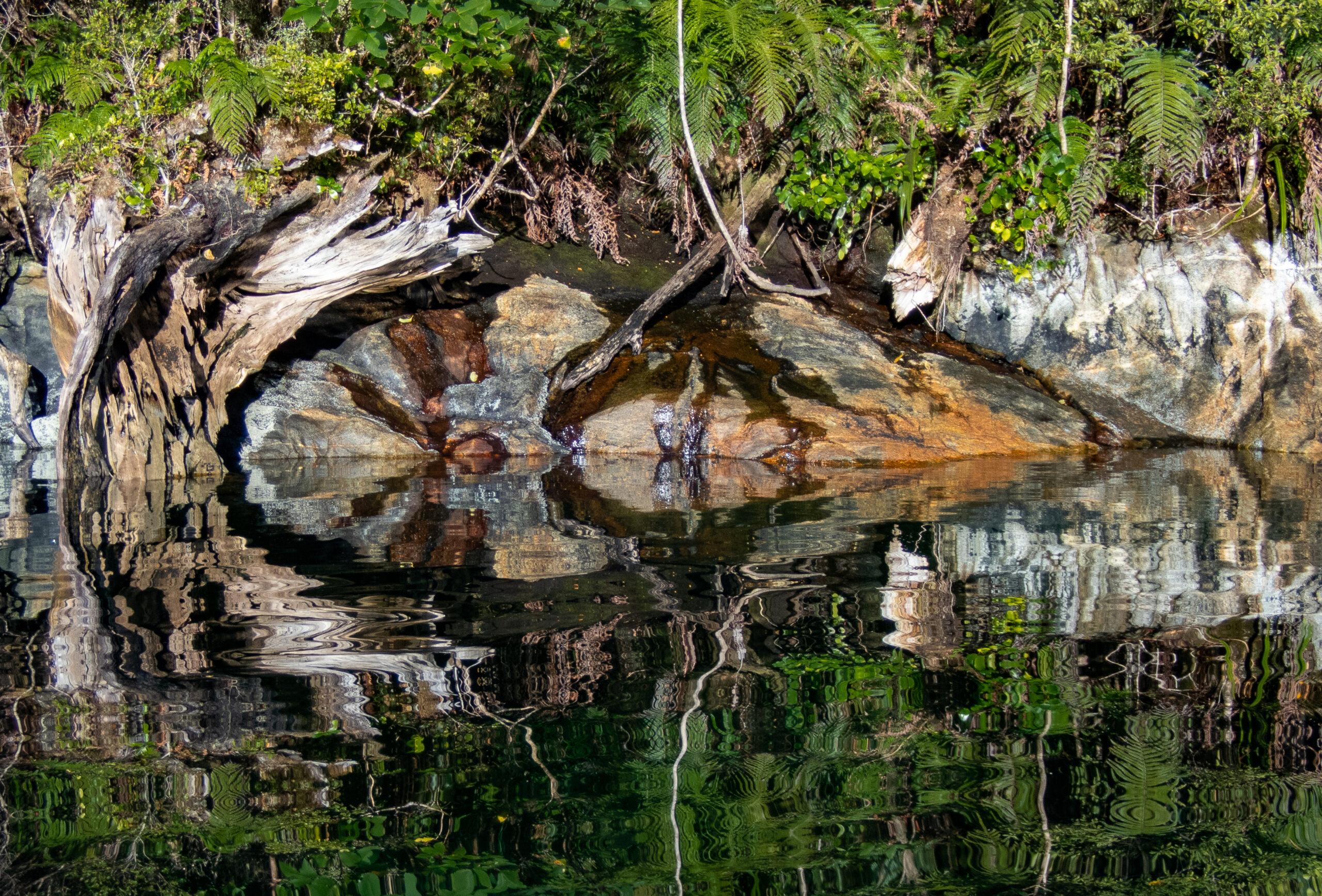
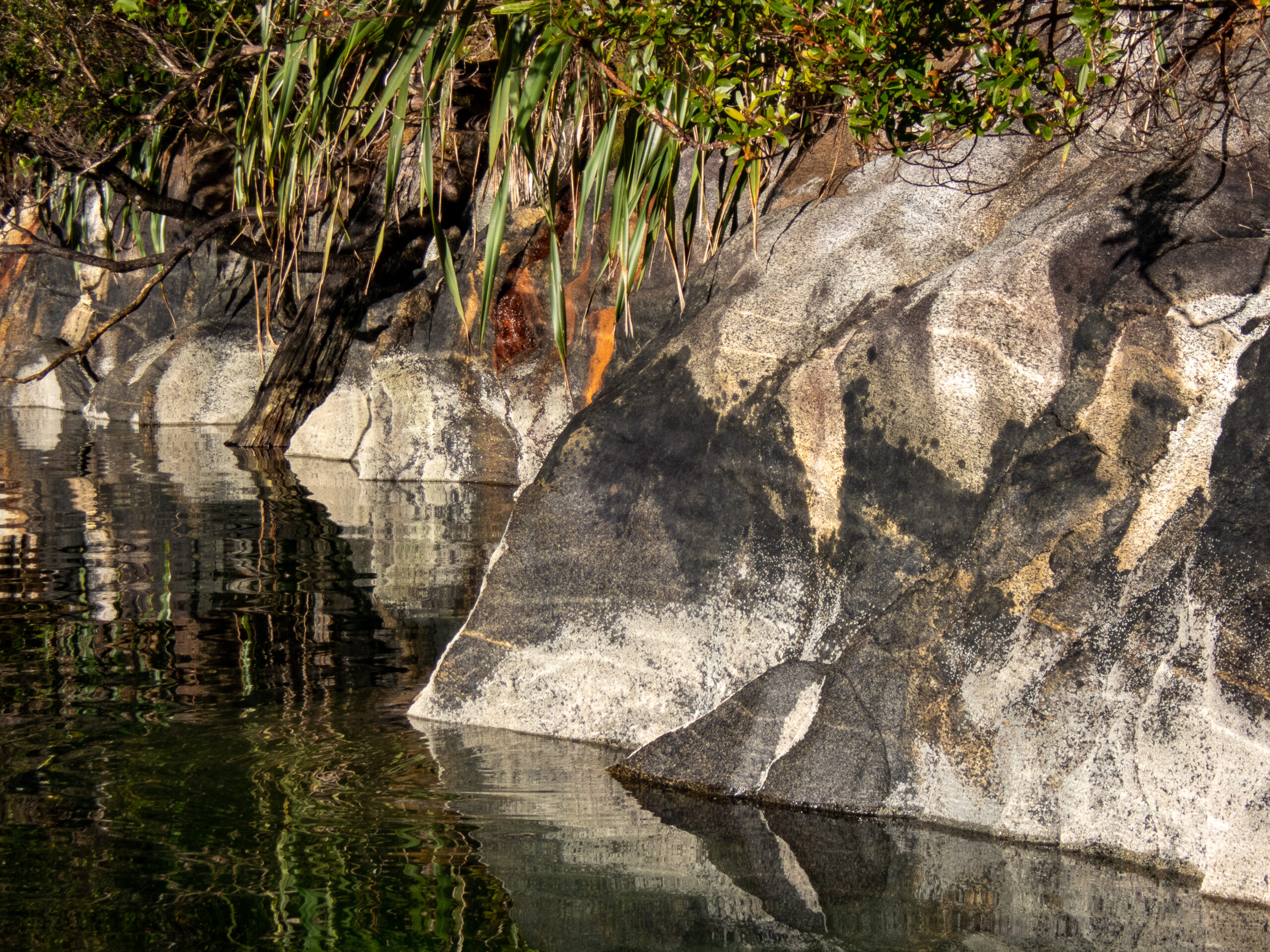
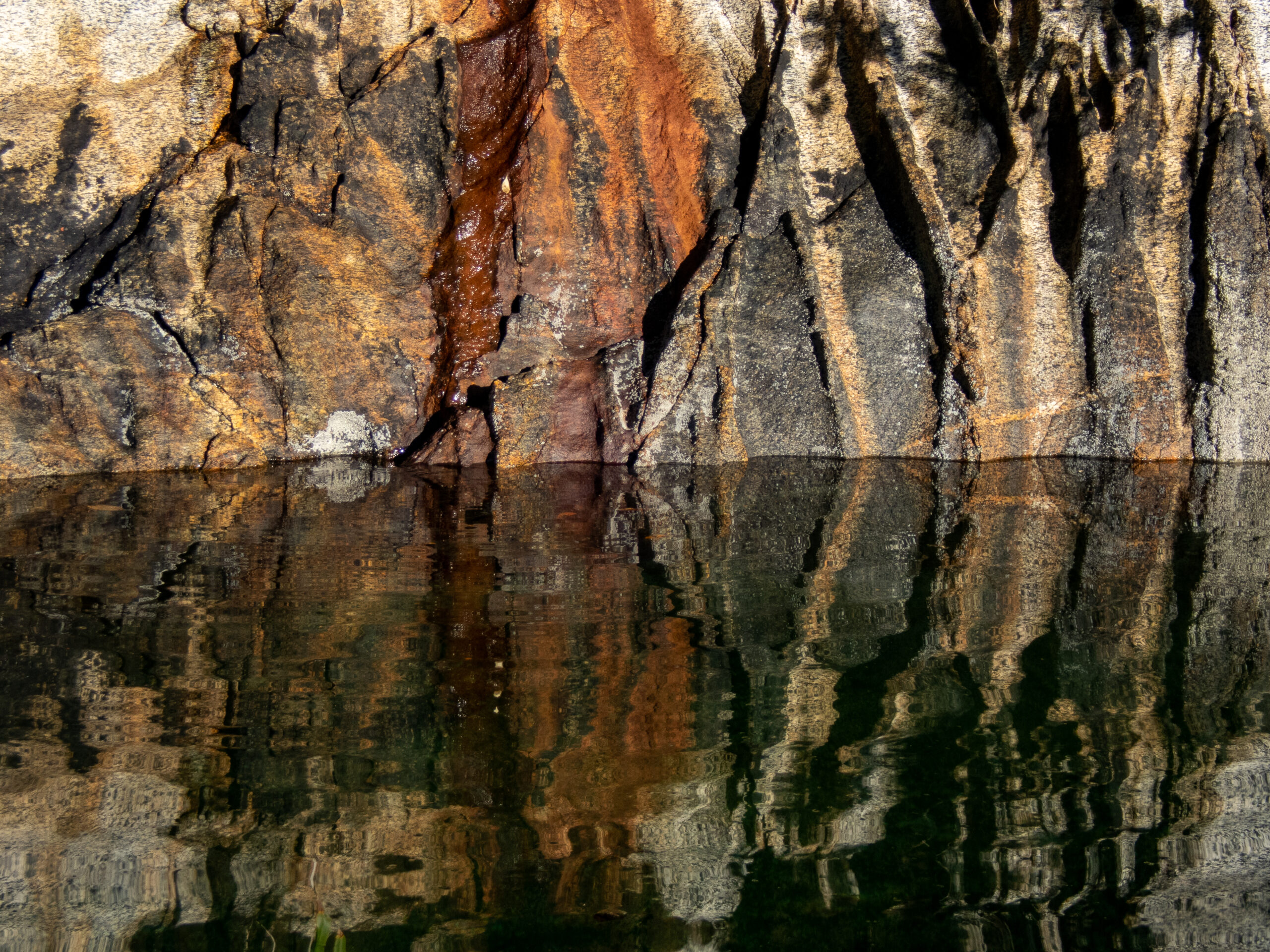
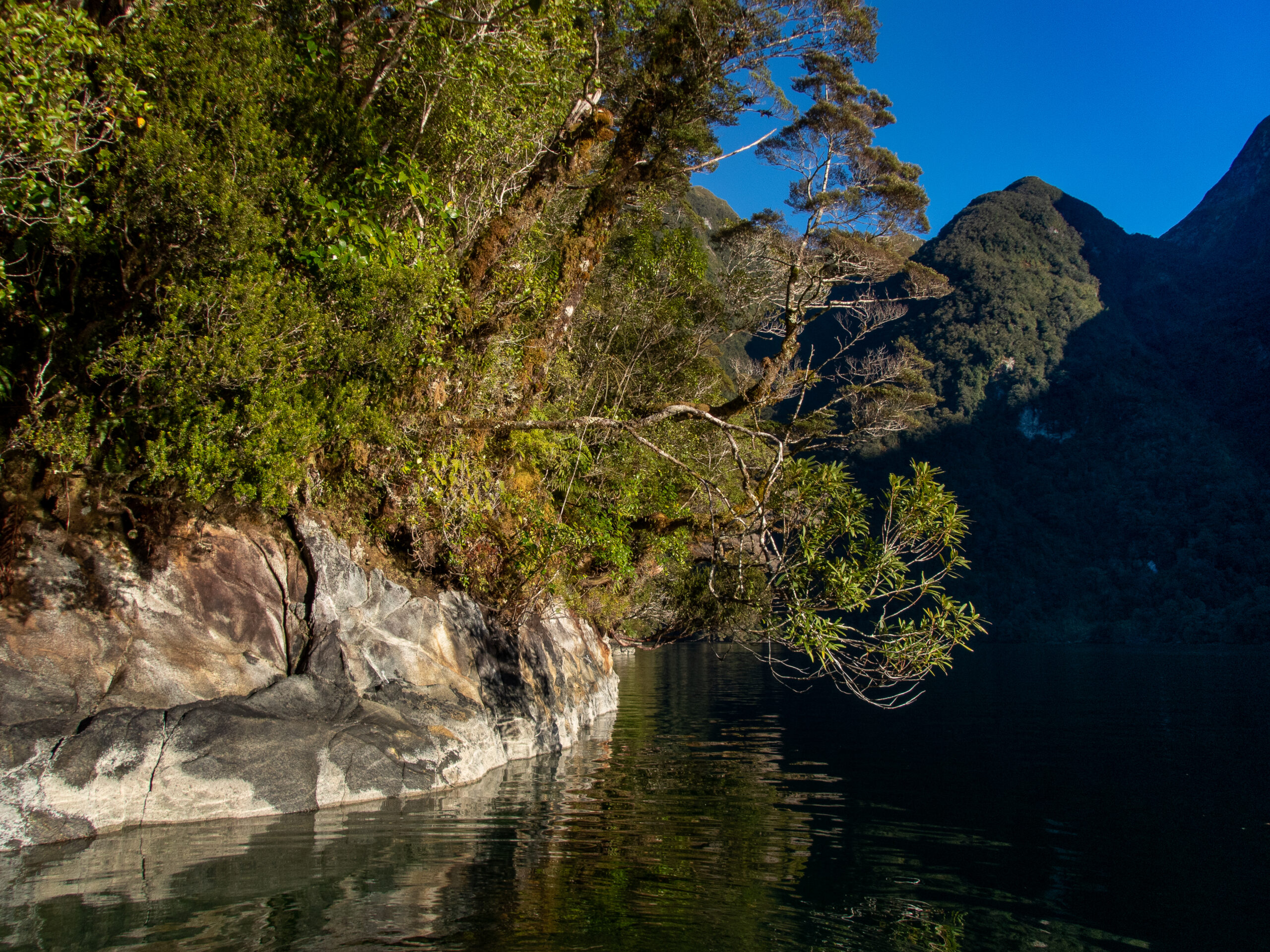
Reflections
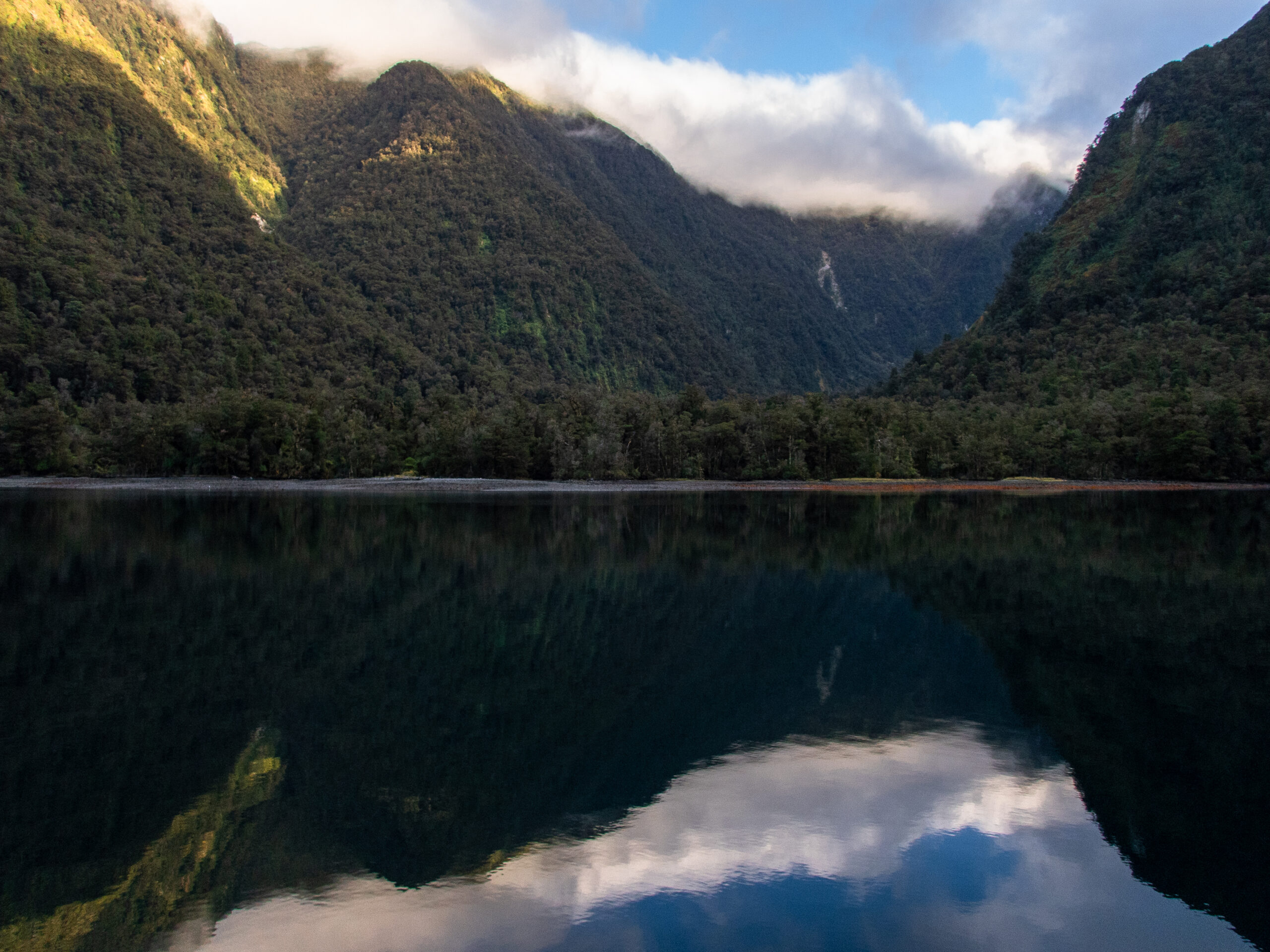
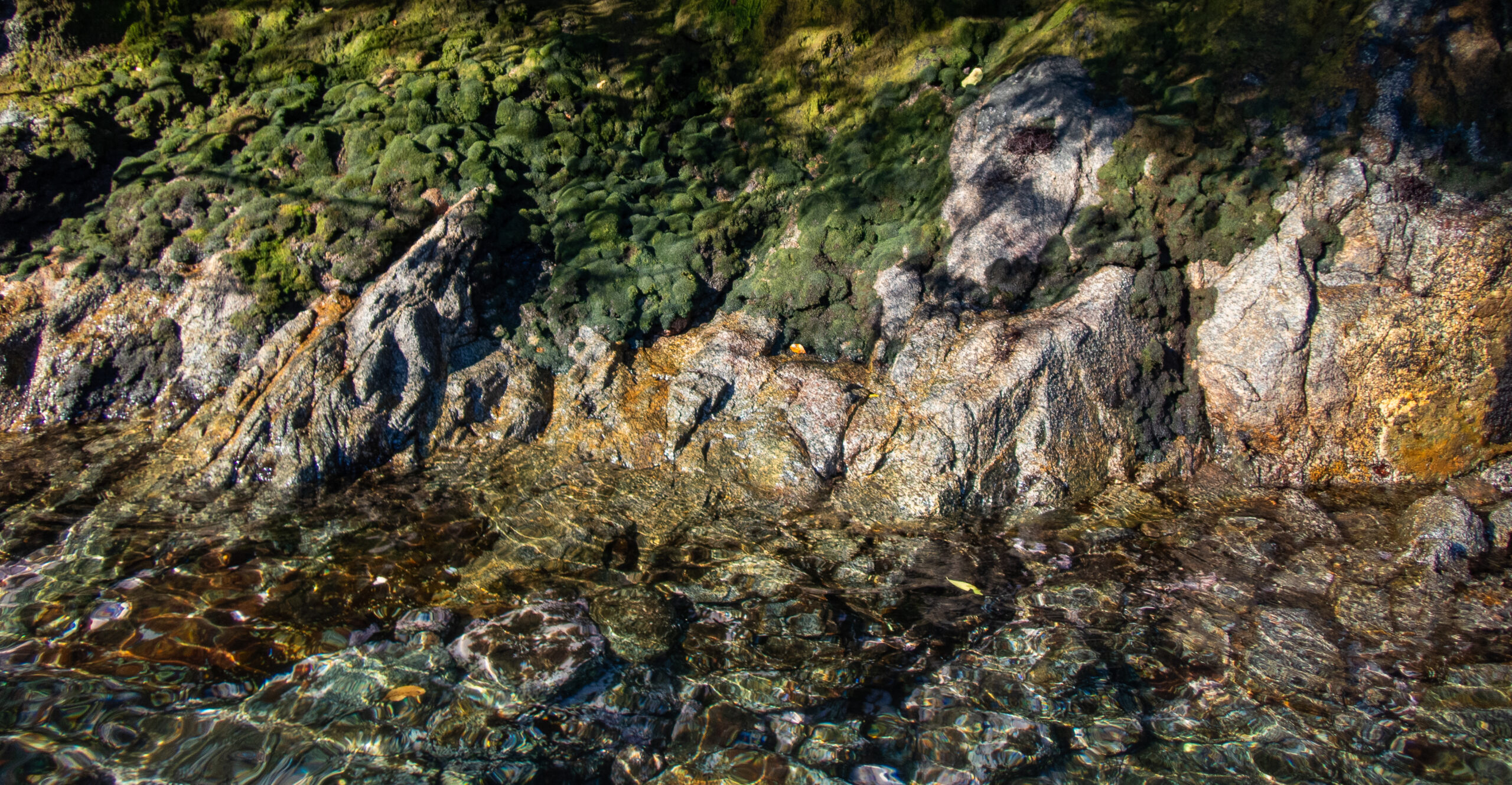
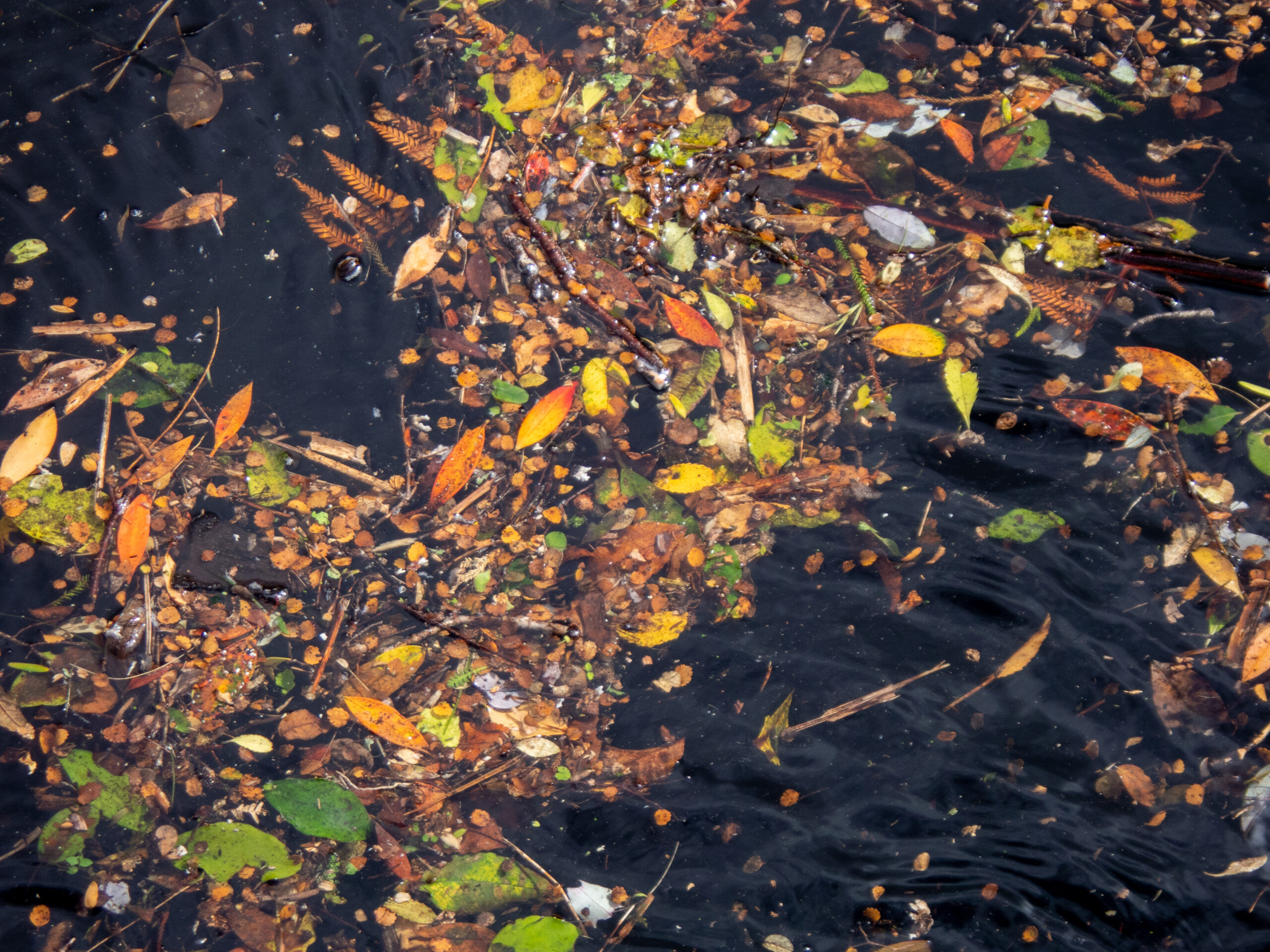
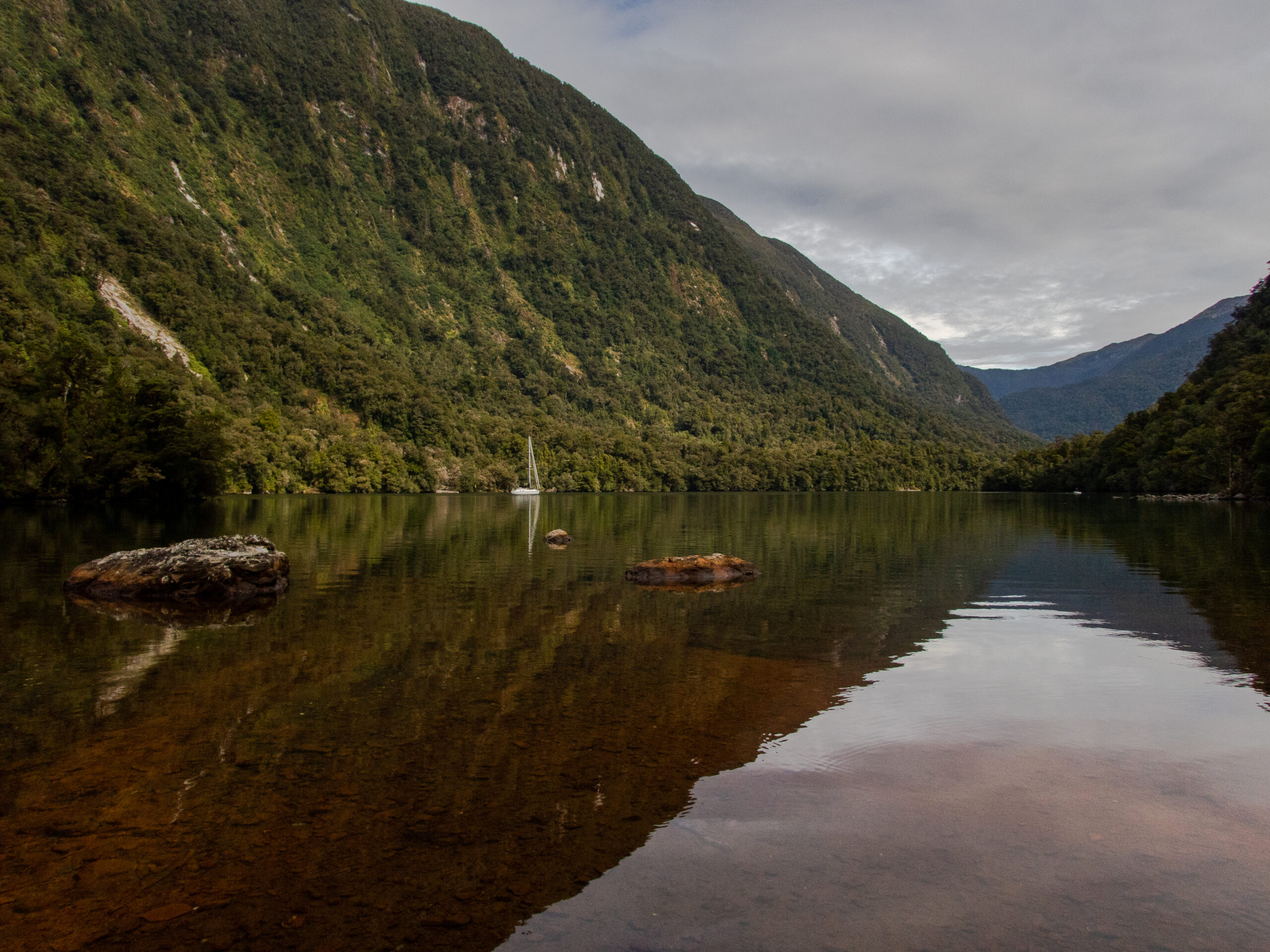
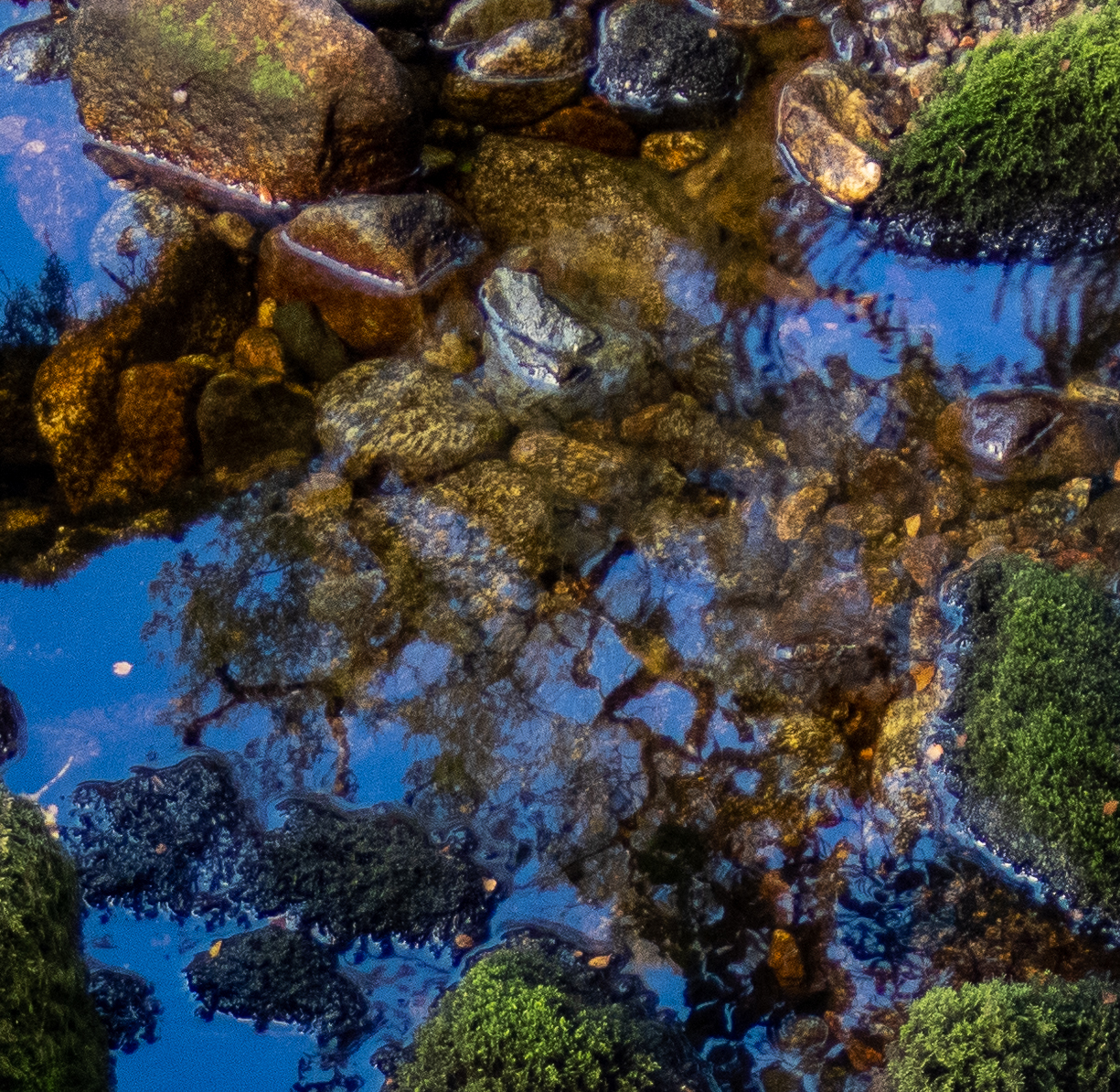
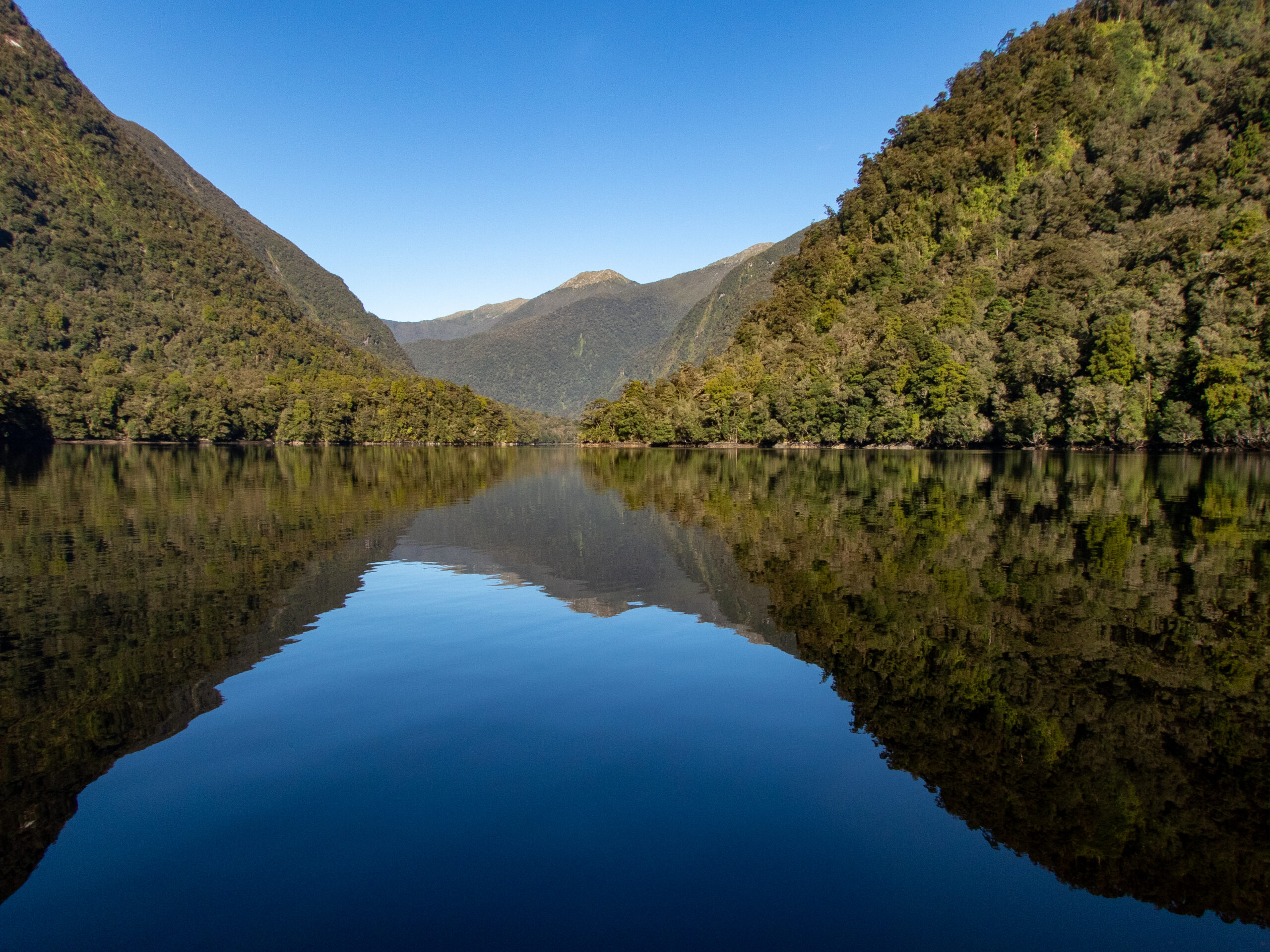
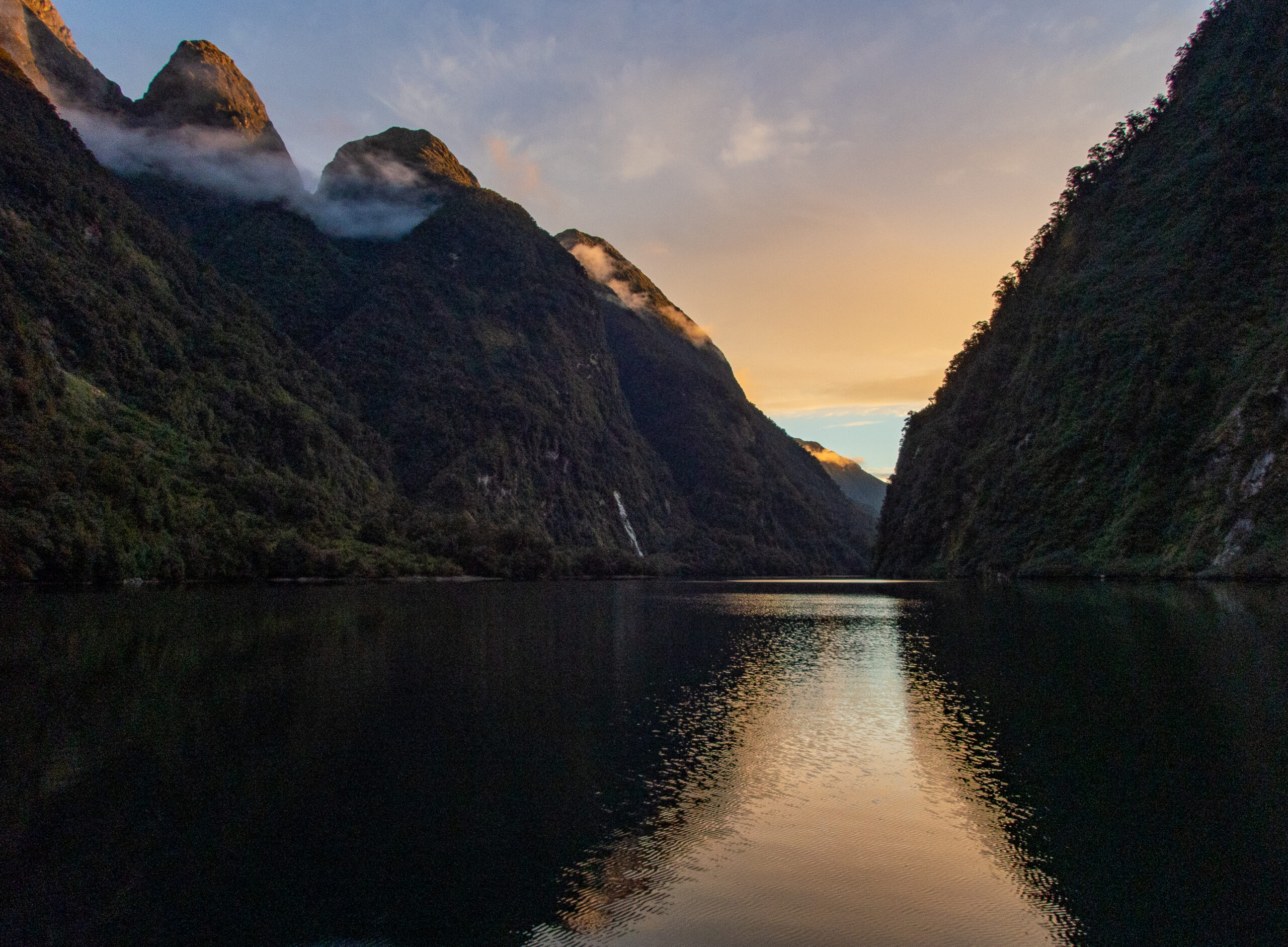
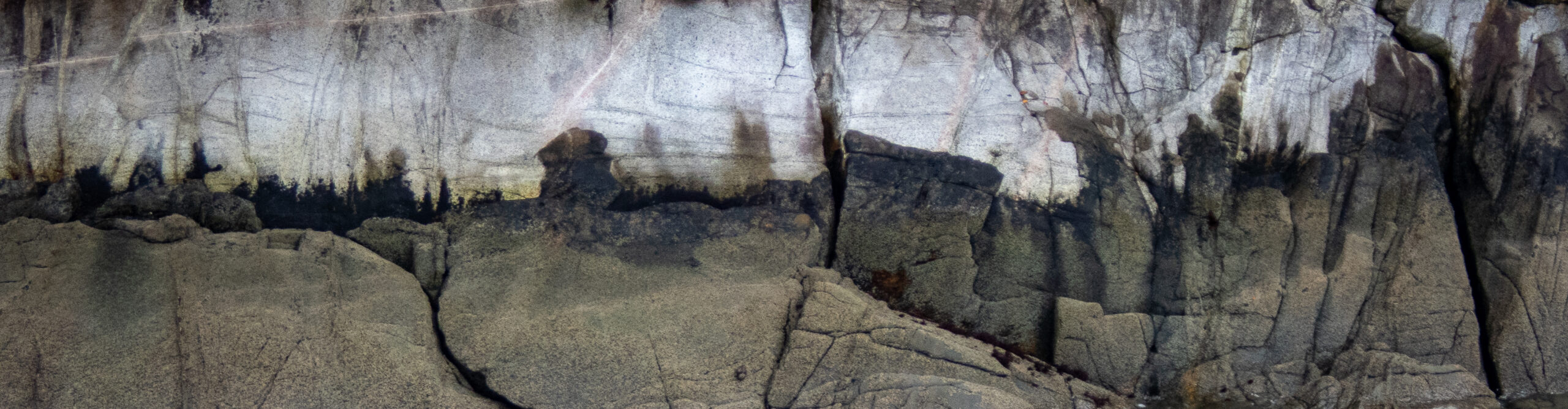
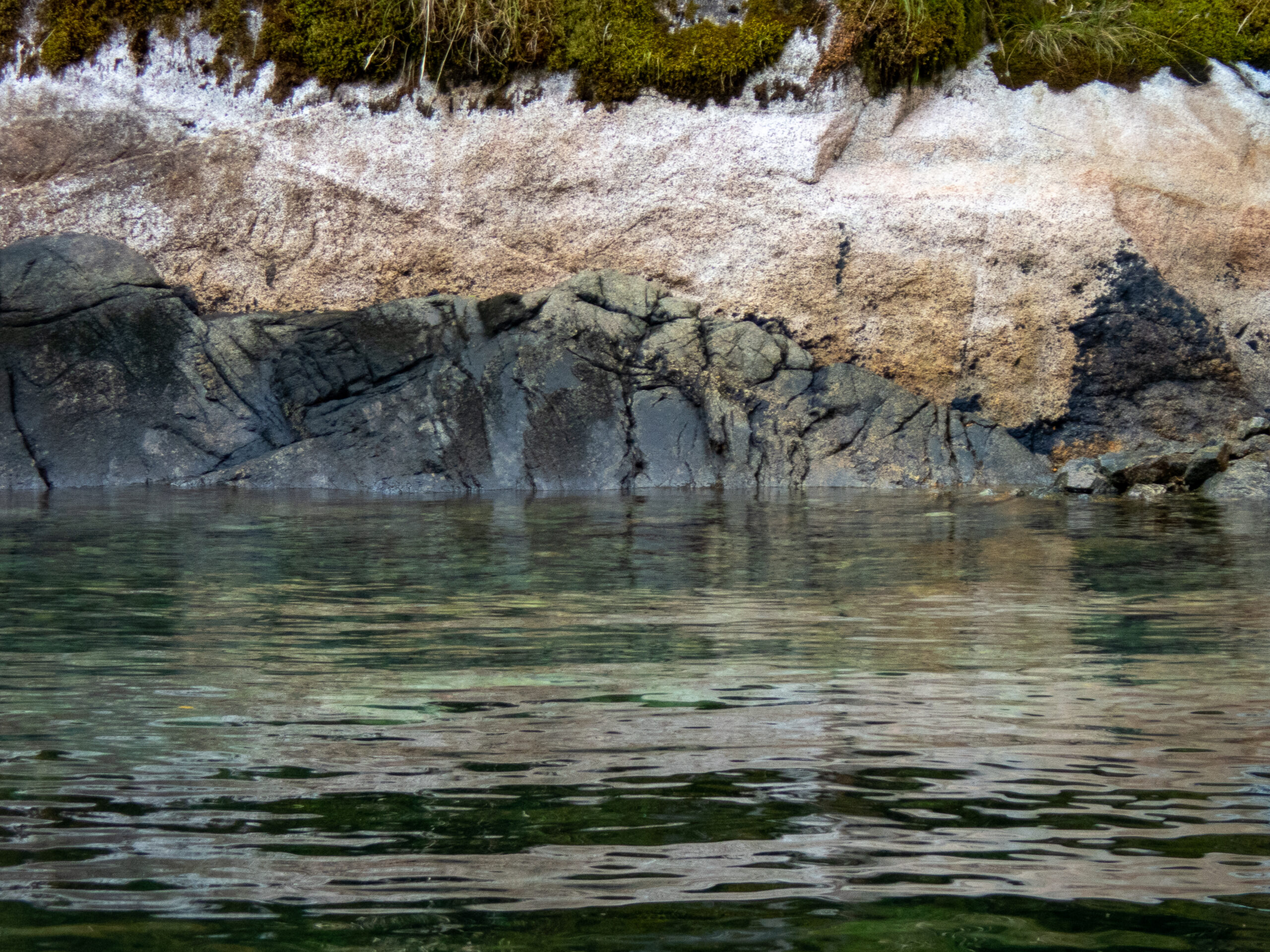
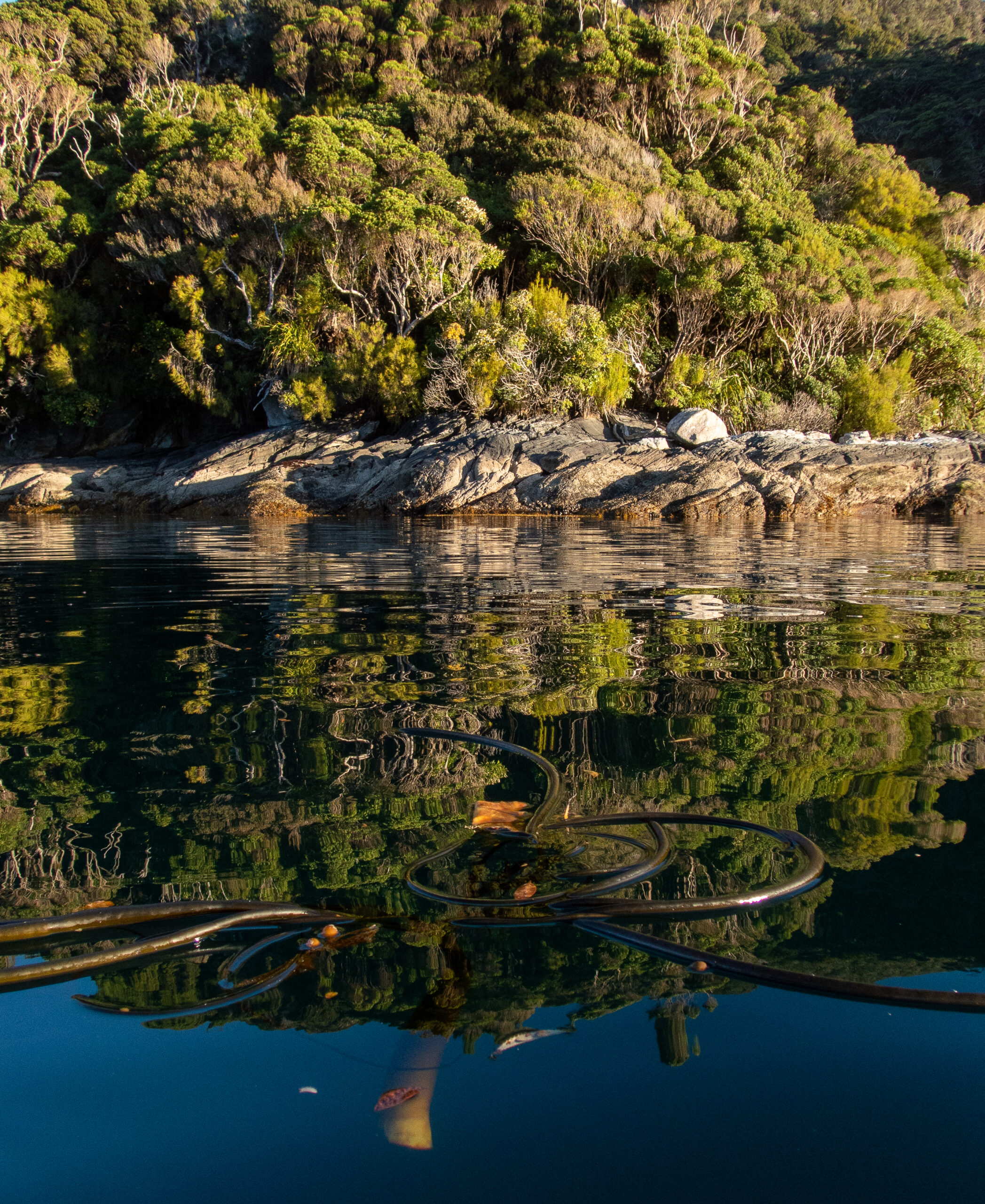
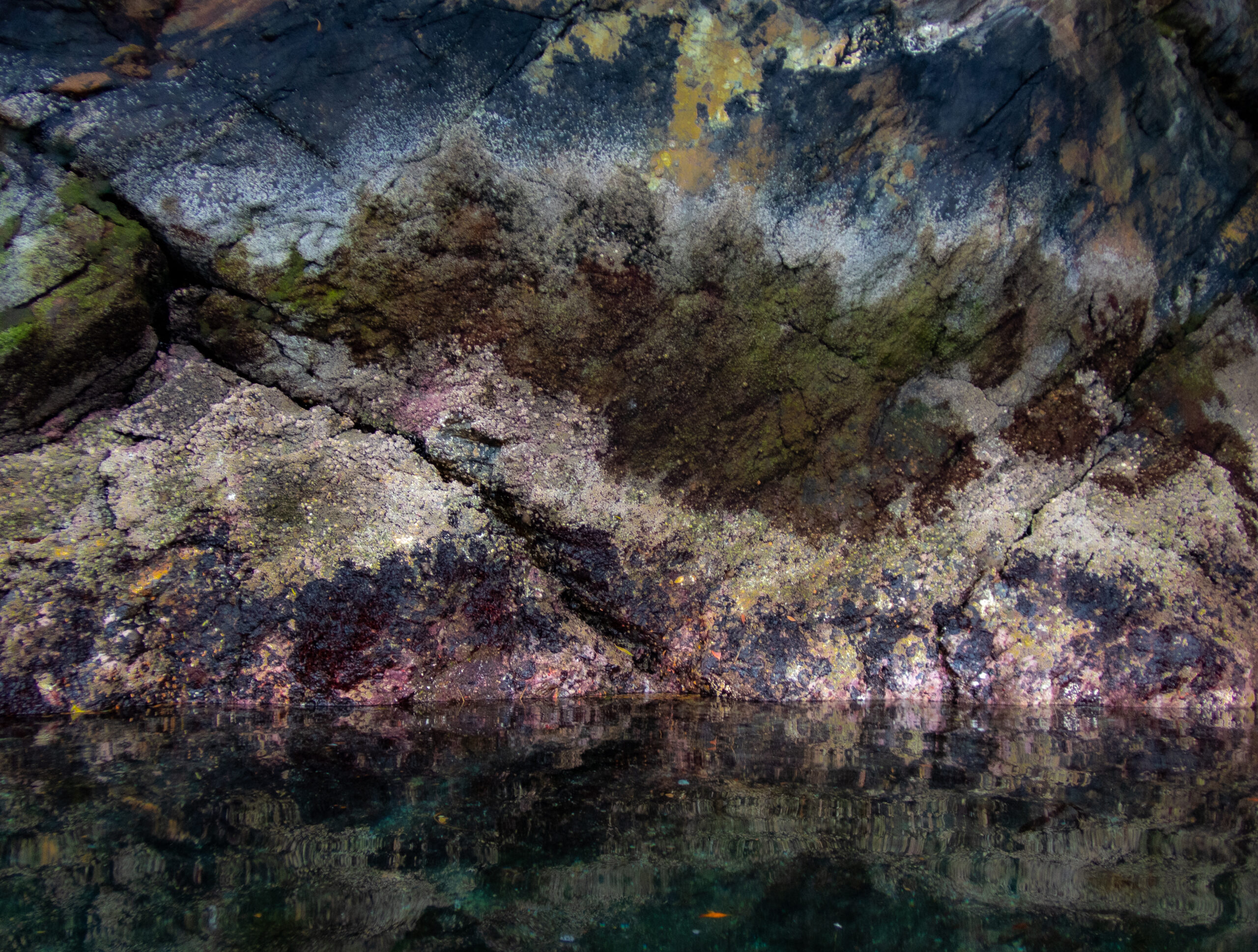
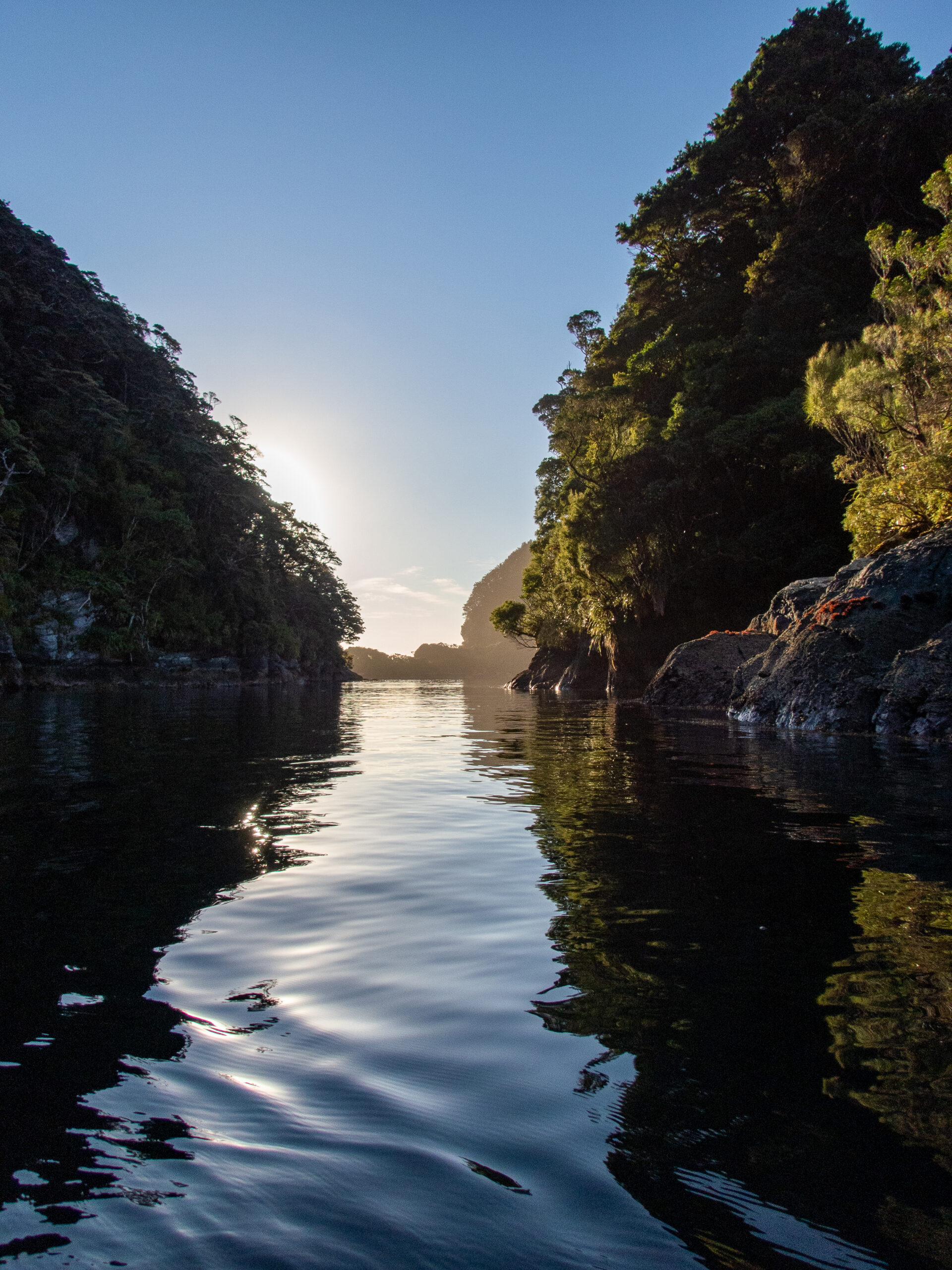
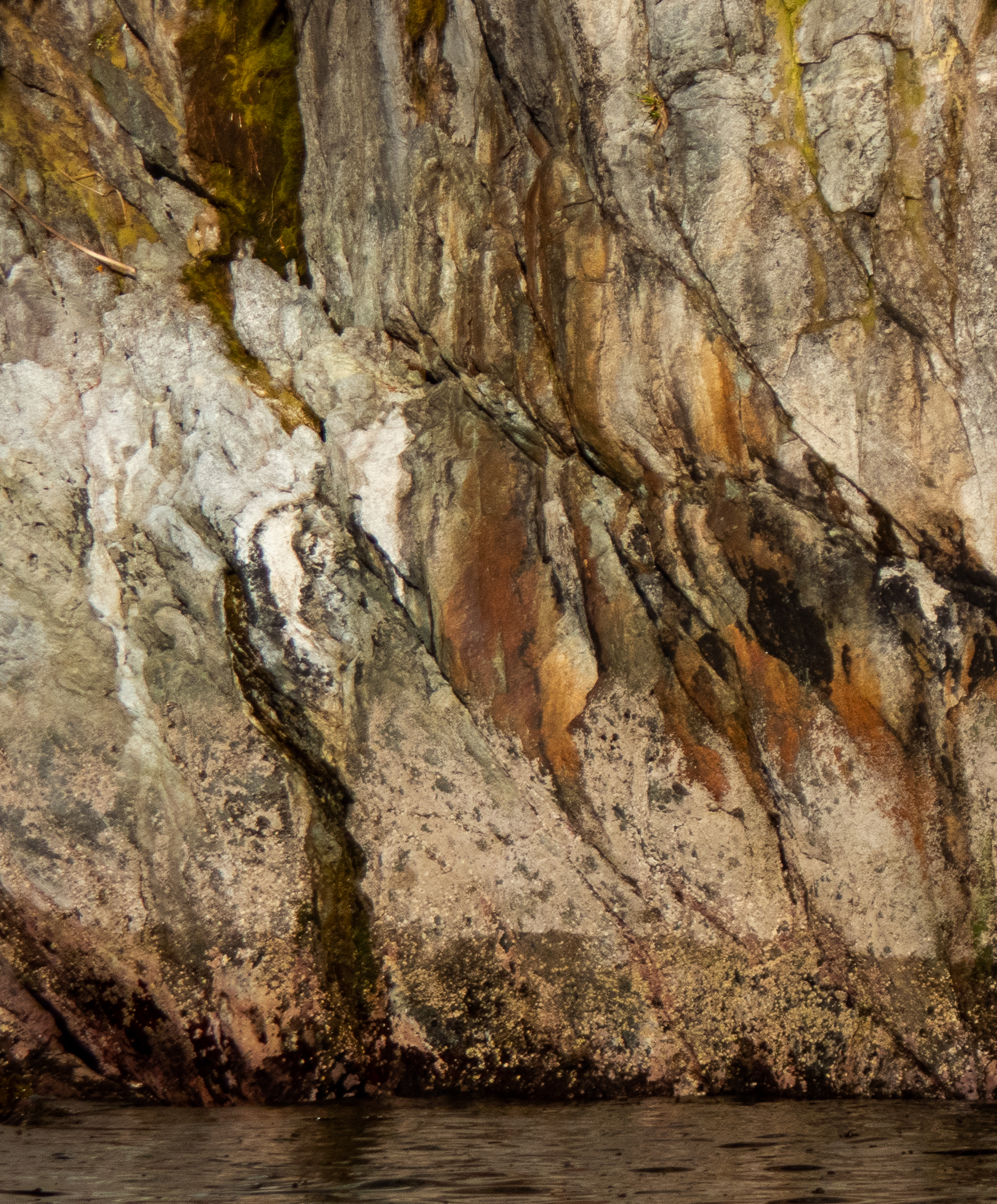
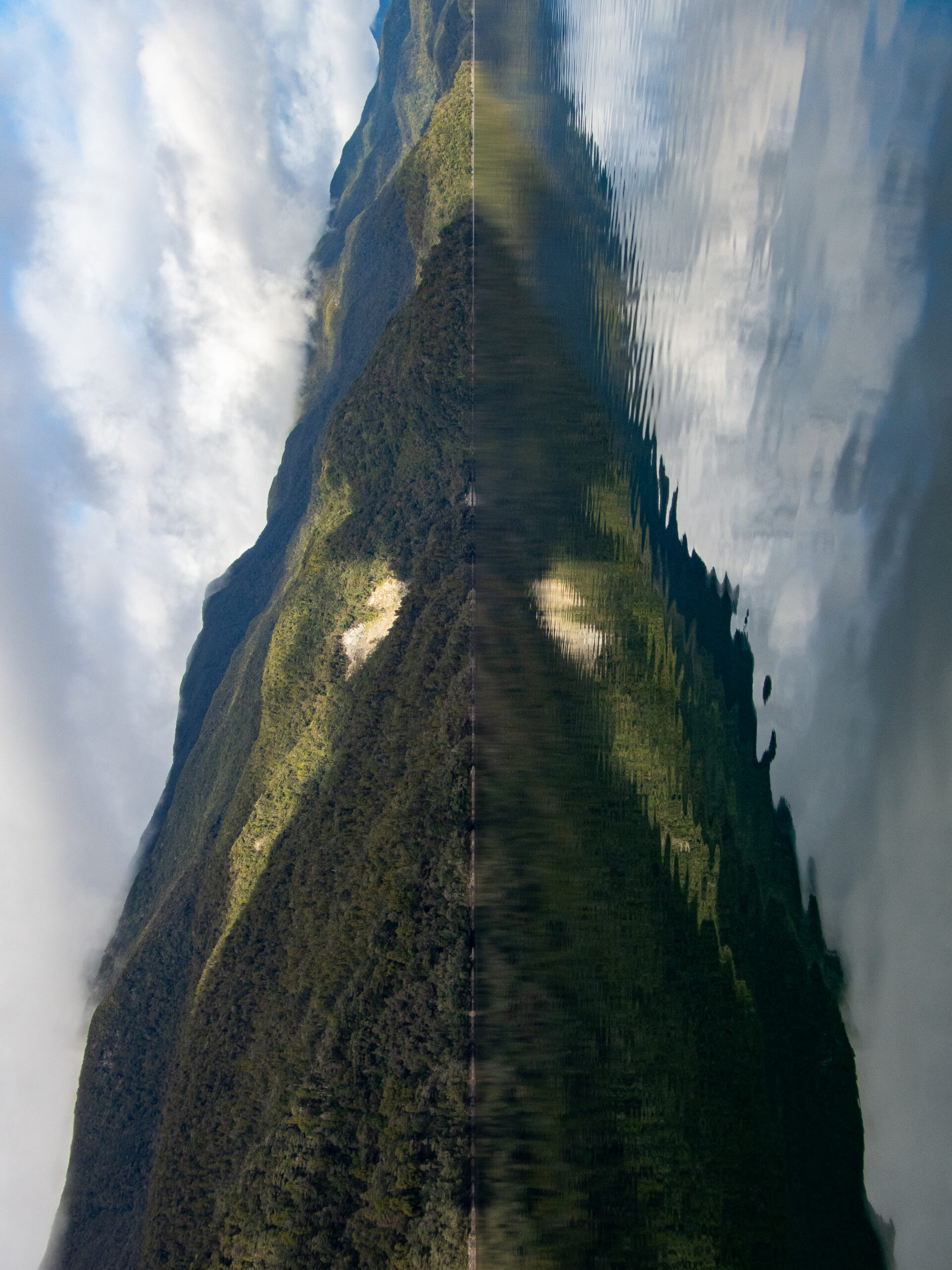
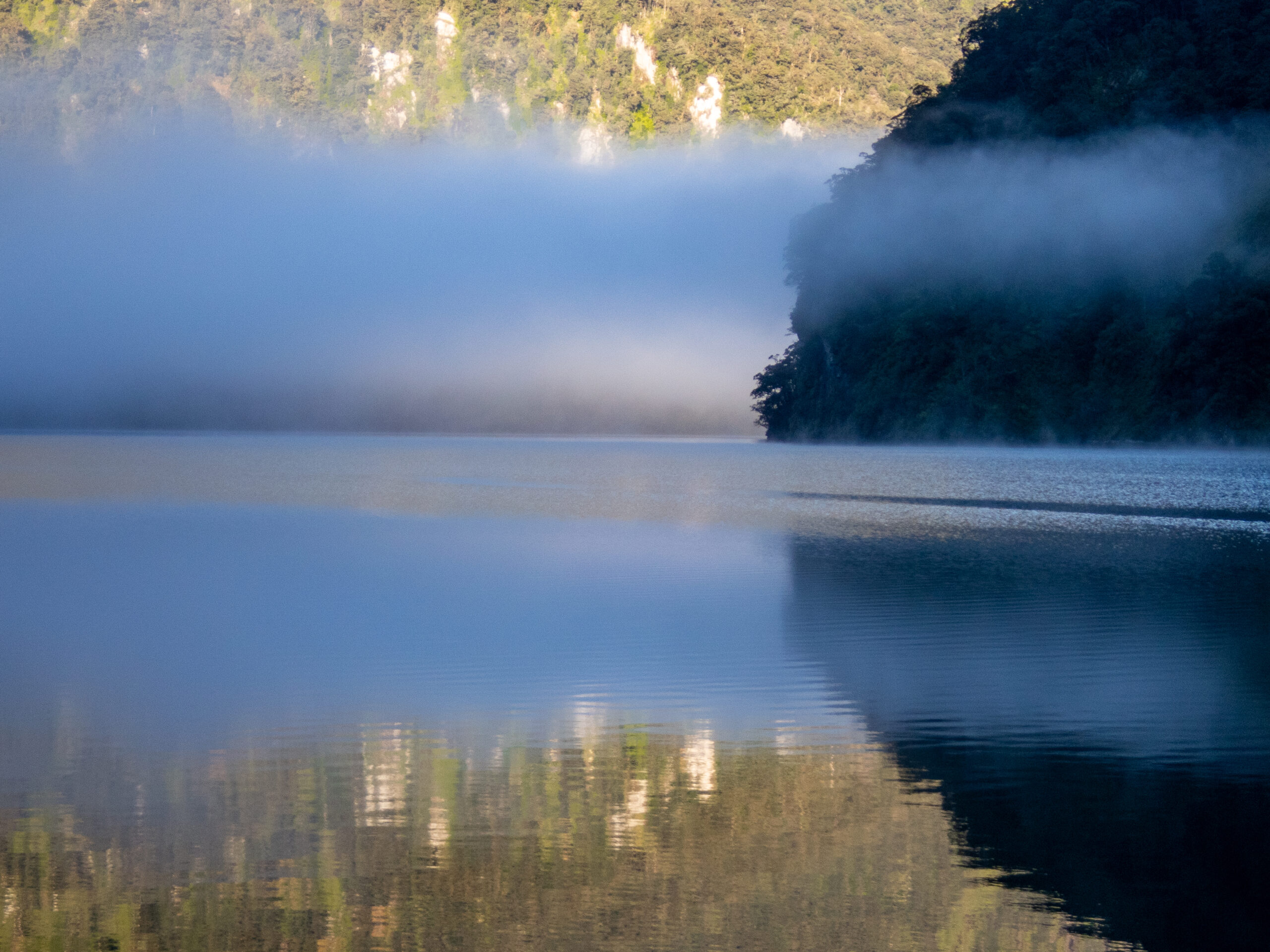
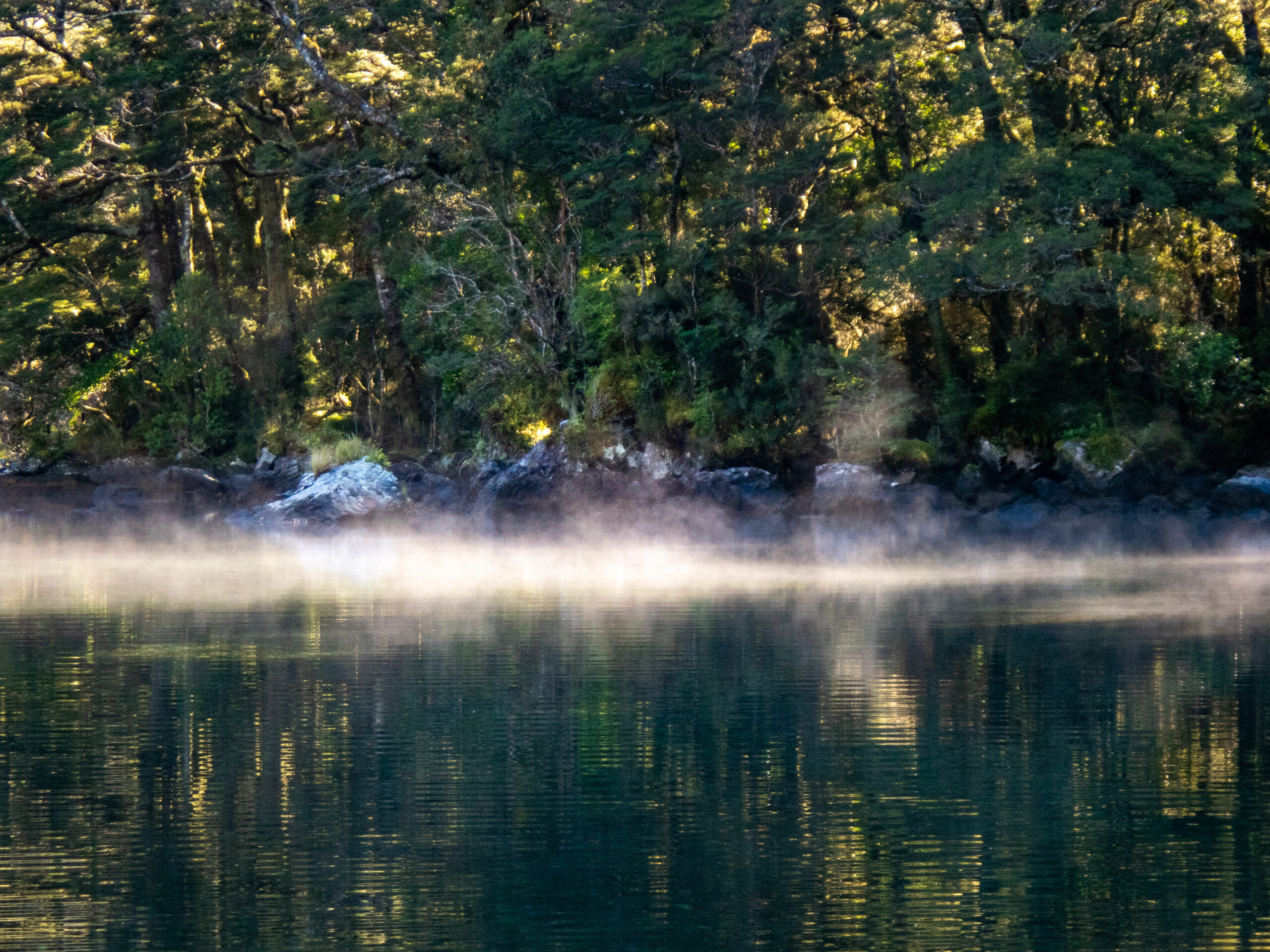
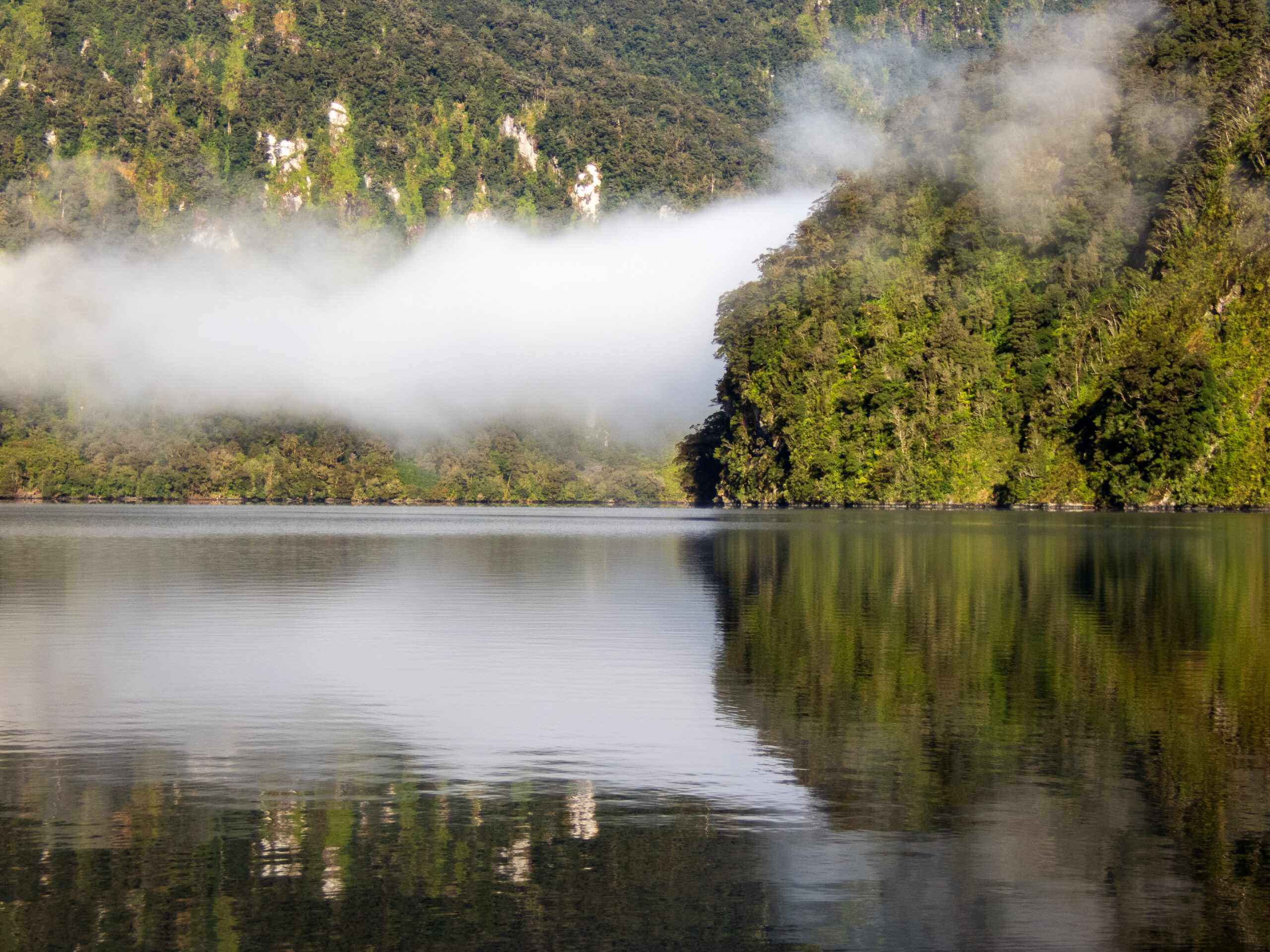
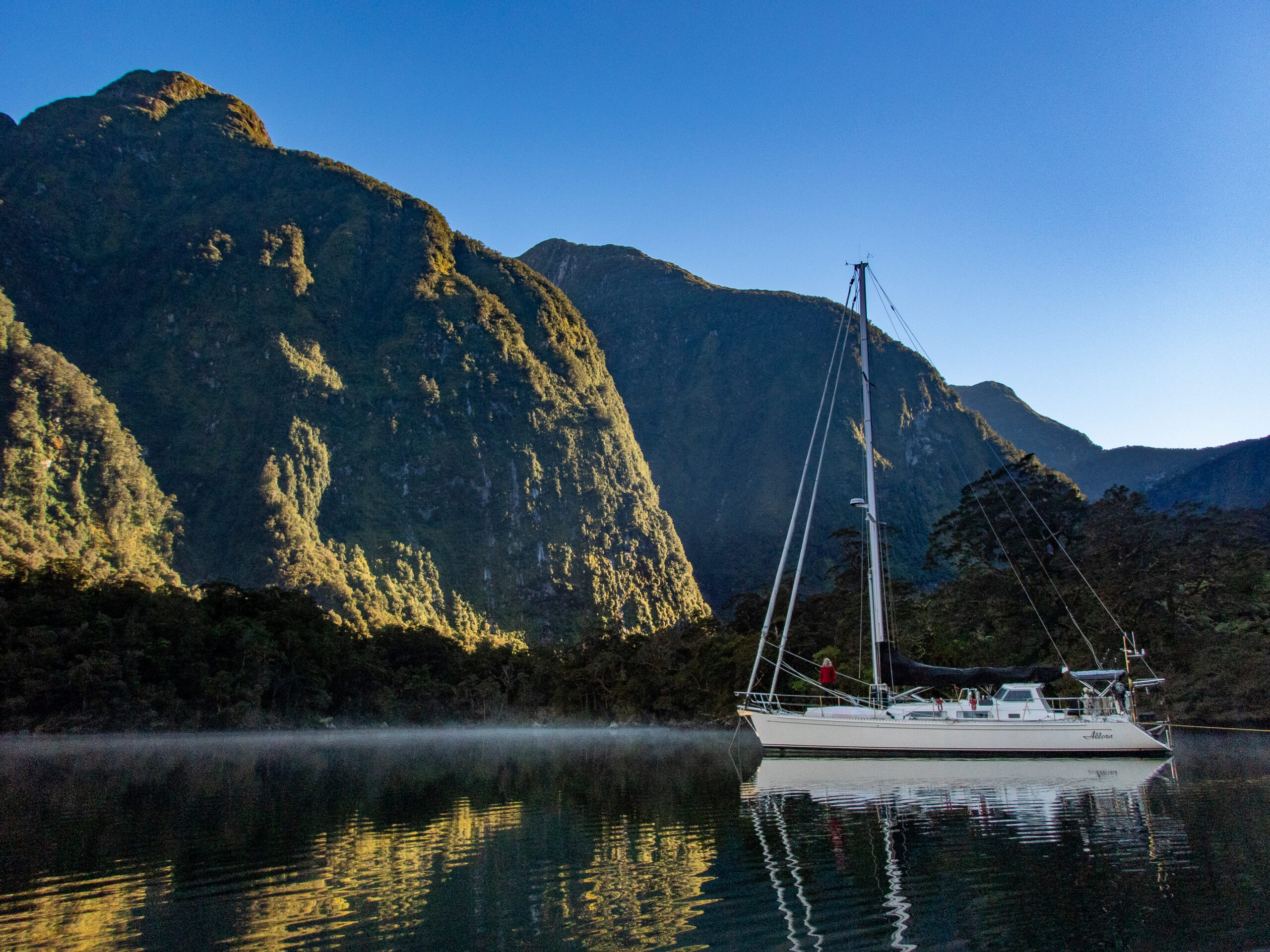
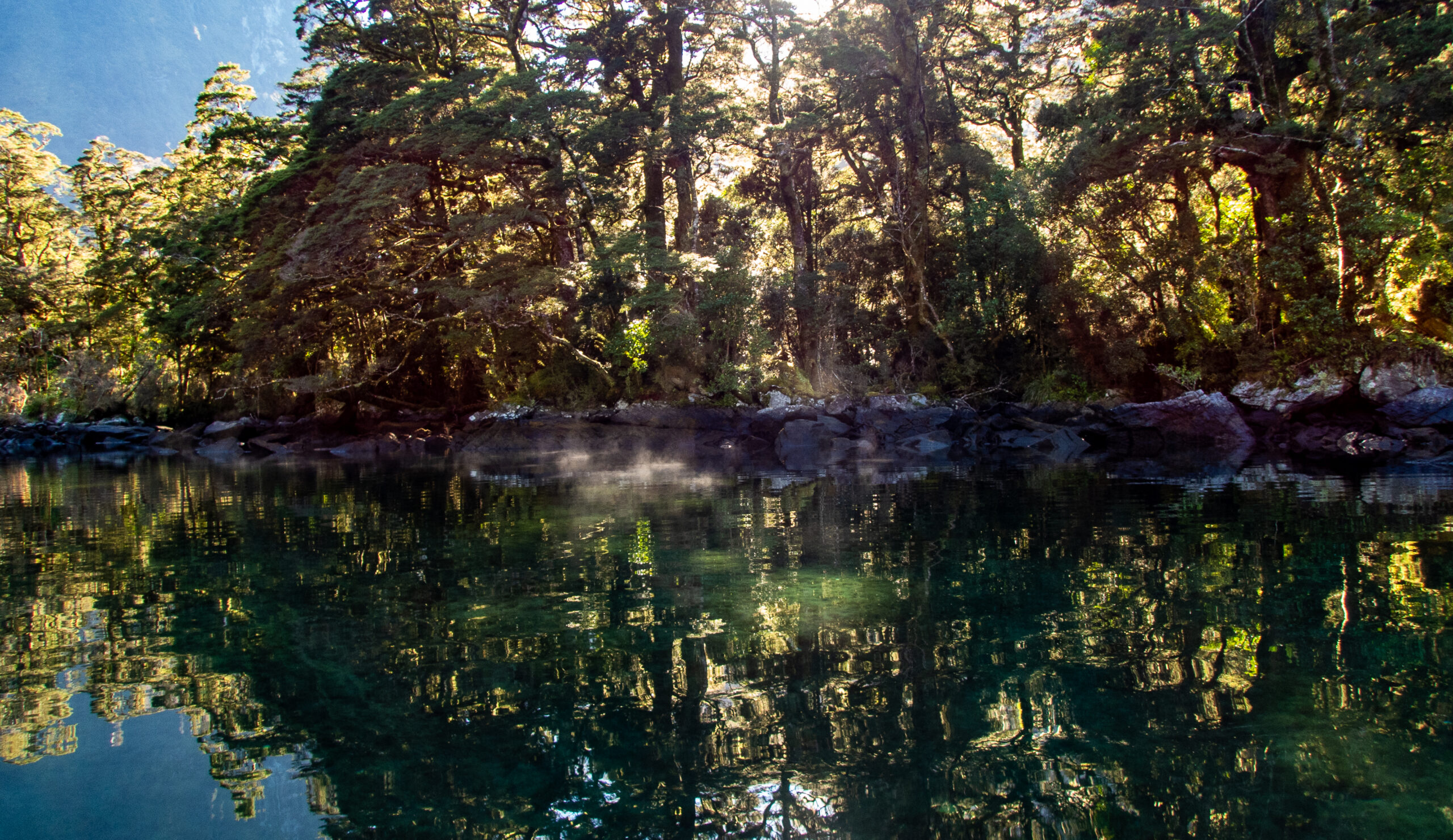
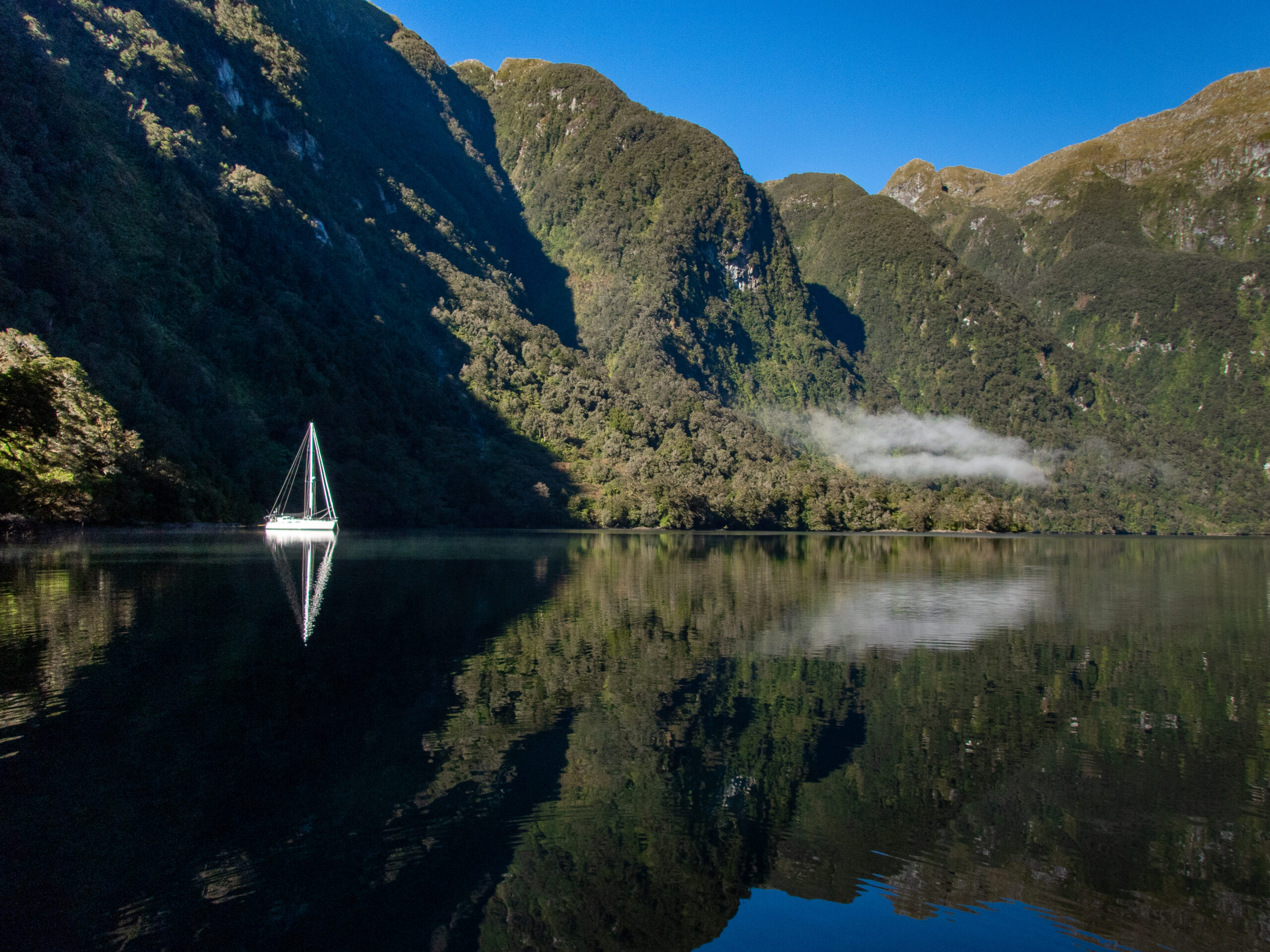
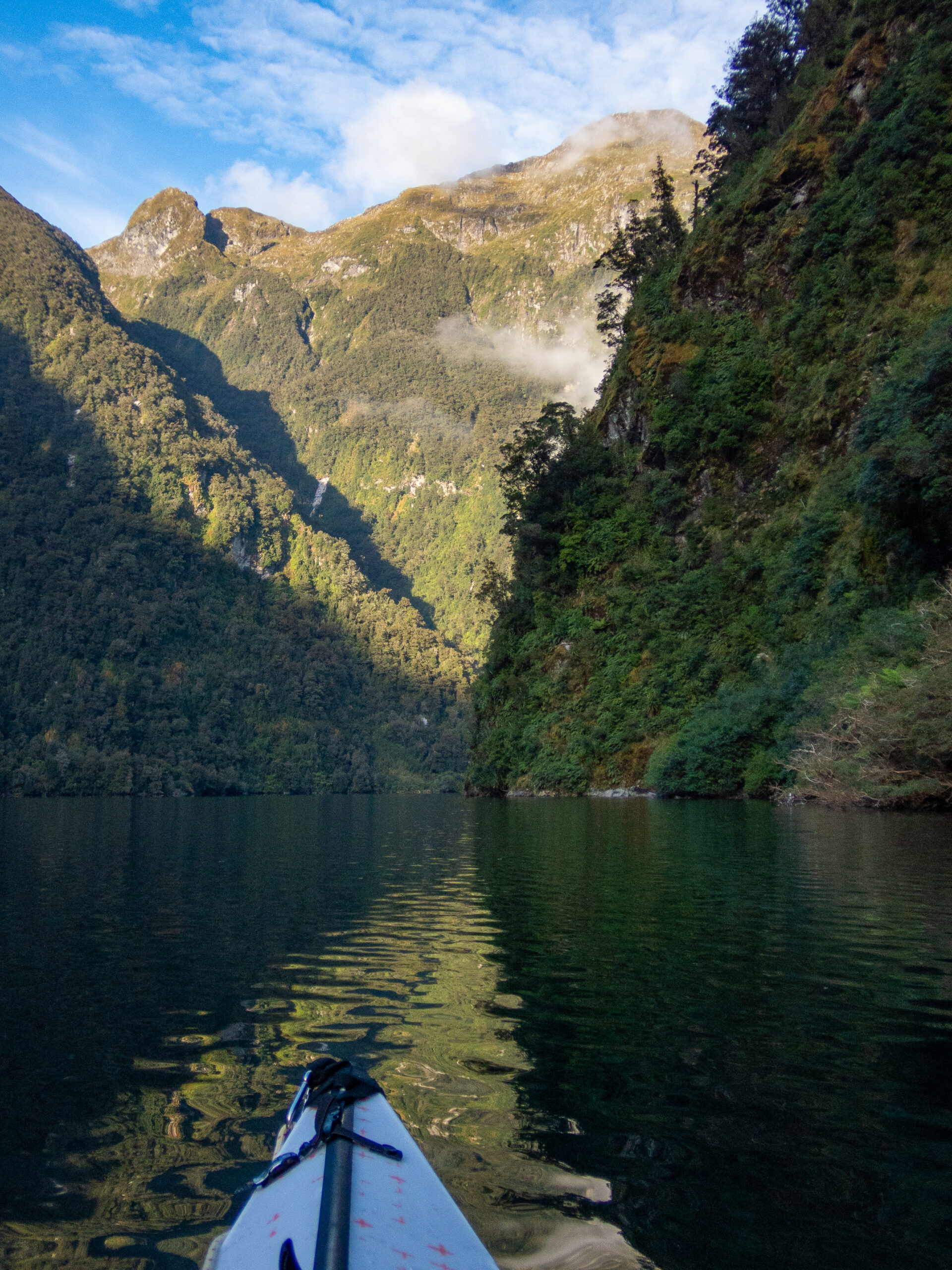
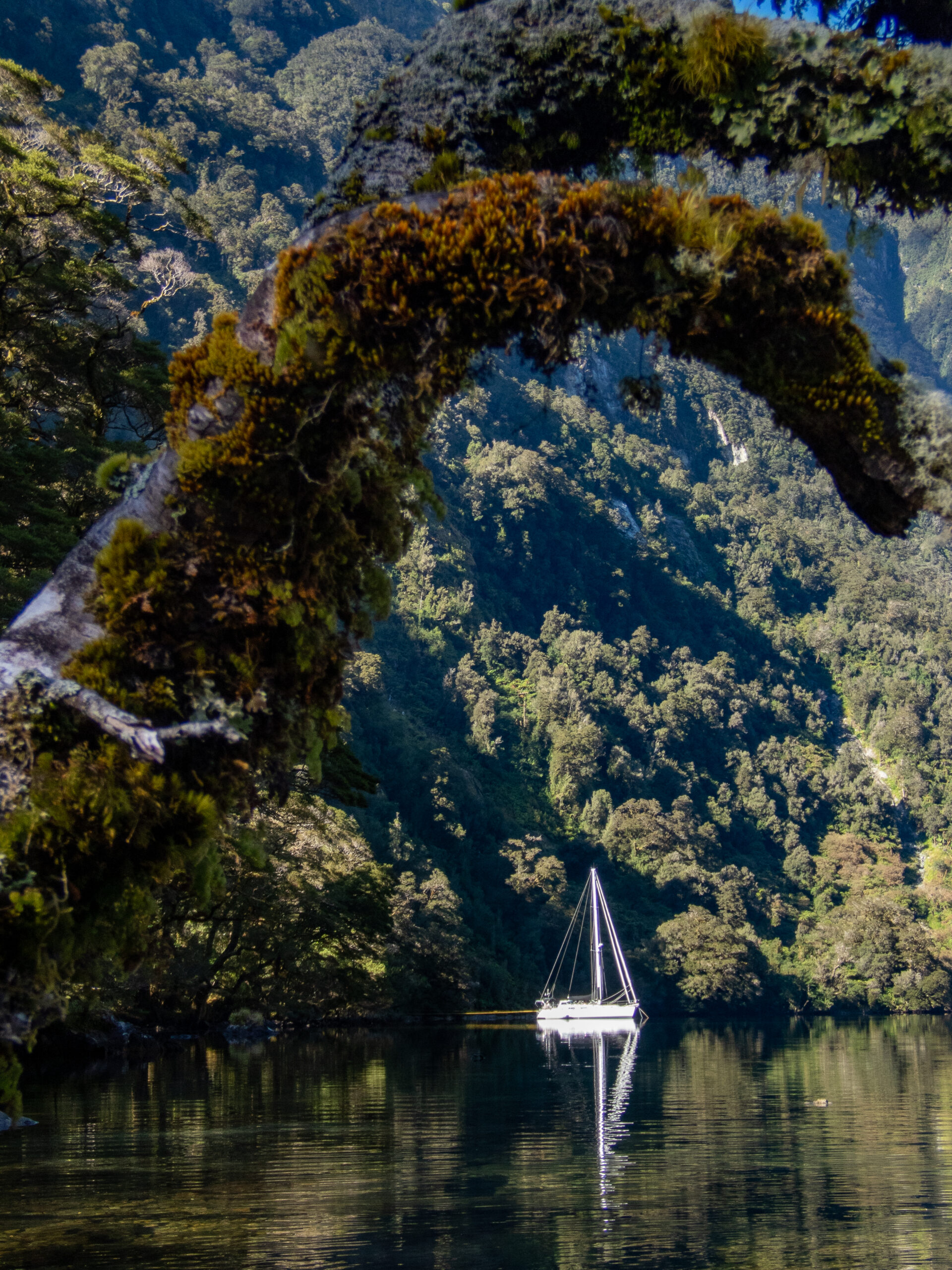
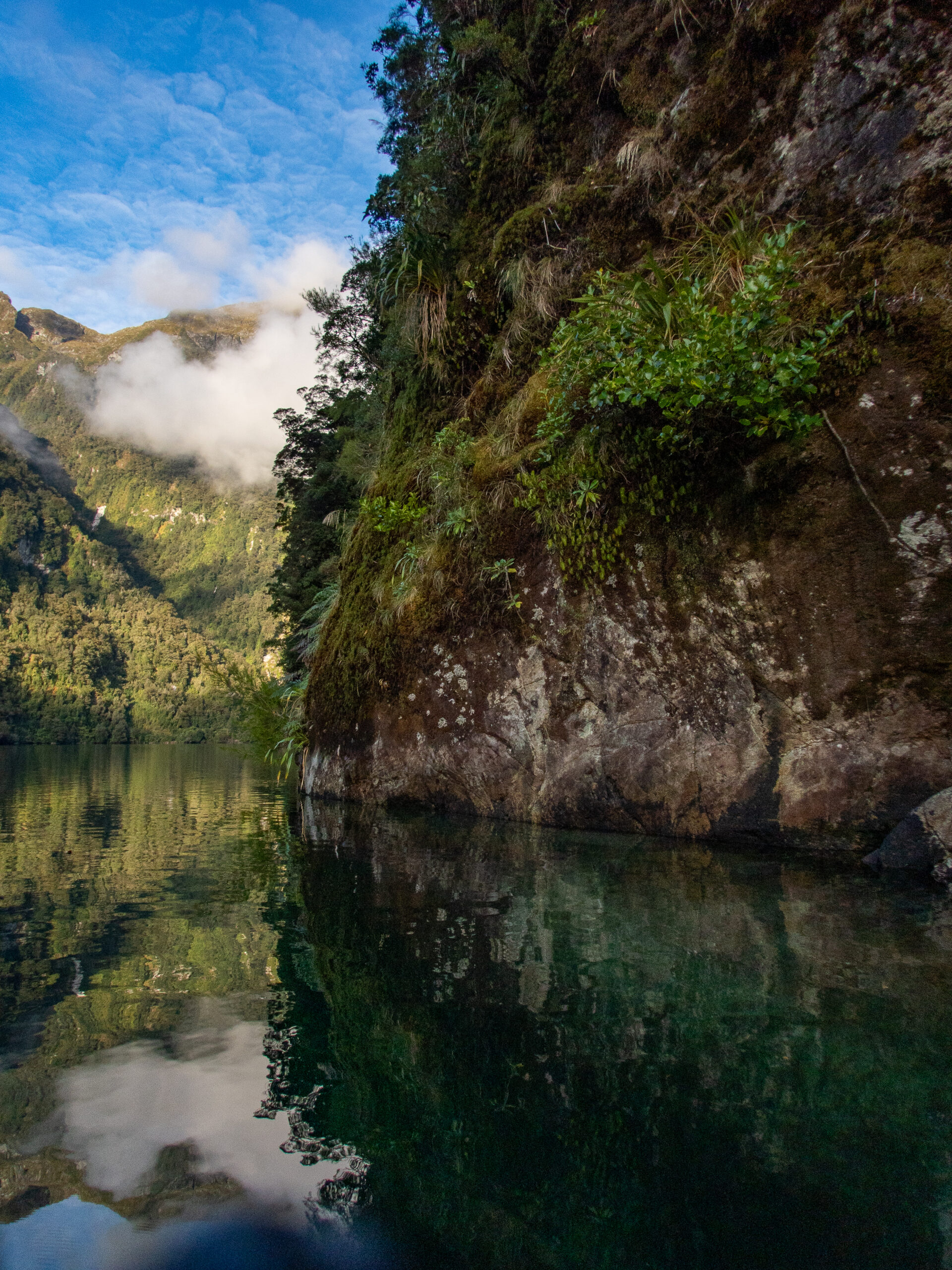
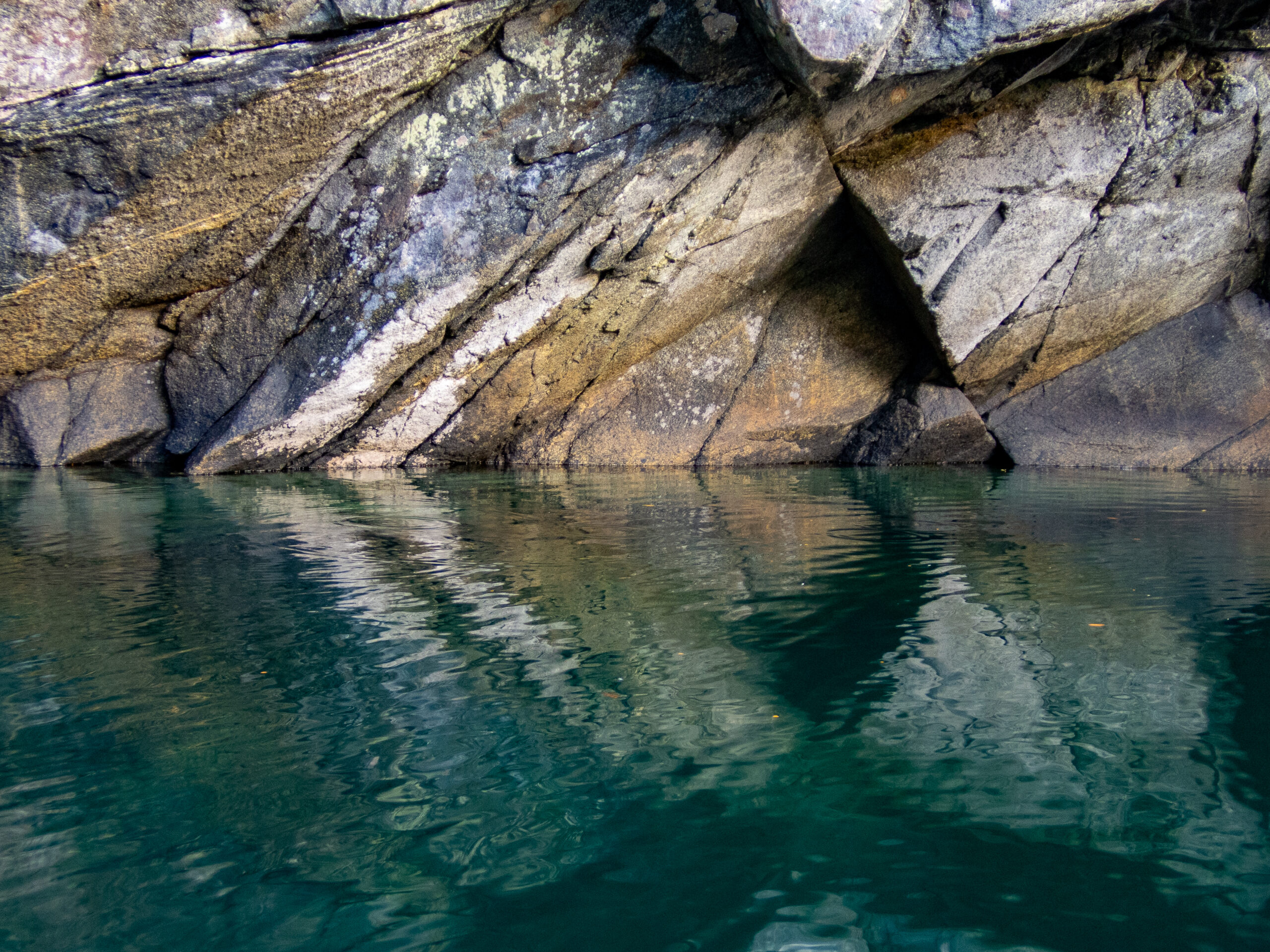
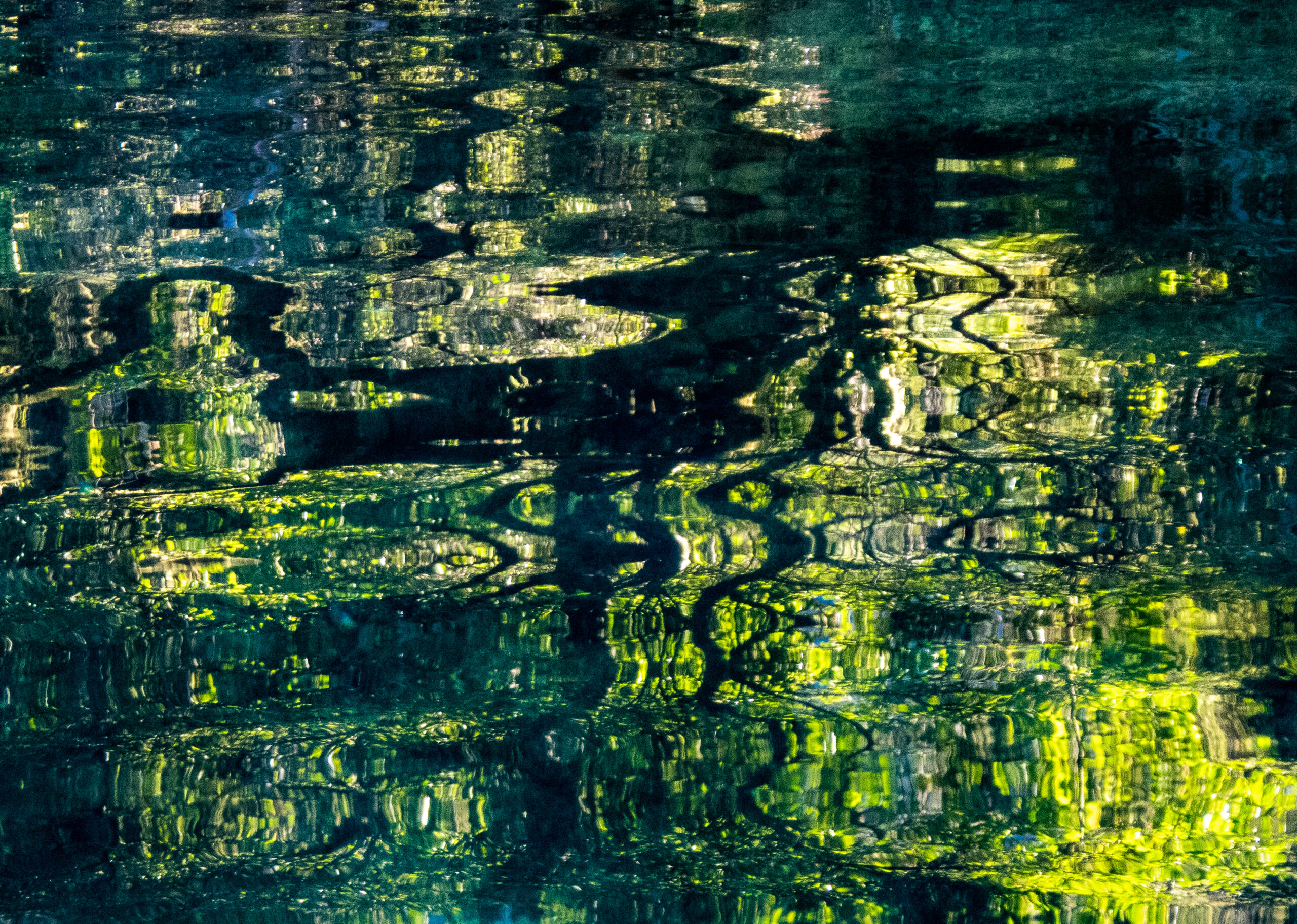
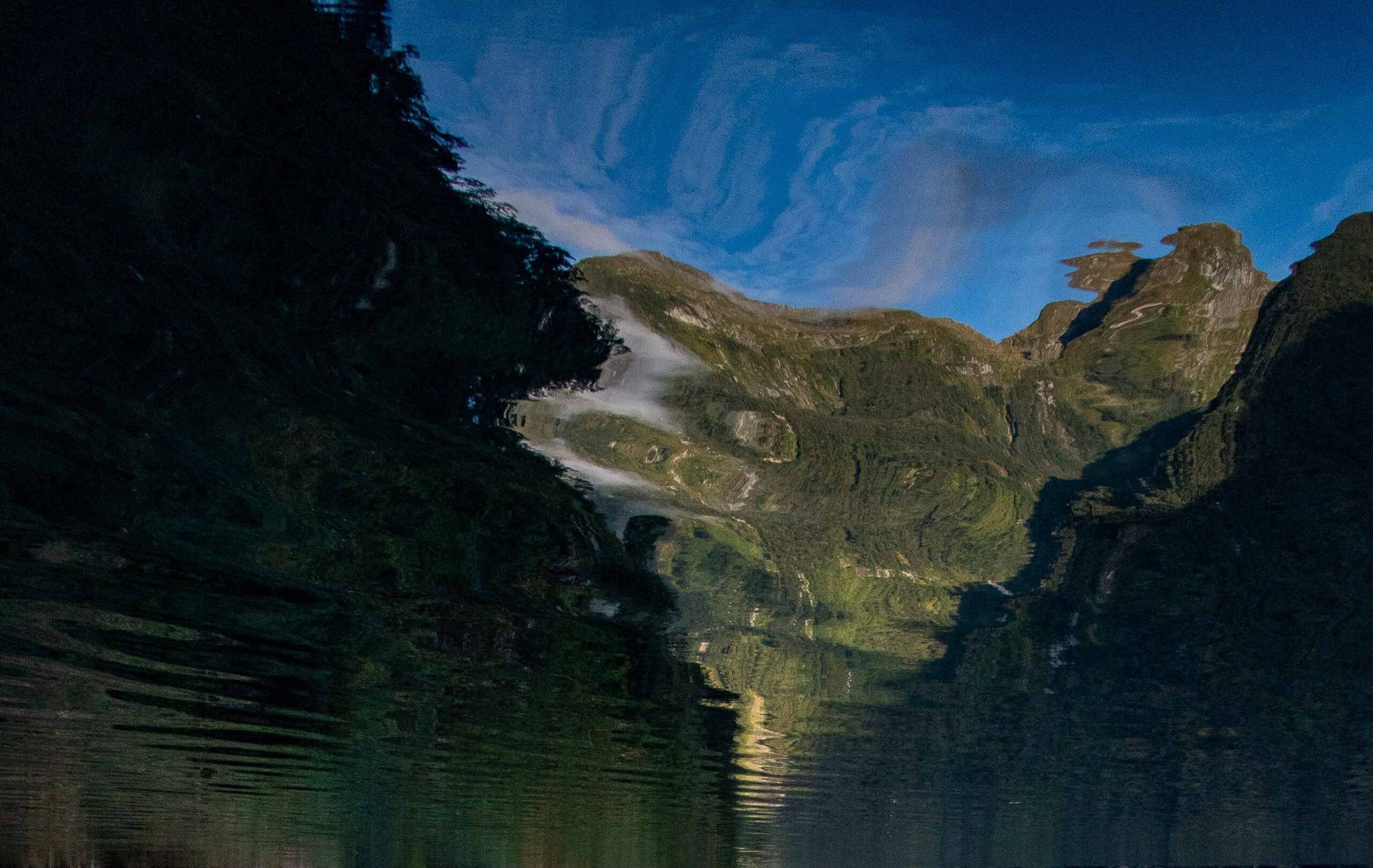
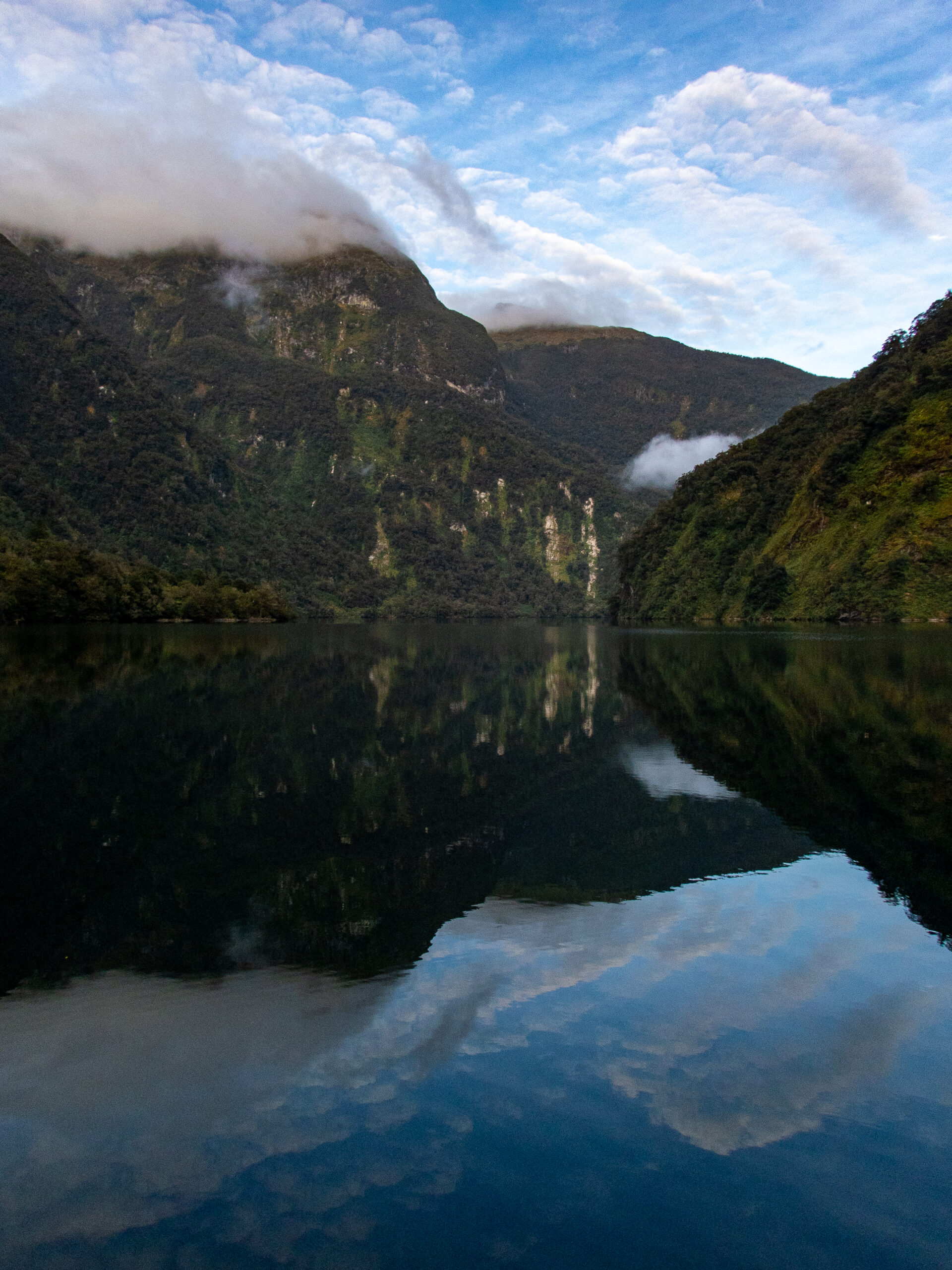
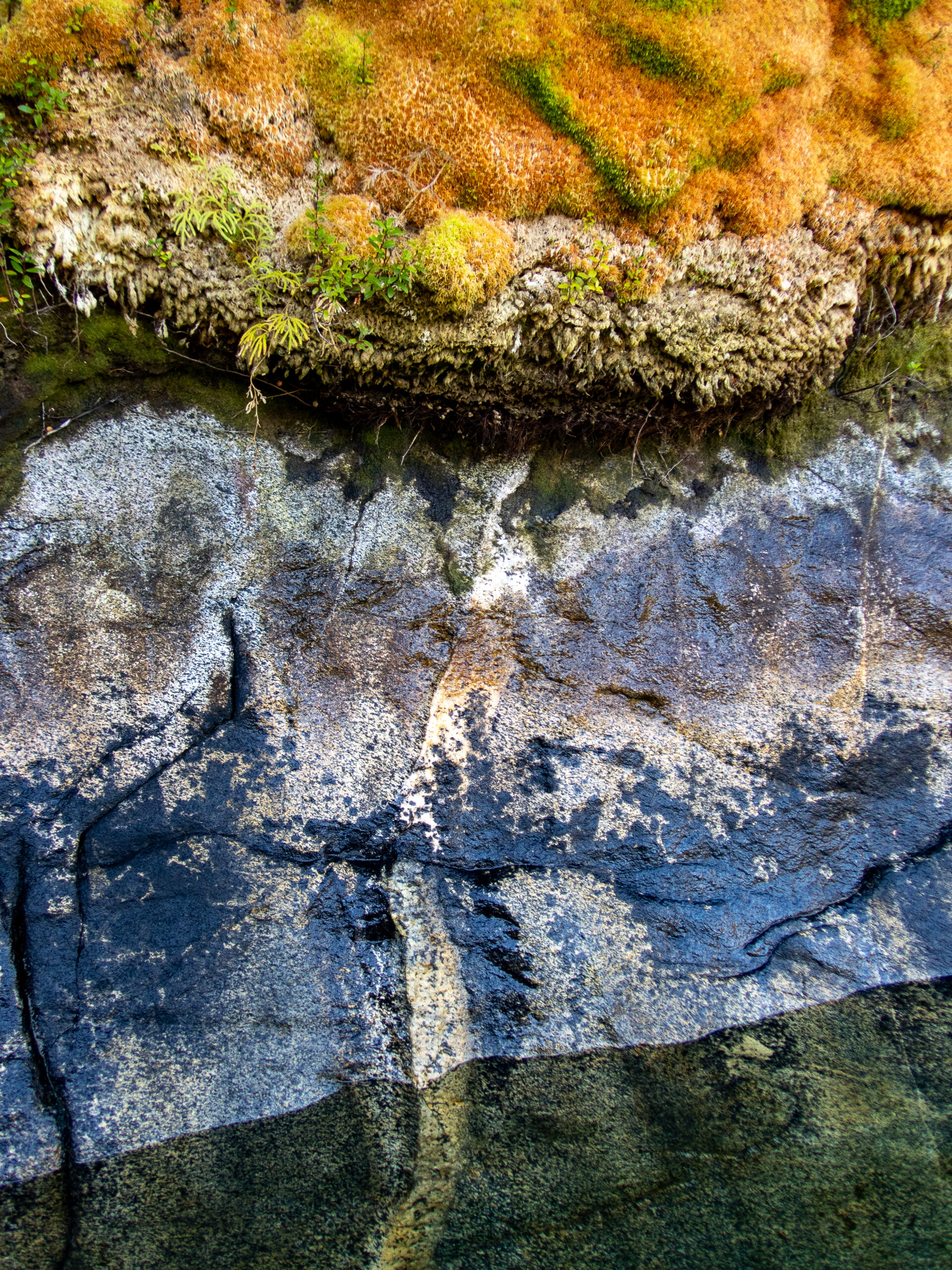
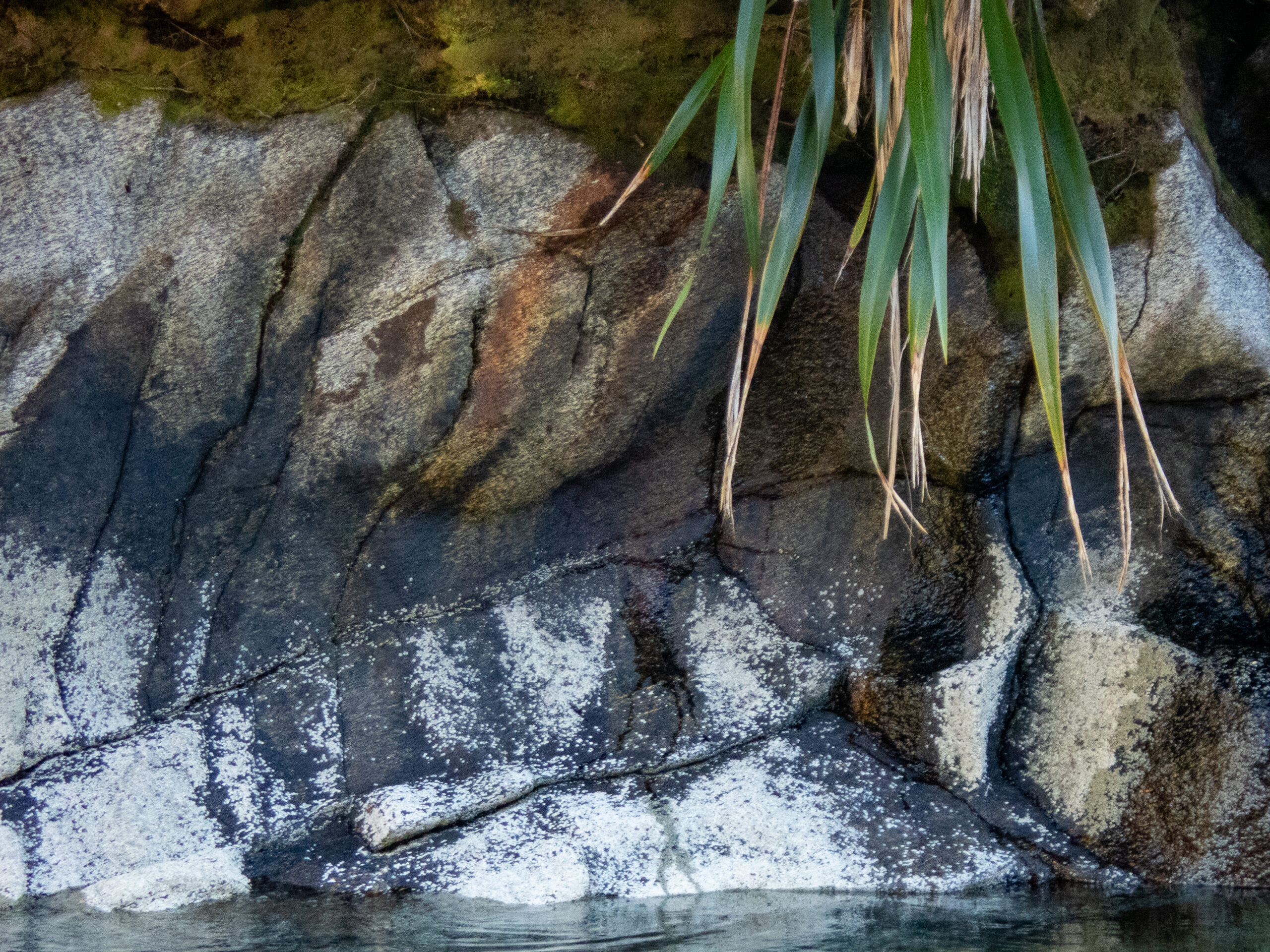
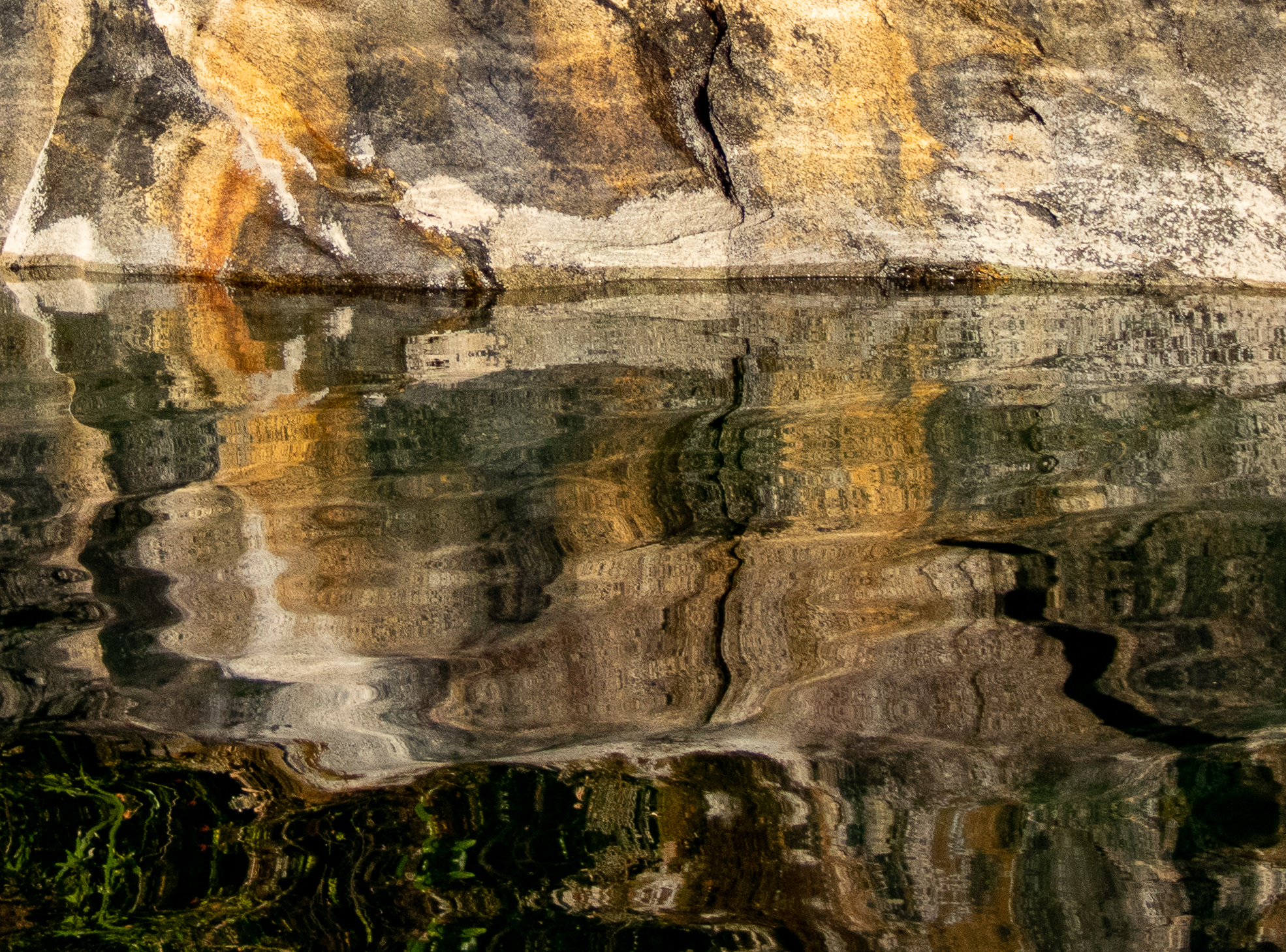
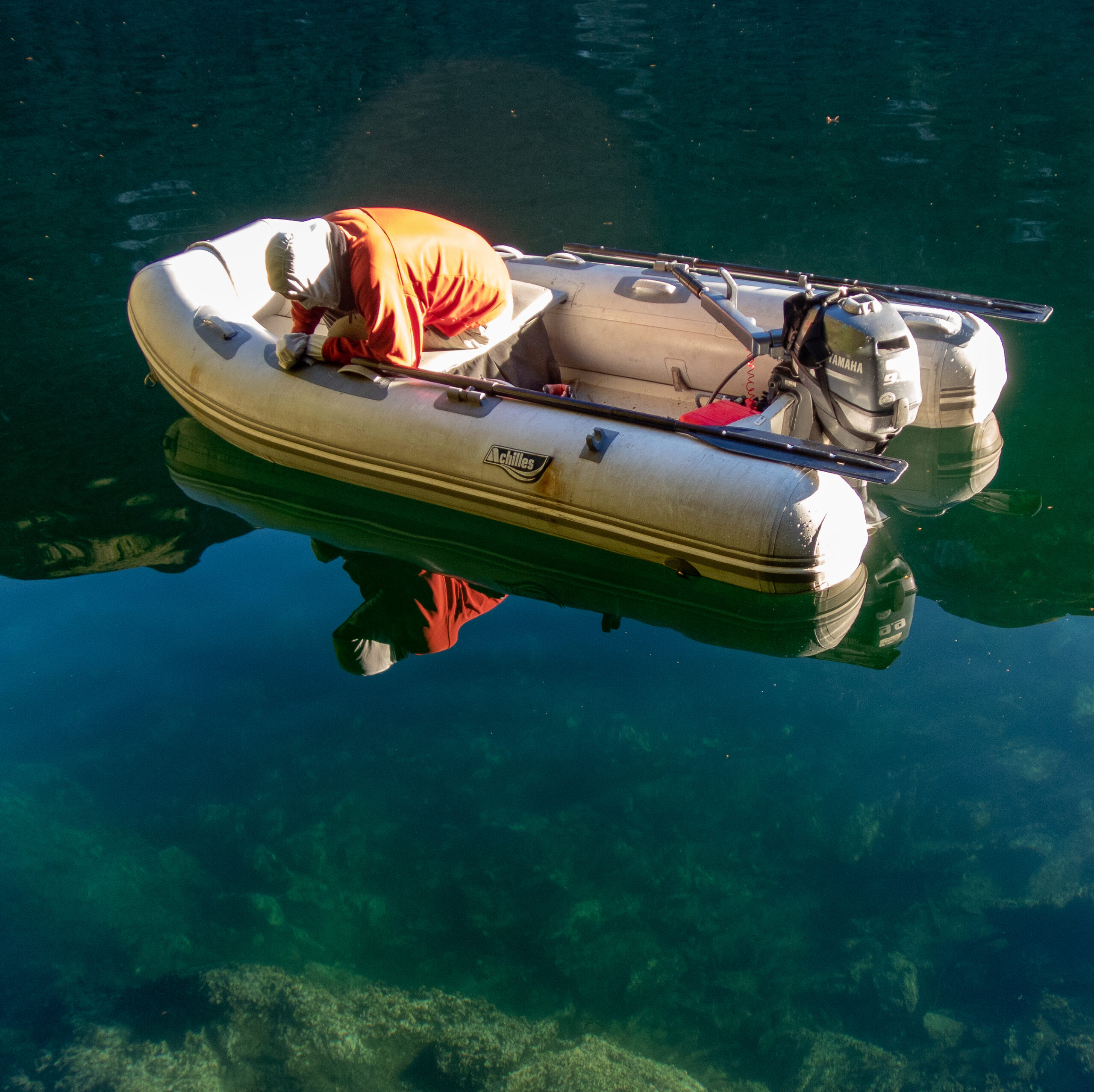
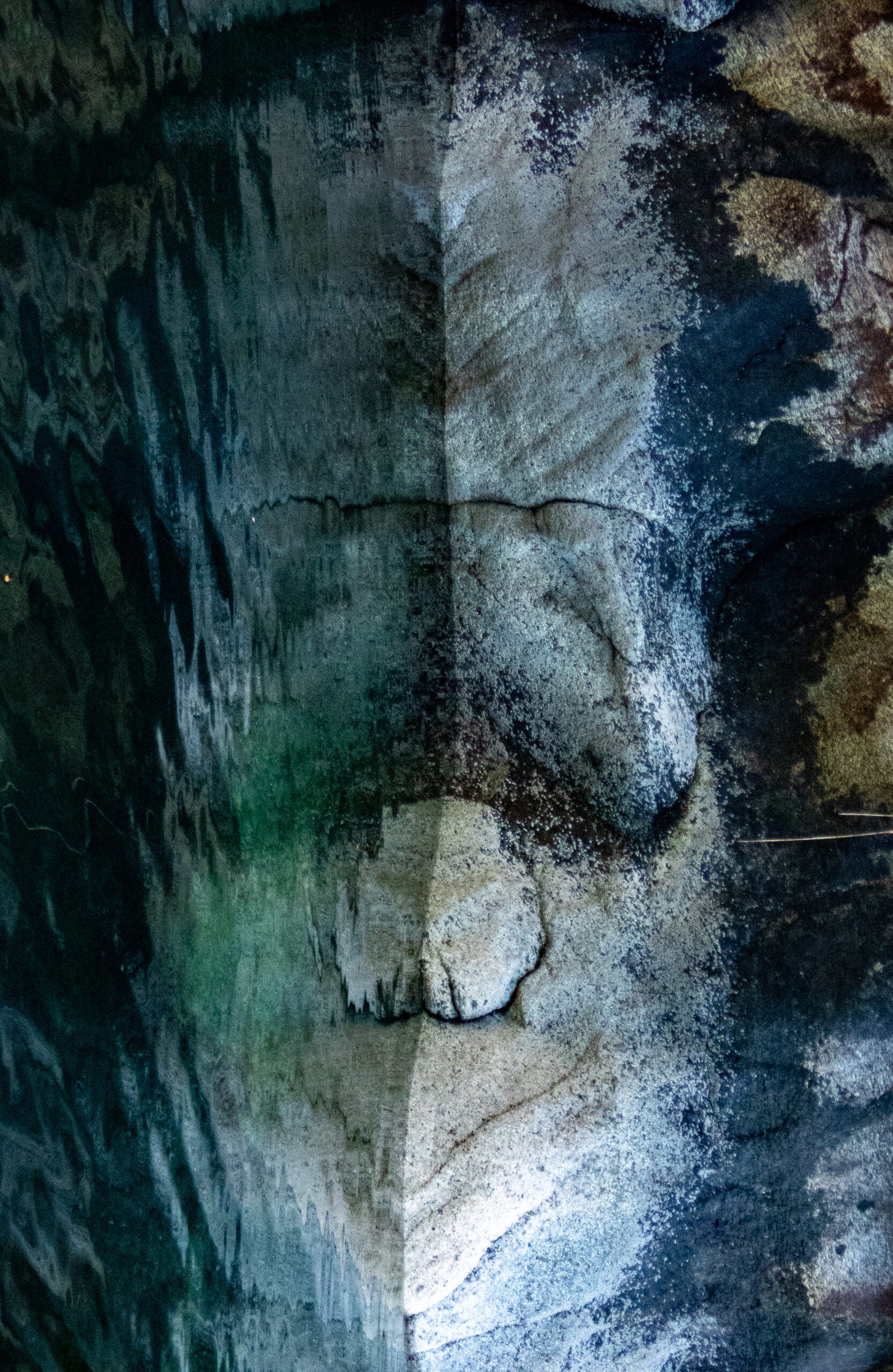
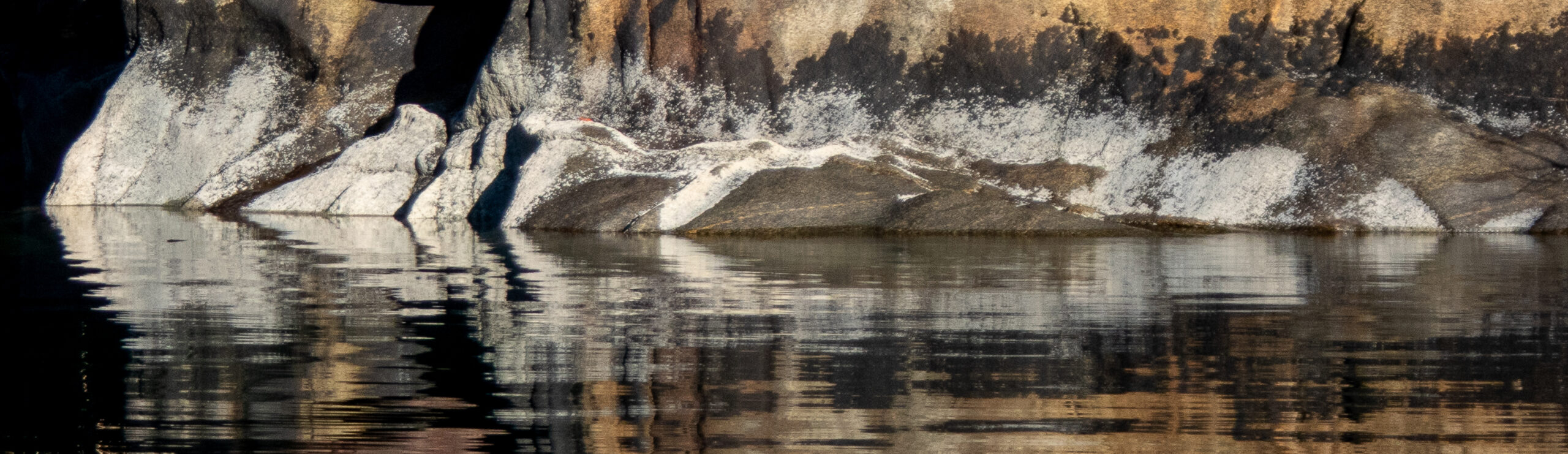
Being at sea, on the sea, there is always a close and present awareness of the line which divides the landed world and the underwater universe, though normally, the waves demand our attention and keep that parallel universe well hidden, and away from our thoughts. The eerie sense of depth creeps in at odd moments when something reminds you of the rocky bottom and the multilayered world of fishes below. In tropical water sometimes the bottom is visible at enormous, ludicrous depths, as the time we motored into the Gambier on a glassy sea and Diana could see sharks clearly in the pass a hundred feet below us. But in Fiordland, the water is usually hundreds of feet deep within just a couple boat lengths away from the “shore.” The water is not murky but light barely penetrates. Stillness is legendary here, also the shimmering layer of freshwater floating atop the tide, that looks like heatwaves in the desert. You can peer straight down and see golden leaves tumbling in the current above the darkened depths. But most of the time, the Sounds keep their secrets well hidden and the water mirrors back the soaring peaks and luxuriant waterfalls and exuberant beach and fern forests, doubling the awe. As stunning as it is, the obvious trick of the mind is to delete the bottom half of the image as “merely” a repetition. Sometimes I had to be reminded to see it another way. Perhaps because she was photographing these landscapes, Diana learned to see these reflection even more vividly, to delight in the ubiquitous natural Rorschach.~MS
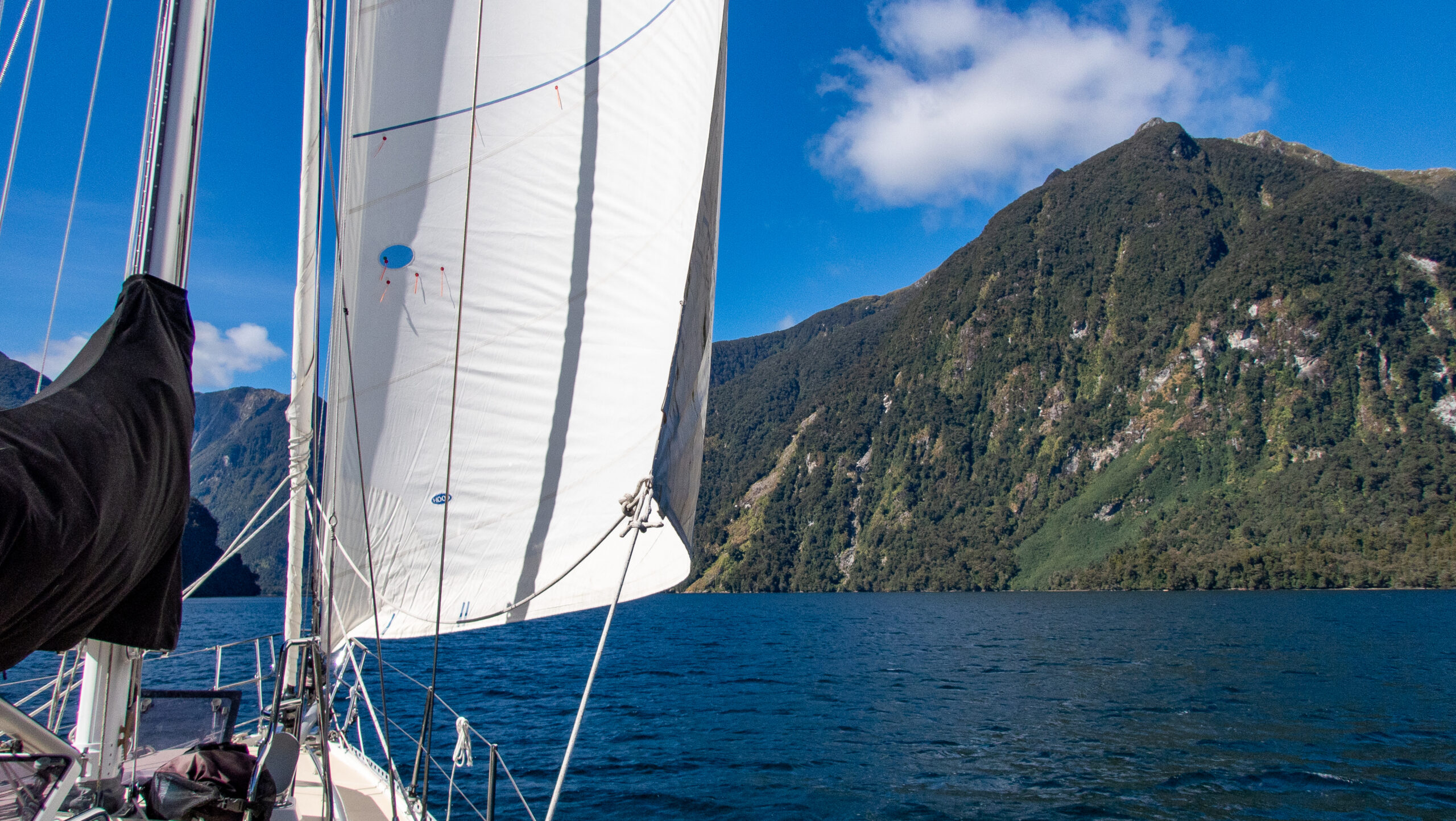
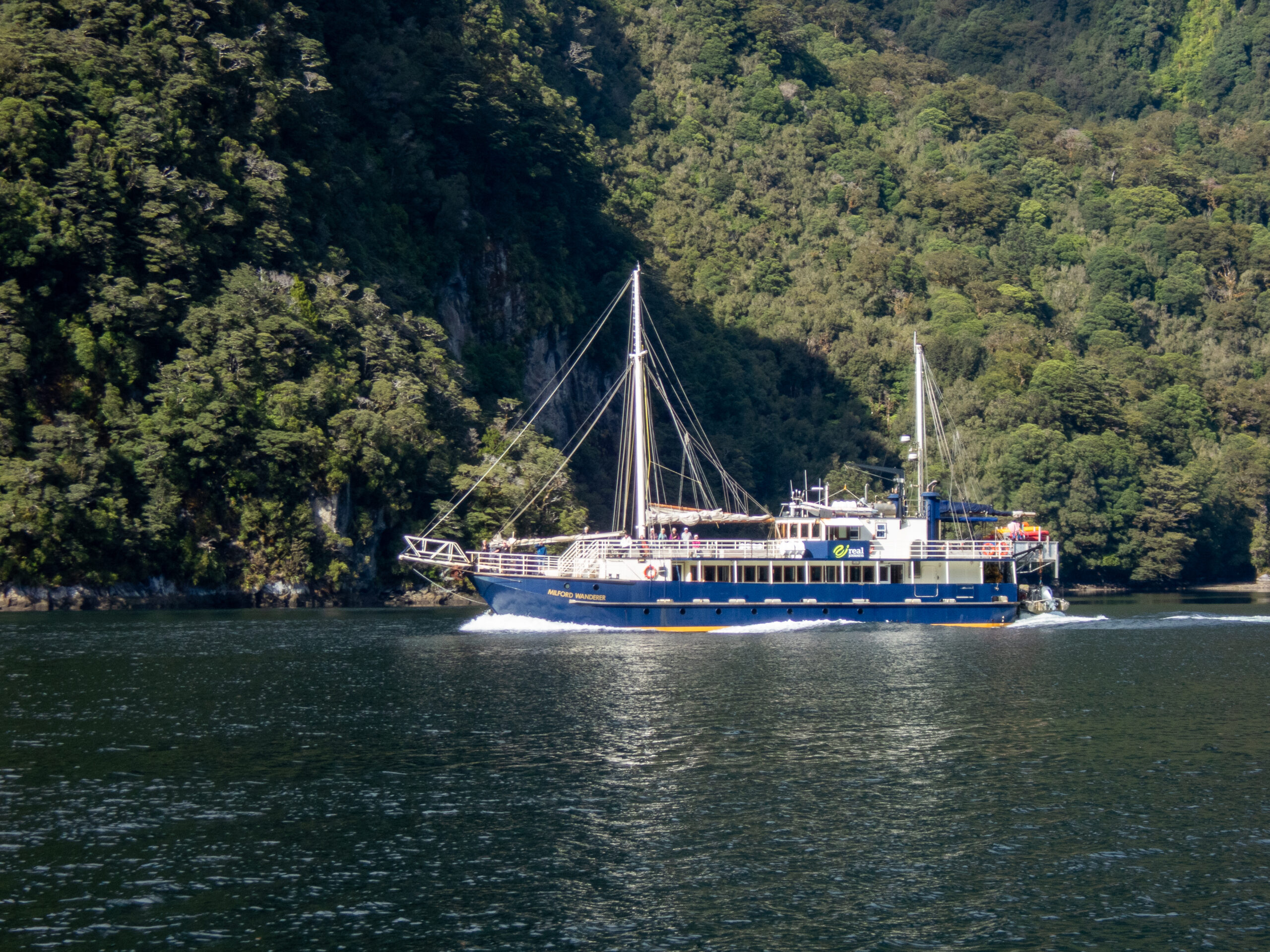
Neat that this stunning landscape so often gets a glimpse of itself!Wile E. CoyoteOne of the handful of times we were able to actually pull a sail out – too much or too little winds to work with.We’re not in the islands anymore!‘Real Journeys’ run tour boats through some of the fiords. They never stay put for long.Approaching the ‘head of the bay,’ to anchor, we’d have to be really cautious about the typically steep sided, silty sandbank which gets created by the river outflow.
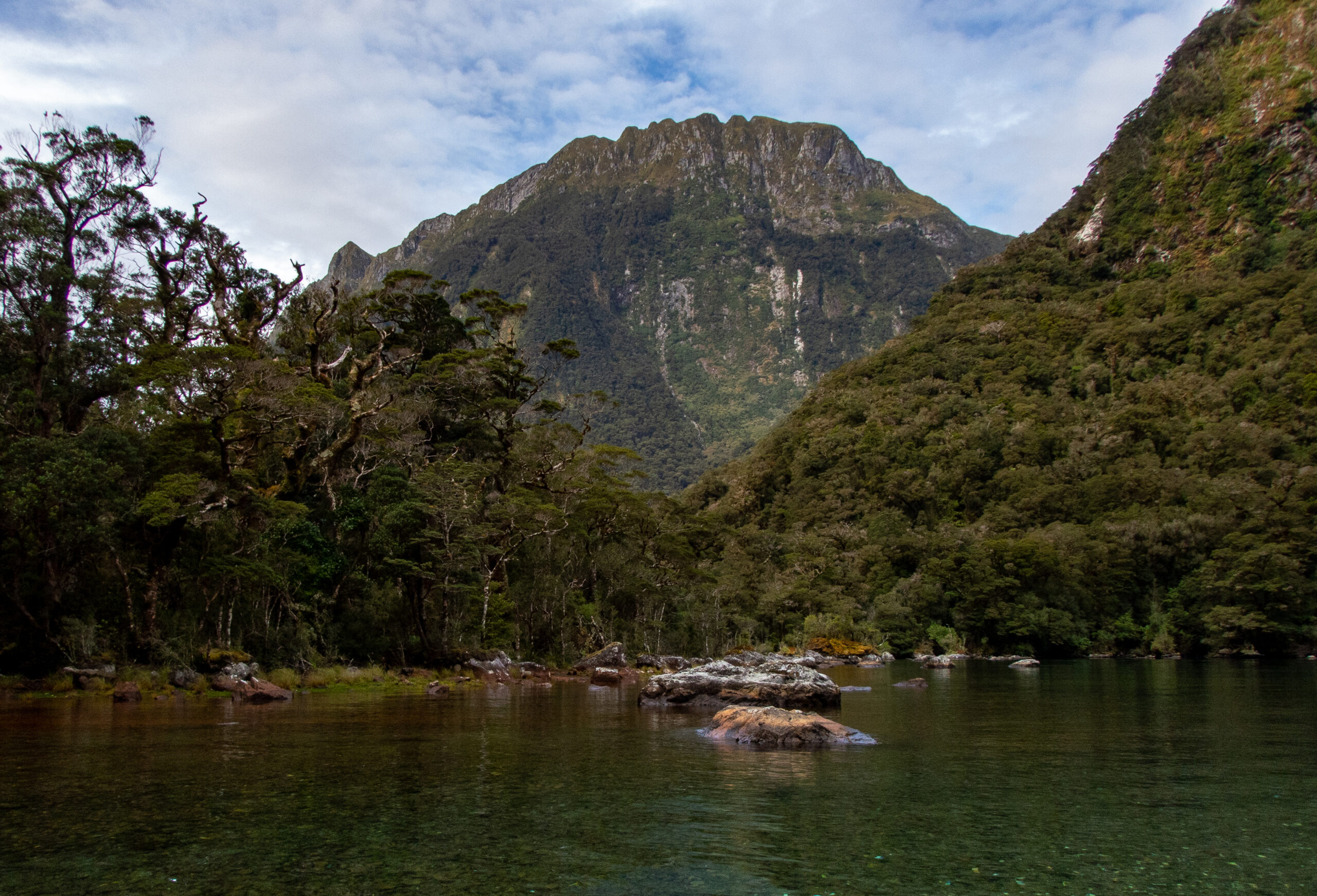
We were primed to love Broughton Arm. Tony, a New Zealand sailor we met in Tonga (from an Auckland sailboat building family) got there ahead of us and posted his impression, the humbling sense of privilege he felt to be in the remote presence of such mighty granite walls and peaks. “Paradise found!,” he exclaimed. It’s hard to think of a way to convey the heart sense of moving through pristine and unpeopled areas like this, the sense that goes beyond the imagery, the waterfalls, and magnificent trees, the wildlife. The sense of living stone and water and place. You look at one of the these peaks soaring above the the fiord continually stunned by the mass and energy represented there, and then by the bounty of life exuberantly, vividly greening those granite flanks. And water, water, water everywhere. ~MS
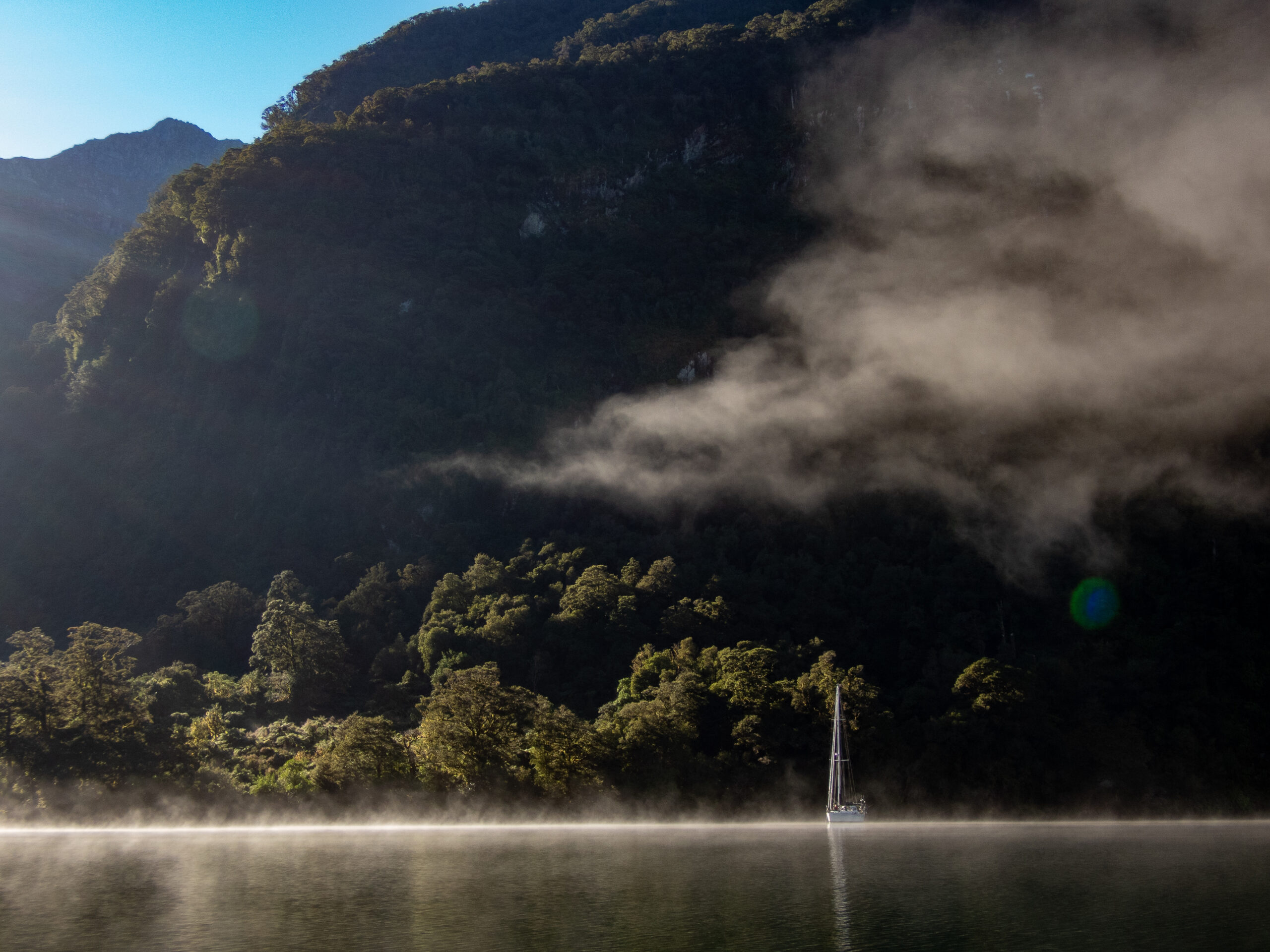
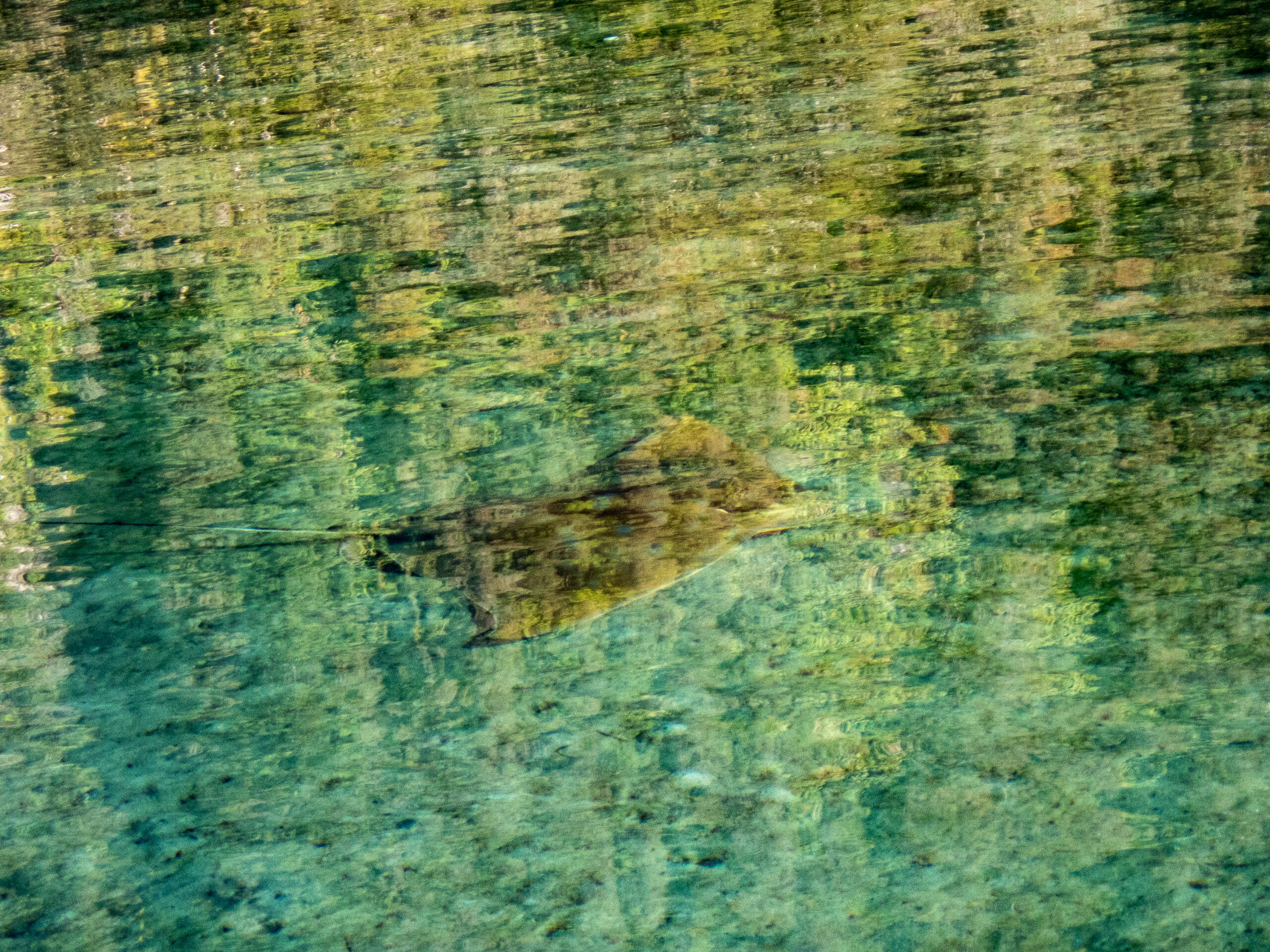
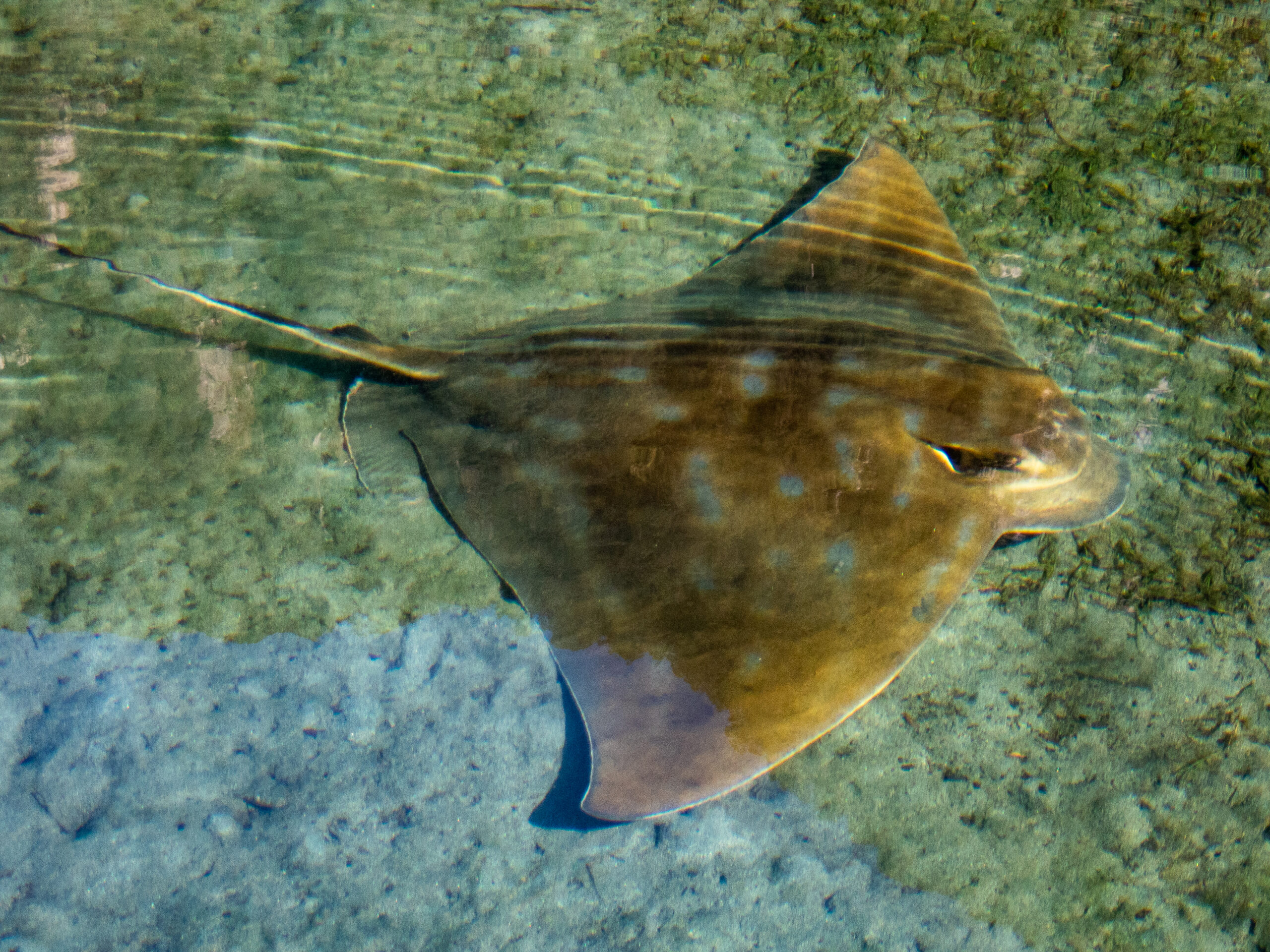
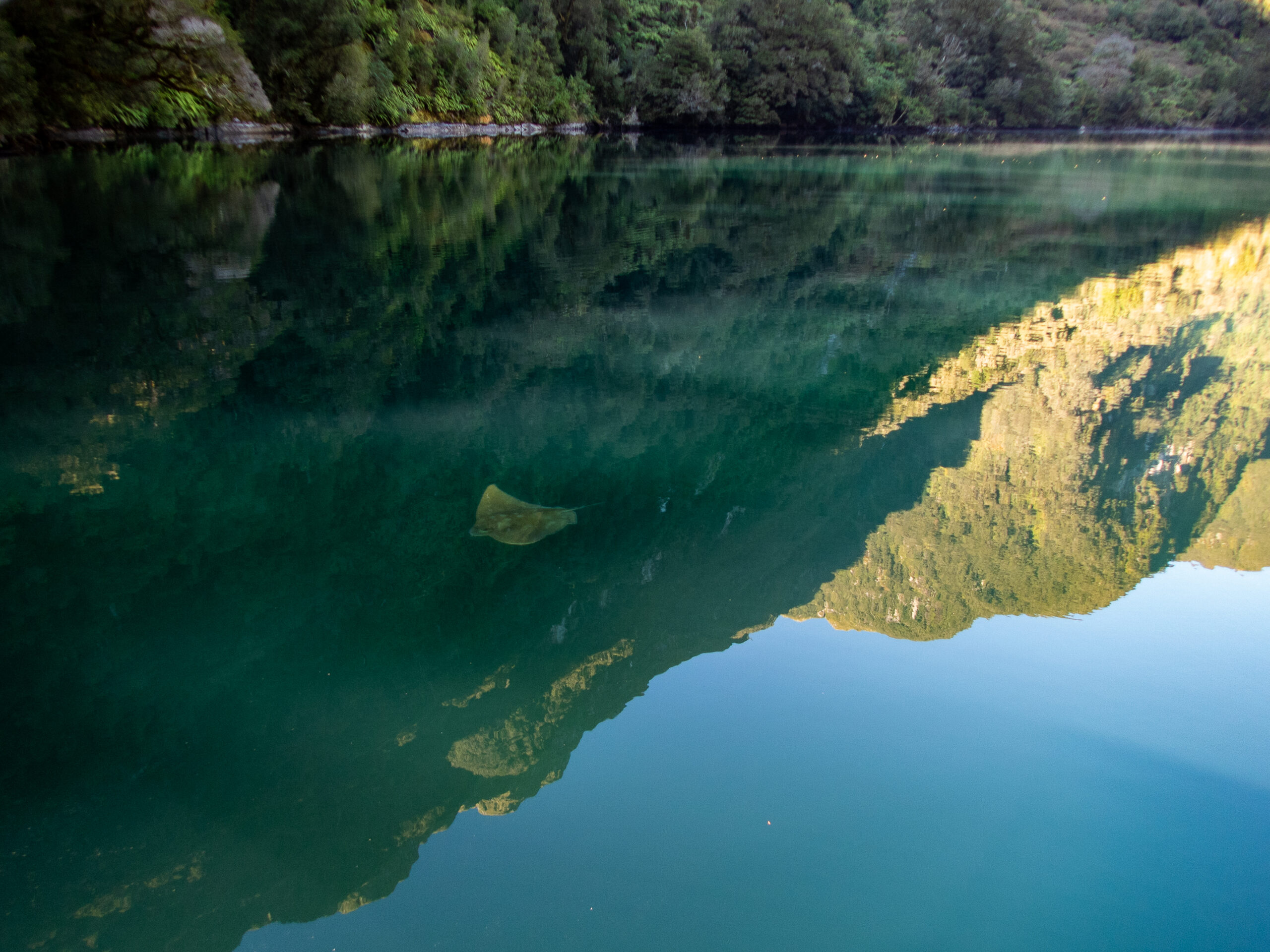
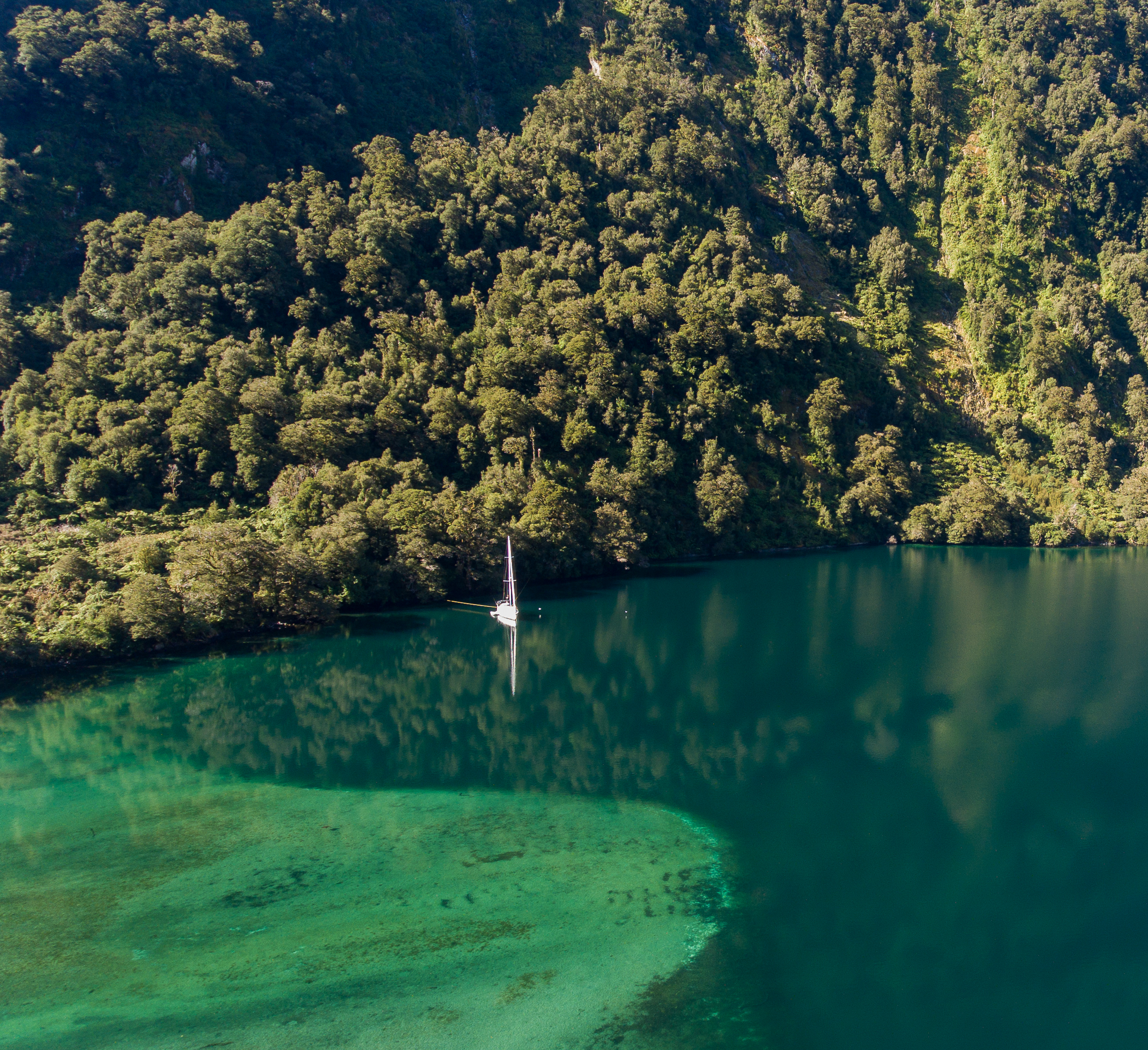
When the sun shines overhead, the sandbank (and its’ creatures – see the ray?) are super visible and too shallow for Allora’s 2m draft.We found a deeper edge (50′) where we dropped our Australian made Sarca Excell anchor. Started with one shore line and added another later when the wind picked up.The fog came flooding out of the canyon head early in the morning and I ran out (coffee in hand), jumped in Namo and started rowing into it to take some pics. Didn’t realize I was still in my warm fleece onesie and had no sandfly protection. Totally worth it.
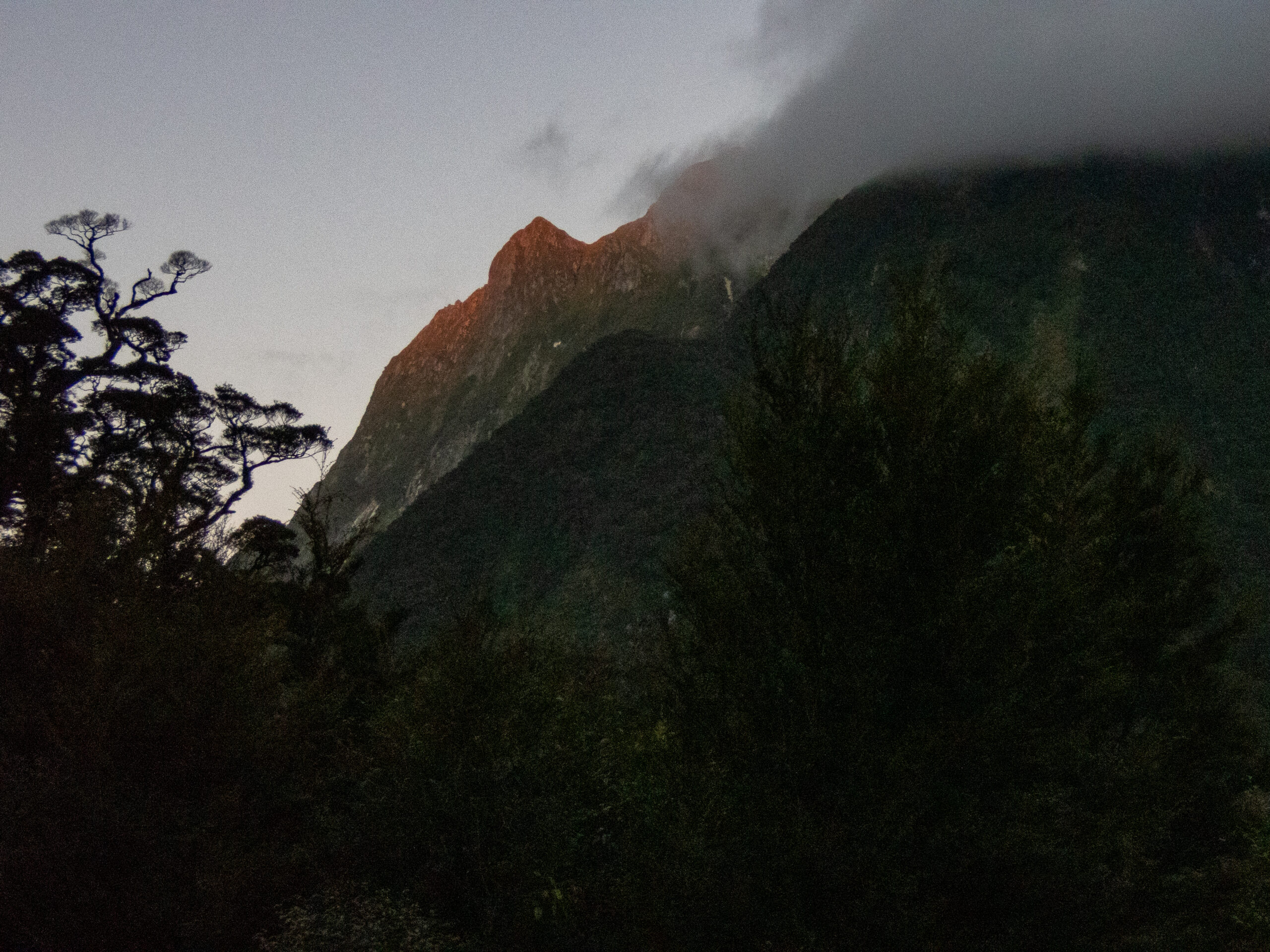
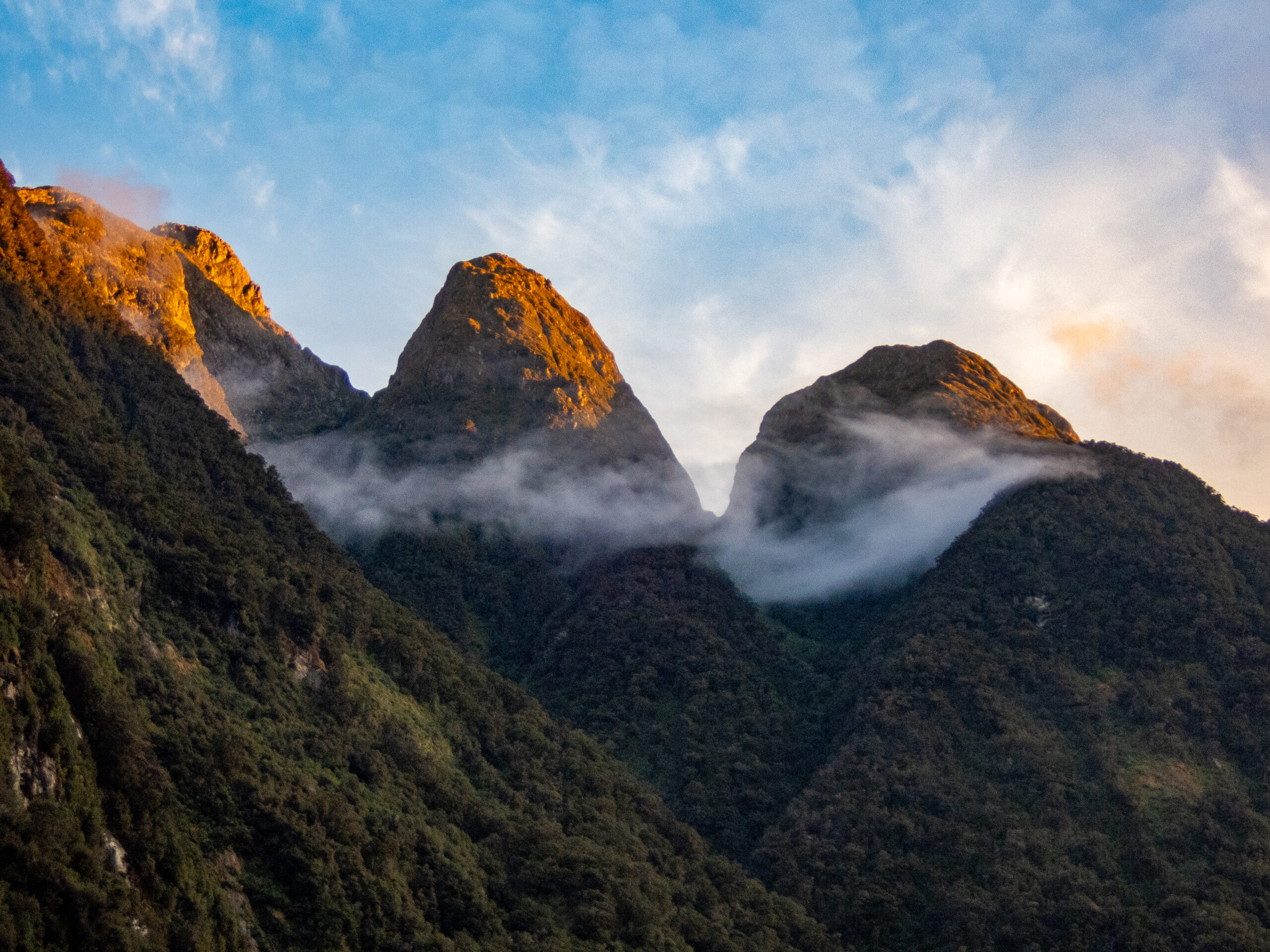
The sun reached the highest peaks and it only morphed the fog into yet more beautiful iterations.
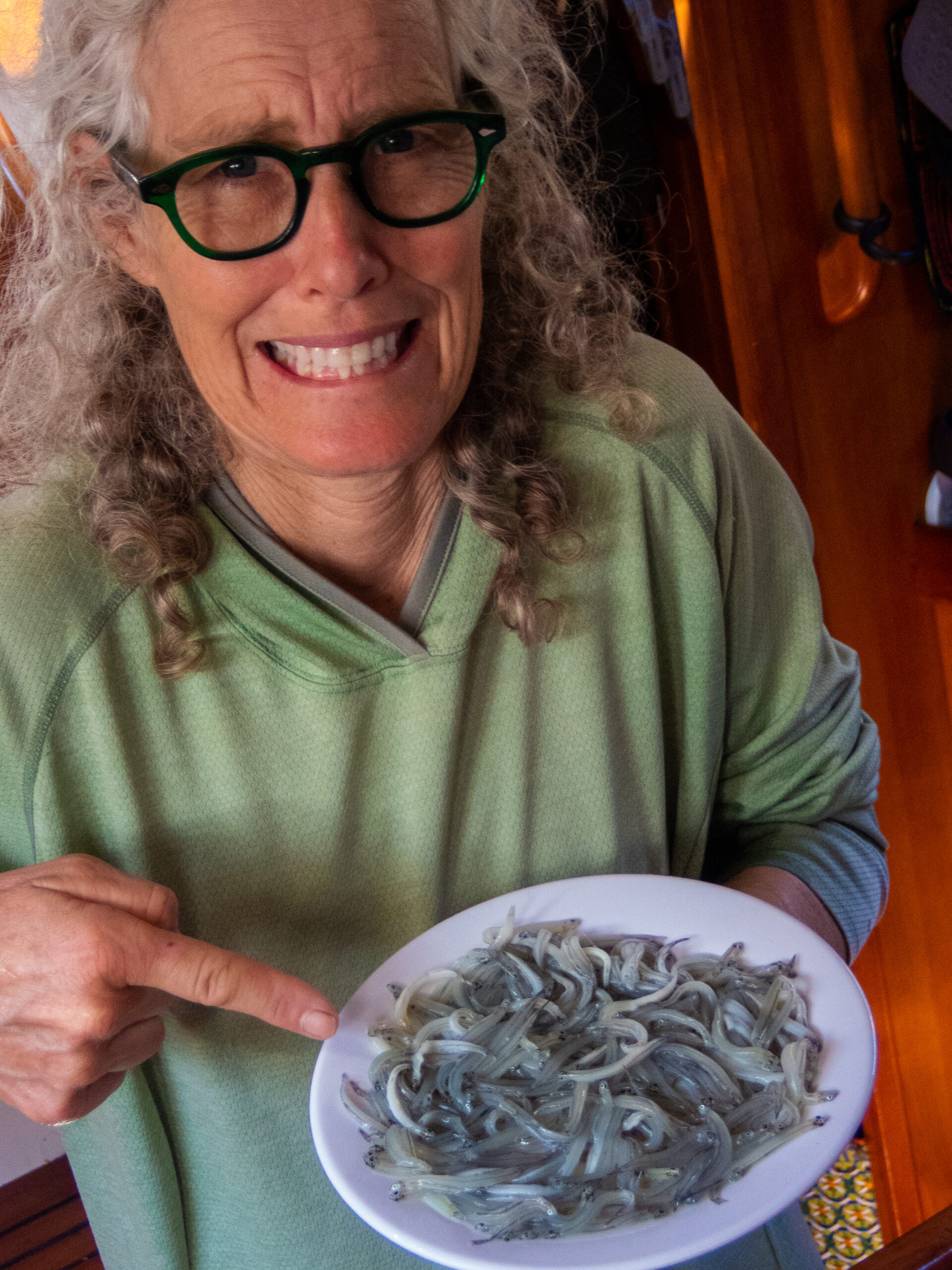
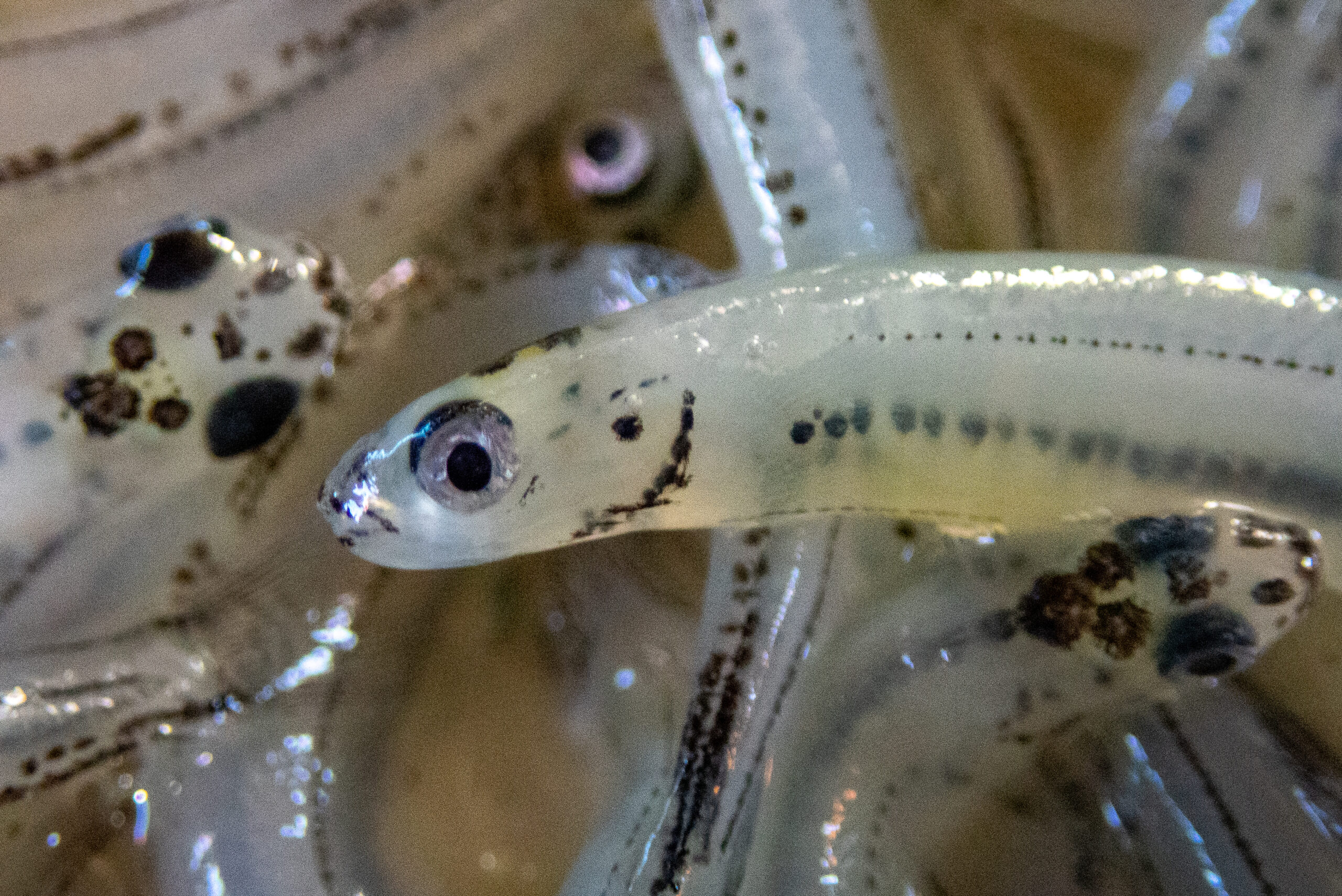
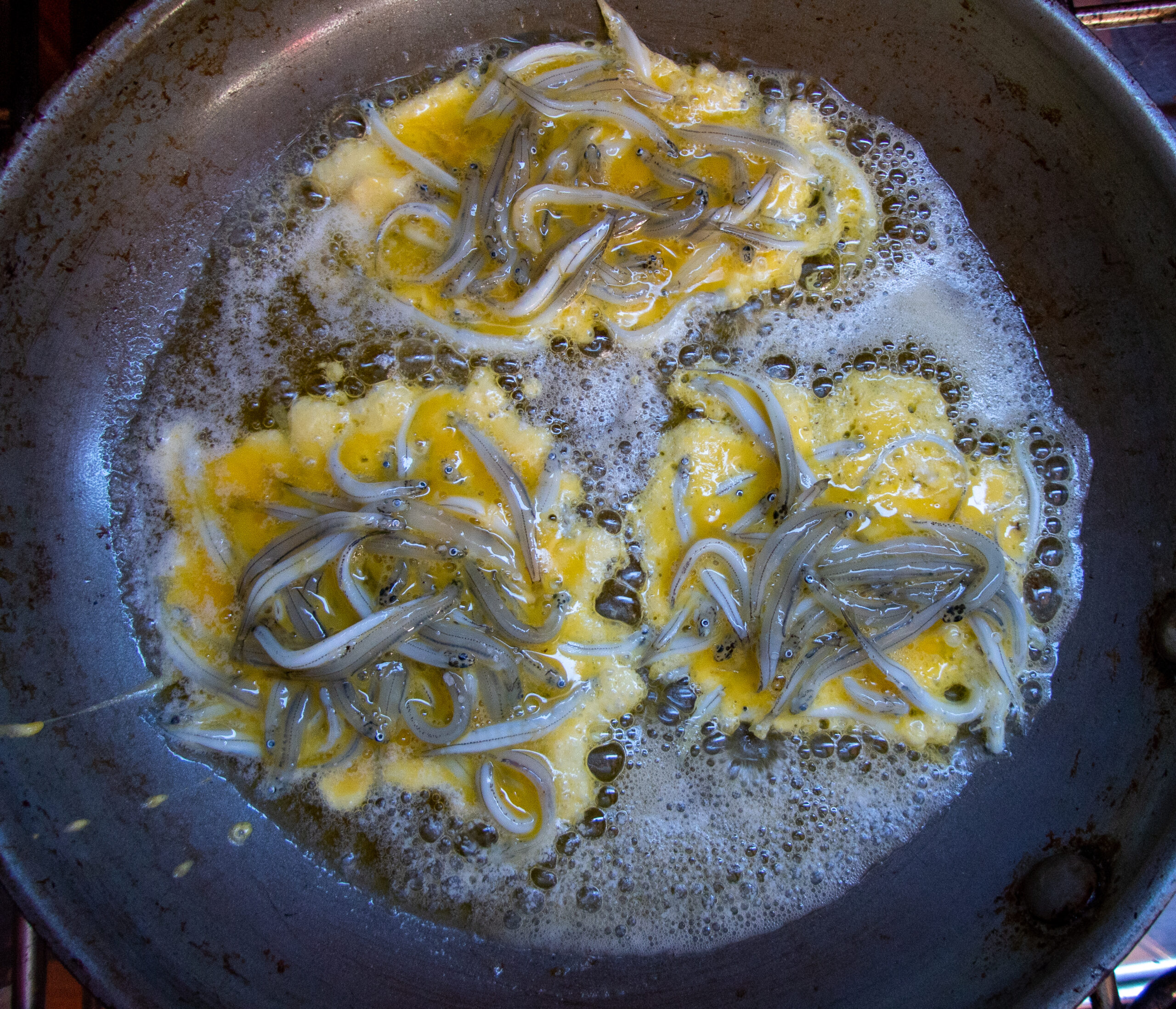
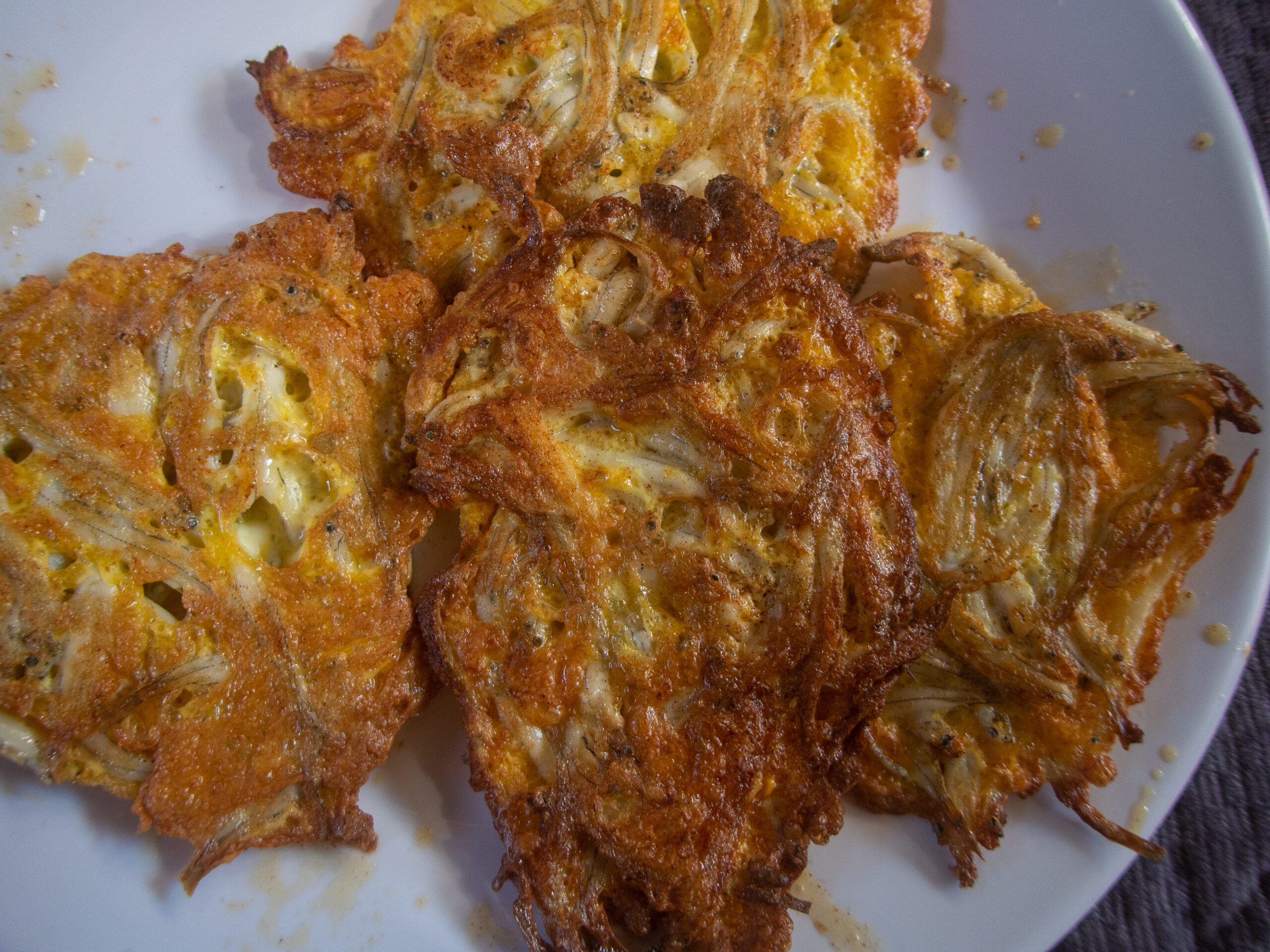
This is a close up from the lower left corner of that last photo!And the last wisps were seen at 11:15!Whitebait are eaten whole with the head, tail guts and the lot still intact – most often fried, the tiny, delicate nature of the fish make them a highly sought-after dish. We were generously given these and they were described as if they were a truffle, so I was hoping they’d taste like lobster!Been vegetarians for a couple years, but pescatarians, really, since we live on the sea and can catch FRESH fish. These were only attempted because they were a gift.RoShamBo: fish beats butter, sadly.Prepared/Disguised as described by the local fishermen, in eggs, but they were a no go for me. Marcus ate them but said he wouldn’t walk across the street to get some more.My kakak excursions were often 2-3 hours and almost a meditation with the slow movement and extreme focus on details. Instead of covering distance, I got into just looking closer and closer at EVERYTHING!
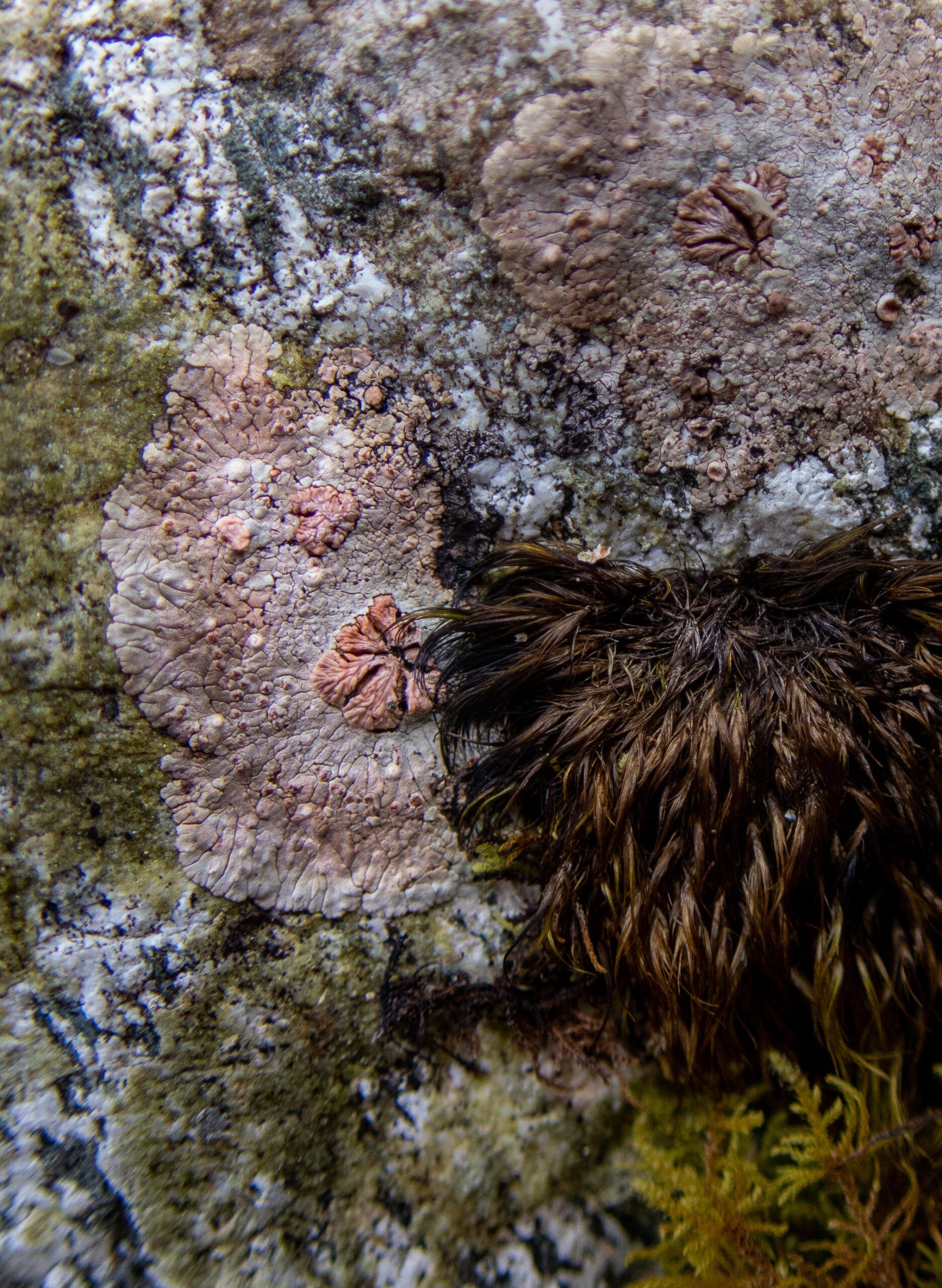
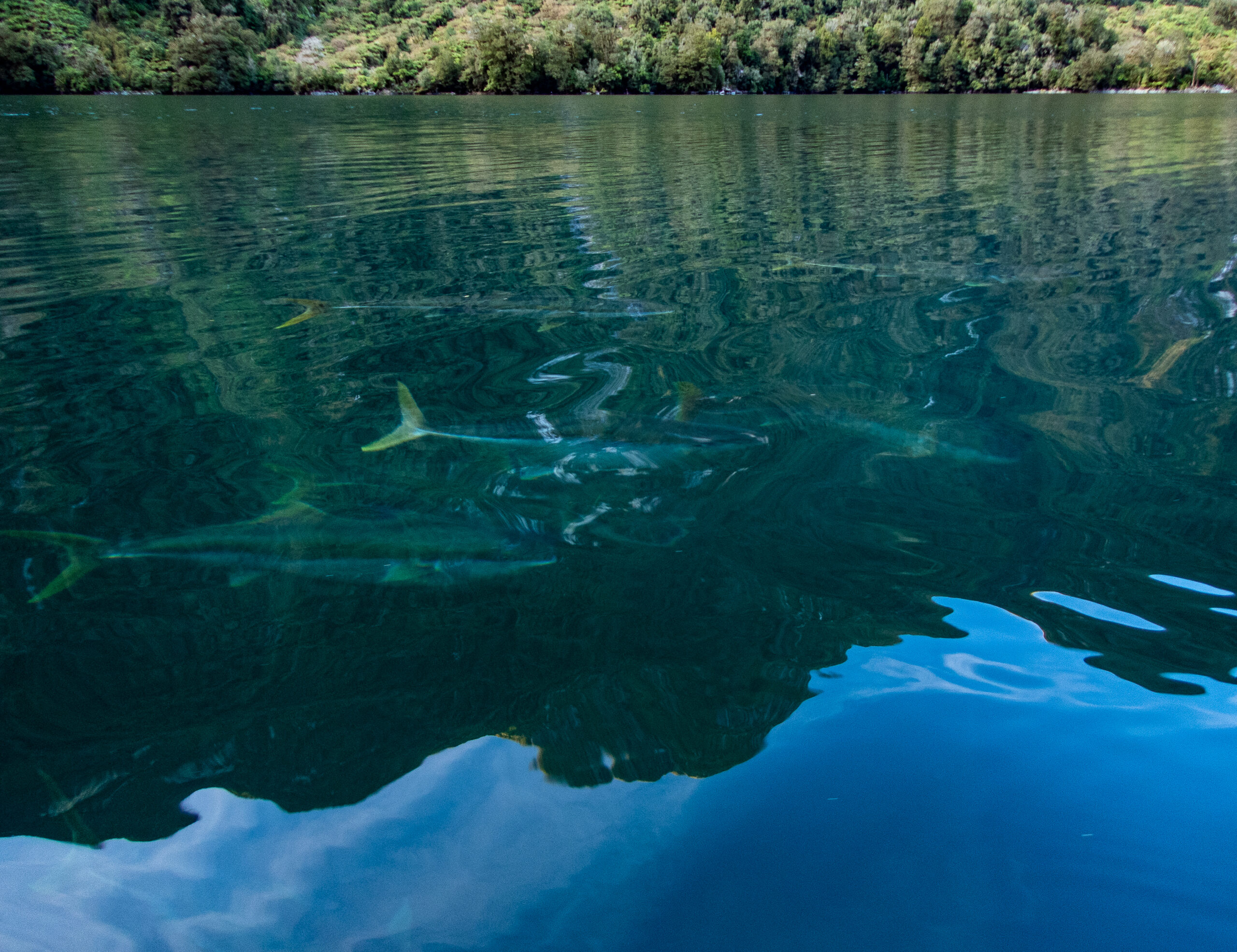
It had rained the night before, so everything was drippy and bathed with fresh water. The top 10 metres or so of the fiord is freshwater. The area gets 7-9 meters (22-29′) of rainfall every year, emptying into the sounds via its many rivers and waterfalls. On its way, this runoff picks up tannins from plants and soil that stain the freshwater the colour of tea.Even the boulders share their world with lichen.Suddenly 10 of these HUGE 1 meter (3-4′) fish darted all around me! They had a shark like, predator attitude and I only learned later that they were Kingfish, or Haku/Kahu in Māori. It definitely broke me out of my close focused, serene mental state!
Saw this and had to go closer to see if I was imagining a ray shape?!A New Zealand/Australian Eagle Ray (Myliobatis tenuicaudatus)! (Looked it up later – I have never seen an eagle ray like this).
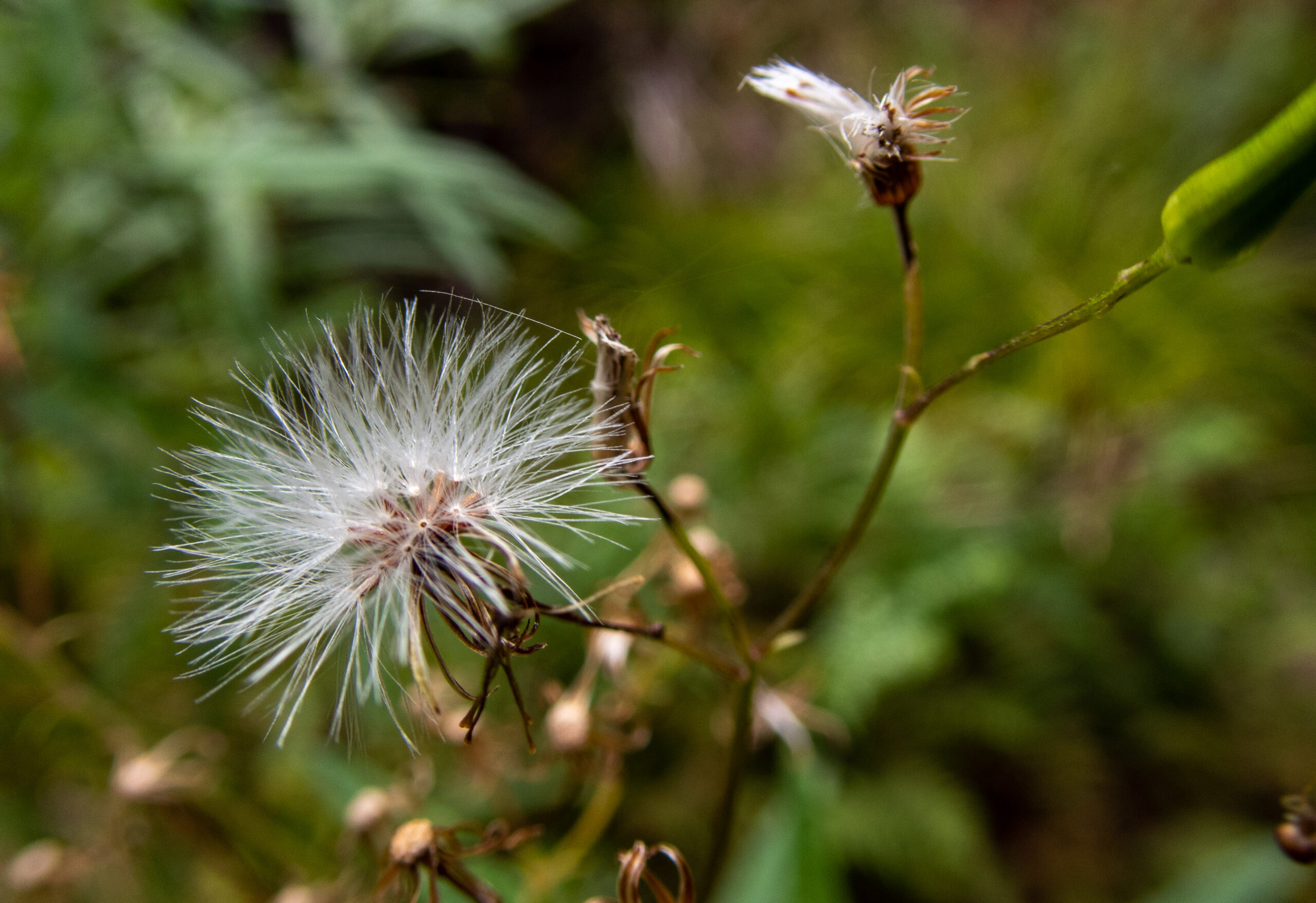
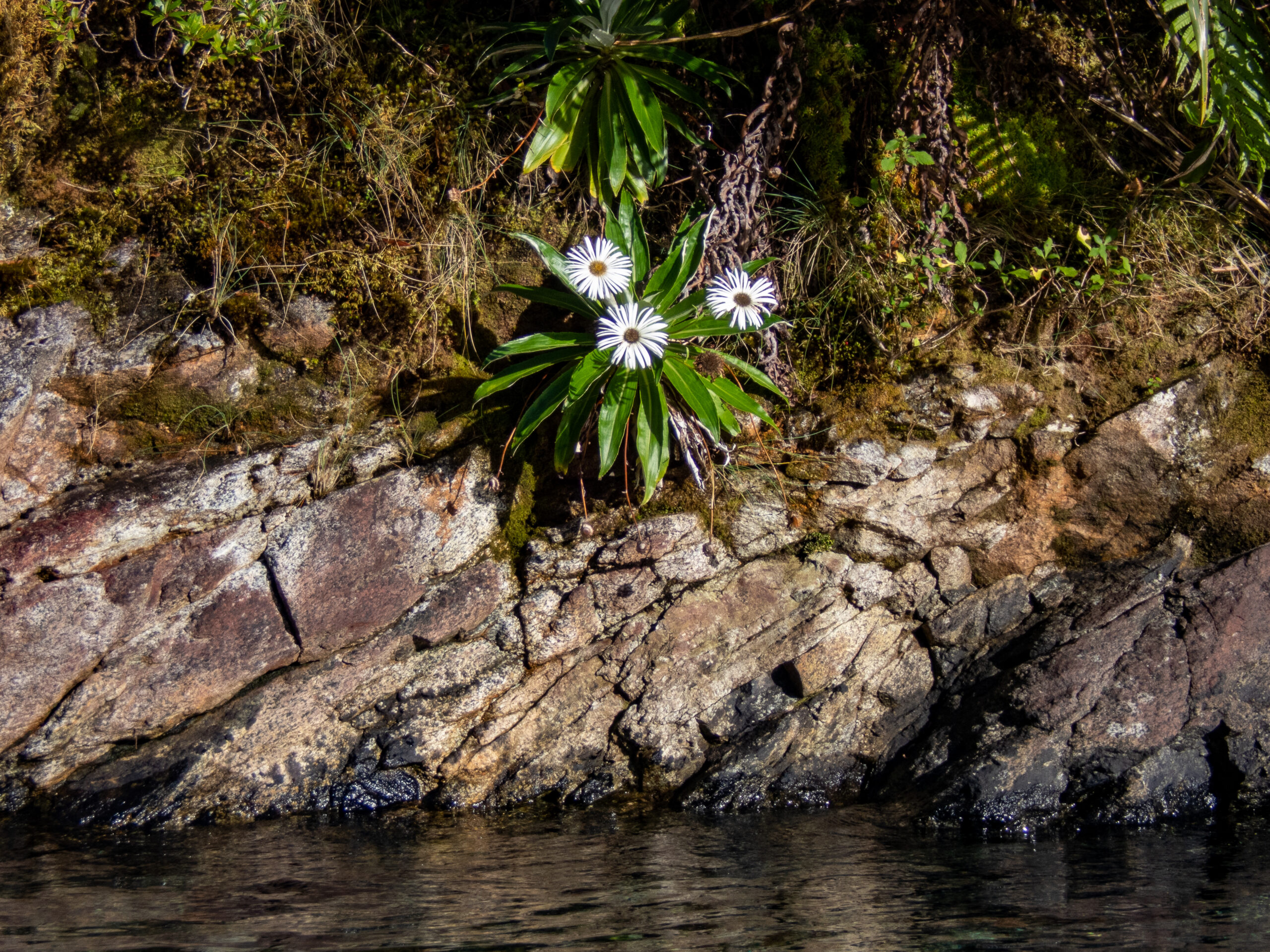
I did a double take on this daisy, as it was the ONLY one I saw in Fiordland, EVER! Must have been early or late season?!
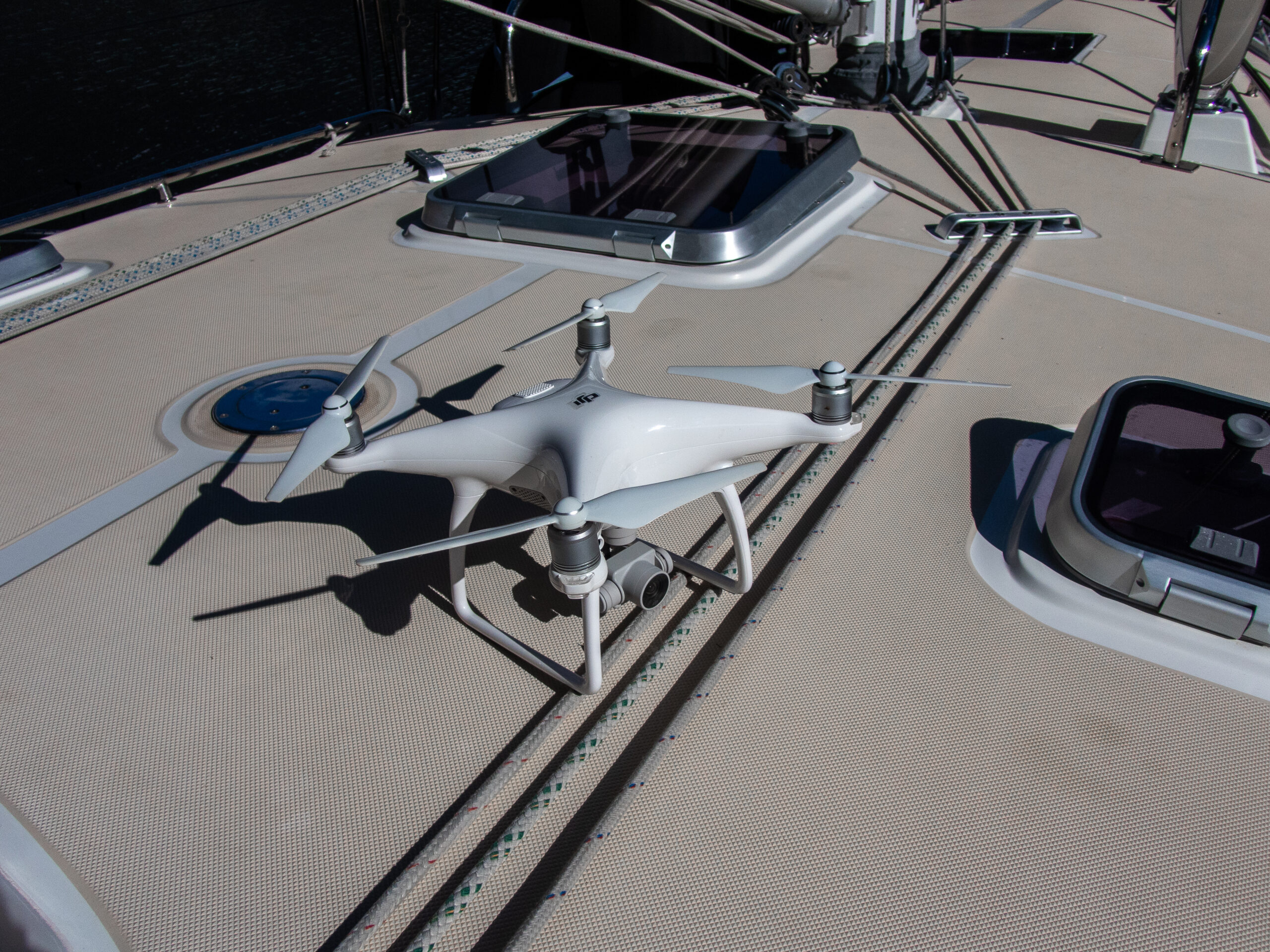
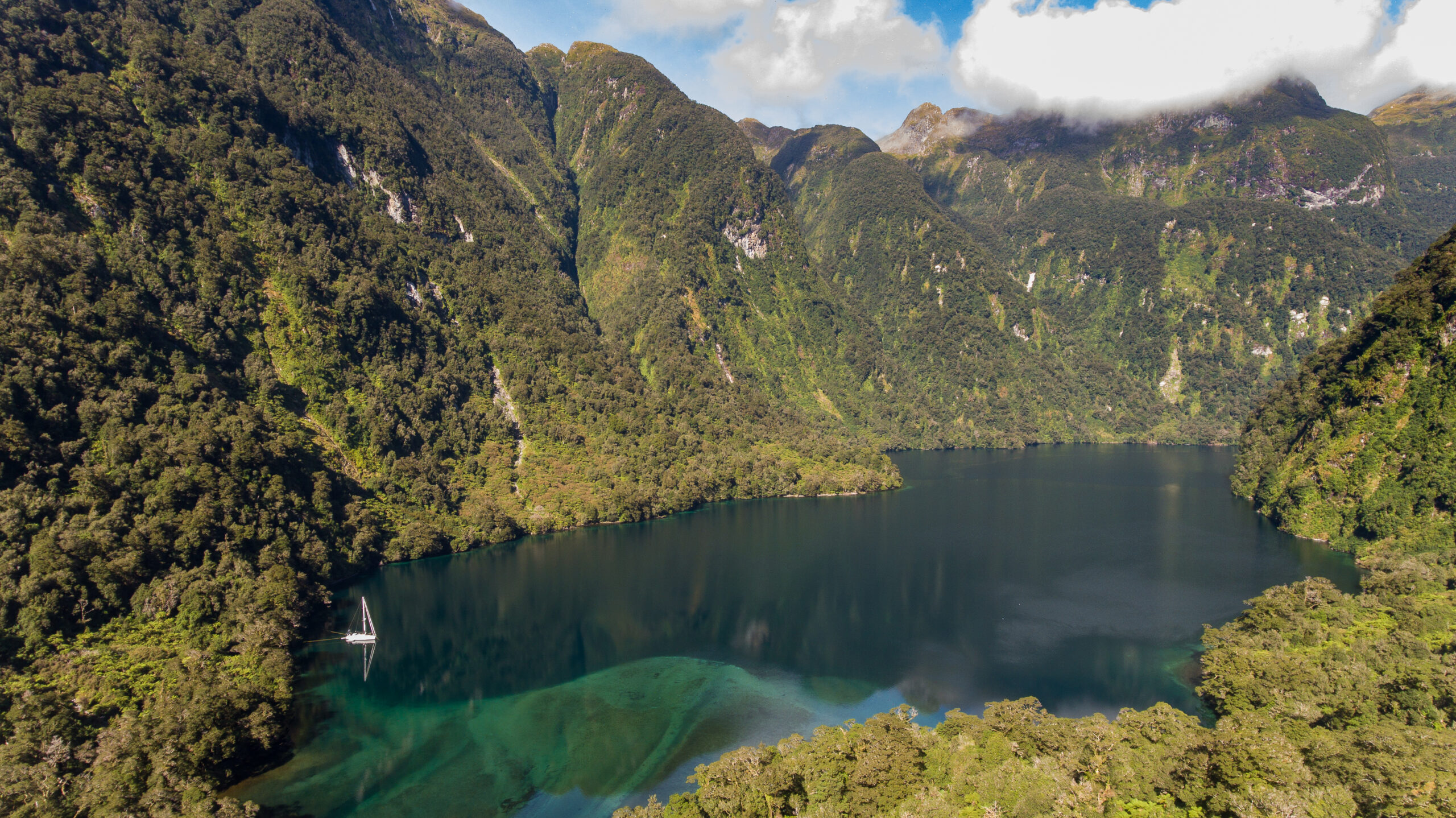
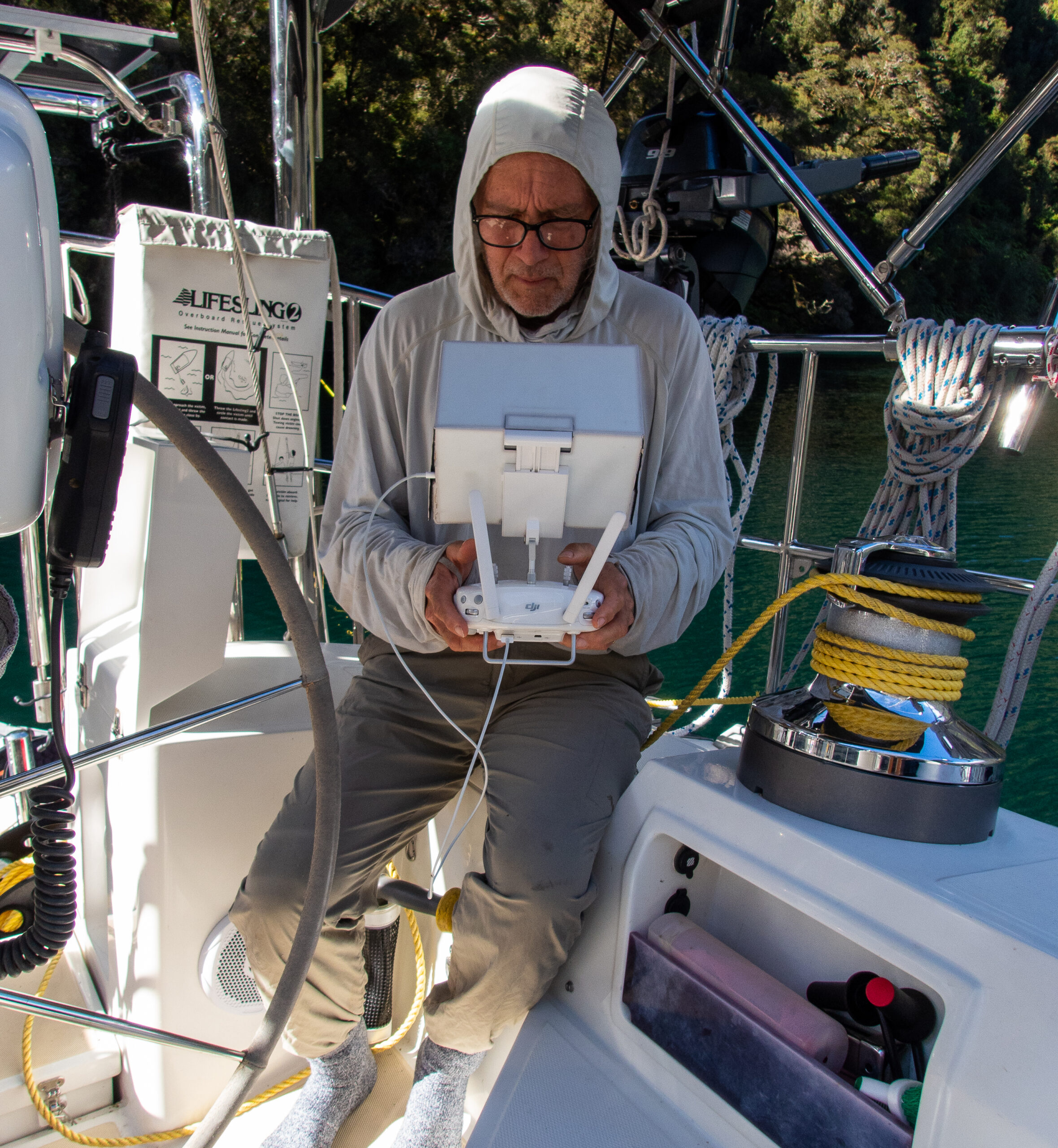
Time to head back to Allora when this is what I’m seeing!Time to get yet another perspective!Bird’s eye view!Not the easiest thing to pilot from aboard a sailboat, but at least we’re at anchor!A much clearer view of that sandbank we need to avoid.Another phenomenal day dawns in Broughton Arm.
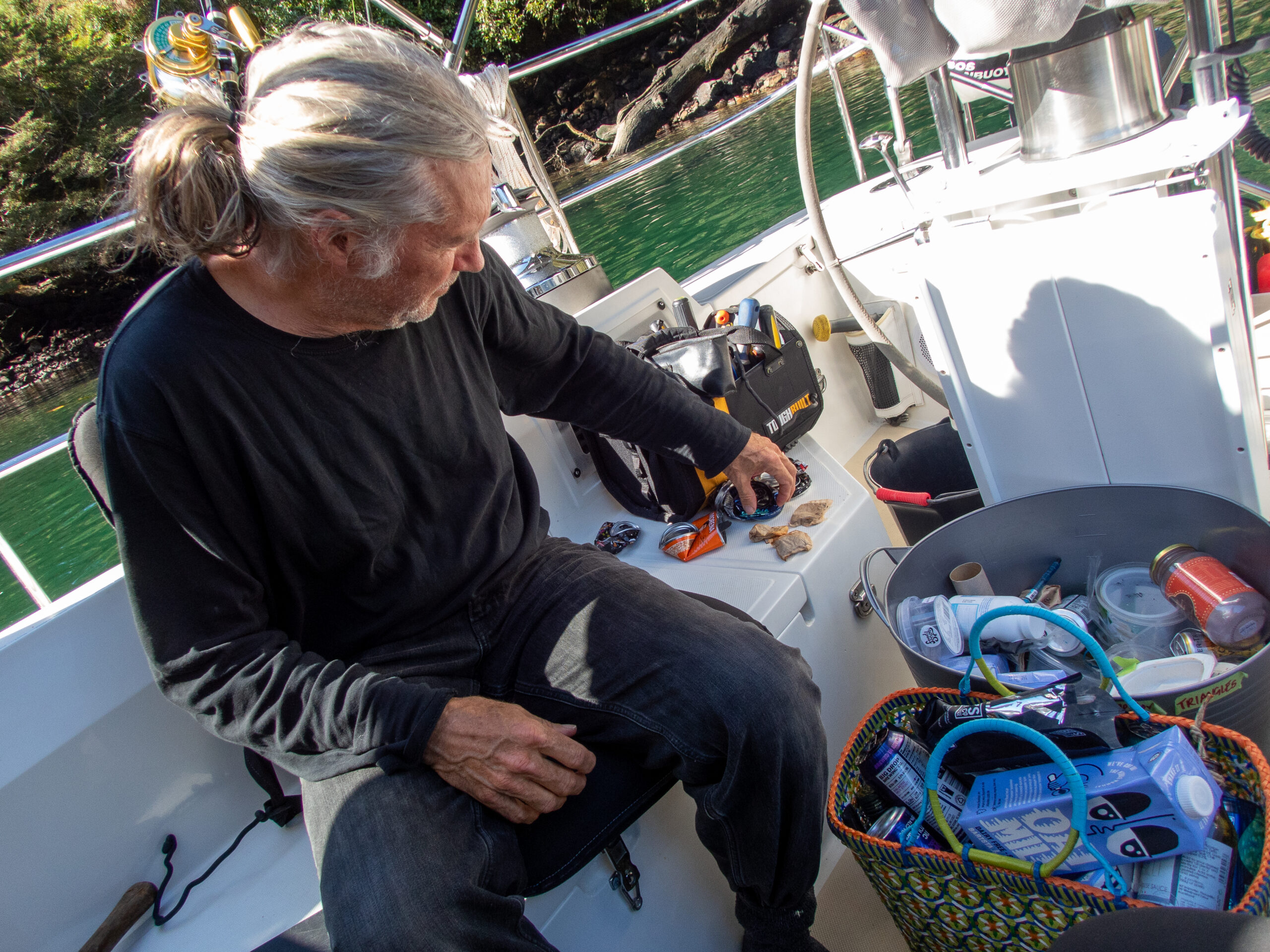
We’ve had to carry all of our trash since leaving Oban in Stewart Island, so we clean and cut any plastics, smash our aluminum cans and stack paper. Talked about making this a weekly practice, but usually we’d wait till the buckets were overflowing!
More kayak time.
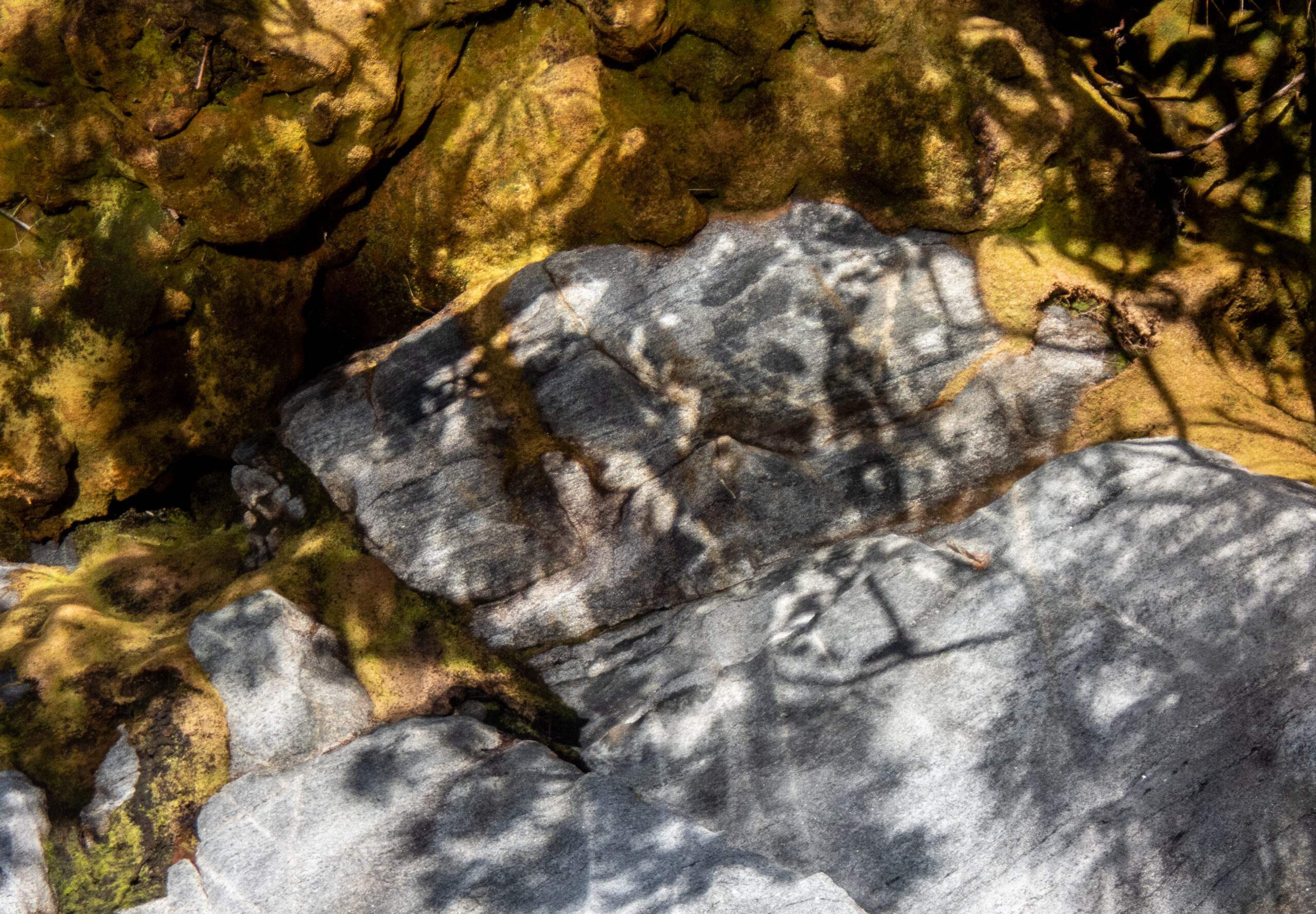
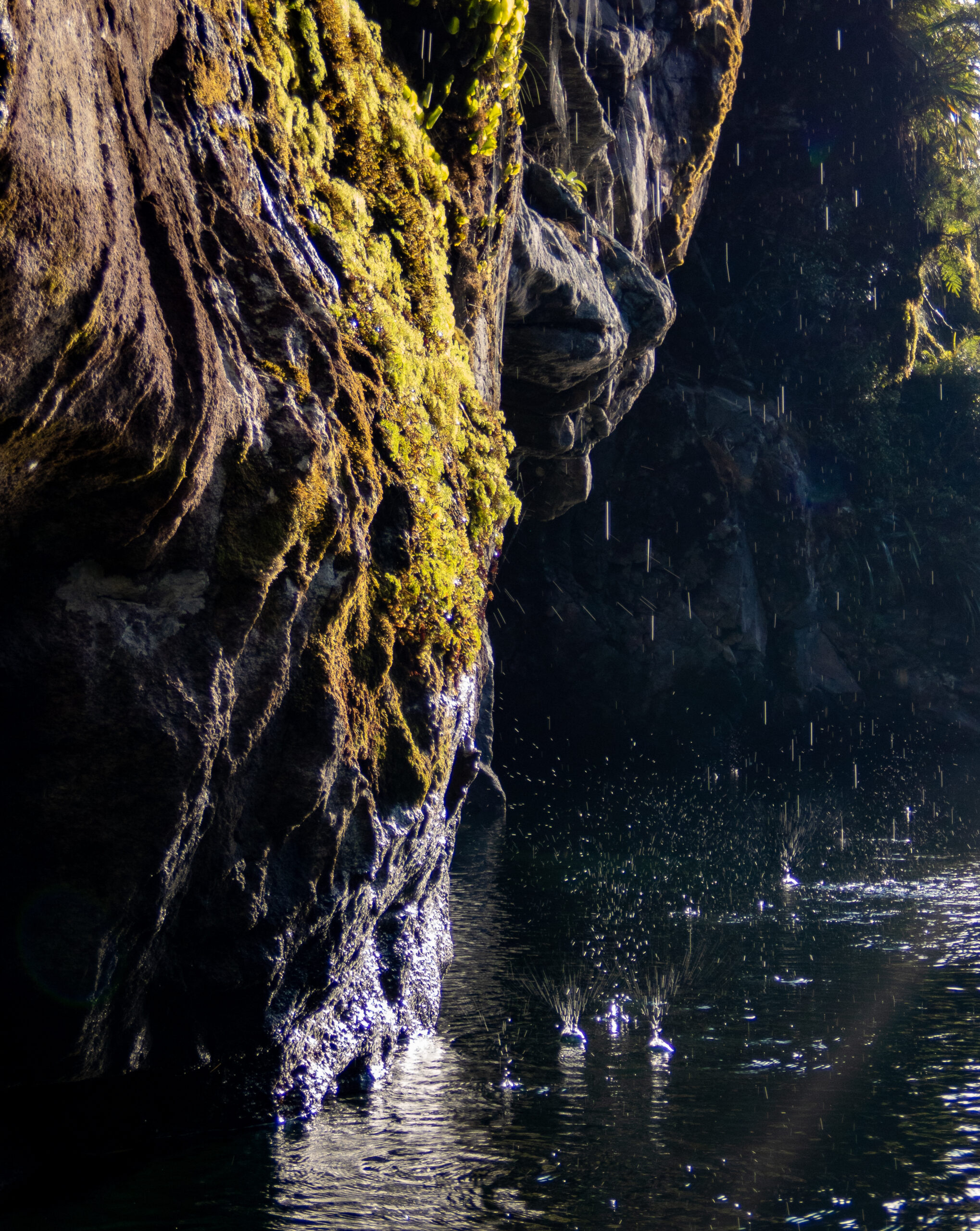
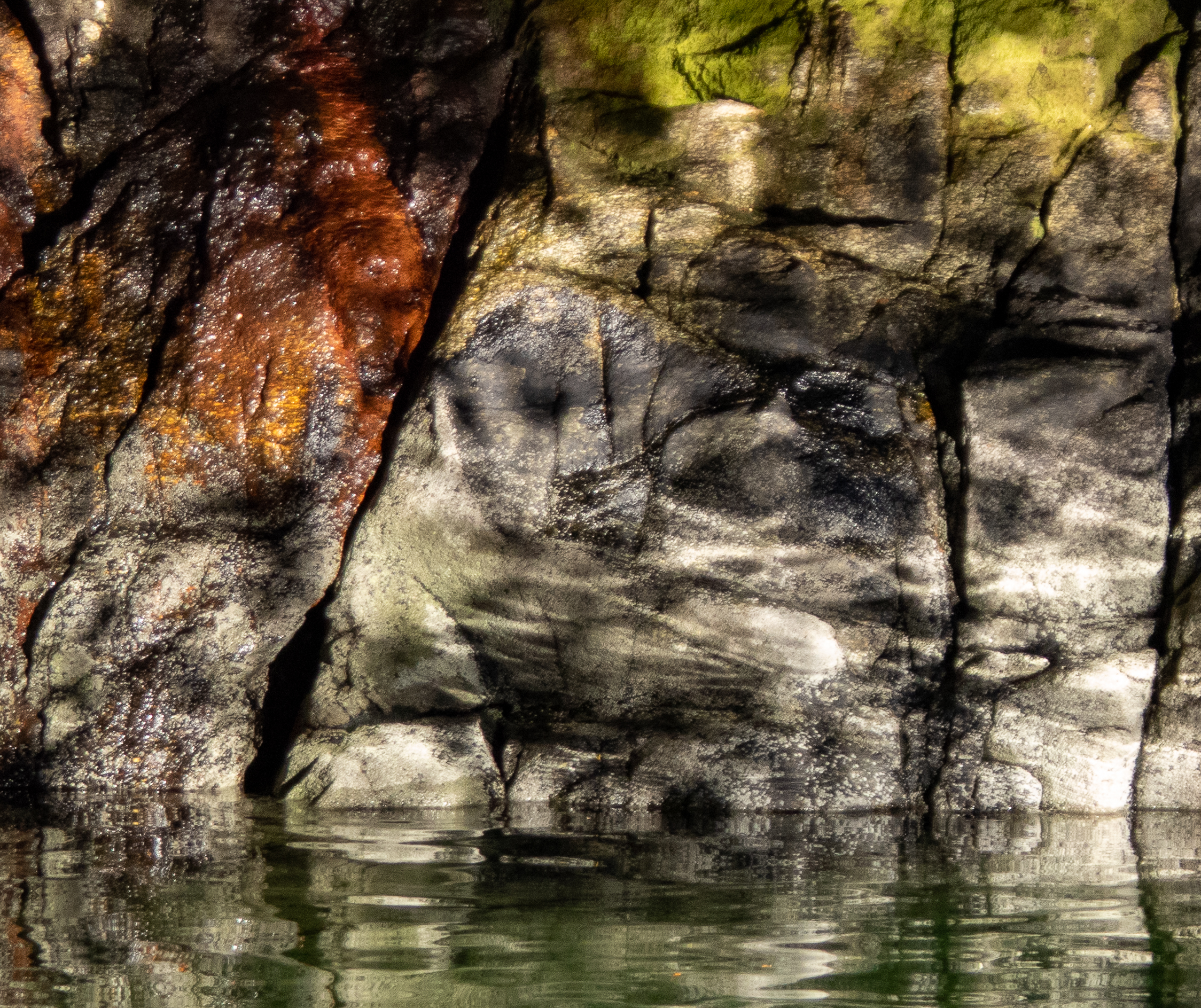
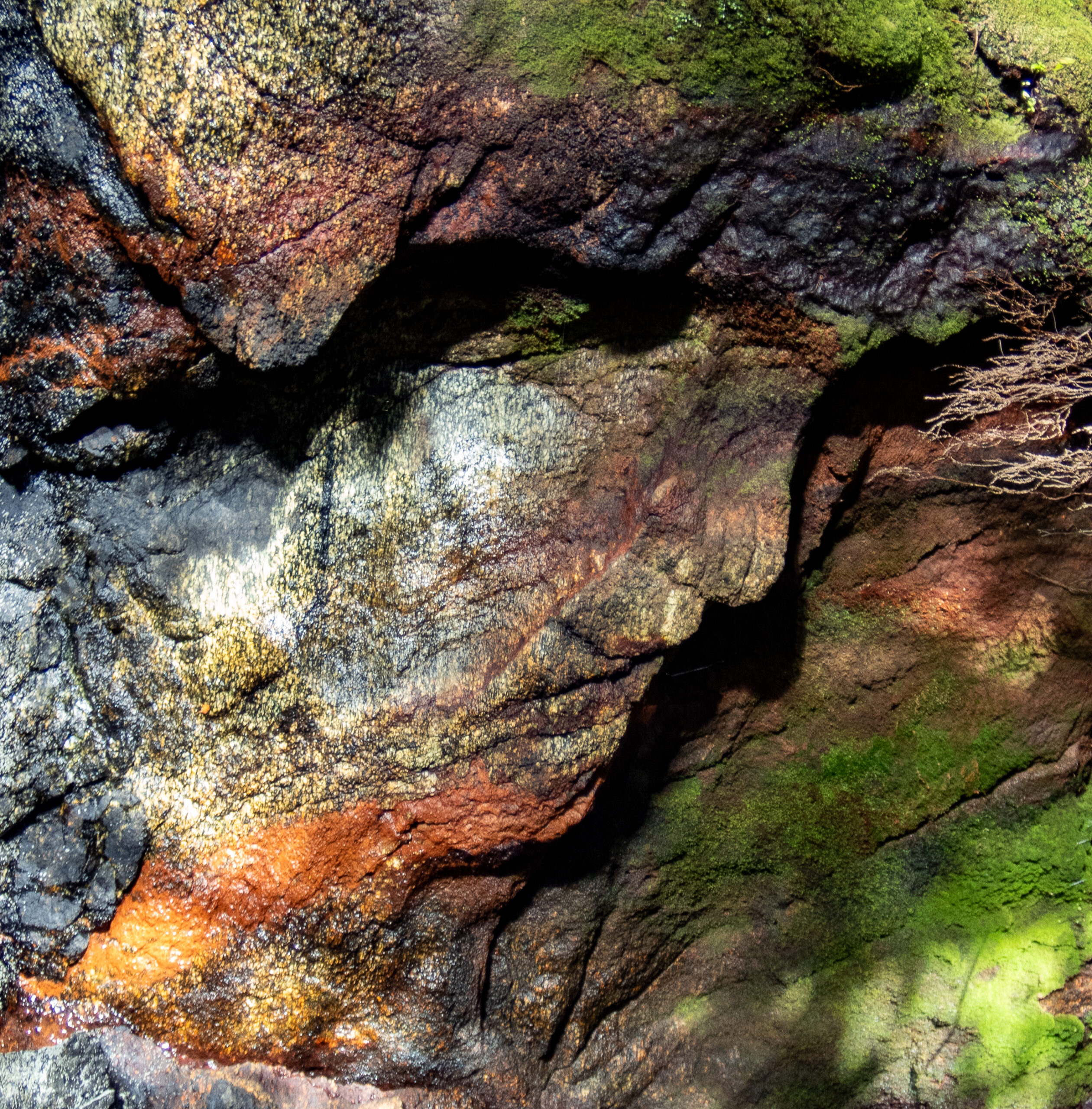
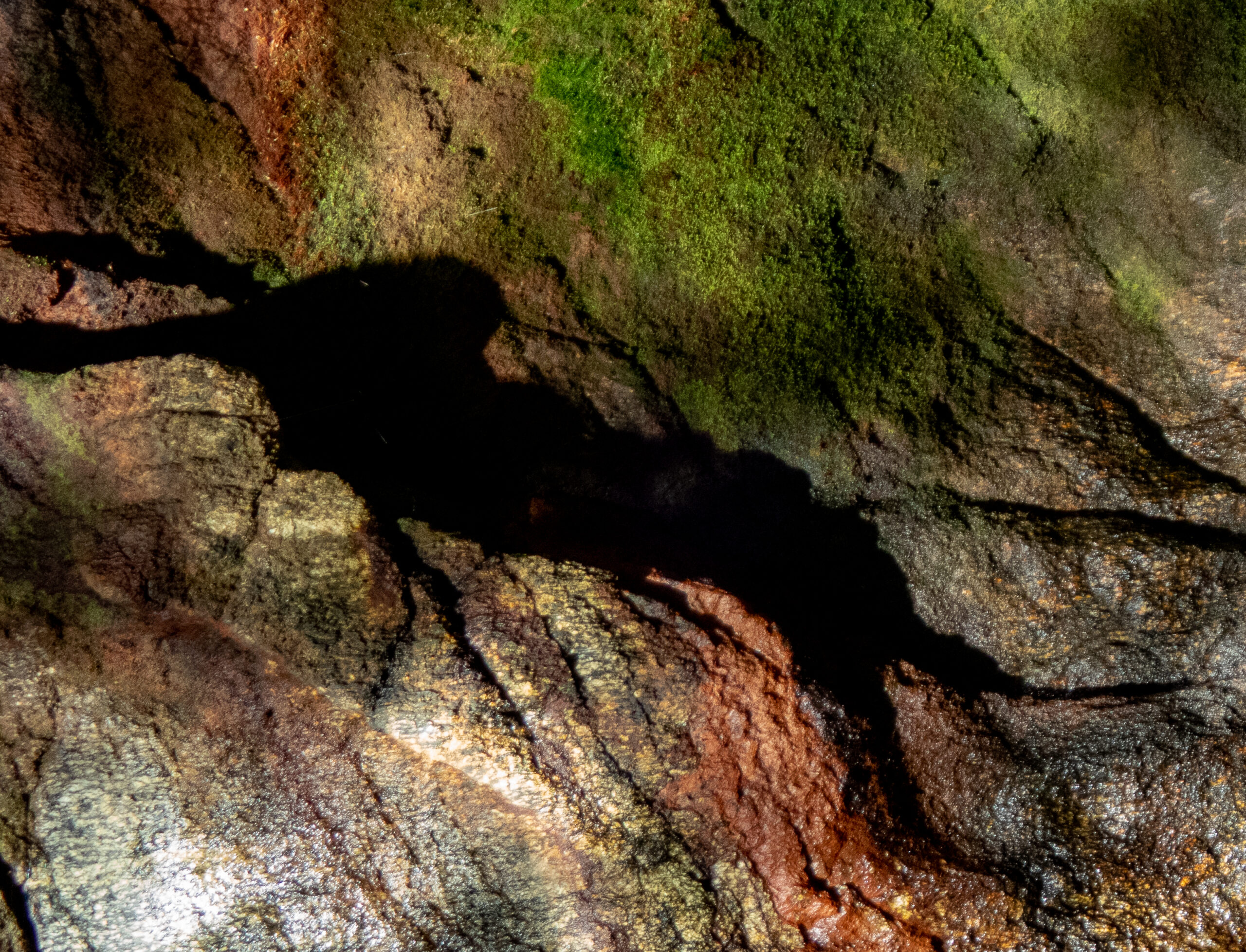
See the face?!And the kind of Kokopelli-esque shadow?!
How ’bout Narcissus seeing his own reflection?!Hehe. Couldn’t resist. (Marcus, in sandfly attire, was actually looking at fish!)