Bahia de los Muertos to La Paz – Bahia El Cardonal

IMG_3322 IMG_3331 IMG_3333 IMG_3337 IMG_3339 IMG_3343 IMG_3346 IMG_3350 IMG_3354 IMG_3364 IMG_3368 IMG_3370 IMG_3373 IMG_3379 IMG_3384 IMG_3402 P1020477 P1020482 P1020488 P1020490 P1020491 P1020500 P1020511 P1020519 P1020528 P1020536

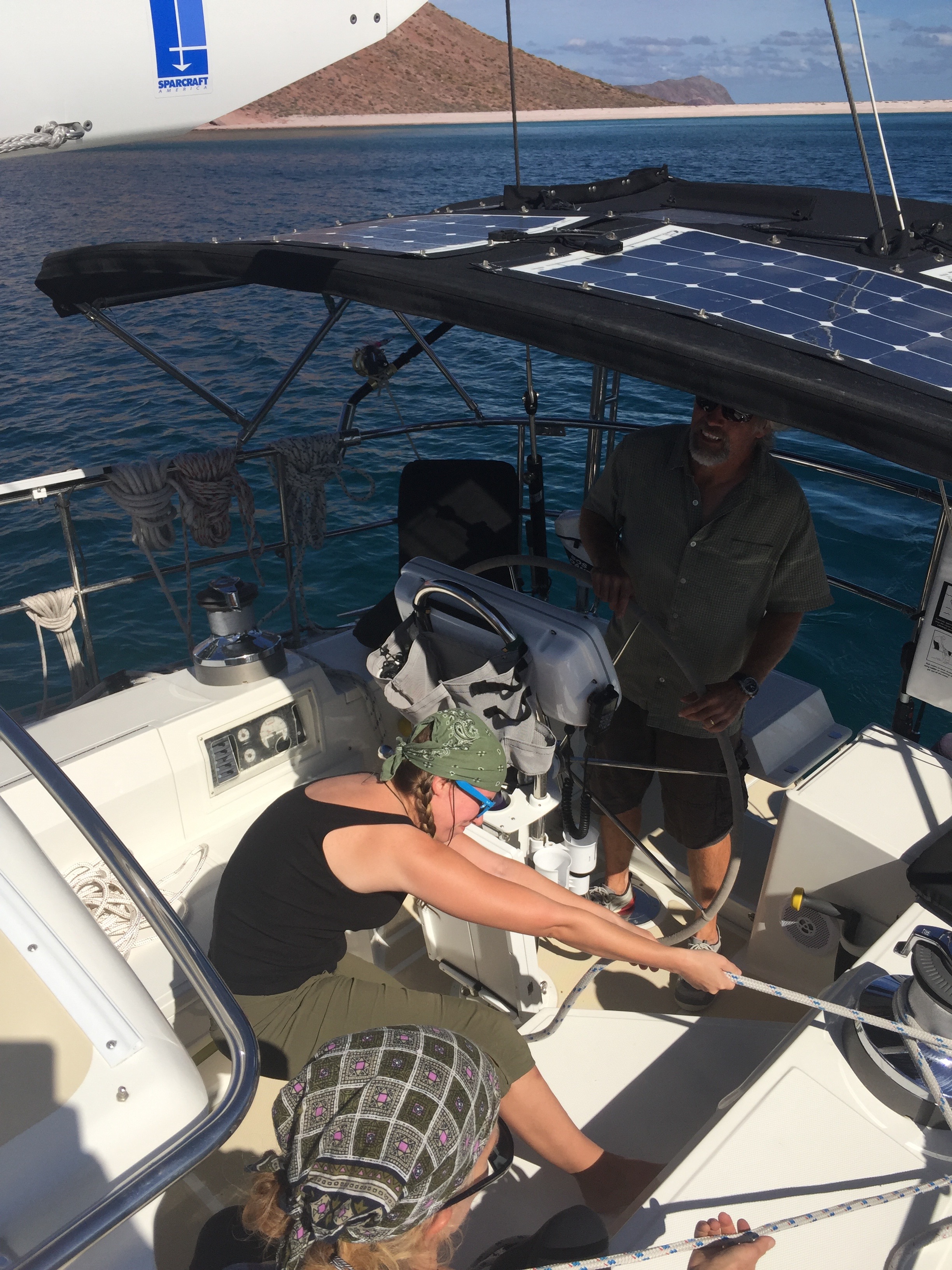
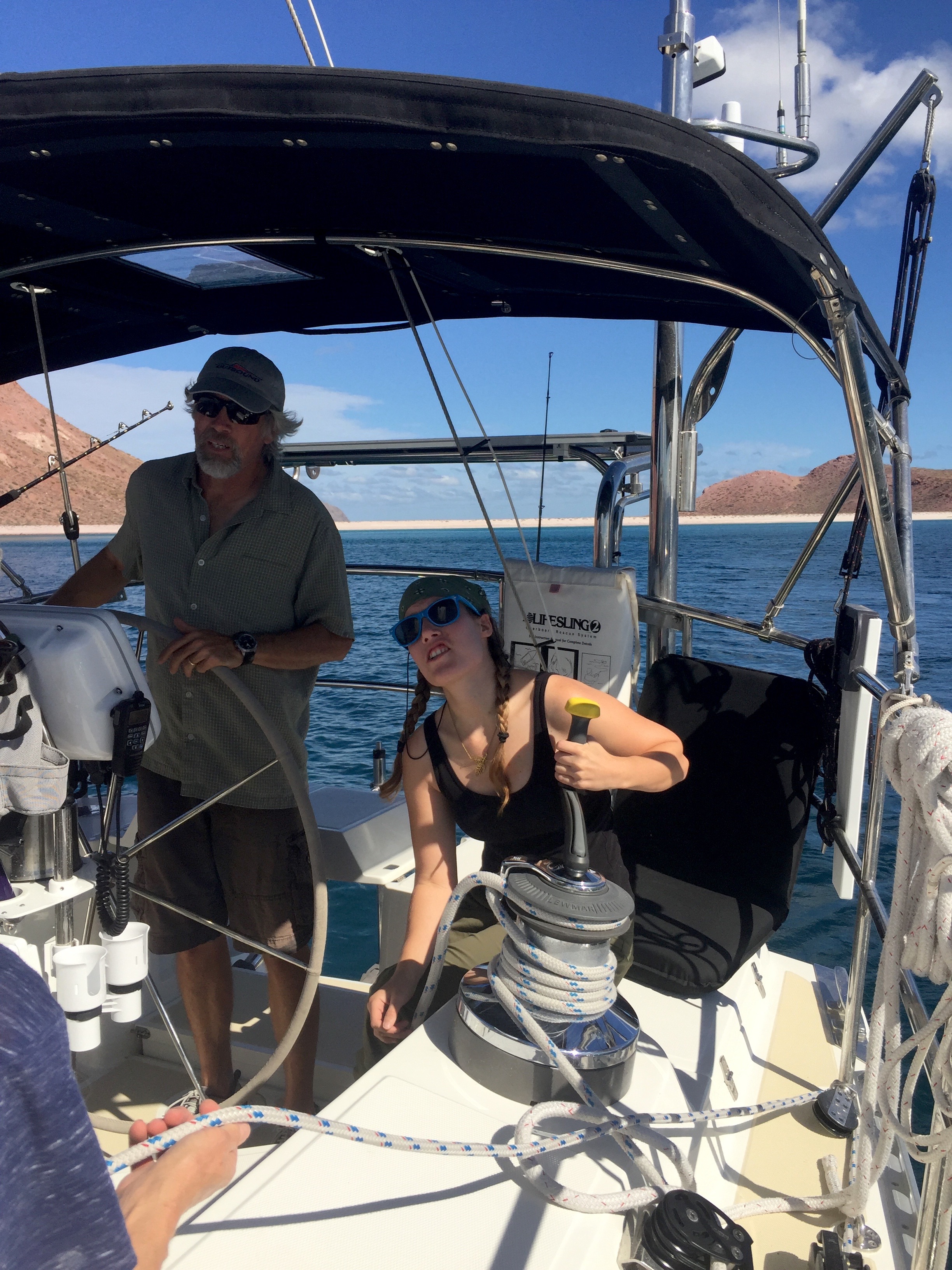
We really didn’t want to arrive in La Paz on Christmas Day, Friday before a weekend, knowing we needed to be all the way to Loreto by the thirty-first. A night sail was proposed. The winds were forecast as practically non-existent, but a nearly full moon would make a pretty motor of it anyway, and we’d have half a day before businesses closed to get a few things done. We weighed anchor after a nice meal ashore, marred only by a drunk Gringo reverting to toddler state from an afternoon of margaritas.

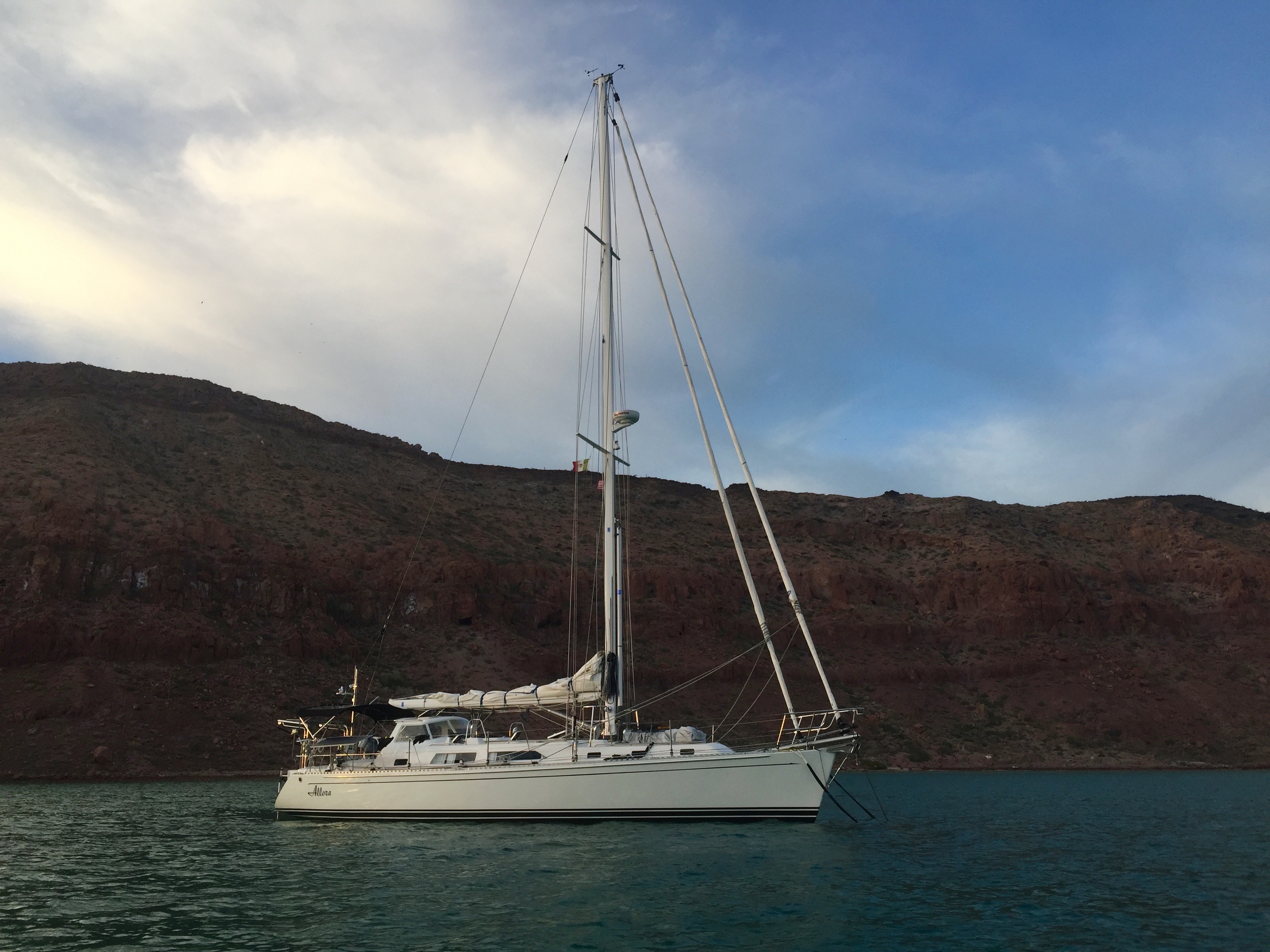
We motored far enough to clear the shoals and raised the main just in case the wind came up despite the forecast. Wyatt and Haley retired to their bunks and sure enough a nice breeze kicked up as we cleared the point. With the genoa unfurled and a beam wind from WSW, Allora took off nicely. The moon was nearly full and it was magical. I went to my bunk and Diana woke up Wyatt to share the watch with her, in case the wonderful sailing didn’t last. But the breeze held as we sailed up the Cerralvo channel at eight knots. There’s something about sailing at night that we really are hooked on, the stars and dark horizon and the anticipation of dawn. Diana woke me around 2 o’clock. The wind had veered ahead of us now, but it still looked like we could make our waypoint at the San Lorenzo Channel into Bahia de La Paz. Haley joined me for the next watch as we headed up and tacked our way through the channel markers, looking up at the stars and snuggling to keep warm. The moon shimmered on the waves and we watched a small forest fire burning high in the Sierra de la Laguna. We inched our way back and forth against a west wind through the small red and green channel markers, that seemed so close, even miles away. Haley went back to her bunk after a couple hours and I continued tacking against wind and current which seemed determined not to let us pass. Swinging ever more due west and forcing me north on the port tack and chasing me back into the channel on starboard. But it was fun sailing and other than waking my sleeping crew with each tack as the sheets ground through the genoa cars right over their heads, it was a great. We had moved so quickly during Diana and Wyatt’s watch and we didn’t want to arrive in La Paz in the dark anyway. Just before dawn Wyatt took over for the sunrise watch and I slept until he got a call from the Lompampo Ferry on the VHF, bearing down on us at 17 knots as we approached the channel entrance. I helped Wyatt with a quick tack and made coffee while he steered and Allora topped 9 knots.

We pulled into our slip next to a couple particularly ostentatious motor yachts (which does seem to be the whole point of these vessels) and Diana went into Diana mode — compressing the errands which any sane crew would allot a week for, to half a day. The plan was to sail to Loreto, upwind over the next five days, so we needed provisions. We also needed to make room for “the Grandmas,” Elizabeth and Camille, which involved some repacking of the stuff in the big cavern forward under our bunk.

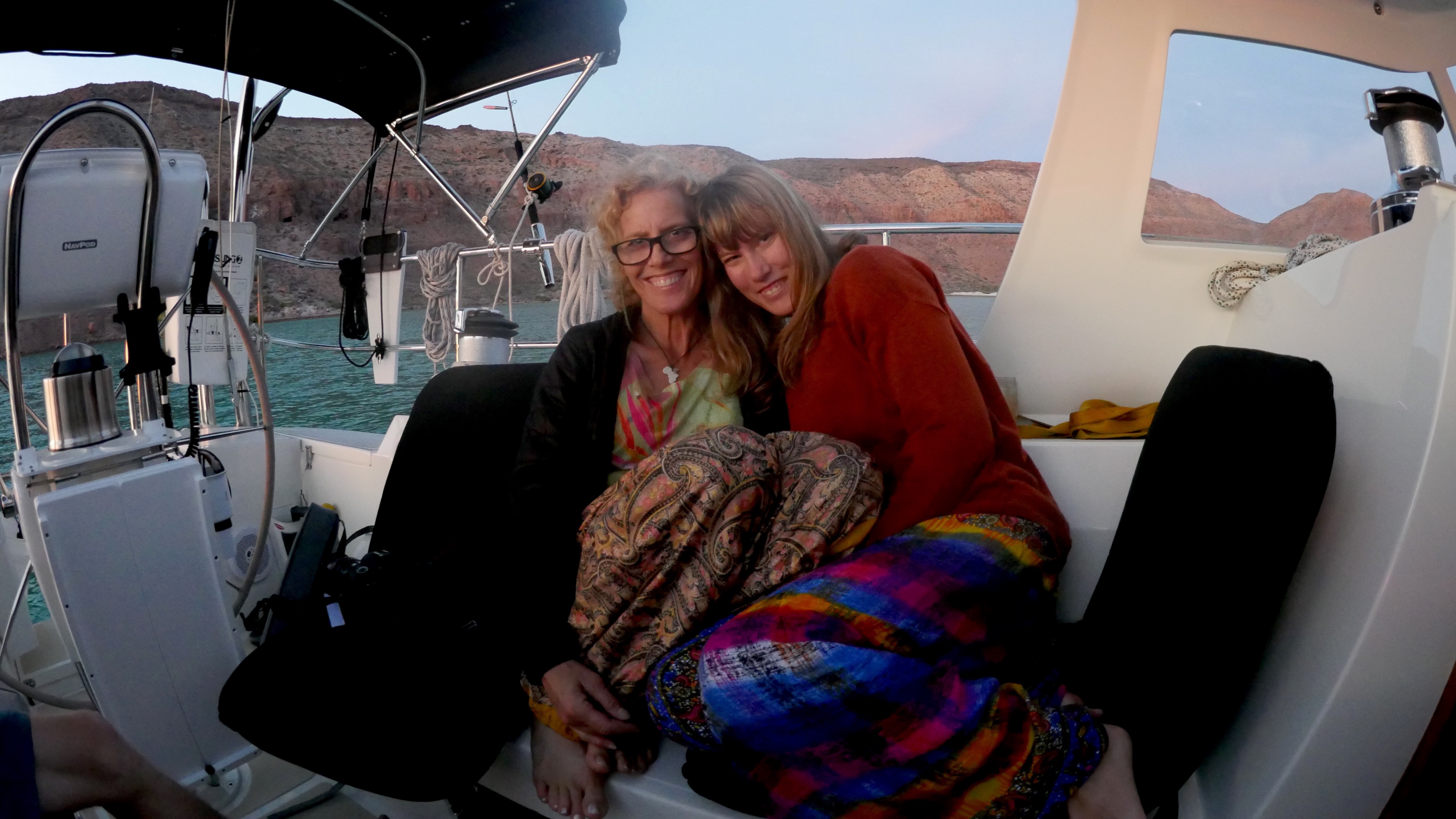
Things closed at one o’clock and as we unloaded our provisions, Christmas eve was celebrated with carols sung at the marina in an organized program put on by the boating expats of La Paz. There was amplification and electric guitars, but I couldn’t help feeling that my fellow sons and daughters of meek religious pilgrims didn’t really seem to put their hearts into it. I guess the reticence of our Mayflower ancestors runs deep. Nobody applauded, no doubt because it was a singalong and that would involve the mortal sin of applauding yourself. It was the tenth annual mumble-along to be held at Marina La Paz. Maybe my personal reaction had more to do with misunderstanding the religious component of the holiday. Maybe Christmas eve is supposed to be solemn and serious. We had our own quiet celebration aboard Allora and Haley took some pics of the boats festooned with lights.

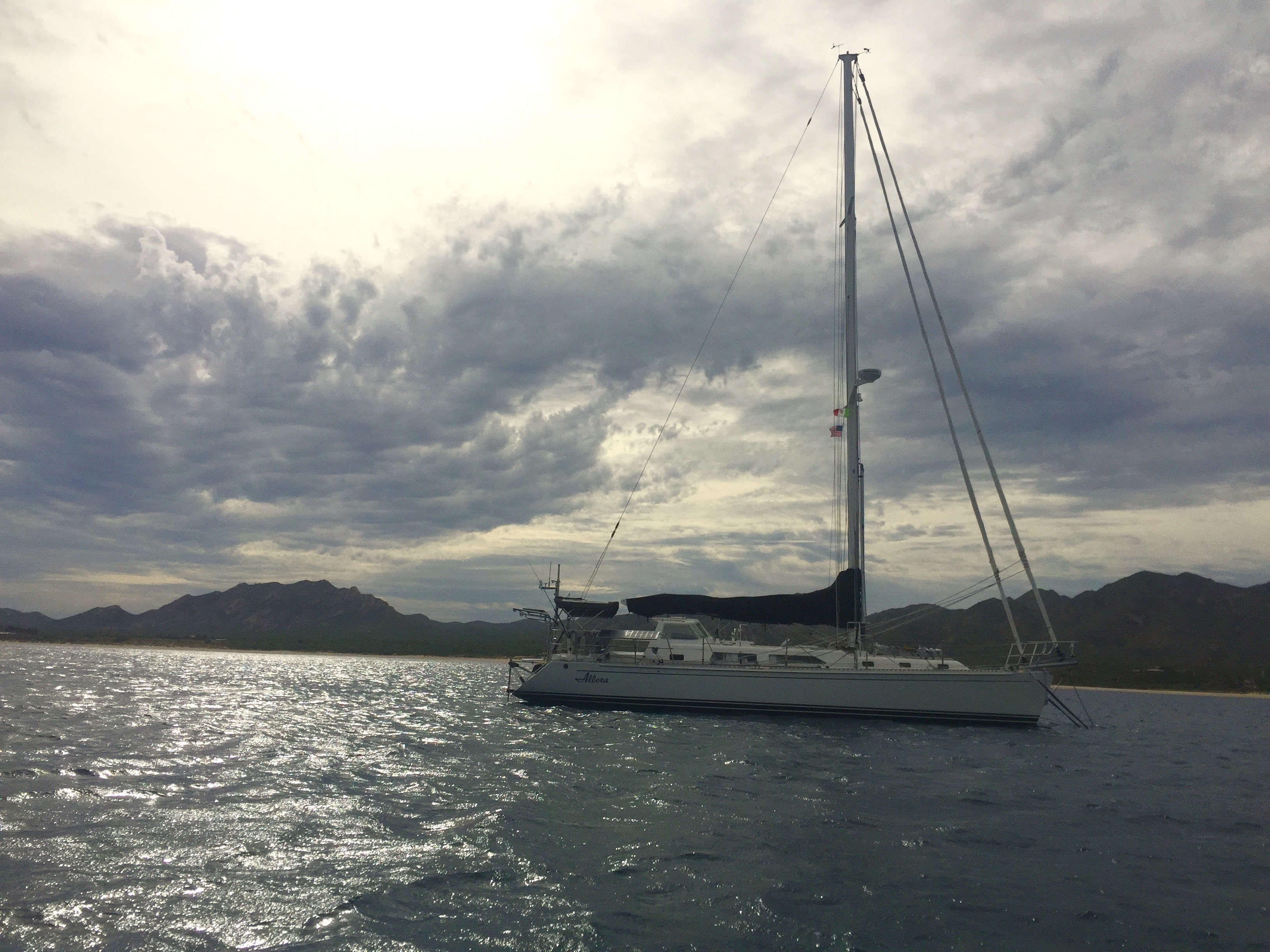
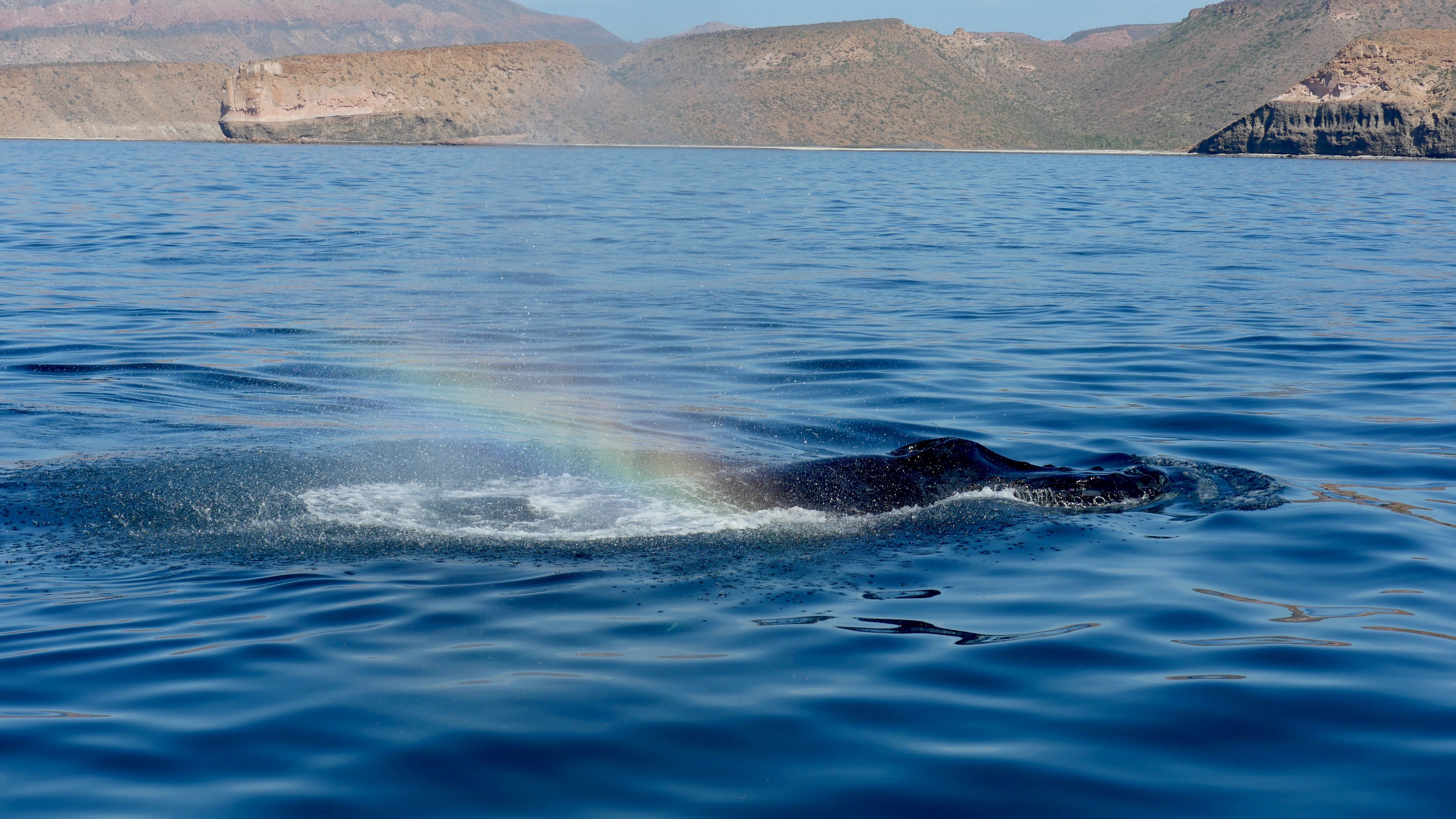
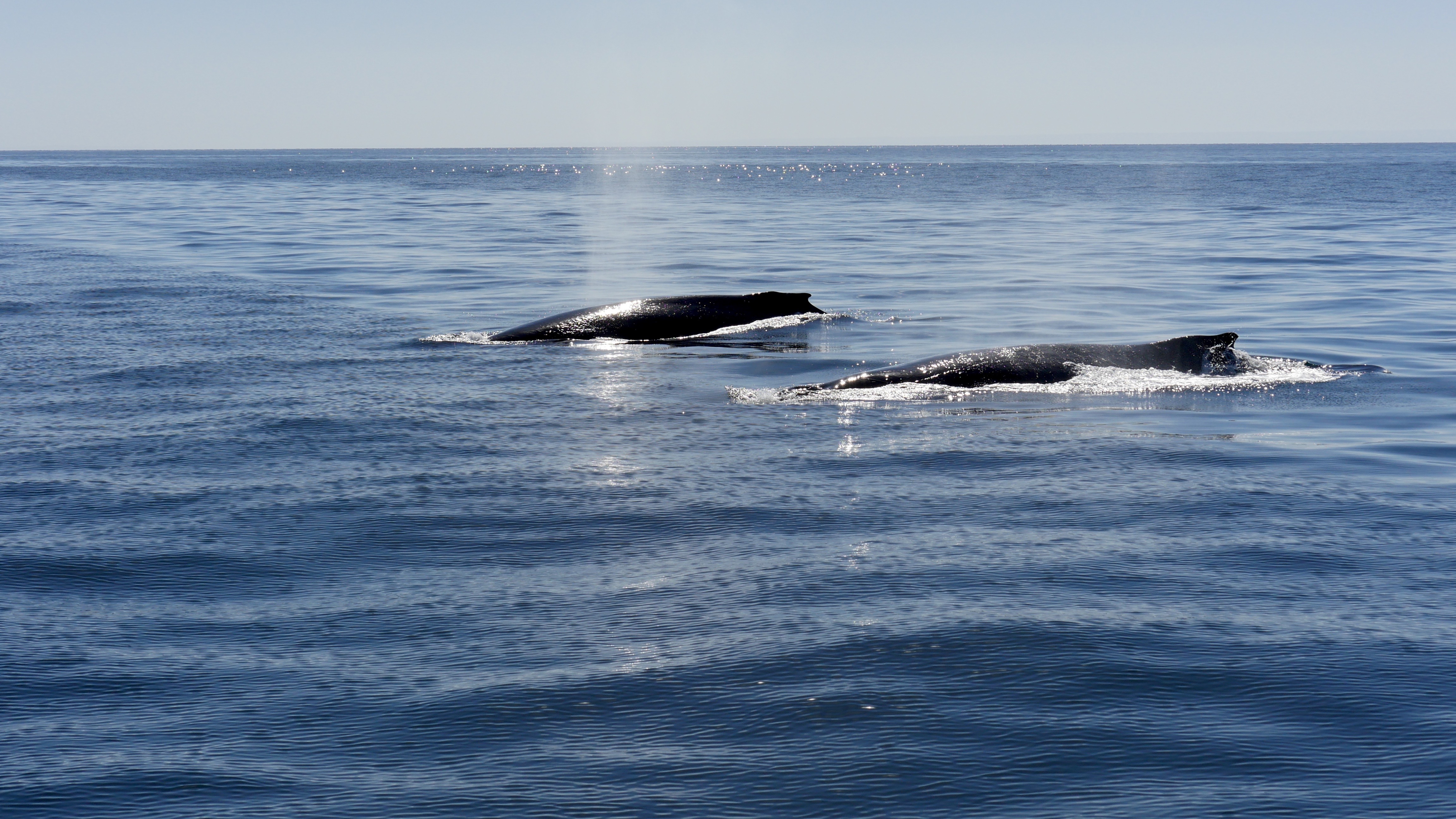
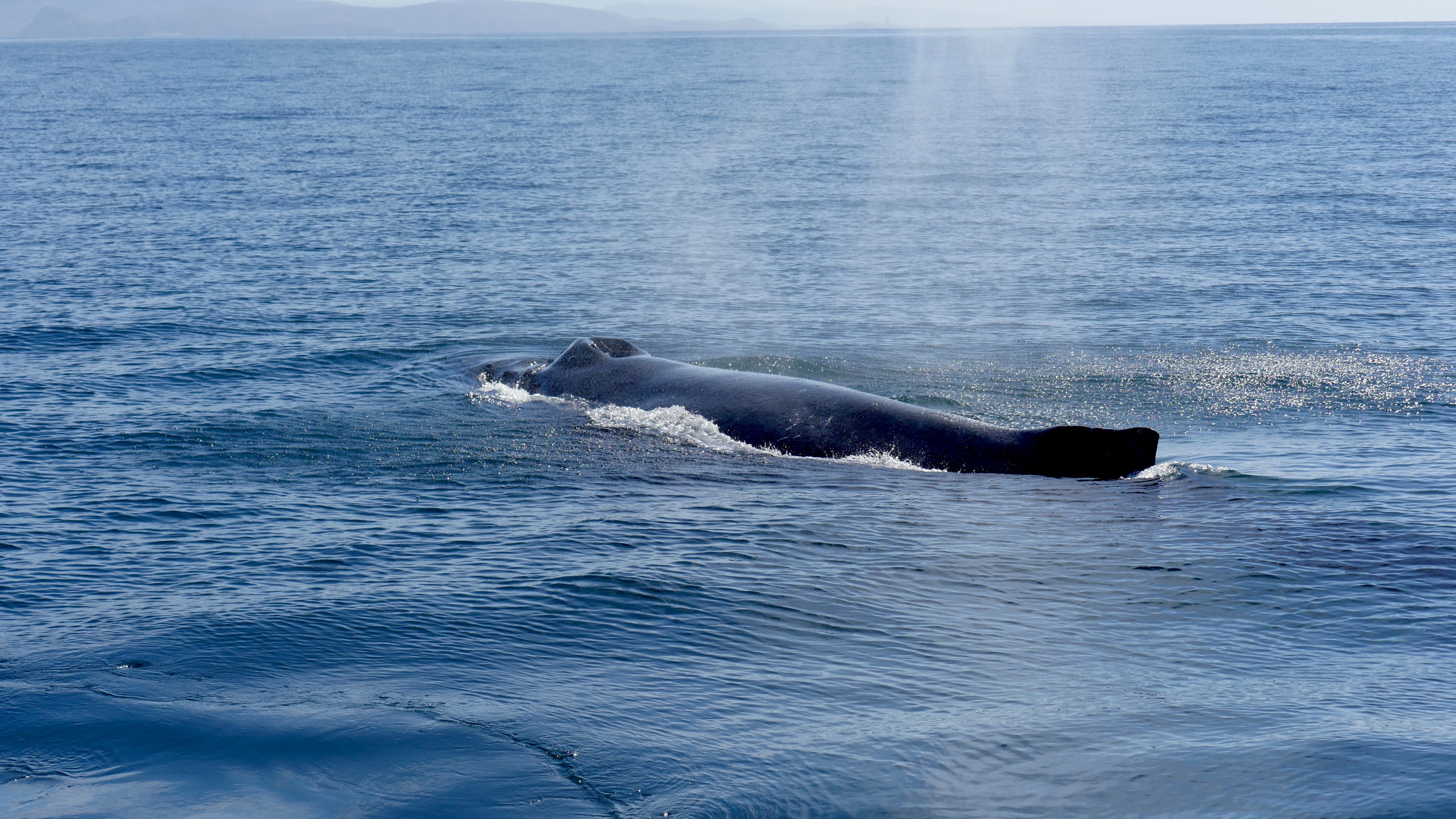
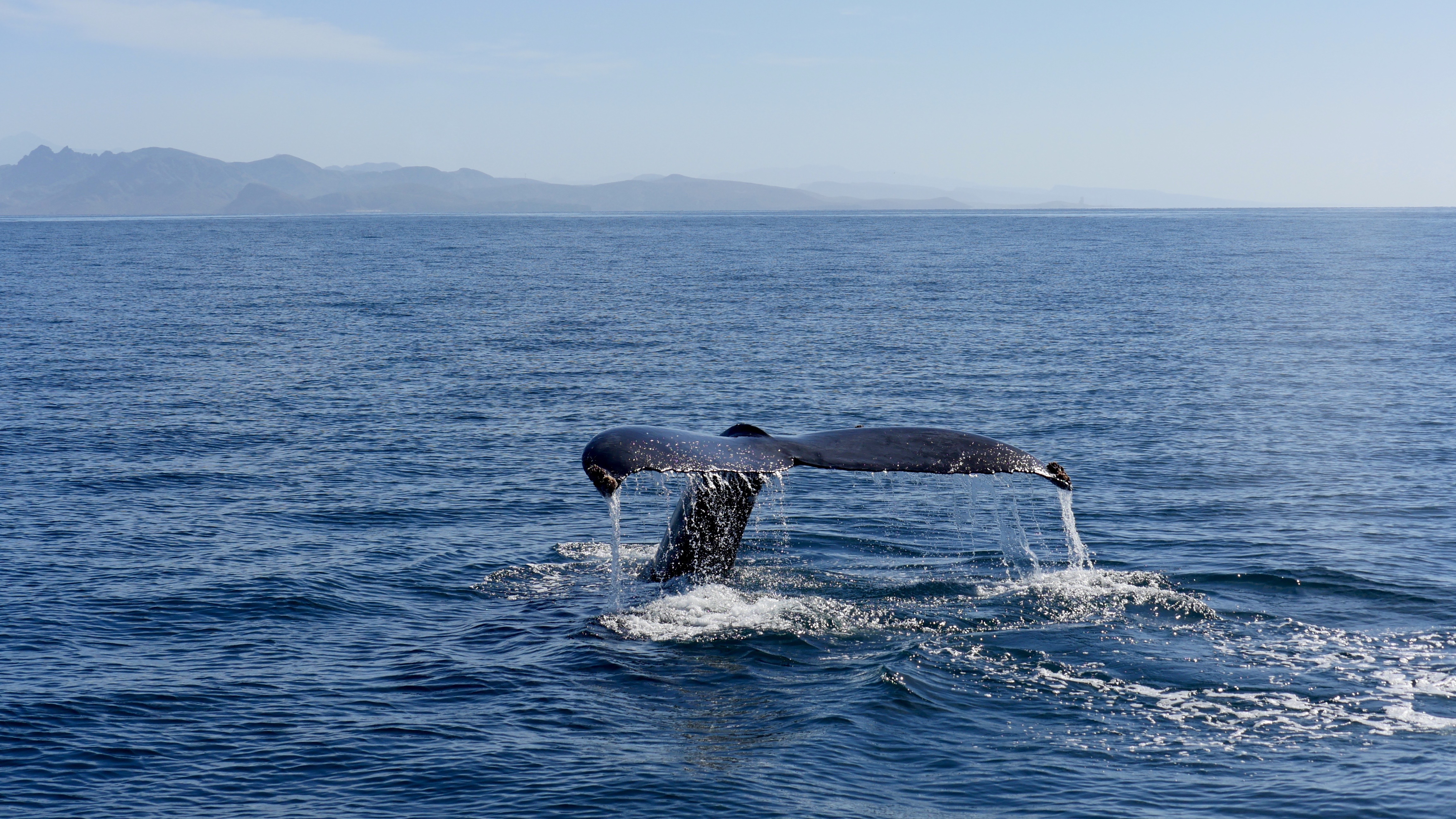
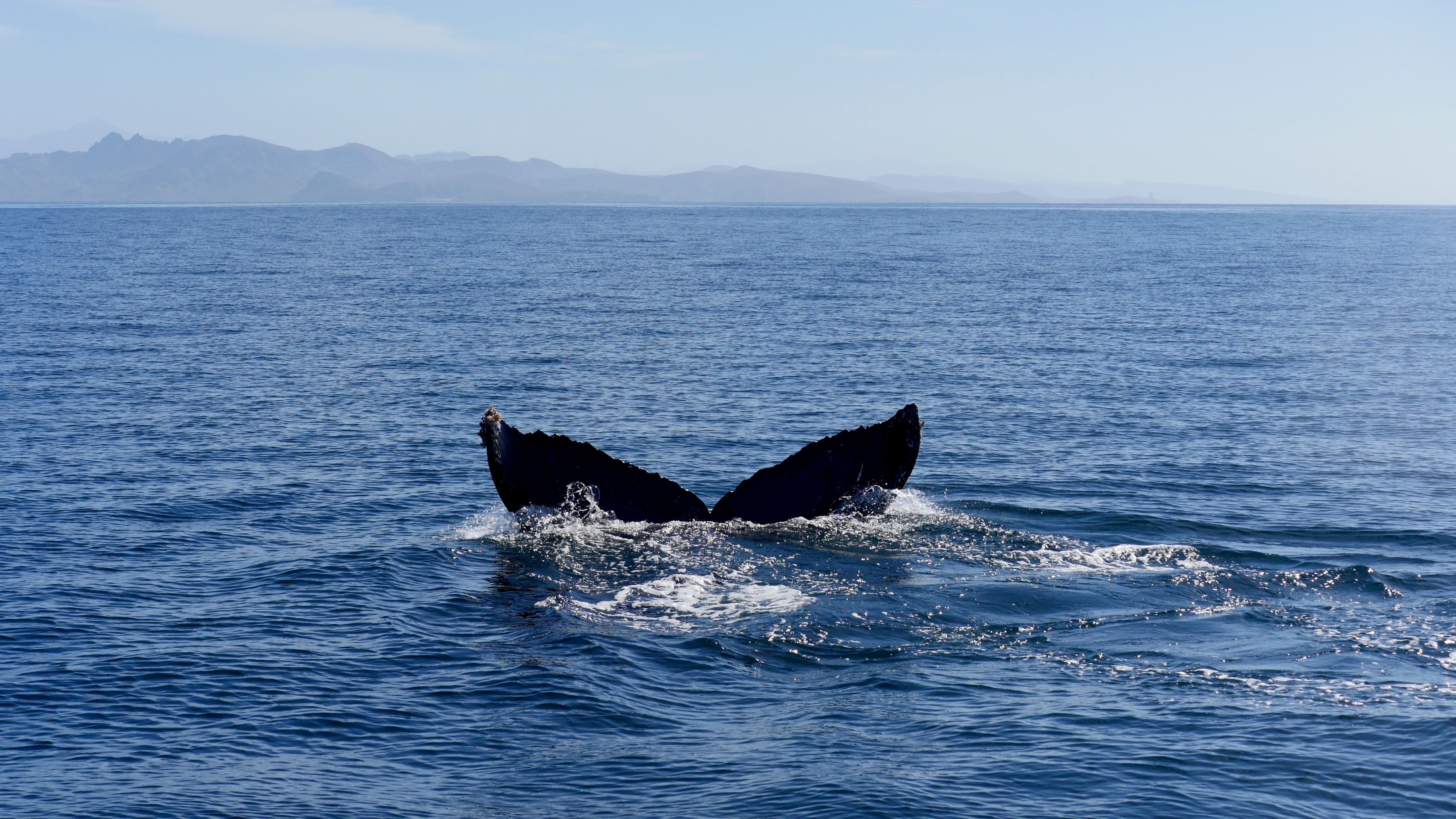
We sailed Christmas day on a whisper of wind, which finally quit as we approached the beautiful island, Espiritu Santo. Along the way we spotted some humpback whales, and though a few of the tourist pangas that ferry people out of La Paz for day trips also found them, they hung with Allora. Maybe it’s her black bottom paint that attracts them, but though we didn’t jump in this time, they came close and dove right under us (spottable on the fishfinder), then curiously stuck their noses out of the water.

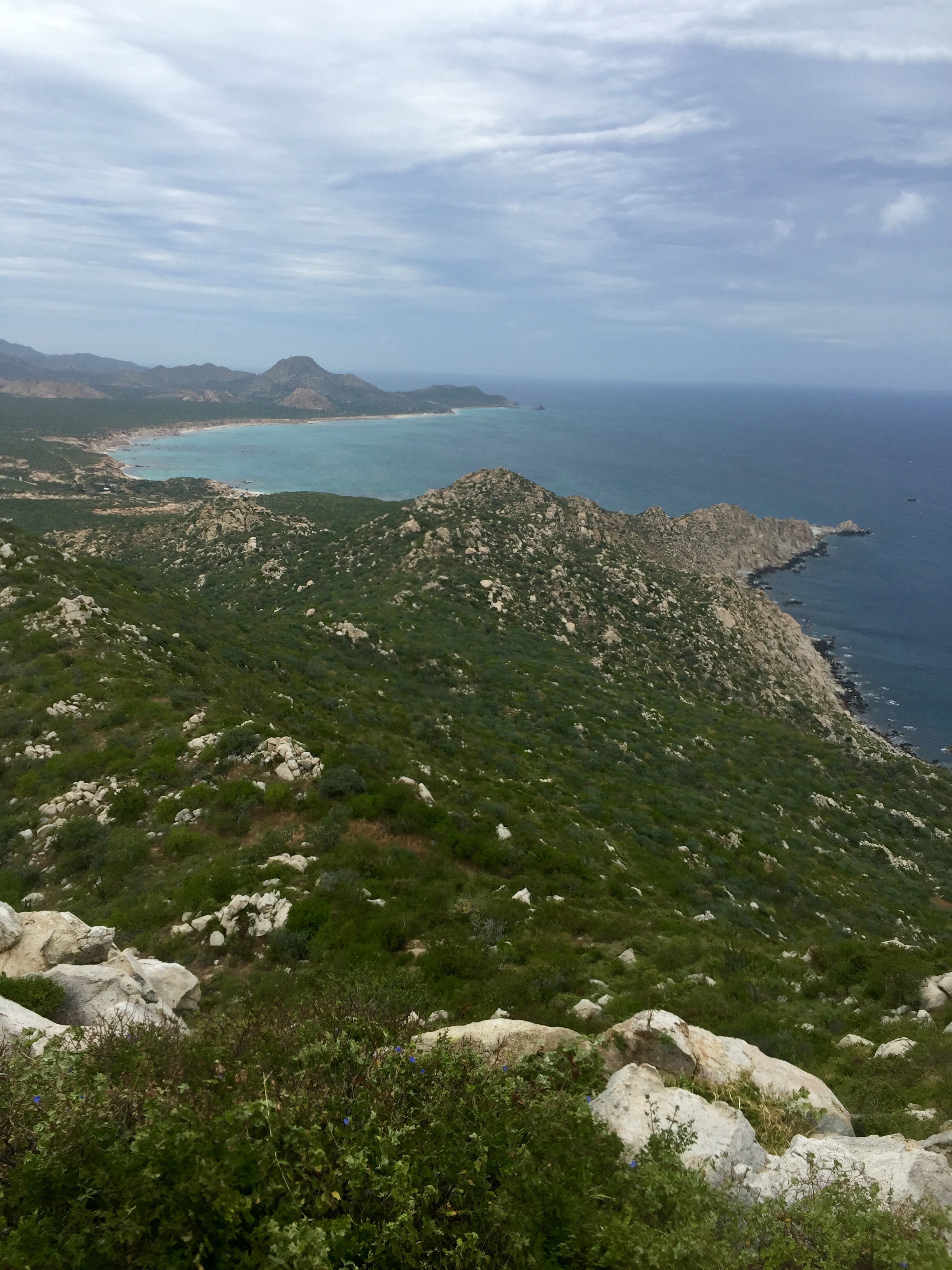
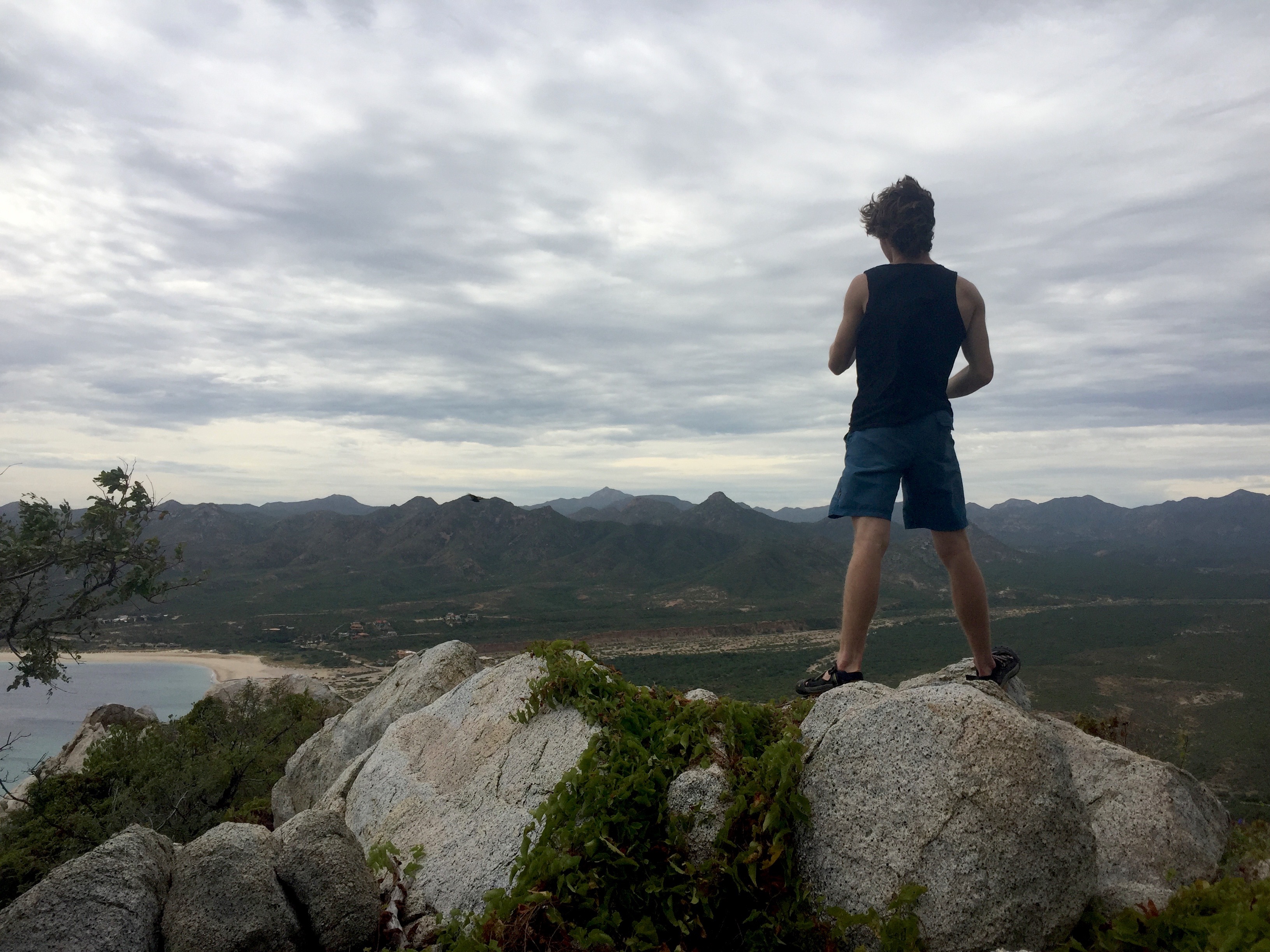
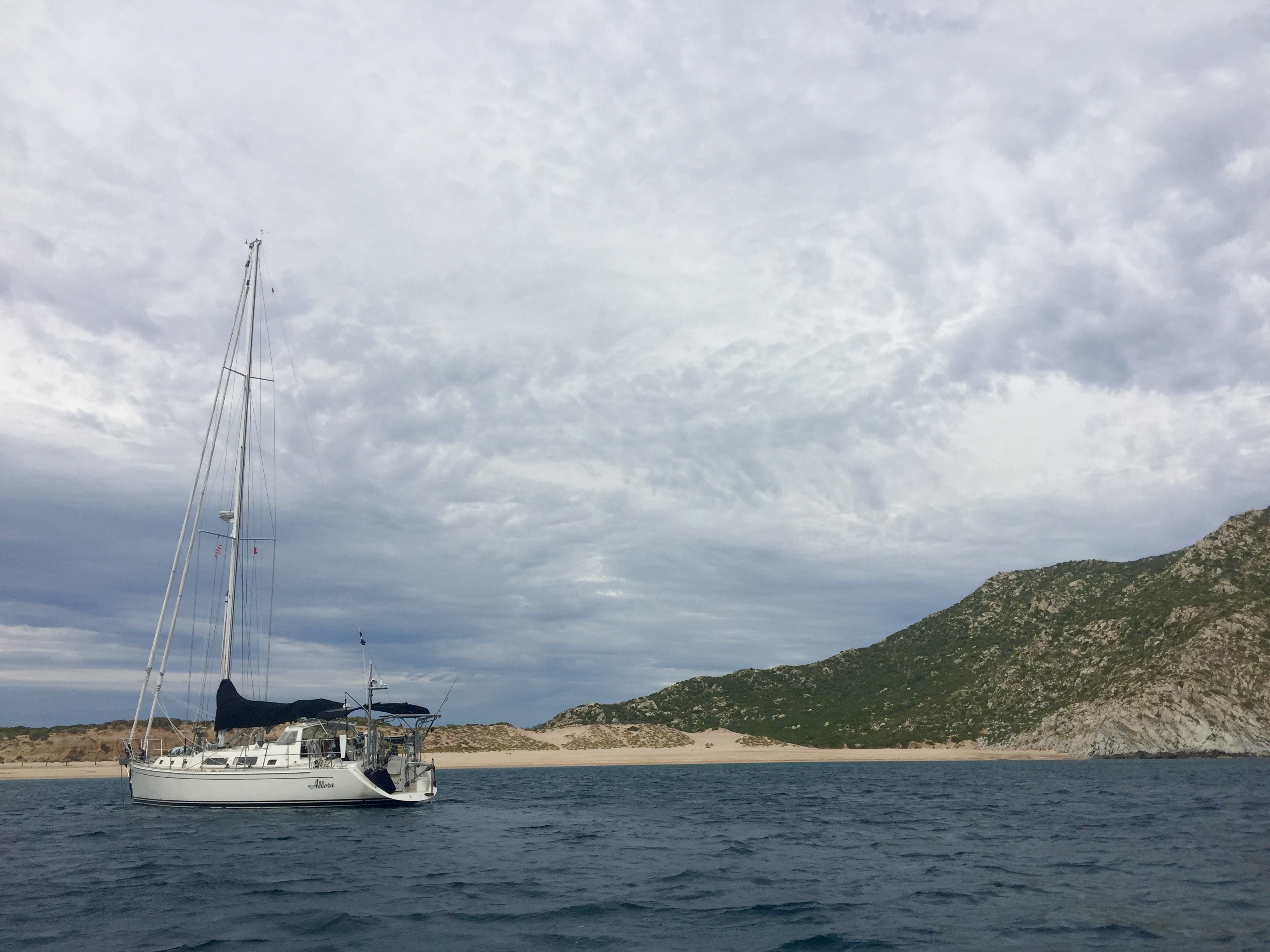
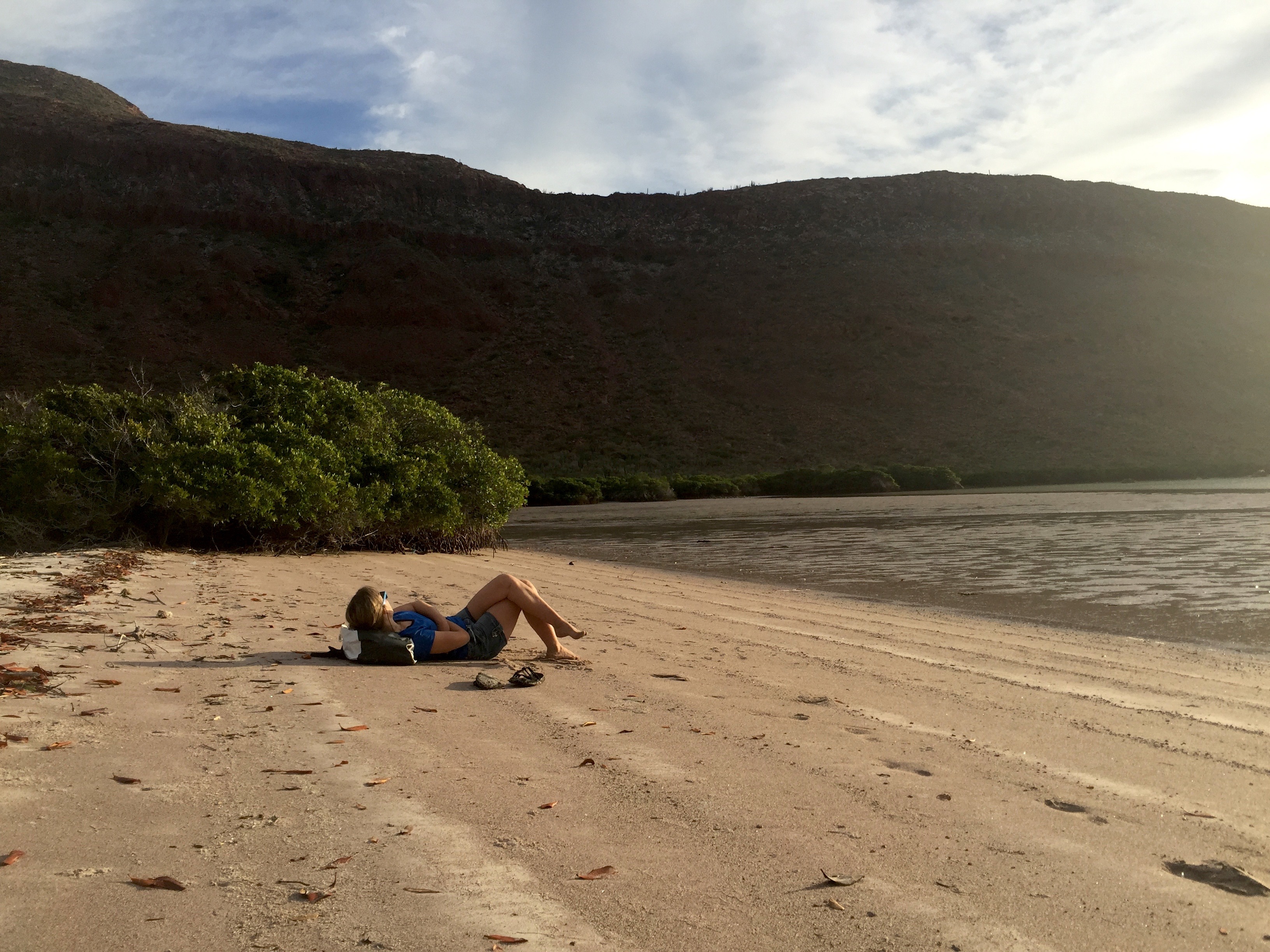
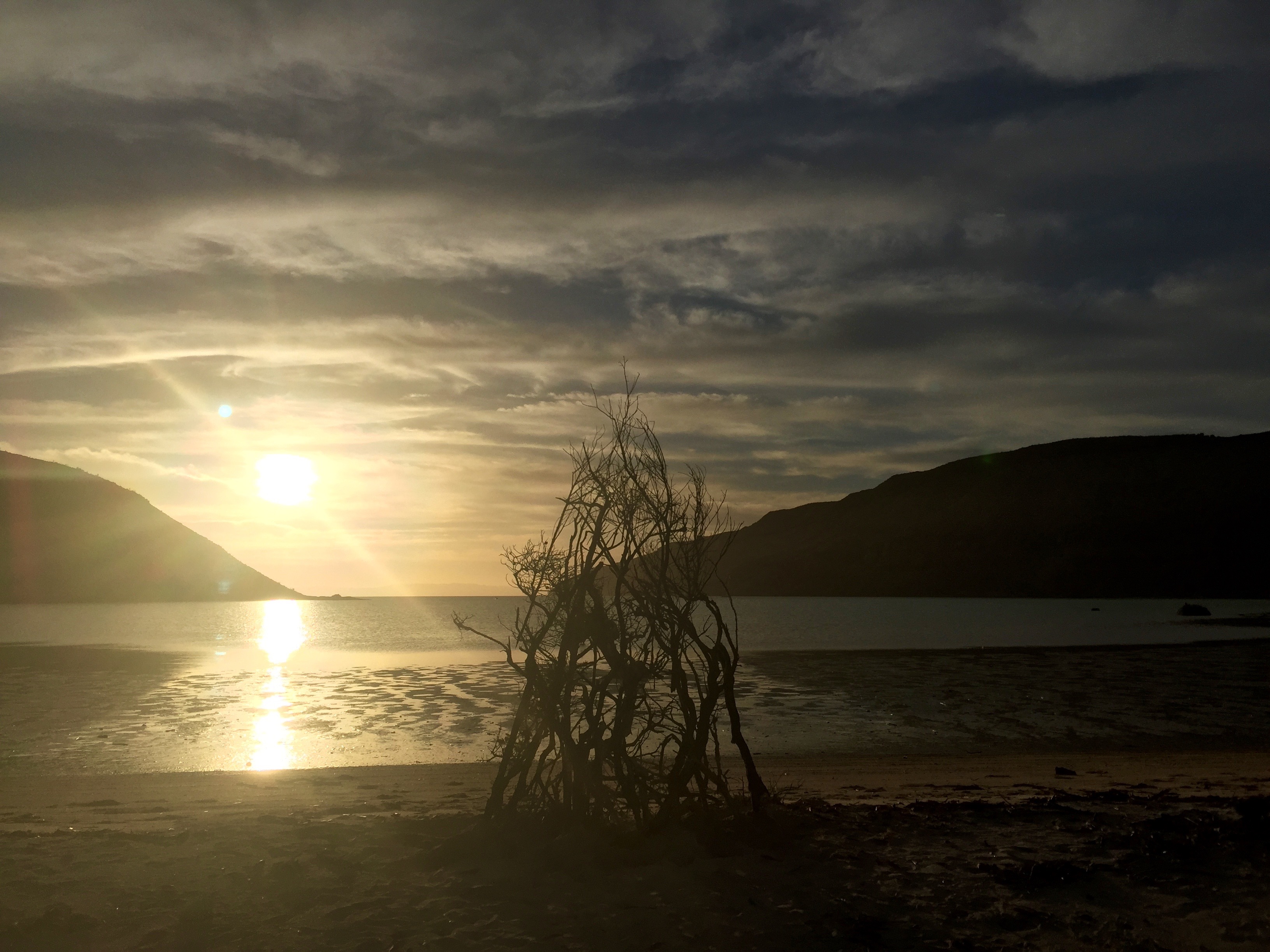
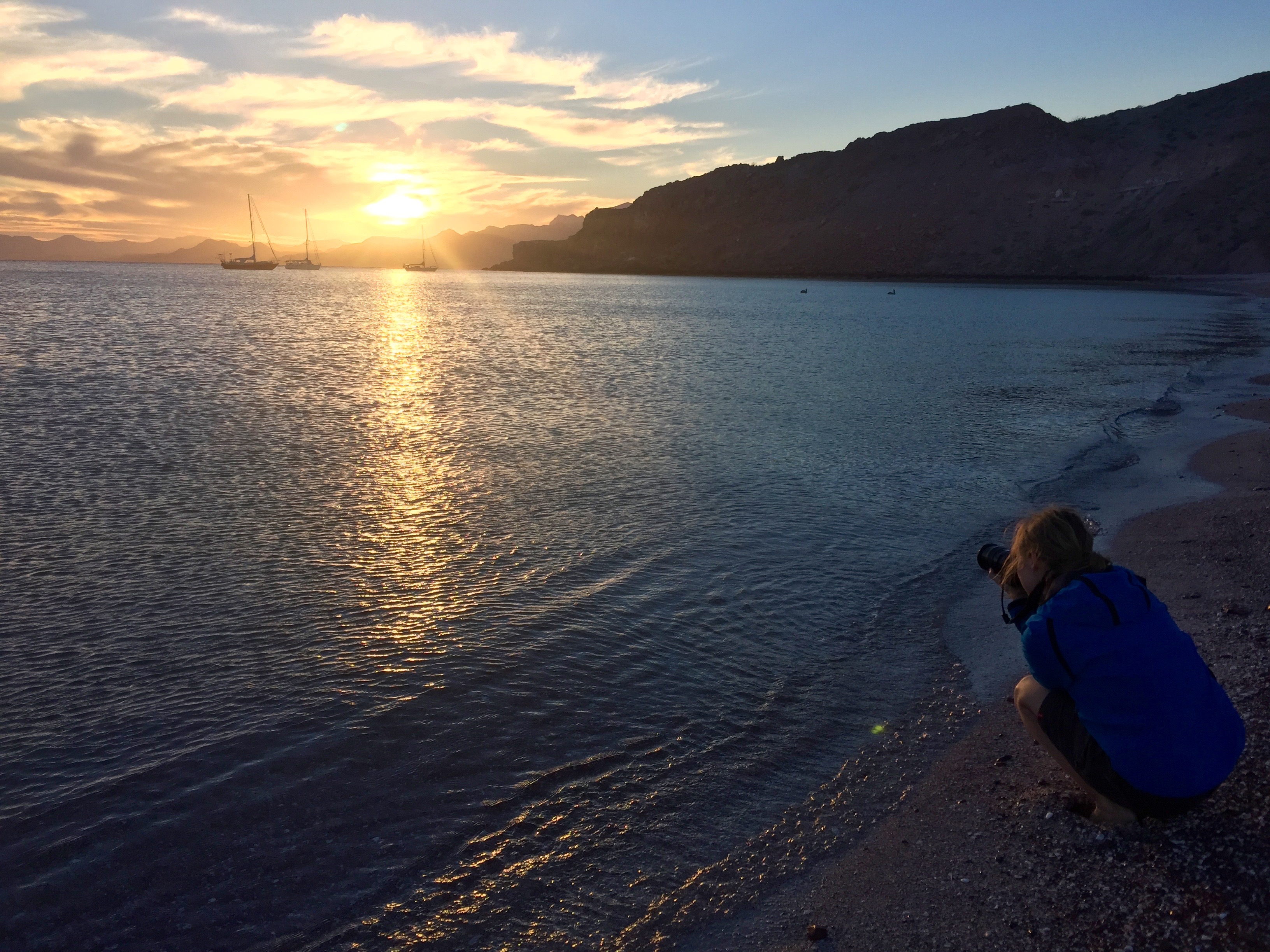
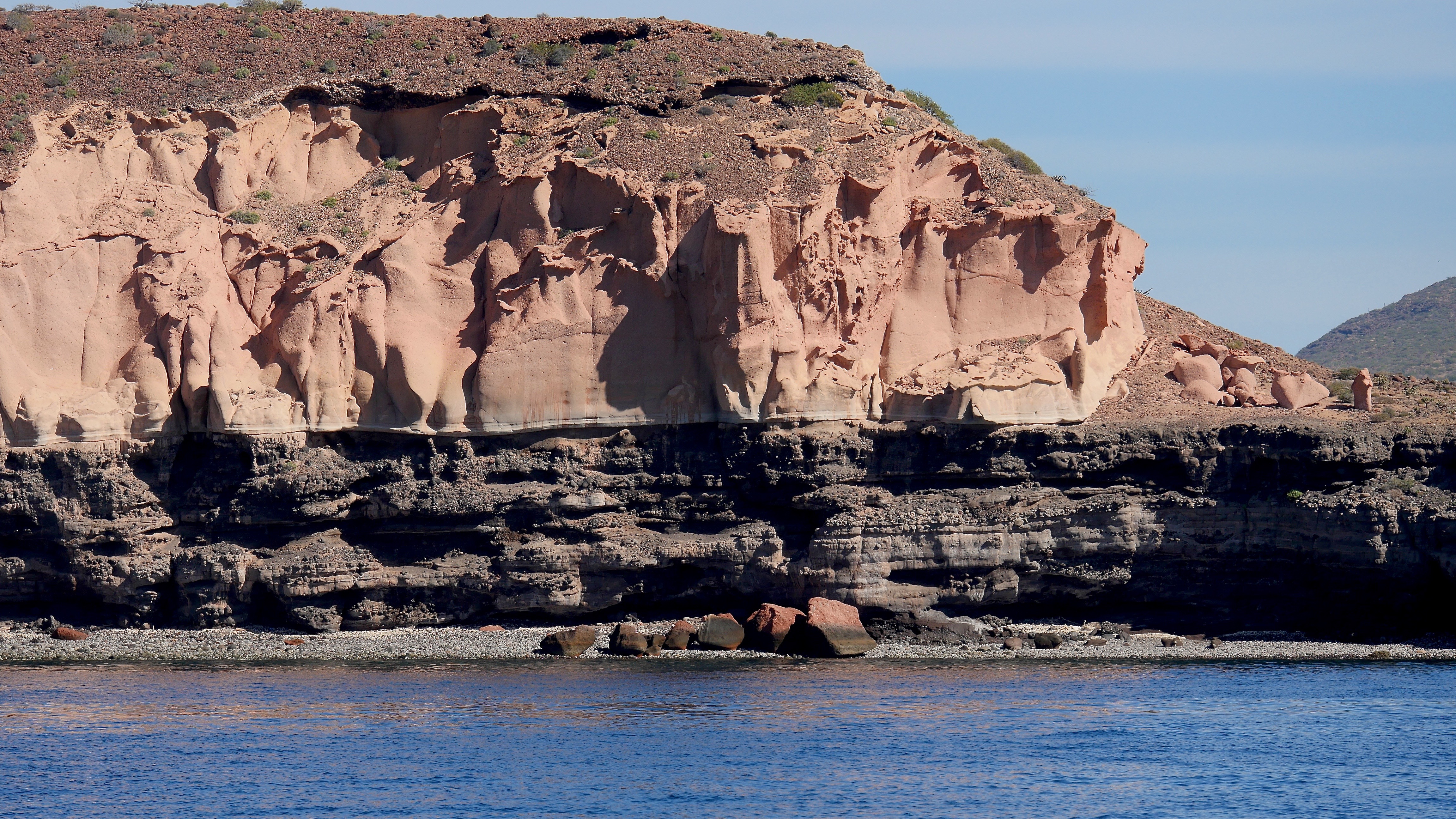
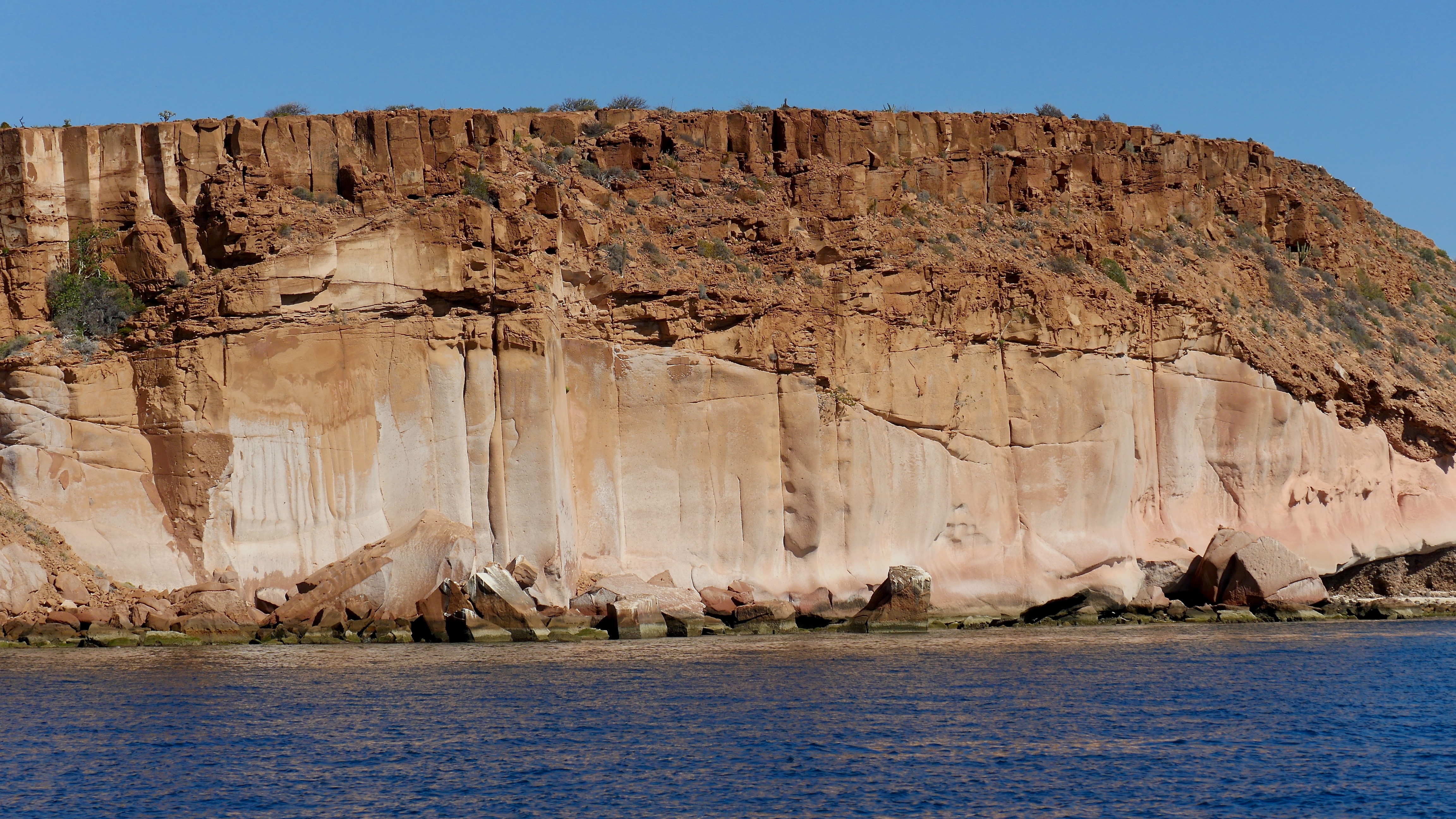
We anchored at Ensenada el Cardonal. Diana and Wyatt built a driftwood Christmas tree on the beach  (while I tried a little fishing and Haley took a catnap onshore) and we celebrated the full moon and the holiday by rowing ashore in water as still as a mirror. We made a bonfire of the tree  which scattered sparks up into the starry sky, then hiked across the lagoon through the ghostly cactus to the other side of the island.

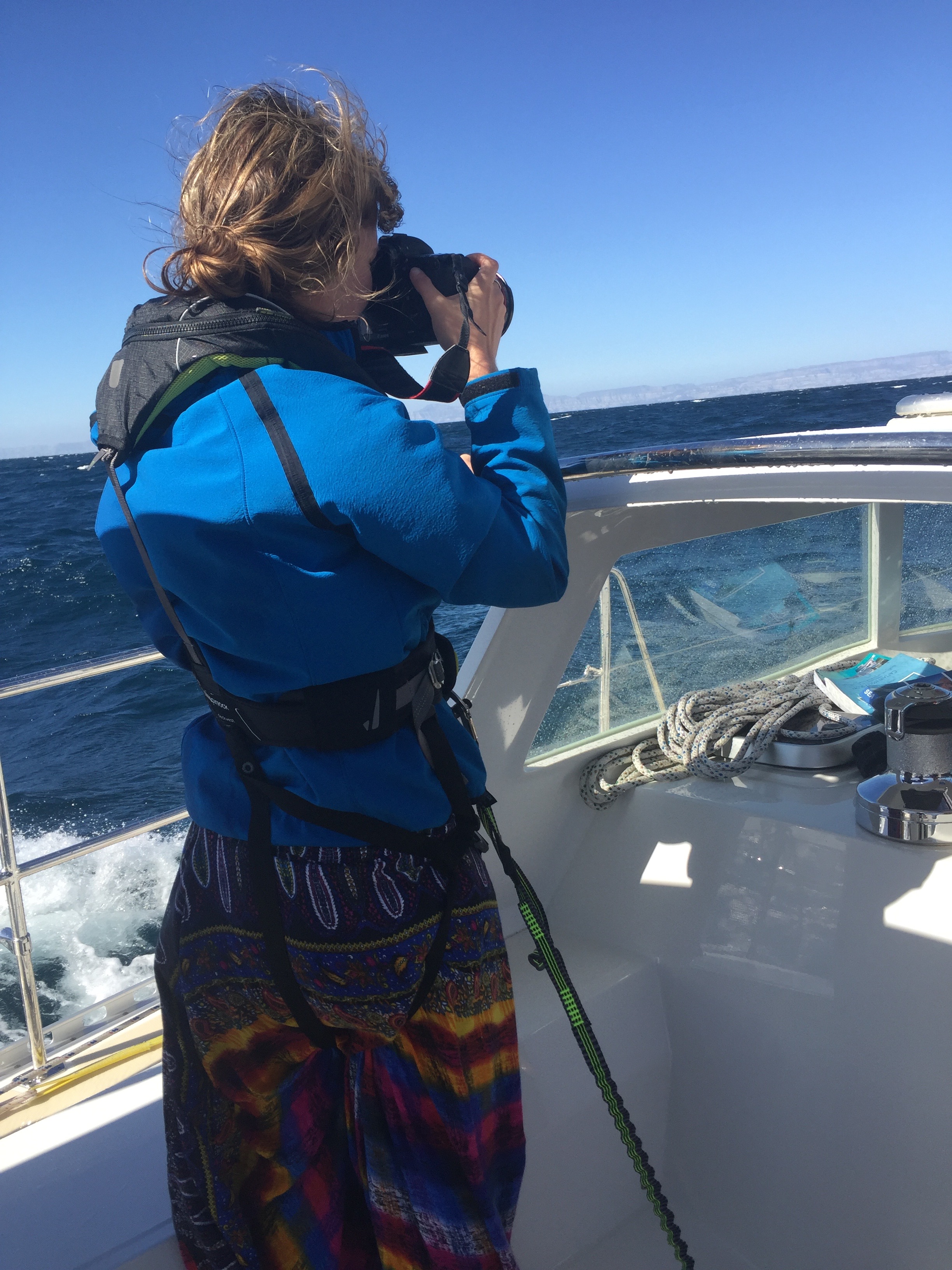
By morning the wind was howling out of the west. Further lessons were learned about the importance of putting the dinghy onboard at night, and especially getting the outboard off while the sea is relatively calm. Our only other company in the harbor pulled anchor a few minutes before we did and we watched them head out through the pounding white caps. They started to put up their mainsail, but quickly decided not to and headed south, unfurling some of their jib. It was a stiff breeze out there with some steep chop. Our prop worked hard trying to push us out passed the point, the waves slamming over the bow. We left our main furled, too, and unrolled the working jib and were quickly moving at 9 knots under jib only. Haley had her camera out and popped out now and then from behind the hard dodger like a war corespondent to get shots of the waves breaking over the bow, until Wyatt went forward to take care of the main halyard and noticed that the sail hatch was open. Fixing that problem was a lot of work, and there are still problems we’re dealing with including a bowthruster that still isn’t working. There was a lot to be dried out at the anchorage at Isla San Francisco. THAT won’t happen again!
San Jose Del Cabo – Cabo Los Frailes – Cabo Riviera Marina

IMG_3290 IMG_3265

IMG_3249 IMG_3244

IMG_3304 IMG_3298

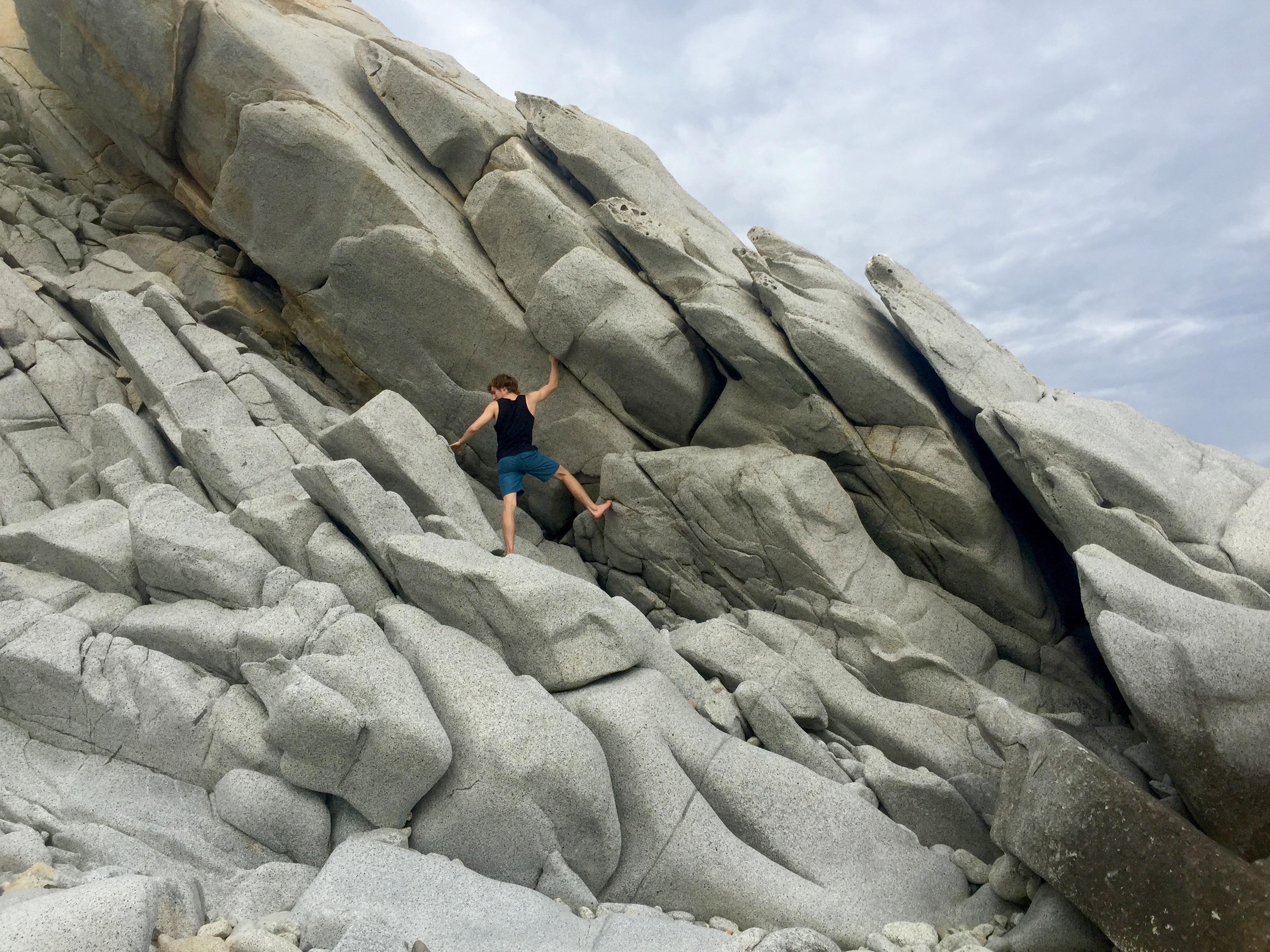
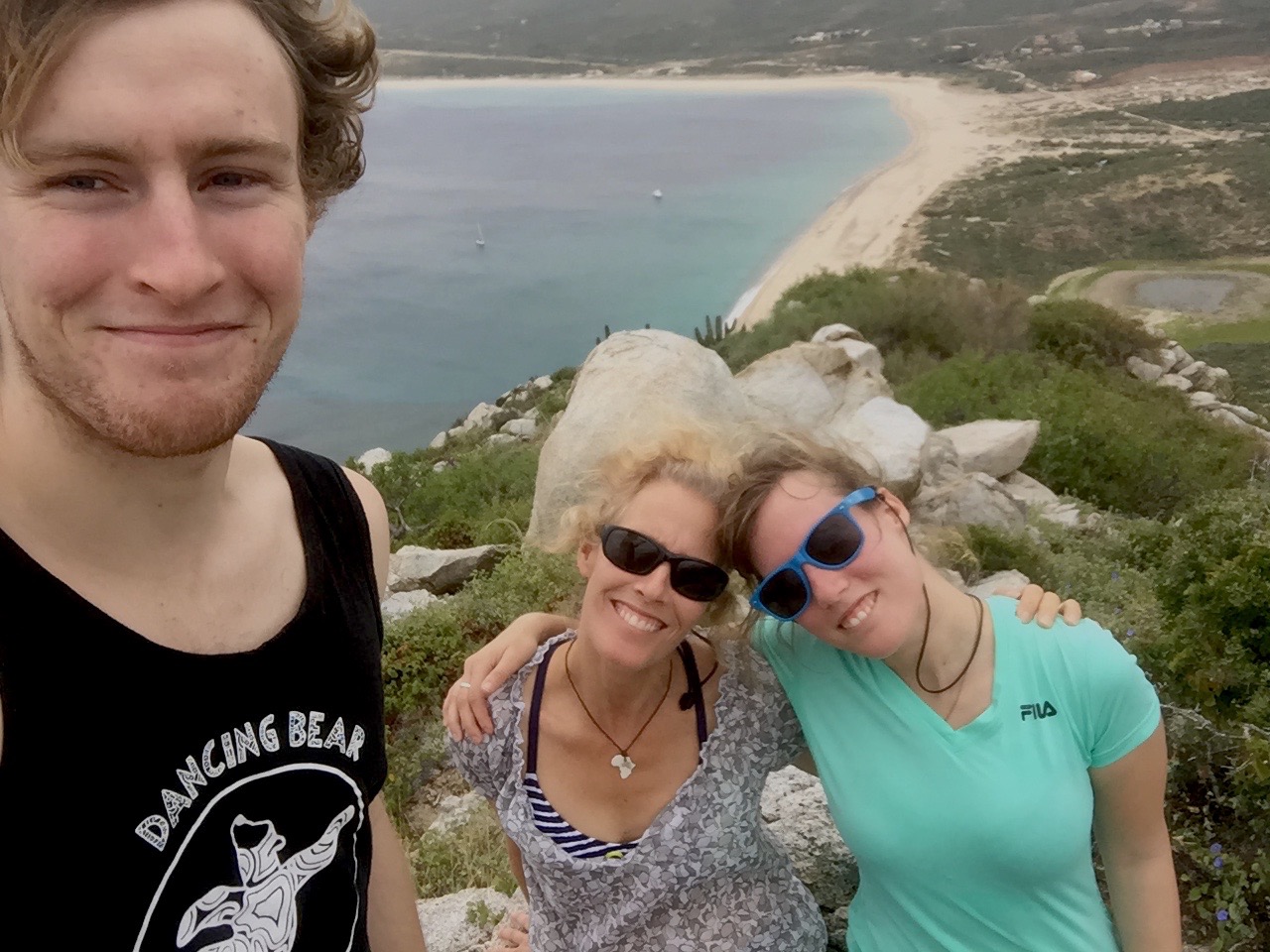
We spent a long, cloudy day at Los Frailes. The point was summited by a shore expedition, and I wore out my arm blind casting without any luck along the surf. The wind came up during the night, blowing from the north, but the forecast was for NNW in the teens which didn’t sound bad. We didn’t really know (yet) what to expect from the wave forecast, but the 5 second period (between swells) should have been an obvious warning. We decided to go for it and if it was too unpleasant, head for a new Marina less than twenty miles away. The wind had calmed in the anchorage, and it didn’t look that bad out beyond the point. We left in a bit too much of a hurry. We reefed the main almost immediately and then rolled up the jib. We’re still getting the process of reefing down, so the extra messing around was too much for Wyatt’s stomach, and Haley wasn’t too pleased about it either. Going back would have been a good choice, and we will remember the wisdom of retreat for the future. Especially important for the Captain who was feeling fine and kind of loving bashing into the seas, to take sea sickness more seriously. The second reef, put in hove-to, was too much for Diana, and all the crew was down.
The first mate suggested trying to motor so we could head straight for the marina at Cabo Riviera, but our Yanmar quickly overheated. I thought it was the heel that was causing the problem, so we went back to sailing and puking overboard. On the port tack we were making almost zero headway, but just needed to get out far enough to turn to starboard and then it was only 14 miles. Wyatt settled in from an initial sea sickness panic (his first, ever), to something more of a meditation on misery. Haley, more experienced with the feeling, retreated immediately to a sullen quietness in the aft berth. Soon, all three had found a modified fetal position somewhere on the boat as Allora sailed merrily on, double reefed. This gave me a moment to reflect on the morning’s hasty departure, and to realize that the problem with the engine was that El Capitan had left the through-hull for the engine cooling system closed after checking the strainer. Oooops! But then, with it open, the engine still quickly overheated. Problem not solved. Meanwhile, the first mate, with the earnest desperation only sea sickness can inspire, was making various attempts to contact Marina Cabo Riviera. Nothing on the VHF. A recording from the SAT phone in Spanish seemed to suggest that the phone number did not exist. It was hard to imagine that a ‘new’ Marina could come into existence and then disappear, but there was nothing on the charts and it was only listed in one out of our three books.
I kept an eye on the windspeed, as Diana summoned her early religious life with a prayer that the ghost marina would manifest. The wind had settled in the mid-twenties, which, going up wind, is a stiff breeze, but then it began gusting. It topped 35 for a moment and I looked to see if Diana had noticed, but she was focused on her catechism. Then it bumped over forty. She still didn’t notice, and I resolved to keep quiet. It hit 50 knots as she looked up and then for a second, unbelievably, it topped 60 knots. It must have been some kind of wind sheer hitting the top of the mast where the wind is measured, because on deck it didn’t feel like a hurricane. Finally Marina Cabo Riviera answered on the VHF. I started up the engine and Diana mustered the strength to help drop the mainsail, but in the process, a batten caught in the lazy jack cheek block and before we could straighten it out, the lazy jacks (which help keep the mainsail under control) on the starboard side came raining down on deck. Despite the building wind and crazy seas Diana wrestled the sail onto the boom. Then the engine overheated again and had to be turned off. We didn’t want to deal with the main, so we unfurled the jib and Diana got on the VHF to ask Cabo Riviera about the feaseablitly of sailing into the harbor. They didn’t think it a good idea, mainly because the narrow channel had a shallow spot and they were worried about our 6 foot 6” draft as it was. As we approached under reefed jib we could see waves rolling into the entrance which were going to make it difficult even under power. To the profound consternation of the seasick crew, we hauled up the main to its’ double reefed position and sailed directly out to sea,
AWAY from the Marina with exactly two options. Get enough sea room to heave-to and fix the engine, or if that was not possible, sail 15 miles further on to Bahia de los Muertos, seriously, Bay of the Dead, where we could drop anchor. Cabo Riviera, meanwhile, hailed us on the VHF wondering why we weren’t coming in and expressing concern that conditions were worsening and that the window was closing. I shit you not.
We keep an inventory onboard of where we put everything including spare engine parts. We got the boat hove-to, Wyatt rising heroically from his seasick depths to lend a hand, and I went below to find the impeller, which was my first guess of what could be causing the engine to overheat. Down below, the steep waves had turned our quiet little home into something of a madhouse that required a white knuckle grip to keep from being tossed around like a rag doll. EVERNOTE politely informed me that it could not access the inventory, because, so sorry, that required internet access, though, the cheery little app reminded me, we could solve that problem by upgrading to a paid version. Not helpful under the circumstances. Diana had a couple ideas where they might be and together we tore the boat apart as it slammed and tossed in the waves and wind howled overhead, finding the engine spares, finally, where I had missed them in the first spot Diana told me to look. Changing the impeller was miraculously easy, and in moments we had the engine running.
Now all we had to do was make it in over the waves behind the breakwater and not run aground. It helped me to remember the experience of ducking into Pier 39 in SF Bay in a 5 knot current as we surfed through the steep waves into the muddy channel. It didn’t feel THAT bad. The only remaining trick was to get beyond the shallow spot. Diana convinced the guy from Cabo Riviera that he had to come out and talk us passed the point. I watched the depth as we approached the area – 11 feet, then 9 feet and then seconds after he said we were clear, 7 feet. There were four people to help us tie up, the only sailboat (the rest were fishing boats) and definitely the biggest boat in Marina Cabo Rivera. Diana kissed all four. Allora’s crew regained composure, took a cold shower onshore and the main caretaker at the marina drove us all to dinner, waited while we ate and drove us back to our home afloat. We showered them with packages of marlin to show our appreciation for their very existence.

IMG_3311    The only photo taken during all the mayhem.
Overnight, Santa Rosalia to Isla Tiburon

Isla San Pedro Martir

Isla San Pedro Martir

The midmast view from the elevated fuel dock, looking down at Allora made me want to get more comfortable climbing the mast. She shimmered in the bright lights set against the dubious waters of the strange little harbor at this French mining town, Santa Rosalia. Lyndon, captain of the sailing vessel, Moon (a beautiful 42 foot Hinkley with generous cockpit, tall, tall mast and navy blue hull), a marine biologist, or something like that, mused about the chemicals on the periodic table that neighbor the copper mined here for decades. Arsenic, lead. What else would have settled in the mud inside this industrial looking harbor, carved out of the shoreline with its grey stone breakwater? In a square, the wreck of a mid-size schooner still nestled half sunk and rotting in one corner. We topped off our forward tanks, backed away in the windless water and motored out around the ludicrously outsized yellow buoy that marks the shoaling on the east side of the entrance.

We did not expect a breath of wind for the planned 77 mile trip up to San Francisquito. The forecast showed zero, but within half a mile we had 8 to 15 out of the west, which took us out passed the first point, then died. We could smell smoke from the shore, but couldn’t’ see the fire. We started up the engine and Diana took the first watch, turning the engines off less than an hour later as a nice NW breeze settled in convincingly. We will probably keep saying it, but the bioluminesence was off the charts. Really. The waves slipping off the bow lit with green lines of fire that was bright enough to light up the sails. The hydrogenerator on the stern churned a comet tail in our wake. It was mostly overcast. Diana turned on the red light in the cockpit to record our position, speed, course over ground, and wind conditions. We weren’t moving super fast, ultimately averaging about 4 knots an hour as things slowed down a little on my watch. The best course we could make without tacking sent us straight north up the Sea headed directly for what initially looked like a little island, Isla San Pedro Martir. Diana woke me at three thirty, as usual going later than she should on her watch. She said she would have kept going but was concerned I might be disappointed to miss the night sailing. I promised to wake her at sunrise if it was as spectacular as it promised to be. The sky was now about 5/8 which is how we list cloud cover in the log.

Before she went to sleep she set me up with our, now traditional, mint tea. She had also dug out my favorite chocolate cookies (a little thing at home in our pantry, a much bigger event here tucked into Allora’s tightly packed nooks and crannies) and set me up with a big loaf of sweet bread from the famous French bakery in Santa Rosalia (the one just a few blocks up the one way “up street” from the steel Gustav Eiffel designed church). The bread kept me awake, though it tasted like everything else from the bakery, not particularly French, a little underwhelming like the landmark church, set among the colorful clapboard buildings of the little mining town. A better set of words than reality provided, but charming nonetheless.

When I couldn’t eat anymore of the sweet doughy bread, which reminded me of sneaking raw pie crust as a kid, I clipped my harness in on the starboard padeye to gaze at the bioluminescene (which deserves a better, more magical and easier to spell name). By now the moon was peeking out on our port side, but the green lit waves (as bright as our running lights) on the starboard was mesmerizing.  I couldn’t help be stunned at this tiny glimpse of infinity. If we could sail for miles in the sea, and everywhere the water could be filled with countless millions of these glowing little creatures, how many of them could there be? I looked up at the stars shining in the gaps of the thinning clouds. Okay, right? Now the devout among my friends must forgive me, but really, in a universe as vast as this, that crushes human names for numbers (except in the abstract), how can our puny religious fictions, with all their thou’s and begats, come close to the spiritual gigantic-ness of the real unknown, even the tiny slice of its awesomeness we can see with our earthbound eyes. This is why I’m an atheist, so I set no limitations on my awe.

As the eastern sky paled slowly with dawn, visible to my darkness adjusted eyes almost an hour before I expected it, the wind began to slow down. So far in our experience, when the wind drops below 4 knots, it also starts swinging around the compass and with any swell at all, the boom rocks back and forth, the jib fills and collapses. It’s a frustrating mess. But the Sea of Cortez was mirror flat, barely ruffled by the remaining breeze, and the wind dropped down to three knots, but stayed constant from about 300 degrees. Allora kept moving, slipping along at 2 knots or so. Because we were not on a direct course to San Francisquito as it was (pointing against a NW wind) our computer calculated (and recalcualted constantly) that we would make it there, not the next day but the following, sometime around three in the morning at this veloctiy made good (VMG). Still, I didn’t really feel like starting the engine. Diana was in a deep sleep, and there just didn’t seem to be any compelling reason that we needed to be moving faster. After all, we were, as we always are, already home.

With Allora moving so slowly now, just slipping through the sea, the wavelets off the bow, rippled outward, luminous caligraphy in the slick water. It was also beautifully quiet, no sound from the sails, Allora barely whispered. We’re always floating (the laws of entropy willing!), but now we really floated, like a bird gliding on a light breeze. Sound travels on still water, so the whale I heard blow could have been right by the boat (I could hear that weird phasing whistle of the inhale), or several hundred yards away in the liminal ocean. I stared, but I could not see even a dark shadow. When it blew again, I woke Diana. Whale!

We sat at the bow, listening intently and staring as the sunrise quielty gathered light and Allora glided northward. We never saw the whale, and it must have been several, which blew and splashed along our path until it was light enough to see, and then they slipped away into the subterranean blueness and the wind came up again and ushered us onward.

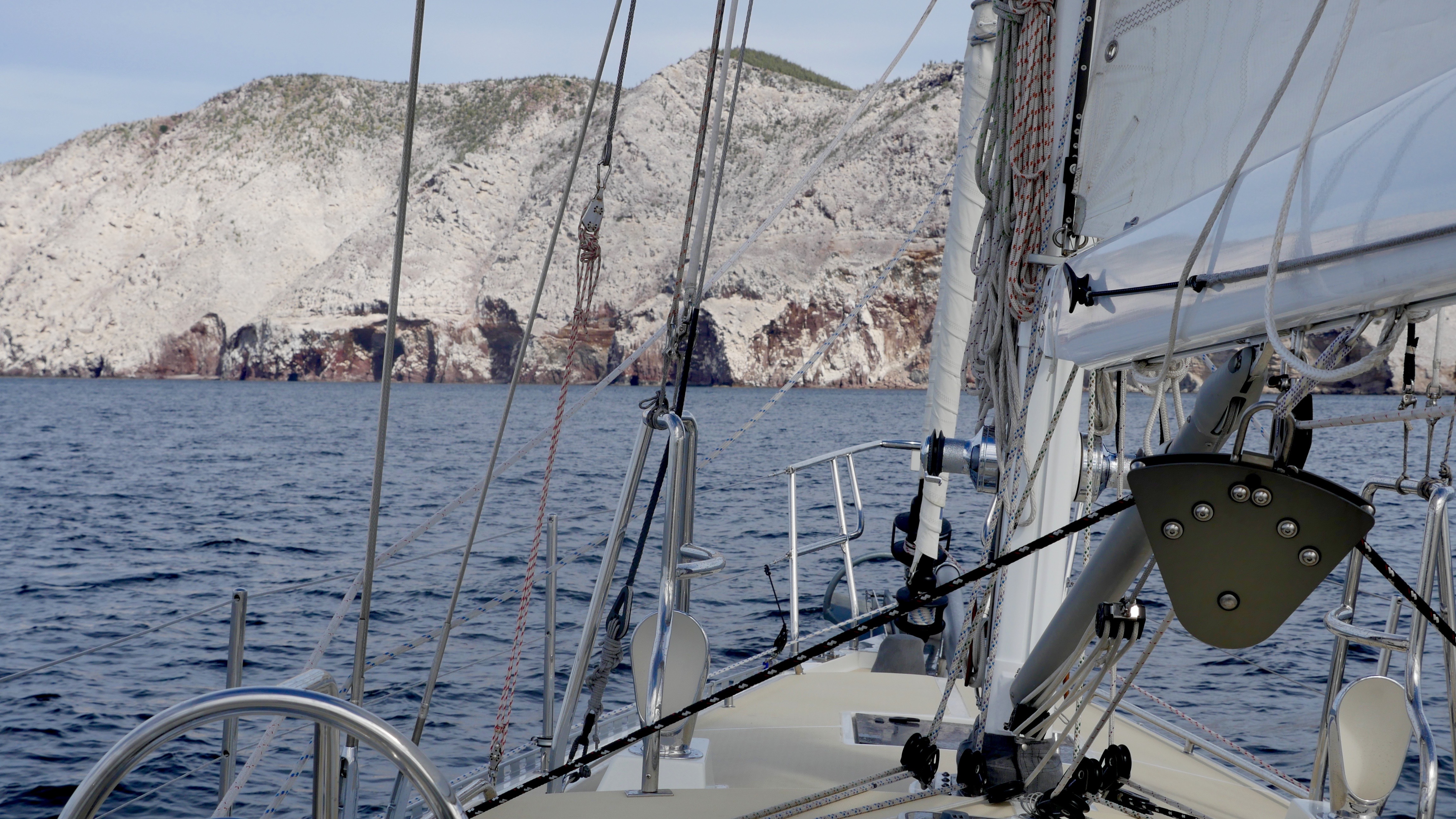
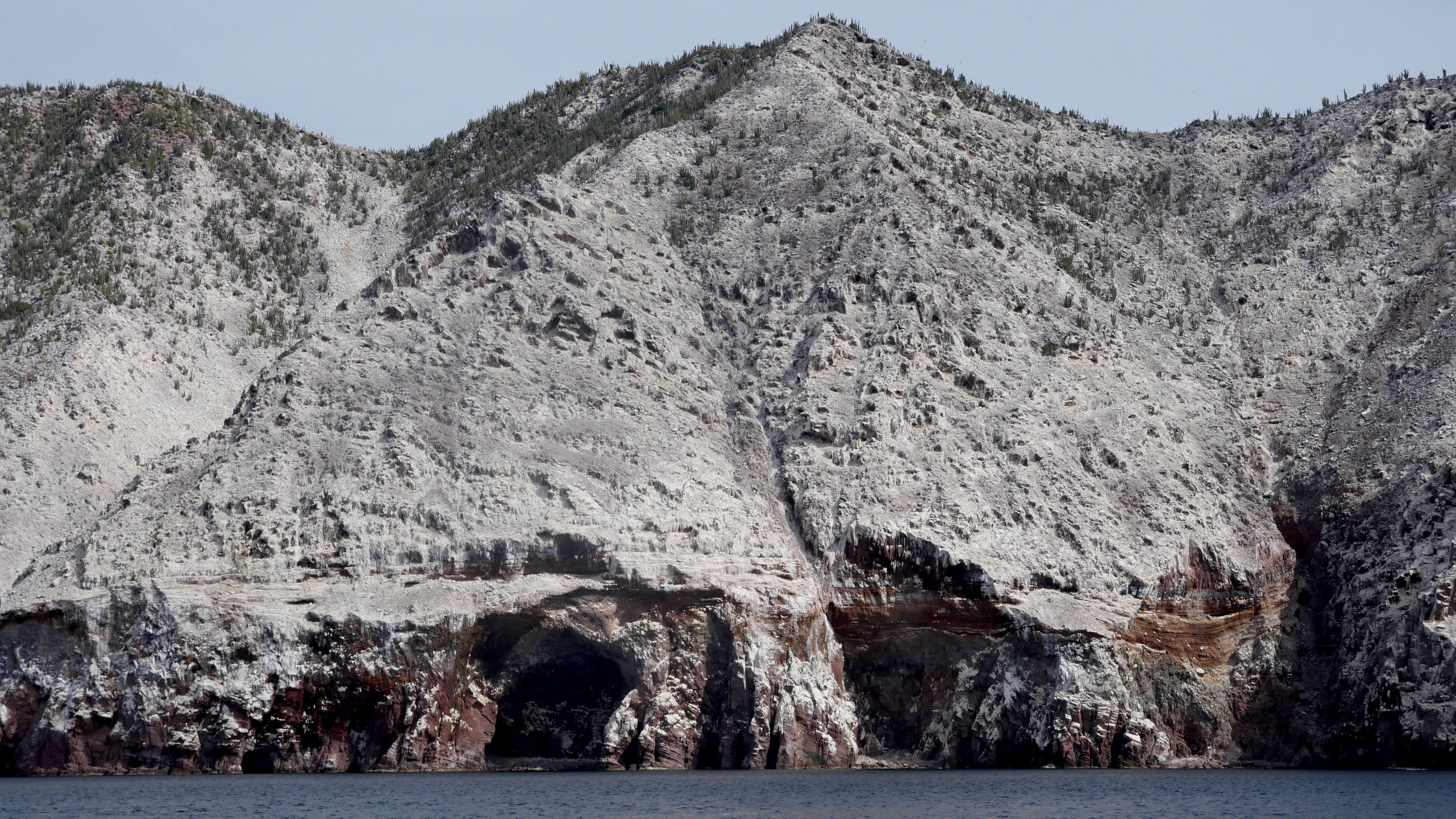
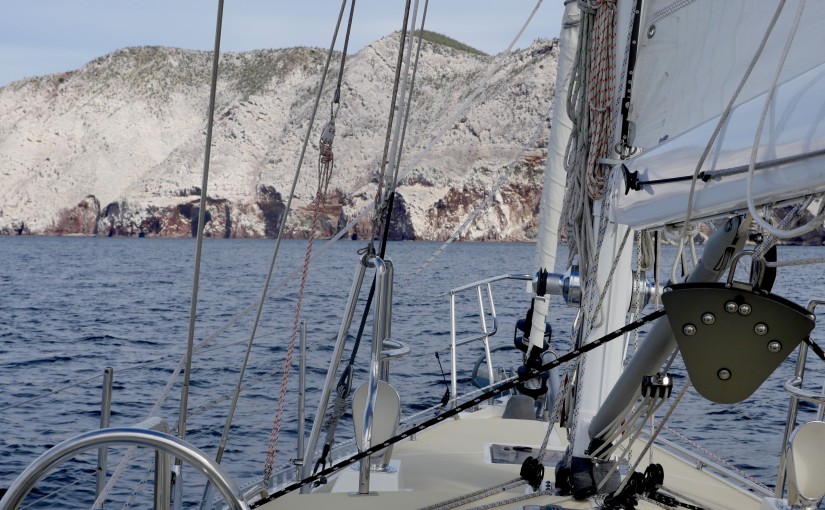
We arrived at Isla San Pedro Martir, which has another name in the local indian language, and a very special spiritual significance. A rock like a mountain from Montana, dusted white with guano, with dark green trees atop which looked like pines. With deep caves in the massive stone along the shoreline and crazy currents in the deep water known for giant Humboldt squid and the Sperm whales which feed upon them. Diana did her best to drift Allora along the 200 foot contour and I jigged with an iron lure hoping for Yellowtail or Cabrilla. Diana suggested that when we have internet again I watch a video on jigging, since I was basically making it up. We had no luck and finally sailed around the south side of that magnificent island.

San Franscisquito was still almost directly upwind of us, but we realized, Isla Tiburon was straight along our course, so with nothing pressing us but the need to find a good anchorage for the predicted northwest blow, we continued our northward diagonal crossing of the sea. The wind had come up into the gusty teens. Diana wisely proposed setting the solent (the smaller of our two headsails), and we scooted along with a knot of current in our favor at over 8 knots toward Isla Tiburon. We should have had lunch when the wind was 8 knots, but Diana made sandwhiches with bread from the french bakery (think Baja Wonder Bread and you’ll have a good idea of this famous ‘pan’) and we ate them bracing ourselves on the starboard bench. Being on the low side, the settee was perfectly set for a nap, cradling me nicely as the waves and wind built. An hour later it was Diana’s turn to wake me with, ‘Whale!’  Amazing how hard it is, rising from a nap, to negotiate a boat heeled hard over and pounding against a steep chop. The whale Diana had seen, must not have known we were there, because when we surprised it (just off our port side bow), it slammed its tail as it dove and left a massive swirl of churning ocean behind.

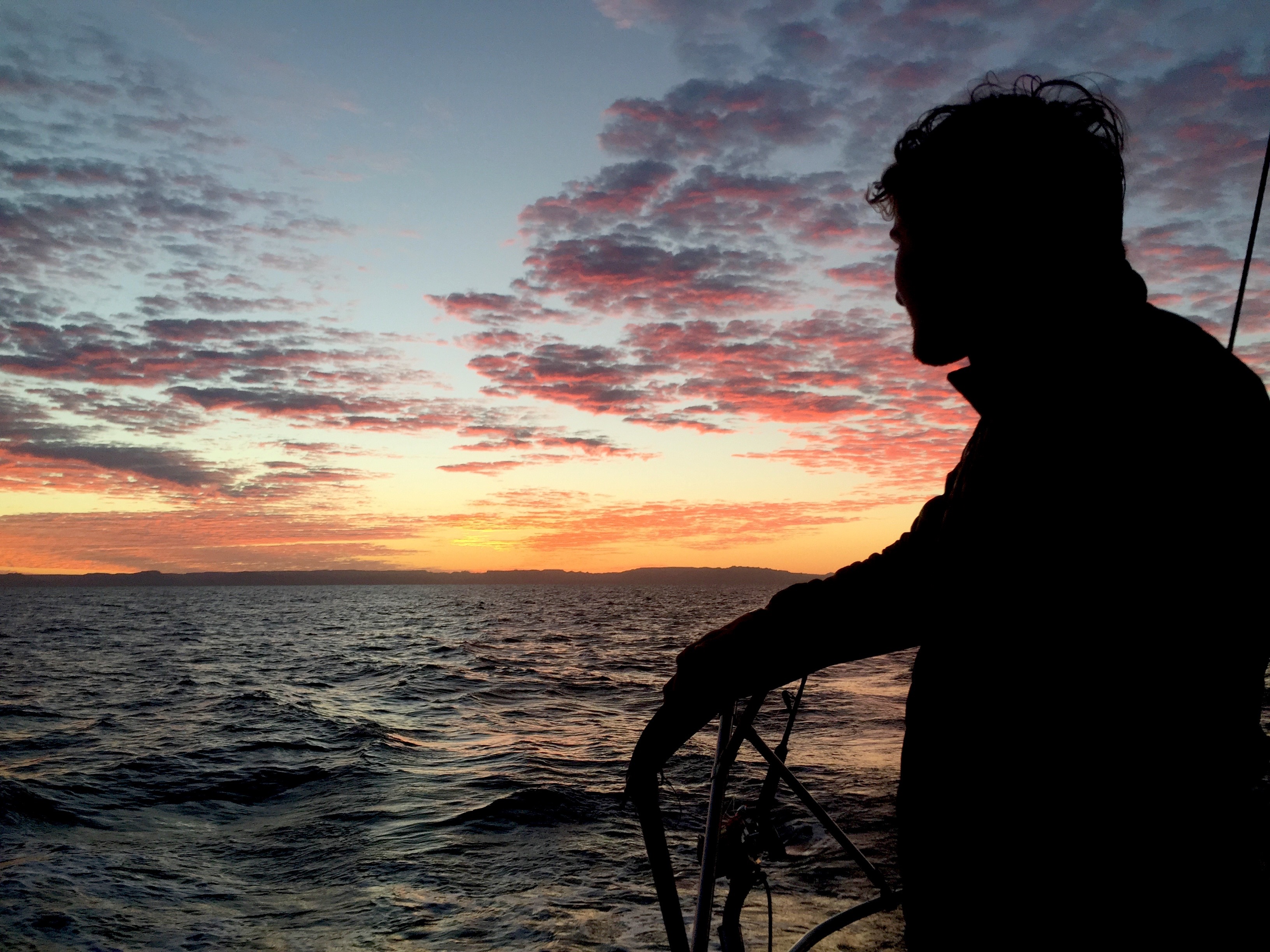
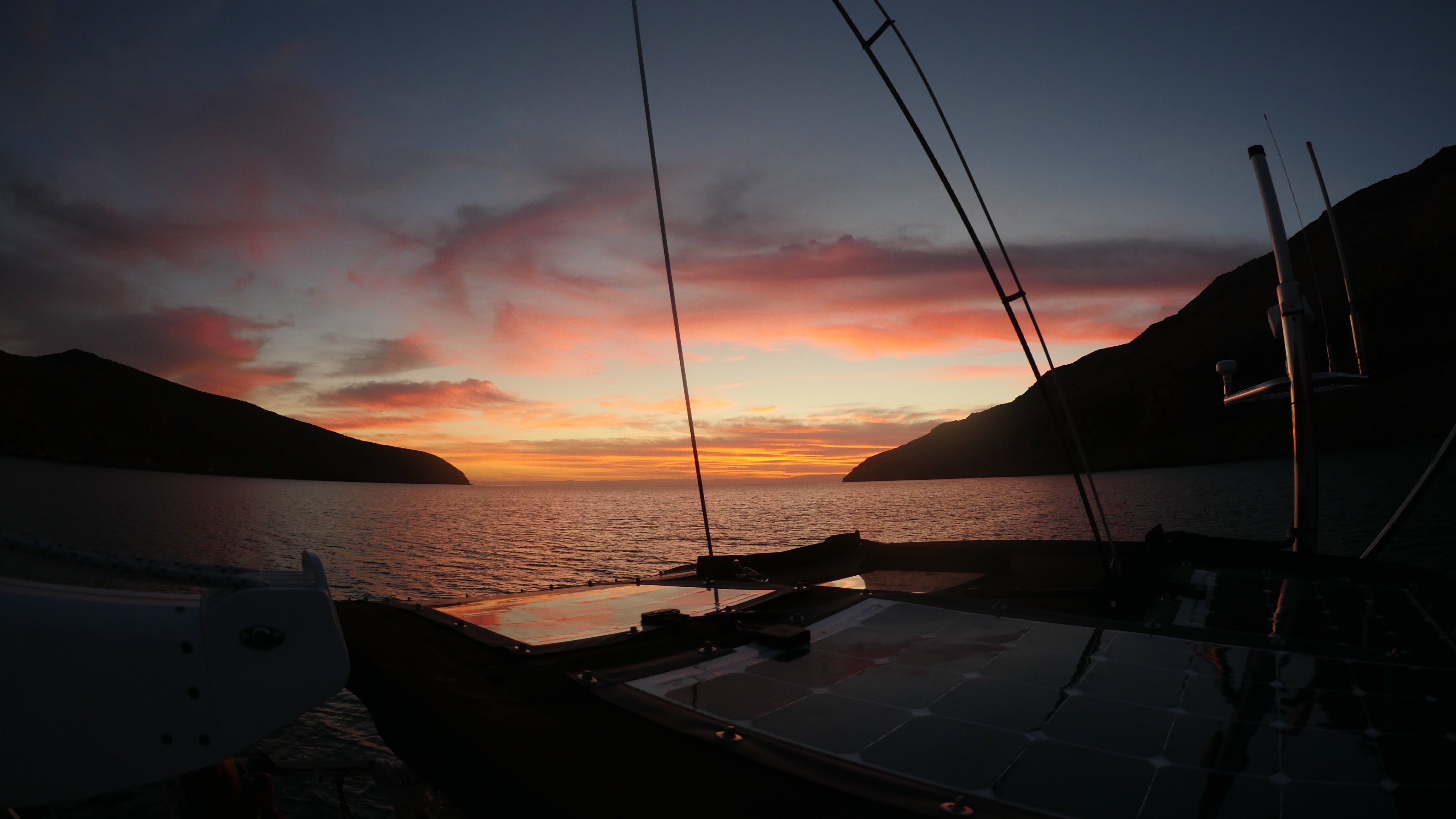
We reefed and sailed hard for Tiburon, rejecting the first anchorage and motoring around the rocks to another, better protected one, where we dropped anchor at Ast Ahkeem or Hast Hakim, depending upon which reference you use. The sunset was as stunning as the sunrise, and we slept soundly waiting all night for the predicted north wind that never showed up. Clear skies in the morning and a pefect heavy dew to use to wipe the salt from Allora. Pastries from the french bakery, which have indistiguishable sweet fillings with crust or buns that must be poured like everything else there for the giant vat of dough that gives Santa Rosalia its dubious fame.