We stayed in Soquel Cove an extra day waiting for the small craft advisory for the central coast to be canceled as predicted (also because the sea otters were pretty cute), but instead it was extended. We’d heard for a week before we left San Francisco about a boat coming up the coast that was having a hard time. The owner was a friend of Eva’s at Emery Cove, and she had suggested we should wait a whole week before departing, which we hadn’t done. Somehow she’d picked October 4th as the most auspicious date and she was sticking to it. Robin our sailmaker shrugged it off saying the problem this time of year was not enough wind and having to motor. Phil the boat builder told the story of being surprised by 50 knots of wind passed Monterey (where they had expected things to calm down). The waves were huge, he said, but the boat handled it. The only scary moment came at Point Conception when they had to jibe (change sailing direction downwind). Reassuring words? The fact that we would be sailing off the wind, and not against it, weighed in. We had sailed in the bay in over 30 knots when the breeze was at our backs, and it was suprisingly calm, the boat took some hand steering, but then we were happy to go fast in the flat water. The difference along the coast would be the waves, and that was a condition we lacked experience to assess. We’d also be sailing overnight for the first time.
Plans carry surprising momentum. The problem was that the forecast suggested we’d have to delay another couple days to avoid the predicted 30 knot winds, and then there might be no wind at all, or wind from the south with rain, which did not sound like fun. So we decided to set out. Our back up plan would be to anchor at San Simeon if it looked too big. We left early enough that we could duck in before sunset, otherwise we’d sail all night and to begin passing Point Conception around dawn which, according to one slightly outdated forecast might mean a little less wind.
We passed Big Sur mid-morning. The mountains, viewed from the sea were massive, like Montana mountains. The fog scattered across three miles of the Pacific was backlit by the sun as it cleared the peaks. Even from that distance we could see the surf breaking on the rugged shoreline. The wind picked up, starting at a pleasant 15 knots, but kept going. When it hit the twenties we shortened the main and rolled up a bit of the jib. The waves started getting bigger. One of the things which suprised me was that they didn’t come in long rows, but more in peaks, and you could see big ones some distance out, but it was pretty hard to determine until right at the last moment if they were going to pass by or come right at us. Usually you didn’t really know until the wave was blocking out the horizon. They looked so steep, you just knew that some water was coming on board, but then that almost never happened. Allora would surge forward and rise with the waves, sometimes nice and straight, but other times she would yaw off course and heel over. It was never dangerous, but it did remind us that if things got out of control it might not be as pleasant.
We shortened sail again late in the afternoon. We were in position to make San Simeon if we wanted, though there was fog developing along the coast. We had a decision to make. Were we signing up for the night at sea, or changing course and trying to find a place to anchor before dark? If we did, we’d have to wait a full day at San Simeon and leave in the evening, or we’d find ourselves at Point Conception at midnight. The wind was steady around 26 to 28 knots and gusting over 32, and the waves were definitely getting bigger, but with the sails reefed, Allora felt pretty good. The motion was still a little crazy. Going below you never knew which way she’d rock next. Maddi put a quiche in the oven for dinner, and the stove tipped back and forth wildly on its gimbals to remind us, in case we were beginning to forget, just how far away from Montana we were. We moved from hand hold to hand hold to get around down below and tied in the lee cloths (which hold you in your bunk to sleep). The decision to go for it felt okay.
Dark settled slowly, sunset warming the scattered fog as we set our heading 150 degrees to the true wind, steadily offshore. The running lights on the bow lit whitecaps green and red as they surged underneath us. Diana took the first watch, and we planned to jibe after two hours when she would wake me up. The autopilot was set to follow an angle to the wind. Our best course would have been dead downwind, but modern sailboats are more efficient at an angle to the wind, and in confused seas like these, awkward or even dangerous to sail straight before the breeze.
The moon came up during the night and each of us on watch sat on at the stern on the putative highside and to watch the boat roll before us. Diana looked over her shoulder more than once to see waves looming behind that made her turn away. Ignorance is bliss. We checked bouy reports once we had internet onshore and they’d reported significant waves heights (80th percentile) of eleven or twelve feet for the time sailed by Point Conception. That meant those waves that went unrecognized and unrecorded by Diana, were probably something like 15 feet. Madison took the dawn watch while Diana and I slept. Contrary to general wisdom and forecasts, the wind and waves were biggest just before the light came up, but Maddi enjoyed the moon and stars swinging back and forth over the mast and never felt that she needed to wake us. Despite the constant motion and weird sounds below (the taut jib sheet vibrating against the shrouds like a discordant cello string), we were plenty tired enough to sleep off watch. An even bigger, and more pleasant surprise. No one was sea sick.
I got up at dawn, even though it was early for the jibe, because I wanted to see the sunrise. We were out of sight of land, and there was some fog, so it was a very slow fade in. We were all up for the last sail change, then Diana who’d put in two watches overnight, got a little more sleep while we waited for the promised climatic shift at Point Conception. It was warmer, though not quite as suddenly as reading about it might make you think. Really, I think it would fair to say that passing the point, because of the course change, the hard turn to the southeast the coast takes, was a half a day process. By the time we reached Santa Barbara, though, the wind had died and our foulies were in a pile in the aft shower.
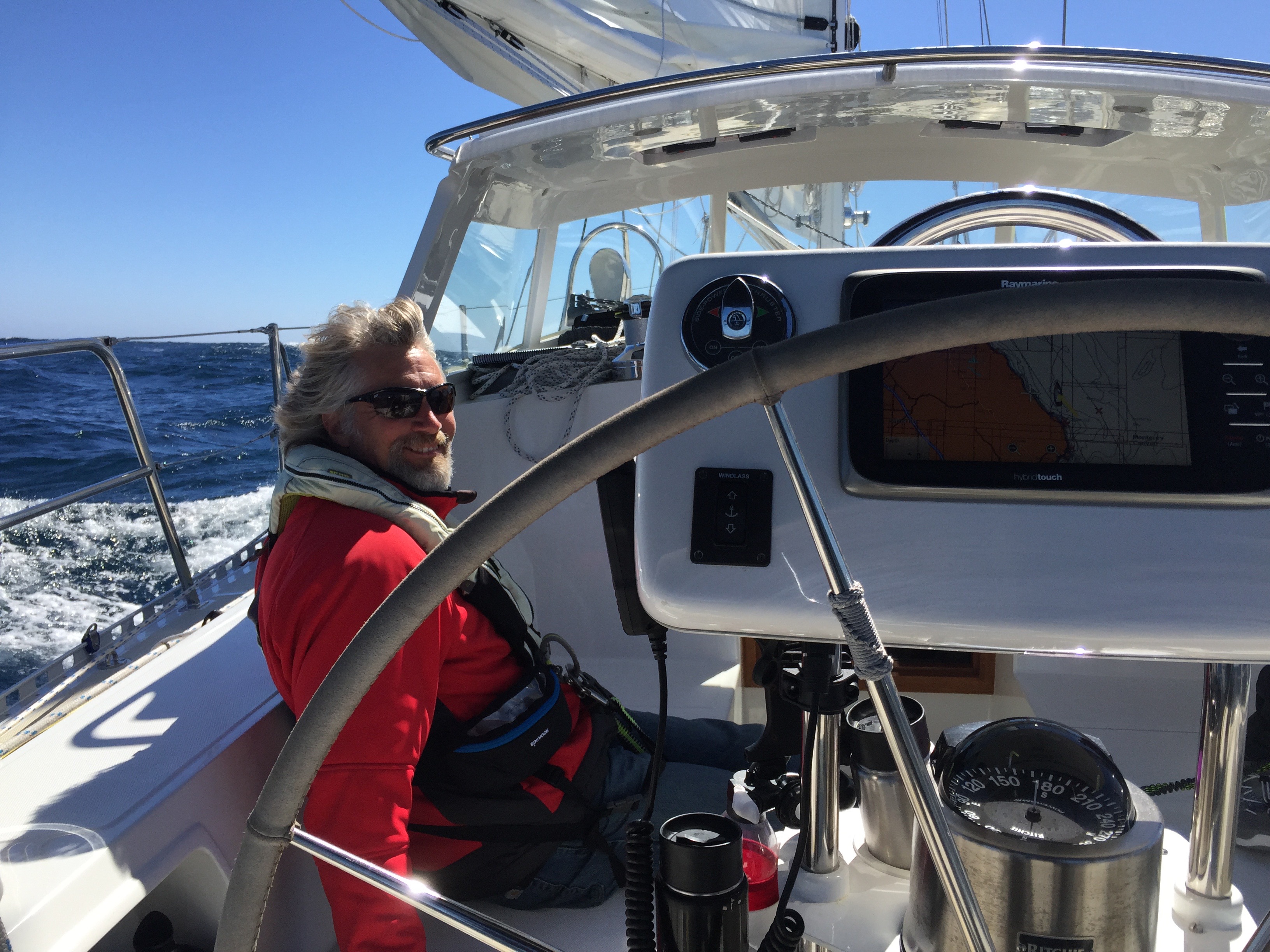
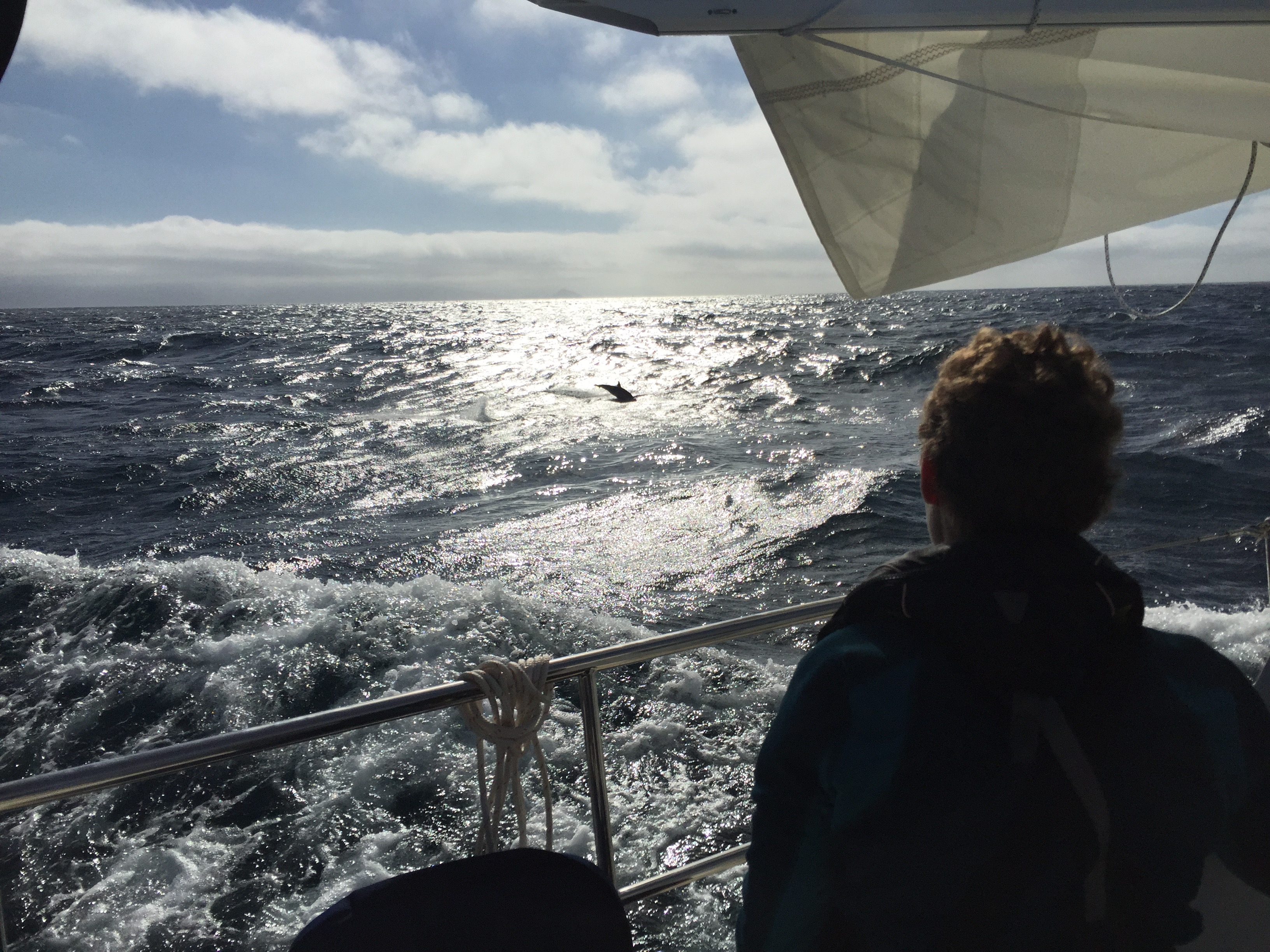
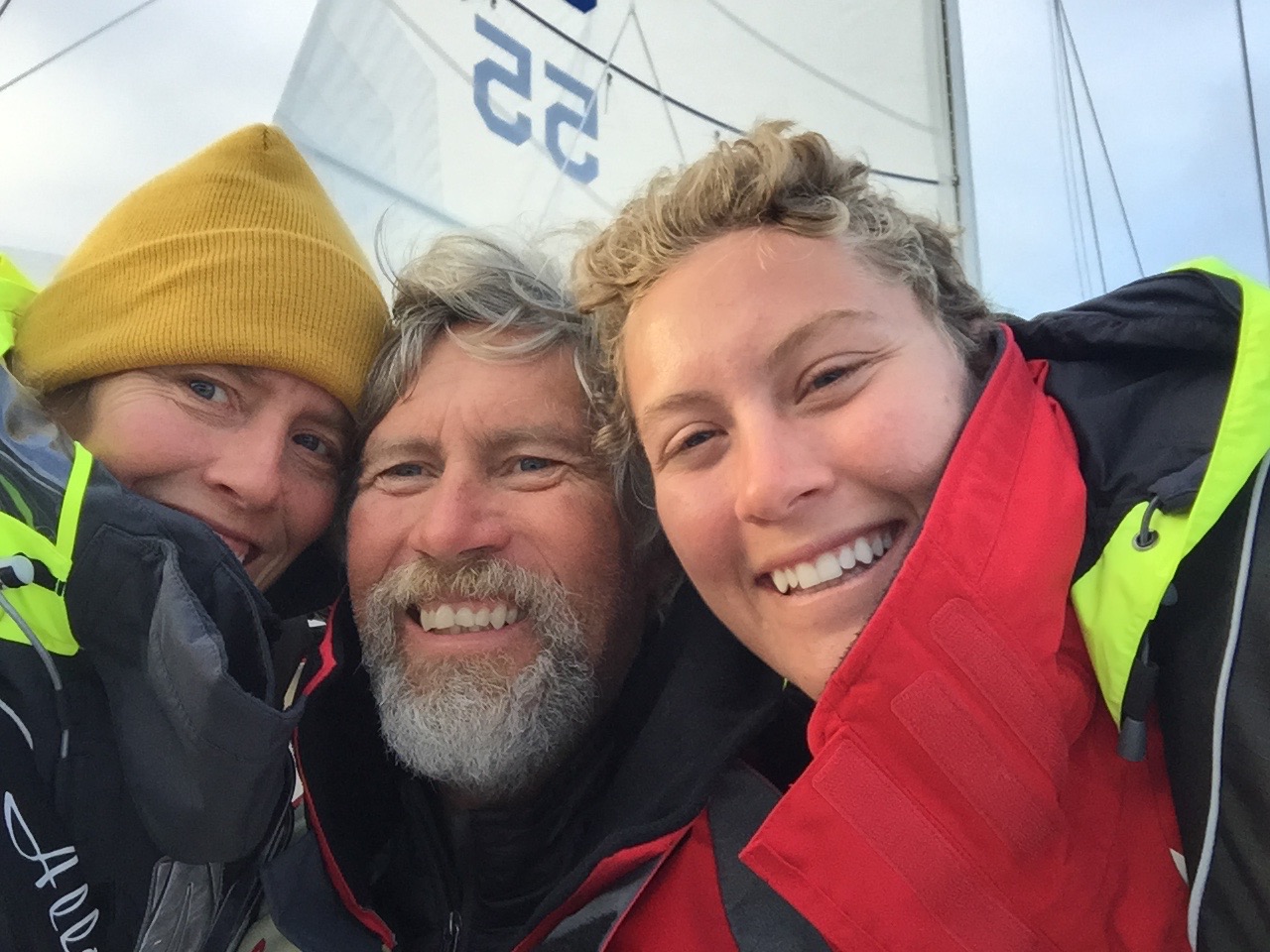
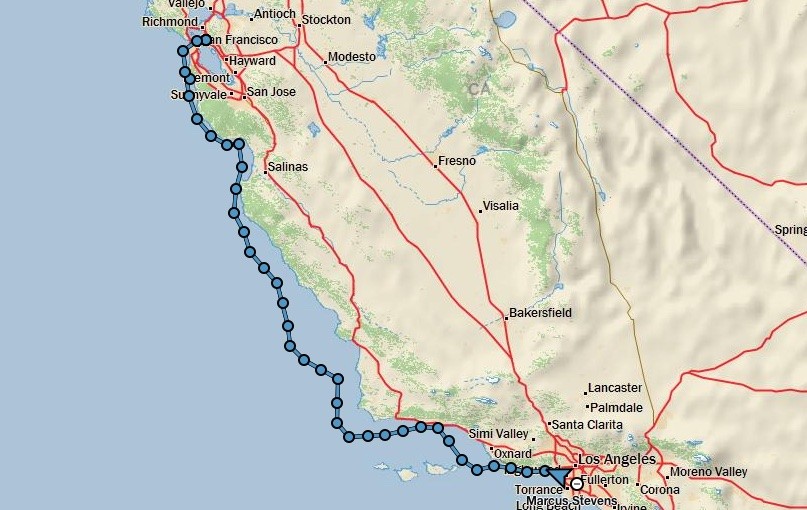
Our first overnight offshore passage, took us 30 miles offshore with 26 knots of wind gusting over 32 kts (Gale force is 34 kts).